Not only did Arnold Palmer design the course at Adios Golf Club back in the early 1980s, he was also one of sixteen founder members that established the golf club.




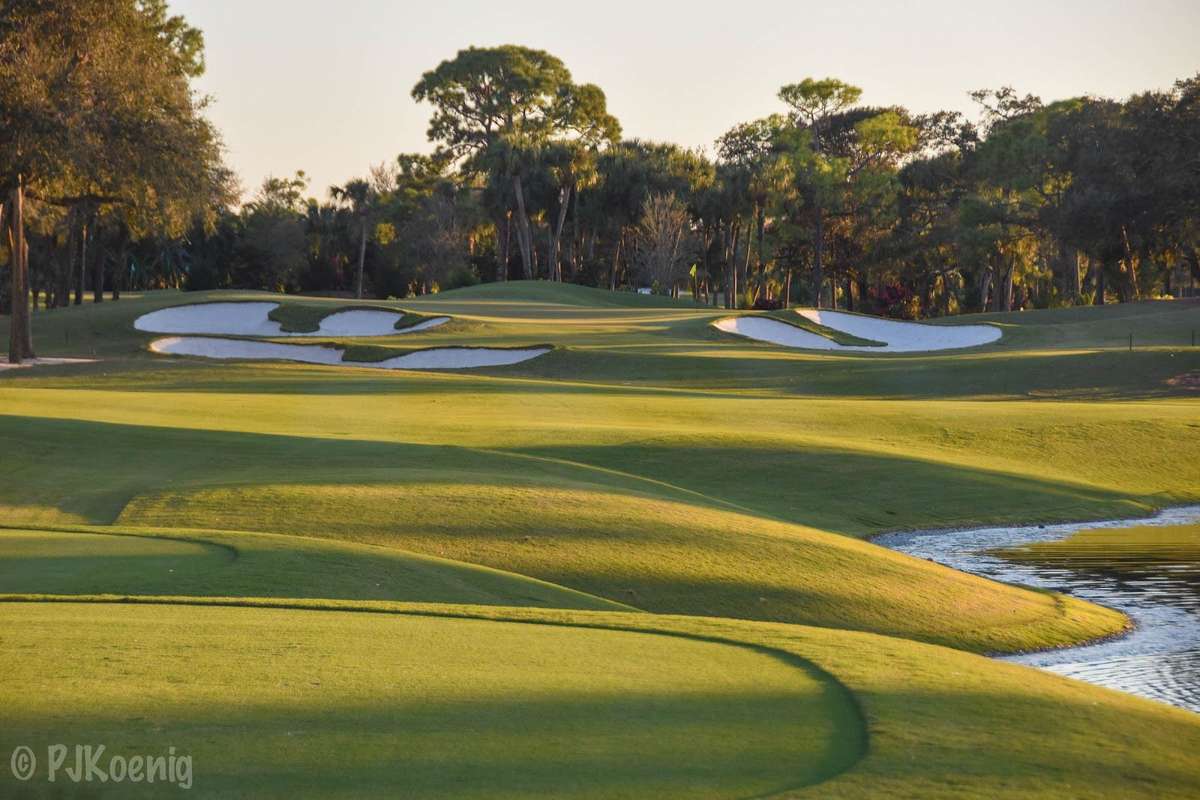
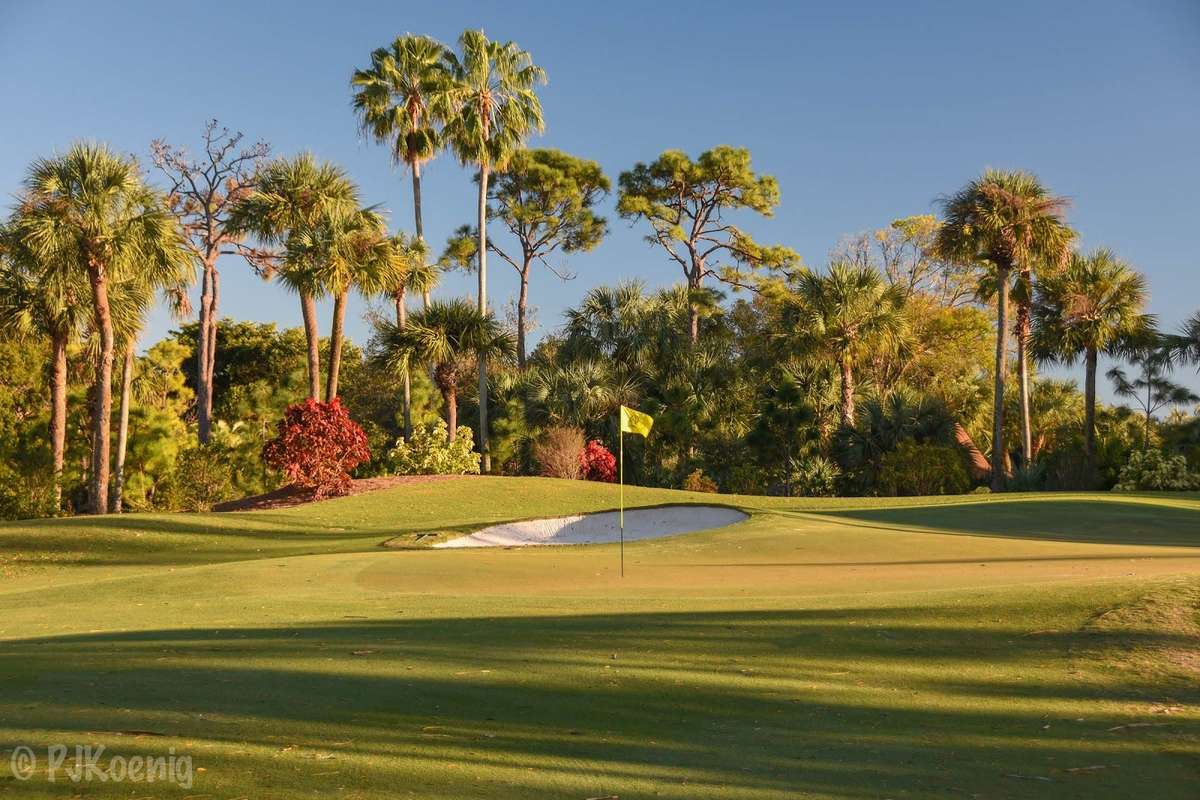
Not only did Arnold Palmer design the course at Adios Golf Club back in the early 1980s, he was also one of sixteen founder members that established the golf club.

4
I agree with Colin’s post that Adios should be rated higher in the state of Florida. I thoroughly enjoyed my round there even if I played miserably over the final six holes after playing good for eleven of the first twelve holes, including two birdies.
The course and club sit on a near perfect rectangle of land, bordered by the busy Florida Turnpike on one side, a waterway on, a housing development, and 39th avenue. Yet within the grounds it is mostly quiet. In fact the landscaping is so well done in combination with a huge amount of water that one feels like they are in an arboretum. It really is a beautiful walk, although a bit more visually attractive on the front than the back nine. The front nine seems to have more trees along with more interesting green surrounds both in contour as well as the trees and vegetation nearer the greens.
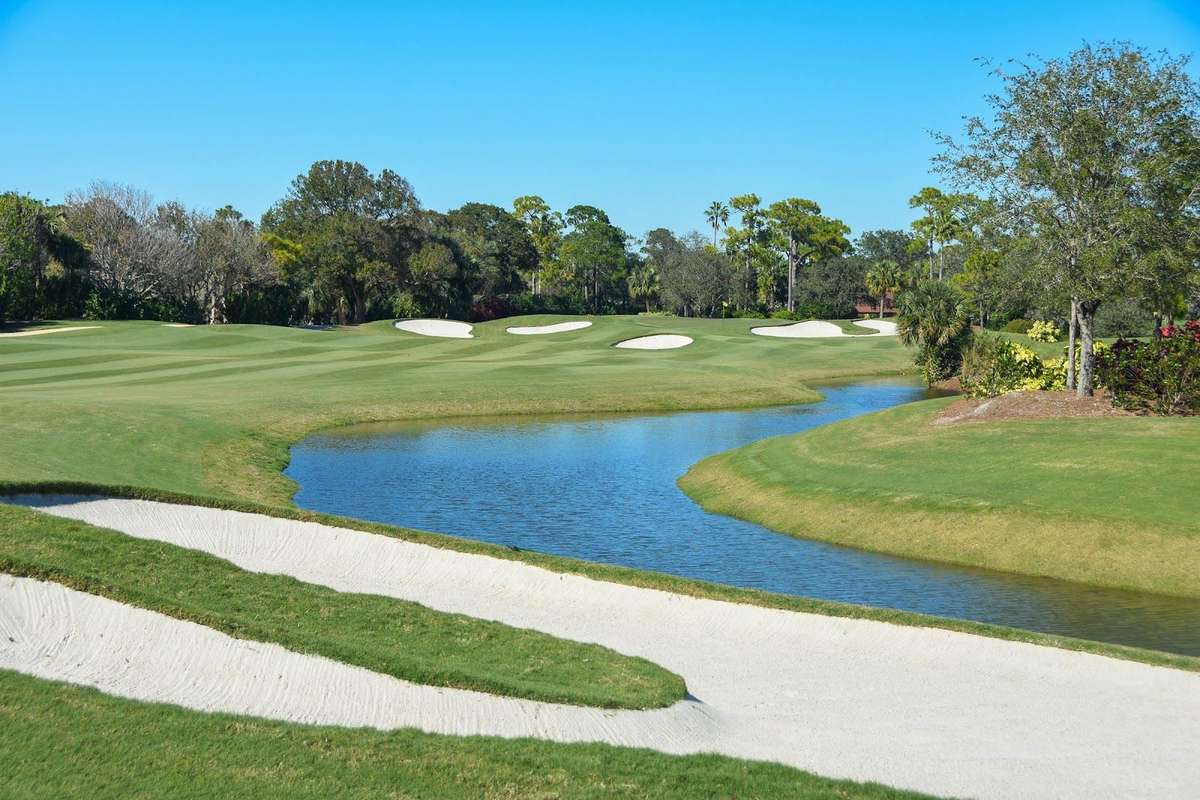
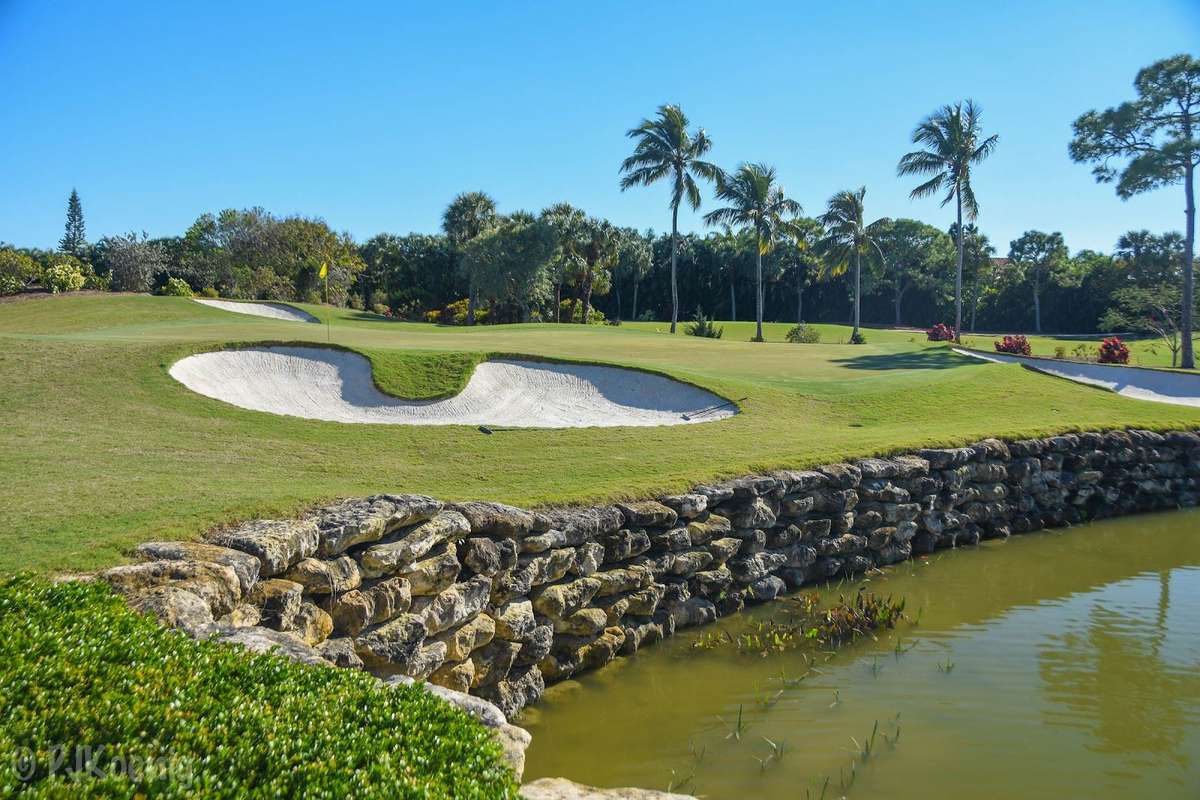
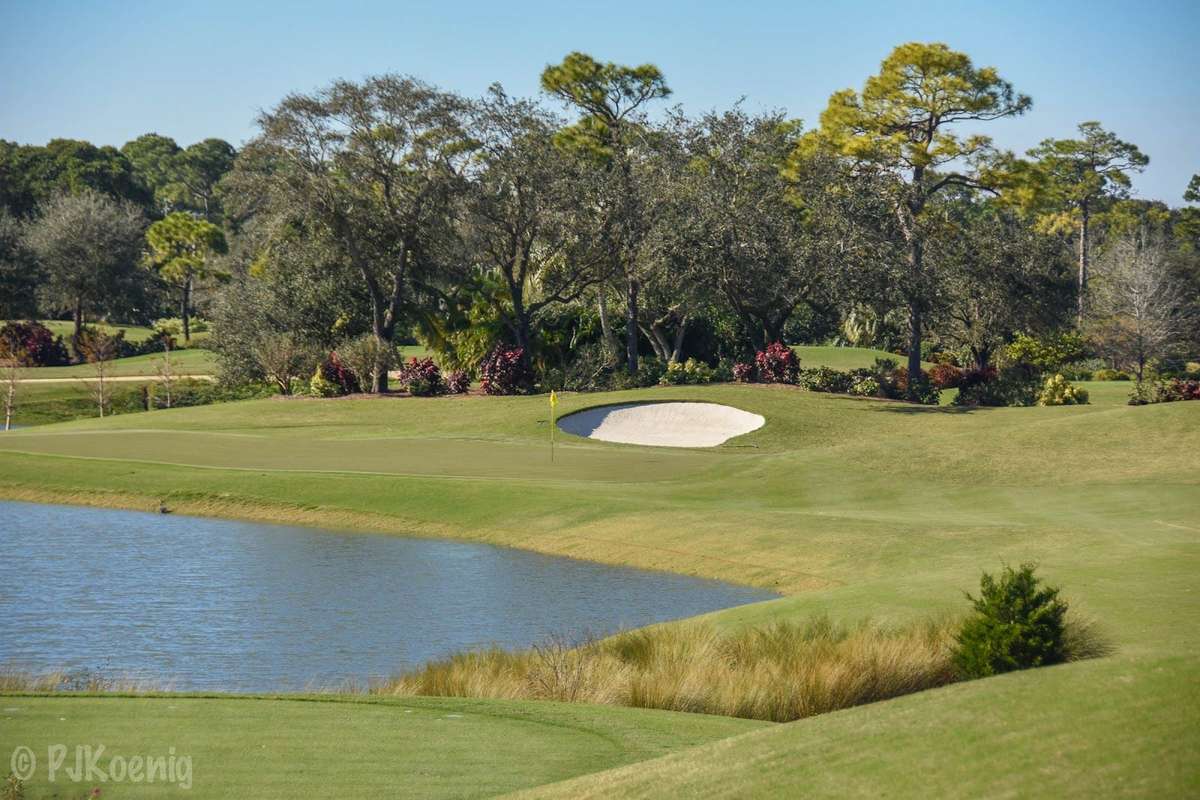
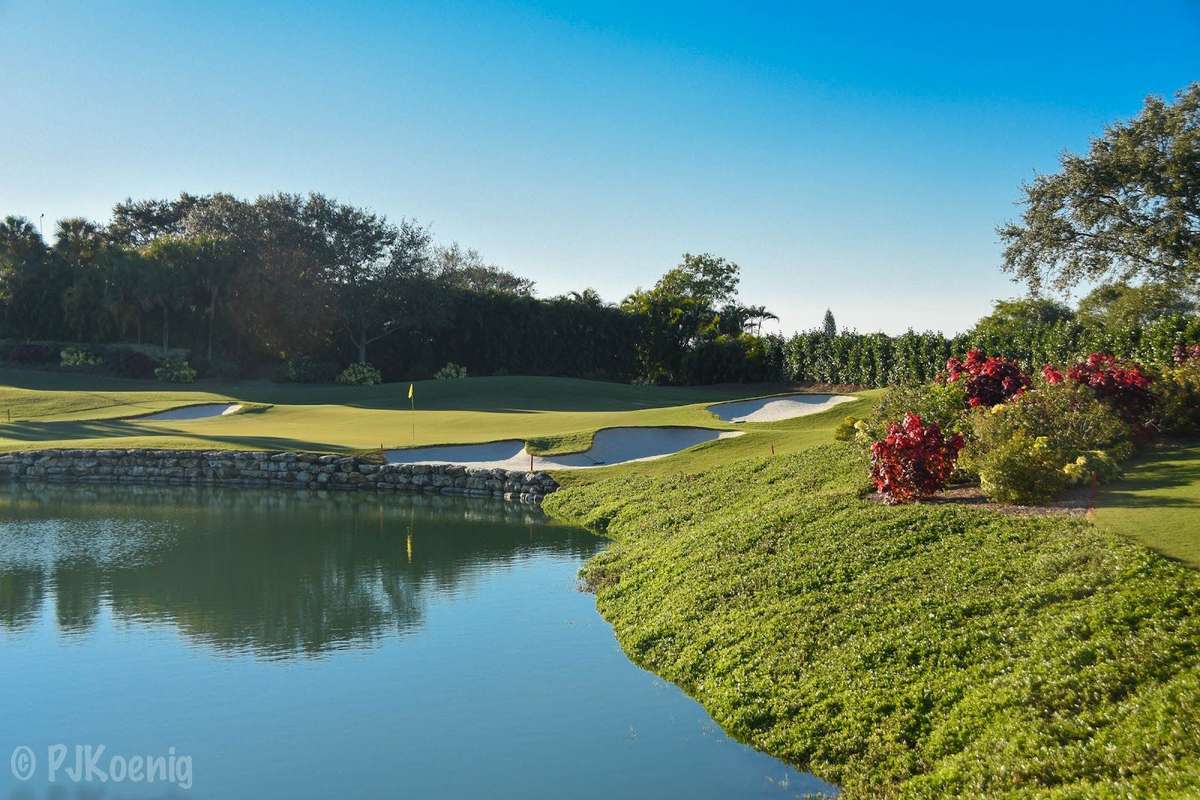
In some regards the course is very much like the stereotype one might find in Florida with water on fifteen of the holes, although on two of those fifteen the water is not really in play. Three of the par 3 holes do not have water. Yet the man-made ponds and streams blend naturally with the surrounding plants and trees.
Where Adios differs from the typical Florida course is that it is tighter requiring one to be straighter with both the tee shot and the approach shots to the greens. There is a good use of trees that frame the fairways. When combined with the ponds and streams, one is challenged to make the proper decisions in considering the options.
Adding to the charm and shot values of Adios is clever mounding on many of the holes, sometimes found on the fairways but more often found nearer the greens. The green surrounds rarely look the same with some greens built into hills or having surrounding knobs and mounds creating a good variety of interesting contours alongside many of the greens. It is this distinction that sets it apart from other courses designed by Mr. Palmer, including the championship course at Bay Hill. Perhaps Mr. Palmer had a bigger budget or allocated more of his time to this course since he was a founding member and personally knew many of the members.
I think this is one of Mr. Palmer’s better designs, although not in the class of Tralee where Mother Nature did most of the work. This is a course one could enjoy to play every day given the beautiful setting, flat land, with good variety in the routing of the holes as well as variety in the actual greens. Mr. Palmer built some wonderfully wild and nicely contoured greens compared to many of his other designs.
One criticism would come in the use of water where there is a fair amount of redundancy with many of the greens being fronted by a pond set close to the green.
The course is not long, but its tightness can lead one to choosing a less lengthy club in order to keep a ball in play. The bunkers are appropriate in number, are well placed and have a nice shape to them. This adds both to the visual appeal of the course as well as the defense of the course. There were very few bunkers that I felt to be misplaced or unnecessary to the defense of the course. There are center-line bunkers on six holes, not a common characteristic of courses in Florida.
As for the routing, one could quibble with starting with a double dogleg as opposed to saving it for later. Three of the holes at the corner of the property have sharp doglegs and perhaps a better routing would have eliminated that. Perhaps the rectangular land dictated the routing forcing these three sharp doglegs. The end result is that two of these three doglegs were among my least favorite holes on the course. However, these holes offer options as to how to play them regardless of one’s handicap. In sum, I thought the second hole, a sharp dogleg left was a nice hole whereas I did not have as much attraction for the fifth and the thirteenth.
From the Black tees the course is 6949 yards, par 72, rated 74.7/143. We played the Gold tees at 6520 yards, rated 72.6/140. There are two sets of lesser tees and three combination tees resulting in seven different tees with ratings. The ratings are definitely influenced by the amount of water on the course.
1. Par 5 – 518/482. I liked this hole despite putting a ball in the pond and opening with a double. The hole plays out to the left but then comes back to the right except for those trying to make the green in two. The hole has a central right bunker in play for the longer hitters. The left side of the fairway has some nice mounding. I hit a nice tee shot but hooked my second into the pond that starts on the left side about 150 yards from the green. This pond continues all the way down the left side of the green which sits hard again it. To prevent those coming into the green from taking a safer option there is a front right bunker and a back right bunker. The green has a slight horizontal tier about halfway up with an overall slope towards the pond. I like the early central bunker as well as the incorporation of the pond. I also liked that one did have the option of running a ball onto the green. It is a good risk-reward hole although one could argue it should not come so early in the round.
2. Par 4 – 446/409. After crossing over an early pond, this hole swings nearly 90 degrees to the left. Even average length hitters can run into the trees where the fairway turns. There are two inner corner bunkers to try to stop those from cutting the dogleg but anyone with longer length can likely land beyond them. I did not like either of these bunkers given the length of the hole. At the green there is a “backwards 3” shaped bunker on the front left and a large bunker on the right side creating a narrower front opening. One can run their ball onto this green. The back of the bunker is protected by two bunkers set into a mound. The green is two-tiered as well as having a mound on the front left. This is an okay hole but would be better without the inner corner bunkers.
3. Par 4 – 398/382. This is somewhat of a straight hole although the green is placed off to the left with half of it fronted by a pond. There is good mounding on the right side before the fairway falls down towards the pond. The green complex is one of the better ones on the course, even if it is man-made as it looks natural. The hole plays out to the left where the fairway is a bit wider. Forcing you that way is a bunker set on the highest point on the right side inside a heavy grouping of trees. Bigger hitters can carry the bunker and can catch the downslope resulting in having a wedge or less in their hands. Shorter hitters will face a daunting shot over the water but with a bailout down the right side. The green is surrounded by trees on three sides with clever mounding down the right side and behind the green. While technically this is a two-tiered green the overall slope of the front half is very severe. The greens has a lot of break even within the plateau of the second half and putts that must navigate both the tier and across one side of the green to the other will face a testy putt both for pace and break. I liked this hole a lot because it offers options as well as having a very good green complex.
4. Par 3 – 172/154. This par 3 has a bunker front left and one on the right side to a green that is angled right to left. There is short grass prior to the green which is set slightly above the tee. It is not a particularly memorable hole. There is decent mounding to the right side of the green but the left side is relatively uninteresting.
5. Par 4 – 393/351. A pond is very much in play down the left side continuing to fronting the green. The course has two central bunkers perfectly placed for both shorter and longer hitters as longer hitters are not likely trying to get too close to this green given the risks of the water with the land somewhat sloped towards it. This is a very sharp dogleg left. Additional defense to the green comes with a front right bunker and a left side bunker as well as raised ground behind the green. The raised ground provides a bit of a backstop but the ground is somewhat uneven and a lie there could be flaky. The green runs towards the water and is speedy if coming down from the higher ground at the rear. A safe play is to play short of the green as putting is definitely an option. Obviously if one goes left of the central bunkers they will have a shorter shot and a direct line to the green over the water. A tee shot landing right of the two central bunkers will face a longer approach shot and the water seems to be more worrisome. I felt one central bunker to be adequate for the hole or make the hole a shorter, straighter par 4. But this hole does offer a lot of drama.
6. Par 5 – 560/520. This is the number one index on the course due to an early forced carry over a pond with it continuing down nearly all of the left side in the form of a stream. The stream is then replaced by a collection of trees that pinch the fairway. Prior to the narrowing of the fairway there is another center-line bunker. The second shot needs to lay up short of another pond sitting near the front of the green beginning about thirty yards away. The green has a single bunker on the right side built into a hill with more mounding surrounding the back of the green. There is a back plateau to the green. I made a nice birdie here to offset the disaster I had on the first.
7. Par 3 – 213/197. There is not much interesting about this hole which plays slightly uphill to a green that rises all the way to the back. The front of the green is narrow with a large three fingered bunker on the right and a small one on the left middle creating a narrower neck to the front of the green.
8. Par 4 – 403/385. The tee shot plays to one of the widest fairways on the course. This hole bends to the right with another pond fronting the green. The green is angled to the left making the bunkers placed in a diagonal set at the front and back. This is another good green with a lot of mounding just off of it.
9. Par 4 – 457/442. This is the longest par 4 on the course sharing the stream and pond that are on the seventh. The pond narrows the fairway as you near the green biting into about half of the front and right side. There is a bunker on the front left corner and two on the right side to a green with raised ground behind it. The green is long, but not wide in the back half. This is very much another all-or-nothing hole with the approach shot. There is ample room to hit one’s second left and try to pitch or chip a ball close to the pin. This is the number three index but I felt it to be the most difficult on the front nine.
10. Par 4 – 302/286. You pass around to the other side of the clubhouse to arrive at an elevated tee hitting over lower ground until the land rises again to a green placed on a small hill. Water goes down the left side but should be cleared. There is a large bunker on the left and a line of trees down the right making this fairway a bit narrow in the landing zone. The bigger hitters who try to drive the green will have to carry or avoid two bunkers placed about 25 yards short of the green. Once again, there is good mounding and contours surrounding this green which has a defined tier and a back left shelf. It is an okay hole where matches can reward the bold play.
11. Par 4 – 434/408. This straight hole offers a somewhat generous fairway although a bunker built into a hill on the right is in play off the tee. There is a ridge line down much of the right side of the fairway. A pond cuts across 90% of the fairway but this time it stops about 20 yards short of the green. The green has a bunker on the front left corner and the back left corner. It is a more difficult hole for the average player than the longer hitter. This is rated the number two index but I felt there are harder holes on the back.
12. Par 3 – 173/156. As mentioned, three of the par 3’s do not have water. This hole plays fairly level with two bunkers on the left and one on the right. The green has a very narrow mouth before widening. It has multiple little shelves on the back half. But much like the two previous par 3’s, there is not much that is memorable here.
13. Par 5 – 539/515. This is the hole I disliked the most on the course playing as a sharp dogleg right over a long, narrow pond that wraps itself around 80% of the right side of the fairway. For those trying to gain distance there is a pond on both of the corners of the turn of which neither one made sense to me. As one nears the green there is another central bunker about 90 yards from the green. This is followed by two bunkers on the left that look like they are at the front of the green but are actually set back ten yards. There is large bunker on the front right corner of the green. The green is long but thin, angled to the left. From the central bunker into the green I did like the hole, I simply did not appreciate the amount of defense in the first and second shots.
14. Par 4 – 425/392. There is an early crossing over a pond but essentially there is no water in play on this hole other than a waterway behind the tree line. There is a bunker left off the tee more in play for the longer hitters. The green has two bunkers on the front right. This is easily the most diabolical green on the course with a back right higher shelf that is almost impossible to get to from anyone from the front of the green. Of course our pin was just behind the bunkers on that smaller shelf which is about 2.5 feet above the green just before it. I loved the hole despite a three putt.
15. Par 4 – 432/416. This straight hole has no fairway bunkers and the pond is set about 80 yards before the green. The green is long but thin with a large front bunker and one at the rear. It is not a particularly memorable hole.
16. Par 4 – 342/331. This hole plays as a somewhat sharp dogleg left. There is water and scattered trees down both sides of the fairway. An arm of the pond from the thirteenth crosses in front of the green which is set above it about five feet. If one finds the middle of the fairway and slightly left of center they will get a favorable roll-out leaving less than a wedge. The green has a bunker on both front corners and a small one at the rear. This is again another green with excellent mounding and knobs just off a green that slopes sharply towards the water. Despite another double, I really liked the hole
17. Par 3 – 180/168. From an elevated tee perhaps 35 feet above the green, one plays to a green fronted again by a pond. There is a single bunker on the back middle of the green. It is a dramatic hole but there is not much interesting about it. The green does have subtle breaks in it.
18. Par 5 – 562/526. The tee shot needs to carry water with the pond continuing down the left side of the green. There is a fairway bunker down the left side that only the longest hitters need to consider. A pond comes into play for the second shot and approach shot on the right side continuing to the front of the green. Adding to the drama of the finishing hole is a large tree on the right that becomes a goalpost combined with the trees down the left. A final central bunker is about 75 yards from the green which has bunkers on all four corners. The mounding on the back side and right side of the green will stop a ball but will leave a slick downhill chip. While I liked the hole I felt it was a slightly made more difficult than it should have been, thereby leading to an unbalanced risk-reward hole.
Adios is a treat to play, mainly because it is an enjoyable walk in a lovely setting. The golf course is enhanced by the tightness of its fairways as well as some wonderfully done green surrounds. There is good variety to the holes with the exception of three of the holes having almost 90 degree turns at the corner of the property. The par 3’s are not as memorable here when compared to the par 4’s and 5’s.
Florida has the most golf courses of any state in the USA. On this site, Adios is rated the 85th best which seems at least 15 too low, possibly as much as 25. If one gets an invite here, they should definitely seek it out. I am certainly eager for another go at those final six holes.
Mark White
The latest ranking of the Top 100 Golf Courses in the World serves as the ultimate global golf bucket list. Most members of our World Top 100 Panel are seasoned golfers, each playing 20-30 of these courses annually while travelling extensively over decades to form their opinions on others. We recognise that opinions vary—even among our panel members. Rankings are subjective, and there are undoubtedly 50 or more courses in the UK and USA alone that could easily fit onto this list. Links Golf Pilgrimages The rankings
California, United States
New Jersey, United States
Northern Ireland, United Kingdom
New York, United States
New York, United States

Florida is one of the world's great golf destinations, but its reputation for championship courses and high-end resorts can make it seem like a difficult place for beginners to start. It doesn't have to be. Across the state, you'll find short municipal layouts, forgiving designs, affordable daily-fee courses and practice facilities that make it easier to learn the game without being overwhelmed. Some offer a gentle introduction to 18 holes, while others provide a chance to experience famous golf venues from more manageable tees. We've picked some of the best options for beginners, looking at factors including length, difficulty, green fees, accessibility and the overall experience. Whether you're playing your first full round or simply looking for a Florida course where you can enjoy the game without needing a low handicap, these are the courses worth putting on your list. The Park West Palm Why play it: Golf for everyone, with plenty of ways to learn and practice Difficulty: ★★☆☆☆ Price: From $95 Best for: Beginners looking to learn and improve The Park is a particularly good introduction to golf for beginners because it offers plenty of ways to learn the game before committing to 18 holes. Alongside the full-length course is a Toptracer driving range, putting course and the Lit 9, a nine-hole par-three layout that can be played with little more than a wedge and putter. The 18-hole course itself was completely rebuilt by Hanse Golf Course Design, replacing Dick Wilson's original 1947 West Palm Beach layout with a new routing. The real appeal, however, is the club's approach to growing the game. Green fees for juniors registered as West Palm Beach city residents are just $20, while carts are not permitted before noon and caddies are actively encouraged. The Lit 9 costs $30 for adults and is free for children aged 12 and under, providing an inexpensive way to get on the course without tackling 18 holes. The Park has even hosted The Match IX, but despite welcoming stars such as Rory McIlroy, Max Homa, Lexi Thompson and Rose Zhang, its focus remains firmly on making golf accessible to everyone. Southern Dunes Golf & Country Club Why play it: A links-inspired layout where everything is laid out in front of you Length: 6,220 yards - Par 72 Difficulty: ★★★☆☆ Price: From $49 Best for: Beginners ready for a full-length challenge Southern Dunes offers a gentler introduction to championship-style golf than its 7,227-yard black-tee length might suggest. Designed by Steve Smyers in 1993, the course uses a sandy, undulating site and extensive mounding to create a links-like feel, with huge traditional bunkers, wispy waste areas and occasional water hazards shaping the holes. There are five sets of tees, with the shortest full course measuring 5,633 yards, giving beginners the option to leave the driver in the bag and play a manageable yardage. The appeal is that there are few surprises around Southern Dunes. The fairways, hazards and greens are generally laid out in front of you, allowing beginners to see the challenge and plot their way around rather than having to guess what lies ahead. The large, fast greens and rolling fairways still demand good putting and accuracy, but choose the right tees and Southern Dunes becomes a fair test rather than an intimidating one. Located in Haines City, just south of Orlando, it also offers an unusual taste of links-style golf in Central Florida. Orange County National – Panther Lake Course Why play it: A huge golf facility where beginners can build confidence before tackling 18 holes Length: 6,002 yards - Par 72 Difficulty: ★★★☆☆ Price: From $75 Best for: Beginners who want a full golf experience Orange County National is built around golf, with 45 holes, a 42-acre circular driving range, a 36-hole putting course and the nine-hole Tooth course all on the same sprawling property. For beginners, that means there are plenty of ways to practice before taking on Panther Lake, whether that means working on the range, spending time on the putting course or starting with nine holes. Panther Lake itself opened in 1997 and was designed by Phil Ritson, Isao Aoki and David Harman, with the rolling site providing some of the elevation change that is unusual for Florida. At more than 7,400 yards from the tips, Panther Lake is certainly not short, but the multiple tee options allow beginners to choose a yardage suited to their game. The course is set across more than 900 acres with no surrounding housing, creating a remarkably open and peaceful setting despite being a short drive from Orlando. With its extensive practice facilities and two championship courses, Orange County National gives beginners plenty of room to practise before working their way up to Panther Lake. Juliette Falls Golf Course Why play it: A scenic, strategic course with plenty of tee options Length: 6,269 yards - Par 72 Difficulty: ★★★☆☆ Price: From $70 Best for: Beginners ready to step up to a full-length course Juliette Falls proves that beginner-friendly golf doesn't have to mean giving up on scenery or ambition. John Sanford's 2007 design stretches to more than 7,200 yards from the back tees, but five sets of tees allow newer golfers to choose a more manageable distance. The layout winds through mature oak trees and the former phosphate-mining site, with generous corridors and clear angles of play making it possible to see the strategy of each hole before deciding how aggressively to play it. The course becomes particularly dramatic from the sixth hole, where the par five requires a tee shot over Reflection Lake, followed by the tropical landscaping and waterfall at the par-three seventh. Water is a recurring feature, but the hazards are generally visible rather than hidden, rewarding beginners who take the sensible route rather than chasing distance. With its rolling terrain, mature trees and four waterfalls, Juliette Falls offers a more substantial challenge while remaining accessible to golfers who choose the right tees. North Palm Beach Country Club Why play it: A forgiving Nicklaus design with plenty of room off the tee Length: 5,932 yards - Par 71 Difficulty: ★★☆☆☆ Price: From $60 Best for: Beginners who want a forgiving 18-hole course North Palm Beach Country Club is a good option for beginners who want to play a proper 18-hole course without being punished for every wayward drive. Redesigned by Jack Nicklaus in 2006, the course measures just under 7,100 yards from the back tees, but Nicklaus specifically designed it to be user-friendly from the member and senior tees. The first 180 to 200 yards from those tees are particularly wide, giving newer golfers plenty of room to find the fairway and build confidence off the tee. The course sits on a sandy site of less than 125 acres, with several lakes adding strategy without overwhelming the layout. Nicklaus also described the greens as having plenty of movement, giving beginners a chance to work on their short game as they progress. There is some history here, too: the original course dates to the late 1920s and was one of the final designs by Seth Raynor before Nicklaus gave the layout a new lease of life. In 2006, it became only the second Nicklaus Signature municipal course in the USA. Dye’s Valley at TPC Sawgrass Why play it: A chance to experience TPC Sawgrass without taking on the Stadium Course Length: 6,079 yards - Par 72 Difficulty: ★★★☆☆ Price: From $350 Best for: Beginners ready for a taste of championship golf Dye’s Valley offers beginners a chance to experience the TPC Sawgrass setting without immediately throwing them into the deep end of the Stadium Course. Designed by Pete Dye with Bobby Weed and player consultant Jerry Pate, the course stretches to around 6,850 yards but is less demanding from the forward tees. Water remains a major part of the challenge, lining many holes, although there are fewer forced carries than on its famous neighbour. The course opened in 1987, five years after Pate won The Players Championship and famously celebrated by dunking Dye in a nearby lake. There is still plenty of Dye’s trademark strategy here, with water, bunkering and demanding greens requiring golfers to think their way around the course. For beginners, however, the shorter length and variety of tee options make Dye’s Valley a more approachable way to experience one of American golf’s best-known venues. Winter Park Pines Golf Club Why play it: A short, affordable 18-hole course where beginners can leave the driver in the bag Length: 5,107 yards - Par 70 Difficulty: ★★☆☆☆ Price: From $45 Best for: Beginners looking for an affordable full round Winter Park Pines is a reminder that beginners don't need 7,000 yards to get a proper 18-hole golf experience. The Lloyd Clifton-designed course opened in 1968 and measures just 5,354 yards from the back tees, with forward tees bringing it down to 4,336 yards. The layout features five par threes and three par fives, while the relatively short par fours give newer golfers plenty of opportunities to reach the greens without relying on their longest clubs. Water is a recurring feature, including a creek that runs through the property, so there are still hazards to negotiate despite the modest yardage. But the course is designed to provide a test for both novices and more experienced golfers, with a driving range and practice greens available before the round. Best of all, non-resident green fees start at just $45 on weekdays during the summer, making Winter Park Pines one of the more affordable ways to play 18 holes in the Orlando area. Palm Beach Par 3 Golf Course Why play it: A spectacular 18-hole introduction to golf with every hole within reach Length: 2,572 yards - Par 54 Difficulty: ★★☆☆☆ Price: From $35 Best for: Beginners who want to learn the game without a full-length course Palm Beach Par 3 strips golf back to its essentials, with 18 holes ranging from just 81 to 211 yards. Set between the Atlantic Ocean and Intracoastal Waterway, the course gives beginners a chance to experience a full round without needing the distance or consistency required on a traditional par 72. Each hole has three sets of tees, while water hazards and sand bunkers provide plenty of challenges without turning every missed shot into a lost ball. The course dates back to 1961, when it was designed by Dick Wilson and his apprentice Joe Lee, before being completely redesigned by Hall of Famer Raymond Floyd in 2009. Alongside the ocean views, golfers have access to a full-length driving range, putting green and practice bunker, making it possible to work on the basics before taking on the course. For beginners, it is an affordable and unusually scenic way to get 18 holes under the belt.
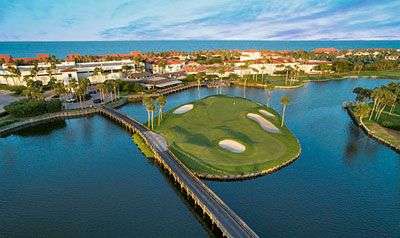
I is for ISLAND THE ORIGINAL A green surrounded by water is not a new concept. In fact, even the denizens of the Golden Age of golf course architecture occasionally surrounded the putting area with liquid hazard. The truest grasp on the concept of the “Island” template begins with No. 9 at Ponte Vedra (what is now known as the Ocean Course at Ponte Vedra Inn & Club). Herbert Strong completed the Ponte Vedra Club in 1928, and it was apparent he intended to test the mettle of the game’s best with dramatic greens and demanding hero shots... much like a nearby course to-be-named-soon. Like that other course, Ponte Vedra featured a Par 3 green set upon an island in a lagoon, 145 yards from the tee. The hole was originally No. 18, and upon walking off, Bobby Jones commented that Ponte Vedra “[is] a course to challenge professionals.” Ponte Vedra Ocean course 9th hole - photo courtesy of Ponte Vedra Inn & Club This original island held far more than a green; three pot bunkers (more were added later) fitted along the back of the putting surface, and a larger one sat front-right. There was even an apron of fairway...but too much spin could easily bring a short shot back down into the water. It seems like a generous target today, but after the shell-shock of playing one of America’s then-toughest courses, it may have intimidated even the best. OTHER INTERPRETATIONS We have already alluded to another Florida course that would become the standard for the “Island” template, the infamous No. 17 on the Stadium course at TPC Sawgrass. Pete Dye had a pit to fill, and legend claims his wife and frequent contributor, Alice Dye, suggested just placing a green in the middle of the future lake. No doubt the pair took inspiration from Strong’s work at the nearby coastal course. The Stadium course was created with the intention of hosting The Players Championship, and players immediately set upon its design for its over-the-top greens. TPC Sawgrass Stadium course 17th hole - photo courtesy of TPC Sawgrass No. 17, however, was not a challenge because of its size or slopes. It plays at 137 yards, a simple wedge for most players. At 78 feet in length, the green is much smaller than Ponte Vedra’s version, but hardly a tiny target. The challenge is solely of the nerves, knowing the lake will take all misses. Based on its 7% double-bogey percentage at The Players, this factor impacts pros almost as much as everyday players. It is perhaps the most pure rendition of “target golf.” The island is not quite a black-or-white equation, however. As with many penal holes, there is an element of matchplay risk/reward: Playing to the center of the green is always safe, and attacking the pin is—more often than not—dangerous. A strong backbone goes a long way in saving par, but strong conviction goes a long way in winning the hole. Granted, the “Island” concept is still rather binary for the mid-handicapper, which alienates some critics. Not helping the template’s cause is its appeal for the tourist crowd, a group that instantly appreciates the visual appeal of an island, versus the more subtle strategic pleasures of, say, a Double Plateau. In some cases, this leads to kitschy entries, à la the fruit-shaped No. 17 green at Apple Tree Golf Course. Although the Coeur D’Alene Resort built some tourist appeal (and excess round lengths) into its Island Par 3, via the necessary boat taxi to the green, it also created an interesting element for potential multi-day tournaments. The No. 14 green floats, and can be maneuvered to land for maintenance purposes, which suggests they could also alter its placement in the lake to change the hole’s identity from day-to-day. It’s essentially the putting surface version of runway tees. Coeur D'Alene 14th hole - photo courtesy of Coeur D'Alene Resort One hole that often gets overlooked in the “Island” conversation is The Creek Club’s 11th hole. The only real expectation of the modern “Island” template is a relatively short length, to emphasize nerve and accuracy over power. Geographically, however, the only real requirement of an “Island,” is that the green be surrounded almost entirely by water. Seth Raynor’s No. 11 is indisputably a Biarritz (200 yards and a signature swale), but there’s no reason why it can’t be an “Island” as well. Any template Par 3 could theoretically be adapted to “Island” form. The Creek 11th hole - photo courtesy of The Creek We’re honestly not trying to force MacRaynor into every conversation on templates! MAYBE... MAYBE NOT We stated earlier that many island greens debuted prior to Ponte Vedra’s (including the aforementioned Creek Club). Baltusrol’s Old Course featured one as early as 1910 (it was in play for the 1915 U.S. Open) and A.W. Tillinghast created an island green at Aronimink's No. 13 when he was the first to tweak Donald Ross's original design. The difference between Baltusrol and Aronimink’s entries from that era is that they are not Par 3s. It’s a “simple” distinction, but one that drastically alters the mindset during play. In these cases, the player must eventually cross the water, but they have an option of when to do it. Feeling bold? Go for two. Not so sure, or your tee shot was poor? Lay up. It is a viable risk/reward strategy, allowing players to choose how much distance is included with their forced carry. An “Island” Par 3 is a more predetermined test… ”do or die.” Every player is given the same basic task, even during matchplay. The options that a player may flex on a Par 5 with an island green, or even a Par 4, make the formula different. Famous short Par 5s with island greens—such as No. 17 at Cherry Hills or No. 15 at TPC Scottsdale’s Stadium course—make for exciting play, but they do not fit within our definition of the “Island” as a template. Cherry Hills 17th hole - photo courtesy of Cherry Hills Country Club Interestingly, Tillinghast may have also created the first Par 3 surrounded by water. His “Moat” hole at Galen Hall is a beast: 190 yards to a raised green, which is surrounded by the aforementioned moat, dug by Tillinghast for the purpose. We would argue, however, that despite its Par 3 status, the 15th hole doesn’t quite live up to the “Island” standard, even with the watery surrounds. Because the moat is so thin (compared to a lake), the option exists to lay up short of the moat, and play for par with a short pitch over the hazard. This makes it a shorter version of the Par 4s and 5s we described in the previous paragraph, versus a true “Island” hole in the Strong / Dye sense. Galen Hall 15th hole - photo courtesy of Galen Hall Golf Club David McLay Kidd gave the Ponte Vedra version a spin at Sand Valley’s Mammoth Dunes No. 8, in that there is additional short grass around the green for players to land upon... the catch being that the green itself is about half the size of Mammoth’s other elephantine putting surfaces. The major difference between this and the Strong / Dye version is, of course, the water being replaced with sand. This will surely make for a tough recovery, but it does not result in an automatic loss of a stroke, which dramatically alters the psyches of those teeing off. McLay Kidd intended Mammoth to be the more playable than the Sand Valley course, so we’re sure he won’t mind if that means sacrificing true “Island” status. Mammoth Dunes 8th hole - photo courtesy of Sand Valley

Is Streamsong Florida’s premier golf resort? By Richard Smith, Knoxville, Tennessee Having decided to take full advantage of my wife’s newfound enthusiasm for golf we decided to take a trip to the acclaimed Streamsong resort. Streamsong is located in central Florida, to the Southeast of Tampa and the Southwest of Orlando. The resort is accessible from either airport by about an hour or an hour and a half drive. Streamsong is built on the site of an old phosphorus mine and is truly in the middle of nowhere, so if you plan to stay for any period of time you’ll have to stay at the hotel, which is on site. However, as I will describe later, the hotel itself is magnificent and a wonderful place to stay. We arrived on a Friday afternoon and we were able to fly from our home in Knoxville, Tennessee directly to Punta Gorda Florida. After we got our rental car it was an easy 1-hour 15-minute drive up to the resort. The hotel is a curved modern design with rooms that face either forward towards the east or back towards the west overlooking a lagoon. The rooms were fantastic, very large and roomy with a king-size bed and nice comfortable sectional couch and two large flat screen TV’s. The bathroom was also spacious with an elegant walk in shower and plenty of counter space. All in all one of the nicest hotel rooms I’ve experienced at a golf resort, really only rivaled by the lodge at Pebble Beach. There are two courses at Streamsong and they are designed by two of the hottest current names in golf course design. Tom Doak and his team at Rensaissance Golf designed the Blue Course while the renowned team of Bill Coore and Ben Crenshaw built the Red Course. The courses share a common clubhouse and run over much of the same land, crisscrossing in places much like the Old and New Courses at Walton Heath. Straight up I will say that both courses are outstanding and a joy to play. Each has its subtleties that different golfers will appreciate but it would be hard for me to pick a favorite. Walking is the order of the day at Streamsong, although carts are allowed in the summer and at certain time periods during the day. We went in November and the weather was perfect, running from 50 degrees F at night to over 70 degrees F during the day. The courses are easy to walk, although the Blue has some surprising elevation changes, especially for Florida. My wife and I took a caddy out for our first two rounds on the Blue and Red courses, and then I played the Red again on our last day and carried my bag without any problems. I love walking and it’s wonderful to see courses designed to be walked like the classic courses of old instead of having extended slogs between holes like the plethora of poorly designed courses that popped up in the 80s and 90s, especially in the USA. Now to the courses. Streamsong (Blue) Our first round was on the Blue course. I am a fan of Tom Doak’s courses and this design didn’t disappoint me at all. The routing flows naturally like many beautiful links and heathland courses of the United Kingdom. In general the fairways are very generous but the holes become more and more difficult the closer you get to the green. The 1st hole is a fairly benign par four, but the second shot demands a precise approach due to the steep right-to-left slope on the green. I loved the dogleg par four 4th hole, where the approach shot is to an elevated green over a huge steep bunker to the right – but there’s plenty of room to carry this bunker and hit the green. The hole reminds me of the fantastic 17th hole at North Berwick West Links, one of my favorite golf courses in the world. Five is a short par three with a benign flat area to the left of the green but brutal bunkers and a sharp run off to the right. The long green offers a huge variety of pin placements and strategic options. However, at the par three 7th you really know you are somewhere special. The tee is set high atop a spectacular dune and the tee shot crosses over water and sand to a fiendishly sloped green. My laser range finder with slope measured the downhill as playing at -12 yards, which is something I thought I would never see on a Florida course. The turn shacks at Streamsong are already famous, with the Blue course being known for their tacos. Three small tacos with pork, beef or fish can be enjoyed for $7 which isn’t too bad a deal – I chose the beef and it was fantastic. The back nine continues with gentle rolling contours and wonderful sloped greens. Doak’s greens are difficult but always fair, there’s certainly more slope to his Blue greens than those on the Red but the severity always seems proportional to the challenge. There are a number of great holes on the back. The short par four 13th is driveable for many golfers, but the massive bunker to the left awaits a wayward shot, and the green is narrow with steep runoffs, demanding precise play – very appropriate for such a short hole. I also enjoyed the par five 14th, which played uphill after a challenging tee shot over an angled hazard that absolutely dared you to bite off as much as you could chew. The finish is very strong with the last three holes (from the back tees) being a 237-yard par three, a 590-yard par five and a 478-yard par four. I enjoyed the Blue course a great deal. Everything was right in front of you and good shots were rewarded while poor golf was challenged or penalized. My wife enjoyed the course as well – there are no forced or impossible carries for the female golfer and each hole usually had an opening that allowed a shot to run on. The greens were difficult for her, but she adapted as the round went on. I do think the course is a little long for most women, measuring 5,531 yards from the up tees. I think many female golfers are more comfortable at 5,000 yards or less. I love courses like Royal North Devon in the UK, which has forward ladies tees measuring around 4,500 yards. Setting up advanced tees can encourage younger golfers, beginners and females and I think it would lead to more play from these groups. Streamsong (Red) On our second day we played the Red course. There is a certain familiarity with the Blue course, but this course is unique and offers its own challenges. For starters, the first hole on the Blue is a relatively benign short par four, but the opener on the Red is a tough uphill par four that plays even to a length of 447 yards from the Silver tees (which has a total yardage of 6,094). The hole runs gently uphill and is guarded by bunkers left and right. Something about the hole reminded me of the great first at the Island Golf Club just outside of Dublin. Things continue to get interesting as the round progresses. The second doesn’t look that intimidating on the card, measuring 508 yards from the Black, or second longest set of tees, but it was playing directly into the wind which made the drive over water rather difficult. The water is angled in such a way that it is very difficult to choose and commit to the correct line. This is a beautiful hole. The short par four 4th is another great hole. A bunker dominates the middle of the fairway forcing the player to choose the path to the green. The green is very narrow from front to back, and is bisected by a huge bunker in the middle with steep back-to-front run offs on either side of the bunker. I played this hole twice, had 50 yards left for my second shot, and made bogey both days with is a testament both to brilliant design and my less than stellar play from 100 yards in. I enjoyed so many of these holes. The greens all were built in such a way that a huge number of pin placements were available, and the hole could play completely different depending on the tee and pin placement. The par five 7th has a huge mounded bunker that sits halfway up the green to the right. With a front pin the bunker has to be avoided, with a back pin the bunker has to be carried. This is simply great design. The turn shack on the Red is between 8 and 9, and Bar B Q is the theme here. I went with a bison sausage that was out of this world, again for $7 USA, and it was worth every cent. The back nine on the Red course is really tough. 10 and 11 are good par fours that generally play downwind. However at 12 the course turns into the wind and 12 is a brutally long par four that plays 500 yards from the back tees. Nothing gets really easier as the rest of the back nine through 17 runs into the prevailing wind. 16 is a par three that shares the plateau with the 7th on the Blue. While similar to its sister hole, 16 has it’s own challenges. The green is severely sloped with a hug dip in the middle. Once again this reminded of North Berwick, although it’s the split green at 16 on that course that seems similar. The green is enormous, running over 70 yards from front to back. I hit 6 iron the first day to an up pin and 3 hybrid the second to a back pin. 18 is a relatively benign par five that usually plays downwind giving you a chance to finish your round on a positive note. The Red course demands more precise driving than the Blue and the greens are less severe, but there are still significant slopes that influence your shot and club selection. After I had played both courses I chose to play the Red on my second time around, but as I viewed many of the holes on the Blue course during my second round I found myself wishing I could have played that course again as well. Both courses are magnificent. My wife enjoyed the Red course, probably more than the Blue. Although longer from all the standard men’s tees, the course played about 5,000 yards from the up tees. The driving lines were tighter than the Blue, but there was still plenty of room for her to play. And, as on the Blue, there was almost always a safe, open option to the green to allow her to play up onto the putting surface without having a forced carry over a bunker or water hazard. These are great design features that use the natural land to create beautiful free flowing golf courses that are challenging and fun to play. Streamsong has another course that is not yet ready for play. The Black course is designed by Gil Hanse, and has already been built. It will be about a year before the grass has grown in – it looks like Nov. 2017 is the anticipated opening date. The course sits about a mile away from the Red and Blue, which share a common clubhouse and driving range, but much of the Black course is visible from the opening holes of the Red course, Everyone at Streamsong is excited about the Black and the feeling I get is that it will be a little more dramatic and less natural than the Blue and Red. I think the course will probably fit in well and having a third course will make the resort more desirable as a get away destination for longer than a weekend. The golf at Streamsong is fantastic and only looks to get better with the addition of the Black course. The hotel is beautiful and a wonderful place to stay. The resort has been open less than five years, and there is still some work to do on the service end before the resort can truly claim world-class status. On the food side Sottoterra is an excellent high end Northern Italian option. The other two restaurants, P2O5 and Restaurant fifty-nine, are only average at best and really need to be upgraded in regards to both service and food quality. Overall resort service was only average. Just an example we had to wait over 30 minutes for a one-mile shuttle ride from the clubhouse to the hotel after dinner one night, and it took three requests from different employees to finally get a ride back. That doesn’t happen at top resorts such as Pinehurst, Kohler and The Homestead. I’m sure the management will get things sorted out, and the problems we had would not keep me from returning. In fact I’m planning to return next year after the opening of the Black course and staying for an even longer period of time. Streamsong is a great resort that should continue to improve and become a destination for golfers of all skill levels and interests. Richard Smith


