Wales, United Kingdom
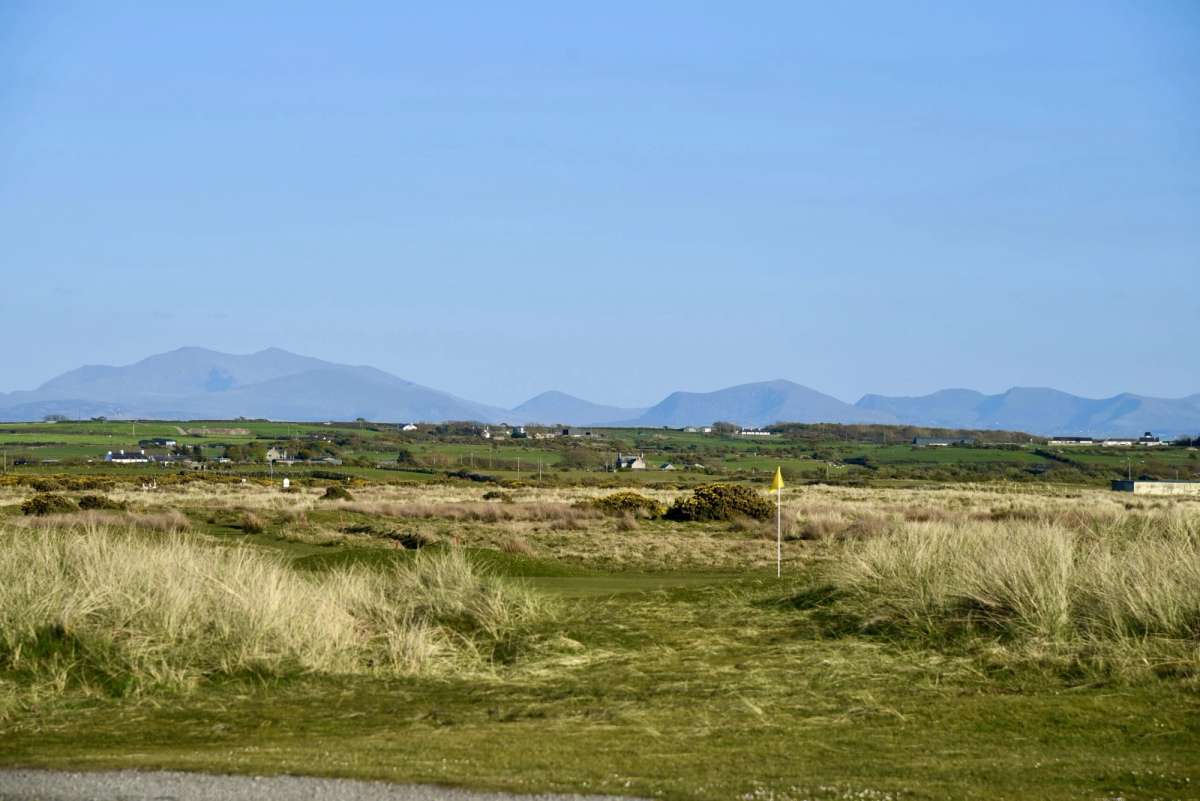
Best described as a rather flat, seaside links course with a heathland feel, Anglesey Golf Club extends to just over 6,300 yards, featuring small, lightly bunkered greens...
Overall rating

3.5
Anglesey Golf Club
Best described as a rather flat, seaside links course with a heathland feel, Anglesey Golf Club extends to just over 6,300 yards, featuring small, lightly bunkered greens...
3.5
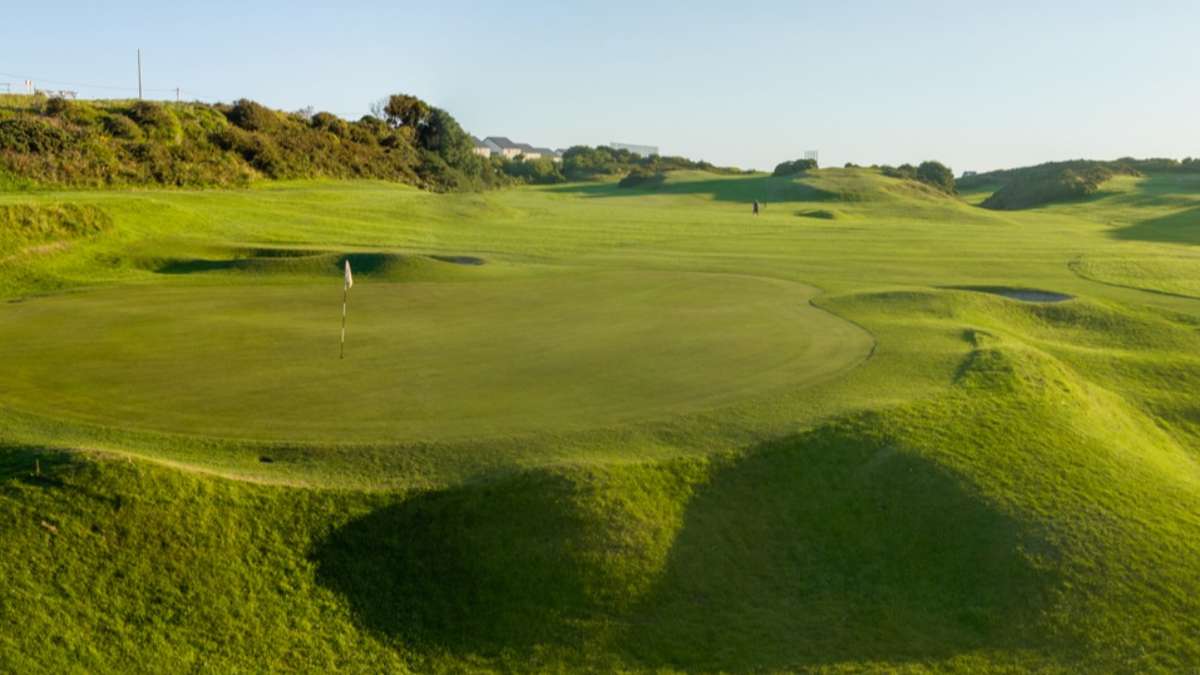
There’s a lot to take in as you make the walk from the understated clubhouse to the 1st tee at Anglesey Golf Club. The main runway at the Air Base at RAF Valley is just a few hundred yards away to the left with fast jets taking off in waves, circling the golf course throughout the day and ensuring there will be no ‘quiet please’ on the 1st tee. The golf looks pretty interesting too, as you get a brief glimpse of the 18th whilst crossing the bridge to the 1st tee, where you see the danger of having to negotiate a wide burn on the final hole, and there are sights of rolling and anticipation building links land beyond.
My expectations for Anglesey GC were relatively tempered, not due to anything that I had heard about the golf course but more because of the lack of hearing too much at all. It isn’t technically a links course (by the assessment of the Links Trust) but is located so close to the sea that I was intrigued about the type of playing characteristics I would find here. The opening hole gives little away, a gentle par-3 to get you out into the golf course, but the subsequent view of the crumpled ground encompassing the 2nd and 3rd holes settles you into a links mindset, and these two holes spark a run of golf that is probably the best on the course.
The 3rd is a proper links hole; a drive into the churn of links ground and then a potentially blind approach to a green with a telltale bell at its back left corner. You then transit under the railway line and emerge into the heart of the golf course. 14 holes reside on this side of the tracks and there is a real mixture to the composition of the play. My favoured section of golf came immediately after the crossing between holes 4-8 before the mood changes slightly, with more gorse lining the slightly flatter fairways around the turn. If pressed I’d elevate the approach to the par-4 5th which requires a marksman’s accuracy to find this small and characterful green and the next hole, the par-3 6th which is framed beautifully and played to a particularly narrow green.
Holes 9-12 are routed amongst a gorse filled corner of golf a little further away from the sea. Out of Bounds lingers at times and the test feels a little more restrictive and arduous, and I can imagine that would be an even more prevalent feeling if the wind is blowing. There is plenty still to admire though in this mid round lull, with the green contouring on the par-4 10th a particular highlight.
As you make your ways back towards the house, the course starts to feel a little more expansive and allows you to breathe again. The holes coming in aren’t particularly remarkable, but the relatively long 14th and 15th are a pair of par-4’s that demand your respect. You exit the larger section of the golf course, transit under the tracks one last time and make your way towards the 18th tee which is situated in the vicinity of the 3rd green. This hole is a dastardly finisher, with water threatening the tee shot and the approach, bordering the right side initially before cutting across the fairway in front of the green. It would be a even more highly impressive finisher if it weren’t for the lack of interest around the green. However it’s still offers a strong and memorable close to proceedings.
Anglesey offers some really good golf that is links in character for a lot of the round. There is a slightly marshy feeling to proceedings at times and not all the holes are as engaging as the highest highs in the round.. But there is a decent amount of interest here and it would be a real shame not to drop in if you happen to be visiting the island with your golf clubs in tow.
Alex Frolish
The latest ranking of the Top 100 Golf Courses in the World serves as the ultimate global golf bucket list. Most members of our World Top 100 Panel are seasoned golfers, each playing 20-30 of these courses annually while travelling extensively over decades to form their opinions on others. We recognise that opinions vary—even among our panel members. Rankings are subjective, and there are undoubtedly 50 or more courses in the UK and USA alone that could easily fit onto this list. Links Golf Pilgrimages The rankings
California, United States
New Jersey, United States
Northern Ireland, United Kingdom
New York, United States
New York, United States

Golf can be an expensive game, particularly when it comes to playing some of the world's best courses. But a memorable round doesn't have to come with a hefty price tag, and there are plenty of excellent layouts where you can enjoy 18 holes without spending more than £50. From championship golf in the United States to traditional links in Britain and Ireland, we've picked out 10 courses from around the world that prove quality and value for money can go hand in hand. Some of the rates depend on the season, day of the week or online booking availability, but each offers the chance to enjoy a quality round without breaking the bank. Gold Mountain Golf Club - Olympic Course (Washington, USA) Washington Ranking: 13th | Green Fees: From US$30 The Olympic Course at Gold Mountain Golf Club is proof that you don't need a famous resort or a hefty green fee to find championship-calibre golf. Part of a 36-hole public facility owned and operated by the City of Bremerton, the course was designed by John Harbottle III and opened in 1996, 25 years after its older sibling, the Cascade Course. The tree-lined layout is slightly hillier than the Cascade but remains eminently walkable, with annual bluegrass covering the tees, fairways and greens. Its quality has been recognised on the national stage, having hosted the U.S. Amateur Public Links Championship in 2006 and the U.S. Junior Amateur Championship in 2011. There are plenty of memorable holes, including the short fourth, the water-guarded ninth and the 188-yard 16th, which plays across a lake to the green. The closing par four also offers a tempting birdie opportunity. With the Cascade Course next door, golfers can make a full day of it, with 36 holes available at a price that remains competitive with many courses charging considerably more for a single round. Green fee note: Online green fees start at US$30 for 18 holes, with rates varying depending on the tee time and availability. Diamond Springs Golf Course (Michigan, USA) Michigan Ranking: 62nd | Green Fees: From US$35 Diamond Springs is a public golf course in Hamilton, Michigan, that demonstrates how affordable golf needn't mean compromising on design. Created by Mike DeVries, whose work at the highly regarded Kingsley Club established his reputation in the state, the course occupies 250 acres of oak and pine-covered sandhills around 30 minutes south-west of Grand Rapids. One of its defining features is the decision to use a single height of cut across much of the playing surface, doing away with traditional rough and keeping maintenance costs down. The result is a course that remains playable for higher handicappers while still offering plenty of strategic interest. The front nine features varied topography and interesting green complexes, but it's the closing stretch that really stands out. The final five holes bring a dramatic ravine into play, with the short par four offering a tempting risk-and-reward opportunity before a memorable finish at the 18th. Green fee note: Start at US$35 for 18 holes walking during April and October, rising to $50 midweek and $60 at weekends during the June–September peak season, all comfortably under £50. George Wright Golf Course (Massachusetts, USA) Massachusetts Ranking: 36th | Green Fees: From US$61 Designed by Donald Ross and opened in 1936, George Wright Golf Course is a municipal layout in Hyde Park, Boston, with a history as interesting as its setting. Built as part of the Works Progress Administration programme during the Great Depression, its construction was a major undertaking, reportedly requiring 60,000 pounds of dynamite to work through the rocky terrain. The result is a distinctive layout that makes excellent use of its natural surroundings, with rocky outcrops, elevation changes and tree-lined fairways providing plenty of character. After a period of neglect, the City of Boston took over its operation at the turn of the millennium and invested in improvements to the greens, irrigation and bunkering. That turnaround was recognised when George Wright became the first municipal course to host the Massachusetts Amateur Championship in 2018. Green fee note: Non-resident 18-hole green fees in 2026 are US$61 Monday to Thursday and $70 at weekends. The weekday rate works out at approximately £46. Kington Golf Club (Herefordshire, England) England Ranking: 65th | Herefordshire Ranking: 1st | Green Fees: From £26 Perched more than 1,000 feet above sea level on Bradnor Hill, Kington Golf Club is the highest 18-hole course in England and one of the country's most distinctive golfing experiences. Designed by C.K. Hutchison and opened in 1926, the layout is renowned for its panoramic views across the Welsh borders, taking in the Brecon Beacons, Black Mountains and Malvern Hills. At less than 6,000 yards, Kington might appear relatively straightforward on the scorecard, but its natural contours and fast-running turf provide a different sort of challenge. There are no bunkers or water hazards, with the sloping fairways and wonderfully quirky greens doing much of the defending. The result is a course that rewards creativity and careful shot-making rather than simply asking golfers to hit the ball as far as possible. Its unusual character has helped build a loyal following among visitors, while its position at the top of the Herefordshire rankings makes it a worthy inclusion. Green fee note: Green fees start at £26, with standard visitor rates varying depending on the time of year and day of play. Even during peak season, an 18-hole round costs no more than £45, including weekends and Bank Holidays Seascale Golf Club (Cumbria, England) England Ranking: 81st | North West England Ranking: 11th | Green Fees: From £35 Founded in 1893, Seascale Golf Club is a traditional links course on the Cumbrian coast, designed by Willie Campbell and George Lowe. Covering less than 100 acres, it makes clever use of its compact setting, with a varied layout that moves across different levels of terrain. The views are a constant feature, taking in the Isle of Man across the Irish Sea and the Lakeland hills inland. Seascale is not especially long by modern standards, but its rolling fairways, natural contours and fast greens provide a test that changes with the wind. The back nine is particularly memorable, from the short 10th, where a stream guards the hole, to the demanding 471-yard 16th. The 17th plays towards the beach, while the closing hole features a distinctive L-shaped green that offers one final challenge. It's an engaging and characterful links experience that deserves its place among England's top 100. Green fee note: High-season visitor rates are £35 for 18 holes midweek and £40 at weekends, keeping Seascale comfortably within the £50 budget. Braid Hills Golf Course (Edinburgh, Scotland) Scotland Ranking: 84th | Green Fees: £41 Set high above Edinburgh, Braid Hills is a public course where panoramic views come with a demanding test of golf. Founded in 1893, the layout was designed by three-time Open Champion Bob Ferguson and Musselburgh clubmaker Peter McEwan. It stretches to 5,858 yards, but its relatively short length should not be mistaken for an easy round. The hilly terrain, sloping lies and native gorse make accuracy and course management essential, particularly when the wind picks up. There are relatively few bunkers, so the challenge is less about avoiding sand and more about finding the right side of the fairway and keeping the ball out of trouble. The par threes at the second and 13th are highlights, while the elevated tee at the 14th offers one of the course's most memorable views. With the Pentland Hills on one side and the Edinburgh skyline stretching towards the Firth of Forth on the other, Braid Hills pairs a challenging round with some of the city's finest golf-course views. Green fee note: The standard visitor rate is £41 for 18 holes, making Braid Hills one of the more affordable options in Edinburgh without restricting play to winter or weekday tee times. Borth & Ynyslas Golf Club (Ceredigion, Wales) Wales Ranking: 17th | Green Fees: From £45 Borth & Ynyslas is a classic Welsh links course with a history stretching back to 1885 and a strong claim to being the oldest golf course in Wales. Its location along Cardigan Bay, within the Dyfi National Nature Reserve, gives it a distinctive setting, while Harry Colt's redesign in 1947 helped shape the layout that remains largely intact today. At just over 6,000 yards, it is not particularly long, but the coastal conditions can make it a considerably tougher proposition. The traditional out-and-back layout runs alongside the shoreline, with the railway and road forming boundaries on the other side of the fairways. Rolling humps, hollows and strategically placed bunkers provide much of the challenge, while the prevailing coastal wind rarely makes life straightforward. The second is a particularly memorable hole, a 454-yard par four squeezed between the road and the Irish Sea. With level terrain and easy walking, it is also the sort of course that might tempt golfers into a second round. Green fee note: 2026 summer green fees are £49.50 for individual visitors playing 18 holes, dropping to £44 per person for groups of seven or more. Winter rates for 2026/27 start at £45. Aberystwyth Golf Club (Aberystwyth, Wales) Wales Ranking: 46th | Green Fees: From £35 Aberystwyth is a Harry Vardon design that combines elevated golf with some of the finest coastal views in Mid Wales. Founded in 1911, the club opened its 18-hole course in 1913, with Vardon – a six-time Open Champion – responsible for the original layout. Sitting above the university town, the course enjoys sweeping views across Cardigan Bay, with the coastline stretching towards the Llyn Peninsula and Pembrokeshire. At just over 6,100 yards, it is not an especially long course, but the undulating terrain and exposed position provide plenty of variety. The layout moves between downland and parkland holes, with elevation changes adding another dimension to the challenge. The first is an interesting opening hole, with a stream cutting across the fairway to guard the approach, while the short 14th features an elevated green protected by fairway bunkers. The views from the higher holes are a highlight, making this an enjoyable round for golfers visiting the Welsh coast. Green fee note: The 2026 summer rate is £60 when booked through the office, but online bookings receive a £10 discount, bringing the 18-hole green fee to £50. The 2026/27 winter rate is £45 through the office, or £35 online. Corballis Links Golf Club (Dublin, Ireland) Ireland Ranking: 46th | Green Fees: From €25 Corballis Links has more than a century of golfing history, with its original holes laid out in 1906 by employees of the nearby Portrane Hospital. The course has since undergone several changes, with architect Ron Kirby responsible for the modern layout and a particularly memorable stretch of holes along the coastline at Donabate. Owned by Fingal County Council, Corballis is Ireland's only public links course, offering visitors the chance to experience genuine coastal golf without the price tag associated with many of the country's better-known venues. Its par-65 layout is relatively short, but that doesn't make it an easy round. Blind shots through the dunes, elevated greens and exposed fairways place a premium on accuracy and good course management, while the wind can make club selection a challenge. The views across the Irish Sea towards Lambay Island are another highlight, particularly on the coastal holes. Green fee note: The club advertises midweek visitor rates from €25, with weekend rounds from €35. Open competitions are available on Mondays, Wednesdays and Fridays from €30. Cart, trolley and club hire are extra. Metropolitan Golf Club (Western Cape, South Africa) Western Cape Ranking: 31st | Green Fees: R960 Founded in 1895 as the Green and Sea Point Golf Club, Metropolitan has been part of Cape Town's golfing landscape for more than 130 years. Its present-day course, however, is a much more modern creation. When the original layout made way for Cape Town Stadium ahead of the 2010 FIFA World Cup, architect Mark Muller was tasked with creating a new course alongside the stadium and Green Point Urban Park. The result is an unusual layout that delivers 18 holes across just nine fairways and 14 greens, using different tee positions and putting surfaces to create two distinct loops. Wide fairways make it accessible to golfers of varying abilities, while the coastal wind and subtle contours provide plenty to think about. The setting is hard to beat, with Table Mountain and the Atlantic providing a spectacular backdrop, while the closing par three played across water towards the clubhouse is a memorable way to finish. Green fee note: The 2026/27 non-affiliated visitor rate is R960 for 18 holes, approximately £43. Visitors are welcome Sunday to Friday, with caddies, club hire and carts available at additional cost.
As green fees at some of Britain and Ireland’s most celebrated courses continue to climb, Top100 Golf Courses' lead panellist Jasper Miners argues that golfers need to separate the quality of the course from the price of getting onto it. A round of golf at one of Great Britain and Ireland’s most prestigious courses can now cost £400, £500 or even £1,000. But does paying more guarantee a better golfing experience? For Top100 Golf Courses' lead panellist Jasper Miners, the answer is no. While some of the world’s finest courses command premium green fees for good reason, he believes golfers can too easily confuse price with quality. “Price can be exclusivity, it can be quality, it can be difficulty to access, it can also just be damn good branding,” he says. “I've played a lot of golf courses that are very expensive to play and I'd never want to play them again.” The distinction is becoming increasingly relevant as visitor fees at the top end of the game continue to rise. Research published by National Club Golfer in 2026 found that 15 courses in its Great Britain and Ireland Top 100 list charged £400 or more for a peak-summer round, up from eight the previous year. Turnberry's Ailsa Course retained its £1,000 headline fee, while Royal Birkdale's rose to £495. Those prices reflect more than the quality of the golf itself. Reputation, international demand, limited visitor access and the appeal of playing a famous course all contribute to what golfers are willing to pay. “People spend money on an experience, and it's cognitive dissonance: you convince yourself that it's good,” he says. Scotland shows the gap between price and quality Scotland offers a useful illustration of the difference between headline prices and the wider market. Top100's analysis of 94 ranked Scottish courses with published summer visitor fees in 2026 found a median price of £140, compared with an average of £194. The difference is significant: a relatively small number of expensive courses pull the average upwards, while more than half of the courses in the analysis could be played for £140 or less. Twenty-seven charged under £100. That doesn't mean £140 is inexpensive for every golfer, nor does it suggest that all courses offer the same experience. It does, however, challenge the idea that playing highly ranked golf necessarily requires a four-figure budget. The price of some famous venues has risen considerably. The Old Course at St Andrews, for example, went from a summer green fee of £195 in 2021 to £355 in 2026. Yet Scotland's wider selection of highly ranked courses offers alternatives at a fraction of that price. The same principle applies beyond Scotland. Top100's list of the ten cheapest visitor-accessible courses in its current World Top 100 includes Australia's St Andrews Beach at £74 and Bethpage Black in New York, a major championship venue, from £106. These examples do not mean that every lower-priced course offers the same facilities or experience as the most expensive venues. They do show that a high ranking and a substantial green fee do not always go hand in hand. The market, however, does not operate on quality alone. Miners points to Scotscraig Golfing Club as an example of how perceptions can change alongside pricing. He says the course has gone from attracting relatively little visitor attention to charging £225 and selling out. “In America, if you're good, you can charge more, so price becomes equated with quality,” he says. “Scotland has been a beneficiary of that.” He believes the relationship between price and demand can become self-reinforcing. A higher fee can contribute to a course's image as an exclusive destination, and that exclusivity can itself become part of the attraction. The challenge for lesser-known courses For courses without the international recognition of St Andrews, Muirfield or Royal County Down, competing for attention can be more difficult. A lower green fee may make a course attractive to golfers looking for value, but it can also leave it competing against venues whose reputations have been built over generations. Miners believes independent rankings and editorial coverage have a role to play in identifying courses that deserve attention, regardless of what they charge. “Hopefully, a website like Top100 is doing that work where we're going and saying, actually, this is not expensive and that's not part of our criteria, this is worth going to play,” he says. Simply increasing prices to appear more prestigious is not a universal solution, either. A strategy that works in a high-demand Scottish golf destination may not work in Wales, where raising green fees substantially will not necessarily persuade more people to visit. For clubs, the challenge is to establish what their course offers, understand their market and communicate its appeal. A famous name can command a premium, but a lesser-known venue may have more to gain by demonstrating the quality of its golf and the value of the overall experience. Golf is a business, too There is another side to the debate. While golfers may understandably want affordable access to good courses, clubs have to cover the costs of maintaining their facilities and operating their businesses. “I don't think [the industry needs to do more to challenge the idea that the best experiences are the most expensive],” Miners says. “As much as we don't want to admit it, golf is a capitalist sport.” He points out that many members' clubs depend on visitor income to support their finances, particularly when membership fees and subscriptions alone are insufficient to cover operating costs. “There are very few clubs that can run on a very modest budget with a very low membership that doesn't need outside play,” he says. That commercial reality makes it difficult to argue that clubs should simply charge less. Golfers in Britain and Ireland may be accustomed to playing regularly at prices that seem modest by international standards, but maintaining a golf course is expensive, and visitor income can be essential to a club's survival. Where demand is strong and tee times are limited, higher visitor fees may be a rational business decision. “If their tee sheet is full and they can charge a lot of money for people to come play, good for them,” he says. “The issue is mine, not theirs.” The question, then, is not whether every expensive course should lower its fees, or whether lower-priced courses should charge more. It is whether golfers can look beyond the number on the booking page and judge a course on its own merits. For golfers planning their next trip, that means looking beyond the obvious names. For clubs, it means recognising that price is only one part of the proposition. And for the industry, it is a reminder that the most expensive round and the best golfing experience are not necessarily the same thing.

Wales remains Britain's ultimate undiscovered golf destination. While Scotland commands premium prices and Ireland attracts international crowds, the Principality quietly delivers exceptional value across 50 ranked courses that showcase everything from championship links to characterful common land layouts. The 2025/26 rankings reveal subtle movements that reflect golf's shifting values, with authentic experiences gaining recognition over heavily manicured resort tracks. Royal Porthcawl continues its unbroken reign at the summit since rankings began in 2006. The world-ranked links anchors a stellar collection that includes Pennard, Royal St David's, and Aberdovey, all featured in the Great Britain & Ireland Top 100. But Welsh golf's true strength lies deeper, in remarkable second-tier courses that provide outstanding experiences at refreshingly accessible prices. Top 100 Golf Courses now maintains dedicated regional rankings for North, South, Mid, and West Wales alongside the national Top 50. This structure helps visiting golfers navigate more than 60 profiled courses across varied terrain. Whether seeking windswept coastal tests or quirky inland challenges, Wales delivers without the premium tags attached to more famous destinations. Wales 'Always Fresh' Rankings: Stability at the Summit The latest rankings demonstrate remarkable consistency at the top. All seven courses occupying positions one through seven remain unchanged from the previous edition, a testament to their enduring quality. Royal Porthcawl, Pennard, Royal St David's, Aberdovey, Conwy, Southerndown, and Tenby form an elite group that represents Welsh golf at its finest. Behind this stable leadership, however, meaningful shifts occur throughout the rankings. Pyle & Kenfig rises one place to ninth, swapping positions with Celtic Manor's Twenty Ten course, which drops to tenth. The most dramatic movement comes from Welshpool, the James Braid common land gem that surges seven places to 18th position from 25th only as recently as 2023. This leap reflects golf's evolving appreciation for authentic, characterful layouts over perfectly conditioned resort golf. Welshpool's rugged charm and natural undulations now receive the recognition they deserve. Bull Bay climbs one spot to 11th, whilst Cardigan jumps three positions to 16th. Conversely, Rolls of Monmouth drops three places to 19th, and St Pierre (Old) falls three spots to 23rd, suggesting that traditional parkland layouts face stiffer competition from Wales's distinctive coastal and common land venues. Wales Top 50 At A Glance The Unchanged Elite Royal Porthcawl (1st) Pennard (2nd) Royal St David's (3rd) Aberdovey (4th) Conwy (5th) Southerndown (6th) Tenby (7th) The Rising Stars Cardigan (up 3 to 16th) - clifftop classic climbing steadily Newport (up 2 to 21st) - parkland quality acknowledged Radyr (up 2 to 28th) - Harry Colt design advancing Notable Movements Pyle & Kenfig (up 1 to 9th) - championship venue continues ascent Bull Bay (up 1 to 11th) - Herbert Fowler's links improving position. It is up 4 spots from 15 to 11 in the past few years - a significant threat for the Top 10 moving forward Borth & Ynyslas (up 1 to 17th) - Harry Colt links moving forward West Monmouthshire (up 4 to 45th) - significant climb Cardigan is also one to watch, rising to 16, trending in the right direction over the past few years The Decliners Celtic Manor Twenty Ten (down 1 to 10th) - Ryder Cup venue slips slightly Rolls of Monmouth (down 3 to 19th) - faces increased competition St Pierre Old (down 3 to 23rd) - falling in a tight field Vale Wales National (down 3 to 39th) - resort course declining Best Golf Courses by Region Wales's Top 50-ranked courses are distributed across four distinct regions, each offering unique golfing characteristics and experiences. South Wales dominates with 22 courses (44% of rankings), reflecting both the region's population density and golfing heritage. Royal Porthcawl and Pennard provide world-class links golf, whilst Celtic Manor's three courses showcase modern resort development. Hidden gems like Radyr and Newport demonstrate the region's depth. North Wales contributes 17 courses (34%), including three GB&I Top 100 venues: Royal St David's, Aberdovey, and Conwy. The region excels in coastal golf, with Bull Bay, Nefyn, and Porthmadog offering stunning seaside experiences. The common land layouts at North Wales Golf Club provide additional variety. West Wales features 6 courses (12%), led by championship venues Tenby and Ashburnham. The region's coastal courses benefit from dramatic clifftop settings, particularly at Cardigan and Borth & Ynyslas. Despite a sparse population, West Wales punches above its weight in golfing quality. Mid Wales contributes 5 courses (10%), the smallest representation reflecting the region's mountainous terrain and limited golfing infrastructure. Llandrindod Wells and Welshpool exemplify James Braid's democratic approach to course design, creating memorable golf on challenging landscapes. What the Rankings Tell Us Consistency at the Summit Royal Porthcawl's unbroken 19-year reign demonstrates exceptional quality. Martin Ebert's recent bunker renovations ensure this championship links remains fit for modern tournament golf whilst preserving its classic character. The course's position in both the World Top 100 and GB&I Top 100 validates its status as Wales's premier golfing venue. Royal St David's reclaims third place after brief spells lower in previous rankings. The tough par-69 layout concludes unusually with a par three, creating strategic tension right to the finish. James Braid's Democratic Legacy Scottish architect James Braid left an indelible mark across Wales. Unlike contemporaries focused on prestigious commissions, Braid seemed committed to democratising golf, bringing Scottish ideals to Welsh communities with limited resources. Welshpool exemplifies this philosophy. Created in 1929 on dramatically undulating common land, the course features rudimentary shaping that maximises natural terrain. Extending merely 5,700 yards with numerous short par fours, Welshpool rewards strategic thinking over power. Its seven-place climb reflects growing appreciation for authentic golf experiences. Llandrindod Wells, originally designed by Harry Vardon and then remodelled by Braid in 1935, occupies elevated ground offering stunning countryside views. Wrexham, Holyhead, Porthmadog, and Langland Bay all benefited from Braid's architectural input, creating enduring layouts that remain largely unchanged a century later. The Common Land Experience Wales's distinctive "common land" courses represent perhaps its most unique golfing offering. Welshpool, North Wales Golf Club, and Llandrindod Wells feature dramatically undulating terrain, fine fast-running turf, and macro-scale contours that create strategic challenges unlike traditional links or parkland golf. These courses require ground game approaches similar to links golf, but on exaggerated landscapes. Golfers must read terrain contours carefully to navigate elevated greens and significant slopes. The rudimentary features, constructed with basic tools and minimal earth movement, create authentic playing experiences that transcend modern construction techniques. This architectural school extends across the Wales-England border, linking Welsh common land courses with English counterparts like Cleeve Hill, Painswick, and Minchinhampton. Together they represent democratic golf at its finest, offering memorable experiences at remarkably accessible prices. Resort Courses Under Pressure Celtic Manor's three courses demonstrate shifting attitudes toward heavily resourced resort golf that can be played almost anywhere. The Twenty Ten Ryder Cup course drops one place to tenth, whilst the Montgomerie and Roman Road layouts occupy 24th and 26th positions respectively. These movements don't reflect diminished course quality. Rather, they indicate golf's evolving values. More rugged, characterful layouts now receive greater recognition than perfectly conditioned resort golf. Authentic golfing experiences gain appreciation over manufactured challenges. A Decade of Growth: 2011-2024 Wales's ranking history reveals consistent expansion and refinement. From humble beginnings with a Top 15 in 2006, the listings have grown to encompass 50 courses, providing comprehensive coverage of the country's golfing landscape. 2006: Top 15 The inaugural ranking listed just 15 courses. 35 golf courses have been added in the 20 years since its initial release. 2011: Expanding Recognition Top 100 Golf Courses published its first extended rankings for Wales, growing from Top 20 to Top 30. Royal Porthcawl and Royal St David's maintained their traditional dominance atop the table. Pyle & Kenfig emerged as the highest climber, with Conwy also advancing significantly. The rankings introduced Llandrindod Wells at number 12, the highest new entry, signalling Mid Wales's growing recognition. 2012: North Wales Dominates Quality The 2012 update maintained the Top 30 format whilst highlighting North Wales's exceptional depth. Royal Porthcawl and Royal St David's continued leading the national rankings. Four North Wales courses occupied Top 10 positions: Royal St David's, Aberdovey, Conwy, and Nefyn Old. Celtic Manor's Montgomerie course climbed six places to 14th, the biggest upward move. Pwllheli and Vale of Llangollen entered as new courses. 2014: Extending to Top 50 The rankings expanded from 30 to 50 courses. Royal Porthcawl and Royal St David's remained unchallenged at the summit, supported by Aberdovey and Pennard. Ashburnham and Southerndown entered the Top 10, recognising their architectural heritage. North Wales, Holyhead, and Bull Bay all climbed significantly. Nefyn Old fell four positions to 11th as competition intensified. Vale Wales National debuted at 29, the highest new entry. 2015: Regional Refinements Top 100 Golf Courses published updated regional rankings for North, South, Mid, and West Wales, providing detailed local perspectives. Royal St David's led North Wales's Top 20, with Bull Bay, Porthmadog, and Vale of Llangollen advancing. Royal Porthcawl, Pennard, and Celtic Manor Twenty Ten maintained South Wales's top three positions. Pyle & Kenfig, St Pierre Old, and Newport climbed in South Wales. Radyr soared seven places. Whitchurch and Glamorganshire entered the South Wales Top 20. Ashburnham headed West Wales, followed by Tenby and Machynys Peninsula. Llandrindod Wells led Mid Wales's Top 5. 2016: Stability Returns Little changed at the top, with all seven leading courses maintaining positions. Royal Porthcawl and Royal St David's continued their duopoly. Llandrindod Wells and St Pierre Old both climbed five places. Cardigan and Borth & Ynyslas advanced significantly in West Wales. Newport, Radyr, Prestatyn, and Llandudno Maesdu made double-digit upward moves. Whitchurch entered at 23, the highest newcomer. 2018: Ranking Philosophy Evolves Royal Porthcawl remained firmly established as Wales's premier course, with Martin Ebert's architectural input ensuring continued excellence. Aberdovey rose one place to second, with Pennard climbing to third. Royal St David's fell to fourth as competition intensified. Holyhead jumped four places to 24th. Rhuddlan also climbed four spots. Three new entries appeared: Padeswood & Buckley, Monmouth, and Aberystwyth joined the ranking. 2020: Championship Golf Celebrated The 2020 rankings appeared as Wales prepared for major championships. The Boys Home International played at Ashburnham, the Women's Senior Amateur at Royal St David's. The following year promised the Curtis Cup at Conwy, St Andrews Trophy at Royal Porthcawl, and both Girls and Ladies Home Internationals at Royal St David's. Royal Porthcawl maintained its position despite ongoing bunker renovation work by Martin Ebert. Pennard climbed two places to second following bunker renovation completion. Conwy rose two spots to fifth, preparing for the Curtis Cup in prime condition. Southerndown advanced three places to sixth. Welshpool climbed five positions to 26th, beginning its ascent. Aberystwyth jumped nine places to 41st. Four new entries appeared: Builth Wells (returning), St Mellons, Henllys, and Milford Haven. 2022: Recognising Heritage The ninth biennial rankings edition continued Wales's established pattern. Royal Porthcawl's dominance remained unchallenged, occupying its position since rankings began. Royal St David's regained second place after previous ranking adjustments. Ashburnham rose two places to sixth, receiving overdue recognition for its J.H. Taylor design. Bull Bay also climbed two spots to 13th, highlighting Herbert Fowler's 1913 creation. Langland Bay advanced eight positions to 26th. Wrexham climbed seven places to 30th. Mountain Ash entered at 41st, the highest new entry. Four courses departed: Builth Wells, Carmarthen, Henllys, and Wenvoe Castle. 2024: Contemporary Values Emerge Royal Porthcawl maintained its unbroken leadership. Pennard moved above Royal St David's from third to second place. Southerndown advanced two spots. Ashburnham declined two positions. The rankings noted "big resort courses slipping a little bit down" whilst "more rugged courses move up," presaging Welshpool's dramatic rise. Historical Performance Analysis Examining long-term trends reveals fascinating patterns in course development and recognition. The Most Consistent Performers Several courses demonstrate remarkable stability across seven years: Royal Porthcawl has never left first position since 2006, occupying the summit in every ranking edition. This consistency reflects world-class quality maintained through careful stewardship and judicious architectural input from Martin Ebert. Pennard fluctuated between second and fourth positions before settling at second in 2025/26. Tom Doak's bunker work restored strategic elements that helped the course regain its traditional standing. Aberdovey held second in 2018, moved to third in 2020, fourth in 2022 and 2024, maintaining its position in 2025/26. Conwy occupied fifth position in every ranking from 2020 onwards, demonstrating steady quality. Curtis Cup preparation elevated the course to peak condition. The Biggest Climbers Several courses achieved remarkable upward momentum: Welshpool showed the most dramatic ascent, rising from 31st in 2018 to 18th in the latest release, climbing 13 positions overall. The James Braid common land design benefits from golf's renewed appreciation for authentic experiences. Langland Bay advanced from 34th in 2018 to 27th in the latest release, rising seven places. Radyr climbed from 37th in 2018 to 28th in the latest release, advancing nine positions. Harry Colt's design finally receives appropriate acknowledgement. West Monmouthshire surged from unranked to 45th in the latest release, representing the highest new entry in recent years. The Notable Decliners Some courses experienced sustained declines: Celtic Manor Twenty Ten dropped from fifth in 2018 to tenth in the latest release, falling five positions. The Ryder Cup venue remains excellent but faces increased competition from more characterful alternatives. Vale Wales National declined from 28th in 2018 to 39th in the latest release, losing 11 places. Nefyn Old fell from fifth in 2018 to 13th in the latest release, dropping eight positions. St Pierre Old declined from 14th in 2018 to 23rd in the latest release, losing nine places in a competitive field. Planning Your Wales Golf Trip Wales offers exceptional value for destination golf, particularly during high season when Scotland and Ireland command premium prices. The compact geography allows combining multiple regions in extended trips, whilst focused itineraries can explore single areas in depth. The Championship Links Circuit Visiting golfers seeking world-class links experiences should prioritise the elite coastal venues. Royal Porthcawl provides the centrepiece, combining championship quality with stunning sea views. Book well in advance, as this world-ranked course attracts significant demand. Pennard lies 30 miles west on the Gower Peninsula, offering clifftop drama and quirky charm at accessible rates. Royal St David's and Aberdovey anchor North Wales coastal golf. The dramatic setting below Harlech Castle makes Royal St David's unforgettable, whilst Aberdovey's romantic location between mountains and estuary creates enchanting golf. Both welcome visitors and offer excellent value compared to famous Scottish links. Conwy merits inclusion in any serious Welsh itinerary. Curtis Cup standard conditioning combined with strategic interest makes this understated links worth travelling for. The course lies conveniently near Chester and Liverpool, facilitating travel connections. The North Wales Coastal Tour North Wales offers concentrated quality along relatively short distances. Royal St David's and Aberdovey provide anchor points, separated by spectacular coastal drive. Conwy lies further north, accessible via dramatic scenery. Bull Bay occupies Anglesey's northern tip, convenient for ferry travellers to Ireland. Nefyn Old features spectacular clifftop holes rivalling famous Irish courses. Porthmadog and North Wales Golf Club provide additional variety. Holyhead's convenient location near ferry ports makes it perfect for travellers with spare time. Pwllheli rounds out coastal options. This circuit can be completed comfortably in 4-5 days, with excellent accommodation options in Harlech, Porthmadog, and Conwy. Green fees remain remarkably affordable compared to Scotland's championship venues. The South Wales Value Experience South Wales combines championship golf with exceptional depth. Royal Porthcawl and Pennard lead the way, but Southerndown provides comparable quality at lower prices. Pyle & Kenfig offers championship pedigree without premium tags. Celtic Manor's three courses suit golfers seeking resort amenities. The Twenty Ten Ryder Cup course provides memorable experiences, whilst the Montgomerie and Roman Road layouts offer variety. Convenient location near the Severn Bridge makes Celtic Manor accessible from England. Newport, Rolls of Monmouth, Radyr, and St Pierre Old demonstrate South Wales's exceptional depth. These parkland tracks provide variety after coastal golf, with green fees rarely exceeding £60. Cardiff and Swansea offer numerous accommodation options at varying price points. The West Wales Hidden Gems West Wales rewards adventurous travellers with stunning coastal scenery and exceptional value. Tenby and Ashburnham anchor the region, both dating to the 1890s with impressive architectural pedigrees. Machynys Peninsula provides modern resort golf with Nicklaus Design credentials. Cardigan occupies dramatic clifftop terrain above the Teifi Estuary, described as one of Wales's best-kept secrets. Borth & Ynyslas showcases Harry Colt's links design in remote splendour. These courses rarely see international visitors, ensuring uncrowded fairways. Aberystwyth and Milford Haven provide additional options for extended trips. The region suits golfers seeking authentic experiences without tourist crowds, offering exceptional value throughout the season. The Mid Wales Common Land Adventure Mid Wales appeals to golfers appreciating quirky, characterful layouts. Llandrindod Wells occupies dramatically elevated terrain, offering stunning views alongside challenging golf. Welshpool delivers authentic common land experiences, with rugged terrain requiring strategic ground game approaches. Cradoc provides gentler parkland golf, whilst Builth Wells and Machynlleth offer compact layouts bursting with character. This region suits golfers breaking journeys between North and South Wales, or those specifically seeking unusual golfing experiences. Green fees in Mid Wales remain extremely affordable, rarely exceeding £40. Accommodation options include charming market town hotels and country inns, creating memorable non-golfing experiences. Practical Considerations Wales benefits from excellent road infrastructure, with the M4 motorway providing rapid access from England. Manchester, Birmingham, Liverpool, and Bristol airports all lie within reasonable driving distance. Ferry services from Holyhead connect to Ireland, allowing combined UK-Ireland golf tours. Green fee rates range from £30-60 at most courses, with only Royal Porthcawl commanding premium prices approaching £200. Advance booking secures the best rates and tee times. Many courses offer visitor packages combining multiple rounds. Accommodation varies from luxury resort hotels at Celtic Manor to characterful country inns in market towns. Coastal villages provide bed and breakfast options with local charm. Cardiff and Swansea offer urban amenities for those preferring city bases. Weather patterns favour spring and autumn visits, avoiding summer crowds whilst ensuring reasonable conditions. Wales's rainfall reputation is somewhat exaggerated; coastal areas receive less precipitation than popular perception suggests. Waterproofs remain advisable regardless of the season. Looking Ahead Wales's golf scene continues evolving, with several developments promising future improvements. Tourism development remains modest compared to Scotland and Ireland, preserving Wales's uncrowded character. Golfers seeking authentic experiences without tourist infrastructure appreciate this understated approach. Limited international marketing keeps Wales affordable whilst neighbouring countries face pricing pressures. The rankings will continue evolving as golf's values shift toward authentic experiences. Courses offering distinctive character at accessible prices should gain recognition. Resort developments may face continued pressure unless they provide exceptional strategic interest alongside conditioning standards. Wales's position as Britain's last undiscovered golf destination won't last forever. Savvy travellers increasingly recognise the exceptional value proposition. Visit sooner rather than later to experience uncrowded fairways at remarkable prices. For complete details of all Top 50 Golf Courses in Wales, including regional breakdowns for North Wales, South Wales, West Wales, and Mid Wales, visit Top100GolfCourses.com.