Bob Harrison's 2017 clifftop layout occupies Jura's southern peninsula, where six years of construction transformed peat and rock terrain into world-ranked golf holes. The exclusive estate rental includes 18 guest bedrooms and unlimited course access across 240 hectares overlooking the Sound of Jura. Plan your Scottish island golf holiday.
Bob Harrison's 2017 clifftop layout occupies Jura's southern peninsula, where six years of construction transformed peat and rock terrain into world-ranked golf holes. The exclusive estate rental includes 18 guest bedrooms and unlimited course access across 240 hectares overlooking the Sound of Jura. Plan your Scottish island golf holiday.

6
CB MacDonald famously said about courses with scenic views, “Don’t confuse the canvas with the artwork”. Could that apply in this location? Fortunately at Ardfin, the artwork is just as spectacular as the canvas.
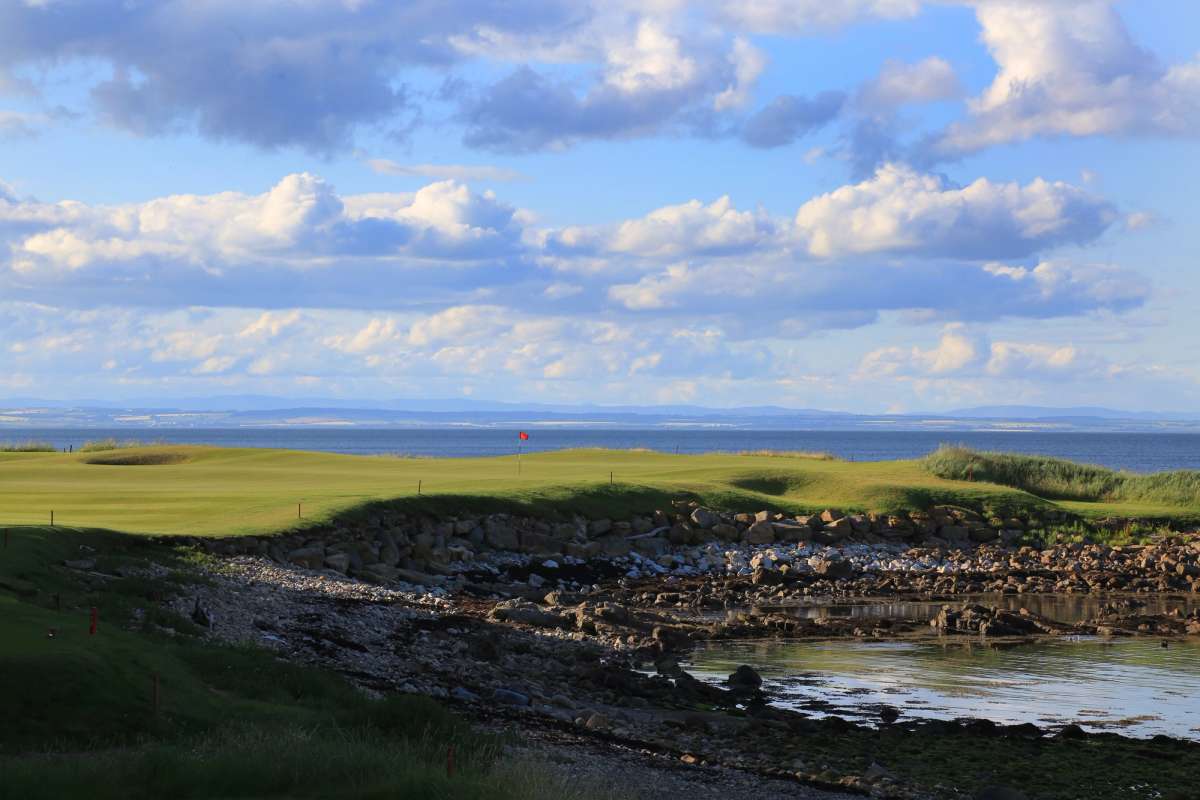
Ardfin Estate on the remote Isle of Jura sits in a spectacular setting. The wild cliffs and shoreline hug the estate to the East whilst opening into even more spectacular views and vistas to the West.
What Bob Harrison has designed here is nothing short of a miracle. Ardfin rivals Lofoten Links for golf at the extremes. But what it delivers is nothing short of miraculous.
Let me start by saying, there are NO weak holes. Yes, there are one or two things you would change but that is natural course progression. After all the course is only 10 years old and the views of the owner, Greg Coffey, have developed and matured over the last decade. I was lucky on my visit to meet Greg and also course architect Bob Harrsion. Bob is a highly engaging and insightful person and I loved getting his take on his own design.
The challenge of laying out 18 holes across 240 hectares of cliff top, peat bogs and rocky outcrops lead to over 14 iterations of the routing before the final 19, yes 19, holes were built. Bob advised that his starting points were the sites where the 16th green is, along with sites for the par 3s 2nd and 10th. These were his 'easy' wins if you could call them that. Nothing was easy about building the layout with Irish firm SOL given the task of constructing the site. 29 different boat trips of materials, in particular sand, we're required during construction. Bob also advised that upon deciding the routing for the 18th, half of that hole was actually unwalkable until construction began.
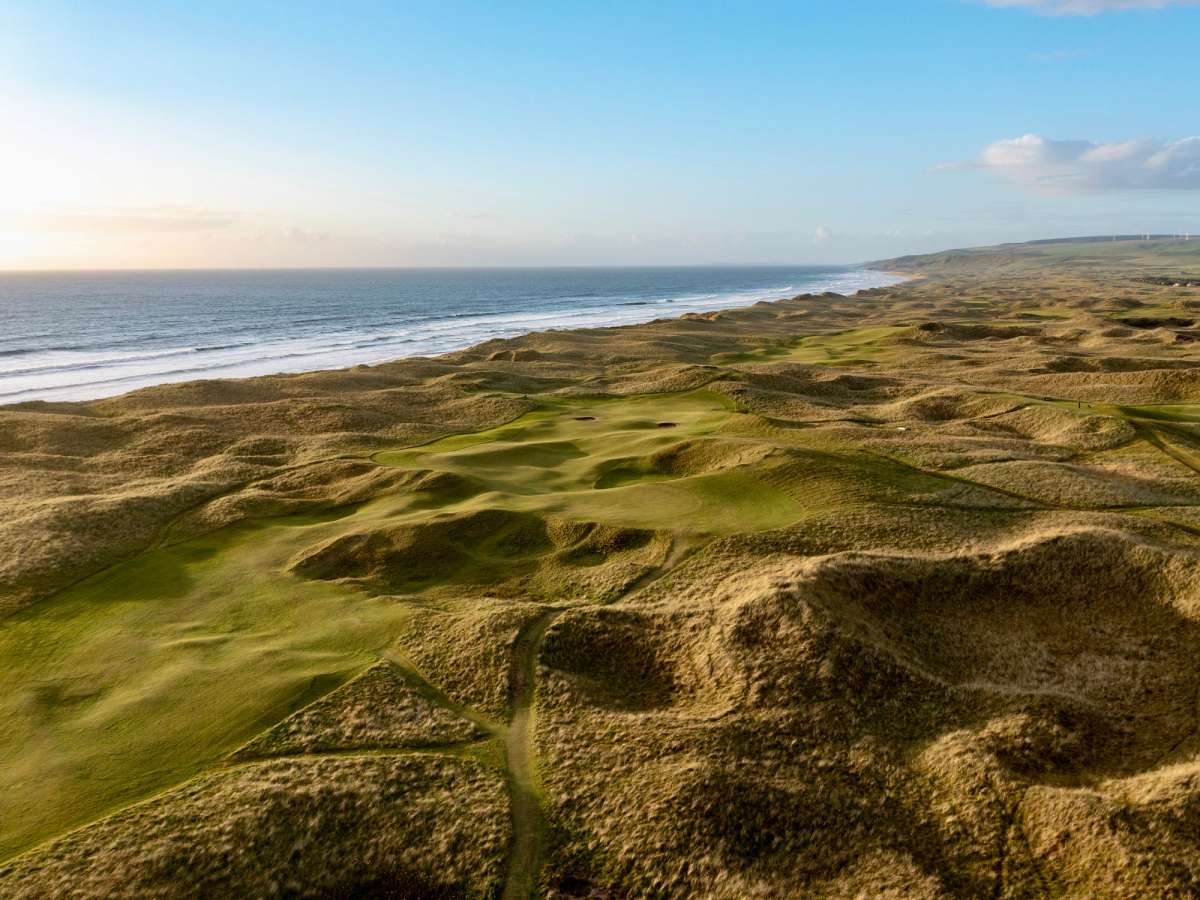
The result of all this hard work and deliberations by the design and construction team is a World Class Masterpiece. Jura House and the accommodation blocks are central to the entire routing, with 7 holes laid out east of Jura House and 11 to the west. Within the 11 Westerly holes are 2 distinct sections. Holes 8 - 14 play along the cliff tops which gradually reduce in height until you reach The Boathouse (famous for rock band KLF burning £1m in cash in it). Holes 15 - 18 play higher up the hillside and inland and have a more heathland/moorland feel to them.
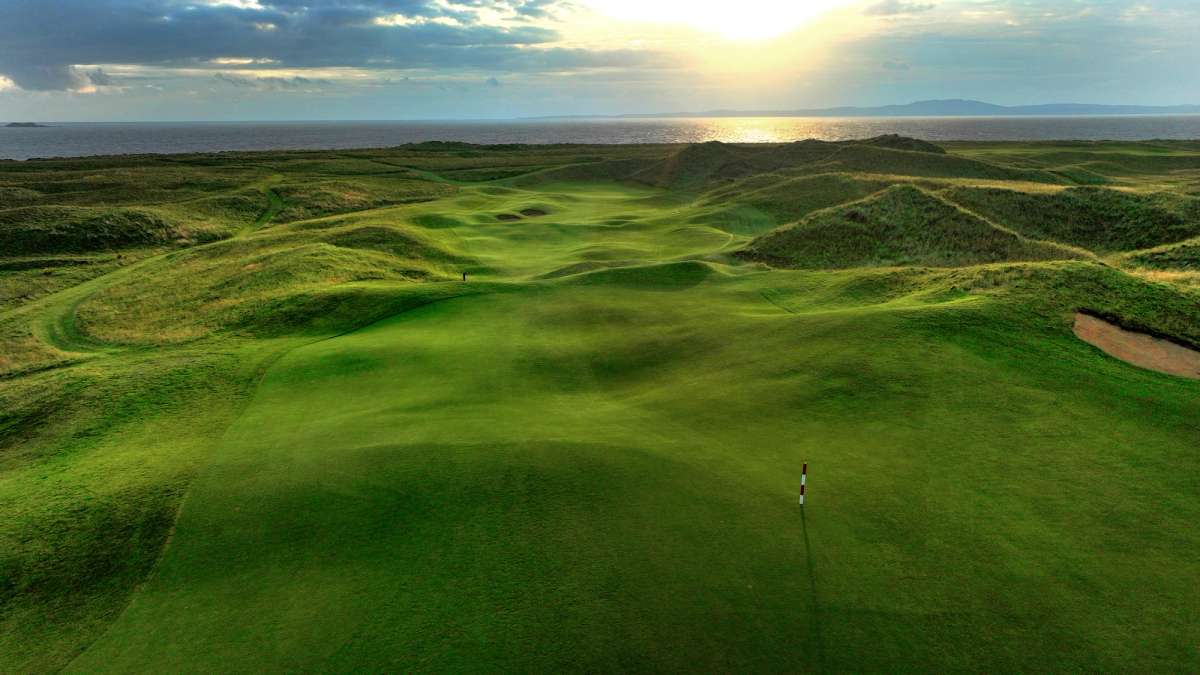
Inter connecting parts of the property are 2 long walks. Normally a long walk from green to tee isn't welcome but here at Ardfin, the walks are all part of the story of the historic Ardfin Estate and the journey it has been on. The 1st long walk takes you from the 7th green and passes in front of Jura House where a green complex can be identified which had been planned to be the original 7th green (would have made the hole a par 5). A very pleasant walk past the Walled Garden dating back to 1812 and stop off in the greenhouse for coffee and cake make this part of the walk very memorable. The 2nd long walk comes after the 15th green. A 200 yard walk through silver birch, bracken and brambles, opening up as you arrive on the 16th tee. I loved the sense of anticipation as I wandered through this walkway unable to see the landscape again until you step on the 16th tee. And what a hole the 16th is. A memorable, sweeping left to right and downhill par 5, with a split fairway and infinity green!


Andy Cocker
Round Information
Date Played
August 17, 2026
Standout Holes
#6, #11, #16
Rating Breakdown
Strategy
Green Complexes
Variety
Facilities & Amenities
Not only do you get a break after the 7th, the Boathouse after the 11th also is an ideal place to grab lunch or simply relax a while. It's an iconic landmark on the property and on my 2nd round my Group relaxed there and played pool and had a few whiskeys for over 45 minutes.
The routing, as mentioned above, starts with 7 holes to the east of Jura House. The 1st 2 holes are set on the cliff tops and are spectacular from the off. Just what you want when you have made a long and potentially arduous journey to get here. You want to be wowed and you are! A tee close to the cliff edge and an uphill hole that hugs the cliffs is a tremendous start. The 2nd, the par 3 requires an all carry 180 yards over a gully on this 200 yard hole. Playing Day 1 into the wind and rain, I took driver. Day 2 was a 5 wood. On another day with wind really assisting it could be a mid iron for me. The beach is some 300 feet below and wild goats, dating back to the Spanish Armada, could be seen down on the waters edge.
The 3rd plays behind a huge cliff top, cape in design, with trouble all left if you do not make the fairway. Whilst talking about trouble, the course fairways are generous enough in width, but miss by a fraction and you will lose your ball. The course is not red staked, so your playing group may want to agree to take lateral penalty drops. I understand that the rough has been reduced a little but if you are not having a 'hit em straight' day, be prepared to lose alot of golf balls. I only lost 1 ball per round, which was the best showing of the 16 attendees I think. On round 1 I made it to my 2nd shot on the 17th before the rough finally caught up with me. On Day 2 it was a watery grave on the 12th that did for me.
The 4th is the 1st of 3 par 5's and offers up a blind tee shot, up and over a hill before a sweeping dog leg right, played over a large rough area and bunkering positioned in the fairways to catch a long 2nd approach shot and bunkers green side to the right, although a gap is left to run an approach in from the left.
A short walk through a copse leads you to holes 5 and 6. These holes share a fairway and initially stood on the tee the player may feel a little underwhelmed. But unlike a previous reviewers comments, this is not a weak hole. A tight boundary wall to the right, means most players will aim to the centre and yet the best angle of approach to the green is from the right. On reaching the green, its a wow moment. Contoured, with a valley in the middle of it, at least 2 raised tiers and a slope to the front, this is the best green complex so far.
The 6th plays back down the shared fairway and also has a boundary wall to the right - stone walls are a common theme either framing a hole or coming into play by bisecting the hole - holes 8 and 9 readily spring to mind. The green is perched atop a mound. Like on the 4th, there is a safe way in and a more dangerous. Favour the left and run the ball up. Right will see the ball repelled or thrown off to the right should you not hit your number.
The 7th was originally designed as a par 5, now a par4 with a tucked out of sight green. Theres a swale before the green - another common feature around the course along with false fronts - before a contoured and tiered green and steep run offs to the rear. Like most greens, missing long is not a wise option as the rough is often close to the green itself and a ball wandering into it could be lost.
After the pit stop, the course moves into its 2nd phase, playing along the coast towards the Boathouse for holes 8 - 11. This is a very strong run of holes. Well designed holes, individual in nature whether that be hole shape, the use of dry stone walls or water. The 8th is not a driver hole even for short hitters. A stone wall and stream cuts across the fairway at 220 yards. The approach is then downhill to a green that generally will be slightly offset, with a gnarly bunker protecting the approach. The 9th features an ancient (and moved) stone wall. Its both a feature and potential hazard as it bise ts the fairway 230 yards off the tee. This stretch however is dominated by the strong par 3 10th, played across 180 yards of trouble to an obscured green and the 11th, where the iconic Boathouse and Sound behind acts as the canvas for what is a very strong hole, incorporating a wooden walkway across marshland.
The 12th possibly needs a little rethink. The green is offset to the tee, especially from the tee located next to the water. The issue is that this 3 tier green is also long and narrow, with no bail out right and heavily protected by water, rough and bunkers left. Whilst the green is superb, the landing strip is extremely small for a 200 yard tee shot. A slightly larger area to bail out on the left of the bunkers or a slightly shaved area to the right of the green would remove a total 'do or die' shot.
The next 2 holes hug the coastline. The back tees on the 13th present an interesting view, teeing off over old farm outbuildings. The tee was moved up on the 2nd day due to the strong winds and brought the farm building even more into play. The approach features a brook cutting across the hole directly in front of the green and the green slopes right to left and is long but narrow. The 14th is half par hole. Into a strong wind its a par 5. There is a 70 yard carry over a wooded gorge short of the green so if you are too far back off the tee, a lay up is required. Its SI1 for a reason.
The closing stretch wanders inland, playing on higher land behind holes 9 - 14. It has a heathland/moorland feel. Whilst this stretch offers up 2 par 5's giving some respite, the 2 par 4's on hole 15 and 17 are both 424 yards long and uphill, both narrowing the further up the neck of the hole you wander. The 17th in particular has a very tight entrance to the green with a brook disecting the approach some 85 yards short. Gorse lines the hole. This and the 18th feel a little out of keeping with the rest of the course given how tight, visually at least, they appear. I'd prefer to see the 18th in particular widened a little to enable golfers a better chance of a par finish.
Before we get to the par 5 18th, the 16th, also a par 5 is a wonderful hole. Bob has left a rocky out crop in the fairway some 200 yards off the tee, creating a split fairway, giving the golfer choice but also a quandary on what tee shot to attempt. Once past these rocks, the hole plays downhill to an infinity green. This is a strong par 5 and my favourite out of the 3 in the course.
The challenge with the 18th is not the length, but how narrow it is. Whilst the landing area is more generous than it appears off the tee, the hole gets narrower and narrower as you progress. It's not an easy finish.
But then nothing is easy on this course. Playing in driving rain on Day 1 and 20+mph winds on Day 2, your golf game and mental agility was tested time and time again. And yet, the challenge is all part of the fun. How you deal with it, how you strategise each hole, how you commit to your shots. This is a course where the scorecard doesn't really matter. In my opinion, this is a matchplay course. Our game on Day1 came down to the last putt on the 18th green for a par, nett birdie win. Our opponents had drained a 25 footer from off the green for par to set up a nerve racking 6 foot putt for the win, which my playing partner duly delivered on. The reason I mention this, is because this is what Ardfin is all about. It's without a doubt a World Top 100 golf course and worthy of it's lofty position. But in addition to this it's the camaraderie between a group of friends, the matches, the food (which was devine), the discussions over a beer or whiskey and snooker or pool, the way the staff looked after you and made you feel like you were the only person that mattered. Whilst these latter elements have no impact on my rating, they add to an experience that will remain in my memory forever.
Scotland's Modern Marvels: New Build Golf Courses That Are Redefining the Home of Golf Scotland might be revered as golf's ancient homeland, but the country's most exciting chapter may well be its modern one. Contrary to popular belief that all of Scotland's great golf was built centuries ago, the past 35 years have witnessed a remarkable renaissance that has produced multiple world top 100 courses and redefined what modern Scottish golf can achieve. Bottom Line: Scotland's new build golf courses since 1990 have created four world top 100 courses and over 30 quality developments, proving that innovation and tradition can coexist beautifully in golf's birthplace. Scotland's Surprising Modern Golf Renaissance The prevailing wisdom suggests that Scotland's golden age of golf course construction occurred between 1900 and 1940, with little of significance happening thereafter. This perception couldn't be further from the truth. Since 1990, Scotland has experienced a second golden age of golf development that has fundamentally changed the landscape of Scottish golf. Research reveals that over 30 new golf courses have been constructed across Scotland in the past three decades, with several achieving world recognition. The period from 1990 onwards represents more than just quantity – it's about quality and innovation. These new builds have had to prove themselves worthy of standing alongside courses like St Andrews and Muirfield, and remarkably, several have succeeded spectacularly. The Elite Four - World Top 100 New Builds Kingsbarns: The Trailblazer That Started It All Currently ranked 43rd in the world and 7th in Scotland, Kingsbarns stands as the crowning achievement of Scotland's new build movement. This Kyle Phillips design, developed with significant input from owner Mark Parson, opened in the 1990s and immediately announced that modern Scottish golf could compete on the world stage. Kingsbarns succeeded because it understood its audience. Positioned as a premium experience for American tourists, the course needed to deliver both spectacular golf and playability. The elegant routing avoids the elevation changes that plague some new builds, creating a seamless journey through manufactured links land that feels entirely natural. The course's success lies in its restraint – it doesn't try to out-do the classics but instead creates its own identity within the Scottish golf tradition. For travelling golfers, Kingsbarns offers the perfect introduction to Scotland's new build philosophy: respectful of tradition whilst embracing innovation. Ardfin: The Engineering Marvel At 44th in the world, Ardfin represents perhaps the most audacious golf course construction project in modern Scottish history. Located on a remote island off the west coast, this Bob Harrison design required importing sand from Northern Ireland because the island had no natural sand deposits. The logistical challenges were extraordinary. Every piece of equipment and material had to be barged to the island, as the ferry couldn't handle the construction loads. The result is a course that feels like a traditional links but exists in a landscape where such a course should be impossible. The backdrop at Ardfin is unparalleled – an amazing tapestry of Scottish coastline that makes every hole a photographic opportunity. However, the course is notably difficult, presenting a stern test that rewards precision and punishes wayward shots. The construction team's determination to overcome the extreme logistical challenges has created one of Scotland's most spectacular golfing experiences. Castle Stewart (Cabot Highlands): Routing Genius 54th globally and 9th in Scotland, Cabot Highlands Castle Stewart showcases how intelligent routing can overcome challenging terrain. This Mark Parson and Gil Hanse collaboration faces the significant challenge of two distinct tiers separated by substantial elevation changes. The long walk between the lower and upper tiers on the back nine represents the course's only significant weakness, but the quality of the golf holes more than compensates. The routing demonstrates how modern architects can work with, rather than against, Scotland's challenging topography. Under the Cabot Highlands banner, Castle Stewart benefits from enhanced conditioning and service standards. The course represents a masterclass in how to handle severe terrain whilst maintaining strategic interest and playability. Trump International: Spectacular but Controversial 77th in the world and 11th in Scotland, Trump International Aberdeen showcases Martin Hawtree's routing brilliance on some of the most severe duneland in Scotland. The spectacular amphitheatre settings create dramatic elevated tee shots that rival anything in world golf. However, the course divides opinion due to Hawtree's distinctive green design philosophy. His "clamshell" greens, whilst strategically sound, lack the natural integration that characterises the greatest Scottish courses. The abrupt transitions from fairway to green, rather than seamless tie-ins, represent a missed opportunity on otherwise brilliant golf holes. The front nine at Trump International ranks among the finest in modern Scottish golf, whilst the back nine's routing through massive dunes creates an epic but exhausting journey. Rumoured improvements to the 10th hole and green complexes could elevate this course significantly. The Construction Challenges That Define Scottish New Builds Building golf courses in Scotland presents unique challenges that distinguish these projects from developments elsewhere. Environmental constraints top the list, with strict planning requirements that can delay projects for years. The proposed Coul Links project by Coore & Crenshaw exemplifies these challenges, having faced environmental objections despite potentially providing better land stewardship than current neglect. Logistical nightmares are common, particularly for remote locations. Ardfin's barge-dependent construction represents an extreme example, but even accessible sites face challenges with Scotland's variable weather and challenging terrain. Agronomy presents ongoing challenges, with harsh Scottish winters testing maintenance programmes. Many new builds have required several years to achieve optimal conditioning, with courses like Dumbarnie recently completing significant improvements to address early growing-in challenges. Weather considerations affect both construction and play. Scotland's climate demands robust design that can handle high winds, driving rain, and rapid weather changes. Successful new builds integrate these challenges into their strategic design rather than fighting against them. Top Tier GB&I Top 100 Ranked Links Courses Scotland's new build movement extends far beyond the world-ranked courses, with quality developments across diverse landscapes. Skibo Castle represents the ultra-private end of the spectrum, potentially the hardest tee time in Scotland with its international membership flying in via private jet. Renaissance Club in East Lothian demonstrates how new builds can create compelling membership experiences, with their community-focused approach generating strong member loyalty and impressive group travel programmes. The Machrie Another Place on the island of Islay showcases how heritage properties can be transformed through sensitive redevelopment. This boutique hotel and golf course combination offers an exceptional Scottish island experience, with the redesigned course complementing one of Scotland's finest hospitality offerings. Dumbarnie represents the challenge and eventual reward of building in a great location on non-traditional links land. Clive Clark's design has overcome initial growing difficulties to emerge as a quality addition to Scotland's golf landscape, demonstrating how persistence and proper investment can overcome early setbacks. Regional diversity spans from island locations like Ardfin to inland gems like Dumbarnie, showcasing Scottish golf's geographical breadth. The northeast around Aberdeen has seen particular activity, with multiple developments taking advantage of the oil industry's prosperity. Accessibility varies dramatically, from completely private clubs to public access facilities. This spectrum ensures that Scotland's new build revolution benefits golfers across different budgets and connection levels. Further Scottish Golf Developments Scotland's new build story continues evolving, with several major projects set to open or seeking approval. Coul Links, the proposed Coore & Crenshaw design near Dornoch, represents potentially the most significant addition to Scottish golf since Kingsbarns. The environmental debate surrounding this project highlights the ongoing tension between golf development and conservation. The battle between Trump International Scotland’s New Course and Cabot Highlands' Old Petty course promises to be one of golf's most compelling rivalries. Trump International Scotland New Course, featuring routing by Christian Lundin, tackles diverse terrain from wetlands to spectacular coastal dunes. Early reports suggest it may exceed even the original Trump International course. *Trump New has debuted at 24 in Scotland in the 2026 ranking.* Meanwhile, Old Petty represents Tom Doak's vision for Scottish golf, with Clyde Johnson's finishing touches promising the subtle brilliance that characterises the best modern architecture. The course is being described as "high IQ golf" that rewards strategic thinking over power. Update *Old Petty has debuted at 20 in Scotland in the 2026 ranking.* Planning Your Scottish New Build Golf Adventure For golfers planning to experience Scotland's modern marvels, strategic itinerary planning is essential. The new builds complement rather than compete with traditional courses, offering different perspectives on Scottish golf's evolution. Accessibility considerations vary enormously, from Kingsbarns' visitor-friendly approach to Skibo Castle's ultra-exclusive membership. Renaissance Club and Castle Stewart offer middle-ground options with member privileges available through various arrangements. Seasonal timing affects both conditioning and availability. Late spring through early autumn provides optimal conditions, though Scotland's new builds generally offer better winter golf than many traditional courses due to superior drainage and maintenance capabilities. Transportation logistics require careful planning, particularly for remote locations like Ardfin. However, the journey often becomes part of the experience, with spectacular Scottish scenery enhancing the golf adventure. The new build revolution has proved that Scotland's golf story is far from finished. These modern marvels don't replace the ancient links but rather expand the Scottish golf experience, offering fresh perspectives on what makes golf in Scotland uniquely special. For the discerning golf traveller, Scotland's new builds represent not just excellent golf, but the continuing evolution of the game in its homeland. Ready to experience Scotland's new build revolution? Contact our golf travel specialists to craft the perfect modern Scottish golf adventure, combining world-class new courses with timeless traditional links.
There's simply nothing quite like the remoteness and connection with the land offered by the golf courses of the Scottish islands, where windswept links create golf experiences that are both humbling and utterly unforgettable. The Scottish Islands - Your Next Golf Holiday? Remote Links Perfection The Scottish Islands are golf's final frontier. The stunning landscapes and amazing settings create an atmosphere that beats ordinary golf tourism. Here's what makes these destinations special: • Unrivalled Value: Green fees range from approximately £25 (€30/$35) for a full day at some courses to £185 (€220/$245) at premium venues, offering brilliant value compared to mainland championship courses • Untouched Landscapes: The unspoilt nature of the landscapes creates a genuine escape from commercialised golf destinations • Island Adventure: Ferry journeys and remote locations turn each round into a proper expedition, making the golf part of a bigger adventure Scotland's Island Links The Best Golf Courses on the Scottish Islands The Scottish Islands have several courses that rank among Britain's finest, each offering different challenges. These are the absolute best of island golf: The Machrie Links, Islay - The crown jewel of Scottish island golf, this DJ Russell redesign opened in 2018 and immediately got into the UK's top 100 courses. Set on Laggan Bay's pristine dunes, the course has holes that play directly towards the Atlantic, including the magnificent 9th, where golfers tee off straight at the sea. Ardfin, Jura - Scotland's most exclusive golf experience. This clifftop masterpiece sits on rugged terrain of peat and rocks around Jura House. Access is extremely limited, but for those who get a tee time, it's an unparalleled links adventure with views across to the Inner Hebrides. Askernish Golf Club, South Uist - The jewel of the Outer Hebrides, originally laid out by Old Tom Morris and beautifully restored by some of the game's top architects. This rugged, pure links lets visitors experience golf as it was originally conceived, with natural hazards and no earth-moving machinery. Isle of Harris Golf Club - Set on crystal-blue Atlantic waters with Scarista Mhor and Taransay Sound creating one of golf's most photogenic backdrops. This volunteer-maintained 9-hole links punches well above its weight, offering world-class scenery and authentic Highland golf culture. Isle of Barra A goat track on every sense of the word, and were saying that as a compliment. You don’t come this far for manicured links. If you did, you’d be disappointed. It is raw golf in its purest form. Iona Golf Course Iona Golf Course is accessible on foot after taking a short ferry from Fionnphort on the Isle of Mull. It’s free to play and one of the best natural golf courses in the world. To read more about the West Coast of Scotland and island golf in Scotland, read the full travel blog from Jasper Miners. Hebridean Travel Logistics Getting There and Getting About Getting Around Ferry travel with rental cars gives you the authentic Scottish island experience. The Scottish islands are best experienced by ferry in a rental car since public transport is limited and some courses, like Askernish, aren't particularly close to ferry ports or local airports like Benbecula. Flight options exist to major islands, but ferry journeys are part of the island golf experience. CalMac ferries run regular services with car spaces you can book in advance. You will need to seriously plan this one to avoid major issues. Weather & Packing Weather patterns remain unpredictable year-round, though May to September typically offer drier conditions with July and August being when you're least likely to get soaked. However, you should prepare for four seasons in one day at any point in the year. Pack base layers, waterproofs, wind protection. Waterproofs and wind protection are essential regardless of forecast. Island weather changes rapidly, and exposed coastal courses make wind conditions much stronger. Equipment Logistics Most golfers travelling to the islands bring clubs personally due to remote locations and limited rental options. Bring everything you need and more, especially balls. Despite having golf courses, there are few pro shops and no retailers. Selection is very limited and costs are high. Caddie & Cart Availability Caddies generally aren't available on the islands. You might be able to request one at The Machrie, but there isn't a ready supply and you're unlikely to find any elsewhere in the islands. Accommodation Where to Stay for Island Adventures Island-Hopping Accommodation For comprehensive golf tours of the islands, you'll likely move each day to find the next course. Chains do not exist so B&B’s or independent hotels are a necessity. Vacancies are rare in high season. Budget-Friendly Options A camper van is the most budget-friendly option for touring the Scottish islands, giving you flexibility and authentic adventure travel whilst keeping accommodation costs down. Dining Strategy It may seem odd but tables are very ahrd to find without prior booking. The area is so remote, the restaurants often order to cater only for reservations. The local supermarket is usually a Co-Op and is relied upon if one hasn’t booked a table ahead of time. Booking Golf on the Scottish Islands Seasonal Booking Considerations Very few golfers visit the Scottish islands outside of May to September, creating excellent availability during shoulder seasons for hardy golfers willing to accept potential issues with weather. Honesty Box Access Most smaller courses accept walk-up bookings or need minimal advance notice. You’ll probably encounter an honesty box and envelope - bring cash and don’t rely upon card in more remote locations. Explore Beyond Golf Activities for Non-Golfing Partners The Scottish Islands offer brilliant experiences beyond golf that showcase Highland culture and natural beauty. Many great beaches and historical sites await exploration. Must-see spots include The Old Man of Storr on Skye, Luskentyre Beach on Harris, and The Calanais Standing Stones on Lewis. Wildlife watching opportunities abound, from seal colonies to golden eagles, whilst whisky enthusiasts can explore Islay's world-famous distilleries during downtime between rounds. Historic sites, dramatic coastlines, and traditional Highland villages add cultural depth to any golf-focused trip. Insider Local Knowledge Strategic Planning Wisdom Flying in and out rather than taking time to explore via ferry is the most common mistake international golfers make. Ferry journeys provide essential transition time between mainland stress and island calm, while offering spectacular coastal scenery. Golf experts advise against trying to pack too much in. Leave time to relax and enjoy a drink in a local pub. Island golf rewards unhurried exploration over checkbox tourism, with spontaneous discoveries often giving you the most memorable experiences. Local Knowledge Playing with locals is invaluable since they're excellent company and will guide you around without caddies. Local golfers offer course knowledge, weather insights, and cultural context that turns ordinary rounds into authentic Highland golf experiences. Equipment & Preparation Reality Check The quality of turf at so many of these courses surprises many visitors expecting softer parkland conditions. The firm, fast-running surfaces make both good and bad shots more dramatic, so adjust your expectations and enjoy the golf and views. Your Scottish Islands Golf Adventure Awaits The Scottish Islands are golf tourism's final frontier—destinations where the game returns to its elemental roots amidst landscapes of breathtaking beauty. From championship tests like The Machrie Links to charming 9-hole gems maintained by local volunteers, these courses offer experiences you can't get anywhere else.
Scotland is the Home of Golf. No qualifier needed, no debate to be had. The game has been woven into the sporting fabric of this country since King James II famously banned it by Act of Parliament in 1457 — and golfers have been ignoring that sentiment ever since. From the ancient links at St Andrews and Carnoustie to the remote splendour of Royal Dornoch and the dramatic clifftops of Ardfin, Scotland's best golf courses represent the most compelling collection anywhere on the planet. Our Top 100 Golf Courses of Scotland ranking has charted the evolution of Scottish golf since 2009, capturing everything from new course openings and dramatic ranking shifts to a fundamental rethink of what makes a great Scottish golf course. See the 2026 Scotland Rankings 🏴 Scotland Top 100 Golf Courses 2026 — Key Updates & Takeaways 2026 is the most significant update in the ranking's history, a complete overhaul that went far beyond shuffling positions. A brand new panel, a new Panel Lead, and updated guidance, all combined to create what is essentially a new ranking built from the ground up. Golf Union boundaries gave way to intuitive geographic regions, making the ranking far more useful for international visitors planning golf trips. 🆕 Twelve new entries make this a landmark update. This is the most significant refresh in recent memory, with a dozen courses earning places in the ranking for the first time. The new arrivals span the full spectrum of Scottish golf — from Cabot Highlands Old Petty making an immediate high-profile impact, to hidden gems like Durness, Reay, and Leven Links finally getting the national recognition they deserve. ⛳ The Cabot effect continues. Cabot Highlands Old Petty debuts in the top 20, joining stablemate Castle Stuart, already established in the upper echelons. The Highland portfolio is now one of the most formidable collections in Scottish golf, cementing the region's status as a must-visit destination. 🏌️ Trump International (New Course) earns its place. The second course at Trump International Scotland enters the ranking for the first time, giving Aberdeenshire its fourth-ranked layout and affirming the estate's growing reputation as a serious two-course venue. 📈 Lanark is the ranking's standout mover. No course climbs further in this edition than Lanark Golf Club, which surges dramatically to sit comfortably inside the top 35. 🌊 Kilmarnock (Barassie) and St Andrews Eden make major strides Both courses make significant upward moves. 📉 Some established names slip back. Spey Valley, Gleneagles (PGA Centenary), and Trump Turnberry (King Robert the Bruce) are the most notable fallers. Archerfield's two layouts also retreat, as does St Andrews Castle Course. This is a reflection of increased competition across the ranking rather than any diminishment in quality. 🏙️ Edinburgh & Lothians floods the lower half with new entries An extraordinary six new courses from the Edinburgh & Lothians region enter the list, including Musselburgh (Old), Royal Musselburgh, Duddingston, Craigielaw, Braid Hills, and Gullane No.3. The region now boasts one of the largest presences in the full 100, reinforcing its status as a world-class golf destination on the doorstep of a capital city. 🔄 Ten courses drop to candidate status: Taymouth Castle, both Fairmont St Andrews layouts, the Fairmont Kittocks, Duff House Royal, Moray (New), Grantown on Spey, Glen, Mortonhall, and Newburgh-on-Ythan all fall outside the ranked 100. A further tightening at the margins reflects just how competitive Scottish golf has become. 🗺️ The Highlands continue their rise as a ranked powerhouse. With new entries at Durness and Reay joining an already strong Highland contingent, the far north of Scotland is now better represented in the ranking than ever before. It is a compelling destination for golfers to explore beyond the traditional hotspots. 🏴 A Decade and a Half of Scottish Golf Rankings: 2009–2025 The Inaugural Rankings The earliest Top 100 Scotland rankings reflected what many travelling golfers already believed — the Open Championship circuit dominated the upper reaches. Turnberry's Ailsa course, fresh from hosting Tom Watson's dramatic near-miss at the 2009 Open, claimed the number one position. The Old Course at St Andrews sat at number two, followed by Kingsbarns, Royal Dornoch, and Royal Aberdeen. Muirfield, despite its storied championship pedigree, sat at number seven behind Carnoustie. The 2010 reviewer rankings provided an early snapshot of golfer sentiment, with Machrihanish, Cruden Bay, and North Berwick (West) all earning places in the top 12 — courses whose stock would only continue to rise in the years ahead. 2012: The Old Course Takes the Crown The Old Course at St Andrews claimed the number one position in 2012, overtaking Turnberry — a shift that would prove enduring. The rankings during this period solidified a familiar top tier: St Andrews, Turnberry, Muirfield, Royal Dornoch, and Carnoustie jostling for position while Kingsbarns and North Berwick maintained their strong presence. 2014–2018: New Arrivals, Shifting Tastes Trump International (Aberdeen) — Martin Hawtree's championship links across the Menie Estate dunes — entered the rankings during this period, while Ardfin began its remarkable ascent. Bob Harrison's clifftop layout on the Isle of Jura, completed in 2017 after six years of construction, offered something genuinely unlike anything else in Scottish golf and generated immediate panellist enthusiasm. North Berwick's stock continued to rise throughout this era, reflecting a broader shift in course appreciation. The increasing appetite for quirky, characterful links over immaculately presented but strategically less interesting layouts was becoming a defining theme. 2020: Subtle Shifts at the Summit By 2020, Muirfield's steady rise continued while the Old Course slipped one place to number two — a rare movement at the summit. Ardfin broke into the top 10, confirming that a private island estate layout could compete with centuries-old championship links on pure quality. Further down the chart, courses like Tain benefited from proactive improvement work, rising after implementing bunker and gorse clearance projects. 2022: Dumbarnie Arrives, Depth Grows The 2022 update delivered Dumbarnie Links as the headline new entry, arriving at number 17 — the highest debut for a new course in the ranking's history. Clive Clark's design on Largo Bay in Fife opened in 2020 and quickly proved its championship credentials by hosting the Women's Scottish Open. Panellist and reviewer reaction was uniformly positive, praising its playability, scenic drama, and green complexes. Three further new entries appeared at the foot of the chart: Gullane No.3 (a re-entry from earlier rankings), Cathkin Braes, and Cawder Championship. The ranking confirmed that Scotland's golf scene remained dynamic, with quality emerging at every level. 2025 Major Update A new hierarchical methodology brought greater rigour: the World Panel determines Scotland's top 13 courses (placing them in global context), the GB&I Panel establishes positions 14–28, and the dedicated Scottish Panel focuses on courses ranked 29 onwards, applying deep regional knowledge. At the top, the Old Course at St Andrews reigned supreme. Muirfield overtook Trump Turnberry Ailsa for second place, while Carnoustie edged past North Berwick. Ardfin consolidated its top 10 position with a further rise, while Royal Aberdeen dropped out of the top 10 — though it remained comfortably inside the World Top 100. The philosophy shift was the real story. Courses once overlooked for being "too quirky" or unconventional have climbed significantly. Askernish — raw, rugged, maintained partly by sheep, and dividing opinion like few courses in Britain — became the biggest riser. Murcar, Machrihanish, Golspie, and Longniddry all surged upward, rewarded for authentic character over polish. Ten new entries reflected the changed criteria: Pitlochry, Shiskine, Dunaverty, Royal Troon Portland, Carnoustie Burnside, Grantown-on-Spey, Arbroath, Elgin, Newburgh-on-Ythan, and Paisley — several representing precisely the kind of characterful, accessible Scottish golf the new panel wanted to celebrate. Resort-style courses that prioritised presentation over playability saw their positions slide: The Duke's (now Craigtoun), Gleneagles PGA Centenary, Fairmont St Andrews, and Archerfield all dropped. What the Rankings Tell Us The Unchanging Elite Across every iteration since 2009, a core group of Scottish courses has never strayed far from the summit. The Old Course at St Andrews, Muirfield, Royal Dornoch, Turnberry Ailsa, Carnoustie, and North Berwick represent an elite tier where movement is measured in single positions rather than dramatic swings. Their combination of championship heritage, architectural quality, and sheer memorability ensures enduring recognition regardless of panel composition or methodology. Authenticity Over Presentation The 2025 major update crystallised a shift that had been building for years. Scotland's ranking increasingly rewards courses that embrace the landscape rather than fight it — natural links where creativity and strategic thinking matter more than manicured presentation. In 2025, Askernish's rise embodied this philosophy, but the same principle underpins gains for Machrihanish, Golspie, Brora, and the island courses. Modern Courses Earning Their Place From Castle Stuart's rapid rise in the early 2010s to Dumbarnie's headline-grabbing 2022 debut and Ardfin's extraordinary climb into the world rankings, Scotland continues to produce new courses worthy of standing alongside centuries-old giants. With Cabot Highlands Old Petty (Tom Doak's design on the site of the former Castle Stuart) and the New Trump Aberdeen course, the pipeline remains strong. The Depth is Unmatched No country on earth, except England, can match Scotland's concentration of quality golf. Explore the full Top 100 Golf Courses of Scotland ranking and discover the courses worth travelling for.
The latest ranking of the Top 100 Golf Courses in the World serves as the ultimate global golf bucket list. Most members of our World Top 100 Panel are seasoned golfers, each playing 20-30 of these courses annually while travelling extensively over decades to form their opinions on others. We recognise that opinions vary—even among our panel members. Rankings are subjective, and there are undoubtedly 50 or more courses in the UK and USA alone that could easily fit onto this list. Links Golf Pilgrimages The rankings
Scotland, United Kingdom
Scotland, United Kingdom
Scotland, United Kingdom
Hauts-de-France, France
Michigan, United States


