Warwick Parish, Bermuda
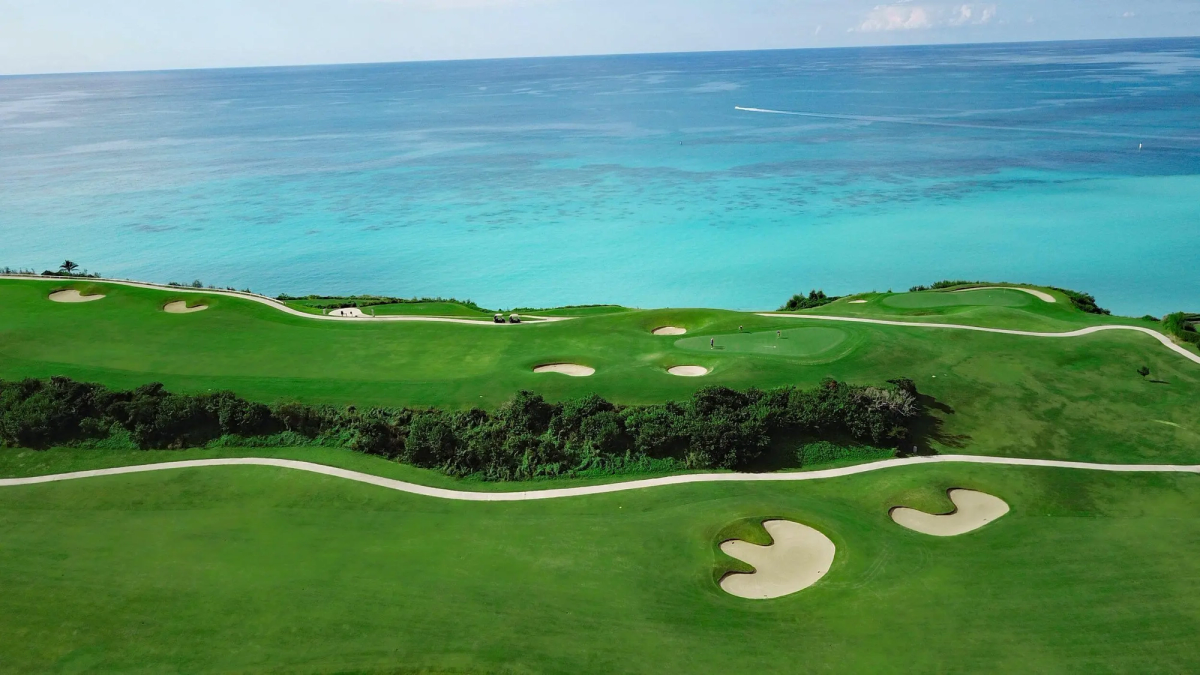
Part of the luxury Newstead Belmont Hills Golf Resort & Spa, Californian Algie Pulley designed the course and the earth certainly moved.
Overall rating

5.0
Part of the luxury Newstead Belmont Hills Golf Resort & Spa, Californian Algie Pulley designed the course and the earth certainly moved.
The latest ranking of the Top 100 Golf Courses in the World serves as the ultimate global golf bucket list. Most members of our World Top 100 Panel are seasoned golfers, each playing 20-30 of these courses annually while travelling extensively over decades to form their opinions on others. We recognise that opinions vary—even among our panel members. Rankings are subjective, and there are undoubtedly 50 or more courses in the UK and USA alone that could easily fit onto this list. Links Golf Pilgrimages The rankings
California, United States
New Jersey, United States
Northern Ireland, United Kingdom
New York, United States
New York, United States

Bermuda delivers everything golfers dream about in a Caribbean holiday with one crucial advantage - it's barely further from New York than Washington DC. This British overseas territory sits alone in the North Atlantic, roughly 650 miles east of North Carolina, offering a collection of golf courses that punch well above their weight on an island just 14 miles long. The geography is perfect for East Coast golfers. From JFK, you're teeing off at Mid Ocean Club by lunchtime the same day. Yet this isn't some cramped resort island - Bermuda's 181 islands connected by bridges create a proper golf destination with six distinct courses, each offering something different from championship tests to charming short courses. Here's what makes Bermuda special for travelling golfers: World-class golf on a compact island - no course is more than 30 minutes from your hotel Year-round playable weather with temperatures rarely below 15°C (60°F) or above 29°C (85°F) Genuine value compared to major city golf, with spectacular courses from £40-£95 ($50-$120) Proper British culture and hospitality in an island setting Bermuda's Championship Golf Courses Mid Ocean Club - The Crown Jewel This CB Macdonald and Seth Raynor masterpiece from 1924 represents pure Golden Age American architecture. Mid Ocean Club sits practically adjacent to the airport, allowing visitors to play one of golf's legendary courses within hours of landing. The course flows across spectacular oceanside terrain with holes like the famous 5th, where the approach plays across a dramatic chasm to a green perched above crashing Atlantic waves. The club welcomes non-members on Monday, Wednesday, and Friday after 9 am, plus morning and afternoon windows on Tuesday and Thursday. No weekend access for visitors, but five days of availability make planning straightforward. Gil Hanse has developed restoration plans that could elevate this course into the world's top 100 when executed, returning it closer to the original Macdonald and Raynor vision after decades of well-intentioned but misguided changes. Port Royal Golf Course Home to the annual Butterfield Bermuda Championship each November, Port Royal showcases everything spectacular about Bermuda golf. The Robert Trent Jones Sr design culminates with the world-famous 16th hole - a 235-yard par-three where the green literally sits on the edge of the earth with nothing but azure Atlantic beyond. But Port Royal isn't just about that one hole. The entire course flows across dramatic island terrain with ocean views, interesting blind tee shots, reachable par-fours, and even historic fort ruins on the 15th. It's proper championship golf that tests the world's best professionals yet remains entirely playable for travelling golfers. Green fees are approximately £95 (€115/$135) for non-residents during weekdays, dropping to £75 (€90/$105) at weekends - one of golf's rare weekend discounts reflecting Bermuda's business-heavy weekday demand. Tucker's Point Club Located adjacent to the Mid Ocean Club, Tucker's Point offers a completely different character. This modern 18-hole course flows across rolling island terrain with spectacular ocean views from multiple holes. It's more accessible than Mid Ocean but maintains the same high conditioning standards you'd expect from a course serving the Rosewood Tucker's Point resort. The design takes advantage of natural elevation changes across the property, creating interesting approach shots and strategic variety. Several holes play directly along the coastline, offering the kind of ocean golf that makes Bermuda special. Green fees are approximately £115 (€140/$160) for resort guests, with slightly higher rates for outside play. Hidden Gems Worth the Journey Turtle Hill Golf Club - Short Course Perfection This extraordinary 18-hole short course winds its way up to Hamilton's lighthouse, offering ocean views from virtually every hole. The longest hole stretches just 230 metres, but don't mistake this for a simple pitch-and-putt. These are meticulously maintained holes that demand precision and creativity. Turtle Hill formerly hosted the World Par-3 Championship, and playing here reveals why. Each hole presents unique challenges within stunning natural amphitheatre settings. You can play from 7 am until 6 pm six days a week for approximately £45 (€55/$65) - exceptional value for one of golf's most charming experiences. The course sits at the foot of the unfortunately defunct Southampton Princess Hotel, but the golf remains spectacular and accessible. Belmont Hills Golf Course Opened in 2002, Belmont Hills serves as Bermuda's true public course where all island divisions disappear for four hours. This 6,000-yard layout offers proper golf for every skill level, with conditioning that rivals the private clubs. The course represents something special on an island historically divided - here, everyone plays together. Eric Anders Lang featured Belmont Hills in one of his documentaries, highlighting how this course serves the entire community. It's not just about the golf (though that's excellent) but about experiencing authentic Bermudian culture and hospitality. Green fees are approximately £65 (€80/$90), making it outstanding value for visitors wanting to play with locals. Ocean View Golf Course Part of the Port Royal complex, Ocean View offers a more accessible companion to the championship course. While details vary, government ownership has maintained good conditioning and reasonable pricing for visitors seeking additional rounds. This course provides another option for golfers staying near the western end of the island, particularly those wanting multiple rounds without travelling the full length of Bermuda. Five Forts Executive Course - St. Regis Luxury Located at the remote eastern end near the airport, Five Forts serves the St. Regis resort with an executive course built into clifftop terrain. The course features a David Leadbetter Golf Academy, making it perfect for golfers wanting professional instruction alongside their island rounds. While smaller than Bermuda's full-length courses, Five Forts offers proper golf with ocean views and resort-level conditioning. Sample Itinerary: 4-Day Bermuda Golf Adventure Day 1 - Arrival and Port Royal Morning: Fly into L.F. Wade International Airport (direct flights from major East Coast cities) Afternoon: Check into Hamilton accommodation, play Port Royal Golf Course Evening: Dinner at Pearl sushi restaurant on Front Street, Hamilton Day 2 - Mid Ocean Club and Tucker's Point Morning: Early tee time at Mid Ocean Club (book Monday, Wednesday, or Friday) Afternoon: Tucker's Point Club for contrasting modern ocean golf Evening: Dark and stormy cocktails at Swizzle Inn Day 3 - Short Course Magic and Exploration Morning: Turtle Hill Golf Club for unique short course experience Afternoon: Crystal Caves tour or beach exploration at Horseshoe Bay Evening: Fine dining at Tom Moore's Tavern or The Waterlot Inn Day 4 - Final Round and Departure Morning: Belmont Hills for an authentic local golf experience Afternoon: Shopping in Hamilton, afternoon tea at your hotel Evening: Departure (or extend for beach days) Seasonal Variations: Hurricane season runs June through November, but actual disruption is rare. Spring and autumn offer perfect conditions with fewer crowds. Bermuda Travel Logistics Getting There and Getting About Transportation: Multiple airlines serve L.F. Wade International directly from major East Coast cities. Flight time from New York is just 90 minutes - shorter than many domestic US flights. From London, expect 7-8 hours with one connection, typically through New York or Boston. Bermuda prohibits rental cars, but this creates part of the island's charm. Rent a "Twizy" - essentially a golf cart with a roll cage that's perfect for island exploration. These electric vehicles charge at stations throughout Bermuda and make travelling between courses fun rather than stressful. Taxis are readily available, and drivers often serve as informal tour guides. Weather and Packing: Bermuda enjoys year-round golf weather with temperatures rarely dropping below 15°C (60°F) in winter or exceeding 30°C (85°F) in summer. Pack layers for morning/evening temperature variations and always include a waterproof jacket. Trade winds provide natural cooling, but humidity can be high from June through September. The island's position in the Atlantic means the weather changes quickly. Pack golf gear for all conditions and consider an extra day's worth of clothing in case flights are delayed by weather. Where to Stay for Bermuda Golf Luxury Resort Options The Rosewood Tucker's Point offers the ultimate golf-centric experience, located adjacent to both Mid Ocean Club and Tucker's Point Club. The resort provides seamless golf arrangements and world-class accommodation. The St. Regis sits at the remote eastern end with the Five Forts Executive Course on-site. Perfect for golfers wanting resort luxury with immediate golf access, though other courses require 20-30 minute drives. Historic Hamilton Hotels Hamilton Princess & Beach Club in the capital provides a central location for exploring the entire island. You're walking distance from restaurants, shopping, and ferry connections to the Royal Naval Dockyard. The hotel offers classic Bermuda elegance with modern amenities. Mid Ocean Club Cottages For the ultimate insider experience, Mid Ocean Club offers 15-20 cottage rooms for members' guests. This provides unparalleled access to the legendary course plus insight into authentic Bermuda golf culture. Value-Conscious Alternatives Grotto Bay Beach Resort near the airport offers excellent value with unique features like the Prospero Cave spa built into natural limestone caves. The property provides proper resort amenities without premium pricing. Consider St. George's area properties for historic charm and reasonable rates, though you'll need transport to western island courses. Bermuda's Culinary Scene Premium Dining Experiences Pearl on Hamilton's Front Street serves exceptional sushi that rivals anywhere globally. The fresh fish arrives daily, and the preparation showcases Bermuda's position as a mid-Atlantic fishing paradise. Tom Moore's Tavern dates to the 1600s and offers fine dining in genuinely historic surroundings. The restaurant specialises in local fish and traditional preparations, with three-course dinners around £55-75 (€65-90/$75-100). The Waterlot Inn at Southampton provides another historic dining option where pirates supposedly once dined. The menu focuses on fresh seafood with international influences, reflecting Bermuda's position as a global crossroads. Local Specialities and Casual Options Barracuda Grill, next to Pearl, offers bistro-style dining with excellent fish preparations and a more casual atmosphere. Perfect for post-golf meals without resort formality. The Swizzle Inn practically demands a visit for an authentic Bermuda atmosphere. Try the island's signature cocktails - Dark 'n' Stormy (Gosling's dark rum, ginger beer, bitters) or Bermuda Swizzle - alongside hearty pub fare. The Frog & Onion Pub at the western end provides proper British pub atmosphere with local character. It's worth the journey for the setting alone, housed in historic buildings with harbour views. Cultural Dining Insights Bermuda maintains strong British traditions, including proper afternoon tea at most hotels. Don't miss this quintessentially colonial experience with finger sandwiches, scones, and full tea service. Fish chowder appears on every menu, often with local sherry peppers and Gosling's rum. Each restaurant prepares it differently, making comparisons part of the cultural experience. Booking Golf in Bermuda Advance Planning Requirements Mid Ocean Club requires the most planning, with visitor access limited to specific days. Book 2-3 months ahead for peak season (April-October), especially for Monday, Wednesday, and Friday slots. Winter months offer more flexibility, but the weather can be variable. Port Royal, as a PGA Tour venue, attracts serious golfers year-round. Book 4-6 weeks ahead for guaranteed preferred times, though same-week availability often exists except during tournament periods. Local Booking Insights Bermuda's business-heavy weekday demand creates interesting pricing dynamics. Weekend golf often costs less than weekday rounds at premier courses - the opposite of most destinations. Consider tee time clustering by geographic area rather than by course preference. Bermuda's compact size makes this efficient, and you'll discover gems you might otherwise miss. Explore Beyond Golf Natural Beauty and Outdoor Activities Horseshoe Bay Beach showcases Bermuda's famous pink sand, created by parrotfish processing coral reefs. The unique colouration and dramatic limestone cliffs provide stunning backdrops for non-golf hours. Crystal Caves offers underground exploration through naturally formed limestone caverns. The hour-long tours reveal spectacular stalactite and stalagmite formations plus underground pools with impossibly clear water. Glass Beach demonstrates Bermuda's maritime history, where centuries of shipwrecks created a coastline where sea glass forms the actual sand. The smooth, colourful fragments create an almost surreal beach experience. The Blue Hole provides excellent swimming and snorkelling in deep, protected water with visibility often exceeding 30 metres. Local operators offer equipment rental and guided tours. Cultural Attractions and Local Experiences The Royal Naval Dockyard preserves Bermuda's strategic maritime importance with museums, shops, and restaurants in restored historic buildings. The complex includes the National Museum and several craft workshops. St. George's, a UNESCO World Heritage site, represents one of the Americas' oldest continuously inhabited English settlements. The narrow lanes and limestone buildings showcase 400 years of architectural evolution. Gosling's Rum operations offer sunset cruises featuring tastings of various rum expressions. While the company doesn't operate full distillery tours, these boat trips provide an island perspective plus insight into Bermuda's signature spirit. Unique Island Experiences Lilly Bermuda allows visitors to create custom perfumes using local and international essences. The process takes 2-3 hours and produces unique fragrances unavailable anywhere else. Bermuda maintains connections to London's Savile Row tailoring tradition. Several island tailors create bespoke clothing, including the famous Bermuda shorts in proper pink or madras patterns. The spa at Grotto Bay Beach Resort operates within Prospero Cave, offering massages and treatments in naturally formed limestone chambers. This unique setting provides complete tranquility away from island bustle. Insider Local Knowledge Common Visitor Mistakes Don't underestimate Bermuda's British formality. Proper dress codes apply everywhere, from golf courses to restaurants. Pack at least one jacket for evening dining, and always bring collared shirts for golf. Avoid scheduling too many activities. Bermuda's charm lies in its relaxed pace - rushing between attractions misses the point entirely. Build in time for spontaneous beach discoveries and unhurried meals. Strategic Planning Wisdom Book accommodations near Hamilton for maximum flexibility in exploring the entire island. While resort properties offer luxury, central locations provide better access to diverse experiences. Consider visiting during shoulder seasons (March-April, November-December) for optimal weather with fewer crowds and better availability at premium courses. Pack reef-safe sunscreen - Bermuda's crystal-clear waters support fragile marine ecosystems, and regular sunscreens can cause environmental damage. Consider shipping golf clubs via FedEx or UPS rather than airline transport. Bermuda's customs processes are straightforward, and arrival timing often works better than coordinating with flights. Cultural Navigation Tips Tipping follows American rather than British standards, typically 18-20% at restaurants and $5-10 per bag for hotel services. Budget Planning and Travel Value Course Fee Reality Check Mid Ocean Club at approximately £225 (€270/$300) represents Bermuda's premium pricing, but compares favorably with elite US courses charging £300-500 ($400-600) for visitor access. Port Royal at £75-95 (€90-115/$105-135) delivers PGA Tour venue quality at municipal course pricing. Few destinations offer this value proposition for championship-calibre golf. Budget-conscious golfers can play excellent courses like Belmont Hills and Turtle Hill for £40-65 (€50-80/$55-90), making Bermuda surprisingly affordable for quality golf experiences. The Bottom Line: Why Bermuda Golf Works Bermuda delivers an impossible combination: world-class golf, genuine British culture, stunning natural beauty, and remarkable accessibility from North America. You can leave New York at breakfast time and be playing championship golf by lunch, all while experiencing a completely different culture and environment. The island's compact size means no wasted time travelling between courses, while the variety ensures every golfer finds their perfect experience. From Mid Ocean Club's Golden Age grandeur to Turtle Hill's charming intimacy, Bermuda offers golf memories that last far beyond the holiday. Most importantly, Bermuda hasn't lost its soul to mass tourism. The island maintains authentic character, genuine hospitality, and cultural traditions that create connections far deeper than typical golf destinations. When you combine exceptional golf with such authentic experiences, you understand why shipwrecked sailors chose to stay permanently over 400 years ago.
C is for CAPE THE ORIGINAL National Golf Links of America serves as a showcase for template golf, and it’s only fair that Charles Blair Macdonald would contribute his own designs to the mix—rather than draw inspiration from the Scottish standbys. Being so, the No. 14 “Cape” also underwent more tweaking by the architect than the rest of NGLA’s entries. NGLA 14th hole - image courtesy of National Golf Links of America The original played just more than 300 yards, ending with a green surrounded on three sides by water, providing the template’s name. The player also needed to reason against the fairway’s left-to-right slope, which could easily propel a standard fade toward the creek running along the right side. Perhaps recognizing the danger of club technology before it was trendy, Macdonald later extended the hole by moving the green. This fact is important when considering the qualifications for future Capes: Macdonald intended for the second shot to matter just as much as the first. Granted, this lengthening came at the cost of the cape status, at least geographically. The current version plays about 400 yards, featuring a trio of bunkers defending the left and back of the green (water remains along the right). Granted, Macdonald was hardly the first to invoke a diagonal tee shot, as examples such as the famous opener at Machrihanish demonstrate. Therefore C.B.’s codified emphasis on the second shot is all the more important for understanding the accepted meaning of “Cape” within golf architecture. OTHER INTERPRETATIONS More often than not, the average golfer does not think NGLA when they think “Cape.” For being “Grandfather of American Golf,” Macdonald ended up placing his most famous Cape on the British territory of Bermuda. Mid Ocean Club’s No. 5 emphasizes the popular diagonal approach to the fairway, with a perched teebox inviting players to take more aggressive lines. The risk, of course, is hitting the lake that runs along the length of the hole. Even getting across guarantees nothing; an approach from the left side of the fairway will be tough into a front-right-to-back-left green, which slopes toward the front to deposit shots in a long bunker of significant depth. Mid Ocean Club 5th hole - image courtesy of Fergal O'Leary Perhaps the most recognizable Cape—at least to television viewers—is the closing hole at Pebble Beach, where players must reckon with the Pacific Ocean all along the Par 5...as well as trees and bunkers that punish golfers who “chicken out” and stay too far away from that hazard. Another PGA Cape renews Macdonald’s distance concerns every year during the Arnold Palmer Invitational: No. 5 at Bay Hill plays 555 yards from the back tee, and bold players take jaw-dropping lines to get a shorter approach on the crescent-shaped hole. With the green “only” 350 yards from the tee—across a lake, of course—one must wonder how long until someone goes for broke (as Babe Ruth reportedly did at the aforementioned Mid Ocean Cape). Pebble Beach 18th hole - image courtesy of Pebble Beach Water is not essential to a Cape. Yale’s eighth hole, dubbed “Cape,” takes the same approach, but around a deep gully instead of water. The second shot lives up to Macdonald’s prescribed hype. Right is the way to aim; the green actually plays to Redan standards, guiding balls to the middle, and the rightward bunker isn’t that bad. Well, at least compared to the 9 metre-deep bunkers on the left. The Course at Yale 8th hole - image courtesy of John Sabino MAYBE...MAYBE NOT We’ll stir the pot and suggest a Par 3 cannot be a Cape. Pete Dye has several great shorts that tempt the player to attack the pin at the risk of a watery grave—such as No. 17 at Kiawah—but Macdonald’s emphasis on the second shot leaves these holes wanting. While on the topic of iconic holes wrapping around water, No. 13 “Azalea” at Augusta National certainly bears mention, thanks to the Rae’s Creek tributary that flows along the left side. It certainly requires two great shots to get home in two, but it’s questionable whether angle truly figures into the tee shot. Because of the forest along the left, the best tee shot is a question of hitting a longer draw, not taking a more aggressive angle. And, of course, the green is not a “cape” in the sense that it is protected on four sides, not three. We feel Macdonald probably would not have minded this tweak, however. Augusta National 13th hole - image courtesy of The Masters No. 18 at Pebble gets all the “Cape” credit, but there may be a case to be made for No. 8 as well. The tee shot is not a diagonal one, but the uphill, relatively blind nature of the shot means players are taking bigger risks the farther they push. Too long or too right means literally driving off a cliff. And the approach, across a cove and between bunkers, arguably requires enough finesse to qualify as an unconventional Cape. Pebble Beach 8th hole - image courtesy of Pebble Beach Finally, it is worth noting that there is a “Cape” older than any of the holes mentioned thus far: No. 4 at Royal North Devon is named “Cape,” less for any resemblance to Macdonald’s work, but rather a gigantic railway-sleepered bunker shaped just like Batman’s cape. Royal North Devon "Cape" bunker – 16th green "Punch Bowl" in the foreground
Golf at Belmont reputedly dates back a hundred years when the property was called Belmont Manor. But today, it’s called Belmont Hills Golf Club and it opened its tees for play in 2003 after a major renovation.
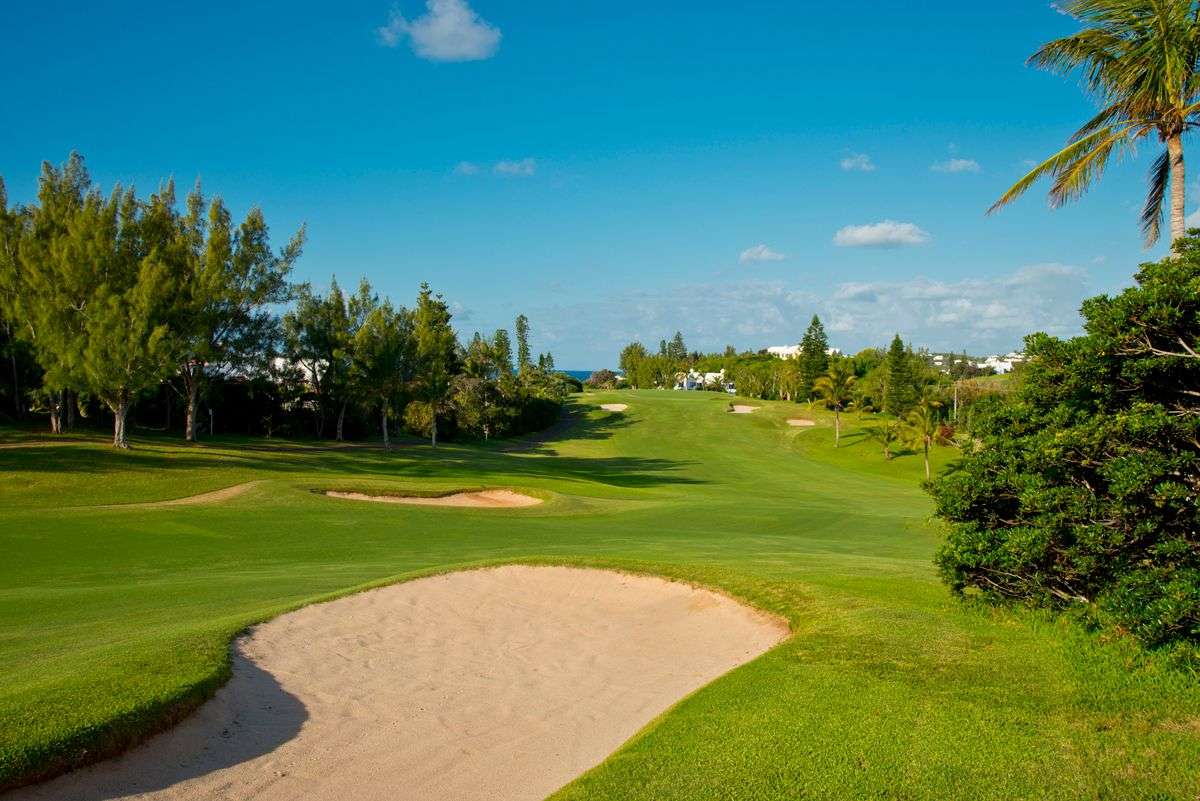
Today's Belmont Hills is part of the luxury Newstead Belmont Hills Golf Resort & Spa and the course was designed by Californian Algie Pulley and the earth certainly moved. The original course was flat and featureless, but it’s most definitely not flat anymore. As it’s name suggests, Belmont Hills is now rather hilly and this came about following the island’s most extensive golf course rebuilding project.
Belmont Hills now affords panoramic views across Hamilton Harbour and the Great Sound. The course is beautifully maintained and heavily bunkered with a couple of man-made ponds. The USGA style greens are multi-tiered and slick. Make sure you have your very best putting boots on when you visit the fabulous new Belmont Hills Golf Club.