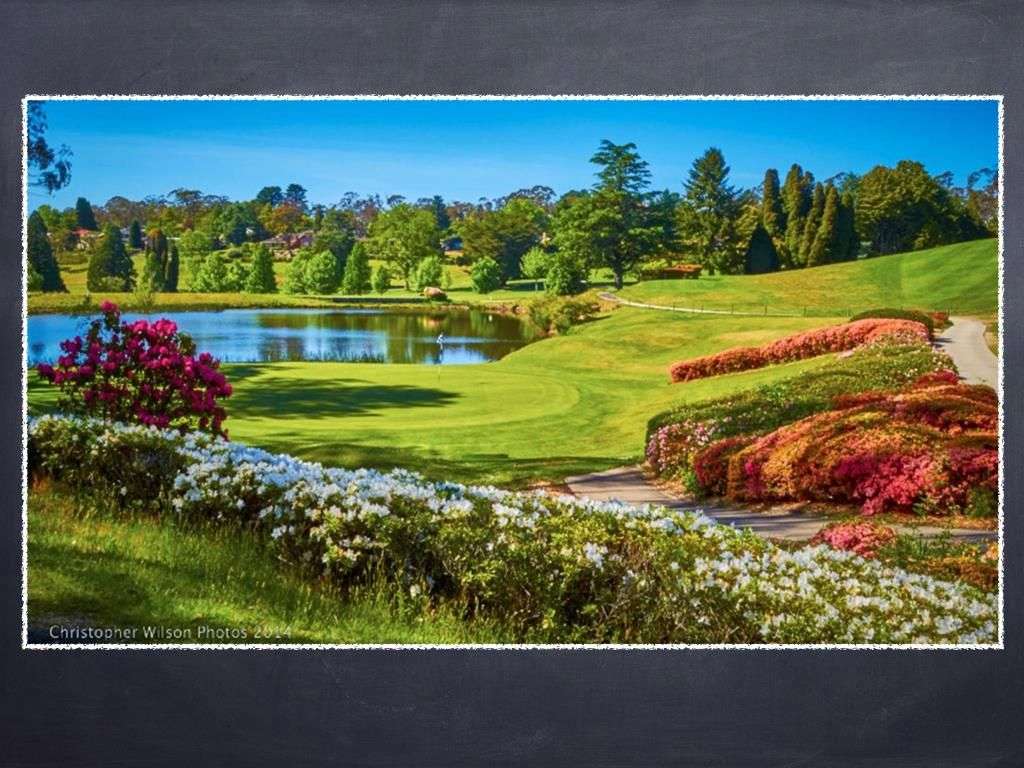
Golf was played in Blackheath over a hundred years ago on the site of the Memorial Park. Nowadays, the 18-hole layout at Blackheath Golf & Community Club occupies a property that was once a 9-hole course for a guest house known as "Belvedere".
Australia
Golf was played in Blackheath over a hundred years ago on the site of the Memorial Park. Nowadays, the 18-hole layout at Blackheath Golf & Community Club occupies a property that was once a 9-hole course for a guest house known as "Belvedere".
Sort by:
No reviews yet. Be the first to share your experience!
The latest ranking of the Top 100 Golf Courses in the World serves as the ultimate global golf bucket list. Most members of our World Top 100 Panel are seasoned golfers, each playing 20-30 of these courses annually while travelling extensively over decades to form their opinions on others. We recognise that opinions vary—even among our panel members. Rankings are subjective, and there are undoubtedly 50 or more courses in the UK and USA alone that could easily fit onto this list. Links Golf Pilgrimages The rankings
California, United States
New Jersey, United States
Northern Ireland, United Kingdom
New York, United States
New York, United States
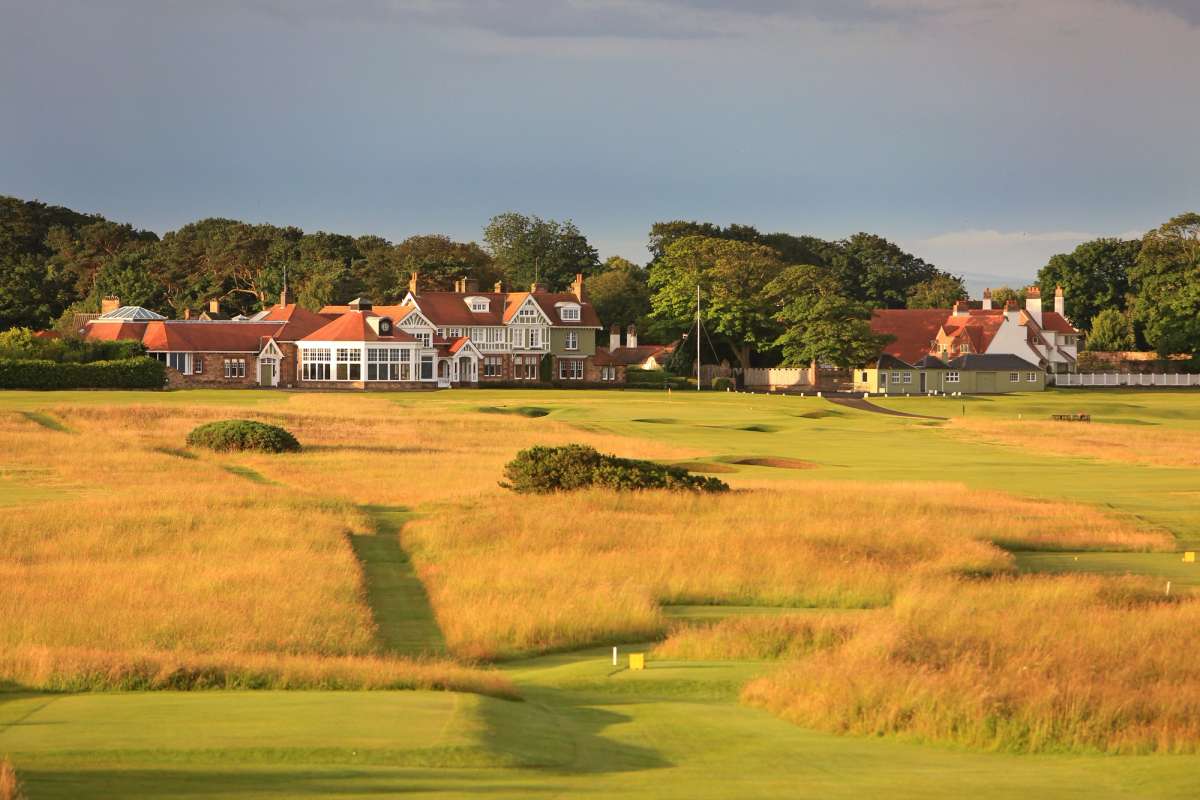
In the world of golf, history carries weight. The older the club, the more prestige it commands. But what happens when that history becomes contested territory? Let's explore the fascinating battle for historical supremacy that unfolded among Britain's oldest golf clubs. The Opening Challenge: Blackheath's Bold Claim It all started in 1830 when Blackheath Golf Club fired the first shot. They approached the Edinburgh Almanac—Scotland's equivalent of Wikipedia, but far more researched—and asked it to state, for the record, that their club was founded before 1745. This bold move challenged Scottish golfing history, sending ripples through the established order. Scotland's Defence: The Scramble for Dates The Scottish golf clubs, caught off guard, scrambled to respond. A flurry of founding dates emerged: Bruntsfield Links Golfing Society staked its claim with 1761 Musselburgh Golf Club followed with 1774 Both dates were well-documented, but neither reached back far enough to overtake Blackheath's audacious claim. Raising the Stakes: The Burgess Golfing Society In 1834, the Burgess Golfing Society entered the fray, throwing out a claim of "around 1735." The evidence was almost nonexistent, yet the Edinburgh Almanac printed it anyway. The earliest surviving meeting minutes from 1773 paint a picture of ageing members lamenting their own decline. The 1735 date likely originated from the family of Charles Rhind, a known member at that 1773 meeting—more folklore than fact. What historians do know for certain is that in 1735, it existed as a society, not a formal club. The Final Move: The Honourable Company Enters The Honourable Company of Leith Golfers—later known as the Honourable Company of Edinburgh Golfers—initially stayed out of the conflict. Financial struggles had forced them to sell off assets. However, in 1839, revitalized and rebranded, they finally made their move. Their official statement was measured but firm: "The period at which the Company was formed cannot now be ascertained, but the first regular series of minutes... bears the date 1744." Victory for Scottish Golf With the gauntlet thrown down at 1744, the Edinburgh clubs had re-established their dominance. Blackheath, outmanoeuvred, quietly disappeared from the Edinburgh Almanac. The challenge was over, and the Scots had successfully reclaimed their golfing legacy. This historical dispute reminds us that in golf, heritage matters—and sometimes, the battle for historical supremacy can be as strategic as the game itself. Research: James Henderson
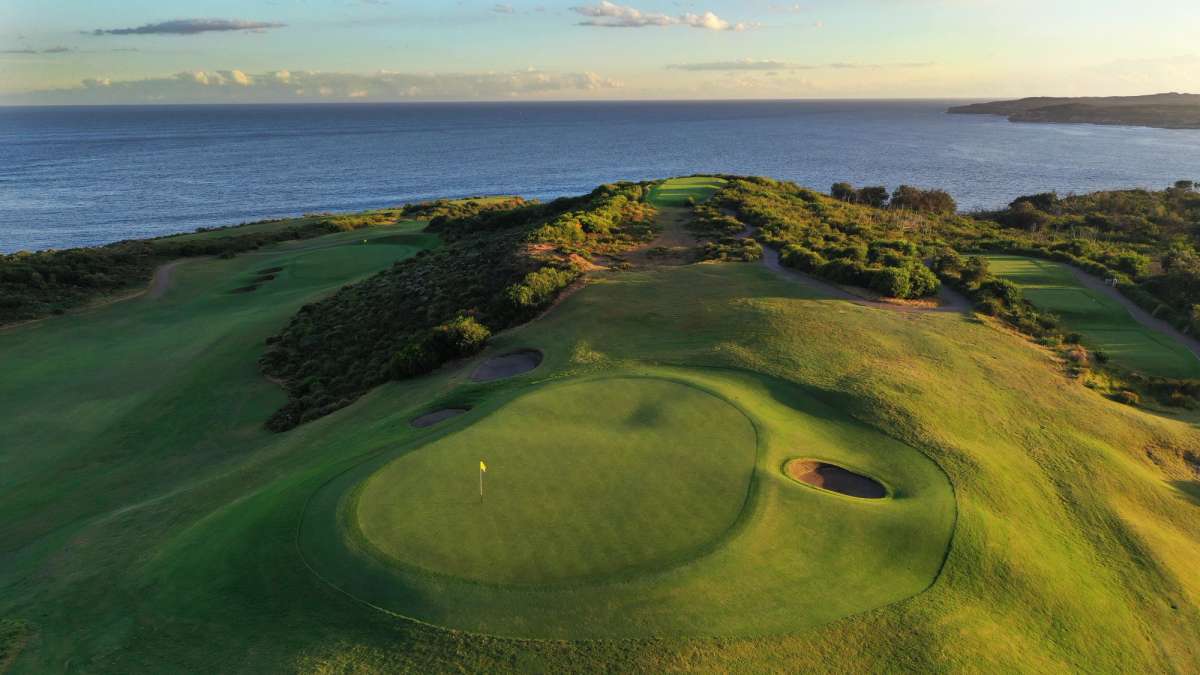
Alex Frolish has been a pilot for approaching 20 years and now travels to all corners of the globe in his role as a commercial airline pilot. His passion for flight is only equalled by his passion for golf and golf travel. Having picked up a golf club over 35 years ago when aged just 3 years old, Alex has played over 600 courses across every continent on planet earth furnished with a fairway. Over the next few months you’ll be able to follow Alex’s golfing travels as he brings you anecdotes of his life both in the air and on the course. Eleven rounds of golf, played on four different continents, in one month. It sounds crazy when you say it out loud. Even crazier still is that, in travelling to those rounds of golf I flew over 24000 air miles and spent over sixty five hours some six miles above the surface of the earth. You could well assume I was severely inefficient in my golf planning, were it not for the fact that most of my golf is played while I’m away on my travels as a commercial pilot. The month started in Australia, at a golf course that is the furthest from my home in the U.K. that I have ever played. I had visited the peninsula where New South Wales Golf Club is located once before, playing at St Michaels Golf Club on a previous visit. The course was very pleasant and a decent challenge, but I would be lying if I said I wasn’t looking enviously over the boundary fence toward the Alister Mackenzie crafted greens of New South Wales. Our flight landed in Sydney a little after 5am, and our flight path meant I got a birds-eye view of the golf course on our final approach. A little over 3 hours later, I was standing on the 1st tee of the 49th best golf course in the world, teeing it up in the Saturday morning medal competition! Surreal is an understatement. Now you would think that with pretty much no sleep and barely enough time to collect my golf bag, never mind time for some breakfast and a practice putt, my golf might have arrived in a rather jet-lagged state. It was as much of a surprise to me as it was to my playing partners when I found the first fairway, followed by the first green, and subsequently holed the 10 foot putt for the most improbable of birdie starts. Everyone knows the old golfing adage, never birdie the 1st hole, and even though my ball striking remained surprisingly intact, Dr. Mackenzie slowly exacted his pound of flesh, and by the middle of the back nine my card was in no danger of producing an out-of-towner upset. New South Wales is one of the most unique and beautiful golf courses you could ever play. The green sites and bunkering are wondrous, the routing through the native bush is playful and utilises the ground wonderfully, while the reveal as you crest the hill on the par 5 5th and the walk to the par 3 6th tee, before you play your shot over the crashing waves, has to be one of the most jaw dropping experiences on any of my golfing travels. My next round would be played just over 48 hours later, well over 3000 miles away in Asia. SICC Bukit sounds like an item you might need after a late night in the bar at the annual member/guest, but the Bukit course at Singapore Island Country Club is much more tasteful than that. The variety of the native foliage and trees, the improbably undulating land and the supremely pure playing surfaces made this a memorable jaunt in the jungle to complete my trip out east. My next round would be some 18 time zones west of where I’d played my game in Sydney just a few days before. San Francisco and the surrounding Bay Area is one of my favourite places in the world. Life over here is nearly as good as the golf, and although I’d visited many of the famous haunts, San Francisco Golf Club had always been one that had eluded me. On this trip, I was lucky enough to change that. SFGC is a traditional and private place. The club sign outside the gates probably rivals Augusta for being one of the most photographed golf signs in the world. Due to the club employing a strict no phones policy, that photograph is often the only evidence that you visited here. For the trip, I rented a car from Avis, plumping for a mid-size that I hoped would be low key and not to brash so as not to ruffle too many feathers at the gate. Imagine my horror when I was told I’d been upgraded due to a lack of cars to a Jeep Wrangler Rubicon 4XE, a car that cries ‘I’m here’ at the top of its lungs! As the gates drew open to allow my car inside, I crawled along the driveway, parking as far away from sight as possible. My exit from the car was akin to that of a special forces raid, extracting myself and my clubs in record time, without anybody noticing. The golf course at SFGC is truly spectacular, routed across ground that contains a historic site in the political history of the U.S.A. I’m no American history expert, but even I can could feel the significance of setting eyes on the spot where the last legal duel took place between Senator David C. Broderick and Justice David S. Terry in 1859. Terry shot Broderick somewhere beside the now 7th tee, sparking a chain of events that would eventually propel Abraham Lincoln to the Presidency. The front nine here is dramatic as the history of the ground, with the holes navigating through and over impressive ridges and two impressively deep valleys, creating some dramatic precipitous drives and eye catching chute fairways. The way the ground is utilised is the real master of the piece, and this is as perfect a nine holes as you could ever wish to play. The back nine is less dramatic but still perfectly formed and as an experience, it will linger in my golfing daydreams for many years. More golf in California was followed by a quick fire trifecta of Welsh golf, at St Pierre (Old), Cradoc and Builth Wells, visiting each for the first time on Top100 duty. St Pierre has hosted some notable professional events in years gone by, and you could feel the course would pose a decent test to the professionals, particularly through the closing stretch. Cradoc, nestled in the lee of Pen Y Fan and the rest of Brecon Beacons is a parkland golf course that ranks high on good vibes, while also boasting plenty of quality. And just down the road in the Wye Valley, Builth Wells bursts with quirk, particularly on the back nine, and I left Wales with my enthusiasm for seeing some of the hidden gems in British golf truly reinvigorated. Pennsylvania was the destination for my final long haul voyage in July. We played at an underrated course named Treesdale on our first day, where Arnold Palmer carved 27 testing holes through the undulating and heavily wooded terrain. The golf and the company were tremendous, but it was difficult not to get ahead of myself, as what lay ahead the following day had been keeping me awake at night for weeks. Henry Fownes left the ultimate architectural mic drop out in the suburbs of Pittsburgh; one world beating layout and he was done. It really is some legacy. Oakmont has been undergoing a renovation under the guidance of Gil Hanse, in preparation for the US Open in 2025, and it was touch and go whether we would be able to make it out for a game, with the works and weather a dangerous duo to navigate. However my luck was in, it had been member/guest weekend which meant the works were minimised, while the storms had rolled off into the distance, leaving us with one of world golf’s finest golf courses almost to ourselves on a sun kissed summer afternoon. My take away from playing Oakmont is that it is even more testing than I had imagined, yet somehow, it is still eminently enjoyable golf, which really explains why it is so highly regarded. It is undoubtedly much harder than most of the elite clubs I have played in the USA. Your strategical nous and execution is heavily tested throughout, the bunkers admonish most of the punishment, but you can make a big score by merely missing the treacherous greens (which are kept close to US Open pace routinely) on the wrong side by a only couple of yards. My July might have been the most varied and far reaching month of golf in my life to date. Three world Top100 courses, 25,000 miles of golf travel on the ground and in the air, and a camera roll of memories (both physical and in my head) to last a life time. August would be no lighter on the air miles, with more trips to the Far East and North America planned. In the mean time, wherever you are reading this and whatever your August has in store, I wish you the straightest of drives, well negotiated four- footers and happy rounds.
Australian Capital Territory and New South Wales Best in State Rankings 2021 On the back of publishing our biennial Australian Top 100 last week, it’s now time to focus our attention on the state listings, which are one level below the national chart. This gives us the benefit of being able to cast the spotlight on many of the layouts that miss out on a place at the country’s top table, but are still worthy of recognition within a smaller geographical area. We begin this exercise in the southeast of Australia with the federal district of the Australian Capital Territory – which is home to the nation’s capital city, Canberra – and the state of New South Wales, within which ACT is enclaved. We feature five of the courses in ACT and we’ve now extended our coverage in NSW to a Top 100, giving us the opportunity to highlight close to a third of the total number of tracks in the most populous state Down Under. Australian Capital Territory The top three positions in the Australian Capital Territory chart remain unaltered, which means the Westbourne course at Royal Canberra is still #1 in our revised table, a position it’s held since we started our state listings for Australia six years ago. Originally laid out by John Harris in the 1960s to a plan devised by James Herd Scott twenty years earlier, the course was extensively remodelled by Ogilvy Clayton Cocking Mead when this company was a design ensemble a few years ago, before Mike Clayton joined forces with Mike DeVries and Frank Pont. OCCM rebuilt greens and bunkers, removed trees and remodelled a number of holes. Royal Canberra Golf Club - Westbourne course This is what a recent reviewer had to say after playing here: “the new renovation brought a modern touch to a classic layout at Royal [by] opening the fairways, as well as adding strategic bunkers and amping up the green complex contours… the renovation solidified RCGC as a course with natural beauty and a classic Australian design, something that is quite unique to the Oceania region.” There is one new entry at #4 and it’s the course at Gungahlin Lakes Golf Club, situated 18 kilometres north of the capital, which is owned and operated by the Ainslie Group, one of Canberra’s leading hospitality companies. Unveiled in 1996, it was co-designed by Ted Parslow and Jamie Dawson of Enviro Links Design, with Dawson returning a decade later to add new bunkers, upgrade tees with stone wall abutments and install new cart paths. Click the link to see full details of our latest ACT Top 5 rankings. New South Wales There’s been quite a shake-up in our New South Wales listings, with most of the action taking place in the bottom half of the new table, where we’ve added another forty courses to create a Top 100. But first, looking at the other end of the chart, there’s very little movement within the first twenty places. Indeed, more than half the courses remain in the same position, including the state #1, New South Wales Golf Club in Botany Bay National Park. New South Wales Golf Club Designed by Alister MacKenzie back in the 1920s and refined down the years by a succession of architects, including Eric Apperly, Peter Thomson and Mike Wolveridge, Greg Norman and Bob Harrison, “La Perouse” (as the course is known locally) has recently benefitted from Tom Doak and his Renaissance Golf Design team reworking a number of the holes, most notably the par three 6th. The following remarks were made in a post a few months back: “the location of La Perouse on the northern cliff-top side of Botany Bay is to Sydney what Pebble is to Carmel, California… New South Wales is right at the top of the surprisingly meagre architecturally significant offerings on the Sydney golf scene. You will not be disappointed by a day spent in its warm embrace.” The most significant upward move near the top of the chart is the two-place advance of Bonnie Doon Golf Club's course at Pagewood to #7. The club is the third oldest in Sydney but its course is a relative youngster, having been created shortly after World War II when a relocation took place due to the expansion of the city airport. The aforementioned design firm of OCCM completed a 4-stage renovation a few years back and the results of this extensive upgrade are now reflected in the course’s upward trajectory in the rankings. Bonnie Doon Golf Club Rising sixteen to #22 (and also a new entry in our national Top 100), the Hilltop course at Mollymook Golf Club is another big climber in our NSW standings. The club was formed in the early 1950s with a 9-hole layout but it decided to fashion a new 18-hole layout within a nearby eucalyptus forest in the 1970s when expansion of its original Beachside course provide impractical. Featuring kikuyu fairways, bent greens, and water on almost half the holes, the Hilltop’s a tidy track that demands respect. Mollymook Golf Club - Hilltop course The course at Killara Golf Club progresses twelve places to #24. Founded at the end of the 19th century, the club moved to its present location just a few years after its formation, becoming what’s believed to be the first in Australia to own its own course in 1906. Englishman John Harris redesigned the layout in the mid-1960s and Harley Kruse has just completed a renovation, rebuilding greens and fairway bunkers, reversing a couple of holes and removing a significant number of trees. Killara Golf Club Another double-digit chart improvement (up ten to #29) is made by the course at Duntryleague Golf Club in Orange, which Eric Apperly and the club’s professional designed back in the 1930s. A Latvian landscape architect was hired shortly after World War II to devise an agronomy masterplan for the club so there are now some wonderful tree species to be found in the grounds of the estate that the course occupies. Duntryleague Golf Club Situated next to the Murray River, Corowa Golf Club (up thirteen to #45) have been in operation since 1903, when it started out as a basic 9-hole set-up with sand scrape putting surfaces. After moving in 1928 to Corowa Common, Al Howard redesigned what had become an 18-hole layout during the mid-1950s and another nine holes were brought into play twenty-five years later. In more recent times, a 35-room motel was added to the list of club amenities but, to top it all, a 58-seat boutique cinema became another of the club’s visitor attractions in 2018. Corowa Golf Club The last big mover of note is the Gangurru course at Riverside Oaks Golf Club, progressing eleven spots to #48. The original layout at an enterprising 36-hole facility, the Gangurru is somewhat overshadowed these days by the new Bob Harrison-designed Bungool course which opened five years ago but a bunker refurbishment carried out around the same time on the Gangurru has reignited thoughts of the glory days when it hosted three editions of the Australian PGA Championship at the end of the 1980s. Gangurru course at Riverside Oaks Golf Club The highest entry made by the many newcomers to our expanded NSW chart is the Captains course at Tocumwal Golf & Bowls Club, which arrives at #40. The club was formed in the 1950s, using former Australian Air Force property to build an initial 9-hole layout. This became the 18-hole Presidents course in the 1970s, before former Australian Amateur champion Kevin Hartley laid out the Captains course in the early 1990s. Click the link to see full details of our latest New South Wales Best in State rankings. Jim McCann Editor Top 100 Golf Courses

