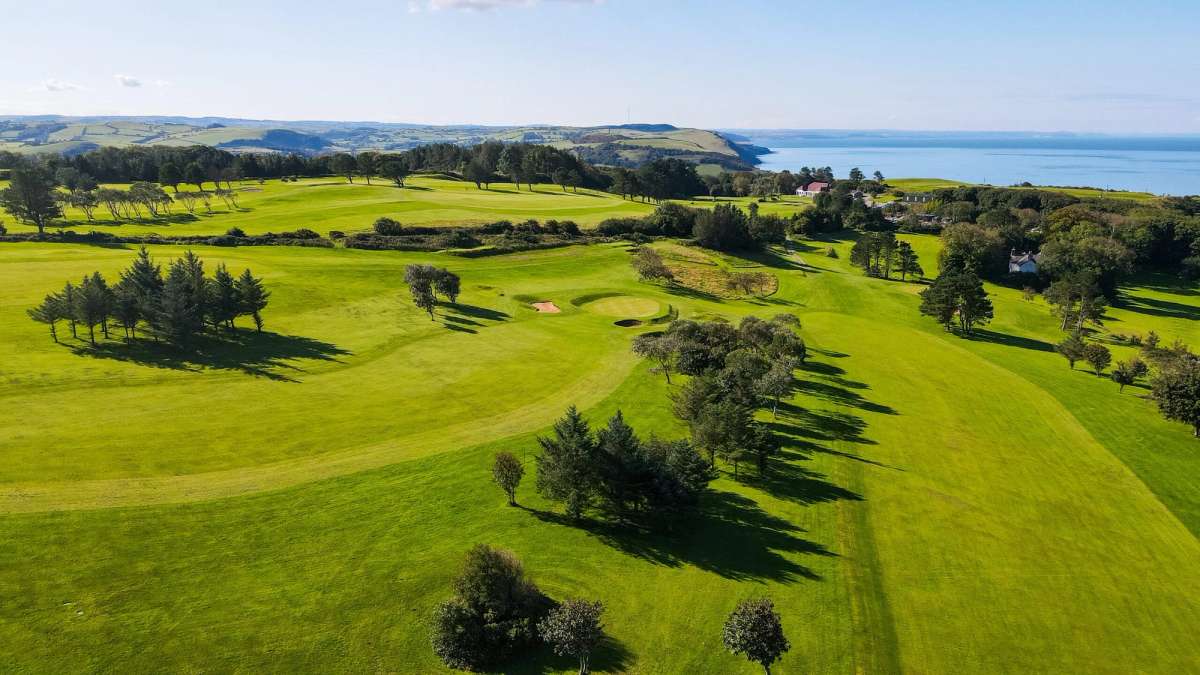
Established in 1885 with a strong claim as Wales' oldest golf course, Borth & Ynyslas offers traditional links golf along Cardigan Bay within the Dyfi National Nature Reserve. Harry Colt's 1947 redesign created a challenging par-70 layout that remains a Welsh Golfing Union championship venue for holiday golfers.
Overall rating

3.5


Borth & Ynyslas Golf Club
Established in 1885 with a strong claim as Wales' oldest golf course, Borth & Ynyslas offers traditional links golf along Cardigan Bay within the Dyfi National Nature Reserve. Harry Colt's 1947 redesign created a challenging par-70 layout that remains a Welsh Golfing Union championship venue for holiday golfers.
The latest ranking of the Top 100 Golf Courses in the World serves as the ultimate global golf bucket list. Most members of our World Top 100 Panel are seasoned golfers, each playing 20-30 of these courses annually while travelling extensively over decades to form their opinions on others. We recognise that opinions vary—even among our panel members. Rankings are subjective, and there are undoubtedly 50 or more courses in the UK and USA alone that could easily fit onto this list. Links Golf Pilgrimages The rankings
California, United States
New Jersey, United States
Northern Ireland, United Kingdom
New York, United States
New York, United States
Golf can be an expensive game, particularly when it comes to playing some of the world's best courses. But a memorable round doesn't have to come with a hefty price tag, and there are plenty of excellent layouts where you can enjoy 18 holes without spending more than £50. From championship golf in the United States to traditional links in Britain and Ireland, we've picked out 10 courses from around the world that prove quality and value for money can go hand in hand. Some of the rates depend on the season, day of the week or online booking availability, but each offers the chance to enjoy a quality round without breaking the bank. Gold Mountain Golf Club - Olympic Course (Washington, USA) Washington Ranking: 13th | Green Fees: From US$30 The Olympic Course at Gold Mountain Golf Club is proof that you don't need a famous resort or a hefty green fee to find championship-calibre golf. Part of a 36-hole public facility owned and operated by the City of Bremerton, the course was designed by John Harbottle III and opened in 1996, 25 years after its older sibling, the Cascade Course. The tree-lined layout is slightly hillier than the Cascade but remains eminently walkable, with annual bluegrass covering the tees, fairways and greens. Its quality has been recognised on the national stage, having hosted the U.S. Amateur Public Links Championship in 2006 and the U.S. Junior Amateur Championship in 2011. There are plenty of memorable holes, including the short fourth, the water-guarded ninth and the 188-yard 16th, which plays across a lake to the green. The closing par four also offers a tempting birdie opportunity. With the Cascade Course next door, golfers can make a full day of it, with 36 holes available at a price that remains competitive with many courses charging considerably more for a single round. Green fee note: Online green fees start at US$30 for 18 holes, with rates varying depending on the tee time and availability. Diamond Springs Golf Course (Michigan, USA) Michigan Ranking: 62nd | Green Fees: From US$35 Diamond Springs is a public golf course in Hamilton, Michigan, that demonstrates how affordable golf needn't mean compromising on design. Created by Mike DeVries, whose work at the highly regarded Kingsley Club established his reputation in the state, the course occupies 250 acres of oak and pine-covered sandhills around 30 minutes south-west of Grand Rapids. One of its defining features is the decision to use a single height of cut across much of the playing surface, doing away with traditional rough and keeping maintenance costs down. The result is a course that remains playable for higher handicappers while still offering plenty of strategic interest. The front nine features varied topography and interesting green complexes, but it's the closing stretch that really stands out. The final five holes bring a dramatic ravine into play, with the short par four offering a tempting risk-and-reward opportunity before a memorable finish at the 18th. Green fee note: Start at US$35 for 18 holes walking during April and October, rising to $50 midweek and $60 at weekends during the June–September peak season, all comfortably under £50. George Wright Golf Course (Massachusetts, USA) Massachusetts Ranking: 36th | Green Fees: From US$61 Designed by Donald Ross and opened in 1936, George Wright Golf Course is a municipal layout in Hyde Park, Boston, with a history as interesting as its setting. Built as part of the Works Progress Administration programme during the Great Depression, its construction was a major undertaking, reportedly requiring 60,000 pounds of dynamite to work through the rocky terrain. The result is a distinctive layout that makes excellent use of its natural surroundings, with rocky outcrops, elevation changes and tree-lined fairways providing plenty of character. After a period of neglect, the City of Boston took over its operation at the turn of the millennium and invested in improvements to the greens, irrigation and bunkering. That turnaround was recognised when George Wright became the first municipal course to host the Massachusetts Amateur Championship in 2018. Green fee note: Non-resident 18-hole green fees in 2026 are US$61 Monday to Thursday and $70 at weekends. The weekday rate works out at approximately £46. Kington Golf Club (Herefordshire, England) England Ranking: 65th | Herefordshire Ranking: 1st | Green Fees: From £26 Perched more than 1,000 feet above sea level on Bradnor Hill, Kington Golf Club is the highest 18-hole course in England and one of the country's most distinctive golfing experiences. Designed by C.K. Hutchison and opened in 1926, the layout is renowned for its panoramic views across the Welsh borders, taking in the Brecon Beacons, Black Mountains and Malvern Hills. At less than 6,000 yards, Kington might appear relatively straightforward on the scorecard, but its natural contours and fast-running turf provide a different sort of challenge. There are no bunkers or water hazards, with the sloping fairways and wonderfully quirky greens doing much of the defending. The result is a course that rewards creativity and careful shot-making rather than simply asking golfers to hit the ball as far as possible. Its unusual character has helped build a loyal following among visitors, while its position at the top of the Herefordshire rankings makes it a worthy inclusion. Green fee note: Green fees start at £26, with standard visitor rates varying depending on the time of year and day of play. Even during peak season, an 18-hole round costs no more than £45, including weekends and Bank Holidays Seascale Golf Club (Cumbria, England) England Ranking: 81st | North West England Ranking: 11th | Green Fees: From £35 Founded in 1893, Seascale Golf Club is a traditional links course on the Cumbrian coast, designed by Willie Campbell and George Lowe. Covering less than 100 acres, it makes clever use of its compact setting, with a varied layout that moves across different levels of terrain. The views are a constant feature, taking in the Isle of Man across the Irish Sea and the Lakeland hills inland. Seascale is not especially long by modern standards, but its rolling fairways, natural contours and fast greens provide a test that changes with the wind. The back nine is particularly memorable, from the short 10th, where a stream guards the hole, to the demanding 471-yard 16th. The 17th plays towards the beach, while the closing hole features a distinctive L-shaped green that offers one final challenge. It's an engaging and characterful links experience that deserves its place among England's top 100. Green fee note: High-season visitor rates are £35 for 18 holes midweek and £40 at weekends, keeping Seascale comfortably within the £50 budget. Braid Hills Golf Course (Edinburgh, Scotland) Scotland Ranking: 84th | Green Fees: £41 Set high above Edinburgh, Braid Hills is a public course where panoramic views come with a demanding test of golf. Founded in 1893, the layout was designed by three-time Open Champion Bob Ferguson and Musselburgh clubmaker Peter McEwan. It stretches to 5,858 yards, but its relatively short length should not be mistaken for an easy round. The hilly terrain, sloping lies and native gorse make accuracy and course management essential, particularly when the wind picks up. There are relatively few bunkers, so the challenge is less about avoiding sand and more about finding the right side of the fairway and keeping the ball out of trouble. The par threes at the second and 13th are highlights, while the elevated tee at the 14th offers one of the course's most memorable views. With the Pentland Hills on one side and the Edinburgh skyline stretching towards the Firth of Forth on the other, Braid Hills pairs a challenging round with some of the city's finest golf-course views. Green fee note: The standard visitor rate is £41 for 18 holes, making Braid Hills one of the more affordable options in Edinburgh without restricting play to winter or weekday tee times. Borth & Ynyslas Golf Club (Ceredigion, Wales) Wales Ranking: 17th | Green Fees: From £45 Borth & Ynyslas is a classic Welsh links course with a history stretching back to 1885 and a strong claim to being the oldest golf course in Wales. Its location along Cardigan Bay, within the Dyfi National Nature Reserve, gives it a distinctive setting, while Harry Colt's redesign in 1947 helped shape the layout that remains largely intact today. At just over 6,000 yards, it is not particularly long, but the coastal conditions can make it a considerably tougher proposition. The traditional out-and-back layout runs alongside the shoreline, with the railway and road forming boundaries on the other side of the fairways. Rolling humps, hollows and strategically placed bunkers provide much of the challenge, while the prevailing coastal wind rarely makes life straightforward. The second is a particularly memorable hole, a 454-yard par four squeezed between the road and the Irish Sea. With level terrain and easy walking, it is also the sort of course that might tempt golfers into a second round. Green fee note: 2026 summer green fees are £49.50 for individual visitors playing 18 holes, dropping to £44 per person for groups of seven or more. Winter rates for 2026/27 start at £45. Aberystwyth Golf Club (Aberystwyth, Wales) Wales Ranking: 46th | Green Fees: From £35 Aberystwyth is a Harry Vardon design that combines elevated golf with some of the finest coastal views in Mid Wales. Founded in 1911, the club opened its 18-hole course in 1913, with Vardon – a six-time Open Champion – responsible for the original layout. Sitting above the university town, the course enjoys sweeping views across Cardigan Bay, with the coastline stretching towards the Llyn Peninsula and Pembrokeshire. At just over 6,100 yards, it is not an especially long course, but the undulating terrain and exposed position provide plenty of variety. The layout moves between downland and parkland holes, with elevation changes adding another dimension to the challenge. The first is an interesting opening hole, with a stream cutting across the fairway to guard the approach, while the short 14th features an elevated green protected by fairway bunkers. The views from the higher holes are a highlight, making this an enjoyable round for golfers visiting the Welsh coast. Green fee note: The 2026 summer rate is £60 when booked through the office, but online bookings receive a £10 discount, bringing the 18-hole green fee to £50. The 2026/27 winter rate is £45 through the office, or £35 online. Corballis Links Golf Club (Dublin, Ireland) Ireland Ranking: 46th | Green Fees: From €25 Corballis Links has more than a century of golfing history, with its original holes laid out in 1906 by employees of the nearby Portrane Hospital. The course has since undergone several changes, with architect Ron Kirby responsible for the modern layout and a particularly memorable stretch of holes along the coastline at Donabate. Owned by Fingal County Council, Corballis is Ireland's only public links course, offering visitors the chance to experience genuine coastal golf without the price tag associated with many of the country's better-known venues. Its par-65 layout is relatively short, but that doesn't make it an easy round. Blind shots through the dunes, elevated greens and exposed fairways place a premium on accuracy and good course management, while the wind can make club selection a challenge. The views across the Irish Sea towards Lambay Island are another highlight, particularly on the coastal holes. Green fee note: The club advertises midweek visitor rates from €25, with weekend rounds from €35. Open competitions are available on Mondays, Wednesdays and Fridays from €30. Cart, trolley and club hire are extra. Metropolitan Golf Club (Western Cape, South Africa) Western Cape Ranking: 31st | Green Fees: R960 Founded in 1895 as the Green and Sea Point Golf Club, Metropolitan has been part of Cape Town's golfing landscape for more than 130 years. Its present-day course, however, is a much more modern creation. When the original layout made way for Cape Town Stadium ahead of the 2010 FIFA World Cup, architect Mark Muller was tasked with creating a new course alongside the stadium and Green Point Urban Park. The result is an unusual layout that delivers 18 holes across just nine fairways and 14 greens, using different tee positions and putting surfaces to create two distinct loops. Wide fairways make it accessible to golfers of varying abilities, while the coastal wind and subtle contours provide plenty to think about. The setting is hard to beat, with Table Mountain and the Atlantic providing a spectacular backdrop, while the closing par three played across water towards the clubhouse is a memorable way to finish. Green fee note: The 2026/27 non-affiliated visitor rate is R960 for 18 holes, approximately £43. Visitors are welcome Sunday to Friday, with caddies, club hire and carts available at additional cost.

Chasing the elusive 100 in a single year… I like to keep track of where I play my golf and managed to break through the 1,000 golf course barrier two years ago during a week-long trip to the south of Sweden at Halmstad Norra. Actually, one of my playing companions reckoned it would have been far more appropriate to have reached that particular milestone the next day when we played Båstad (Gamla) – which translates into English as “Old Bastad” – but that’s another story for another time… The main thing is, having reached that number of courses, what do you do next? Well, the logical thing is to just carry on to see how far you can go, good health permitting, of course, so that’s what I decided to do, setting myself a target in 2018 of playing a hundred new courses within a calendar year. I normally play 75-80 new courses every year so it would take a concerted effort to reach 100. I knew it wouldn’t be a case of tackling two a week for every week of the year because there are weather and other seasonal considerations to think of, as well as a whole host of other factors that would prevent an even spread across fifty-two weeks. Instead, I imagined such a figure could be reached by grouping several courses together when visiting different geographical locations. It was important to get off to a good start so I decided to get a few under my belt during the winter months by playing places located not too far from my home in Cheshire. The quest begins… Anglesey in North Wales was my first outing of the year to take on three 9-hole tracks within fifteen miles of each other near the coast then I combined two Somerset courses to complete January, the Channel layout at Burnham and Berrow with Minehead & West Somerset. In February I headed east to Lincolnshire to visit three courses but, unfortunately, I’ve just found out that one of them closed less than a fortnight ago. Sandilands, which was due to celebrate its 125th anniversary this year, had seen membership numbers fall to less than 180 and the loss of green fees from the closure of a nearby hotel was enough to place the club into liquidation, which is very sad. I doubled my year to date total in March, beginning with another three courses in Wales. Borth & Ynyslas was redesigned by Harry Colt after World War II, Aberystwyth is a Harry Vardon design from 1911 and it’s thought that the little 9-hole layout at Machynlleth may have been laid out by James Braid but that remains only hearsay until documentary evidence proves otherwise. The next five courses were played in Devon and Cornwall, starting at the lovely clifftop track at Ilfracombe, where you “see the sea from every tee”. Keith Baxter, the Top 100 Golf Courses editor-in-chief, was with me as we eased our way into Cornwall, and four cracking coastal courses at Newquay, Bude & North Cornwall,Mullion and West Cornwall soonbrought my total so far up to 16. Quarter of the way there and lots still to do… Into April, and I set eyes for the time on three courses in three different counties: S.V. Hotchkin’s layout at Links Golf Club, Newmarket in Suffolk; Saffron Walden in Essex, where Harry Vardon’s original 9-holer was doubled in size during the mid-1970s; and Redhill & Reigate in Surrey, which James Braid modified on three occasions between 1905 and 1922. Towards the end of the month, I was invited on a short press trip to Belek in Turkey with the Azalea Group, a top golf marketing company, to sample the wonderful golf that’s on offer at Antalya Golf Club’s two 18-hole layouts from European Golf Design. I’d played the PGA Sultan course a few years ago so couldn’t include this on my hit list but its stablemate, the Antalya (Pasha), was definitely one that counted. It’s a long way to go to play just a couple of courses so I made arrangements in advance to play Turkey’s #1 track, Carya, on the day I arrived and the two 9-hole loops that form the Queen course at Cornelia on the day I was leaving. It’s always a bit of a tight squeeze to fit in additional golfing action on these trips; still, when you’re a man on a mission, you have to do what you have to do! In May, I started by playing three wee 9-holers within a 10-minute drive of one another in West Yorkshire then I finished the month playing twenty-seven holes at another couple of courses a bit further north in the same part of the county. In between these two trips, I was in the heartlands of Wales at three lovely little 9-hole tracks before heading down into Kent to North Foreland (Main) and the Northcliffe course at that club, plus Canterbury. Incidentally, the reason for visiting Kent was in connection with one of several 2-day events that are organized every year by the Golf Society of Great Britain, where I’m the secretary. It’s always nice to be able to plan ahead and try to visit one or two courses in close proximity to where these competitions are taking place. I also participated in another press trip to the south of France in May however, this was a bit of a disaster due to air traffic control problems, so I only played two rounds of golf at Royal Mougins during that fact-finding assignment. This course would be the first of several Robert von Hagge layouts that I would play in France this year. On into June and this month got off to a flier with a fabulous trip to France alongside a couple of guys I’d been on similar overseas trips with last year and in 2016. I’d already played one of the courses at Chantilly and 27 holes at Morfontaine back in the summer of 2016 but it was an absolute delight to be able to tee it up at both venues once again. Morfontaine is one of the best experiences in golf that I’ve ever had and the course at Les Bordes was every bit as good as I’d expected. The biggest surprise of the trip – and of the golfing year, in fact – was the 18-hole layout at Les Aisses, about half an hour’s drive west of Les Bordes, where Martin Hawtree has done a fabulous job over a number of years renovating the original course. We were very impressed by what we saw here, despite playing on a rather miserable, wet afternoon. All told, there were eight new courses played during a very high-quality week-long trip to France that will last very long in the memory. After returning from Paris, I was off on another press trip to Gdansk in northern Poland to visit Sierra, Sand Valley and Postolowo. It’s not a golf destination that springs readily to mind, I know. Still, the quality of the golf facilities was rather good and it was well worth having a look at what’s on offer to golfers visiting Central Europe. On my arrival back in Blighty, it was straight to another GSGB event taking place in Wales, allowing me the opportunity to play at one of the society’s venues, Rolls of Monmouth, set in the grounds of the former estate of Charles Stewart Rolls of Rolls-Royce fame, then take in another family-run 9-hole course near Gloucester on the way home. The month ended with a short trip north into Cumbria to play at Kendal, bringing my year to date total up to 48. Halfway through the year and almost right on schedule… The second half of 2018 kicked off with thirty six holes at two different clubs in Lincolnshire whilst visiting the Hotchkin course at Woodhall Spa to see how Tom Doak’s bunker work was progressing prior to the final phase this winter. I fitted in twenty-seven holes at a couple of courses in Leicestershire before attending the AGM of the GSGB at the Belfry in North Warwickshire and the month ended with three rounds in Yorkshire, one of which was played on the Alister MacKenzie-designed course at Sitwell Park. It was into August now and a big push towards my target was required. I played four games in four different counties – Bedfordshire, Warwickshire, Yorkshire and Lancashire – before taking the M6 north and over the border into Scotland. I’d needed to play Moray (Old) to preserve my record of having played all of the current GB&I Top 100 courses (this course was a new entry last year) so I built a small excursion around this goal, along with three mates who’ve been with me on trips like this for about fifteen years now. On the drive up, we stopped off at Grantown-on-Spey then played Moray (New) the next morning, with Moray (Old) in the afternoon. Thirty-six holes followed the day after at Nairn Dunbar and Elginplus a game at Pitlochry on the way home on day 4 of a whirlwind tour of the Scottish Highlands – just the sort of short break that was guaranteed to blow the cobwebs away for us! There was still enough time until the end of the month to get four more courses in and I played at Worcester Golf & Country Club, Newark in Nottinghamshire and Farnham in Surrey on my way to and from another GSGB event at Camberley Heath in Surrey and Army in Hampshire. The “big push” continued into September, with twenty-seven holes in Yorkshire then another 27-hole day at Royal Mid-Surrey in Richmond. Another GSGB outing to Wales gave me the chance to play another handful of courses in the Principality, starting at Cardiff and finishing at Southerndown, and the final society trip of the year to Yorkshire saw me adding another two white rose county courses to my list. More than three quarters of the way to realizing the objective now… October started with some unfinished business in The Netherlands that had to be taken care of. Having visited the country in the summer of 2017 – courtesy of Top 100 Golf Courses International Consultant David Davies – and wanting to return to tie up some loose ends, it was great to fly back to Amsterdam and play six different courses during a hectic 3-day trip. A short family break to the Mediterranean enabled me to add Royal Malta to my total then I rounded off the month with games at Reading in Berkshire and the brand new JCB Golf & Country Club course in Staffordshire, which is a stunning new development by architect Robin Hiseman from European Golf Design. In November, I was a good few hours on the road picking off courses in Gwynedd, Northamptonshire, Nottinghamshire and Derbyshire to take my total up to 94, six short of the magical 100. I’d planned to scale the final section to the summit in some style, though, as I’d been invited to Phoenix, Arizona to spend a week golfing over there. Staying outside Scottsdale at the Desert Mountain Club, I played four of their six courses, starting with the Chiricahua and finishing with the Geronimo, both of which are ranked inside the Top 15 for the state. The TPC Scottdale (Stadium) – where the PGA Tour’s Phoenix Open is held at the end of this month and they were already erecting grandstands – was the penultimate course before finishing off at Whisper Rock (Upper), the #4 track in the Grand Canyon State. Without doubt, the courses at Desert Mountain and Whisper Rock were by far the best conditioned layouts I played all year but, with greens stimping at 12, they took clutch putting to entirely new levels. So, with a month to spare, and after visiting nine different countries, the 100 was finally up – though there was still time last week to play one last game north of the border overlooking the Solway Firth at Powfooton a lovely sunny afternoon. During the year, I also managed to replay another twenty six courses where I’d been to before, including some really top tracks like West Lancashire, Silloth-on-Solway, Royal Cinque Ports, Moortown and Royal Birkdale, so it was quite a year to remember – if only I could say the same on another sporting front with my football team, Crewe Alexandra! Still, that’s a grand total of 1227 courses played now. It’s unlikely that I’ll repeat this year’s pace in years to come so who knows how long it’ll take me to reach the 2,000 mark? Happy Golfing in 2019! Brian Ward Full list in detail: January 1. Baron Hill 2. Storws Wen 3. Llangefni 4. Burnham & Berrow (Channel) 5. Minehead & West Somerset February 6. Skegness Golf Centre 7. North Shore 8. Sandilands March 9. Borth & Ynyslas 10. Aberystwyth 11. Machynlleth 12. Ilfracombe 13. Newquay 14. Bude & North Cornwall 15. Mullion 16. West Cornwall April 17. Links Newmarket 18. Saffron Walden 19. Redhill & Reigate 20. PGA Antalya (Pasha) 21. Carya 22. Cornelia (Queen) May 23. Headley 24. Clayton 25. Queensbury 26. Lakeside 27. St Idloes 28. St Giles 29. North Foreland (Main) 30. North Foreland (Northcliffe) 31. Canterbury 32. Royal Mougins 33. East Morton 34. Silsden June 35. Chantilly (Longères) 36. Les Bordes 37. Les Aisses (Les Aisses) 38. Fontainebleau 39. Courson (Black-Orange) 40. Saint Germain (Grand Parcours) 41. Racing Club La Boulie (Vallée) 42. Le Golf National (L’Albatros) 43. Sierra 44. Sand Valley 45. Postolowo 46. Rolls of Monmouth 47. Newent 48. Kendall July 49. Belton Park (19-27) 50. Belton Park (1-18) 51. Sudbrook Moor 52. The Leicestershire 53. Blaby 54. Sitwell Park 55. Barlborough Links 56. Bracken Ghyll August 57. Aspley Guise & Woburn Sands 58. Bramcote Waters 59. West Bradford 60. Yarrow Valley 61. Grantown-on-Spey 62. Moray (New) 63. Moray (Old) 64. Nairn Dunbar 65. Elgin 66. Pitlochry 67. Worcester 68. Newark 69. Farnham 70. Army September 71. Ferrybridge 72. Drax 73. Royal Mid-Surrey (J H Taylor) 74. Royal Mid-Surrey (Pam Barton) 75. Cardiff 76. Swansea Bay 77. Whitchurch 78. St Athan 78. Southerndown 80. Longley Park 81. Bradford Moor October 82. Heelsum (Sandr-Airborne) 83. Rosendaelsche 84. Bernardus 85. The Dutch 86. Links Valley 87. Hoge Kleij 88. Royal Malta 89. Reading 90. JCB G&CC November 91. Pytchley 92. Bangor St Deiniol 93. Radcliffe on Trent 94. Bakewell 95. Desert Mountain (Chiricahua) 96. Desert Mountain (Apache) 97. Desert Mountain (Outlaw) 98. Desert Mountain (Geronimo) 99. TPC Scottsdale (Stadium) 100. Whisper Rock (Upper) December 101. Powfoot Courses played previously: Astbury Woodside Antalya (PGA Sultan) West Lancashire Delamere Forest Whittington Heath Silloth-on-Solway Princes (Shore/Dunes) Princes (Himalayas) Royal Cinque Ports Stonebridge (Blythe/Somers) Sandhill Northamptonshire County Chantilly (Vineuil) Morfontaine (Grand Parcours) Morfontaine (Valière) Carden Park (Cheshire) Carden Park (Nicklaus) North Wales The Belfry (PGA) Heaton Park Northampton Moortown Beau Desert Royal Birkdale Woodhall Spa (Hotchkin) Brian Ward is the Midlands and North of England correspondent for Top 100 Golf Courses, playing off a single figure handicap. He’s been secretary of The Golf Society of Great Britain for ten years now and is a member of the International Golf Travel Writers Association.
As green fees at some of Britain and Ireland’s most celebrated courses continue to climb, Top100 Golf Courses' lead panellist Jasper Miners argues that golfers need to separate the quality of the course from the price of getting onto it. A round of golf at one of Great Britain and Ireland’s most prestigious courses can now cost £400, £500 or even £1,000. But does paying more guarantee a better golfing experience? For Top100 Golf Courses' lead panellist Jasper Miners, the answer is no. While some of the world’s finest courses command premium green fees for good reason, he believes golfers can too easily confuse price with quality. “Price can be exclusivity, it can be quality, it can be difficulty to access, it can also just be damn good branding,” he says. “I've played a lot of golf courses that are very expensive to play and I'd never want to play them again.” The distinction is becoming increasingly relevant as visitor fees at the top end of the game continue to rise. Research published by National Club Golfer in 2026 found that 15 courses in its Great Britain and Ireland Top 100 list charged £400 or more for a peak-summer round, up from eight the previous year. Turnberry's Ailsa Course retained its £1,000 headline fee, while Royal Birkdale's rose to £495. Those prices reflect more than the quality of the golf itself. Reputation, international demand, limited visitor access and the appeal of playing a famous course all contribute to what golfers are willing to pay. “People spend money on an experience, and it's cognitive dissonance: you convince yourself that it's good,” he says. Scotland shows the gap between price and quality Scotland offers a useful illustration of the difference between headline prices and the wider market. Top100's analysis of 94 ranked Scottish courses with published summer visitor fees in 2026 found a median price of £140, compared with an average of £194. The difference is significant: a relatively small number of expensive courses pull the average upwards, while more than half of the courses in the analysis could be played for £140 or less. Twenty-seven charged under £100. That doesn't mean £140 is inexpensive for every golfer, nor does it suggest that all courses offer the same experience. It does, however, challenge the idea that playing highly ranked golf necessarily requires a four-figure budget. The price of some famous venues has risen considerably. The Old Course at St Andrews, for example, went from a summer green fee of £195 in 2021 to £355 in 2026. Yet Scotland's wider selection of highly ranked courses offers alternatives at a fraction of that price. The same principle applies beyond Scotland. Top100's list of the ten cheapest visitor-accessible courses in its current World Top 100 includes Australia's St Andrews Beach at £74 and Bethpage Black in New York, a major championship venue, from £106. These examples do not mean that every lower-priced course offers the same facilities or experience as the most expensive venues. They do show that a high ranking and a substantial green fee do not always go hand in hand. The market, however, does not operate on quality alone. Miners points to Scotscraig Golfing Club as an example of how perceptions can change alongside pricing. He says the course has gone from attracting relatively little visitor attention to charging £225 and selling out. “In America, if you're good, you can charge more, so price becomes equated with quality,” he says. “Scotland has been a beneficiary of that.” He believes the relationship between price and demand can become self-reinforcing. A higher fee can contribute to a course's image as an exclusive destination, and that exclusivity can itself become part of the attraction. The challenge for lesser-known courses For courses without the international recognition of St Andrews, Muirfield or Royal County Down, competing for attention can be more difficult. A lower green fee may make a course attractive to golfers looking for value, but it can also leave it competing against venues whose reputations have been built over generations. Miners believes independent rankings and editorial coverage have a role to play in identifying courses that deserve attention, regardless of what they charge. “Hopefully, a website like Top100 is doing that work where we're going and saying, actually, this is not expensive and that's not part of our criteria, this is worth going to play,” he says. Simply increasing prices to appear more prestigious is not a universal solution, either. A strategy that works in a high-demand Scottish golf destination may not work in Wales, where raising green fees substantially will not necessarily persuade more people to visit. For clubs, the challenge is to establish what their course offers, understand their market and communicate its appeal. A famous name can command a premium, but a lesser-known venue may have more to gain by demonstrating the quality of its golf and the value of the overall experience. Golf is a business, too There is another side to the debate. While golfers may understandably want affordable access to good courses, clubs have to cover the costs of maintaining their facilities and operating their businesses. “I don't think [the industry needs to do more to challenge the idea that the best experiences are the most expensive],” Miners says. “As much as we don't want to admit it, golf is a capitalist sport.” He points out that many members' clubs depend on visitor income to support their finances, particularly when membership fees and subscriptions alone are insufficient to cover operating costs. “There are very few clubs that can run on a very modest budget with a very low membership that doesn't need outside play,” he says. That commercial reality makes it difficult to argue that clubs should simply charge less. Golfers in Britain and Ireland may be accustomed to playing regularly at prices that seem modest by international standards, but maintaining a golf course is expensive, and visitor income can be essential to a club's survival. Where demand is strong and tee times are limited, higher visitor fees may be a rational business decision. “If their tee sheet is full and they can charge a lot of money for people to come play, good for them,” he says. “The issue is mine, not theirs.” The question, then, is not whether every expensive course should lower its fees, or whether lower-priced courses should charge more. It is whether golfers can look beyond the number on the booking page and judge a course on its own merits. For golfers planning their next trip, that means looking beyond the obvious names. For clubs, it means recognising that price is only one part of the proposition. And for the industry, it is a reminder that the most expensive round and the best golfing experience are not necessarily the same thing.
3.5
This is a flat links with some fun dunes at the far end of the course.
The tees were rather uneven and showed a lot of wear from the summer. The fairways had some good grass and the greenskeepers were out mowing the grass as I played. A few small areas had been attacked by rabbits. The rough was very deep in places, for instance the rough to the left of the 16th and 17th was brutal. The greens were nice and rolled well; they were generally flat but with subtle breaks to catch out the putter who isn’t concentrating. There are pretty views of the sea but it doesn’t particularly come into play .
The first hole needs a cut or slice to avoid the road on the left, then the second needs a draw or pull to avoid the road on the right. The 4th is a par 5 with a house in the way (there is a sign warning not to play shots over the house). The 7th tee is probably the highest point on the course, with the tee raised up on a dune. The 14th is a 200 yard hole (into the wind on the day I played). You cross back over the road to play the last three holes all in the same direction towards the clubhouse. The 17th is a tight driving hole and the 18th finishing by the clubhouse.
d run shots.
Eddie Maylor