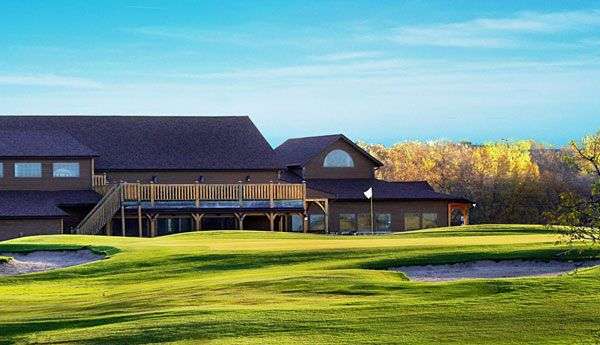
Manitoba, Canada
Situated twenty-five miles southwest of downtown Winnipeg, Bridges Golf Course is laid out on either side of the meandering La Salle River, with water coming into play at more than half the holes on the scorecard.

Situated twenty-five miles southwest of downtown Winnipeg, Bridges Golf Course is laid out on either side of the meandering La Salle River, with water coming into play at more than half the holes on the scorecard.
Sort by:
No reviews yet. Be the first to share your experience!
The latest ranking of the Top 100 Golf Courses in the World serves as the ultimate global golf bucket list. Most members of our World Top 100 Panel are seasoned golfers, each playing 20-30 of these courses annually while travelling extensively over decades to form their opinions on others. We recognise that opinions vary—even among our panel members. Rankings are subjective, and there are undoubtedly 50 or more courses in the UK and USA alone that could easily fit onto this list. Links Golf Pilgrimages The rankings
California, United States
New Jersey, United States
Northern Ireland, United Kingdom
New York, United States
New York, United States

You don't need a four-figure budget, a private-club connection or an invitation from a member to play a course in the World Top 100. Top100 has collated the 10 cheapest visitor-accessible courses on our current World Top 100 Ranking, based on standard green fees. From a world-class links in Tasmania to a U.S. Open and Ryder Cup venue in New York, these courses offer the chance to play some of the best golf on the planet without the eye-watering green fees attached to many of their World Top 100 counterparts. 1. St Andrews Beach Golf Course (Victoria, Australia) World Ranking: 89th | Australia ranking: 6th | Green fee: A$139 (£74) Tom Doak’s first Australian mainland design, St Andrews Beach opened in 2004 on the Mornington Peninsula and has since become one of the country’s best-value, ranked courses. The public-access layout occupies 175 hectares of former grazing land, with wide fairways, rolling terrain and sandy natural contours that give several holes a links-like feel. Measuring just over 6,000 metres from the back tees, it is playable for a broad range of golfers, though the subtle greens ensure there is still plenty to think about. In a region known for outstanding golf, St Andrews Beach stands out not only for its quality but also for its accessibility, offering everyday golfers the chance to experience a Tom Doak design without the premium price tag often attached to courses of this calibre. 2. Bethpage Black (New York, USA) World Ranking: 58th | USA ranking: 28th | Green fee: From US$140 (£106) Bethpage Black has the rare distinction of being a World Top 100 course, a major championship venue and a public golf course. Located within Bethpage State Park on Long Island, the A.W. Tillinghast design opened in 1936 and has since hosted two U.S. Opens and the 2025 Ryder Cup. The Black is renowned for its difficulty, with narrow fairways, deep rough, large sculpted bunkers and elevated greens making accuracy essential. It is a demanding test, but one that remains remarkably accessible to everyday golfers. That combination of championship pedigree and public access is what makes Bethpage Black so unusual. Few golfers get the chance to play a course of this stature without needing a private-club connection or resort stay. 3. Paraparaumu Beach Golf Club (Wellington, New Zealand) World Ranking: 91st | New Zealand ranking: 2nd | Green fee: NZ$275 (£118) Set on the Kapiti Coast, north of New Zealand's capital city Wellington, Paraparaumu Beach has been one of the country’s most celebrated golf courses since Alex Russell designed it in 1949. The links has hosted 12 New Zealand Opens and has long been regarded as one of the country’s finest layouts. It is a relatively short course by modern championship standards, but the coastal wind, firm fairways, deep bunkers and undulating greens provide plenty of challenge. The split-fairway 17th is a particular highlight, forcing golfers to choose between two very different routes to the green. For international golfers, Paraparaumu offers the chance to experience a genuine piece of New Zealand golfing history without needing access to a private resort. 4. Fairmont Jasper Park Lodge Golf Course (Alberta, Canada) World Ranking: 73rd | Canada ranking: 2nd | Green fee: C$280 (£149) Set among the Canadian Rockies in Jasper National Park, Fairmont Jasper Park Lodge is one of Stanley Thompson’s most celebrated designs. Opened in 1925, the course winds through the valley beside Lake Beauvert, with snow-capped peaks providing a backdrop to almost every hole. The course combines wide fairways, elevated tees and strategically placed bunkers with the natural contours of the landscape. Thompson’s design rewards thoughtful play rather than simply demanding power, making it a course that can be enjoyed by golfers of different abilities. The result is a rare combination of classic golf and Canadian wilderness, with the surrounding mountains and forest making the journey between shots almost as memorable as the golf itself. 5. Barnbougle - The Dunes Course (Tasmania, Australia) World Ranking: 25th | Australia ranking: 3rd | Green fee: A$285 (£151) Barnbougle Dunes is about as close as Australia gets to a traditional seaside links. Set on Tasmania’s northeast coast, the course was designed by Tom Doak and Australian Mike Clayton and opened in 2004, establishing Barnbougle as one of the country’s premier golf destinations. The layout runs through towering coastal dunes, with wide fairways, natural contours and greens that follow the movement of the land. The wind is an ever-present factor, while the strategic design rewards golfers who think their way around the course rather than simply relying on power. For golfers seeking a genuine links experience outside the British Isles, Barnbougle Dunes is about as compelling as it gets, combining world-class golf with the rugged coastline of Tasmania. 6. Cape Wickham Golf Links (Tasmania, Australia) World Ranking: 47th | Australia ranking: 4th | Green fee: A$315 (£167) Cape Wickham occupies a spectacular stretch of coastline on King Island, sitting in Bass Strait between Tasmania and mainland Australia. Designed by American architect Mike DeVries, the links opened in 2015 and quickly established itself as one of the country's standout modern courses. The course makes the most of its remote coastal setting, with the opening five holes winding around Cape Farewell before the layout moves through sand hills and limestone outcrops. Several holes hug the shoreline, while the closing stretch heads towards the imposing Cape Wickham Lighthouse. The 18th provides a fitting finale, with the fairway doglegging around a sandy bay before reaching the home green, making Cape Wickham a memorable links experience from start to finish. 7. St Enodoc Golf Club - Church Course (Cornwall, England) World Ranking: 49th | England ranking: 4th | Green fee: £175 Set among towering dunes overlooking the Camel Estuary in Cornwall, St Enodoc’s Church Course is one of James Braid’s most distinctive designs. Founded in 1891, the course was transformed by Braid in the early 20th century and remains a spectacularly natural links. It is a relatively short par 69 at 6,010 metres, but its undulating fairways, dramatic elevation changes and formidable dunes create a test that demands imagination. The famous 6th is the standout, with the enormous Himalaya dune obscuring the green and making club selection particularly difficult. The course also has an unusual piece of history, with the 13th hole running alongside the churchyard where poet laureate John Betjeman is buried. 8. South Cape Owners Club (Gyeongsangnam-do, South Korea) World Ranking: 63rd | South Korea ranking: 2nd | Green fee: From KRW 350,000 (£195) Set on Namhae Island off the southeast coast of South Korea, South Cape Owners Club is a dramatic Kyle Phillips design where the ocean is visible from all 18 holes. The course opened in 2013 as part of a luxury resort development and has quickly established itself among Asia's most striking modern layouts. The course is framed by granite outcrops, coastal cliffs and rolling terrain, with bluegrass fairways contrasting against fine fescue rough. The standout stretch comes from the 11th onwards, culminating in two spectacular waterside par threes at the 14th and 16th. For golfers willing to make the journey to Namhae Island, South Cape offers a rare combination of world-class golf, dramatic coastal scenery and a luxury resort experience. 9. Utrecht De Pan Golf Club (Utrecht, Netherlands) World Ranking: 56th | Netherlands ranking: 1st | Green fee: From €235 (£198) Dating back to 1894, Utrecht De Pan is the second-oldest golf club in the Netherlands, with Harry Colt designing the current course in 1929. Set in secluded woodland near Utrecht, the layout is a classic heathland course, winding through pine, birch, oak and chestnut trees. De Pan has hosted the Dutch Open three times and is built around strategic rather than power golf. Several of its most memorable holes play over valleys of heather and sand, while the sixth and seventh demand particularly thoughtful tee shots and approaches. Recent restoration work by Frank Pont has helped return the course towards Colt’s original design, making De Pan a fascinating example of Golden Age heathland golf in the Netherlands. 10. Cruden Bay Golf Club - Championship Course (Aberdeenshire, Scotland) World Ranking: 70th | Scotland ranking: 10th | Green fee: From £205 Cruden Bay is one of Scotland’s most distinctive links, winding through towering dunes on the Aberdeenshire coast with the North Sea providing a constant backdrop. The course opened in 1899 after being laid out by Old Tom Morris and Archie Simpson, before Tom Simpson and Herbert Fowler remodelled it in 1926. Cruden Bay makes spectacular use of its natural terrain, with elevated tees, blind drives, punchbowl greens and fairways that rise and fall between the dunes. The 193-yard 4th, played from an elevated tee across a deep hollow, is one of several standout holes. There is plenty of character, too, from driveable par fours and back-to-back par threes to the feeling that every hole reveals something different. It is exactly the sort of course that rewards golfers willing to embrace its quirks. Green fees are based on standard 18-hole visitor rates, using international visitor rates where applicable. All prices are peak-season rates and do not take twilight, off-season or promotional rates into account. Prices are correct at the time of writing and are subject to change.

If you've watched any professional golf on television over the past four decades, you've heard the letters "TPC" attached to a course name. TPC Sawgrass. TPC Scottsdale. TPC Harding Park. TPC stands for Tournament Players Club — a network of golf courses owned, operated, and licensed by the PGA Tour. The branding is everywhere in the sport, but most travelling golfers don't fully understand what it means, where it came from, or why it should matter to them when planning a trip. See the Top 100 Golf Courses Ranking of TPC Courses The story behind TPC is one of the shrewdest business moves in the history of sport. It reshaped the economics of professional golf, created a network of courses that the public can actually play, and pioneered a design philosophy that remains divisive among architecture enthusiasts to this day. Today, the TPC network comprises 30 properties across three countries — the United States, Canada, and Mexico — plus the U.S. territory of Puerto Rico. Here's what you need to know. How the PGA Tour Went From Tenant to Landlord For most of its history, the PGA Tour operated as a travelling circus. Each week, the Tour would pitch up at a different private club, stage a tournament, and move on. The host club controlled the course setup, the infrastructure, the hospitality, and the revenue. The Tour was a well-known guest renting somebody else's living room. By the late 1970s, that arrangement was breaking down. Spectator experiences at many venues were poor — cramped viewing corridors, limited sightlines, zero infrastructure for grandstands or broadcast equipment. Private clubs weren't designed for crowds of 30,000 or more. And the Tour had almost no control over the commercial revenue being generated at its own events. PGA Tour Commissioner Deane Beman saw the solution: the Tour needed to build and own its own courses. It was a radical idea — a professional sports league constructing its own stadiums. In American football or baseball, that model was well established. In golf, nobody had attempted it. Beman enlisted architect Pete Dye, and in 1980, they opened TPC Sawgrass in Ponte Vedra Beach, Florida. It would become the permanent home of The Players Championship and, in time, one of the most recognisable golf courses on earth. What Is Stadium Golf? The signature concept behind TPC courses is what Beman and Dye termed "stadium golf." The premise was straightforward: design the course so that spectators can actually see what's happening. In practice, that meant sculpting enormous mounds around greens and along key fairway corridors, creating natural amphitheatres where thousands of fans could watch the action from elevated vantage points. At Sawgrass, Dye committed fully. The course was carved from flat Florida swampland, with earth-moving equipment fabricating elevation changes the terrain never provided naturally. Waste bunkers, railway sleeper walls, bulkheaded lakes, and the now-iconic island green par-3 17th hole were all part of a layout that felt like nothing else in American golf. Tour professionals initially loathed it. The original routing was brutally penal, with water swallowing balls on seemingly every hole. J.C. Snead famously described the course as "90% horse manure and 10% luck." But Beman hadn't built Sawgrass to please the players. He'd built it for fans, for television cameras, and for the Tour's financial independence. The design philosophy has always split opinion. The weaker TPC courses feel very much manufactured — rows of uniform berms that bear no relationship to the landscape, constructed purely to give galleries somewhere to stand. That distinction matters if you care about golf course architecture, and it explains why some TPC courses rank among the best in their state while others go unranked entirely. Should TPC Courses Matter to Travelling Golfers? Here's the part that's most relevant if you're building a trip itinerary: a significant portion of TPC courses are open for public play. Unlike the storied private clubs that host major championships, the TPC network was designed with accessibility at its core. Of the 30 TPC properties, 14 are resort or daily-fee courses where you can book a tee time and pay a green fee without any membership. These include the flagship venues — TPC Sawgrass, TPC Scottsdale, TPC San Antonio, TPC Harding Park, TPC Las Vegas, TPC Louisiana, and TPC Dorado Beach, among them. The remaining 16 are private clubs, including notable tournament venues like TPC Southwind, TPC River Highlands, TPC Craig Ranch, and TPC Boston, where access is restricted to members and their guests. Just under half the network is genuinely accessible to travelling golfers, but that still represents a rare opportunity in professional golf — if you want to play a course where Tour events take place, TPC's pay-and-play venues are often your best, and sometimes your only, realistic option. The trade-off is price. Green fees at flagship TPC courses regularly sit between $300 and $500, sometimes considerably more during peak season. You're paying for the brand, the conditioning, and the bragging rights. Whether that represents value depends on what you want from a round of golf. Conditioning across the network is consistently strong. Because TPC courses are PGA Tour-owned, they're maintained to professional standards year-round rather than being polished for one event week per year. Greens are quick, fairways are tight, bunkers are pristine. If immaculate course conditioning is a priority for you, TPC venues will rarely let you down. Our Top 5 TPC Courses We've reviewed and ranked every TPC course in the network. These are the five that stand above the rest; whether they are worth a green fee is up to you. 1. TPC Sawgrass — Stadium Course Ponte Vedra Beach, Florida The flagship of the entire network and the course that started it all. Home of The Players Championship — which carries the largest purse on the PGA Tour outside the four majors — Sawgrass is the definitive TPC experience. The island green 17th is the single most televised hole in professional golf, and regardless of what you think about it architecturally, standing on that tee with a wedge in your hand is one of the great bucket-list moments in the game. Pete Dye softened the routing significantly after its brutal early years, and the course has matured beautifully through the Florida wetlands. The conditioning is immaculate, the practice facilities are world-class, and the entire experience — from check-in to the 18th green — is polished in a way that justifies the premium green fee. Playing Sawgrass feels like an event. That's exactly what it was designed to be. 2. TPC Boston Norton, Massachusetts A Gil Hanse design that hosted the Dell Technologies Championship (formerly the Deutsche Bank Championship) for over a decade as part of the FedEx Cup Playoffs. It's worth noting that TPC Boston operates as a private club, so access is limited to members and their guests — but it earns its place on this list on the strength of the design alone. TPC Boston stands apart from most courses in the network because of Hanse's reputation as one of the most respected modern architects in the game — his portfolio includes Merion's restoration and the Olympic Course in Rio. The routing moves through mature New England woodland with subtle, strategic bunkering and green complexes that reward creativity. It's a course that feels more considered than many TPC venues — less reliant on the stadium mounding formula and more focused on the quality of the golf itself. For golfers who appreciate design substance alongside Tour pedigree, Boston is a standout. 3. TPC Colorado Berthoud, Colorado One of the newer additions to the TPC network, TPC Colorado was designed by Art Schaupeter and sits against the dramatic backdrop of the Rocky Mountain Front Range. The course hosted the Korn Ferry Tour's TPC Colorado Championship and offers something that many TPC courses lack: a genuine sense of place. The mountain views are spectacular, the layout uses the rolling terrain intelligently, and the conditioning meets the standard you'd expect from the brand. It's a course that demonstrates what the TPC model looks like when it embraces natural landscape rather than imposing manufactured features onto flat ground. For golfers passing through Colorado, it's a compelling option that many overlook. 4. TPC San Antonio — Oaks Course San Antonio, Texas Home of the Valero Texas Open, which holds the distinction of being the longest-running event on the PGA Tour at the same course. The Oaks Course, designed by Greg Norman with Sergio Garcia's input, threads through the Texas Hill Country landscape of live oaks and native grasses, with the rock outcroppings and elevation changes giving the layout a character that feels authentically Texan. The resort complex at JW Marriott San Antonio also houses the Canyons Course (a separate TPC-branded layout by Pete Dye), making it a strong multi-round destination. The Oaks is the stronger of the two designs and earns its place among the top TPC courses for its combination of tournament pedigree, natural setting, and accessibility as a resort course. 5. TPC Harding Park San Francisco, California If there's one TPC course that transcends the brand entirely, it's Harding Park. Originally built as a municipal course in the 1920s, it was renovated and brought into the TPC fold, and has since hosted the PGA Championship, the WGC-Match Play, and the Presidents Cup. Set among towering Monterey cypress trees along the shores of Lake Merced, it possesses a sense of history and atmosphere that purpose-built TPC courses simply cannot replicate. The fact that it remains a public course in a major American city — one that has hosted a major championship — makes it almost unique in the sport. It barely feels like a "TPC course" in the traditional sense, and that's precisely what makes it special. The architecture predates the stadium golf era by half a century, and the Monterey cypress corridors give it a gravitas that no amount of manufactured mounding could create. Other Notable TPC Courses Several TPC courses outside our top 5 deserve mention for travelling golfers. TPC Scottsdale's Stadium Course hosts the WM Phoenix Open and its infamous par-3 16th hole stadium — the most raucous atmosphere in professional golf. TPC River Highlands hosts the Travellers Championship and features one of the best finishing stretches on Tour. TPC Southwind is home to the FedEx St. Jude Invitational — the PGA Tour's only private club in Tennessee. TPC Louisiana and TPC Deere Run are strong options that often fly under the radar. TPC Courses Outside the United States The TPC network extends beyond the continental U.S. into two additional countries and one U.S. territory. In Puerto Rico, TPC Dorado Beach is a 54-hole resort complex with the East Course ranked #1 on the island. In Mexico, TPC Danzante Bay in Loreto, Baja California Sur is ranked #17 nationally — a stunning coastal layout in one of the country's most beautiful settings. In Canada, TPC Toronto at Osprey Valley offers three courses (Hoot, Heathlands, and North), all ranked within the Canadian top 80 and all sharing the same Alton, Ontario facility. Are TPC Golf Courses Worth the Green Fee? The TPC network deserves credit for something that often gets overlooked: access to professional-calibre golf courses used for tournament play. Before TPC, if you wanted to play a course where Tour events took place, your options were virtually nonexistent. TPC created a pathway for everyday golfers to experience tournament conditions/ The business model was visionary. The PGA Tour transformed itself from an organisation dependent on the goodwill of private clubs into a property portfolio generating year-round revenue through green fees, memberships, hospitality, and event hosting. It gave the Tour financial independence and brand control that it simply didn't have before. The TPC name implies a certain standard, but the network includes everything from world-class tournament venues to facilities that are essentially well-maintained daily-fee courses carrying a premium marque. Not every TPC course hosts or was ever intended to host a Tour event. From an architectural standpoint, the ‘stadium’ build that defines most TPC designs can feel formulaic — manufactured berms that serve no strategic purpose and have no relationship to the natural landscape. The Bottom Line for Golf Travellers If a TPC course falls on your travel route, it may be worth considering. Our top 5 (Sawgrass, Boston, Colorado, San Antonio Oaks, and Harding Park) offer experiences that are difficult to replicate elsewhere: exceptional conditioning, memorable holes, and the chance to walk fairways you've watched on television. For the remaining TPC courses, weigh the green fee against what else is available in that market. In some cases, you'll find that a similarly priced course without the TPC badge offers a more interesting, more characterful round of golf. What Deane Beman started in 1980 was more than a golf course. It was a business model that altered an entire sport. Whether or not every TPC venue lives up to the ambition of that original vision, the concept itself remains one of the most consequential innovations in the modern game. See our TPC Ranking, you would actually want to play.
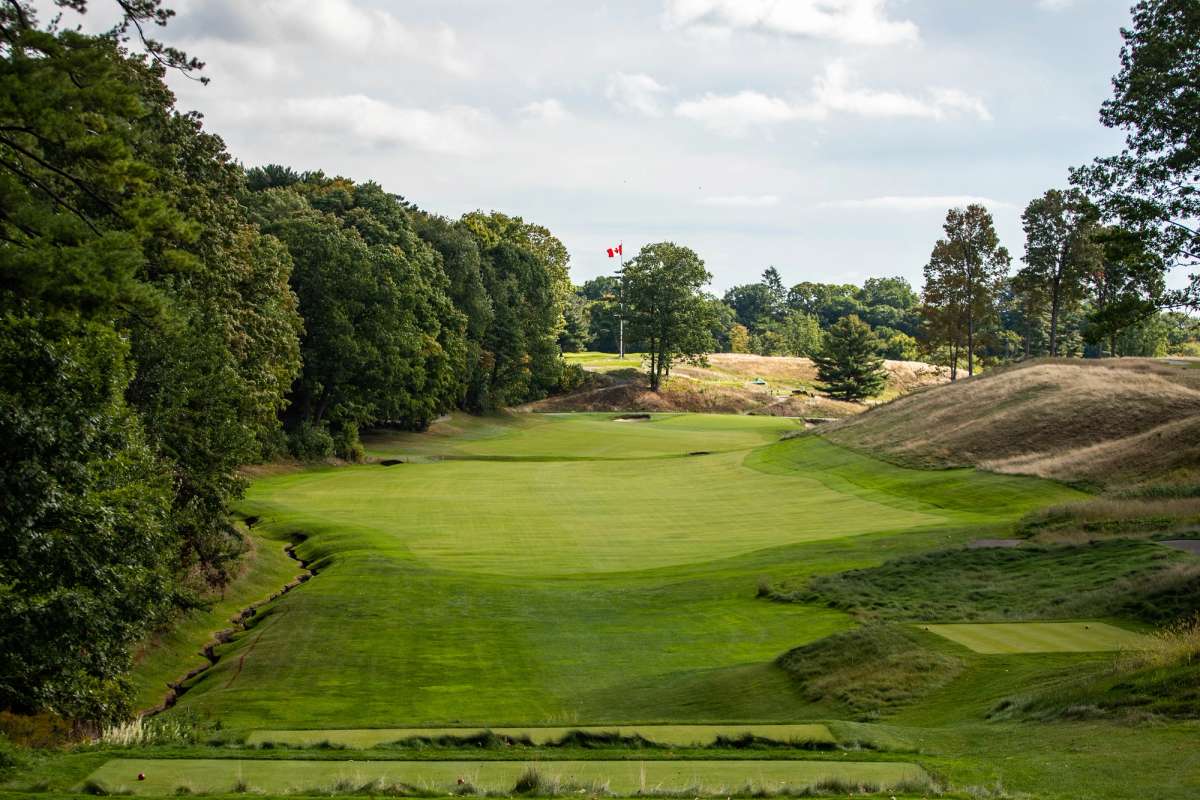
Canada's Best: Why Five Courses Battle for Top Spot Unlike most golfing nations where consensus exists around a clear number one course, Canada presents a fascinating anomaly. Whilst panellists consistently rank Jasper Park Lodge as the country's second-best course, the top spot remains hotly contested amongst five world-class contenders. This unique situation reveals not just the exceptional quality of Canadian golf, but the remarkable architectural diversity that makes the country one of the world's most underrated golf destinations. For serious golf travellers, this debate offers an extraordinary opportunity: access to world-class golf architecture across diverse landscapes at substantially lower costs than comparable international destinations, with the added advantage of no mandatory caddies and favourable exchange rates. Why Canada's Golf Rankings Defy Convention When Golf Club Atlas managing partner Andrew Harvey spoke with Jasper Miners of Top 100 Golf Courses about Canada's golf course rankings, Miners revealed something unprecedented in the golfing world. "There's really no general consensus on the best golf course in Canada," Miners explained during the discussion. "There could pretty much be as many as five number ones." This stands in stark contrast to other major golfing nations. The United States essentially debates between Cypress Point and Pine Valley, whilst Scotland's argument centres around St. Andrews and Muirfield. Canada, however, offers no such clarity amongst its elite courses. When Top 100 Golf Courses reviewed the Top 10 Courses in Canada, Jasper Park Lodge emerges as the consistent number two choice across all demographics. But the top spot remained fractured between St. George's Golf and Country Club, Cabot Cliffs, Banff Springs, Capilano Golf Club, and Toronto Golf Club, with Hamilton Golf and Country Club and Cape Breton Highlands Links also receiving serious consideration. This disparity stems from what Harvey identifies as the "Thompson Five" (Banff, Jasper, Capilano, St. George's, and Highlands Links), the "Harry Colt Two" (Toronto and Hamilton), and the "Cabot Two" (Cliffs and Links). These nine courses represent different eras of golf architecture across vastly different landscapes, making direct comparison exceptionally challenging. Three World-Class Golf Destinations in One Country Canada's ranking controversy reflects its unique position as perhaps the only country offering three distinct styles of elite golf within its borders. Each region presents world-class examples of different architectural philosophies, creating an apples-to-oranges comparison that defies easy resolution. Rocky Mountain Golf Courses represent perhaps the most dramatic golf anywhere in the world. Stanley Thompson's masterpieces at Banff Springs and Jasper Park Lodge showcase the dramatic possibilities of mountain golf. Set against the Canadian Rockies, these courses utilise spectacular elevation changes, dramatic vistas, and strategic routing through mountainous terrain to create unforgettable golf experiences that blend natural grandeur with architectural excellence. Southern Ontario Parkland Golf centres around the Greater Toronto Area, where Harry Colt's influence created two of Canada's finest courses. Toronto Golf Club and Hamilton Golf and Country Club showcase Colt's mastery of rolling terrain and strategic bunkering. St. George's Golf and Country Club, meanwhile, represents what Harvey calls "that American championship golf course" style—a demanding examination that has proven worthy of multiple Canadian Opens. Atlantic Links Golf achieved new prominence with Cabot's arrival in Nova Scotia. Cabot Cliffs and Cabot Links offer modern interpretations of links golf that rival anything in Scotland or Ireland, whilst the classical routing of Cape Breton Highlands Links provides a more traditional links experience through some of the most dramatic coastal terrain in North America. Stanley Thompson Golf Courses: Canada's Golden Age Legacy Understanding Canadian golf's excellence requires appreciating Stanley Thompson's unprecedented influence. Working primarily during the 1920s and 1930s, Thompson created what many consider the finest collection of golf courses by any single architect in any single country. His five Canadian masterpieces—Banff, Jasper, Capilano, St. George's, and Highlands Links—each demonstrate his ability to maximise dramatically different sites. Thompson's genius lay in his restraint and site sensitivity. Rather than imposing a signature style, he allowed each landscape to dictate the golf experience. This philosophy created courses so perfectly suited to their environments that they feel inevitable rather than constructed. Today, Rod Whitman emerges as Thompson's potential successor. The Alberta-born architect has developed a portfolio that increasingly draws comparisons to the master. Harvey suggests Whitman's career trajectory could rival Thompson's legacy: "If they're all as good as they currently are, you kind of go, okay, now there's a conversation to be had." With fifteen to eighteen courses planned or completed, Whitman's body of work may eventually challenge Thompson's supremacy in Canadian golf architecture. Western Canada continues producing exceptional golf course talent, from shapers like Josh McFadden (working with Gil Hanse) to architects like Riley Johns (working with Keith Cutten). This regional concentration of talent suggests something unique about the western Canadian golf experience that inspires deeper architectural understanding. Golf Travel Value: Canada vs The World's Elite Courses Canadian golf's most compelling argument for serious travellers lies not just in quality, but in exceptional value. Whilst a day at Sunningdale or Sandwich now approaches £500 including caddies and amenities, equivalent Canadian experiences cost significantly less with no mandatory additional services. The conversion rate alone makes Canadian golf attractive for international visitors. Where British golf has become prohibitively expensive for many travellers, Canadian courses offer world-class experiences at accessible prices. Harvey notes, "You can see some really great stuff on a budget, even though you're flying overseas." This value proposition extends beyond green fees. Canadian courses rarely require caddies, allowing golfers to experience these architectural masterpieces without the exponential costs associated with other world class venues. The emphasis on walking golf maintains the intended architectural rhythm whilst keeping costs reasonable. Seasonal considerations offer additional opportunities. Unlike the year-round accessibility of warmer climates, Canadian golf's concentrated season creates intense appreciation amongst locals and visiting golfers alike. The brief but glorious Canadian golf season—peaking in July and August—means early planning and booking are essential. Planning Your Canadian Golf Holiday: Regional Strategies Canada's vast geography—75 to 80 hours driving coast to coast—demands strategic planning for golf travellers. Rather than attempting a comprehensive national tour, successful Canadian golf trips focus on specific regions while acknowledging the country's three distinct golf landscapes. Western Canada Golf Tours offer the most dramatic golf experiences, centring on the Rocky Mountain courses of Banff and Jasper. These anchor points allow for exploration of hidden gems throughout Alberta and British Columbia. Rod Whitman's work provides contemporary excellence alongside Thompson's classics. Central Canada Golf Itineraries encompass the Southern Ontario corridor and Montreal region, offering the highest concentration of elite courses. The proximity of St. George's, Toronto, and Hamilton allows for efficient touring of multiple architectural styles within reasonable distances. Atlantic Canada Golf Adventures present the most remote but perhaps most rewarding golf experiences. Cabot's two courses alone justify the journey, whilst Highland Links offers one of golf's most unique experiences through Cape Breton's dramatic coastal landscape. Harvey's assessment proves increasingly relevant: "Every time I go somewhere, it reaffirms that the truly great golf courses here have their place in the discussion internationally." With six courses on Golf Club Atlas's coveted custodian list—tied with Australia and trailing only Scotland, England, and the United States—Canada's golf credentials are beginning to be appreciated by more and more astute travelling golfers. For golf travellers seeking world-class architecture without world-class prices, Canada offers an increasingly compelling proposition. The country's inability to agree on its best course reflects not confusion, but an embarrassment of riches.
