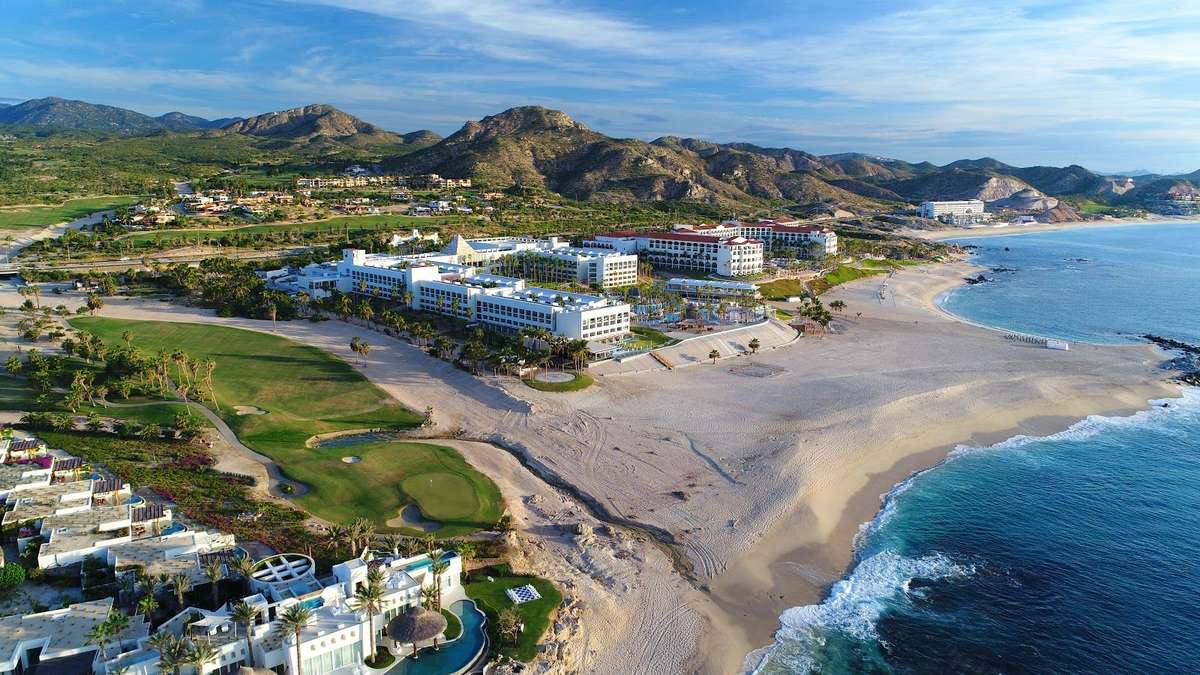
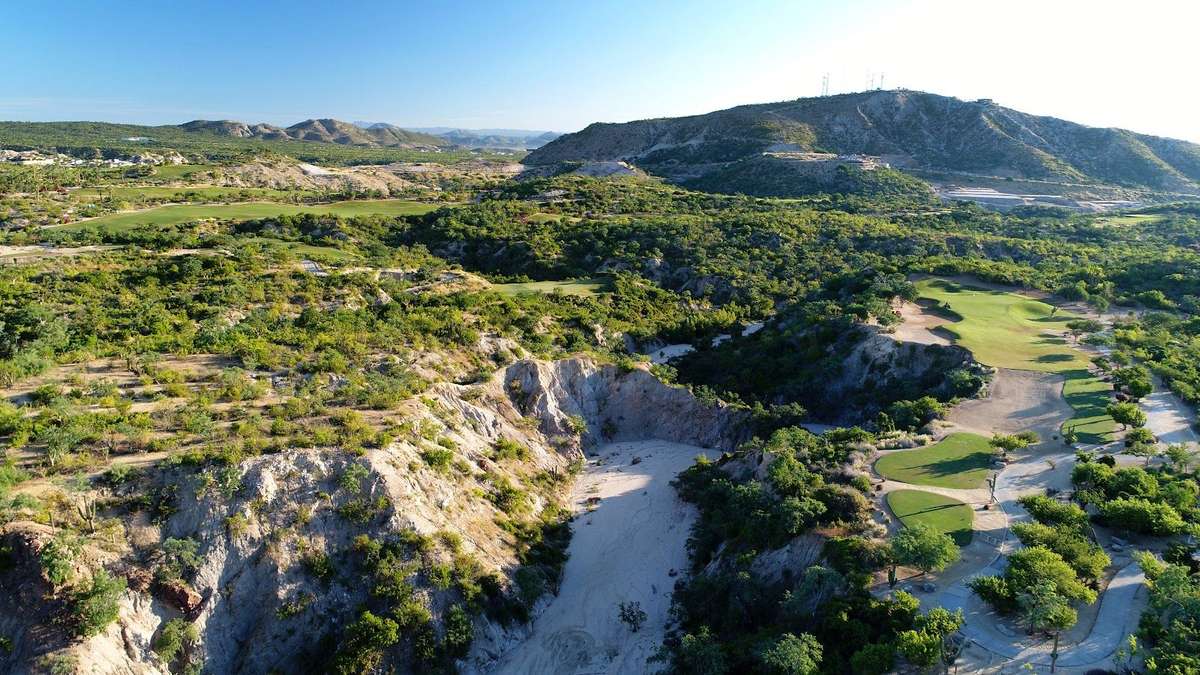
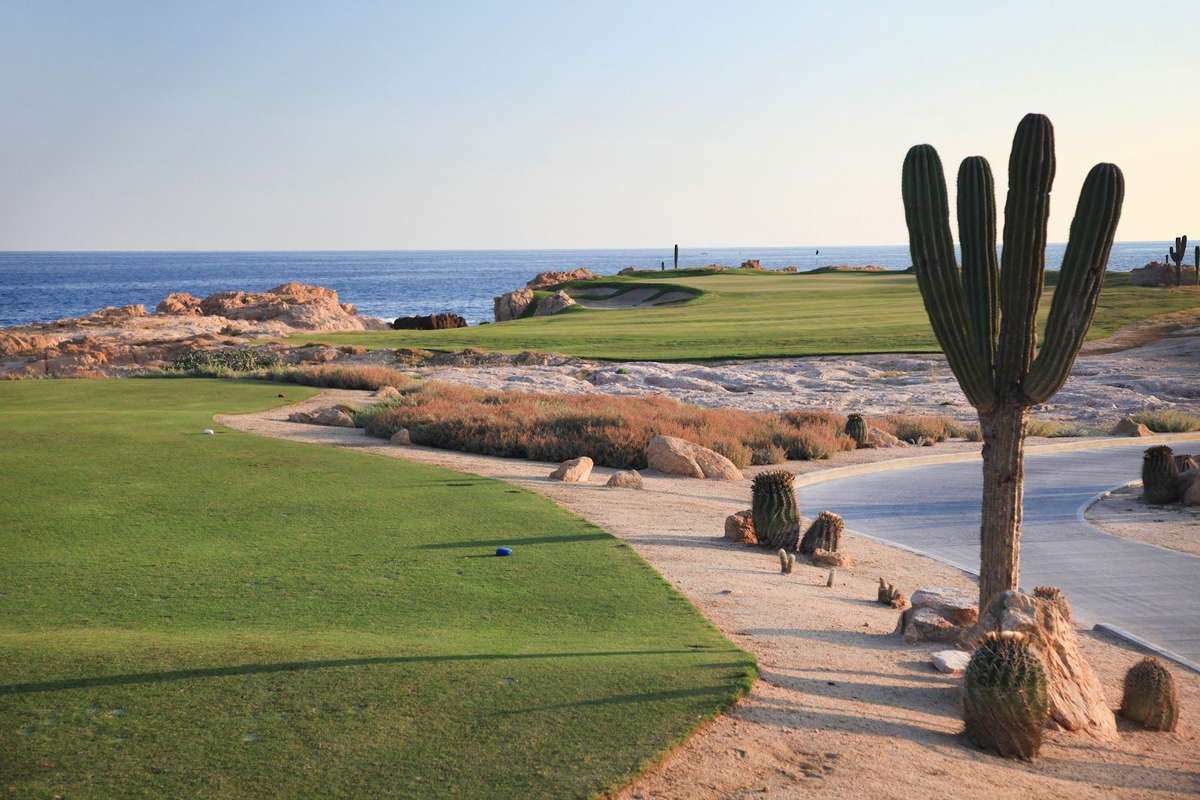
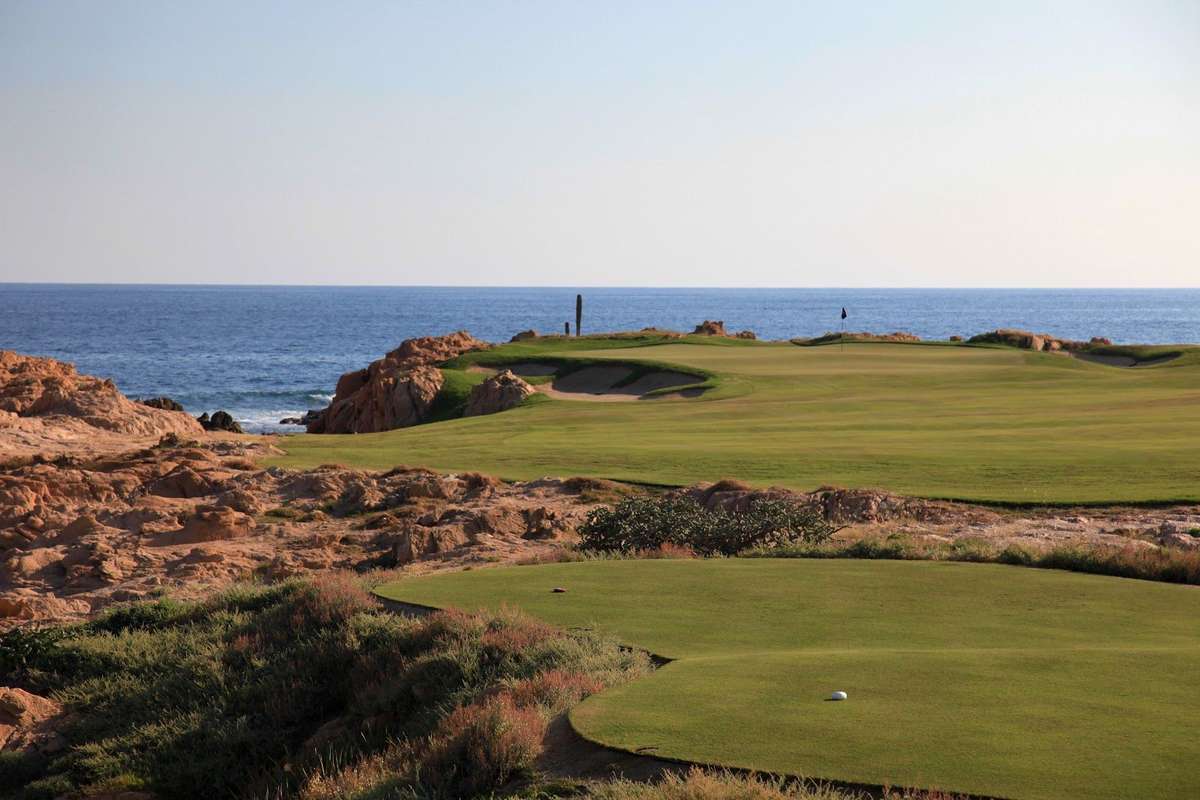
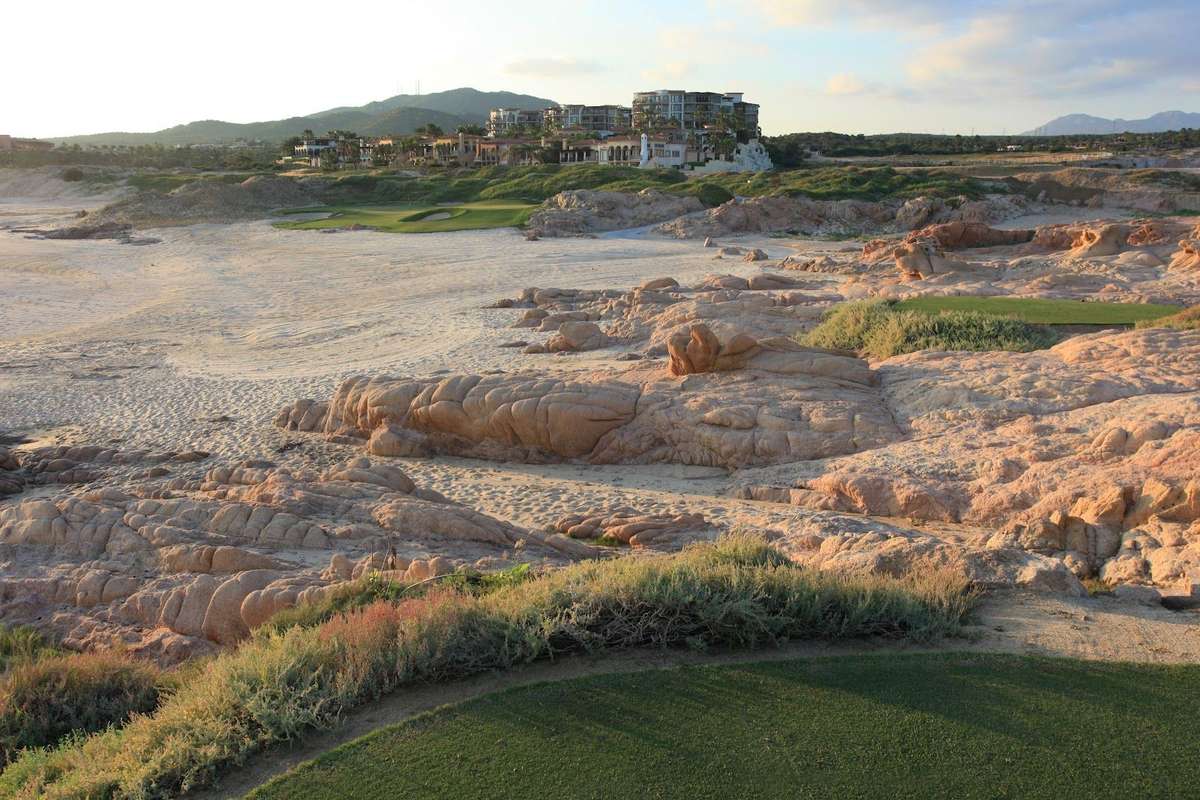
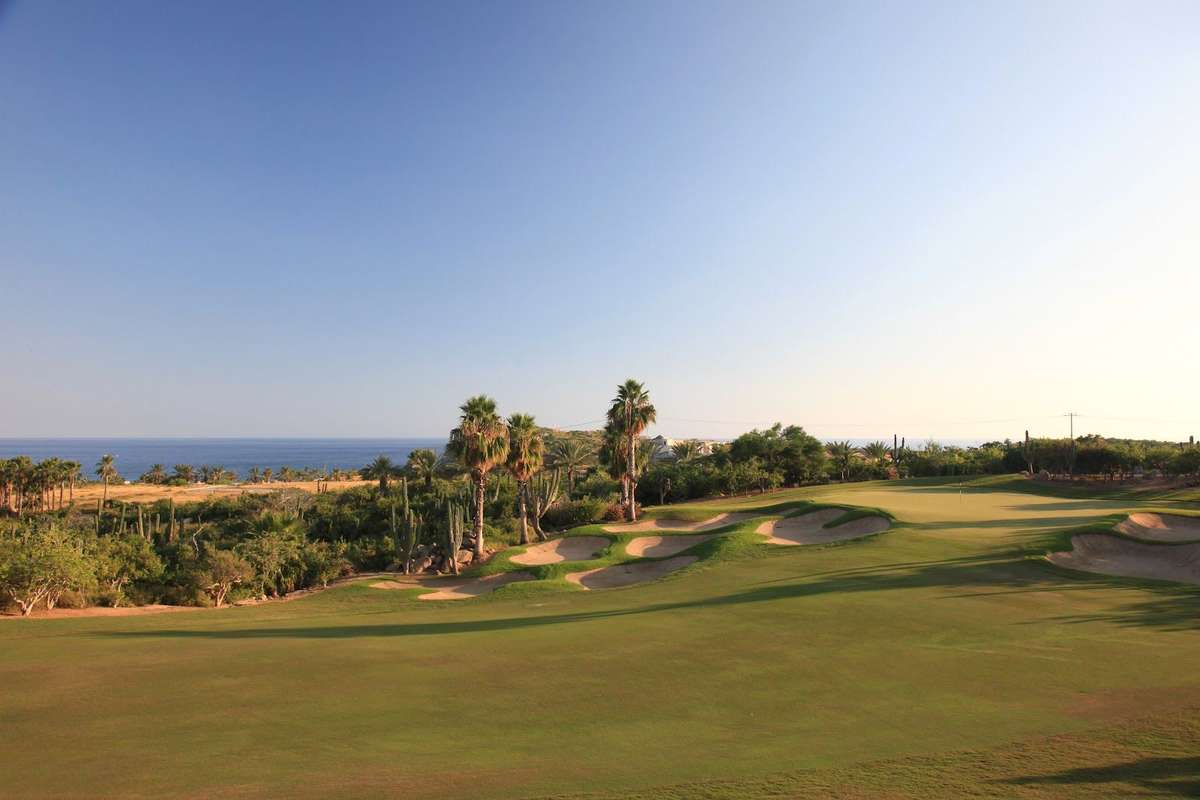
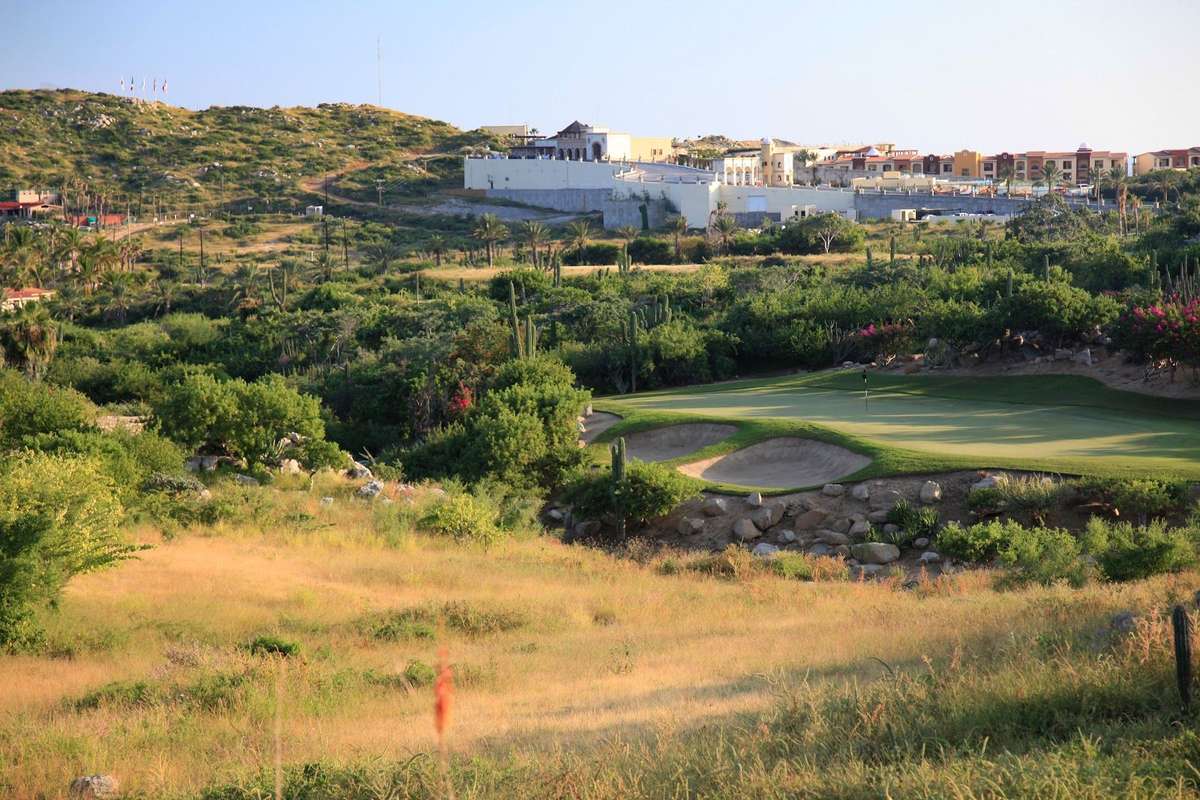
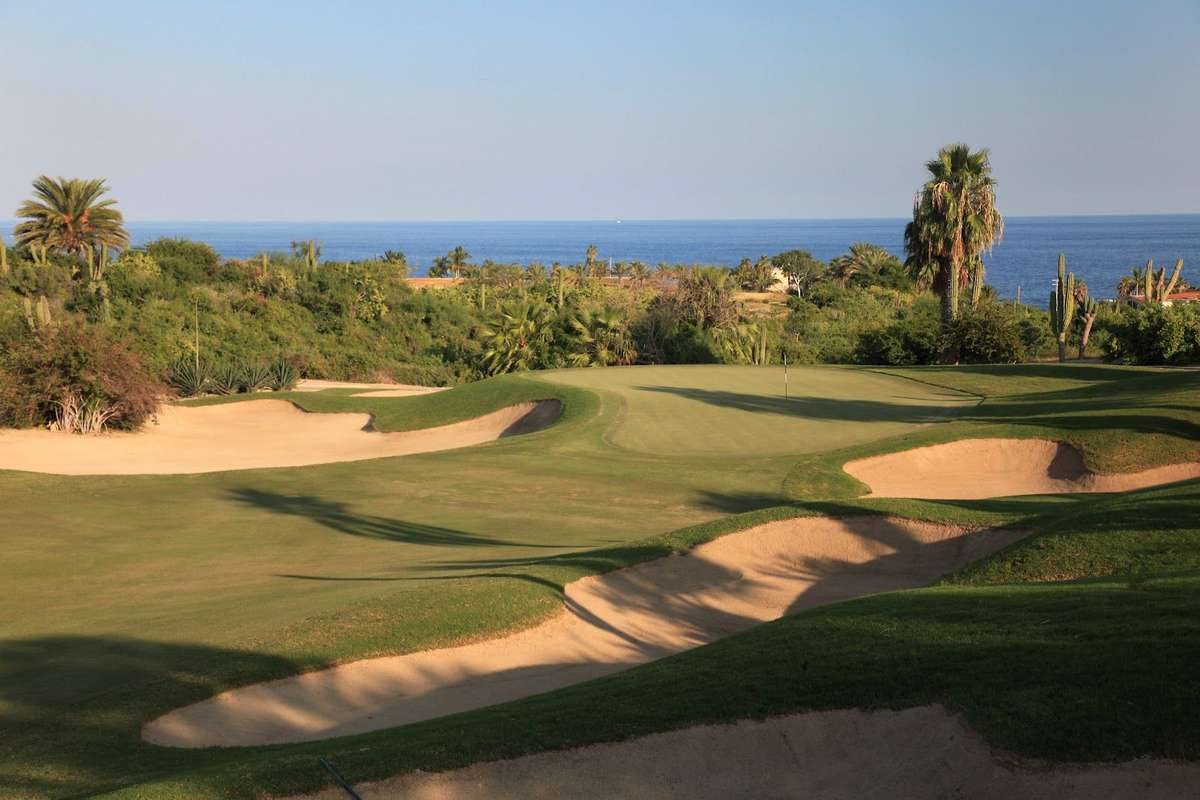
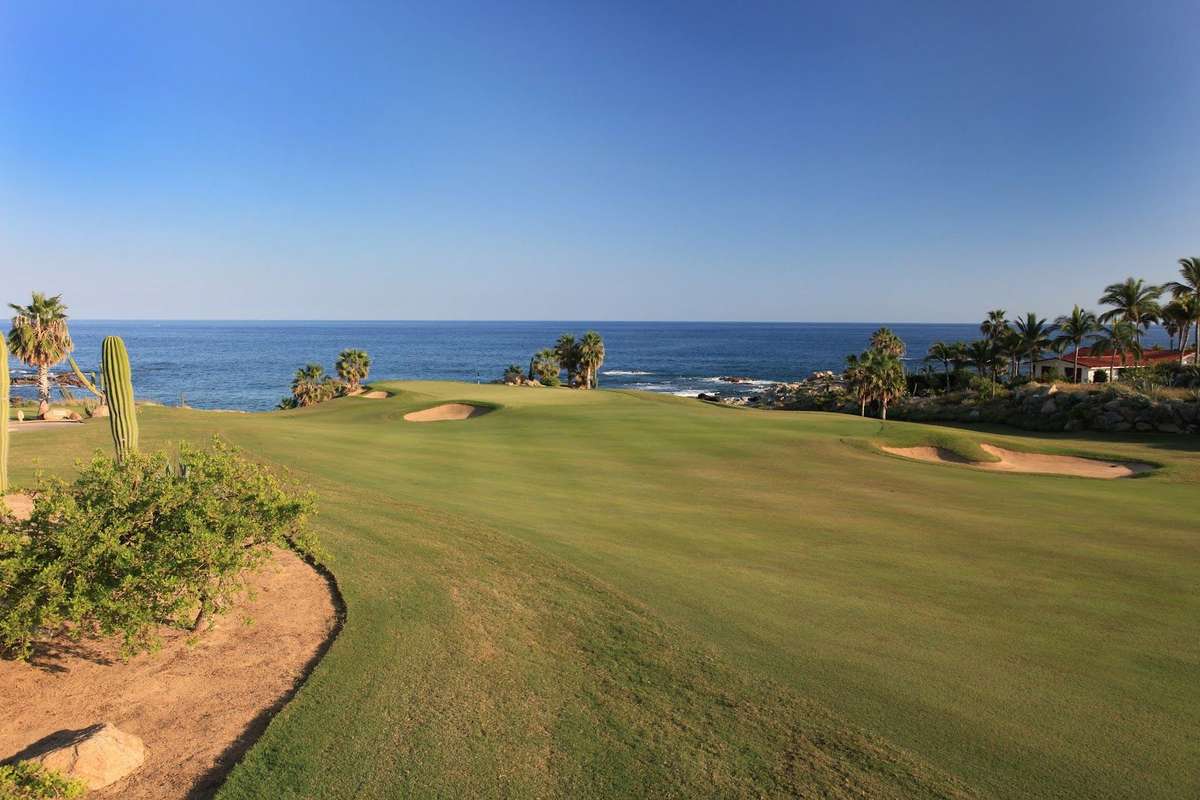
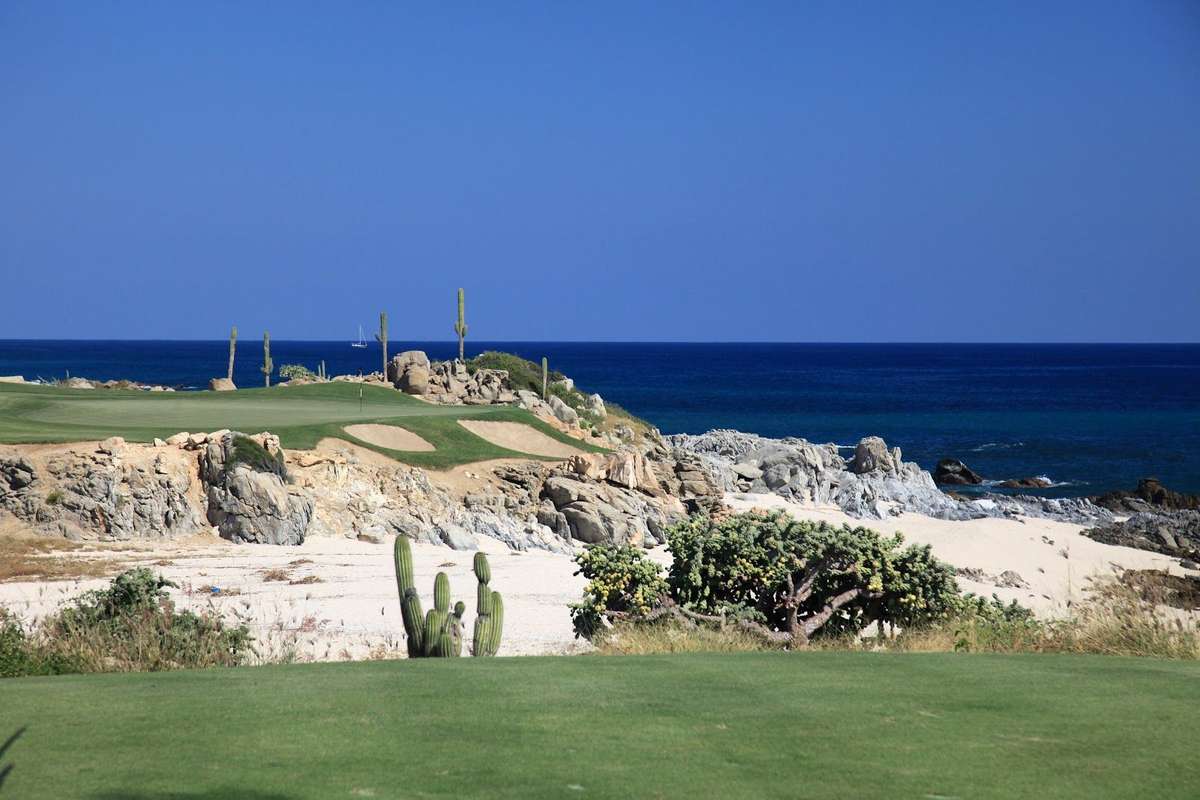
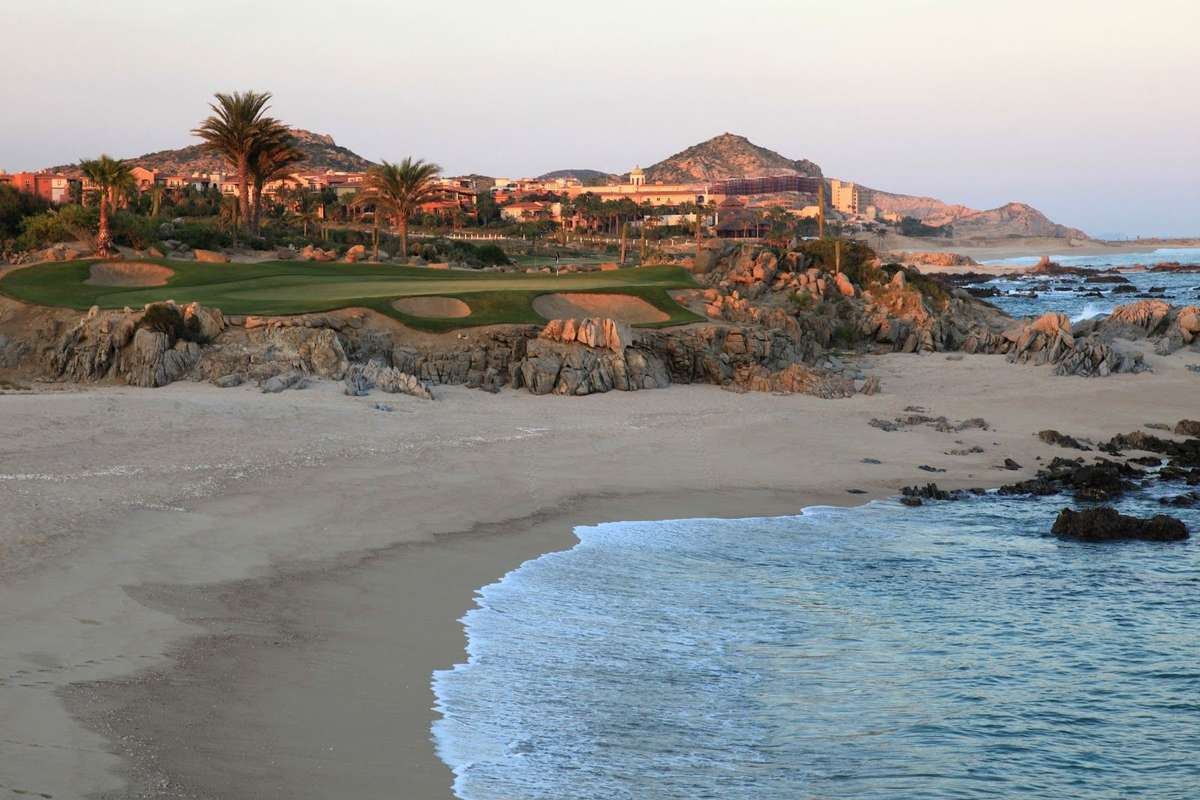
Cabo del Sol is an intoxicating mixture of seaside and desert golf. It’s a dream location for a golf course and the design responsibility for the Cove Club (formerly the Ocean course) fell to Jack Nicklaus.
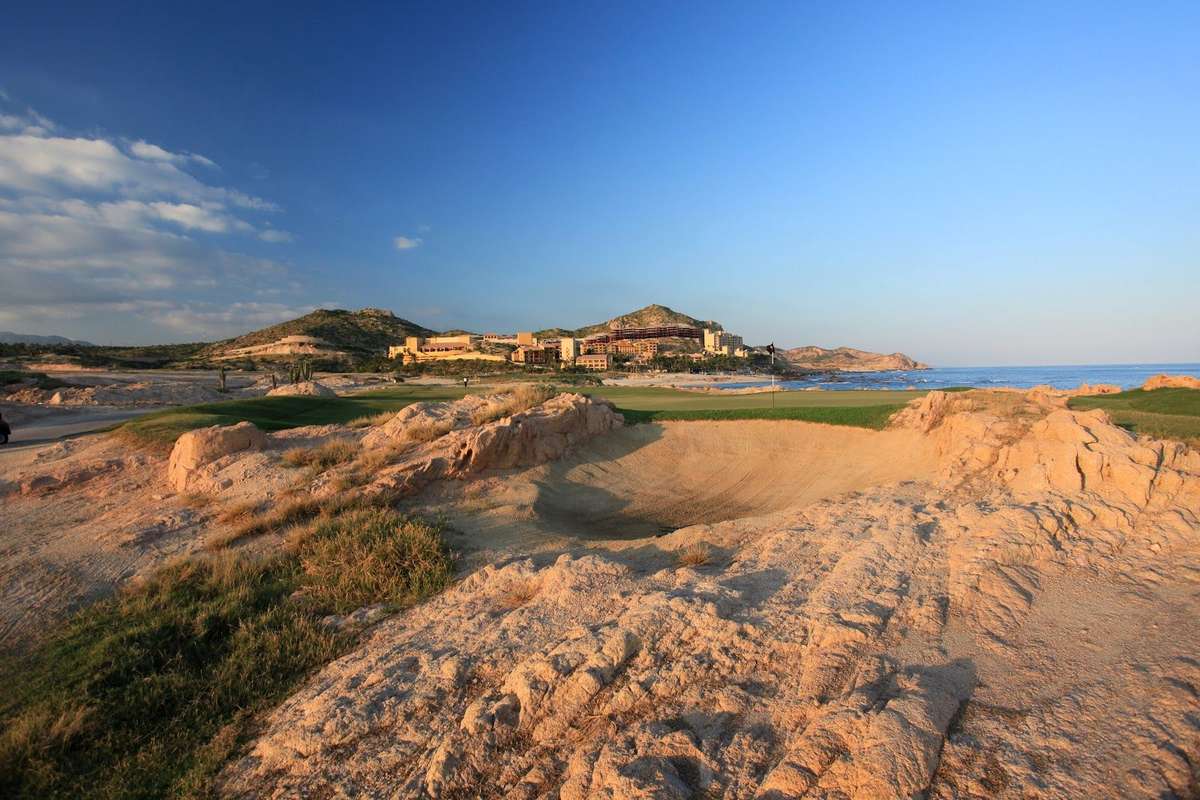
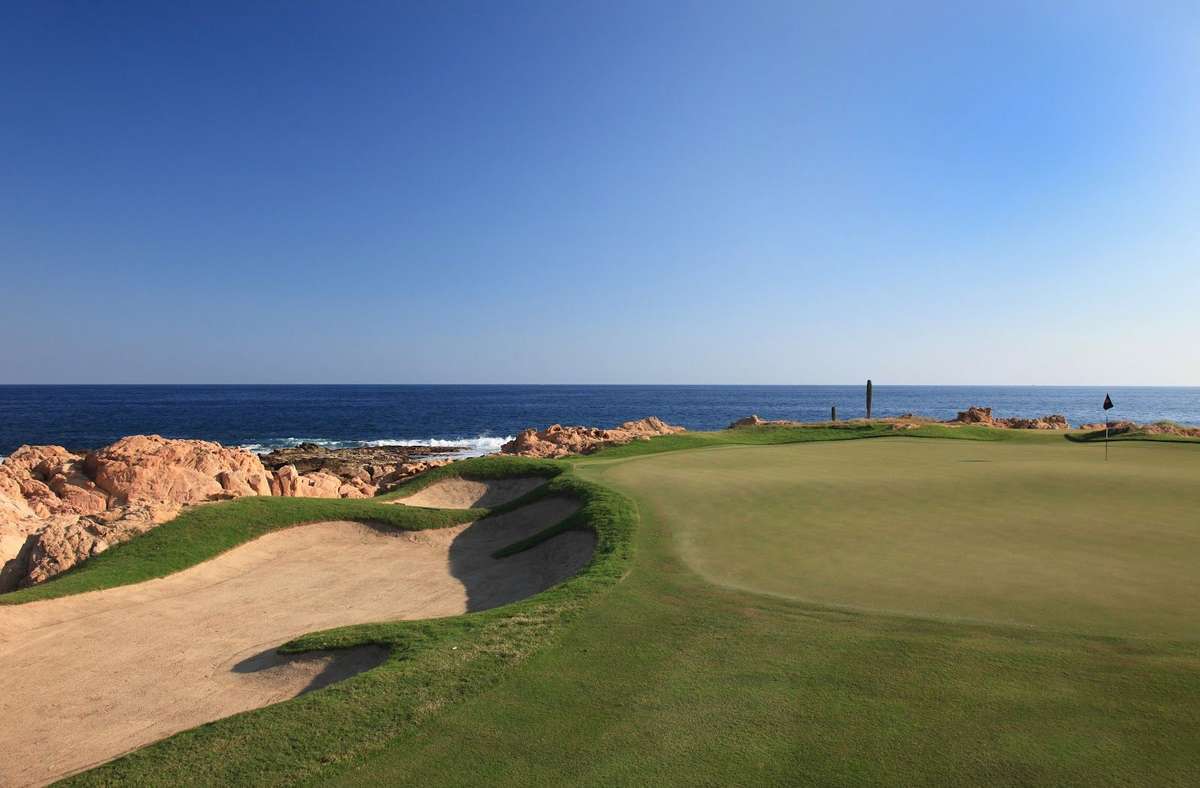
Cabo del Sol (Cove Club)
Cabo del Sol is an intoxicating mixture of seaside and desert golf. It’s a dream location for a golf course and the design responsibility for the Cove Club (formerly the Ocean course) fell to Jack Nicklaus.

4.5
I played the Ocean course at Cabo del Sol twice, once with a friend at 6340 yards and then again from 6815 yards. The second round I was a single and stood on the 7110 tees on each hole to get a feel for those tees and sometimes to wait for the groundskeeping crews to clear as I was first off in the morning.
I played here in February, 2018 and the putt on 18 on the second round completed a “bucket list” goal for me as I finished playing on every calendar day of the year at least once in my life. I did not experience slow play on the first round and obviously not on the second round where I took my time to study the course a bit more.
I regret not going on to play the Weiskopf course as I was told it was pretty good. I was left with a typical lament; “so much golf, so little time.”
A lot of people are very negative with regards to a golf course designed by Jack Nicklaus. Yet I feel I have played several good ones such as Mayacama, Kinloch in New Zealand, Muirfield Village, Pronghorn, Desert Highlands, Old Corkscrew, The Challenge at Manalee, Shoal Creek, The Concession, The Bear’s Club, and Cabo Del Sol Ocean. Yes, Mr. Nicklaus or his “team” designed some courses I do not care for such as Applecross in Pennsylvania, Quivira, Hanbury Manor, Harbor Shores, etc. In a sense, one could argue Jack Nicklaus is the “modern” version of Donald Ross, although perhaps with not as many great courses. Both are prolific designers and both are good at creating risk:reward golf holes with interesting green complexes. However, generally I believe Donald Ross, like many of the architects of golf’s golden age, got better land to build on. The other difference is that many of the Nicklaus designs were built to sell housing developments, and sometimes when playing them one can see how the land was a bit cramped or how there was much better land nearby but was reserved for housing. Mr. Nicklaus moves land and some of his holes can feel contrived. His golf courses rarely feel “natural” given the housing/condominiums/resort hotels surrounding them. Even Muirfield Village, generally acknowledged as his greatest design, is diminished by the many holes that parallel housing. Kinloch is an exception. That is not his fault and we should not hold it against him. Harbor Shores was built for a civic purpose, to reclaim hazardous and abandoned waste sites and to provide charity income to the local First Tee and Boys and Girls Club of Benton Harbor, a small town that had fallen into serious decline and poverty. Mr. Nicklaus partnered with the CEO at the time (Jeff Fettig) of Whirlpool to build this course which is unwalkable and feels like it is in 4-5 different courses. I applaud both of their efforts.
So now to the golf course itself. As of writing this I have played 706 different golf courses, many of them on a “top” list at one time or another. The Ocean course at Cabo del Sol has appeared on Golf Magazine’s Top 100 in the World many times. I do not put it in that high of a category. On my personal rating system, it is #214 with high marks for playability and the par 4’s. On my 13 criteria it receives above average marks, but I do not find many things to be superlative about the course. What I did like about the golf course is that you feel like you are playing in the desert with the exception of 17/18. Three other holes are on the water but not as good. I like desert courses because it is different for me versus a parkland course, a heathland course, or a links course. But I generally don’t rate the surroundings unless they are an integral part of the golf course.
It is a really fun course to play although high handicappers would really struggle here and possibly not enjoy it because several holes are difficult. Difficult holes for high handicappers are often the source of slow play much like the fourteenth hole at Streamsong Black. I thought the two par 3’s on the front as well as the par 5’s were a bit too easy and not very strategic. The back nine is stronger than the front nine. For me the better holes are 2, 5, 6, 10, 11, 13, and 14. 17 and 18 are very good. On many holes the fairways are wide and too generous. On other fairways I thought they were a little too tight and ruled out options.
The first hole is a fairly easy par 4 of 436/419 yards requiring the tee shot to get to the top of a slight ridge to see the hole that is slightly right. The green has a bunker front center and back center and is slightly raised with multiple tiers but there is a lot of room if you miss the green providing a very good chance of recovery.
Two is a par five of 574/558 yards with a dogleg left. You have to carry a lengthy wash area of stone. The hole has 10 bunkers to navigate with three greenside and two in front. For the second shot there is another wash area/bunker complex on the right side as well as trees on the right that will catch a ball trying to cut the dogleg. The green is slightly raised with some nice undulations with a bunker to the rear. You can miss behind the green but the slant of the grass makes the recovery chip a little tougher. The front middle bunker is to be avoided as it is reasonably deep.
The short par 4 of 327/320 comes next. The hole is bunkered left and right along the fairway but it is wide enough that they are easily avoided. The green has a swale on both sides with the right side bleeding into a bunker with a wash area behind it. The green is longer and narrower but pretty easy to hit given the length of the hole. The swale on the left could result in a ball making it all the way to the back left bunker set away from the green which would make for a difficult recovery shot. However, that swale left also rises in the middle sending a ball hit to far left likely back down to the bottom of the swale.
The second par five comes next at 555/542 yards. This is the first dogleg left with a very wide fairway. Only the longest hitters will go for the green in two as the green complex is separated with a wash/rock area of about 50 yards from the end of the fairway to the green. The green has three bunkers front and right and one bunker to the rear. Some people might love this hole but I found it to be lacking in danger due to the width of the fairway and the third shot is not that difficult.
The hardest hole on the front nine comes next, a longer par 4 of 490/469/447 so no matter whether you are playing black, gold or blue tees it is a long par 4. The fairway also feels very narrow from the tee even though there actually is adequate room in the fairway for all but the longest hitters. The tee shot requires a long carry to the left side of the fairway to clear a lengthy rock/wash area. But by going to the left, you lengthen the shot into the green which is raised with a severe run-off area both front and to the right. There is a bunker left of the green. In looking at the hole, it offers a lot of strategy for players of all abilities. It is a stellar hole.
Following this difficult hole are back-to-back par 3’s. The first is longer at 184/177 and the second is a short hole of 139/132. Both have views of the ocean with the first requiring hitting over a corner of the “bay” with a large bunker to the left side of the green. Should you go left of that bunker, there are sand and rocks awaiting on the left side of the green as the rocks spill down into the water. The right side has a bailout area. The green is placed sort of what you would expect from a “redan” hole and has a tier to it. It is one of the better greens. I liked the hole but felt it was not quite dramatic enough and wished the tee shot was from a point a little farther left. The second par 3 is right on the beach. You simply cannot miss to the left or you are in the rocks or down below on the beach. I suspect the hole is this length due to pace of play considerations, but for me it was too short for the dramatic setting.
I did not like the eighth hole, a par 4 of 450/418 yards that requires a tee shot over the wash area and then a second shot that seems even longer over a second wash area for the direct line to the green. The second waste area ends right at the green. This forces the weaker or shorter hitter to play out to the left which lengthens the hole to perhaps 485 yards. Well then, why not just design a par five here? For the longer hitter, the length is not quite long enough to challenge them on the straight line for those two required “carries.” There is a bailout area left of the green which is fronted by a bunker center and three bunkers back of the green. The green did have a nice slant to it, but I walked away from the hole feeling it was a missed opportunity despite a decent green
The ninth hole is standard, a par 4 of 469/450 yards with another long tee shot to carry a wash area of rocks/sand. There is a bunker right and a single bunker left of the green. The green is raised a bit on the left side and is tilted right to left.
After passing the halfway house for a lengthy drive to the tenth tee, there is a 436/404 yard par 4 waiting where the green sits on a bit of an island to the left with a wash area just in front of it. Your approach shot has to go over a wash area and there is a bunker fronting this green that is going away from you. Miss the green and you are in the sand and rocks. It is a well constructed hole.
The eleventh hole is a short par 4 of 352/344 yards with the green once again sitting to the left. The difference to the previous hole is that there is a bailout area left of this green with two bunkers left to either benefit those who don’t quite make the green or stop them from finding the rocks for those attempting to drive the green. There are two bunkers fronting the green. The fairway narrows and a shot that is hit too straight down the left side will also find the rocks/sand. For me as a medium length hitter I found the hole to not offer a decision for me. For longer hitters I wonder whether they felt frustrated by their option. This hole was straight forward for me but I liked the risk:reward element to it.
The twelfth hole is a par five of 515/500 yards that has a tee shot requiring a long carry over the sand/rock. The green is raised and surrounded by eight bunkers, six to the left and a fall-off behind the green. I found this to be the “easy” hole on the back nine.
The thirteenth is the longest par 3 on the golf course at 213/208 yards that plays slightly downhill to a green that looks like an island in the distance as it is green and no real bailout area. The tee shot is all carry to the green. Down below there is a small creek that can catch balls. The green is long and narrow with two bunkers left and the green slants right to left. It is a challenging golf hole.
Fourteen is a shorter par 4 of 366/351 yards, where the small creek from the previous hole comes into play twice. This is a downhill tee shot to a narrow fairway. Pull the tee shot left and you are in the creek, push it to the right and you are on a hill. The creek crosses before the green and runs along the right side. I found this hole to be both strategic and fun. You simply must pull the right club both times. There is a bail out area left of the green but getting up and down to recover par is not simple given the pitch of the green which sits at the bottom of the valley.
You come out of the valley to play a relatively flat final par 5 of 550/515 yards that is straight. There are bunkers right and two bunkers left to catch you on your tee shot or for a short hitter’s second if they go left. One of the bunkers on the left is more center of the fairway. The green has three bunkers beginning about 50 yards out on the right, one very large bunker left and two bunkers behind the green which is built at an right to left angle for the approach shot. It is a good green complex but I found the first two shots to be routine. This is a better hole for the longer hitter.
With the sixteenth you are returning to an ocean view, playing first uphill then downhill to the green. The tee shot requires another carry over the waste area and one must avoid by either clearing or going left of the two large bunkers on the right. The second shot plays downhill into the green. Perhaps the wind usually blows against you, but it did not for me even though I played the two rounds three days apart so I found trying to stop a ball on this green to be nearly impossible. There are three small bunkers right of the green and one behind the green. There is a bailout area left of the green due to the run-off from the green. While the green has a bit of an infinity look to it, I found the hole to be uninteresting due to the lack of bunkers on the left side of the fairway and a green that I thought was unfair for non-windy days.
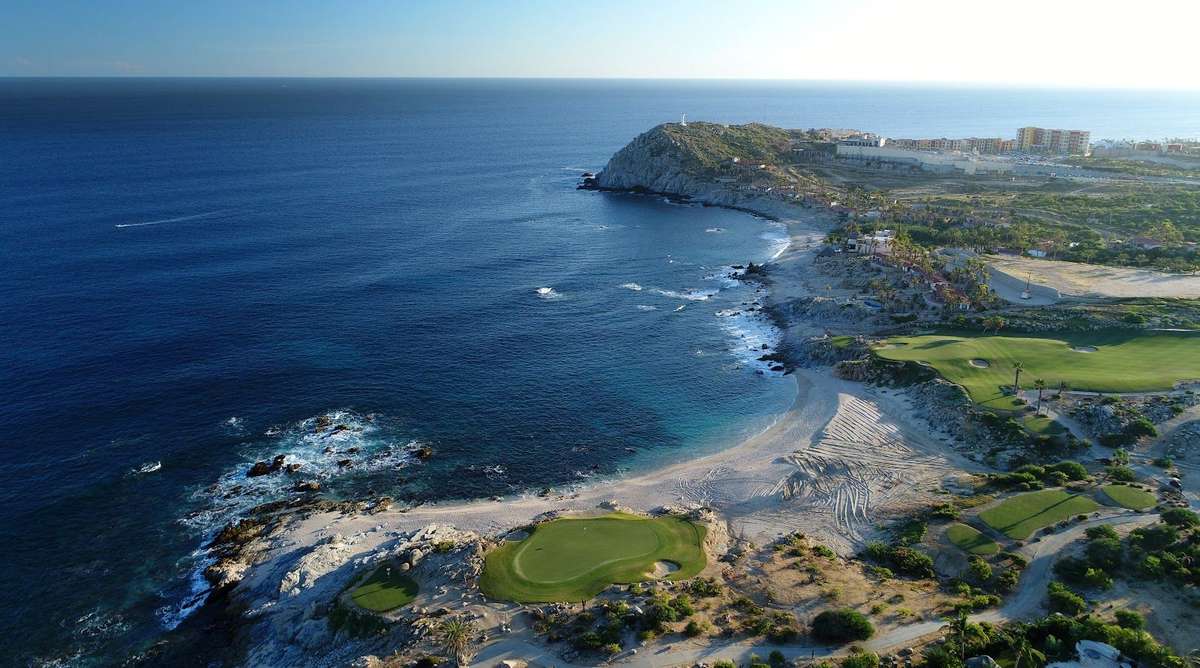
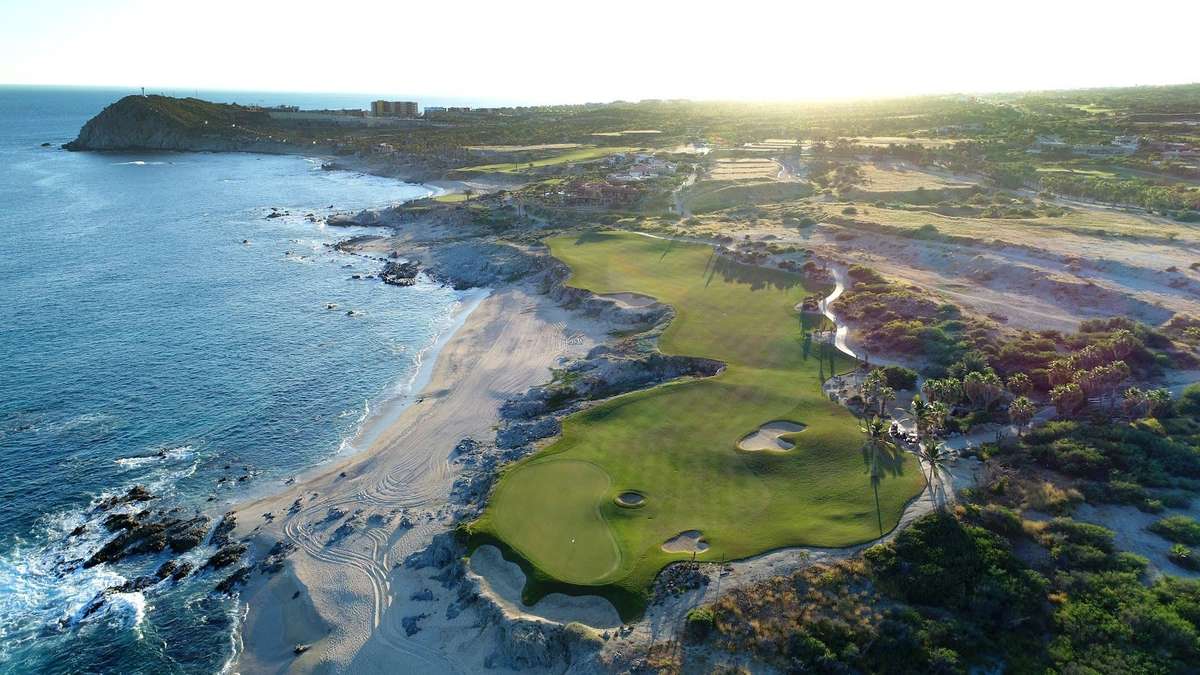
The most famous hole at the Cabo Del Sol Ocean course is the seventeenth, a par 3 of 178/162 yards that plays over the bend in the water/beach. There is no meaningful bailout area short of the green, really only rocks and beach. The same goes for the right side of the green. If the wind is in your face you will likely end up on the beach. The green is tilted back to front. There are two bunkers right to try to save a weak fade shot into the green as well as a bunker left. The only acceptable “miss” is the front left and it is relatively small. It is a great all-or-nothing par 3 with outstanding views.
The final hole, a par 4 of 430/419 has the back tee playing right off the right back of the seventeenth green. It is a long carry over the beach with the fairway left of the ocean. A big hitter needs to hit the ball to a fairway that is slightly left, taking off as much of the beach as they dare. For the next set of tees, although only 11 yards ahead, there is a similar carry but not quite as visually daunting. From the blue tees it is 385 yards and plays as a straight hole. The beach line cuts into the fairway for the second shot although the fairway widens back as the green is situated as close as possible to the beach on the right. It is sort of a “fish hook” green. There is a bunker on the left well short of the green and two others on the left designed to capture the ball of someone who lacks courage to try to attack the pin or green. Getting up and down from these left bunkers is devilish as you are aiming right at the beach behind the green. The green itself is slanted back to front and slightly left to right. It is a fine finishing hole.
Five, seventeen and eighteen are outstanding golf holes. But does a golf course deserve to be in the top 100 due to three outstanding holes?
This is an excellent resort course, in a similar vein to Kauri Cliffs or Cape Kidnappers but without the difficulty and strategy those two courses have. If travelling to Cabo, one should definitely play it.
Mark White

A good halfway house can turn a great round of golf into a memorable one. It might be a cold beer on a Scottish links, a burger with a spectacular view or a hot drink to warm you up before the back nine. Whatever is on offer, the best halfway houses give golfers a chance to forget about the scorecard for a few minutes and enjoy the experience. We recently asked the Top100 Golf Courses community to share their favourite halfway houses, uncovering plenty of memorable stops around the world. We've picked five of their recommendations, alongside five more renowned halfway houses that are well worth knowing about. What is a Halfway House? A halfway house is a food and drink stop positioned around the turn of a golf course, usually between the ninth and 10th holes. Some are little more than a hut serving snacks and drinks, while others have become destinations in their own right, offering everything from full meals and cocktails to fires, views and plenty of local character. Five Halfway Houses Chosen by the Top100 Community Sunningdale Golf Club (England) There is a reason the halfway hut at Sunningdale has become one of the most famous refreshment stops in golf. The small Swiss-chalet-style building has been in place since 1903, sitting where the ninth holes of both the Old and New Courses meet their respective 10th holes. But the building itself isn't the main attraction. That would be the sausage sandwich. Sunningdale's legendary hut serves a simple sausage on buttered bread, with other food and refreshments available alongside it. The hut has become such an established part of the experience that the club's own tradition says everybody stops, but does so speedily. It's not fancy, and that's rather the point. After nine holes of heather-lined fairways, a hot sausage sandwich and a cup of tea can feel like exactly what golf ordered. Nairn Golf Club - The Bothy at Nairn (Scotland) The Bothy at Nairn has a history that goes well beyond golf. Built in 1877, the stone building and neighbouring icehouse formed part of the Easter Delnies Fishing Station, one of five salmon fisheries operating along the coast between Nairn and the mouth of the Findhorn. In a good season, the fishery could catch up to 5,000 salmon, with ice collected from local rivers and a specially made pond and stored in the icehouse to keep the catch fresh. The buildings have since been given a new lease of life, with the Bothy converted into a halfway house where golfers can stop for snacks and refreshments at the turn. On a cold day beside the Moray Firth, there's also a fireplace to warm up beside. The historic stone building, Highland setting and views across the course provide plenty of atmosphere. One of our community members put it rather simply: a dram of whisky and a fire are hard to beat. Hard to argue with that. Turnberry Ailsa (Scotland) Turnberry's halfway house is about as far removed from the traditional golf hut as you can get. The Ailsa's ninth hole now finishes beside the famous Turnberry Lighthouse, which doubles as a halfway house for golfers. The lighthouse itself dates back to 1873, while the golf course's dramatic ninth was redesigned as part of the Ailsa's major renovation. Inside, golfers can stop for food and drink before heading to the 10th, but the real attraction is outside. From the lighthouse, there are views across the Firth of Clyde towards the Isle of Arran and Ailsa Craig. It's a halfway stop that feels more like a destination than a quick pit stop. When your halfway house is a historic lighthouse overlooking one of Scotland's most spectacular stretches of coastline, you've got a pretty good excuse to take your time. Ardglass Golf Club (Northern Ireland) At Ardglass, the halfway-house experience is wonderfully straightforward: have a Guinness and enjoy the view. The course's old cottage halfway house at the back of the 7th green has become one of its most memorable features, with golfers able to stop for a pint before continuing their round. A recent visitor described it as a gorgeous cottage with Guinness, while another praised the combination of a Guinness, sausage roll and views over the Irish Sea. It fits Ardglass perfectly. The County Down links is already one of the most dramatic places to play golf in Northern Ireland, with the Irish Sea never far away. Add a pint of Guinness just before the turn and you've got a halfway house that feels distinctly of its surroundings. Sometimes you don't need to reinvent the wheel. Blair Atholl Golf Estate (South Africa) Blair Atholl might have been one of the less obvious names to appear among the community recommendations, but the descriptions made it impossible to leave out. The halfway stop sounds less like a quick break and more like an event. One golfer highlighted the chicken burger, a chef cooking a barbecue beneath the trees and a deck sitting beneath a stream. Another mentioned silver-service high tea. That's quite the halfway-house menu. It's also a good example of why the best stops aren't necessarily the most famous. A halfway house can become memorable because of the food, the setting or simply the feeling that you're being looked after rather than rushed back onto the course. Five More Renowned Halfway Houses St Andrews Links - The Old Course (Scotland) If we're talking about halfway houses, it makes sense to visit the place that has a claim to starting the tradition. In the 19th century, David "Old Da" Anderson sold ginger beer and other refreshments from a cart on the Old Course at St Andrews. It has been described as golf's first refreshment stand. The modern version sits behind the ninth green and keeps the tradition going, albeit with a rather more substantial menu. The pork and haggis sausage roll is a popular choice, while the club's own Tom Morris 1821 Lager provides a suitably Scottish accompaniment. It's difficult to think of a more fitting place for a halfway stop. The Old Course is steeped in golfing history, and even the break between nines has a story of its own. Pine Valley Golf Club (New Jersey, United States) Pine Valley's halfway house is memorable before you've even ordered anything. Rather than a conventional hut, it is built into the base of an old water tower, which golfers encounter around the eighth hole and again near the 12th tee. It's an appropriately unusual feature for one of the world's most unconventional golf courses. The tower doubles as a stop for drinks and snacks, giving golfers a chance to take a breather before continuing around Pine Valley. It even boasts an impressive collection of golf balls from around the world. There aren't many halfway houses that can claim to be built inside a water tower. Quivira Golf Club (Baja California Sur, Mexico) Quivira has taken the halfway-house concept and spread it across the entire round. The Jack Nicklaus-designed course has multiple all-inclusive comfort stations, each offering golfers food and drinks as they make their way around the Cabo San Lucas layout. The most spectacular is The Cliffs, perched almost 300 feet above the Pacific, where golfers can stop for a breakfast burrito and take in the views over the ocean. Then there's The Oasis, the main halfway house near the ninth green. Here, the emphasis is on the food, with freshly prepared Baja cuisine including tacos and tostadas, alongside a full tequila bar. A final stop, Cañada, sits near the 16th tee, while another comfort station beside the oceanfront practice facility offers snacks and cold drinks before golfers even reach the first tee. The food and refreshments are included in the green fee, making Quivira's comfort stations much more than somewhere to grab a quick drink. Tacos, tequila and spectacular Pacific Ocean views make the breaks almost as memorable as the golf. Whistling Rock Country Club (South Korea) At Whistling Rock, there isn't just one halfway house to look forward to. The South Korean club is made up of three nine-hole loops, each with its own themed tea house: Cocoon, Temple and Cloud. The three buildings are each distinctly different. One is a rounded structure between a lake and forest, another is a formal wood-and-glass building, while the Cloud tea house sits high among the trees. The result is a halfway-house experience that feels distinctly different depending on which nine you're playing, with each tea house adding another layer to the Whistling Rock experience. Royal Dornoch Golf Club (Scotland) Royal Dornoch's halfway house is proof that sometimes the best idea is a simple one. The stop sits behind the ninth green of the Championship Course, with views back across the links towards the Dornoch Firth. And then there's the traditional order: hot chocolate with Bailey's Irish Cream, a combination that makes considerably more sense when you're standing on a Scottish links in a North Sea wind. It's a small detail, but one that has become part of the Royal Dornoch experience and exactly the sort of halfway-house tradition golfers remember.

If you've watched any professional golf on television over the past four decades, you've heard the letters "TPC" attached to a course name. TPC Sawgrass. TPC Scottsdale. TPC Harding Park. TPC stands for Tournament Players Club — a network of golf courses owned, operated, and licensed by the PGA Tour. The branding is everywhere in the sport, but most travelling golfers don't fully understand what it means, where it came from, or why it should matter to them when planning a trip. See the Top 100 Golf Courses Ranking of TPC Courses The story behind TPC is one of the shrewdest business moves in the history of sport. It reshaped the economics of professional golf, created a network of courses that the public can actually play, and pioneered a design philosophy that remains divisive among architecture enthusiasts to this day. Today, the TPC network comprises 30 properties across three countries — the United States, Canada, and Mexico — plus the U.S. territory of Puerto Rico. Here's what you need to know. How the PGA Tour Went From Tenant to Landlord For most of its history, the PGA Tour operated as a travelling circus. Each week, the Tour would pitch up at a different private club, stage a tournament, and move on. The host club controlled the course setup, the infrastructure, the hospitality, and the revenue. The Tour was a well-known guest renting somebody else's living room. By the late 1970s, that arrangement was breaking down. Spectator experiences at many venues were poor — cramped viewing corridors, limited sightlines, zero infrastructure for grandstands or broadcast equipment. Private clubs weren't designed for crowds of 30,000 or more. And the Tour had almost no control over the commercial revenue being generated at its own events. PGA Tour Commissioner Deane Beman saw the solution: the Tour needed to build and own its own courses. It was a radical idea — a professional sports league constructing its own stadiums. In American football or baseball, that model was well established. In golf, nobody had attempted it. Beman enlisted architect Pete Dye, and in 1980, they opened TPC Sawgrass in Ponte Vedra Beach, Florida. It would become the permanent home of The Players Championship and, in time, one of the most recognisable golf courses on earth. What Is Stadium Golf? The signature concept behind TPC courses is what Beman and Dye termed "stadium golf." The premise was straightforward: design the course so that spectators can actually see what's happening. In practice, that meant sculpting enormous mounds around greens and along key fairway corridors, creating natural amphitheatres where thousands of fans could watch the action from elevated vantage points. At Sawgrass, Dye committed fully. The course was carved from flat Florida swampland, with earth-moving equipment fabricating elevation changes the terrain never provided naturally. Waste bunkers, railway sleeper walls, bulkheaded lakes, and the now-iconic island green par-3 17th hole were all part of a layout that felt like nothing else in American golf. Tour professionals initially loathed it. The original routing was brutally penal, with water swallowing balls on seemingly every hole. J.C. Snead famously described the course as "90% horse manure and 10% luck." But Beman hadn't built Sawgrass to please the players. He'd built it for fans, for television cameras, and for the Tour's financial independence. The design philosophy has always split opinion. The weaker TPC courses feel very much manufactured — rows of uniform berms that bear no relationship to the landscape, constructed purely to give galleries somewhere to stand. That distinction matters if you care about golf course architecture, and it explains why some TPC courses rank among the best in their state while others go unranked entirely. Should TPC Courses Matter to Travelling Golfers? Here's the part that's most relevant if you're building a trip itinerary: a significant portion of TPC courses are open for public play. Unlike the storied private clubs that host major championships, the TPC network was designed with accessibility at its core. Of the 30 TPC properties, 14 are resort or daily-fee courses where you can book a tee time and pay a green fee without any membership. These include the flagship venues — TPC Sawgrass, TPC Scottsdale, TPC San Antonio, TPC Harding Park, TPC Las Vegas, TPC Louisiana, and TPC Dorado Beach, among them. The remaining 16 are private clubs, including notable tournament venues like TPC Southwind, TPC River Highlands, TPC Craig Ranch, and TPC Boston, where access is restricted to members and their guests. Just under half the network is genuinely accessible to travelling golfers, but that still represents a rare opportunity in professional golf — if you want to play a course where Tour events take place, TPC's pay-and-play venues are often your best, and sometimes your only, realistic option. The trade-off is price. Green fees at flagship TPC courses regularly sit between $300 and $500, sometimes considerably more during peak season. You're paying for the brand, the conditioning, and the bragging rights. Whether that represents value depends on what you want from a round of golf. Conditioning across the network is consistently strong. Because TPC courses are PGA Tour-owned, they're maintained to professional standards year-round rather than being polished for one event week per year. Greens are quick, fairways are tight, bunkers are pristine. If immaculate course conditioning is a priority for you, TPC venues will rarely let you down. Our Top 5 TPC Courses We've reviewed and ranked every TPC course in the network. These are the five that stand above the rest; whether they are worth a green fee is up to you. 1. TPC Sawgrass — Stadium Course Ponte Vedra Beach, Florida The flagship of the entire network and the course that started it all. Home of The Players Championship — which carries the largest purse on the PGA Tour outside the four majors — Sawgrass is the definitive TPC experience. The island green 17th is the single most televised hole in professional golf, and regardless of what you think about it architecturally, standing on that tee with a wedge in your hand is one of the great bucket-list moments in the game. Pete Dye softened the routing significantly after its brutal early years, and the course has matured beautifully through the Florida wetlands. The conditioning is immaculate, the practice facilities are world-class, and the entire experience — from check-in to the 18th green — is polished in a way that justifies the premium green fee. Playing Sawgrass feels like an event. That's exactly what it was designed to be. 2. TPC Boston Norton, Massachusetts A Gil Hanse design that hosted the Dell Technologies Championship (formerly the Deutsche Bank Championship) for over a decade as part of the FedEx Cup Playoffs. It's worth noting that TPC Boston operates as a private club, so access is limited to members and their guests — but it earns its place on this list on the strength of the design alone. TPC Boston stands apart from most courses in the network because of Hanse's reputation as one of the most respected modern architects in the game — his portfolio includes Merion's restoration and the Olympic Course in Rio. The routing moves through mature New England woodland with subtle, strategic bunkering and green complexes that reward creativity. It's a course that feels more considered than many TPC venues — less reliant on the stadium mounding formula and more focused on the quality of the golf itself. For golfers who appreciate design substance alongside Tour pedigree, Boston is a standout. 3. TPC Colorado Berthoud, Colorado One of the newer additions to the TPC network, TPC Colorado was designed by Art Schaupeter and sits against the dramatic backdrop of the Rocky Mountain Front Range. The course hosted the Korn Ferry Tour's TPC Colorado Championship and offers something that many TPC courses lack: a genuine sense of place. The mountain views are spectacular, the layout uses the rolling terrain intelligently, and the conditioning meets the standard you'd expect from the brand. It's a course that demonstrates what the TPC model looks like when it embraces natural landscape rather than imposing manufactured features onto flat ground. For golfers passing through Colorado, it's a compelling option that many overlook. 4. TPC San Antonio — Oaks Course San Antonio, Texas Home of the Valero Texas Open, which holds the distinction of being the longest-running event on the PGA Tour at the same course. The Oaks Course, designed by Greg Norman with Sergio Garcia's input, threads through the Texas Hill Country landscape of live oaks and native grasses, with the rock outcroppings and elevation changes giving the layout a character that feels authentically Texan. The resort complex at JW Marriott San Antonio also houses the Canyons Course (a separate TPC-branded layout by Pete Dye), making it a strong multi-round destination. The Oaks is the stronger of the two designs and earns its place among the top TPC courses for its combination of tournament pedigree, natural setting, and accessibility as a resort course. 5. TPC Harding Park San Francisco, California If there's one TPC course that transcends the brand entirely, it's Harding Park. Originally built as a municipal course in the 1920s, it was renovated and brought into the TPC fold, and has since hosted the PGA Championship, the WGC-Match Play, and the Presidents Cup. Set among towering Monterey cypress trees along the shores of Lake Merced, it possesses a sense of history and atmosphere that purpose-built TPC courses simply cannot replicate. The fact that it remains a public course in a major American city — one that has hosted a major championship — makes it almost unique in the sport. It barely feels like a "TPC course" in the traditional sense, and that's precisely what makes it special. The architecture predates the stadium golf era by half a century, and the Monterey cypress corridors give it a gravitas that no amount of manufactured mounding could create. Other Notable TPC Courses Several TPC courses outside our top 5 deserve mention for travelling golfers. TPC Scottsdale's Stadium Course hosts the WM Phoenix Open and its infamous par-3 16th hole stadium — the most raucous atmosphere in professional golf. TPC River Highlands hosts the Travellers Championship and features one of the best finishing stretches on Tour. TPC Southwind is home to the FedEx St. Jude Invitational — the PGA Tour's only private club in Tennessee. TPC Louisiana and TPC Deere Run are strong options that often fly under the radar. TPC Courses Outside the United States The TPC network extends beyond the continental U.S. into two additional countries and one U.S. territory. In Puerto Rico, TPC Dorado Beach is a 54-hole resort complex with the East Course ranked #1 on the island. In Mexico, TPC Danzante Bay in Loreto, Baja California Sur is ranked #17 nationally — a stunning coastal layout in one of the country's most beautiful settings. In Canada, TPC Toronto at Osprey Valley offers three courses (Hoot, Heathlands, and North), all ranked within the Canadian top 80 and all sharing the same Alton, Ontario facility. Are TPC Golf Courses Worth the Green Fee? The TPC network deserves credit for something that often gets overlooked: access to professional-calibre golf courses used for tournament play. Before TPC, if you wanted to play a course where Tour events took place, your options were virtually nonexistent. TPC created a pathway for everyday golfers to experience tournament conditions/ The business model was visionary. The PGA Tour transformed itself from an organisation dependent on the goodwill of private clubs into a property portfolio generating year-round revenue through green fees, memberships, hospitality, and event hosting. It gave the Tour financial independence and brand control that it simply didn't have before. The TPC name implies a certain standard, but the network includes everything from world-class tournament venues to facilities that are essentially well-maintained daily-fee courses carrying a premium marque. Not every TPC course hosts or was ever intended to host a Tour event. From an architectural standpoint, the ‘stadium’ build that defines most TPC designs can feel formulaic — manufactured berms that serve no strategic purpose and have no relationship to the natural landscape. The Bottom Line for Golf Travellers If a TPC course falls on your travel route, it may be worth considering. Our top 5 (Sawgrass, Boston, Colorado, San Antonio Oaks, and Harding Park) offer experiences that are difficult to replicate elsewhere: exceptional conditioning, memorable holes, and the chance to walk fairways you've watched on television. For the remaining TPC courses, weigh the green fee against what else is available in that market. In some cases, you'll find that a similarly priced course without the TPC badge offers a more interesting, more characterful round of golf. What Deane Beman started in 1980 was more than a golf course. It was a business model that altered an entire sport. Whether or not every TPC venue lives up to the ambition of that original vision, the concept itself remains one of the most consequential innovations in the modern game. See our TPC Ranking, you would actually want to play.

The Golden Age greats are admired and applauded for the legacy they left the game. Deservedly so, as they brought us out of darkness and into the light. Sadly, within a few decades, the momentum was lost. Despite a period of enlightenment, golf had retreated into a second dark age. Then, the emergence of Tom Doak... Renaissance Golf Design A French word meaning rebirth, renaissance could not be more fitting for the resurgence in strategic, minimalist golf championed by Tom Doak but also the period ushered in by him and his team since 1989. Tom Doak will often point to his tutelage under Pete Dye as the genesis of the movement. He also counts Ben Crenshaw and Walter Woods as mentors. But make no mistake, Tom Doak (amongst a handful of others which we will cover in due course) set in motion a movement that has set golf on a heading back to its second golden age. In this article, we look at Tom Doak's current projects, the portfolio that he and his team have created, and sadly, projects that no longer exist. (His restoration projects and consulting work will be covered in another article.) Tom Doak's Current Projects East Potomac (Blue) - USA - Washington DC - Expected 2028 A rare Tom Doak restoration. Walter Travis originally designed a reversible course in the 1920's - something he has pulled off before at Forest Dunes in 2016. As well, it's a municipal so there's a good chance you'll be able to play it. The finished project will also include a 9-hole executive course, a par 3 course, mini golf, and a practice facility. Crooked Stick - USA - Indiana - Expected 2025 Tom Doak's connection to Crooked Stick dates back to his days with Mr Pete Dye. Eric Iverson, one of Renaissance's principals, is helping out as well. All 18 greens are being reworked and is expected to reopen for play on schedule in 2025. Cabot Highlands - Old Petty - Scotland - 2025 The second 18-hole golf course at Cabot Highlands, with the first being Gil Hanse' Cabot Highlands Castle Stuart. Will Old Petty challenge the new builds in Scotland for title of best yet? Sandglass Golf Club (Rolling Sands) - USA - Florida - Expected 2025 A flat, sand-based site is the perfect canvas for template holes from Tom's favourite courses around the world. Holes from St Andrews, Muirfield, North Berwick, and Pine Valley make an appearance. Childress Hall - USA - Texas - Expected 2025 A sand-based site in the north-west of Texas with quartz dunes with a unique crescent shape. Wild Spring Dunes - USA - Texas - Expected 2025 Another Mike Keiser destination golf resort, the property will consist of 36 holes - 18 from Tom Doak and 18 from Coore & Crenshaw. 'Initially' is the key word here as 2400 acres are on hand for potential further development. Tom describes the property as resembling LACC, Pasatiempo and Pine Valley... Punta Brava Golf & Surf Club - Mexico - Expected 2025 A peninsula with ocean on three sides. A very elite private club on a very challenging site make it a once in a lifetime opportunity. CGI Courtesy Harris Kalinka Tom Doak's New Build Portfolio High Pointe - USA - Michigan - 2024 A restoration of 6 of Tom Doak's best original holes from 1989 along with 12 new holes. Pinehurst No. 10 - USA - North Carolina - 2024 The first 18-hole golf course at Pinehurst in the parcel of land known as the Pinehurst Sandmines. Sand Valley - Sedge Valley - USA - Wisconsin - 2024 Tom Doak pays homage to the London heathlands at Sand Valley. The Tree Farm - USA - South Carolina - 2023 Tom with PGA Tour player Zac Blair on a routing which was then built by Kye Goalby. It has been a rousing success with the masses, debuting in the USA Top 100. Photo Courtesy Tree Farm/ Marsh Te Arai Resort - North Course - New Zealand - 2023 A public, 18-hole golf course sandwiched between Tom Doak's own Tara Iti and Coore & Crenshaw's Te Arai South. The Lido - Sand Valley - USA - Wisconsin - 2022 Tom Doak recreates CB MacDonald's long-lost Long Island golf course. Boundaries were pushed in the making of the course - a triumph of engineering, technology, artisanship and skill. St Patrick's Links - Ireland - 2021 One of Tom Doak's best, it was a long ambition to build a links in Ireland. Kilshannig in Ireland almost happened and then didn't... So good it has entered the World Top 100 in most rankings universally and then continued to rise. Memorial Park Golf Club - USA - Texas - 2020 A municipal golf course in Houston, Texas that also acts as a PGA Tour destination once a week a year... A tour player was involved again but not Jack - this time Brooks Keopka. Gunnamatta Course at The National - Australia - 2018 Tom Doak returned to Australia more than a decade after Barnbougle Dunes and St Andrews Beach. The Loop at Forest Dunes - USA - Michigan - 2016 Two courses for one with the reversible layout known as The Loop. Red and Black are played on the same course in opposite directions. Stoatin Brae Golf Course - USA - Michigan - 2016 From Tom's stable at Renaissance Golf Design: Brian Schneider, Don Placek, Brian Slawnik, and Eric Iverson collaborated on the course that has escaped attention and fanfare in Renaissance's backyard. Grand St Emilionnais Golf Club - France - 2015 A fescue playing surface in Bordeaux amongst heather and gorse. An affordable tee time on a Tom Doak design in the famous wine region of France. Tara Iti Golf Club - New Zealand - 2015 Could this be Tom Doak's greatest design? He counts it amongst his 10 best and it is his his ranked golf course almost universally. Photo Courtesy Ricky Robinson / Tara Iti Medinah Country Club (Course One) - USA - Illinois - 2014 A new course with an old name. With coffers full following the Miracle at Medina, several holes were kept but the majority were lost in a re-route and a new set of greens. Dismal River Club (Red Course) - USA - Nebraska - 2013 One of the Renaissance top 10 best... as they see it. Contrasting with the Nicklaus design next door and lying west of Coore and Crenshaw's (and perhaps the greatest modern golf course in the world) greatest design. Streamsong Resort (Blue Course) - USA - Florida - 2013 The home of destination golf. Bill Coore and Tom Doak worked together on two 18-hole layouts before deciding which firm would build each one. A third Gil Hanse design would follow in 2017. Old MacDonald - USA - Oregon - 2010 Designed in the style of CB MacDonald through a collaboration between Jim Urbina and Tom Doak. CommonGround - USA - Colorado - 2009 A 'commoner's course' so to speak. A low green fee on a great golf course - in the spirit of Scottish golf - it's for the people. Rock Creek Cattle Company - USA - Montana - 2008 A very private golf club in Montana. It is one of Tom Doak's best and the best within two states in either direction. Photo Courtesy E Schiller The Renaissance Club - Scotland - 2007 Tom Doak's first golf course in the shadow of Muirfield. His second links at Cabot Highlands will no doubt rival his first layout. Sebonack Golf Club - USA - New York - 2006 A quite unusual collaboration between Jack Nicklaus and Tom Doak. It was never going to be an easy road and perhaps a missed opportunity by Michael Pascucci. One of the most expensive memberships in the world, it lies beside NGLA and Shinnecock. Ballyneal Golf Club - USA - Colorado - 2006 The golf course that Tom Doak calls perhaps his most fun. What has become a trademark (if he has one) of bold slopes and contours feeding the ball to the intended target are found here in abundance. Stone Eagle Golf Club - USA - California - 2005 It wasn't a natural site for golf but the desert provides a striking landscape and canvas. It narrowly misses out on USA Top 100. Tom calls it his most complex and difficult job to date. Tumble Creek at Suncadia - USA - Washington - 2005 One of Tom Doak's few golf & residential developments in a state not known for golf. St Andrew's Beach - Australia - 2004 For an architect known for his minimalist approach, this has been the most natural of all his projects. Just three holes were touched by earth-moving equipment and the rest were found... Barbougle Dunes Golf Links - Australia - 2004 One of Tom Doak's greatest works, it paved the way for Tasmania to become the destination golf capital of the southern hemisphere. Cape Kidnappers - New Zealand - 2004 The most audacious land used for golf perhaps ever. The 400-foot cliff-top course is a marvel and is perhaps enjoyed most by those who have a minor understanding of designing golf where it probably wasn't destined to be... this is an architect's golf course. Photo Courtesy Gary Lisbon Stonewall Golf Club - North - USA - Pennsylvania - 2003 When you are a member of both Pine Valley and Merion, what else could you want? 36 holes from Tom Doak where full tee sheets are never an issue... The first 18 were delivered in 1993 before he returned for an encore in 2003. Pacific Dunes - USA - Oregon - 2001 The course that made Tom Doak an overnight success 20 plus years in the making. Tom Doak describes this site as perhaps the best site for golf since the 1920's. Only Sand Hills ranks higher with regard to modern golf courses worldwide. Photo Courtesy Patrick Koenig The Village Club at Sands Point - USA - New York - 2000 The Guggenheim family owned the estate from 1918 until 1953. IBM used it for corporate retreats until 1994. The Village of Sands Point bought the estate in 1994 and invited Tom Doak to redevelop the 9-hole Robert Trent Jones Sr 9-hole course into the 18-hole course that exists today. Atlantic City Country Club - USA - New Jersey - 2000 A renovation of a historic classic. Evolution was the name of the game here with old holes improved and new holes found in land raised from the marsh. Lost Dunes Golf Club - USA - Michigan - 1999 The most complex greens of any design ever built by the Renaissance team. An early Doak design that flies under the radar. Riverfront Golf Club - USA - Virginia - 1999 Tom Doak says this is one of the best sets of greens and bunkers built by his team in an insipid landscape... Quail Crossing Golf Club - USA - Indiana - 1997 The cost for a green fee in 2024 was $24... Tom Doak's first golf and residential project. Stonewall Golf Club - Old - USA - Pennsylvania - 1993 36 holes of Tom Doak design on a single site. The first 18 were established in 1993. The Legends - Heathlands - USA - South Carolina - 1990 Tom Doak's second design took inspiration from St Andrews Old Course. The minimalism seen here would later cement his legacy in the pantheon of all-time greats. Tom Doak's Lost Golf Courses Apache Stronghold Golf Club - USA - Arizona - 1999-2021 Lure in travelling golfers 90 miles north of Phoenix to play golf and unwind at the casino... that was the idea until it wasn't. The Sheep Ranch - USA - Oregon - 2002-2020 The natural, write-your-own-story layout was cannibalised for the new Coore & Crenshaw Sheep Ranch. Aetna Springs Golf Club - USA - California - 2008-2018 The only 9-hole golf course in Tom Doak's portfolio. The resort is scheduled to reopen in 2026 but no golf is mentioned... Black Forest at Wilderness Valley - USA - Michigan - 1991-2018 Once a bustling golf resort, it was closed in 2018 reportedly due to unpaid taxes. Charlotte Golf Links - USA - North Carolina - 1993-2015 A land bank project, it served its greater good as a golf course before being developed at the end of its lease. Simapo Island Golf Club - China - Never Opened Tom Doak's only Chinese design, the project was ready to go and then the government stepped in and shut it down. Tom played it twice. Beechtree Golf Club - USA - Maryland - 1998-2010 The clients wanted more profit than a Top 50 Public Golf Course in the USA could provide and repurposed the land for commercial development. Original High Pointe Golf Club - USA - Michigan - 1989-2008 The first solo design of Tom Doak. The land made a more lucrative hop farm than it did as a golf course. Recently restored and elevated with new land, High Pointe has been reborn. Bahia de los Suenos Golf & Beach Club - Never Opened The global financial crisis and Mexico's drug war stopped this course was grown-in and ready to open when it was mothballed... Wicked Pony Golf Club - USA - Oregon - Never Opened Yet another victim of the 2009 global financial crisis. The course was ready for seeding when the funding dried up. Could this be the only other Tom Doak design that could emerge from the ashes?
The latest ranking of the Top 100 Golf Courses in the World serves as the ultimate global golf bucket list. Most members of our World Top 100 Panel are seasoned golfers, each playing 20-30 of these courses annually while travelling extensively over decades to form their opinions on others. We recognise that opinions vary—even among our panel members. Rankings are subjective, and there are undoubtedly 50 or more courses in the UK and USA alone that could easily fit onto this list. Links Golf Pilgrimages The rankings
California, United States
New Jersey, United States
Northern Ireland, United Kingdom
New York, United States
New York, United States