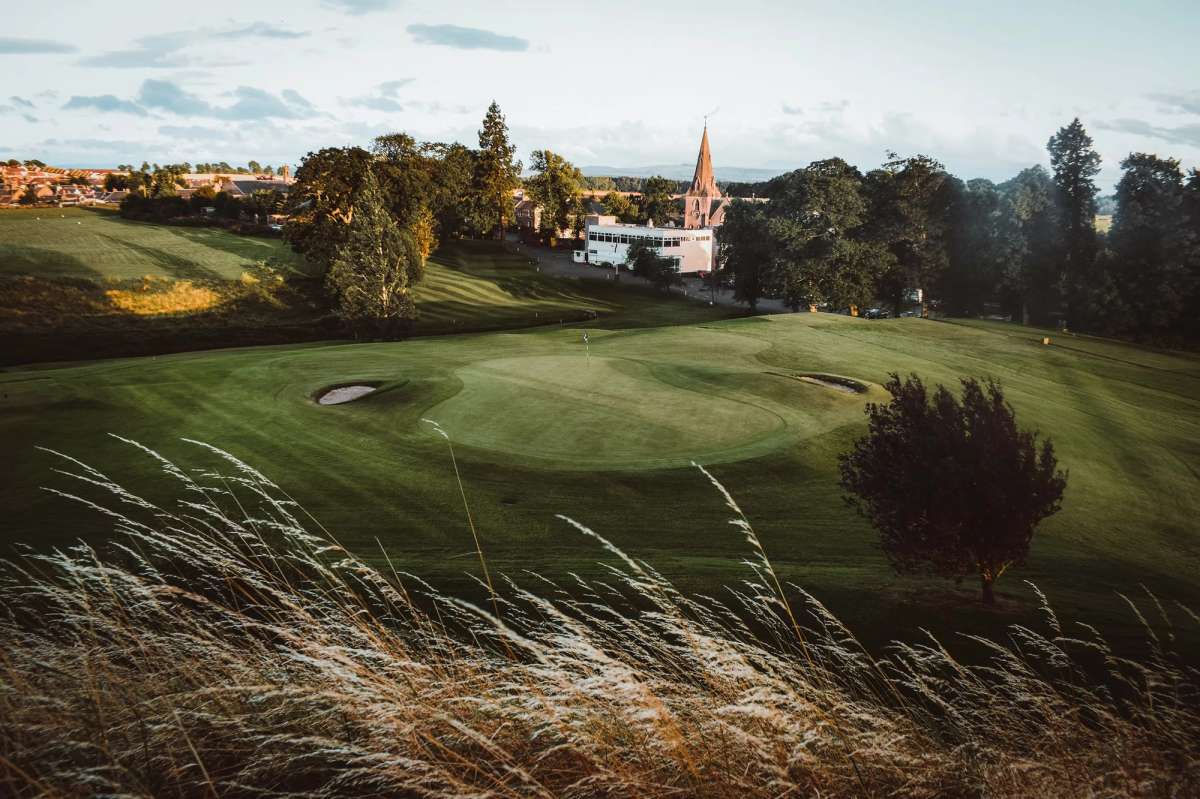
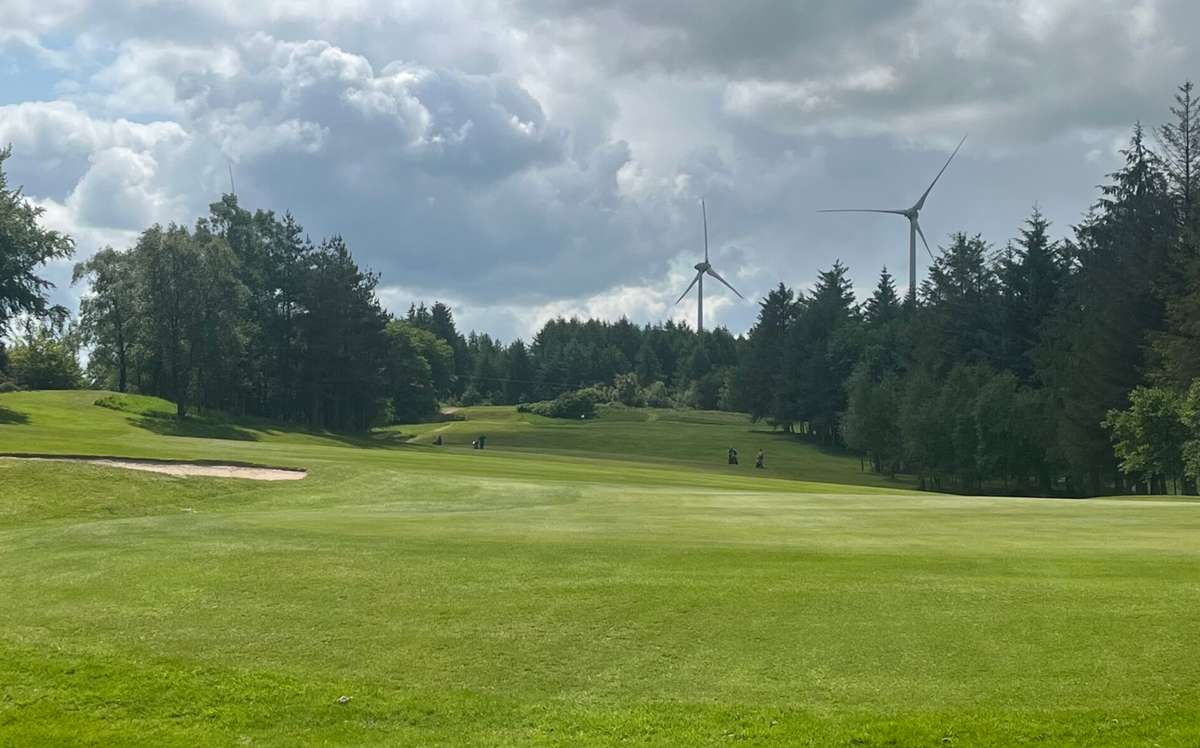
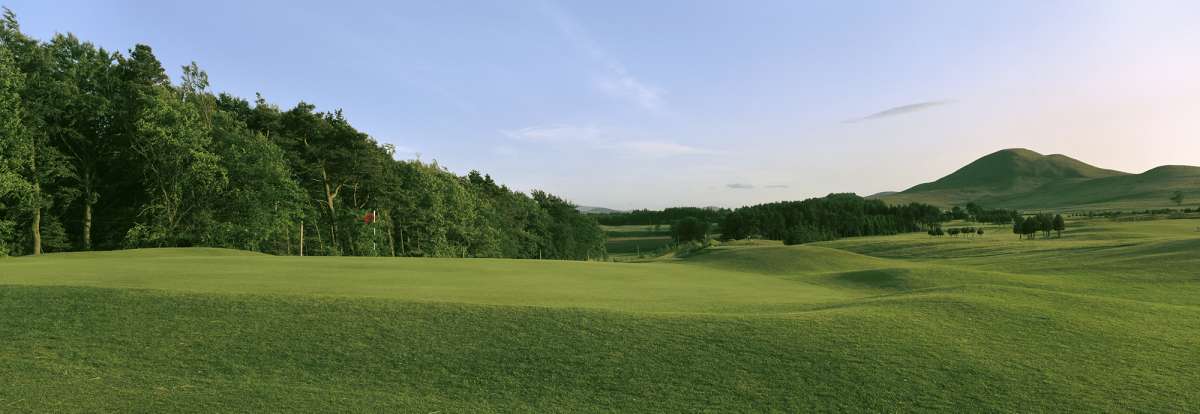
Founded in 1907, Willie Auchterlonie of St Andrews laid out the original 9 holes at Carnwath Golf Club. Extended to 18 holes in 1922, the course was redesigned in the early 1960s when additional land was acquired.
Founded in 1907, Willie Auchterlonie of St Andrews laid out the original 9 holes at Carnwath Golf Club. Extended to 18 holes in 1922, the course was redesigned in the early 1960s when additional land was acquired.
Sort by:
Jun. 23, 2022

4
Paul Howard
I’d attended Carnwath in order to be fitted for some new Taylor Made irons.
Aug. 31, 2015
2
Jim Robertson
Aug. 30, 2015
4
Jim McCann
Carnwath was another course that would not have been on my radar if it wasn’t for its inclusion in the recently updated Top 10 chart for Lanarkshire.
The latest ranking of the Top 100 Golf Courses in the World serves as the ultimate global golf bucket list. Most members of our World Top 100 Panel are seasoned golfers, each playing 20-30 of these courses annually while travelling extensively over decades to form their opinions on others. We recognise that opinions vary—even among our panel members. Rankings are subjective, and there are undoubtedly 50 or more courses in the UK and USA alone that could easily fit onto this list. Links Golf Pilgrimages The rankings
California, United States
New Jersey, United States
Northern Ireland, United Kingdom
New York, United States
New York, United States

The Home of Golf is a bucket-list destination for any golfer, but experiencing some of Scotland's best courses can quickly become an expensive pursuit. Fortunately, you don't need to spend hundreds of pounds to play some of the country's highest-ranked courses. From historic inland layouts to remote links on the coast, Scotland is home to plenty of exceptional courses that can be played for less than £100. Top100 has collated five of the highest-ranked courses open to the public for under £100, offering travelling golfers the chance to experience some of Scotland's finest golf without the premium price tag. 1. Lanark Golf Club (Lanarkshire) Scotland ranking: 33rd | Green fee: £90 If you're looking for affordable golf with considerable history behind it, Lanark is hard to beat, with a round setting you back £90. Founded in 1851, it lays claim to being the world's oldest inland golf course – and the 25th oldest golf club in the world – with more than 170 years of golf played on the same stretch of common land. But history isn't the only reason to visit. Sitting around 600 feet above sea level on free-draining glacial sand, Lanark has the characteristics you might expect from a links rather than a moorland course. The layout also carries the fingerprints of two of golf's greatest architects, with Old Tom Morris creating an 18-hole routing in 1897 before James Braid reshaped four holes in 1927. While Lanark will certainly test more experienced golfers, its charm isn't reserved for the low-handicapper. The varied terrain, interesting greens and relatively forgiving setting make it an enjoyable course for anyone keen to experience traditional Scottish golf. For golfers still finding their feet, it offers a chance to play somewhere with genuine history and character without feeling like they've stepped onto an intimidating championship stage. Located in Scotland's Central Lowlands, the 33rd-ranked course in the country is easily accessible from both Glasgow and Edinburgh, with both cities less than an hour's drive away. 2. Southerness Golf Club (Dumfries & Galloway) Scotland ranking: 36th | Green fee: £95 If you're looking to escape the crowds without compromising on quality, Southerness is well worth the journey. Perched on a remote headland on the Solway coast, this lesser-known links offers spectacular views across the water to the mountains of the Lake District, with Criffel providing an impressive backdrop. Founded in 1947, the course was laid out by Philip Mackenzie Ross, a former partner of renowned architect Tom Simpson, and is widely regarded as his finest solo composition. At just over 6,500 yards, Southerness may appear manageable on paper, but its par of 69 makes it a stern test, with eight par fours measuring more than 400 yards. Gorse and heather line the fairways, while some of the best holes hug the shoreline. Despite its challenge, generous fairways provide plenty of room to enjoy the course, making Southerness an appealing choice for golfers of varying abilities. Ranked 36th in Scotland and costing just £95, it's a superb-value way to experience genuine Scottish links golf without the crowds. 3. Pitlochry Golf Course (Perth & Kinross) Scotland ranking: 58th | Green fee: £85 “Where golf, beauty and the social life go hand in hand,” a common description of Pitlochry Golf Club reads. Set above the colourful Victorian town of the same name, the course winds through the Perthshire hills with spectacular views at almost every turn. It's a setting that makes the walk between shots feel just as rewarding as the golf itself. Designed by Willie Fernie in 1908 and later tweaked by Major Cecil Hutchison, Pitlochry makes full use of the natural landscape of the Balnacraig and Drumchorry farms. The opening three holes climb steeply uphill, but the effort is rewarded with some of the finest views on the course. At under 5,700 yards and a par of 69, Pitlochry doesn’t intimidate on the scorecard, but its small, fast greens and dramatic changes in elevation make it a deceptively tricky test. With no par fives, and holes crossing gorges and valleys, there's plenty to keep experienced golfers interested while its friendly atmosphere makes it an inviting choice for those still finding their game. Ranked 58th in Scotland for just £85, it's a scenic and affordable addition to any Scottish golf trip. 4. Gullane Golf Club – No.3 (Edinburgh & Lothians) Scotland ranking: 59th | Green fee: £70 Gullane No.3 may live in the shadow of its famous neighbours, but calling it a lesser course would be a serious disservice. Opened in 1910, this compact links offers the same superb conditioning and spectacular East Lothian setting as Gullane No.1 and No.2, but at a far more accessible price. At just over 5,200 yards, length isn't the key to scoring here. With only one par four exceeding 400 yards, Gullane No.3 rewards accurate approach play and a confident putting stroke, while strategically placed bunkers and slick greens provide plenty of challenge. The course climbs Gullane Hill between the fourth and 15th holes, with the reward being one of the finest views in Scottish golf – across the Firth of Forth, with the other two Gullane courses to the right, and Luffness New, Kilspindie and Craigielaw all visible below. For golfers who want to experience one of Scotland's great golfing regions without breaking the bank, Gullane No.3 is an easy choice. With two top-10-ranked Scottish courses nearby in Muirfield and North Berwick, Gullane No.3 is also an ideal addition to a multi-course East Lothian itinerary. Ranked 59th in Scotland and costing just £70, it's one of the country's best-value links experiences. 5. St Andrews Links – Eden Course (Fife) Scotland ranking: 62nd | Green fee: £80 Struggling to get on the Old Course, or not wanting to pay £355 for the privilege? You can still walk the links of the Home of Golf and play at St Andrews for just £80, with the Eden Course offering a very different – and far more affordable – way to experience this legendary golfing destination. The Eden is by no means a mere alternative, with five-time Open champion Tom Watson once describing its front nine as being up there with the best in the world. Designed by Harry Colt in 1914, it is a strategic rather than punishing test, with generously proportioned fairways giving way to some of the most undulating greens across the St Andrews Links Trust courses. Deep pot bunkers, fairway humps and hollows and out-of-bounds hazards keep you thinking your way around the 6,112-yard, par-70 layout. The course's standout holes include the two-tiered fifth green and the challenging 17th, while the pond between the 14th and 15th is the only inland water hazard across the Links Trust courses. Ranked 62nd in Scotland, the Eden is a fantastic option for golfers who want the St Andrews experience without the Old Course price tag. Green fees quoted are summer 2026 rates where available

A good halfway house can turn a great round of golf into a memorable one. It might be a cold beer on a Scottish links, a burger with a spectacular view or a hot drink to warm you up before the back nine. Whatever is on offer, the best halfway houses give golfers a chance to forget about the scorecard for a few minutes and enjoy the experience. We recently asked the Top100 Golf Courses community to share their favourite halfway houses, uncovering plenty of memorable stops around the world. We've picked five of their recommendations, alongside five more renowned halfway houses that are well worth knowing about. What is a Halfway House? A halfway house is a food and drink stop positioned around the turn of a golf course, usually between the ninth and 10th holes. Some are little more than a hut serving snacks and drinks, while others have become destinations in their own right, offering everything from full meals and cocktails to fires, views and plenty of local character. Five Halfway Houses Chosen by the Top100 Community Sunningdale Golf Club (England) There is a reason the halfway hut at Sunningdale has become one of the most famous refreshment stops in golf. The small Swiss-chalet-style building has been in place since 1903, sitting where the ninth holes of both the Old and New Courses meet their respective 10th holes. But the building itself isn't the main attraction. That would be the sausage sandwich. Sunningdale's legendary hut serves a simple sausage on buttered bread, with other food and refreshments available alongside it. The hut has become such an established part of the experience that the club's own tradition says everybody stops, but does so speedily. It's not fancy, and that's rather the point. After nine holes of heather-lined fairways, a hot sausage sandwich and a cup of tea can feel like exactly what golf ordered. Nairn Golf Club - The Bothy at Nairn (Scotland) The Bothy at Nairn has a history that goes well beyond golf. Built in 1877, the stone building and neighbouring icehouse formed part of the Easter Delnies Fishing Station, one of five salmon fisheries operating along the coast between Nairn and the mouth of the Findhorn. In a good season, the fishery could catch up to 5,000 salmon, with ice collected from local rivers and a specially made pond and stored in the icehouse to keep the catch fresh. The buildings have since been given a new lease of life, with the Bothy converted into a halfway house where golfers can stop for snacks and refreshments at the turn. On a cold day beside the Moray Firth, there's also a fireplace to warm up beside. The historic stone building, Highland setting and views across the course provide plenty of atmosphere. One of our community members put it rather simply: a dram of whisky and a fire are hard to beat. Hard to argue with that. Turnberry Ailsa (Scotland) Turnberry's halfway house is about as far removed from the traditional golf hut as you can get. The Ailsa's ninth hole now finishes beside the famous Turnberry Lighthouse, which doubles as a halfway house for golfers. The lighthouse itself dates back to 1873, while the golf course's dramatic ninth was redesigned as part of the Ailsa's major renovation. Inside, golfers can stop for food and drink before heading to the 10th, but the real attraction is outside. From the lighthouse, there are views across the Firth of Clyde towards the Isle of Arran and Ailsa Craig. It's a halfway stop that feels more like a destination than a quick pit stop. When your halfway house is a historic lighthouse overlooking one of Scotland's most spectacular stretches of coastline, you've got a pretty good excuse to take your time. Ardglass Golf Club (Northern Ireland) At Ardglass, the halfway-house experience is wonderfully straightforward: have a Guinness and enjoy the view. The course's old cottage halfway house at the back of the 7th green has become one of its most memorable features, with golfers able to stop for a pint before continuing their round. A recent visitor described it as a gorgeous cottage with Guinness, while another praised the combination of a Guinness, sausage roll and views over the Irish Sea. It fits Ardglass perfectly. The County Down links is already one of the most dramatic places to play golf in Northern Ireland, with the Irish Sea never far away. Add a pint of Guinness just before the turn and you've got a halfway house that feels distinctly of its surroundings. Sometimes you don't need to reinvent the wheel. Blair Atholl Golf Estate (South Africa) Blair Atholl might have been one of the less obvious names to appear among the community recommendations, but the descriptions made it impossible to leave out. The halfway stop sounds less like a quick break and more like an event. One golfer highlighted the chicken burger, a chef cooking a barbecue beneath the trees and a deck sitting beneath a stream. Another mentioned silver-service high tea. That's quite the halfway-house menu. It's also a good example of why the best stops aren't necessarily the most famous. A halfway house can become memorable because of the food, the setting or simply the feeling that you're being looked after rather than rushed back onto the course. Five More Renowned Halfway Houses St Andrews Links - The Old Course (Scotland) If we're talking about halfway houses, it makes sense to visit the place that has a claim to starting the tradition. In the 19th century, David "Old Da" Anderson sold ginger beer and other refreshments from a cart on the Old Course at St Andrews. It has been described as golf's first refreshment stand. The modern version sits behind the ninth green and keeps the tradition going, albeit with a rather more substantial menu. The pork and haggis sausage roll is a popular choice, while the club's own Tom Morris 1821 Lager provides a suitably Scottish accompaniment. It's difficult to think of a more fitting place for a halfway stop. The Old Course is steeped in golfing history, and even the break between nines has a story of its own. Pine Valley Golf Club (New Jersey, United States) Pine Valley's halfway house is memorable before you've even ordered anything. Rather than a conventional hut, it is built into the base of an old water tower, which golfers encounter around the eighth hole and again near the 12th tee. It's an appropriately unusual feature for one of the world's most unconventional golf courses. The tower doubles as a stop for drinks and snacks, giving golfers a chance to take a breather before continuing around Pine Valley. It even boasts an impressive collection of golf balls from around the world. There aren't many halfway houses that can claim to be built inside a water tower. Quivira Golf Club (Baja California Sur, Mexico) Quivira has taken the halfway-house concept and spread it across the entire round. The Jack Nicklaus-designed course has multiple all-inclusive comfort stations, each offering golfers food and drinks as they make their way around the Cabo San Lucas layout. The most spectacular is The Cliffs, perched almost 300 feet above the Pacific, where golfers can stop for a breakfast burrito and take in the views over the ocean. Then there's The Oasis, the main halfway house near the ninth green. Here, the emphasis is on the food, with freshly prepared Baja cuisine including tacos and tostadas, alongside a full tequila bar. A final stop, Cañada, sits near the 16th tee, while another comfort station beside the oceanfront practice facility offers snacks and cold drinks before golfers even reach the first tee. The food and refreshments are included in the green fee, making Quivira's comfort stations much more than somewhere to grab a quick drink. Tacos, tequila and spectacular Pacific Ocean views make the breaks almost as memorable as the golf. Whistling Rock Country Club (South Korea) At Whistling Rock, there isn't just one halfway house to look forward to. The South Korean club is made up of three nine-hole loops, each with its own themed tea house: Cocoon, Temple and Cloud. The three buildings are each distinctly different. One is a rounded structure between a lake and forest, another is a formal wood-and-glass building, while the Cloud tea house sits high among the trees. The result is a halfway-house experience that feels distinctly different depending on which nine you're playing, with each tea house adding another layer to the Whistling Rock experience. Royal Dornoch Golf Club (Scotland) Royal Dornoch's halfway house is proof that sometimes the best idea is a simple one. The stop sits behind the ninth green of the Championship Course, with views back across the links towards the Dornoch Firth. And then there's the traditional order: hot chocolate with Bailey's Irish Cream, a combination that makes considerably more sense when you're standing on a Scottish links in a North Sea wind. It's a small detail, but one that has become part of the Royal Dornoch experience and exactly the sort of halfway-house tradition golfers remember.

For generations, 18 holes has been the accepted standard for a round of golf. But with people becoming increasingly time-poor, a growing number of clubs are questioning whether it still needs to be the default. After running into financial difficulties in 2019, Eastwood Golf Club - a moorland course on the outskirts of Glasgow in Scotland's central belt - was forced to appoint an administrator and shut its doors after 126 years in operation. Enter Glasgow-based property developer Colin Whitelaw, who took over the land at the end of 2019, three months before the Covid-19 pandemic forced a change in his plans. “Instead of thinking it was a land deal, I had to really think about whether I was going to continue maintaining the golf course,” Whitelaw told Top100 Golf Courses. “That was the big issue, and wondering whether there was value in that. We decided there would be.” As a member of Prestwick Golf Club, where the first nine Open Championships were played over the layout, and a long-time player at Shiskine Golf Club on the Isle of Arran, Whitelaw was familiar with the concept of a shorter format. “We’ve played Shiskine for 35 years or something and just loved the whole idea of going out and playing for two-and-a-quarter hours…. It’s just a lovely number.” Whitelaw said he reflected on the fact that there were a handful of 18-hole members-only clubs in and around the south side of Glasgow that he would have to compete with if he kept the original layout of Eastwood Golf Club. “Why would we establish another 18-hole members-only course that had already failed?” he said. The idea for a 12-hole course was developed in 2021, with Eastwood Twelve opening its gates in June 2025. ‘It’s been a rollercoaster’: Building Eastwood Twelve Eastwood's existing parcel of land contained a collection of holes that Whitelaw believed could work in the shorter format. The resulting course has five par threes and seven par fours, including two par fours of more than 400 yards. “It’s actually a very good test of golf, and we established a set of three tees so we could have something for the higher handicappers, but a real challenge for the low handicappers,” Whitelaw said. Just over a year after opening, Eastwood Twelve has amassed more than 320 members. Roughly half of its rounds are being played by visitors. Whitelaw said there was plenty of demand after opening, with curious visitors coming from afar to test the new layout, and that the club’s only hiccup this year was the “appalling” weather during spring, which he estimated had lost them 10% of their turnover. “It’s been a rollercoaster… but it’s all going in the right direction,” he said. The club has also taken a different approach to marketing. Whitelaw credits his daughter Samantha, the club's general manager, with building its presence on social media platforms Instagram and TikTok. “The power of Instagram and TikTok has driven our business, without a doubt. If you look at our figures in terms of followers, it’s quite amazing for a wee company. That’s been a big eye-opener for me.” The result has been a club that draws both members and visitors, rather than relying solely on traditional membership. ‘That’s a brilliant number’: The Two-And-A-Quarter Golf Round Whitelaw said a lot of people want to get out and hit a ball, but many think that 18 holes is too many and 9 isn’t enough. “When people come off the golf course… particularly the ones that have not been before, the first thing they say is, ‘12 holes, that’s a brilliant number’. “To get dressed up, to get your kit out and go out for an hour-and-a-half is just not quite enough, but to go out for 12 holes, two-and-a-quarter hours, is a much better prospect.” As for the demographic of golfers attracted by Eastwood Twelve, Whitelaw said the vast majority were time-precious people aged 30 to 50 who would play before, after or during the working day for a few hours. “We have a lot of business owners who can nick away, but we don’t actually have a lot of older people.” Whitelaw said the club has worked hard to improve the quality of the course, including through investment in five robotic mowers. “The quality of the cut and everything… The fairways are fantastic because of that.” ‘A market for it’: Is 12-Hole Golf the Future? Whitelaw says there were fewer than 10 12-hole courses around the world when he first began looking seriously at the concept. He now puts the number at 33, including around eight in the UK. Asked if 12-hole courses would become more prevalent in golf’s future, he said “definitely”. “People are more time-precious. I think the modern man is not allowed to disappear on a Saturday morning at 8am and come home at 5pm, that’s a big factor. There’s just so much more going on in life… there’s so much to do. “I think the demands on people nowadays are more inclusive, I think families are more inclusive. People want to still play golf, but they recognise they can’t escape for seven hours.” Talking about the state of Scotland’s golfing market, which has approximately 550 to 600 courses, Whitelaw said there are too many for the playing population, meaning “a lot of courses are on the margin”. “Scotland is overshopped, that’s the problem, there’s so much choice. “There’s this problem, and you can see it happening, that the poorer facilities go and chase the market down, and they spiral out of control and get into this situation where you get £10 Tuesdays. It’s just nonsense, and there’s no future in that, but I’m not sure what you do about that because they survive, just.” He suggested that developing a new 12-hole course would be too expensive given the potential returns, but there was a real market for transforming an existing course. “I think there’s definitely a market for it. “I think quality is the key to the element, it’s not the quantity, actually. If you’ve got a quality product, people will come up and pay for it.” He referenced the quality of Cabot Highlands in the heart of the Scottish Highlands, and how people would happily travel to experience it. “That whole Moray-Firth neck from Royal Dornoch right to Nairn is just becoming so exciting, and people are really happy to go up there and travel to play these links courses, it’s fantastic.” Whitelaw said if he were to open another 12-hole course, he would try to do it with a links layout, “because you get better all-year-round play”. “But as I say, we inherited this situation, and it’s a moorland course, but it plays more like a parkland course frankly.” As for Eastwood Twelve, a full seven-day membership is currently priced at £795, which Whitelaw says will increase once the club has built a solid membership base. “It’s less than two-thirds of what the equivalent courses are nearby… We’re very competitive at the moment, but obviously hoping longer term that will nudge its way up.”