Georgia, United States
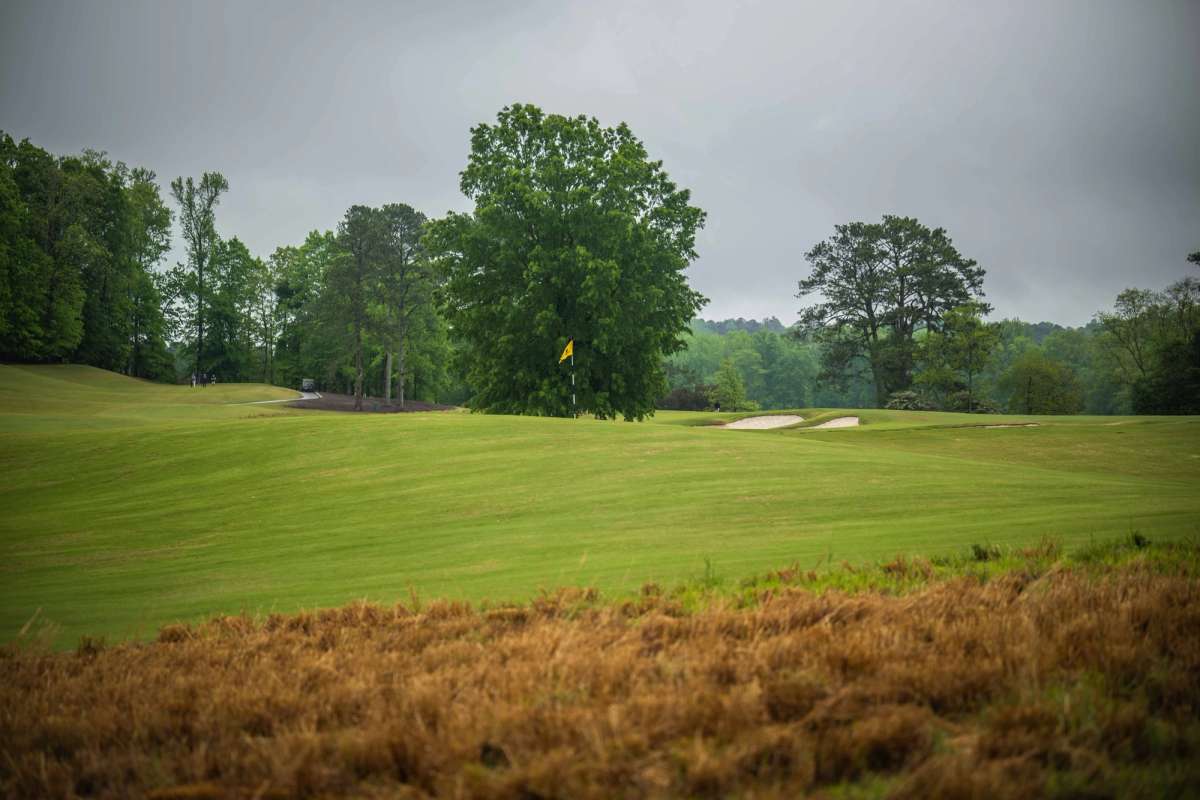
Cherokee Town and Country Club was established in 1956; its two separate facilities, the town club and the country club, are set twelve miles apart. The club’s two golf courses, however, are located a few miles north of Sandy Springs, close to Dunwoody.
Overall rating

4.0
Cherokee Town and Country Club was established in 1956; its two separate facilities, the town club and the country club, are set twelve miles apart. The club’s two golf courses, however, are located a few miles north of Sandy Springs, close to Dunwoody.
4.5
My member host told me the North is the superior course to the South, but if one were able to take the front nine of the South and combine it with the back nine of the North, they would have the second best course in the Atlanta area behind only Peachtree but ahead of East Lake.
But as I had played Peachtree in the morning, I only had time to play the North in the afternoon. I do plan a return visit to play both the same day. While Peachtree played wet due to tornados and heavy thunderstorms the previous day going through the night, Cherokee sits on higher ground and the sun had come out. It still played soft with limited roll-out but closer to the listed yardage.
I enjoyed the course more than the two at Atlanta Athletic and would put in fifth in the area behind Peachtree, East Lake, Atlanta, and Hawks Ridge, although the Highlands course at Atlanta Athletic is more of a championship golf course. The North course at Cherokee Town and Country has much more movement in the land and while some of the holes have similar characteristics, there is adequate variety unlike the Highlands course where one feels as though they are playing the same hole again, particularly on the par 3’s.
I did agree with my host that the back nine is superior to the front nine. While the front nine is enjoyable, it does not have any holes that you will carry in your memory for long, unlike the back nine.
The course is 7170 yards from the Black tees, par 72 rated 75.2/143. From the Burgundy tees the course is 6696 yards rated 73.1/137. Due to the dampness of the course we played the Founders tees at 6368 yards, rated 72.0/134, which is a combination tee.
1. Par 4 – 403/385. Teeing off just to the left of the putting green, this hole plays level and is a dogleg right. Scattered trees line both sides of the fairway with a single bunker placed at the outer turn which narrows the fairway. There is a long bunker on the right side of the green yet due to the length of the green, the bunker only covers about half of the side. Surrounding the hole is good land movement with swales and hollows. The green has interior swales. I liked the hole as a starting hole.
2. Par 3 – 193/170. This hole plays shorter as it is downhill. A triangular shaped pond comes across the fairway about 30 yards in front of the green then angles to the right side. While the safe play is down the left there is a bunker at the back left of the green forcing one to perhaps aim a bit further right than they want. The safe shot is to the middle of the green. The green is not as tilted towards the water as one would find on many other holes so a miss to the left whether on grass or in the bunker has a good shot at recovery. It is a nice hole although not unique.
3. Par 4 – 445/413/334. From the back two tees this is a strong hole, but from our combination tee this is not a good hole despite it being fun. The back tees make the hole play as a dogleg left while the forward tees make it play straight. The hole plays slightly uphill with thick trees down the left and scattered trees on the right. There is a large bunker left that is not in play from the tees we played but is well placed from those back tees. Another single bunker is on the side of a hill that runs down the right side from the tee to the green. I really liked the green which has a small section at its front hemmed in by a large bunker on each side. The green widens at its back. The green has excellent interior movement. Going long over the green will lead to a fall-off behind the green and a potential semi-blind shot.
4. Par 4 – 435/398/382. This hole plays parallel to the third on slightly higher ground. The hole bends to the right with the green angled to the right. Scattered trees down the right side can impede one’s line to the green if right off the tee. There is a large bunker on the right of the green. I felt the hole needed a back left bunker given the angle of the green.
5. Par 5 – 565/544. This hole plays straight but then has a sharp break to the left where the trees on both sides form a narrower pathway. Off the tee there is also a bunker on the right to consider particularly since the right side of the fairway is the preferred line. As one nears the green there are flanking bunkers set 60 yards from the green. Trees on the left side pinch the fairway so the right side is preferred again for the second shot. The green has fronting bunkers and is slightly elevated with a run-off collection area off the right side. The green narrows at the rear but given the size of the green is should be easily hit with a wedge in one’s hands. The use of trees on this hole make it a compelling golf hole.
6. Par 4 – 422/398/385. Playing from the farthest point on the course from the clubhouse this hole climbs up a bit and sweeps to the left. There is a forced carry to navigate for the shorter hitters to reach the fairway with a skinny bunker on the right forcing one a bit closer to the heavy trees down the left side all the way to the green. The brave play is to hug the left side where one will get a favorable roll-out as the hill ends and there is a slight downhill to the fairway. This can cut as much as 60 yards to the green. The green has two deep bunkers on its left side where the land falls sharply away. The green is somewhat thin but long with a false front and small roll-offs at the right and back. The green has an overall tilt to the left with small plateaus in four areas. There is good mounding just off this green. I liked the hole because a good, bold tee shot is definitely rewarded.
7. Par 3 – 200/178/149. This hole plays downhill and is shaped like a lima bean with a front central bunker and a rear central bunker. A brave shot is to the middle of the green. The green has a central plateau but also tilts to the front. The front bunker is one of the deeper bunkers on the course. I liked this par 3 for its visual appeal and strategic placement of those two bunkers.
8. Par 4 – 421/394/379. This straight hole has a wide fairway yet if one goes too far to the left they will go down into a small valley where the end result is a severe sidehill lie and a blind shot to the green. There is a bunker with a steep face on the right side in play off the tee for the longer hitters. A second bunker is at the right front of the green with an interior tongue that create havoc if one is too close to it. The green is long and overly wide with two vertical spines running through it. This is the number one index on the front nine, but I thought two others holes to be more difficult.
9. Par 5 – 587/566/519. The front nine finishes back at the clubhouse next to the first tee. This is the longest hole on the course and features a continuous “stretched” bend to the left. There is an inner corner bunker for the tee shot that the longer players can carry from all tees. Thick trees line the left side but somewhat fade away as one nears the green while scattered trees are down the entirety of the right side. The second bunker is on the right about 40 yards short of the green, only in play for those trying to reach the green in two. I felt this bunker should be pulled back down the fairway. The green is perhaps wider than deep and slightly angled to the left, although of a large size, with a front left corner bunker. Going long over the bunker leads to a more difficult recovery due to a 3-4 feet fall-off and a green going away from you.
10. Par 4 – 358/328. This is a fun short hole playing downhill with the green set left like a fish hook. There are flanking bunkers at the sharp turn. The green is well bunkered with three including one on the right/back. The perfect drive is between the two bunkers, otherwise the trees on the left side will block one’s line to the green. Those trees reduce the fairway to about half of what you see from the tee. It is considered to be the easiest hole on the golf course, but I bogeyed it as we had a front pin behind one of those bunkers which I found.
11. Par 3 – 214/185/160. This hole plays longer as it is uphill. The hole has thicker trees on its left side. The main defense of the hole are the flanking bunkers with the right one being a bit deeper than the left, but the left one having a more difficult shot to stop on the green.
12. Par 4 – 429/408/390. For me, the course gets pretty good from him to the finish. This hole plays down a heavy line of trees that block the view of the pond to the right. There are staggered fairway bunkers with the closer one on the right. The green has a central front bunker that attempts to make one hit either a longer shot, or a shot to a side where there are fall-offs. A final bunker is on the back right corner. There is another fall-off to the left of this green which features good contouring and multiple pin locations, all of which are tricky beyond 20 feet.
13. Par 4 - 385/345. This is one of the more difficult driving holes on the course. The hole plays uphill with a pond down the right side and rolling land following the pond. The ideal shot is to the left with a long bunker awaits. About 40 yards after that fairway bunker are flanking bunkers with the left one placed inside the line of the fairway. The green sits above you with a long, deep bunker on its right side and a sizeable fall-off down its left. This is the number six index on the course only due to its shorter length, yet I thought it should be rated harder as the green had a lot of tilt to it.
14. Par 3 – 207/176. Likely the most picturesque hole on the course, This hole plays downhill over a pond with the green set just beyond the pond. There is a bit of a backstop at the back of the hole. There is a single bunker left that also serves as a bailout area from which recovery is not difficult unless the pin is in the front left. The most difficult pin position is on the right side of the green which is shallower than the left side. It is a good hole.
15. Par 5 - 514/495. This hole plays uphill to the green and features a pond going down the right side that curves away but unfortunately I hit my worst drive of the day and caught the far right edge. There is ample fairway here so the pond should not be an issue. Farther up the hill is a single bunker on the left side that due to the routing of the fairway becomes almost a central bunker. The second shot has to consider another central bunker placed about 80 yards short of the green. Farther up at the green are two front flanking bunkers. The green sits in a bit of a bowl and has three tiers to it, sloped back to front. For a short par 5, this hole has plenty of difficulty.
16. Par 4 – 427/400/381. The hardest hole on the back side is next, another hole playing slightly uphill with thick trees on both sides. There are flanking bunkers well placed for every tee depending on one’s length. The green has a single bunker on the front left which wraps around a small amount of the left side but more of the front of the green. There are falloffs on all sides, a bit more problematic if one goes off the left. The green is large but angled slightly to the right. The hole is difficult because the green has several sections to it.
17. Par 4 – 440/425/381. This hole plays as a gentle dogleg to the right with flanking bunkers again and a single bunker at the front of the green shaped like a ‘c.” I liked this hole despite being able to have a peek at the maintenance facilities on the left side mainly hidden by trees. The green is tilted back to front with a horizontal spine and several smaller depressions.
18. Par 5 – 525/487/465. This hole plays longer as it is uphill. The tee shot is to be played left if one believes they cannot carry the pond that cuts into the fairway coming from the right side. There is a bunker placed just beyond the pond that I think is unnecessary. This bunker is likely there to discourage players from having a straight line into the green as the fairway curves back to the right if one plays left of the pond. There are two staggered fairway bunkers on the left of which only one is necessary. I did not like the collection of bunkers off the tee but I did appreciate the central bunker 60 yards short of the green as one continues to play uphill to the green. The green has bunkers on the front corners and is raised back to front with a sizeable fall-off at the rear. The front left has a slight depression with a horizontal tier running through the green.
The North course at Cherokee Town and Country is a very playable course built on hilly terrain. One does notice the up and downs all that much as they make their way around. The back nine is stronger than the front nine despite the shorter par 5’s versus than those on the front nine. The par 3’s are memorable as they are varied and look different. There is good contouring to the greens and the course is kept in good condition. Putts roll true here and the breaks can be seen although not always quite played with enough. The pace of the greens is consistent.
My only criticisms of the course are with regards to the placement of a few bunkers, or adding a bunker on a couple of holes. In addition, the green surrounds could be made a bit more interesting with more contouring.
While I three-putted the eighteenth green from 18 feet for a bogey to lose the match 1 down, I very much enjoyed the course. If one is in the area, they should definitely seek it out.
Mark White
The latest ranking of the Top 100 Golf Courses in the World serves as the ultimate global golf bucket list. Most members of our World Top 100 Panel are seasoned golfers, each playing 20-30 of these courses annually while travelling extensively over decades to form their opinions on others. We recognise that opinions vary—even among our panel members. Rankings are subjective, and there are undoubtedly 50 or more courses in the UK and USA alone that could easily fit onto this list. Links Golf Pilgrimages The rankings
California, United States
New Jersey, United States
Northern Ireland, United Kingdom
New York, United States
New York, United States

The Hidden Experience of Playing Augusta National - Golf's Most Exclusive Course For travelling golf enthusiasts who dream of playing the world's top 100 golf courses, Augusta National Golf Club represents the ultimate bucket list destination. While millions watch The Masters tournament each April, few will ever experience what lies beyond the famous gates on Washington Road. This insider guide reveals the authentic Augusta National experience that television cameras never capture. Finding the Entrance: Augusta National's Understated First Impression Despite hosting golf's most prestigious tournament, Augusta National's entrance remains remarkably understated. Located on busy Washington Road in Augusta, Georgia, many first-time visitors drive past the discreet gates multiple times before finding their way. Unlike other famous golf courses with prominent signage, Augusta National relies on its reputation rather than obvious markers. The exclusive nature of the club becomes immediately apparent—guests must arrive with a member host, as no visitors are permitted without member accompaniment. Security measures include mechanical barriers and police officers who verify names before granting access to Magnolia Lane. Once inside, the legendary service begins. Mysteriously, every staff member addresses guests by name from the moment of arrival. "Mr. Lewis, it's lovely to have you," they'll say to first-time visitors who haven't yet introduced themselves, recalls Connor T. Lewis, who has been fortunate enough to play Augusta multiple times. This attentive hospitality creates an immediate sense of belonging that distinguishes Augusta National from other top-ranked golf destinations. The Historic Augusta National Clubhouse Experience The Augusta National clubhouse represents a fascinating piece of American architectural history. As the oldest poured concrete building in the United States (dating to the 1800s), it offers a surprising contrast to the grand southern mansions typical of prestigious golf clubs. Originally slated for demolition when the club was founded, financial constraints preserved what would become one of golf's most iconic structures. Inside, golf history surrounds you. The Trophy Room features oil paintings of founders Bobby Jones and Clifford Roberts in their green jackets, alongside President Eisenhower. Most impressive are Bobby Jones' actual clubs used to win the Grand Slam, displayed in the left corner—a must-see for golf history enthusiasts. The clubhouse ambience remains refreshingly understated despite its prestige. "You think that everything's gonna be super fancy? And it's very understated. It's very relaxed," observes Connor T. Lewis, reflecting on his first impressions of the club. This understated elegance extends to the on-site accommodations, where guests stay in cabins named after golf legends, complete with Augusta National-branded amenities and panoramic views of the famous first hole. A Secret Nighttime Tradition at Augusta National While playing Augusta National ranks among golf's greatest thrills, the most magical moments often occur after sunset. After dinner in the clubhouse, knowledgeable guests participate in a special tradition—a moonlit walk to Amen Corner. "If you told me for the rest of my life that I could only go to Augusta National, not to play, but just to take that walk, I would accept that with pure happiness," confesses Connor T. Lewis about the moonlit tradition he now shares with other guests whenever possible. Under full moonlight, the fairways glow with an ethereal blue hue as guests make their way toward golf's most famous three-hole stretch. What few know is that Augusta National illuminates the 12th and 13th holes at night with special lighting. These spotlights transform Golden Bell and Azalea into theatrical stages, creating one of golf's most sublime spectacles. Many visitors report feeling the presence of golf legends like Hogan, Snead, and Jones during these nocturnal pilgrimages—a spiritual dimension to Augusta that television audiences never witness. Playing Augusta National: What Masters Broadcasts Don't Show Television coverage flattens Augusta National's dramatic topography. In reality, walking the course involves elevation changes equivalent to climbing approximately 20 stories throughout 18 holes. By the 18th fairway, even fit players feel the burn in their legs—a physical challenge entirely invisible to viewers. The optical illusions throughout Augusta National demonstrate designer Alister MacKenzie's genius. Having worked in military camouflage during World War II, MacKenzie created greens that deceive the eye. Putts that appear to break dramatically left often move right, making Augusta's legendary caddies invaluable guides through this visual trickery. Even accomplished golfers face psychological challenges at Augusta. Connor T. Lewis, a single-digit handicapper, recounts snap-hooking his first three drives at Augusta despite normally being consistent off the tee. "I go to the second hole, par five, and snap-hook another drive. Now on two, there are a lot of options. Snap-hook is not one of them," he jokes about his nerve-wracking start. The intimidation factor of playing where Palmer, Nicklaus, and Woods made history can transform good swings into momentary disasters. Among the most challenging shots at Augusta National: The intimidating tee shot on the 18th hole (even from member tees) The deceptive par-3 12th where swirling winds confound club selection The approach to the 14th green with its severe undulations The Essential Augusta National Mindset: Enjoying Golf's Greatest Experience The most valuable advice from Augusta National veterans transcends technique: forget your score. "You miss the point of Augusta National if you're trying to shoot your best round or break 80," advises Lewis. "Just take the time to float on the clouds for a little bit." This wisdom extends to any top 100 golf course experience. The greatest tragedy would be visiting golf's cathedral and remembering only your frustration over missed putts. "You never know when it's your last," explains Lewis. "Lightning could hit you tomorrow, and that might be the last opportunity you get to walk those storied links." For golfers lucky enough to receive an invitation to Augusta National—or any prestigious course—the ultimate advice from Connor T. Lewis distills to: "Don't let your golf game get in the way of playing golf." Experience the World's Top Golf Courses with the Right Perspective Augusta National exists in two realities: the immaculate tournament venue millions see on television, and the spiritual experience few will ever know—where fairways glow under moonlight, where history whispers from century-old walls, and where playing becomes a pilgrimage. While most golfers won't receive an invitation to Augusta National, this perspective applies to all bucket-list golf courses. Whether playing St. Andrews, Pebble Beach, Pine Valley, or Royal County Down, the scorecard matters less than absorbing the experience. As you plan your next golf adventure to top-ranked courses, remember that scores fade but experiences endure. Float on those clouds while you can, for you never know when such an opportunity might come again.

Mastering the Menu: A Taste of The Masters The Masters Tournament is not only a showcase of golfing excellence but also a culinary tradition, with its concession stand fare becoming almost as iconic as the golf played on the greens of Augusta National. Among these, the Pimento Cheese Sandwich stands out as a fan favourite, a simple yet delicious testament to Southern comfort food. Here's a fun look at The Masters' famous concession food, including a recipe for you to recreate the iconic Pimento Cheese Sandwich at home. Pimento Cheese Sandwich The Pimento Cheese Sandwich is a staple of The Masters, beloved for its creamy, tangy flavour wrapped in soft white bread. Here’s how you can make it at home: Ingredients: 2 cups of shredded sharp cheddar cheese 1 cup of mayonnaise 1 (4 oz.) jar of pimentos, drained and finely chopped 1 teaspoon of Worcestershire sauce 1/2 teaspoon of finely grated onion 1/4 teaspoon of ground black pepper A pinch of salt Slices of white bread Instructions: Mix the Ingredients: In a large bowl, combine the shredded cheddar cheese, mayonnaise, chopped pimentos, Worcestershire sauce, grated onion, black pepper, and salt. Stir until all ingredients are well blended and the mixture is smooth. Chill: Cover the bowl and refrigerate the pimento cheese mixture for at least an hour to allow the flavours to meld together. Prepare the Sandwiches: Spread a generous amount of the pimento cheese mixture onto a slice of white bread, then top with another slice to form a sandwich. Serve: Cut the sandwiches into halves or quarters, plate, and serve. Enjoy a taste of The Masters at home! Egg Salad Sandwich Another crowd-pleaser at Augusta National is the Egg Salad Sandwich, known for its creamy texture and simple seasoning. Ingredients: 8 hard-boiled eggs, peeled and finely chopped. 1/2 cup of mayonnaise 1 tablespoon of yellow mustard Salt and pepper to taste Slices of white bread Instructions: Combine Eggs and Mayo: In a mixing bowl, gently mix the chopped hard-boiled eggs with mayonnaise and mustard. Season with salt and pepper to taste. Chill: Refrigerate the egg salad mixture to cool. Assemble the Sandwiches: Spread the egg salad on a slice of white bread, then cover with another slice. Serve: Cut into halves or quarters and serve chilled. Georgia Peach Ice Cream Sandwich For something sweet, the Georgia Peach Ice Cream Sandwich is a delightful treat that celebrates the state's famous fruit. Ingredients: Vanilla ice cream Fresh peach slices Sugar cookies or shortbread cookies Instructions: Prepare the Ice Cream: Soften the vanilla ice cream slightly and mix in finely chopped fresh peach slices. Assemble: Scoop the peach ice cream onto a sugar cookie, then top with another cookie to make a sandwich. Freeze: Place the ice cream sandwiches in the freezer until firm. Serve: Enjoy a cool, sweet taste of Georgia at home! Recreating these Masters' favourites allows fans to bring a piece of Augusta National into their homes, celebrating the tournament's culinary traditions alongside the golfing action. Whether it's the tangy zest of the Pimento Cheese Sandwich, the creamy goodness of the Egg Salad Sandwich, or the sweet delight of the Georgia Peach Ice Cream Sandwich, these recipes offer a taste of The Masters any time of year. Find out more about travel to Augusta National Golf Course Why not register today to be the 1st to Receive US Rankings releases for 2024. Lockhart Travel Club Concierge Services FAQ What is the Lockhart Travel Club? Lockhart Travel Club is dedicated to offering its members unique opportunities for world-class golf exploration and adventure. It connects members with like-minded individuals worldwide, aiming to fulfil their desire to play at the best golf courses globally. The club originated from Robert Lockhart's passion, a Scotsman who introduced golf to America in the late 19th century, and it continues to embody his spirit of golf travel (Lockhart Travel Club). Who are the members of the Lockhart Travel Club? Members are individuals from some of the world's greatest clubs, sharing a common passion for golf and adventure. The club welcomes golfers eager to travel, play, and check off their bucket list of courses. They are driven by the opportunity to see and play the best courses worldwide, taking advantage of the club's network. What kind of experiences does Lockhart Travel Club offer? In 2023, the club provided opportunities to play in various top-ranked courses and locations, including the Sand Hills of Nebraska and Colorado, the best of Japan and Korea, the English Heathlands, the classic courses of France, and the best of New Zealand’s North Island. The 2024 schedule promises unique experiences in 19 different countries, including Thailand & China, Brazil, South Africa, the Northeast USA, and Australia. How do I join Lockhart Travel Club? Interested individuals can inquire about membership by contacting the club directly via their official email. The club values connections among golf enthusiasts and strives to plan unique, unforgettable opportunities for its members throughout the year. For more detailed inquiries or to apply for membership, please refer directly to the Lockhart Travel Club's official website or contact their membership services. Lockhart Travel Club About Us: Learn more about the club Top 100 Golf Courses - Lockhart Travel Club: Explore member experiences and trips.

Golf courses near to the Augusta National Golf Club Augusta National Golf Club, home of the prestigious Masters Tournament, is a hallmark of golf's rich history and tradition. While this exclusive course in Augusta, Georgia, garners global attention, the surrounding area offers several other notable golf courses that present unique challenges and experiences for golf enthusiasts. Here's an in-depth look at some of the other golf courses near Augusta National, each offering its own unique flair and test for golfers of all skill levels. 1. Augusta Country Club Located just a stone's throw from Augusta National, Augusta Country Club is one of the oldest golf clubs in the United States, established in 1899. This private club offers a classic Donald Ross-designed course, which was later updated by Perry Maxwell. It provides a traditional and challenging experience with its narrow fairways and small, undulating greens. The course is known for its scenic beauty and strategic layout, demanding precise shot-making from players. 2. Forest Hills Golf Club Forest Hills Golf Club is a public golf course that dates back to 1926 and is part of Augusta University's history, serving as the home course for the Jaguars. The course was originally designed by Donald Ross and later renovated by Arnold Palmer in 2003. This blend of classic and modern design elements offers wide fairways and expansive greens, but its true test lies in the clever placement of bunkers and the subtle contours of the greens. Forest Hills provides an accessible yet challenging round for golfers of varying abilities. 3. The River Golf Club Situated in North Augusta, just across the Savannah River from Augusta, The River Golf Club offers a blend of natural beauty and challenging golf. Designed by internationally renowned golf course architect Jim Fazio, this semi-private course opened in 1998. It features MiniVerde Bermuda greens, numerous water hazards, and strategic bunkering, making it a test for precision and strategy. The course's layout along the riverbank provides stunning views and a serene golfing experience. 4. Jones Creek Golf Club Jones Creek Golf Club, nestled in the heart of Evans, Georgia, is another gem in the Augusta area. Designed by Rees Jones with later enhancements by Tom Fazio, the course offers a challenging yet fair test of golf. With its rolling hills, dense tree-lined fairways, and beautifully maintained greens, Jones Creek delivers a memorable golfing experience. The course is known for its elevation changes and the natural creeks that come into play on several holes, adding to the strategic challenge. 5. Mount Vintage Golf Club Mount Vintage Golf Club is a semi-private golf club located in North Augusta. The club features a 27-hole championship course designed by Tom Jackson, offering a mix of rolling terrain, beautiful natural landscapes, and challenging water features. The course layout is divided into three nines: the Chester, the Vintage, and the Independent, each with its own distinctive character and challenges. Mount Vintage is celebrated for its exceptional conditioning and the variety of shots it demands, making it a favorite among locals and visitors alike. 6. Bartram Trail Golf Club Named after the naturalist William Bartram, Bartram Trail Golf Club is a public facility located in Evans. This course stands out for its commitment to preserving the natural environment, offering a tranquil setting for a round of golf. The Rick Robbins-designed course features Bermuda fairways and Bentgrass greens, providing excellent playing conditions year-round. With five sets of tees, Bartram Trail is accessible to golfers of all skill levels, offering a strategic challenge with its unique blend of natural beauty and architectural design. Each of these courses near Augusta National offers a unique golfing experience, from classic designs that hark back to the golden age of golf architecture to modern layouts that challenge today's golfer. Whether you're a local resident or visiting for the Masters, taking the time to explore these courses can provide a broader appreciation of the rich golfing landscape that Augusta and its surrounding areas have to offer. Find out more about travel to Augusta National Golf Course Why not register today to be the 1st to Receive US Rankings releases for 2024. Lockhart Travel Club Concierge Services FAQ What is the Lockhart Travel Club? Lockhart Travel Club is dedicated to offering its members unique opportunities for world-class golf exploration and adventure. It connects members with like-minded individuals worldwide, aiming to fulfil their desire to play at the best golf courses globally. The club originated from Robert Lockhart's passion, a Scotsman who introduced golf to America in the late 19th century, and it continues to embody his spirit of golf travel (Lockhart Travel Club). Who are the members of the Lockhart Travel Club? Members are individuals from some of the world's greatest clubs, sharing a common passion for golf and adventure. The club welcomes golfers eager to travel, play, and check off their bucket list of courses. They are driven by the opportunity to see and play the best courses worldwide, taking advantage of the club's network. What kind of experiences does Lockhart Travel Club offer? In 2023, the club provided opportunities to play in various top-ranked courses and locations, including the Sand Hills of Nebraska and Colorado, the best of Japan and Korea, the English Heathlands, the classic courses of France, and the best of New Zealand’s North Island. The 2024 schedule promises unique experiences in 19 different countries, including Thailand & China, Brazil, South Africa, the Northeast USA, and Australia. How do I join Lockhart Travel Club? Interested individuals can inquire about membership by contacting the club directly via their official email. The club values connections among golf enthusiasts and strives to plan unique, unforgettable opportunities for its members throughout the year. For more detailed inquiries or to apply for membership, please refer directly to the Lockhart Travel Club's official website or contact their membership services. Lockhart Travel Club About Us: Learn more about the club Top 100 Golf Courses - Lockhart Travel Club: Explore member experiences and trips