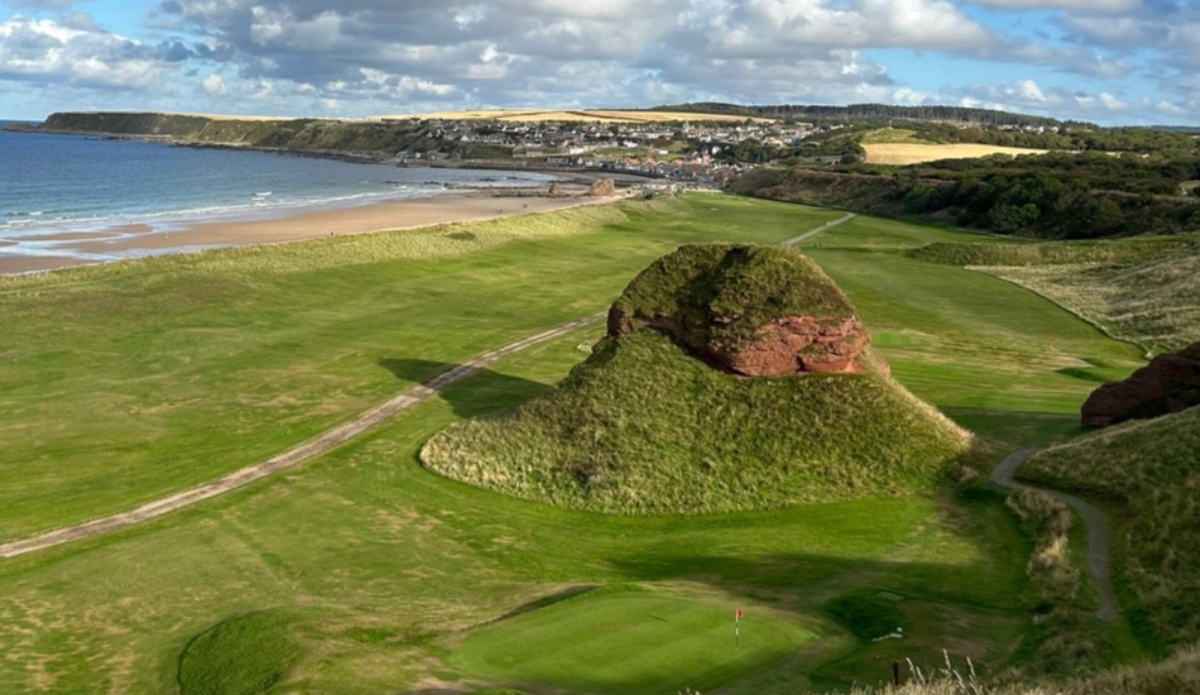
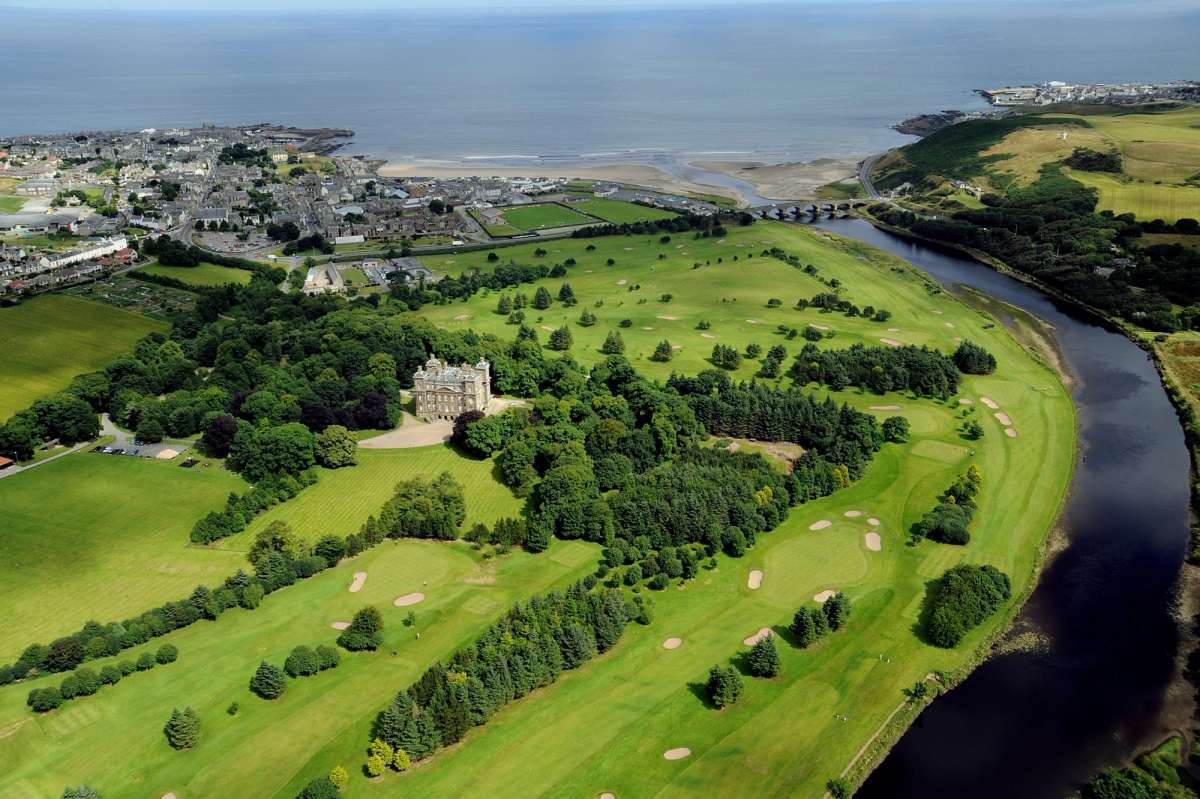
Old Tom Morris set out the original nine holes at Cullen Links Golf Club, which was founded in 1870. The course has since been extended to eighteen holes, featuring no fewer than ten par threes in a really fun-filled layout.
Old Tom Morris set out the original nine holes at Cullen Links Golf Club, which was founded in 1870. The course has since been extended to eighteen holes, featuring no fewer than ten par threes in a really fun-filled layout.
Cullen Links Golf Club
Sort by:
Sep. 20, 2025

4
JeffArenson
Only in Scotland.
May. 21, 2025
4.5
Thomas Burley
Great fun, excellent condition, great location.
May. 21, 2025
4.5
Thomas Burley
Great fun, excellent condition, great location.
Nov. 3, 2024
5
Mark Howson
I challenge anyone to find a more unique and outright fun course!
Oct. 6, 2023
4.5
Callum Forbes
Good clean fun.


Sep. 21, 2023
3.5
Paul Connor


Jun. 2, 2023
4
@thegolferwhoruns
What a fun course.
Sep. 22, 2022
5
Fraser Hill
I am a bit late in revieing Cullen as the only time I played it was in 2014.
Aug. 12, 2022
5
Ted Pearson
On a whistle-stop tour of Scotland, Cullen was the single most stunning and surprising revelation of the trip.
Jul. 19, 2022
4
Greg Watson
As we approached the course on a dreek "summer" early morning to play the Old Tom Morris classic, weather closing in, wind howling and temperature more suited to a November morning we could have been forgiven if we had postponed our pending game, and tucking into some "Cullen Skink" However as we caught first sight of the wee links from the coast road on high there was an air of excitement at what was in store.
The latest ranking of the Top 100 Golf Courses in the World serves as the ultimate global golf bucket list. Most members of our World Top 100 Panel are seasoned golfers, each playing 20-30 of these courses annually while travelling extensively over decades to form their opinions on others. We recognise that opinions vary—even among our panel members. Rankings are subjective, and there are undoubtedly 50 or more courses in the UK and USA alone that could easily fit onto this list. Links Golf Pilgrimages The rankings
California, United States
New Jersey, United States
Northern Ireland, United Kingdom
New York, United States
New York, United States

The Moray Firth coast has been quietly harbouring some of Scotland's finest and most characterful golf for well over a century. While golfers queue for tee times at Royal Dornoch and St Andrews, a compact strip of Scottish coastline stretching from Forres east through Elgin to Buckie delivers genuine links golf, outstanding parkland, and an authenticity that money-no-object resort destinations struggle to replicate. Seven featured courses — Hopeman, Covesea Links, Forres, Elgin, Spey Bay, Maverston, and Buckpool — form the spine of a golf trip that combines coastal drama with inland variety, whisky distillery visits, and the kind of warm club welcome that reminds visitors why they fell in love with Scottish golf in the first place. Moray has 16 courses in total, meaning those who want to extend their stay or return have plenty more to explore. This is a region where a round of proper links golf can be had for £35 to £45 (€40–€52/$44–$57), where the 19th hole might involve a dram from a nearby Speyside distillery, and where bottlenose dolphins occasionally patrol the waters visible from the 12th tee. Moray: Why It Should Be on Your List The Case for Moray Scotland has no shortage of golf destinations, but Moray's combination of quality, variety, and value is genuinely difficult to match. The region sits within a natural microclimate that makes it one of the drier parts of northern Scotland, which matters considerably when planning a multi-day golf trip. The seven courses in this guide span coastal links, clifftop drama, historic parkland, and modern design — all within a 45-minute drive of each other. Moray has 16 courses in total, so a travelling golfer could comfortably play a different course every day for a week without covering more than 60km (37 miles) between rounds. Seven distinct courses in a compact region — links, clifftop, and parkland Green fees are on average, much more competitive compared to Highland rivals Combined with world-class Speyside whisky distilleries, Johnstons of Elgin cashmere, and a genuinely spectacular landscape Bottlenose dolphin sightings from multiple course tees — a uniquely Moray experience AKH Golf's professional golf photography service (akhgolf.com) is available in the region for trips worth commemorating 🏌️ The Seven Hopeman Golf Club Paul Lawrie, 1999 Open Champion and Honorary President of Hopeman Golf Club, once described the club's 12th hole as probably the best par 3 he has ever played. It is a description that stops golfers in their tracks when they encounter it for the first time. The Prieshach plays just 150 yards from an elevated tee, but the green sits over 100 feet below in Clashach Cove, guarded by two bunkers and framed by gorse. On calm summer evenings, dolphins surface in the Moray Firth below. Originally a 9-hole course established in 1909, Hopeman was extended to 18 holes in 1985 and has undergone a significant improvement programme since 2018 following recommendations from Tom MacKenzie of Mackenzie & Ebert. The fairways are defined throughout by gorse and broom. Hopeman welcomes visitors seven days a week, with weekend bookings recommended. The Mashie Niblick clubhouse serves freshly cooked, homemade food. hopemangolf.club | View on Top100GolfCourses Covesea Links Golf Course Two miles south of Lossiemouth, down a single-track farm road that reveals nothing of what lies beyond, Covesea Links is one of the most delightful surprises in Scottish golf. The 9-hole course occupies a natural valley of dunes between farmland and the Moray Firth. With the sea visible from every hole, it was built by owners Andy and Angela Burnett as a labour of love. The course is short, naturally routed, and plays with genuine links character: firm ground, blind shots, a tee played from the edge of the Moray Firth at the 4th, and a completely blind 135-yard par 3 over a great red rock to a tucked green. Angela welcomes visitors from a small hut on-site; the warmth of that welcome has become as much a part of the Covesea experience as the golf itself. It is one of the most remarkable values in Scottish golf. A round at Covesea in the early evening, with the sun low over the firth, is an experience that stays with you. covesealinks.com | View on Top100GolfCourses Forres Golf Club Forres Golf Club carries impressive architectural credentials… the original 9 holes were laid out by James Braid, whilst Willie Park extended the course to 18 in 1912. Two Open Champions shaping one parkland course. The result is a beautifully balanced layout set on rolling ground with mature tree-lined fairways, excellent views towards Findhorn Bay and the Moray Firth, and greens that visitors consistently rate among the best in the north. The course has hosted the Scottish Professional Championship and the PGA Northern Open. The most discussed hole is the 16th, named The Pond, a risk-reward par 4 where a watery grave awaits those who take on the direct line to the green. The front nine is tighter and more varied; the back nine opens up before tightening dramatically for the finish. forresgolfclub.co.uk | View on Top100GolfCourses Elgin Golf Club Founded in 1906, Elgin Golf Club is set at Hardhillock on the edge of the town of Elgin. The heathland course measures 6,458 yards at par 71 and has a reputation for having some of the best par 4s in Scotland, and it is hard to argue. The setting is quietly dramatic: the course commands views north over the Moray coast and south to the distant Cairngorm Mountains, with the Highland skyline providing a constant backdrop. Elgin accepts visitors throughout the week and at weekends. elgingolfclub.com | View on Top100GolfCourses Spey Bay Golf Club Spey Bay Golf Club occupies one of the most unusual pieces of golfing terrain in Scotland: a series of raised storm-beach ridges that accumulated some 6,000 years ago at the mouth of the River Spey. The 18-hole course was designed by legendary club-maker Ben Sayers in 1907, and the natural topography made of pebble and shingle ridges rising and falling between gorse-filled hollows has produced a layout unlike anything found elsewhere. The course was acquired by LinksDAO in 2022, bringing significant investment and ongoing renovation work by CDP Architects with ambitions to restore and enhance the original routing. The 8th hole is the signature, a short par 3 played to a green perched atop a sizeable hillock with nothing to stop the ball except accuracy. Spey Bay operates on-site accommodation pods through Spey Bay Pods (speybaypods.co.uk) — a novel option for golfers wanting to wake up beside the course. The club also operates a camping and caravanning site in the grounds. links.golf/speybay | View on Top100GolfCourses Maverston Golf Course Moray's newest course opened in 2014 and was designed by former Scottish international golfer Euan McIntosh. Set in the Maverston Highland Estate near Urquhart, just minutes from Elgin off the A96. The 18-hole parkland course of 6,284 yards plays to par 70 across gently undulating, free-draining ground with spectacular views towards the Cairngorm Mountains and the Moray Firth. Maverston was designed with year-round playability in mind: the free-draining soil means the course remains open and dry during winter conditions that close neighbouring courses. A 9-hole par-3 Kempston Course alongside the main layout makes it accessible for families or for golfers wanting an evening warm-up round. The clubhouse sources food from locally selected ingredients, and the backdrop of the Cairngorm skyline from the 19th hole terrace is one of the better post-round views in Moray. Visitors are welcome throughout the week and at weekends. maverstongolf.com | View on Top100GolfCourses Buckpool Golf Club Buckpool occupies a remarkable position in Scottish golf history, as the course was created in the 1930s as part of a job creation scheme for unemployed workers from Buckie's herring fishing industry. Designed by J.H. Taylor, the course that emerged from this project remains one of the funnest links layouts in the north-east of Scotland. The course sits on an elevated clifftop position above the town of Buckie, measuring 6,169 yards at par 70. Fast, firm fairways are lined throughout by mature gorse, and the undulating greens — routinely praised as the best in the north-east - all surrounded by swales, hollows, and cavernous bunkers. Paul Lawrie claimed his first professional win here in 1986. The views across the Moray Firth towards the hills of Caithness are spectacular on clear days. Buckpool is the easternmost of the seven featured courses and provides natural geographical bookends to a Moray golf itinerary. Visitors are welcome every day; advance booking is recommended at weekends. buckpoolgolf.com | View on Top100GolfCourses The Headliner - Moray Golf Club Moray Golf Club sits on the edge of Lossiemouth and offers two distinct links experiences on the same stretch of Moray Firth coastline. The Old Course, designed by Old Tom Morris in 1889, is the more celebrated of the two — a classic out-and-back links of 6,643 yards that rewards local knowledge and punishes anything wayward in the wind. The New Course, added by Henry Cotton in 1979, is shorter and more forgiving but no less characterful, sharing the same firm, fast turf and sea views. Whilst most will focus on Moray on the Moray coastline, there is plenty more to see here! Sample Itinerary: Five-Day Moray Golf Adventure The distances between Moray's courses are short enough that back-to-back rounds are perfectly achievable without long drives. The following five-day outline suits golfers flying into Inverness Airport, which is approximately 35km (22 miles) from Forres and around 50km (31 miles) from Elgin. Day 1: Arrival & Forres Fly into Inverness Airport and collect a hire car — essential for exploring Moray. The drive east on the A96 to Forres takes approximately 25 minutes. An afternoon round at Forres Golf Club eases visitors into the trip without the immediate coastal wind challenge of the links courses. Dalvey House near Forres provides elegant country house accommodation ideal for a first-night stay, with private grounds and a genuinely luxurious base from which to explore the week's golf. Day 2: Hopeman & Covesea Links Morning round at Hopeman Golf Club — book the tee time in advance if visiting at a weekend. The 12th hole (The Prieshach) demands to be experienced rather than described. From Hopeman, it's a short drive of around 8km (5 miles) west to the turn-off for Covesea Links. An evening 9 holes at Covesea, with the Moray Firth lit by late afternoon sun, provides an extraordinary contrast to the morning's conventional links challenge. Stay in Elgin or take a second night at Dalvey House before moving east the following day. Day 3: Elgin, Distillery Visit & Move to Seafield Arms Morning round at Elgin Golf Club. The parkland setting and quality of greens make Elgin a natural highlight of any Moray trip. Afternoon visitors might consider a tour at Benriach Distillery in Longmorn, just south of Elgin (benriachdistillery.com) — the distillery's experimental approach to cask maturation and single malt production makes for an excellent post-round visit. The combination of golf at Elgin followed by whisky at Benriach has become something of a Moray classic. Johnstons of Elgin cashmere mill on the northern edge of Elgin is worth a visit for non-golfing partners on this day. After the round, move east to check in at The Seafield Arms in Cullen — the natural base for the final two days. Day 4: Spey Bay, Maverston & Buckpool Morning round at Spey Bay Golf Club — allow additional time to absorb the completely unique terrain. The WDC Scottish Dolphin Centre on site is worth 30 minutes before or after the round if dolphins are actively in the estuary. Afternoon round at Maverston, approximately 10km (6 miles) south on the A96, provides a contrasting parkland perspective with views south to the Cairngorms. Buckpool Golf Club in Buckie is just 20 minutes from The Seafield Arms and can be added as an evening round. More in Moray Tours & Transport can arrange transport on days when driving between multiple courses, allowing golfers to relax fully between rounds. Day 5: Buckpool & Departure Morning round at Buckpool Golf Club in Buckie — approximately 35km (22 miles) east of Elgin, easily reached from The Seafield Arms. Buckpool's clifftop views and J.H. Taylor links design provide a worthy final-day challenge. Afternoon departure towards Inverness Airport via the A96. Allow 90 minutes for the journey from Buckie to the airport during peak travel times. Getting to Moray & Getting Around Arriving in Moray Inverness Airport is the natural gateway, served by British Airways, easyJet, and Loganair from London, Edinburgh, and Bristol. Aberdeen Airport, approximately 105km (65 miles) to the south-east, provides further connectivity with international carriers. Edinburgh Airport, 230km (143 miles) south, connects to virtually all major European cities and works well for international visitors who want to spend a night in Edinburgh before heading north by hire car or train. The A96 is the primary road corridor linking Inverness, Forres, Elgin, and Keith — a well-maintained route that connects every course in this guide. Journey times between courses rarely exceed 45 minutes, and the roads are generally uncongested outside of summer weekend afternoons. A hire car is genuinely essential for Moray golf; while rail services connect Forres and Elgin to Inverness and Aberdeen, the course locations are not accessible by foot from stations. Organised Transport & Tours More in Moray Tours & Transport operates local transport and tour services throughout the region, making them a practical option for groups who want to be driven between courses, or for golfers who prefer to arrive and hand over the logistics. This is particularly useful for larger groups where not everyone wishes to drive, or for the final night of a trip where a meal with wine is on the agenda. Scottish Links Golf Tours specialise in Moray golf itinerary design and booking, handling tee time coordination across multiple courses and combining golf with distillery and cultural visits. Their Moray-specific expertise means local knowledge is genuinely baked into the planning. Weather & When to Visit Moray benefits from a relatively dry microclimate for northern Scotland, with Forres often cited as one of the sunniest towns in Scotland. May through September offer the most reliable weather window, with June and July delivering long evenings and the longest daylight hours. August is the busiest month; golfers visiting in late May or early September will typically find shorter queues, slightly lower accommodation rates, and excellent course conditions. March and April can produce beautiful, clear days, but also unpredictable cold winds. The essential packing list for a Moray golf trip includes waterproofs (always), an extra base layer, a windproof mid-layer, and sun protection for clear summer days. The temperature difference between a warm inland course like Forres and a north-facing coastal course like Spey Bay on the same afternoon can be surprisingly significant. Pack as if for variable conditions regardless of the forecast. Equipment & Practical Matters Golf photography with AKH Golf is available across Moray. Worth considering for groups marking a milestone trip or for golfers who have waited years to visit and want professional images to take home. Having seen their work, the on-course experience with a dedicated photographer is genuinely different to phone photography. Alan at AKH Golf can join your group for single or multiple rounds, whether that be in Moray or across Scotland. The Golf Moray website is a useful resource for planning, listing courses, visitor information, and local golf news across the region. Where to Stay for Moray Golf Dalvey House near Forres is a private country house hotel that provides a luxurious western base for exploring Moray's golf courses. The house sleeps small groups in a private-hire arrangement ideal for golf societies or groups of friends who prefer their own space over a conventional hotel. The setting, featuring rolling grounds with views towards the Moray Firth, is genuinely special, and the proximity to Forres Golf Club makes a pre-breakfast practice round entirely feasible. The Seafield Arms Hotel in Cullen provides a characterful coastal base on the eastern edge of the golf region. The hotel is a traditional Scottish inn with a strong local reputation for food, situated in the attractive fishing town of Cullen above the Moray Firth. For golfers who want to include Buckpool in their itinerary, the Seafield Arms is the natural local choice. Buckpool is just 20 minutes west along the coast road, and Spey Bay is 25 minutes in the same direction. Spey Bay Golf Club Pods offer the most immersive accommodation option in the guide: camping pods on the grounds of the golf club itself, with direct access to the course and the coastal environment. The pods have proven popular with golfers who want an early morning tee time without a commute, as well as with couples where one partner is a committed golfer and the other values coastal walking and dolphin watching. Other Accommodation Options Elgin acts as the natural accommodation hub for the region, with several hotels and guesthouses within easy distance of the A96 corridor. The town's compact centre has a good range of independent restaurants and pubs. For golfers on a tighter budget, self-catering cottages across Moray provide excellent value and often come with golf storage — a practical consideration when travelling with a full set of clubs. Lossiemouth, 9km (5.5 miles) north of Elgin, is a pleasant coastal town that places golfers within easy reach of Hopeman, Covesea Links, and both Moray Golf Club courses. It retains the character of a working fishing town alongside increasing numbers of independent cafés and accommodation options. 🥃 Dining, Whisky & Local Culture Speyside Whisky — Essential Context No golf trip to Moray makes complete sense without at least one distillery visit. The Speyside whisky region is, in practical terms, on the doorstep of every course in this guide. The Spirit of Speyside Whisky Festival runs in late April and early May, bringing an extraordinary concentration of distillery events to the region. Benriach Distillery in Longmorn, just south of Elgin, is an excellent post-golf choice. Experience options range from full distillery tours to streamlined tasting sessions, with walk-in guests welcome or advance booking available online. The staff are knowledgeable and genuinely enthusiastic about explaining the distillery's history, production process, and the eclectic range of casks in the warehouses — alongside a shop and bar at the visitor centre for a quicker stop. Combine with a morning round at Elgin Golf Club for the ideal Moray golf and whisky day. Cashmere & Culture Johnstons of Elgin has been working with natural, biodegradable fibres for more than 229 years, and their Elgin mill remains the only vertical weaving mill in Scotland — dyeing, spinning, weaving and finishing everything on-site using soft Scottish water and generations of accumulated craft. The mill experience gives visitors a genuine look behind the scenes of a working family-owned business, and the on-site coffee shop, featuring locally sourced produce, is one of the better lunch options in Elgin. Non-golfing partners on a Moray trip frequently cite Johnstons as a highlight, and the shop carries the full range at Scottish retail prices. Clubhouse Dining & Post-Round Options Forres Golf Club's Muiry Bar & Restaurant is the standout clubhouse dining option in the region — genuinely good food served in a warm environment with views that remind you where you are. Elgin Golf Club's Hardhillock Bar & Bistro is a close second, combining good bar food with the kind of post-round atmosphere that makes it worth lingering. Hopeman's Mashie Niblick specialises in homemade cooking and has a reputation among locals for quality that outstrips its modest size. The Seafield Arms in Cullen is the natural dinner destination for the eastern part of the itinerary, combining proximity to Buckpool and Spey Bay with a kitchen that makes good use of locally landed seafood. Cullen Skink — the smoked haddock chowder that originated in this area — is an essential experience for first-time visitors to Moray. 📋 Booking Golf in Moray Most courses in this guide accept online booking. Covesea Links operates on a turn-up-and-play basis with payment on the day. Spey Bay should also be booked in advance. Most courses in this guide accept online booking. Covesea Links operates on a turn-up-and-play basis with payment on the day. Spey Bay should also be booked in advance; all course improvement work is completed over the winter, and the course remains available throughout the season. Caddies are not normally available at Moray's courses. The courses are easily walkable, but buggies and golf carts should be booked in advance if required — contact the club directly when making a tee time reservation. Scottish Links Golf Tours handles end-to-end planning, including tee time coordination across multiple courses, accommodation booking, transport, and cultural add-ons. For groups of four or more who want a seamless trip without the logistics overhead, this represents good value. Independent travellers should aim to book tee times at least two to three weeks in advance for summer visits. 🏰 Beyond the Fairways Moray rewards curiosity beyond the golf course. Elgin Cathedral, the 13th-century ruin known as the Lantern of the North, sits in the heart of the town and is among the most atmospheric medieval buildings in Scotland. Sueno's Stone in Forres is one of the tallest and most elaborately carved Pictish standing stones anywhere in Britain, dating to around 900 AD. Both are free to visit and accessible without a significant detour. The Speyside Way is a 100km (62-mile) walking and cycling route that follows the River Spey from the Cairngorms to the Moray Firth coast, which makes for excellent non-golf half-day walks. The WDC Scottish Dolphin Centre at Spey Bay is particularly rewarding in summer, when the resident bottlenose dolphin population is most active in the estuary. The Moray Firth holds the most northerly resident dolphin population in the world. The Speyside Cooperage near Craigellachie is a working cooperage where visitors watch craftsmen making and repairing casks for the whisky industry — a 30-minute detour well worth making. More in Moray Tours & Transport offer bespoke tours around Moray and Speyside distilleries, as well as the transport services referenced throughout this guide. 💡 Insider Tips for Moray Golf Twilight golf at Hopeman from 3pm offers approximately 7 hours of daylight in June and July at reduced rates — one of the best-value evening golf experiences in northern Scotland. Covesea Links operates on a turn-up basis - try to visit on a clear evening in summer and allow time to absorb the location. Scottish Links Golf Tours can arrange multi-course logistics, including transport, meaning groups can share driving duties rather than every member needing their own hire car. The A96 from Inverness to Aberdeen is the only route connecting most of these courses, meaning early morning or early evening travel avoids the modest congestion that can build around Elgin at peak times. 💷 Budget Planning for a Moray Golf Trip Green Fee Overview Moray's green fees occupy a range that makes multi-round visits affordable without sacrificing quality. Buckpool and Covesea Links represent genuine bargains by any Scottish standard; Spey Bay's recent investment is reflected in its pricing, which now sits at the premium end of the local range. Covesea Links (9 holes): approximately £30 (€35/$37) Buckpool Golf Club: approximately £40 (€46/$50) Hopeman Golf Club: approximately £75 (€86/$95) Forres Golf Club: approximately £80 (€92/$101) Elgin Golf Club: approximately £85 (€98/$107) per round Maverston Golf Course: approximately £45 (€52/$57) Spey Bay Golf Club: approximately £80 (€92/$101) 🌊 The Moray Verdict Moray's golf is worth travelling for. The combination of coastal links drama, historic parkland pedigree, extraordinary value relative to better-marketed Scottish golfing destinations, and a wider cultural offer that includes the world's greatest whisky-producing region makes this compact stretch of the Moray Firth coast one of the most rewarding golf destinations in Scotland. What visitors consistently discover is that the region's relative obscurity works in their favour: tee times are available, courses are quiet, and the welcome from staff and members retains an authenticity that disappears when a destination becomes a tourist trap rather than a community hub. That authenticity is Moray's most valuable characteristic… and it is worth experiencing before it becomes more widely known. A hire car and a willingness to follow an evening round at Hopeman with a dram in Forres is genuinely all the planning required. The rest takes care of itself.

A good halfway house can turn a great round of golf into a memorable one. It might be a cold beer on a Scottish links, a burger with a spectacular view or a hot drink to warm you up before the back nine. Whatever is on offer, the best halfway houses give golfers a chance to forget about the scorecard for a few minutes and enjoy the experience. We recently asked the Top100 Golf Courses community to share their favourite halfway houses, uncovering plenty of memorable stops around the world. We've picked five of their recommendations, alongside five more renowned halfway houses that are well worth knowing about. What is a Halfway House? A halfway house is a food and drink stop positioned around the turn of a golf course, usually between the ninth and 10th holes. Some are little more than a hut serving snacks and drinks, while others have become destinations in their own right, offering everything from full meals and cocktails to fires, views and plenty of local character. Five Halfway Houses Chosen by the Top100 Community Sunningdale Golf Club (England) There is a reason the halfway hut at Sunningdale has become one of the most famous refreshment stops in golf. The small Swiss-chalet-style building has been in place since 1903, sitting where the ninth holes of both the Old and New Courses meet their respective 10th holes. But the building itself isn't the main attraction. That would be the sausage sandwich. Sunningdale's legendary hut serves a simple sausage on buttered bread, with other food and refreshments available alongside it. The hut has become such an established part of the experience that the club's own tradition says everybody stops, but does so speedily. It's not fancy, and that's rather the point. After nine holes of heather-lined fairways, a hot sausage sandwich and a cup of tea can feel like exactly what golf ordered. Nairn Golf Club - The Bothy at Nairn (Scotland) The Bothy at Nairn has a history that goes well beyond golf. Built in 1877, the stone building and neighbouring icehouse formed part of the Easter Delnies Fishing Station, one of five salmon fisheries operating along the coast between Nairn and the mouth of the Findhorn. In a good season, the fishery could catch up to 5,000 salmon, with ice collected from local rivers and a specially made pond and stored in the icehouse to keep the catch fresh. The buildings have since been given a new lease of life, with the Bothy converted into a halfway house where golfers can stop for snacks and refreshments at the turn. On a cold day beside the Moray Firth, there's also a fireplace to warm up beside. The historic stone building, Highland setting and views across the course provide plenty of atmosphere. One of our community members put it rather simply: a dram of whisky and a fire are hard to beat. Hard to argue with that. Turnberry Ailsa (Scotland) Turnberry's halfway house is about as far removed from the traditional golf hut as you can get. The Ailsa's ninth hole now finishes beside the famous Turnberry Lighthouse, which doubles as a halfway house for golfers. The lighthouse itself dates back to 1873, while the golf course's dramatic ninth was redesigned as part of the Ailsa's major renovation. Inside, golfers can stop for food and drink before heading to the 10th, but the real attraction is outside. From the lighthouse, there are views across the Firth of Clyde towards the Isle of Arran and Ailsa Craig. It's a halfway stop that feels more like a destination than a quick pit stop. When your halfway house is a historic lighthouse overlooking one of Scotland's most spectacular stretches of coastline, you've got a pretty good excuse to take your time. Ardglass Golf Club (Northern Ireland) At Ardglass, the halfway-house experience is wonderfully straightforward: have a Guinness and enjoy the view. The course's old cottage halfway house at the back of the 7th green has become one of its most memorable features, with golfers able to stop for a pint before continuing their round. A recent visitor described it as a gorgeous cottage with Guinness, while another praised the combination of a Guinness, sausage roll and views over the Irish Sea. It fits Ardglass perfectly. The County Down links is already one of the most dramatic places to play golf in Northern Ireland, with the Irish Sea never far away. Add a pint of Guinness just before the turn and you've got a halfway house that feels distinctly of its surroundings. Sometimes you don't need to reinvent the wheel. Blair Atholl Golf Estate (South Africa) Blair Atholl might have been one of the less obvious names to appear among the community recommendations, but the descriptions made it impossible to leave out. The halfway stop sounds less like a quick break and more like an event. One golfer highlighted the chicken burger, a chef cooking a barbecue beneath the trees and a deck sitting beneath a stream. Another mentioned silver-service high tea. That's quite the halfway-house menu. It's also a good example of why the best stops aren't necessarily the most famous. A halfway house can become memorable because of the food, the setting or simply the feeling that you're being looked after rather than rushed back onto the course. Five More Renowned Halfway Houses St Andrews Links - The Old Course (Scotland) If we're talking about halfway houses, it makes sense to visit the place that has a claim to starting the tradition. In the 19th century, David "Old Da" Anderson sold ginger beer and other refreshments from a cart on the Old Course at St Andrews. It has been described as golf's first refreshment stand. The modern version sits behind the ninth green and keeps the tradition going, albeit with a rather more substantial menu. The pork and haggis sausage roll is a popular choice, while the club's own Tom Morris 1821 Lager provides a suitably Scottish accompaniment. It's difficult to think of a more fitting place for a halfway stop. The Old Course is steeped in golfing history, and even the break between nines has a story of its own. Pine Valley Golf Club (New Jersey, United States) Pine Valley's halfway house is memorable before you've even ordered anything. Rather than a conventional hut, it is built into the base of an old water tower, which golfers encounter around the eighth hole and again near the 12th tee. It's an appropriately unusual feature for one of the world's most unconventional golf courses. The tower doubles as a stop for drinks and snacks, giving golfers a chance to take a breather before continuing around Pine Valley. It even boasts an impressive collection of golf balls from around the world. There aren't many halfway houses that can claim to be built inside a water tower. Quivira Golf Club (Baja California Sur, Mexico) Quivira has taken the halfway-house concept and spread it across the entire round. The Jack Nicklaus-designed course has multiple all-inclusive comfort stations, each offering golfers food and drinks as they make their way around the Cabo San Lucas layout. The most spectacular is The Cliffs, perched almost 300 feet above the Pacific, where golfers can stop for a breakfast burrito and take in the views over the ocean. Then there's The Oasis, the main halfway house near the ninth green. Here, the emphasis is on the food, with freshly prepared Baja cuisine including tacos and tostadas, alongside a full tequila bar. A final stop, Cañada, sits near the 16th tee, while another comfort station beside the oceanfront practice facility offers snacks and cold drinks before golfers even reach the first tee. The food and refreshments are included in the green fee, making Quivira's comfort stations much more than somewhere to grab a quick drink. Tacos, tequila and spectacular Pacific Ocean views make the breaks almost as memorable as the golf. Whistling Rock Country Club (South Korea) At Whistling Rock, there isn't just one halfway house to look forward to. The South Korean club is made up of three nine-hole loops, each with its own themed tea house: Cocoon, Temple and Cloud. The three buildings are each distinctly different. One is a rounded structure between a lake and forest, another is a formal wood-and-glass building, while the Cloud tea house sits high among the trees. The result is a halfway-house experience that feels distinctly different depending on which nine you're playing, with each tea house adding another layer to the Whistling Rock experience. Royal Dornoch Golf Club (Scotland) Royal Dornoch's halfway house is proof that sometimes the best idea is a simple one. The stop sits behind the ninth green of the Championship Course, with views back across the links towards the Dornoch Firth. And then there's the traditional order: hot chocolate with Bailey's Irish Cream, a combination that makes considerably more sense when you're standing on a Scottish links in a North Sea wind. It's a small detail, but one that has become part of the Royal Dornoch experience and exactly the sort of halfway-house tradition golfers remember.

For generations, 18 holes has been the accepted standard for a round of golf. But with people becoming increasingly time-poor, a growing number of clubs are questioning whether it still needs to be the default. After running into financial difficulties in 2019, Eastwood Golf Club - a moorland course on the outskirts of Glasgow in Scotland's central belt - was forced to appoint an administrator and shut its doors after 126 years in operation. Enter Glasgow-based property developer Colin Whitelaw, who took over the land at the end of 2019, three months before the Covid-19 pandemic forced a change in his plans. “Instead of thinking it was a land deal, I had to really think about whether I was going to continue maintaining the golf course,” Whitelaw told Top100 Golf Courses. “That was the big issue, and wondering whether there was value in that. We decided there would be.” As a member of Prestwick Golf Club, where the first nine Open Championships were played over the layout, and a long-time player at Shiskine Golf Club on the Isle of Arran, Whitelaw was familiar with the concept of a shorter format. “We’ve played Shiskine for 35 years or something and just loved the whole idea of going out and playing for two-and-a-quarter hours…. It’s just a lovely number.” Whitelaw said he reflected on the fact that there were a handful of 18-hole members-only clubs in and around the south side of Glasgow that he would have to compete with if he kept the original layout of Eastwood Golf Club. “Why would we establish another 18-hole members-only course that had already failed?” he said. The idea for a 12-hole course was developed in 2021, with Eastwood Twelve opening its gates in June 2025. ‘It’s been a rollercoaster’: Building Eastwood Twelve Eastwood's existing parcel of land contained a collection of holes that Whitelaw believed could work in the shorter format. The resulting course has five par threes and seven par fours, including two par fours of more than 400 yards. “It’s actually a very good test of golf, and we established a set of three tees so we could have something for the higher handicappers, but a real challenge for the low handicappers,” Whitelaw said. Just over a year after opening, Eastwood Twelve has amassed more than 320 members. Roughly half of its rounds are being played by visitors. Whitelaw said there was plenty of demand after opening, with curious visitors coming from afar to test the new layout, and that the club’s only hiccup this year was the “appalling” weather during spring, which he estimated had lost them 10% of their turnover. “It’s been a rollercoaster… but it’s all going in the right direction,” he said. The club has also taken a different approach to marketing. Whitelaw credits his daughter Samantha, the club's general manager, with building its presence on social media platforms Instagram and TikTok. “The power of Instagram and TikTok has driven our business, without a doubt. If you look at our figures in terms of followers, it’s quite amazing for a wee company. That’s been a big eye-opener for me.” The result has been a club that draws both members and visitors, rather than relying solely on traditional membership. ‘That’s a brilliant number’: The Two-And-A-Quarter Golf Round Whitelaw said a lot of people want to get out and hit a ball, but many think that 18 holes is too many and 9 isn’t enough. “When people come off the golf course… particularly the ones that have not been before, the first thing they say is, ‘12 holes, that’s a brilliant number’. “To get dressed up, to get your kit out and go out for an hour-and-a-half is just not quite enough, but to go out for 12 holes, two-and-a-quarter hours, is a much better prospect.” As for the demographic of golfers attracted by Eastwood Twelve, Whitelaw said the vast majority were time-precious people aged 30 to 50 who would play before, after or during the working day for a few hours. “We have a lot of business owners who can nick away, but we don’t actually have a lot of older people.” Whitelaw said the club has worked hard to improve the quality of the course, including through investment in five robotic mowers. “The quality of the cut and everything… The fairways are fantastic because of that.” ‘A market for it’: Is 12-Hole Golf the Future? Whitelaw says there were fewer than 10 12-hole courses around the world when he first began looking seriously at the concept. He now puts the number at 33, including around eight in the UK. Asked if 12-hole courses would become more prevalent in golf’s future, he said “definitely”. “People are more time-precious. I think the modern man is not allowed to disappear on a Saturday morning at 8am and come home at 5pm, that’s a big factor. There’s just so much more going on in life… there’s so much to do. “I think the demands on people nowadays are more inclusive, I think families are more inclusive. People want to still play golf, but they recognise they can’t escape for seven hours.” Talking about the state of Scotland’s golfing market, which has approximately 550 to 600 courses, Whitelaw said there are too many for the playing population, meaning “a lot of courses are on the margin”. “Scotland is overshopped, that’s the problem, there’s so much choice. “There’s this problem, and you can see it happening, that the poorer facilities go and chase the market down, and they spiral out of control and get into this situation where you get £10 Tuesdays. It’s just nonsense, and there’s no future in that, but I’m not sure what you do about that because they survive, just.” He suggested that developing a new 12-hole course would be too expensive given the potential returns, but there was a real market for transforming an existing course. “I think there’s definitely a market for it. “I think quality is the key to the element, it’s not the quantity, actually. If you’ve got a quality product, people will come up and pay for it.” He referenced the quality of Cabot Highlands in the heart of the Scottish Highlands, and how people would happily travel to experience it. “That whole Moray-Firth neck from Royal Dornoch right to Nairn is just becoming so exciting, and people are really happy to go up there and travel to play these links courses, it’s fantastic.” Whitelaw said if he were to open another 12-hole course, he would try to do it with a links layout, “because you get better all-year-round play”. “But as I say, we inherited this situation, and it’s a moorland course, but it plays more like a parkland course frankly.” As for Eastwood Twelve, a full seven-day membership is currently priced at £795, which Whitelaw says will increase once the club has built a solid membership base. “It’s less than two-thirds of what the equivalent courses are nearby… We’re very competitive at the moment, but obviously hoping longer term that will nudge its way up.”