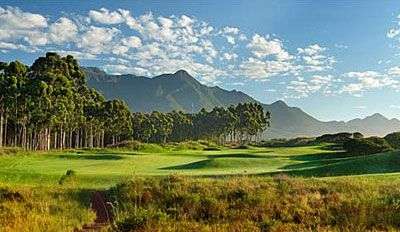
The Country Club course at Durban Country Club has played host to sixteen South African Opens, more than any other course in the land.


Durban Country Club
The Country Club course at Durban Country Club has played host to sixteen South African Opens, more than any other course in the land.

5
This course has pedigree and history. It's humid and hot but well worth a play.
Raise tee boxes, meandering fairways with a flat lie being rare.
Stray too far off line and you'll be unlikely to be able to score par.
Bunkers are in all the wrong places and greens are fair.
Colonial clubhouse and views are fabulous.
Class adventure here
Craig Tucker
The latest ranking of the Top 100 Golf Courses in the World serves as the ultimate global golf bucket list. Most members of our World Top 100 Panel are seasoned golfers, each playing 20-30 of these courses annually while travelling extensively over decades to form their opinions on others. We recognise that opinions vary—even among our panel members. Rankings are subjective, and there are undoubtedly 50 or more courses in the UK and USA alone that could easily fit onto this list. Links Golf Pilgrimages The rankings
California, United States
New Jersey, United States
Northern Ireland, United Kingdom
New York, United States
New York, United States

How to play the world’s most exclusive golf clubs We review John Sabino’s new book There’s no shortage of correspondents with extensive golfing experience in the Top 100 Team, with several of them setting formidable personal targets in their quest to play as many of the top tracks as possible. For instance, our US consultant Fergal O’Leary completed an 8-year pursuit to play the Top 100 in the World last year when he travelled to the Durban Country Club, South Africa. At 32, he became the youngest member of an elite group of thirty people who have so far managed to accomplish this global golfing feat. Our Netherlands-based International Correspondent David Davis recently undertook an extensive trip to Japan, China and several other Far Eastern countries as he also strives to play the World Top 100 (and quite a number of other courses that just fail to make the top rankings) – and with fewer than a dozen to go, it won’t be long until he also become a member of the exclusive World Top 100 Club. Another self-confessed golf nut named John Sabino set off “in pursuit of golf’s Holy Grail” a few years ago and his task was to play all of Golf Magazine’s World Top 100 as defined in their 2003 rankings. He wrote a blog as he progressed along his golfing journey before being approached by a book publisher to write about his experiences and give insights into how he gained access to some of the most restricted golf courses in the world. The highly entertaining book How to play the world’s most exclusive golf clubs is the result of his literary efforts. Strangely enough, more than half the Top 100 courses were played by following the standard booking procedure for guest play – no great mystique in that process then when all it takes is a letter or an email! Direct invitations from members, architects, greenkeepers or professionals accounted for another eighteen rounds and a further nine tee times were secured through hotel/tour operators or by a corporate invite or charity outing. Unsolicited invitations via the author’s blog gained him access to another few courses and one club in the United States rather surprisingly allowed him to play after he cold called to ask for a game! There’s extensive coverage in the book of a number of “special experience” venues like the Californian trio of Bel Air Country Club, Los Angeles Country Club and Cypress Point Club. Overseas clubs warranting particular attention include Morfontaine, Loch Lomond and Durban Country Club whilst there’s sizeable multi-page spreads devoted to both Augusta National and a handful of Japanese clubs, where the author thinks at least seven hours has to be devoted to playing golf, including pre-match coffee and post-round hot bath then drinks. A number of other private facilities are examined, most of them located in the United States. Sanctuary in Colorado, Porcupine Creek in California and Pocantico Hills in New York are just some of the ultra-exclusive tracks discussed. Elsewhere in the world, Ellerston in Australia, Goodwood in Canada and Prince de Provence in France – all three of which are nationally ranked by Top 100 Golf Courses – are also considered, though the author diplomatically offers no hints on how to gain access to any of these very privileged golfing playgrounds. Some of the most interesting parts of the book are those that have nothing to do with the author or his stated aim of getting golfers onto tracks that are tough to gain entry to. For example, chapter 6 (“Playing the World’s Elite Courses in an earlier era”) details the exploits of Ralph Kennedy, a traveling salesman for a pencil company who played Augusta National just after it opened in 1933 when the nines were played in reverse order. Known as “The Peripatetic Golfer,” it’s reckoned he walked the equivalent of twice the circumference of the earth, playing more than 3,000 courses in fourteen countries, over a forty-two-year period starting in 1921. Similarly, chapter 12 (“The Kiwi Miracle”) tells the story of two young New Zealand golfers who set out on a golfing adventure in 2010 to raise money for charity and play a round of golf every day around the world, starting at Kauri Cliffs on 1st January and ending at Cape Kidnappers on 31st December, passing through Australasia, the United States, the United Kingdom and Europe. Plenty of top courses were played in a semi-impromptu fashion along the way, from Cypress Point to Pine Valley in the United States, Loch Lomond to Ballybunion in Great Britain & Ireland, and from Morfontaine in France to the Emirates Golf Club in Dubai. John Sabino certainly calls it as he sees it, without fear or favour – early in the book, he states that he’s no great lover of the Old Course at St Andrews, going on to mention a caddy at Crail Golfing Society that was also not a big fan and who told him about a dozen times, “The Old Course is s****, and a lot of locals are afraid to tell you for fear of getting in trouble.” The author also cites eight courses (including the Vineuil at Chantilly, Old Head and Prestwick) that merit a place in the World Top 100 in his view but he doesn’t name the courses that should be excluded to make way for the newcomers – now that’s an opinion which might have ruffled a few feathers! How to play the world’s most exclusive golf clubs doesn’t really reveal anything the reader shouldn’t already know – that “the best way to access private courses is to find a member.” By networking with the right people, the author was able to play at many hard-to-access clubs through making the right connections. Other means of getting onto the best courses (such as playing in a pro-am, through membership of a golf society or becoming a course reviewer) pale into insignificance in comparison. John Sabino writes with unbridled enthusiasm, delivering lots of little snippets about life in and around the locker rooms at many of the best clubs in the world, and these anecdotes go a long way to make this book the enthralling read that it undoubtedly is. John's book is available at Amazon.com. Jim McCann Editor Top 100 Golf Courses
Top 100 Golf Courses of South Africa 2016 We announce the third biennial revision of our South African Top 100 ranking chart Two years ago, when we last updated our South African Top 100 chart, we stated, “this latest list will raise a few eyebrows”. Well, the results of the 2016 re-ranking exercise for the Rainbow Nation will do that and a lot more besides because there’s plenty of movement in our new chart – indeed, only two courses hold onto the same position as last time. We don’t know the statistical probability of that happening, actually. Suffice to say, bringing an ever-increasing number of different data streams into the process appears to be at least partly responsible for the volatility of our current chart and it might take another revision or two for the relative positions to settle down a little. So, onto our 2016 listings and it’s all change at the top, where three 18-hole layouts all leapfrog over our long standing No.1 course, Gary Player’s Leopard Creek, which is situated on the edge of the Kruger National Park. The course’s relatively prosaic front nine holes are a bit of a let-down for the more well-travelled golfers who’ve played the course and this may well have been a deciding factor in the course taking a tumble from the top perch. Rising one place to the new number 1 position, the Links course at Fancourt Hotel & Country Club is another Gary Player design that opened for play a couple of years before it hosted the Presidents Cup in 2003. Eight straight 6-ball reviews on the Top 100 website tell its own story and the latest reviewer to play here describes the Links course as “right up there with the very best courses I have played around the world”. Shooting up five places to the runner-up position, Durban Country Club returns to the number 2 spot that it held when we first established our South African chart in 2008. Our US Consultant Fergal O’Leary played there eight months ago when he completed his challenge of playing all of GOLF Magazine’s World’s Top 100 Golf Courses and he summed up his views of Durban by saying: “for keen golfers around the world, a round at the Durban Country Club is an experience not to be missed”. At number 3 in our new chart, rising two places, the Gary Player course at the Sun City Resort is another Black Knight design that returns to its inaugural chart position of eight years ago. The home of the Nedbank Golf Challenge since 1981, this fabulous course is instantly recognisable to golfers around the world who follow on television every year the exploits of a limited field of invited professionals competing for a huge prize pot. Two other courses make significant upward moves at the top end of the new standings. The first one is Humewood, near Port Elizabeth in the Eastern Cape, soaring eleven places to number 7 and this 1929 design from SV Hotchkin – the only true links in all of Africa – is one that has flown under the radar of many golfers for a long time now. The second layout is the very private Millvale course in Koster – which was a new entry in our 2014 chart at number 14 – and it climbs a further four places to number 10. Perhaps we’ll receive our first review for this remarkable course before our next biennial update? A little further down the rankings, the remote Northern Cape course of Sishen (Robert Grimsdell’s last design from the late 1970s) lies close to the Kalahari desert in the mining town of Kathu and it leaps an impressive nine places to number 17. Moving up five to number 20, the old course at East London is actually the club’s third layout, having been established thirty years after the club was formed by SV Hotchkin and George Peck in 1923. In fact, it’s rather appropriate that East London, Humewood and Durban Country Club should all feature so prominently in our listings as they’ve all played a very important part in the development of golf in South Africa. Remarkably, they’ve hosted a total of sixty national championships between them (twenty-nine SA Opens and thirty-one SA Amateurs) so they’ve collectively formed the foundation of the nation’s golfing traditions since the 1920s. In the bottom half of the Top 100, a handful of courses make double digit leaps up the table: Pretoria (up fifteen to 54) was upgraded by Gary Player in 2004, Victoria (up nineeen to 65) had its greens rebuilt by Golf Data a decade ago, Mount Edgecombe (No.1) (up eighteen to 69) is an early 1990s redesign from Hugh Baiocchi, Dainfern (up twenty-seven to 71) was co-designed by Gary Player and Phil Jacobs in 1991 and San Lameer (up twenty to 77) is an early 1990s offering from the country’s most prolific modern architect, Peter Matkovich. There are six new entries in our latest chart, the highest two of which appear in the top third of our national table. At number 29, we have the golf course at Steyn City, and this Jack Nicklaus-designed layout, which only opened last year, is the centrepiece of a massive residential development to the north of Johannesburg. At number 33, the new course at Highland Gate Golf & Trout Estate also makes a noteworthy debut in the South African Top 100. Nestled in the Steenkampsberg mountain range near Dullstroom, it’s the latest layout to come from the bourgeoning design portfolio of Ernie Els. Rank/ We always welcome your thoughts when we carry out our national re-rankings so feel free to let us know what you think if you have a strong opinion about our updated South African chart. Which courses have we missed out on or perhaps we’ve included one that really doesn’t deserve to be featured? Maybe there’s one sitting too high in the listings or one lying too low? Whatever you’re thinking, please click the “Respond to this article” link at the top or at the bottom of this page if you’d like to get in touch with us. Click the link to see full details of our 2016 Top 100 Golf Courses in South Africa Jim McCann Editor Top 100 Golf Courses

A good halfway house can turn a great round of golf into a memorable one. It might be a cold beer on a Scottish links, a burger with a spectacular view or a hot drink to warm you up before the back nine. Whatever is on offer, the best halfway houses give golfers a chance to forget about the scorecard for a few minutes and enjoy the experience. We recently asked the Top100 Golf Courses community to share their favourite halfway houses, uncovering plenty of memorable stops around the world. We've picked five of their recommendations, alongside five more renowned halfway houses that are well worth knowing about. What is a Halfway House? A halfway house is a food and drink stop positioned around the turn of a golf course, usually between the ninth and 10th holes. Some are little more than a hut serving snacks and drinks, while others have become destinations in their own right, offering everything from full meals and cocktails to fires, views and plenty of local character. Five Halfway Houses Chosen by the Top100 Community Sunningdale Golf Club (England) There is a reason the halfway hut at Sunningdale has become one of the most famous refreshment stops in golf. The small Swiss-chalet-style building has been in place since 1903, sitting where the ninth holes of both the Old and New Courses meet their respective 10th holes. But the building itself isn't the main attraction. That would be the sausage sandwich. Sunningdale's legendary hut serves a simple sausage on buttered bread, with other food and refreshments available alongside it. The hut has become such an established part of the experience that the club's own tradition says everybody stops, but does so speedily. It's not fancy, and that's rather the point. After nine holes of heather-lined fairways, a hot sausage sandwich and a cup of tea can feel like exactly what golf ordered. Nairn Golf Club - The Bothy at Nairn (Scotland) The Bothy at Nairn has a history that goes well beyond golf. Built in 1877, the stone building and neighbouring icehouse formed part of the Easter Delnies Fishing Station, one of five salmon fisheries operating along the coast between Nairn and the mouth of the Findhorn. In a good season, the fishery could catch up to 5,000 salmon, with ice collected from local rivers and a specially made pond and stored in the icehouse to keep the catch fresh. The buildings have since been given a new lease of life, with the Bothy converted into a halfway house where golfers can stop for snacks and refreshments at the turn. On a cold day beside the Moray Firth, there's also a fireplace to warm up beside. The historic stone building, Highland setting and views across the course provide plenty of atmosphere. One of our community members put it rather simply: a dram of whisky and a fire are hard to beat. Hard to argue with that. Turnberry Ailsa (Scotland) Turnberry's halfway house is about as far removed from the traditional golf hut as you can get. The Ailsa's ninth hole now finishes beside the famous Turnberry Lighthouse, which doubles as a halfway house for golfers. The lighthouse itself dates back to 1873, while the golf course's dramatic ninth was redesigned as part of the Ailsa's major renovation. Inside, golfers can stop for food and drink before heading to the 10th, but the real attraction is outside. From the lighthouse, there are views across the Firth of Clyde towards the Isle of Arran and Ailsa Craig. It's a halfway stop that feels more like a destination than a quick pit stop. When your halfway house is a historic lighthouse overlooking one of Scotland's most spectacular stretches of coastline, you've got a pretty good excuse to take your time. Ardglass Golf Club (Northern Ireland) At Ardglass, the halfway-house experience is wonderfully straightforward: have a Guinness and enjoy the view. The course's old cottage halfway house at the back of the 7th green has become one of its most memorable features, with golfers able to stop for a pint before continuing their round. A recent visitor described it as a gorgeous cottage with Guinness, while another praised the combination of a Guinness, sausage roll and views over the Irish Sea. It fits Ardglass perfectly. The County Down links is already one of the most dramatic places to play golf in Northern Ireland, with the Irish Sea never far away. Add a pint of Guinness just before the turn and you've got a halfway house that feels distinctly of its surroundings. Sometimes you don't need to reinvent the wheel. Blair Atholl Golf Estate (South Africa) Blair Atholl might have been one of the less obvious names to appear among the community recommendations, but the descriptions made it impossible to leave out. The halfway stop sounds less like a quick break and more like an event. One golfer highlighted the chicken burger, a chef cooking a barbecue beneath the trees and a deck sitting beneath a stream. Another mentioned silver-service high tea. That's quite the halfway-house menu. It's also a good example of why the best stops aren't necessarily the most famous. A halfway house can become memorable because of the food, the setting or simply the feeling that you're being looked after rather than rushed back onto the course. Five More Renowned Halfway Houses St Andrews Links - The Old Course (Scotland) If we're talking about halfway houses, it makes sense to visit the place that has a claim to starting the tradition. In the 19th century, David "Old Da" Anderson sold ginger beer and other refreshments from a cart on the Old Course at St Andrews. It has been described as golf's first refreshment stand. The modern version sits behind the ninth green and keeps the tradition going, albeit with a rather more substantial menu. The pork and haggis sausage roll is a popular choice, while the club's own Tom Morris 1821 Lager provides a suitably Scottish accompaniment. It's difficult to think of a more fitting place for a halfway stop. The Old Course is steeped in golfing history, and even the break between nines has a story of its own. Pine Valley Golf Club (New Jersey, United States) Pine Valley's halfway house is memorable before you've even ordered anything. Rather than a conventional hut, it is built into the base of an old water tower, which golfers encounter around the eighth hole and again near the 12th tee. It's an appropriately unusual feature for one of the world's most unconventional golf courses. The tower doubles as a stop for drinks and snacks, giving golfers a chance to take a breather before continuing around Pine Valley. It even boasts an impressive collection of golf balls from around the world. There aren't many halfway houses that can claim to be built inside a water tower. Quivira Golf Club (Baja California Sur, Mexico) Quivira has taken the halfway-house concept and spread it across the entire round. The Jack Nicklaus-designed course has multiple all-inclusive comfort stations, each offering golfers food and drinks as they make their way around the Cabo San Lucas layout. The most spectacular is The Cliffs, perched almost 300 feet above the Pacific, where golfers can stop for a breakfast burrito and take in the views over the ocean. Then there's The Oasis, the main halfway house near the ninth green. Here, the emphasis is on the food, with freshly prepared Baja cuisine including tacos and tostadas, alongside a full tequila bar. A final stop, Cañada, sits near the 16th tee, while another comfort station beside the oceanfront practice facility offers snacks and cold drinks before golfers even reach the first tee. The food and refreshments are included in the green fee, making Quivira's comfort stations much more than somewhere to grab a quick drink. Tacos, tequila and spectacular Pacific Ocean views make the breaks almost as memorable as the golf. Whistling Rock Country Club (South Korea) At Whistling Rock, there isn't just one halfway house to look forward to. The South Korean club is made up of three nine-hole loops, each with its own themed tea house: Cocoon, Temple and Cloud. The three buildings are each distinctly different. One is a rounded structure between a lake and forest, another is a formal wood-and-glass building, while the Cloud tea house sits high among the trees. The result is a halfway-house experience that feels distinctly different depending on which nine you're playing, with each tea house adding another layer to the Whistling Rock experience. Royal Dornoch Golf Club (Scotland) Royal Dornoch's halfway house is proof that sometimes the best idea is a simple one. The stop sits behind the ninth green of the Championship Course, with views back across the links towards the Dornoch Firth. And then there's the traditional order: hot chocolate with Bailey's Irish Cream, a combination that makes considerably more sense when you're standing on a Scottish links in a North Sea wind. It's a small detail, but one that has become part of the Royal Dornoch experience and exactly the sort of halfway-house tradition golfers remember.


