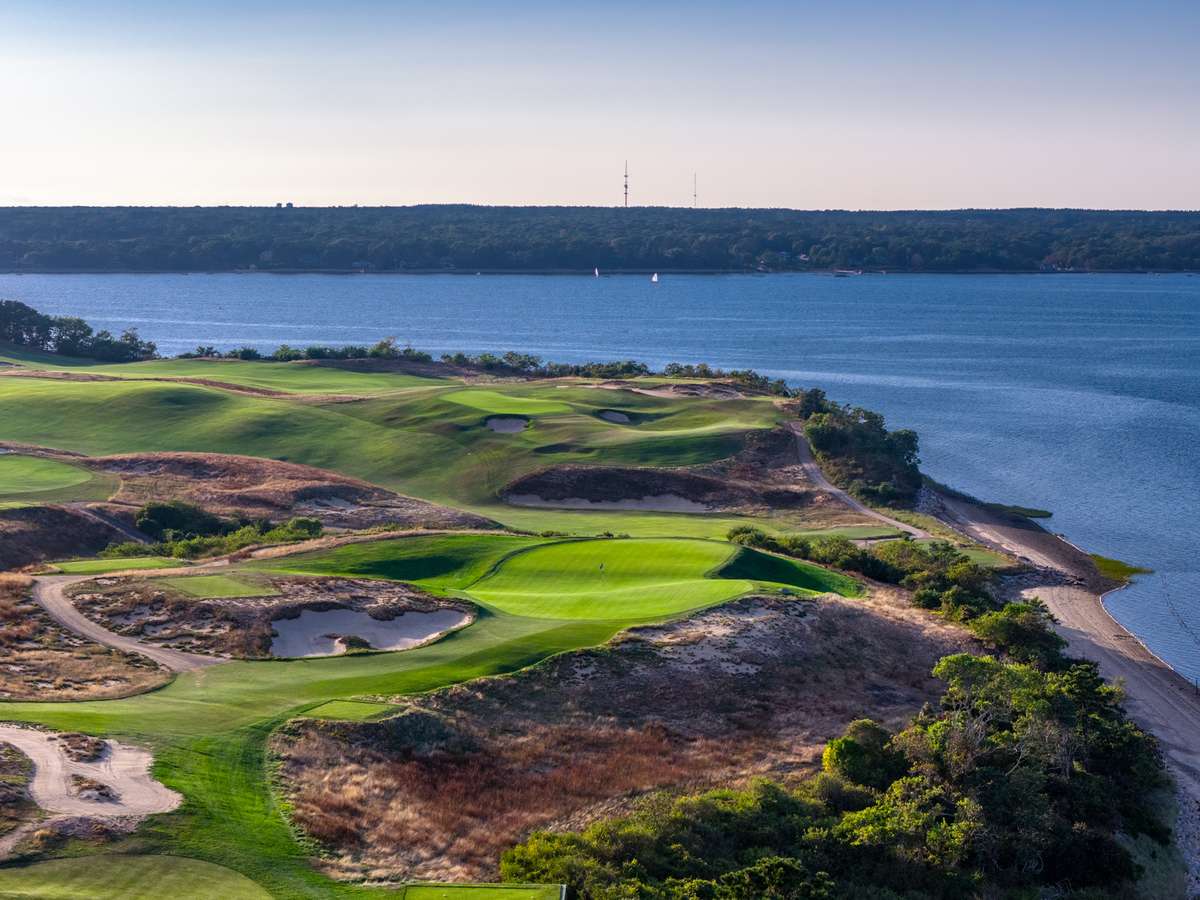
Herbert Fowler, the esteemed English golf course architect – best known for his work at Walton Heath and The Berkshire – was the man responsible for creating this classic at Eastward Ho! Country Club...
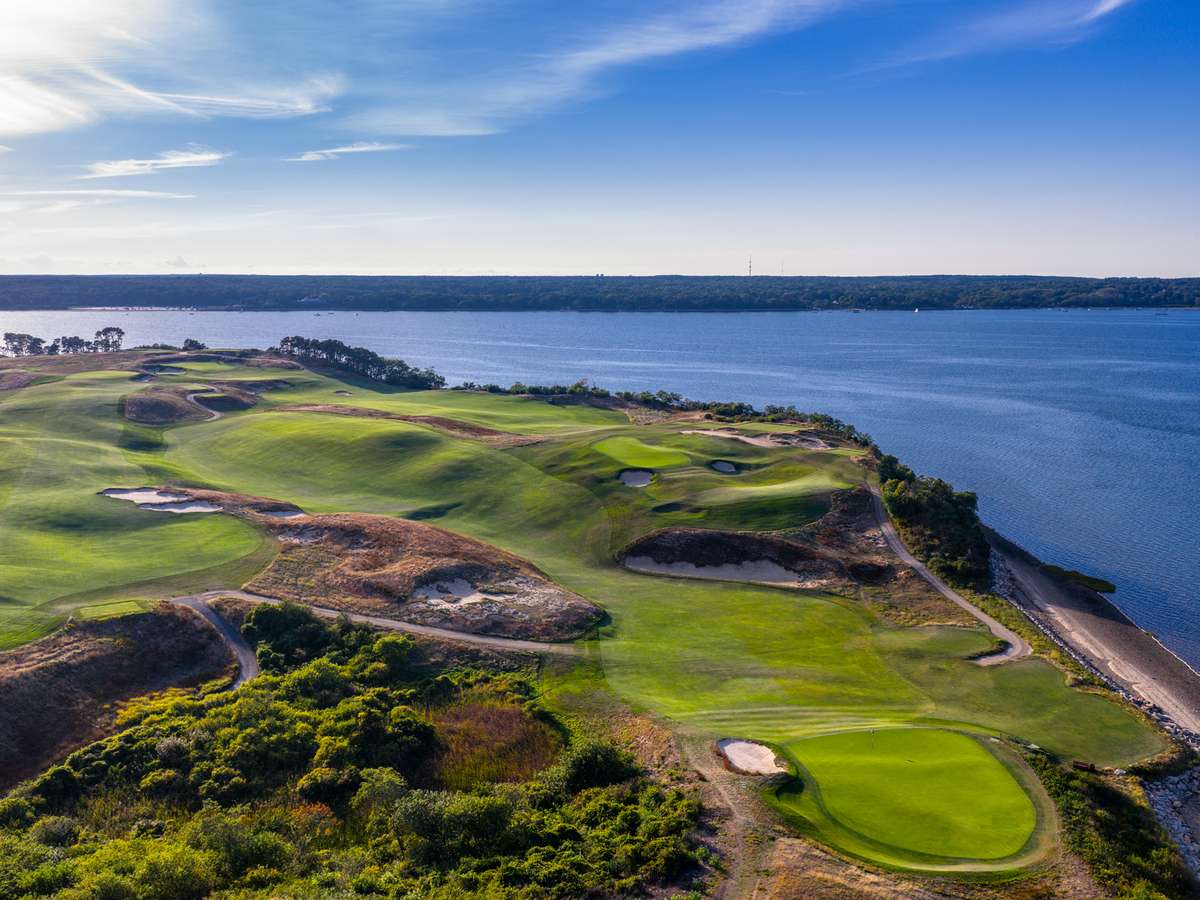
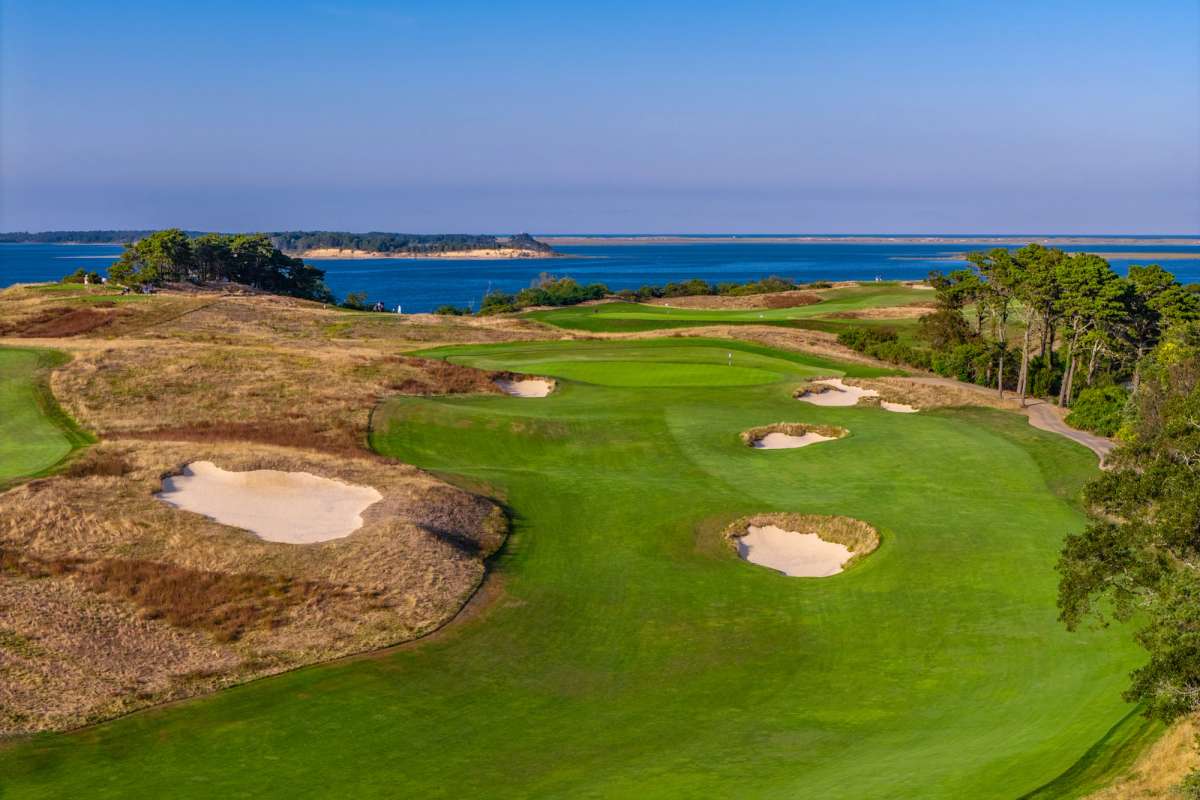
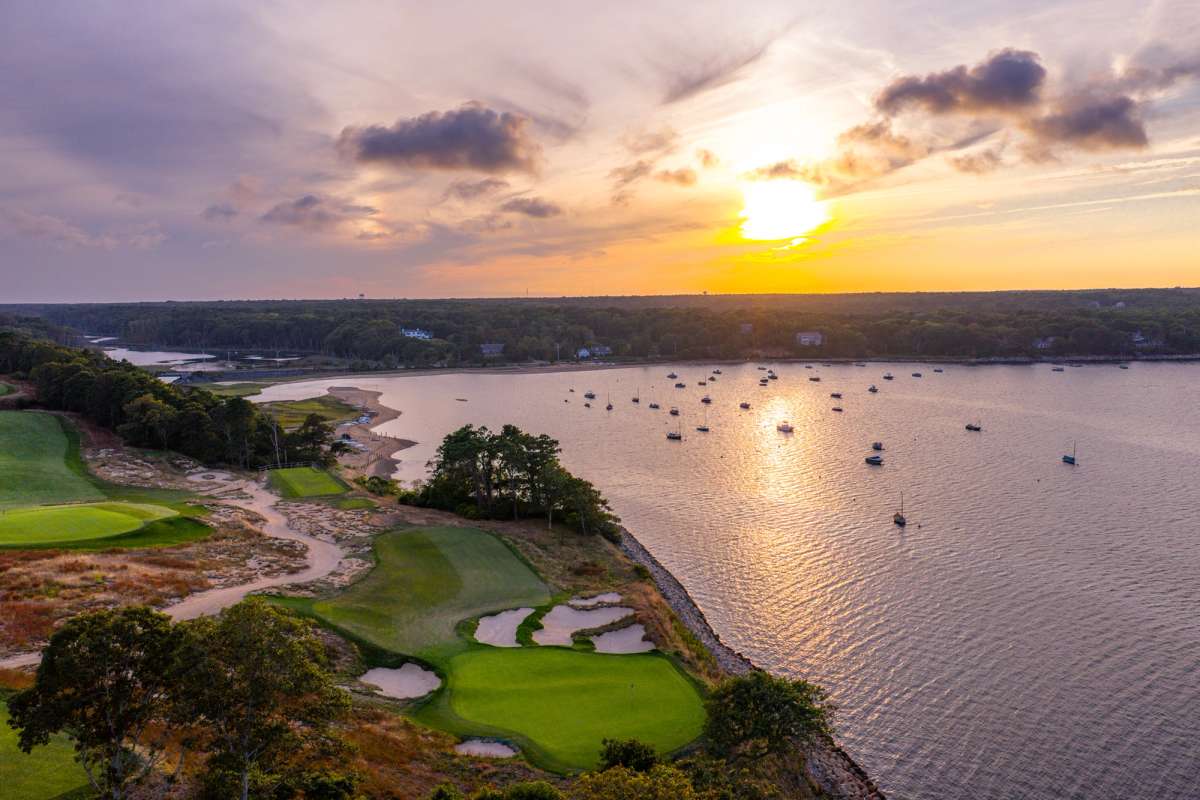
Herbert Fowler, the esteemed English golf course architect – best known for his work at Walton Heath and The Berkshire – was the man responsible for creating this classic at Eastward Ho! Country Club...
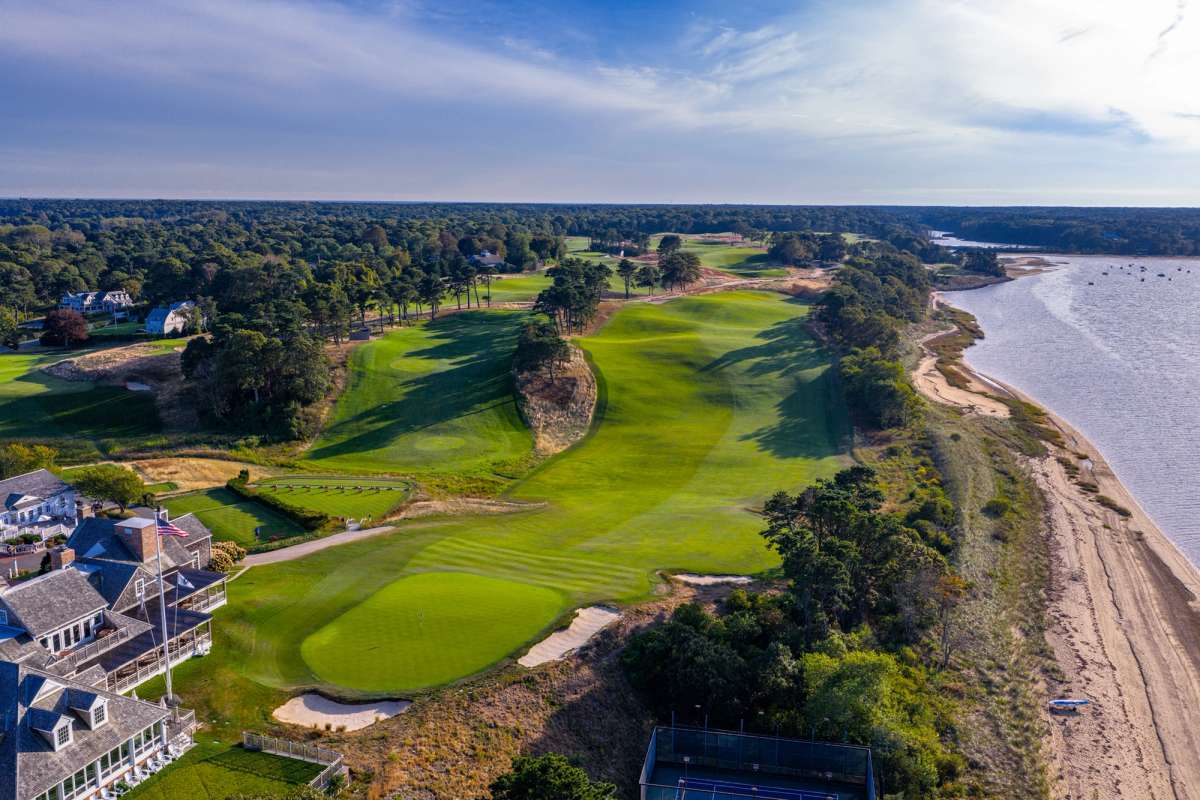
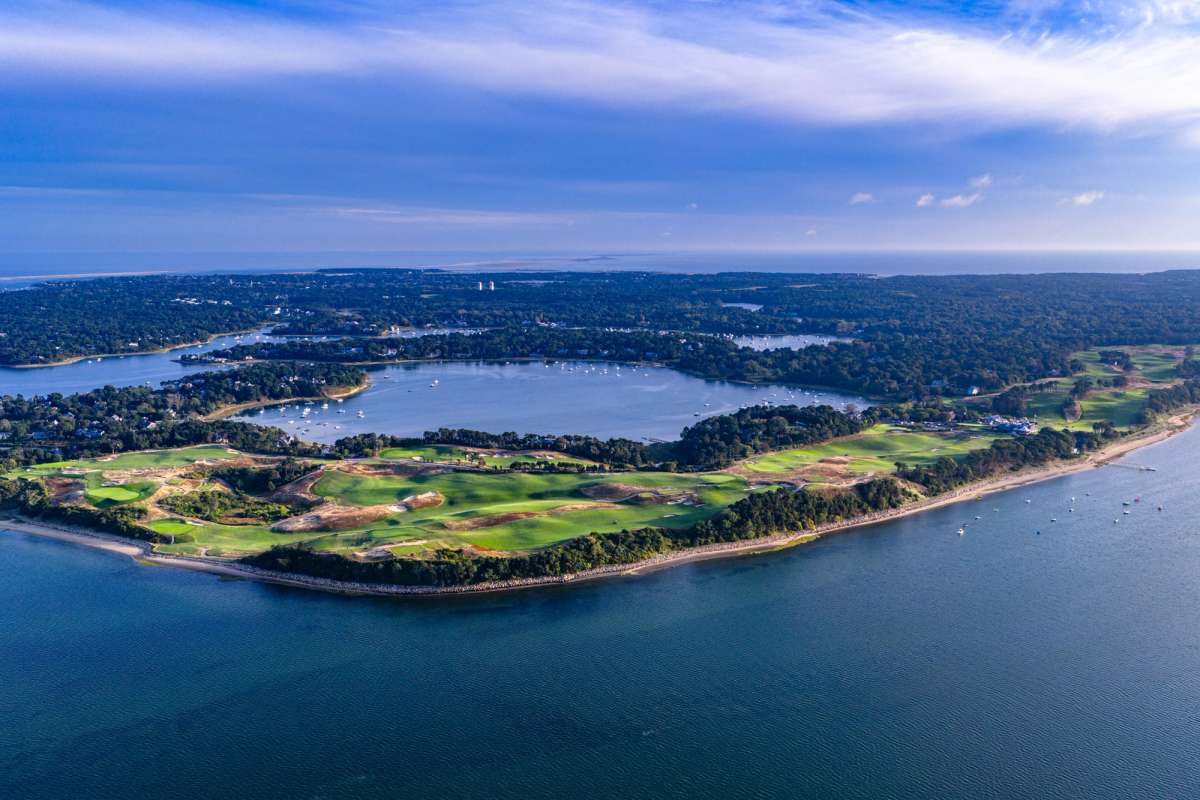
Herbert Fowler, the esteemed English golf course architect – best known for his work at Walton Heath and The Berkshire – was the man responsible for creating this classic layout in 1921 at the former Chatham Country Club on the eastern seaboard at Cape Cod.
Coincidentally, Fowler had reworked Old Tom Morris’s original course at Westward Ho! (Royal North Devon) a few years earlier so it was somehow fitting that he should also be the man chosen (over Willie Park Jnr) to design Eastward Ho! on the other side of the Atlantic.
Fowler’s understated approach is apparent here on the cliffs above Pleasant Bay with simple tee box areas, minimalist bunkering and straightforward greens (that are often seamless fairway extensions) laid out on a rolling landscape.
The four par threes at 4, 7, 10 and 15 are exceptional short holes with the 140-yard 15th considered the signature hole on the course. Some, however, regard the best on the scorecard to be the 395-yard par four 9th, which is played from the highest point on the property towards a landing area that leads along the spine of a ridge to the green.
“Keith Foster’s brilliant restoration of Eastward Ho! cements its place as the most exciting course on the Cape, if not New England,” said Tom Doak in The Confidential Guide to Golf Courses. “Seeing a 6,400-yard course get proper recognition on a few Top 100 lists is a welcome sign that character is replacing difficulty as a metric… The roller-coaster fairways are not every golfer’s cup of tea – there are several places where your drive either crests a hill and rolls another thirty yards, or falls short and rolls back toward the tee. But there is never a dull moment, and the ridgetop views of Little Pleasant Bay are breathtaking.”
Fast forward to 2025, Kyle Franz completed a Master Plan renovation/restoration project to take the course to the next level. Kyle's drive to restore the course to it's roots and reintroducing the native sandy areas and "beach like" feel to the terrain is truly a masterpiece.
The latest ranking of the Top 100 Golf Courses in the World serves as the ultimate global golf bucket list. Most members of our World Top 100 Panel are seasoned golfers, each playing 20-30 of these courses annually while travelling extensively over decades to form their opinions on others. We recognise that opinions vary—even among our panel members. Rankings are subjective, and there are undoubtedly 50 or more courses in the UK and USA alone that could easily fit onto this list. Links Golf Pilgrimages The rankings
Shizuoka, Japan
Scotland, United Kingdom
Massachusetts, United States
England, United Kingdom
Alberta, Canada
US New England Division Best in State Rankings 2016 Six States in the Northeast Region are re-ranked in our ninth and final US divisional update We conclude our biennial Best in State re-ranking exercise for the United States of America with new listings for courses in the New England division. This article, the ninth one to accompany our review of courses in the US, concentrates on the northeast states of Massachusetts, Connecticut, New Hampshire, Maine, Rhode Island and Vermont. Our coverage of the US has increased significantly over the last four months, with almost every state featuring a newly expanded ranking list. For instance, in this new England division, we’ve added an extra sixty courses, up from the previous total of eighty-five. Nationwide, the total number of courses listed in our state charts has now reached 1,650, an increase of more than 40%. Massachusetts The top seven positions in our Bay State chart are all nationally ranked, which gives some indication of the high quality of courses found at the upper end of the state listings. Also, such is the architectural strength in depth within Massachusetts, we’ve decided to expand the number of courses that we feature for the state, adding a further twenty layouts to form a new Top 50. The top three spots in the state chart remain the same, which means the Clyde and Squirrel nines at The Country Club in Brookline holds onto the number one slot. One of five founder members of the American Golf Association (later named the USGA), the club is best known by many for hosting the US Open that Francis Ouimet famously won in 1913, though the notorious Ryder Cup matches in 1999 might be a little fresher in the minds of contemporary golfers. A couple of courses make noteworthy upward moves in the new standings: Essex County Club in Manchester (up two to number 4) is where Donald Ross rebuilt the 18-hole layout during his seven-year tenure as club professional in the 1920s and Eastward Ho! in Chatham (up five to number 5) is another fine Golden Age design from the same decade, one of only a handful of American courses designed by English architect Herbert Fowler. Another two Donald Ross designs make significant strides up the chart. The first of these is Hyannisport Club, a short Alex Findlay track re-designed by Ross in 1936 (rising six places to number 12) which was described last year by one reviewer as having “old New England charm, outstanding design variety, moving terrain [and] the best conditioned greens in the region.” The other high flying Ross course is Whitinsville in Blackstone Valley (up twelve spots to number 17), a track that many seasoned commentators regard as one of the finest 9-holers in the country. The three highest newcomers in our revised listings are all classic Golden Age designs from the 1920s: Tedesco Country Club (new at number 24) was laid out by Skip Wogan (former assistant pro under Donald Ross at Essex CC) with two contrasting nines, Plymouth Country Club (new at number 27) was built in two 9-hole stages by Donald Ross during the 1920s, and Dedham Country & Polo Club (new at number 29), where Seth Raynor redesigned the layout for a grateful membership during the same era. Rank/ Click this link to see full details of our 2016 Massachusetts Best in State rankings Connecticut We’ve doubled the number of courses in the Constitution State from fifteen to thirty. The top four places remain as they were when we last re-ranked, so Yale is still the state number 1, a position it has held since we first established our US state lists in 2012. A recent reviewer wrote in glowing terms about his visit to this classic Seth Raynor/C.B. Macdonald design: “you’re at a historic and special layout which has lasted almost 100 years… [where] the architects created a fabulous routing with outstanding template holes known all over the world.” Another two Golden Age courses rise two places up the Top 10. The first of these is Round Hill Club in Greenwich (at number 5), where long-term greenkeeper Emilio Strazzo assisted Walter Travis with the course construction in 1922. The other climber is Tamarack Country Club (at number 6), which Charles Banks built in 1929, fashioning his usual requisite quota of replica par three holes, including an Eden at the 3rd, a Redan at the 7th and a Short at the 15th. The highest new entry arrives at number 7 and it’s Woodway Country Club, a near 100 year-old Willie Park track that had a new par three 9th hole added (and the other holes re-sequenced) when the clubhouse was replaced in the late 1990s. Architect Mark Mungeam has consulted at the club in recent years, carrying out major restorations of both the bunkers and tee boxes. Click this link to see full details of our 2016 Connecticut Best in State rankings New Hampshire Having just added another ten New Hampshire courses, we now have a Top 20 for the Granite State, where a new number 1 heads the chart. The Golf Club of New England in Stratham is a new millennium Arnold Palmer course that’s generally regarded as one of The King’s stronger designs. Measuring more than 7,500 yards from the back tees and with a rating/slope of 77.0/149, there’s no denying this par 72 layout is a championship test for serious golfers. Also climbing one place to the runner-up position, the course at Lake Winnipesaukee Golf Club is a rare American design from Englishman Clive Clark, where the former Walker Cup and Ryder Cup player set out the fairways of this White Mountain track across a beautiful canvas of wetlands and woodlands two miles to the east of Lake Winnipesaukee in 1990. The highest new entry in the updated New Hampshire table is Atkinson Resort & Country Club at number 9, a mid-1990s public access course from Phil Wogan that’s complemented by a fantastic practice facility and a super little 9-hole par three layout. One place behind at number 10, Concord Country Club is another newcomer on our chart which has been faithfully serving its members since 1930. Click this link to see full details of our 2016 New Hampshire Best in State rankings Maine The chart for the Pine Tree State has been expanded to a Top 15, with Portland Country Club fending off all comers to retain the number 1 position. The club was formed in 1895 but moved to its present coastal location twenty-five years later, engaging Donald Ross to lay out a relatively short, though thoroughly engaging, course overlooking the harbour and city of Portland. Three courses make upward moves in the new state listings: Belgrade Lakes Golf Club (up two to number 2) was Clive Clark’s first US design in the late 1990s, Woodlands Club (up two to number 6) is a late 1980s layout from George and Jim Fazio, and Ledges Golf Club (up one to number 8), which was architect Brad Booth’s first solo design in 1999. Click this link to see full details of our 2016 Maine Best in State rankings Rhode Island The course at Newport Country Club remains the top track in the Ocean State. It’s an important historical layout as it hosted both the first US Open and US Amateur in 1895, though it was subsequently redesigned by A. W. Tillinghast in 1924. A reviewer said this about it last year: “Yes, there are ocean views. Yes, there’s a links feel… augmented by the fact there’s no fairway irrigation. Yes, there are some fine holes… and yes, the clubhouse is one of the world’s finest.” Donald Ross’s 1914 design at Wannamoisett Country Club drops down one spot, swapping places with Shelter Harbor, which rises one place to the runner-up position. A modern layout designed by Dr Michael Hurdzan and Dana Fry, Shelter Harbor’s most widely acclaimed feature is the bunker work carried out by Jeff Bradley, who constructed similar sand traps for Coore and Crenshaw at places like Friar’s Head and Bandon Trails. Two of the five new entries on the state chart make their mark within the Top 10 and they’re both located on the shores of Narragansett Bay, having been constructed within two years of each other in the 1920s. At number 8, the course at Warwick Country Club is a delightful Donald Ross layout with a commendable caddie program firmly in place for the members and at number 9, Seth Raynor’s 18-hole design at Wanumetonomy Golf & Country Club – where most of the original greens are still in play – is still basking in the glory of a new millennium makeover from Ron Pritchard, when he added new tees and fairway bunkers. Click this link to see full details of our 2016 Rhode Island Best in State rankings Vermont The charming old layout at Ekwanok Country Club sits at the top of the Green Mountain State listings. A Walter Travis layout which was constructed in collaboration with Scottish professional John Dunn at the start of the last century, it’s a course that has benefited from a 1960s upgrade by Geoff Cornish and from work carried out in more recent times by Bruce Hepner when he was working with Renaissance Design. Making a sizable leap up the new chart (soaring four places to number 5), the course at Vermont National Country Club is a Jack Nicklaus/Jack Jnr co-design that first opened for play in 1998. Almost twenty years after it made its debut, it’s still Nicklaus Design’s only project within the state. A little further down the listings, the Robert Trent Jones Snr design at Sugarbush Resort Golf Club is the highest new entry at number 10. Something of a trendsetting layout in its day, it provoked other ski resort operators in the state into building courses that would bring in visitors during the skiing off season. Click this link to see full details of our 2016 Vermont Best in State rankings As ever, we welcome your comments – both good and bad – when we conduct these re-ranking exercises so let us know what you think about our six revised US Best in State charts. Whether you feel we’ve got things just about right or maybe you’ve noticed a glaring error or two, please click the “Respond to this article” link at the top or at the bottom of this page to let us know your views. Jim McCann Editor Top 100 Golf Courses

Review of the Month July 2020 – Eastward Ho! Cape Cod was formed by a glacial retreat of ice thousands of years ago, and the resulting extreme land movement left on parts of the Cape, including that which Eastward Ho! sits on, highlights how some rare plots of pure fun golf property can only be found, rather than built. Herbert Fowler took full advantage of the roller coaster land movement when designing the course, where lines of charm are on nearly every par 4 and 5 and one leaves the course feeling that there are a bunch of holes at Eastward Ho! unlike any other one has seen or played before, especially in the U.S. You can disregard the yardages on your scorecard here, as elevation changes, wind, and some fun quirk make this course play more challenging and longer in length than you would think. I cannot imagine anyone trying to build an argument around any single hole here being a “weak” one, but a few favorite ones that continue to linger in memory are 3, 4, 6, 7, 8, 14, 15, and 18. Each one of these holes can be played numerous different ways, and depending on the wind, you might have to play one of 4-5 different clubs for your approach shot on any given day. #3 is one of the best short par 4s I have ever played. Off the tee, you can either play a driver, hybrid, or a 4-6 iron off the tee and potentially end up anywhere from a bump-and-run shot up on to the green to a 150 yard approach. You might have a better view and look at the green from further away and have better odds of finding the fairway if you lay up, but you will have the navigate the wind more and anything right or long of the green is dead. These risk-reward decisions are constant through your round and keep a player thinking. #4 is an outstanding par 3 that is often deceiving in distance due to the wind, as you are right along the water, and due to the hump in front of the green that looks like it is right up against the green but it actually about 30 yards short. Most pin placements will require an uphill putt, making this hole also feel longer than the yardage might indicate. #6 has a fairway unlike any other you have ever seen, with a massive hill carved into it that will repel most balls down and to the right side of the fairway, leaving one with a challenging uphill short iron in to an elevated green that, if you do not hit and hold, you could be left with a delicate short chip/flop shot to a green 15 feet above you. One can play their approach shots from other areas, though there are considerations to this tactic. You can play a slightly shorter tee shot and keep it left, leaving you with a more clear and visible look at the pin but from further out. You can also push your drive to the right in to the #5 fairway and also potentially have a very clean look at the flag with a short iron, though you run the risk of having your ball end up in the rough, making it harder to hold an elevated green upon your approach. Another incredible two shot hole. #7 is a great uphill par 3. The wind will typically help most balls left, and if one misses the green far to the left, they are down the fairway funnel of #6 and have a very uphill second shot to hit to try to find the green and save par. The wind and elevation require choosing the right club and likely striking a pure mid-iron to find the green. #8 is another excellent short par 4 hole where one can take a few different tactics to make par. The further you hit your tee shot, the closer you are to the green, but the flag will be less visible as you get closer as the fairway slumps down before coming back up to a green that is on the same level as the tee. The further you go down the fairway, the more that bunkers on the left that cut into the center of the fairway come into play as well. Longer hitters who choose driver from an elevated tee will find themselves either right in front of a bunker and a blind approach shot, or in the bunker and a blind approach shot. While only a 100-120 yards will remain, one will not feel fully confident of their line here. The right side of the fairway does have a maybe 10 yard wide landing area where you have good visibility of your approach with a wedge, but one needs to thread a needle and also hit it 290 yards or more to find this reward of an approach. Players who lay up and land their ball in the fairway before it dips down into the aforementioned gathering area will have a mid-iron approach shot but will be able to see the flag fully. Anything past the flag will leave a slippery downhill putt. #14 is another superb short par 4. Play your drive up the right side and hope for a slight draw, where you can catch a slope to propel your ball another 30 yards or more for a short wedge in to a green. While your tee shot is not as exposed to the wind, leaving you to feel confident ripping a driver, your approach shot to the green will likely be quite exposed to the wind and may be a downhill shot wedge/short-iron, which keeps the hole exciting and requires one to really think about club selection and the angle you want to take. #15 is a signature hole, and while all of the par 3s at Eastward Ho! are outstanding, this is the best one. The hole runs along the bay and wind is a huge factor. I played this hole twice in the same day and hit 9-iron in the morning and 5-iron from the same tee in the late afternoon. A front pin, especially when windy, is a perfect challenge. Go long, and you have a slick downhill putt. Fall short of the green, and you have a challenging sand shot or chip from the rough with little green to work with to get up and down. The yardage on the scorecard is meaningless on this hole, and a pure shot is required off the tee. #18 is an outstanding finisher and a long par 4. Shot shape off the tee is critical. The fairway shapes right to left, with a huge downhill shoot that longer hitters can catch before heading back uphill for their approach. A shorter drive that stays right will leave a long iron and hard angle to the green, but those who can draw the ball and stay left center of the fairway can get another 40-50 yards of roll and leave them with, depending on the wind, a 7-iron to a 9-iron approach shot in to an elevated green. Eastward Ho! is a perfectly well conditioned and fun course to play, because on any given day, it can play like a completely different course. If you get the opportunity to play here, drop everything and make your way to the Cape. Steven Kennedy Review of the Month July 2020 selected by Editor-in-Chief, Keith Baxter, and sponsored by TaylorMade – click to read more about Eastward Ho!.

Review of the Month July 2018 – Myopia Hunt I was amazingly fortunate to play two of America’s gems within a twenty seven hour period. What a way to start a week, Myopia Hunt Club in South Hamilton, Massachusetts on Monday and The Country Club in Brookline, Massachusetts on Tuesday. The history of Myopia Hunt Club is a little bit fuzzy and depending upon who you talk to you may get a different historical vignette (especially if they are from The Country Club). Some believe that the club originated in baseball not golf, hunting or equestrian. In 1870, a group of men including four sons of Frederick Prince, who eventually became the mayor of Boston, formed a baseball team. The team was called the Myopia Nine. This was attributed to the four Prince brothers and another teammate who all wore glasses because they were nearsighted. Even though the group was nearsighted they did not lack vision. The Prince brothers and friends would often host competitions and events with their friends in Winchester at their summer cottage. Eventually, they formed the official Myopia Club with baseball, tennis, water sports, racing, hunting and steeplechase. In 1879 they built a clubhouse on a hill overlooking Mystic Lake in Winchester, Massachusetts. Fittingly, the building was dedicated on in May of 1879, with a baseball game. Of interest, in 1902, the site overlooking Mystic Lake ultimately became the Winchester Country Club. A fine club in its own regard, Winchester initially opened as a nine hole course and in 1916 it became 18 holes and was designed by the one and only Donald Ross. Frederick Prince introduced the sport of foxhunting to the Myopia club with the support of Hugh Allan, a Canadian. The hunts became quite popular. It quickly became apparent that the Winchester property was unsuitable for these types of hunts. A proposal was floated to move the hunts to either Ipswich or Hamilton. In the fall of 1881 the Myopians were able to reach an agreement with Mr. Gibney in Hamilton to rent his farm. However, several charter Myopia members wanted to move the club closer to Boston. This ultimately led to the founding of The Country Club in Brookline, Massachusetts. More on this later. In 1882, hunters outnumbered ballplayers and they were renamed the Myopia Foxhounds. At one point, the club passed a bylaw that for every golfer joining the club two equestrian members would be admitted as well. However, one viewed the club, be it hunting, golf or social, it flourished until 1891 when Gibney passed away. This created some uncertainty, but ultimately the club purchased the property from the estate for $20,000. This included the farmhouse, stables, barns and almost 150 acres! Amazingly, $20k in the 1890s would only be worth about $600k today. While this real estate transaction cannot compete with the purchase of Manhattan for $24 worth of trinkets, it still was a heck of a deal for the members. Once the deal closed the remodeling started, the farmhouse’s oldest rooms with the original fireplaces were converted into a library and most importantly a dining room with a bar. Thank goodness for priorities. Foxhunting still takes place today at Myopia August through November. They do not utilize live foxes as a live fox hunt can take up to six hours and is illegal in Massachusetts. Instead of a fox they use something called the drag, which is a laid scent over an 8-10 mile course. I did not know squat about foxhunting prior to this, but my favorite quote on the topic comes courtesy of Oscar Wilde, “The unspeakable chasing the uneatable” With a golf course that has the distinction of being the only course in America to have two of the top 100 signature holes in the United States, and a Master of the Hounds who mans the hounds for hunts three seasons of each year, and the oldest continually running polo field in the country, there is a lot to be seen and said about Myopia. In season, polo is still played on Sunday afternoons and is open to the public for a small fee. Myopia has hosted the U.S. Open four times 1898, 1901, 1905 and 1908. As the 1898 host, Myopia is one of only five courses that have hosted the U.S. Open in the nineteenth century. The first Open at Myopia in 1898 was the first US Open to be played over 72 holes. The previous three were only 36 holes. At the time, Myopia was only a nine hole course, hence the field had to play the same nine holes eight times. The winner was Fred Herd, a native of St. Andrews, Scotland, who shot a smooth 328! It was Fred’s only tour victory and he grossed a cool $150. However, Fred had a reputation as a hard core drinker. The USGA was concerned that Herd may hock the trophy to buy booze. Hence, they required him to make a deposit before he was allowed to have the championship trophy! How about them apples, John Daly?! As a side note, Fred Herd’s brother, Sandy, won the 1902 British Open. The 1901 US Open saw a record established that in all probability will never be broken. They say records are meant to be broken, and they are. I try to avoid absolutes, but, I feel pretty confident about this one. The 1901 champion was Willie Anderson who shot a 331 to claim the $200 prize money! Even that was not enough. He needed to defeat Alex Smith in a playoff, 85 to 86 to secure the victory. Patience is a virtue as Willie had to wait as the playoff was delayed until Monday because Myopia was reserved for member play on Sundays. Willie’s caddy was none other than Myopia’s club pro John Jones Willie Anderson was a tragic hero. He was born in North Berwick, (more on this later) Scotland and immigrated to the United States in 1896. He dominated US golfing circles for several years, being the first back-to-back winner, the first 3-time winner, and the first 4-time winner. He is still the only golfer to win the U.S. Open three straight years, 1903-1905 (1905 at Myopia); and he still shares, along with Bobby Jones, Ben Hogan and Jack Nicklaus the tournament record for wins with four. Sadly, he died at the age of 31 in Philadelphia, Pennsylvania. While the official cause of death was epilepsy, many people felt he drank himself to death. Other tasty tidbits from the 1901 US Open, coming in 21st place was another Scotsman named Donald Ross, yes that Donald Ross. Willie Anderson’s caddy, the Myopia club pro John Jones, finished twelfth. Yes, that is, correct, Jones caddied for Anderson AND PLAYED at the same time! I hope John didn’t give Anderson any bad reads or misclub him. Put that in your pipe and smoke it, Steve Williams. The second nine at Myopia was completed in time for the 1901 Open and Herbert Corey Leeds was the designer. Leeds had little to no prior golf course design experience. The last US Open championship at Myopia also went to a playoff. Ultimately, Fred McLeod prevailed over Willie Smith 77 to 83. Fred was the antithesis of the other Scottish US Open champions. While he was also from North Berwick, his father was involved in the temperance movement. McLeod immigrated to the US in 1903 and became the club pro at Rockford Country Club in Illinois. McLeod was a small man, 5’ 4” and when he won the Open he weighed less than 110 pounds. To put this in context, according to his biography Corey Pavin is 5’9” and weighs 155 pounds. I am not sure if there is any significance to this or not, but McLeod did live to 94, but I am not sure about the quality of those last few years…… Now to the course, while “only” 6500 yards, it is not for the faint of heart. Additionally, even the longest hitters must play from the red tees. The red tees are the tips. Unlike, most modern courses, Myopia has three sets of tees, yellow (ladies) 5500 yards, white, 6100 yards and red. The first hole is relatively benign. It is a short uphill 274 yard par 4 with a slight dogleg left. The second hole, while it is a relatively short par 5, 487 yards, the fairway is completely dissected twice. You must focus on the yardage and your distances or you may end up in the gunch. For those of you who are scoffing at the distance of the course, the third hole, a 253 yard par three is a real gut check. Not only is it long, it is well protected with 3 small greenside bunkers and one large one at about 200 yards off the tee. The fourth hole is a dog leg left with a soufflé green. While the green can be difficult, it is a feat to have the opportunity to three putt for a bogey. On the tee, one must be careful not to drive through the fairway as well as being too aggressive and failing to cut the corner. Either can be cataclysmic. Perhaps that is why it has consistently been rated one of the toughest 100 holes in the United States. The sixth hole is one of my personal favorites, a short par 4 that is only 260 yards. One must decide whether to try to carry the stream and the corresponding muck and mire and be about twenty yards short of the green or layup at 80 yards. That is not why it is one of my favorites, but rather this is the hole where golf aficionados will park their cars and sneak onto the course. Believe it or not, Myopia typically has less than 12,000 sanctioned rounds per year. The 9th hole is a brilliantly deceiving par three at 136 yards. Traditionalists would call it a postage stamp green, but I do not think it qualifies. This green is only nine yards wide and thirty yards long, hence I think an appropriate moniker would be a “bar code green”. The ninth is named Pond, where on the tee shot one must carry a pond to have a shot at par. I would be remiss if I failed to mention the seven bunkers that surround the green. Myopia is quite proud of its Scotlandesque deep bunkers (although they are but dimples compared to Bethpage Black). The ninth hole has also been cited as one of the toughest 100 holes in the country. As tough as the fourth and ninth hole are my money is on the twelfth as the toughest hole. It is the number one handicap hole and plays 446 yards off an elevated tee with a panoramic view. Do not get too comfortable, as it has a tight winding fairway surrounded by rough gone to fields and a wicked crowned green. After the daunting challenge of the twelfth hole, the thirteenth hole seems almost playful. It is a 349 yard slight dog left. Big hitters can hit it through the fairway. The approach shot is uphill and plays at least two and perhaps as much as three clubs more. The 16th hole is a downhill 192 yard par three that plays back toward the clubhouse. The pro shop is approximately 50 yards to the left of the green. One of my player partners had caddied at Myopia in the 1960’s. Caddies were paid $2 a bag at the time. He shared the following story with me. When he caddied there was no bunker to the left of the green. However, sometime in the 1970’s, a golfer hooked his tee shot (or sliced if they were left handed) and the ball hit the pro shop. The errant shot took a fortuitous bounce back towards the green, rolled onto the green and into the hole for a hole in one! I suspect that this particular member was not all that well liked because shortly thereafter a bunker was added between the green and the pro shop. When you play Myopia you will occasionally see or even end up on bridle paths (I know I did) crossing or paralleling various holes. One of the local rules is that you can take a free drop. This is just another attribute that contributes to the uniqueness of Myopia. By Colin Braithwaite, author of “A Good Walk Unspoiled” Review of the Month July 2018 selected by Editor-in-Chief, Keith Baxter – click to read more about Myopia Hunt.