Estela is a wonderful golf course with all of the features expected of a true seaside ‘links’ golf course and will be a great test for any standard of golfer.
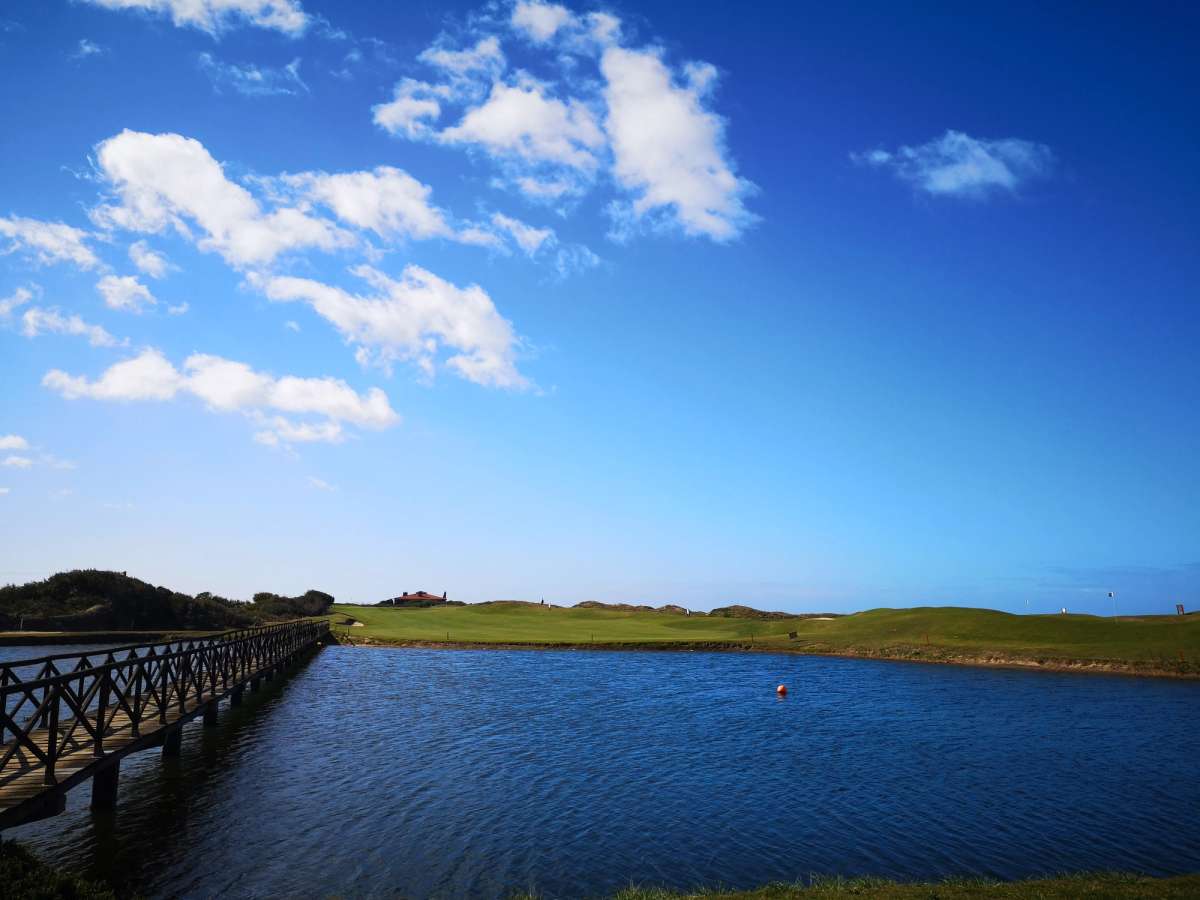


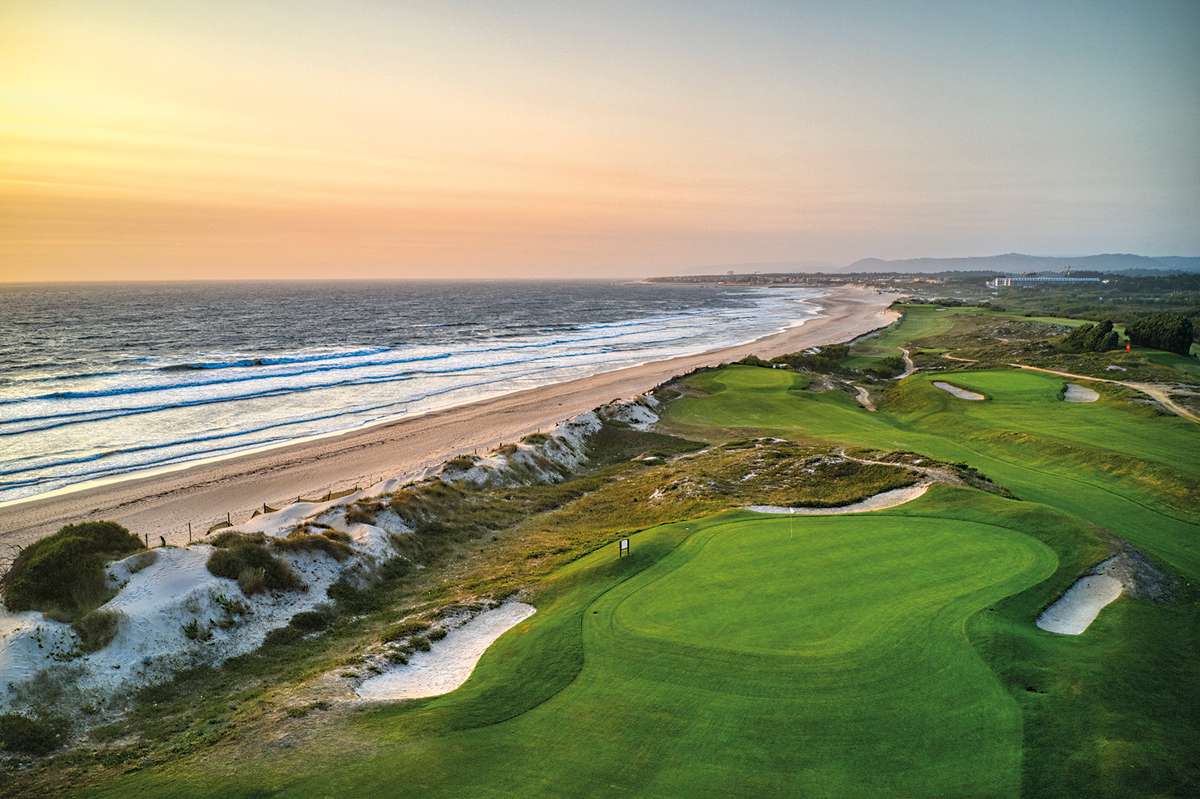


Estela is a wonderful golf course with all of the features expected of a true seaside ‘links’ golf course and will be a great test for any standard of golfer.
A number of courses around the world have attempted to attach the ‘links’ title simply because they are built near or on the coast. But very few have those qualities of delicate turf, sand, undulating fairways and hard greens that truly define traditional links golf courses.
Estela Golf Club can rightfully boast to being one of the few that can justifiably lay claim to the ‘links’ title, although the lack of horizontal freezing rain and winds that chill to the bone will disappoint the purist! In fact, Estela is cooled by the omnipresent Atlantic breezes in the summer and warmed by the Gulf Stream in the winter, it’s therefore wonderful weather for year round golf. As with the Costa Brava in Northern Spain, this area of Portugal never experiences the searing summer temperatures of the southern resorts, but will stay pleasantly warm during the winter months.
Situated on the stunning and at times dramatic Minho coast of northwestern Portugal, Estela is set 30 kilometres north of the beautiful city of Oporto and near the lively summer resort of Póvoa de Varzim. The course was designed by Duarte Sottomayor, who started his career working with the world renowned Robert Trent-Jones. Inaugurated in January 1989, Estela is a traditional par 72 layout measuring almost 6,300 metres from the back tees. The quality of the course was immediately recognised and, since it opened, Estela has played host to a number of amateur and professional events including the Portuguese Open in 1991.
Sottomayor has developed the 3-kilometre strip of coastline on which Estela is sited into a wonderful test of golf. Wherever possible he has used the natural sand dunes and shoreline hazards to shape the holes and simply placed tees, elevated greens and fairways between the dunes to stunning effect. The addition of a number of well-placed lakes adds to the struggle a golfer will have in achieving a respectable score.
Estela will require long straight drives to fairways almost totally bereft of fairway bunkers. A lack of bunkers does not make things easier for the player, because missing the narrow fairways will undoubtedly mean an excursion into the dunes and usually the sand and grass will prevent any thoughts of making the green in regulation. Open green fronts will allow the skilful ‘links’ golfer to play low, running approach shots to putting surfaces that are renowned for their subtle undulations and speed.
Estela opens up with a couple of reasonably gentle holes, but apart from the short 8th the rest of the front nine will test the golfer to the limit. The 3rd is stroke index 1 and the 4th a cracking par three measuring 175 metres across a valley to a green bordered on the left by the beach. No let up through holes 6, 7, 8 and 9, as they are all long with tight fairways and well-protected greens.
The back nine is arguably slightly easier with the pick of the holes being the par three 12th hole, the par five 13th, the short par four 16th and the final hole that plays significantly longer than its 359 metres suggest. The par five 13th is a classic ‘links’ hole, running alongside the beach before dog-legging and dropping downhill to the green.
In 2013, as part of an on-going course improvement plan, the green on the long par five 7th hole was moved 45 metres to the right, enabling the old green site to be used as an elevated platform for tee shots across the irrigation reservoir on the following hole.
The latest ranking of the Top 100 Golf Courses in the World serves as the ultimate global golf bucket list. Most members of our World Top 100 Panel are seasoned golfers, each playing 20-30 of these courses annually while travelling extensively over decades to form their opinions on others. We recognise that opinions vary—even among our panel members. Rankings are subjective, and there are undoubtedly 50 or more courses in the UK and USA alone that could easily fit onto this list. Links Golf Pilgrimages The rankings
California, United States
New Jersey, United States
Northern Ireland, United Kingdom
New York, United States
New York, United States
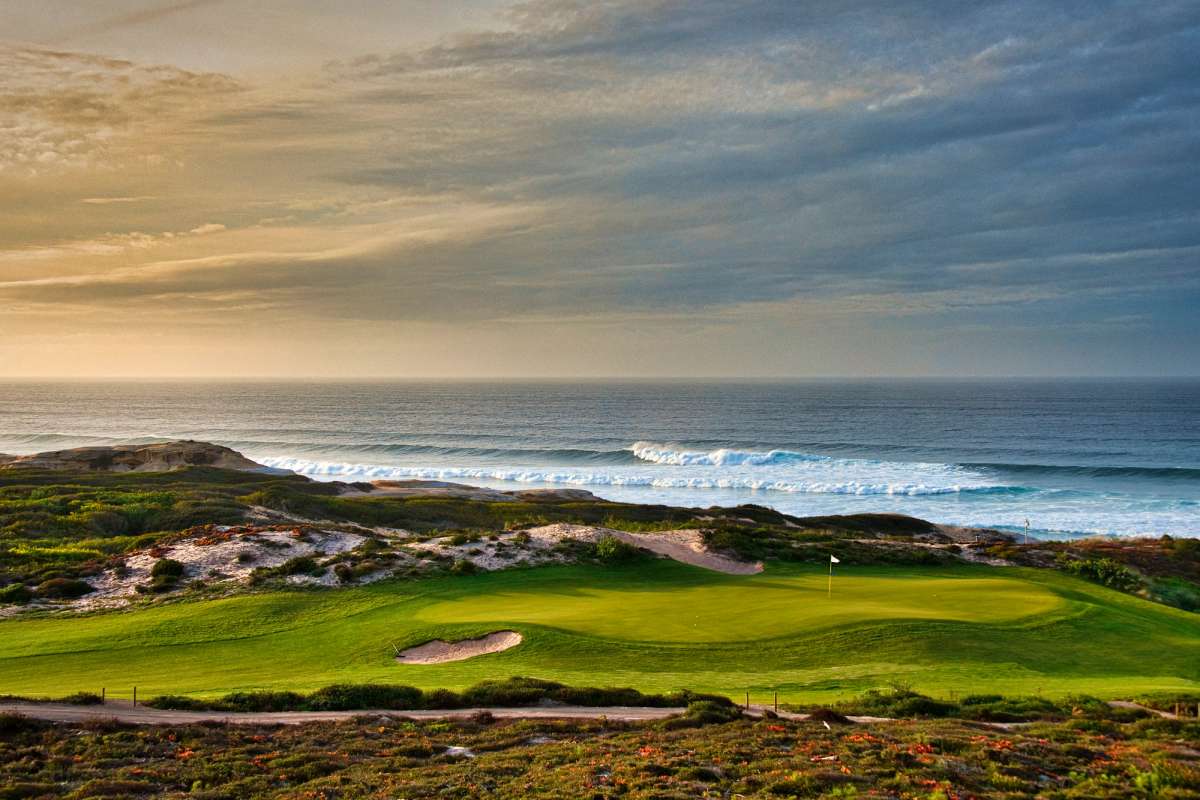
Portugal and Spain have become two of Europe's go-to golf getaways, offering sunshine, outstanding courses and plenty to enjoy away from the golf course. Both countries have their share of bucket-list layouts, but you don't need to spend a fortune to enjoy them. From the Algarve and Costa del Sol to emerging golf destinations further north, there are courses to suit almost every budget. So, if value for money is the priority, which country should be at the top of your list? We put Portugal and Spain head-to-head across the things that matter most when planning a golf holiday, from the quality of the courses and ease of building an itinerary to the overall cost of the trip. The Headline Courses The Algarve remains Portugal's best-known golf destination, but the rise of Comporta and the Silver Coast has added a new dimension to the country's appeal. The 2026 Top 50 Golf Courses in Portugal is now headed by Terras da Comporta (Dunas), with Monte Rei North and Quinta do Lago South completing the podium. West Cliffs sits fourth, while Oitavos Dunes and Palmares also feature inside the top eight. That gives Portugal an impressive collection without having to stick to one part of the country. West Cliffs, for example, is a spectacular coastal option north of Lisbon, while Palmares combines parkland and links-style golf overlooking the Atlantic. Spain has the deeper collection of established headline names. Real Club Valderrama remains Spain's No.1 in the 2026 Top 100, followed by Real Club de Golf Sotogrande and El Saler. Camiral's Stadium Course completes the top four, while Las Brisas, Finca Cortesin and Las Colinas are among the other highly ranked options. The important point for a value-focused trip, however, is that golfers don't necessarily need to play the most expensive course in either country to experience their best golf. El Saler is a particularly good example. Ranked third in Spain, its visitor green fee is €150 in high season and €135 in low season, with even lower rates for guests staying at the adjoining Parador. While Portugal is closing the gap quickly, Spain's combination of historic names, championship venues and regional variety gives it the edge. Winner: Spain The Golf Holiday Experience Portugal and Spain offer very different experiences once you look beyond the quality of the courses themselves. Portugal's golf culture is particularly geared towards the visiting golfer. The Algarve has spent decades building itself around golf holidays, with resorts, restaurants, hotels, transfers and courses all set up to make a week of golf relatively straightforward. That gives the region an easygoing feel. Golf can be the main event without taking over the entire holiday, with beaches, marinas, restaurants and towns all within easy reach. Further north, the Lisbon and Comporta areas offer a quieter alternative, with Atlantic coastline and a more understated atmosphere. Spain is a little more varied. The Costa del Sol is every bit as established as the Algarve as a golf holiday destination, but the wider country offers a much broader mix of experiences. A golf trip could mean staying in a purpose-built resort, basing yourself in Marbella and combining golf with the region's restaurants and nightlife, or travelling further afield to experience a completely different part of the country. That variety makes Spain particularly appealing for golfers who don't want every day of the holiday to revolve around the course. For a traditional golf getaway where the emphasis is on relaxing, playing plenty of golf and keeping everything close at hand, Portugal has the edge. Spain offers more possibilities, but that can also mean more decisions. Winner: Portugal Building The Perfect Itinerary This is where Portugal's geography becomes a genuine advantage. The Algarve is remarkably well suited to a four- or five-round golf trip. The region's courses are concentrated along the southern coastline, meaning golfers can stay in one base and reach a wide range of courses without spending hours behind the wheel. It also makes it easier to mix different types of golf. A trip could combine resort courses around Vilamoura and Quinta do Lago with coastal golf further west or less expensive options towards Tavira and the Spanish border. Portugal offers a similar advantage around Lisbon and the Silver Coast. Golfers can build a trip around a cluster of courses without necessarily having to change hotels every night. Spain can certainly compete on a regional level. The Costa del Sol has enough courses around Marbella, Estepona and Sotogrande to fill a week, while other regions offer their own concentrated collections. The difference is that Spain gives you more options while also requiring more discipline. Trying to combine the Costa del Sol with Valencia, Alicante or Catalonia on the same trip quickly turns a golf holiday into a road trip. For golfers looking to pick one region and settle in, both countries work. Portugal's advantage is that a week of golf can be built around a single base with relatively little time spent travelling between courses. Winner: Portugal Away From The Golf Course A good golf holiday needs more than good golf. Portugal's Algarve has the obvious ingredients: long beaches, seafood restaurants, lively marinas and historic towns. Vilamoura is well suited to golfers who want a resort atmosphere, while Lagos and Tavira offer something more traditional. The Lisbon region adds a major city to the equation, while Comporta provides a more relaxed coastal escape. That gives Portugal plenty of options for golfers travelling with partners, friends or family members who aren't planning to play every day. Spain, though, has the advantage in sheer variety. The Costa del Sol offers everything from Marbella's restaurants and nightlife to the quieter towns around Estepona. Elsewhere, golfers can combine their rounds with the food and culture of cities such as Valencia, Seville or Barcelona, or head to the beaches of the Balearic Islands. That matters when golf is only part of the holiday. Spain makes it easier to build a trip where the golf is one component of a much bigger itinerary. Portugal is an excellent all-round destination, but Spain's scale means there is simply more to choose from. Winner: Spain Value For Money This is the section that ultimately decides the argument. Neither Portugal nor Spain should be considered uniformly cheap. Both have premium courses where a single round can cost well into three figures, particularly during peak periods. *Rate includes a buggy. The figures show that both countries can offer good value, but Portugal has a particularly strong spread of options, from premium layouts at West Cliffs and Vale do Lobo to rounds below €100 at Quinta da Ria and Castro Marim. Spain can compete at the lower end, but Portugal offers a particularly broad range of price points within this sample. The headline green fee, however, only tells part of the story. A cheaper round isn't necessarily better value if it requires a long transfer, while a more expensive course can make sense if it is close to your accommodation and forms part of a wider package. Accommodation, car hire, transfers, food and the number of rounds you can comfortably fit into a trip all affect the final bill. This is where Portugal's concentration of golf gives it another advantage. A golfer can stay in one area, play several quality courses and avoid spending too much time or money travelling between them. There are also plenty of ways to reduce costs in both countries. Travelling outside peak periods, using twilight rates and mixing premium rounds with cheaper courses can make a significant difference. So while neither country is universally cheaper, Portugal arguably makes it easier to put together a high-quality golf holiday at a sensible overall price. Winner: Portugal The Verdict Portugal wins the value battle, but Spain may offer the more expansive golf holiday. Spain takes the honours for headline courses and what lies beyond the golf course, with an enormous collection of highly regarded layouts and a huge variety of destinations, food, nightlife and culture. Portugal, however, has the stronger case when value for money is the priority. The Algarve makes it remarkably easy to build a multi-round trip without spending too much time travelling, while the country's wider golf scene provides enough variety to keep things interesting. There are premium courses for those willing to spend, but also plenty of ways to construct a trip around more accessible green fees. That doesn't mean Portugal is always cheaper. A golfer staying at an expensive resort and playing the country's most prestigious courses can spend plenty. Equally, Spain can deliver outstanding value if you choose the right region and travel at the right time. But if the question is which destination makes it easiest to combine quality golf, good weather, an enjoyable holiday and sensible costs, Portugal gets the nod. Spain has the deeper pool of headline golf. Portugal simply makes it easier to get more from your money. Rates shown are 2026 visitor green fees where published. Higher and lower rates reflect the different seasonal periods used by each course and are not necessarily directly comparable. Twilight rates are shown where published.

Portugal's golf scene has undergone a dramatic transformation. A course outside the Algarve claims the number one position, whilst six new entries reshape the rankings and historic venues stage remarkable comebacks. The 2026 Update Top 50 reveals unprecedented movement across all regions, with Lisbon & Central emerging as the nation's new powerhouse. View the complete Top 50 Golf Courses of Portugal Ranking 2026 Ranking Update: A Historic Reshaping With approximately 86 eighteen-hole courses spread across five distinct regions, Portugal continues to deliver exceptional quality relative to its modest course inventory. The 2026 Top 50 represents the most volatile ranking in the country's modern history, with only four courses maintaining their previous positions. A deeper-than-ever panel of well-played locals and international contributors helped make this the best yet. 2026 Top 50 At A Glance Power Shift at the Summit Terras da Comporta (Dunas) is in the number one position, marking the first time since 2008 that a Lisbon & Central course has claimed Portugal's top ranking after a full ranking refresh. Monte Rei (North) holds at number two after a fifteen-year reign as undisputed champion, whilst Quinta do Lago (South) surges three places to third, reclaiming the podium and establishing itself as the Algarve's premier traditional resort course. Six Dramatic New Entries The 2026 rankings welcome six courses, all entering the Top 25: UPDATE - 22 Jan 2026 - Troia Golf – Robert Trent Jones Snr's 1980 design returns triumphantly after resolving conditioning issues from early 2025. The course has new ownership and management, and in 2026, it will be closed for play. We had it ranked 4th upon the release of the ranking. As soon as we know more, we will update the ranking. #8: Pinheirinho Comporta - formerly known as Herdade do Pinheirinho #10: Terras da Comporta (Torre) – The second Comporta layout establishes the region as Portugal's premier new destination #13: The Els Club Vilamoura – Ernie Els Design brings modern championship standards to the crowded Vilamoura market #18: Montado Hotel & Golf Resort – Continues Lisbon & Central's emergence as golf's growth region #21: Ombria Golf Course – Fulfils 2023's prediction as the anticipated Algarve newcomer The Biggest Climbers Pine Cliffs Resort: Enters the Top 50 at #38 Quinta do Vale: Up 16 places to #32, proving Seve Ballesteros's vision endures Vilamoura Golf (Millennium): Up 14 places to #31 Boavista and Benamor: Both enter the Top 50 at #40 and #45, respectively Salgados Golf Club: Up 12 places to #37 Dom Pedro (Pinhal) and Dom Pedro (Laguna): Both up 10 places, strengthening Vilamoura's portfolio Best Portuguese Golf Courses by Region Lisbon & Central firmly establishes itself as Portugal's quality leader despite the Algarve's numerical dominance. The Silver Coast and Comporta corridor – anchored by West Cliffs, both Terras da Comporta layouts, and Praia D'El Rey – forms one of Europe's most exciting coastal golf destinations. Algarve maintains the majority of the Top 50, demonstrating depth across western resort clusters (Vilamoura, Vale do Lobo, Quinta do Lago) and eastern championship venues (Monte Rei, the Quintas da Ria and de Cima). Quinta do Lago's three-course portfolio places all layouts in the Top 20, whilst Vilamoura's renaissance sees five courses ranked, including The Els Club's impressive top 15 debut. Porto & North contributes just one ranked course, but Estela Golf Club's rise to #11 proves quality over quantity. The links layout north of Póvoa de Varzim remains the finest golf north of Lisbon. Madeira & Porto Santo and Azores together provide four island courses, led by Santo da Serra at #24 and Furnas at #22. These Atlantic outposts offer distinctive golf within spectacular volcanic and subtropical settings. What the Rankings Tell Us Lisbon & Central's Renaissance The capital region's emergence represents Portuguese golf's most significant geographical shift in two decades. With Terras da Comporta (both Dunas and Torre), West Cliffs, Herdade do Pinheirinho, Oitavos Dunes, and Praia D'El Rey all positioned in the top thirteen, Lisbon's coastal corridor now rivals the Algarve for championship pedigree. The Silver Coast's clifftop terrain and Comporta's duneland provide dramatic settings that contrast sharply with the Algarve's more manicured resort aesthetic, generally speaking. Monte Rei's Graceful Transition Jack Nicklaus's only Portuguese design, Monte Rei's #2 position and Continental Europe Ranked status confirm its historic pedigree. The heavily sand-protected holes around attractive water hazards remain Portugal's purest championship test. Vilamoura's Four-Course Surge All four previously ranked Vilamoura courses climbed positions, whilst The Els Club debuts at #14. This collective rise seems to indicate continued improvement across the resort's five-course portfolio well-received by the panel. Historic Summary of Portugal’s Rankings 2014: Establishing the Foundation Portugal's Top 40 emphasised quality over quantity, with Monte Rei commanding the summit and the Algarve providing the lion's share of ranked courses. Royal Obidos entered at #20 as Seve Ballesteros's final architectural work, whilst Palmares climbed following Robert Trent Jones Jr's comprehensive remodel. The eastern Algarve quintas – Monte Rei, Quinta da Ria, and Quinta de Cima – established the region as Portugal's championship heartland. 2016: Mid-Decade Momentum The fifth edition maintained Top 40 structure whilst showcasing that all ten elite Portuguese courses occupied Continental Europe Top 100 positions. Oceanico (now Dom Pedro) Old climbed to third, Royal Obidos surged seven places to thirteenth, and Vale do Lobo Royal, Estela, and Vale da Pinta all made appreciable gains. Troia rose two places to fourth after addressing earlier conditioning concerns. 2018: West Cliffs Sensation Rankings expanded to Top 50 despite just 87 clubs operating nationally. Cynthia Dye's West Cliffs made a sensational debut at #2, having already crashed into Continental Europe's Top 100 at #16. The clifftop design generated immediate superlatives and established the Silver Coast as a premier destination. Quinta do Lago South rose to ninth, Vilamoura Victoria climbed to nineteenth, and Estela advanced to twenty-first. 2020: Steady Evolution With only 75 facilities supporting just over 15,000 registered golfers, Portugal maintained Top 50 status whilst placing eleven courses in Continental Europe's Top 100. Monte Rei announced its South course under Nicklaus Design construction. Palmares, Quinta do Lago South, and Quinta do Lago North all rose two places, whilst Ribagolfe (1) surged fourteen places to #29. Four courses debuted: Santo Estêvão, Ribagolfe (2), historic Estoril, and Quinta do Vale. 2023: Expansion and Anticipation In the eighth edition, Palmares climbed to third, Quinta do Lago Laranjal advanced to tenth, continuing its steady ascent since 2012, and Vilamoura Victoria rose to sixteenth. Vale do Lobo Ocean soared eleven places whilst Quinta da Ria rebounded eight positions. The rankings teased four imminent debuts – Ombria, Costa Terra, Pinheirinho, and Terras da Comporta (Dunas) – all described as making "substantial impact" on future rankings. That prediction proved accurate. Planning Your Portugal Golf Trip Portugal's compact geography allows for a remarkable variety of courses within modest driving times. Faro airport provides direct access to eastern Algarve champions Monte Rei, Quinta do Lago's three-course complex, and the Quintas da Ria and de Cima. Combine these with The Els Club Vilamoura and Dom Pedro Old Coursefor a week exploring championship pedigree alongside resort convenience. Lisbon's coastal corridor deserves dedicated attention. Terras da Comporta's two courses will eventually pair with Troia, whilst the Silver Coast delivers West Cliffs, Praia D'El Rey, Herdade do Pinheirinho, and Royal Obidos. Oitavos Dunes and both Aroeira layouts complete a Lisbon hub within an hour's drive of the capital. Porto & North rewards adventurous golfers with Estela, the nation's finest northern links, whilst Madeira and Azores offer distinctive Atlantic golf on island escapes. Santo da Serra and Palheiro showcase Madeira's subtropical splendour, whilst Furnas provides the Azores' volcanic drama. Looking Ahead Portugal's golf market shows signs of maturation after decades of resort-focused expansion. The new entries at Comporta, Pinheirinho, Montado, and Ombria suggest that the focus has shifted toward distinctive sites and architectural pedigree rather than quantity. David McLay Kidd's work at Comporta and Ernie Els's Vilamoura contribution exemplify this quality-first approach. Portugal's position within Continental Europe's elite appears secure, with 10-15 courses now in the discussion as Top 100 Europe contenders. As the golf world seeks authentic experiences beyond heavily manicured resort golf, Portugal's coastal drama, Comporta's duneland, and the Silver Coast's clifftop settings position the nation perfectly for sustained growth. View the complete Top 50 Golf Courses of Portugal Ranking
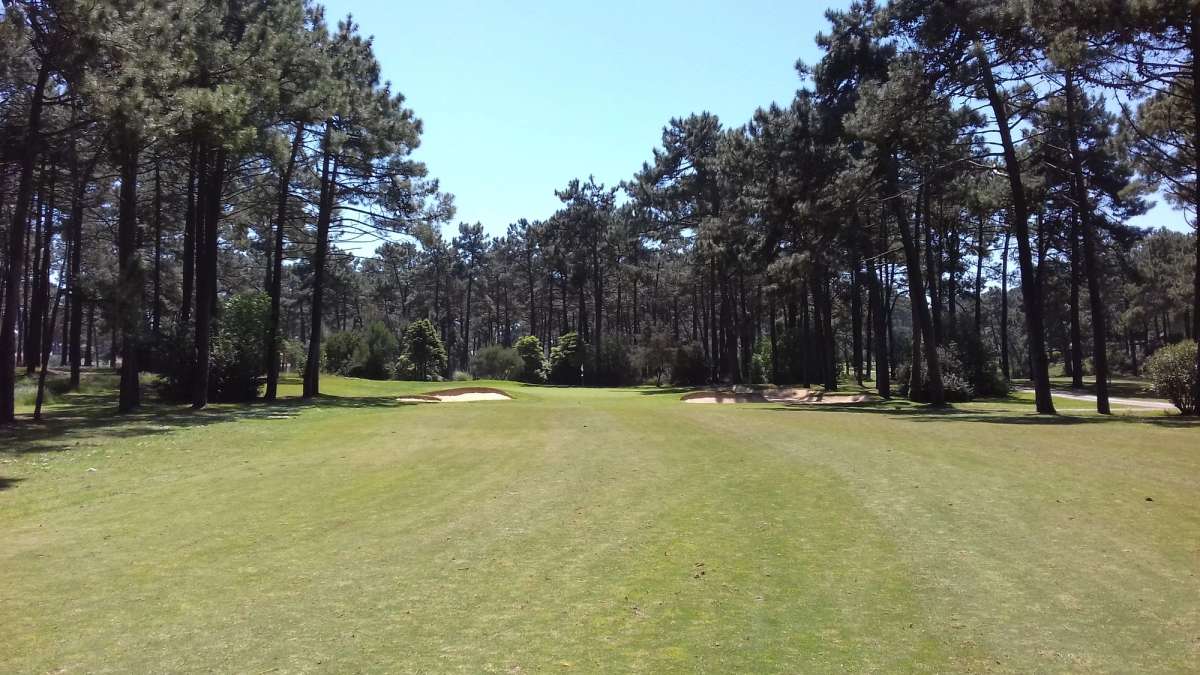
More Portuguese resorts for your consideration We embarked on our resort golf feature last January and thought we could maybe publish five or six articles for this topic. It turns out now, a year later, we’ve produced more than a dozen write-ups, with scope to revisit a few more mainstream European countries that still have more to reveal. Over the next couple of months, we’ll dive back into the Spanish Costas and take another look at France and Italy, but first we’re going back to the west side of the Iberian peninsula to sunny Portugal. We’ll start in the north, near Porto, then travel down past Lisbon before finishing in the south coast Algarve region. Vidago Palace Vidago Palace was built by King Carlos I in the early 1900s but it never became the monarch’s intended summer retreat as he died before it was completed in 1910. Instead, this regally appointed building became a hotel and in 1936 a 9-hole course (designed by Philip Mackenzie Ross) opened for business. In 2010, after a 5-year refurbishment of the entire property, the course re-emerged as an 18-hole layout with six of the original holes intact. The hotel boasts 60 guest rooms (41 Classic, 16 Superior, 3 Privilege), along with 6 Junior Suites and 4 Suites. In addition, there are 4 bars and restaurants, with breakfast served in the stunning Winter Garden on the ground floor. The spa offers hydrotherapy and thermal treatments, complemented by indoor and outdoor swimming pools. All told, Vidago Palace is a magical place to visit, presenting visitors with a unique journey back in time to a forgotten era of elegance and grandeur. Bom Sucesso One of 28 worldwide golf facilities in the European Tour Destinations roster, the resort of Bom Sucesso lies near the medieval town of Óbidos, with an 18-hole layout designed by Martin Ebert when he worked with Donald Steel. Holes on the golf course occupy a property close to the Lagoa de Óbidos, where fairways weave between substantial residential clusters, with water coming into play at a couple of holes. Accommodation comprises a range of 77 fully equipped villas and townhouse – created by 23 masters of contemporary architecture – which are set around the resort. They all feature a private furnished patio and access to an outdoor swimming pool (private or shared). There’s also a variety of other sports on offer, including 4 tennis courts, 2 padel courts and a multi-game court. CampoReal The course at Dolce CampoReal Lisboa is located around a 45-minute drive north of the capital in the Torres Vedras district, and it’s another early millennium production from Martin Ebert when he and design partner Tom Mackenzie were with Donald Steel’s company. Host venue for the LET’s Ladies Open of Portugal in 2010 and 2011, CampoReal is a fine test of golf, with holes laid out across rolling terrain. The hotel has 151 guest rooms and suites available for stay and play golfers and these extend to 133 deluxe and superior deluxe rooms, 11 suites and 7 premium rooms. There’s also self-catering apartment, townhouse and villa options outwith the main hotel building. The spa includes signature massages by therapists and a “water circuit” with sauna, jacuzzi and Turkish bath. Aroeira Aroeira Golf Resort on the Setubal Peninsula incorporates the Pines Classic course (formerly known as Aroeira 1) and Challenge course (renamed from Aroeira 2) and both 18-hole layouts are routed around a sandy-soiled pine forest which lies only a couple of kilometres from the golden sands of Praia Fonte da Telha. Both courses staged editions of the Ladies Open of Portugal between 2002 and 2004 and the Open de Portugal on the men’s professional circuit was also held at the older Pines Classic in 1996 and 1997. The nearby 4-star Aroeira Lisbon Hotel opened a couple of years ago now and it’s already established a reputation as one of the best in the area. The accommodation amounts to a total of 66 double rooms in three varieties (standard, pool view and garden view), plus a couple of large suites. Massage therapists operate in the hotel’s wellness centre and there’s a handy shuttle service to both the clubhouse and the Aroeira Beach Bar. Morgado Russell Talley designed the course at Morgado Golf & Country Club when he worked with European Golf Design twenty years ago. This 36-hole golf facility is run by NAU Hotels and Resorts, who also operate another 18-hole course (called Álamos) at the same location near Portimão on the Algarve coast. The par 73 Morgado layout was first to appear here – with the par 71 Álamos unveiled three years later in 2006 – and this course hosted three editions of the Open de Portugal from 2017 to 2019. The on-site 4-star hotel has 98 air-conditioned guest rooms in total – 16 Standard (30m2), 52 Superior (36m2), 25 Deluxe (88m2) and 5 Duplex rooms composed of two rooms connected by an internal staircase – and the buffet restaurant can seat 90 residents. There’s also a lobby bar with terrace and a clubhouse snack bar. During the summer, all four outdoor swimming pools are popular, especially the two that are reserved for children. Salgados The Salgados course is situated 30 kilometres east of Morgado, laid out within a coastal Nature Reserve near Albuferia, where the palm-fringed fairways are set around quite a few large and testing water hazards. It’s also owned by NAU Hotels and Resorts so if you like alternative styles of golf then combining games at Morgado and Salgados is a great idea. All sorts of exotic birds reside in the small lakes, ponds and streams that are strung out along this stretch of the Algarve shoreline and if you factor in the fresh sea breezes that often blow in off the Atlantic then it can be quite a challenge to try and finish with the same golf ball that you first teed up on the 1st hole. The 5-star Salgados Palace hotel is positioned next to the course, with 228 guest rooms that range in size from 41 to 148 square meters. All the rooms – whether it’s a standard double, double with pool/sea view, or one of the various suites – have space, light and view in common. The spa has a 15-metre heated relaxation pool, jacuzzi, sauna and Turkish bath and there are four outdoor swimming pools. If you have any comment to make on the above article then please use the “WRITE A RESPONSE” link at the bottom of this page. Jim McCann Editor Top 100 Golf Courses


