Western Australia, Australia
Geraldton Golf Club dates back to 1926, moving to its current location six years later. In the early days, the course comprised dirt fairways and sand scrapes for putting surfaces, with grass greens only introduced in the late 1970s.
Geraldton Golf Club dates back to 1926, moving to its current location six years later. In the early days, the course comprised dirt fairways and sand scrapes for putting surfaces, with grass greens only introduced in the late 1970s.
The latest ranking of the Top 100 Golf Courses in the World serves as the ultimate global golf bucket list. Most members of our World Top 100 Panel are seasoned golfers, each playing 20-30 of these courses annually while travelling extensively over decades to form their opinions on others. We recognise that opinions vary—even among our panel members. Rankings are subjective, and there are undoubtedly 50 or more courses in the UK and USA alone that could easily fit onto this list. Links Golf Pilgrimages The rankings
California, United States
New Jersey, United States
Northern Ireland, United Kingdom
New York, United States
New York, United States
Geraldton Golf Club dates back to 1926, moving to its current location six years later. In the early days, the course comprised dirt fairways and sand scrapes for putting surfaces, with grass greens only introduced in the late 1970s.
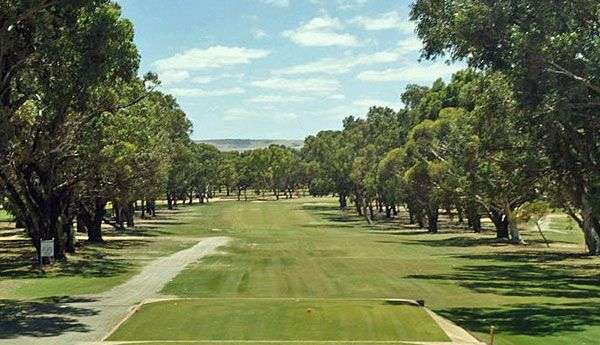
Today, the course occupies a 100-acre site next to the Geraldton racetrack, with holes set out as two returning nines. Measuring 5,933 metres from the championship tees, the layout plays to a par of 71 with thousands of gum trees lining the fairways. Highlight holes on the front nine include the first (and shortest) of the five par threes on the card at the 131-metre 2nd, and the slightly uphill short par four 9th which offers a realistic chance of ending the outward half with a birdie.
On the longer back nine, memorable holes include the tough, left doglegging par four 11th that runs along the northern boundary of the property (with the fairway leading to “a slippery green with lots of different slopes” as described in the official club brochure for 2021-2022) and the equally difficult finishing hole, where the uphill approach to the home green is often played into a testing southerly breeze, making club selection all important.
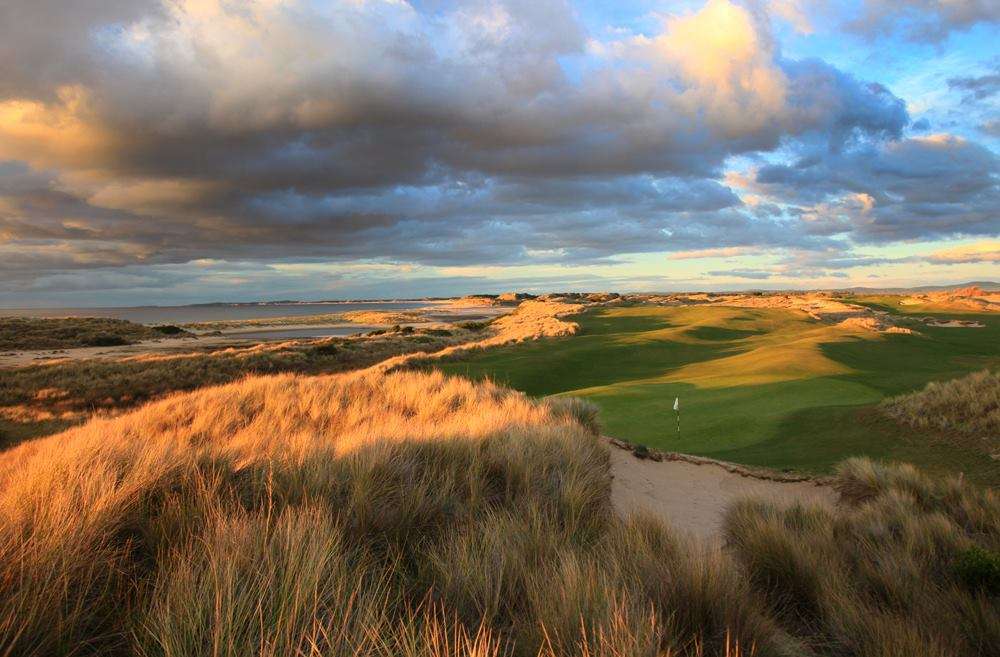
This is the second of three Australian State revision articles giving a brief overview of recent updates that we’ve made to the regional listings in South Australia, Tasmania and Western Australia, where we maintain Top 20, Top 10 and Top 40 charts for these three states. And don’t be fooled into thinking the island of Tasmania is in anyway inferior to the other two because the top six courses are all nationally listed and half of these are good enough to be ranked in our World Top 100 – it may be relatively small in terms of geography but Tasmania punches way above its weight when it comes to quality golf courses. South Australia We begin with South Australia, where the top five layouts remain in the same position, which means the course at Royal Adelaide Golf Club in the western suburb of Seaton (pictured above) is still the state #1. It dates back to 1905 but the original design inputs of Dan Soutar and Cargie Rymill were upgraded by Alister MacKenzie during his famous 1926 visit to Australia. A recent reviewer called the course “an enchanting masterpiece that combines strategic brilliance with quirky charm.” They went on to say: “this course stands out for its unique character and playability… its blend of strategy, playability, and natural beauty make it a must-visit for golf enthusiasts worldwide.” Loxton The only SA new entry arrives at #13 and it’s Loxton Golf Club in Riverland, which first opened for play in 1951. Vern Morcom made changes before the installation of a fairway irrigation system in the early 1960s then grass greens followed in 1974, with Brian Crafter upgrading putting surfaces on holes 1 to 14 and Kevin Harrington working on the closing four greens. The original Eddie Johnson layout remains largely intact, though the nines were swapped in 1966. The course dropping out to make way for Loxton is West Lakes, which was #19 in the previous SA chart. Tasmania It’s “as you were” regarding the top four places in the Tasmania standings – with these same courses also occupying national positions #3, #4 and #5 – so Barnbougle Dunes (pictured above) holds onto the top spot, just ahead of Cape Wickham and Barnbougle Lost Farm. Co-designed by Tom Doak and Mike Clayton, Barnbougle Dunes has been widely recognized as the #1 public access course in Australia since opening twenty years ago. Here’s what a reviewer wrote only a couple of weeks ago: “The Dunes course at Barnbougle gave me one of the most unique and enchanting experiences in my golfing life… it’s become difficult to separate the magical experience from the course itself… raw yet natural and rugged linksland set amongst crumpled fairways is what I’m naturally predisposed to, and this is the very essence of Barnbougle Dunes,” Barnbougle Bougle Run The first of two new entries for Tasmania appears at #5 (it’s also a new entry in the national chart at #57) and we welcome the new 14-hole short course at Barnbougle which is named Bougle Run. Fashioned by Bill Coore on land next to the Lost Farm layout, this fun track comprises twelve par threes and two par fours, with holes laid out across some wild terrain. It only opened for play last year and we’ve yet to receive a review but we’re expecting quite a few of those in the months ahead… Country Club Tasmania The other new Tasmanian entry (at #10) is the 18-hole layout at Country Club Tasmania in Launceston which is a 1982 design from Peter Thomson and Mike Wolveridge. Currently, the club operates a 9-hole layout whilst an extensive 30-month upgrade project is carried out, with completion set for early next year. Expect to see this newcomer climb further up the Tasmanian table next time around. The two courses departing our Tasmania rankings to make way for these two newcomers are Kingston Beach [was #9] and Devonport [was #10]. They now revert to GEM status which still allows reviews to be posted for both tracks. Western Australia Like the other two states under consideration, there’s no movement at the very top of the order, with the leading five courses all staying exactly where they were in the pecking order. That’s good news for the Championship course at Lake Karrinyup Country Club (pictured above) as it retains its #1 in state status, despite falling a couple of rungs on the national ladder to #18. Host venue for four editions of the Australian Open between 1952 and 1974, this Alex Russell Russell design from the late 1920s was upgraded by Mike Clayton a few years back during a major overhaul that saw every green and bunker reconstructed. Cottesloe The only upward move within the top ten places in the WA listings is made by the course at Cottesloe Golf Club in the Perth suburb of Swanbourne, climbing two spots to #6. The club was founded in 1908 but moved to its current location in 1931, when club pro David Anderson set out a new 18-hole course for the membership. The Thomson, Wolveridge and Perrot design firm made alterations in the 1980s before former club champion Graham Marsh was engaged to carry out a number of course improvements shortly before the club’s centenary celebrations in 2008. Bunbury Further down the table, the 18-hole layout at Bunbury Golf Club advances five positions to #15. Located between the Collie River and the Leschenault Estuary, this tight parkland track has been in operation since just after World War II, with fairways bounded by a mix of Tuart, Gum and Wattle trees, along with blackboys and other native shrubs – hit it straight around here or you’ll soon run out of golf balls. Vines Another relatively big move (up six to #20) is made by the Ellenbrook course at The Vines Resort in the northeastern outskirts of Perth. Graham Marsh and Ross Watson created three 9-hole loops at the resort in the late 1980s then Marsh returned a decade later to add another nine to form the 18-hole Lakes and Ellenbrook layouts. The Lakes garners plenty of plaudits as a nationally ranked course (currently it’s listed at #99 in Australia) but the Ellenbrook also has its moments, with some of the holes used to form a composite course when the Heineken Classic tournament was hosted at The Vines during the 1990s. View the South Australia ranking here View the Tasmania ranking here View the Western Australia ranking here If you have any comment to make on the above article then please use the “WRITE A RESPONSE” link at the bottom of this page. Jim McCann Editor Top 100 Golf Courses
South Australia, Tasmania and Western Australia Best in State Rankings 2019 This is the second of three news releases related to the revision of our regional rankings in Australia. We’ve already reported on the updated charts for Australian Capital Territory and New South Wales and we’ll publish our new listings for Queensland and Victoria in our next Australian announcement. For now, we’re concentrating on South Australia, Tasmania and Western Australia, where we maintain Top 10 tables for the first two regions and have just added another five courses to Western Australia, creating a Top 25 for the largest state in the nation. South Australia The course at Royal Adelaide remains the top track in South Australia but, truth be told, holding onto the number 1 spot in the state was something of a given for a layout that not only recently climbed two places in the national chart to number 9, it was also one of twelve new entries in the last edition of our World Top 100. The club moved to its current position in 1904, when Cargie Rymill and club secretary C.L. Gardiner laid out a course that was then redesigned by Alister MacKenzie during his famous tour of Australia in 1926. The design firm Thomson, Wolveridge and Perret looked after the property for almost four decades, starting in the early 1970s, until Mike Clayton was called in to conduct a 5-year renovation in 2008. Tom Doak’s Renaissance Golf Design firm has carried out further work on the course and these improvements largely explain Royal Adelaide’s impressive advance in the rankings. Our New Zealand correspondent Matt Richardson visited just a couple of months ago, saying the course is “a masterful lesson in understatement… every single hole has one or two little features that completely set the tone for strategy and game play... simply put, it makes you think.” The only climber in the state listings is the West course at The Grange Golf Club (rising 1 to number 3), which lies immediately to the northwest of the Royal Adelaide property. Vern Morcom set out both the 18-hole layouts at The Grange and it’s the older East course that some might remember as the venue for Greg Norman’s first professional victory in 1967. Mike Clayton renovated the West course in advance of the Women’s Australian Open in 2016 and the event returns there this week. There’s one new entry (at number 9) in our South Australian listings and it’s the course at Victor Harbor Golf Club, situated an hour’s drive south of Adelaide on the Fleuriue Peninsula. Founded back in 1911, the club’s initial 9-hole layout was designed by Rufus Stewart and it’s since been extended and modified by Tom Rymill, Wayne Dale and, more recently, Neil Crafter. This is a terrific, old-fashioned track featuring one of the most exhilarating 1st hole tee shots to be found on a golf course anywhere, with the opening drive played from a bluff down to a tree-lined fairway a hundred feet below. To view further details of the South Australia Top 10rankings click the link. Tasmania The isolated island state of Tasmania lies off the southern coast of Australia, separated by the Bass Strait, and the main island of Tasmania is home to most of its population of half a million people. With only around fifty courses in operation around the state, who would have thought at the start of the new millennium that three new additions to the golfing landscape would now be ranked among the best in the world? The courses atBarnbougle Dunes (still at number 1) and Barnbougle Lost Farm(down one to number 3) sit next to each other among the towering dunes that stretch out along the northern coastline of the main island in Tasmania, next to the small town of Bridport. The spectacular Dunes course debuted first in 2004, co-designed by Mike Clayton and Tom Doak, with the Bill Coore-designed Lost Farm appearing a few years later. The Barnbougle layouts are now firmly ensconced near the top of the national rankings and placed well within our World Top 100. Our International correspondent David Davis described the Dunes course when he played there as possibly “Tom Doak’s best effort in design,” with it having “the absolutely perfect, dramatic links landscape and sandy ground.” Fergal O’Leary, our US Consultant, also visited the Barnbougle complex, commenting that Lost Farm was “more playable than the Dunes course, which is definitely the tougher challenge,” terming it “a big course with big fairways and big greens.” It was always going to take a remarkable course to split the highly regarded pair at Barnbougle but that’s exactly what the 18-hole layout at Cape Wickham has now done as it rises one spot to number 2. Located 330 kilometres northwest of Bridport on King Island, this is a Mike Devries design (built in collaboration with author Darius Oliver) which has been catapulted onto the global golf stage. As Tom Doak states in Volume V of The Confidential Guide to Golf Courses : “No course has made a bigger splash on the world scene in the past five years than Cape Wickham, sitting in the middle of the Bass Strait between Melbourne and Tasmania… It’s not an easy place to get to, and not for those who fear small planes and bumpy flights, but Cape Wickham is well worth the effort. It’s one of the wildest places in golf, and in a world growing ever more conformist, that’s a very good thing.” Another King Island course is a new entry at number 7 in our Tasmanian Top 10 and it’s the links layout at King Island Golf & Bowling Club, which dates back to 1938. The course comprises twelve greens and eighteen different tee boxes, with an 18-hole round consisting of three par threes, twelve par fours and three par fives on a layout extending to 5,475 meters – that might seem quite short but when the wind gets up, as it very often does here, it’s more than long enough. To view further details of the Tasmania Top 10rankings click the link. Western Australia The Championship course at Lake Karrinyup Country Club, which was designed by Alex Russell and opened for play in 1930, is still the number 1 golfing layout in our state standings for Western Australia. Mike Clayton extensively renovated the course not that long ago, totally rebuilding all the greens and bunkers during a major makeover, and it’s hosted a number of important competitions since then, including the World Super 6 Perth, the latest edition of which is staged there this week. Just a few weeks ago, reviewer Peter Wood gave this 5-ball endorsement to the course: “Perhaps this is the quintessential Aussie course with its genuine bush setting, large eucalyptus trees, black boys, and kangaroos roaming… Lake Karrinyup would be a great starting point for international visitors wanting to see a top quality Australian course in a classic bush setting, and should be part of any West Australian golf expeditions.” Only six courses improve their position in our revised table and the most prominent of these is The Links Kennedy Bay layout at Port Kennedy (up one to number 2), which is a late 1990s collaboration between Michael Coate, Roger Mackay and Ian Baker-Finch. Perhaps a review posted only yesterday best sums up the experience of playing here: “The wind can change this course in a matter of minutes, depending on the time of day you may end up playing with the wind from three different directions… The greens are large, fast and true, the fairways are well manicured and the bunkers well placed… This is Australian links golf at its best.” Another couple of 18-hole layouts make significant 3-place upward moves within the Top 10: the first one is the early 1990s Robert Trent Jones Jr-designed course at Meadow Springs Golf & Country Clubin Mandurah (at #5), which “has a nice selection of short par fours, doglegs, longer holes, and some impressive water holes”; and the second one is the Bob Green and Murray Dawson 1970s co-design at Sun City Country Club in Yanchep (at #10), where Mike Clayton’s OCCM design company has been carrying out upgrade work since 2012. The highest new entry at number 17 is the delightful 9-hole seaside setup at Binningup, around thirty kilometres north of Bunbury, called Lakewood Shores. It’s a mid-1980s Michael Coate design that was mentioned in the aforementioned Confidential Guide to Golf Courses book, having been played a while back by Darius Oliver, who wrote of it having “uncluttered holes arranged in a single loop through gently moving sand dunes and with pleasant coastal outlooks… It developed a following for the quality of its nine holes, along with its ‘honesty box’ green fee system and the fact the course was managed – well – by a single green keeper… Binningup certainly ranks as one of Australia’s best 9-hole courses.” We'd like to thank Peter White for persuading us to extend our course coverage in Western Australia. To view further details of the Western Australia Top 25rankings click the link. We actively seek feedback every time we re-rank regional charts so please let us know if you have any strong views on either of the three featured in this Australian release. Whether it’s to let us know about a course we’ve mistakenly missed or one we’ve undeservedly included, by all means get in touch. Whatever you’re thinking, if you’d like to share your opinion then please click the “Respond to this article” link at the top or at the bottom of this page. Jim McCann Editor Top 100 Golf Courses
As green fees at some of Britain and Ireland’s most celebrated courses continue to climb, Top100 Golf Courses' lead panellist Jasper Miners argues that golfers need to separate the quality of the course from the price of getting onto it. A round of golf at one of Great Britain and Ireland’s most prestigious courses can now cost £400, £500 or even £1,000. But does paying more guarantee a better golfing experience? For Top100 Golf Courses' lead panellist Jasper Miners, the answer is no. While some of the world’s finest courses command premium green fees for good reason, he believes golfers can too easily confuse price with quality. “Price can be exclusivity, it can be quality, it can be difficulty to access, it can also just be damn good branding,” he says. “I've played a lot of golf courses that are very expensive to play and I'd never want to play them again.” The distinction is becoming increasingly relevant as visitor fees at the top end of the game continue to rise. Research published by National Club Golfer in 2026 found that 15 courses in its Great Britain and Ireland Top 100 list charged £400 or more for a peak-summer round, up from eight the previous year. Turnberry's Ailsa Course retained its £1,000 headline fee, while Royal Birkdale's rose to £495. Those prices reflect more than the quality of the golf itself. Reputation, international demand, limited visitor access and the appeal of playing a famous course all contribute to what golfers are willing to pay. “People spend money on an experience, and it's cognitive dissonance: you convince yourself that it's good,” he says. Scotland shows the gap between price and quality Scotland offers a useful illustration of the difference between headline prices and the wider market. Top100's analysis of 94 ranked Scottish courses with published summer visitor fees in 2026 found a median price of £140, compared with an average of £194. The difference is significant: a relatively small number of expensive courses pull the average upwards, while more than half of the courses in the analysis could be played for £140 or less. Twenty-seven charged under £100. That doesn't mean £140 is inexpensive for every golfer, nor does it suggest that all courses offer the same experience. It does, however, challenge the idea that playing highly ranked golf necessarily requires a four-figure budget. The price of some famous venues has risen considerably. The Old Course at St Andrews, for example, went from a summer green fee of £195 in 2021 to £355 in 2026. Yet Scotland's wider selection of highly ranked courses offers alternatives at a fraction of that price. The same principle applies beyond Scotland. Top100's list of the ten cheapest visitor-accessible courses in its current World Top 100 includes Australia's St Andrews Beach at £74 and Bethpage Black in New York, a major championship venue, from £106. These examples do not mean that every lower-priced course offers the same facilities or experience as the most expensive venues. They do show that a high ranking and a substantial green fee do not always go hand in hand. The market, however, does not operate on quality alone. Miners points to Scotscraig Golfing Club as an example of how perceptions can change alongside pricing. He says the course has gone from attracting relatively little visitor attention to charging £225 and selling out. “In America, if you're good, you can charge more, so price becomes equated with quality,” he says. “Scotland has been a beneficiary of that.” He believes the relationship between price and demand can become self-reinforcing. A higher fee can contribute to a course's image as an exclusive destination, and that exclusivity can itself become part of the attraction. The challenge for lesser-known courses For courses without the international recognition of St Andrews, Muirfield or Royal County Down, competing for attention can be more difficult. A lower green fee may make a course attractive to golfers looking for value, but it can also leave it competing against venues whose reputations have been built over generations. Miners believes independent rankings and editorial coverage have a role to play in identifying courses that deserve attention, regardless of what they charge. “Hopefully, a website like Top100 is doing that work where we're going and saying, actually, this is not expensive and that's not part of our criteria, this is worth going to play,” he says. Simply increasing prices to appear more prestigious is not a universal solution, either. A strategy that works in a high-demand Scottish golf destination may not work in Wales, where raising green fees substantially will not necessarily persuade more people to visit. For clubs, the challenge is to establish what their course offers, understand their market and communicate its appeal. A famous name can command a premium, but a lesser-known venue may have more to gain by demonstrating the quality of its golf and the value of the overall experience. Golf is a business, too There is another side to the debate. While golfers may understandably want affordable access to good courses, clubs have to cover the costs of maintaining their facilities and operating their businesses. “I don't think [the industry needs to do more to challenge the idea that the best experiences are the most expensive],” Miners says. “As much as we don't want to admit it, golf is a capitalist sport.” He points out that many members' clubs depend on visitor income to support their finances, particularly when membership fees and subscriptions alone are insufficient to cover operating costs. “There are very few clubs that can run on a very modest budget with a very low membership that doesn't need outside play,” he says. That commercial reality makes it difficult to argue that clubs should simply charge less. Golfers in Britain and Ireland may be accustomed to playing regularly at prices that seem modest by international standards, but maintaining a golf course is expensive, and visitor income can be essential to a club's survival. Where demand is strong and tee times are limited, higher visitor fees may be a rational business decision. “If their tee sheet is full and they can charge a lot of money for people to come play, good for them,” he says. “The issue is mine, not theirs.” The question, then, is not whether every expensive course should lower its fees, or whether lower-priced courses should charge more. It is whether golfers can look beyond the number on the booking page and judge a course on its own merits. For golfers planning their next trip, that means looking beyond the obvious names. For clubs, it means recognising that price is only one part of the proposition. And for the industry, it is a reminder that the most expensive round and the best golfing experience are not necessarily the same thing.

