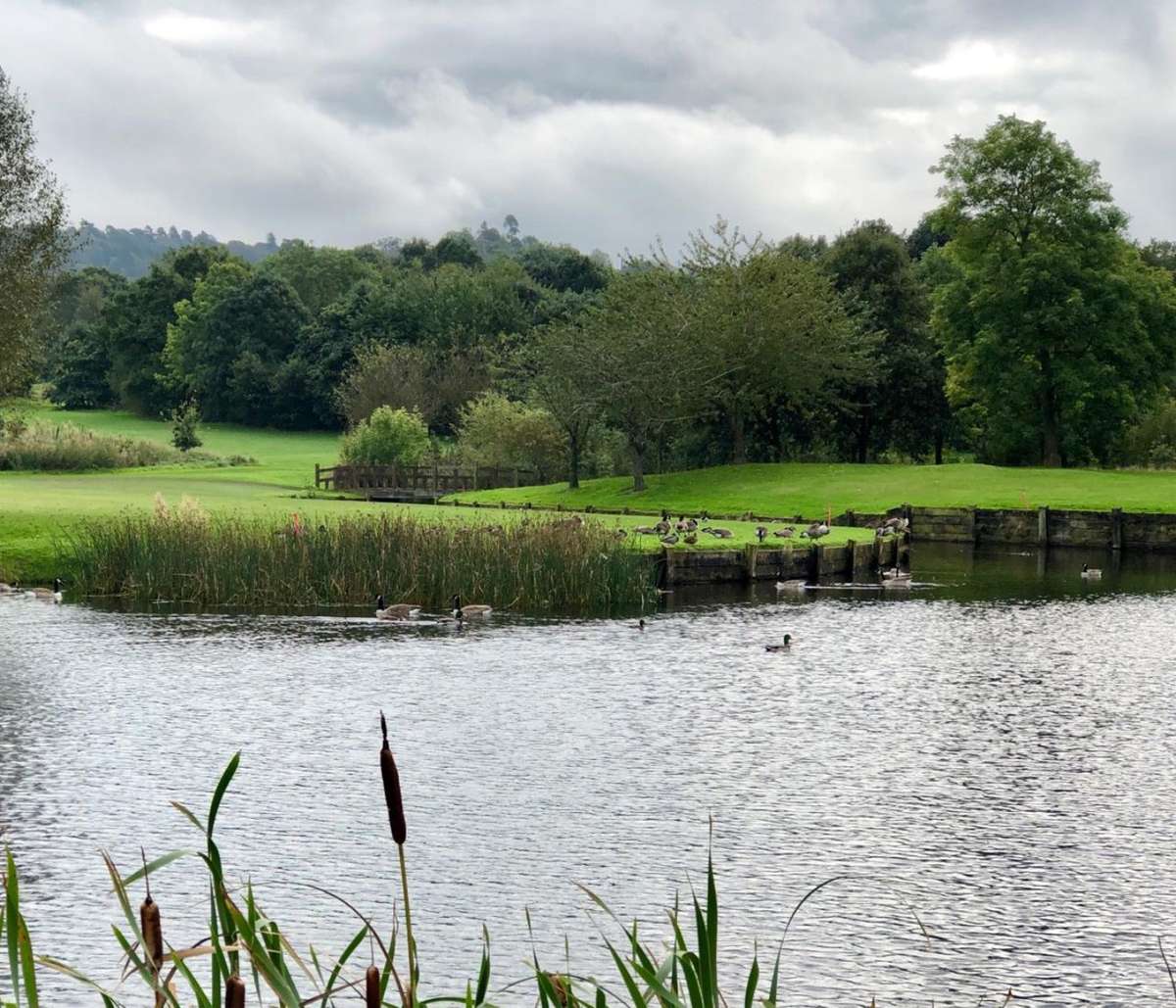
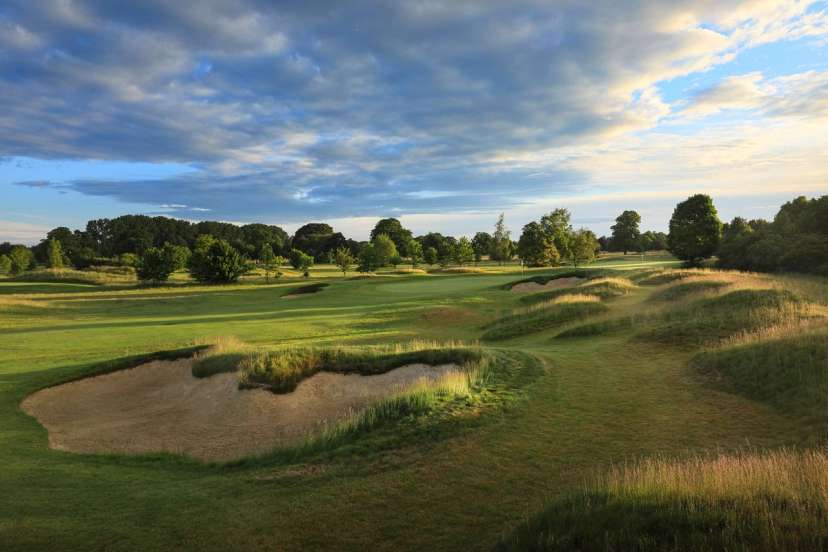
Originally named the Windmill course when it opened in 1995, designed by former Ryder Cupper Brian Huggett, the American-styled Championship course at Hawkstone Park features a clutch of dramatic do-or-die water holes.
Originally named the Windmill course when it opened in 1995, designed by former Ryder Cupper Brian Huggett, the American-styled Championship course at Hawkstone Park features a clutch of dramatic do-or-die water holes.
Hawkstone Park Golf Club (Championship)
Course Architect
Course Architect
The latest ranking of the Top 100 Golf Courses in the World serves as the ultimate global golf bucket list. Most members of our World Top 100 Panel are seasoned golfers, each playing 20-30 of these courses annually while travelling extensively over decades to form their opinions on others. We recognise that opinions vary—even among our panel members. Rankings are subjective, and there are undoubtedly 50 or more courses in the UK and USA alone that could easily fit onto this list. Links Golf Pilgrimages The rankings
California, United States
New Jersey, United States
Northern Ireland, United Kingdom
New York, United States
New York, United States

The purpose of the Review of The Month feature is twofold. Top100GolfCourses has always aimed to salute and encourage those who are putting admirable effort into reviewing the world’s great golf courses. Moving forward, we are also looking to learn from these experts! We’ll be chatting with the month’s star authors and discussing topics such as golf in their area, what they like to see in a strong course review, and of course dig a little deeper into their own winning review. March 2022’s Review of The Month comes from Faiz Alam, who gave readers a keen insight into Church Stretton Golf Club. 1. You open by noting that Church Stretton presents both "bewilderment" and "adventure." Is there a fine line when walking between those ideas? Yes, I think there can be a fine line but a real adventure needs a bit of bewilderment to make it challenging and more exciting. On the other hand, too much bewilderment might just make it a stressful experience! I think Church Stretton is bewildering for so many reasons: the blind shots, the massive changes in elevation but most of all I found myself coming back to the incredible notion that the founders thought this was a good site to build a golf course. Some amazing foresight at a time when the locals must have thought it was absurd. To play golf so high looking down on the valleys and land beneath lends the course a certain magical aspect. 2. Blind shots can be divisive when analyzing a golf course. Do you believe Church Stretton may appeal to one golfer and not another? Certainly, I think as a traveling golfer you need to approach each course with an open mind and appreciate the quirks and charm of each course. Church Stretton is not a long course and I feel that the blind shots play an important part in the course’s defence. One part of the round which I really enjoyed was tackling these blind shots and the feeling of satisfaction when you finally saw your ball on the green or fairway. 3. Much of the current course is attributed to James Braid. How does Church Stretton stand among the other Braid designs you've had the opportunity to play? Amongst the Braid designs I've played, Church Stretton is undoubtedly my favourite. I would argue that it is a bit underappreciated. I was surprised to enjoy it as much as I did given some past reviews. I am not sure that it qualifies as a top 100 course but if there was such a thing as “top 100 experiences,” this would rank highly for me. 4. The photos you included as part of the review demonstrate the jaw-dropping views across Shropshire from the course. Course design aside, do such views impact the enjoyment of your day at the club? I think it would be hard to play at Church Stretton and not be blown away by the stunning scenery. We are fortunate to play a sport that highlights the surrounding natural beauty and this course presents you with beautiful England at every turn. You can't help but drink it all in on every hole. 5. Now that you're a celebrated "Review of The Month" winner, let us know what factors you appreciate in a strong golf course review! My favourite part of the site is reading through reviews of courses that I may never even get to play. I am lucky to have won Review of The Month but there are many styles of review that I appreciate and learn from. Some are short and concise but capture the essence of the course. Others are longer and tell of the experience throughout the day. Both have their place but what is most important for me is to remain open-minded and try to describe what makes the course worth visiting. What lingers in your memory, what would bring you back. And please share pictures! 6. What's one course that you'd love to write a review for during 2022 (or plan to)? I am slowly trying to complete the English Top 100 and next on the list is Ganton.
Top 10 Golf Courses in Shropshire 2015 Shropshire Best In County rankings updated The Salop county of Shropshire is easily accessible from just about anywhere in England, but it’s far enough away from the madding crowd such that it has remained peaceful and unspoilt. The Shropshire and Herefordshire Union of Golf Clubs take care of the interests of 33 golf clubs in the union, two-thirds of which are located in Shropshire. It may therefore seem overly generous to feature a Top 10 for this relatively diminutive golfing county. However, we feel the quality of Shropshire’s golf courses is sufficiently interesting and unsung to warrant such coverage. The course that remains at the head of our Shropshire rankings has a Welsh name that most non-Celtic speakers will struggle to pronounce. Fifteen holes at Llanymynech (meaning “Church of the Monks”) lie within Wales, but Llanymynech is an English golf club. From atop this limestone plateau, surrounded by sheer cliff faces, you can see the Shropshire Plain with its quilted patchwork of fields and trees stretching out for miles. It’s an awe-inspiring location on a clear day. Set within an extensive property that attracts many visitors to the caves, tunnels, trails and towers of its 18th century follies, the Hawkstone course at Hawkstone Park moves up one place to 2nd. This James Braid design from the 1920s was renovated by Welsh golfing legend Brian Huggett when the Principal Hayley Group acquired the estate in the 1990s. Up two spots to 3rd place is Oswestry Golf Club, another James Braid design, this time from the 1930s. Routed across an undulating, free-draining site, the course is blessed with a fine set of par three holes. Two short par fours at 7 and 11 are also worthy of mention, with the former doglegging slightly left to the green and the latter playing to a small raised putting surface. To see our new 2015 Shropshire Top 10, click the link. If you have played golf extensively across any English county and would like to have your say, please contact me (keith@top100golfcourses.com). In the meanwhile a big thank you to everyone who contributed to our Shropshire Best In County ranking process. Keith Baxter Editor-in-Chief Top 100 Golf Courses

A good halfway house can turn a great round of golf into a memorable one. It might be a cold beer on a Scottish links, a burger with a spectacular view or a hot drink to warm you up before the back nine. Whatever is on offer, the best halfway houses give golfers a chance to forget about the scorecard for a few minutes and enjoy the experience. We recently asked the Top100 Golf Courses community to share their favourite halfway houses, uncovering plenty of memorable stops around the world. We've picked five of their recommendations, alongside five more renowned halfway houses that are well worth knowing about. What is a Halfway House? A halfway house is a food and drink stop positioned around the turn of a golf course, usually between the ninth and 10th holes. Some are little more than a hut serving snacks and drinks, while others have become destinations in their own right, offering everything from full meals and cocktails to fires, views and plenty of local character. Five Halfway Houses Chosen by the Top100 Community Sunningdale Golf Club (England) There is a reason the halfway hut at Sunningdale has become one of the most famous refreshment stops in golf. The small Swiss-chalet-style building has been in place since 1903, sitting where the ninth holes of both the Old and New Courses meet their respective 10th holes. But the building itself isn't the main attraction. That would be the sausage sandwich. Sunningdale's legendary hut serves a simple sausage on buttered bread, with other food and refreshments available alongside it. The hut has become such an established part of the experience that the club's own tradition says everybody stops, but does so speedily. It's not fancy, and that's rather the point. After nine holes of heather-lined fairways, a hot sausage sandwich and a cup of tea can feel like exactly what golf ordered. Nairn Golf Club - The Bothy at Nairn (Scotland) The Bothy at Nairn has a history that goes well beyond golf. Built in 1877, the stone building and neighbouring icehouse formed part of the Easter Delnies Fishing Station, one of five salmon fisheries operating along the coast between Nairn and the mouth of the Findhorn. In a good season, the fishery could catch up to 5,000 salmon, with ice collected from local rivers and a specially made pond and stored in the icehouse to keep the catch fresh. The buildings have since been given a new lease of life, with the Bothy converted into a halfway house where golfers can stop for snacks and refreshments at the turn. On a cold day beside the Moray Firth, there's also a fireplace to warm up beside. The historic stone building, Highland setting and views across the course provide plenty of atmosphere. One of our community members put it rather simply: a dram of whisky and a fire are hard to beat. Hard to argue with that. Turnberry Ailsa (Scotland) Turnberry's halfway house is about as far removed from the traditional golf hut as you can get. The Ailsa's ninth hole now finishes beside the famous Turnberry Lighthouse, which doubles as a halfway house for golfers. The lighthouse itself dates back to 1873, while the golf course's dramatic ninth was redesigned as part of the Ailsa's major renovation. Inside, golfers can stop for food and drink before heading to the 10th, but the real attraction is outside. From the lighthouse, there are views across the Firth of Clyde towards the Isle of Arran and Ailsa Craig. It's a halfway stop that feels more like a destination than a quick pit stop. When your halfway house is a historic lighthouse overlooking one of Scotland's most spectacular stretches of coastline, you've got a pretty good excuse to take your time. Ardglass Golf Club (Northern Ireland) At Ardglass, the halfway-house experience is wonderfully straightforward: have a Guinness and enjoy the view. The course's old cottage halfway house at the back of the 7th green has become one of its most memorable features, with golfers able to stop for a pint before continuing their round. A recent visitor described it as a gorgeous cottage with Guinness, while another praised the combination of a Guinness, sausage roll and views over the Irish Sea. It fits Ardglass perfectly. The County Down links is already one of the most dramatic places to play golf in Northern Ireland, with the Irish Sea never far away. Add a pint of Guinness just before the turn and you've got a halfway house that feels distinctly of its surroundings. Sometimes you don't need to reinvent the wheel. Blair Atholl Golf Estate (South Africa) Blair Atholl might have been one of the less obvious names to appear among the community recommendations, but the descriptions made it impossible to leave out. The halfway stop sounds less like a quick break and more like an event. One golfer highlighted the chicken burger, a chef cooking a barbecue beneath the trees and a deck sitting beneath a stream. Another mentioned silver-service high tea. That's quite the halfway-house menu. It's also a good example of why the best stops aren't necessarily the most famous. A halfway house can become memorable because of the food, the setting or simply the feeling that you're being looked after rather than rushed back onto the course. Five More Renowned Halfway Houses St Andrews Links - The Old Course (Scotland) If we're talking about halfway houses, it makes sense to visit the place that has a claim to starting the tradition. In the 19th century, David "Old Da" Anderson sold ginger beer and other refreshments from a cart on the Old Course at St Andrews. It has been described as golf's first refreshment stand. The modern version sits behind the ninth green and keeps the tradition going, albeit with a rather more substantial menu. The pork and haggis sausage roll is a popular choice, while the club's own Tom Morris 1821 Lager provides a suitably Scottish accompaniment. It's difficult to think of a more fitting place for a halfway stop. The Old Course is steeped in golfing history, and even the break between nines has a story of its own. Pine Valley Golf Club (New Jersey, United States) Pine Valley's halfway house is memorable before you've even ordered anything. Rather than a conventional hut, it is built into the base of an old water tower, which golfers encounter around the eighth hole and again near the 12th tee. It's an appropriately unusual feature for one of the world's most unconventional golf courses. The tower doubles as a stop for drinks and snacks, giving golfers a chance to take a breather before continuing around Pine Valley. It even boasts an impressive collection of golf balls from around the world. There aren't many halfway houses that can claim to be built inside a water tower. Quivira Golf Club (Baja California Sur, Mexico) Quivira has taken the halfway-house concept and spread it across the entire round. The Jack Nicklaus-designed course has multiple all-inclusive comfort stations, each offering golfers food and drinks as they make their way around the Cabo San Lucas layout. The most spectacular is The Cliffs, perched almost 300 feet above the Pacific, where golfers can stop for a breakfast burrito and take in the views over the ocean. Then there's The Oasis, the main halfway house near the ninth green. Here, the emphasis is on the food, with freshly prepared Baja cuisine including tacos and tostadas, alongside a full tequila bar. A final stop, Cañada, sits near the 16th tee, while another comfort station beside the oceanfront practice facility offers snacks and cold drinks before golfers even reach the first tee. The food and refreshments are included in the green fee, making Quivira's comfort stations much more than somewhere to grab a quick drink. Tacos, tequila and spectacular Pacific Ocean views make the breaks almost as memorable as the golf. Whistling Rock Country Club (South Korea) At Whistling Rock, there isn't just one halfway house to look forward to. The South Korean club is made up of three nine-hole loops, each with its own themed tea house: Cocoon, Temple and Cloud. The three buildings are each distinctly different. One is a rounded structure between a lake and forest, another is a formal wood-and-glass building, while the Cloud tea house sits high among the trees. The result is a halfway-house experience that feels distinctly different depending on which nine you're playing, with each tea house adding another layer to the Whistling Rock experience. Royal Dornoch Golf Club (Scotland) Royal Dornoch's halfway house is proof that sometimes the best idea is a simple one. The stop sits behind the ninth green of the Championship Course, with views back across the links towards the Dornoch Firth. And then there's the traditional order: hot chocolate with Bailey's Irish Cream, a combination that makes considerably more sense when you're standing on a Scottish links in a North Sea wind. It's a small detail, but one that has become part of the Royal Dornoch experience and exactly the sort of halfway-house tradition golfers remember.