Eastern Cape, South Africa
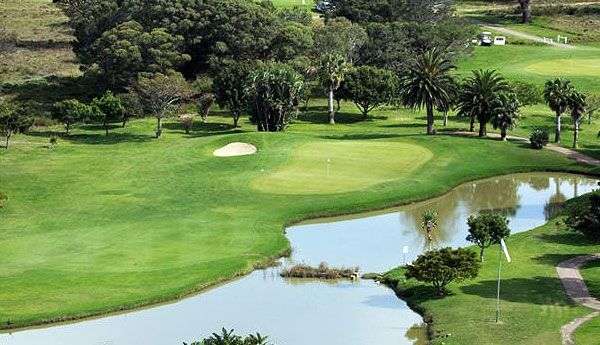
Greens at Humewood are firm and fast, requiring a sure putting touch – which was needed when the South African Open returned to this top class links in 2006.
Overall rating

5.0
Greens at Humewood are firm and fast, requiring a sure putting touch – which was needed when the South African Open returned to this top class links in 2006.
The latest ranking of the Top 100 Golf Courses in the World serves as the ultimate global golf bucket list. Most members of our World Top 100 Panel are seasoned golfers, each playing 20-30 of these courses annually while travelling extensively over decades to form their opinions on others. We recognise that opinions vary—even among our panel members. Rankings are subjective, and there are undoubtedly 50 or more courses in the UK and USA alone that could easily fit onto this list. Links Golf Pilgrimages The rankings
California, United States
New Jersey, United States
Northern Ireland, United Kingdom
New York, United States
New York, United States


Top 100 Golf Courses of South Africa 2018 Ranking golf courses in South Africa is a relatively new business as Golf Digest produced its inaugural Top 50 for the country in 1998, more than thirty years after magazines in the United States had been producing state, national and international listings. Editor Stuart McLean, correspondent in South Africa, was the man who established that chart and he’s still responsible for the ongoing revision of what’s now become a Top 100 for South Africa. We also created our own Top 50 in 2008, though it was quickly doubled in size the following edition, and we’ve since extended our coverage down to provincial level, allowing us to showcase more than a hundred and twenty-five courses across nine distinct geographical regions in the rainbow nation. Within our latest Top 100, thirteen courses remain in the same position, forty move up, forty-four fall down and three – Simbithi, Rustenburg and Hans Merensky – drop out. The first of our chart non-movers is the Links course at Fancourt Hotel & Country Club, which retains its position as the number 1 in South Africa. The 5th staging of The Presidents Cup was held here in 2003, three years after the Gary Player-designed layout opened for play, and a reviewer described it last year as “fantastic” with “an incredibly unique feel to it” that was “unlike anything I have played before or since”. He continued: “there’s also been a real effort in the design to work with indigenous plants to encourage wildlife and support the local ecology, something I think more golf courses should try to do”. Rising one place to number 3, we have another Gary Player design, Leopard Creek in Mpumalanga, where the layout lies on the southern fringes of the Kruger National Park. It’s just re-opened after an extensive revamp carried out by Golf Data to reposition fairway bunkers, widen landing areas, replace Kikuya fairways with Bermuda grass and replant greens with Champion bent grass. The par three 12th – featuring an unusual Redan-style green – was also redesigned during a comprehensive 8-month upgrade of the property and we’re now looking forward to receiving some reviews for the newly refurbished course in the months to come. A couple of courses make noteworthy 3-position climbs within the Top 10 places in our new table. Humewood, located in the sand dunes of Algoa Bay, to the south of Port Elizabeth in the Eastern Cape, is now at number four, having risen eleven places to number seven when we last re-ranked two years ago. Designed by Colonel S. V. Hotchkin in 1929, this course was the only African entry to make the True Links book authored by George Peper and Malcom Campbell in 2010. Our US Consultant Fergal O’Leary is a big fan of this place, calling it “a massively underrated layout worthy of major championships… it epitomizes the low-key nature of those sleepy golf clubs you find in GB&I, no frills, no country club, just 100% commitments to true links golf”. Two places behind Humewood at number 6, the East course at Royal Johannesburg & Kensington Golf Club continues its advance towards the very top of the chart, following a wide-ranging upgrade that was completed at the start of this year. Golf Data’s Robbie Marshall worked with Royal staff and club officials on a number of reforms, such as pruning trees and installing new bunkers, with the aim of improving the overall presentation of the layout. A similar project is now planned for the West course. Also returning to the South African Top 10, the course at Glendower Golf Club leaps eight places to number 8, only one spot lower than the position it held in our inaugural chart of 2008. The last five South African Open Championships have been held on this old C. H. Alison design, with English professionals winning three of these events. Chris Paisley was the latest person to savour victory in this competition, claiming his maiden European Tour title at the 118th attempt back in January of this year. Glendower’s no stranger to hosting this prestigious national tournament actually, as the world’s second oldest Open also took place here in 1989, 1993 and 1997. Advancing six places to number 14, the course at East London Golf Club in the Eastern Cape is another layout which was redesigned by S.V. Hotchkin during his visit to South Africa in the late 1920s. Golf Digest SA Editor Stuart McLean says of this layout: “East London has always been one of South Africa’s classic coastal layouts, magnificently situated in big dunes overlooking the Indian Ocean. It would be no exaggeration to describe this property as the best golfing site in the country. It is close to the city, between the Buffalo and Nahoon Rivers, yet exists in a space apart that has been thankfully undisturbed by development.” One place behind East London at number 15, the course at George Golf Club in The Garden Route soars nine places up the listings. The layout’s classic tree-lined design dates back to the 1930s, when Dr Charles Molteno Murray set out the fairways, but the property benefitted greatly from an upgrade in 1999 when an area of alien vegetation in front of the clubhouse was cleared and replaced with a lake that now borders the opening and closing holes. “George doesn’t have bells and whistles” according to one reviewer, “but it is a proper golf course which should be enjoyed whilst walking and basking in the beauty of this part of South Africa.” The Ernie Els-designed course at Highland Gate Golf & Trout Estate was one of our highest new entries two years ago when it debuted at number 33 and it now progresses another thirteen places to the number 20 slot in our revised standings thanks to a "Better Billy Bunker" installation. Situated a relatively short two-hour drive west of Nelspruit in Mpumalanga province, the course is fast gaining fame on the tournament circuit after recently hosting the Vodacom Origins of Golf event on the Sunshine Tour and the Els for Autism Final. Corporate golf days and local fund-raisers at the club are also popular, acting as a catalyst to attract golfers from all over the country to play this new layout. In the lower half of the Top 100, several courses make double digit jumps up the table, including the early 1990’s layout from Peter Matkovich on the San Lameer Estate in Southbroom (up eighteen to 59), the Fred Hawtree-designed Rocklands course (formerly known as Woodlands) at Country Club Johannesburg (up thirteen to 61), and the old Bob Grimsdell course which Sean Quinn of Golf Data redesigned a while back for the Wedgewood Golf & Country Estate outside Port Elizabeth (up twelve to 85). The most impressive upward move is made by King David Mowbray in Cape Town (up twenty places to number 75). The club only formed two years ago, when King David Golf Club and Mowbray Golf Club merged, and the amalgamated club now operates from the Mowbray clubhouse, a building that was reconstructed after a devastating fire in 1993. The club replanted its putting surfaces with paspalum a decade ago but this didn’t work out as well as intended. Three years ago, course consultant Mark Muller and greenkeeper Tinus Fouche started interseeding the greens with bent and poa, which thrives in the winter and spring, allowing the paspalum to dominate during the rest of the year, and this has resulted in far better all-year putting surfaces. The first of three new entries arrives at number 60 and it’s the course at Vulintaba Country Estate near Newcastle in Kwazulu-Natal. Stuart McLean recently visited the remote 9-hole course in the Drakensberg and he told us it was “possibly one of the best 9-holers in the world”. Stuart continued: “I had been there when it opened about eight years ago. It was a Peter Matkovich design known as Dunblane with the intention to increase to eighteen holes. New owners decided nine holes were enough, and brought in another designer, Douw van der Merwe, to change two of the holes and build additional tees”. We ‘re happy to have this course fly into our new Top 100 at a prominent position and fully expect to see it hold its own in future chart editions. Incidentally, Stuart has also alerted us to another interesting project that is ongoing this year and that’s the rebuilding of Soweto Country Club in Johannesburg. The PGA Tour in America has donated more than a million dollars towards building eighteen new holes on the original site to uplift golf in the heart of the black community. The original course was designed by Gary Player and the Black Knight design team is leading the redesign at no cost as their contribution towards the overall upgrade of this historic club. Rank/ Click this link to see full details of our 2018 Top 100 Golf Courses in South Africa We’re re always pleased to receive feedback after updating national listings so by all means get in touch if you’ve any strong feelings about our re-evaluated South African standings. Have we missed a course that truly deserves recognition or have we included one which really shouldn’t be there? Maybe we’re flying the flag a little too high for a particular track or there’s another layout lying too low in the chart? Whatever your thoughts, please click the “Respond to this article” link at the top or at the bottom of this page to share your views with us. The more informed opinions we receive the better. Jim McCann Editor Top 100 Golf Courses
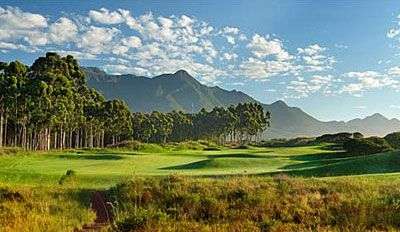
Top 100 Golf Courses of South Africa 2016 We announce the third biennial revision of our South African Top 100 ranking chart Two years ago, when we last updated our South African Top 100 chart, we stated, “this latest list will raise a few eyebrows”. Well, the results of the 2016 re-ranking exercise for the Rainbow Nation will do that and a lot more besides because there’s plenty of movement in our new chart – indeed, only two courses hold onto the same position as last time. We don’t know the statistical probability of that happening, actually. Suffice to say, bringing an ever-increasing number of different data streams into the process appears to be at least partly responsible for the volatility of our current chart and it might take another revision or two for the relative positions to settle down a little. So, onto our 2016 listings and it’s all change at the top, where three 18-hole layouts all leapfrog over our long standing No.1 course, Gary Player’s Leopard Creek, which is situated on the edge of the Kruger National Park. The course’s relatively prosaic front nine holes are a bit of a let-down for the more well-travelled golfers who’ve played the course and this may well have been a deciding factor in the course taking a tumble from the top perch. Rising one place to the new number 1 position, the Links course at Fancourt Hotel & Country Club is another Gary Player design that opened for play a couple of years before it hosted the Presidents Cup in 2003. Eight straight 6-ball reviews on the Top 100 website tell its own story and the latest reviewer to play here describes the Links course as “right up there with the very best courses I have played around the world”. Shooting up five places to the runner-up position, Durban Country Club returns to the number 2 spot that it held when we first established our South African chart in 2008. Our US Consultant Fergal O’Leary played there eight months ago when he completed his challenge of playing all of GOLF Magazine’s World’s Top 100 Golf Courses and he summed up his views of Durban by saying: “for keen golfers around the world, a round at the Durban Country Club is an experience not to be missed”. At number 3 in our new chart, rising two places, the Gary Player course at the Sun City Resort is another Black Knight design that returns to its inaugural chart position of eight years ago. The home of the Nedbank Golf Challenge since 1981, this fabulous course is instantly recognisable to golfers around the world who follow on television every year the exploits of a limited field of invited professionals competing for a huge prize pot. Two other courses make significant upward moves at the top end of the new standings. The first one is Humewood, near Port Elizabeth in the Eastern Cape, soaring eleven places to number 7 and this 1929 design from SV Hotchkin – the only true links in all of Africa – is one that has flown under the radar of many golfers for a long time now. The second layout is the very private Millvale course in Koster – which was a new entry in our 2014 chart at number 14 – and it climbs a further four places to number 10. Perhaps we’ll receive our first review for this remarkable course before our next biennial update? A little further down the rankings, the remote Northern Cape course of Sishen (Robert Grimsdell’s last design from the late 1970s) lies close to the Kalahari desert in the mining town of Kathu and it leaps an impressive nine places to number 17. Moving up five to number 20, the old course at East London is actually the club’s third layout, having been established thirty years after the club was formed by SV Hotchkin and George Peck in 1923. In fact, it’s rather appropriate that East London, Humewood and Durban Country Club should all feature so prominently in our listings as they’ve all played a very important part in the development of golf in South Africa. Remarkably, they’ve hosted a total of sixty national championships between them (twenty-nine SA Opens and thirty-one SA Amateurs) so they’ve collectively formed the foundation of the nation’s golfing traditions since the 1920s. In the bottom half of the Top 100, a handful of courses make double digit leaps up the table: Pretoria (up fifteen to 54) was upgraded by Gary Player in 2004, Victoria (up nineeen to 65) had its greens rebuilt by Golf Data a decade ago, Mount Edgecombe (No.1) (up eighteen to 69) is an early 1990s redesign from Hugh Baiocchi, Dainfern (up twenty-seven to 71) was co-designed by Gary Player and Phil Jacobs in 1991 and San Lameer (up twenty to 77) is an early 1990s offering from the country’s most prolific modern architect, Peter Matkovich. There are six new entries in our latest chart, the highest two of which appear in the top third of our national table. At number 29, we have the golf course at Steyn City, and this Jack Nicklaus-designed layout, which only opened last year, is the centrepiece of a massive residential development to the north of Johannesburg. At number 33, the new course at Highland Gate Golf & Trout Estate also makes a noteworthy debut in the South African Top 100. Nestled in the Steenkampsberg mountain range near Dullstroom, it’s the latest layout to come from the bourgeoning design portfolio of Ernie Els. Rank/ We always welcome your thoughts when we carry out our national re-rankings so feel free to let us know what you think if you have a strong opinion about our updated South African chart. Which courses have we missed out on or perhaps we’ve included one that really doesn’t deserve to be featured? Maybe there’s one sitting too high in the listings or one lying too low? Whatever you’re thinking, please click the “Respond to this article” link at the top or at the bottom of this page if you’d like to get in touch with us. Click the link to see full details of our 2016 Top 100 Golf Courses in South Africa Jim McCann Editor Top 100 Golf Courses
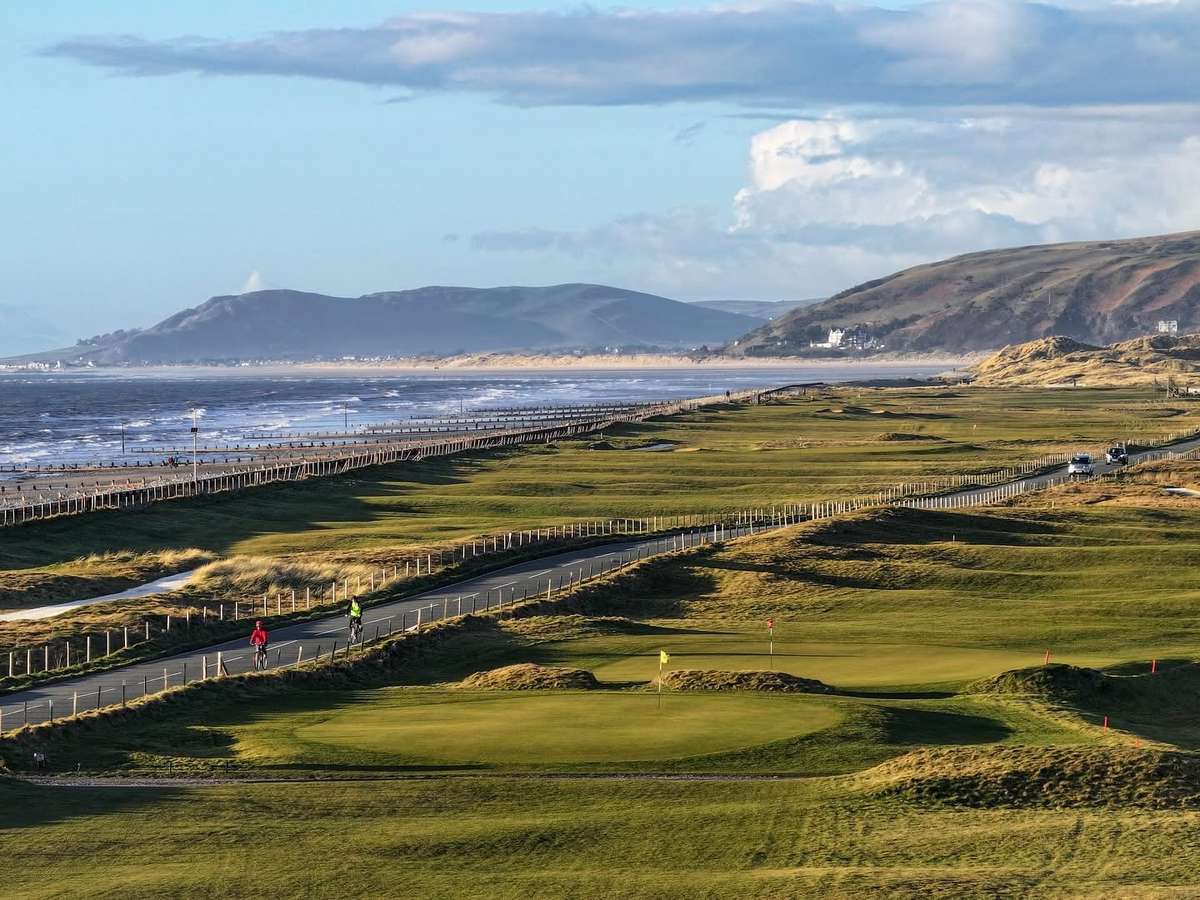
Golf can be an expensive game, particularly when it comes to playing some of the world's best courses. But a memorable round doesn't have to come with a hefty price tag, and there are plenty of excellent layouts where you can enjoy 18 holes without spending more than £50. From championship golf in the United States to traditional links in Britain and Ireland, we've picked out 10 courses from around the world that prove quality and value for money can go hand in hand. Some of the rates depend on the season, day of the week or online booking availability, but each offers the chance to enjoy a quality round without breaking the bank. Gold Mountain Golf Club - Olympic Course (Washington, USA) Washington Ranking: 13th | Green Fees: From US$30 The Olympic Course at Gold Mountain Golf Club is proof that you don't need a famous resort or a hefty green fee to find championship-calibre golf. Part of a 36-hole public facility owned and operated by the City of Bremerton, the course was designed by John Harbottle III and opened in 1996, 25 years after its older sibling, the Cascade Course. The tree-lined layout is slightly hillier than the Cascade but remains eminently walkable, with annual bluegrass covering the tees, fairways and greens. Its quality has been recognised on the national stage, having hosted the U.S. Amateur Public Links Championship in 2006 and the U.S. Junior Amateur Championship in 2011. There are plenty of memorable holes, including the short fourth, the water-guarded ninth and the 188-yard 16th, which plays across a lake to the green. The closing par four also offers a tempting birdie opportunity. With the Cascade Course next door, golfers can make a full day of it, with 36 holes available at a price that remains competitive with many courses charging considerably more for a single round. Green fee note: Online green fees start at US$30 for 18 holes, with rates varying depending on the tee time and availability. Diamond Springs Golf Course (Michigan, USA) Michigan Ranking: 62nd | Green Fees: From US$35 Diamond Springs is a public golf course in Hamilton, Michigan, that demonstrates how affordable golf needn't mean compromising on design. Created by Mike DeVries, whose work at the highly regarded Kingsley Club established his reputation in the state, the course occupies 250 acres of oak and pine-covered sandhills around 30 minutes south-west of Grand Rapids. One of its defining features is the decision to use a single height of cut across much of the playing surface, doing away with traditional rough and keeping maintenance costs down. The result is a course that remains playable for higher handicappers while still offering plenty of strategic interest. The front nine features varied topography and interesting green complexes, but it's the closing stretch that really stands out. The final five holes bring a dramatic ravine into play, with the short par four offering a tempting risk-and-reward opportunity before a memorable finish at the 18th. Green fee note: Start at US$35 for 18 holes walking during April and October, rising to $50 midweek and $60 at weekends during the June–September peak season, all comfortably under £50. George Wright Golf Course (Massachusetts, USA) Massachusetts Ranking: 36th | Green Fees: From US$61 Designed by Donald Ross and opened in 1936, George Wright Golf Course is a municipal layout in Hyde Park, Boston, with a history as interesting as its setting. Built as part of the Works Progress Administration programme during the Great Depression, its construction was a major undertaking, reportedly requiring 60,000 pounds of dynamite to work through the rocky terrain. The result is a distinctive layout that makes excellent use of its natural surroundings, with rocky outcrops, elevation changes and tree-lined fairways providing plenty of character. After a period of neglect, the City of Boston took over its operation at the turn of the millennium and invested in improvements to the greens, irrigation and bunkering. That turnaround was recognised when George Wright became the first municipal course to host the Massachusetts Amateur Championship in 2018. Green fee note: Non-resident 18-hole green fees in 2026 are US$61 Monday to Thursday and $70 at weekends. The weekday rate works out at approximately £46. Kington Golf Club (Herefordshire, England) England Ranking: 65th | Herefordshire Ranking: 1st | Green Fees: From £26 Perched more than 1,000 feet above sea level on Bradnor Hill, Kington Golf Club is the highest 18-hole course in England and one of the country's most distinctive golfing experiences. Designed by C.K. Hutchison and opened in 1926, the layout is renowned for its panoramic views across the Welsh borders, taking in the Brecon Beacons, Black Mountains and Malvern Hills. At less than 6,000 yards, Kington might appear relatively straightforward on the scorecard, but its natural contours and fast-running turf provide a different sort of challenge. There are no bunkers or water hazards, with the sloping fairways and wonderfully quirky greens doing much of the defending. The result is a course that rewards creativity and careful shot-making rather than simply asking golfers to hit the ball as far as possible. Its unusual character has helped build a loyal following among visitors, while its position at the top of the Herefordshire rankings makes it a worthy inclusion. Green fee note: Green fees start at £26, with standard visitor rates varying depending on the time of year and day of play. Even during peak season, an 18-hole round costs no more than £45, including weekends and Bank Holidays Seascale Golf Club (Cumbria, England) England Ranking: 81st | North West England Ranking: 11th | Green Fees: From £35 Founded in 1893, Seascale Golf Club is a traditional links course on the Cumbrian coast, designed by Willie Campbell and George Lowe. Covering less than 100 acres, it makes clever use of its compact setting, with a varied layout that moves across different levels of terrain. The views are a constant feature, taking in the Isle of Man across the Irish Sea and the Lakeland hills inland. Seascale is not especially long by modern standards, but its rolling fairways, natural contours and fast greens provide a test that changes with the wind. The back nine is particularly memorable, from the short 10th, where a stream guards the hole, to the demanding 471-yard 16th. The 17th plays towards the beach, while the closing hole features a distinctive L-shaped green that offers one final challenge. It's an engaging and characterful links experience that deserves its place among England's top 100. Green fee note: High-season visitor rates are £35 for 18 holes midweek and £40 at weekends, keeping Seascale comfortably within the £50 budget. Braid Hills Golf Course (Edinburgh, Scotland) Scotland Ranking: 84th | Green Fees: £41 Set high above Edinburgh, Braid Hills is a public course where panoramic views come with a demanding test of golf. Founded in 1893, the layout was designed by three-time Open Champion Bob Ferguson and Musselburgh clubmaker Peter McEwan. It stretches to 5,858 yards, but its relatively short length should not be mistaken for an easy round. The hilly terrain, sloping lies and native gorse make accuracy and course management essential, particularly when the wind picks up. There are relatively few bunkers, so the challenge is less about avoiding sand and more about finding the right side of the fairway and keeping the ball out of trouble. The par threes at the second and 13th are highlights, while the elevated tee at the 14th offers one of the course's most memorable views. With the Pentland Hills on one side and the Edinburgh skyline stretching towards the Firth of Forth on the other, Braid Hills pairs a challenging round with some of the city's finest golf-course views. Green fee note: The standard visitor rate is £41 for 18 holes, making Braid Hills one of the more affordable options in Edinburgh without restricting play to winter or weekday tee times. Borth & Ynyslas Golf Club (Ceredigion, Wales) Wales Ranking: 17th | Green Fees: From £45 Borth & Ynyslas is a classic Welsh links course with a history stretching back to 1885 and a strong claim to being the oldest golf course in Wales. Its location along Cardigan Bay, within the Dyfi National Nature Reserve, gives it a distinctive setting, while Harry Colt's redesign in 1947 helped shape the layout that remains largely intact today. At just over 6,000 yards, it is not particularly long, but the coastal conditions can make it a considerably tougher proposition. The traditional out-and-back layout runs alongside the shoreline, with the railway and road forming boundaries on the other side of the fairways. Rolling humps, hollows and strategically placed bunkers provide much of the challenge, while the prevailing coastal wind rarely makes life straightforward. The second is a particularly memorable hole, a 454-yard par four squeezed between the road and the Irish Sea. With level terrain and easy walking, it is also the sort of course that might tempt golfers into a second round. Green fee note: 2026 summer green fees are £49.50 for individual visitors playing 18 holes, dropping to £44 per person for groups of seven or more. Winter rates for 2026/27 start at £45. Aberystwyth Golf Club (Aberystwyth, Wales) Wales Ranking: 46th | Green Fees: From £35 Aberystwyth is a Harry Vardon design that combines elevated golf with some of the finest coastal views in Mid Wales. Founded in 1911, the club opened its 18-hole course in 1913, with Vardon – a six-time Open Champion – responsible for the original layout. Sitting above the university town, the course enjoys sweeping views across Cardigan Bay, with the coastline stretching towards the Llyn Peninsula and Pembrokeshire. At just over 6,100 yards, it is not an especially long course, but the undulating terrain and exposed position provide plenty of variety. The layout moves between downland and parkland holes, with elevation changes adding another dimension to the challenge. The first is an interesting opening hole, with a stream cutting across the fairway to guard the approach, while the short 14th features an elevated green protected by fairway bunkers. The views from the higher holes are a highlight, making this an enjoyable round for golfers visiting the Welsh coast. Green fee note: The 2026 summer rate is £60 when booked through the office, but online bookings receive a £10 discount, bringing the 18-hole green fee to £50. The 2026/27 winter rate is £45 through the office, or £35 online. Corballis Links Golf Club (Dublin, Ireland) Ireland Ranking: 46th | Green Fees: From €25 Corballis Links has more than a century of golfing history, with its original holes laid out in 1906 by employees of the nearby Portrane Hospital. The course has since undergone several changes, with architect Ron Kirby responsible for the modern layout and a particularly memorable stretch of holes along the coastline at Donabate. Owned by Fingal County Council, Corballis is Ireland's only public links course, offering visitors the chance to experience genuine coastal golf without the price tag associated with many of the country's better-known venues. Its par-65 layout is relatively short, but that doesn't make it an easy round. Blind shots through the dunes, elevated greens and exposed fairways place a premium on accuracy and good course management, while the wind can make club selection a challenge. The views across the Irish Sea towards Lambay Island are another highlight, particularly on the coastal holes. Green fee note: The club advertises midweek visitor rates from €25, with weekend rounds from €35. Open competitions are available on Mondays, Wednesdays and Fridays from €30. Cart, trolley and club hire are extra. Metropolitan Golf Club (Western Cape, South Africa) Western Cape Ranking: 31st | Green Fees: R960 Founded in 1895 as the Green and Sea Point Golf Club, Metropolitan has been part of Cape Town's golfing landscape for more than 130 years. Its present-day course, however, is a much more modern creation. When the original layout made way for Cape Town Stadium ahead of the 2010 FIFA World Cup, architect Mark Muller was tasked with creating a new course alongside the stadium and Green Point Urban Park. The result is an unusual layout that delivers 18 holes across just nine fairways and 14 greens, using different tee positions and putting surfaces to create two distinct loops. Wide fairways make it accessible to golfers of varying abilities, while the coastal wind and subtle contours provide plenty to think about. The setting is hard to beat, with Table Mountain and the Atlantic providing a spectacular backdrop, while the closing par three played across water towards the clubhouse is a memorable way to finish. Green fee note: The 2026/27 non-affiliated visitor rate is R960 for 18 holes, approximately £43. Visitors are welcome Sunday to Friday, with caddies, club hire and carts available at additional cost.
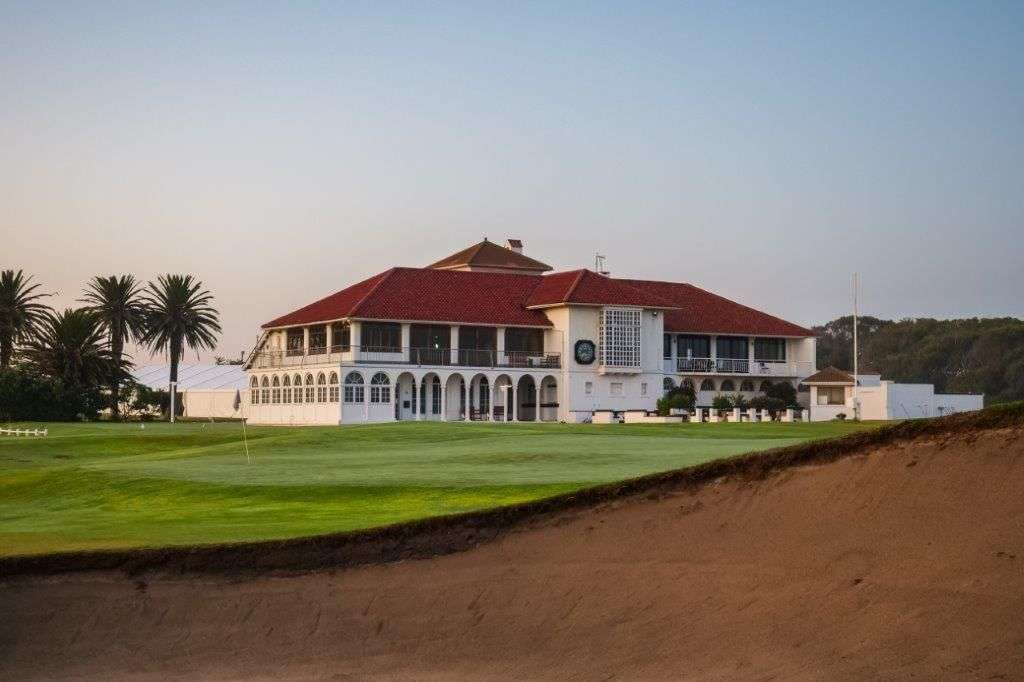
Humewood Golf Club was rated by the late, great Bobby Locke as one of the best links courses he’d ever played and for a man with four Open Championships to his name between 1949 and 1957, he was certainly well qualified to voice such an opinion.
Dr Charles M Murray invited a representative from the English design partnership of Cecil Hutchison, Sir Guy Campbell and Colonel Stafford Vere Hotchkin to visit South Africa in 1929 and it was Hotchkin – of Woodhall Spa fame in Lincolnshire – who laid out the 18 holes. Unusually, the original course had a par of 76, thanks to a configuration that included no fewer than eight par fives.
Four of these holes (4, 8, 10 and 13) have since been reconfigured as par fours but the intuitive double loop routing has remained intact. More recently, Donald Steel re-bunkered a number of holes in the 1980s then all the greens were replaced by Golf Data in 2008, when a burn was also introduced in front of the par five 17th green.
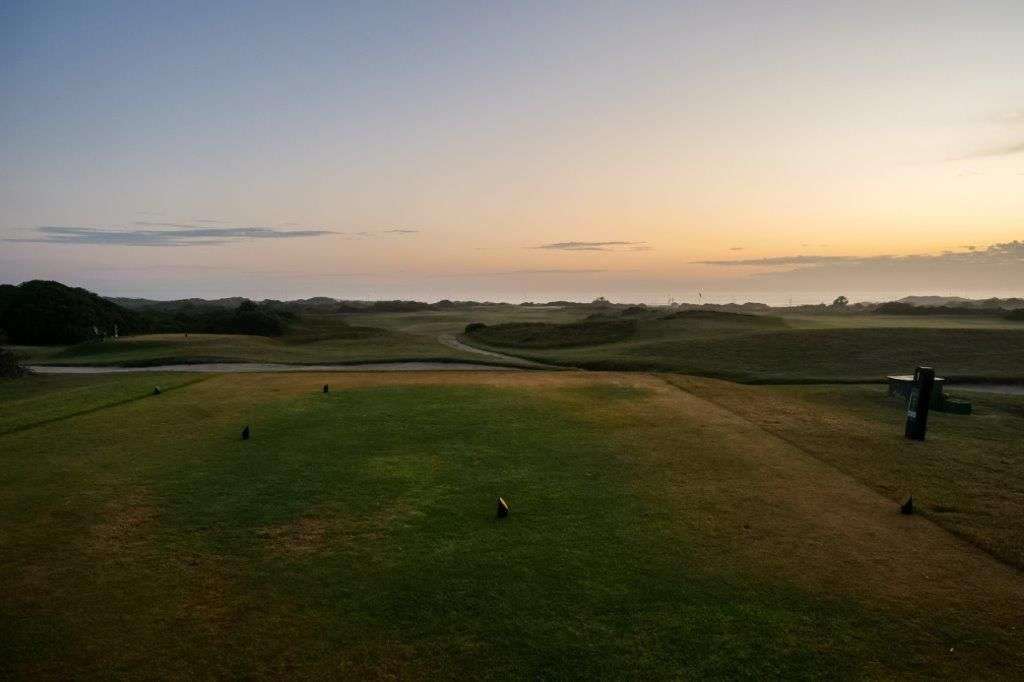
The signature hole on the course is the 449-yard, par four, 13th. An arrow-straight uphill hole, it normally plays into the prevailing wind and its elevated green is tucked behind a dune with a deep bunker to the left and a waste area to the right of the putting surface.
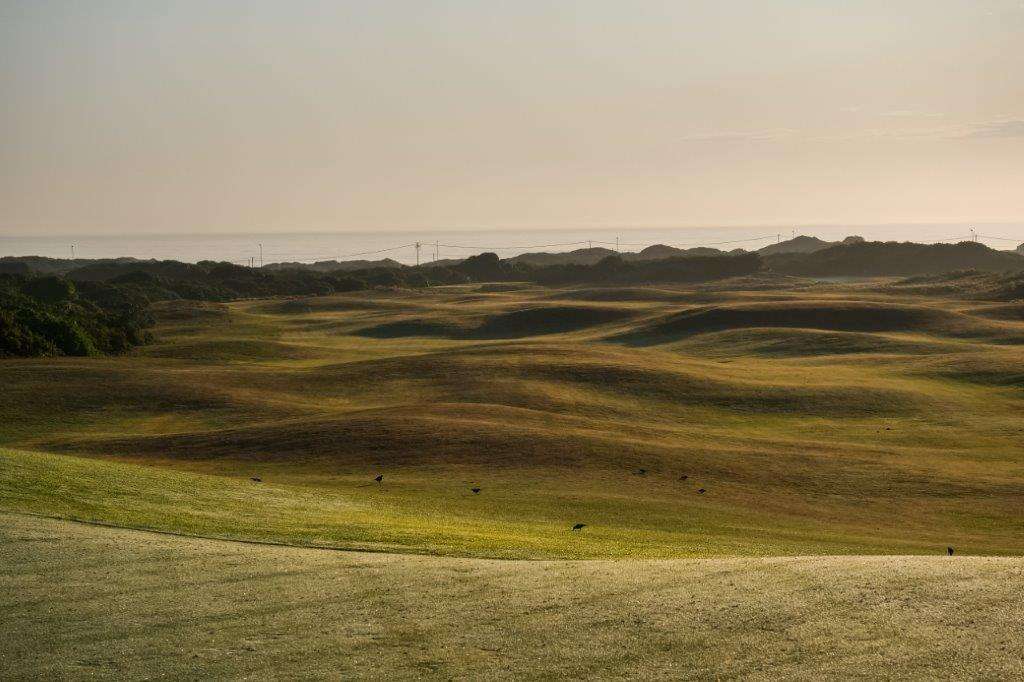
Located in the sand dunes of Algoa Bay, just south of Port Elizabeth, Humewood is a fine test of links golf where fairways are generally wide to compensate for the strong winds that can blow in off the Indian Ocean but concessions to the elements end there. The rough can be penal in places, and is complemented by dense coastal bush flanking some of the holes, which makes straight driving a priority.
Bunkers on the course are not plentiful but penal whilst fairway rough largely consists of dense coastal bush that will devour stray shots. Greens are firm and fast, requiring a sure putting touch – which was certainly needed when the South African Open returned for the fifth time to this top class links in 2006 (won by Ernie Els).
Writing in True Links, authors George Peper and Malcolm Campbell commented as follows: “Humewood, in the coastal city of Port Elizabeth, South Africa, is a bona fide links, Kikuyu and Bermuda grass – two notoriously poor links grasses – cover the fairways, and yet those fairways bounce and roll as if they were in Great Britain. Somehow Humewood not only exists but thrives, the world’s only links whose resident fauna include meerkats and monkeys.”