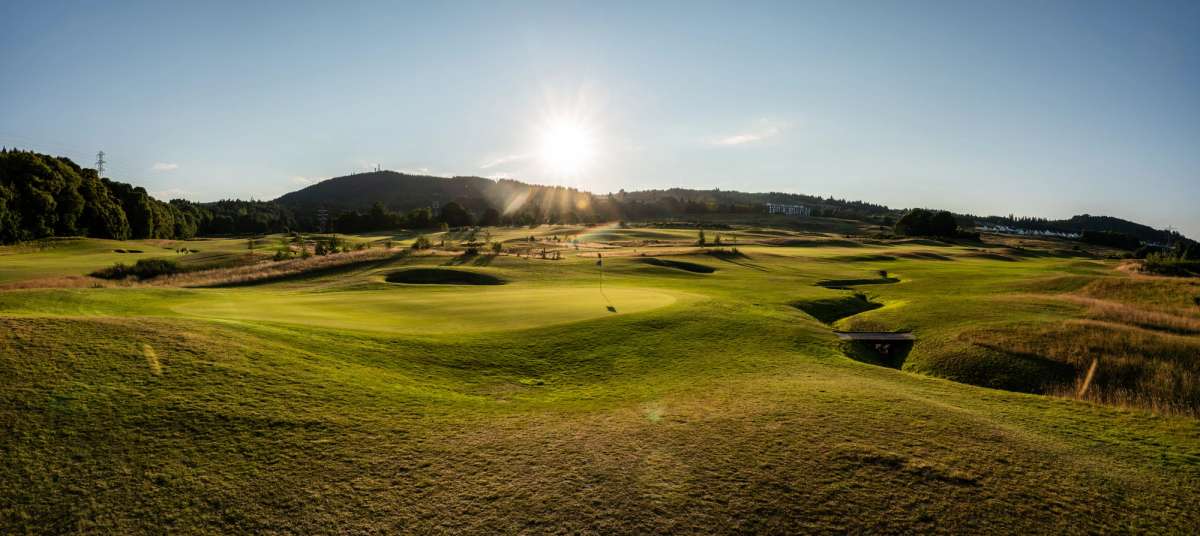
Inverness Golf Club is a parkland course that has been used in the past to hold the Northern Open for Scottish golf professionals.
Inverness Golf Club is a parkland course that has been used in the past to hold the Northern Open for Scottish golf professionals.
Inverness Golf Club

4
The routing of the opening five holes at Inverness Golf Club is not exactly inspirational as they make their way back and forward, side by side, on level ground in front of the clubhouse. All that changes at the 6th though, as the hole doglegs down to the left to a green protected by a fast flowing burn and the round really got under way from here.
The next three holes are played over terrain that pleasantly rises and falls (with water to be avoided again) before the 10th takes you to the main road where the next five holes are played out on the other side. The 12th is a marvellous driving hole (unfortunately, the tree foliage to the right now obscures most of the views over the city) and both short holes during this loop are very good (I loved the two coffin bunkers to the left of the 15th green).
The closing trio of holes are played back on the other side of the road and the final hole presents itself as a daunting finish to the round with its two large inviting bunkers either side of the 18th green. The greens were in excellent shape when I played (even though it poured with rain for most of the round) and both fairway and greenside bunkers were in truly exceptional condition. A well manicured course measuring just under 5,800 yards from the yellow tees for a par of 67 that will take some good golf to match.
Jim McCann
Jim McCann
The latest ranking of the Top 100 Golf Courses in the World serves as the ultimate global golf bucket list. Most members of our World Top 100 Panel are seasoned golfers, each playing 20-30 of these courses annually while travelling extensively over decades to form their opinions on others. We recognise that opinions vary—even among our panel members. Rankings are subjective, and there are undoubtedly 50 or more courses in the UK and USA alone that could easily fit onto this list. Links Golf Pilgrimages The rankings
California, United States
New Jersey, United States
Northern Ireland, United Kingdom
New York, United States
New York, United States
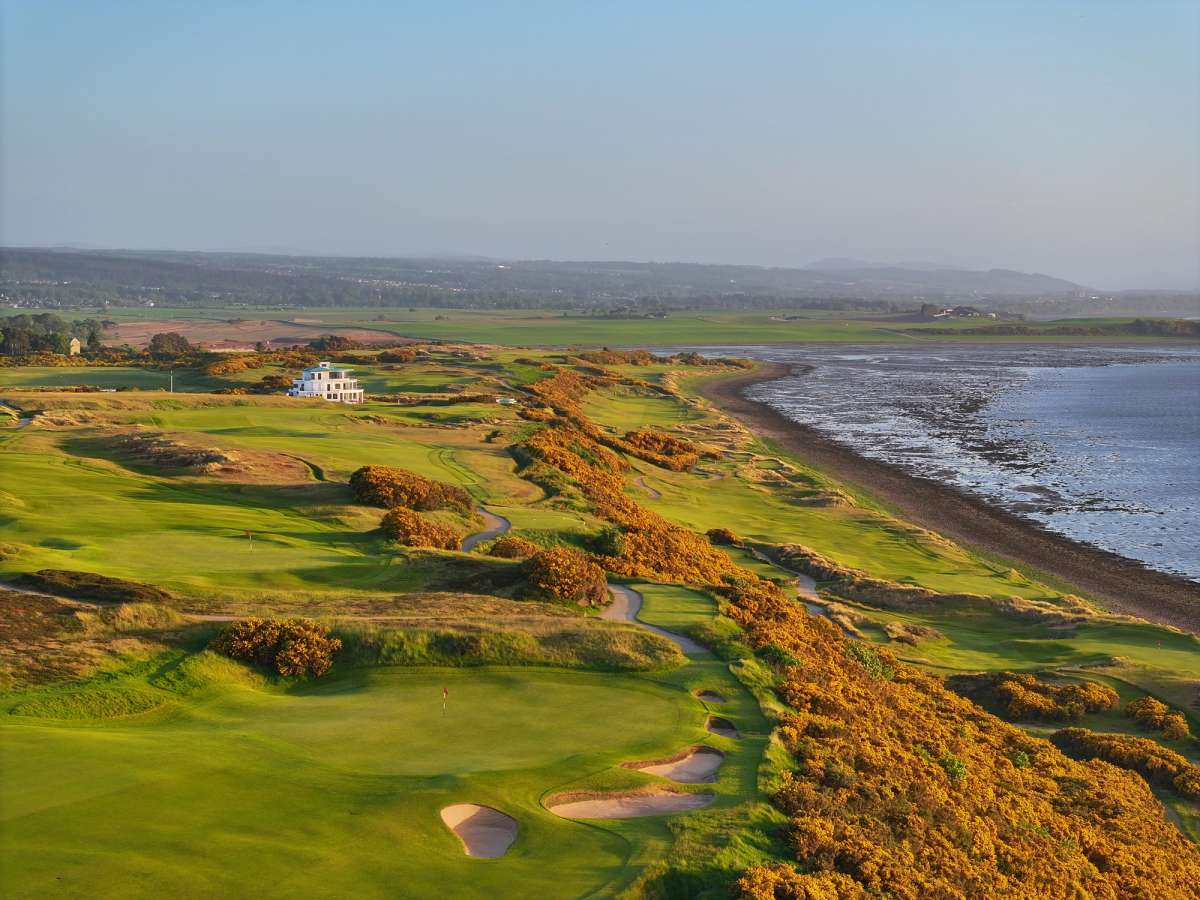
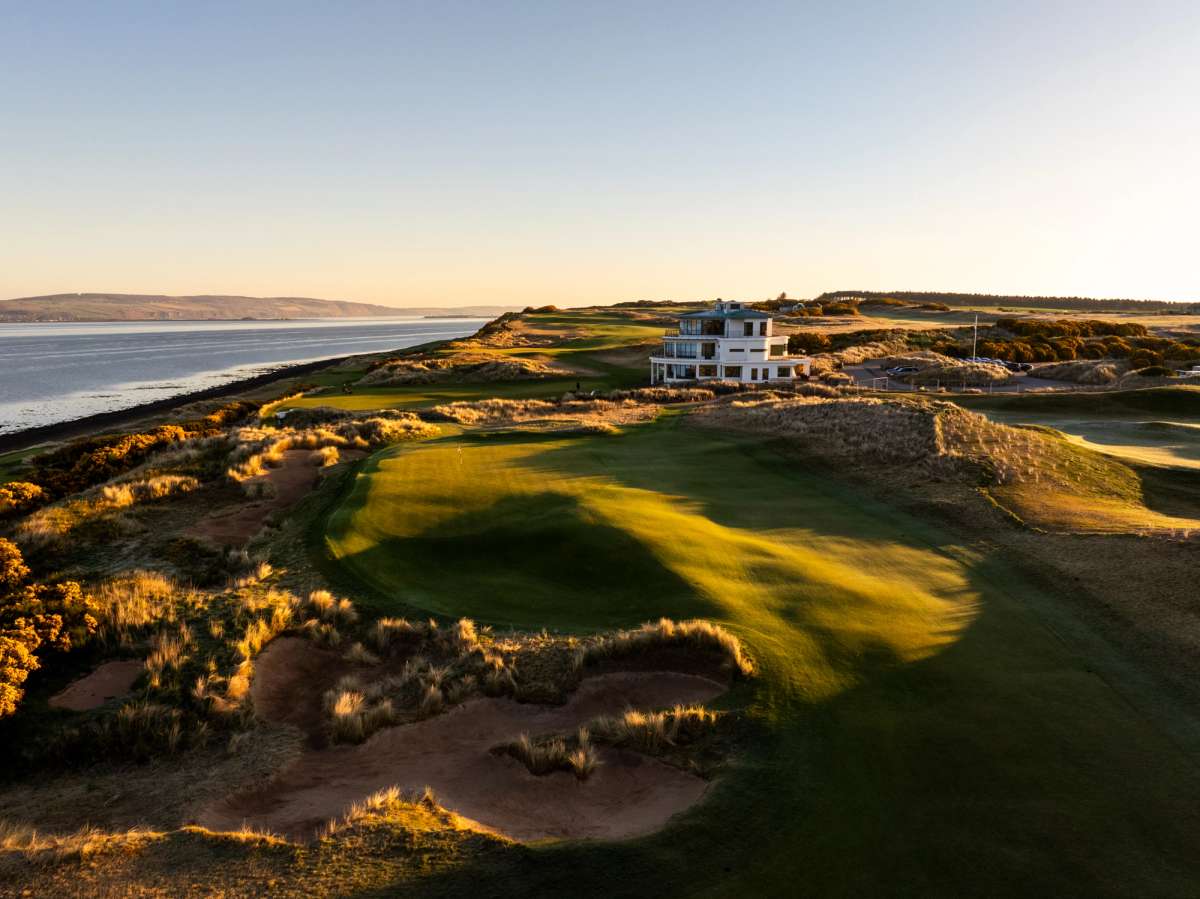
Few regions in golf can match the concentrated quality found within an easy drive of Inverness. The Highland capital sits at the centre of a circuit that takes in Royal Dornoch, Cabot Highlands, Nairn, Brora and a supporting cast of links courses that would be headline attractions almost anywhere else in the world. What makes the Inverness region genuinely special is the combination of world-class golf and genuine accessibility. Inverness Airport receives direct flights from London, Amsterdam and several European cities, and the city itself is a comfortable, well-served base with excellent hotels and restaurants. The courses here are open to visitors, the locals are welcoming, and the long summer days mean you can cram extraordinary value into every trip. The Highlands have a microclimate that surprises most first-time visitors. When the rest of Scotland is under cloud, the strip of coastline running from Inverness north to Dornoch and beyond often basks in sunshine. Golf writers speak of this phenomenon reverently, and it is real enough that locals regard it as one of the region’s open secrets. Inverness Golf: Why It Should Be on Your List The case for an Inverness golf holiday builds quickly once you start looking at the map. The density of Top 100-ranked courses within striking distance of the city is genuinely remarkable, and visitor access is far more straightforward than the coastal resorts of East Lothian or the Ayrshire coast. Royal Dornoch consistently ranks among the top ten courses in the world, yet green fees remain considerably lower than comparable links on the Open rota Cabot Highlands (formerly Castle Stuart) now operates two 18-hole links courses following the 2025/26 opening of Tom Doak’s Old Petty, creating one of Scotland’s most exciting 36-hole venues Nairn and Brora offer championship-quality links with a fraction of the waiting times and booking anxiety of more famous venues A James Braid trail threads through the Highlands, connecting courses designed or remodelled by the five-times Open champion at Brora, Fortrose & Rosemarkie, Inverness and beyond Summer golf until 10.30 pm in June and July, with twilight tee times available at Royal Dornoch and Cabot Highlands for those who want to maximise every long daylight hour ⛳ The Highland Region’s Finest Golf Courses The stretch of coastline north and east of Inverness contains more world-ranked links than almost any comparable area in golf. These are courses that have shaped the game’s history and continue to set the standard for what links golf at its purest can be. Royal Dornoch Championship Course The Royal Dornoch Championship Course sits 45 miles north of Inverness and consistently appears in the world’s top ten courses. Golf has been played on this stretch of natural linksland since 1616, and Old Tom Morris shaped the formal layout when he visited in 1886, creating the famous plateau greens that have puzzled and delighted golfers ever since. Tom Watson, an honorary member, described it as the most fun he had ever had playing golf. Andrew Carnegie, who lived in Dornoch, called the town “heaven on earth.” The first eight holes follow the ridge of dunes at the upper inland perimeter before the course turns back towards the sea; the two par threes at the 2nd and 6th are devilishly difficult and define how the round will go. Cabot Highlands (Castle Stuart & Old Petty) Cabot Highlands Castle Stuart sits on the southern shores of the Moray Firth, a ten-minute drive from Inverness city centre. When American developer Mark Parsinen and architect Gil Hanse opened Castle Stuart in 2009, it immediately took its place among Scotland’s modern classics. Four Scottish Open appearances between 2011 and 2016 confirmed the course’s championship credentials, with Luke Donald, Phil Mickelson and Alexander Norén among the winners. Unlike traditional links courses that sit flat against the sea, Castle Stuart rises dramatically above the Firth, delivering panoramic views of the Black Isle and the Highland mountains from every hole. Old Petty, which takes its name from a 400-year-old castle on the grounds, opened for play in 2025/26 and meanders along the Moray Firth shoreline and through hillsides on a very different piece of ground to Castle Stuart. Cabot Highlands now stands as one of Scotland’s most compelling 36-hole destinations. On-site accommodation and stay-and-play packages are available directly through Cabot Highlands. Nairn Golf Club Nairn sits 15 miles east of Inverness along the Moray Firth coast and delivers the full experience of traditional Scottish links golf. The championship course is a classic out-and-back layout with the sea visible on every hole, and recent improvements by architect Tom Mackenzie have significantly enhanced the test without compromising the course’s inherent character. The fairways run fast in summer, the greens become famously true and quick, and the coastal breeze adds an exhilarating layer of difficulty. Nairn has hosted the Amateur Championship and the Walker Cup, underscoring its standing as a serious test of golf. Brora Golf Club Brora Golf Club lies 25 miles north of Dornoch along the A9, and for many seasoned golfers it represents the Highland visit that stays with them longest. The late Peter Thomson, five-times Open champion, named Brora his favourite course in the world. James Braid redesigned it in 1923, and virtually nothing has changed since, making it one of the most authentic and undisturbed links experiences in Scotland. The opening nine holes run very close to the North Sea with no dunes to obscure the view – when the wind arrives off the water, golfers earn their scorecard. 💎 Hidden Gems Worth the Journey The courses described above would anchor any great golf trip, but the Inverness region has a supporting cast that most visitors never discover. These are courses where the welcome is warm, the pace of play refreshing, and the scenery no less spectacular. Fortrose & Rosemarkie Golf Club Twenty minutes north of Inverness on the Black Isle, Fortrose & Rosemarkie occupies an extraordinary narrow peninsula almost entirely encircled by the Moray Firth. The club was founded in 1793, making it the 15th oldest in the world, and James Braid redesigned the course in 1932. Eight of the first holes play with the sea no more than a few paces away, and the resident pod of bottlenose dolphins is often visible feeding just off the fairways. This is not a long course at approximately 6,000 yards, but the gorse-framed fairways, small undulating greens and crosswinds sweeping across the peninsula demand precision. Tain Golf Club Forty minutes north of Inverness along the Dornoch Firth, Tain Golf Club is another Old Tom Morris layout, originally designed in 1890 as St Duthus Golf Club. The course has been compared to Carnoustie for its combination of bumpy fairways, penal pot bunkers and genuine links challenge, but it sits in a beautifully sheltered position that allows year-round play when coastal courses to the north are battling the elements. Recent gorse removal has opened up the routing and improved the flow significantly. Tain is often combined with Brora and Golspie. Nairn Dunbar Golf Club The second links course in Nairn offers championship-quality golf at a considerably lower price point than its more famous neighbour. Nairn Dunbar opened in 1899 along the Moray Firth coast. The raw beauty of the linksmmakes every round a genuine test. A partnership ticket playing one round each at Nairn and Nairn Dunbar represents one of the best value propositions in Highland golf. ✈️ Getting There and Getting About Getting to Inverness Inverness Airport (INV) serves the region with direct flights from London Heathrow, Gatwick, Luton, Stansted and Bristol, plus Amsterdam, Dublin and several other European cities. The city is also reachable by train from Edinburgh (approximately 3.5 hours) and Glasgow (approximately 3 hours), making Inverness well-connected for those who prefer not to fly. International visitors connecting through Edinburgh or Glasgow can hire a car and drive north in three to four hours, a journey that passes through some of Scotland’s most dramatic scenery. Getting Around A hire car is the practical choice for a golf trip based in Inverness. All the major courses are between 20 minutes and 90 minutes from the city, and public transport connections to courses in Brora, Dornoch or Fortrose are limited for golfers carrying clubs. Hire cars are available from Inverness Airport from all major companies; book well in advance for peak summer weeks. Distances are not enormous by Scottish standards: Royal Dornoch is approximately 65km (40 miles) north, Brora approximately 95km (60 miles) north, and Nairn approximately 25km (16 miles) east. Weather and Packing The Highland microclimate around Inverness and the Moray Firth is genuinely more benign than Scotland’s reputation suggests. Summer temperatures typically range from 15°C–20°C (59°F–68°F) with long dry spells possible. Rain can arrive without warning at any time of year. 🏨 Where to Stay for an Inverness Golf Holiday Inverness city centre offers the most practical base for a multi-course Highland golf trip. The cluster of quality hotels within a mile of each other allows golfers to walk between restaurants, bars and the city’s compact centre, whilst being well placed for the road north and east to the main courses. Golf Resort Options Cabot Highlands operates on-site accommodation directly on the Castle Stuart estate, placing guests within walking distance of two championship links courses. This suits golfers who want to immerse themselves entirely in the Cabot experience over two or three days. Links House at Royal Dornoch in Dornoch itself is the premium option for those committed to Dornoch as a base; the property is small, exclusive and puts guests a short walk from the first tee of one of the world’s finest courses. Guesthouses and B&Bs Inverness has a strong tradition of quality B&Bs and guesthouses, particularly on the streets running south from the city centre towards the golf club. These offer better value than the main hotels, often with the warm Highland hospitality that creates the best travel memories. 🏞️ Explore Beyond the Fairways Inverness and the surrounding Highlands offer non-golfing companions an itinerary every bit as compelling as the courses. Loch Ness begins a 20-minute drive south of the city and remains one of the world’s most captivating landscapes regardless of any mythological considerations. Urquhart Castle, on the loch’s western bank, is among Scotland’s most photographed ruins. Culloden Battlefield, six miles east of Inverness, is one of the most affecting historical sites in Britain – the 1746 battle that ended the Jacobite rising is told with exceptional clarity at the modern visitor centre. Fort George, 11 miles northeast of Inverness on the Moray Firth coast, is one of the finest and most complete 18th-century military fortifications in Europe and conveniently sits near Fortrose & Rosemarkie for a combined day out. Chanonry Point, just past the golf course, is one of Scotland’s most reliable places to spot bottlenose dolphins from dry land, particularly around incoming tides. The North Coast 500, Scotland’s celebrated scenic driving route, passes through Inverness and provides context for the spectacular landscapes that surround every golf course in the region. Distillery tours give the Inverness trip an additional dimension. The Tomatin Distillery is 15 miles south on the A9, while the Speyside region to the south and east contains dozens of distilleries on the Malt Whisky Trail. Afternoon fishing on the River Ness, guided wildlife tours of the Cairngorms and sea kayaking on the Moray Firth round out the activity options for those with days between courses. 💡 Insider Knowledge for Highland Golf Book Royal Dornoch first, then plan everything else around it. Peak summer tee times disappear months in advance; securing Dornoch should be the first act of trip planning Embrace the twilight. In June and July, 6 pm tee times at Royal Dornoch and Cabot Highlands are not a compromise; they are an experience. Finishing at 10 pm with the Firth still lit is something that stays with golfers for years. Don’t skip Brora. At approximately £95 it is the best value round in Scottish links golf. Build the trip around it, not around saving an hour on the road Check the weather by course, not by city. The Highland microclimate means Dornoch can be sunny when Inverness is overcast, and Brora can be blowing a gale while Nairn plays in calm. Build in some scheduling flexibility. Drive north, not south. Most visitors use Inverness as a gateway south to the Cairngorms, but the driving north along the A9 to Dornoch and Brora is among the finest road journeys in Scotland. Shoulder Season Value September and October represent the best combination of quality golf, manageable green fees and reduced booking pressure. Those who know go in the autumn and are rewarded. 🏴 The Highland Golf Trip, Planned An Inverness golf holiday rewards both the serious golf traveller and the first-time visitor to Scotland with equal generosity. The combination of Royal Dornoch’s historic perfection, Cabot Highlands’ cinematic drama, Nairn’s classic links discipline and Brora’s authentic wildness creates a trip that covers the full range of what Scottish golf can be. The supporting cast of Fortrose & Rosemarkie, Tain, and Nairn Dunbar means no two Highland golf trips need to be identical. The city of Inverness provides a genuinely comfortable and well-served base throughout. Its restaurants, hotels and direct flight connections remove the logistical complications that can make Scottish Highland golf feel like an expedition. Book early, pack properly, embrace the microclimate and discover why golfers who make the journey north from Inverness Airport tend to plan their return before they have reached the car park.

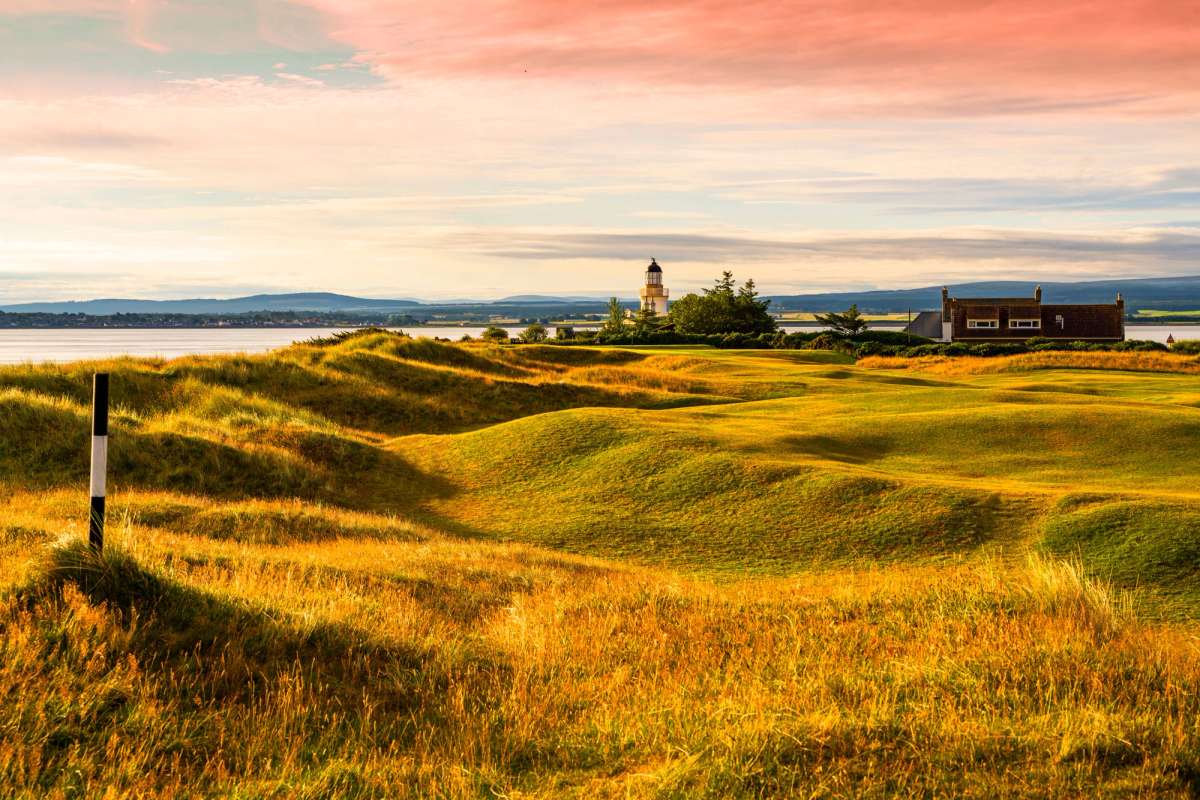
A good halfway house can turn a great round of golf into a memorable one. It might be a cold beer on a Scottish links, a burger with a spectacular view or a hot drink to warm you up before the back nine. Whatever is on offer, the best halfway houses give golfers a chance to forget about the scorecard for a few minutes and enjoy the experience. We recently asked the Top100 Golf Courses community to share their favourite halfway houses, uncovering plenty of memorable stops around the world. We've picked five of their recommendations, alongside five more renowned halfway houses that are well worth knowing about. What is a Halfway House? A halfway house is a food and drink stop positioned around the turn of a golf course, usually between the ninth and 10th holes. Some are little more than a hut serving snacks and drinks, while others have become destinations in their own right, offering everything from full meals and cocktails to fires, views and plenty of local character. Five Halfway Houses Chosen by the Top100 Community Sunningdale Golf Club (England) There is a reason the halfway hut at Sunningdale has become one of the most famous refreshment stops in golf. The small Swiss-chalet-style building has been in place since 1903, sitting where the ninth holes of both the Old and New Courses meet their respective 10th holes. But the building itself isn't the main attraction. That would be the sausage sandwich. Sunningdale's legendary hut serves a simple sausage on buttered bread, with other food and refreshments available alongside it. The hut has become such an established part of the experience that the club's own tradition says everybody stops, but does so speedily. It's not fancy, and that's rather the point. After nine holes of heather-lined fairways, a hot sausage sandwich and a cup of tea can feel like exactly what golf ordered. Nairn Golf Club - The Bothy at Nairn (Scotland) The Bothy at Nairn has a history that goes well beyond golf. Built in 1877, the stone building and neighbouring icehouse formed part of the Easter Delnies Fishing Station, one of five salmon fisheries operating along the coast between Nairn and the mouth of the Findhorn. In a good season, the fishery could catch up to 5,000 salmon, with ice collected from local rivers and a specially made pond and stored in the icehouse to keep the catch fresh. The buildings have since been given a new lease of life, with the Bothy converted into a halfway house where golfers can stop for snacks and refreshments at the turn. On a cold day beside the Moray Firth, there's also a fireplace to warm up beside. The historic stone building, Highland setting and views across the course provide plenty of atmosphere. One of our community members put it rather simply: a dram of whisky and a fire are hard to beat. Hard to argue with that. Turnberry Ailsa (Scotland) Turnberry's halfway house is about as far removed from the traditional golf hut as you can get. The Ailsa's ninth hole now finishes beside the famous Turnberry Lighthouse, which doubles as a halfway house for golfers. The lighthouse itself dates back to 1873, while the golf course's dramatic ninth was redesigned as part of the Ailsa's major renovation. Inside, golfers can stop for food and drink before heading to the 10th, but the real attraction is outside. From the lighthouse, there are views across the Firth of Clyde towards the Isle of Arran and Ailsa Craig. It's a halfway stop that feels more like a destination than a quick pit stop. When your halfway house is a historic lighthouse overlooking one of Scotland's most spectacular stretches of coastline, you've got a pretty good excuse to take your time. Ardglass Golf Club (Northern Ireland) At Ardglass, the halfway-house experience is wonderfully straightforward: have a Guinness and enjoy the view. The course's old cottage halfway house at the back of the 7th green has become one of its most memorable features, with golfers able to stop for a pint before continuing their round. A recent visitor described it as a gorgeous cottage with Guinness, while another praised the combination of a Guinness, sausage roll and views over the Irish Sea. It fits Ardglass perfectly. The County Down links is already one of the most dramatic places to play golf in Northern Ireland, with the Irish Sea never far away. Add a pint of Guinness just before the turn and you've got a halfway house that feels distinctly of its surroundings. Sometimes you don't need to reinvent the wheel. Blair Atholl Golf Estate (South Africa) Blair Atholl might have been one of the less obvious names to appear among the community recommendations, but the descriptions made it impossible to leave out. The halfway stop sounds less like a quick break and more like an event. One golfer highlighted the chicken burger, a chef cooking a barbecue beneath the trees and a deck sitting beneath a stream. Another mentioned silver-service high tea. That's quite the halfway-house menu. It's also a good example of why the best stops aren't necessarily the most famous. A halfway house can become memorable because of the food, the setting or simply the feeling that you're being looked after rather than rushed back onto the course. Five More Renowned Halfway Houses St Andrews Links - The Old Course (Scotland) If we're talking about halfway houses, it makes sense to visit the place that has a claim to starting the tradition. In the 19th century, David "Old Da" Anderson sold ginger beer and other refreshments from a cart on the Old Course at St Andrews. It has been described as golf's first refreshment stand. The modern version sits behind the ninth green and keeps the tradition going, albeit with a rather more substantial menu. The pork and haggis sausage roll is a popular choice, while the club's own Tom Morris 1821 Lager provides a suitably Scottish accompaniment. It's difficult to think of a more fitting place for a halfway stop. The Old Course is steeped in golfing history, and even the break between nines has a story of its own. Pine Valley Golf Club (New Jersey, United States) Pine Valley's halfway house is memorable before you've even ordered anything. Rather than a conventional hut, it is built into the base of an old water tower, which golfers encounter around the eighth hole and again near the 12th tee. It's an appropriately unusual feature for one of the world's most unconventional golf courses. The tower doubles as a stop for drinks and snacks, giving golfers a chance to take a breather before continuing around Pine Valley. It even boasts an impressive collection of golf balls from around the world. There aren't many halfway houses that can claim to be built inside a water tower. Quivira Golf Club (Baja California Sur, Mexico) Quivira has taken the halfway-house concept and spread it across the entire round. The Jack Nicklaus-designed course has multiple all-inclusive comfort stations, each offering golfers food and drinks as they make their way around the Cabo San Lucas layout. The most spectacular is The Cliffs, perched almost 300 feet above the Pacific, where golfers can stop for a breakfast burrito and take in the views over the ocean. Then there's The Oasis, the main halfway house near the ninth green. Here, the emphasis is on the food, with freshly prepared Baja cuisine including tacos and tostadas, alongside a full tequila bar. A final stop, Cañada, sits near the 16th tee, while another comfort station beside the oceanfront practice facility offers snacks and cold drinks before golfers even reach the first tee. The food and refreshments are included in the green fee, making Quivira's comfort stations much more than somewhere to grab a quick drink. Tacos, tequila and spectacular Pacific Ocean views make the breaks almost as memorable as the golf. Whistling Rock Country Club (South Korea) At Whistling Rock, there isn't just one halfway house to look forward to. The South Korean club is made up of three nine-hole loops, each with its own themed tea house: Cocoon, Temple and Cloud. The three buildings are each distinctly different. One is a rounded structure between a lake and forest, another is a formal wood-and-glass building, while the Cloud tea house sits high among the trees. The result is a halfway-house experience that feels distinctly different depending on which nine you're playing, with each tea house adding another layer to the Whistling Rock experience. Royal Dornoch Golf Club (Scotland) Royal Dornoch's halfway house is proof that sometimes the best idea is a simple one. The stop sits behind the ninth green of the Championship Course, with views back across the links towards the Dornoch Firth. And then there's the traditional order: hot chocolate with Bailey's Irish Cream, a combination that makes considerably more sense when you're standing on a Scottish links in a North Sea wind. It's a small detail, but one that has become part of the Royal Dornoch experience and exactly the sort of halfway-house tradition golfers remember.

For generations, 18 holes has been the accepted standard for a round of golf. But with people becoming increasingly time-poor, a growing number of clubs are questioning whether it still needs to be the default. After running into financial difficulties in 2019, Eastwood Golf Club - a moorland course on the outskirts of Glasgow in Scotland's central belt - was forced to appoint an administrator and shut its doors after 126 years in operation. Enter Glasgow-based property developer Colin Whitelaw, who took over the land at the end of 2019, three months before the Covid-19 pandemic forced a change in his plans. “Instead of thinking it was a land deal, I had to really think about whether I was going to continue maintaining the golf course,” Whitelaw told Top100 Golf Courses. “That was the big issue, and wondering whether there was value in that. We decided there would be.” As a member of Prestwick Golf Club, where the first nine Open Championships were played over the layout, and a long-time player at Shiskine Golf Club on the Isle of Arran, Whitelaw was familiar with the concept of a shorter format. “We’ve played Shiskine for 35 years or something and just loved the whole idea of going out and playing for two-and-a-quarter hours…. It’s just a lovely number.” Whitelaw said he reflected on the fact that there were a handful of 18-hole members-only clubs in and around the south side of Glasgow that he would have to compete with if he kept the original layout of Eastwood Golf Club. “Why would we establish another 18-hole members-only course that had already failed?” he said. The idea for a 12-hole course was developed in 2021, with Eastwood Twelve opening its gates in June 2025. ‘It’s been a rollercoaster’: Building Eastwood Twelve Eastwood's existing parcel of land contained a collection of holes that Whitelaw believed could work in the shorter format. The resulting course has five par threes and seven par fours, including two par fours of more than 400 yards. “It’s actually a very good test of golf, and we established a set of three tees so we could have something for the higher handicappers, but a real challenge for the low handicappers,” Whitelaw said. Just over a year after opening, Eastwood Twelve has amassed more than 320 members. Roughly half of its rounds are being played by visitors. Whitelaw said there was plenty of demand after opening, with curious visitors coming from afar to test the new layout, and that the club’s only hiccup this year was the “appalling” weather during spring, which he estimated had lost them 10% of their turnover. “It’s been a rollercoaster… but it’s all going in the right direction,” he said. The club has also taken a different approach to marketing. Whitelaw credits his daughter Samantha, the club's general manager, with building its presence on social media platforms Instagram and TikTok. “The power of Instagram and TikTok has driven our business, without a doubt. If you look at our figures in terms of followers, it’s quite amazing for a wee company. That’s been a big eye-opener for me.” The result has been a club that draws both members and visitors, rather than relying solely on traditional membership. ‘That’s a brilliant number’: The Two-And-A-Quarter Golf Round Whitelaw said a lot of people want to get out and hit a ball, but many think that 18 holes is too many and 9 isn’t enough. “When people come off the golf course… particularly the ones that have not been before, the first thing they say is, ‘12 holes, that’s a brilliant number’. “To get dressed up, to get your kit out and go out for an hour-and-a-half is just not quite enough, but to go out for 12 holes, two-and-a-quarter hours, is a much better prospect.” As for the demographic of golfers attracted by Eastwood Twelve, Whitelaw said the vast majority were time-precious people aged 30 to 50 who would play before, after or during the working day for a few hours. “We have a lot of business owners who can nick away, but we don’t actually have a lot of older people.” Whitelaw said the club has worked hard to improve the quality of the course, including through investment in five robotic mowers. “The quality of the cut and everything… The fairways are fantastic because of that.” ‘A market for it’: Is 12-Hole Golf the Future? Whitelaw says there were fewer than 10 12-hole courses around the world when he first began looking seriously at the concept. He now puts the number at 33, including around eight in the UK. Asked if 12-hole courses would become more prevalent in golf’s future, he said “definitely”. “People are more time-precious. I think the modern man is not allowed to disappear on a Saturday morning at 8am and come home at 5pm, that’s a big factor. There’s just so much more going on in life… there’s so much to do. “I think the demands on people nowadays are more inclusive, I think families are more inclusive. People want to still play golf, but they recognise they can’t escape for seven hours.” Talking about the state of Scotland’s golfing market, which has approximately 550 to 600 courses, Whitelaw said there are too many for the playing population, meaning “a lot of courses are on the margin”. “Scotland is overshopped, that’s the problem, there’s so much choice. “There’s this problem, and you can see it happening, that the poorer facilities go and chase the market down, and they spiral out of control and get into this situation where you get £10 Tuesdays. It’s just nonsense, and there’s no future in that, but I’m not sure what you do about that because they survive, just.” He suggested that developing a new 12-hole course would be too expensive given the potential returns, but there was a real market for transforming an existing course. “I think there’s definitely a market for it. “I think quality is the key to the element, it’s not the quantity, actually. If you’ve got a quality product, people will come up and pay for it.” He referenced the quality of Cabot Highlands in the heart of the Scottish Highlands, and how people would happily travel to experience it. “That whole Moray-Firth neck from Royal Dornoch right to Nairn is just becoming so exciting, and people are really happy to go up there and travel to play these links courses, it’s fantastic.” Whitelaw said if he were to open another 12-hole course, he would try to do it with a links layout, “because you get better all-year-round play”. “But as I say, we inherited this situation, and it’s a moorland course, but it plays more like a parkland course frankly.” As for Eastwood Twelve, a full seven-day membership is currently priced at £795, which Whitelaw says will increase once the club has built a solid membership base. “It’s less than two-thirds of what the equivalent courses are nearby… We’re very competitive at the moment, but obviously hoping longer term that will nudge its way up.”