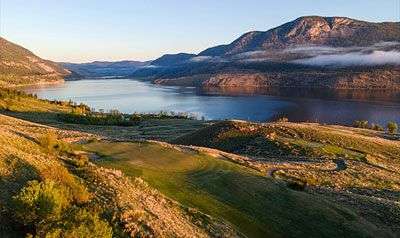
Nestled in Jasper National Park, this Stanley Thompson masterpiece offers championship-quality golf amongst stunning Rocky Mountain peaks and pristine Lake Beauvert. The alpine course features dramatic mountain-aligned fairways, elevated tees, and distinctive bunkers, creating an unforgettable luxury golf holiday experience in Canada's pristine wilderness.


Fairmont Jasper Park Lodge Golf Course
Nestled in Jasper National Park, this Stanley Thompson masterpiece offers championship-quality golf amongst stunning Rocky Mountain peaks and pristine Lake Beauvert. The alpine course features dramatic mountain-aligned fairways, elevated tees, and distinctive bunkers, creating an unforgettable luxury golf holiday experience in Canada's pristine wilderness.
Jasper Park Lodge is set most splendidly in the rugged Canadian Rocky Mountains of Alberta overlooking the crystal waters of Lake Beauvert. Canada's most famous and most revered architect, Stanley Thompson, literally moved the earth to create Jasper Park in 1925. The scale of this undertaking was extraordinary—50 teams of horses and over 200 men worked to clear boulders and debris from dense wilderness, transforming untamed landscape into what would become one of golf's most breathtaking experiences.
Stunning snow-capped mountain peaks are now aligned with Jasper's fairways which are set in the valley which in turn provides thrilling lakeside views. Few golf courses in the world can match the awe inspiring Jasper Park Lodge experience. Thompson's vision extended far beyond creating another mountain course—he crafted a layout where every hole celebrates the majesty of Jasper National Park.
What emerged from Thompson's ambitious project was revolutionary for its time. The course sits within Jasper National Park, where pristine forest meets towering peaks and crystal-clear lakes create an ever-changing backdrop. Thompson understood that this landscape demanded a golf course that worked with nature rather than against it, resulting in wide fairways that embrace the natural contours and elevated tees that showcase breathtaking mountain vistas.
Thompson's course was re-routed twenty years after it opened in 1925 and it now follows a circular direction in an old fashioned out-and-back manner with the 9th at the farthest point. Nevertheless, Jasper Park remains a classic architectural example and almost exactly as Thompson originally designed it. This enduring design speaks to Thompson's mastery in creating golf that transcends trends and fashions.
Thompson's reputation for crafting exceptional short holes finds its finest expression at Jasper Park Lodge. The collection of one-shot holes demonstrates why the architect earned acclaim throughout North America for his strategic genius. These holes utilise the dramatic elevation changes and mountain backdrops to create playing challenges that are as visually stunning as they are strategically demanding.
Each par-three offers a different perspective of the surrounding wilderness, with elevated tees providing commanding views across the valley toward distant peaks. The strategic placement of Thompson's characteristic sprawling bunkers—some positioned diagonally across lines of play—ensures that club selection and shot execution remain paramount regardless of the spectacular distractions.
Click the Reviews tab above to discover the latest ratings and detailed experiences from golfers who've conquered Thompson's Rocky Mountain masterpiece.
Thompson's revolutionary approach at Jasper involved aligning fairways with prominent mountain peaks in the distance, creating natural sight lines that guide both strategy and aesthetics. This technique, which would influence mountain course design for decades, ensures that golfers experience the full grandeur of the Canadian Rockies throughout their round.
The architect's signature bunkers mirror the contours of distant ridges, creating visual harmony between the crafted course and the natural landscape. Thompson's philosophy of letting the land dictate design finds perfect expression here, where dramatic bunkering and carefully positioned hazards work in concert with the existing topography.
The circular routing ensures that golfers experience constantly changing perspectives of the surrounding wilderness. Wide fairways encourage aggressive play while providing multiple strategic options from elevated tees. The layout showcases Thompson's understanding that variety creates memorable golf—some holes offer lakeside drama along Lake Beauvert's crystal waters, while others wind through dense forest corridors.
Water features throughout the course, including strategic creek crossings and lakeside approaches, add both beauty and challenge without overwhelming the design. The abundance of trees creates natural definition while preserving the sense of playing through pristine wilderness that makes Jasper National Park so extraordinary.
Jasper Park Lodge is a course that will appeal to golfers of all levels. It is both interesting and challenging without being brutal. This is not a championship layout – Jasper Park is simply a lovely course which is set in a gorgeous and romantic location. The playing experience prioritises enjoyment and wonder over pure difficulty, though strategic challenges abound for golfers seeking them.
The course rewards thoughtful play over raw power, with subtle land movement creating preferred angles and strategic positioning. Golfers find themselves pausing between shots not just to plan their next move, but to absorb the constantly changing mountain panorama that surrounds every fairway and green.
Beyond the remarkable golf course lies the complete Fairmont Jasper Park Lodge resort experience, where luxury accommodation meets authentic Rocky Mountain adventure. The historic lodge, originally built in 1922, provides elegant comfort whilst maintaining its wilderness character within Canada's largest national park.
The resort's location within Jasper National Park creates unique opportunities to combine championship golf with authentic Canadian wilderness experiences. Wildlife viewing, from elk and deer to the occasional curious bear, adds an element of natural wonder that distinguishes Jasper from typical resort destinations.
Jasper serves as the perfect base for exploring one of Canada's most spectacular national parks. The resort's position provides immediate access to hiking trails, pristine lakes, and the famous Icefields Parkway—often called one of the world's most beautiful drives. The combination of luxury accommodation and wilderness access creates an ideal setting for extended Rocky Mountain holidays.
The town of Jasper, just minutes from the resort, offers charming mountain village atmosphere with restaurants, shops, and additional accommodation options. This proximity ensures golfers can easily explore beyond the resort whilst maintaining their luxury base.
When not playing Thompson's masterpiece, guests can explore endless outdoor adventures within Jasper National Park. Hiking opportunities range from gentle lakeside walks to challenging mountain ascents, while wildlife watching provides encounters with elk, deer, mountain sheep, and numerous bird species in their natural habitat.
The park's pristine lakes offer canoeing, kayaking, and fishing opportunities, while the extensive trail network accommodates everything from leisurely nature walks to serious mountain expeditions. Photography enthusiasts find endless inspiration in the changing light on mountain peaks and the abundant wildlife throughout the park.
The golf season typically runs from May through October, with peak conditions occurring during the summer months when wildflower displays add colour to the mountain meadows. Early season play offers fewer crowds and stunning spring conditions, while autumn brings spectacular foliage and crisp mountain air.
Accommodation should be booked well in advance, particularly during peak summer months and autumn colour season. The resort offers various packages combining golf, dining, and accommodation, whilst the town of Jasper provides additional lodging options for different budgets and preferences.
Calgary International Airport serves as the primary gateway, located approximately 366 kilometres (227 miles) from Jasper Park Lodge. The scenic drive through Banff National Park and along the Icefields Parkway transforms travel time into part of the adventure, with numerous photo opportunities and wildlife viewing chances along the route.
Edmonton International Airport provides an alternative gateway at approximately 362 kilometres (225 miles), offering a more direct route through Alberta's parkland region. Both airports offer rental car services, essential for exploring the Canadian Rockies region and reaching the resort with convenience.
Spring golf from May through June offers cooler temperatures, fewer crowds, and the excitement of mountain snow-melt creating dramatic waterfalls and rushing streams. Summer months provide the most reliable weather and longest daylight hours, perfect for combining golf with extensive outdoor exploration.
Autumn visits from September through early October deliver spectacular foliage displays and crisp mountain air, though weather can become unpredictable. Each season offers distinct advantages, from spring's dramatic landscapes to autumn's photogenic colours, ensuring memorable experiences regardless of timing.
The latest ranking of the Top 100 Golf Courses in the World serves as the ultimate global golf bucket list. Most members of our World Top 100 Panel are seasoned golfers, each playing 20-30 of these courses annually while travelling extensively over decades to form their opinions on others. We recognise that opinions vary—even among our panel members. Rankings are subjective, and there are undoubtedly 50 or more courses in the UK and USA alone that could easily fit onto this list. Links Golf Pilgrimages The rankings
Massachusetts, United States
England, United Kingdom
Alberta, Canada
County Dublin, Ireland
New York, United States

You don't need a four-figure budget, a private-club connection or an invitation from a member to play a course in the World Top 100. Top100 has collated the 10 cheapest visitor-accessible courses on our current World Top 100 Ranking, based on standard green fees. From a world-class links in Tasmania to a U.S. Open and Ryder Cup venue in New York, these courses offer the chance to play some of the best golf on the planet without the eye-watering green fees attached to many of their World Top 100 counterparts. 1. St Andrews Beach Golf Course (Victoria, Australia) World Ranking: 89th | Australia ranking: 6th | Green fee: A$139 (£74) Tom Doak’s first Australian mainland design, St Andrews Beach opened in 2004 on the Mornington Peninsula and has since become one of the country’s best-value, ranked courses. The public-access layout occupies 175 hectares of former grazing land, with wide fairways, rolling terrain and sandy natural contours that give several holes a links-like feel. Measuring just over 6,000 metres from the back tees, it is playable for a broad range of golfers, though the subtle greens ensure there is still plenty to think about. In a region known for outstanding golf, St Andrews Beach stands out not only for its quality but also for its accessibility, offering everyday golfers the chance to experience a Tom Doak design without the premium price tag often attached to courses of this calibre. 2. Bethpage Black (New York, USA) World Ranking: 58th | USA ranking: 28th | Green fee: From US$140 (£106) Bethpage Black has the rare distinction of being a World Top 100 course, a major championship venue and a public golf course. Located within Bethpage State Park on Long Island, the A.W. Tillinghast design opened in 1936 and has since hosted two U.S. Opens and the 2025 Ryder Cup. The Black is renowned for its difficulty, with narrow fairways, deep rough, large sculpted bunkers and elevated greens making accuracy essential. It is a demanding test, but one that remains remarkably accessible to everyday golfers. That combination of championship pedigree and public access is what makes Bethpage Black so unusual. Few golfers get the chance to play a course of this stature without needing a private-club connection or resort stay. 3. Paraparaumu Beach Golf Club (Wellington, New Zealand) World Ranking: 91st | New Zealand ranking: 2nd | Green fee: NZ$275 (£118) Set on the Kapiti Coast, north of New Zealand's capital city Wellington, Paraparaumu Beach has been one of the country’s most celebrated golf courses since Alex Russell designed it in 1949. The links has hosted 12 New Zealand Opens and has long been regarded as one of the country’s finest layouts. It is a relatively short course by modern championship standards, but the coastal wind, firm fairways, deep bunkers and undulating greens provide plenty of challenge. The split-fairway 17th is a particular highlight, forcing golfers to choose between two very different routes to the green. For international golfers, Paraparaumu offers the chance to experience a genuine piece of New Zealand golfing history without needing access to a private resort. 4. Fairmont Jasper Park Lodge Golf Course (Alberta, Canada) World Ranking: 73rd | Canada ranking: 2nd | Green fee: C$280 (£149) Set among the Canadian Rockies in Jasper National Park, Fairmont Jasper Park Lodge is one of Stanley Thompson’s most celebrated designs. Opened in 1925, the course winds through the valley beside Lake Beauvert, with snow-capped peaks providing a backdrop to almost every hole. The course combines wide fairways, elevated tees and strategically placed bunkers with the natural contours of the landscape. Thompson’s design rewards thoughtful play rather than simply demanding power, making it a course that can be enjoyed by golfers of different abilities. The result is a rare combination of classic golf and Canadian wilderness, with the surrounding mountains and forest making the journey between shots almost as memorable as the golf itself. 5. Barnbougle - The Dunes Course (Tasmania, Australia) World Ranking: 25th | Australia ranking: 3rd | Green fee: A$285 (£151) Barnbougle Dunes is about as close as Australia gets to a traditional seaside links. Set on Tasmania’s northeast coast, the course was designed by Tom Doak and Australian Mike Clayton and opened in 2004, establishing Barnbougle as one of the country’s premier golf destinations. The layout runs through towering coastal dunes, with wide fairways, natural contours and greens that follow the movement of the land. The wind is an ever-present factor, while the strategic design rewards golfers who think their way around the course rather than simply relying on power. For golfers seeking a genuine links experience outside the British Isles, Barnbougle Dunes is about as compelling as it gets, combining world-class golf with the rugged coastline of Tasmania. 6. Cape Wickham Golf Links (Tasmania, Australia) World Ranking: 47th | Australia ranking: 4th | Green fee: A$315 (£167) Cape Wickham occupies a spectacular stretch of coastline on King Island, sitting in Bass Strait between Tasmania and mainland Australia. Designed by American architect Mike DeVries, the links opened in 2015 and quickly established itself as one of the country's standout modern courses. The course makes the most of its remote coastal setting, with the opening five holes winding around Cape Farewell before the layout moves through sand hills and limestone outcrops. Several holes hug the shoreline, while the closing stretch heads towards the imposing Cape Wickham Lighthouse. The 18th provides a fitting finale, with the fairway doglegging around a sandy bay before reaching the home green, making Cape Wickham a memorable links experience from start to finish. 7. St Enodoc Golf Club - Church Course (Cornwall, England) World Ranking: 49th | England ranking: 4th | Green fee: £175 Set among towering dunes overlooking the Camel Estuary in Cornwall, St Enodoc’s Church Course is one of James Braid’s most distinctive designs. Founded in 1891, the course was transformed by Braid in the early 20th century and remains a spectacularly natural links. It is a relatively short par 69 at 6,010 metres, but its undulating fairways, dramatic elevation changes and formidable dunes create a test that demands imagination. The famous 6th is the standout, with the enormous Himalaya dune obscuring the green and making club selection particularly difficult. The course also has an unusual piece of history, with the 13th hole running alongside the churchyard where poet laureate John Betjeman is buried. 8. South Cape Owners Club (Gyeongsangnam-do, South Korea) World Ranking: 63rd | South Korea ranking: 2nd | Green fee: From KRW 350,000 (£195) Set on Namhae Island off the southeast coast of South Korea, South Cape Owners Club is a dramatic Kyle Phillips design where the ocean is visible from all 18 holes. The course opened in 2013 as part of a luxury resort development and has quickly established itself among Asia's most striking modern layouts. The course is framed by granite outcrops, coastal cliffs and rolling terrain, with bluegrass fairways contrasting against fine fescue rough. The standout stretch comes from the 11th onwards, culminating in two spectacular waterside par threes at the 14th and 16th. For golfers willing to make the journey to Namhae Island, South Cape offers a rare combination of world-class golf, dramatic coastal scenery and a luxury resort experience. 9. Utrecht De Pan Golf Club (Utrecht, Netherlands) World Ranking: 56th | Netherlands ranking: 1st | Green fee: From €235 (£198) Dating back to 1894, Utrecht De Pan is the second-oldest golf club in the Netherlands, with Harry Colt designing the current course in 1929. Set in secluded woodland near Utrecht, the layout is a classic heathland course, winding through pine, birch, oak and chestnut trees. De Pan has hosted the Dutch Open three times and is built around strategic rather than power golf. Several of its most memorable holes play over valleys of heather and sand, while the sixth and seventh demand particularly thoughtful tee shots and approaches. Recent restoration work by Frank Pont has helped return the course towards Colt’s original design, making De Pan a fascinating example of Golden Age heathland golf in the Netherlands. 10. Cruden Bay Golf Club - Championship Course (Aberdeenshire, Scotland) World Ranking: 70th | Scotland ranking: 10th | Green fee: From £205 Cruden Bay is one of Scotland’s most distinctive links, winding through towering dunes on the Aberdeenshire coast with the North Sea providing a constant backdrop. The course opened in 1899 after being laid out by Old Tom Morris and Archie Simpson, before Tom Simpson and Herbert Fowler remodelled it in 1926. Cruden Bay makes spectacular use of its natural terrain, with elevated tees, blind drives, punchbowl greens and fairways that rise and fall between the dunes. The 193-yard 4th, played from an elevated tee across a deep hollow, is one of several standout holes. There is plenty of character, too, from driveable par fours and back-to-back par threes to the feeling that every hole reveals something different. It is exactly the sort of course that rewards golfers willing to embrace its quirks. Green fees are based on standard 18-hole visitor rates, using international visitor rates where applicable. All prices are peak-season rates and do not take twilight, off-season or promotional rates into account. Prices are correct at the time of writing and are subject to change.

Stretching across Alberta's vast landscapes, from the cosmopolitan centres of Calgary and Edmonton to the legendary mountain courses of the Canadian Rockies, Alberta delivers a unique Canadian golf adventure. Alberta offers everything from Rod Whitman's contemporary masterpiece at Blackhawk near Edmonton to Stanley Thompson's timeless mountain classics at Jasper Park Lodge and Banff Springs. Whether you're seeking the exclusivity of Calgary Golf Club, the strategic genius of Phil Mickelson's signature design, or the breathtaking scenery of Rocky Mountain golf, this Alberta trip creates an unparalleled combination of great golf with jaw-dropping natural beauty that defines the true Canadian golf experience. Why Alberta Golf Will Redefine Your Canadian Experience Alberta - Where Prairie Elegance Meets Mountain Majesty Alberta's unique geography creates golf conditions unlike anywhere else in the world, stretching from Edmonton's parkland perfection through Calgary's foothills positioning to the Rocky Mountain masterpieces beyond. Your Complete Canadian Golf Collection: Five Must-Play Courses: Calgary Golf Club, Mickelson National, Banff Springs, Jasper Park Lodge, and Blackhawk Golf Club Dual Gateway Strategy: Fly into Edmonton and out of Calgary (or reverse) to minimise unnecessary travel Heritage & Innovation: Play Stanley Thompson's 1920s mountain masterpieces alongside Rod Whitman's contemporary brilliance Alberta's Must-Play Golf Courses: Five Contrasting Venues Calgary Golf & Country Club - The Holy Grail of Canadian golf, this Willie Park Jr. design from 1922 remains tricky to access with a legendary waiting list. Known as the first course in Canada to install fairway irrigation, it's where oil executives and golf pilgrims aspire to play. The 126-acre layout features the back nine enclosing the front nine in an anti-clockwise direction from the clubhouse, creating strategic angles that have challenged members for over a century. Mickelson National Golf Club - Phil Mickelson's only signature design in Canada opened in 2020 on a former farming site transformed through massive earthworks. This private club stretches over 240 acres with dramatic elevation changes, strategic water features, and Lefty's famous risk-reward philosophy. Built with prevailing Chinook winds in mind, the course includes a towering 646-yard par 5 and multiple driveable par 4s that tempt aggressive play whilst penalising poor execution. Banff Springs Golf Club - Stanley Thompson's 1928 mountain masterpiece remains the gold standard for scenic golf architecture. Set within Banff National Park alongside the Bow River, the course features 150 bunkers crafted to mirror mountain peaks, with the iconic Devil's Cauldron par 3 playing over a glacial lake beneath Mount Rundle's vertical face. Nothing prepares you for the sheer enormity and charm of this setting. Jasper Park Lodge Golf Club - Thompson's 1925 masterpiece celebrates its 100th anniversary in 2025 with special programming starting July 1st. Set beside crystal-clear Lake Beauvert with snow-capped peaks aligned with fairways, this course appeals to golfers of all levels whilst maintaining architectural excellence. The par-71 lakeside layout rewards strategic thinking over brute force, with elevated tee boxes and dramatic mountain vistas on every hole. Blackhawk Golf Club - Rod Whitman's contemporary masterpiece near Edmonton opened in 2003 and quickly established itself as one of Canada's top modern courses. This public access championship layout features rugged terrain and dramatic contours that play longer than the scorecard suggests... Sample Alberta Golf Adventure: 5-Day Experience Day 1 - Calgary Arrival & Championship Golf Golf: Calgary Golf Club (advance member arrangements essential) or Mickelson National Golf Club (member guest access required) Travel: Arrive Calgary International Airport (YYC), collect rental car Accommodation: Stay Calgary (downtown or airport area hotels) Day 2 - Banff Springs Pilgrimage Golf: Banff Springs Golf Course - Stanley Thompson's legendary 1928 design featuring the iconic Devil's Cauldron par 3 Travel: Calgary to Banff (90 minutes via Trans-Canada Highway) Accommodation: Stay Banff townsite or Fairmont Banff Springs Day 3 - Jasper Park Lodge Centennial Golf: Jasper Park Lodge Golf Club - Thompson's 1925 masterpiece celebrating its 100th anniversary Travel: Banff to Jasper via spectacular Icefields Parkway (3.5 hours of UNESCO World Heritage scenery) Accommodation: Stay Fairmont Jasper Park Lodge or Jasper townsite Day 4 - Edmonton Transfer Travel: Jasper to Edmonton via Yellowhead Highway (3.5 hours through different prairie scenery) Accommodation: Stay Edmonton (downtown or west Edmonton area hotels) Day 5 - Blackhawk Golf Club Finale Golf: Blackhawk Golf Club - Rod Whitman's contemporary masterpiece (45 minutes from Edmonton) Travel: Return to Edmonton, departure from Edmonton International Airport (YEG) or Calgary International Airport (YYC) Optional Extensions: Extra Banff Day: Add a second night in Banff for hiking, hot springs, and additional mountain exploration Wolf Creek Addition: Include Rod Whitman's 36 hole venue in Ponoka -between Edmonton and Calgary Calgary Extension: Extra day for additional Calgary area courses Seasonal Considerations: Peak Season (June-August): All courses accessible, maximum daylight hours, premium pricing Shoulder Seasons (May/September-October): Competitive rates, fewer crowds, potential weather considerations Mountain Course Seasons: Jasper opens typically May 10th, Banff Springs May 9th, weather dependent Getting There and Getting About: Alberta's Dual-Gateway Strategy Dual Airport Flexibility Alberta's two major airports create exceptional routing flexibility. Calgary International Airport (YYC) offers direct flights from London Heathrow (Air Canada, WestJet), Edinburgh, Dublin, Paris CDG, Amsterdam, and Frankfurt. Edmonton International Airport (YEG) provides connections through major Canadian hubs with excellent domestic service. Consider fly-in/fly-out strategies: arrive Edmonton, depart Calgary or vice versa to eliminate backtracking and maximise golf time. Inter-City Transport Options The 300km (186-mile) drive between Edmonton and Calgary via Highway 2 takes approximately 3 hours through scenic Alberta prairie. Major car rental companies operate from both airports with competitive rates and one-way rental options. VIA Rail's "The Canadian" provides rail service between cities, though schedules may not align with golf itineraries. Regional airlines offer 1-hour flights between Edmonton and Calgary for time-pressed travellers. Driving Logistics International driving permits required for rental cars. Traffic remains manageable in both cities compared to Toronto or Vancouver. Winter driving skills are unnecessary during golf season, but mountain routes require attention to weather conditions. Regional Weather Patterns Alberta's golf season typically runs April through October with potential November extensions during warm Chinook periods. Edmonton averages slightly cooler temperatures than Calgary due to northern latitude. Summer temperatures range 12-26°C (54-79°F) with dramatic daily swings. Mountain courses can be 10-15°C cooler than prairie cities. Pack layered clothing system for all conditions. Convenient Airports Calgary International (YYC): Better international connections, closer to mountain courses (90 minutes to Banff) Edmonton International (YEG): More domestic connections, direct access to Blackhawk Golf Club (45 minutes) Accommodation Strategy: Dual-City Base Planning Edmonton Downtown Edmonton hotels provide easy access to Blackhawk Golf Club. West Edmonton area hotels are also positioned strategically for Blackhawk access. Calgary Strategic Positioning Airport area hotels provide practical solutions for a starting or finishing your holiday. Mountain Resort Accommodation Fairmont properties at Banff Springs and Jasper Park Lodge deliver ultimate golf resort experiences but command premium pricing. Both Banff and Jasper townsites offer numerous alternatives from luxury lodges to family-run establishments. Canmore Value Base Canmore provides excellent strategic positioning between Calgary and the mountain courses. Vacation rentals and boutique hotels offer exceptional value whilst maintaining proximity to mountain courses, comapred to staying in Banff town centre. Fuel Up and Wind Down: Alberta's Culinary Scene Fairmont's Clubhouses Mountain resort clubhouses offer upscale casual dining with panoramic views. Banff and Lake Louise are excellent dining options. Calgary Downtown Standouts Calgary's restaurant scene rivals any major Canadian city with farm-to-table establishments and fine dining experiences. Edmonton's local craft breweries provide authentic regional experiences. Alberta Beef Experience Major steakhouses across both cities showcase world-famous Alberta beef. Prime cuts represent local specialities with exceptional quality that defines the regional dining experience. The bone-in T-bone is one of the local favourites. Alberta Golf Course Booking Strategy: Securing Alberta's Five Must-Play Legends The Big Five Booking: Calgary Golf Club remains virtually inaccessible to visitors - membership connections are absolutely essential. Mickelson National requires member guest arrangements due to its private status. Blackhawk Golf Club offers public access with 2-4 weeks' advance booking recommended for prime times. Banff Springs opens May 9th with tee times bookable 2-3 months ahead, particularly for summer weekends. Jasper Park Lodge celebrates its centennial year with special programming starting July 1st - book early for this historic season. Accessing Private Venues: A personal call or email in the proper format may open more doors than you think. Sometimes access is possible if asked for discreetly and professionally. Consider contacting club professionals or concierge services who may have established relationships. Other exceptional alternatives include Stewart Creek Golf Club in Canmore and Kananaskis Country Golf Course (Mount Kidd), both offering championship experiences with easier access. Mountain Course Seasonal Windows: Jasper Park Lodge typically opens May 10th, weather permitting, whilst Banff Springs opens May 9th. Both courses close mid-October, depending on weather conditions. Peak season (July-August) requires 8-12 weeks advance booking for weekend times. Shoulder seasons offer better availability and competitive pricing. Regional Booking Strategies: Edmonton area courses, including Blackhawk, typically allow 7-14 days advance booking for public players. Calgary semi-private courses require 2-4 weeks for weekend access. Wolf Creek Resort, between the cities, offers excellent value with 1-2 weeks' advance booking for Rod Whitman's additional designs. Multi-City Coordination: Plan Calgary Golf Club early if member access is secured. Schedule mountain courses (Banff, Jasper) for maximum scenic impact mid-trip. Save Blackhawk Golf Club for the trip conclusion or Wolf Creek Resort serves as an excellent midway point between Edmonton and Calgary, depending on your time or route. Weather Contingency Planning: All courses offer flexible rebooking policies for weather cancellations. Mountain courses are particularly susceptible to sudden weather changes. Confirm cancellation policies when booking, especially for premium mountain experiences where weather can change rapidly.
Top 100 Golf Courses of Canada 2022 Welcome to the last major chart release before we begin our next two-year cycle at the end of the year. Three Canadian tracks made it into the coveted global standings last time around and it will be interesting to see if they’ll be joined by any more layouts from the Great White North this time. For now, we’ve concentrated solely on the national listings, where there are 6 new entries, 14 non-movers, 27 courses climbing up and 53 falling down. The top three positions in our new Canadian Top 100 are unaltered, which means Cabot Cliffs in Inverness, Nova Scotia retains the No.1 spot for the third consecutive edition of our biennial golf listings. Designed by Bill Coore and Ben Crenshaw, this 18-hole layout also occupies a place in the top half of our World Top 100 so quality golf is assured for those who make the not inconsiderable trip to play here. Cabot Cliffs Recent comments from reviewers include: “any golfer that appreciates the natural beauty of golf should put the Cliffs at the top of their list… the site that Cabot Cliffs traverses is surprisingly diverse. One expects the rolling dunescape along the cliffs but the course also moves through marshland and inland through woodlands and meadows, up and down through significant elevation change.” Rising two places to #4, the course at Banff Springs Golf Club in Alberta is looked upon as Stanley Thompson’s masterpiece. His redesign of the original layout in the late 1920s cost a million dollars, making it the most expensive course in the world at the time, but many would now consider that money well spent. Banff Springs Our well-travelled correspondent Bob McCoy posted a review last year, saying “on my list of 1,175 courses played, Banff Springs is the best mountain course in the world and is definitely in my World Top 100 list.” Another impressive upward move inside the elite top 10 comes from the course at Memphrémagog Golf Club in Magog, Quebec, climbing three spots to #9. It’s a new millennium design from Tom McBroom that was built a while back for a couple of wealthy business who wanted a tough track to test both their elite membership and the small number of guests who receive a rare invitation to play here. The next big positive moves are made further down the listings. At #35 (up ten), the course at Rosedale Golf Club in Toronto has been in play for more than a hundred years now, hosting all the national major championships in its early years, including the 1928 Canadian Open which was staged six years after Donald Ross redesigned the layout. In more recent times, respected Ross restorer John Faught has worked at the club to thin out trees, rework bunkers and rebuild a number of greens. Rosedale Moving up seventeen places to #36, the course at Lookout Point Country Club in Fonthill, Ontario celebrates its centenary next year. One of only three Canadian layouts designed by Walter Travis, the course lies just ten miles west of the famous Niagara Falls at one of the most elevated positions on the Niagara Escarpment, hence its name. Architect Ian Andrew has left his mark here in the last few years, restoring a number of the greens. Lookout Point The course at Scarboro Golf & Country Club in Toronto (up ten to #41) is A. W. Tillinghast’s only Canadian design, with the architect rebuilding the original George Cumming layout in the early 1920s. Renovation work has been carried out by a few designers since then but it’s the more recent bunker restoration by Gil Hanse and Ian Andrew that has taken the course to another level altogether. Scarboro In the bottom half of the new table, another four courses make double digit improvements on their previous chart positions. Cherry Hill Club in Ridgeway, Ontario (up twelve to #54) is home to another Walter Travis design dating back to 1922. Robbie Robinson upgraded the layout in preparation for the Canadian Open to mark the club’s 50th anniversary in 1972 and Ian Andrew oversaw an extensive bunker renovation just over ten years ago. The trademark Travis “chocolate drop” fairway mounds are long gone but the inherent character of his layout remains largely intact. Cherry Hill Described by a reviewer last year as “a real diamond in the rough,” the Algonquin Resort Golf Course in St Andrews, New Brunswick (up seventeen to #71) has been in operation for over a century. Donald Ross modified the initial layout in the 1920s and this version of the course remained in play until Thomas McBroom made modifications early in the new millennium. In 2016, a Rod Whitman redesign reinvigorated things by way of tree removal, bunker refurbishment and the rebuilding of several greens. Algonquin The Ross and MacKenzie nines at the St Charles Country Club in Winnipeg (up fourteen to #78) have been in play since the late 1920s. Mike DeVries consulted at the club for a number of years but it’s the current bunker upgrade work of Jim Urbina that has really caught the eye here. As he says: “this is the only Alister MacKenzie course in Canada, and a great Ross. This is having a Rembrandt in your backyard for years and getting the chance to restore it.” St Charles Country Club Moving up ten rungs on the ladder to #89, the course at Royal Mayfair Golf Club in Edmonton debuted in 1922, with holes laid out by J. Munro Hunter, the Alberta amateur champion. Stanley Thompson was called in to remodel the layout soon after it first opened and the new course was unveiled in June 1933, six years after the architect developed his redesign plan. The club’s rebuilding its clubhouse at the moment to create an elegant and modern structure that will serve the members for years to come. Royal Mayfair Six courses drop out to make way for six newcomers though, strictly speaking, three of these are re-entries, having previously graced the national chart in times gone by. The first re-entry is Sagebrush in Quilchena, British Columbia at #18. Opened to much critical acclaim in 2009, this Rod Whitman-designed layout ran into financial difficulties and was forced to close a few years back but it’s now, in the words of the club, “accepting limited groups for a ‘beta test’ of the club’s emerging facilities for the remainder of the Summer and Fall 2021”. We can only say welcome back to one of BC’s finest golf experiences! Sagebrush Also re-appearing at #69 is the 18-hole Mt Kidd layout at the Kananaskis Country Golf Course in Alberta, which was devastated by flooding in 2013 and re-built by Gary Browning as part of a multi-million dollar disaster recovery programme. All but four of the thirty-six holes on site were reconstructed from scratch before the Mt. Kidd and Mt. Lorette courses could be brought back into play five years after they were decimated. Kananaskis Mt Kidd It’s been a while since Riverside Country Club in Saskatoon, Saskatchewan was last in the Canadian Top 100 (#94 then #95 in the first two chart editions to be exact) so it’s more than a decade since this Bill Kinnear-designed layout gained national recognition. Robbie Robinson, Bill Robinson and Graham Cooke have all made changes down the years to a course that has hosted both the Canadian Men’s and Women’s Amateur championships three times since the mid-1960s. The highest of the brand new entries arrives at #38 and it’s the newly opened Mickelson National Golf Club course outside Calgary that muscles its way into the standings. It took more than a decade for owner Barry Ehlert and his Windmill Golf Group to finally get this place off the ground last year, transforming what was formerly flat farmland with little movement into a big, bold stadium layout which is well-equipped to host major professional golf tournaments. Mickelson National Also new at #78, the course Tarandowah Golfers Club in Springfield, Ontario is a Martin Hawtree layout that’s designed to play firm and fast as a links-style track, with undulating bent grass fairways, pot bunkers and cunningly-contoured greens. Anybody playing here nowadays would be hard pressed to believe this property was nothing other than a family farm up until golf came along in 2006. The last of our new entries at #86 is Waskesiu Golf Course in Prince Albert National Park, Saskatchewan. Stanley Thompson designed the layout in the late 1920s though an 18-hole course didn’t get built until 1935. The architect returned shortly after World War II to suggest improvements but not all of them were implemented. Doug Carrick consulted at the club in the mid-1990s, adding new tees to lengthen the course, along with new bunkers and a few other tweaks. To view the complete detailed list of our latest Top 100 Golf Courses of Canada click the link. Our regional rankings for ten Canadian provinces have also been refreshed. To view these revised listings in greater detail, click the following links: Alberta Top 50 British Columbia Top 60 Manitoba Top 10 New Brunswick Top 5 Newfoundland and Labrador Top 5 Nova Scotia Top 15 Ontario Top 100 Prince Edward Island Top 10 Quebec Top 30 Saskatchewan Top 5 If you have any comment to make on any of the above charts then please use the “Respond to this article” link at the top or bottom of this page. Jim McCann Editor Top 100 Golf Courses


