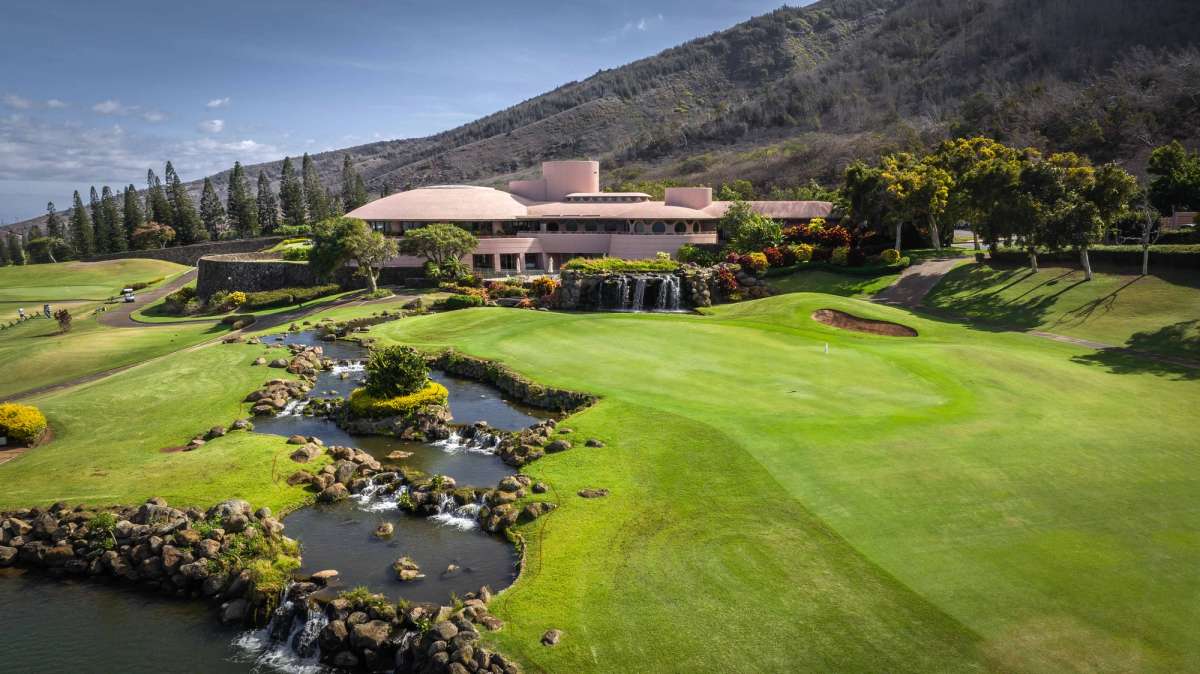
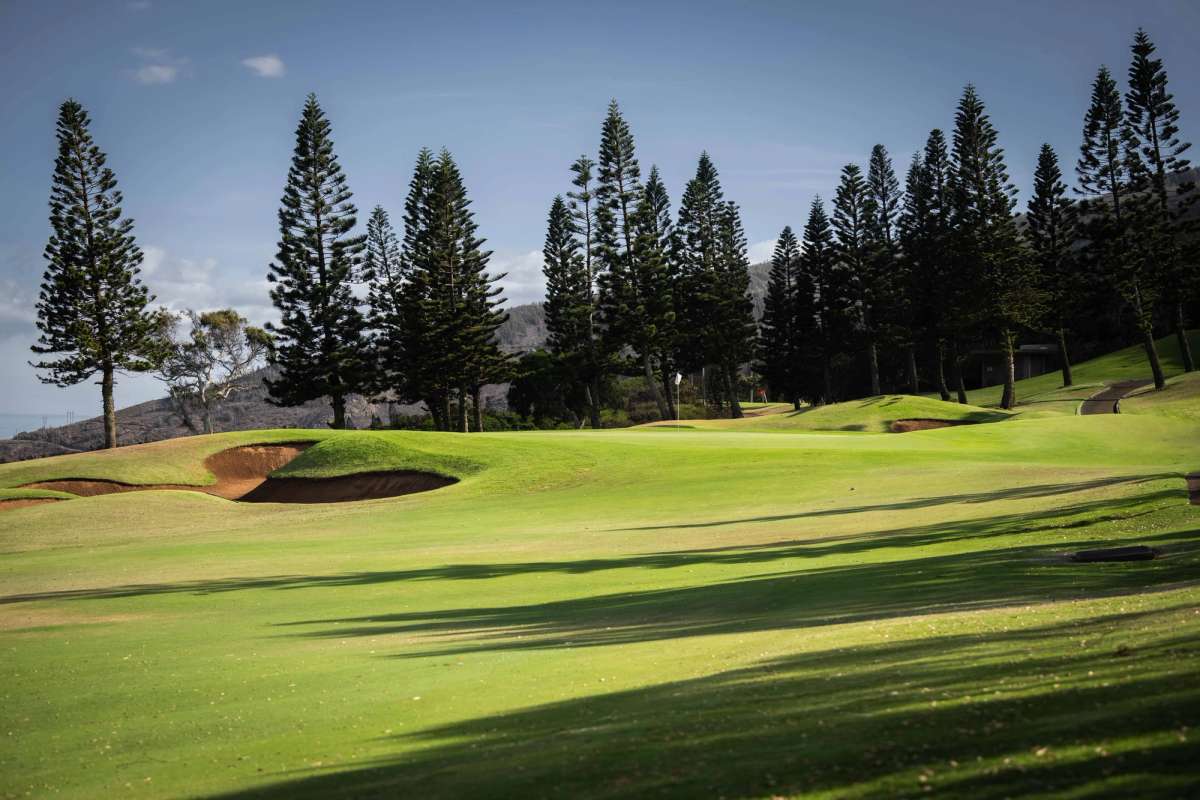
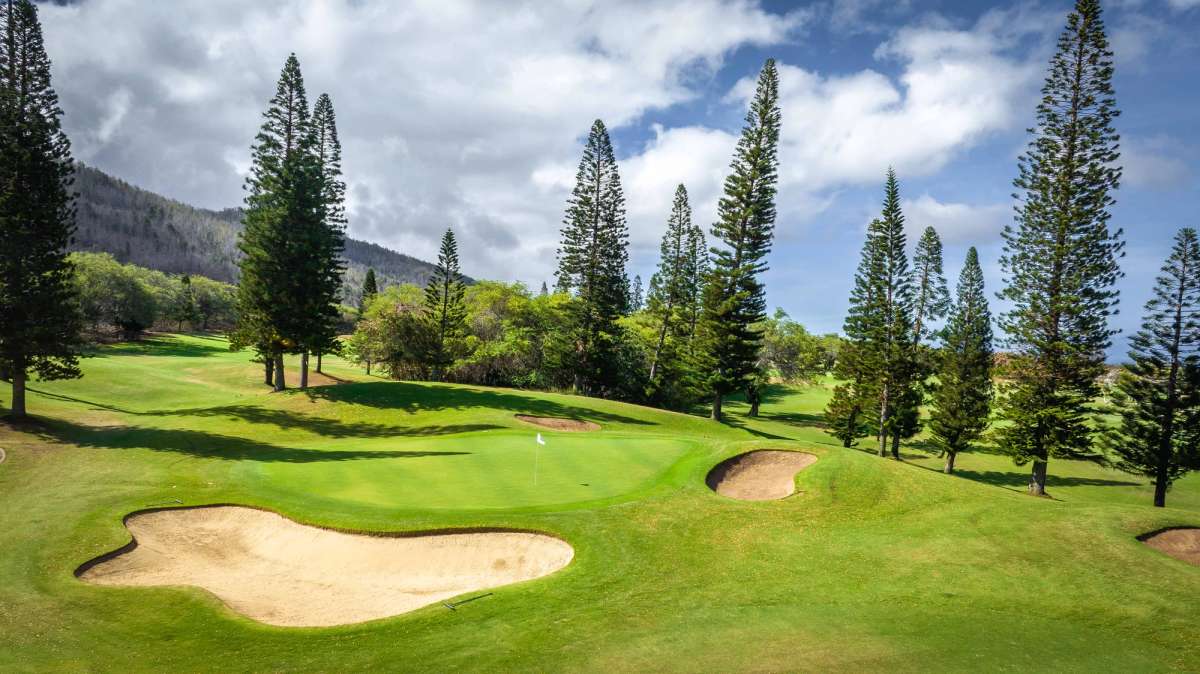
Named after the greatest king in the history of the Hawaiian Islands, the course at King Kamehameha Golf Club is set in the foothills of the West Maui Mountains.
Overall rating

4.0
The King Kamehameha Golf Club
Named after the greatest king in the history of the Hawaiian Islands, the course at King Kamehameha Golf Club is set in the foothills of the West Maui Mountains.
The latest ranking of the Top 100 Golf Courses in the World serves as the ultimate global golf bucket list. Most members of our World Top 100 Panel are seasoned golfers, each playing 20-30 of these courses annually while travelling extensively over decades to form their opinions on others. We recognise that opinions vary—even among our panel members. Rankings are subjective, and there are undoubtedly 50 or more courses in the UK and USA alone that could easily fit onto this list. Links Golf Pilgrimages The rankings
California, United States
New Jersey, United States
Northern Ireland, United Kingdom
New York, United States
New York, United States
The tee-to-green upgrading of the award-winning Mauna Kea Golf Course is underway with a redesign that will produce a new standard for oceanfront golfing on the Gold Coast of Hawaii’s Big Island. Led by renowned golf designer Rees Jones, son of the course’s original architect, Robert Trent Jones, Sr., the Mauna Kea Golf Course will be completely remodelled and reopened in Fall 2008. “Mauna Kea is not only one of the premier golf courses in existence, but one that cannot be replicated. It differentiates itself from other courses because of its history, its pedigree and its setting,” said Rees Jones. “Once our work is complete, the world of golf will be reintroduced to this historic golf venue and its elite playing standards.” Mauna Kea’s greens, tees, fairways and rough will all be replaced with new hybrids of turf that can be groomed for the skill levels of both resort and professional golfers. The bunkers will be restored to their original look with all the sand replaced. Plans include rebuilding greens to USGA standards and specifications, without changing their original strategy and challenge. Jones’ vision is to maintain the integrity of his father’s design, while utilizing today’s technology to be more efficient in caring for the course. Prince Resorts Hawaii, owner of the Mauna Kea Golf Course, is honoured to have Rees Jones carrying on its tradition with his redesigned expertise. Known in the golfing industry as the “U.S. Open Doctor,” Jones designed more than 100 golf courses, including redesigning seven U.S. Open venues, six PGA courses and three Ryder Cup sites. “When the work is complete, Mauna Kea Golf Course will again be the one of the finest golf experiences in the world,” said Donn Takahashi, president, Prince Resorts Hawaii. “Both returning golfers and those coming here for the first time will rediscover why this course is so revered around the world. With Rees Jones enhancing his father’s superior design, the ‘new’ Mauna Kea will truly be a joy and challenge to play.” In addition, the clubhouse and restaurant are also being renovated. The 18-hole, par-72, 7,165-yard Mauna Kea Golf Course opened in December 1964. Recognized by golfers worldwide for its signature oceanfront #3 hole, the course offers dramatic elevation changes, large undulating greens, 120 bunkers, and some of the most spectacular panoramic ocean and mountain views found in the islands.

Some golf holes are famous for their design, others for the moments that have unfolded on them. A handful have become so recognisable that even people who rarely watch golf would know them at a glance. From a tiny par three perched above the Pacific Ocean to a treacherous stretch of linksland that has decided Open Championships, these holes have earned their place in golf folklore. Better still, unlike some of the game's most celebrated private-club layouts, they're open to visiting golfers willing to book a tee time. Here are 10 of the world's most famous golf holes you can actually play. The Road Hole, 17th – St Andrews Links The Old Course (Scotland) Few holes carry the same weight of history as the 17th at St Andrews. The tee shot must clear the corner of the Old Course Hotel, leaving golfers to negotiate one of the game's most famous driving challenges before facing the narrow green, the Road Hole bunker and the road that gives the hole its name. It's a hole that has broken hearts at Open Championships and made heroes of those who find a way through. The green is particularly unforgiving, and even a well-struck approach can leave a difficult recovery. Playing the Road Hole is an experience that goes beyond the golf itself. The history, the hotel, the old stone walls and the knowledge of what has unfolded here make it one of the game's essential experiences. The Island Green, 17th – TPC Sawgrass Stadium Course (Florida, USA) A wedge in hand, a green just 137 yards away and water in almost every direction. On paper, the 17th at TPC Sawgrass should be one of the easier holes on the Stadium Course. In reality, it has become one of golf's most recognisable tests of nerve. The island green was never part of the original plan. During construction, architect Pete Dye's wife, Alice, suggested turning an excavated pit into a lake and leaving the green surrounded by water. The result became one of the defining holes in professional golf, producing some of the most dramatic moments in THE PLAYERS Championship. For visiting golfers, the challenge is wonderfully simple: find the green or face the consequences. The wind can make club selection tricky, while the knowledge of how many professionals have come unstuck here adds another layer of pressure. Standing on the tee and taking on the same shot as the world's best is a bucket-list experience in its own right. The 7th – Pebble Beach Golf Links (California, USA) At just over 100 yards from the championship tees, the seventh at Pebble Beach is among the shortest holes in major championship golf. It is also one of the most spectacular. The tee sits high above the Pacific Ocean, with the wind often dictating which club to take. On a calm day, it can look almost inviting. When the breeze picks up, the exposed green becomes a much more demanding target. The hole has provided its share of memorable moments, too. During the 1992 US Open, Tom Kite chipped in for birdie on his way to winning the championship, while the hole played just 92 yards during the final round of the 2010 US Open. Its setting has helped make the seventh one of the most recognisable holes in golf, but it is more than a pretty picture. The Postage Stamp, 8th – Royal Troon Golf Club Old Course (Scotland) The eighth at Royal Troon is a reminder that a golf hole doesn't need length to become legendary. Known as the Postage Stamp, this short par three can play from less than 100 yards, yet its tiny green and surrounding bunkers have made it one of the most feared shots in championship golf. The putting surface measures just 2,635 square feet, with five bunkers waiting to catch anything that strays offline. The most notorious is the Coffin bunker, a deep trap that can turn a routine pitch into a fight for survival. The name originally referred to the green itself, which was described as being skimmed down to the size of a postage stamp. Since then, the hole has built a formidable reputation, with Hermann Tissies recording a 15 in the 1950 Open Championship and Tiger Woods taking a triple bogey in 1997. Calamity Corner, 16th – Royal Portrush Golf Club Dunluce Course (Northern Ireland) The name offers a fairly clear indication of what awaits at the 16th at Royal Portrush. Calamity Corner is a long par three that demands a confident strike to reach its elevated green, with a deep chasm running down the right side and little room for error. At championship length, the hole can stretch beyond 230 yards, making it a formidable test even before the Atlantic wind gets involved. Unlike many famous holes, there are no bunkers to worry about. The natural terrain provides all the punishment required, and a shot that misses right can leave golfers facing a steep drop well below the putting surface. Calamity Corner has become one of the defining holes of the Dunluce Links, with its exposed setting and demanding tee shot capable of changing the course of a round in an instant. The 18th – Carnoustie Golf Links Championship Course (Scotland) Carnoustie's closing hole is famous for one of the most extraordinary finishes in Open Championship history. In 1999, Frenchman Jean van de Velde arrived at the 18th tee with a three-shot lead, only to see his hopes of winning the Claret Jug unravel in the space of a few shots. His drive found trouble, his second shot left him in the rough near the grandstand, and his next attempt ended up in the Barry Burn. After eventually recording a triple-bogey seven, he was forced into a playoff, creating one of the most enduring stories in modern golf. The hole remains a stern test for ordinary visitors. The Barry Burn, a small stream that winds through the course, cuts across the fairway and crosses again in front of the green, leaving golfers to decide how much risk they are willing to take on. Across Carnoustie's closing stretch, the burn repeatedly comes into play, making careful course management essential. Carnoustie's 18th is a reminder that even a seemingly comfortable lead can disappear in a matter of minutes. The Coliseum, 16th – TPC Scottsdale Stadium Course (Arizona, USA) Few golf holes are designed to entertain spectators quite like the 16th at TPC Scottsdale. During the WM Phoenix Open, the short par three is surrounded by temporary grandstands, creating an arena in which every tee shot is greeted by cheers, jeers or a mixture of both. Known as the Coliseum, the hole can accommodate around 20,000 spectators during tournament week, making it one of the most extraordinary settings in professional golf. Tiger Woods famously made a hole-in-one here in 1997, sending the crowd into a frenzy and cementing the hole's place in golf folklore. Away from tournament week, the experience is rather different, but the hole remains a memorable part of the Stadium Course. Its tabletop green is ringed by deep bunkers, leaving little room for error despite the relatively short distance. For visiting golfers, the chance to stand on the tee and imagine the noise of tournament week is part of the appeal. Just don't expect the same reception for a shot that misses the green. The 3rd – Mauna Kea Golf Course (Hawaii, USA) Few golf shots offer a more dramatic view than the tee shot at the third hole at Mauna Kea. Designed by Robert Trent Jones Sr., this par three asks golfers to carry the Pacific Ocean to a green perched on the far side of a rocky cove, with black volcanic rock, blue water and lush green turf creating one of golf's most recognisable images. From the back tees, the hole can stretch beyond 250 yards, making it a formidable challenge even before the trade winds get involved. The prospect of hitting a long iron or fairway wood over open water is enough to test any golfer's nerve, while the elevated setting makes the green appear a long way away. The third has become one of Hawaii's most photographed golf holes, and it's easy to see why. But Mauna Kea is more than a picture-perfect backdrop. The 18th – Pinehurst Resort No. 2 (North Carolina, USA) The closing hole at Pinehurst No. 2 is one of the most recognisable finishes in American golf. Its crowned green, tightly mown surrounds and demanding approach shots have tested some of the game's best players in major championships. It is also associated with one of golf's most enduring images. At the 1999 US Open, Payne Stewart rolled in a 15-foot par putt on the 18th to secure a one-shot victory over Phil Mickelson. His celebratory pose, one leg raised and fist clenched, has since been immortalised in a statue beside the green. The hole rewards precision rather than brute force. Pinehurst's distinctive crowned greens can send approaches and short-game shots running away from the putting surface, leaving golfers with awkward recoveries and little margin for error. For visitors, the chance to finish on the same green where Stewart made history is part of the appeal. Just getting safely onto the putting surface is an achievement in itself. The 18th – St Andrews Links The Old Course (Scotland) The Road Hole may be the Old Course's most feared test, but its 18th is arguably its most recognisable scene. The broad fairway leads towards the town, with the Swilcan Bridge crossing the burn and the R&A clubhouse providing the backdrop. Golfers have crossed the bridge for generations, from players completing an ordinary round to champions approaching the final green at The Open. It is one of the rare places in golf where a simple walk between shots can feel like a moment in the sport's history. The hole itself is relatively generous off the tee, although the Valley of Sin – a deep hollow just short of the green – can make the approach and final putt more complicated than they first appear. Costantino Rocca famously holed a long putt from the hollow to force a playoff with John Daly at the 1995 Open. Finishing a round on the Old Course is an experience few golfers forget. The 18th provides a fitting conclusion to a course whose place in the game is difficult to overstate.
US Pacific Division Best in State Rankings 2020 It’s two years since we revised the rankings for our US Best in State listings so now’s the time to refresh the numbers and publish the new charts. We’ll do this over the next few months in nine geographical groupings, starting in this edition with Alaska, California, Hawaii, Oregon and Washington, before eventually ending on the opposite side of the country in New England. The five Pacific Division states now feature 205 courses in total as we’ve just added another ten to Washington. All told, twenty-four courses make a first appearance in our updated charts and, with sixteen of the more established top tracks occupying a place in our national Top 100, that gives you a good idea of the quality to be found across the entire region. Alaska We have a new No. 1 for the Last Frontier State and it’s the golf course at Settlers Bay, located an hour’s drive north of Anchorage in the Matanuska-Susitna Valley. Set within the enormous Fairway Estates residential community, the layout originally started out as a 9-hole course in the late 1970s before an additional nine was opened for play towards the end of the 1990s. Since then, greens have been converted to bent grass, bunkers are all now refurbished and new tees added to make the playing experience more enjoyable for golfers of all skill levels. Settlers Bay Rank/ Click the link to see full details of our latest Alaska Best in State rankings California Five of the Top 10 layouts in California remain in the same position and one of the non-movers is the state No.1, Cypress Point Club, which also happens to be the #1 course in both our US and World Top 100 rankings. Recent comments from reviewers for this Alister MacKenzie masterpiece include: “CPC has that perfect combination of great strategic design, wonderful variety of terrain, and gorgeous ocean backdrops… the perfect golf course, every hole is memorable, each improving slightly from the previous… shot value, shot choice and the journey from sand to forest to sea is amazing.” Cypress Point A one-place upward move might at a glance seem like nothing much to get excited about, but when it’s made within the Top 10 tier of a very strong golfing state like California then such a modest advance has to be regarded as significant. Three courses make exactly that sort of short stride towards the top rung on the ladder. The first of these climbers is George C. Thomas Junior’s Riviera Country Club in Pacific Palisades (up 1 to #4), followed by Alister MacKenzie’s Valley Club of Montecito in Santa Barbara (up 1 to #8) then the Dunes course at Monterey Peninsula Country Club in Pebble Beach (up 1 to #10), which is currently reaping the rewards of a recent renovation by Tom Fazio and his former associates at Jackson Khan Design. Valley Club of Montecito The highest of ten new entries in our Californian listings arrives at No. 21 and it’s the South course at Los Angeles Country Club, where a sympathetic restoration of the layout was conducted a couple of years ago. For far too long this track had lurked in the shadow of its celebrated sibling, the North course, but that’s no longer the case, with the artistic talents of Gil Hanse bringing it out into the light. Los Angeles Country Club South course A couple of courses make prodigious leaps forward in the bottom half of the table. Leading the way with a jump from #97 to #54 is the old 1920s John Duncan Dunn layout at Santa Ana Country Club, located 20 miles southeast of Long Beach, which Jay Blasi totally redesigned in 2016 to improve safety, add variety and make better use of the natural landforms on the property. Santa Ana Country Club Not far behind at #61 (up 23 places) comes the 18-hole layout at Del Paso Country Club in Sacramento, where Kyle Phillips conducted an extensive redesign of the property back in 2006. In a recent post, the course was described by our regular contributor M. James Ward as “a mega shining star.” In his considered opinion “there’s no question The Golden State is blessed with many superior courses but Del Paso may be the most underrated.” Click the link to see full details of our latest California Best in State rankings Hawaii The David McLay Kidd-designed layout at Nanea Golf Club on the west coast of the Big Island remains the #1 course in Hawaii. Described in the past by our US Correspondent Fergal O’Leary as “the most under-rated course in the US,” Nanea received another review last year from somebody who said “it’s the best course you’ll ever play, next to Augusta”. Now that’s a very bold statement to make, but a handful of 6-ball reviews posted by golfers who have played here certainly adds credence to the claim. Nanea Golf Club Sixteen of the Top 30 move upwards in the new chart and the biggest four-place move is reserved for a couple of courses: the Ted Robinson layout at King Kamehameha Golf Club in the foothills of the West Maui Mountains (at #15) and Robin Nelson’s design at Puakea Golf Club on the southeast coast of Kauai island (at #23). King Kamehameha Golf Club The only new entry into our chart is The Dunes at Maui Lani at #30. Robin Nelson designed this public facility at the end of the 1990s and because it’s set out on a long, narrow tract the fairways are orientated in either a northwest or southeast direction, with the prevailing wind cutting across the holes when it gets breezy, adding an extra degree of challenge when playing here. The Dunes at Maui Lani The Robert Trent Jones Junior-designed Prince course at the Princeville resort on the North Shore of Kauai island is still closed while ownership issues continue to drag on (it's also in need of some repair work to storm-damaged sections of the layout). Once these matters are resolved, and the course is restored to its former glory, there’s no doubt it should slot back in near the top of the state rankings. Click the link to see full details of our latest Hawaii Best in State rankings Oregon There are no surprises at the top of the table in Oregon, with all four of the currently world-ranked courses at the Bandon Dunes resort retaining their ranking position in the chart. That means Tom Doak’s Pacific Dunes course holds onto the coveted No. 1 slot, though it will be interesting to see where Bill Coore and Ben Crenshaw’s brand new Sheep Ranch layout slots into the resort’s pecking order when the next biennial review is conducted. Bandon Dunes - Sheep Ranch For now, at least, Pacific Dunes rules the roost on the Oregon coast, with M. James Ward an unabashed proponent of its majesty, as articulated in his review of last month: “When Tom Doak came forward in 2001 with his tour de force effort at the mega-course facility he actually exceeded all the fanfare that the original Bandon Dunes created… the phrase ‘must play’ is mouthed to the point of being a mindless cliché. However, in this particular case, it’s worthy on all counts.” Two of the three new entries in the latest Oregon state listings are located at the same venue. The Craddock and Hankins courses at the Silvies Valley Ranch boutique eco-resort (new at #8 and #10) are part of a reversible 36-hole set-up that uses 27 greens for the two 18-hole layouts, with nine shared greens and nine stand-alone greens for each track. Designed by Dan Hixson and constructed over the best part of a decade, the two courses are configured so that only eight holes, four on each course, do not share common ground. Silvies Valley Ranch - Craddock course Only six courses make any numerical progress in the new chart and the biggest move is made by the 18-hole layout at the semi-private Eagle Point Golf Club (up three to #23), where Robert Trent Jones Jr. fashioned the fairways in the mid-1990s. The front nine occupies a flat, open landscape while the back nine is laid out on more undulating terrain, with sand-capping of fairways during construction ensuring optimum playing conditions no matter how hard it rains. Click the link to see full details of our latest Oregon Best in State rankings Washington The top five courses in the Evergreen State rankings stay as they were in 2018. Having ousted Chambers Bay from the top spot last time, Gamble Sands emerges with its No. 1 status intact. With another 14-hole layout (called Quicksand) from David McLay Kidd due to appear here very soon, it looks like the Gebbers family (who own this Brewster golf facility) aren’t content to rest on their laurels. Gamble Sands Our International Correspondent David Davis had this to say about the course in his review last year: “The fairways are very wide but the visuals are excellent, the bunker shaping fits perfectly into the Eastern Washington dune country… It plays very firm and fast and that may be new for many PNW players, especially if they haven’t been to Bandon Dunes or Chambers Bay… It opens up options to use the ground game and percentage-wise this doesn’t happen often enough in the US.” Two courses make impressive five-place gains in the new standings. The first of these is the 18-hole layout at the Desert Canyon Golf Resort in Orondo (now at #11), comprising the Lakes and Desert nines, which enjoys a fantastic setting on high ground above the Columbia River, with the Cascade Mountains to the west. The other big mover is the course at Kalispel Golf & Country Club in Spokane and this layout, originally established in 1910 as Spokane Country Club, is now owned and operated by the Kalispel Tribe of Indians. Sand Point Country Club The highest of the ten new entries is the old 1927 layout at Sand Point Country Club, located above the shores of Lake Washington, close to downtown Seattle. Nick Schaan from DMK Design has just completed a renovation here, re-building some of the holes, re-bunkering all the sand traps, and removing many of the trees that were blocking the fabulous long views across the lake. Click the link to see full details of our latest Washington Best in State rankings Next up – the Mountain Division states of Arizona, Colorado, Idaho, Montana, Nevada, New Mexico, Utah and Wyoming. Jim McCann Editor Top 100 Golf Courses
3.5
Don't go chasing waterfalls. Sitting 700 ft above the Maui valley the golf course terraced its way up and down the moutain giving you holes either into or downwind on my day. The routing had small bends for doglegs and many shots playing slightly up or down the moutain. Not sure it really could be routed any other way due to the steep side its on. Excellent conditioning of the turf and bunkers. The FLW clubhouse is stunning and blends into the setting even with the peachy facade. A little too much "beautification" with waterfalls, bushes and planted flower areas in play for my taste, but hey....you're on Maui so they're not aggressively out of place.


Mike Ihm


