Zuid-Holland, Netherlands
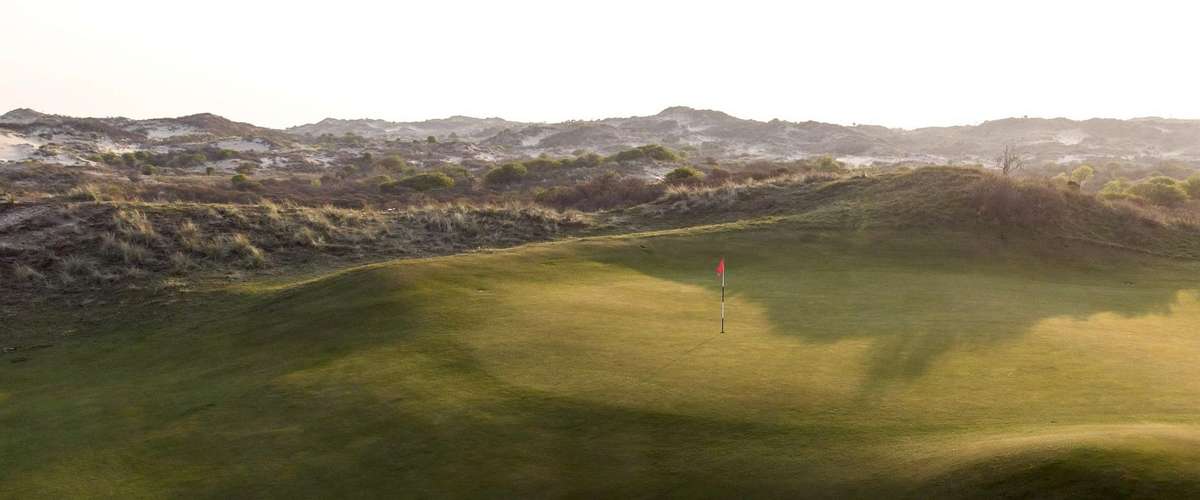
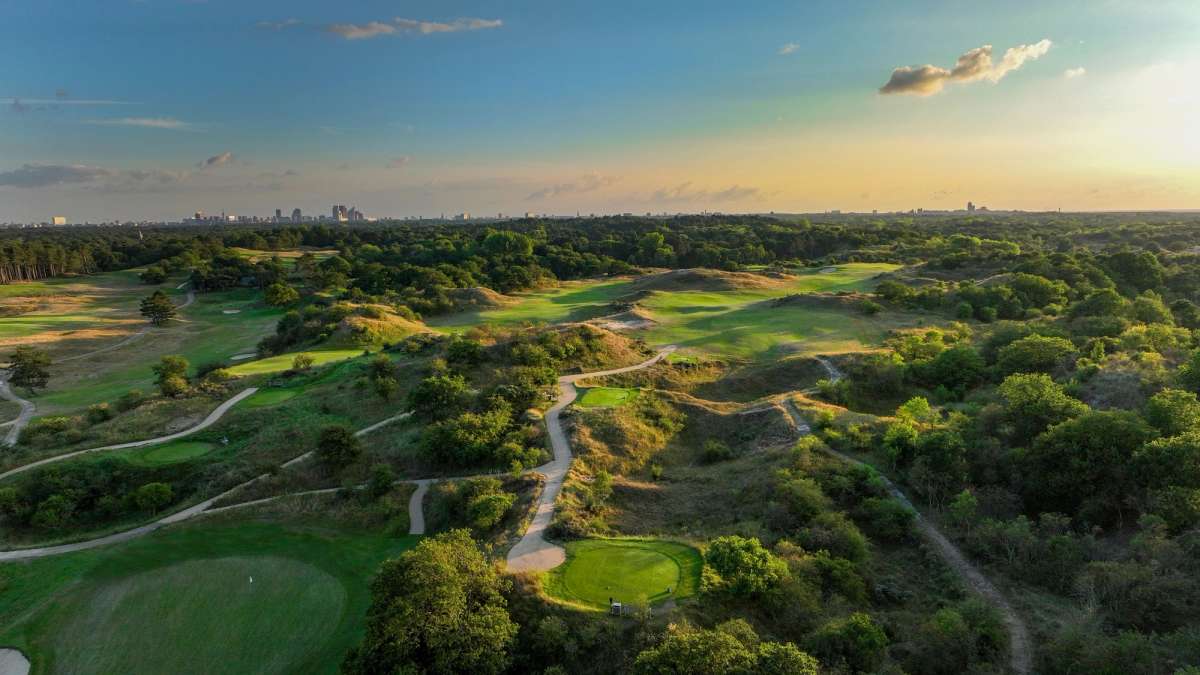
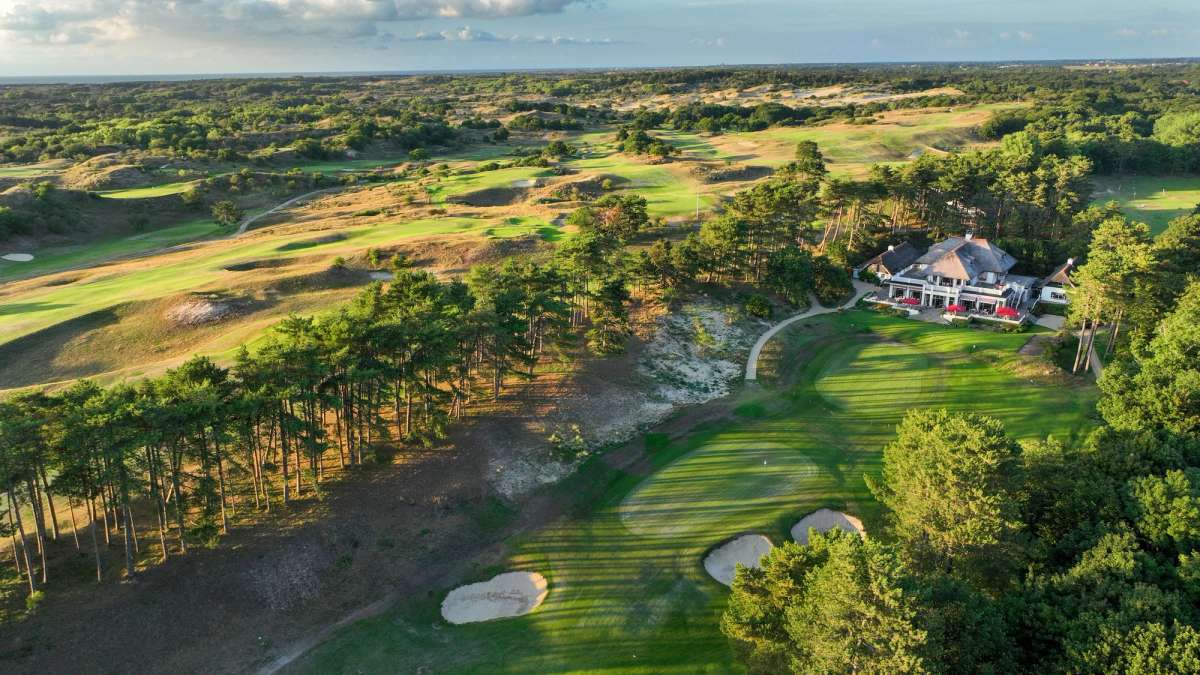
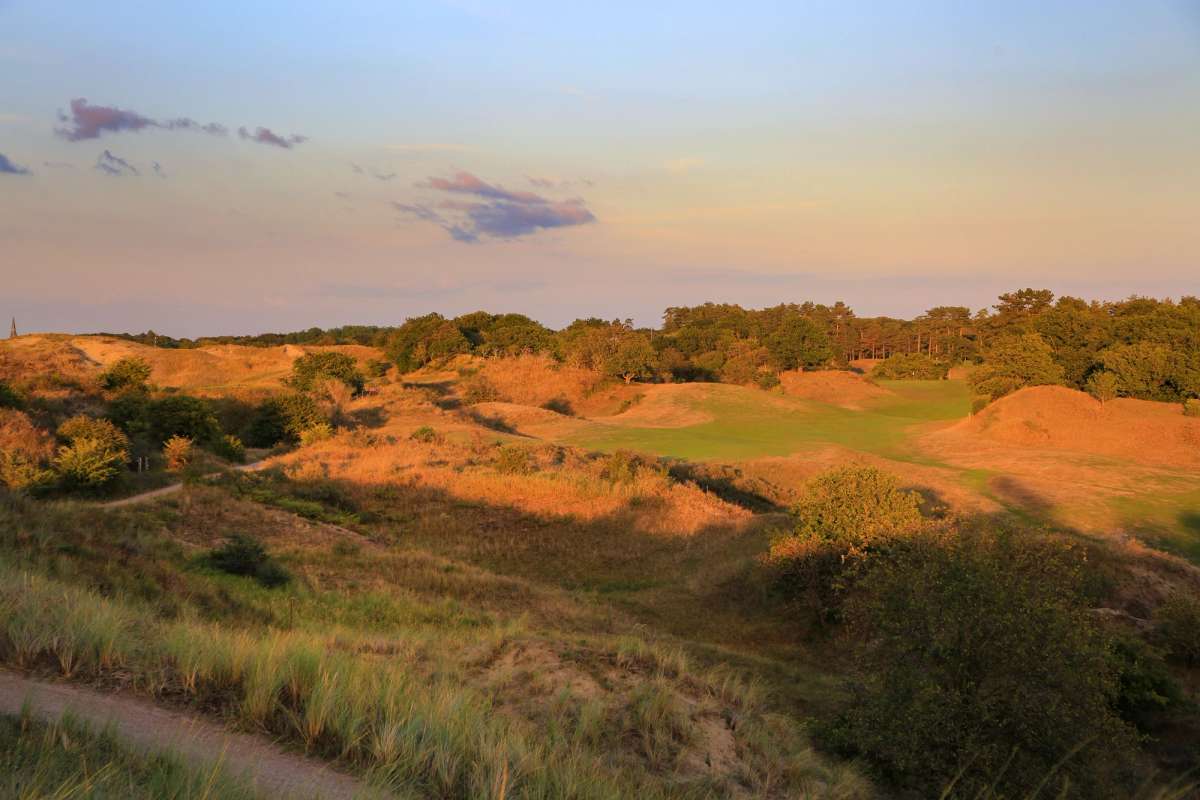
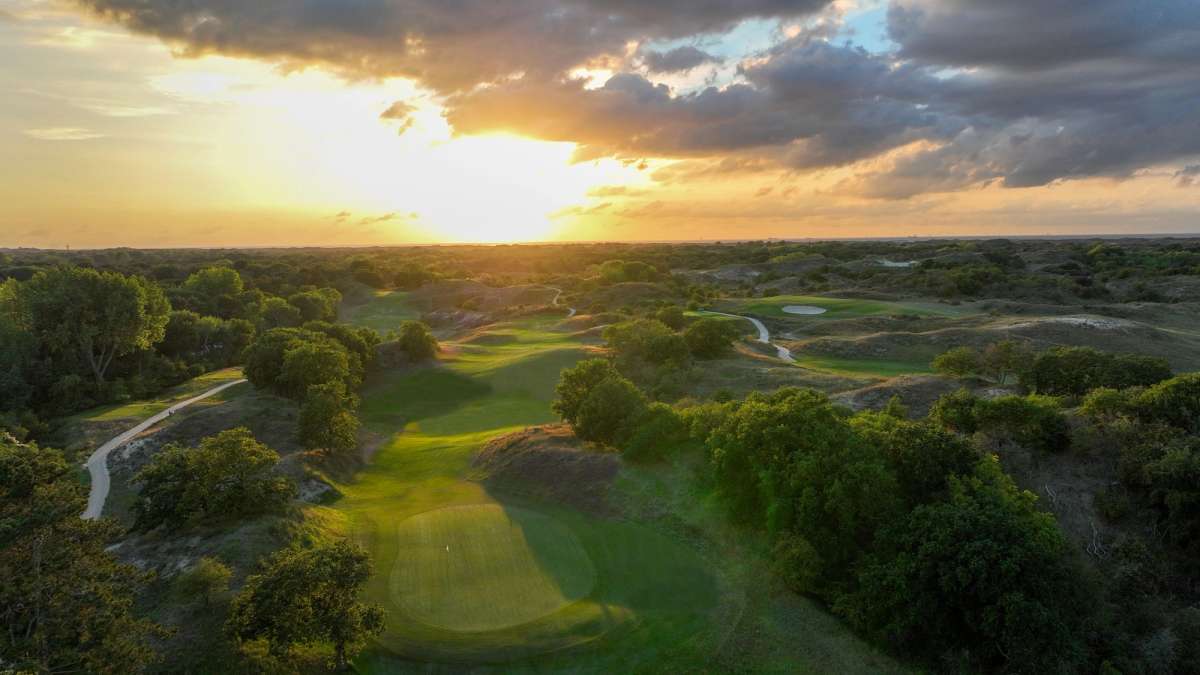
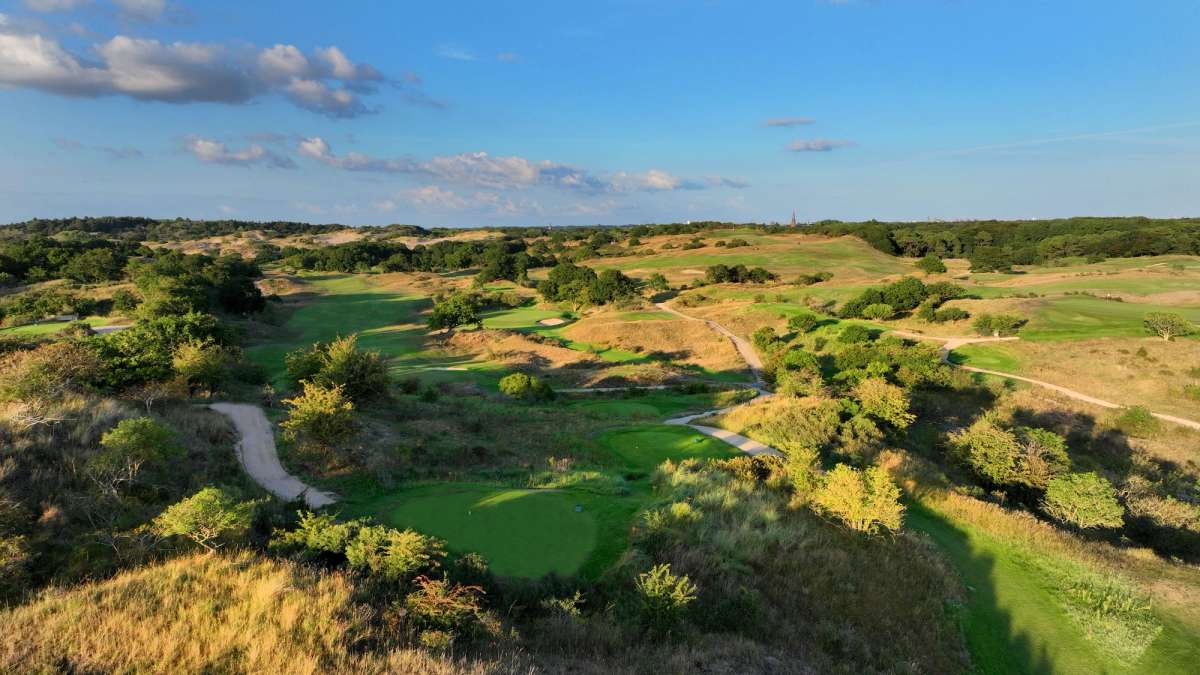
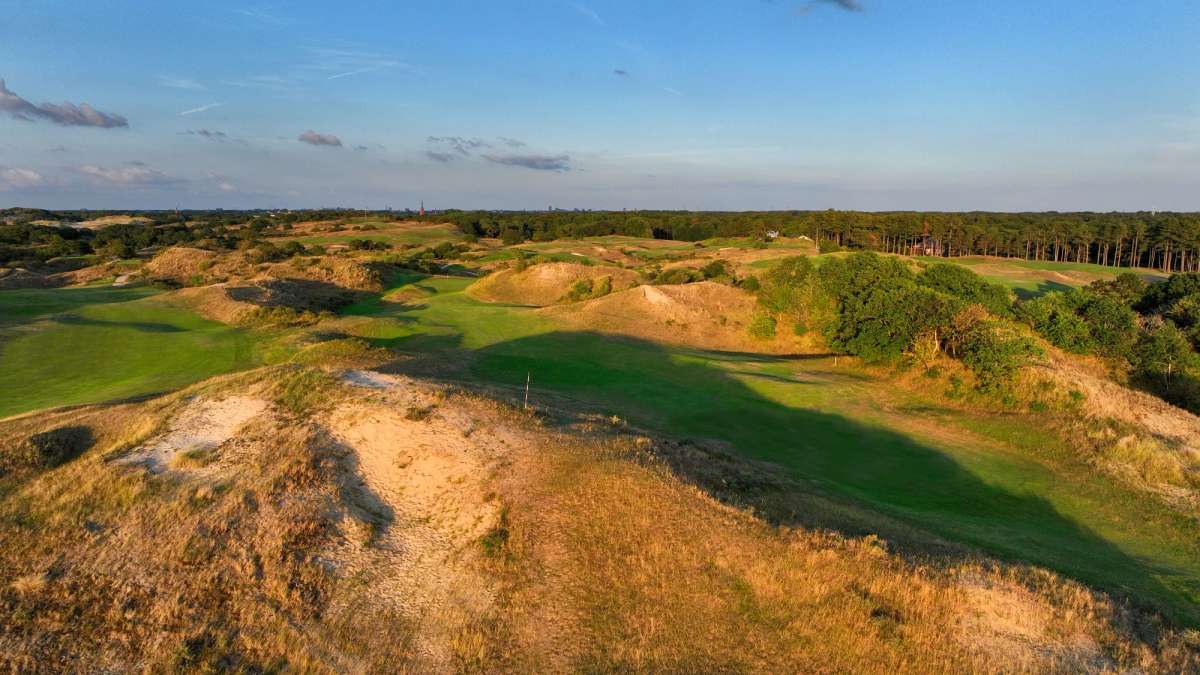
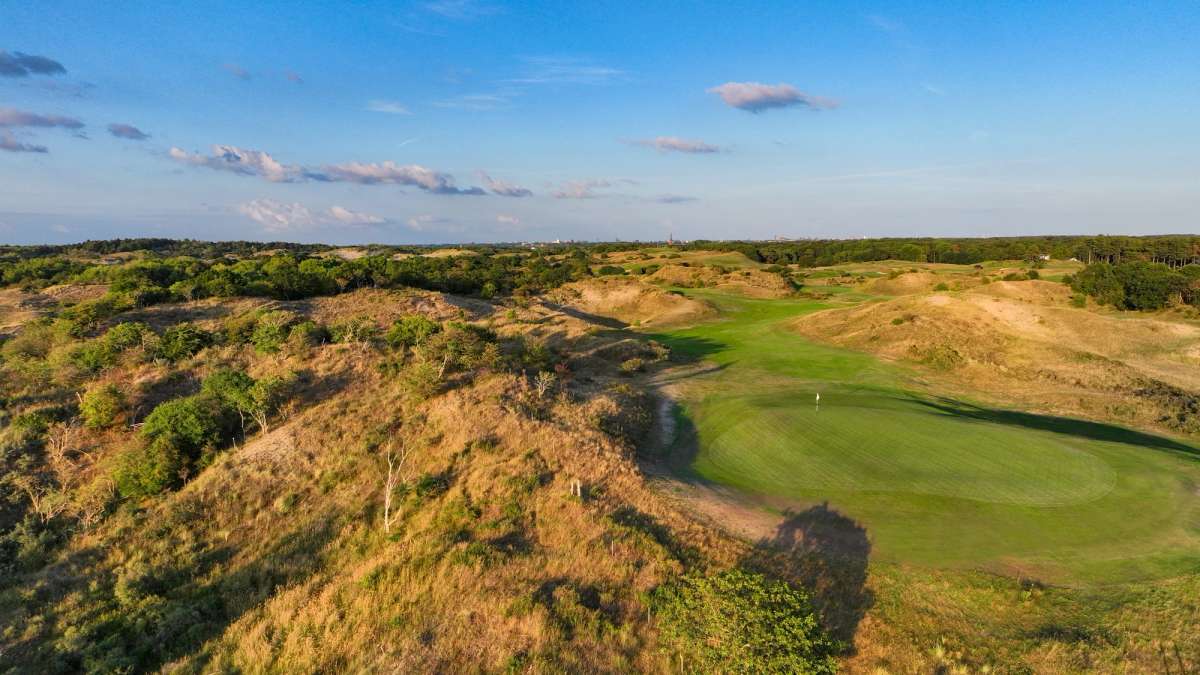
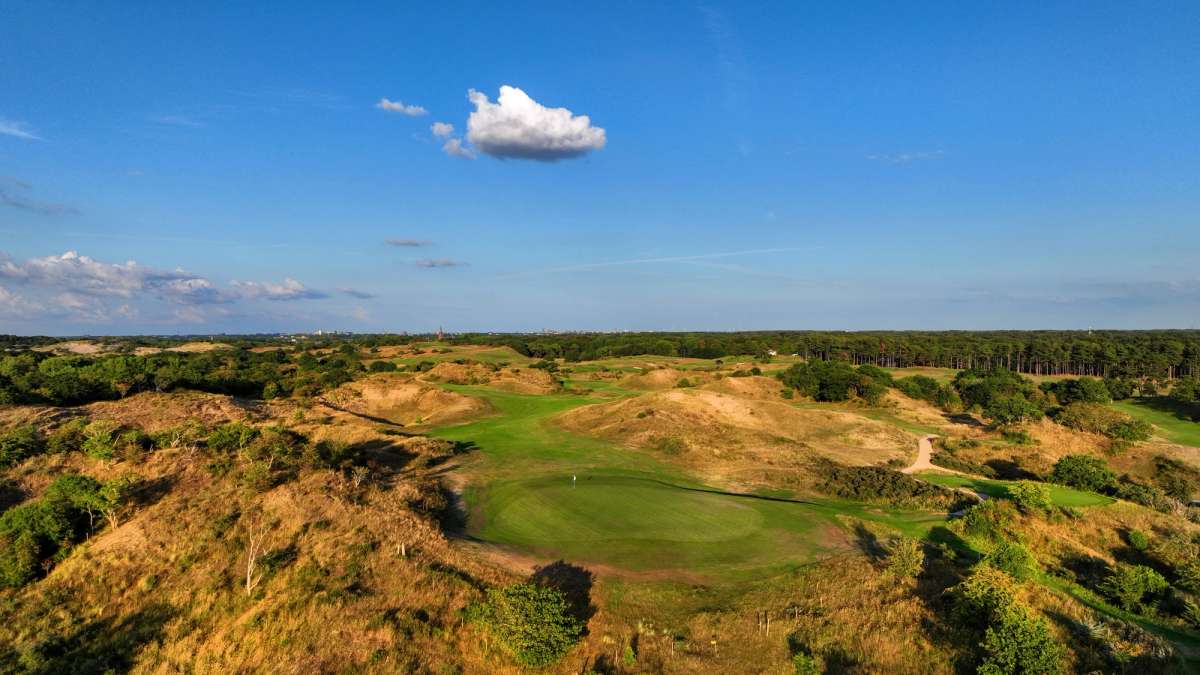
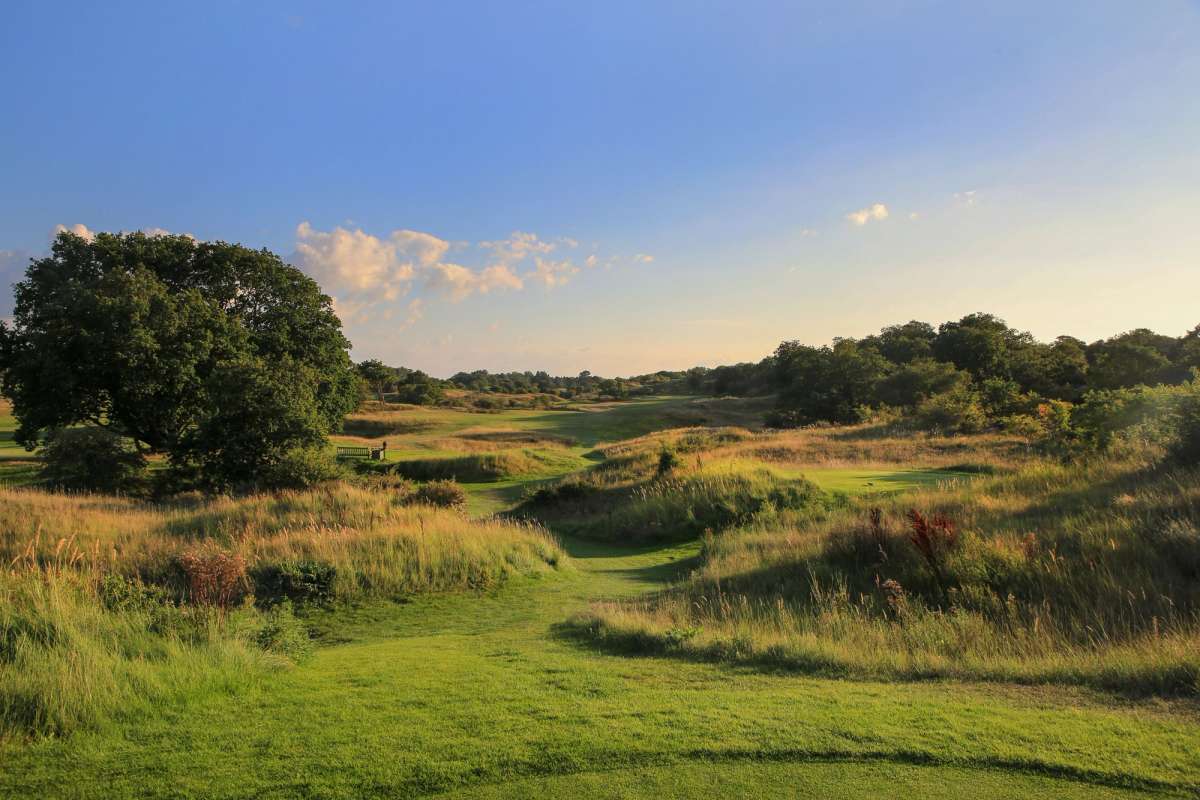
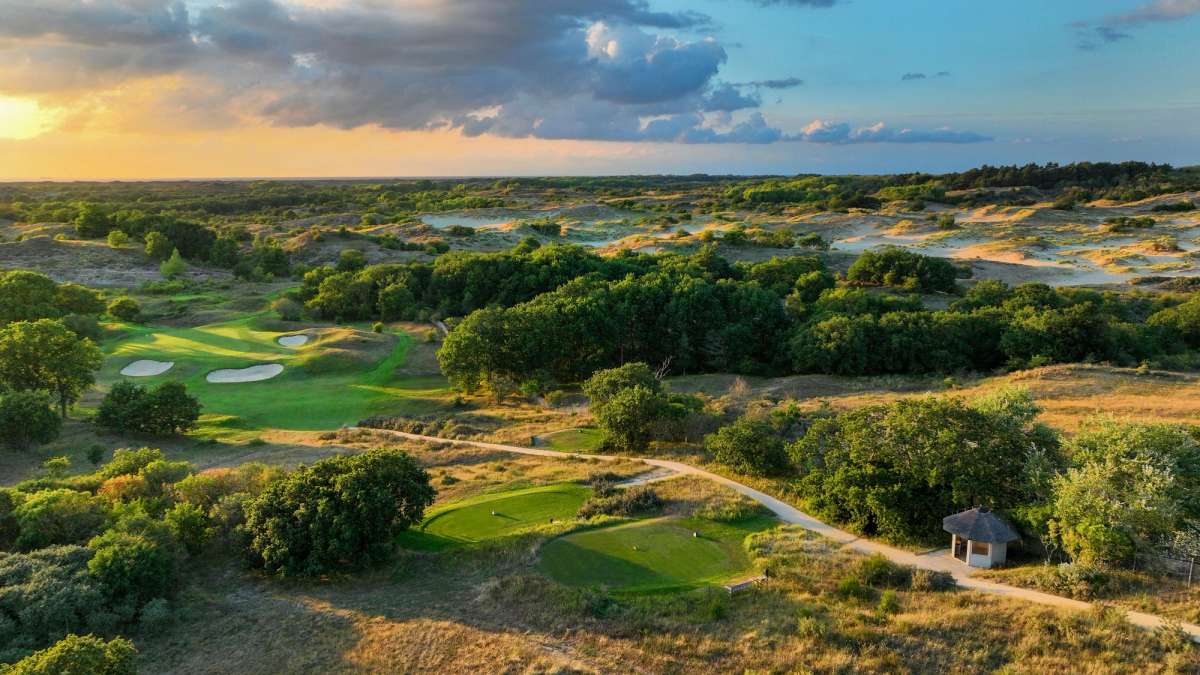
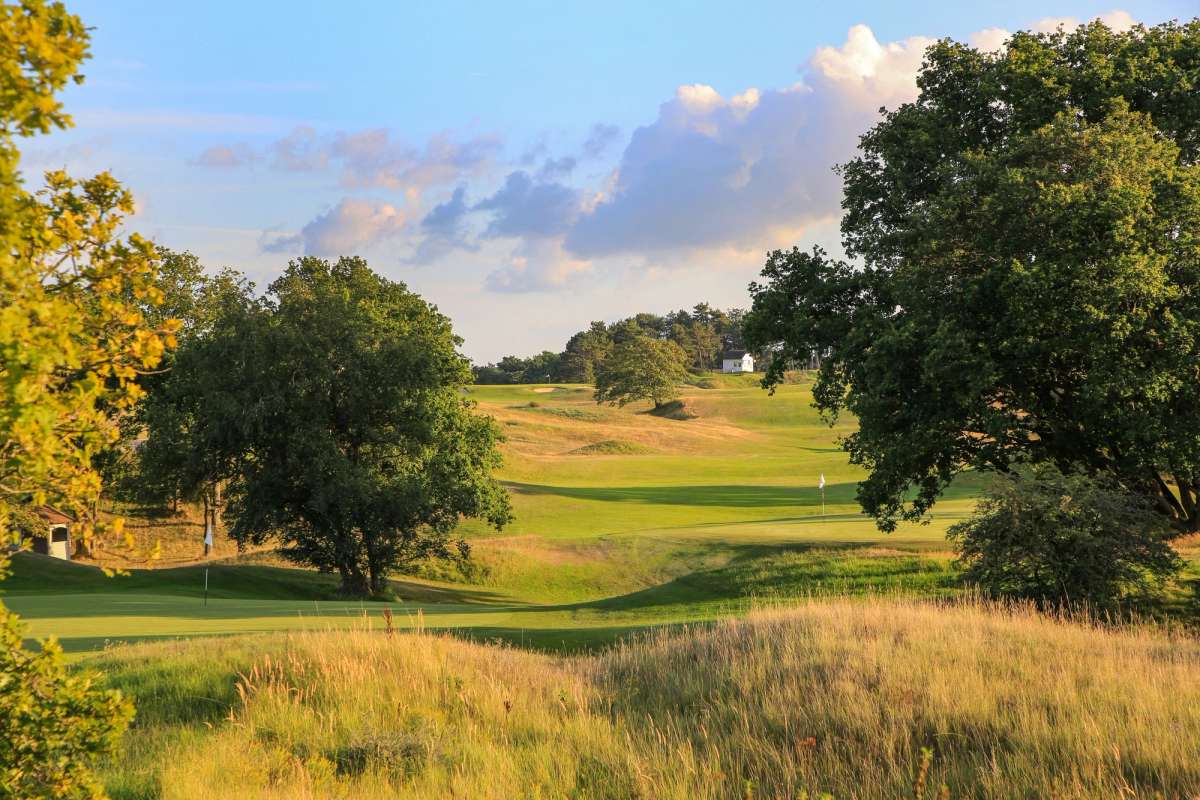
The similarity between this Dutch linksland and that of the British coastline is uncanny. Koninklijke Haagsche Golf & Country Club (or Royal Hague) is an exacting layout which pitches and rolls across undulating land.
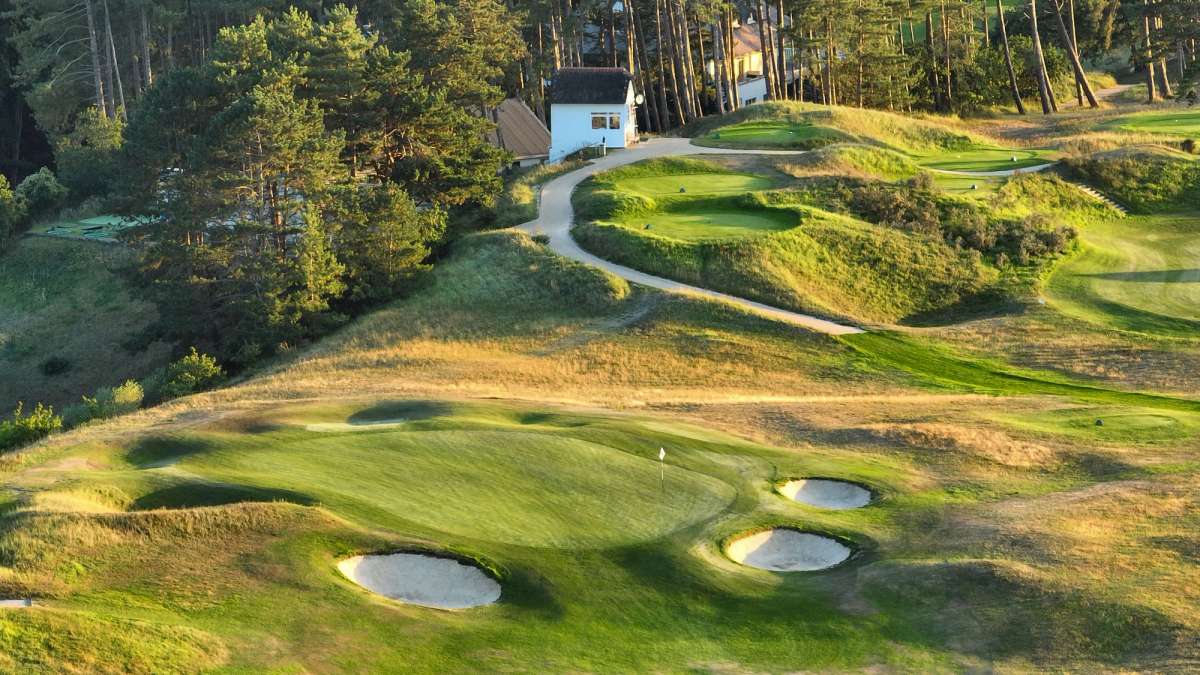
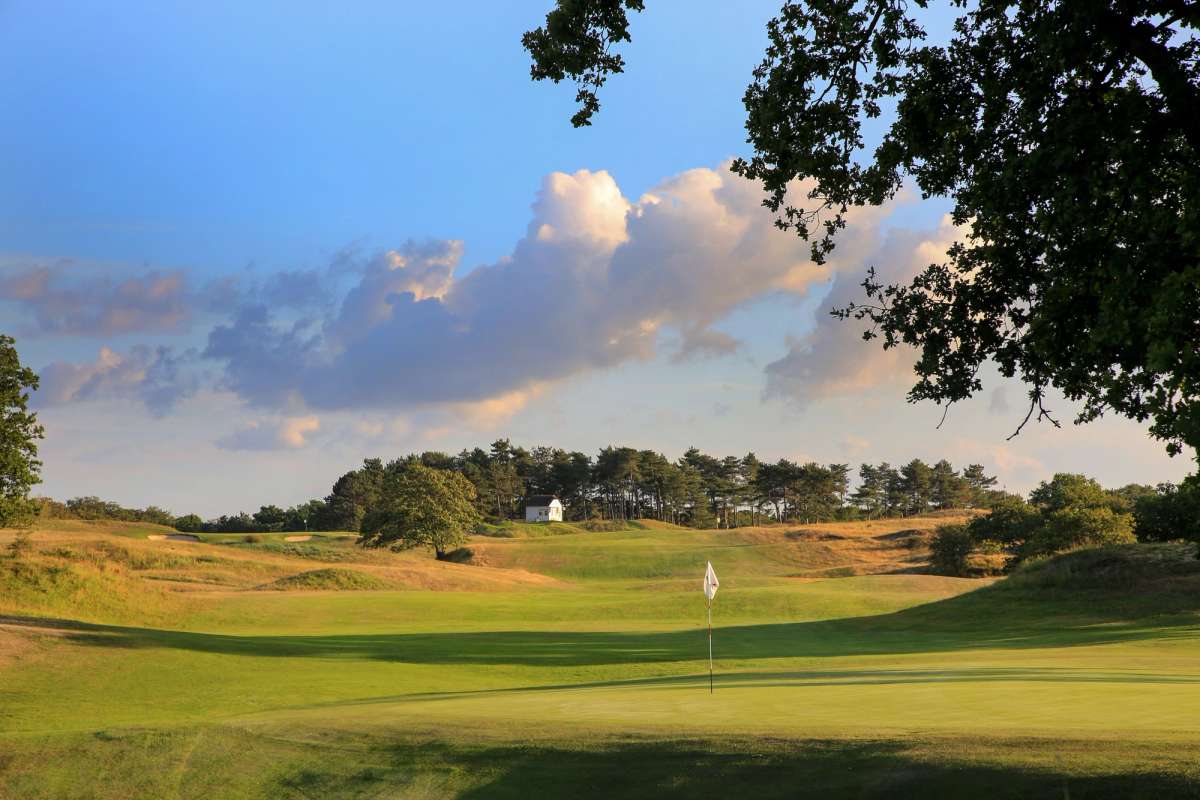
Koninklijke Haagsche Golf & Country Club (Royal Hague)
The similarity between this Dutch linksland and that of the British coastline is uncanny. Koninklijke Haagsche Golf & Country Club (or Royal Hague) is an exacting layout which pitches and rolls across undulating land.

5
Rated # 1 in Netherlands, and with the highest price of EUR 225 pp including pull trolley, we had very high expectations given the stunning standard of the other leading golf courses in the Netherlands we played. The course is located a relatively short distance north of Den Haag and the final couple of miles one drives through the stately area of Wassenaar with its many historic country mansions of very large proportions. This is quite a contrast to the canal terrace houses of Amsterdam and Utrecht. The entrance to the golf course is modest and easily missed – as with many of the top courses, we drove up a very long driveway, narrow with a row of trees planted each side of the road. The course is a classic and well worth playing. Many holes feature hidden shots and more times than not you cannot see the green from the tee. The course is hard and fast and a classic links course. However, the course was not my favourite and I would prefer both Utrechtse de Pan and Kennemer. Of major concern was that several of the holes have severe side hill lies such that it was near impossible to hit the fairway and not finish in the rough (particularly true for holes 2 and 9). The course most closely reminded us of Royal County Down with the many hills to hit over with totally blind shots. There are tall white poles to assist but as with Royal County Down you are never quite sure which tees the tall poles are designed for when the different tees are well spread. This is a tough course for the ladies with, at times, long carries over serious trouble to reach fairways – my wife’s 19 handicap was converted from 19 to 26 under the slope system – and this was off 5,000 metre red tees. Encourage men to hit off the yellow tees at 5,850 metres as the longer white tees could present serious challenges on some holes where they can be up to 90 metres longer tee shots. Notwithstanding my perhaps picky comments, there are some wonderful holes on the course and this is a must play course.
David John Cooper

The Top 100 Team caught up with David Davis Co-founder of LockHart Travel Club to discuss another awesome trip to The Netherlands. “A group of Lockhart members ventured to the little known but very underrated golf country of The Netherlands. Known for windmills, tulips, wooden shoes and more than its fair share of rain, this little country packs a serious punch when it comes to World Class Golf”. The Netherlands, the flattest country in the world…until you play golf. With most of our members arriving on Saturday to recoup and refresh, we indulged in a private canal tour through none other than the majestic canals of Amsterdam. Debating golf, golf courses and golf architecture for a couple hours while enjoying some cold drinks on our classic salon boat. We all agreed that life in that moment was pretty darn special with several days of World Class golf to follow. Sunday, we left Amsterdam for a short 30 minute drive up the coast to Noordwijk aan Zee, home of the Noordwijkse Golf Club. No need to try and pronounce it, we offered assistance in that prior to arrival. With rain the entire morning we’d prepared the group for a wet and very windy day. The disappointment could be sensed when the skies opened shortly after we teed off and the sun and wind served up a magical afternoon. Noordwijkse has just approved a long awaited and complete renovation which includes 3 completely new holes with new greens and surrounds befitting a world class links course. Martin Ebert is the architect of choice, and the club is hoping for improvements the likes of Turnberry and Portrush. Miraculously, this set the tone for the week and the Golf Gods were most certainly on our side. To top off the day, that night we dined in one of the best fish restaurants in Amsterdam, Vis a/d Schelde, a perfect day! Monday morning we jumped into the van for the 1.5 hour trek to the Eindhovensche Golf Club which sits down south near the Belgium border. The rain had reached biblical proportions during the night and the club was closed. Luckily we know some important people at the club there and they called ahead to the superintendent and reminded them that the Lockhart gentlemen were on the way. The positive answer came as we were already underway. They would open the course for us at 12:30 pm. The biblical rains followed us for most the trip down. 30 minutes out it was dry and remained so until we were sitting with beers on the 19th hole. Our best guess, the boys from Florida, Spain and The Bahamas brought some good weather karma along. Eindhovensche is a classic Harry Colt design where the club is working extensively to remove trees and open up vistas on the course as well as regenerate heather. A strong routing, it also has a pair of truly all-world golf holes in the short, drivable par 4 second and the short par 4, 5th hole. Tuesday was to be a very special day with a visit to the World Top 100 – Koninklijke Haagsche Golf and Country Club. One of C.H. Alison’s legacies to the golf world, Hirono and Kawana widely considered the others. Note, if it’s not obvious, the name was chosen because of its strong international marketing potential. Needless to say, nobody passed the preparatory pronunciation training on this one. Royal Hague as most of the world knows it, is a wild ride and truly one of the most undulated walking courses you will find anywhere. That starts with the steep uphill hike from the club house to the starters hut at the first tee. By the time you reach the third fairway, your daily hill climb workout can be checked off and unless you are a mountain goat your legs will be burning. This wild ride continues from start to finish with blind shots, few flat lies, crowned greens and plenty of wind to contend with. Utrechtse Golfclub de Pan is one of our favorite courses on the entire European continent and it would be very difficult to dream up a more fitting setting and wonderful course to end our NL adventure. De Pan as locals call it, has also been ranked well inside the World Top 100 for a number of years now. World class golf holes are a dime a dozen at De Pan which benefits from one of Harry Colt’s best routings on a tight little property. The stretch of holes from the double blind shot par 4, 6th right on through to the reachable par 5, 18th could hold its own in any argument for the best 13 hole stretch of golf holes on the planet. Needless to say, the entire group left wanting to go straight back out for another go. That’s about the best we could ask for. Register Your Member Application with Lockhart Travel Club With plenty of golf on the horizon for 2024, join our next adventure and sign up for one of our great upcoming trips today! Click Here to Learn More About Lockhart Travel Club
Koninklijke Haagsche Golf & Country Club Our Benelux correspondent takes a long hard look at De Haagsche November 2011 All photographs courtesy of Koninklijke Haagsche Golf & Country Club If you’ve ever wondered how a golf course receives the designation of Royal (Koninklijk) all you have to do is pay a visit to Koninklijke Haagsche (De Haagsche) Golf & Country Club and you will quickly understand. Truth be known, in the Netherlands the title Koninklijke (Royal) is a title that must be requested, for sport clubs it can only be requested by a very special anniversary. In the case of De Haagsche this request was made and bestowed upon it in 1993 when the club celebrated its Centennial (100-year) anniversary. The US country club idea is for some reason a concept that hasn’t really seemed to catch on in Europe perhaps that’s due to the fact that it brings with it much higher membership fees and creates a lot more work for the facilities or perhaps it’s just a matter of history and the fact that many of the courses far outdate the concept all together. In any case, De Haagsche comes as close to this concept as I’ve yet to see on this side of the pond. Beautiful tennis courts, a complete fitness facility and an enormous, warm and inviting clubhouse that just gives the feeling you need to stay for dinner and later gather around the fireplace for drinks. All this and I’ve not even started on the golf yet. Right out of the starting gate it becomes abundantly clear that a round of golf at De Haagsche is truly like a wild roller coaster ride. Literally, this may well be the most undulated course I’ve ever experienced. Hands down by far the most undulated in The Netherlands otherwise known to be the flattest country in the world. The landscape moves like the swales of the North Sea on a windy day. This makes the importance of a few extra meters on your drives often tremendous and the difference between hitting a blind 4 iron and a pitching wedge approach on many different holes. Another challenge as you might be able to imagine is that this also means that flat lies are pretty rare and blind shots on approaches abundant. One of the other special features of De Haagsche are their green complexes, a large part of the renovation made by Frank Pont in an attempt to restore De Haagsche back to how Colt/Alison had intended it to be played. Personally I found them enormous for Dutch standards on average 25-30 meters deep. I do have to note that nearly all the greens have false fronts and sides on them and many seem to be crowned so that the ball is always rolling back off the greens, over the greens or off either side, of course that might have just been me as well. In any case it left me asking myself how I could possibly miss a green taking up 750 square meters of space from 130 meters out. Visually the greens really play tricks on you if you don’t know them. Once on the greens, if you make it that far, there are plenty of subtle undulations making reading lines rather challenging, especially with 30 meter putts. The layout of the course is nothing less than spectacular, that being said it’s a course really designed for strong players, I’d even go as far as to say single handicappers. With few exceptions, single handicappers from most clubs will quickly understand that not all golf courses are created equal as are not all golf course architects. Some are just plain devious and sadistic, not satisfied to tire you mentally but yearning to see you break down physically as well. Rumor has it that may have been Alison’s/Pont’s doing here at De Haagsche since that’s not a typical characteristic of Colt’s courses. The course does allow you to ease your way into the game which is something I’m growing to appreciate (incidentally a characteristic of many Colt Courses) more and more especially when hitting the first tee without warming up. Similar to De Pan (another Colt gem in The Netherlands), De Haagsche starts with a relatively short par 5. However that doesn’t make it easy, as many of the greens, it takes quite a shot to hold this green if you go for it in two. Fly the greens here with mid to low irons and you will almost certainly roll off them someplace and playing a links type shot to roll the balls onto the greens will not always work do to strategically placed hazards. Such is the case with the first hole that has an inviting bunker with a rather strong gravitational pull right in front of the green. All roads lead to the beach which seemed to be a theme for the start of my round. The theme of the 2nd and 3rd holes was stay left and hit it far. The 2nd fairway slopes drastically from left to right then plays to an elevated green protected by bunkers. The 3rd hole requires a forced carry ranging from about 160-200 meters over a small valley with a dog legged approach to a back-to-front sloping green with a false front and large drop off on the right side with stories of 5 putts ringing through the air. If you were able to follow that last sentence I assume the hole will not be too much trouble for you. Personally I think the course really comes alive at the 4th hole. A 202-meter elevated par 3 to an undulated very large green protected by bunkers. If it doesn’t sound challenging enough, just add wind. The 5th is a solid narrow par 5 that is not long but often plays into the prevailing wind adding the necessary extra challenge. The 6th hole is a monster of a 428-meter par 4, again into the prevailing wind. If the length doesn’t get you, the tricky right to left sloping and undulated green will. Basically you’ve got one chance here and that’s to be on the middle of the green. With a large bunker front left, the fairway and green sloping to the lefts but also having a run off to the right and back your short game will certainly be put to the test. If you’ve made it this far the 7th hole rewards you with a great blind tee shot requiring a 200-meter carry from the back tees. Extra points if you can hit the aiming pole up on the hill. The fairway is more generous than you realize but you’ll have to wait in order to see that. A good drive leaves a short iron approach to a very large green that is only partially in view from the center to right half of the fairway due to the fact that the right side is tucked behind a dune. The 8th is another brilliant par 3 from a highly elevated tee once again, playing at 209 meters and protected by a sole bunker on the right front plus run offs all around. It’s no wonder this is the second easiest hole on the course. I digress… Number 9 is a short par 4 leading back up and down and up to the starter's hut. This hole reminded me of the 2nd hole both in terms of the undulated fairway and the elevated green protected by a single bunker on the front right and while the second hole was protected by 3 bunkers I was grateful to have the opportunity to give the exact same shot another go. Half way there, trust me, the fun is really just beginning. The 10th is a short par 5 with another roller coaster fairway. It’s lined on the left by an extremely peculiar row of fir trees, apparently planted in the 1920s for some sort of work being done in the south of The Netherlands. Incidentally, they just dare you to hit left and indeed it’s the left side you need to favor on this hole, I took the right never being one to conform. The green is tricky and elevated. The 11th is a great driving hole where all the danger is blocked out by trees giving you the impression the fairway is huge and you can swing away. I did. The approach is to yet another tricky green with run offs all around. The 12th is a great little par 3 (153 meters) over a small valley to another large green sloping right to left protected by a single bunker on the right front. Add wind and this hole will certainly play havoc. I’d call this a bit of the calm before the storm as once you reach 13 the course starts to bear down on you. 13 is a long par 4 with a dogleg left and a narrow landing area. The approach is extremely tough to a long green of about 45 meters tucked into a dune and protected by a bunker front right. I believe the 14th receives my vote as my favorite hole on the course. The hole is very beautiful and running up through the valley surrounded by dunes. The tee shot is visually mind boggling requiring you to hit your drive against your better judgment to the right side leaving a tough mid iron approach to a very highly elevated green. I came up a half a meter short and rolled 50 meters back down the hill. It was at this point I believe to have heard Alison rolling over in his grave laughing as I continuously managed to misjudge the elevated greens. The 15th was almost equally enjoyable and running back along the 14th from an elevated tee to a green tucked into the dunes. The 16th hole was to be a decisive one for me. A challenging drive to a left to right sloping fairway which I managed leaving me 135 meters to a green 25 meters wide x 25 meters deep protected by three bunkers front right. From the first cut I hit a very high 8 iron about 2 meters onto the left front of the green which was probably the best I could do. The ball however managed to roll 20 meters through the green and off the back into the rough. Thus solidifying the pending thoughts of how fair and playable the new green complexes are granted this was a first effort. This green essentially needed to be approached as many at De Haagsche with either a very short iron or a links style land it short and run it up type of shot. However, the bunkering all but prohibits this in many cases. The 17th and 18th are great finishing holes. The 17th another great little par 3 protected by bunkers, an undulated green and severe run offs on the front and left sides. As you approach the 18th you believe you’ve left the dunes behind for a parkland course and what faces you is one of the most visually intimidating drives on the course from a highly elevated tee. The majestic clubhouse and wonderful 19th hole only a par 5’s worth of shots away. In this case somewhere between 5 to 10 shots on average but that’s just my guess. In summing up the experience I have to say De Haagsche is a great course, steeped in tradition and designed by a great architectural team in Colt and Alison. It’s a must play for sure but having played around 30 Colt courses I personally didn’t leave here seeing many similarities, which certainly doesn’t take away from the wonderful experience. It’s a course that I would definitely say is suited to stronger single handicap players and quite difficult for anyone else. My only criticism would be in the new green complexes and a couple bunkers that I question are appropriate for a Colt/Alison design which left me wondering what they might have thought had they joined me for this round. The greens are tremendous in size, undulated and in some cases bordering on too difficult and unfair due to the fact that they are very hard however not really allowing for traditional bump and run approaches due to the bunkering and severe slopes. It is also mentionable that even though they are large, as a result of all the run offs (false sides/fronts), they don’t allow for much variety in pin positioning. My opinion has been based on a day when they were rolling quite slow, catch them in the summer cut down and running around 10 or more on the stimp meter and they will just be too challenging. In my experience I just can’t place that by other Colt/Alison courses. 10+ handicappers will struggle to hold the greens that they hit and suffer severely with the extremely challenging putting and chipping around the greens. What surprises me further is that this difficulty has not been recognized by the Dutch Golf Federation in creating an appropriate slope and course rating comparable to the rest of The Netherlands. I’d be willing to bet handicaps at the club have soared since the changes. That being said, I’m not at all opposed to challenging golf as long as it remains fair and fun. Slight criticism aside, there is no question the entire experience can best be described as “Koninklijk” or fit for a king, however, playing the course well will be equally as challenging as pronouncing it correctly, for a native English speaker that is! David Davis.

You don't need a four-figure budget, a private-club connection or an invitation from a member to play a course in the World Top 100. Top100 has collated the 10 cheapest visitor-accessible courses on our current World Top 100 Ranking, based on standard green fees. From a world-class links in Tasmania to a U.S. Open and Ryder Cup venue in New York, these courses offer the chance to play some of the best golf on the planet without the eye-watering green fees attached to many of their World Top 100 counterparts. 1. St Andrews Beach Golf Course (Victoria, Australia) World Ranking: 89th | Australia ranking: 6th | Green fee: A$139 (£74) Tom Doak’s first Australian mainland design, St Andrews Beach opened in 2004 on the Mornington Peninsula and has since become one of the country’s best-value, ranked courses. The public-access layout occupies 175 hectares of former grazing land, with wide fairways, rolling terrain and sandy natural contours that give several holes a links-like feel. Measuring just over 6,000 metres from the back tees, it is playable for a broad range of golfers, though the subtle greens ensure there is still plenty to think about. In a region known for outstanding golf, St Andrews Beach stands out not only for its quality but also for its accessibility, offering everyday golfers the chance to experience a Tom Doak design without the premium price tag often attached to courses of this calibre. 2. Bethpage Black (New York, USA) World Ranking: 58th | USA ranking: 28th | Green fee: From US$140 (£106) Bethpage Black has the rare distinction of being a World Top 100 course, a major championship venue and a public golf course. Located within Bethpage State Park on Long Island, the A.W. Tillinghast design opened in 1936 and has since hosted two U.S. Opens and the 2025 Ryder Cup. The Black is renowned for its difficulty, with narrow fairways, deep rough, large sculpted bunkers and elevated greens making accuracy essential. It is a demanding test, but one that remains remarkably accessible to everyday golfers. That combination of championship pedigree and public access is what makes Bethpage Black so unusual. Few golfers get the chance to play a course of this stature without needing a private-club connection or resort stay. 3. Paraparaumu Beach Golf Club (Wellington, New Zealand) World Ranking: 91st | New Zealand ranking: 2nd | Green fee: NZ$275 (£118) Set on the Kapiti Coast, north of New Zealand's capital city Wellington, Paraparaumu Beach has been one of the country’s most celebrated golf courses since Alex Russell designed it in 1949. The links has hosted 12 New Zealand Opens and has long been regarded as one of the country’s finest layouts. It is a relatively short course by modern championship standards, but the coastal wind, firm fairways, deep bunkers and undulating greens provide plenty of challenge. The split-fairway 17th is a particular highlight, forcing golfers to choose between two very different routes to the green. For international golfers, Paraparaumu offers the chance to experience a genuine piece of New Zealand golfing history without needing access to a private resort. 4. Fairmont Jasper Park Lodge Golf Course (Alberta, Canada) World Ranking: 73rd | Canada ranking: 2nd | Green fee: C$280 (£149) Set among the Canadian Rockies in Jasper National Park, Fairmont Jasper Park Lodge is one of Stanley Thompson’s most celebrated designs. Opened in 1925, the course winds through the valley beside Lake Beauvert, with snow-capped peaks providing a backdrop to almost every hole. The course combines wide fairways, elevated tees and strategically placed bunkers with the natural contours of the landscape. Thompson’s design rewards thoughtful play rather than simply demanding power, making it a course that can be enjoyed by golfers of different abilities. The result is a rare combination of classic golf and Canadian wilderness, with the surrounding mountains and forest making the journey between shots almost as memorable as the golf itself. 5. Barnbougle - The Dunes Course (Tasmania, Australia) World Ranking: 25th | Australia ranking: 3rd | Green fee: A$285 (£151) Barnbougle Dunes is about as close as Australia gets to a traditional seaside links. Set on Tasmania’s northeast coast, the course was designed by Tom Doak and Australian Mike Clayton and opened in 2004, establishing Barnbougle as one of the country’s premier golf destinations. The layout runs through towering coastal dunes, with wide fairways, natural contours and greens that follow the movement of the land. The wind is an ever-present factor, while the strategic design rewards golfers who think their way around the course rather than simply relying on power. For golfers seeking a genuine links experience outside the British Isles, Barnbougle Dunes is about as compelling as it gets, combining world-class golf with the rugged coastline of Tasmania. 6. Cape Wickham Golf Links (Tasmania, Australia) World Ranking: 47th | Australia ranking: 4th | Green fee: A$315 (£167) Cape Wickham occupies a spectacular stretch of coastline on King Island, sitting in Bass Strait between Tasmania and mainland Australia. Designed by American architect Mike DeVries, the links opened in 2015 and quickly established itself as one of the country's standout modern courses. The course makes the most of its remote coastal setting, with the opening five holes winding around Cape Farewell before the layout moves through sand hills and limestone outcrops. Several holes hug the shoreline, while the closing stretch heads towards the imposing Cape Wickham Lighthouse. The 18th provides a fitting finale, with the fairway doglegging around a sandy bay before reaching the home green, making Cape Wickham a memorable links experience from start to finish. 7. St Enodoc Golf Club - Church Course (Cornwall, England) World Ranking: 49th | England ranking: 4th | Green fee: £175 Set among towering dunes overlooking the Camel Estuary in Cornwall, St Enodoc’s Church Course is one of James Braid’s most distinctive designs. Founded in 1891, the course was transformed by Braid in the early 20th century and remains a spectacularly natural links. It is a relatively short par 69 at 6,010 metres, but its undulating fairways, dramatic elevation changes and formidable dunes create a test that demands imagination. The famous 6th is the standout, with the enormous Himalaya dune obscuring the green and making club selection particularly difficult. The course also has an unusual piece of history, with the 13th hole running alongside the churchyard where poet laureate John Betjeman is buried. 8. South Cape Owners Club (Gyeongsangnam-do, South Korea) World Ranking: 63rd | South Korea ranking: 2nd | Green fee: From KRW 350,000 (£195) Set on Namhae Island off the southeast coast of South Korea, South Cape Owners Club is a dramatic Kyle Phillips design where the ocean is visible from all 18 holes. The course opened in 2013 as part of a luxury resort development and has quickly established itself among Asia's most striking modern layouts. The course is framed by granite outcrops, coastal cliffs and rolling terrain, with bluegrass fairways contrasting against fine fescue rough. The standout stretch comes from the 11th onwards, culminating in two spectacular waterside par threes at the 14th and 16th. For golfers willing to make the journey to Namhae Island, South Cape offers a rare combination of world-class golf, dramatic coastal scenery and a luxury resort experience. 9. Utrecht De Pan Golf Club (Utrecht, Netherlands) World Ranking: 56th | Netherlands ranking: 1st | Green fee: From €235 (£198) Dating back to 1894, Utrecht De Pan is the second-oldest golf club in the Netherlands, with Harry Colt designing the current course in 1929. Set in secluded woodland near Utrecht, the layout is a classic heathland course, winding through pine, birch, oak and chestnut trees. De Pan has hosted the Dutch Open three times and is built around strategic rather than power golf. Several of its most memorable holes play over valleys of heather and sand, while the sixth and seventh demand particularly thoughtful tee shots and approaches. Recent restoration work by Frank Pont has helped return the course towards Colt’s original design, making De Pan a fascinating example of Golden Age heathland golf in the Netherlands. 10. Cruden Bay Golf Club - Championship Course (Aberdeenshire, Scotland) World Ranking: 70th | Scotland ranking: 10th | Green fee: From £205 Cruden Bay is one of Scotland’s most distinctive links, winding through towering dunes on the Aberdeenshire coast with the North Sea providing a constant backdrop. The course opened in 1899 after being laid out by Old Tom Morris and Archie Simpson, before Tom Simpson and Herbert Fowler remodelled it in 1926. Cruden Bay makes spectacular use of its natural terrain, with elevated tees, blind drives, punchbowl greens and fairways that rise and fall between the dunes. The 193-yard 4th, played from an elevated tee across a deep hollow, is one of several standout holes. There is plenty of character, too, from driveable par fours and back-to-back par threes to the feeling that every hole reveals something different. It is exactly the sort of course that rewards golfers willing to embrace its quirks. Green fees are based on standard 18-hole visitor rates, using international visitor rates where applicable. All prices are peak-season rates and do not take twilight, off-season or promotional rates into account. Prices are correct at the time of writing and are subject to change.
The latest ranking of the Top 100 Golf Courses in the World serves as the ultimate global golf bucket list. Most members of our World Top 100 Panel are seasoned golfers, each playing 20-30 of these courses annually while travelling extensively over decades to form their opinions on others. We recognise that opinions vary—even among our panel members. Rankings are subjective, and there are undoubtedly 50 or more courses in the UK and USA alone that could easily fit onto this list. Links Golf Pilgrimages The rankings
Nova Scotia, Canada
England, United Kingdom
Zuid-Holland, Netherlands
Wisconsin, United States
Scotland, United Kingdom