Along the Little Lehigh Creek lies the private Lehigh Country Club which celebrated its centenary in 2010.

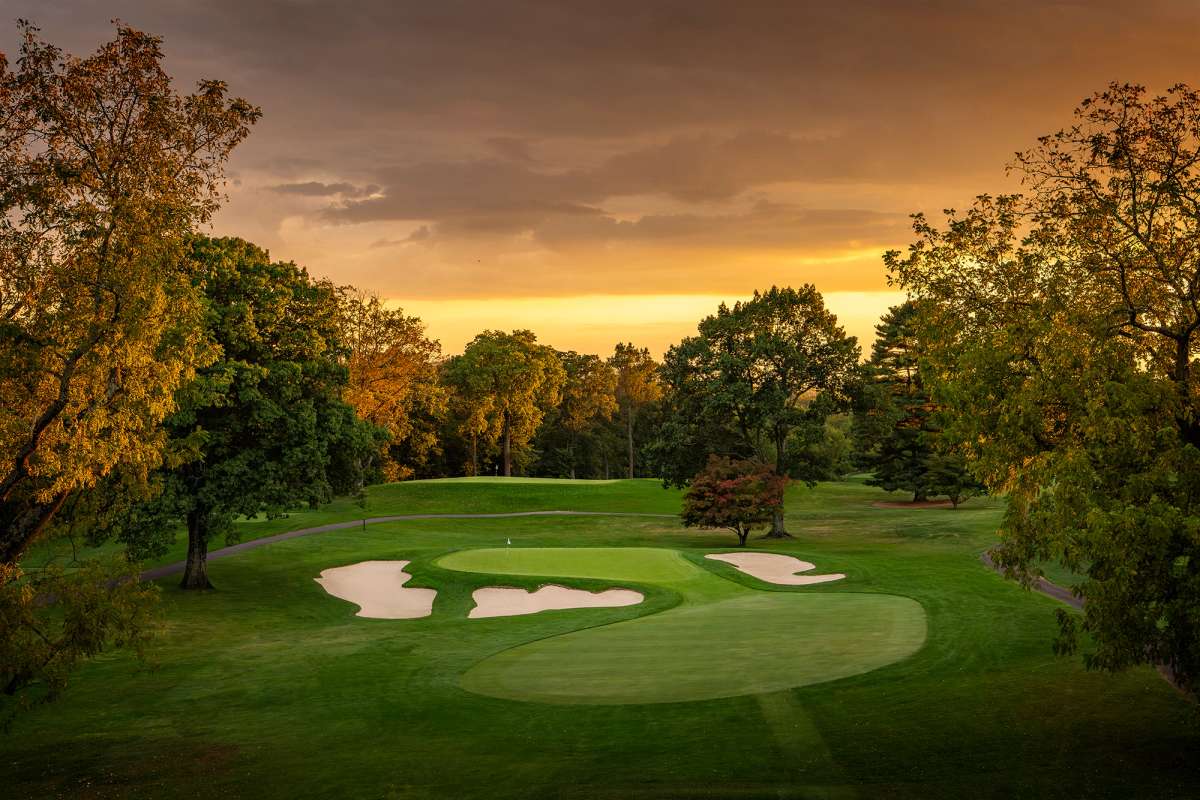
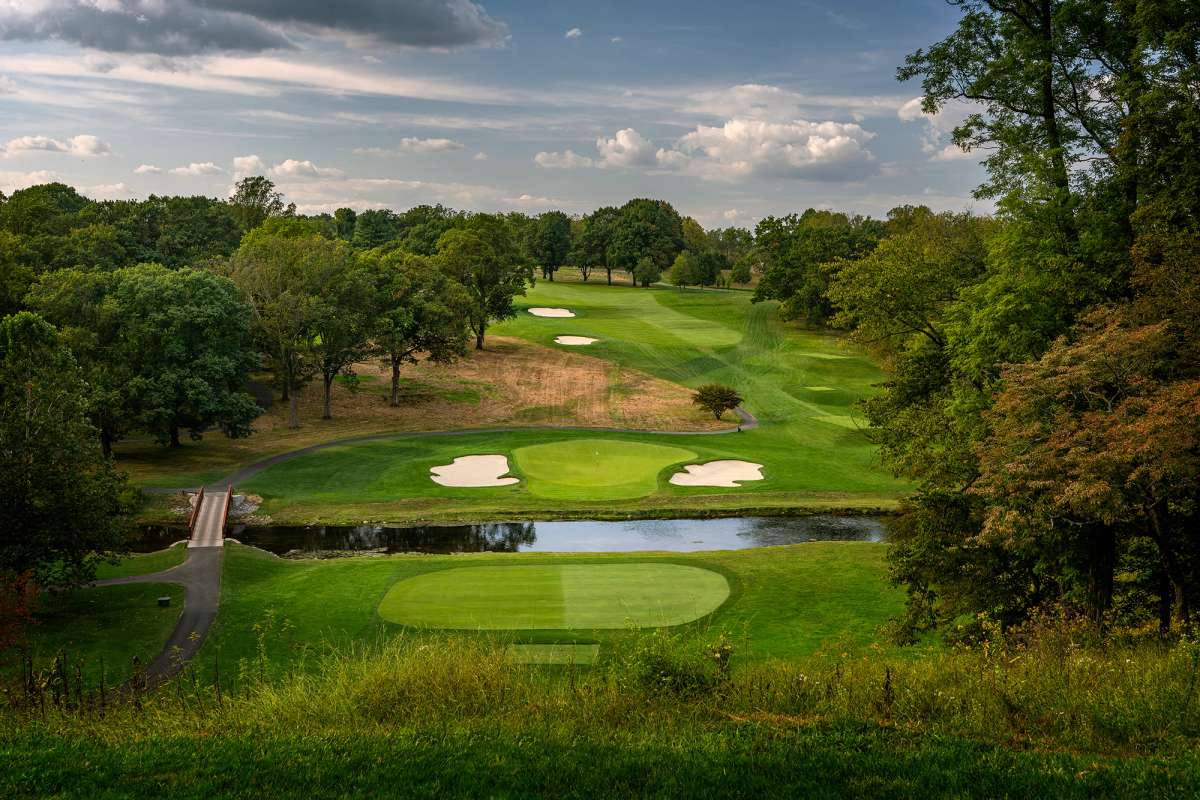
Along the Little Lehigh Creek lies the private Lehigh Country Club which celebrated its centenary in 2010.

4.5
I have been blessed to play multiple times most of the very best courses within a two hour drive of Philadelphia. In this area, especially for those that are fans of William Flynn, Lehigh is held in high regard by those fortunate enough to have played it or best of all, be a member. It certainly holds its own against any of the three very fine courses at Suacon Valley. It also reminds me of two other “best in the world” courses that I have played. The first is Merion East as both have many changes in topography, the incorporation of a stream in the routing, its par of 70, and its length of less than 7000 yards. Much like Merion East, each hole at Lehigh feels unique. The second is Muirfield in Scotland as its outward nine are on the outer edges of the property with the inner nine set inside the front nine. I am not suggesting Lehigh is at the same level as Merion East or Muirfield but it is a course where the experienced golfer can see some parallel characteristics.
Designed by William Flynn and built by his associate Howard Toomey, overall for me it is a touch below his designs at Lancaster and Rolling Green but above Huntingdon Valley. One can have a fun discussion discussing the merits of all four. The routing at Lehigh goes up and down the hills with the elevation change at just over 100 feet. It sits wonderfullyon the land despite the substantial land movement, one of the primary skills that Mr. Flynn possessed in his courses. Other than creating the greens and surrounds, the course is very natural. There are two slight awkwardness to the routing with the first being that twice you pass by other holes to get to the next hole which happens when you go to the second (passing 17 and 18) as well as when you head towards the twelfth (passing 15). The second somewhat slight oddity in the routing is that the fourth, fifth and sixth holes are far from the rest of the course, dictated by the changes in terrain and Little Lehigh Creek. But it certainly appears that the most interesting land was found for the course, although difficult to tell due to the housing on four-six. I did like how the course moves up and down from four to the ninth and then you get to nearly do it all over again on the back nine. As one would expect, the low point of the courseis at the creek where there are two flat holes. Nearly every other hole has a tilted fairway or a rise or fall or sometimes both.
There are many holes that one will remember as there is not a weak one on the course. As others have mentioned, the collection of par 3’s is very good and nearly at the level of Rolling Green. Perhaps I would have liked to have seen one shorter par 3 as they are played at 231-223-196-180 from the back tees although due to changes in elevation they can play a different club. The two par 5’s go in opposite directions and both feature a risk-reward decision for the better players. The eleventh has a huge change in elevation with a drop of over 75 feet to a green set just behind the Little Lehigh Creek. The par 4’s have a very nice variation in length ranging with three holes under 375 yards and the longest being the eighteenth at 463 yards. The more visually interesting par 4’s are the shorter ones. Any of the holes can result in glory, however, there is a real probability of tragedy if one loses their focus. The holes nearer the creek demand crisp shots while most of the other holes warrant decision-making.
The green complexes are good at Lehigh. They showcase a feature that Mr. Flynn emphasizes in many of his courses which is the importance of having options to approach the green. At Lehigh, the ground game can be utilized to find the green nearly as often as opposed to using a lofted approach shot. I counted maybe four greens where a shot short of the green running up onto the surface was not possible. The surfaces of the green are often subtle and rarely overly dramatic, yet one feels a three putt is always a possibility if the first attempt is from 20 feet or longer due to the slopes. Moreover, at Lehigh I liked how many of the greens are both set to one side as well as angled to make a hole location appear to be either narrower or wider.
The bunkering is restrained as Mr. Flynn must have believed the change in terrain, the creek, and his green shapes should be the primary defense. If there is another slight criticism it is that the bunkering could show more variety shape. However, too many bunkers would result in a course that sacrifices too much of playability and tilts too much towards defense. Still even though the bunkering is also somewhat minimized at Rolling Green and Lancaster, I felt the bunkering to be better at both courses.
The Black tees are 6851 yards, par 70 rated 73.0/132. The Blue tees are 6415 yards rated 70.5/128. As there are only two par 5’s the course does play longer than the yardage. I also felt the slope should be higher closer to 135/131.
1. Par 4 – 445/424. Unlike other courses that introduce you to the round with a gentle opener, this is a stout opener. While this dogleg left has a wide landing zone and a green that can be reached using a run up shot, the contours of the green set the stage for what will be with you for the next seventeen holes. The fairway tilts left towards two fairly large bunkers on the inner turn. After the fairway bunkers and the dogleg, the fairway then tilts a bit to the right. The green is set well off to the left protected by a larger bunker on the left front and a small bunker on the right front. Unlike many doglegs where the advantage is in cutting the corner, on the opener the better angle is from the right side of the fairway. The green slopes from the higher back left to the front right. It is a strong opening statement to the quality of golf at Lehigh.
2. Par 4 – 364/347. You walk past 17 and 18 to arrive at the second. I really liked this uphill hole due to the hogback ridge in the center of the fairway followed by a higher tier. The fairway is pinched by a large bunker on the left side. If you cannot hit beyond the ridge you will be left with a semi-blind uphill shot to one of the most defended greens of the course with three bunkers right and one at the front left corner. The Little Lehigh Creek hides behind the trees on the right. The green is angled slightly to the right and is a large target relative to the length of the hole. This is a wonderful short par 4.
3. Par 3 – 231/215. The hole plays longer as it is slightly uphill so you need one more club. This heavily contoured green sloped back to a steeper front right also features a narrow opening due to the two bunkers right and one on the front left. If the pin is in the front nearer one side, then any miss into the bunker will be difficult if on the same side as the pin. The land slants towards the Little Lehigh Creek off to the right even if it is not that close. So any miss to the right of the green will go further to the right down a slope leaving a difficult pitch especially if the pin is in the narrower front.
4. Par 4 – 365/330. There is a wonderful long view from this elevated tee of several holes at Lehigh as well as the surrounding countryside. You almost want to linger here a bit longer. The hole begins with a forced carry over the Little Lehigh Creek. There are no fairway bunkers to consider so one should swing away with confidence. Longer hitters will be tempted to knock it as close as possible. The beauty of the hole is in its green complex with a sharply angled green set off to the right and two fronting/right side bunkers and one on the left front corner. Those bunkers on the right are deep, perhaps the deepest on the course. You do not want to be above the pin as it is a steeply sloped green to the right and front. The green is relatively wide but due to its right angle, appears shallow. The land near the greens falls away on the right but it is more likely one’s wayward shot in that direction will either be in one of those two bunkers or not go too far away. The fourth is both visually beautiful as well as great fun.
5. Par 4 – 415/388. This is the number one index on the front nine. This hole plays as an uphill dogleg right with the dogleg wrapping around the single large fairway bunker on the inner turn. The fairway flattens a bit to the green but is still slightly uphill. This hole has one of the best greens on the course which is saying something given the quality of all of the greens. There is a long area of false front that will stop even many of the best shots from running onto the green. The right side has the only greenside bunker going nearly the length of the entire green. While the left side off the green seems preferred it will be a quick putt or chip.
6. Par 5 – 564/540. The tee box is the farthest point from the clubhouse. The first par 5 on the course is a sort of double dogleg for most players as they want to avoid the three bunkers that come into the fairway from the right. Yet these cross bunkers should be easily cleared if one chooses the correct tees. Longer hitters will take on the trees on the right to cut the corner. The hole then bends right before straightening to the green. About 120 yards from the green the fairway is pinched between two bunkers that frame the hole. If the bunkers are not carried, then laying up short of them will leave a blind shot as the bunkers are built into the natural ridge. Following the ridge the land dips towards the green. The green tilts towards the rear and left with a narrow opening between a large bunker left and a smaller one on the right. What I admired about this hole is all of the land movement from 120 yards into the green.
7. Par 3 – 223/211. The seventh is the most dramatic par 3 on the course as the green sets well below the elevated tee and the tee shot must carry the Little Lehigh Creek set nearly 100 feet below you. You also get a birds-eye view of the eighth set directly behind it as it climbs up the hill. The green sits relatively close to the creek with framing bunkers. You can definitely use one less club here and possibly two given the height of the fall. This green is perhaps the smallest on the front nine and after you hit and watch the ball fall out of the sky forever, you hope you have hit it straight. It is another green that slopes quickly towards the front.
8. Par 4 – 412/383. This is the second hardest hole on the front nine. This hole is substantially uphill playing as a blind tee shot. The fairway slopes to the left which will help a draw down the right side or one can try to hit a fade into it. The tee shot must avoid the two widely spaced bunkers down the left which are very much in play given the slope of the fairway. After the tee shot crests the biggest part of the hill the hole moves slightly left and is uphill to the green requiring an additional club. The green is placed slightly to the left but also angled to the left and tilting left. About 15 yards short of the green on the right is a bunker followed by a swale that prevents those trying to run up a shot on the right by playing conservatively. The front left side of the green has a large, deep bunker.
9. Par 4 – 440/416. This felt like the only straight hole on the front nine with arguably the best use of bunkers on the course. The hole begins with three bunkers down the right and one on the left placed opposite the far right bunker. The left side bunker is deep. There is another bunker on the left set inside the line of the fairway in play for the longer hitters. Another fairway bunker is placed about 80 yards from the green on the right side which serves as a distraction more than a hazard. The green offers a single bunker on the right front/side with its real difficulty being the severe slope of the green to the left side. You have now returned to the clubhouse which is off to the right behind the green.
10. Par 4 – 452/425. Much like the first hole, the tenth starts off the back nine with a bang. This slight dogleg left has a fairway bunker on the left inner corner and a bunker on the right. You want to favor the left side. The fairway goes downhill and also slopes from the left to the lower right side resulting in a semi-blind tee shot. For the first time a central bunker is placed about 30 yards short of the green. If one clears this bunker they can bounce their ball onto the green. The ground falls away on the right of the green where a long bunker awaits. Once you reach a point on this hole where you can see the green, it is another attractive hole. As I walked down this hole I thought about the routing. While the front nine appears to make sense with the one question I raised earlier, I wondered whether the tenth hole could have been the eighteenth playing in reverse. However, it possibly could have been too difficult and having a blind uphill shot to finish would not be ideal.
11. Par 5 – 508/498. The second and final par 5 is quite good. Even though it is short the land movement is certainly the equal of the seventh. The tee shot is semi-blind uphill and must stay on the right side of a fairway that has a steeper tilt to the left. A weakly stroked tee shot means the second shot will be blind to clear that area of broken fairway. The land falls away after about 150 yards from the tee. One will likely have a side-hill lie from 210-240 yards away. This slight dogleg left offers three bunkers on its outer corner although longer hitters can easily avoid them. Either during the second shot or the combination of a shortish layup shot leaving 70-100 yards, the hole essentially falls about 80 feet to the green which sits close on the other side of the Little Lehigh Creek. If laying up with their second, you need to carry a break in the fairway of about 100 yards. As you come down the hill and cross the creek, take a look to the left to see the next two holes but do not lose your focus at completing the eleventh. Across the creek is another very small green, even smaller than the seventh. The green has no surrounding bunkers but has very good mounding surrounding it resulting in several grass hollows. The green is elevated and angled to the right. Much like the second and seventh, this hole is both visually exciting and pure fun.
12. Par 4 - 412/375. This hole plays parallel to the Little Lehigh Creek although there is a bit of room on the left as the fairway bends a bit to the left. The right offers thicker trees while the left has a few strategically placed trees. The better play is down the left as the green opens up a bit. Because it is near the creek this hole feels like it should be flat but the fairway is influenced by the hillside to the right although any lie in the fairway should be fine. The green is slightly turned to the back right with a single right side bunker. The back right of this green is higher before descending. This is the most serene hole on the course and reminded me of several holes on the back nine at Kirtland Club in Ohio. It is also very pretty set between the creek and the hill. There are at least seven memorable holes at Lehigh and this is certainly one of them.
13. Par 3 – 186/164. This is the final hole where one has to confront Little Lehigh Creek. I think it is likely the par 3 with the highest scores, (but others are harder to par), on the course but also for me it was the most beautiful as well although I might also choose the seventh. The hole plays across Little Lehigh with the stream cutting on a diagonal off to the left side of the green. To the right of the green is the steep hill that you play up on eight and down on eleven. If one tries to play safely to the right of the green, there is a single deep bunker there making it better to play ultra-conservatively short of this bunker. However, playing too conservatively likely saves you from double bogey but bogey is a high probability. Surrounding the rest of the green are grass hollows similar to those used on the eleventh. The green has a bisecting ridge making a two putt more difficult. Holes 11-13 are simply stunning.
14. Par 4 – 373/340. Some might describe the fourteenth as a connector hole to get from the bottom of the valley back near the top. However, most architects favor either the thirteenth or fourteenth as the hole that begins the journey back to the clubhouse. It does have the most severe fairway on the course playing sharply uphill banked steeply to the right. The tee shot needs to crest the hill or will likely run off the fairway down the right side leaving a blind approach shot of 100-150yards. If you can carry the hill you will be left with 70-110 yards into the green. The green is somewhat of a punchbowl so there are a lot of options available in the approach shot. The front of the green is higher wedged between two longer side bunkers. The green slopes strongly right. The difficult pin positions are towards the front of the green while going into the left side bunker will leave a near impossible splash shot to a left side cup location. I think some people overlook the hole because of the strength of 11-13 yet the green is one of the best on the course.
15. Par 4 – 394/364. This is rated the hardest hole on the back nine. This is perhaps the second best use of bunkers on the course with three fairway bunkers on the left and two large ones on the right. The tee shot plays uphill going slightly to the left but then the hole turns to the right. The second bunker on the right comes into the fairway cutting it nearly in half. This hole requires a very well executed tee shot. The green is set off to the right and is narrow and banked to the left. Although this hole is not as long as some of the other par 4’s, a par is a good score given the requirements from the tee shot to find the fairway.
16. Par 3 – 180/161. The final par 3 must be played through the air as the green is surrounded by bunkers on three sides except the rear. The hole plays downhill to a smallish green which has a strong bent to the left. The bunkers are below the raised green with the right side being the one to be avoided. The lips of the two fronting bunkers seem to invert a bit back over the sand. This is the rare hole where the safe play seems to be to go over the green. This concludes an excellent collection of par 3’s.
17. Par 4 – 424/416. After the “breather” hole of sixteen which I say only because it’s the highest index, the final two holes are a test. If I had any doubts about the routing of the back nine, this hole puts them to rest as the fairway falls 30 feet then rises again to the green. The fairway also tilts a bit to the left. I admired how this green is placed into the hillside leaving a false front where anything short of the green will likely roll backwards 15-25 yards. While there is a bunker on the right set into the hill, it is the higher ground that provides the defense on the right side while the left side has three bunkers set below the green. Going over the green is a big mistake given the slope of the green to the front. This hole requires thought and execution.
18. Par 4 – 463/418. From the tee there seem to be bunkers everywhere as the two that border the left side of the first fairway join the other two bunkers on the left making it appear that the left side is nothing but sand. The right side of the fairway has two scattered bunkers. The hole moves slightly right. Longer hitters can catch a downslope and pick up as much as 30 yards of roll. From the tee you can also see the first hole and clubhouse. Focus on the middle of the clubhouse as your line. The green’s surface cannot be seen by most players as it is raised and Mr. Flynn adds additional deception in the form of a bunker on the left set about 20 yards short of the green. The green complex also has another bunker on the front right but it should not be an issue given the large green. It is a very nice finishing hole, although perhaps not as strong as others on the course.
There is much to be admired at Lehigh particularly the routing which takes full advantage of the change in terrain and Little Lehigh Creek. The holes lay across the hills in all directions requiring one to land the ball on certain sidesbecause the ball will end up someplace different. The greens are very well done with slopes in all directions. Yet nearly all of the greens can be accessed via the ground adding an option missing in other parkland courses.
Pennsylvania is a golf-rich state so breaking into the top 15 best in state is quite an achievement. Golf magazines that have it outside of the top fifteen are misguided. Lehigh certainly fits within the top 15 even if there are three courses just down the road that many think should also be included. I suppose some might critique Lehigh for the several holes that have substantial changes in elevation, up to 100 feet. But I look at that and say that is a unique feature that adds to the enjoyment of a wonderful golf course. This website has the course in the top ten which I feel is appropriate. If in Pennsylvania and in this area, one should seek out the course. You will not be disappointed as this is another gem from Mr. Flynn.
Get Outlook for iOS
Mark White

Alex Frolish has been a pilot for approaching 20 years and now travels to all corners of the globe in his role as a commercial airline pilot. His passion for flight is only equalled by his passion for golf and golf travel. Having picked up a golf club over 35 years ago when aged just 3 years old, Alex has played over 550 courses across every continent on planet earth furnished with a fairway. Over the next few months you’ll be able to follow Alex’s golfing travels as he brings you anecdotes of his life both in the air and on the course. One thing about being a travelling golfer and panellist who is also an airline pilot, is that you can guarantee nobody will have played the same last ten rounds that you have. This always makes for interesting clubhouse conversations, although keeping tabs on exactly where you’ve just been can be a little troublesome. I’ll be honest, life can be chaos at times. To illustrate that exact point, May might have been my most jam packed and varied month in some time, with thirteen rounds played in three countries at some of the best courses those countries have to offer. Summer rounds, winter rounds, links and parkland. My golfing diary is a myriad of contrasts. The month started on Top100 regional duty, at Bristol & Clifton Golf Club, the final course I had yet to play in my home county of Gloucestershire in England. It has to be said that Gloucestershire isn’t blessed with an abundance of architectural heritage, but it is in the Bristol area of the county that you find the most historic and well rounded golf clubs. One such club is Bristol & Clifton, located just a couple of miles from the famous Clifton suspension bridge, where the members and staff are fiercely proud of their golf course. I was impressed with this place (particularly the conditioning), and would highly recommend a visit if you are ever in the area. Photo credit: Bristol and Clifton Golf Club My next outing was formed in friendship rather than in the hunt for architectural splendour. Rocco and I first connected in 2018 and shared a round at Pittsburgh Field Club in Pennsylvania. It had been five years but we had stayed in touch and I had vowed I would get back out to share another round with him. This time we played at a local municipal, Pittsburgh National, a course I knew little about. It turns out that when you come to a golf course with no expectations, you are often pleasantly surprised, and this ex Country Club layout demonstrated an abundance of interest and value. A first time visit to a quartet of gems of English golf followed, played over two of the finest weather days of the year so far. I will remember Broadstone for its magnificent land and the way in which the course wraps itself around and across the varying undulations. Ferndown was possibly the most supremely conditioned course I have played in the U.K. in the last twelve months; the vista looking down the effervescent 1st fairway will be imprinted on my mind for some time. Woking’s understated historical majesty charmed me nearly as much as the brunch on the terrace after the round. And Worplesdon, just a few hundred yards from Woking, completed an epic 48 hours of golf in emphatic fashion. Photo credit: Ferndown Golf Club Next to the clifftops of Oregon, to play arguably the most wonderful par 3 course on the planet. Coore & Crenshaw were presented with some piece of land to route Bandon Preserve across, but they have done one hell of a good job in telling a story in just 13 par 3 holes. Surely the growth of the game should be focussed on creating more golf courses like this one; playable, enjoyable and accessible to all. Then on to Old Macdonald, to complete the Bandon set (for now). I played the tips in a steady breeze and played one of the rounds of my life to shoot a few under my handicap and a couple over the par of the course. Old Mac might get some stick in certain quarters, but I found it to be a solid blend of beauty and playability, two key ingredients for the enjoyment of a golf round for me, and it was a round I will remember for some time. The Duchess at Woburn was quite the contrast to play just a couple of days after Old Macdonald. This tree-lined parkland layout in the heart of the English countryside places a heavy premium on accuracy rather than options, and I found the contrast in styles a leap too far, following my best round in some time with my worst in living memory. That’s golf I suppose, and as my golfing years pass, I seem to be able to more easily accept these ups and downs! The game is always bigger than your score. Let that be no slight on the Duchess though, which is a beautifully peaceful place to play and to take in the relative solitude that the dense avenues of trees provide. The Jockey Club in Argentina is revered as one of South America’s most prized golf clubs. It boasts two (yes two) original Mackenzie golf courses, routed across surprisingly spacious grounds on the outskirts of Buenos Aires. We played the Red course, the more highly regarded of the two layouts, and we visited in early winter after a sustained period of wet weather, the course was in simply stunning condition. The land here was as flat as a snooker table when Mackenzie arrived, and this is one place in the world where the good Doctor had to work hard to generate undulations and interest that felt at the same time, in keeping with its surroundings. Of course, he managed it with aplomb and in doing so, left Argentina with one the best dual course layouts in world golf. As an aside, if you ever get the chance to play here, make sure you order the steak. However your round has gone, this plate of food (and accompanying glass of Malbec) will send you home one contented golfer. Photo credit: Patrick Koenig Finally, a whistle-stop stay in New Jersey found me visiting another world-renowned 36-hole golf club, Baltusrol. This golf club is the stuff of dreams for the average golfer, boasting two world-class golf courses with facilities to match, and it was awe-inspiring to walk the fairways of the Lower course just prior to the LPGA Championship. My lasting memory will be my drive into the 18th fairway which rolled to within a few inches of the plaque, celebrating Jack Nicklaus’s famous 1-iron in the 1967 US Open. Slightly overawed with the potential for replicating such a heroic piece of golfing history, my wayward 3 wood did no justice to the drive that had managed to follow so closely in greatness's footsteps. It didn’t matter though; to have had the chance to attempt it in the first place was the greatest of privileges. On to June, which looks no less packed with golf. It all begins with a pilgrimage to a part of Scotland I have wanted to visit for most of my golfing life. After that, there is plenty of potential for some last-minute madness, with trips planned to Spain, India and Singapore. In the meantime, the golfing season in the Northern Hemisphere is in full swing, so wherever you are and whatever you have planned, I wish you the straightest of drives, well-negotiated four- footers and happy rounds.

US Mid-Atlantic Division Best in State Rankings 2020 We’re closing in on the conclusion of our Best in State re- ranking process for the USA with this, our penultimate revision for the Mid-Atlantic states of New Jersey, New York and Pennsylvania. In such a high quality golfing division, where twenty-seven of the courses are listed in our US Top 100, we’ve acquired additional local knowledge that now allows us to extend our listings in this northeast region by more than a third to a total of 235 courses. Without further ado, we’re going to dive straight in to our Mid-Atlantic reappraisal, starting with the Garden State of New Jersey, where we’ve added another twenty-five tracks to the fifty that we already featured. New Jersey It’s no surprise whatsoever to discover the course at Pine Valley Golf Club in Clementon stays firmly embedded as the No. 1 layout in New Jersey. It is, after all, second to only Cypress Point at the top of both our national and global Top 100 charts. All eighteen holes of George Crump’s Camden County masterpiece have been in play for just over a hundred years now and they collectively form one of the toughest tracks in all of golf. Pine Valley Golf Club Our Florida correspondent Marc Bender posted these comments four months ago: “there is no course that offers a greater variety of 18 unique and fabulous holes with this level of continuity… the attention to every little architectural detail of the course is unparalleled. The balance of holes, use of the terrain, and the green complexes is incredible. Little difference exists between the least memorable hole and the most memorable hole; that’s how good each and every one of them is.” Ten of the top twelve chart places remain unaltered, so the first real movement of significance occurs with the Highlands course at Hamilton Farm in Gladstone, rising six spots to #18, which is the position it previously held in 2016. A late 1990s Hurdzan/Fry co-design from when those two architects were working in partnership, this layout is complemented by a fantastic 18-hole par three course called The Hickory, offering a really diverse 36-hole experience at the club. Hamilton Farm - Highlands course Also climbing six spots to #26, the course at Arcola Country Club in Paramus is the sum product of three English-born architects – Herbert Haydn Barker, Willard G. Wilkinson and Robert Trent Jones Sr. – who fashioned the fairways over a fifty-year period between 1909 and 1958. Our US Correspondent Fergal O’Leary played at Arcola last year and felt it was “a truly wonderful club that has a lot to be proud of.” Arcola Country Club The first of our new additions arrives at #23 and it’s the course at Manasquan River Golf Club in Brielle, which was originally established back in 1923 when Robert White laid out an initial 9-hole track. Described by our regular contributor M. James Ward as “one of the most underappreciated courses in the Garden State,” this layout hosted the US Girls’ Junior Championship in 1990 and it’s just undergone an extensive restoration exercise by Andrew H. Green. Another place to greatly benefit from a recent restoration is the course at Watchung Valley Golf Club (new at #29) which started out in the late 1920s as a layout planned by Seth Raynor but construction was carried out by Marty O’Loughlin, the Plainfield professional, who oversaw the build after the architect’s untimely death. George Waters has completed a project to polish the Raynor template holes and integrate them seamlessly with the style of the other holes that has evolved over time. Watchung Valley Golf Club Rank/ Click the link to see full details of our latest New Jersey Best in State rankings. New York Such is the strength in depth at the top of the table in New York, the first eighteen courses are all listed in our US Top 100 – and eight of these layouts also occupy positions in our World Top 100 – so with those figures in mind, we’ve decided to expand our state chart to a Top 100, bringing an additional thirty courses under the golfing spotlight in the Empire State. The leading five courses stay exactly as they were after we refreshed the standings two years ago, which means the 18-hole layout at Shinnecock Hills Golf Club in Southampton retains its No. 1 status. Golf has been played here since 1891, the year that Willie Davis set out an initial twelve holes, and the course has been modified a couple of times since then, first by C.B. Macdonald and Seth Raynor during World War I, then by Howard Toomey and William Flynn in the early 1930s. Shinnecock Hills Golf Club All the top amateur tournaments have been played here – including the US Amateur, US Women’s Amateur, US Senior Amateur and the Walker Cup – along with five editions of the US Open, the last of which was hosted two years ago. This prestigious event is due to return to Long Island for the 126th staging of the championship in another six years, when the club’s illustrious layout will once again take centre stage. Three courses make double digit upward moves in the new chart. Rising twelve to #31, the course at Teugega Country Club in Rome is a Donald Ross design dating back to 1921. The club was formed in 1899 and members played on a 9-hole layout next to the Mohawk River until a decision was made by the committee to move from their old waterlogged location five miles north to a new site on the southern shores of Delta Lake. Walter Hatch supervised construction, but Donald Ross made several site visits, even securing his first hole in one at the short par three 7th during a round on the new course. Teugega Country Club Advancing fifteen to #44, the course at Westhampton Country Club in Westhampton Beach is one of Seth Raynor’s earliest solo designs from 1915 which Gil Hanse restored a decade ago now. “A truly wonderful layout with plenty of fun for good measure,” is what Fergal O’Leary said about the course in his review last year. “It’s a shot-maker’s paradise and we walked off the 18th green wanting more.” Westhampton Country Club Up ten places to #50, the course at Metropolis Country Club in White Plains was founded in 1904, with Herbert Strong completing his first ever design here. A.W. Tillinghast remodelled the layout in the late 1920s and it was further altered at different times by Joe Finger and his design partner Ken Dye before Ron Forse carried out a new millennium restoration. Metropolis Country Club M. James Ward thought last year the layout had “clearly improved in terms of strategic interest” with the recent removal of trees. Furthermore, he felt “the visual dynamics are clearly improved and turf quality has clearly benefitted from the added air flow... place Metropolis in another area of the USA where the overall competition is not that keen and the overall standing would likely be more noticeable.” Leading the mass infiltration of newcomers into the New York listings, the course at Nassau Country Club in Glen Cove appears at #49. The club’s initial course was laid out by committee members but Devereux Emmet became the first architect to put his design stamp on the property in 1920. Others, such as Herbert Strong and Seth Raynor, made early changes to the course while Tom Fazio is credited with replacing all the greens eight years ago. Nassau Country Club Writing in his golf travel blog, Paul Rudovsky had this to say about Nassau when he played it a while back (as he chased down every venue to have hosted the US Amateur); “here is a course that never was on a top 100 and probably never will be... but a fun, fun course to play.” Click the link to see full details of our latest New York Best in State rankings. Pennsylvania Like New York, the top five layouts in Pennsylvania remain in the same order, so the course at Oakmont Country Club remains in the No. 1 slot. Located outside Pittsburgh, on the south bank of the Allegheny River, Oakmont’s reckoned to be one of the toughest tracks in American golf. Industrialist Henry Fownes and his son William devised this layout back at the start of the last century and William (who won the US Amateur in 1910) is said to have continued working on it right up until he died in 1950. It’s due to host the US Amateur in August next year, the sixth time the championship has been staged here. Oakmont Country Club Our International Correspondent David Davis commented last year, following his second visit to the club: “the routing is as good as anything on the planet … the bunkering and the greens really steal the show.” Javier Pintos, our Argentina Correspondent, also posted: “all the long holes are downhill and the short ones uphill so there you admire the design and the balance the course has.” There’s very little movement in the upper reaches of the new chart but casting an eye a little lower reveals a few upward motions of note. The course at Longue Vue Club (up five to #24) in Verona is exactly a hundred years old this year, having been designed by Scottish professional Robert White in 1920 then renovated by A. W. Tillinghast fifteen years later. Set two hundred feet above a bend in the Allegheny River, the layout “is certainly among the best in the Keystone State” according to M. James Ward. It’s also due to co-host the US Amateur in 2021. Longue Vue Club The Old course at the Omni Bedford Springs Resort also moves up five rungs on the ladder. Dating back to 1895, the layout had improvements made by A.W. Tillinghast (1912) and Donald Ross (1923) before a new millennium Ron Forse restoration revitalized the set-up, introducing new bunkers and mounds to build on the strategy and variety already inherent on the course. Omni Bedford Springs Old course White Manor Country Club’s 18-hole layout in Malvern (up to #32) reverses the fall from grace it suffered two years ago when it slipped seven places in the listings. The club was established in 1948 at Paxton Hollow but moved sixteen years later to its current location, where William and David Gordon laid out a new course for the members. Bobby Weed then renovated this layout in 2002. White Manor Country Club The progression made by the Militia Hill course at Philadelphia Cricket Club in Plymouth Meeting (up nine to #33) more than makes up for a drop of four places which took place during our 2018 revision exercise. When this Hurdzan/Fry co-design was unveiled in 2002, it meant the club was the only one in the United States to have had a course built in each of the last three centuries as its St. Martins 9-holer emerged in 1895 and its 18-hole Wissahickton layout took shape in 1922. The first of ten new entries in our enlarged Pennsylvania chart debuts at #35 and it’s the course at Llanerch Country Club in Havertown, where the 1958 PGA Championship was first contested as a stroke play event. Originally designed by Alex Findlay in the 1920s, the layout was reconfigured by J.B. McGovern, Donald Ross’s associate, after World War II. Last year, Brian Schneider from Renaissance Golf Design was appointed to carry out a renovation: “To make the golf course as fun, engaging, and visually attractive as possible.” Llanerch Country Club Click the link to see full details of our latest Pennsylvania Best in State rankings. Next up in our final release are the New England states of Connecticut, Maine, Massachusetts, New Hampshire, Rhode Island and Vermont. Jim McCann Editor Top 100 Golf Courses
US Mid-Atlantic Division Best in State Rankings 2018 Our Best in State biennial re-ranking process for the United States of America is almost finished as we’ve now completed eight of the nine divisional revisions. In this edition, we re-appraise three Mid-Atlantic states located in the north east of the country, namely New Jersey, New York and Pennsylvania. We feature a total of 170 courses across the three states, with no fewer than twenty-five of these layouts listed in our US Top 100. Indeed, fifteen of those tracks also reside within our World Top 100 so describing this is as a high-powered golfing region is by no means overstating its importance in the national and international scheme of things. New Jersey In the Garden State Top 50, sixteen courses move up or remain in the same position, twenty-five fall down, and nine drop out to be replaced by new entries. At the top of the table, Pine Valley Golf Club retains its number 1 status and in Volume 3 of The Confidential Guide to Golf Courses book, it was one of only three courses to score full marks (10 out of 10) from Tom Doak and each of his three co-authors. The architect had this to say about George Crump’s timeless masterpiece: “If you believe that a golf course is the sum of its holes, then there is no course that dares challenge Pine Valley: any one of its 18 holes would be a welcome addition to almost any other course… the most overlooked aspect of Pine valley is its terrific set of short par-4 holes. Their inclusion has actually helped the club not overreact to changes in technology, and make it the complete design.” A couple of 18-hole tracks make admirable upward moves in the New Jersey chart and both have attracted very positive reviews from our regular contributor M. James Ward. The first of these layouts is the Banks course at Forsgate Country Club in Jamesburg (up nine to #14) where he finds it “particularly shocking that many self-proclaimed golf cognoscenti often gloss over [its] qualities.” The second layout is the Bay course at Stockton Seaview Hotel and Golf Club, close to Atlantic City (up nine to #41), which “is blessed with a quality routing that constantly keeps players moving around.” Rising thirteen spots to number 20, the highest climber in the new state standings is Montclair Golf Club in Essex County, where 27 holes laid out by Donald Ross in 1922 were supplemented by another nine holes from Charles Banks six years later. Our regular contributor Paul Rudovsky visited the club recently and commented as follows: “The property is extremely hilly and given I was planning on playing 36 holes or more, I took a cart as it would be a very tough walk otherwise. I played the Banks Nine (#4) then #2 because these were the two nines used when the 1985 US Amateur was held here. Being a Ross design, #2 certainly felt different to #4. The lack of geometrical lines was very obvious but of course the greens were diabolical.” The highest placed newcomer arrives at number 25 and it’s the Short Course at Pine Valley which was brought into play for the members in 1992. The ten holes of this layout were designed by Tom Fazio and Ernie Ransome to emulate a number of the holes on the main course. “Eight of these ten holes are close reproductions of approach shots on the big course,” according to Tom Doak, “and the ‘tees’ are fairways so you can play from anywhere you like. It’s an excellent solution for the club, because no original design was going to be good enough to get regular use.” Rank/ Click the link to see full details of all courses in our latest New Jersey Best in State rankings New York The top three places in the Empire State listings are unchanged from the chart that was published two years ago, which means the course at Shinnecock Hills Golf Club is still the state number 1. Host to this year’s US Open, this stellar track from Howard Toomey and William Flynn rides very high in our American and global Top 100s – only Cypress Point sits above it in these rankings – and it will be the focus of world-wide golfing attention when the USGA’s flagship Open event is held here again in 2026. It’s a particular favourite of Matt Ward who wrote this about the course last year: “Shinnecock is blessed with ideal land – rolling but never so abrupt as to distort shots to the point where luck, rather than skill, is the determining factor. The routing is second to none. You’re taken to all corners of the property – all the attributes of the land are brought to the forefront… Shinnecock mandates control with not only various clubs – but with knowing when to shape shots and apply the appropriate trajectory to secure the desired result. The final element is conditioning which cements the first three characteristics… it means a linking of turf quality to what the game of golf calls upon.” There’s not much movement within the Top 10 positions for New York but, just outside the top tier, three courses make notable progress. Wykagyl Country Club near New Rochelle (up eight to number 15) has been renovated in the last few years by Bill Coore and Ben Crenshaw. The landscape is fairly rugged in that part of Westchester County and our US Consultant Fergal O’Leary terms the terrain “rocky and undulating, which is glorious for golf as it offers endless options for doglegs and exciting greensites.” Three hundred miles further northwest of Wykagyl, just outside Rochester, Monroe Golf Club (up six to number 20) is an old Donald Ross design that has been tastefully reworked by both Brian Silva and Gil Hanse over the last thirty years. Beautifully routed, with many of the greens tilted back to front, it’s a largely undiscovered gem that’s only now becoming more widely known. A reviewer summed the course up a while back by stating: “Monroe shows that grand New York State golf is not the sole domain of the New York City metro area.” On the North Shore of Long Island in Suffolk County, the Devereaux Emmet-designed course at St George’s Golf & Country Club (up six to number 19) is shoe-horned into a tight tract next to the State University of New York Stony Brook Campus. Paul Rudovsky visited the club recently and had this to say about a layout where Gil Hanse has been consulting since 1999: “Viewing the course from adjoining roads made me salivate… this place looked incredible... and it was. Firm and fast in near perfect condition, it has rolling, wide fairways (except for #12) which offer great strategic options, brilliant bunkering and interesting greens with every trick in the book“. A little further down the table, three other courses make a significant double-digit leap up the chart. First of all, there’s a pair of century-old Donald Ross designs at Glens Falls Country Club in Warren County (up nineteen to #26) and Tuegega Country Club in the foothills of the Adirondacks (up seventeen to #43). Then there’s Paramount Country Club (up fourteen to #36), which was built for the founder of Paramount Pictures by A. W. Tillinghast in 1920 and restored within the last five years by former Tom Doak associate, Jim Urbina. The highest new entry at number 39 is the course at North Shore Country Club on Hempstead Harbor, where C.B. Macdonald, Seth Raynor and club professional Robert White worked together on the redesign of the original Glenwood Country Club layout in 1915/16. Featuring trademark replica holes from Raynor such as a Cape at the 7th, Redan on the 9th and Eden at the 10th, the course is under the watchful eye of Tom Doak and his Renaissance Golf Design company as they’ve been consulting here for some time now. Click the link to see full details of all courses in our latest New York Best in State rankings Pennsylvania The top three positions in the Keystone State chart haven’t altered since we began compiling Best in State rankings in 2012 so Oakmont Country Club comfortably holds onto its number 1 billing. The father and son architectural team of Henry and William Fownes devised this titan of a tough track back at the start of the 20th century and it’s been testing the best golfers in the world ever since then, evidenced by it hosting nine US Opens, five US Amateurs, three PGA Championships and two Women’s Opens. This extract from a recent Matt Ward post sums up the allure of such a golfing behemoth: “Oakmont has always been about a penal style of architecture – the Fownes were not interested in treating half-hearted shots with anything other than tough love… But the aspect that elevates Oakmont beyond the torture chamber reputation is the pedigree of the [tournament] winners who have been able to climb the Mount Everest in golf in America. In many ways, Oakmont rivals Muirfield in being able to identify those with the most consummate of golf skills.” Bursting into the state Top 10 at number 4 after an eleven-place jump, the Old course at the Country Club of Scranton comprises the original Walter Travis-designed Pines and Willows nines from the late 1920s, which were renovated six years ago by Tom Marzolf. Despite misgivings about some of the bunker work carried out in 2012, our man Fergal O’Leary thought last year that “the club doesn’t get the praise it truly deserves as it’s certainly a US Top 100 golf course.” Well, twelve months down the line, the Old course now hurtles up the Pennsylvania state chart with a national ranking position of number 86 for good measure. The highest of five new entries debuts at number 32 and it’s the North course at Stonewall, near Elverson in Chester County. The Old course was the first 18-hole layout to open at this golf facility twenty five years ago when it was one of Tom Doak’s first golf projects, designed along with Gil Hanse. The North course was unveiled a decade later, playing from a separate clubhouse, with Tom Doak partnering Don Placek this time to create a more open layout than its older sibling, allowing golfers a wider range of options off the tee. According to the architects, greens on the North course were built to permit “more changes of strategy due to hole to hole locations than the original 18 holes”. Click the link to see full details of all courses in our latest Pennsylvania Best in State rankings We don’t produce definitive rankings but we do publish what we believe to be the most informed listings that you’ll find anywhere. Your opinion matters to us so if you think we could have done better with any of these three newly revised US Best in State charts then please click the “Respond to this article” link at the top or at the bottom of this page to share your thoughts. Jim McCann Editor Top 100 Golf Courses
The latest ranking of the Top 100 Golf Courses in the World serves as the ultimate global golf bucket list. Most members of our World Top 100 Panel are seasoned golfers, each playing 20-30 of these courses annually while travelling extensively over decades to form their opinions on others. We recognise that opinions vary—even among our panel members. Rankings are subjective, and there are undoubtedly 50 or more courses in the UK and USA alone that could easily fit onto this list. Links Golf Pilgrimages The rankings
California, United States
New Jersey, United States
Northern Ireland, United Kingdom
New York, United States
New York, United States


