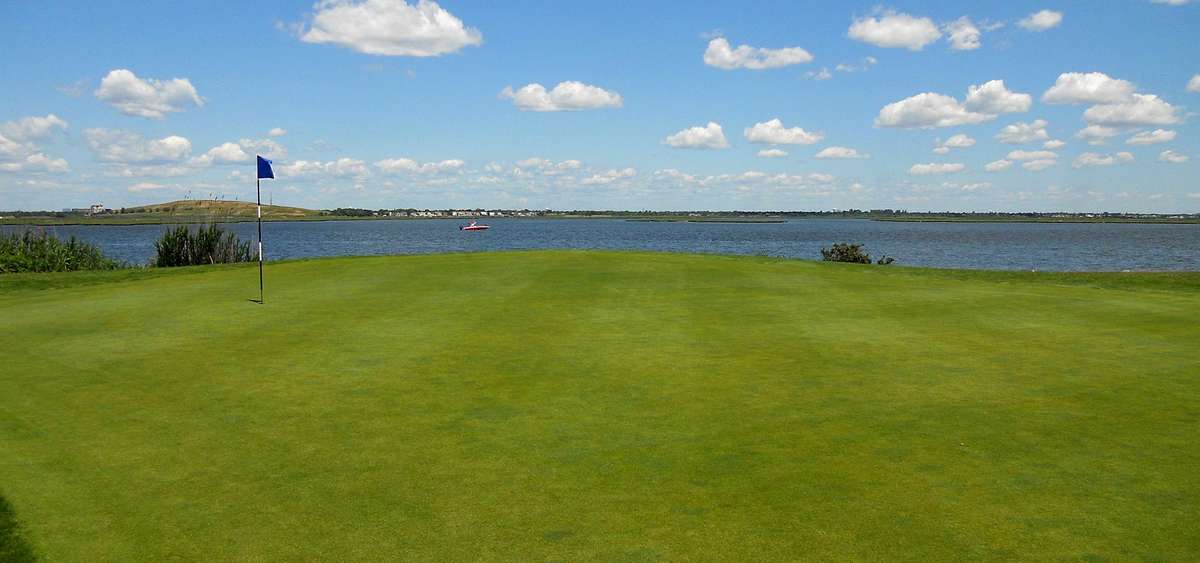
Lido Beach, United States
Lido Golf Club in Lido Beach, New York is a spectacular Robert Trent Jones Sr. links-style design on Long Island's south shore barrier island, with water in play on 11 of 18 holes and consistently ranked among the top public courses in the New York metropolitan area.
Lido Golf Club in Lido Beach, New York is a spectacular Robert Trent Jones Sr. links-style design on Long Island's south shore barrier island, with water in play on 11 of 18 holes and consistently ranked among the top public courses in the New York metropolitan area.
Lido Golf Club
To play Lido Golf Club is to inhabit one of American golf's most loaded addresses. Sitting on the thin strand of barrier island separating the Atlantic Ocean from Reynolds Channel in Nassau County, the current course carries the name and the legend of what may be the greatest lost golf course in history — Charles Blair Macdonald's original Lido, an audacious masterpiece built from pumped bay sand in 1917, destroyed by the US Navy during World War II, and mourned by golf historians ever since. The Robert Trent Jones Sr. design that replaced it in 1953 is an altogether different creature, but it shares the same spectacular, wind-punished geography that made Macdonald's creation so singular.
Jones fashioned a characteristically bold links-style layout from the flat barrier beach, conjuring challenge through water, wind, and elevation where nature offered little raw drama. The result is a course defined by exposure: to the ocean, to the bay, to the prevailing Atlantic breeze that can transform a benign approach shot into an act of navigational optimism. Water comes into play on all but seven holes, and the closing stretch from the 12th to the 16th is regarded as one of the most demanding and memorable sequences of holes on public courses in the entire metropolitan area. The 16th, a par five that requires a double water carry and splits into risk-reward options of almost equal peril, is the kind of hole that haunts golfers long after the card is signed.
At just under 6,900 yards from the back tees and playing to a par of 71, the course is not a particularly long test by modern standards — but length is beside the point here. Wind is the extra hazard that Jones could rely upon, and on a breezy Long Island afternoon it can add an effective 400 yards to any given hole. The elevated greens, characteristic of Jones's work, are well-protected by deep bunkers and surrounded by tight run-off areas that demand precision from anyone hoping to avoid the kind of up-and-downs that can unravel a round in minutes.
The course carries a remarkable heritage. The original Lido hosted some of the game's finest players in its brief existence — Walter Hagen named it one of golf's "Big Three" alongside Pine Valley and the National Golf Links — and the current course preserves a replica of Macdonald's famous 4th hole, a connection to that lost masterpiece that gives the Robert Trent Jones layout a historical resonance few public courses can match.
Today the course is operated by Brooke Holdings LLC under LPGA professional and industry leader Kelley Brooke, who took over management from the Town of Hempstead in April 2024 and has brought renewed energy and investment to the facility. Despite its wind-battered, sometimes raw presentation, Lido remains consistently ranked in Newsday's top public courses on Long Island and among the top 10 in the New York metropolitan area — a legitimate bucket-list destination for golfers who want to experience true seaside links golf without crossing the Atlantic.
The latest ranking of the Top 100 Golf Courses in the World serves as the ultimate global golf bucket list. Most members of our World Top 100 Panel are seasoned golfers, each playing 20-30 of these courses annually while travelling extensively over decades to form their opinions on others. We recognise that opinions vary—even among our panel members. Rankings are subjective, and there are undoubtedly 50 or more courses in the UK and USA alone that could easily fit onto this list. Links Golf Pilgrimages The rankings
California, United States
New Jersey, United States
Northern Ireland, United Kingdom
New York, United States
New York, United States
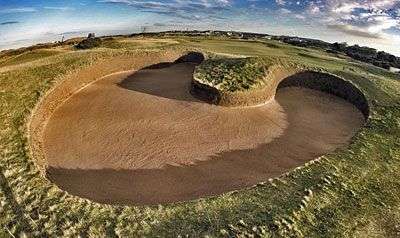
L is for LONG THE ORIGINAL “Long,” No. 14 at St. Andrews Old Course is the longest hole on the card. This and some other details from the Scottish icon have come to solidify our understanding of the term “Long”. Most templates put emphasis on approach shots—whether that’s an iron to a Par 3, or the careful measure of distance when crossing an “Alps.” Two good shots are required to reach any solid template Par 4, of course, but George Bahto justifies the importance of the tee on “Long” as a three-shot template: “The hole requires a long, deadly accurate tee shot between out-of-bounds and a hazard. An errant first stroke will leave the golfer with a continuing problem all the way to the green.” The “deadly accuracy” should be aimed at the “Elysian Fields,” a rare flat area on the course, which sits at the right-centre of the fairway. This involves the diagonal carry of the aforementioned hazard, without flying the wall that marks “out-of-bounds.” Having safely arrived at Elysian, the player has a better chance at carrying the Hell Bunker, a six foot-deep pit more than 75 yards long and covering more than 300 square yards. Those with weak tee shots should be wary of tempting fate, and are encouraged to use the No. 5 fairway as a detour to the green (which does not necessarily guarantee safe passage of Hell). Even avoiding Hell, the player must deal with devilish mounding on their approach from this position, deflecting balls away during the prescribed ground approach (having carried Hell, the player has a shorter, more head-on approach). Hell Bunker St Andrews Old course 14th hole - image courtesy of the European Tour The giant bunker obviously holds significant sway in this Par 5 template. Sound familiar? We’re getting there... The Long is a less popular template largely because the Knights Template—C.B. Macdonald, Seth Rayor and Charles Banks—did not use it definitively. Only two examples of defined “Longs” existed in the United States. One was at Macdonald and Raynor’s legendary Lido Golf Club, a spot-on recreation of the St. Andrews model. The other, still existing, sits among Macdonald’s other templates at the National Golf Links of America. Although not a clone, No. 9 shares several elements with “Long,” including its name. The tee shot crosses a pond and a set of bunkers diagonally; the more daring first shot means a less stressful second. The safer line from the tee means reckoning with a smorgasbord of sand concepts. NGLA’s “Hell” isn’t one bunker, but a string of hazards that includes one large “regular” sand pit, an Oakmont-style set of church pews, and a series of smaller bunkers stitched together with scrub grass. For its lack of St. Andrews mounding, Macdonald included several bunkers bordering the green. Although it is no longer the epic closer at NGLA since the clubhouse moved, “Long” is still the lengthiest hole at the course. NGLA 9th hole - image courtesy of Jon Cavalier @LinksGems Bahto suggests that Macdonald and his acolytes avoided “Hell” bunkering at future three-shot holes out of fear that it required skills unreasonable for the standard player of the era. At least one other Golden Age architect was happy to step in on behalf of “Hell”. A.W. Tillinghast, unlike Raynor and Banks, did visit St. Andrews during his lifetime, and it’s reasonable to assume Hell had an impact on the young golfer. He found an ally in hotelier George Crump. “The three-shot hole must be beyond the range of any player who misses either his drive or second stroke,” Tillie wrote. “The most effectual method, and I believe the only satisfactory one, is the location of a truly formidable hazard across the fairway... Obviously this break in the fairway must be great, let us say 100 yards.” Pine Valley 7th hole - Hell's Half Acre And so “Hell’s Half Acre” was born, the No. 7 hole at Pine Valley. The formula for this example of what is now known as “Tillinghast’s Great Hazard” is simple: A strong tee shot will set the player up with the opportunity to clear the title “half-acre” (at one time the hazard occupied more than an acre) and be rewarded with an easier approach. A tee shot to the rough inevitably means laying up, and then playing the third shot over the hazard (with no real chance of reaching in regulation). The most devilish scenario, however, is a weaker tee shot to the fairway, where the player must debate laying up or challenging the beast. The length of this forced carry—more than 150 yards—is enough to rattle many. Pine Valley’s “Long” is based almost purely on the talent and confidence of the player, with little room for strategic manoeuvring (even the green, upon approach, sits as an island in its own large bunker). Tillinghast adapted his concept to improve the hole’s strategy, even if that Par 5 is far from the longest on the course. A classic example is No. 4 at Bethpage Black. The Great Hazard here cuts from long-and-right down to near-and-left—decreasing in altitude as it comes forward, offering several routes for players. Those daring enough to go for two must carry another large bunker from the tee and stop short of the Great Hazard for the shortest line to the green. More conservative players can avoid the initial bunker by playing right, but they’ll face the longest, tallest carry of the Great Hazard in order to reach the next fairway. If the player who was more aggressive has second thoughts and opts to aim for the second fairway, their carry will be shorter, in both length and height. Bethpage Black course 4th hole - image courtesy of John Sabino Traditionally, the “Great Hazard” has, of course, been sand. Both Tillinghast and others have worked sans sand, however. A.W.’s work at Ridgewood Country Club in New Jersey includes two Par 5s that consist of deep rough, presumably more affordable than sediment. Perhaps the most famous version, however, comes at Hirono, the greatest of C.H. Alison’s many great Japanese courses. No. 15 uses the property’s prominent trench as a daunting deterrent. Interestingly, it’s not even the most popular hazard on the hole; the pine tree in the first fairway is iconic. You’ll be less keen, of course, if you land too far to the left, and it forces you to take an extra shot before crossing the hazard. Pinehurst No.4 course 9th hole - image courtesy of the Pinehurst Resort Although Par 5s continue to get longer, there’s less interest in maintaining (or paying to maintain) epic hazards such as “Hell” or “Hell’s Half Acre.” Still, naturally sandy terrain offers some opportunity for new levels of “Hell.” One example is No. 9 at Gil Hanse’s redesign of Pinehurst No. 4. Again, it is certainly not the longest Par 5 on the route, but it does require strategic interaction with the large hazard to determine the final score. The shortest carry is to the far left, but this will leave the trickiest approach into a right-to-left green, fronted by a bunker at its left foot. The longest carry, well over 100 yards, will leave the optimal approach angle from the right. MAYBE...MAYBE NOT First, let us cull a whole range of would-be “Great Hazards”: A Par 4 simply does not apply, no matter how much sand must be carried. Tillinghast defined his “Great Hazard” as a “three-shot-hole,” and no Par 4 is long enough to justify the term “Long.” There are many Par 5s that could claim a “great hazard” among their ranks but do not necessarily qualify as a “Long,” or even a “Tillinghast’s Great Hazard.” We’ll head back to Bethpage Black for another example. No. 7 features a trap that is almost three times larger than No. 4’s hazard, and the hole is longer as well. The difference with this hazard, however, is that the player must carry it from the tee; they have no safe alternative. On a true “Great Hazard,” players get the option to put themselves in a better position before challenging the carry. This is strictly a do-or-die scenario. Granted, the diagonal tee shot allows players to choose how much sand they want to bite off, but this makes it more of a Cape than a “Long.” Tobacco Road 11th hole - image courtesy of David Davis Tobacco Road’s No. 11 is a Par 5 that offers a 150-yard crossing of a massive sand hazard. This route is forced upon only those aiming for eagle, however. Those who can’t land their second softly on a 10-yard wide target after the lengthy carry will roll into yet another sandpit. The rest of us don’t necessarily need to carry the sand at all... we can take a safer, three-shot route across 511 yards of uninterrupted fairway around the hazard. The green, surrounded on three sides by sand, is realistically more of a Cape than a “Long.” We apologize for not mentioning it several posts ago.
It’s beginning to look a lot like Christmas for fans of Top100golfcourses.com. It's been 3 long years since we last released a USA Top 100 ranking, but the wait is finally over! We're excited to unveil our new and improved rankings, which reflect the many changes that have taken place in the US golf scene since our last release. New minimalist design courses continue to be opened emphasizing width off the tee and placing a premium on playing to the right area to set up the best approach angle to the greens. Firm and fast playing surfaces encourage golfers to use the ground game, which is often the best option. There is also significant activity regarding new courses being built in warmer more southern climates where golf can be played year-round. North Carolina, South Carolina, Georgia and Florida are leading the way. At Top100golfcourses.com, we're committed to providing the most trusted and reliable rankings in the industry. That's why we've invested heavily in our panel of experts, which includes some of the most well-traveled and architecturally engaged golfers in the country and the world. We have made a significant investment in expanding and improving our panels in every major golf country around the world. Our US panel is now three times larger than before, and we are proud to have eight members who have played the US Top 100 and several others who have played over 1,000 different golf courses. Significant movement in the new US ranking release, with 14 new entries, 50 courses dropping, 25 moving up, and only 11 holding their position. Among the newcomers to the US Top 100 Rankings is CapRock Ranch, a collaboration between Gil Hanse and Jim Wagner. This stunning course debuted in last year’s Top 100 in the World rankings and offers the best of both worlds: spectacular caprock views and holes routed along the cliffs of a massive ravine, as well as inland holes that traverse the perfect dune landscape of the sand hills. The newly restored Lido Golf Club, a faithful recreation of the original course designed by Charles B. Macdonald and Seth Raynor, has made a stunning debut in our rankings, entering as a massive favorite among our panel. It's a big, bold, and challenging course, located in the sandy hills of Wisconsin at Sand Valley Resort. Michael Keiser Jr. brought in Tom Doak and Brian Schneider, along with amateur golf historian Peter Flory, to complete the restoration. Two new golf courses in South Carolina are spearheading the growth of a new major golf destination in the greater Augusta area. The Tree Farm, a long-time dream of PGA Tour pro Zac Blair, was the first on the scene. The Tree Farm has been lauded for its routing prowess, thanks to the work of none other than Tom Doak and Kye Goalby. Its neighbor, Old Barnwell, showcases the sublime work of two veteran architects in Brian Schneider and Blake Conant. These two gems are quickly gaining momentum and critical acclaim from golf lovers lucky enough to receive invites to visit them. With their stunning scenery and challenging layouts, they are poised to become two of the most sought-after golf destinations in the US. The last several years have seen many historic championship courses undergo major restorations, many of which have improved in the rankings as well. Among these are Los Angeles (North), Oak Hill (East), Oakland Hills (South), Congressional (Blue), Inverness, Scioto, Southern Hills, Baltusrol (Lower), and Olympic (Lake). What rises must fall, and so it is with golf courses. Some once-great courses have seen their popularity wane in recent years, due in part to the decline of penal golf course design. Pete Dye, a master of this style, has seen some of his best courses fall victim to this trend. Kiawah Island's Ocean Course, Whistling Straits' Straits Course, and TPC Sawgrass are all examples of courses that have seen their rankings drop in recent years. Other golf courses that have experienced significant ranking declines this year include Muirfield Village, Bandon Dunes (Old Macdonald), the Streamsong courses, and Sebonack. So, without further ado, here is our 2023 USA Top 100 ranking: View the USA Top 100 Rankings Here

The Long Lost Lido Found — Twice Most years feature one piece of golf course-related news that dominates the others. The opening of Bandon’s Sheep Ranch was quite the headline for 2020. A short way into 2021, and another Mike Keiser project is already the talk of the town: A recreation of the legendary Lido Golf Club, to be constructed near the Sand Valley Golf Resort in Central Wisconsin. The hubbub is justified by years of growing interest in golf course architecture, and particularly the philosophy of Charles Blair Macdonald. The stockbroker was dubbed “The Evangelist of Golf” by writer H.L. Whigham, and his template approach to course design — incorporating influence from the world’s most renowned holes, as seen at the National Golf Links of America — has been a central concept to the study of “The Golden Age” of golf course architecture. National Golf Links of America 4th hole - Redan The Lido was another Macdonald design, and one that fell into oblivion following the second World War. Such was the acclaim from players and experts during its time that it has become an object of fascination for modern architecture enthusiasts. That it would soon (2023) be available to the general public (or at least those staying at Sand Valley) inspired a wave of celebration. Amid the noise, you hardly would have guessed that another new Lido had opened in just the past year. Gil Hanse and Jim Wagner led the creation of a modern Lido at the Ballyshear Golf Links in Thailand. Ballyshear 12th green Two recreations of the same classic golf course, within the period of just a few years? How does one explain the sudden rush on Lido? Macdonald’s NGLA has always been a mainstay of architectural discussion and remains so to this day. Conversations on his acclaimed templates — including the Redan, Eden, Alps, and Long among others — almost always include the version from NGLA. A slew of originals at Lido, less prominent among Macdonald and Seth Raynor’s future designs, offer intrigue. NGLA 9th hole Long - image courtesy of Jon Cavalier @LinksGems Macdonald invited readers of Country Life and amateur architects to submit original designs for inclusion—with the entries judged by Bernard Darwin, Horace Hutchinson and Herbert Fowler. The winner was Alister MacKenzie, whose multi-fairwayed “Home” closed the routing. No. 15, named “Strategy,” was unofficially submitted by Tom Simpson (as he was an affiliate of Fowler, a judge). Raynor is believed to have adapted what would become known as “Raynor’s Prize Dogleg” from another submission, which became the No. 6 “Dog’s Leg” hole. Perhaps the club’s most iconic hole was the debut of the “ Channel,” a Littlestone-inspired par five that dared the bold to hit its island fairway on the way to an eagle opportunity. Littlestone Golf Club - 16th hole Channel - image courtesy of Littlestone Golf Club NGLA, however, was built for skilled amateurs and featured two U.S. Amateur champions among its membership. The Lido was longer and meaner, perhaps designed to test professionals and match Pine Valley’s notoriety as a man-eating test of golfing will. “Lido if you know it is like a boiled New England dinner, which if it doesn’t kill you young will make you a very husky citizen, set to digest anything that comes your way. So it is with Lido,” wrote Bernard Darwin for The Brooklyn Daily Eagle. “Once you’ve become inert to these ferocious carries and the all-engulfing rough, the iron has entered your soul and you are capable of tackling any golf course that the genius of Charlie Macdonald or Seth Raynor or Walter Travis can conceive.” Bret Lawrence, a golf historian, notes that the Country Life contest specifically calls for two-shot holes, suggesting Macdonald didn’t want another short hole. “He wanted two-shot holes, which are basically two full-shot holes,” Lawrence explains. “You could kind of get the sense from there that he wanted more of those as opposed to a drive and pitch kind of hole, which would make it shorter. He was looking for more strategy in the longer holes...because he wanted to test the professionals.” The originators, however, weren’t professionals, but wealthy New Yorkers who had previously tapped Macdonald to build clubs such as Piping Rock. With names like “Vanderbilt” on the ledger, no expense was spared, and earth was moved to such a degree as to put Whistling Straits to shame. Piping Rock Club 13th hole - image courtesy of Jon Cavalier @LinksGems “It almost seemed like they were trying to develop the area,” says Lawrence. “There was nothing out there at the time.” Those plans hit the skids with the onset of World War I and the original investors had lost interest by the Great War’s conclusion. The next buyer was William Reynolds, a former senator who began the area’s real estate boom and built a hotel, putting the retitled Lido Beach Golf Club on the map for the wider population. At its peak, the club featured more than 1,000 members. Unfortunately, that peak ended with Reynolds’s death; between his family and other investors, the “all-engulfing rough” soon received less care. Even at its critical peak, Macdonald was disappointed in the upkeep. “What he was unhappy about was — he mentioned this in Scotland’s Gift — that they didn’t keep up the golf course,” explains Anthony Pioppi, executive director of the Seth Raynor Society. “I think he expected the Lido to be treated the way National treated its golf course.” The U.S. Navy assumed control of the property during the next World War and it never returned. The legend, however, lived on, culminating with the new projects from Hanse and Tom Doak, who will be handling the Sand Valley installation. Those two projects will ultimately provide radically different Lido experiences, however. The Ballyshear Links is much less a carbon copy, due to the limits of the property Hanse and Wagner had to work with. The pair pitched the project to the owner of the Ban Rakat Club, understanding that they would need to tweak the original routing a smidge to make it fit, and their approach would be more in line with Macdonald’s approach at NGLA; creating interpretations of the historic holes versus clones. “Normally...we feel strongly that a golf course should be the product of its surrounds. But in the back of our minds, my partner Jim Wagner and I have often wondered what we would do with a completely flat site — what can you do to distinguish it?” Hanse said in a statement. “The most famous example of a manufactured golf course from The Golden Age was The Lido. Jim and I had always wanted to do a Macdonald/Raynor, angular grass-faced bunker design. We pitched the idea to the owner at Ballyshear and he loved it.” And that’s where Doak’s Lido will be different: The plan is an almost exact clone of the original Lido, built in Wisconsin rather than Long Island. Such a feat is possible because of technological advances. Peter Flory, a Chicago-based architecture enthusiast, has been building a 3D replica using the course design feature of The Golf Club computer game. That prompted a call from Doak, who had watched Flory’s progress via Golf Club Atlas. What began as a Flory’s passion project became the driving force for the course’s recreation. “I would not have agreed to take it on if I didn't think Peter's work gave us a chance to do it accurately,” Doak told Top 100 via email. Still, Hanse’s rendition didn’t require such digital wizardry, so the sudden Lido lean can’t all be attributed to modern tech. So why now? For Doak, Flory’s work represented a potential punctuation for a sentence that had begun long ago. The architect had previously created a tribute to Lido’s designer for Keiser, with the Old Macdonald course at Bandon Dunes. This track, like Macdonald himself, aimed not to replicate anything but rather adapt existing templates to the Oregon landscape. Apparently, even during 2005, Lido was on Keiser’s mind. Doak says the resort magnate expressed his interest in recreating the Lido while the pair discussed the third course at Bandon. Old Macdonald 4th hole - image courtesy of Bandon Dunes Bandon was blooming at that time, but Keiser’s resort ownership has only grown since then, operating nine 18-hole courses (and accompanying par three courses) between his three resorts. Doak suggests the root of both Keiser’s windfall and Lido’s rise is the relatively recent appreciation for golf course architecture. “There is 100-times more interest in golf architecture nowadays. Forty years ago, when I was a student, you were lucky to find a copy of Colt's or Macdonald's books through interlibrary loan,” he says. “Websites like Golf Club Atlas, podcasts like Andy Johnson's (The Fried Egg) and Derek Duncan's (Feed The Ball), and the golf magazines have all made golf architecture far more of a mainstream topic. They even talk about it on TV a little bit!” That still doesn’t explain “why Lido?” Why wasn’t someone like Keiser interested in restoring, for example, Ocean Links (Raynor’s nine-hole neighbor to Newport Country Club ) or the original El Caballero (Billy Bell’s masterpiece in the Los Angeles hills, prior to the club changing locations)? Simply put, the amount of information on these courses pales in comparison to Lido. “I think Lido is in a class by itself in that regard; it was much more well documented because of who designed it, because of the contest that helped make MacKenzie famous, et cetera,” Doak says, admitting even he knows relatively little about other lost tracks. “I'm a bit of a geek about this stuff, and I don't know one-tenth as much about the other courses you mentioned.” Information does exist, however, and there are certainly golf history buffs looking for it. Flory has begun creating a similar 3D model of Ocean Links, sharing his progress on Golf Club Atlas. A rendering of Sand Valley’s Lido by Peter Flory With that in mind, could the current Lido projects portend future projects focused on tributes to, and total recreations of, legendary golf courses? And if so, is that necessarily a good thing for the current state of course architecture? Pioppi is wary. “I do think that’s going to be a trend. I think because of this technology, people are going to be able to recreate holes. I mean, what’s to stop somebody from recreating the Old Course in Wisconsin? With this kind of technology, who knows?” he says. Still, he can accept such things if it means more eyes on golf course architecture. “For me, the bottom line is people are talking about architecture, which is good.” One “victim” of the Lido project is Doak’s “Sedge Valley” Swinley Forest concept, an original 6,100-yard course on the Sand Valley property. It will eventually happen...but not until the Lido wraps up. Doak doesn’t begrudge the Keisers for prioritizing the new project over his original design...but he does make a lighthearted jab at golf media’s (including Top 100) role in the narrative. “Unfortunately, this interview and all the others are demonstrating that the idea generates a lot of free publicity...more of it than my proposed third course at Sand Valley did,” he says. He states that Lido would be his only personal recreation. He compares the value of the project to his work restoring the Chicago Golf Club and others, preserving the legacy of architects he admires. “If I didn't think this particular course was worth restoring, I certainly wouldn't be doing it.” If we’re being accused for feeding the furor that results in the recreation of a legendary golf course, we’ll plead guilty! We’re looking forward to playing both new Lidos sooner rather than later. That said, we’re equally looking forward to celebrating what golf course architecture will be, and not just what it was.

