The spectacular 18-hole Lofoten Links course opened in the summer of 2015 and it’s situated in a remote spot along the rugged coast of the island of Gimsøya, in the northern reaches of Norway...


The spectacular 18-hole Lofoten Links course opened in the summer of 2015 and it’s situated in a remote spot along the rugged coast of the island of Gimsøya, in the northern reaches of Norway...
The spectacular 18-hole Lofoten Links course opened in the summer of 2015 and it’s situated in a remote spot along the rugged coast of the island of Gimsøya, in the northern reaches of Norway, where golf can be played 24-hours a day during the months of June and July.
The course is set out by the seaside with the ocean as a water hazard on several holes and sandy beaches as natural bunkers on others. The signature hole arrives early at the 140-metre 2nd, where the two-tiered green sits on a little rocky outcrop, fronted by a solitary pot bunker.
On the back nine, the 430-metre 16th is the longest and toughest par four on the course. After a blind tee shot from the back markers, the hole then plays downhill, with the fairway narrowing considerably as it heads towards the inlet where the long, exposed green is sited.
Well-travelled photographer Kevin Murray was recently invited to take some snaps of the course by Troon Golf, the course operator. “It’s one of the most incredible locations I’ve even had the privilege to visit to take photographs,” said Murray.
“It’s not easy to get to – I went via Oslo, took a two-hour internal flight north and then a three-hour drive along some of the most amazing scenery you can imagine, through mountains and waterfalls. It really is out of this world. The course is built on an old Viking burial ground and there’s a spiritual element to Lofoten you simply cannot escape. It is truly, truly, magical.”
Course architect Jeremy Turner commented as follows:
In 1992, I was contacted by Tor Hov, the father of the driving force behind the project, Frode Hov. A visit to Lofoten convinced me that a spectacular links golf course could be created on the islands.
When Tor’s health declined I assured him that I would assist Frode in realizing the dream of making the course. It has been a long and winding road but thanks to Frode’s dedication to the task the 18-hole course stands virtually complete after a period of almost a quarter of a century.
It has taken a series of development phases, the final and most significant phase 2011-2014 being the construction of eleven new golf holes, re-design and construction of four existing golf holes and modifications to the three remaining existing holes.
While some further modifications to three of the previously existing golf holes remain to be done the course is more or less complete.
As I once wrote back in the 1990s about the original 6-hole course: it represented 400 years of golfing tradition encapsulated in a few years work – a piece of Scotland washed up in the wilds of Lofoten!
In 2024, Lofoten Links was purchased by Cabot. The group has a growing portfolio of destination golf courses to which Lofoten Links has now been added.
The latest ranking of the Top 100 Golf Courses in the World serves as the ultimate global golf bucket list. Most members of our World Top 100 Panel are seasoned golfers, each playing 20-30 of these courses annually while travelling extensively over decades to form their opinions on others. We recognise that opinions vary—even among our panel members. Rankings are subjective, and there are undoubtedly 50 or more courses in the UK and USA alone that could easily fit onto this list. Links Golf Pilgrimages The rankings
Oregon, United States
Oregon, United States
Nordland, Norway
Ohio, United States
England, United Kingdom

In this episode of 'Top100 Clubhouse' James is joined by Frode Hov, the driving force behind the sensational Lofoten Links in Norway. They discuss what makes Lofoten such a special place, and why it's a must visit for any golf course lover! Next, James chats to Swedish pro golfer Per G. Nyman about his time competing on the European Tour and Challenge Tour, and and how he then made the move from pro golf to golf course management, he's currenting managing Växjö Golf Club in Sweden. Previous Episode - Don't Miss Out! In the previous episode of 'The Clubhouse' James is joined by a Scottish golf architecture legend; David McLay Kidd. The Glasgow-born Kidd founded DMK Golf Design in 2000, and ultimately went on to design incredible (but sometimes divisive) courses such as Bandon Dunes, St. Andrews (Castle) & Gamble Sands in Washington State. In this interview James talks to him about his life in golf, and how he approaches/thinks about course design. What Are The Top 100 Clubhouse Podcasts About? Top 100 Clubhouse is the ultimate podcast for golf enthusiasts! Join us as we delve deep into the minds of fascinating individuals from every corner of the golfing world. From players to course designers, caddies to golf historians, we'll leave no stone unturned in our quest to share unique insights and experiences with the Top100 Community. Together we'll explore the stunning courses and breathtaking landscapes, enjoying the unforgettable stories that bring the game of golf to life. How Do I Listen To The Latest Top 100 Clubhouse Podcast? You can download and listen on the following links. Listen now, wherever you download your podcast! Apple Podcasts Spotify Google Podcast Podtail We Need Your Feedback? The Next Podcast Interview? Top 100 members can share their views on who should join the next Top 100 Clubhouse podcast show? If you have an idea who you would like to hear, why not drop our Top 100 Clubhouse host James Henderson an email on james@top100golfcourses.com Happy Listening!
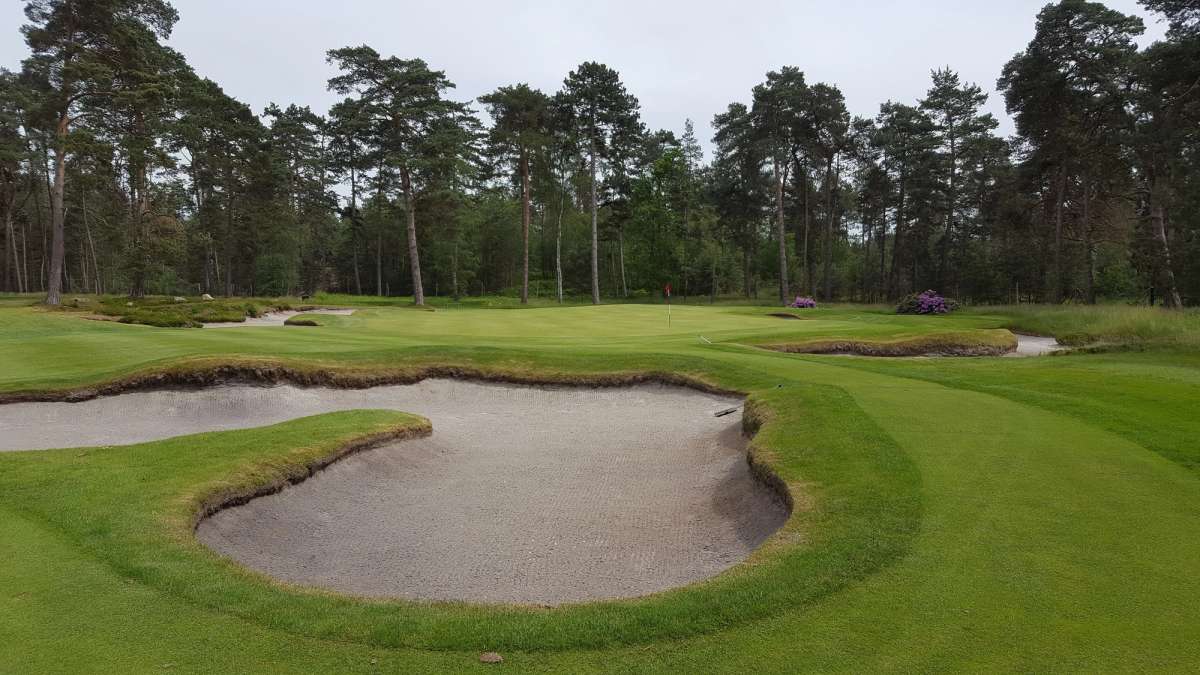
Producing a Top 100 chart for Europe isn’t easy as there aren’t many golfers with a broad enough range of playing experience across all the countries. Still, we’ve managed to find a select group of well-travelled panellists who have assisted with this chart and we’re grateful for their input. Normally, we produce these continental listings at the start of a ranking cycle then work our way through the constituent countries. This time, we began with the Nordic countries last year then – after something of a hiatus in the second half of 2022 – we eventually worked through the remaining nations until all were refreshed. Doing things that way made it a good bit trickier to assemble the top-level chart now (as recently revised country positions must remain intact within the pan-national framework) but we think we’ve produced a cohesive ranking list that stands up well against those that have gone before in previous iterations. So, in our new-look European Top 100, twelve courses remain in the same position, twenty-nine move up, forty-two drop down and seventeen make their first appearance in the standings. We’ll now concentrate our overview on most of the big upward movers, along with our highest new entry which arrives comfortably inside the Top 10. Morfontaine But first, we introduce the course which has held the coveted European #1 slot since 2012, the Grand Parcours 18-hole layout at Golf de Morfontaine in France. Golf was first played here in 1913 but it was Tom Simpson’s late 1920s remodelling of the layout that brought the course to prominence. Relatively recent Kyle Phillips improvements have ensured the course keeps pace with modern technology, at the same time retaining much of the original design intent. This 5.5-ball review was posted a few months ago: “Played this course last year around September. Amazing course. Every hole is beautiful. We were all alone with our 4-ball and a caddy. They were blowing away the leaves in front of us, just as if it was just for us. Perfect conditions. We played the championship course in the morning and the [9-hole] Vallière in the afternoon. An amazing experience.” Lofoten Links The remote course at Lofoten Links in Norway was listed just inside the top half of the table last time around in 2020 but it now makes a prodigious 43-place leap up the listings to the #4 position – which is not that surprising when you consider it was a new entry in our World Top 100 when it was refreshed last year. Designed by Jeremy Turner, this 18-hole layout in the Arctic Circle enjoys one of the most stunning locations imaginable. Les Bordes Entering the standings for the first time, the New course at Les Bordes Golf Club in France is our highest new entry at #6. Laid out by Gil Hanse on the site of a former 36-hole set-up close to Robert von Hagge’s Old course, the New is a heathland-style track featuring expansive waste areas, formidable bunkers and captivating green complexes, with great emphasis placed on the ground game in a firm and fast playing environment. Visby A few folk probably raised an eyebrow when we published our Swedish Top 100 last year as the 18-hole layout (called “The One”) at Visby Golfklubb on the island of Gotland took over the #1 position from the Stadium course at Bro Hof Slott. It now rises twenty-nine places to #17 in our continental standings, improving on the #25 position it held in 2014. Pierre Fulke and Adam Mednick deserve great credit for the remodelling work caried out at the club. Royal Antwerp The Tom Simpson course at Royal Antwerp Golf Club in Belgium climbs nineteen spots to #22 in the new chart. It’s hard to imagine this place fell from our European Top 100 in 2014 and only reappeared when we last reappraised the standings three years ago – all credit to the club for its willingness to restore the layout to its original design objectives, removing a vast number of trees to greatly improve the overall agronomy on the property. Palmares The Praia and Lagos nines at Palmares Ocean Living & Golf Resort in Portugal found favour with our Portuguese panel a few months back (rising two to #3 in the national chart) and it now makes substantial progress in the continental listings, moving up eleven places to #27. Situated on the Atlantic coast in the eastern half of The Algarve, the original 18-hole course was revamped into a 27-hole complex in 2010 by Robert Trent Jr. and the club has never looked back since. Les Aisses The 18-hole Les Aisses course at Les Aisses Golf in the Sologne region of France jumps twenty-five places up to #31 in the chart. Hawtree Limited was engaged in 2010 to reimagine the original Olivier Brizon design, recreating an old-style layout in the spirit of the heathland tracks found in England around London. Woodland management, heather regeneration and remodelling of bunkers have all contributed to the new look here. Real Moraleja Real Club La Moraleja in Madrid owns the largest private golf facility in Europe, with four Jack Nicklaus-designed 18-hole golf courses operating across three locations around the Spanish capital. The club’s #3 course now advances fourteen places to #40 in our chart, with sand-capped fairways routed around four large lakes on a rather flat site where a fair amount of soil was shifted to create contouring during construction. Royal Limburg The course at Royal Limburg is another Belgian track that has dramatically turned its ranking fortunes around. Positioned at #33 in 2018, it plummeted inexplicably to #88 in 2020 but it’s now back with a bang, soaring 47 places up to #41. Designed by Fred Hawtree in the mid-1960s then subsequently altered by his son Martin, the course underwent a complete bunker renovation by architect (and club member) Bruno Steensels in 2018 – so it’s taken a full five-year period for that work to be fully appreciated now! Real Puerta de Hierro The Abajo course at Real Club de la Puerto de Hierro in Madrid (up fifteen to #48) has benefitted from the design talents of several top architects since 1912, starting out with Harry Colt and Tom Simpson in its formative years, followed by John Harris and Kyle Phillips in more modern times. Frank Pont consults currently as the club continues to revise and refine both the Abajo and its sister layout, the Arriba, at a wonderful 36-hole facility close to the city centre. Pärnu Bay The 18-hole layout at Pärnu Bay Golf Links in Estonia (up twenty-three to #52) is a Lassi Pekka Tilander design, shaped by Mick McShane, that first opened for play in 2015. Situated on a sandy coastal strip of land where the forest meets the sea at Pärnu Bay, the raised fairways weave around expansive sandy waste areas and small lagoons, leading to multi-tiered, sand-protected greens. Drought-tolerant fescue ensures firm and fast playing conditions all-year-round. Linna The top track in Finland is the course at Linna Golf (up fourteen to #65) which Tim Lobb designed when he worked with European Golf Design in the early years of the new millennium. Located halfway between Tampere and Helsinki, the course is routed through a pine and birch forest next to the famous Vanajan Linna Hotel, with views across Lake Katuma to the west of the property. Royal Bled The 18-hole King’s course at Royal Bled in Slovenia (up sixteen to #79) dates back to the late 1930s but it was largely abandoned until Donald Harradine redesigned the layout in 1972. Fast forward almost forty-five years and the club commissioned Swan Golf Designs to reconstruct tees, green and bunkers, install new irrigation and introduce new water features on the back nine. It’s pleasing now to see this extensive upgrade receive the recognition it fully deserves. Olgiata Located half an hour’s drive northwest of Rome city centre, the 18-hole West course at Olgiata Golf Club in Italy (up eleven to #87) is a 1960s Cotton & Pennink parkland track that Jim Fazio renovated in 2010. The club has hosted the World Cup twice (in 1968 and 1984) and staged three Italian Opens, the last of which was in 2019 when Austrian Bernd Wiesberger won the event by one stroke from Matt Fitzpatrick. To view the entire detailed list of our latest Top 100 Golf Courses of Continental Europe click the link. View list here. If you have any comment to make on the above article then please use the “WRITE A RESPONSE” link at the bottom of this page. Jim McCann Editor Top 100 Golf Courses
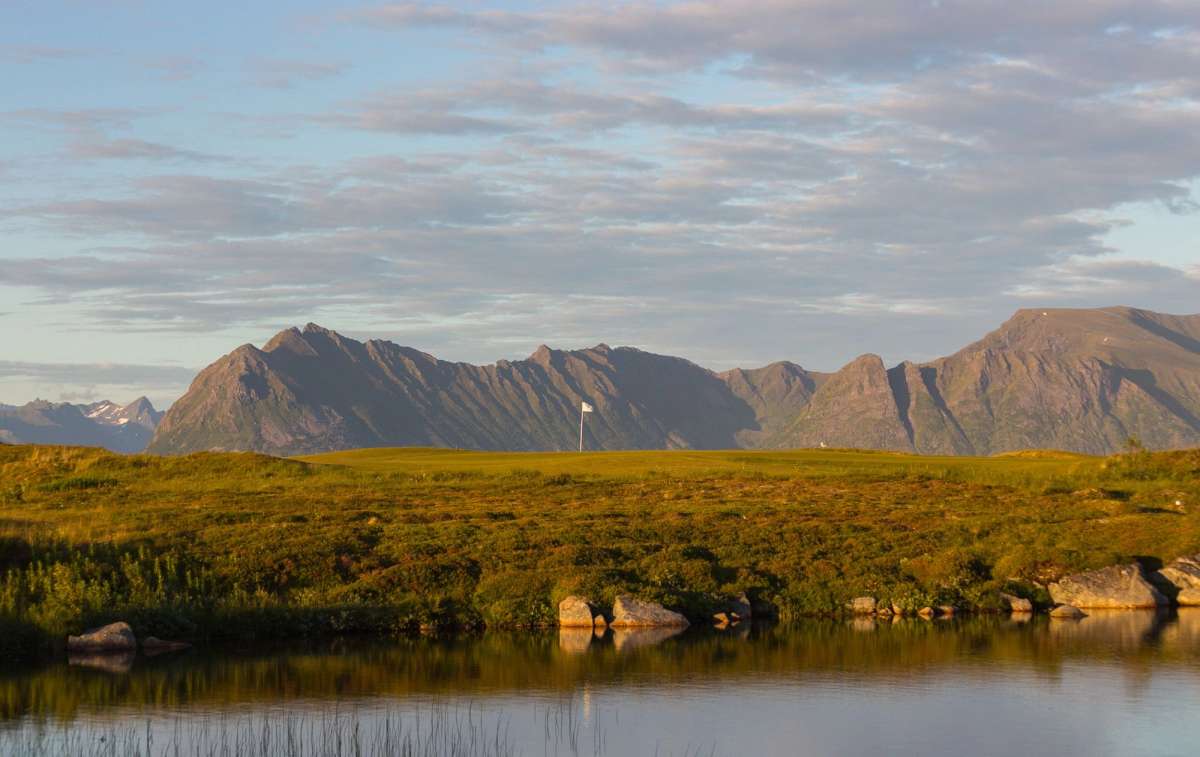
Top 40 Golf Courses of Norway 2022 This is the third of five Nordic chart releases that we’ll produce during our latest biennial revision exercise for countries in northern Europe. We’ve just published new listings for Iceland and Finland, with Denmark and Sweden to follow shortly. Norway has more than 100,000 registered golfers playing on 150 courses so the country’s ranked 12th in Europe, immediately behind Austria, according to the last KPMG Golf Participation Report that was published before the covid pandemic hit two years ago. We’ve recruited new panellists in all five of these nations and their input has informed us of additional courses that will now be included in our tables, allowing us to expand our coverage across the entire region. In fact, when the process is completed, we’ll feature more than a quarter of all the 970 courses that exist in the northern reaches of the European continent. Norway has had another ten courses added so this is our inaugural Top 40 for that particular county. Lofoten Links We start this reappraisal with one of seven chart non-movers, Lofoten Links, which remains in the #1 slot. Not only did it become our Norwegain number 1 in 2018, it also entered our Continental Europe Top 100 that same year and has since risen into the top half of that illustrious listing. Developed in phases over a number of years on the rugged coastline of the island of Gimsøya, Lofoten isn’t the easiest of places to get to but, as photographer Kevin Murray has said: “it really is out of this world… built on an old Viking burial ground, there’s a spiritual element to Lofoten… it is truly, truly magical.” Regular contributor Peter Wood has described it as “destination golf personified” and a recent reviewer wrote: “visually this is one of the most stunning golf courses I have ever played… the course was in very good condition given it is in the Arctic circle and probably under snow for a fair proportion of the year... lots of interesting holes next to the water and amongst the rocky outcrops, the 2nd hole playing to an almost island green was simply breath taking.” Miklagard The course at Miklagard Golf rises two places to #2, a position it last held in 2018 (having been #1 for the previous five chart editions). It’s an early new millennium offering from Robert Trent Jones Jr. that was recently redesigned following the construction of a new hotel on the old practice area in 2018. A new practice area was laid out, the opening hole was remodelled and five new holes introduced with the assistance of Bob Harrington, one of the original shapers from almost twenty years before. Five courses make substantial 4-place upward moves in our new Norwegian Top 40 table and they’re each worthy of mention. Larvik The Seasidebanen course atLarvik Golfklubb(up to #10) is an early 1990s Jan Sederholm design that has hosted professional events on both the European Challenge Tour and the Ladies European Tour. Unusually, it’s configured with six par threes, six par fours and six par fives, with the same par played consecutively only once, at the par five 7th and 8th holes. The left doglegging 385-metre 5th is a feature par four hole here and the usual advice on how to tackle it is to lie to the right of the forest at the turn – not so for John Daly when he played here as he drove the green from the tee! Losby The 18-hole Østmork course at Losby Golfklubb (rising to #13) is a Peter Nordwall design that opened in the late 1990s. Laid out on the flood plain of the River Losby, the course brings the flowing waters of the river into play at quite a number of holes, especially on the back nine. The third edition of the short-lived SAS Ladies Masters was held here in 2006, when Laura Davies was going for a hat-trick of victories in the competition. Unfortunately for her, local favourite Suzann Pettersen had other ideas, winning the event by an incredible nine shots from the runner-up, Nikki Garrett. Gamle Fredrikstad The course at Gamle Frekrikstad Golfklubb entered our Norwegian rankings at #22 in 2016 and after climbing a couple of places to #20 in 2020, it now continues in the right direction to #16. Situated across the river from the Old Town of Fredrikstad, the course is only ten years old, having been fashioned on a fairly flat site by Rolf Jensen and Paal Midtvaage during 2011. Water comes into the reckoning at more than half the holes, most notably on the closing stretch from the short par four 15th onwards. Borre The Borre Golfklubb course (now at #20) started out with a Tommy Nordstrøm-designed layout in 1991 and this was extended in 2005 with the introduction of another nine holes between the original 5th and 6th holes. However, the new circuit only lasted for nine years until it was discontinued and the club then reverted to its initial 18-hole course which remains in place today. Stretching to between 4,931 and 6,121 metres, the layout plays to a par of 73 (36 out then 37 in) with water hazards prevalent at the par four 6th, par four 12th and par five 16th holes. Haga The Gul and Rød nines at Haga Golfklubb course entered our chart at #30 in 2018, moving up one place in our last edition, before progressing to #25 in this update. Situated in the northwest outskirts of Oslo, the club was formed just twenty-one years ago but the original Henrik Jacobsen-designed layout received an upgrade a few years back from Johan Benestam, who focused on improving fairway drainage and bunkering. The Gul and Rød combination measures 6,045 metres from the back tees and plays to a par of 71 (36 out then 35 in). Sola (Solastranden) The Solastranden course at Sola Golfklubb is the highest of ten new entries, making an appearance at #24 in the new standings. It may be slightly overshadowed by the Forus course at the same venue but many golfers actually prefer this shorter track which plays to 5,001 metres from the back tees, with par set at 69 (36 out then 33 back). Feature holes on this layout include the left doglegging par four 2nd (rated stroke index 1) and back-to-back par threes at the 13th and 14th holes. To view the complete detailed list of our latest Top 40 Golf Courses of Norway click the link. View list here.


