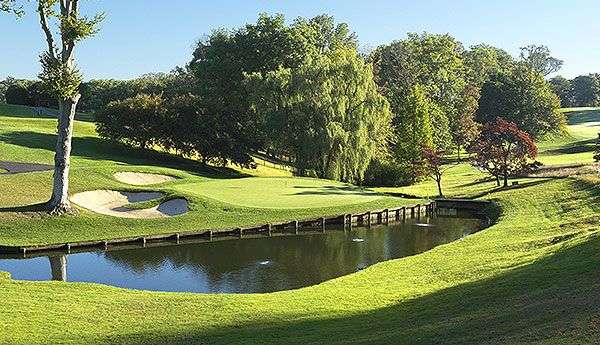
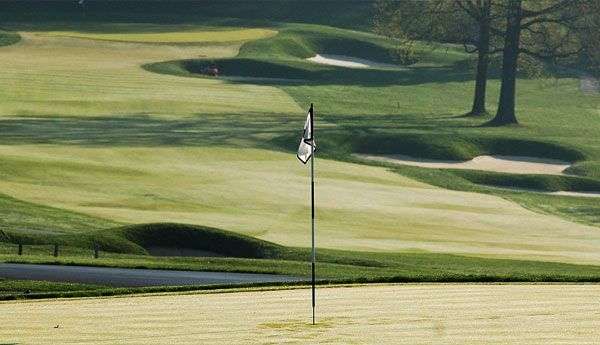
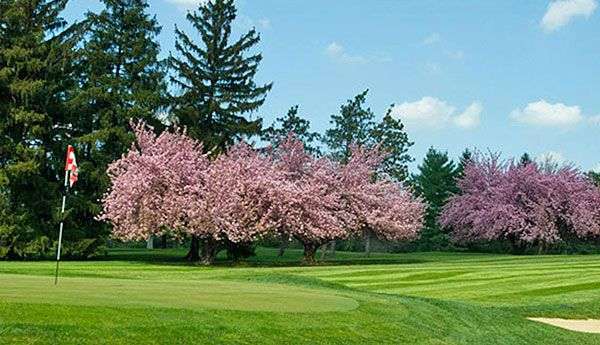
When Merion Golf Club was founded in 1896, Philadelphians were more likely to play cricket than golf. They even sent touring cricket teams to England!


Merion Golf Club (East)
When Merion Golf Club was founded in 1896, Philadelphians were more likely to play cricket than golf. They even sent touring cricket teams to England!
Sort by:
Aug. 18, 2026

6
Rob Pecorelli
Somehow, I walked away from the weekend rounds with a greater appreciation for Merion than when I actually played it—there’s just something about walking a course without holding a club that opens your eyes to things you completely miss when you're focusing on your own game.
Jul. 6, 2026
5.5
Rob Pecorelli
What else is there to say about this place?
Mar. 17, 2026
6
James reichert
Playing Merion is best described as like getting beaten up by a "hot chick.
Nov. 3, 2024
6
Devin Ochiuzzo
Merion East, my favorite course I’ve played.


Aug. 21, 2024
6
Adam Tomasiello
To say that Merion Golf Club’s East Course has a storied past is an understatement.
Jul. 2, 2024
5.5
Jeff Thornton
Had the wonderful opportunity to play the East Course on back-to-back days last week!


Oct. 11, 2023
5.5
Carl Gelardi
Agreeing with many of the reviews before me Merion is the toughest "Short" course you will ever play.
Aug. 28, 2023
6
Joe Sarni
Easily the best course I have played to date.
Aug. 2, 2023
5.5
Brad Engel
Many a Merion review has started by detailing the “three-part play” analogy to describe the layout (Drama-Comedy-Tragedy), so I wasn’t surprised by the progression of holes.
Jul. 15, 2023
5.5
Timmy
Its called the best short course for a reason, the mens tees measuring just around 6100 yards makes merion a short course but a very challenging one.
The latest ranking of the Top 100 Golf Courses in the World serves as the ultimate global golf bucket list. Most members of our World Top 100 Panel are seasoned golfers, each playing 20-30 of these courses annually while travelling extensively over decades to form their opinions on others. We recognise that opinions vary—even among our panel members. Rankings are subjective, and there are undoubtedly 50 or more courses in the UK and USA alone that could easily fit onto this list. Links Golf Pilgrimages The rankings
Nebraska, United States
Scotland, United Kingdom
Pennsylvania, United States
Hyogo, Japan
Scotland, United Kingdom

The message of great, strategic golf course architecture is clear. The actual words used to describe those golf courses, however, are many. The Architecture Glossary column will examine more precise terms and concepts that one will find when exploring golf course architecture. Hopefully understanding these terms, and why certain architects employed them, will help you to better understand the golf courses you play…and maybe even improve your scores! This month’s entry may seem like a cop out, as even the most casual of Open viewers is familiar with the infamous Valley of Sin that sits ahead of No. 18 at St. Andrews Links Old Course’s No. 18 green. Few realize just how much of an architectural impact that single hazard has had in the wider world of golf course architecture, however. That influence will be much more in focus across this entry but first, for those unaware, we’ll take a quick look at the original Valley of Sin. The original Valley of Sin stands evident at the fore of the final green at the Old Course (Photo Credit: Gary Lisbon). Although a course has existed on the site for more than 500 years, the current rendition of the route is frequently credited to Old Tom Morris, who made a number of significant alterations to its holes. Although he had a hand in making famous quite a few of the Old Lady’s most infamous hazards, few are as authoritatively Old Tom’s as the Valley of Sin. Upon his arrival at the club, the final green sat some 30 yards ahead of its current placement, meaning the Valley was not in play. Morris made the obvious change, dragging the putting surface behind the swale’s maw, an eight-foot deep channel running along the front edge of the green. No sand, no water, but plenty of intimidation nonetheless. Front pins in particular result in short shots that roll backwards, creating an awkward chip upwards. The Valley assures that, even with modern technology, the 356-yard closer is no pushover for pros. At the most literal conceptual level, any shortgrass valley tucked near the front of a green could be considered a “valley of sin” (if not “the Valley of Sin”). The magnetism of the Valley’s bottom has invited many comparisons over the years, with some even wondering whether this hazard serves as the common ancestor for everything we now call a “false front.” This might be a bit of an exaggeration; although the Valley certainly merits the “false front” descriptor, there are many other linksland holes — including at St. Andrews — that will repel an approach that lacks proper oomph. Still, it’s worth noting that several notorious false fronts were designed with the Valley in mind. For example, Hugh Wilson scouted the classic links to generate ideas for his design at Merion Golf Club’s East Course. The final par three, No. 17, features a significant false front between its lowest and middle tier, inspiration for which Wilson attributed to the Valley of Sin. High Wilson visited Scotland to gather ideas for his courses at Merion Golf Club. He cited the Valley of Sin when implementing the sin-ister false front at the East Course's No. 17 par three. (Photo Credit: USGA) Does this make No. 17 an example of a “valley of sin,” however? At the risk of sounding prickly, we’d suggest “no.” While the Valley may have inspired many a false front, a true valley of sin is not in itself part of the putting surface (for more puttable valleys, see last month’s post on bathtub greens). There are, of course, direct descendants from the Valley lineage. Few architects were as inspired by the Old Course than Alister MacKenzie, who wrote his treatise The Spirit of St. Andrews on Morris’s work at the course. The Valley of Sin was one of several hazards that the doctor incorporated into various designs around the world. Perhaps the most prominent still in existence occurs at one of MacKenzie’s often ignored gems, the Red Course at Argentina’s Jockey Club. No. 18 is unmistakable in its similarities to the closer at the Old Course. Aside from being the final hole, this par four plays to almost exactly the same distance (355 yards) as its inspiration, features no bunkers, and incorporates a large putting surface. Most notable is the valley that runs ahead of the green — those who misplay a running approach, or put too much spin when attacking a frontward pin, will find themselves in the pit. Alister MacKenzie's closing hole at the Jockey Club's Red Course approaches replicating the Home hole at St Andrews in terms of yardage, lack of bunkers, and of course the daunting valley of sin ahead of the green. (Photo credit: The Jockey Club) It seems that MacKenzie may have intended to make a template of the concept. No. 7 at Augusta National Golf Club would have been the showcase version. It too measured just 370 yards upon its founding, and featured no bunkers. Instead, a valley of sin ran across both the front tongue and the fairway inset of the L-shaped putting surface. Bobby Jones was unimpressed, and within five years he had ordered it rebuilt to mimic a different hole…No. 8 at Pine Valley Golf Club. Speaking of templates, it’s somewhat surprising that the godfather of template golf holes, C.B. Macdonald, didn’t move to incorporate the final hurdle at St. Andrews into his canon. After all, his “Road,” “Eden” and “Long” templates — as well as the “Principal’s Nose” bunker featured in the “Double Plateau” template — are all nods to St. Andrews. Perhaps, however, Macdonald did indeed have the Valley of Sin in mind when creating one of his more famous templates. Specifically, the Biarritz. This par three features an elongated green with a trench running through the middle. This, its most notable feature, was not actually present on the “Chasm” hole at Biarritz Le Phare. If it wasn’t present at the original, where did Macdonald get the idea? George Bahto, author of The Evangelist of Golf, was a proponent of the theory that Macdonald’s inspiration came from the Valley of Sin. Some have suggested that C.B. Macdonald took inspiration from the Biarritz's signature swale from the valley of sin (Photo Credit: Ryan Book) Although many clubs currently maintain the area both ahead of and behind the swale as putting surface, most of Macdonald and Seth Raynor’s original renditions of the hole designated the area ahead of the swale as fairway. This would live up to the snobbish standard we set above — that a valley of sin is not part of the putting surface, but a shortgrass ditch running ahead of the green. One thing is almost certainly true of valleys of sin, however: They all sit at the front of the green. There is always value in leaving the ball below the hole…but perhaps not as much value as leaving a ball above the valley of sin. Approach accordingly.

The United States is home to some of the world's most celebrated golf courses, from spectacular coastal layouts to historic clubs that have hosted the game's biggest championships. But playing America's best golf is not always as straightforward as booking a tee time. Many of the country's highest-ranked courses are private clubs, while some resort venues require visitors to book accommodation before they can play. So where are America's top-ranked courses concentrated, and how many can the average golfer actually play? A state-by-state breakdown of the Top100 Golf Courses USA ranking reveals a striking divide. New York and California lead the way by course count, but of the 100 courses listed, just 16 meet our criteria for playing without knowing a member or staying at a resort. The remaining 84 have some form of access restriction, whether through private membership, accommodation requirements or other visitor policies. For golfers planning a trip to the United States, that distinction matters: a state might have an impressive collection of top-ranked courses, but that doesn't necessarily mean visitors can build a holiday around playing them. New York and California Lead the Rankings New York tops the state-by-state breakdown with 14 courses, narrowly ahead of California with 13. Massachusetts follows with seven, while Ohio and Wisconsin each have six. New Jersey and South Carolina account for five courses each. The figures highlight the strength of golf in the Northeast, alongside California's long-standing reputation as one of America's premier golfing destinations. New York is home to some of the country's most exclusive golf venues, including Shinnecock Hills Golf Club, National Golf Links of America and Fishers Island Club. However, it also has one of the world's most famous public courses. Located on Long Island, Bethpage Black has hosted multiple US Opens and the 2025 Ryder Cup. Its public status makes it an important exception in a ranking where access is often far from guaranteed. Demand is high and securing a tee time requires planning, but golfers do not need a private-club membership to play it. The other 13 New York courses in the ranking do not meet our public-access criteria. California presents a different mix of courses, from celebrated coastal layouts to championship venues further inland. Pebble Beach Golf Links is perhaps the best-known example, with its dramatic Pacific Ocean setting making it one of the most recognisable courses in golf. The state offers a wide range of golfing experiences, but green fees, booking conditions and accommodation requirements can influence whether a course is a realistic option for visiting golfers. Its size is another consideration, with distances between destinations potentially shaping how many courses golfers can fit into one trip. The States Where Top-Ranked Golf Is Hardest to Access Some of the states with the most courses in the ranking are also among the hardest for visiting golfers to explore. New York has 14 ranked courses, but 13 do not meet our criteria for playing without knowing a member or staying at a resort. California has 13 courses, with 11 falling outside those criteria, while none of Massachusetts' seven entries qualify. The contrast is striking. New York and California offer plenty of choice on paper, but their highest-ranked courses are often difficult to access independently. Massachusetts presents a similar challenge, with its rich golfing heritage reflected in a list dominated by venues that aren't straightforward for visitors to book. New Jersey faces a comparable issue. Its five courses include Pine Valley Golf Club, frequently ranked among the world's finest, but its reputation as a private club makes it a difficult destination for golfers without the right connections. These figures underline why course rankings alone don't tell the whole story. For visitors, the practical question isn't just how many highly ranked courses a state has, but how many they can realistically play. The Best States for Golf You Can Actually Play Of the 100 courses in Top100 Golf Courses' USA ranking, just 16 can be played by the public without knowing a member or staying at a resort. Wisconsin and Oregon lead the way, with four qualifying courses each, followed by South Carolina, Florida and California with two apiece. Oregon is an obvious choice for a multi-course golf trip. All four qualifying layouts are at Bandon Dunes Golf Resort on the Pacific coast: Bandon Dunes, Pacific Dunes, Bandon Trails and Old Macdonald. Having four highly ranked courses in one destination allows golfers to experience a variety of layouts without spending their holiday travelling between different parts of the state. The rugged coastal setting is a major part of the appeal. Wisconsin offers four qualifying courses across two destinations. Whistling Straits' Straits course is one of the state's best-known golfing venues, having hosted major championships on the shores of Lake Michigan. Further inland, Lawsonia Links offers a different style of golf, while Sand Valley and Sedge Valley give visitors two more courses to explore within the same resort destination. Together, they make Wisconsin a compelling choice for golfers looking to combine several highly ranked rounds in one trip. South Carolina has two qualifying courses, each offering a different experience. Kiawah Island's Ocean Course is known for its exposed coastal setting and championship pedigree, having hosted major events including the 2021 PGA Championship. Old Barnwell provides a contrasting inland experience, adding another option for golfers planning a trip around the state's top courses. Florida's two entries are Streamsong Red and TPC Sawgrass' Stadium Course. Streamsong Red is characterised by its expansive sandy terrain, while TPC Sawgrass is home to one of golf's most recognisable holes: the island-green 17th. The two courses offer very different experiences, from Streamsong's distinctive landscape to the chance to play one of the PGA Tour's most famous venues. California completes the group with Pebble Beach Golf Links and Pasatiempo. Pebble Beach is renowned for its Pacific coastline and history of major championships, while Pasatiempo, designed by Alister MacKenzie, offers a celebrated layout with a distinctive place in American golf history.

Alex Frolish has been a pilot for approaching 20 years and now travels to all corners of the globe in his role as a commercial airline pilot. His passion for flight is only equalled by his passion for golf and golf travel. Having picked up a golf club over 35 years ago when aged just 3 years old, Alex has played over 550 courses across every continent on planet earth furnished with a fairway. Over the next few months you’ll be able to follow Alex’s golfing travels as he brings you anecdotes of his life both in the air and on the course. One thing about being a travelling golfer and panellist who is also an airline pilot, is that you can guarantee nobody will have played the same last ten rounds that you have. This always makes for interesting clubhouse conversations, although keeping tabs on exactly where you’ve just been can be a little troublesome. I’ll be honest, life can be chaos at times. To illustrate that exact point, May might have been my most jam packed and varied month in some time, with thirteen rounds played in three countries at some of the best courses those countries have to offer. Summer rounds, winter rounds, links and parkland. My golfing diary is a myriad of contrasts. The month started on Top100 regional duty, at Bristol & Clifton Golf Club, the final course I had yet to play in my home county of Gloucestershire in England. It has to be said that Gloucestershire isn’t blessed with an abundance of architectural heritage, but it is in the Bristol area of the county that you find the most historic and well rounded golf clubs. One such club is Bristol & Clifton, located just a couple of miles from the famous Clifton suspension bridge, where the members and staff are fiercely proud of their golf course. I was impressed with this place (particularly the conditioning), and would highly recommend a visit if you are ever in the area. Photo credit: Bristol and Clifton Golf Club My next outing was formed in friendship rather than in the hunt for architectural splendour. Rocco and I first connected in 2018 and shared a round at Pittsburgh Field Club in Pennsylvania. It had been five years but we had stayed in touch and I had vowed I would get back out to share another round with him. This time we played at a local municipal, Pittsburgh National, a course I knew little about. It turns out that when you come to a golf course with no expectations, you are often pleasantly surprised, and this ex Country Club layout demonstrated an abundance of interest and value. A first time visit to a quartet of gems of English golf followed, played over two of the finest weather days of the year so far. I will remember Broadstone for its magnificent land and the way in which the course wraps itself around and across the varying undulations. Ferndown was possibly the most supremely conditioned course I have played in the U.K. in the last twelve months; the vista looking down the effervescent 1st fairway will be imprinted on my mind for some time. Woking’s understated historical majesty charmed me nearly as much as the brunch on the terrace after the round. And Worplesdon, just a few hundred yards from Woking, completed an epic 48 hours of golf in emphatic fashion. Photo credit: Ferndown Golf Club Next to the clifftops of Oregon, to play arguably the most wonderful par 3 course on the planet. Coore & Crenshaw were presented with some piece of land to route Bandon Preserve across, but they have done one hell of a good job in telling a story in just 13 par 3 holes. Surely the growth of the game should be focussed on creating more golf courses like this one; playable, enjoyable and accessible to all. Then on to Old Macdonald, to complete the Bandon set (for now). I played the tips in a steady breeze and played one of the rounds of my life to shoot a few under my handicap and a couple over the par of the course. Old Mac might get some stick in certain quarters, but I found it to be a solid blend of beauty and playability, two key ingredients for the enjoyment of a golf round for me, and it was a round I will remember for some time. The Duchess at Woburn was quite the contrast to play just a couple of days after Old Macdonald. This tree-lined parkland layout in the heart of the English countryside places a heavy premium on accuracy rather than options, and I found the contrast in styles a leap too far, following my best round in some time with my worst in living memory. That’s golf I suppose, and as my golfing years pass, I seem to be able to more easily accept these ups and downs! The game is always bigger than your score. Let that be no slight on the Duchess though, which is a beautifully peaceful place to play and to take in the relative solitude that the dense avenues of trees provide. The Jockey Club in Argentina is revered as one of South America’s most prized golf clubs. It boasts two (yes two) original Mackenzie golf courses, routed across surprisingly spacious grounds on the outskirts of Buenos Aires. We played the Red course, the more highly regarded of the two layouts, and we visited in early winter after a sustained period of wet weather, the course was in simply stunning condition. The land here was as flat as a snooker table when Mackenzie arrived, and this is one place in the world where the good Doctor had to work hard to generate undulations and interest that felt at the same time, in keeping with its surroundings. Of course, he managed it with aplomb and in doing so, left Argentina with one the best dual course layouts in world golf. As an aside, if you ever get the chance to play here, make sure you order the steak. However your round has gone, this plate of food (and accompanying glass of Malbec) will send you home one contented golfer. Photo credit: Patrick Koenig Finally, a whistle-stop stay in New Jersey found me visiting another world-renowned 36-hole golf club, Baltusrol. This golf club is the stuff of dreams for the average golfer, boasting two world-class golf courses with facilities to match, and it was awe-inspiring to walk the fairways of the Lower course just prior to the LPGA Championship. My lasting memory will be my drive into the 18th fairway which rolled to within a few inches of the plaque, celebrating Jack Nicklaus’s famous 1-iron in the 1967 US Open. Slightly overawed with the potential for replicating such a heroic piece of golfing history, my wayward 3 wood did no justice to the drive that had managed to follow so closely in greatness's footsteps. It didn’t matter though; to have had the chance to attempt it in the first place was the greatest of privileges. On to June, which looks no less packed with golf. It all begins with a pilgrimage to a part of Scotland I have wanted to visit for most of my golfing life. After that, there is plenty of potential for some last-minute madness, with trips planned to Spain, India and Singapore. In the meantime, the golfing season in the Northern Hemisphere is in full swing, so wherever you are and whatever you have planned, I wish you the straightest of drives, well-negotiated four- footers and happy rounds.