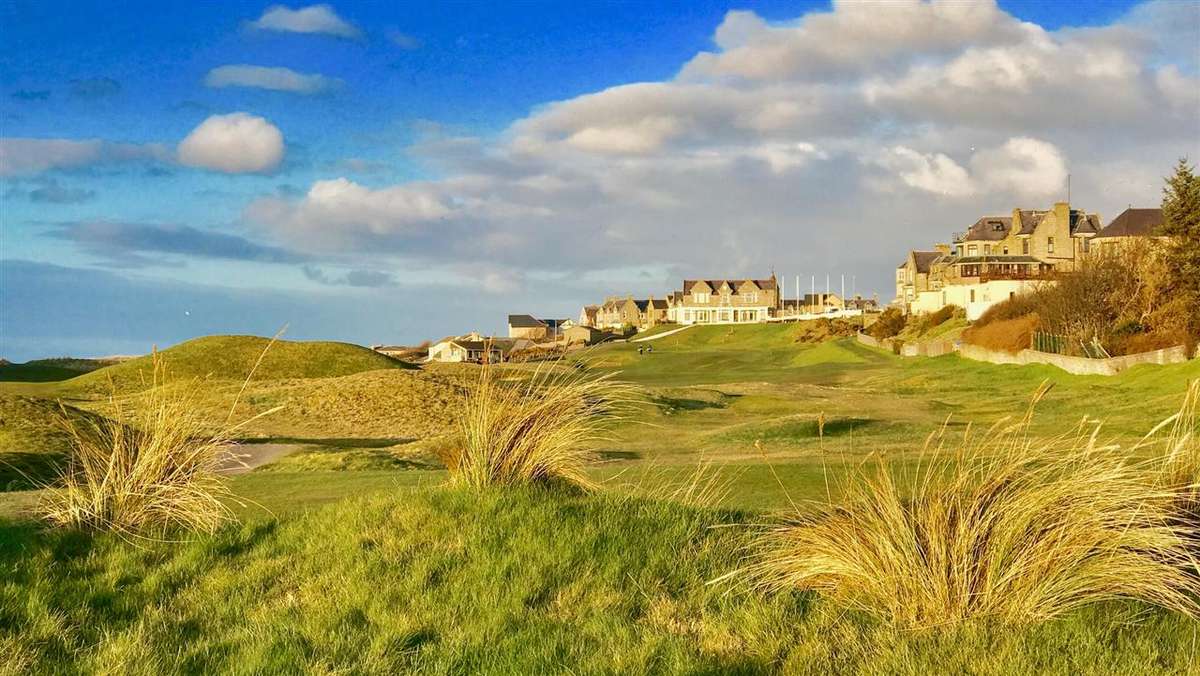
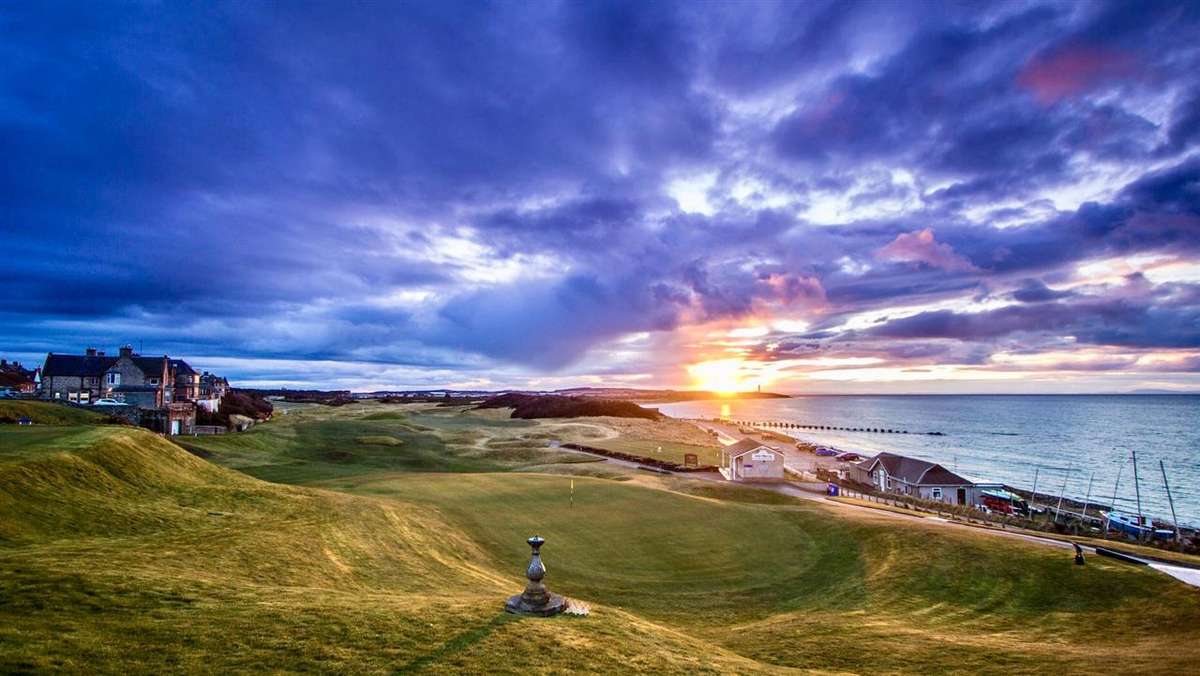
A much underrated course that extends to just over 6,000 yards from the back markers, the New course at Moray Golf Club opened in 1979 when Sir Henry Cotton converted an old layout.
A much underrated course that extends to just over 6,000 yards from the back markers, the New course at Moray Golf Club opened in 1979 when Sir Henry Cotton converted an old layout.
Moray Golf Club (New)
Sort by:
Aug. 24, 2025

4
Rex Tattersall
Quite often when you play a second course at a highly ranked first course , you either don't bother or expect it to be not worth it.
Aug. 19, 2024
4
Javier Pintos
The New Course was the first round of the day when we played both courses separated by a very nice lunch with our host Ian.


Aug. 24, 2023
4
Phil Reid
The new course provides a stern test of golf when the wind blows.
Apr. 5, 2023
4
Ralph Wardlaw
Gorse, gorse and gorse would be the 3 words I would use to describe Moray New.
Jul. 26, 2022
4.5
Greg Watson
Moray New affectionately referred to by the members as the "relief course" absolutely blew me away straight away from the first hole.
Jul. 18, 2022
3.5
Kevin Henley
For me it sits in the same sort of shadow as the New course at St Andrews - in itself a decent golf course through the gorse but it just isn’t the Old course which is the one you really want to play again.
Jul. 4, 2021
4
Jim McCann
The club market the New course as a Henry Cotton design but it was architect Howard Swan's father Alex (who worked with Cotton on many other golf projects) who actually did the heavy lifting here in the late 1970s.
May. 16, 2020
4.5
Jim Robertson
Having spent a bit of time in and around Lossiemouth, I have had the pleasure of playing both the Moray courses several times.
Mar. 31, 2017
4
Ed Battye
The New course, designed by Henry Cotton and opened in 1979, is the perfect foil for the Old.
Jul. 19, 2015
4
Dan Hare
The latest ranking of the Top 100 Golf Courses in the World serves as the ultimate global golf bucket list. Most members of our World Top 100 Panel are seasoned golfers, each playing 20-30 of these courses annually while travelling extensively over decades to form their opinions on others. We recognise that opinions vary—even among our panel members. Rankings are subjective, and there are undoubtedly 50 or more courses in the UK and USA alone that could easily fit onto this list. Links Golf Pilgrimages The rankings
California, United States
New Jersey, United States
Northern Ireland, United Kingdom
New York, United States
New York, United States

The Moray Firth stretches along Scotland's north east coast and is somehow still flying under the radar of most international visitors. This remarkable region combines the raw beauty of Highland links golf with the liquid gold of Speyside whisky country, creating perhaps Scotland's most authentic and unspoiled golf destination. Unlike the crowds at St Andrews or Dornoch, the Moray Firth courses offer genuine Scottish golf hospitality where you're more likely to chat with local members than queue behind tour groups. The region sits perfectly between Aberdeen and Inverness, making it an ideal base for exploring Scotland's northern golf coast whilst enjoying some of the country's finest single malts between rounds. Moray Firth & Speyside - Your Next Golf Holiday? The numbers tell an impressive story about this hidden corner of Scotland. The region boasts over a dozen quality golf courses from championship links to charming nine-hole gems. More importantly, you'll find: Authentic links golf designed by Old Tom Morris, without the tourist crowds Exceptional value green fees - significantly less than comparable courses elsewhere Year-round playability thanks to a surprisingly mild coastal climate and low rainfall Whisky heritage with 28 distilleries within the Speyside region, perfect for post-round tastings The Moray coast enjoys Scotland's driest climate, with many courses playable almost every day of the year. This unique microclimate, combined with natural links terrain and centuries of golfing tradition, creates conditions that golfers dream about but rarely find so accessible. Scotland's Championship Golf Courses Nairn Golf Club Local experts rank this as the region's premier championship test. The quality matches its highly-rated neighbours, offering an authentic members' club experience where visitors become "members for a day." Staff provide exceptional attention with Highland hospitality that sets the standard for Scottish golf. Castle Stuart Golf Links (Cabot Highlands) This modern championship links sits slightly higher in current rankings but offers a different product from traditional Scottish golf. The commercial operation ensures good availability throughout the day unless events are scheduled. Part of the Cabot Highlands development that's reshaping Highland golf. Old Petty Golf Club (Cabot Highlands) The newest addition to Highland golf promises to bring something completely different to the region. Early reports suggest this will become an exceptional complement to the existing championship courses. Part of the expanding Cabot Highlands portfolio. Moray Golf Club (Old Course) An exceptional traditional links course that captures the essence of Scottish golf with its St Andrews-like quality of starting and finishing in town. Old Tom Morris's 1889 design features seven par fours over 400 yards across gorse-lined fairways with deep revetted bunkers. Moray Golf Club (New Course) Henry Cotton's 1979 relief course pairs perfectly with the Old Course for 36-hole days. Though shorter and tighter with smaller greens, it provides an equally challenging and rewarding links experience. Elgin Golf Club This exceptional parkland course verges on heathland character with stripped-back heather and fast-running conditions. Eight par fours exceed 400 yards through panoramic views toward the Cairngorms. Always maintained in immaculate condition, consistently ranked in Scotland's top 100. Nairn Dunbar Golf Club A slightly inland links that pairs excellently with nearby Nairn for multi-course visits. Exceptional conditioning and a worthy test that doesn't require extensive travel. The perfect addition to any Inverness-based golf itinerary. Scotland's Hidden Golf Gems Cullen Links Golf Club Old Tom Morris's original nine-hole design hugs dramatic red sandstone cliffs whilst Charlie Neaves's additional holes create Scotland's most unique par-63 layout. Ten par threes over 4,597 yards include spectacular elevation changes and blind shots over red sandstone outcrops. The course seems impossible until played, then it becomes utterly unforgettable. Cove Sea Golf Club The region's most charming secret - a privately-owned nine-hole gem nestled in a coastal cove that's "too much fun" to play. Exceptional hospitality makes visitors feel like family members, with inexpensive green fees and a stunning seaside location. This intimate course provides the ultimate Highland golf experience away from crowds. Boat of Garten Golf Club An incredibly beautiful inland test featuring unreal fairway movement and constant hogsback undulations rarely found elsewhere. The course surprises international visitors with its unique character and strategic challenges. Located in whisky country, it combines exceptional golf with distillery access. Hopeman Golf Club This traditional seaside links offers spectacular Moray Firth views with the signature par-three 12th dropping 100 feet from tee to green. Gorse-lined fairways demand accuracy, whilst consistently excellent conditioning ensures pure golf enjoyment. Spey Bay Golf Club A Ben Sayers original design that's undergone an extraordinary transformation under new ownership. The conditioning now matches anything in the area, with intriguing course reroutes possible during play. Features square greens and traditional out-and-back routing on true links land with a dolphin visitor centre nearby. Ballindalloch Castle Golf Club A Donald Steel and Tom McKenzie nine-hole design on historic castle estate grounds with an on-site distillery. Beautiful elevation changes include a stunning cliff-drop par four alongside the river and a gorgeous par three toward the water. The laird traditionally cut fairways himself until recently - authentic Highland charm. Three Hidden Nine-Hole Gems Near Boat of Garten Nethy Bridge (Abernethy Golf Club): Exceptional fun in a stunning Highland setting Carrbridge Golf Club: Mountain views with traditional Scottish charm Grantown on Spey: Additional option for golf-hungry visitors with capacity for last-minute rounds Sample Itinerary: 6-Day Moray Firth Golf Adventure Day 1: Arrival & Highland Welcome Morning arrival at Inverness Airport (Scotland's Highland capital and boom city). Collect rental car and drive to Inverness accommodation - the perfect base with excellent restaurants and Highland attractions on your doorstep. Afternoon round at Fortrose & Rosemarkie (20 minutes from Inverness) for jet lag recovery, with excellent chances of spotting dolphins in the Moray Firth. Evening dinner in Inverness exploring Highland cuisine. Day 2: Championship Links Experience Full day at Moray Golf Club, Lossiemouth. Morning round on the Old Course with its St Andrews-like charm of starting and finishing in town. Lunch in clubhouse overlooking the spectacular 18th green. Afternoon round on Henry Cotton's New Course for contrasting precision golf. Evening in Lossiemouth's fishing village atmosphere. Day 3: Hidden Coastal Gems Morning round at the utterly unique Cullen Links - Scotland's most memorable par-63 experience over red sandstone cliffs. Drive scenic coastal roads to Cove Sea for afternoon nine holes in this charming cove setting where you'll be treated like family. Evening in Cullen village with traditional Cullen Skink soup where this famous dish originated. Day 4: Championship Challenge Morning round at Nairn Golf Club, the region's premier championship test where Highland hospitality reaches exceptional standards. Afternoon exploring Culloden Battlefield (right on Inverness's doorstep) or visiting Highland cattle farms. Evening whisky tasting featuring Speyside malts. Day 5: Whisky Country Golf Drive to Speyside whisky country for morning round at Boat of Garten - an incredibly beautiful inland test with unique fairway movements. Afternoon distillery tour at Glenlivet, Macallan, or Glen Grant, followed by optional nine holes at Ballindalloch (castle estate with on-site distillery). Evening whisky dinner pairing experience. Day 6: Highland Choice & Departure Morning round at either Elgin Golf Club (exceptional parkland with Cairngorms views) or return to favourite course discovered during the week. Afternoon departure via Inverness Airport or continue north to Royal Dornoch for extended Highland adventure. Allow extra time for scenic Highland driving - don't rush the experience. Moray Firth Travel Logistics Getting There and Getting About Air Access: Aberdeen International Airport (90 minutes) offers direct flights from London, Amsterdam, and European cities. Inverness Airport (60 minutes) connects to London, Edinburgh, and Dublin. Both airports provide car rental facilities essential for golf course access. Ground Transportation: Rental cars are virtually essential, as public transport between golf courses remains limited. The A96 connects all major courses, with scenic coastal roads linking clifftop venues. Train services reach Elgin and Keith, but require additional transport to most courses. Driving Routes: The region's compact geography allows easy course-hopping. Elgin to Lossiemouth takes 15 minutes, Lossiemouth to Hopeman 20 minutes, and continuing to Cullen adds another 30 minutes along spectacular coastal roads. Weather & Course Conditions The Moray coast enjoys Scotland's most favourable golf climate, with lower rainfall and milder temperatures than most Scottish regions. Summer temperatures range 15-20°C (59-68°F) with daylight until 10pm. Spring and autumn offer excellent golf conditions with fewer crowds. Winter golf remains possible most days, though shorter daylight limits playing time. Equipment & Course Preparation Club Travel: Major airlines serve both Aberdeen and Inverness with standard golf baggage policies. Equipment quality varies, so serious golfers should travel with their clubs. Course Booking: Most courses accept visitors without booking, though weekends and summer months benefit from reservations. Championship courses like Moray Old Course require booking during peak season. Local Customs & Golf Etiquette Scottish golf culture emphasises pace of play and course care. Allow faster groups to play through when possible. Links courses often feature shared greens or blind shots - pay attention to course marshals and local advice. Caddies: Available at championship courses by arrangement, typically £60-80 (€70-95/$85-105) plus gratuity. Local knowledge proves invaluable on unfamiliar links courses, particularly regarding wind conditions and course strategy. Where to Stay for Moray Firth Golf Inverness: The Highland Capital Base yourself in Scotland's Highland capital for the ultimate golf trip foundation. Inverness combines excellent accommodation variety with outstanding restaurants and cultural attractions. Culloden Battlefield sits on the doorstep, Highland cattle graze nearby, and the city's boom status ensures quality facilities. Most courses remain within comfortable driving distance via scenic Highland roads. Links Lodge & Coastal Options Links Lodge Guest House at Moray Golf Club provides accommodation directly on championship links with stunning sea views and preferential tee times. Coastal villages like Lossiemouth and Cullen offer charming bed & breakfasts with traditional Highland hospitality. Nairn: Central Coastal Base Only eleven miles from Inverness, Nairn provides central access to the entire coastline whilst maintaining small-town Highland charm. Several quality hotels serve as excellent bases for golfers wanting to stay closer to championship links courses. Whisky Country Character Cullen's Seafield Arms: Award-winning small hotel where film crews consistently choose to stay - Highland hospitality at its finest in a surprisingly beautiful setting. Speyside Luxury: The Craigellachie Hotel offers Victorian mansion luxury with an extensive whisky bar and Spey fishing access. Highland Hospitality Standards Accommodation throughout the region reflects Highland values, where people naturally relax more north of Perth. Whether staying in boutique hotels, traditional inns, or family-run guesthouses, expect a genuinely warm welcome from the locals. Moray Firth's Culinary Heritage Highland Seafood Traditions Cullen provides the birthplace of famous Cullen Skink - a rich, creamy soup combining fresh smoked haddock caught off this coast with potatoes, onions, and cream. This meal-in-itself comes with rustic bread and represents centuries of coastal cuisine tradition. The name sounds unusual, but the taste proves utterly exceptional. Local Sourcing Excellence Family butcheries operating for generations provide extraordinarily fresh Highland beef and local specialities. McChesney's Butchery in Lossiemouth exemplifies the community connections that ensure quality. You might even play golf with or be caddied by these local craftsmen. Premium Highland Dining Inverness offers Scotland's Highland capital dining scene with exceptional restaurants showcasing local ingredients. Whisky & Food Integration Speyside's 28 distilleries provide numerous whisky and food pairing experiences. Expert-guided tastings combine rare malts with local ingredients, whilst some distilleries offer complete dining experiences featuring regional specialities. Community Connections The remarkable aspect of Highland dining involves community integration. Restaurant owners, chefs, and suppliers often belong to local golf clubs, creating authentic connections between cuisine and culture. This ensures visitors experience genuine Highland hospitality rather than manufactured tourist experiences. Booking Golf in the Moray Firth Championship Course Requirements Top-tier venues like Nairn require at least one year advance booking to guarantee prime tee times during peak season. Nairn operates as a traditional members' club with limited midweek availability and different weekend capacity. Castle Stuart (Cabot Highlands) maintains commercial availability unless events are scheduled. Traditional Links Availability Moray Golf Club offers better last-minute availability than championship venues but benefits from advance booking. Most quality courses along the coastline maintain visitor capacity even during peak summer months - a rarity in Scottish golf. This region's under-marketed status means excellent golf remains accessible. Last-Minute Opportunities Smaller groups (singles and twos) have excellent chances for late tee times across the region. Even four-balls can often secure rounds at quality venues without advance planning. If championship courses are fully booked, numerous hidden gems await discovery with immediate availability. Local Booking Wisdom Contact courses directly for latest availability and insider knowledge about conditions. Many Highland courses employ local members as caddies - you might have the club champion or captain on your bag. Early morning and twilight rates offer significant savings, particularly attractive during summer months with daylight until 10pm. Open Championship Opportunities Four and five-day open competitions run throughout summer at top venues including Nairn and Moray. Entry fees around £300 provide five rounds of golf, extensive networking with Scottish golfers, and courses at peak conditioning. These events offer authentic Scottish golf culture immersion. Explore Beyond Golf Whisky Heritage & Distillery Tours Speyside contains the world's highest concentration of single malt distilleries, with famous names including Macallan, Glenlivet, and Glenfiddich within easy driving distance. Historic Attractions & Cultural Sites Elgin Cathedral, known as the "Lantern of the North," showcases medieval Scottish architecture. Numerous castles including Brodie Castle and Ballindalloch Castle offer glimpses into Scottish heritage. Pictish stone monuments throughout the region display ancient carved symbols and artwork. Natural Beauty & Coastal Walks The Moray Coast Trail provides spectacular walking with opportunities to spot bottlenose dolphins and seals. Findhorn Bay offers nature reserve walks with diverse birdlife. The Cairngorms National Park borders the region, providing mountain hiking and outdoor activities. Family-Friendly Activities WDC Scottish Dolphin Centre in Spey Bay combines education with wildlife watching. Beaches at Lossiemouth and Cullen provide safe swimming and rock pooling. Several estates offer fishing, clay pigeon shooting, and country sports activities. Insider Highland Knowledge Essential Highland Etiquette Highland golf culture emphasises community over commerce. If you're personable, amiable, and enjoy your golf, you'll make friends for life. Golf opens become networking opportunities where connections develop naturally. Put effort into integrating with locals rather than remaining aloof - Highland hospitality rewards genuine interest. Caddy Culture Don't expect caddies on-site, but top-tier courses provide exceptional caddy experiences through advance booking. Weather & Course Wisdom The Moray Firth enjoys Scotland's most sunshine hours, particularly around Lossiemouth to Nairn. Courses remain playable almost year-round due to unique microclimate. Winter golf uses temporary greens during frost but provides crisp, beautiful conditions. October offers exceptional shoulder-season golf with autumn colours and reduced crowds. Hidden Seasonal Opportunities Late April (final two weeks) and early October (first two weeks) provide excellent weather chances with full courses and reduced rates. October generally offers better conditions than April due to weather patterns. Summer golf features daylight until 10pm, making twilight rates extremely attractive. Transport & Timing Reality Highland roads remain single-carriageway A-roads rather than motorways. Allow extra time for journeys and embrace scenic driving as part of the experience. Don't rush between venues - Highland culture values taking time to breathe in surroundings rather than hurried tourist approaches. Wildlife Encounters The Moray Firth hosts Britain's best-fed and largest bottlenose dolphins. Regular sightings occur from coastal courses, particularly Fortrose & Rosemarkie. Recent years have featured basking shark appearances off Nairn's coast. This wildlife adds magical elements to Highland golf experiences. Conclusion The Moray Firth & Speyside region represents Scottish golf at its most authentic and welcoming. From championship tests like Nairn to utterly unique experiences like Cullen Links, golfers discover courses that prioritise character over celebrity, tradition over tourist marketing. The combination of exceptional golf, whisky heritage, dramatic Highland scenery, and genuine community hospitality creates experiences that extend far beyond scorecards. Whether you're seeking links challenges, cultural immersion, or simply discovering Scotland's best-kept golf secret, this remarkable coastline provides everything that makes golf travel transformative. Highland hospitality means you'll leave with more than golf memories - you'll depart with friendships and stories that improve with each retelling over post-round drams. In a golf world increasingly focused on commercial experiences, the Moray Firth remains authentically Scottish, where visitors become temporary members of ancient golfing communities. Pack your layers, embrace the Highland pace, and prepare for Scottish golf as generations intended - among new friends, with exceptional whisky awaiting in welcoming clubhouses, and adventures that capture golf's true spirit.

A good halfway house can turn a great round of golf into a memorable one. It might be a cold beer on a Scottish links, a burger with a spectacular view or a hot drink to warm you up before the back nine. Whatever is on offer, the best halfway houses give golfers a chance to forget about the scorecard for a few minutes and enjoy the experience. We recently asked the Top100 Golf Courses community to share their favourite halfway houses, uncovering plenty of memorable stops around the world. We've picked five of their recommendations, alongside five more renowned halfway houses that are well worth knowing about. What is a Halfway House? A halfway house is a food and drink stop positioned around the turn of a golf course, usually between the ninth and 10th holes. Some are little more than a hut serving snacks and drinks, while others have become destinations in their own right, offering everything from full meals and cocktails to fires, views and plenty of local character. Five Halfway Houses Chosen by the Top100 Community Sunningdale Golf Club (England) There is a reason the halfway hut at Sunningdale has become one of the most famous refreshment stops in golf. The small Swiss-chalet-style building has been in place since 1903, sitting where the ninth holes of both the Old and New Courses meet their respective 10th holes. But the building itself isn't the main attraction. That would be the sausage sandwich. Sunningdale's legendary hut serves a simple sausage on buttered bread, with other food and refreshments available alongside it. The hut has become such an established part of the experience that the club's own tradition says everybody stops, but does so speedily. It's not fancy, and that's rather the point. After nine holes of heather-lined fairways, a hot sausage sandwich and a cup of tea can feel like exactly what golf ordered. Nairn Golf Club - The Bothy at Nairn (Scotland) The Bothy at Nairn has a history that goes well beyond golf. Built in 1877, the stone building and neighbouring icehouse formed part of the Easter Delnies Fishing Station, one of five salmon fisheries operating along the coast between Nairn and the mouth of the Findhorn. In a good season, the fishery could catch up to 5,000 salmon, with ice collected from local rivers and a specially made pond and stored in the icehouse to keep the catch fresh. The buildings have since been given a new lease of life, with the Bothy converted into a halfway house where golfers can stop for snacks and refreshments at the turn. On a cold day beside the Moray Firth, there's also a fireplace to warm up beside. The historic stone building, Highland setting and views across the course provide plenty of atmosphere. One of our community members put it rather simply: a dram of whisky and a fire are hard to beat. Hard to argue with that. Turnberry Ailsa (Scotland) Turnberry's halfway house is about as far removed from the traditional golf hut as you can get. The Ailsa's ninth hole now finishes beside the famous Turnberry Lighthouse, which doubles as a halfway house for golfers. The lighthouse itself dates back to 1873, while the golf course's dramatic ninth was redesigned as part of the Ailsa's major renovation. Inside, golfers can stop for food and drink before heading to the 10th, but the real attraction is outside. From the lighthouse, there are views across the Firth of Clyde towards the Isle of Arran and Ailsa Craig. It's a halfway stop that feels more like a destination than a quick pit stop. When your halfway house is a historic lighthouse overlooking one of Scotland's most spectacular stretches of coastline, you've got a pretty good excuse to take your time. Ardglass Golf Club (Northern Ireland) At Ardglass, the halfway-house experience is wonderfully straightforward: have a Guinness and enjoy the view. The course's old cottage halfway house at the back of the 7th green has become one of its most memorable features, with golfers able to stop for a pint before continuing their round. A recent visitor described it as a gorgeous cottage with Guinness, while another praised the combination of a Guinness, sausage roll and views over the Irish Sea. It fits Ardglass perfectly. The County Down links is already one of the most dramatic places to play golf in Northern Ireland, with the Irish Sea never far away. Add a pint of Guinness just before the turn and you've got a halfway house that feels distinctly of its surroundings. Sometimes you don't need to reinvent the wheel. Blair Atholl Golf Estate (South Africa) Blair Atholl might have been one of the less obvious names to appear among the community recommendations, but the descriptions made it impossible to leave out. The halfway stop sounds less like a quick break and more like an event. One golfer highlighted the chicken burger, a chef cooking a barbecue beneath the trees and a deck sitting beneath a stream. Another mentioned silver-service high tea. That's quite the halfway-house menu. It's also a good example of why the best stops aren't necessarily the most famous. A halfway house can become memorable because of the food, the setting or simply the feeling that you're being looked after rather than rushed back onto the course. Five More Renowned Halfway Houses St Andrews Links - The Old Course (Scotland) If we're talking about halfway houses, it makes sense to visit the place that has a claim to starting the tradition. In the 19th century, David "Old Da" Anderson sold ginger beer and other refreshments from a cart on the Old Course at St Andrews. It has been described as golf's first refreshment stand. The modern version sits behind the ninth green and keeps the tradition going, albeit with a rather more substantial menu. The pork and haggis sausage roll is a popular choice, while the club's own Tom Morris 1821 Lager provides a suitably Scottish accompaniment. It's difficult to think of a more fitting place for a halfway stop. The Old Course is steeped in golfing history, and even the break between nines has a story of its own. Pine Valley Golf Club (New Jersey, United States) Pine Valley's halfway house is memorable before you've even ordered anything. Rather than a conventional hut, it is built into the base of an old water tower, which golfers encounter around the eighth hole and again near the 12th tee. It's an appropriately unusual feature for one of the world's most unconventional golf courses. The tower doubles as a stop for drinks and snacks, giving golfers a chance to take a breather before continuing around Pine Valley. It even boasts an impressive collection of golf balls from around the world. There aren't many halfway houses that can claim to be built inside a water tower. Quivira Golf Club (Baja California Sur, Mexico) Quivira has taken the halfway-house concept and spread it across the entire round. The Jack Nicklaus-designed course has multiple all-inclusive comfort stations, each offering golfers food and drinks as they make their way around the Cabo San Lucas layout. The most spectacular is The Cliffs, perched almost 300 feet above the Pacific, where golfers can stop for a breakfast burrito and take in the views over the ocean. Then there's The Oasis, the main halfway house near the ninth green. Here, the emphasis is on the food, with freshly prepared Baja cuisine including tacos and tostadas, alongside a full tequila bar. A final stop, Cañada, sits near the 16th tee, while another comfort station beside the oceanfront practice facility offers snacks and cold drinks before golfers even reach the first tee. The food and refreshments are included in the green fee, making Quivira's comfort stations much more than somewhere to grab a quick drink. Tacos, tequila and spectacular Pacific Ocean views make the breaks almost as memorable as the golf. Whistling Rock Country Club (South Korea) At Whistling Rock, there isn't just one halfway house to look forward to. The South Korean club is made up of three nine-hole loops, each with its own themed tea house: Cocoon, Temple and Cloud. The three buildings are each distinctly different. One is a rounded structure between a lake and forest, another is a formal wood-and-glass building, while the Cloud tea house sits high among the trees. The result is a halfway-house experience that feels distinctly different depending on which nine you're playing, with each tea house adding another layer to the Whistling Rock experience. Royal Dornoch Golf Club (Scotland) Royal Dornoch's halfway house is proof that sometimes the best idea is a simple one. The stop sits behind the ninth green of the Championship Course, with views back across the links towards the Dornoch Firth. And then there's the traditional order: hot chocolate with Bailey's Irish Cream, a combination that makes considerably more sense when you're standing on a Scottish links in a North Sea wind. It's a small detail, but one that has become part of the Royal Dornoch experience and exactly the sort of halfway-house tradition golfers remember.

For generations, 18 holes has been the accepted standard for a round of golf. But with people becoming increasingly time-poor, a growing number of clubs are questioning whether it still needs to be the default. After running into financial difficulties in 2019, Eastwood Golf Club - a moorland course on the outskirts of Glasgow in Scotland's central belt - was forced to appoint an administrator and shut its doors after 126 years in operation. Enter Glasgow-based property developer Colin Whitelaw, who took over the land at the end of 2019, three months before the Covid-19 pandemic forced a change in his plans. “Instead of thinking it was a land deal, I had to really think about whether I was going to continue maintaining the golf course,” Whitelaw told Top100 Golf Courses. “That was the big issue, and wondering whether there was value in that. We decided there would be.” As a member of Prestwick Golf Club, where the first nine Open Championships were played over the layout, and a long-time player at Shiskine Golf Club on the Isle of Arran, Whitelaw was familiar with the concept of a shorter format. “We’ve played Shiskine for 35 years or something and just loved the whole idea of going out and playing for two-and-a-quarter hours…. It’s just a lovely number.” Whitelaw said he reflected on the fact that there were a handful of 18-hole members-only clubs in and around the south side of Glasgow that he would have to compete with if he kept the original layout of Eastwood Golf Club. “Why would we establish another 18-hole members-only course that had already failed?” he said. The idea for a 12-hole course was developed in 2021, with Eastwood Twelve opening its gates in June 2025. ‘It’s been a rollercoaster’: Building Eastwood Twelve Eastwood's existing parcel of land contained a collection of holes that Whitelaw believed could work in the shorter format. The resulting course has five par threes and seven par fours, including two par fours of more than 400 yards. “It’s actually a very good test of golf, and we established a set of three tees so we could have something for the higher handicappers, but a real challenge for the low handicappers,” Whitelaw said. Just over a year after opening, Eastwood Twelve has amassed more than 320 members. Roughly half of its rounds are being played by visitors. Whitelaw said there was plenty of demand after opening, with curious visitors coming from afar to test the new layout, and that the club’s only hiccup this year was the “appalling” weather during spring, which he estimated had lost them 10% of their turnover. “It’s been a rollercoaster… but it’s all going in the right direction,” he said. The club has also taken a different approach to marketing. Whitelaw credits his daughter Samantha, the club's general manager, with building its presence on social media platforms Instagram and TikTok. “The power of Instagram and TikTok has driven our business, without a doubt. If you look at our figures in terms of followers, it’s quite amazing for a wee company. That’s been a big eye-opener for me.” The result has been a club that draws both members and visitors, rather than relying solely on traditional membership. ‘That’s a brilliant number’: The Two-And-A-Quarter Golf Round Whitelaw said a lot of people want to get out and hit a ball, but many think that 18 holes is too many and 9 isn’t enough. “When people come off the golf course… particularly the ones that have not been before, the first thing they say is, ‘12 holes, that’s a brilliant number’. “To get dressed up, to get your kit out and go out for an hour-and-a-half is just not quite enough, but to go out for 12 holes, two-and-a-quarter hours, is a much better prospect.” As for the demographic of golfers attracted by Eastwood Twelve, Whitelaw said the vast majority were time-precious people aged 30 to 50 who would play before, after or during the working day for a few hours. “We have a lot of business owners who can nick away, but we don’t actually have a lot of older people.” Whitelaw said the club has worked hard to improve the quality of the course, including through investment in five robotic mowers. “The quality of the cut and everything… The fairways are fantastic because of that.” ‘A market for it’: Is 12-Hole Golf the Future? Whitelaw says there were fewer than 10 12-hole courses around the world when he first began looking seriously at the concept. He now puts the number at 33, including around eight in the UK. Asked if 12-hole courses would become more prevalent in golf’s future, he said “definitely”. “People are more time-precious. I think the modern man is not allowed to disappear on a Saturday morning at 8am and come home at 5pm, that’s a big factor. There’s just so much more going on in life… there’s so much to do. “I think the demands on people nowadays are more inclusive, I think families are more inclusive. People want to still play golf, but they recognise they can’t escape for seven hours.” Talking about the state of Scotland’s golfing market, which has approximately 550 to 600 courses, Whitelaw said there are too many for the playing population, meaning “a lot of courses are on the margin”. “Scotland is overshopped, that’s the problem, there’s so much choice. “There’s this problem, and you can see it happening, that the poorer facilities go and chase the market down, and they spiral out of control and get into this situation where you get £10 Tuesdays. It’s just nonsense, and there’s no future in that, but I’m not sure what you do about that because they survive, just.” He suggested that developing a new 12-hole course would be too expensive given the potential returns, but there was a real market for transforming an existing course. “I think there’s definitely a market for it. “I think quality is the key to the element, it’s not the quantity, actually. If you’ve got a quality product, people will come up and pay for it.” He referenced the quality of Cabot Highlands in the heart of the Scottish Highlands, and how people would happily travel to experience it. “That whole Moray-Firth neck from Royal Dornoch right to Nairn is just becoming so exciting, and people are really happy to go up there and travel to play these links courses, it’s fantastic.” Whitelaw said if he were to open another 12-hole course, he would try to do it with a links layout, “because you get better all-year-round play”. “But as I say, we inherited this situation, and it’s a moorland course, but it plays more like a parkland course frankly.” As for Eastwood Twelve, a full seven-day membership is currently priced at £795, which Whitelaw says will increase once the club has built a solid membership base. “It’s less than two-thirds of what the equivalent courses are nearby… We’re very competitive at the moment, but obviously hoping longer term that will nudge its way up.”