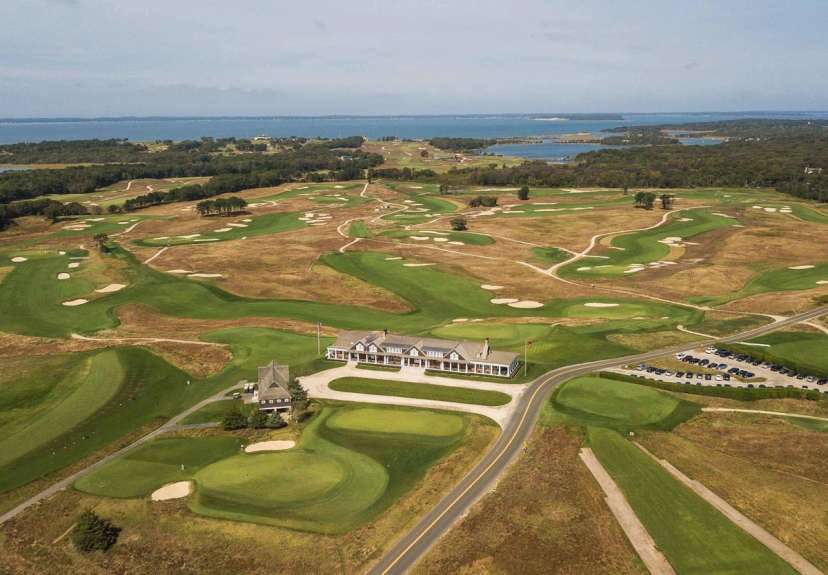
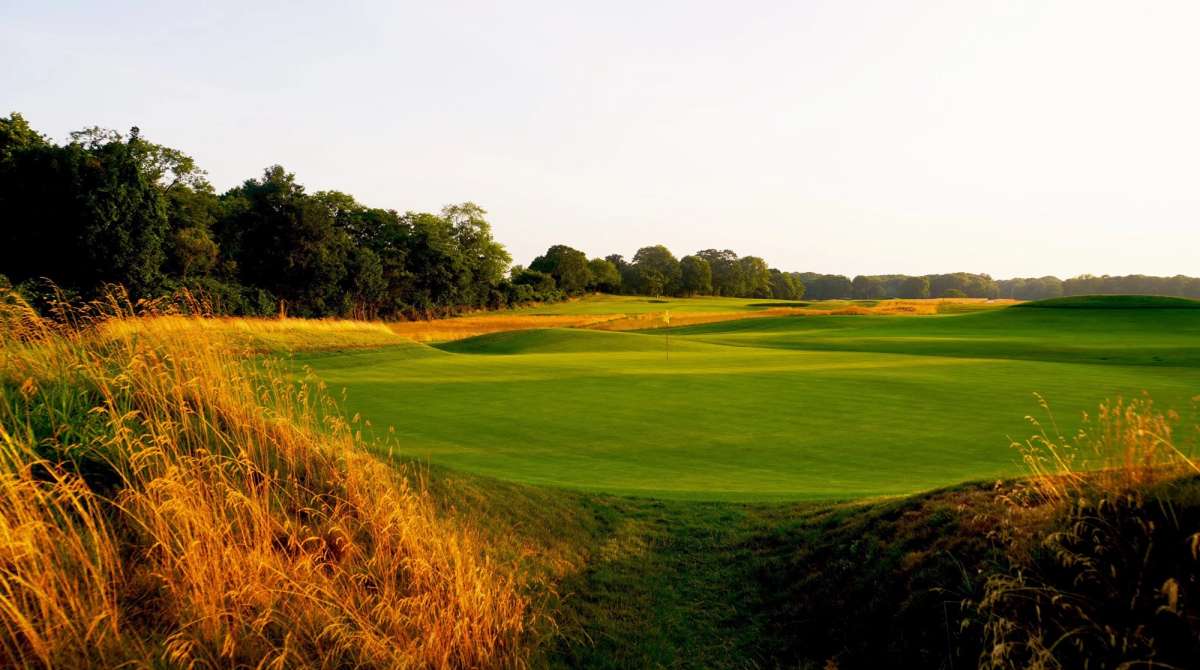
National Golf Links of America is a golf course of monumental historical importance, it’s a “Bear’s Best”, or “Blair's Best” of the early 20th century.


National Golf Links of America is a golf course of monumental historical importance, it’s a “Bear’s Best”, or “Blair's Best” of the early 20th century.
Course Architect
View ProfileCourse Architect

In 1872, aged sixteen, Charles Blair Macdonald sailed across the Atlantic on a paddle steamer to live with his grandfather in St Andrews to study at the Auld Grey Toon’s University.
In 1872, aged sixteen, Charles Blair Macdonald sailed from Chicago across the Atlantic on a paddle steamer to live with his grandfather in St Andrews to study at the Auld Grey Toon’s University. He quickly became adept at the game of golf and within a year he played in matches with Old Tom Morris and his son Young Tom. His fond reminiscences are chronicled in his book, Scotland’s Gift – Golf.

The United States is home to some of the world's most celebrated golf courses, from spectacular coastal layouts to historic clubs that have hosted the game's biggest championships. But playing America's best golf is not always as straightforward as booking a tee time. Many of the country's highest-ranked courses are private clubs, while some resort venues require visitors to book accommodation before they can play. So where are America's top-ranked courses concentrated, and how many can the average golfer actually play? A state-by-state breakdown of the Top100 Golf Courses USA ranking reveals a striking divide. New York and California lead the way by course count, but of the 100 courses listed, just 16 meet our criteria for playing without knowing a member or staying at a resort. The remaining 84 have some form of access restriction, whether through private membership, accommodation requirements or other visitor policies. For golfers planning a trip to the United States, that distinction matters: a state might have an impressive collection of top-ranked courses, but that doesn't necessarily mean visitors can build a holiday around playing them. New York and California Lead the Rankings New York tops the state-by-state breakdown with 14 courses, narrowly ahead of California with 13. Massachusetts follows with seven, while Ohio and Wisconsin each have six. New Jersey and South Carolina account for five courses each. The figures highlight the strength of golf in the Northeast, alongside California's long-standing reputation as one of America's premier golfing destinations. New York is home to some of the country's most exclusive golf venues, including Shinnecock Hills Golf Club, National Golf Links of America and Fishers Island Club. However, it also has one of the world's most famous public courses. Located on Long Island, Bethpage Black has hosted multiple US Opens and the 2025 Ryder Cup. Its public status makes it an important exception in a ranking where access is often far from guaranteed. Demand is high and securing a tee time requires planning, but golfers do not need a private-club membership to play it. The other 13 New York courses in the ranking do not meet our public-access criteria. California presents a different mix of courses, from celebrated coastal layouts to championship venues further inland. Pebble Beach Golf Links is perhaps the best-known example, with its dramatic Pacific Ocean setting making it one of the most recognisable courses in golf. The state offers a wide range of golfing experiences, but green fees, booking conditions and accommodation requirements can influence whether a course is a realistic option for visiting golfers. Its size is another consideration, with distances between destinations potentially shaping how many courses golfers can fit into one trip. The States Where Top-Ranked Golf Is Hardest to Access Some of the states with the most courses in the ranking are also among the hardest for visiting golfers to explore. New York has 14 ranked courses, but 13 do not meet our criteria for playing without knowing a member or staying at a resort. California has 13 courses, with 11 falling outside those criteria, while none of Massachusetts' seven entries qualify. The contrast is striking. New York and California offer plenty of choice on paper, but their highest-ranked courses are often difficult to access independently. Massachusetts presents a similar challenge, with its rich golfing heritage reflected in a list dominated by venues that aren't straightforward for visitors to book. New Jersey faces a comparable issue. Its five courses include Pine Valley Golf Club, frequently ranked among the world's finest, but its reputation as a private club makes it a difficult destination for golfers without the right connections. These figures underline why course rankings alone don't tell the whole story. For visitors, the practical question isn't just how many highly ranked courses a state has, but how many they can realistically play. The Best States for Golf You Can Actually Play Of the 100 courses in Top100 Golf Courses' USA ranking, just 16 can be played by the public without knowing a member or staying at a resort. Wisconsin and Oregon lead the way, with four qualifying courses each, followed by South Carolina, Florida and California with two apiece. Oregon is an obvious choice for a multi-course golf trip. All four qualifying layouts are at Bandon Dunes Golf Resort on the Pacific coast: Bandon Dunes, Pacific Dunes, Bandon Trails and Old Macdonald. Having four highly ranked courses in one destination allows golfers to experience a variety of layouts without spending their holiday travelling between different parts of the state. The rugged coastal setting is a major part of the appeal. Wisconsin offers four qualifying courses across two destinations. Whistling Straits' Straits course is one of the state's best-known golfing venues, having hosted major championships on the shores of Lake Michigan. Further inland, Lawsonia Links offers a different style of golf, while Sand Valley and Sedge Valley give visitors two more courses to explore within the same resort destination. Together, they make Wisconsin a compelling choice for golfers looking to combine several highly ranked rounds in one trip. South Carolina has two qualifying courses, each offering a different experience. Kiawah Island's Ocean Course is known for its exposed coastal setting and championship pedigree, having hosted major events including the 2021 PGA Championship. Old Barnwell provides a contrasting inland experience, adding another option for golfers planning a trip around the state's top courses. Florida's two entries are Streamsong Red and TPC Sawgrass' Stadium Course. Streamsong Red is characterised by its expansive sandy terrain, while TPC Sawgrass is home to one of golf's most recognisable holes: the island-green 17th. The two courses offer very different experiences, from Streamsong's distinctive landscape to the chance to play one of the PGA Tour's most famous venues. California completes the group with Pebble Beach Golf Links and Pasatiempo. Pebble Beach is renowned for its Pacific coastline and history of major championships, while Pasatiempo, designed by Alister MacKenzie, offers a celebrated layout with a distinctive place in American golf history.
Top 100 Golf Courses has ranked every course that has hosted the Walker Cup since 1922. The rankings cover three categories and provide insight into the championship venues that have shaped amateur golf's most prestigious international competition. Three Complete Rankings The research has produced three specialised rankings: USA Walker Cup Venue Ranking - American courses that have hosted the biennial competition. Great Britain & Ireland Walker Cup Venue Ranking - Historic links courses and venues across the British Isles. Combined Walker Cup Venue Rankings - All American and international venues ranked together. The Walker Cup Competition The Walker Cup is a biennial match-play competition between 10-man amateur teams from the United States and Great Britain & Ireland. Named after George Herbert Walker, USGA president in 1920, the competition began in 1922 at the National Golf Links of America. The tournament has maintained its status as amateur golf's premier international competition for over a century, showcasing the world's finest golf courses. Top Venues in Combined Rankings Cypress Point Club leads the combined rankings. Alister MacKenzie's Pacific coast course will host the 50th Walker Cup in September 2025. The US won 15-9 when it previously hosted in 1981. Pine Valley Golf Club ranks second. George Crump's design is considered the ultimate penal golf course. It will host the 2044 Walker Cup and previously staged matches in 1936 (US won 9-0) and 1985 (US won 13-11). Royal County Down Golf Club is the highest-ranked international venue at third. Located beneath the Mountains of Mourne in Northern Ireland, it's consistently rated among the world's most scenic courses. Leading American Venues Shinnecock Hills Golf Club was one of the USGA's five founding members. The New York course features original American design from 1891, when Scottish professional Willie Davis worked with the Shinnecock Reservation. National Golf Links of America is the Walker Cup birthplace. Charles Blair Macdonald's 1922 course established the competition and introduced the term "golf architect." Oakmont Country Club represents championship golf's toughest test. Originally set to host in 2033, then moved to 2032, this Pennsylvania course has hosted multiple major championships. Great Britain & Ireland Leaders St Andrews Old Course has hosted nine Walker Cup matches—more than any other venue. The Home of Golf has also staged 29 Open Championships. Muirfield is home to The Honourable Company of Edinburgh Golfers (founded 1744). This East Lothian course pioneered the two-ring, nine-hole layout design. Turnberry Ailsa Course offers Scotland's most scenic championship golf. The course overlooks the Firth of Clyde with views of the Mull of Kintyre and Isle of Arran. Architectural Excellence Golden Age architects dominate the rankings. Merion Golf Club (East Course) represents Hugh Wilson's success as an amateur architect. Winged Foot Golf Club (West Course) is A.W. Tillinghast's finest work. The demanding layout has tested both amateur and professional golfers for decades. Bandon Dunes Golf Resort represents modern design. The Oregon resort has a USGA partnership through 2045 and will host the Walker Cup in 2028. International Links Tradition Lahinch Golf Club sits beside Liscannor Bay in Ireland. Old Tom Morris created the original layout before Dr. Alister MacKenzie redesigned it in 1926-27. Royal St George's Golf Club is a natural links course in Sandwich, England. It maintains traditional character while hosting major championships. Sunningdale Golf Club represents England's best inland course. The Old Course is considered Britain's most beautiful championship venue away from the coast. Future Walker Cup Venues Prince's Golf Club will host the 53rd Walker Cup after recent investments in facilities and course improvements. Walker Cup matches move to even years from 2026 to avoid conflicts with World Amateur Team Championships. Walker Cup Venue Excellence Both American and international courses contribute to the Walker Cup's legacy. These rankings celebrate golf architecture's finest examples, from MacKenzie's coastal designs to Macdonald's pioneering American courses. View the complete rankings: USA Walker Cup Venue Rankings Great Britain & Ireland Walker Cup Venue Rankings Combined Walker Cup Venue Rankings

V is for Valley ORIGINAL Everyone knows that the National Golf Links of America is the holy land for template golf architecture, as C.B. Macdonald set out almost all of these holes based on UK precedents, which he would continue to refresh and recycle at courses to come. You need to wait until the second hole for that reality to set in, however, as the opener at NGLA is a Macdonald original. National Golf Links of America 1st hole - image courtesy of Jon Cavalier @LinksGems “Valley” is nearly driveable with modern technology, at 330 yards, but Macdonald’s creative design has maintained its challenge. From the tee, players hit down into the title valley, and the friendly slopes help the first shot of the day back down into the fairway. Bolder individuals can choose to go over the bunker-laden hilltop along the left (mind you, there are more bunkers than you can see. If you don’t see a ball roll up the fairway on the other side, be concerned). Even the resulting short pitch back up to the perched green guarantees nothing. The first hole features what many consider the club’s most turbulent green. Although not quite crowned, poorly-struck putts will still feed off the edges of the green, potentially into the bunkers along the right. Those who take a less-daring route to the right side of the fairway will probably have a blind approach to this roller coaster green. A bunker set in the fairway features a tall backing mound that obscures the uphill approach. OTHER INTERPRETATIONS “Valley” is not nearly as prevalent as other templates in the MacRaynor library and—considering that it’s a Macdonald original and not based on European originals—some may consider whether it merits the “template” status at all. Fortunately for our side of the argument, Macdonald named one other hole “Valley.” No. 8 at the Mid Ocean Club follows a similar formula, but reverses the sides of the fairway. This time the safe route is to go left of a hillside that rolls in from the right, which results in a partially obscured look and a less favorable angle to a green that angles front-right to back-left. The tiger may try to take advantage of a (Mid)ocean breeze to carry the hillside and get the perfect angle to the green, but those who come up short will be provided an awkward lie on the hill, aiming at a daunting green. Although not as topsy-turvy as NGLA’s, the green slants aggressively downhill from back to front...staying below the pin is essential. Two bunkers lurk on the left, very deep as Macdonald and Raynor built the green up using soil from an irrigation pond nearby. Mid Ocean Club 8th hole - image courtesy of John Sabino Subtler, the “Valley” at Seth Raynor’s Blue Mound Golf and Country Club is more akin to NGLA’s standard than many realize. For one, No. 6. is named “Strategy”... and to further confuse matters, the course has a hole named “Valley” at No. 14 (which is not linked to any template). Finally, the geography is not nearly as dramatic as the examples at NGLA and Mid Ocean (but the downward tee shot and upward approach remains). The ideal tee shot is less risky, but the player must have their distance measured. There are three bunkers, evenly distributed, that jut in from the left fairway. The player’s goal is to choose a landing area between two of these (or aim to drive the full 335 yards to the green), which will provide the best angle of approach. The first fairway hazard on the right appears about 200 yards out. Those who truly muff their tee shot and land in the right of this bunker will be fully blind to the green. Those who land in the fairway or in the left portion of the hazard will not be fully blinded, but another deep bunker at the green’s front-right will block their view to certain sections of the green (which is contoured to mimic its inspiration at NGLA). Playing to the right will always create some challenge during your approach; how much challenge is determined by your execution. The green is more geometric in a classic Raynor style, and is surrounded by “moat” bunkers at the rear, left and right. Blue Mound Golf & Country Club 6th hole - image courtesy of Jerry Rossi As “Valley” is not a popular template per se, it is not replicated frequently and—when it is—the architects may simply be following the lay of the land. One example is at a more modern Long Island classic. Like at NGLA, Bill Coore and Ben Crenshaw open Friar’s Head with a drive down into a valley and back up to a green on a plateau. In this case, a drive down the left risks running into the treeline protecting the driveway. Although the angle is not necessarily better than that from the right, it will involve less of a forced carry than the approach from the other side. The waste area on the right of the hole continues up the hill and almost touches the green, creating a muddling effect that confuses the player where the hazard ends and the green begins. Those approaching from the left will not need to be as nervous about the approach, as they have very little sand to carry. Friar's Head 1st hole - image courtesy of Fergal O'Leary MAYBE... MAYBE NOT There is another template that could easily be misconstrued for a “Valley.” The “Knoll” concept is built around playing up to a green perched at the top of a hill, and many examples of this template also involve driving down into a valley before playing up to that green (although a downward tee shot is not necessary for a true Knoll). Consider, for example, No. 13 at Piping Rock Club. This hole features a play down into a valley, and then back up the green atop the Knoll. Unlike a “Valley,” however, there is not necessarily strategy from the tee box when considering a Knoll. Almost all emphasis is on the player’s trusting their distance during the uphill approach, whereas Valleys put at least equal emphasis on placement of the tee shot to determine the difficulty of the approach shot. Of course, sometimes a gut check can be just as telling. How high is the green perched, and how steep is the rise? A Knoll typically rises higher at a more aggressive slope to the green than a “Valley.” Piping Rock Club 13th hole - image courtesy of Jon Cavalier @LinksGems The “gut check” test comes into play with at least one Seth Raynor entry as well. No. 13 at the Country Club of Charleston shows some similar features to a “Valley,” including a drive down from a ridge and an arc of bunkers along the right (which appears like it might have a blinding intent). However, does the green really rise high enough to satisfy the “Valley” requirement? Do the fairway bunkers truly muddle the approach? As we say, “maybe, maybe not.” More damningly, the strategy from the tee is different from a true “Valley.” In this case, the ideal approach angle is from the right, actually encouraging players to hit toward the “blinding” bunkers. Within a typical “Valley,” shooting toward these blinding bunkers would result in a less ideal angle of approach, while a different set of hazards would serve to threaten more aggressive tee shots down the left.
The latest ranking of the Top 100 Golf Courses in the World serves as the ultimate global golf bucket list. Most members of our World Top 100 Panel are seasoned golfers, each playing 20-30 of these courses annually while travelling extensively over decades to form their opinions on others. We recognise that opinions vary—even among our panel members. Rankings are subjective, and there are undoubtedly 50 or more courses in the UK and USA alone that could easily fit onto this list. Links Golf Pilgrimages The rankings
Northern Ireland, United Kingdom
New York, United States
New York, United States
Victoria, Australia
Scotland, United Kingdom