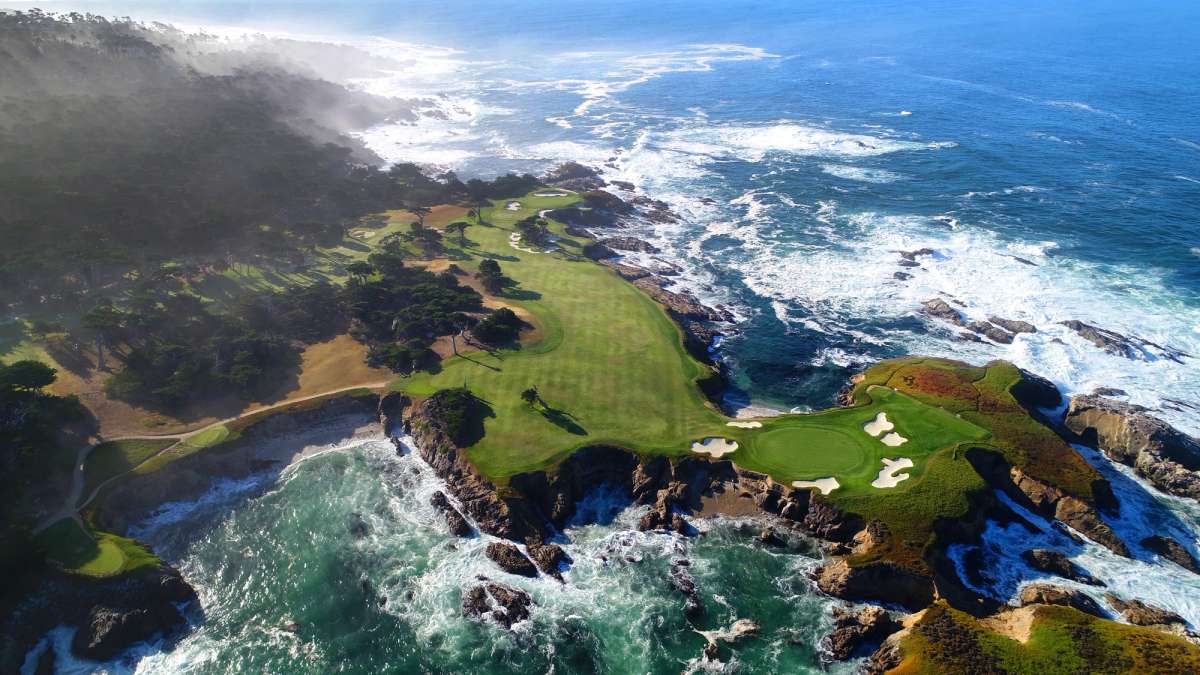
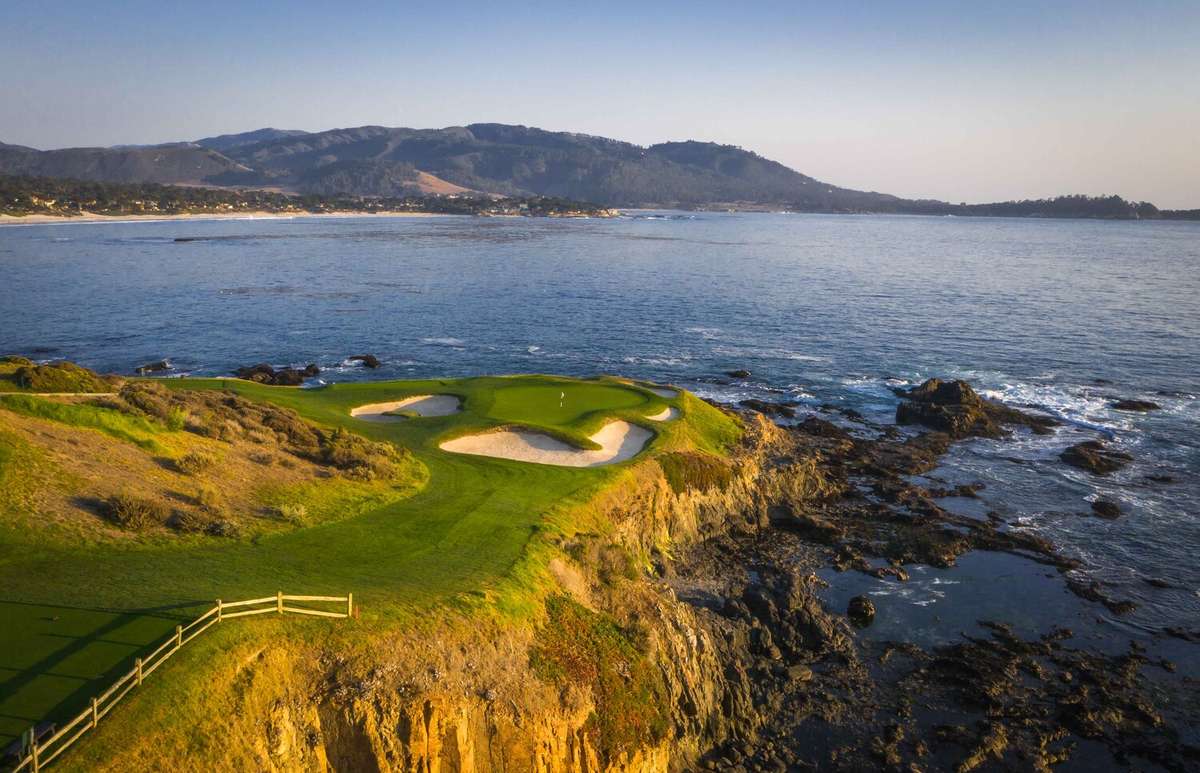
Pacific Grove is an old fashioned municipal course that won’t dent your wallet. Take a walk by the Pacific Ocean and savour golf as it was played some seventy years ago.


Pacific Grove Golf Links
Pacific Grove is an old fashioned municipal course that won’t dent your wallet. Take a walk by the Pacific Ocean and savour golf as it was played some seventy years ago.
US Amateur Champion Chandler Egan, having redesigned nearby Pebble Beach with Alister Mackenzie in 1929, returned to Monteray soon after to set out the first nine holes of the Pacific Grove Golf Links and the new course duly opened for play on 9th May 1932.
Jack Neville, another great amateur golfer - who originally designed Pebble Beach along with Douglas Grant in 1919 - extended the course to a full 18-hole layout some twenty eight years after it first opened, using land around the base of the Point Pinos Lighthouse leased from the US Coast Guard.
Because the routing of the Egan Nine was changed to accommodate the new clubhouse in 1960, a round at Pacific Grove begins most unusually with a pair of par three holes - named “Little Tombstone” and “Big Tombstone” - and back to back par fives follow shortly after at holes 5 and 6.
On the Neville Nine, where the fairways tumble into the dunes, only one of the half dozen par fours on the card (“Beacon View,” the 383-yard 15th) measures in excess of 350 yards. Indeed, short par fours at 11, 13 and 18 are three of the most interesting holes on the property.
Steven originally nominated Pacific Grove as a Gem back in November 2006; he also sent us the deer photo. Steven’s original comments are as follows: “Five miles from Pebble Beach on the same coastline – front nine gardens, back nine ocean (the back was designed by Jack Neville the original designer of Pebble Beach!). You can walk – it only costs $35/40 weekday/weekend, there’s a brand new clubhouse and you can always get on. It is stunning.”
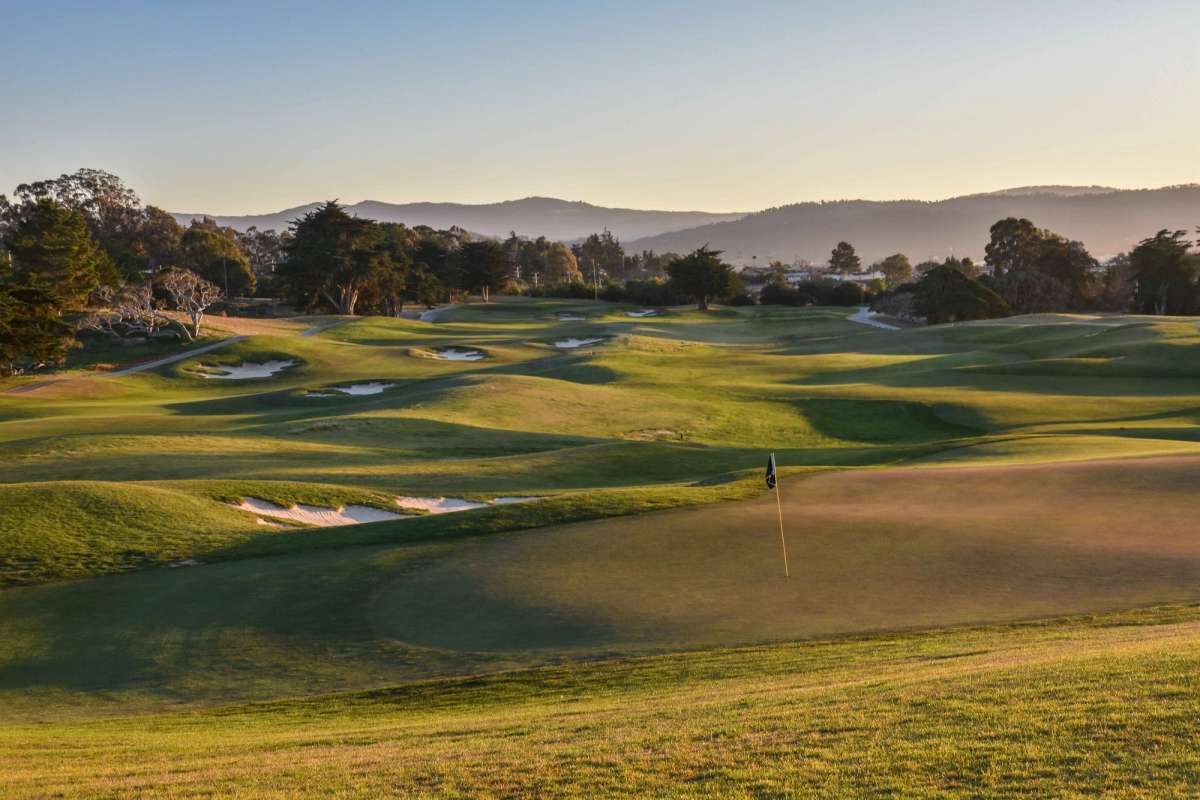
Pebble Beach Golf Links is reason enough to make the trip to California, but there is far more to the Monterey Peninsula than one famous coastline. Within roughly 30 minutes of Pebble Beach, golfers can find another bucket-list resort course, forest golf with PGA Tour pedigree, a historic coastal layout and some excellent-value alternatives to the peninsula's headline names. If you're going to make the journey to Pebble Beach, these five courses are worth adding to the itinerary. Spyglass Hill Golf Course California Ranking: 17th | Green fee: $610 Why Play it: The perfect second act to Pebble Beach. Spyglass Hill is one of the great tests on the Monterey Peninsula and, for many, the most demanding of the Pebble Beach quartet. Designed by Robert Trent Jones Sr. and opened in 1966, it has been part of the AT&T Pebble Beach Pro-Am rota since the following year. The opening five holes sweep from the Del Monte Forest towards the Pacific, with Jones deliberately drawing inspiration from Pine Valley. The course then turns inland through towering Monterey Pines and Cypress, with its tree-lined corridors recalling Augusta National. The 12th and 15th provide memorable par-three challenges, while the closing holes demand a strong finish. Spyglass Hill may live in the shadow of Pebble Beach and Cypress Point, but its reputation as one of America’s toughest and most rewarding layouts is thoroughly deserved. Unlike its more famous neighbour, Spyglass Hill is considerably easier for visiting golfers to book, with non-resort guests able to reserve tee times up to three months in advance. Poppy Hills Golf Course California Ranking: 75th | Green Fee: $350 Why Play it: A former PGA Tour venue that gives you forest golf with a glimpse of Monterey Bay. Just minutes from Pebble Beach Golf Links, Poppy Hills offers a completely different experience without requiring you to leave the Del Monte Forest. Opened in 1986 and designed by Robert Trent Jones Jr., it is the youngest course at Pebble Beach and spent almost two decades sharing the AT&T Pebble Beach National Pro-Am rota, co-hosting the PGA Tour event from 1991 to 2009. A major renovation in 2013, overseen by RTJ II project architect Mike Gorman, added almost 150 yards while reducing the par from 72 to 71. The work also introduced sand-capped fairways, pine straw and waste areas, creating the firm, fast conditions that now define the course. Despite its heavily wooded setting, there are reminders of just how close you are to the Pacific. The redesigned 12th, in particular, opens up to spectacular views across Monterey Bay. Poppy Hills is open to public golfers, making it one of the easiest ways to add tournament pedigree and forest golf to a Monterey itinerary. Pacific Grove Golf Links California Ranking: 71st | Green Fees: From $66 Why Play it: Pebble Beach connections, ocean views and great value in one round. If Pebble Beach is the headline act, Pacific Grove Golf Links is the reminder that you don't have to spend Pebble Beach money to enjoy the Monterey coastline. Just five miles from Pebble Beach, this old-school municipal course offers a wonderfully different experience. The original nine was laid out by Chandler Egan in 1932, shortly after he helped Alister MacKenzie redesign Pebble Beach, while Jack Neville, one of Pebble Beach's original designers, later extended Pacific Grove to 18 holes. The course has plenty of quirks. It starts with back-to-back par threes before throwing in consecutive par fives at the fifth and sixth, while the back nine tumbles into the dunes around Point Pinos. Short par fours, small greens and the ever-present Pacific breeze make the second half far more interesting than its modest length might suggest. And then there is the setting. The Pacific Ocean frames the back nine, with the Point Pinos Lighthouse providing an especially memorable backdrop. It is hard to complain about a course that delivers this much scenery for a fraction of the cost of its famous neighbour. Bayonet & Black Horse – Bayonet Course California Ranking: 69th | Green Fee: From $99 Why Play it: Championship golf with a serious test of your driving and approach play. There is plenty of history behind Bayonet, but these days the course is more interested in testing your golf than reminding you of its military past. Located on the former Fort Ord Army base in Seaside, around 25 minutes from Pebble Beach, Bayonet began life in 1954 when General Robert B. McClure designed an 18-hole course for the US Army's 7th Infantry Division, known as the "Bayonet Division". A second course, Black Horse, followed a decade later. Fort Ord closed in 1994 and the City of Seaside acquired the golf facilities three years later. Both courses have since undergone extensive renovations, with Gene Bates' work on Bayonet producing a course that has hosted the PGA Professional National Championship in 2012 and 2018. The renovation added just 16 yards, but Bates' bunkering transformed the course's strategic character. Bayonet places a premium on finding the right parts of the fairway, with approaches often made more difficult by the hazards waiting around the greens. That makes it a useful counterpoint to Pebble Beach. There are no famous oceanfront holes competing for your attention; instead, Bayonet is about putting your game under pressure. Laguna Seca Golf Ranch Green Fee: From $58 Why Play it: A demanding Jones-designed course that delivers a completely different Monterey experience without the resort price tag. Around 20 minutes inland from Pebble Beach, Laguna Seca Golf Ranch offers a very different take on Monterey Peninsula golf. Designed by Robert Trent Jones Sr. and Robert Trent Jones Jr., the 18-hole course winds through rolling, oak-lined hills rather than hugging the Pacific coastline. Elevated tees, uphill doglegs and strategically placed bunkers make accuracy important, while the 15th and 17th provide two of the more memorable holes on the course. For a Pebble Beach itinerary, the price also makes Laguna Seca an easy addition. The 2026 weekday rate is $58, with weekend rounds listed at $78, and walking is permitted. That's a fraction of the cost of the peninsula's headline resort courses and makes it an easy round to slot between the more expensive names on the itinerary. It also has one of the better practice facilities in the area, with a 13.5-acre natural-grass complex and 23 hitting stations, so it is worth arriving early if you want to work on your game before heading out. Green fees listed are 2026 public-golfer rates at the time of writing and are subject to change. Check with each course before booking.
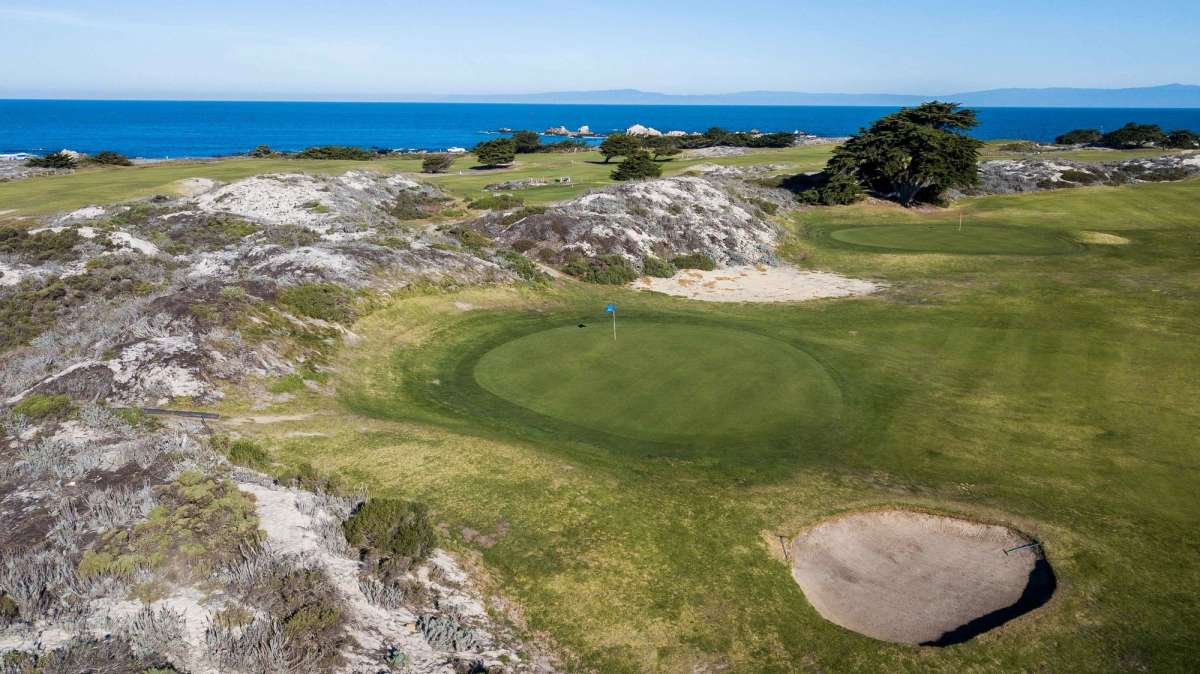
The stigma that good golf has to be expensive is one worth challenging. From windswept prairie in Nebraska and oceanfront holes in California to championship layouts in the shadow of Hazeltine and Bethpage, these are courses that offer much more than a cheap round. All 10 can be played for $100 or less, but the price is only part of the appeal. They have tournament history, famous designers, memorable settings and the kind of layouts that can stand alongside much more expensive golf. Green fees listed are standard rates and do not take twilight or off-season discounts into account, meaning some courses can be played for even less. Wild Horse Golf Club (Nebraska) Nebraska Ranking: 6th | Green Fees: From $68 Why Play it: Outstanding value on a natural prairie layout Best For: Golfers who love natural, windswept courses If you’re looking for proof that great golf doesn’t have to come with a great big price tag, head for the Nebraska prairie. Wild Horse Golf Club is one of the best-value public courses in America, combining excellent golf with a setting that feels a world away from the usual resort experience. Designed by Dave Axland and Dan Proctor, Wild Horse opened in 1999 after the pair spent more than a decade working for Ben Crenshaw’s design company. The result is a natural-looking layout shaped by native grasses, rolling prairie and dramatic blow-out bunkers rather than rows of manicured hazards. Wild Horse has earned plenty of recognition over the years, including a place in the Top100 US rankings, although it has sometimes been overshadowed by nearby Sand Hills. Tom Doak once described it as a “very good golf course” that is often overlooked because of its affordability. Warren Golf Course at Notre Dame (Indiana) Indiana Ranking: 7th | Green Fees: From $75 Why Play it: A Coore & Crenshaw design on the Notre Dame campus Best For: Fans of Coore & Crenshaw Set among 250 acres of woodland on the northern edge of the University of Notre Dame campus, the Warren Golf Course offers the unusual combination of championship pedigree and accessible green fees. Designed by Bill Coore and Ben Crenshaw, the course opened in 2000 and has since become one of Indiana’s most highly regarded public layouts. The Warren Course is home to Notre Dame’s men’s and women’s golf teams and has hosted a string of major amateur events, including NCAA Division I regional championships and the 2010 U.S. Women’s Amateur Public Links. It also hosted the U.S. Senior Open in 2019, bringing some of the biggest names in senior golf to South Bend. The setting is a big part of the appeal, with the course winding through mature woodland within a Certified Audubon Cooperative Sanctuary. For golfers visiting Notre Dame or passing through Indiana, the Warren Course offers a chance to experience one of America’s leading modern design partnerships without a leading-edge green fee. Pacific Grove Golf Links (California) California Ranking: 71st | Green Fees: From $66 Why Play it: Oceanfront golf just minutes from Pebble Beach Best For: Golfers looking for a Pebble Beach alternative Just five miles from Pebble Beach, Pacific Grove Golf Links offers a very different way to experience the Monterey Peninsula. This old-school municipal course runs along the Pacific Ocean, with a front nine that feels more like a traditional parkland course before the back nine heads into the dunes overlooking the water. The course has an impressive design lineage, too. US Amateur Champion Chandler Egan, who helped Alister MacKenzie redesign Pebble Beach, laid out the original nine holes in 1932, while Jack Neville, one of the original designers of Pebble Beach, later extended Pacific Grove to 18 holes. The result is a quirky and enjoyable layout, beginning with back-to-back par threes before throwing in consecutive par fives at the fifth and sixth. On the oceanfront back nine, short par fours and tumbling fairways provide plenty of character. Bethpage - Red Course (New York) New York Ranking: 6th | Green Fees: From $90 Why Play it: A championship-calibre course in the shadow of the Black Best For: Golfers who want a taste of Bethpage without playing the Black Bethpage Black might get all the attention, but the Red Course at Bethpage State Park is a formidable test in its own right. Known by some as “Baby Black”, the Red is widely regarded as the standout alternative to its more famous neighbour and offers a chance to experience Bethpage without the Black's famously difficult tee-time scramble. The course features a series of strong doglegs and demanding holes, with Tom Doak once suggesting that the Red might have received similar acclaim had its more famous neighbour never been built. He particularly praised the opening and closing holes, the long fifth and the short sixth, where an aggressive drive can quickly turn into trouble. The Red doesn't have the Black's enormous bunkers or intimidating reputation, but that doesn't make it easy. For golfers visiting Long Island, it offers another opportunity to play championship-level golf at one of America's most famous public facilities. Bandon Crossings (Oregon) Oregon Ranking: 21st | Green Fees: From $70 Why Play it: Affordable golf in one of America's biggest golf destinations Best For: Golfers visiting Bandon Bandon has become one of America's great golf destinations, but you don't have to play the resort courses to enjoy a round in the area. Bandon Crossings was created specifically to offer affordable public golf for locals and visitors, providing a lower-cost alternative to its famous neighbours. Built on the site of an old cattle and sheep ranch, the course was developed by local couple Rex and Carla Smith with Oregon architect Dan Hixson. Rather than compete directly with Bandon's collection of links courses, Crossings takes its inspiration from the heathland golf found around London. The course may sit away from the Pacific coastline, but that doesn't make it an afterthought. Its fairways move quickly across the property and around Twomile Creek, creating a challenging and enjoyable test that offers a different experience from the resort layouts. Montauk Downs State Park Golf Course (New York) New York Ranking: 80th | Green Fees: From $95 Why Play it: Robert Trent Jones design at the tip of Long Island Best For: Golfers exploring Long Island At the eastern tip of Long Island, around 120 miles from downtown New York City, Montauk Downs feels a long way from the hustle of Manhattan. Golf has been played here for decades, with the current layout shaped by Robert Trent Jones Sr. and his son Rees Jones in 1968. The Jones family connection is one of the course's biggest attractions, with Rees returning alongside Bryce Swanson in 2008 to restore the bunkers and tees on the par-three holes. The result is a classic parkland layout that combines the character of an older course with the challenge expected from a Jones design. Its location also makes Montauk Downs a natural addition to a Long Island golf trip, particularly for golfers looking to explore beyond the courses closer to New York City. Gold Mountain Golf Club - Olympic Course (Washington) Washington Ranking: 13th | Green Fees: From $35 Why Play it: Championship golf at a 36-hole public facility Best For: Golfers looking for a full day of golf The Olympic Course at Gold Mountain Golf Club is proof that you don't need a famous resort or hefty green fee to find championship-calibre golf. Part of a 36-hole public facility owned and operated by the City of Bremerton, the course was designed by John Harbottle III and opened in 1996, 25 years after the original Cascade Course. The tree-lined layout is slightly hillier than its older sibling but remains eminently walkable, with annual bluegrass covering the tees, fairways and greens. Its quality has been recognised on the national stage, hosting the U.S. Amateur Public Links Championship in 2006 and U.S. Junior Amateur Championship in 2011. There are plenty of memorable holes, including the short fourth, the water-guarded ninth and the 188-yard 16th, which plays across a lake to the green. The closing par four also offers a tempting birdie opportunity. With the Cascade Course next door, golfers can play 36 holes at Gold Mountain for less than $100, with green fees for the second 18 starting at just $30. Chaska Town Course (Minnesota) Minnesota Ranking: 26th | Green Fees: From $63 Why Play it: Championship golf just minutes from Hazeltine National Best For: Golfers visiting the Twin Cities Just a few miles from Hazeltine National, the Chaska Town Course offers a chance to play a highly regarded championship layout without the private-club price tag. Owned and operated by the local municipality, the course occupies 285 acres of oak groves, open prairie and marshland. Designed by Arthur Hills and opened in 1997, Chaska Town has even shared the stage with Hazeltine. The two courses co-hosted the 2006 U.S. Amateur Championship, while Chaska Town was also scheduled to co-host the 2020 U.S. Junior Amateur before the tournament was cancelled due to the COVID-19 pandemic. The layout plays to 6,817 yards from the back tees and features two returning nines, each finishing with a par five. The short fourth and 16th offer opportunities to score, while the right-doglegging ninth provides a tougher test. Brackenridge Park Golf Course (Texas) Green Fees: From $56 Why Play it: A Tillinghast classic with Texas Open history Best For: Golfers who love historic golf courses The oldest public 18-hole course in Texas, Brackenridge Park Golf Course has been a fixture in San Antonio golf for more than a century. Designed by A.W. Tillinghast in 1916, “Old Brack” went on to host 21 editions of the Texas Open between 1922 and 1959. The course has retained much of its historic character thanks to a restoration by John Colligan, who brought the layout back to life while preserving Tillinghast’s original design. The front nine is relatively tight, while the back nine opens out and provides some of the course’s strongest holes. Brackenridge is also part of the Alamo City Golf Trail, making it easy to combine with several other public courses in the San Antonio area. Brown Deer Park Golf Course (Milwaukee) Green Fees: $81 Why Play it: A former PGA Tour venue with Tiger Woods history Best For: Golfers who like tournament pedigree Brown Deer Park Golf Course combines affordable public golf with a notable place in PGA Tour history. Located just north of Milwaukee, the course hosted the Greater Milwaukee Open from 1994 to 2009, with Tiger Woods making his professional debut here in 1996. Founded in 1929, the course was originally designed by George Hansen before being partially redesigned by Andy North and Roger Packard. Today, its tree-lined fairways and stream that winds through the property provide a classic parkland setting. The Tiger Woods connection is an obvious draw, but Brown Deer offers more than a famous name in its history. Its accessible layout and location make it a practical option for golfers visiting Milwaukee. For golfers who enjoy playing courses with a tournament past, Brown Deer offers a chance to follow in the footsteps of some of the game's biggest names without paying resort-course prices.

Review of the Month February 2018 - Pacific Grove Golf Links The back nine at Pacific Grove will give you everything you want out of a golf trip to Monterey for a fraction of the price compared to the neighboring courses. Lighthouses and the Pacific frame even the weaker holes on the back nine, like 10 and 17, which will more than make up for the rather straight ahead routing. The superstars of this course run 12-16 and I was entranced by the fantastic routing through the dunes which offers up killer views of the sea. There are great risk/reward strategies depending on how much you want to challenge the dunes and the greens are small, firm and fast which encourages a real bump and run style. The course plays short but fun and I imagine if the wind is up, can provide a real test to any golfer. If you are having so much fun with the views, who cares about length? This course doesn't strike me so much as a "poor man's Pebble" as it does a "poor man's MPCC" but no matter how you label it, the back nine is worth the price of admission and then some. By ReGripped Review of the Month February 2018 selected by Editor-in-Chief, Keith Baxter – click to read more about Pacific Grove Golf Links.
The latest ranking of the Top 100 Golf Courses in the World serves as the ultimate global golf bucket list. Most members of our World Top 100 Panel are seasoned golfers, each playing 20-30 of these courses annually while travelling extensively over decades to form their opinions on others. We recognise that opinions vary—even among our panel members. Rankings are subjective, and there are undoubtedly 50 or more courses in the UK and USA alone that could easily fit onto this list. Links Golf Pilgrimages The rankings
California, United States
New Jersey, United States
Northern Ireland, United Kingdom
New York, United States
New York, United States