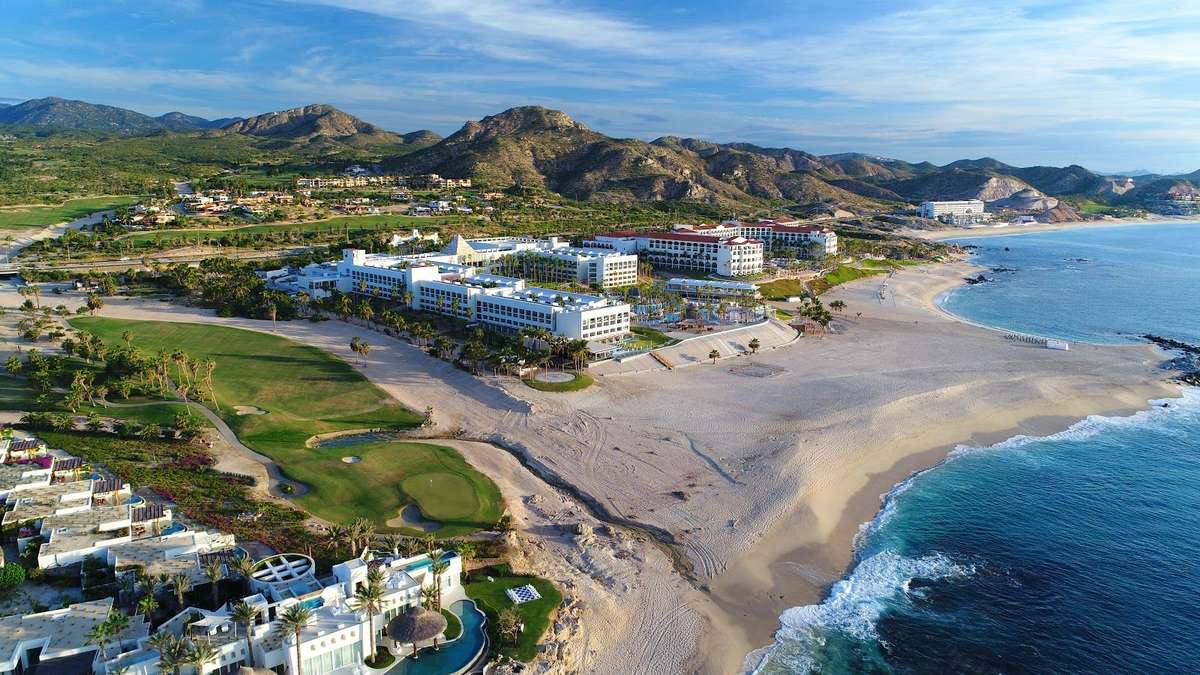
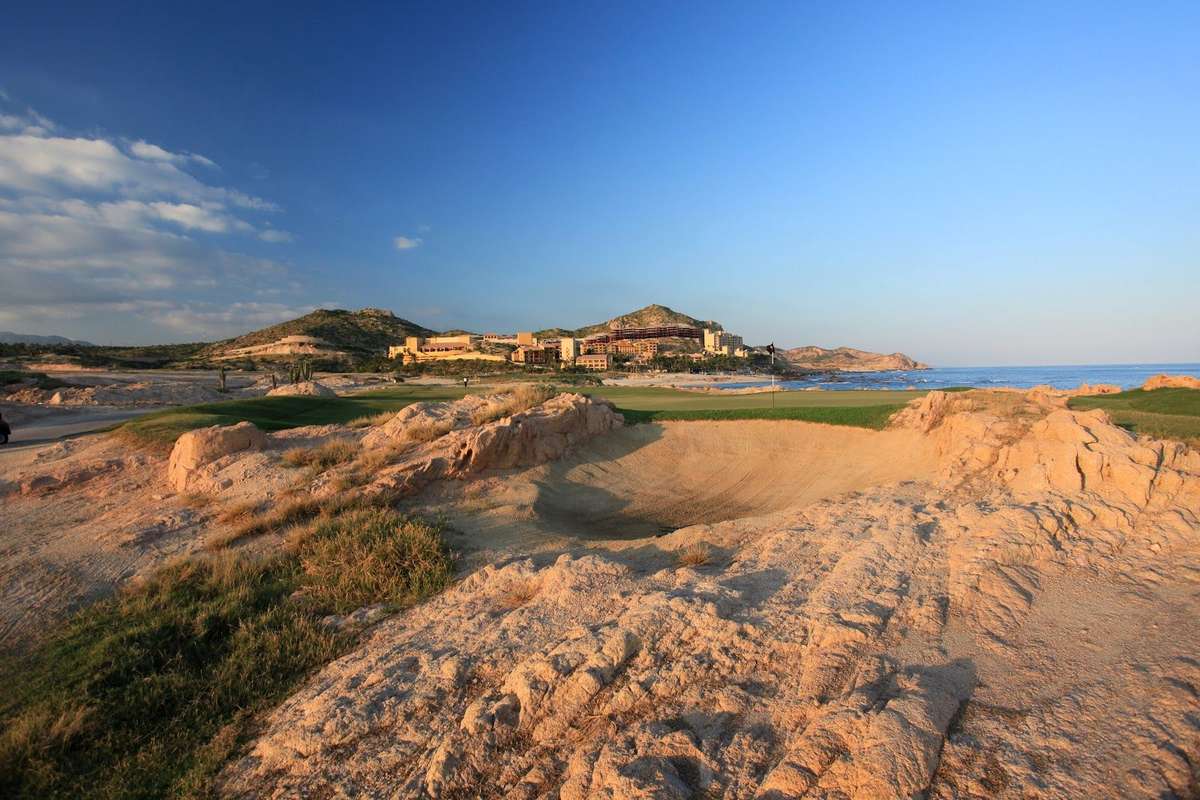
Routed through a landscape peppered with giant cardon cacti, the stunningly beautiful Palmilla was Jack Nicklaus’s first Latin American foray into golf design...
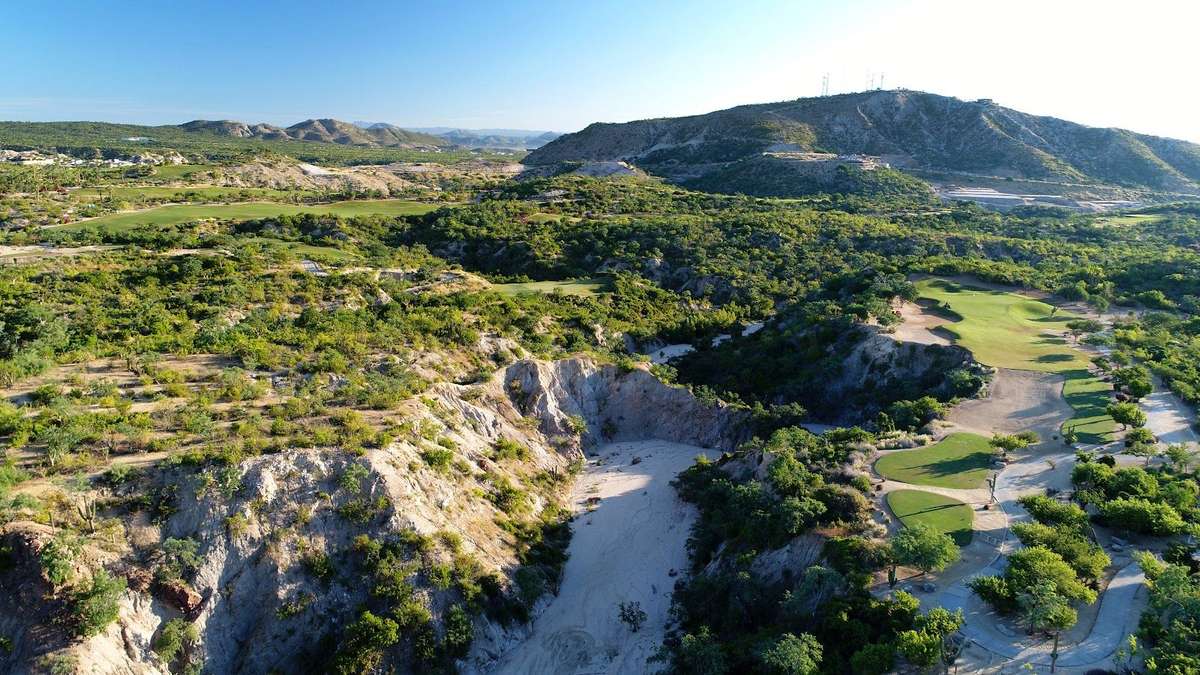
Palmilla (Mountain and Arroyo)
Routed through a landscape peppered with giant cardon cacti, the stunningly beautiful Palmilla was Jack Nicklaus’s first Latin American foray into golf design...
Sort by:
Apr. 26, 2020

4.5
Peter Wood
Palmilla GC has 27 holes of golf designed by Jack Nicklaus and is located near San Jose del Cabo.
May. 10, 2017
5
Javier Pintos
In 2014 I visited Los Cabos but couldn't play it as the course and hotel were devastated by Hurricane Odille.
The latest ranking of the Top 100 Golf Courses in the World serves as the ultimate global golf bucket list. Most members of our World Top 100 Panel are seasoned golfers, each playing 20-30 of these courses annually while travelling extensively over decades to form their opinions on others. We recognise that opinions vary—even among our panel members. Rankings are subjective, and there are undoubtedly 50 or more courses in the UK and USA alone that could easily fit onto this list. Links Golf Pilgrimages The rankings
California, United States
New Jersey, United States
Northern Ireland, United Kingdom
New York, United States
New York, United States

Top 100 Golf Courses expands its coverage in Mexico with a new Top 40 chart We add another ten courses to our Mexican standings in this latest revision This is the 5th edition of our Mexican listings, having first created a Top 15 for the country eight years ago, As time goes by and more data sources become available, we’ve been able to slowly extend our presentation of courses in this important nation that links North and Central America so we’ve added another ten courses this time around, establishing a new Top 40 chart. Golf has been played in Mexico for well over a hundred years. It’s known that Scottish professional Willie Smith laid out a course for the Country Club of Mexico City in 1905, six years after he’d won the US Open, and this layout actually replaced one that had been inaugurated a few years earlier for the San Pedro Golf Club. His brother Alex Smith completed another project at Chapultepec in 1921 so golf goes back a long way here. Course construction on a large scale didn’t occur until the 1950s, with Percy Clifford and Laurence Hughes accounting for more than half of the layouts built during the following three decades. Ironically, the development they’re best remembered for was their very first in 1949 at the iconic Club de Golf Mexico, where Hughes designed the course and Clifford acted as his understudy. In the more modern era, one man stands head and shoulders above all other architects in the golf design business in this country and it’s Jack Nicklaus, who’s been responsible for laying out literally dozens of courses since his first one opened at Palmilla Golf Club in the early 1990s. From the Yucatan Peninsula in the east to the Baja Peninsula in the west, with clusters of courses located around Mexico City, Guadalajara and Puerto Vallarta on the Pacific coast, the Golden Bear has totally dominated the Mexican golf scene for the last quarter of a century, with many of his productions positioned very high in the national rankings. Only in the last few years has there been any threat to this supremacy, with designs by Tom Fazio, Greg Norman and Tom Weiskopf making any real impact within the upper reaches of the listings – and to that roll of architects we can now add Davis Love III because his Dunes course at Diamante retains the number 1 slot in our new Mexican Top 40. Opened in 2010 and currently rated number 52 in our World Top 100, this fabulous layout is universally acclaimed within the golf world as one of the best to have opened anywhere around the globe in the new millennium. Still, you can’t keep a good man down for too long – just when you might think Jack’s about to bow out with a Mexican wave as he sees his top designs overtaken by a stream of bold newcomers, along comes his latest creation at Quivira, situated only a couple of miles along the coast from Diamante. Described in a 6-ball review last year as “maybe the most spectacular piece of land on which I have played golf in my entire life,” this course zooms straight into our new chart at number 3, cementing Cabo San Lucas on the tip of the Baja Peninsula as the top golf destination in Mexico. Another newcomer on our chart is the Tom Fazio layout at Chileno Bay, which lies thirteen miles to the east of Quivira, overlooking the Sea of Cortez. This course has enjoyed rather a long grow-in period (five years, all told) due to the unfavourable economic climate affecting the residential development that it supports. Ready for play in 2010, it’s now looking to make up for lost time and a new entry position at number 6 on our new listings is quite a statement of intent. Our next new entry is at number 12 and it’ll come as something of a surprise for some when they find out the new El Cardonal course at Diamante makes an appearance at such an elevated position. It could be argued that if the best days in Tiger Woods’ career are behind him now then his focus should shift to designing courses, rather than playing them, so be prepared to see more high end layouts like this one popping up around the golfing world under the Tiger Woods Design banner. Our fourth new entry, Riviera Maya, arrives at number fifteen and this Robert Trent Jones Jnr track is the architect’s fourth Mexican design, having previously fashioned Palma Real, Cabo Real and Estrella del Mar. Situated less than an hour’s drive south of Cancun, the course was literally carved out of Mayan jungle, with the first golfers teeing it up here in 2010. The other six new entries in our Top 40 for Mexico appear in the chart, headed by the aforementioned Chapultepec at number 19. Eighteen Mexican Open Championships have been held at this old venue, as well as the Audi Classic event on the PGA Champions Tour in 2002, so it’s a course with a solid championship pedigree that fully deserves recognition in our revised classifications. To view further details of our new 2016 Top 40 Golf Courses of Mexico click the link. We’re always keen to find out what you think when we update our national rankings so let us know your opinion of our new chart for this North American country. Is there a course we’ve missed or do we include one that really shouldn’t be there? Whatever you think, please click the “Respond to this article” link at the top or at the bottom of this page if you’d like to share your thoughts. If you missed Javier's "Los Cabos Marathon" story, published in January 2015, click the link. Jim McCann Editor Top 100 Golf Courses

A good halfway house can turn a great round of golf into a memorable one. It might be a cold beer on a Scottish links, a burger with a spectacular view or a hot drink to warm you up before the back nine. Whatever is on offer, the best halfway houses give golfers a chance to forget about the scorecard for a few minutes and enjoy the experience. We recently asked the Top100 Golf Courses community to share their favourite halfway houses, uncovering plenty of memorable stops around the world. We've picked five of their recommendations, alongside five more renowned halfway houses that are well worth knowing about. What is a Halfway House? A halfway house is a food and drink stop positioned around the turn of a golf course, usually between the ninth and 10th holes. Some are little more than a hut serving snacks and drinks, while others have become destinations in their own right, offering everything from full meals and cocktails to fires, views and plenty of local character. Five Halfway Houses Chosen by the Top100 Community Sunningdale Golf Club (England) There is a reason the halfway hut at Sunningdale has become one of the most famous refreshment stops in golf. The small Swiss-chalet-style building has been in place since 1903, sitting where the ninth holes of both the Old and New Courses meet their respective 10th holes. But the building itself isn't the main attraction. That would be the sausage sandwich. Sunningdale's legendary hut serves a simple sausage on buttered bread, with other food and refreshments available alongside it. The hut has become such an established part of the experience that the club's own tradition says everybody stops, but does so speedily. It's not fancy, and that's rather the point. After nine holes of heather-lined fairways, a hot sausage sandwich and a cup of tea can feel like exactly what golf ordered. Nairn Golf Club - The Bothy at Nairn (Scotland) The Bothy at Nairn has a history that goes well beyond golf. Built in 1877, the stone building and neighbouring icehouse formed part of the Easter Delnies Fishing Station, one of five salmon fisheries operating along the coast between Nairn and the mouth of the Findhorn. In a good season, the fishery could catch up to 5,000 salmon, with ice collected from local rivers and a specially made pond and stored in the icehouse to keep the catch fresh. The buildings have since been given a new lease of life, with the Bothy converted into a halfway house where golfers can stop for snacks and refreshments at the turn. On a cold day beside the Moray Firth, there's also a fireplace to warm up beside. The historic stone building, Highland setting and views across the course provide plenty of atmosphere. One of our community members put it rather simply: a dram of whisky and a fire are hard to beat. Hard to argue with that. Turnberry Ailsa (Scotland) Turnberry's halfway house is about as far removed from the traditional golf hut as you can get. The Ailsa's ninth hole now finishes beside the famous Turnberry Lighthouse, which doubles as a halfway house for golfers. The lighthouse itself dates back to 1873, while the golf course's dramatic ninth was redesigned as part of the Ailsa's major renovation. Inside, golfers can stop for food and drink before heading to the 10th, but the real attraction is outside. From the lighthouse, there are views across the Firth of Clyde towards the Isle of Arran and Ailsa Craig. It's a halfway stop that feels more like a destination than a quick pit stop. When your halfway house is a historic lighthouse overlooking one of Scotland's most spectacular stretches of coastline, you've got a pretty good excuse to take your time. Ardglass Golf Club (Northern Ireland) At Ardglass, the halfway-house experience is wonderfully straightforward: have a Guinness and enjoy the view. The course's old cottage halfway house at the back of the 7th green has become one of its most memorable features, with golfers able to stop for a pint before continuing their round. A recent visitor described it as a gorgeous cottage with Guinness, while another praised the combination of a Guinness, sausage roll and views over the Irish Sea. It fits Ardglass perfectly. The County Down links is already one of the most dramatic places to play golf in Northern Ireland, with the Irish Sea never far away. Add a pint of Guinness just before the turn and you've got a halfway house that feels distinctly of its surroundings. Sometimes you don't need to reinvent the wheel. Blair Atholl Golf Estate (South Africa) Blair Atholl might have been one of the less obvious names to appear among the community recommendations, but the descriptions made it impossible to leave out. The halfway stop sounds less like a quick break and more like an event. One golfer highlighted the chicken burger, a chef cooking a barbecue beneath the trees and a deck sitting beneath a stream. Another mentioned silver-service high tea. That's quite the halfway-house menu. It's also a good example of why the best stops aren't necessarily the most famous. A halfway house can become memorable because of the food, the setting or simply the feeling that you're being looked after rather than rushed back onto the course. Five More Renowned Halfway Houses St Andrews Links - The Old Course (Scotland) If we're talking about halfway houses, it makes sense to visit the place that has a claim to starting the tradition. In the 19th century, David "Old Da" Anderson sold ginger beer and other refreshments from a cart on the Old Course at St Andrews. It has been described as golf's first refreshment stand. The modern version sits behind the ninth green and keeps the tradition going, albeit with a rather more substantial menu. The pork and haggis sausage roll is a popular choice, while the club's own Tom Morris 1821 Lager provides a suitably Scottish accompaniment. It's difficult to think of a more fitting place for a halfway stop. The Old Course is steeped in golfing history, and even the break between nines has a story of its own. Pine Valley Golf Club (New Jersey, United States) Pine Valley's halfway house is memorable before you've even ordered anything. Rather than a conventional hut, it is built into the base of an old water tower, which golfers encounter around the eighth hole and again near the 12th tee. It's an appropriately unusual feature for one of the world's most unconventional golf courses. The tower doubles as a stop for drinks and snacks, giving golfers a chance to take a breather before continuing around Pine Valley. It even boasts an impressive collection of golf balls from around the world. There aren't many halfway houses that can claim to be built inside a water tower. Quivira Golf Club (Baja California Sur, Mexico) Quivira has taken the halfway-house concept and spread it across the entire round. The Jack Nicklaus-designed course has multiple all-inclusive comfort stations, each offering golfers food and drinks as they make their way around the Cabo San Lucas layout. The most spectacular is The Cliffs, perched almost 300 feet above the Pacific, where golfers can stop for a breakfast burrito and take in the views over the ocean. Then there's The Oasis, the main halfway house near the ninth green. Here, the emphasis is on the food, with freshly prepared Baja cuisine including tacos and tostadas, alongside a full tequila bar. A final stop, Cañada, sits near the 16th tee, while another comfort station beside the oceanfront practice facility offers snacks and cold drinks before golfers even reach the first tee. The food and refreshments are included in the green fee, making Quivira's comfort stations much more than somewhere to grab a quick drink. Tacos, tequila and spectacular Pacific Ocean views make the breaks almost as memorable as the golf. Whistling Rock Country Club (South Korea) At Whistling Rock, there isn't just one halfway house to look forward to. The South Korean club is made up of three nine-hole loops, each with its own themed tea house: Cocoon, Temple and Cloud. The three buildings are each distinctly different. One is a rounded structure between a lake and forest, another is a formal wood-and-glass building, while the Cloud tea house sits high among the trees. The result is a halfway-house experience that feels distinctly different depending on which nine you're playing, with each tea house adding another layer to the Whistling Rock experience. Royal Dornoch Golf Club (Scotland) Royal Dornoch's halfway house is proof that sometimes the best idea is a simple one. The stop sits behind the ninth green of the Championship Course, with views back across the links towards the Dornoch Firth. And then there's the traditional order: hot chocolate with Bailey's Irish Cream, a combination that makes considerably more sense when you're standing on a Scottish links in a North Sea wind. It's a small detail, but one that has become part of the Royal Dornoch experience and exactly the sort of halfway-house tradition golfers remember.

If you've watched any professional golf on television over the past four decades, you've heard the letters "TPC" attached to a course name. TPC Sawgrass. TPC Scottsdale. TPC Harding Park. TPC stands for Tournament Players Club — a network of golf courses owned, operated, and licensed by the PGA Tour. The branding is everywhere in the sport, but most travelling golfers don't fully understand what it means, where it came from, or why it should matter to them when planning a trip. See the Top 100 Golf Courses Ranking of TPC Courses The story behind TPC is one of the shrewdest business moves in the history of sport. It reshaped the economics of professional golf, created a network of courses that the public can actually play, and pioneered a design philosophy that remains divisive among architecture enthusiasts to this day. Today, the TPC network comprises 30 properties across three countries — the United States, Canada, and Mexico — plus the U.S. territory of Puerto Rico. Here's what you need to know. How the PGA Tour Went From Tenant to Landlord For most of its history, the PGA Tour operated as a travelling circus. Each week, the Tour would pitch up at a different private club, stage a tournament, and move on. The host club controlled the course setup, the infrastructure, the hospitality, and the revenue. The Tour was a well-known guest renting somebody else's living room. By the late 1970s, that arrangement was breaking down. Spectator experiences at many venues were poor — cramped viewing corridors, limited sightlines, zero infrastructure for grandstands or broadcast equipment. Private clubs weren't designed for crowds of 30,000 or more. And the Tour had almost no control over the commercial revenue being generated at its own events. PGA Tour Commissioner Deane Beman saw the solution: the Tour needed to build and own its own courses. It was a radical idea — a professional sports league constructing its own stadiums. In American football or baseball, that model was well established. In golf, nobody had attempted it. Beman enlisted architect Pete Dye, and in 1980, they opened TPC Sawgrass in Ponte Vedra Beach, Florida. It would become the permanent home of The Players Championship and, in time, one of the most recognisable golf courses on earth. What Is Stadium Golf? The signature concept behind TPC courses is what Beman and Dye termed "stadium golf." The premise was straightforward: design the course so that spectators can actually see what's happening. In practice, that meant sculpting enormous mounds around greens and along key fairway corridors, creating natural amphitheatres where thousands of fans could watch the action from elevated vantage points. At Sawgrass, Dye committed fully. The course was carved from flat Florida swampland, with earth-moving equipment fabricating elevation changes the terrain never provided naturally. Waste bunkers, railway sleeper walls, bulkheaded lakes, and the now-iconic island green par-3 17th hole were all part of a layout that felt like nothing else in American golf. Tour professionals initially loathed it. The original routing was brutally penal, with water swallowing balls on seemingly every hole. J.C. Snead famously described the course as "90% horse manure and 10% luck." But Beman hadn't built Sawgrass to please the players. He'd built it for fans, for television cameras, and for the Tour's financial independence. The design philosophy has always split opinion. The weaker TPC courses feel very much manufactured — rows of uniform berms that bear no relationship to the landscape, constructed purely to give galleries somewhere to stand. That distinction matters if you care about golf course architecture, and it explains why some TPC courses rank among the best in their state while others go unranked entirely. Should TPC Courses Matter to Travelling Golfers? Here's the part that's most relevant if you're building a trip itinerary: a significant portion of TPC courses are open for public play. Unlike the storied private clubs that host major championships, the TPC network was designed with accessibility at its core. Of the 30 TPC properties, 14 are resort or daily-fee courses where you can book a tee time and pay a green fee without any membership. These include the flagship venues — TPC Sawgrass, TPC Scottsdale, TPC San Antonio, TPC Harding Park, TPC Las Vegas, TPC Louisiana, and TPC Dorado Beach, among them. The remaining 16 are private clubs, including notable tournament venues like TPC Southwind, TPC River Highlands, TPC Craig Ranch, and TPC Boston, where access is restricted to members and their guests. Just under half the network is genuinely accessible to travelling golfers, but that still represents a rare opportunity in professional golf — if you want to play a course where Tour events take place, TPC's pay-and-play venues are often your best, and sometimes your only, realistic option. The trade-off is price. Green fees at flagship TPC courses regularly sit between $300 and $500, sometimes considerably more during peak season. You're paying for the brand, the conditioning, and the bragging rights. Whether that represents value depends on what you want from a round of golf. Conditioning across the network is consistently strong. Because TPC courses are PGA Tour-owned, they're maintained to professional standards year-round rather than being polished for one event week per year. Greens are quick, fairways are tight, bunkers are pristine. If immaculate course conditioning is a priority for you, TPC venues will rarely let you down. Our Top 5 TPC Courses We've reviewed and ranked every TPC course in the network. These are the five that stand above the rest; whether they are worth a green fee is up to you. 1. TPC Sawgrass — Stadium Course Ponte Vedra Beach, Florida The flagship of the entire network and the course that started it all. Home of The Players Championship — which carries the largest purse on the PGA Tour outside the four majors — Sawgrass is the definitive TPC experience. The island green 17th is the single most televised hole in professional golf, and regardless of what you think about it architecturally, standing on that tee with a wedge in your hand is one of the great bucket-list moments in the game. Pete Dye softened the routing significantly after its brutal early years, and the course has matured beautifully through the Florida wetlands. The conditioning is immaculate, the practice facilities are world-class, and the entire experience — from check-in to the 18th green — is polished in a way that justifies the premium green fee. Playing Sawgrass feels like an event. That's exactly what it was designed to be. 2. TPC Boston Norton, Massachusetts A Gil Hanse design that hosted the Dell Technologies Championship (formerly the Deutsche Bank Championship) for over a decade as part of the FedEx Cup Playoffs. It's worth noting that TPC Boston operates as a private club, so access is limited to members and their guests — but it earns its place on this list on the strength of the design alone. TPC Boston stands apart from most courses in the network because of Hanse's reputation as one of the most respected modern architects in the game — his portfolio includes Merion's restoration and the Olympic Course in Rio. The routing moves through mature New England woodland with subtle, strategic bunkering and green complexes that reward creativity. It's a course that feels more considered than many TPC venues — less reliant on the stadium mounding formula and more focused on the quality of the golf itself. For golfers who appreciate design substance alongside Tour pedigree, Boston is a standout. 3. TPC Colorado Berthoud, Colorado One of the newer additions to the TPC network, TPC Colorado was designed by Art Schaupeter and sits against the dramatic backdrop of the Rocky Mountain Front Range. The course hosted the Korn Ferry Tour's TPC Colorado Championship and offers something that many TPC courses lack: a genuine sense of place. The mountain views are spectacular, the layout uses the rolling terrain intelligently, and the conditioning meets the standard you'd expect from the brand. It's a course that demonstrates what the TPC model looks like when it embraces natural landscape rather than imposing manufactured features onto flat ground. For golfers passing through Colorado, it's a compelling option that many overlook. 4. TPC San Antonio — Oaks Course San Antonio, Texas Home of the Valero Texas Open, which holds the distinction of being the longest-running event on the PGA Tour at the same course. The Oaks Course, designed by Greg Norman with Sergio Garcia's input, threads through the Texas Hill Country landscape of live oaks and native grasses, with the rock outcroppings and elevation changes giving the layout a character that feels authentically Texan. The resort complex at JW Marriott San Antonio also houses the Canyons Course (a separate TPC-branded layout by Pete Dye), making it a strong multi-round destination. The Oaks is the stronger of the two designs and earns its place among the top TPC courses for its combination of tournament pedigree, natural setting, and accessibility as a resort course. 5. TPC Harding Park San Francisco, California If there's one TPC course that transcends the brand entirely, it's Harding Park. Originally built as a municipal course in the 1920s, it was renovated and brought into the TPC fold, and has since hosted the PGA Championship, the WGC-Match Play, and the Presidents Cup. Set among towering Monterey cypress trees along the shores of Lake Merced, it possesses a sense of history and atmosphere that purpose-built TPC courses simply cannot replicate. The fact that it remains a public course in a major American city — one that has hosted a major championship — makes it almost unique in the sport. It barely feels like a "TPC course" in the traditional sense, and that's precisely what makes it special. The architecture predates the stadium golf era by half a century, and the Monterey cypress corridors give it a gravitas that no amount of manufactured mounding could create. Other Notable TPC Courses Several TPC courses outside our top 5 deserve mention for travelling golfers. TPC Scottsdale's Stadium Course hosts the WM Phoenix Open and its infamous par-3 16th hole stadium — the most raucous atmosphere in professional golf. TPC River Highlands hosts the Travellers Championship and features one of the best finishing stretches on Tour. TPC Southwind is home to the FedEx St. Jude Invitational — the PGA Tour's only private club in Tennessee. TPC Louisiana and TPC Deere Run are strong options that often fly under the radar. TPC Courses Outside the United States The TPC network extends beyond the continental U.S. into two additional countries and one U.S. territory. In Puerto Rico, TPC Dorado Beach is a 54-hole resort complex with the East Course ranked #1 on the island. In Mexico, TPC Danzante Bay in Loreto, Baja California Sur is ranked #17 nationally — a stunning coastal layout in one of the country's most beautiful settings. In Canada, TPC Toronto at Osprey Valley offers three courses (Hoot, Heathlands, and North), all ranked within the Canadian top 80 and all sharing the same Alton, Ontario facility. Are TPC Golf Courses Worth the Green Fee? The TPC network deserves credit for something that often gets overlooked: access to professional-calibre golf courses used for tournament play. Before TPC, if you wanted to play a course where Tour events took place, your options were virtually nonexistent. TPC created a pathway for everyday golfers to experience tournament conditions/ The business model was visionary. The PGA Tour transformed itself from an organisation dependent on the goodwill of private clubs into a property portfolio generating year-round revenue through green fees, memberships, hospitality, and event hosting. It gave the Tour financial independence and brand control that it simply didn't have before. The TPC name implies a certain standard, but the network includes everything from world-class tournament venues to facilities that are essentially well-maintained daily-fee courses carrying a premium marque. Not every TPC course hosts or was ever intended to host a Tour event. From an architectural standpoint, the ‘stadium’ build that defines most TPC designs can feel formulaic — manufactured berms that serve no strategic purpose and have no relationship to the natural landscape. The Bottom Line for Golf Travellers If a TPC course falls on your travel route, it may be worth considering. Our top 5 (Sawgrass, Boston, Colorado, San Antonio Oaks, and Harding Park) offer experiences that are difficult to replicate elsewhere: exceptional conditioning, memorable holes, and the chance to walk fairways you've watched on television. For the remaining TPC courses, weigh the green fee against what else is available in that market. In some cases, you'll find that a similarly priced course without the TPC badge offers a more interesting, more characterful round of golf. What Deane Beman started in 1980 was more than a golf course. It was a business model that altered an entire sport. Whether or not every TPC venue lives up to the ambition of that original vision, the concept itself remains one of the most consequential innovations in the modern game. See our TPC Ranking, you would actually want to play.