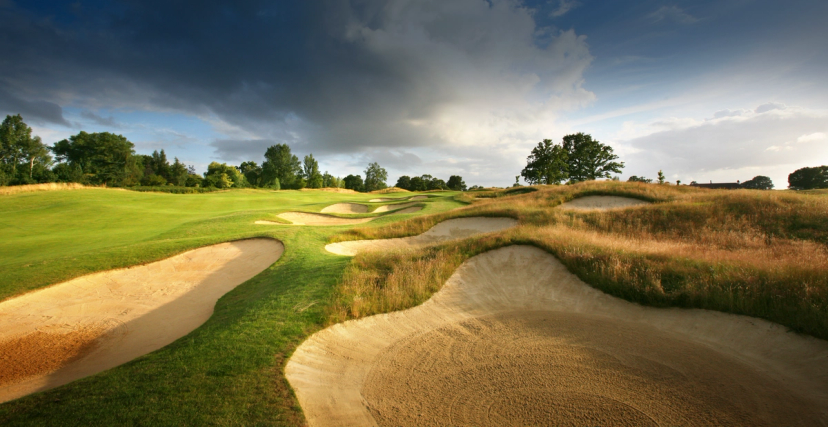
Opened in 2020 and designed by Steve Smyers, the Pfau Course at Indiana University is the result of the melding of the University’s former Championship and par three courses. The architect was given free rein and he took full advantage of the property’s topography to create an exciting layout.
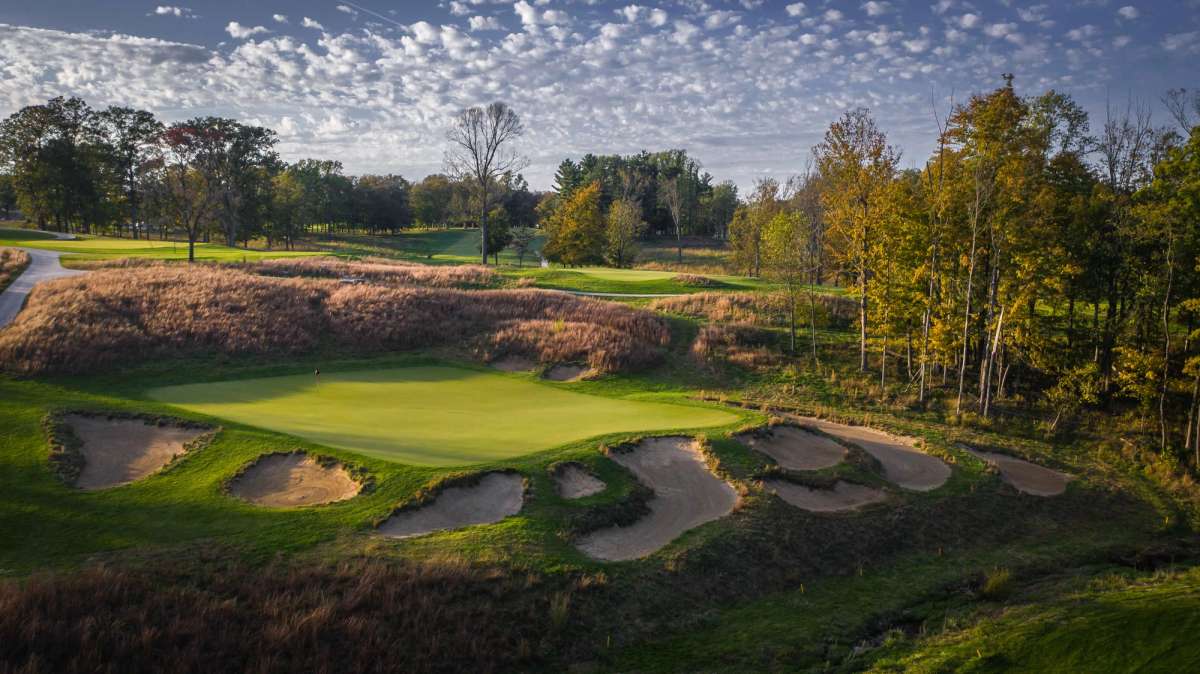
Pfau Course at Indiana University
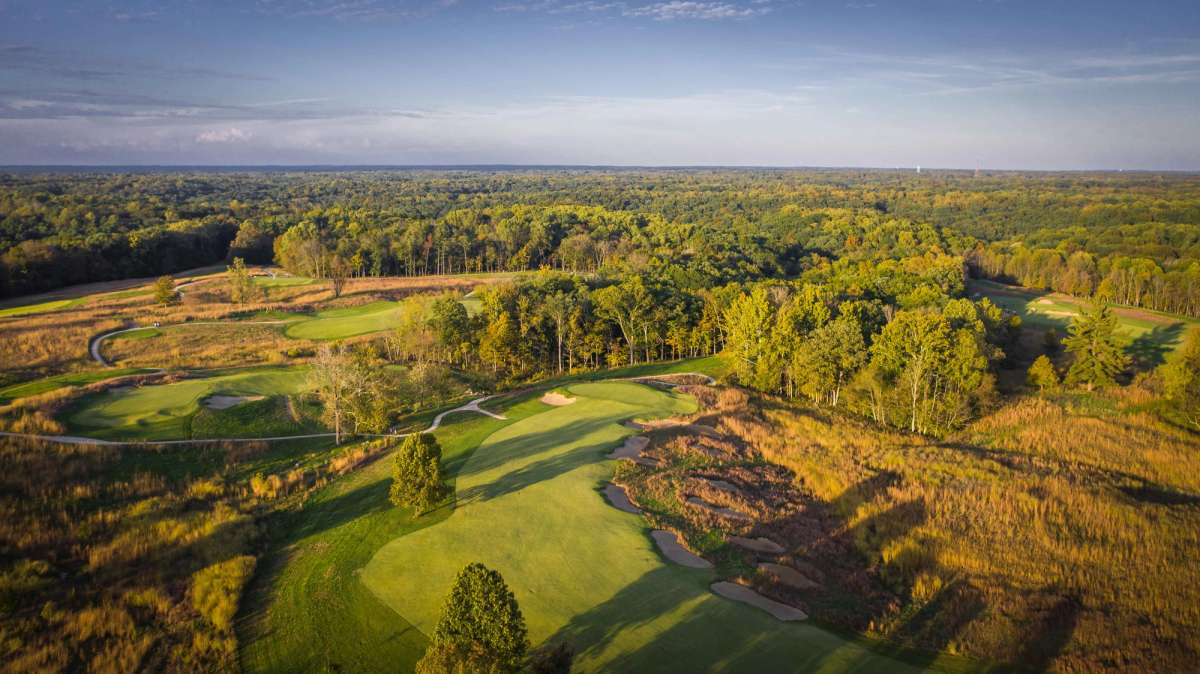
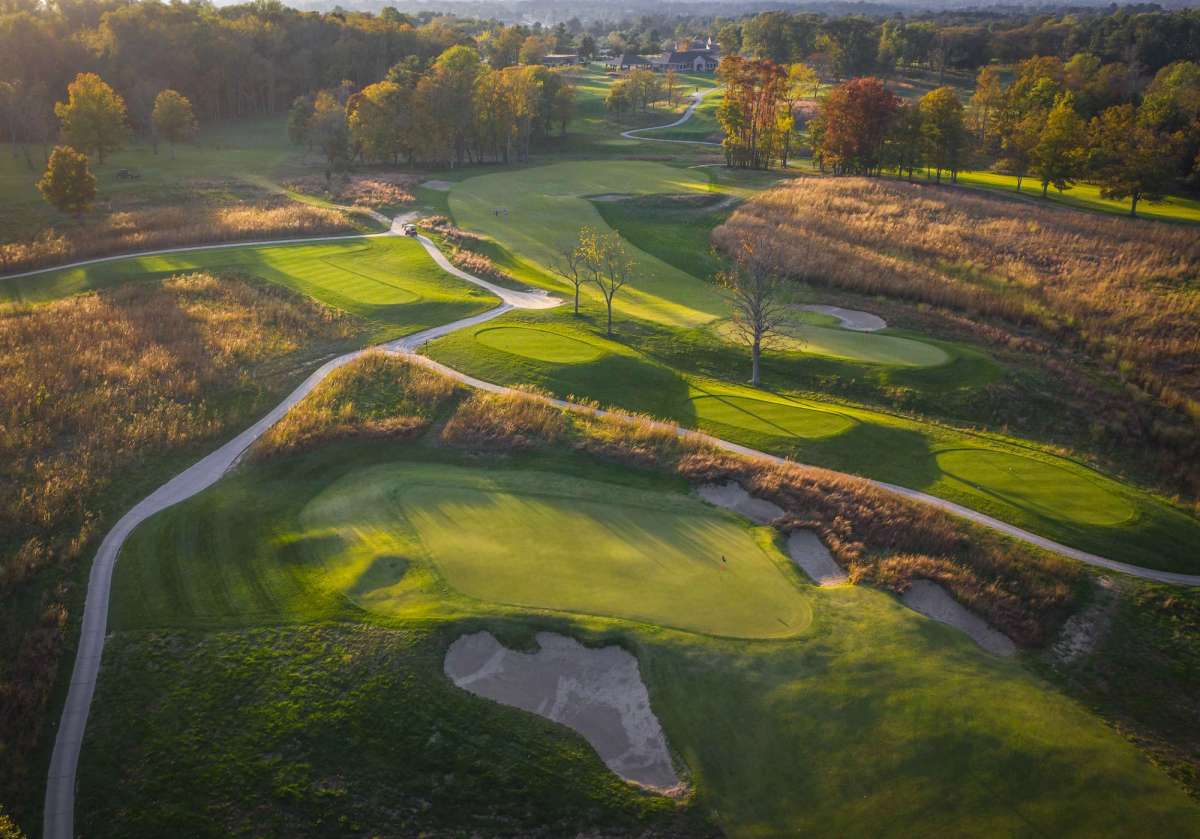
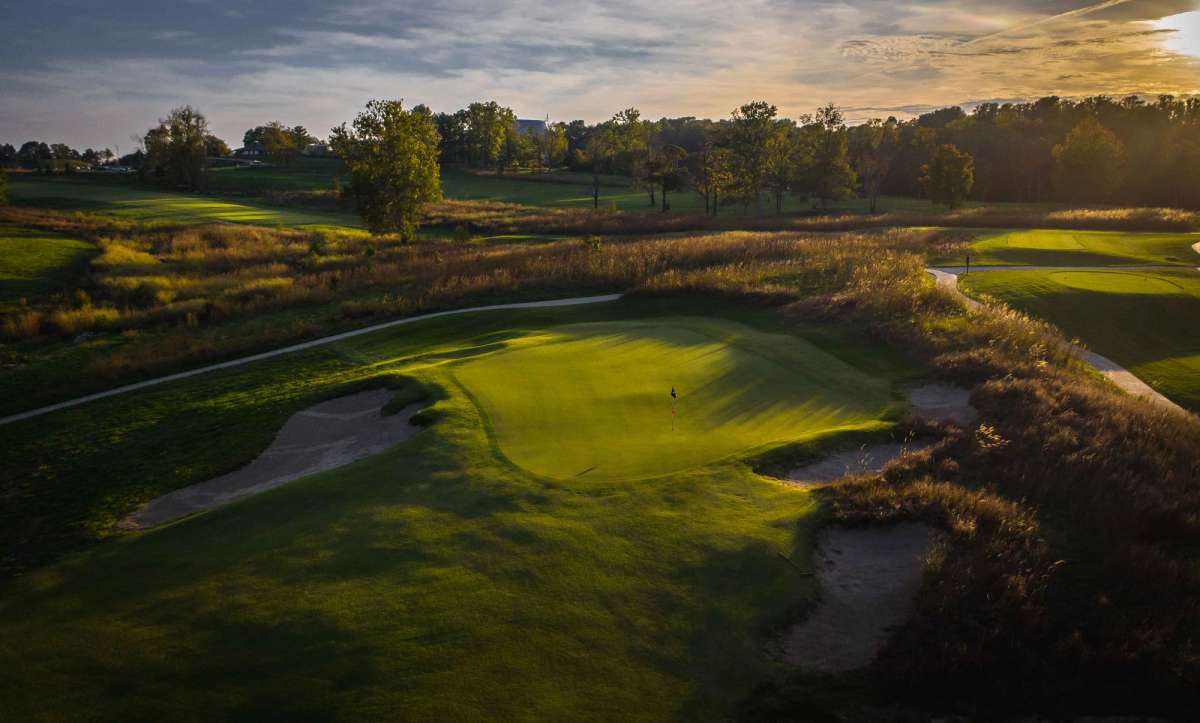
Opened in 2020 and designed by Steve Smyers, the Pfau Course at Indiana University is the result of the melding of the University’s former Championship and par three courses. The architect was given free rein and he took full advantage of the property’s topography to create an exciting layout.
Course Architect
Other Notable Courses
View courses (15)Course Architect
The latest ranking of the Top 100 Golf Courses in the World serves as the ultimate global golf bucket list. Most members of our World Top 100 Panel are seasoned golfers, each playing 20-30 of these courses annually while travelling extensively over decades to form their opinions on others. We recognise that opinions vary—even among our panel members. Rankings are subjective, and there are undoubtedly 50 or more courses in the UK and USA alone that could easily fit onto this list. Links Golf Pilgrimages The rankings
California, United States
New Jersey, United States
Northern Ireland, United Kingdom
New York, United States
New York, United States
Pete Dye Course opens at French Lick Resort 24th April 2009 French Lick Resort in Indiana, complements their existing Donald Ross course with a new Pete Dye course French Lick Resort, located in southern Indiana, announces the new Pete Dye golf course will officially open for play this week on April 24. The new Dye course marks a significant move forward in the golf renaissance that has been taking place at one of the countries leading resort destinations. "We are very excited about the opening of the new Pete Dye course here at French Lick Resort. The course is arguably one of the most exciting inland designs that Pete Dye has ever created with panoramic views in all directions," said Dave Harner, Director of Golf at French Lick Resort. "Pete spent a great deal of time on site creating a visually stunning and challenging layout that will test the skills of not only the greatest golfers in the game, but also players of all levels. He did a wonderful job in laying out a variety of tee markers and angles that will make it playable for everyone." Many already believe that Dye has created one of the most breathtaking and exciting 18 holes of golf in the country. The course was carefully carved on a dramatic hilltop offering a variety of elevation changes, rugged and dramatic terrain, narrow fairways and ever changing bunkers, along with spectacular views from every hole that stretch for over 40 miles. Acknowledging the advances in modern equipment, golf balls and player fitness, Dye has designed a golf course that stretches over 8,100 yards from the professional tees. However, this new creation welcomes all levels of players. With five sets of tees, yardages begin at 5,100 yards from the forward tees. Most players will probably play from 6,100 to 6,600 yards. This new course is already gaining recognition. In 2010, the PGA of America will play its PGA Professional National Championship on the new Pete Dye course. This is expected to be the first of several high profile professional events to be hosted here. The new Dye course showcases many distinct design features, including the newly designed volcano bunkers, as well as stretches of holes on each nine that are vintage Dye. The front nine builds excitement from hole to hole and gets more visually dramatic as the outward nine finishes back up toward the clubhouse with one of the best views on the course. The back nine offers the most dramatic stretch of holes from Nos. 11-14. This culminates with one of the course's signature holes, No. 14. Stretching nearly 600 yards from the back tees, this par five, with a split fairway, escalates from tee to green over a massive grass hollow that will intimidate even the elite players. Complementing the new Pete Dye course at French Lick Resort is the historic Donald Ross course, which has just undergone a $4.6 million restoration project that has brought the course back to Ross's original plans. "We are very excited about showcasing not only this new modern Pete Dye masterpiece, but also our newly restored and historic Donald Ross course, making this truly one of America's must see golf destinations," said Harner. French Lick Resort is now the only resort in the world that combines the classic history of Donald Ross and the modern day design of the legendary Pete Dye. This combination is a spectacular opportunity for golfers to experience two of the best designers who ever shaped beautiful landscapes into golf courses.
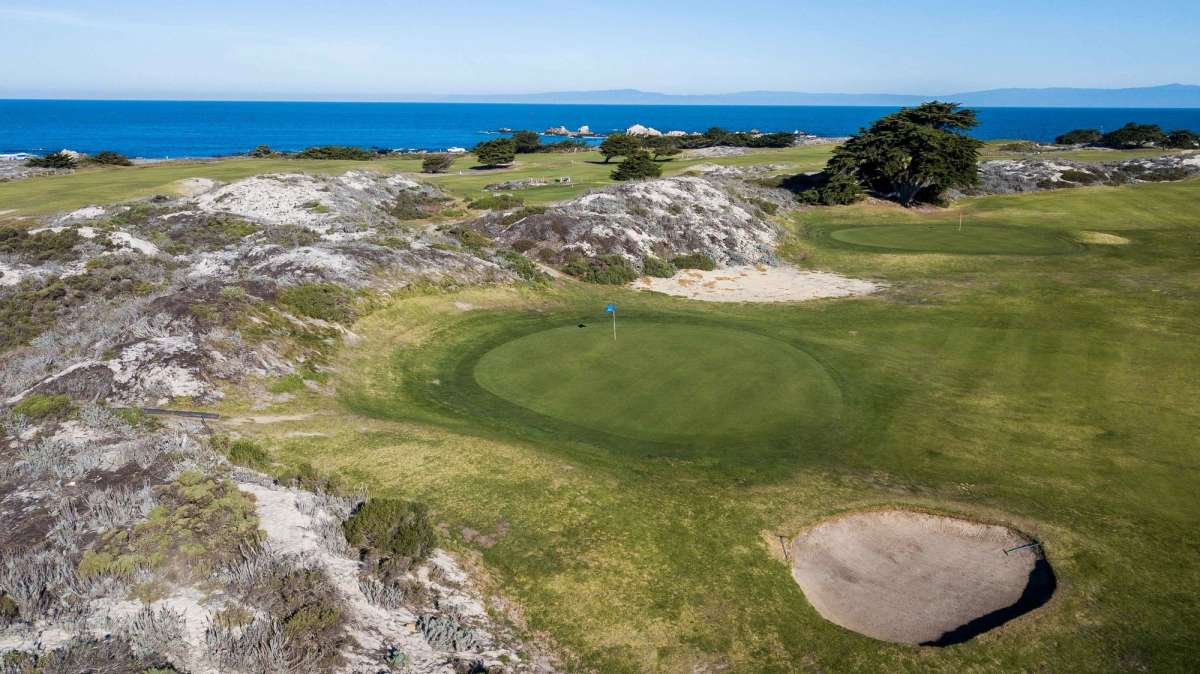
The stigma that good golf has to be expensive is one worth challenging. From windswept prairie in Nebraska and oceanfront holes in California to championship layouts in the shadow of Hazeltine and Bethpage, these are courses that offer much more than a cheap round. All 10 can be played for $100 or less, but the price is only part of the appeal. They have tournament history, famous designers, memorable settings and the kind of layouts that can stand alongside much more expensive golf. Green fees listed are standard rates and do not take twilight or off-season discounts into account, meaning some courses can be played for even less. Wild Horse Golf Club (Nebraska) Nebraska Ranking: 6th | Green Fees: From $68 Why Play it: Outstanding value on a natural prairie layout Best For: Golfers who love natural, windswept courses If you’re looking for proof that great golf doesn’t have to come with a great big price tag, head for the Nebraska prairie. Wild Horse Golf Club is one of the best-value public courses in America, combining excellent golf with a setting that feels a world away from the usual resort experience. Designed by Dave Axland and Dan Proctor, Wild Horse opened in 1999 after the pair spent more than a decade working for Ben Crenshaw’s design company. The result is a natural-looking layout shaped by native grasses, rolling prairie and dramatic blow-out bunkers rather than rows of manicured hazards. Wild Horse has earned plenty of recognition over the years, including a place in the Top100 US rankings, although it has sometimes been overshadowed by nearby Sand Hills. Tom Doak once described it as a “very good golf course” that is often overlooked because of its affordability. Warren Golf Course at Notre Dame (Indiana) Indiana Ranking: 7th | Green Fees: From $75 Why Play it: A Coore & Crenshaw design on the Notre Dame campus Best For: Fans of Coore & Crenshaw Set among 250 acres of woodland on the northern edge of the University of Notre Dame campus, the Warren Golf Course offers the unusual combination of championship pedigree and accessible green fees. Designed by Bill Coore and Ben Crenshaw, the course opened in 2000 and has since become one of Indiana’s most highly regarded public layouts. The Warren Course is home to Notre Dame’s men’s and women’s golf teams and has hosted a string of major amateur events, including NCAA Division I regional championships and the 2010 U.S. Women’s Amateur Public Links. It also hosted the U.S. Senior Open in 2019, bringing some of the biggest names in senior golf to South Bend. The setting is a big part of the appeal, with the course winding through mature woodland within a Certified Audubon Cooperative Sanctuary. For golfers visiting Notre Dame or passing through Indiana, the Warren Course offers a chance to experience one of America’s leading modern design partnerships without a leading-edge green fee. Pacific Grove Golf Links (California) California Ranking: 71st | Green Fees: From $66 Why Play it: Oceanfront golf just minutes from Pebble Beach Best For: Golfers looking for a Pebble Beach alternative Just five miles from Pebble Beach, Pacific Grove Golf Links offers a very different way to experience the Monterey Peninsula. This old-school municipal course runs along the Pacific Ocean, with a front nine that feels more like a traditional parkland course before the back nine heads into the dunes overlooking the water. The course has an impressive design lineage, too. US Amateur Champion Chandler Egan, who helped Alister MacKenzie redesign Pebble Beach, laid out the original nine holes in 1932, while Jack Neville, one of the original designers of Pebble Beach, later extended Pacific Grove to 18 holes. The result is a quirky and enjoyable layout, beginning with back-to-back par threes before throwing in consecutive par fives at the fifth and sixth. On the oceanfront back nine, short par fours and tumbling fairways provide plenty of character. Bethpage - Red Course (New York) New York Ranking: 6th | Green Fees: From $90 Why Play it: A championship-calibre course in the shadow of the Black Best For: Golfers who want a taste of Bethpage without playing the Black Bethpage Black might get all the attention, but the Red Course at Bethpage State Park is a formidable test in its own right. Known by some as “Baby Black”, the Red is widely regarded as the standout alternative to its more famous neighbour and offers a chance to experience Bethpage without the Black's famously difficult tee-time scramble. The course features a series of strong doglegs and demanding holes, with Tom Doak once suggesting that the Red might have received similar acclaim had its more famous neighbour never been built. He particularly praised the opening and closing holes, the long fifth and the short sixth, where an aggressive drive can quickly turn into trouble. The Red doesn't have the Black's enormous bunkers or intimidating reputation, but that doesn't make it easy. For golfers visiting Long Island, it offers another opportunity to play championship-level golf at one of America's most famous public facilities. Bandon Crossings (Oregon) Oregon Ranking: 21st | Green Fees: From $70 Why Play it: Affordable golf in one of America's biggest golf destinations Best For: Golfers visiting Bandon Bandon has become one of America's great golf destinations, but you don't have to play the resort courses to enjoy a round in the area. Bandon Crossings was created specifically to offer affordable public golf for locals and visitors, providing a lower-cost alternative to its famous neighbours. Built on the site of an old cattle and sheep ranch, the course was developed by local couple Rex and Carla Smith with Oregon architect Dan Hixson. Rather than compete directly with Bandon's collection of links courses, Crossings takes its inspiration from the heathland golf found around London. The course may sit away from the Pacific coastline, but that doesn't make it an afterthought. Its fairways move quickly across the property and around Twomile Creek, creating a challenging and enjoyable test that offers a different experience from the resort layouts. Montauk Downs State Park Golf Course (New York) New York Ranking: 80th | Green Fees: From $95 Why Play it: Robert Trent Jones design at the tip of Long Island Best For: Golfers exploring Long Island At the eastern tip of Long Island, around 120 miles from downtown New York City, Montauk Downs feels a long way from the hustle of Manhattan. Golf has been played here for decades, with the current layout shaped by Robert Trent Jones Sr. and his son Rees Jones in 1968. The Jones family connection is one of the course's biggest attractions, with Rees returning alongside Bryce Swanson in 2008 to restore the bunkers and tees on the par-three holes. The result is a classic parkland layout that combines the character of an older course with the challenge expected from a Jones design. Its location also makes Montauk Downs a natural addition to a Long Island golf trip, particularly for golfers looking to explore beyond the courses closer to New York City. Gold Mountain Golf Club - Olympic Course (Washington) Washington Ranking: 13th | Green Fees: From $35 Why Play it: Championship golf at a 36-hole public facility Best For: Golfers looking for a full day of golf The Olympic Course at Gold Mountain Golf Club is proof that you don't need a famous resort or hefty green fee to find championship-calibre golf. Part of a 36-hole public facility owned and operated by the City of Bremerton, the course was designed by John Harbottle III and opened in 1996, 25 years after the original Cascade Course. The tree-lined layout is slightly hillier than its older sibling but remains eminently walkable, with annual bluegrass covering the tees, fairways and greens. Its quality has been recognised on the national stage, hosting the U.S. Amateur Public Links Championship in 2006 and U.S. Junior Amateur Championship in 2011. There are plenty of memorable holes, including the short fourth, the water-guarded ninth and the 188-yard 16th, which plays across a lake to the green. The closing par four also offers a tempting birdie opportunity. With the Cascade Course next door, golfers can play 36 holes at Gold Mountain for less than $100, with green fees for the second 18 starting at just $30. Chaska Town Course (Minnesota) Minnesota Ranking: 26th | Green Fees: From $63 Why Play it: Championship golf just minutes from Hazeltine National Best For: Golfers visiting the Twin Cities Just a few miles from Hazeltine National, the Chaska Town Course offers a chance to play a highly regarded championship layout without the private-club price tag. Owned and operated by the local municipality, the course occupies 285 acres of oak groves, open prairie and marshland. Designed by Arthur Hills and opened in 1997, Chaska Town has even shared the stage with Hazeltine. The two courses co-hosted the 2006 U.S. Amateur Championship, while Chaska Town was also scheduled to co-host the 2020 U.S. Junior Amateur before the tournament was cancelled due to the COVID-19 pandemic. The layout plays to 6,817 yards from the back tees and features two returning nines, each finishing with a par five. The short fourth and 16th offer opportunities to score, while the right-doglegging ninth provides a tougher test. Brackenridge Park Golf Course (Texas) Green Fees: From $56 Why Play it: A Tillinghast classic with Texas Open history Best For: Golfers who love historic golf courses The oldest public 18-hole course in Texas, Brackenridge Park Golf Course has been a fixture in San Antonio golf for more than a century. Designed by A.W. Tillinghast in 1916, “Old Brack” went on to host 21 editions of the Texas Open between 1922 and 1959. The course has retained much of its historic character thanks to a restoration by John Colligan, who brought the layout back to life while preserving Tillinghast’s original design. The front nine is relatively tight, while the back nine opens out and provides some of the course’s strongest holes. Brackenridge is also part of the Alamo City Golf Trail, making it easy to combine with several other public courses in the San Antonio area. Brown Deer Park Golf Course (Milwaukee) Green Fees: $81 Why Play it: A former PGA Tour venue with Tiger Woods history Best For: Golfers who like tournament pedigree Brown Deer Park Golf Course combines affordable public golf with a notable place in PGA Tour history. Located just north of Milwaukee, the course hosted the Greater Milwaukee Open from 1994 to 2009, with Tiger Woods making his professional debut here in 1996. Founded in 1929, the course was originally designed by George Hansen before being partially redesigned by Andy North and Roger Packard. Today, its tree-lined fairways and stream that winds through the property provide a classic parkland setting. The Tiger Woods connection is an obvious draw, but Brown Deer offers more than a famous name in its history. Its accessible layout and location make it a practical option for golfers visiting Milwaukee. For golfers who enjoy playing courses with a tournament past, Brown Deer offers a chance to follow in the footsteps of some of the game's biggest names without paying resort-course prices.

US East North Central Division Best in State Rankings 2020 This is the sixth of nine Best in State revisions that we’re currently conducting for the United States so we’re now two thirds of the way through our biennial re-ranking process, having re-appraised thirty-three of the fifty states. In this reworking of the East North Central Division, we take a closer look at the states of Illinois, Indiana, Michigan, Ohio and Wisconsin. Part of the Great Lakes region, these five states cover an area of approximately 300,000 square miles, with a population of around 47 million people. Much of the best golf is concentrated around the cities of Chicago, Columbus, Detroit, Indianapolis and Milwaukee but travel away from these major centres and you’ll come across the likes of Crystal Downs and Sand Valley which are among the finest golfing grounds in the entire country. A total of nineteen courses in this review are listed at the moment in our US Top 100, with eight of these layouts also occupying a position within our World Top 100 chart so this is clearly a geographic area with an exceptional number of great golf courses. In recognition of this, we’ve increased the coverage in these five states by more than 25% so there are now a total of 295 courses listed below. Without further ado then, let’s take a look at how the new numbers stack up, starting in the Prairie State of Illinois, where we’ve added another ten courses to produce a Top 70 chart. Illinois The course at Chicago Golf Club in Wheaton, recognized as the first 18-hole layout in America, is still No. 1 in our Illinois listings. Originally designed by C.B. Macdonald then enhanced soon after by Seth Raynor in the 1920s, this layout is a timeless classic that played an important part in the evolution of championship golf in America, hosting early editions of the US Amateur, the US Open and the Ryder Cup. Chicago Golf Club Our correspondent Marc Bender recently commented as follows: “No matter how you analyze your round at Chicago Golf Club, you’d be hard pressed to find a single negative take away from your experience and the course. You’ve undoubtedly just played one of the best courses in the world that has everything to offer and checks every single box for a pure gem; regardless of what boxes you may have on your list of criteria for a great course.” At #21, soaring seventeen places up the chart, the course at Glen View Club is another early tournament venue, hosting the very first Western Open in 1899 before staging both the US Amateur and US Open inside the following five years. Those championships took place on the course that Herbert Tweedie set out for the members, but William Flynn then revised and extended that layout in 1922 to fashion the fairways that are still in play today. Glen View Club The course at Ruth Lake Country Club in Hinsdale is the highest of our new entries, arriving ahead of the others at #35. Founded almost a century ago in 1923, the club engaged William Langford to carve eighteen holes through 160 acres of woodland adjacent to Ruth Lake and its sparkling waters emerge on the back nine. Several architects have modified the layout down the years, with Arthur Hills numbered among them. One of his former design partners, J. Drew Rodgers, completed a bunker renovation program last year, in addition to redesigning the home green of the par three closing hole. Ruth Lake Country Club Rank/ Click the link to see full details of our latest Illinois Best in State rankings Indiana The top three positions in our Indiana standings are unaltered, so the course at Victoria National Golf Club in Newburgh retains the No. 1 spot. Designed by Tom Fazio for founder Terry Friedman on the site of an old coal mine, this 18-hole layout first opened for play in the late 1990s, hosting the US Senior Amateur championship in 2006. Victoria National Golf Club Three 5-ball rated reviews in the last twelve months have provided comments such as: “what I admire the most about the course is the uniqueness of each hole. I never got the sense I was playing the same hole… Victoria National is clearly a course one can never forget and clearly belongs in the upper echelons of layouts that Tom Fazio has created… this is a super track, if you can get on you gotta go.” A couple of collegiate courses make a big impact on our revised Indianan rankings, which might surprise a few people who’re unaware of the quality to be found in educational establishments around the country. The highest newcomer at #6 in the updated chart is the Pfau Course at Indiana University in Bloomington, where architect Steve Smyers collaborated with Fuzzy Zoeller, a Hoosier State native and two-time Major winner, to manufacture a new course on a 265-acre tract that previously housed the 18-hole Championship course, a par three layout and a cross country circuit. The $12 million project, which took 2½ years to complete, has resulted in a new course which is far better suited to modern requirements and is capable of hosting top-flight competitions. And, what’s even better, it’s available for public play at reasonable rates. Pfau Course at Indiana University Rising five places to #11, the Pete Dye-designed Kampen course at the Birck Boilermaker Golf Complex in West Lafayette regains all the ground it lost last time around when it fell five spots during our 2018 re-ranking exercise. Described by a reviewer last year as “a fantastic challenge with plenty of width for the high handicapper, yet an extremely difficult test for tournaments” the Kampen course, along with the recently refurbished Ackerman-Allen course, can definitely lay claim to the title “best 36-hole university golf complex” in the whole country. As does Indiana University, the Birck Boilermaker facility also welcomes pay-and-play golfers. Birck Boilermaker Kampen course Click the link to see full details of our latest Indiana Best in State rankings Michigan The top four rungs of the Michigan ladder have been occupied by the same four courses since 2016, so the celebrated Alister MacKenzie/Perry Maxwell layout at Crystal Downs Country Club in Frankfort maintains its No.1 status in the Wolverine State. Tom Doak’s Renaissance Golf Design firm has made numerous little improvements in recent years, ensuring this Golden Age layout stays as relevant now in the modern era as it was nearly a hundred years ago. Crystal Downs Country Club Regular contributor Peter Wood posted these comments a couple of months back: “Crystal Downs CC is a classic MacKenzie course in a beautiful remote setting. The club will rarely host tournaments or be televised. It will likely remain relatively unknown by the masses – but the true believers will know all about it and seek it out. They won’t be disappointed!” The most significant upward move in the new chart is made by the course at Meadowbrook Country Club in Northville, rising seven places to #5. Andy Staples carried out a renovation of this layout to mark the club’s centenary just a couple of years ago, preserving the original Willie Park Junior holes that were first laid out back in 1916 and removing hundreds of trees to improve vistas and assist with on-site agronomy. The results of this work are spectacular, paving the way for a well-deserved leg up in the state listings. Meadowbrook Country Club We included the Black circuit of The Loop at Forest Dunes Golf Club when we re-ranked Michigan two years ago. Now it’s time to introduce the reversible Red course of The Loop as our highest new entry at #15 in an expanded Top 70 state chart. Our US correspondent Fergal O’Leary was here last year and he endorsed our stance of treating the Black and Red as distinct courses by stating: “we have two totally separate, unique courses and they should be treated and rated separately.” He also ended his review by writing: “there’s no doubt visitors will come back here multiple times as the golf and hospitality is as good as you can ever ask for. With time and maturity, the golf course will be a superstar.” Forest Dunes The Loop Red Click the link to see full details of our latest Michigan Best in State rankings Ohio There’s very little movement at the top of our state listings for Ohio. In fact, for the top eight positions, there’s absolutely no chart activity whatsoever. These eight courses stay exactly where they ended up when re-ranked two years ago, meaning Seth Raynor’s mid-1920s design at The Camargo Club in Cincinnati holds onto its No. 1 billing. The Camargo Club Only the other day, another of our frequent contributors, Colin Braithwaite, posted the following: “Camargo is a throwback and a real treat to play. A Raynor design that he never got to see the final product as he passed away before completion. Huge greens and fairways, with no water hazards, not long by today’s standards, but keep in mind it is a par 70… This is a fantastic course. Hard to beat the par 3s.” We’ve added another 25 courses to what used to be a Top 50 for the Buckeye State and the highest of these new entries is the Kendale course at Kenwood Country Club in Cincinnati, making an impressive first appearance at #28. Dating back to the early 1930s when Bill Diddel designed two 18-hole layouts on 500 acres for the club, the Kendale course has just undergone a substantial renovation by Jason Straka, with irrigation lines replaced, bunkers refurbished, fairways widened, trees removed and greens reconstructed. Kenwood Country Club - Kendale course Another course to benefit from an extensive renovation involving the removal of many trees and the replacement of all the bunkers is the Championship layout at Columbus Country Club, climbing nine places to #37. The original 9-hole course at the club was created by Tom Bendelow, with Donald Ross adding another nine in 1914. A number of leading architects then carried out modifications down the years and the latest in that long line to make his mark is Kentucky-based Kevin Hargrave, who’s a long-time close associate of Keith Foster. Columbus Country Club Championship course Click the link to see full details of our latest Ohio Best in State rankings Wisconsin The Straits course at Whistling Straits in Kohler is Wisconsin’s No.1, a position it’s held since we started our Best in State standings. Set out on the western edge of Lake Michigan by Pete Dye in the late 1990s, this track has already hosted three PGA Championships and a US Senior Open. It was also due to stage the latest edition of the Ryder Cup matches a couple of months ago before the current COVID-19 pandemic caused a postponement until next year. Whistling Straits - Straits course Peter Wood sent us another review for this course the week the Ryder Cup was meant to be played here: “Pete Dye took a pancake flat piece of land and imported enough sand and soil to fill an ocean. His aim was to create a championship links course reminiscent of the famous courses on the west coast of Ireland. The finished product is a topsy turvy journey through an endless dunescape littered with bunkers, from deep pot bunkers to wider waste bunkers, some are groomed, some are left to the vagaries of the ever-present wind.” Advancing four spots to #16, the Brute course at the Grand Geneva Resort on Lake Geneva is our biggest climber, returning to where it was positioned after our 2016 chart reappraisals. The other 18-hole layout at the resort – originally called The Briar Patch and now known as The Highlands – is a Pete Dye/Jack Nicklaus co-design that has been much-altered over the last fifty years but the Brute remains largely as it was first laid out by Robert Bruce Harris back in 1968, featuring elevation changes on nearly every hole. Grand Geneva Resort - Brute course The highest of our ten new entries for Wisconsin is The Club at Lac La Belle at #28. Founded in 1896, the club’s first three professionals – Alex Smith, Robert Simpson and Willie Anderson – won a combined total of eight US Open and Western Open titles between 1901 and 1911, so the club is steeped in the early history of the game in the United States. Thirty acres were recently acquired, allowing Craig Haltom to design four new holes and revamp the rest of the course, constructing new greens and clearing thousands of trees during a significant course upgrade. The Club at Lac La Belle We’re eagerly awaiting the arrival of the tentatively titled “Sedge Valley,” Tom Doak’s sub-par 70, 6,000-yard 18-hole course at the Sand Valley Golf Resort in Nekoosa. Both Gil Hanse and Mike DeVries submitted proposals for a new course but it was the Doak design that found approval with owner Mike Keiser, with fairways to be routed close to the existing Sand Valley and Mammoth Dunes layouts. Some are hoping this new course will drive another nail into the coffin of the “distance+difficulty=good” golfing era. Let’s hope so. Click the link to see full details of our latest Wisconsin Best in State rankings Next up: the South Atlantic Division states of Delaware, Florida, Georgia, Maryland, North Carolina, South Carolina, Virginia and West Virginia. Jim McCann Editor Top 100 Golf Courses