Georgia, United States
The Creek Club course is the only private layout at the Reynolds Lake Oconee community, reserved for members and their guests, with Richland Creek coming into play at fourteen of the Jim Engh-designed holes.
Overall rating

4.5
The Creek Club course is the only private layout at the Reynolds Lake Oconee community, reserved for members and their guests, with Richland Creek coming into play at fourteen of the Jim Engh-designed holes.
Reynolds Lake Oconee (Creek Club)
The latest ranking of the Top 100 Golf Courses in the World serves as the ultimate global golf bucket list. Most members of our World Top 100 Panel are seasoned golfers, each playing 20-30 of these courses annually while travelling extensively over decades to form their opinions on others. We recognise that opinions vary—even among our panel members. Rankings are subjective, and there are undoubtedly 50 or more courses in the UK and USA alone that could easily fit onto this list. Links Golf Pilgrimages The rankings
California, United States
New Jersey, United States
Northern Ireland, United Kingdom
New York, United States
New York, United States
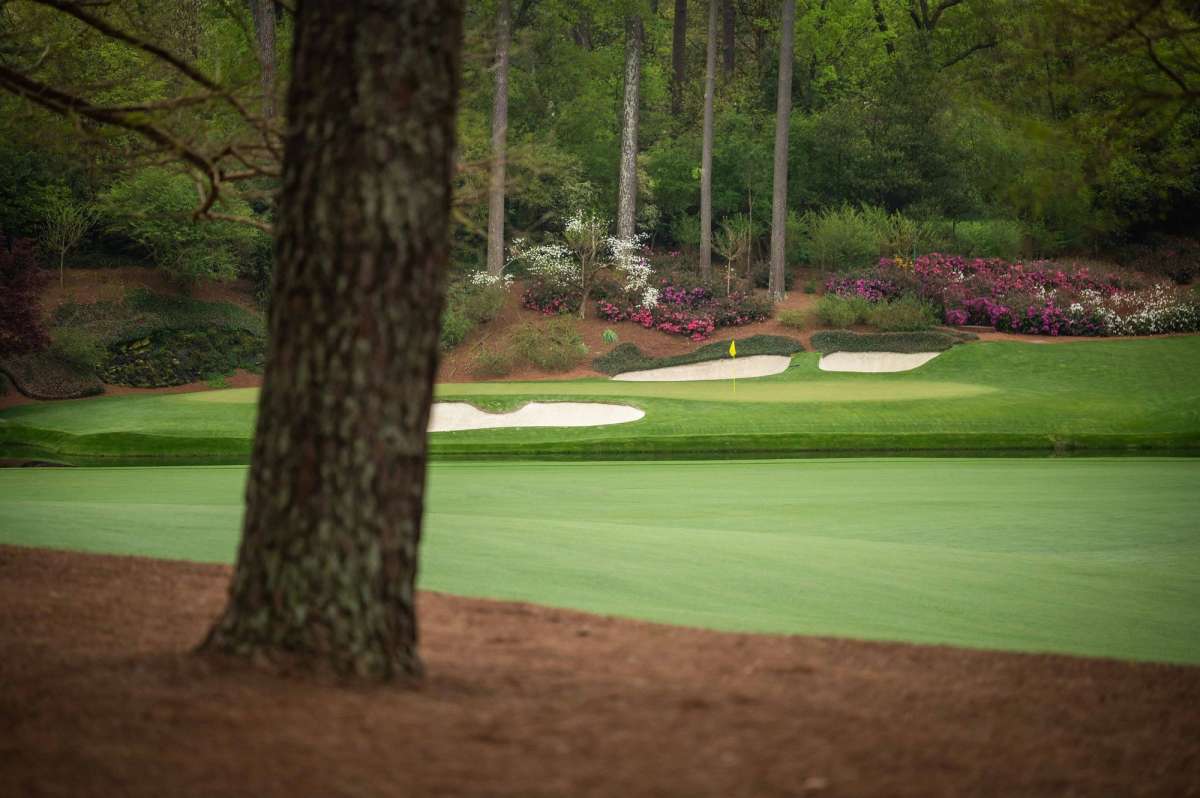
The Hidden Experience of Playing Augusta National - Golf's Most Exclusive Course For travelling golf enthusiasts who dream of playing the world's top 100 golf courses, Augusta National Golf Club represents the ultimate bucket list destination. While millions watch The Masters tournament each April, few will ever experience what lies beyond the famous gates on Washington Road. This insider guide reveals the authentic Augusta National experience that television cameras never capture. Finding the Entrance: Augusta National's Understated First Impression Despite hosting golf's most prestigious tournament, Augusta National's entrance remains remarkably understated. Located on busy Washington Road in Augusta, Georgia, many first-time visitors drive past the discreet gates multiple times before finding their way. Unlike other famous golf courses with prominent signage, Augusta National relies on its reputation rather than obvious markers. The exclusive nature of the club becomes immediately apparent—guests must arrive with a member host, as no visitors are permitted without member accompaniment. Security measures include mechanical barriers and police officers who verify names before granting access to Magnolia Lane. Once inside, the legendary service begins. Mysteriously, every staff member addresses guests by name from the moment of arrival. "Mr. Lewis, it's lovely to have you," they'll say to first-time visitors who haven't yet introduced themselves, recalls Connor T. Lewis, who has been fortunate enough to play Augusta multiple times. This attentive hospitality creates an immediate sense of belonging that distinguishes Augusta National from other top-ranked golf destinations. The Historic Augusta National Clubhouse Experience The Augusta National clubhouse represents a fascinating piece of American architectural history. As the oldest poured concrete building in the United States (dating to the 1800s), it offers a surprising contrast to the grand southern mansions typical of prestigious golf clubs. Originally slated for demolition when the club was founded, financial constraints preserved what would become one of golf's most iconic structures. Inside, golf history surrounds you. The Trophy Room features oil paintings of founders Bobby Jones and Clifford Roberts in their green jackets, alongside President Eisenhower. Most impressive are Bobby Jones' actual clubs used to win the Grand Slam, displayed in the left corner—a must-see for golf history enthusiasts. The clubhouse ambience remains refreshingly understated despite its prestige. "You think that everything's gonna be super fancy? And it's very understated. It's very relaxed," observes Connor T. Lewis, reflecting on his first impressions of the club. This understated elegance extends to the on-site accommodations, where guests stay in cabins named after golf legends, complete with Augusta National-branded amenities and panoramic views of the famous first hole. A Secret Nighttime Tradition at Augusta National While playing Augusta National ranks among golf's greatest thrills, the most magical moments often occur after sunset. After dinner in the clubhouse, knowledgeable guests participate in a special tradition—a moonlit walk to Amen Corner. "If you told me for the rest of my life that I could only go to Augusta National, not to play, but just to take that walk, I would accept that with pure happiness," confesses Connor T. Lewis about the moonlit tradition he now shares with other guests whenever possible. Under full moonlight, the fairways glow with an ethereal blue hue as guests make their way toward golf's most famous three-hole stretch. What few know is that Augusta National illuminates the 12th and 13th holes at night with special lighting. These spotlights transform Golden Bell and Azalea into theatrical stages, creating one of golf's most sublime spectacles. Many visitors report feeling the presence of golf legends like Hogan, Snead, and Jones during these nocturnal pilgrimages—a spiritual dimension to Augusta that television audiences never witness. Playing Augusta National: What Masters Broadcasts Don't Show Television coverage flattens Augusta National's dramatic topography. In reality, walking the course involves elevation changes equivalent to climbing approximately 20 stories throughout 18 holes. By the 18th fairway, even fit players feel the burn in their legs—a physical challenge entirely invisible to viewers. The optical illusions throughout Augusta National demonstrate designer Alister MacKenzie's genius. Having worked in military camouflage during World War II, MacKenzie created greens that deceive the eye. Putts that appear to break dramatically left often move right, making Augusta's legendary caddies invaluable guides through this visual trickery. Even accomplished golfers face psychological challenges at Augusta. Connor T. Lewis, a single-digit handicapper, recounts snap-hooking his first three drives at Augusta despite normally being consistent off the tee. "I go to the second hole, par five, and snap-hook another drive. Now on two, there are a lot of options. Snap-hook is not one of them," he jokes about his nerve-wracking start. The intimidation factor of playing where Palmer, Nicklaus, and Woods made history can transform good swings into momentary disasters. Among the most challenging shots at Augusta National: The intimidating tee shot on the 18th hole (even from member tees) The deceptive par-3 12th where swirling winds confound club selection The approach to the 14th green with its severe undulations The Essential Augusta National Mindset: Enjoying Golf's Greatest Experience The most valuable advice from Augusta National veterans transcends technique: forget your score. "You miss the point of Augusta National if you're trying to shoot your best round or break 80," advises Lewis. "Just take the time to float on the clouds for a little bit." This wisdom extends to any top 100 golf course experience. The greatest tragedy would be visiting golf's cathedral and remembering only your frustration over missed putts. "You never know when it's your last," explains Lewis. "Lightning could hit you tomorrow, and that might be the last opportunity you get to walk those storied links." For golfers lucky enough to receive an invitation to Augusta National—or any prestigious course—the ultimate advice from Connor T. Lewis distills to: "Don't let your golf game get in the way of playing golf." Experience the World's Top Golf Courses with the Right Perspective Augusta National exists in two realities: the immaculate tournament venue millions see on television, and the spiritual experience few will ever know—where fairways glow under moonlight, where history whispers from century-old walls, and where playing becomes a pilgrimage. While most golfers won't receive an invitation to Augusta National, this perspective applies to all bucket-list golf courses. Whether playing St. Andrews, Pebble Beach, Pine Valley, or Royal County Down, the scorecard matters less than absorbing the experience. As you plan your next golf adventure to top-ranked courses, remember that scores fade but experiences endure. Float on those clouds while you can, for you never know when such an opportunity might come again.
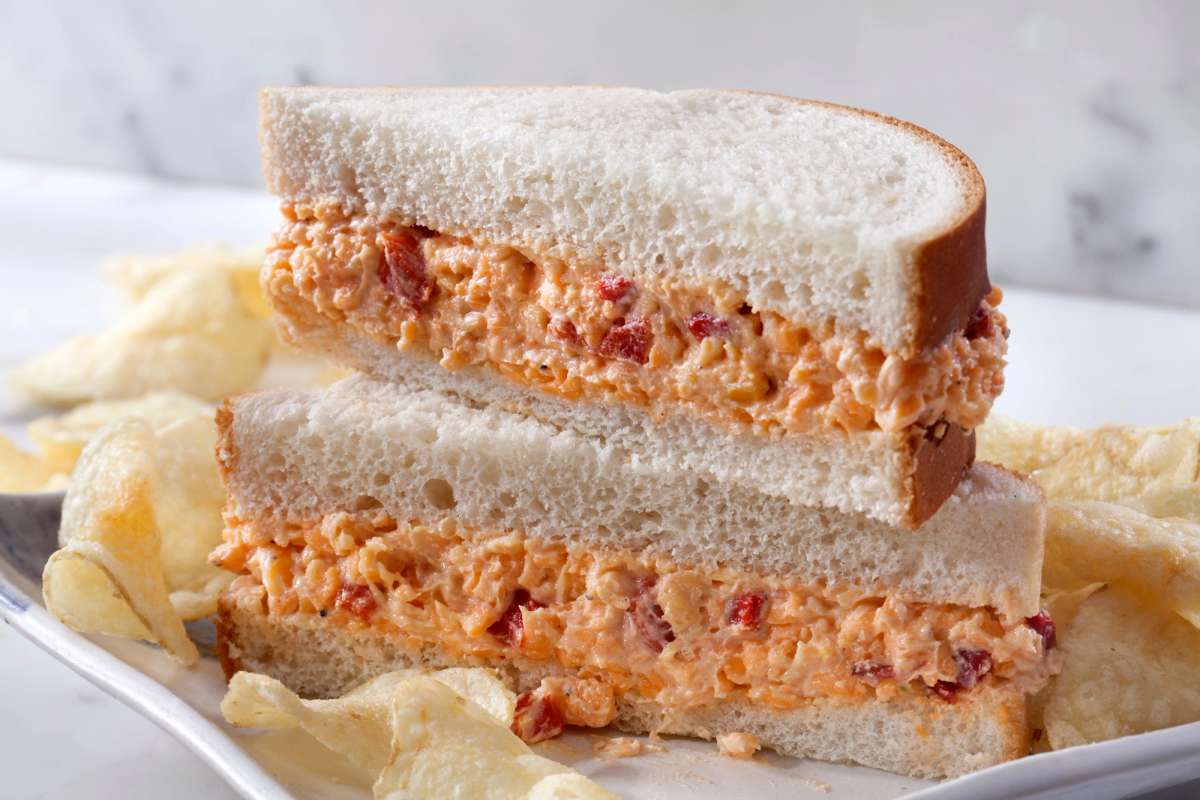
Mastering the Menu: A Taste of The Masters The Masters Tournament is not only a showcase of golfing excellence but also a culinary tradition, with its concession stand fare becoming almost as iconic as the golf played on the greens of Augusta National. Among these, the Pimento Cheese Sandwich stands out as a fan favourite, a simple yet delicious testament to Southern comfort food. Here's a fun look at The Masters' famous concession food, including a recipe for you to recreate the iconic Pimento Cheese Sandwich at home. Pimento Cheese Sandwich The Pimento Cheese Sandwich is a staple of The Masters, beloved for its creamy, tangy flavour wrapped in soft white bread. Here’s how you can make it at home: Ingredients: 2 cups of shredded sharp cheddar cheese 1 cup of mayonnaise 1 (4 oz.) jar of pimentos, drained and finely chopped 1 teaspoon of Worcestershire sauce 1/2 teaspoon of finely grated onion 1/4 teaspoon of ground black pepper A pinch of salt Slices of white bread Instructions: Mix the Ingredients: In a large bowl, combine the shredded cheddar cheese, mayonnaise, chopped pimentos, Worcestershire sauce, grated onion, black pepper, and salt. Stir until all ingredients are well blended and the mixture is smooth. Chill: Cover the bowl and refrigerate the pimento cheese mixture for at least an hour to allow the flavours to meld together. Prepare the Sandwiches: Spread a generous amount of the pimento cheese mixture onto a slice of white bread, then top with another slice to form a sandwich. Serve: Cut the sandwiches into halves or quarters, plate, and serve. Enjoy a taste of The Masters at home! Egg Salad Sandwich Another crowd-pleaser at Augusta National is the Egg Salad Sandwich, known for its creamy texture and simple seasoning. Ingredients: 8 hard-boiled eggs, peeled and finely chopped. 1/2 cup of mayonnaise 1 tablespoon of yellow mustard Salt and pepper to taste Slices of white bread Instructions: Combine Eggs and Mayo: In a mixing bowl, gently mix the chopped hard-boiled eggs with mayonnaise and mustard. Season with salt and pepper to taste. Chill: Refrigerate the egg salad mixture to cool. Assemble the Sandwiches: Spread the egg salad on a slice of white bread, then cover with another slice. Serve: Cut into halves or quarters and serve chilled. Georgia Peach Ice Cream Sandwich For something sweet, the Georgia Peach Ice Cream Sandwich is a delightful treat that celebrates the state's famous fruit. Ingredients: Vanilla ice cream Fresh peach slices Sugar cookies or shortbread cookies Instructions: Prepare the Ice Cream: Soften the vanilla ice cream slightly and mix in finely chopped fresh peach slices. Assemble: Scoop the peach ice cream onto a sugar cookie, then top with another cookie to make a sandwich. Freeze: Place the ice cream sandwiches in the freezer until firm. Serve: Enjoy a cool, sweet taste of Georgia at home! Recreating these Masters' favourites allows fans to bring a piece of Augusta National into their homes, celebrating the tournament's culinary traditions alongside the golfing action. Whether it's the tangy zest of the Pimento Cheese Sandwich, the creamy goodness of the Egg Salad Sandwich, or the sweet delight of the Georgia Peach Ice Cream Sandwich, these recipes offer a taste of The Masters any time of year. Find out more about travel to Augusta National Golf Course Why not register today to be the 1st to Receive US Rankings releases for 2024. Lockhart Travel Club Concierge Services FAQ What is the Lockhart Travel Club? Lockhart Travel Club is dedicated to offering its members unique opportunities for world-class golf exploration and adventure. It connects members with like-minded individuals worldwide, aiming to fulfil their desire to play at the best golf courses globally. The club originated from Robert Lockhart's passion, a Scotsman who introduced golf to America in the late 19th century, and it continues to embody his spirit of golf travel (Lockhart Travel Club). Who are the members of the Lockhart Travel Club? Members are individuals from some of the world's greatest clubs, sharing a common passion for golf and adventure. The club welcomes golfers eager to travel, play, and check off their bucket list of courses. They are driven by the opportunity to see and play the best courses worldwide, taking advantage of the club's network. What kind of experiences does Lockhart Travel Club offer? In 2023, the club provided opportunities to play in various top-ranked courses and locations, including the Sand Hills of Nebraska and Colorado, the best of Japan and Korea, the English Heathlands, the classic courses of France, and the best of New Zealand’s North Island. The 2024 schedule promises unique experiences in 19 different countries, including Thailand & China, Brazil, South Africa, the Northeast USA, and Australia. How do I join Lockhart Travel Club? Interested individuals can inquire about membership by contacting the club directly via their official email. The club values connections among golf enthusiasts and strives to plan unique, unforgettable opportunities for its members throughout the year. For more detailed inquiries or to apply for membership, please refer directly to the Lockhart Travel Club's official website or contact their membership services. Lockhart Travel Club About Us: Learn more about the club Top 100 Golf Courses - Lockhart Travel Club: Explore member experiences and trips.

Golf courses near to the Augusta National Golf Club Augusta National Golf Club, home of the prestigious Masters Tournament, is a hallmark of golf's rich history and tradition. While this exclusive course in Augusta, Georgia, garners global attention, the surrounding area offers several other notable golf courses that present unique challenges and experiences for golf enthusiasts. Here's an in-depth look at some of the other golf courses near Augusta National, each offering its own unique flair and test for golfers of all skill levels. 1. Augusta Country Club Located just a stone's throw from Augusta National, Augusta Country Club is one of the oldest golf clubs in the United States, established in 1899. This private club offers a classic Donald Ross-designed course, which was later updated by Perry Maxwell. It provides a traditional and challenging experience with its narrow fairways and small, undulating greens. The course is known for its scenic beauty and strategic layout, demanding precise shot-making from players. 2. Forest Hills Golf Club Forest Hills Golf Club is a public golf course that dates back to 1926 and is part of Augusta University's history, serving as the home course for the Jaguars. The course was originally designed by Donald Ross and later renovated by Arnold Palmer in 2003. This blend of classic and modern design elements offers wide fairways and expansive greens, but its true test lies in the clever placement of bunkers and the subtle contours of the greens. Forest Hills provides an accessible yet challenging round for golfers of varying abilities. 3. The River Golf Club Situated in North Augusta, just across the Savannah River from Augusta, The River Golf Club offers a blend of natural beauty and challenging golf. Designed by internationally renowned golf course architect Jim Fazio, this semi-private course opened in 1998. It features MiniVerde Bermuda greens, numerous water hazards, and strategic bunkering, making it a test for precision and strategy. The course's layout along the riverbank provides stunning views and a serene golfing experience. 4. Jones Creek Golf Club Jones Creek Golf Club, nestled in the heart of Evans, Georgia, is another gem in the Augusta area. Designed by Rees Jones with later enhancements by Tom Fazio, the course offers a challenging yet fair test of golf. With its rolling hills, dense tree-lined fairways, and beautifully maintained greens, Jones Creek delivers a memorable golfing experience. The course is known for its elevation changes and the natural creeks that come into play on several holes, adding to the strategic challenge. 5. Mount Vintage Golf Club Mount Vintage Golf Club is a semi-private golf club located in North Augusta. The club features a 27-hole championship course designed by Tom Jackson, offering a mix of rolling terrain, beautiful natural landscapes, and challenging water features. The course layout is divided into three nines: the Chester, the Vintage, and the Independent, each with its own distinctive character and challenges. Mount Vintage is celebrated for its exceptional conditioning and the variety of shots it demands, making it a favorite among locals and visitors alike. 6. Bartram Trail Golf Club Named after the naturalist William Bartram, Bartram Trail Golf Club is a public facility located in Evans. This course stands out for its commitment to preserving the natural environment, offering a tranquil setting for a round of golf. The Rick Robbins-designed course features Bermuda fairways and Bentgrass greens, providing excellent playing conditions year-round. With five sets of tees, Bartram Trail is accessible to golfers of all skill levels, offering a strategic challenge with its unique blend of natural beauty and architectural design. Each of these courses near Augusta National offers a unique golfing experience, from classic designs that hark back to the golden age of golf architecture to modern layouts that challenge today's golfer. Whether you're a local resident or visiting for the Masters, taking the time to explore these courses can provide a broader appreciation of the rich golfing landscape that Augusta and its surrounding areas have to offer. Find out more about travel to Augusta National Golf Course Why not register today to be the 1st to Receive US Rankings releases for 2024. Lockhart Travel Club Concierge Services FAQ What is the Lockhart Travel Club? Lockhart Travel Club is dedicated to offering its members unique opportunities for world-class golf exploration and adventure. It connects members with like-minded individuals worldwide, aiming to fulfil their desire to play at the best golf courses globally. The club originated from Robert Lockhart's passion, a Scotsman who introduced golf to America in the late 19th century, and it continues to embody his spirit of golf travel (Lockhart Travel Club). Who are the members of the Lockhart Travel Club? Members are individuals from some of the world's greatest clubs, sharing a common passion for golf and adventure. The club welcomes golfers eager to travel, play, and check off their bucket list of courses. They are driven by the opportunity to see and play the best courses worldwide, taking advantage of the club's network. What kind of experiences does Lockhart Travel Club offer? In 2023, the club provided opportunities to play in various top-ranked courses and locations, including the Sand Hills of Nebraska and Colorado, the best of Japan and Korea, the English Heathlands, the classic courses of France, and the best of New Zealand’s North Island. The 2024 schedule promises unique experiences in 19 different countries, including Thailand & China, Brazil, South Africa, the Northeast USA, and Australia. How do I join Lockhart Travel Club? Interested individuals can inquire about membership by contacting the club directly via their official email. The club values connections among golf enthusiasts and strives to plan unique, unforgettable opportunities for its members throughout the year. For more detailed inquiries or to apply for membership, please refer directly to the Lockhart Travel Club's official website or contact their membership services. Lockhart Travel Club About Us: Learn more about the club Top 100 Golf Courses - Lockhart Travel Club: Explore member experiences and trips
4
Three words describe “The Creek Club” in a nutshell: fun, fun, and fun! If there were ever a golf course that was custom built to host The Skins Game on television, it would be this golf course. Architect Jim Engh did a nice job using the natural land to offer a boatload of majestic views and dramatic elevation change throughout the round to shape holes and give the golfer nothing but confidence to swing away. All but a couple of holes offer elevated tees and downhill tee shots. The fairways are quite spacious and defined in most cases by signature Engh bunkering that helps define the holes and tell golfers where to go and where not to go. On top of all that, the course features zoysia fairways which are able to be cut in a diamond pattern that is a gorgeous look. The greens are bent which means during cooler times of the year they can run lightening quick but in the summer months they will be slower.
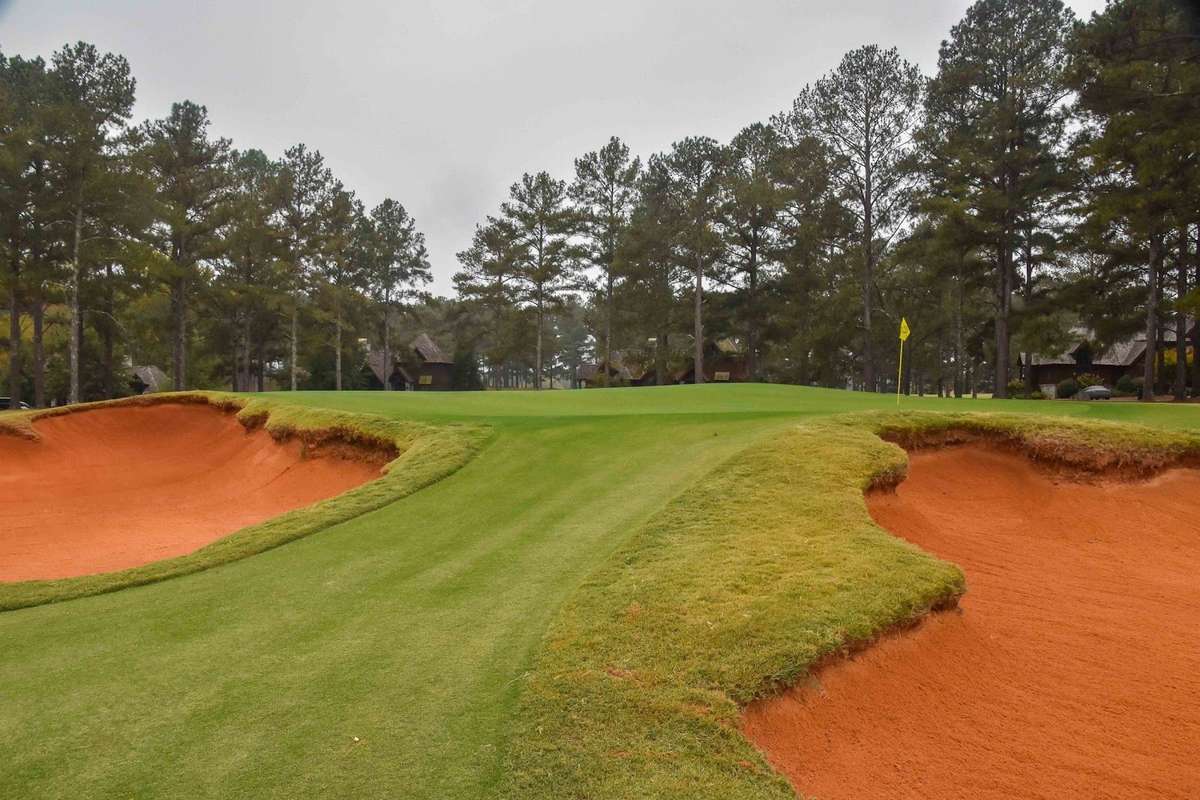
With all that said, the unique feature of The Creek Club is the green complexes. I can honestly say, I have never seen greens anything like this and many years ago when I was a kid I sketched golf hole designs with crayons and these are just the type of greens that I designed. To see a course execute my childhood visions for green complexes is something of a dream come true. So what exactly does that mean? What it means is that nearly every pin placement has three ways to get the ball close to the hole as each pin is somewhat of a funnel effect. The greens each have several sections so you certainly don’t want to miss the proper section of the green and an opportunity to get the ball close to the hole, but even if you do, your chance to recover is usually very good since you can come at the pin from almost any angle and have the ball collect to the hole. It does not really matter where you are, if you short side yourself you can usually hit it past the pin and watch the ball come back to the hole. I played the course late in the day and in the summer when the greens were moderately slow, figure a 9 on the stimpmeter. This made a big difference since the funnel effect would often leave the ball about 5-6 feet from the hole because the greens were not quite fast enough to take the full effect of the mini bowl like features that almost every hole offered. So I was faced with many 5-6 foot putts all day long. The greens rolled nice and true so it was good to have some challenge to have to make putts, most of which were luckily for birdie!
Even though nearly every hole has this same funnel effect, the designs of each were different and the shapes of the greens were different as well. Some narrow, some wide, some long, some wild and boomerang like. You will see in a few of the pictures and hole highlights that you really can’t describe these greens unless you see the picture and ultimately see the course in person.
The positives I would give Jim Engh in his creation is that he clearly worked his butt off to show great creativity, in a way I had never seen before. He accomplished showing great variety and interest around every single approach shot. He made golf fun and even a player struggling on a given day can still hit shots will yield a better result here than you would find on any other course I have ever seen. Hit your shot a ½ club short, no problem the ball will usually funnel close to the pin if you hit it on the right section. Hit it a ½ club long, no problem, same thing. Hit is perfect distance, get a great result. On some holes you could even hit it a full club long and still be reasonably close to the hole. You may read this and say it sounds silly, and it’s not real golf. Please let me tell you my opinion, not every course has to be like playing TPC Sawgrass, PGA West Stadium Course at La Quinta, or Bethpage Black. How often do you get to go out and play a relaxing round of golf where you can drop your guard and just have fun and score well? Believe me, there are plenty of places on this course to make a double bogey and from the back tees the course is over 7000 yards. Most of the approach shots are uphill after having a dramatic downhill tee shot. The par 3’s are really cool and everyone of them offers a real hole in one possibility as well as a great chance to screw up and make bogey or worse. Reality check: If you game is really off, you still won’t score well here. If your game is off by a little bit, the will be more forgiving than any other.
This quick summary gives you all the fun that can be had on this unique course. However, the course has its drawbacks and a few disappointments. First, while the views are very special in many places, the up and down is just too dramatic and happens too often. I felt myself getting dizzy by about the 7th hole. Second, while the vast majority of the greens are really well designed, the 16th, 17th and 18th holes are complete disappointments relative to the rest of the course. This course design was clearly a labor of love and there was tremendous thought put into each and every green complex, again, like nothing I have ever seen, so I respect a great deal what Jim Engh was able to accomplish, I just wish the course finished differently. Maybe reversing the 9’s would solve for this. A bit more on this later.
A few hole highlights that are worth sharing:
The 1st hole is a beauty – it’s a dogleg left that plays downhill from an elevated tee that presents an up uphill approach shot over a charming creek that is ready to grab a mishit approach shot. What’s great about this opening par 5 is that you are able to hit your drive on the right side of the fairway and watch it bounce to the left setting up a great chance to know it on this green in two shots. The uphill piece of this hole is severe so while the green is very receptive to most shots, you have to be accurate and long to have a realistic chance of facing an eagle putt. It’s a great opener that proved to be one of my favorite holes on the course.
The 3rd hole plays downhill yet again with a dramatic view. This is a fun hole for sure as definitely want to position your tee ball on the proper side of the fairway based on where the pin position is on this wild green complex. If you approach the green from the best angle, birdie is a real probability here so long as you can hit your approach shot on the right section of the green, your ball will almost certainly funnel close to the hole.
The 5th hole is undoubtedly the “signature hole” on this golf course. It’s a 475 par 5, with again a downhill tee shot and an approach to the wild 3 tiered green that goes back up hill. The fairway is split by the creek running through the middle but there is more than ample room to hit the left side of the creek. The green has 3 tiers from front to back but again has a funneling effect so long as you hit the proper tier. To give you some context, I hit a solid drive here from the tips but still had 195 yards left. I decided to hit a 5 iron and aimed to the right side of the green seeing a hill that looked like it would spring my ball towards the middle tier pin placement if my distance control was good. I wound up badly pulling this 5 iron left of the pin but still clearly on the green and when I arrived up to the blind green (meaning I could not see where it wound up from the fairway well below the green surface) to my surprise my ball was just 4 feet from the cup! This was a great gift from the course because on many courses a mishit pulled approach like this could have left me with a need to go up and down to save par. This was my 3rd birdie in the first 5 holes; who doesn’t like to see their ego stroked like this. This is definitely the hardest hole on the course, and I still hit two very good shots to reach this green in two, I just got lucky because Mr. Engh was clever enough on this hole to provide forgiveness regardless of which side of the green you hit your approach shot on so long as you hit the proper distance and wind up on the tier for which the pin sits as you can see from the pictures.
The 6th hole is a wild one. Your tee shot is guess what? Downhill, your approach shot is….correct, uphill. But this green is like nothing you have ever seen before. The green is a diagonal funnel where if your approach shot is anywhere near the pin placement, you will have a great birdie opportunity. You must just hit your approach in the direction of the hole. The pin sits in a valley below the area where you walk to the green so that any shot that is short, long, right or left, will run onto the green. Not to make those who have botched this hole feel badly, but if you don’t make par or birdie on this one, you will be most assuredly disappointed. The temperature was 93 degrees F when I played this course so the punishment for another birdie here was walking up the hill off the green made me feel noticeably winded. In order to design a green with such a funnel effect, what goes down must go up, and to get back to the path to get to the 7th hole is not an easy walk at all. I really enjoyed the 6th hole here.
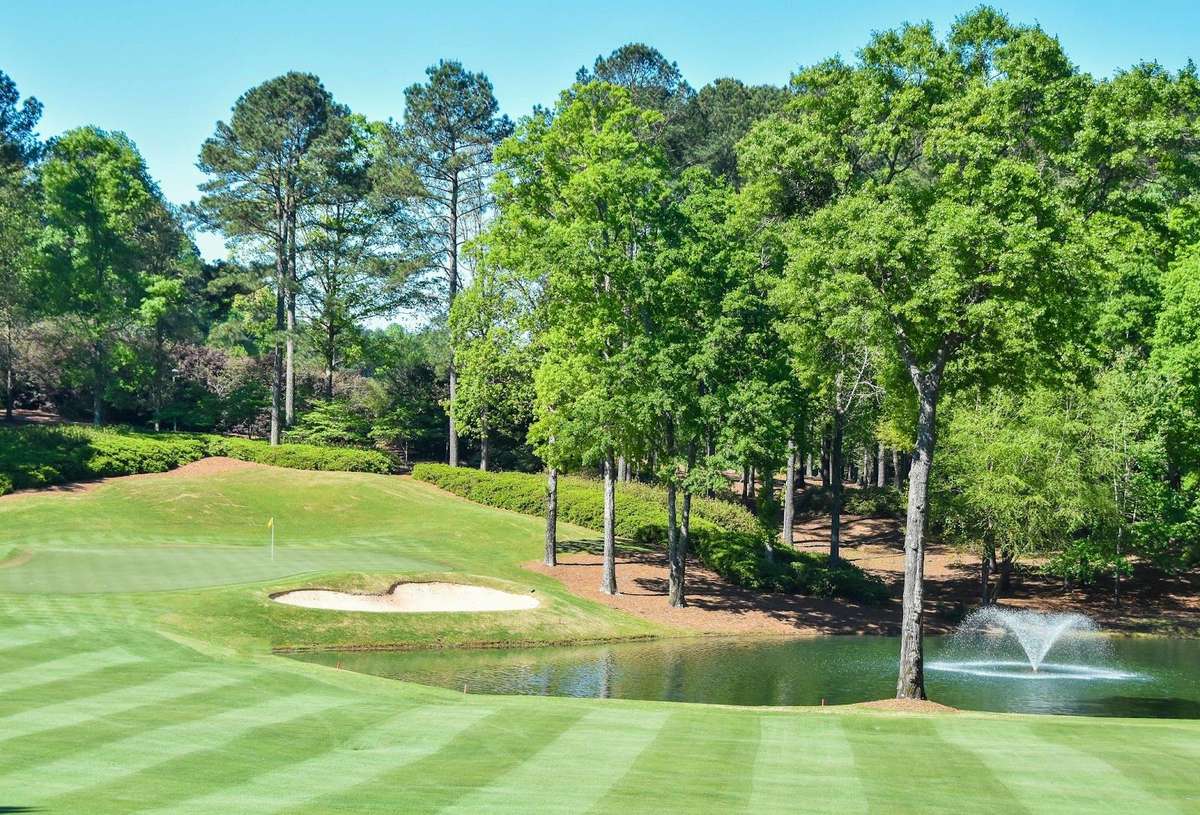
The 7th is a par 3 that is probably the 2nd hardest hole on the front 9. There is water and 3 small bunkers fronting the green and in spite of a great view this is a scary looking hole. The green is another wild one and the entire right side if the pin is there is like the 18th hole on a miniature golf course. Don’t be tricked into thinking I am mocking that, you have to hit about a 6 iron to the right side of the green to find this funnel effect, with all carry over water, so it’s a real shot and easier to screw up than to pull off; yet the reward for pulling off this shot IF the pin is in the right side punchbowl is a great chance for a hole in one. Bad luck for me had the pin on the left side on a back shelf, which was probably the toughest pin on the green and my bogey on this hole supported that after I pulled my 7 iron left of the green. The pitch to recover was not overly tough but awkward nonetheless and I was able to get my pitch to 10 feet, but just missed the putt.
The 8th is a par 5 and the 9th is a par 4. At this point in the round is where I started to get a bit dizzy with the design. Both of these holes play downhill off the tee and uphill to the approach shot. It felt here like it was too much down off the tee, up to the green, over and over again. Some may argue this is a great use of land and showed super creativity but it just started to feel enough was enough at this point. The 9th green is probably the most severe on the entire course and the front pin position is separated by a tier that must be 15 feet in severity. I have to imagine that if the pin is positioned there and someone hits their approach shot long, a putt will probably go tumbling down the hill short of the green and create frustration. A nice attempt here by Jim Engh to do something radical but probably too extreme for my taste.
The back 9 is just as wild as the front.
The 10th hole could rival the 5th for the best architecturally design hole on the course. If you don’t love the 10th hole at The Creek Club, I’d love for you to explain to me why. It’s a beautiful looking hole that goes downhill off the tee but features a demanding drive that must avoid a challenging bunker straight ahead and forces you to keep your drive left to have a great angle into this challenging approach shot and green complex. If you hit the fairway you will have an approach shot that everyone should love. A creek runs diagonally in front of the green and the approach shot has a proclivity to pull your shot left to avoid the creek. But rest assured there is a hill that will kick your pulled shot left onto the green, SO LONG AS you don’t pull it too much, and even if you do, the chance for an up and down there is realistic. This was my 2nd favorite hole on the course.
I was not a big fan of the 11th hole. It’s a par three that is well over 200 yards from the back tees and features a boomerang shaped green that feels somewhat divided by a bunker that runs along the front middle. The entire right side of the green is way too narrow for a shot of this length. The view in the distance makes you only see houses and unsightly dead grass so for all the great views and interesting holes on the course thus far, this is one you’d like to forget.
The 12th is an interesting par 5 that has an amazing green complex with three distinct sections all of which are challenging, more like a traditional green with sections where a good shot will be rewarded but a poorly hit one will leave a very challenging up and down. The lead up to the green on this hole is interesting and presents many options and obstacles with a 5 trees that are left in unusual places (one in the middle of the fairway) to keep you on your toes. I like the hole.
The 13th is a hole that is truly a one-of-a-kind par 3. The green is narrow but funneled from front to back and amoeba shaped running probably 65 yards or so deep and has a dogleg left in the back section. Yes, I am JUST talking about the green complex. It’s certainly not a majestic look but one that screams hole-in-one if you hit the right section and get the right bounce. Unlike some of the other funnel effect holes, only the back left section has a true punch bowl effect, the rest of the green has so many bumps and humps that the ball can easily bounce onto the wrong section of the green leaving a really awkward and hard putt to get close to the hole. The tee shot is uncomfortable because you don’t really know where to hit your shot and your tee shot needs some luck to get close unless you have a back left pin as I did where you can go right at it, or just left of it to get close to the hole. This hole represents a great example of judging architecture unemotionally because I hit my best shot of the day here, a 6 iron from 195 that never left the stick, it wound up 3 feet from the hole and I made a nice birdie, but I studied this hole closely and found it to be way too gimmicky on the majority of the green and unsightly on top of that. Moreover, the walk off the green up the hill could make even the most fit athlete winded and needing a few seconds to catch their breathe.
The 14th is a nice par 5 that actually features a nice change of pace, an uphill tee shot and a downhill approach. For most this will be a layup par 5 as there is nothing but trouble short, it’s all carry over water and the green is designed to receive a wedge approach. If you do go for the green in two, the green sits in another amphitheater setting where there is a good chance your long approach shot could funnel onto the green. This is another somewhat boomerang green from left to right, so it’s a different shape and a fun hole. The approach with a wedge is what makes the hole, you have a great chance for a birdie if you play the hole the way it was designed. But you could easily make bogey or worse on this one.
The 15th is a solid par 4 that I liked, but not much to really highlight here except that it’s one of the more mundane greens on the course. It still have a somewhat bowl effect just not as severe as many of the others.
16, 17 and 18 are all disappointments relative to the rest of the stronger holes on the course. The 16th is a par 4 that goes mainly uphill and its short. But It just didn’t fit my eye to well aesthetically. The 17th is a par-3 with a green that seems totally out of sorts for this course. The green had only modified movement to it and just want not that memorable.
The 18th for me was the biggest disappointment on the course. The tee shot plays straight downhill, you cannot really see much of the hole from the back tee box and you can sort of see parts of the fairway. The width of the fairway is huge but there are 3 bunkers that guard the left side of the fairway. The right side slopes severely right to left and its easy to be left with an uphill lie on this hole if your tee ball doesn’t funnel down to the middle of the fairway. The most awkward part of this hole is that it has three green complexes. You read that correctly, three different greens that can be used on any given day. There’s one to the left, one in the middle and one on the right. The only green you can see off the tee is the one to the left. This green has a tall tree right smack in the middle of where you would hit your approach shot. I had to look twice to make sure I was seeing straight. Without this tree, that would be the best of the three greens relative to the direction the hole plays. The middle green has a whole bunch of disk like humps fronting the uphill green which obstructs the view of the green complex until you actually get up onto to the green. If it were me, I would completely renovate this approach shot to the middle green so that it has some optical appeal and doesn’t feel so awkward. This middle green has a left to right rippling effect that seems ok but for me is not the right design for a hole like this. If anything a hole like this should have a true punchbowl green relative to the rest of the course. This green is somewhat narrow while you can spring the ball forward on this green if you clear the humps short of the green and you can probably get the ball to roll back onto the green if you are just long, there are no optics here because you cannot see any part of the green due to this huge hump section fronting it.
The right side green should simply be eliminated. It’s the weakest of the three greens by far. First off, it turns the hole into a sharp dogleg right. While that makes it seem like an interesting alternative option, the natural land of this hole does not fit making it a dogleg right. If you hit your drive to the right, you really have no shot at all but to wedge out way left to leave yourself an uphill longer approach shot that has to go way to the right. This is a small green that has hardly any movement and if anything takes away from the other two greens which are more interesting and make for a better hole. With a modest amount of work, this hole could be vastly improved and it’s one of the examples where played at a shorter length it’s a much better hole. I looked at this hole from each tee box and the back tee makes the hole the weakest. The other tee boxes create a much better visual and offer more risk reward, even as the hole currently is designed without taking into account my proposed changes.
Overall I enjoyed The Creek Club. Some of the views are majestic, some of the holes are fantastic actually. On balance, it’s a super fun golf course that should boost most golfers ego’s if they are hitting the ball solidly and most importantly have good distance control. Keep in mind, all the highlights I shared above all require proper distances control for these green complexes and surrounds to take the design features to spring your ball towards the hole. If you don’t have the right distances on your approach shots you will be scrambling to save pars. I just keep thinking how much appeal this course would have if the PGA TOUR picked 4 players for a skins game here or if they had a match play event on the course, tour players would eat it up and you would see plenty of scores in the upper 50’s. You would probably see someone break Jim Furyk’s record score of 58 that he shot several years ago. In spite of my criticism of the 18th hole, don’t get me wrong, you can easily play this hole strategically and make plenty of pars and even some birdies to the middle green. The left green approach shot would be drastically improved is they just take down that one tree and then it’s a reasonably good hole, especially from the 2nd tee box which opens up the views and creates much more definition of where you need to go off the tee. The thought that went into many of these greens is like nothing I have ever seen and for that I applaud Jim Engh for his efforts. Finally, if I were just playing this course to play golf, and not be an architectural critic, I would walk off the 18th green (probably out of breath) and say, “wow, that was so much fun!”
BAM