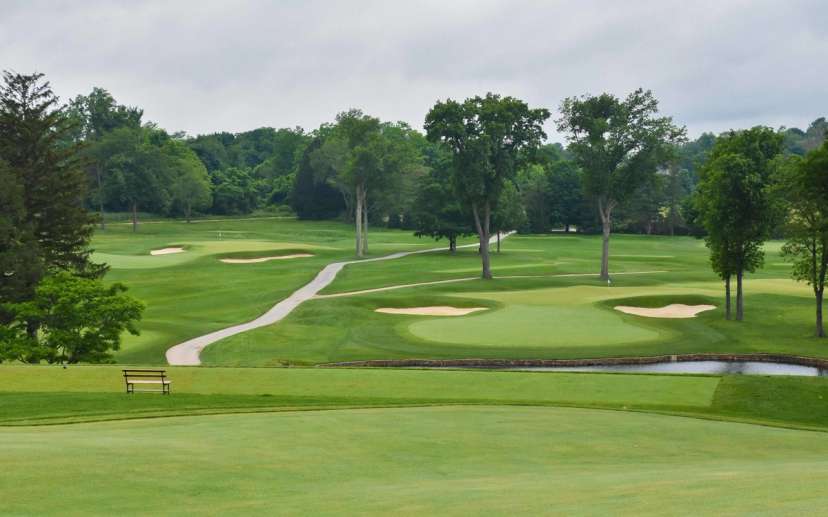
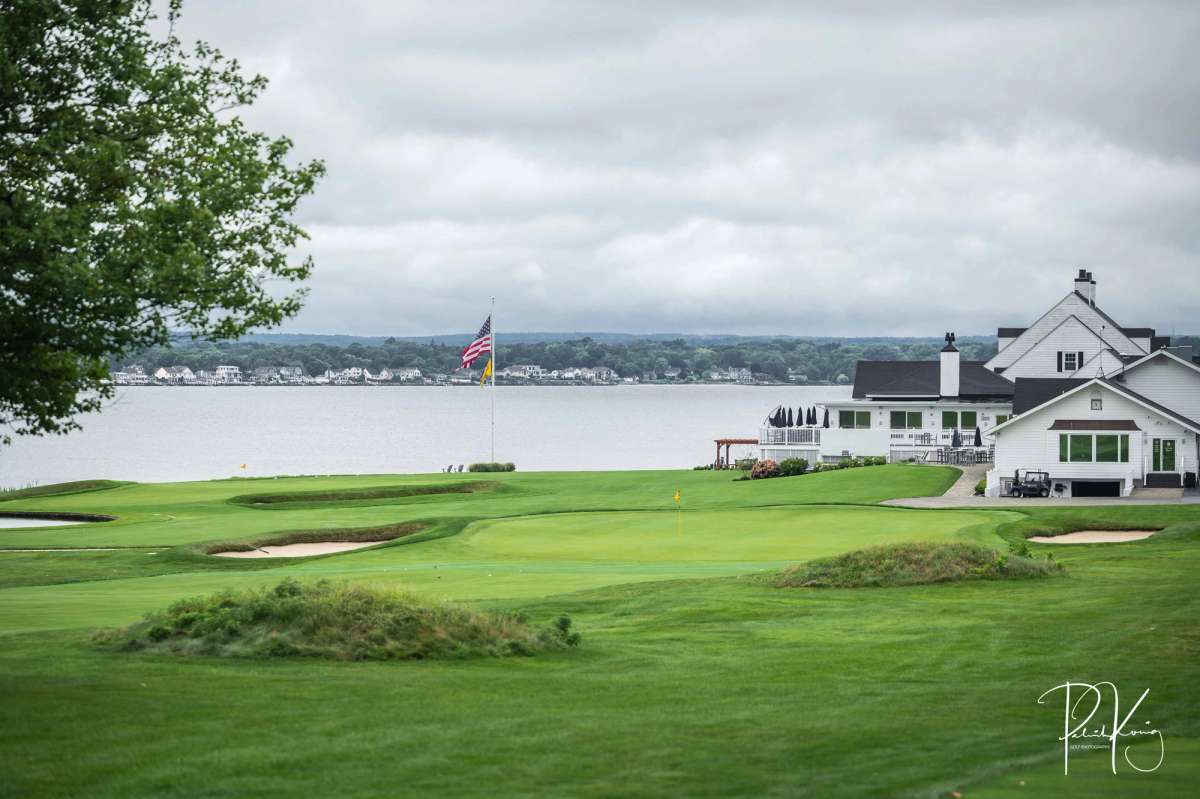
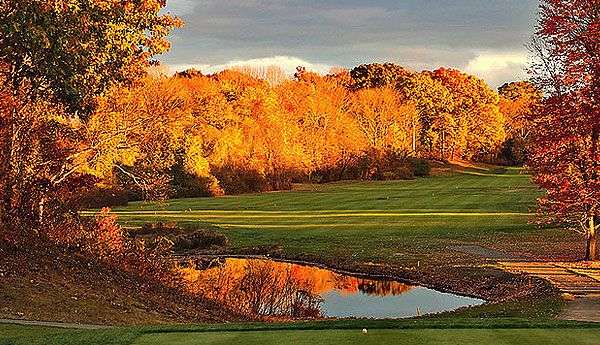
Host to the 2011 US Women’s Amateur, Rhode Island Country Club is routed across a diverse landscape of parkland, woodland and wetlands, ending with four holes that wind around Narragansett Bay.
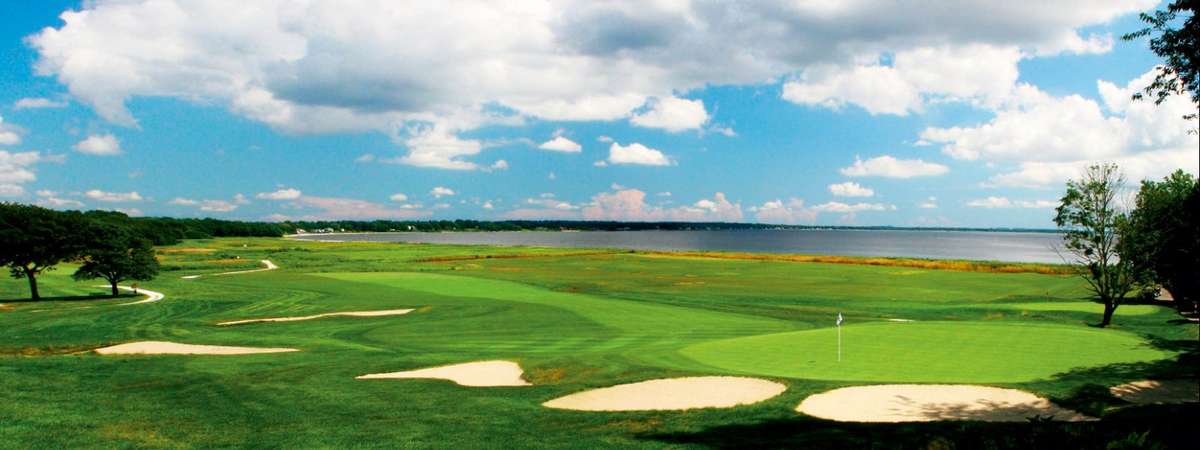
Host to the 2011 US Women’s Amateur, Rhode Island Country Club is routed across a diverse landscape of parkland, woodland and wetlands, ending with four holes that wind around Narragansett Bay.
Course Architect
View ProfileCourse Architect
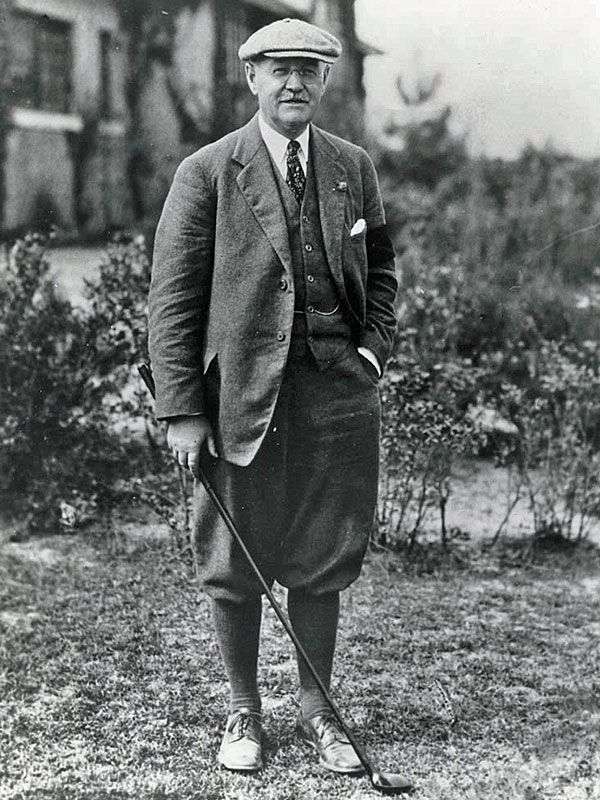
Donald Ross worked with Old Tom Morris at St Andrews in 1893 then spent part of the following season at Carnoustie before returning to serve under the Dornoch club secretary John Sutherland.
Donald James Ross was born in 1872 to Murdoch Ross, a stone mason by trade, and his wife Lillian Campbell. Their first child had died soon after birth that same year so Donald became the eldest in the family, followed in subsequent years by three brothers and two sisters.
Other Notable Courses
View courses (192)
Fergal O’Leary unravels patriotic New England Shelter Harbor Rhode Island offers so many wonderful old classic golf courses and it takes a very special effort for a newcomer to become established amongst so many New England gems. Shelter Harbor takes advantage of wonderful rolling terrain in Westerly, RI. This award-winning layout has many topographical changes from the low point of 102 feet, to the high point of 187 feet, and rock walls are woven through the whole of the course. The course has a strong connection with environmental preservation and protecting native ruins throughout the property. Players have flashbacks to North Berwick when you see rock walls in your line of sight; however the design of the clubhouse quickly reminds you that you’re in old town New England. One of the most distinctive features of the course is the rustic bunkers shrouded with native fescues. Shelter Harbor has trademark characteristics of magnificent velvet fairways and glass-like putting surfaces which immediately project it into the elevated ranks of the Ocean State. This young club is already a favourite of the New England PGA, and having recently consulted with a few golf professionals in the greater Boston area, this club is met with glorious approval. The course offers a serious test for even the best of players, but architectural beauty is effortlessly integrated with demand for precision. The par 5 9th hole is a signature hole with feverishly fescue lined bunkers leading to a dog-leg right around a forested area up to the small perched green. It’s a sight to behold and epitomizes the culture at Shelter Harbor. Visitors are keen to experience the exciting par 3 course. The par 27, 1,206-yard layout is located on the southern edge of the property. The par 3 course is punctuated with many elevation changes, rock walls and trees creating a challenging fun-filled experience for golfers of all abilities. Many of today’s exclusive clubs boast about their practice grounds. Shelter Harbor offers a 22-acre practice facility featuring six sets of tees each offering varying views and distances to the five target greens. The practice ground also has two short game areas along with a practice putting green and a private tee for professional instruction. With cottages on-site for visitors to enjoy, it’s no surprise to see this club growing in popularity and serving its players with nothing but he best. Country Club of Fairfield It's the most wondrous place with unsurpassed New England seasonal beauty overlooking the Long Island Sound and Southport harbor. The land once served as onion farms where produce was shipped from Southport Harbor. The Country Club of Fairfield was one of Raynor’s first solo efforts. But Raynor was not the only architect of note to work on the Country Club of Fairfield course, as A.W. Tillinghast and Robert Trent Jones Sr. also added their touches over the years. The result is a layout that not only serves as a superb member’s course, but also as a challenging venue for tournaments such as the Met Open, the Connecticut Open and the Met PGA Championship. It is rightfully regarded as one of the best in the country. With the obvious exception of Fisher’s Island, there aren’t many Raynor courses with ocean views serving as the backdrop. All of the iconic named holes are on display and it’s enjoyable to see how he created them on a seemingly flat piece of seaside land. The 9th and 18th greens are on the highest point of the property overlooking the remaining holes winding their way throughout the low-land and marsh. The symbolic Redan hole is an emblem of Raynor’s work, and the Redan at Fairfield is arguably the greatest in America. The tilt on many of these seaside surfaces married with terrifying green speeds, ensures this classic layout will be the eternal victor against the test of time. The exclusivity of this course has kept it under the radar, however with its recent promotion into the US Top 100, the attention of golfing aficionados will now migrate to Connecticut to bear witness to an ensemble of Raynor’s best. The holes are an unexplainable mix of treachery and excitement. Playing the holes is an honour by itself and experiencing the untouched history inside the locker room allows your imagination to be intoxicated by the unmistakable aroma of times past. Newport Country Club Theodore Havemeyer, a wealthy sportsman played the game of golf on a trip to the South of France in 1889 and returned to his summer home in Newport, RI with the idea of creating his own course. He partnered with a few gentlemen from the summer colony's social elite to purchase the 140-acre Rocky Farm property for $80,000 and establish the golf club in 1893. In line with his intention to host national competitions, Havemeyer invited the country's best amateurs to his new course for a championship in 1894. That December, Havemeyer held a meeting at New York City's Calumet Club with representatives from four other American clubs: St. Andrew's Golf Club, Shinnecock Hills Golf Club; The Country Club and the Chicago Golf Club. These clubs agreed to form the Amateur Golf Association, the forefather of the United States Golf Association. In today’s modern times, these clubs gather on an annual basis to play “The 1894 Matches” to celebrate the origin of the USGA. In October 1895, Newport Country Club hosted both the first U.S. Amateur Championship and the first U.S. Open. In 1995, in celebration of the U.S. Amateur Championship centennial, the club hosted the 1995 U.S. Amateur Championship, which was won by Tiger Woods. To this day, the U.S. Amateur champion is awarded the Havemeyer Trophy. This iconic clubhouse is like no other clubhouse in the country due to its unique design. I always enjoy walking in the front door, taking a few steps forward and finding myself within arm’s reach of the back window. Whitney Warren designed the classic, Beaux Arts style clubhouse on a largely barren farm overlooking Brenton Point in 1895. The evolution of the current 18-hole layout is a fabled story in itself. A gathering of the members took place recently to discuss the History of Newport Country Club. The Club Historian from The Country Club was the keynote speaker and facilitated the discussion. Many photographs and maps around the club suggest that A.W. Tillinghast designed the entire layout, but the educated eye begs to differ. It’s been documented that a nine-hole course was designed in 1894 by William Davis, the club's first professional, and later expanded to 18 holes in 1915 by renowned architect Donald Ross. In 1923, A.W. Tillinghast was hired to remodel the course layout. Since 1995, Ron Forse has completed restoration on some of the layout. Having played all of the Tillinghast gems around the country, there’s something about Newport that doesn’t feel like a Tillinghast layout or a Ross course. It’s just different. This legendary history is second to none in this country, but what about the golf course itself? Historically, the course has never had a water system which takes “firm and fast” to a whole new level. Hazards which would otherwise be out of reach suddenly add to the list of nooks and crannies to avoid. For those of you who have enjoyed true links golf, you’ll know the value of playing a bump and run approach shot. Newport forces the golfer to exercise careful judgement with where to land the ball and hope that the bounce is in your favour. Some players consider this layout an examination. It’s not a terribly long course, but the challenge of hitting irons from such tight untreated lies is enough to save your blushes amongst a serious bunch of golfers. Newport offers a collection of short par 4s, reachable par 5s, back to back par 3s and a prevailing wind off the ocean that is always a factor with club selection. Sometimes it’s a catalyst for mistakes and uncertain swings. As with all of the top rated courses in this country, the green surfaces are flawless and worthy of USGA events. The course was built with such primitive means and took advantage of the natural topology creating quirky holes, pitched fairways and perched greens. The weather dictates the character of the course from day to day given its exposed location. The lack of water on the course makes it appear raw and rustic and is a welcomed change from modern technology and underground systems which seem to have left these old classics behind. What separates Newport from the rest? It’s the throwback to the golden days of American golf and an irrigation system governed by Mother Nature. But like a good Rolex, Newport doesn’t just tell time, it tells history. Article written by our US Consultant, Fergal O'Leary, who continues his mission to become the youngest person to play the Top 100 Golf Courses of the World.

A good halfway house can turn a great round of golf into a memorable one. It might be a cold beer on a Scottish links, a burger with a spectacular view or a hot drink to warm you up before the back nine. Whatever is on offer, the best halfway houses give golfers a chance to forget about the scorecard for a few minutes and enjoy the experience. We recently asked the Top100 Golf Courses community to share their favourite halfway houses, uncovering plenty of memorable stops around the world. We've picked five of their recommendations, alongside five more renowned halfway houses that are well worth knowing about. What is a Halfway House? A halfway house is a food and drink stop positioned around the turn of a golf course, usually between the ninth and 10th holes. Some are little more than a hut serving snacks and drinks, while others have become destinations in their own right, offering everything from full meals and cocktails to fires, views and plenty of local character. Five Halfway Houses Chosen by the Top100 Community Sunningdale Golf Club (England) There is a reason the halfway hut at Sunningdale has become one of the most famous refreshment stops in golf. The small Swiss-chalet-style building has been in place since 1903, sitting where the ninth holes of both the Old and New Courses meet their respective 10th holes. But the building itself isn't the main attraction. That would be the sausage sandwich. Sunningdale's legendary hut serves a simple sausage on buttered bread, with other food and refreshments available alongside it. The hut has become such an established part of the experience that the club's own tradition says everybody stops, but does so speedily. It's not fancy, and that's rather the point. After nine holes of heather-lined fairways, a hot sausage sandwich and a cup of tea can feel like exactly what golf ordered. Nairn Golf Club - The Bothy at Nairn (Scotland) The Bothy at Nairn has a history that goes well beyond golf. Built in 1877, the stone building and neighbouring icehouse formed part of the Easter Delnies Fishing Station, one of five salmon fisheries operating along the coast between Nairn and the mouth of the Findhorn. In a good season, the fishery could catch up to 5,000 salmon, with ice collected from local rivers and a specially made pond and stored in the icehouse to keep the catch fresh. The buildings have since been given a new lease of life, with the Bothy converted into a halfway house where golfers can stop for snacks and refreshments at the turn. On a cold day beside the Moray Firth, there's also a fireplace to warm up beside. The historic stone building, Highland setting and views across the course provide plenty of atmosphere. One of our community members put it rather simply: a dram of whisky and a fire are hard to beat. Hard to argue with that. Turnberry Ailsa (Scotland) Turnberry's halfway house is about as far removed from the traditional golf hut as you can get. The Ailsa's ninth hole now finishes beside the famous Turnberry Lighthouse, which doubles as a halfway house for golfers. The lighthouse itself dates back to 1873, while the golf course's dramatic ninth was redesigned as part of the Ailsa's major renovation. Inside, golfers can stop for food and drink before heading to the 10th, but the real attraction is outside. From the lighthouse, there are views across the Firth of Clyde towards the Isle of Arran and Ailsa Craig. It's a halfway stop that feels more like a destination than a quick pit stop. When your halfway house is a historic lighthouse overlooking one of Scotland's most spectacular stretches of coastline, you've got a pretty good excuse to take your time. Ardglass Golf Club (Northern Ireland) At Ardglass, the halfway-house experience is wonderfully straightforward: have a Guinness and enjoy the view. The course's old cottage halfway house at the back of the 7th green has become one of its most memorable features, with golfers able to stop for a pint before continuing their round. A recent visitor described it as a gorgeous cottage with Guinness, while another praised the combination of a Guinness, sausage roll and views over the Irish Sea. It fits Ardglass perfectly. The County Down links is already one of the most dramatic places to play golf in Northern Ireland, with the Irish Sea never far away. Add a pint of Guinness just before the turn and you've got a halfway house that feels distinctly of its surroundings. Sometimes you don't need to reinvent the wheel. Blair Atholl Golf Estate (South Africa) Blair Atholl might have been one of the less obvious names to appear among the community recommendations, but the descriptions made it impossible to leave out. The halfway stop sounds less like a quick break and more like an event. One golfer highlighted the chicken burger, a chef cooking a barbecue beneath the trees and a deck sitting beneath a stream. Another mentioned silver-service high tea. That's quite the halfway-house menu. It's also a good example of why the best stops aren't necessarily the most famous. A halfway house can become memorable because of the food, the setting or simply the feeling that you're being looked after rather than rushed back onto the course. Five More Renowned Halfway Houses St Andrews Links - The Old Course (Scotland) If we're talking about halfway houses, it makes sense to visit the place that has a claim to starting the tradition. In the 19th century, David "Old Da" Anderson sold ginger beer and other refreshments from a cart on the Old Course at St Andrews. It has been described as golf's first refreshment stand. The modern version sits behind the ninth green and keeps the tradition going, albeit with a rather more substantial menu. The pork and haggis sausage roll is a popular choice, while the club's own Tom Morris 1821 Lager provides a suitably Scottish accompaniment. It's difficult to think of a more fitting place for a halfway stop. The Old Course is steeped in golfing history, and even the break between nines has a story of its own. Pine Valley Golf Club (New Jersey, United States) Pine Valley's halfway house is memorable before you've even ordered anything. Rather than a conventional hut, it is built into the base of an old water tower, which golfers encounter around the eighth hole and again near the 12th tee. It's an appropriately unusual feature for one of the world's most unconventional golf courses. The tower doubles as a stop for drinks and snacks, giving golfers a chance to take a breather before continuing around Pine Valley. It even boasts an impressive collection of golf balls from around the world. There aren't many halfway houses that can claim to be built inside a water tower. Quivira Golf Club (Baja California Sur, Mexico) Quivira has taken the halfway-house concept and spread it across the entire round. The Jack Nicklaus-designed course has multiple all-inclusive comfort stations, each offering golfers food and drinks as they make their way around the Cabo San Lucas layout. The most spectacular is The Cliffs, perched almost 300 feet above the Pacific, where golfers can stop for a breakfast burrito and take in the views over the ocean. Then there's The Oasis, the main halfway house near the ninth green. Here, the emphasis is on the food, with freshly prepared Baja cuisine including tacos and tostadas, alongside a full tequila bar. A final stop, Cañada, sits near the 16th tee, while another comfort station beside the oceanfront practice facility offers snacks and cold drinks before golfers even reach the first tee. The food and refreshments are included in the green fee, making Quivira's comfort stations much more than somewhere to grab a quick drink. Tacos, tequila and spectacular Pacific Ocean views make the breaks almost as memorable as the golf. Whistling Rock Country Club (South Korea) At Whistling Rock, there isn't just one halfway house to look forward to. The South Korean club is made up of three nine-hole loops, each with its own themed tea house: Cocoon, Temple and Cloud. The three buildings are each distinctly different. One is a rounded structure between a lake and forest, another is a formal wood-and-glass building, while the Cloud tea house sits high among the trees. The result is a halfway-house experience that feels distinctly different depending on which nine you're playing, with each tea house adding another layer to the Whistling Rock experience. Royal Dornoch Golf Club (Scotland) Royal Dornoch's halfway house is proof that sometimes the best idea is a simple one. The stop sits behind the ninth green of the Championship Course, with views back across the links towards the Dornoch Firth. And then there's the traditional order: hot chocolate with Bailey's Irish Cream, a combination that makes considerably more sense when you're standing on a Scottish links in a North Sea wind. It's a small detail, but one that has become part of the Royal Dornoch experience and exactly the sort of halfway-house tradition golfers remember.

You don't need a four-figure budget, a private-club connection or an invitation from a member to play a course in the World Top 100. Top100 has collated the 10 cheapest visitor-accessible courses on our current World Top 100 Ranking, based on standard green fees. From a world-class links in Tasmania to a U.S. Open and Ryder Cup venue in New York, these courses offer the chance to play some of the best golf on the planet without the eye-watering green fees attached to many of their World Top 100 counterparts. 1. St Andrews Beach Golf Course (Victoria, Australia) World Ranking: 89th | Australia ranking: 6th | Green fee: A$139 (£74) Tom Doak’s first Australian mainland design, St Andrews Beach opened in 2004 on the Mornington Peninsula and has since become one of the country’s best-value, ranked courses. The public-access layout occupies 175 hectares of former grazing land, with wide fairways, rolling terrain and sandy natural contours that give several holes a links-like feel. Measuring just over 6,000 metres from the back tees, it is playable for a broad range of golfers, though the subtle greens ensure there is still plenty to think about. In a region known for outstanding golf, St Andrews Beach stands out not only for its quality but also for its accessibility, offering everyday golfers the chance to experience a Tom Doak design without the premium price tag often attached to courses of this calibre. 2. Bethpage Black (New York, USA) World Ranking: 58th | USA ranking: 28th | Green fee: From US$140 (£106) Bethpage Black has the rare distinction of being a World Top 100 course, a major championship venue and a public golf course. Located within Bethpage State Park on Long Island, the A.W. Tillinghast design opened in 1936 and has since hosted two U.S. Opens and the 2025 Ryder Cup. The Black is renowned for its difficulty, with narrow fairways, deep rough, large sculpted bunkers and elevated greens making accuracy essential. It is a demanding test, but one that remains remarkably accessible to everyday golfers. That combination of championship pedigree and public access is what makes Bethpage Black so unusual. Few golfers get the chance to play a course of this stature without needing a private-club connection or resort stay. 3. Paraparaumu Beach Golf Club (Wellington, New Zealand) World Ranking: 91st | New Zealand ranking: 2nd | Green fee: NZ$275 (£118) Set on the Kapiti Coast, north of New Zealand's capital city Wellington, Paraparaumu Beach has been one of the country’s most celebrated golf courses since Alex Russell designed it in 1949. The links has hosted 12 New Zealand Opens and has long been regarded as one of the country’s finest layouts. It is a relatively short course by modern championship standards, but the coastal wind, firm fairways, deep bunkers and undulating greens provide plenty of challenge. The split-fairway 17th is a particular highlight, forcing golfers to choose between two very different routes to the green. For international golfers, Paraparaumu offers the chance to experience a genuine piece of New Zealand golfing history without needing access to a private resort. 4. Fairmont Jasper Park Lodge Golf Course (Alberta, Canada) World Ranking: 73rd | Canada ranking: 2nd | Green fee: C$280 (£149) Set among the Canadian Rockies in Jasper National Park, Fairmont Jasper Park Lodge is one of Stanley Thompson’s most celebrated designs. Opened in 1925, the course winds through the valley beside Lake Beauvert, with snow-capped peaks providing a backdrop to almost every hole. The course combines wide fairways, elevated tees and strategically placed bunkers with the natural contours of the landscape. Thompson’s design rewards thoughtful play rather than simply demanding power, making it a course that can be enjoyed by golfers of different abilities. The result is a rare combination of classic golf and Canadian wilderness, with the surrounding mountains and forest making the journey between shots almost as memorable as the golf itself. 5. Barnbougle - The Dunes Course (Tasmania, Australia) World Ranking: 25th | Australia ranking: 3rd | Green fee: A$285 (£151) Barnbougle Dunes is about as close as Australia gets to a traditional seaside links. Set on Tasmania’s northeast coast, the course was designed by Tom Doak and Australian Mike Clayton and opened in 2004, establishing Barnbougle as one of the country’s premier golf destinations. The layout runs through towering coastal dunes, with wide fairways, natural contours and greens that follow the movement of the land. The wind is an ever-present factor, while the strategic design rewards golfers who think their way around the course rather than simply relying on power. For golfers seeking a genuine links experience outside the British Isles, Barnbougle Dunes is about as compelling as it gets, combining world-class golf with the rugged coastline of Tasmania. 6. Cape Wickham Golf Links (Tasmania, Australia) World Ranking: 47th | Australia ranking: 4th | Green fee: A$315 (£167) Cape Wickham occupies a spectacular stretch of coastline on King Island, sitting in Bass Strait between Tasmania and mainland Australia. Designed by American architect Mike DeVries, the links opened in 2015 and quickly established itself as one of the country's standout modern courses. The course makes the most of its remote coastal setting, with the opening five holes winding around Cape Farewell before the layout moves through sand hills and limestone outcrops. Several holes hug the shoreline, while the closing stretch heads towards the imposing Cape Wickham Lighthouse. The 18th provides a fitting finale, with the fairway doglegging around a sandy bay before reaching the home green, making Cape Wickham a memorable links experience from start to finish. 7. St Enodoc Golf Club - Church Course (Cornwall, England) World Ranking: 49th | England ranking: 4th | Green fee: £175 Set among towering dunes overlooking the Camel Estuary in Cornwall, St Enodoc’s Church Course is one of James Braid’s most distinctive designs. Founded in 1891, the course was transformed by Braid in the early 20th century and remains a spectacularly natural links. It is a relatively short par 69 at 6,010 metres, but its undulating fairways, dramatic elevation changes and formidable dunes create a test that demands imagination. The famous 6th is the standout, with the enormous Himalaya dune obscuring the green and making club selection particularly difficult. The course also has an unusual piece of history, with the 13th hole running alongside the churchyard where poet laureate John Betjeman is buried. 8. South Cape Owners Club (Gyeongsangnam-do, South Korea) World Ranking: 63rd | South Korea ranking: 2nd | Green fee: From KRW 350,000 (£195) Set on Namhae Island off the southeast coast of South Korea, South Cape Owners Club is a dramatic Kyle Phillips design where the ocean is visible from all 18 holes. The course opened in 2013 as part of a luxury resort development and has quickly established itself among Asia's most striking modern layouts. The course is framed by granite outcrops, coastal cliffs and rolling terrain, with bluegrass fairways contrasting against fine fescue rough. The standout stretch comes from the 11th onwards, culminating in two spectacular waterside par threes at the 14th and 16th. For golfers willing to make the journey to Namhae Island, South Cape offers a rare combination of world-class golf, dramatic coastal scenery and a luxury resort experience. 9. Utrecht De Pan Golf Club (Utrecht, Netherlands) World Ranking: 56th | Netherlands ranking: 1st | Green fee: From €235 (£198) Dating back to 1894, Utrecht De Pan is the second-oldest golf club in the Netherlands, with Harry Colt designing the current course in 1929. Set in secluded woodland near Utrecht, the layout is a classic heathland course, winding through pine, birch, oak and chestnut trees. De Pan has hosted the Dutch Open three times and is built around strategic rather than power golf. Several of its most memorable holes play over valleys of heather and sand, while the sixth and seventh demand particularly thoughtful tee shots and approaches. Recent restoration work by Frank Pont has helped return the course towards Colt’s original design, making De Pan a fascinating example of Golden Age heathland golf in the Netherlands. 10. Cruden Bay Golf Club - Championship Course (Aberdeenshire, Scotland) World Ranking: 70th | Scotland ranking: 10th | Green fee: From £205 Cruden Bay is one of Scotland’s most distinctive links, winding through towering dunes on the Aberdeenshire coast with the North Sea providing a constant backdrop. The course opened in 1899 after being laid out by Old Tom Morris and Archie Simpson, before Tom Simpson and Herbert Fowler remodelled it in 1926. Cruden Bay makes spectacular use of its natural terrain, with elevated tees, blind drives, punchbowl greens and fairways that rise and fall between the dunes. The 193-yard 4th, played from an elevated tee across a deep hollow, is one of several standout holes. There is plenty of character, too, from driveable par fours and back-to-back par threes to the feeling that every hole reveals something different. It is exactly the sort of course that rewards golfers willing to embrace its quirks. Green fees are based on standard 18-hole visitor rates, using international visitor rates where applicable. All prices are peak-season rates and do not take twilight, off-season or promotional rates into account. Prices are correct at the time of writing and are subject to change.
The latest ranking of the Top 100 Golf Courses in the World serves as the ultimate global golf bucket list. Most members of our World Top 100 Panel are seasoned golfers, each playing 20-30 of these courses annually while travelling extensively over decades to form their opinions on others. We recognise that opinions vary—even among our panel members. Rankings are subjective, and there are undoubtedly 50 or more courses in the UK and USA alone that could easily fit onto this list. Links Golf Pilgrimages The rankings
California, United States
New Jersey, United States
Northern Ireland, United Kingdom
New York, United States
New York, United States