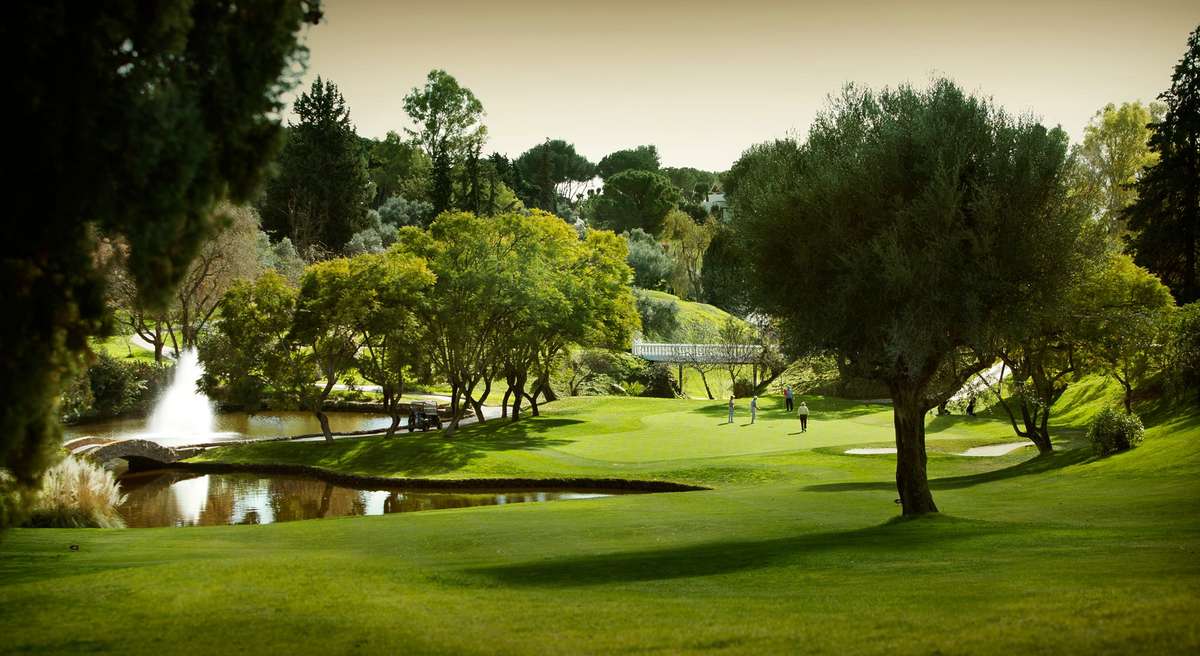
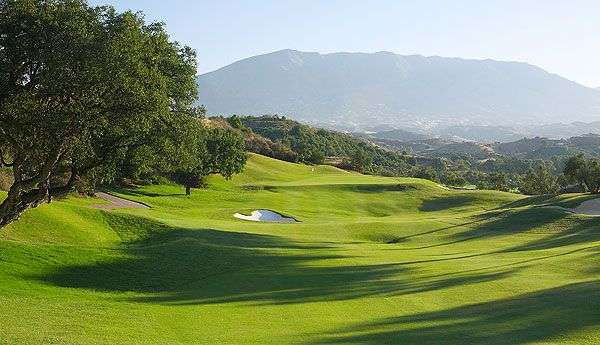
The oldest course in the Marbella area, Rio Real was built on a compact site back in 1965 when Javier Arana laid out an 18-hole course on the banks of the Real River...


The oldest course in the Marbella area, Rio Real was built on a compact site back in 1965 when Javier Arana laid out an 18-hole course on the banks of the Real River...
The oldest course in the Marbella area, Rio Real was built on a compact site back in 1965 when Javier Arana laid out an 18-hole course on the banks of the Real River where it enters the Mediterranean Sea. The valley location was fairly secluded when it was first chosen to site the course but, over time, housing has encroached all around and the noise from the number of vehicles that now use the adjacent main road can be quite distracting on several of the holes.
Still, Rio Real is a classic old Costa del Sol course that retains a fair amount of its original charm and its pine and palm tree-lined fairways play to slightly elevated, well-bunkered green sites, often crossing the river en route to the hole. The trees on the property have matured into fine specimens but a number now present more of a hazard than originally intended, screening, as they do, the best line of play in some instances.
One of the more memorable holes on the card is the par four 4th, doglegging left from the background sound of the traffic on the tee to the crashing of waves on the seafront, with the green located right on the coastline. Another fine long par four awaits at the 8th, a wonderful hole that veers left from an elevated tee position and ends with a downhill approach to a small green that's benched into the hillside.
The following edited extract is from “The golf courses of Javier Arana” by Alfonso Erhardt Ybarra and is reproduced here with kind permission from the author:
The Rio Real golf course was designed as an annex to the Los Monteros hotel, a development built east of Marbella in the late 1950s by the Salamanca-born businessman Ignacio Coca. After it first opened in 1962, the hotel had established itself as one of the grandest destinations for high-end tourists on the Costa del Sol, a magnet for film stars, aristocrats and other figures who dragged the paparazzi in their wake.
Despite the developers’ deep pockets, however, the plot selected for the site was not ideal. Though the terrain was gentle, only thirty hectares were available and a further fifteen were needed for a proper golf course to be built on it. The back and forth between Arana and the developers continued until work finally began in October 1963, after Javier extracted permission to build several holes along an elevated stretch of the property that had originally been allocated to residential use.
As with some of Arana’s other designs, the routing is perhaps the highlight of the Rio Real course. Those who witnessed the construction work attested to the endless hours Javier spent examining the site to solve the puzzle of fitting eighteen holes into this small 45-hectare plot and achieving a design that met the standards expected of him.
The result is a tightly compact layout where fourteen holes are sited on a long flat tract flanked by the river Real and bounded at one end by the beach. The remaining four holes are located on higher, sloping ground on an adjoining hill; besides providing variety to a flat course, they offer wonderful views of the Mediterranean.
In contrast to other designs of Arana’s, the Rio Real greens today are small, regularly shaped and almost wholly lacking internal contours. On a course that otherwise displays all of Arana’s hallmarks, this is perhaps the least exciting feature. The high point at Rio Real is its excellent set of long par fours (4th, 5th, 8th and 15th), some of which are among the best that Arana ever designed. All four holes are entirely different from one another despite the scorecard stating similar lengths.
If you would like to find out more or purchase “The golf courses of Javier Arana” then click the link.
The latest ranking of the Top 100 Golf Courses in the World serves as the ultimate global golf bucket list. Most members of our World Top 100 Panel are seasoned golfers, each playing 20-30 of these courses annually while travelling extensively over decades to form their opinions on others. We recognise that opinions vary—even among our panel members. Rankings are subjective, and there are undoubtedly 50 or more courses in the UK and USA alone that could easily fit onto this list. Links Golf Pilgrimages The rankings
California, United States
New Jersey, United States
Northern Ireland, United Kingdom
New York, United States
New York, United States
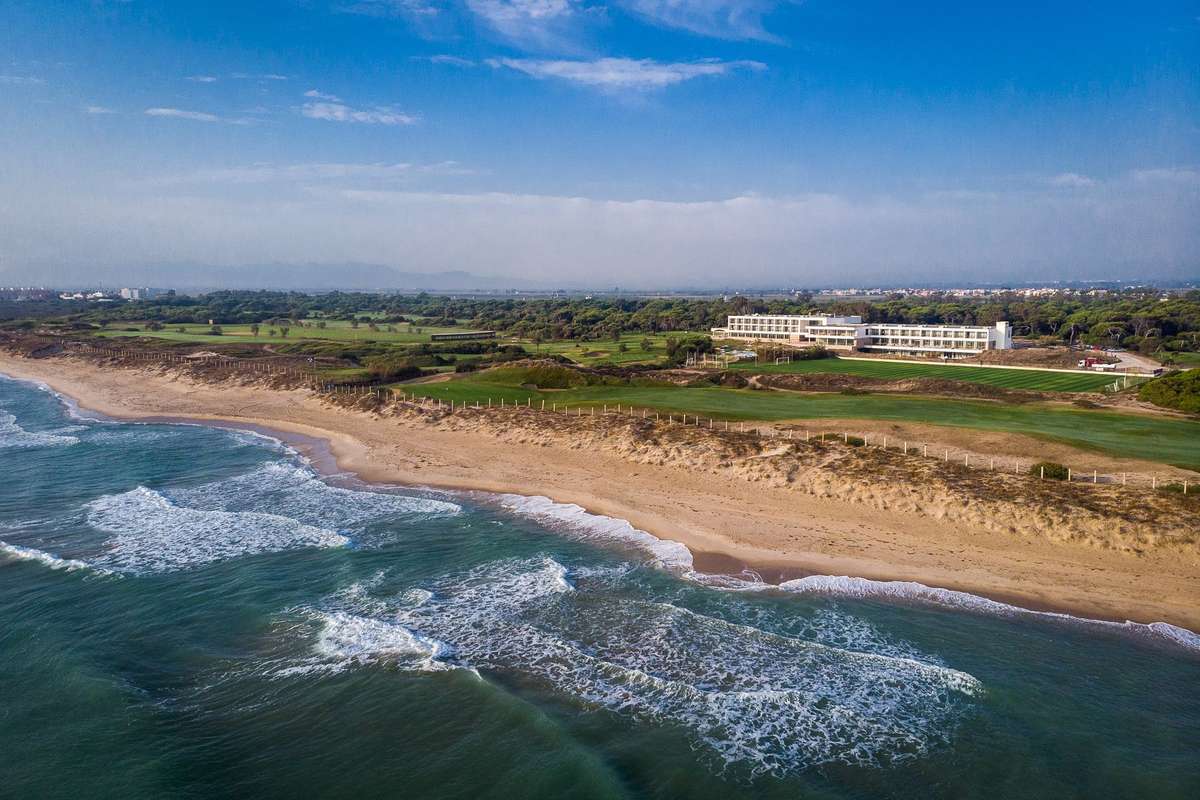
The purpose of the Review of The Month feature is twofold. Top100GolfCourses has always aimed to salute and encourage those who are putting admirable effort into reviewing the world’s great golf courses. Moving forward, we are also looking to learn from these experts! We’ll be chatting with the month’s star authors and discussing topics such as golf in their area, what they like to see in a strong course review, and of course dig a little deeper into their own winning review. May 2023’s Review of The Month comes from Chris Wanless, who traveled to Campo de Golf El Saler Golf Club, and who wishes more golfers would turn their attention to Javier Arana. You indicated that you've had the opportunity to play inland Spanish courses...are there any general differences between the courses in Valencia and other Spanish courses? Of the courses I have played in Valencia, they all have very differing characteristics, so in terms of course set up, I wouldn’t say Valencian golf particularly has a uniqueness to that of the rest of Spain. The key differential is the pricing. Valencia flies under the radar as a golfing destination and therefore provides significant value for money. No doubt this is because El Saler is the only course that most have heard of in the region. Unlike Costa del Sol, Sotogrande, La Manga and Barcelona, there isn’t an abundance to choose from, but there are two or three other gems around Valencia that could be added to make up a well-priced and quality golf trip in one of the best cities in Europe. Photo credit: Campo de Golf El Saler Javier Arana will be a familiar name as an architect for Spanish golfers, but not so much for outsiders (he didn't design any courses outside of his homeland). Have you had the opportunity to play any of his other works? It’s a shame Arana isn’t more widely known outside of Spain, as he is certainly one of the best designers Europe has produced. Sadly, he was probably born too early to a country that, at his time, hadn’t developed the infrastructure needed to deliver multiple top-level courses. He only designed ten 18-hole courses. Of those still in existence I have played El Saler, Guadalmina (Sur), Rio Real and Aloha. The common theme amongst these is that they all require plenty of thought in order to earn a par. Arana rarely threw in a “gimmie par” and fairways and greens are often at odds with each other in which direction they are shaped, meaning you are either required to find the right part of the fairway or shape the ball into the green. The fourth at Rio Real and third at El Saler are great examples of this. You mentioned the tightness at El Saler...how does the course hold up in a modern golf course architecture that is trending toward width off the tee? El Saler is a pleasant antidote to modern course architecture. Driving lines are testing without being penal and there is a premium on accuracy. They have resisted the trend of tree clearance on the nature reserve holes, instead allowing natural growth and increasing the authentic and established feel of the property. There is no desire, or need, for modernising. It is to Arana’s great credit and testament to his legacy that his original designs have barely been altered by the guardians of his designs. Photo credit: Campo de Golf El Saler Did your Valencian travels take you to any gems, less renowned than El Saler, that Top 100 readers should check out? Yes it did! I am shortly about to post my review for El Bosque, which is a course that should be included in a travel itinerary when visiting El Saler. El Bosque is a Robert Trent Jones design, which has had extensive upgrades over the past two years by Cabell Robinson. The result is a playable, picturesque and immensely fun course which makes fantastic use of its natural elevation. Currently ranked 41st in Spain, this is a club that will surely see a significant rise in the rankings in years to come. Another gem that flies under the radar is La Galiana, which is located around 45 minutes south of Valencia. It’s certainly not championship golf, but more fun in abundance. The views are stunning and the course meanders through valleys and orange groves. Expect plenty of drop shot tees and quirk! I am reliably informed that the 27-hole venue of Escorpion is also well worth a visit and is on my list for my next trip. Now that you're a celebrated "Review of The Month" winner, let us know what factors you appreciate in a strong golf course review! I am like a kid at Christmas whenever I play a new course, so can’t help but read reviews in order to build the anticipation. Luckily this site has many great reviewers and there are names that I will search out. I like a little information on the history of the club as well as design aspects to look out for and standout holes. There is a fine line between a short, sharp, informative review and reading an essay on the course. My preference will always be with the former. What's one course that you're excited to write a review for in the upcoming year? In July I am off to Kerry for the first time to play Tralee, Ballybunion, Waterville and Lahinch with 15 friends. I recently played Golf with a client who described that as “God’s Golf Tour” so needless to say that has added to the expectation. I also have a trip to Lofoten Links in the diary for a friend’s birthday.

Viva Javier Arana! The golf courses of Javier Arana Francisco Javier Arana died in 1975 at the age of seventy, but his Spanish golf course legacy endures to this day through the wonderful layouts that he created between 1946 and 1974. He only ever constructed ten courses but no fewer than seven of these are ranked within our current Spanish Top 100 and two of them - El Saler and Club de Campo Villa de Madrid (Negro) - are listed in our European Top 100 chart. “The golf courses of Javier Arana” has been written by Spanish golf historian and author Alfonso Erhardt Ybarra and it’s a beautifully crafted book, chronicling the life and golfing times of a little known architect who deserves far wider recognition. The early chapters of the book take a look at Arana’s formative years, with the author drawing on a substantial archive of family-held photos, letters and other correspondence as he documents the amateur golfing prowess of the architect. Arana claimed six national championships in Spain, France, Belgium and Portugal and won eight out of twelve international team matches during the period 1926-1943 so he played the game to a very high level, something that obviously stood him in good stead when design commissions came his way. Towards the end of his amateur playing career, Javier was appointed National Officer for Golf Courses by the Royal Spanish Golf Federation, with a remit to help rebuild layouts damaged during the Spanish Civil War, and this post would lead to his short, but very instructive, partnership with Tom Simpson. Arana’s design style has been described as rather simple: few bunkers and even fewer (if any) water hazards, doglegged fairways and angled greens that are often tiered or sloping in one direction. He liked to have the 17th hole as a par three and he’d leave the odd specimen tree isolated in one or more of the fairways – all very simple perhaps, but highly effective. The closing chapters of the book cover the ten courses that bear the hallmarks of Javier’s distinctive design traits and we at Top 100 Golf Courses have now decided to update our coverage of the seven Arana courses that we feature by including edited extracts from the book as agreed with the author. In the north of Spain, Javier redesigned the course at his home club, Neguri, near Bilbao and further inland, close to Pamplona, he laid out the original nine holes at Ulzama. In the heart of the capital in Madrid, he fashioned the highly acclaimed Negro course at Club de Campo. To the south of the country, Arana was responsible for designing three of the new wave of golf courses on the Costa de Sol that would help turn that particular stretch of the Spanish coastline into the popular golfing destination that it is today: Guadalmina (Sur), Rio Real and Aloha. Of course, his most celebrated layout is undoubtedly El Saler, to the south of Valencia on the Costa del Azahar, a course that’s currently ranked number 34 in our Continental Europe chart. It’s hard to imagine that this national golfing treasure has yet to be discovered by the large majority of golfers who jet into the country to play the game. The book is lavishly illustrated with sketches, images and drawings from the Arana family’s portfolio of archive material, and it’s embellished with some stunning photography from Mario Llonch, who covered all nine of the Arana courses that still exist today (El Prat was relocated some time ago). The pride and affection of the author for one of Spanish golf’s unsung heroes shines through on every page of this beautifully written book. In reading the story of Javier Arana, one can only hope that those tasked with the upkeep of his courses can maintain, preserve and nurture the efforts of a man who, in no small way, helped put Spain on the global golfing map. “The golf courses of Javier Arana” is a highly recommended publication. Jim McCann Editor www.top100golfcourses.com All images courtesy of Alfonso Erhardt Ybarra
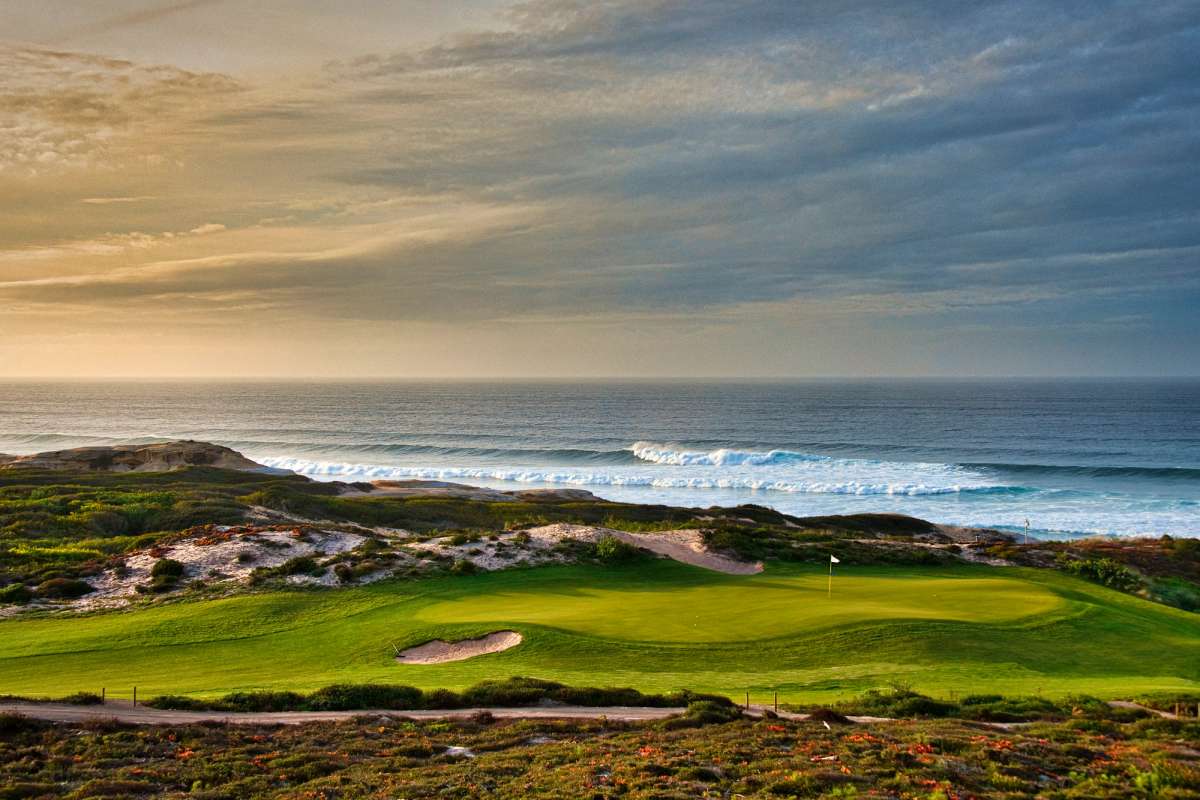
Portugal and Spain have become two of Europe's go-to golf getaways, offering sunshine, outstanding courses and plenty to enjoy away from the golf course. Both countries have their share of bucket-list layouts, but you don't need to spend a fortune to enjoy them. From the Algarve and Costa del Sol to emerging golf destinations further north, there are courses to suit almost every budget. So, if value for money is the priority, which country should be at the top of your list? We put Portugal and Spain head-to-head across the things that matter most when planning a golf holiday, from the quality of the courses and ease of building an itinerary to the overall cost of the trip. The Headline Courses The Algarve remains Portugal's best-known golf destination, but the rise of Comporta and the Silver Coast has added a new dimension to the country's appeal. The 2026 Top 50 Golf Courses in Portugal is now headed by Terras da Comporta (Dunas), with Monte Rei North and Quinta do Lago South completing the podium. West Cliffs sits fourth, while Oitavos Dunes and Palmares also feature inside the top eight. That gives Portugal an impressive collection without having to stick to one part of the country. West Cliffs, for example, is a spectacular coastal option north of Lisbon, while Palmares combines parkland and links-style golf overlooking the Atlantic. Spain has the deeper collection of established headline names. Real Club Valderrama remains Spain's No.1 in the 2026 Top 100, followed by Real Club de Golf Sotogrande and El Saler. Camiral's Stadium Course completes the top four, while Las Brisas, Finca Cortesin and Las Colinas are among the other highly ranked options. The important point for a value-focused trip, however, is that golfers don't necessarily need to play the most expensive course in either country to experience their best golf. El Saler is a particularly good example. Ranked third in Spain, its visitor green fee is €150 in high season and €135 in low season, with even lower rates for guests staying at the adjoining Parador. While Portugal is closing the gap quickly, Spain's combination of historic names, championship venues and regional variety gives it the edge. Winner: Spain The Golf Holiday Experience Portugal and Spain offer very different experiences once you look beyond the quality of the courses themselves. Portugal's golf culture is particularly geared towards the visiting golfer. The Algarve has spent decades building itself around golf holidays, with resorts, restaurants, hotels, transfers and courses all set up to make a week of golf relatively straightforward. That gives the region an easygoing feel. Golf can be the main event without taking over the entire holiday, with beaches, marinas, restaurants and towns all within easy reach. Further north, the Lisbon and Comporta areas offer a quieter alternative, with Atlantic coastline and a more understated atmosphere. Spain is a little more varied. The Costa del Sol is every bit as established as the Algarve as a golf holiday destination, but the wider country offers a much broader mix of experiences. A golf trip could mean staying in a purpose-built resort, basing yourself in Marbella and combining golf with the region's restaurants and nightlife, or travelling further afield to experience a completely different part of the country. That variety makes Spain particularly appealing for golfers who don't want every day of the holiday to revolve around the course. For a traditional golf getaway where the emphasis is on relaxing, playing plenty of golf and keeping everything close at hand, Portugal has the edge. Spain offers more possibilities, but that can also mean more decisions. Winner: Portugal Building The Perfect Itinerary This is where Portugal's geography becomes a genuine advantage. The Algarve is remarkably well suited to a four- or five-round golf trip. The region's courses are concentrated along the southern coastline, meaning golfers can stay in one base and reach a wide range of courses without spending hours behind the wheel. It also makes it easier to mix different types of golf. A trip could combine resort courses around Vilamoura and Quinta do Lago with coastal golf further west or less expensive options towards Tavira and the Spanish border. Portugal offers a similar advantage around Lisbon and the Silver Coast. Golfers can build a trip around a cluster of courses without necessarily having to change hotels every night. Spain can certainly compete on a regional level. The Costa del Sol has enough courses around Marbella, Estepona and Sotogrande to fill a week, while other regions offer their own concentrated collections. The difference is that Spain gives you more options while also requiring more discipline. Trying to combine the Costa del Sol with Valencia, Alicante or Catalonia on the same trip quickly turns a golf holiday into a road trip. For golfers looking to pick one region and settle in, both countries work. Portugal's advantage is that a week of golf can be built around a single base with relatively little time spent travelling between courses. Winner: Portugal Away From The Golf Course A good golf holiday needs more than good golf. Portugal's Algarve has the obvious ingredients: long beaches, seafood restaurants, lively marinas and historic towns. Vilamoura is well suited to golfers who want a resort atmosphere, while Lagos and Tavira offer something more traditional. The Lisbon region adds a major city to the equation, while Comporta provides a more relaxed coastal escape. That gives Portugal plenty of options for golfers travelling with partners, friends or family members who aren't planning to play every day. Spain, though, has the advantage in sheer variety. The Costa del Sol offers everything from Marbella's restaurants and nightlife to the quieter towns around Estepona. Elsewhere, golfers can combine their rounds with the food and culture of cities such as Valencia, Seville or Barcelona, or head to the beaches of the Balearic Islands. That matters when golf is only part of the holiday. Spain makes it easier to build a trip where the golf is one component of a much bigger itinerary. Portugal is an excellent all-round destination, but Spain's scale means there is simply more to choose from. Winner: Spain Value For Money This is the section that ultimately decides the argument. Neither Portugal nor Spain should be considered uniformly cheap. Both have premium courses where a single round can cost well into three figures, particularly during peak periods. *Rate includes a buggy. The figures show that both countries can offer good value, but Portugal has a particularly strong spread of options, from premium layouts at West Cliffs and Vale do Lobo to rounds below €100 at Quinta da Ria and Castro Marim. Spain can compete at the lower end, but Portugal offers a particularly broad range of price points within this sample. The headline green fee, however, only tells part of the story. A cheaper round isn't necessarily better value if it requires a long transfer, while a more expensive course can make sense if it is close to your accommodation and forms part of a wider package. Accommodation, car hire, transfers, food and the number of rounds you can comfortably fit into a trip all affect the final bill. This is where Portugal's concentration of golf gives it another advantage. A golfer can stay in one area, play several quality courses and avoid spending too much time or money travelling between them. There are also plenty of ways to reduce costs in both countries. Travelling outside peak periods, using twilight rates and mixing premium rounds with cheaper courses can make a significant difference. So while neither country is universally cheaper, Portugal arguably makes it easier to put together a high-quality golf holiday at a sensible overall price. Winner: Portugal The Verdict Portugal wins the value battle, but Spain may offer the more expansive golf holiday. Spain takes the honours for headline courses and what lies beyond the golf course, with an enormous collection of highly regarded layouts and a huge variety of destinations, food, nightlife and culture. Portugal, however, has the stronger case when value for money is the priority. The Algarve makes it remarkably easy to build a multi-round trip without spending too much time travelling, while the country's wider golf scene provides enough variety to keep things interesting. There are premium courses for those willing to spend, but also plenty of ways to construct a trip around more accessible green fees. That doesn't mean Portugal is always cheaper. A golfer staying at an expensive resort and playing the country's most prestigious courses can spend plenty. Equally, Spain can deliver outstanding value if you choose the right region and travel at the right time. But if the question is which destination makes it easiest to combine quality golf, good weather, an enjoyable holiday and sensible costs, Portugal gets the nod. Spain has the deeper pool of headline golf. Portugal simply makes it easier to get more from your money. Rates shown are 2026 visitor green fees where published. Higher and lower rates reflect the different seasonal periods used by each course and are not necessarily directly comparable. Twilight rates are shown where published.