ประจวบคีรีขันธ์, Thailand
The Sea Pine Golf Course is an integral component of a Royal Thai Army Sports Centre, with a railway line separating the opening and closing holes from the remainder of the 18-hole layout. The facility was developed for the convalescence of Thai army officials.
The Sea Pine Golf Course is an integral component of a Royal Thai Army Sports Centre, with a railway line separating the opening and closing holes from the remainder of the 18-hole layout. The facility was developed for the convalescence of Thai army officials.
Sort by:
No reviews yet. Be the first to share your experience!
The latest ranking of the Top 100 Golf Courses in the World serves as the ultimate global golf bucket list. Most members of our World Top 100 Panel are seasoned golfers, each playing 20-30 of these courses annually while travelling extensively over decades to form their opinions on others. We recognise that opinions vary—even among our panel members. Rankings are subjective, and there are undoubtedly 50 or more courses in the UK and USA alone that could easily fit onto this list. Links Golf Pilgrimages The rankings
California, United States
New Jersey, United States
Northern Ireland, United Kingdom
New York, United States
New York, United States
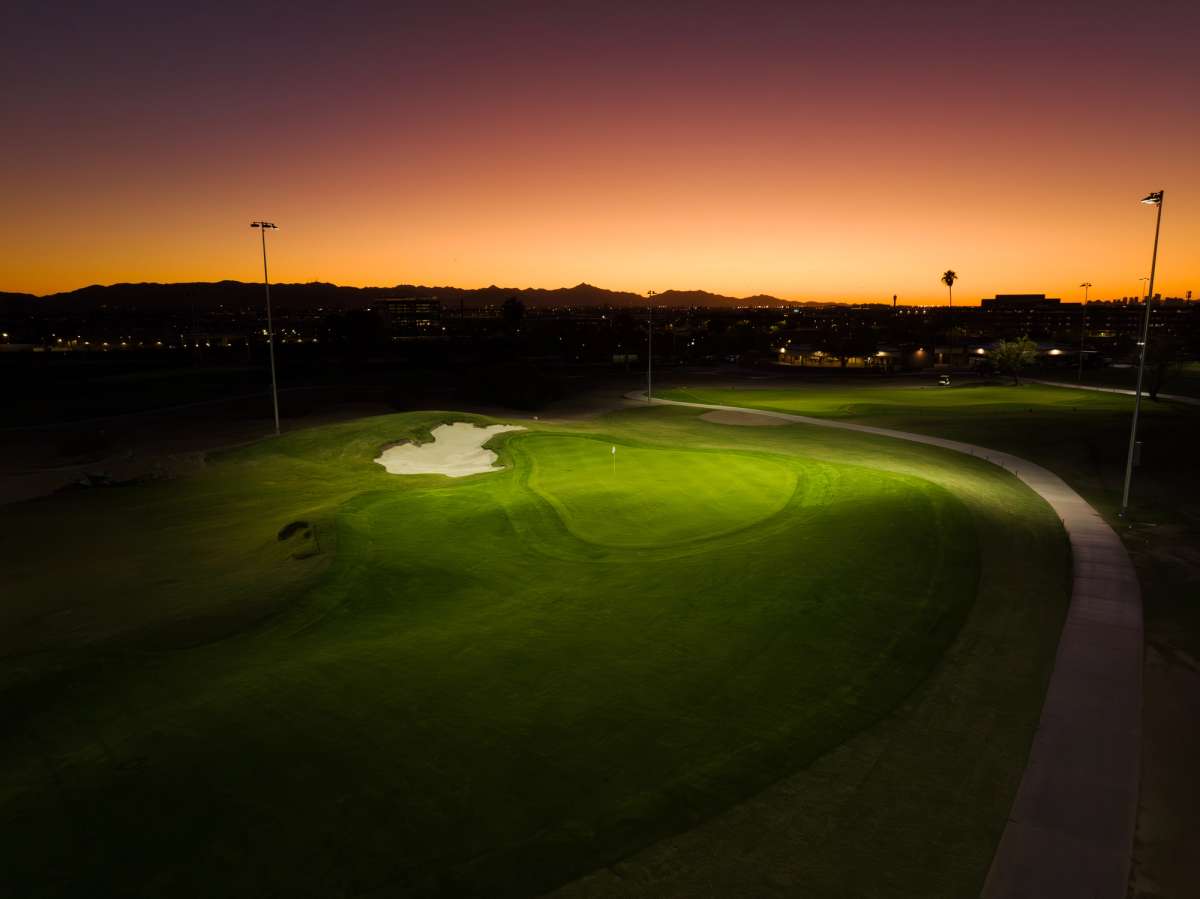
Golf doesn't always have to finish when the sun goes down. From floodlit championship courses in the Middle East to late-night rounds beneath the midnight sun in Norway, there are plenty of ways to play after dark – whether you're squeezing in an extra round on holiday or looking for a different kind of golf experience. We've picked out 10 venues around the world offering something beyond a conventional daytime round, from full-length courses under floodlights to short-course challenges and one-off events that put a new spin on night golf. Carya Golf Club (Antalya, Turkey) Carya became the first golf course in Europe to install floodlights across all 18 holes, giving golfers the chance to play a full championship round after dark. Designed by Peter Thomson and his team, the par-72 layout brings a taste of traditional English heathland golf to Belek, with sandy terrain, heather and fairways winding through pine and eucalyptus trees. The floodlights are positioned high enough for golfers to “follow the flight of the ball just as you would if playing in daylight”, according to the club. Evening tee times also offer an alternative to daytime play during the summer heat, making Carya a useful addition to a golf holiday on Turkey's Mediterranean coast. Emirates Golf Club – Faldo Course (Dubai, United Arab Emirates) The Faldo Course at Emirates Golf Club is one of Dubai's established night-golf venues, with LED floodlights covering all 18 holes. Originally opened as The Wadi in 1996, the par-72 course was redesigned by Nick Faldo in 2005 and renamed in his honour a year later. Measuring more than 7,000 yards from the back tees, it offers a full-length championship round after dark, with water hazards and strategically placed bunkers providing plenty of challenges along the way. The floodlighting allows golfers to tackle the entire layout after sunset, rather than being limited to a shorter course or a handful of illuminated holes. For visitors to Dubai, it's an opportunity to play a championship course at a different time of day. Contact the club to confirm current night-golf tee times and availability. Grass Clippings at Rolling Hills (Arizona, USA) Grass Clippings at Rolling Hills has turned night golf into a central part of its identity. The 18-hole course plays as an executive layout during the day, but after dark it switches to a par-54 format made up entirely of par threes. The course is illuminated seven days a week, from dusk until 1am, with nine-hole tee times available after 10pm. The venue is also home to The Grass League, a short-course golf league whose events are broadcast live on Golf Channel twice a year. With views across the Phoenix skyline and a lively atmosphere built around golf under the lights, Grass Clippings offers more than a conventional evening round. Long Bien Golf Course (Hanoi, Vietnam) Designed by Nelson & Haworth, Long Bien Golf Course has 27 holes across three nine-hole loops on gently undulating terrain, with bunkers and water hazards adding to the challenge. Located within Hanoi, it is around 20–30 minutes by car from the Old Quarter, making it a convenient option for visitors staying in the city. The course has a dedicated lighting system for night golf, allowing players to tee off later and finish their rounds under the lights. With three nine-hole loops, there are different combinations to play, although golfers should check with the club to confirm which nines are illuminated on their chosen evening. Ba Na Hills Golf Club (Đà Nẵng, Vietnam) Set among forested hills beneath the Ba Na mountain range, Ba Na Hills Golf Club offers a striking setting for a round after dark. Designed by Luke Donald in collaboration with IMG, the 18-hole, par-72 course features undulating greens and a backdrop of native forest, around 30 minutes from central Da Nang. Floodlights cover all 18 holes, with the course lit until 9pm on selected days. The club describes the ideal experience as starting the front nine as dusk settles over the mountains before finishing the back nine under the lights. Night golf can also be arranged for groups of 40 or more. Rachakram Golf Club & Resort (Phra Nakhon Si Ayutthaya, Thailand) Around 45 minutes from Bangkok, Rachakram Golf Club & Resort offers an 18-hole, par-72 course where golfers can play well into the night. Designed by Dr Sukitti Klangvisai, the layout has a links-style feel, with relatively open fairways, undulating terrain and fast greens. Water is a recurring challenge, including blind carries and several demanding par threes, while all of the par fives measure more than 500 yards. Night golf is available daily, with the last tee-off listed at around 7pm and play continuing until midnight. At 1,200 baht (approximately £27), Rachakram offers an affordable way to play a full 18-hole round under the lights. The on-site resort also means golfers can stay overnight rather than make the journey back to Bangkok after a late finish. Kelab Golf Sultan Abdul Aziz Shah (Selangor, Malaysia) Kelab Golf Sultan Abdul Aziz Shah (KGSAAS) is a 27-hole facility in Shah Alam, just outside Kuala Lumpur, with three nine-hole loops designed by Peter Thomson and Michael Wolveridge in the mid-1990s. The Sultan, Alam Shah and President nines offer different combinations for an 18-hole round, with the par-five second on the Sultan loop regarded as the course’s signature hole. Known as the “Home of Night Golfing”, KGSAAS was the first course in Malaysia to introduce floodlit play. Its 27-hole layout gives golfers the flexibility to play after dark, making it an option for visitors looking to fit a round into an evening in Kuala Lumpur. Cloud 9 at Angel Park Golf Club (Nevada, USA) Cloud 9 at Angel Park is a 12-hole par-3 course inspired by famous holes from around the world. Designed by Bob Cupp and John Fought, the layout takes inspiration from celebrated holes including "Island Green" at TPC Sawgrass, the "Postage Stamp" at Royal Troon and the "Valley of Sin" at St Andrews. Nine of the 12 holes are illuminated for evening play, allowing golfers to tackle the short course under the lights. It's a different proposition from playing a full-length championship course at night, with the shorter holes offering a chance to work on the short game in a more relaxed format. Cloud 9 is open for daytime play too, and tee times for evening rounds can be booked through Angel Park. Trump International Golf Links - Old Course (Aberdeen, Scotland) Trump International's Old Course is a championship links designed by Martin Hawtree, stretching through towering sand dunes along the North Sea coast, around 10 miles north of Aberdeen. Opened in 2012, the par-72 layout measures more than 7,400 yards from the back tees. Night golf here is a special event rather than a full 18-hole round under floodlights. On March 19 and 20, 2027, the club is scheduled to host two evenings of night golf across five holes of the Old Course, using illuminated golf balls, glowing flags and markers to guide players around the layout after dark. The £75 package includes a burger and beer at The Dunes Restaurant & Bar before tee-off, with tee times advertised between 7pm and 9pm. It offers a different way to experience the world-ranked Aberdeenshire links, with the dunes and coastal setting providing the backdrop to a short round after dark. As the event runs on selected dates, golfers should check the club's website for availability and booking details. Lofoten Links (Nordland, Norway) Located on the island of Gimsøya in Norway's Lofoten archipelago, Lofoten Links is an 18-hole links course set along a rugged stretch of coastline. The sea comes into play on several holes, while sandy beaches and the surrounding mountains add to the setting. At 68 degrees north, Lofoten Links offers a very different kind of night golf. During the summer's midnight-sun period, the sun stays above the horizon, allowing golfers to play at any hour without the need for floodlights. The club's Midnight Sun Unlimited Golf experience allows guests to play for 24 hours at a time, with tee times at 10pm or 2am among the options. In 2023, one guest completed an astonishing 7.5 rounds in 24 hours. It's an unusual opportunity to play a world-ranked links course at a time when most golfers would be heading to bed.

The Long Lost Lido Found — Twice Most years feature one piece of golf course-related news that dominates the others. The opening of Bandon’s Sheep Ranch was quite the headline for 2020. A short way into 2021, and another Mike Keiser project is already the talk of the town: A recreation of the legendary Lido Golf Club, to be constructed near the Sand Valley Golf Resort in Central Wisconsin. The hubbub is justified by years of growing interest in golf course architecture, and particularly the philosophy of Charles Blair Macdonald. The stockbroker was dubbed “The Evangelist of Golf” by writer H.L. Whigham, and his template approach to course design — incorporating influence from the world’s most renowned holes, as seen at the National Golf Links of America — has been a central concept to the study of “The Golden Age” of golf course architecture. National Golf Links of America 4th hole - Redan The Lido was another Macdonald design, and one that fell into oblivion following the second World War. Such was the acclaim from players and experts during its time that it has become an object of fascination for modern architecture enthusiasts. That it would soon (2023) be available to the general public (or at least those staying at Sand Valley) inspired a wave of celebration. Amid the noise, you hardly would have guessed that another new Lido had opened in just the past year. Gil Hanse and Jim Wagner led the creation of a modern Lido at the Ballyshear Golf Links in Thailand. Ballyshear 12th green Two recreations of the same classic golf course, within the period of just a few years? How does one explain the sudden rush on Lido? Macdonald’s NGLA has always been a mainstay of architectural discussion and remains so to this day. Conversations on his acclaimed templates — including the Redan, Eden, Alps, and Long among others — almost always include the version from NGLA. A slew of originals at Lido, less prominent among Macdonald and Seth Raynor’s future designs, offer intrigue. NGLA 9th hole Long - image courtesy of Jon Cavalier @LinksGems Macdonald invited readers of Country Life and amateur architects to submit original designs for inclusion—with the entries judged by Bernard Darwin, Horace Hutchinson and Herbert Fowler. The winner was Alister MacKenzie, whose multi-fairwayed “Home” closed the routing. No. 15, named “Strategy,” was unofficially submitted by Tom Simpson (as he was an affiliate of Fowler, a judge). Raynor is believed to have adapted what would become known as “Raynor’s Prize Dogleg” from another submission, which became the No. 6 “Dog’s Leg” hole. Perhaps the club’s most iconic hole was the debut of the “ Channel,” a Littlestone-inspired par five that dared the bold to hit its island fairway on the way to an eagle opportunity. Littlestone Golf Club - 16th hole Channel - image courtesy of Littlestone Golf Club NGLA, however, was built for skilled amateurs and featured two U.S. Amateur champions among its membership. The Lido was longer and meaner, perhaps designed to test professionals and match Pine Valley’s notoriety as a man-eating test of golfing will. “Lido if you know it is like a boiled New England dinner, which if it doesn’t kill you young will make you a very husky citizen, set to digest anything that comes your way. So it is with Lido,” wrote Bernard Darwin for The Brooklyn Daily Eagle. “Once you’ve become inert to these ferocious carries and the all-engulfing rough, the iron has entered your soul and you are capable of tackling any golf course that the genius of Charlie Macdonald or Seth Raynor or Walter Travis can conceive.” Bret Lawrence, a golf historian, notes that the Country Life contest specifically calls for two-shot holes, suggesting Macdonald didn’t want another short hole. “He wanted two-shot holes, which are basically two full-shot holes,” Lawrence explains. “You could kind of get the sense from there that he wanted more of those as opposed to a drive and pitch kind of hole, which would make it shorter. He was looking for more strategy in the longer holes...because he wanted to test the professionals.” The originators, however, weren’t professionals, but wealthy New Yorkers who had previously tapped Macdonald to build clubs such as Piping Rock. With names like “Vanderbilt” on the ledger, no expense was spared, and earth was moved to such a degree as to put Whistling Straits to shame. Piping Rock Club 13th hole - image courtesy of Jon Cavalier @LinksGems “It almost seemed like they were trying to develop the area,” says Lawrence. “There was nothing out there at the time.” Those plans hit the skids with the onset of World War I and the original investors had lost interest by the Great War’s conclusion. The next buyer was William Reynolds, a former senator who began the area’s real estate boom and built a hotel, putting the retitled Lido Beach Golf Club on the map for the wider population. At its peak, the club featured more than 1,000 members. Unfortunately, that peak ended with Reynolds’s death; between his family and other investors, the “all-engulfing rough” soon received less care. Even at its critical peak, Macdonald was disappointed in the upkeep. “What he was unhappy about was — he mentioned this in Scotland’s Gift — that they didn’t keep up the golf course,” explains Anthony Pioppi, executive director of the Seth Raynor Society. “I think he expected the Lido to be treated the way National treated its golf course.” The U.S. Navy assumed control of the property during the next World War and it never returned. The legend, however, lived on, culminating with the new projects from Hanse and Tom Doak, who will be handling the Sand Valley installation. Those two projects will ultimately provide radically different Lido experiences, however. The Ballyshear Links is much less a carbon copy, due to the limits of the property Hanse and Wagner had to work with. The pair pitched the project to the owner of the Ban Rakat Club, understanding that they would need to tweak the original routing a smidge to make it fit, and their approach would be more in line with Macdonald’s approach at NGLA; creating interpretations of the historic holes versus clones. “Normally...we feel strongly that a golf course should be the product of its surrounds. But in the back of our minds, my partner Jim Wagner and I have often wondered what we would do with a completely flat site — what can you do to distinguish it?” Hanse said in a statement. “The most famous example of a manufactured golf course from The Golden Age was The Lido. Jim and I had always wanted to do a Macdonald/Raynor, angular grass-faced bunker design. We pitched the idea to the owner at Ballyshear and he loved it.” And that’s where Doak’s Lido will be different: The plan is an almost exact clone of the original Lido, built in Wisconsin rather than Long Island. Such a feat is possible because of technological advances. Peter Flory, a Chicago-based architecture enthusiast, has been building a 3D replica using the course design feature of The Golf Club computer game. That prompted a call from Doak, who had watched Flory’s progress via Golf Club Atlas. What began as a Flory’s passion project became the driving force for the course’s recreation. “I would not have agreed to take it on if I didn't think Peter's work gave us a chance to do it accurately,” Doak told Top 100 via email. Still, Hanse’s rendition didn’t require such digital wizardry, so the sudden Lido lean can’t all be attributed to modern tech. So why now? For Doak, Flory’s work represented a potential punctuation for a sentence that had begun long ago. The architect had previously created a tribute to Lido’s designer for Keiser, with the Old Macdonald course at Bandon Dunes. This track, like Macdonald himself, aimed not to replicate anything but rather adapt existing templates to the Oregon landscape. Apparently, even during 2005, Lido was on Keiser’s mind. Doak says the resort magnate expressed his interest in recreating the Lido while the pair discussed the third course at Bandon. Old Macdonald 4th hole - image courtesy of Bandon Dunes Bandon was blooming at that time, but Keiser’s resort ownership has only grown since then, operating nine 18-hole courses (and accompanying par three courses) between his three resorts. Doak suggests the root of both Keiser’s windfall and Lido’s rise is the relatively recent appreciation for golf course architecture. “There is 100-times more interest in golf architecture nowadays. Forty years ago, when I was a student, you were lucky to find a copy of Colt's or Macdonald's books through interlibrary loan,” he says. “Websites like Golf Club Atlas, podcasts like Andy Johnson's (The Fried Egg) and Derek Duncan's (Feed The Ball), and the golf magazines have all made golf architecture far more of a mainstream topic. They even talk about it on TV a little bit!” That still doesn’t explain “why Lido?” Why wasn’t someone like Keiser interested in restoring, for example, Ocean Links (Raynor’s nine-hole neighbor to Newport Country Club ) or the original El Caballero (Billy Bell’s masterpiece in the Los Angeles hills, prior to the club changing locations)? Simply put, the amount of information on these courses pales in comparison to Lido. “I think Lido is in a class by itself in that regard; it was much more well documented because of who designed it, because of the contest that helped make MacKenzie famous, et cetera,” Doak says, admitting even he knows relatively little about other lost tracks. “I'm a bit of a geek about this stuff, and I don't know one-tenth as much about the other courses you mentioned.” Information does exist, however, and there are certainly golf history buffs looking for it. Flory has begun creating a similar 3D model of Ocean Links, sharing his progress on Golf Club Atlas. A rendering of Sand Valley’s Lido by Peter Flory With that in mind, could the current Lido projects portend future projects focused on tributes to, and total recreations of, legendary golf courses? And if so, is that necessarily a good thing for the current state of course architecture? Pioppi is wary. “I do think that’s going to be a trend. I think because of this technology, people are going to be able to recreate holes. I mean, what’s to stop somebody from recreating the Old Course in Wisconsin? With this kind of technology, who knows?” he says. Still, he can accept such things if it means more eyes on golf course architecture. “For me, the bottom line is people are talking about architecture, which is good.” One “victim” of the Lido project is Doak’s “Sedge Valley” Swinley Forest concept, an original 6,100-yard course on the Sand Valley property. It will eventually happen...but not until the Lido wraps up. Doak doesn’t begrudge the Keisers for prioritizing the new project over his original design...but he does make a lighthearted jab at golf media’s (including Top 100) role in the narrative. “Unfortunately, this interview and all the others are demonstrating that the idea generates a lot of free publicity...more of it than my proposed third course at Sand Valley did,” he says. He states that Lido would be his only personal recreation. He compares the value of the project to his work restoring the Chicago Golf Club and others, preserving the legacy of architects he admires. “If I didn't think this particular course was worth restoring, I certainly wouldn't be doing it.” If we’re being accused for feeding the furor that results in the recreation of a legendary golf course, we’ll plead guilty! We’re looking forward to playing both new Lidos sooner rather than later. That said, we’re equally looking forward to celebrating what golf course architecture will be, and not just what it was.

Gil Hanse's recreation of the lost, legendary Lido to open in August 2021 Gil Hanse has already made waves designing courses abroad, making his South American debut with the host layout for the Rio 2016 Olympic Games. He wasn’t necessarily looking to compete with that when making his Asian debut, however the concept was bound to create headlines: A recreation of the lost, legendary Lido Club. Now that long-discussed course, the Ballyshear Links just outside of Bangkok, has an opening date: August, 2021. The course will be hosted at the Ban Rakat Club — a highly-exclusive establishment, reportedly with only 400 members —which is chaired by Takeyasu Aiyama. Aiyama is also the chairman at Yokohama Golf Club. Bill Coore and Ben Crenshaw had done renovations at that club, and Aiyama was looking for inspiration for the property to become Ban Rakat. Interestingly, Coore recommended Hanse. Hanse and Wagner arrived at the property in Thailand and did not necessarily find anything evocative in the terrain. In fact, it was almost pancake flat. That opened another door, however, allowing Hanse and Wagner to apply their “caveman” personas and move more dirt than usual to create a bolder concept. Few concepts could be as bold as recreating the iconic Long Island club. Charles Blair Macdonald and Seth Raynor were known for their template-based approach to golf course design, which resulted in some of the world’s greatest golf courses, including the National Golf Links of America, Fishers Island, Chicago Golf Club and more. Although legend helps create hype, some hypothesize Lido may have been superior to all of them. Ballyshear 12th green Macdonald and Raynor were not at all “minimalists,” and Hanse and Wagner saw fit to emulate that historic pair’s approach with this piece of land. “Normally...we feel strongly that a golf course should be the product of its surrounds. But in the back of our minds, my partner Jim Wagner and I have often wondered what we would do with a completely flat site — what can you do to distinguish it?” Hanse said. “The most famous example of a manufactured golf course from The Golden Age was The Lido. Jim and I had always wanted to do a MacDonald/Raynor, angular grass-faced bunker design. We pitched the idea to the owner at Ballyshear and he loved it.” Ballyshear 14th tee The name “Ballyshear” is derived from the name of Macdonald’s own estate on Long Island. As with almost all of Macdonald and Raynor’s designs, template holes based on Macdonald’s travels in the UK were the basis for Lido’s design. If you’ve been keeping up with Top 100’s template architecture series, you’ve already learned about a few holes at Lido. The most famous hole at the course was the “ Channel,” based on Littlestone’s No. 16 hole. At the Lido version, players had the option to significantly shorten a long par five by first making a bold drive from the tee over the title “channel” to a rightward fairway, followed by another long, quality approach. It is near the ultimate in risk/reward, requiring two near perfect shots or else penalty will ensue. Ballyshear 17th hole Another example you’ve seen on this site is “ Narrows.” Although there is some debate whether the opener at Lido qualified, Macdonald did make a comparison between the two holes, with their respective fairway bunkering pinching the fairway. Other history was made at Lido as well. Although Alister MacKenzie no doubt would have found some success eventually as an architect, Lido represented his “breakthrough” moment. Country Life magazine held a contest for design submissions, which MacKenzie won with an entry that has come to be known as the “Lido” template. Macdonald and Raynor were so impressed by this multi-fairway par four that it ended up being used as the closing hole. The Lido also marked the debut of the minor template known as “Raynor’s Prize Dogleg,” a long par four requiring a long, precise tee shot to get home in two to an undulating green. Although named for the famous architect, it was actually an adaptation of another entry into the Country Life contest. Not that anyone reading this post will have played the original Lido, but if the golf historian gets the chance to play at Ballyshear, they will notice the routing is almost a perfect replica. “Almost,” as the property required the second and sixth holes to be switched to make the concept work. A small detail, probably not to be mourned by architecture enthusiasts. Ballyshear 18th tee For what it’s worth, Hanse is most keen on the final pair of holes, based on the “ Long” template and of course MacKenzie’s contribution, respectively. “At Ballyshear, I think the 17th and 18th, with their shared waste bunker between them, came out extremely well,” he said. “The scale of those two holes at Lido was impressive and we were able to capture that at Ballyshear.” Ballyshear will be the first Lido recreation to market, but rumors abound that Mike Keiser is looking to build a similar project near his Sand Valley Resort (albeit a private course in this case) in Wisconsin, with Tom Doak at the helm. Keep your eyes on Top100GolfCourses.com for updates on both projects.