The holes at Stavanger Golf Club are tree-lined and relatively tight so precision off the tee are the watchwords here.
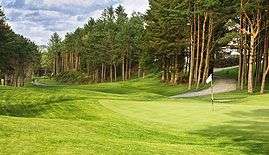

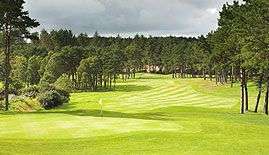

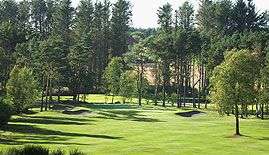
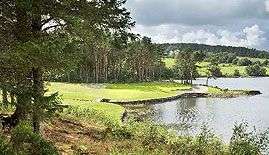
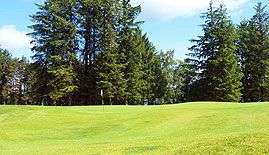

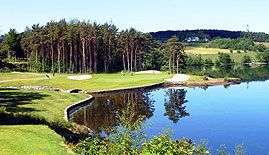

The holes at Stavanger Golf Club are tree-lined and relatively tight so precision off the tee are the watchwords here.
Stavanger – joint European City of Culture with Liverpool in 2008 – is best known as a former sardine fishing port turned North Sea oil production hub. It’s home to over 100,000 inhabitants, a good proportion of whom pursue their golfing activities on the nearby courses from April to November every year.
The 6,281-yard, par 71 course at Stavanger Golf Club lies close to the town centre and was designed by British architect Fred Smith who routed the eighteen holes over undulating land beside Store Stokkavann, a freshwater lake surrounded by forests. Unsurprisingly then, Stavanger Golf Club’s holes are tree-lined and relatively tight so precision off the tee are the watchwords here.
The round opens with a couple of gentle par fours before one of the best holes on the card is played. The 180-yard, par three, 3rd runs beside Store Stokkavann and the tee shot must be played from an elevated position across an inlet from the lake that runs in front of the green.
On the back nine, there is a very strong run of par fours sandwiched between the par threes at the 10th and 17th holes before the 508-yard, par five, 18th hole concludes the round. A narrow, left doglegged hole, it demands accuracy all the way from tee to green otherwise the encroaching tree line will put paid to any chance of a finishing five on the card.
The club is keen to redevelop Stavanger on an ongoing basis and Niblick Golf Design reconstructed both the greens on the 1st and the 10th in 2006 as part of a refurbishment program. In 2009, the same company replaced all the other greens, installed new drainage and rebunkered many of the holes.
The latest ranking of the Top 100 Golf Courses in the World serves as the ultimate global golf bucket list. Most members of our World Top 100 Panel are seasoned golfers, each playing 20-30 of these courses annually while travelling extensively over decades to form their opinions on others. We recognise that opinions vary—even among our panel members. Rankings are subjective, and there are undoubtedly 50 or more courses in the UK and USA alone that could easily fit onto this list. Links Golf Pilgrimages The rankings
California, United States
New Jersey, United States
Northern Ireland, United Kingdom
New York, United States
New York, United States

Jan Nordstrom ticks off every 18-hole course in Norway 2013 is a landmark year for our Norway and Sweden Correspondent who has played every 18-hole course in Norway 31 October 2013 Norway, Land of the Midnight Sun, may not be the natural choice as a golfing destination, but with 24 hours of sunlight during the summer months, you could play more rounds of golf here in just one day than virtually anywhere else in the world. Thanks to the Gulf Stream, Norway has a softer climate than you might imagine, but you’ll need to keep your wet weather gear at hand as it can get very wet, especially in Western and Northern Norway. 2013 is a landmark year for Jan Nordstrom, our Norway and Sweden Correspondent. He finally managed to play the last few 18-hole courses in Norway which remained on his “to play” list, including Bjaavann… “And yes, Bjaavann is a very good course,” said Jan with a touch of pride, “so I have now played 64 of the 61 18-hole courses in Norway – one has closed permanently, and two other courses have been reduced to 9 holes to minimise maintenance costs”. To celebrate Jan’s achievement, we felt it appropriate to take an early and fresh look at our Norwegian golf course rankings and publish a new 2014 Top 20 ahead of most other countries. Miklagard has topped our Norway rankings for many years and despite this RTJ II layout sometimes splitting opinion, it remains at the head of our Norwegian table for the time being at least. “When I played Bjaavann I also used the opportunity to revisit Stavanger,” said Jan, “and it was as much fun as my first visit, with course conditioning just as impeccable. It’s a classic, mature, parkland gem.” Stavanger is one of our highest climbers and moves up five positions to 4th place. Jan is keeping an eye on Lofoten Links in North Norway because the golf club has engaged Jeremy Turner to expand the course from 9 to 18 holes. The build is well underway and the 18-hole Lofoten should be open for play in 2014. “It’s a fantastic location,” said Jan, “ you can play golf in full sunshine at 2am in the summer and enjoy the dramatic Northern Lights in the autumn.” Naturally Jan will be sure to visit Lofoten as soon as the new holes are ready, adding the latest Norwegian 18-holer to his collection. What’s next for Jan? Well… conquering Sweden… naturally! Here’s our latest Norwegian Top 20: Click the link to see the latest Top 20 Golf Courses of Norway in detail. Footnote: Several Norwegian golf courses suffered severe winter damage during 2012/13. We have taken the stance that these conditioning issues are largely temporary and have not penalised those affected clubs too harshly when finalising our 2014 Norway Top 20 rankings. Images from top to bottom: 1. Lofoten, 2. Miklagard, 3. Stavanger, 4. Lofoten
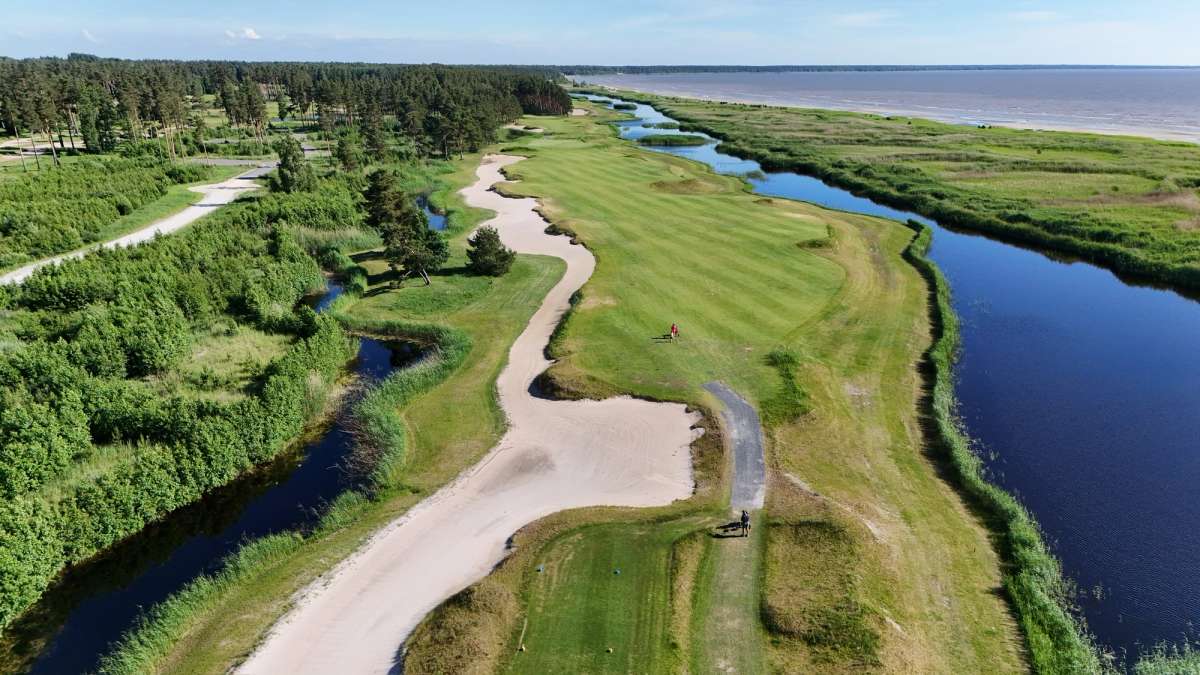
Europe's golf map stretches well beyond the famous names. Away from the links of Scotland and Ireland and the better-known resort destinations of Spain and Portugal, there are outstanding courses tucked into mountain valleys, Baltic coastlines and forests across the continent. From Switzerland to Estonia, these are courses that can be easy to overlook when planning a golf trip, despite offering the scenery, character and quality to make the journey worthwhile. We've picked 10 of Europe's biggest hidden gems, with every course coming from a different country. Andermatt Golf Course (Uri, Switzerland) Switzerland Ranking: 12th | Green Fees: From 130 CHF (€137) At around 1,400 metres above sea level, Andermatt Swiss Alps is surrounded by mountains, but the course itself is not quite the mountain layout you might expect. Designed by Kurt Rossknecht and opened in 2016, much of the 130-hectare course is relatively flat, with long rough lining the fairways and few trees giving it a links-like character. The third and fourth holes provide a dramatic change of pace, climbing through the rocky terrain at the end of the valley, while natural streams and water hazards feature elsewhere on the layout. The surroundings are impossible to ignore, with mountain ranges encircling the course and the sound of Alpine streams and grazing cows completing the experience. Pärnu Bay Golf Links (Pärnu Maakond, Estonia) Estonia Ranking: 1st | Continental Europe Ranking: 52nd | Green Fees: From €75 Estonia is hardly the first country that springs to mind when planning a European golf trip, which is precisely why Pärnu Bay Golf Links deserves a place on this list. Opened in 2015, the Lassi Pekka Tilander design occupies a narrow strip of sandy land where forest meets the Baltic Sea. Wide fairways, expansive waste areas and bold, multi-tiered greens give the course a links-like character, while the firm fescue surfaces reward a low, running game. Lead shaper Mick McShane, whose CV includes Kingsbarns, helped bring the design to life. Pärnu Bay may be off the beaten track, but it is one of the Baltics' standout layouts. Adamstal Golf Club - Championship Course (Niederösterreich, Austria) Austria Ranking: 1st | Continental Europe Ranking: 89th | Green Fees: €115 Tucked into a wooded valley southwest of Vienna, Adamstal feels a long way from the Austrian capital and even further from the usual European golf itinerary. Yet this spectacular mountain course has been Austria’s No. 1 on Top100’s national rankings and has hosted several editions of the Challenge Tour’s Euram Bank Open. Canadian architect Jeff Howes shaped the Championship course around the natural contours of the valley, with the 10th and 11th climbing into the mountains before dramatic elevated tees reveal the landscape below. The course even has a settle-the-bet 19th hole, a par three tucked into a pretty valley beside a mountain spring that has supplied Adamstal with drinking water for more than a century. Thracian Cliffs Golf & Beach Resort (Dobrich Province, Bulgaria) Bulgaria Ranking: 1st | Continental Europe Ranking: 43rd | Green Fees: €119 Perched on Bulgaria's northern Black Sea coast, Thracian Cliffs is one of Europe's most spectacular coastal golf courses. Gary Player’s signature design opened in 2011, with the holes carved along a narrow strip of land between high cliffs and the sea. The Black Sea is visible from every hole, while dramatic elevation changes add another dimension to the experience. The course hosted the 2013 World Match Play Championship, won by Graeme McDowell, and has featured prominently in Top100’s Continental Europe rankings. Alongside nearby BlackSeaRama and Lighthouse, Thracian Cliffs forms part of an unlikely but compelling golf destination on Bulgaria’s Black Sea coast. Zala Springs Golf Resort (Hungary) Hungary Ranking: 1st | Green Fees: 41,900 HUF (€114) Set among the rolling hills of western Hungary, Zala Springs combines a Robert Trent Jones Jr.-designed course with the thermal waters of nearby Hévíz. Opened in 2016, the 160-hectare layout winds through a landscape of lakes, natural rock formations and mature vegetation, with plenty of water coming into play. The 12th is among the standout holes, requiring an all-carry shot over an intimidating lake, while the ninth features a distinctive Biarritz green. Zala Springs is ranked Hungary’s No. 1 course by Top100 and offers something increasingly rare in modern golf: a high-quality course paired with a destination where golf is only part of the holiday. Kytäjä Golf – South East Course (Finland) Finland Ranking: 4th | Green Fees: From €90 Just 30 minutes north of Helsinki, Kytäjä's South East course offers a very different side of Finnish golf. Designed by Canadian architect Thomas McBroom and opened in 2003, it was his first Scandinavian project. The front nine winds through undulating woodland, before the back nine opens out across flatter terrain and towards the shores of Lake Kytäjä. Those lakeside holes provide some of the course’s most impressive views, with the surrounding Finnish landscape never far from sight. Kytäjä may be a relatively unfamiliar name to travelling golfers, but visitors are warmly received and there is plenty to discover. Karlštejn Golf Resort – A&B Course (Central Bohemian Region, Czechia) Czechia Ranking: 4th | Green Fees: From 1,900 CZK (€78) Golf in the grounds of a medieval castle is a pretty good way to spend a day in Czechia. Around 30 kilometres southwest of Prague, Karlštejn Golf Resort winds through a hilly, wooded landscape beneath the famous Karlštejn Castle, with limestone outcrops, ravines and a couple of lakes adding plenty of character. The 6,324-metre course was designed by Canadian architect Les Furber, who returned in 2006 to add a further nine holes. The original layout has also hosted a Ladies European Tour event, adding some serious pedigree to an otherwise wonderfully secluded setting. With Prague close by and the castle looming over the landscape, Karlštejn offers a memorable combination of golf and sightseeing. Golf Club Tále - Gray Bear Course (Slovakia) Slovakia Ranking: 3rd | Green Fees: From €75 Set in a mountain valley beneath the Low Tatras, Gray Bear was the first 18-hole championship course to open in Slovakia when it welcomed its first golfers in 2002. Designed by Americans Bob Walton and Skip Malek, the course occupies 160 acres of spruce forest within Tále National Park, weaving between open meadows and dense woodland. Streams, boulders, stone walls and specimen pines are incorporated throughout the layout, giving it a distinctly natural character. The 6th is the signature hole, with a stream crossing the fairway before the hole sweeps downhill towards a green surrounded on three sides by water. With the Low Tatras providing a dramatic backdrop throughout, Gray Bear is a memorable introduction to golf in Slovakia and an easy addition to a wider trip through the country. Golf Grad Otočec (Novo Mesto, Slovenia) Slovenia Ranking: 2nd | Green Fees: €80 Set among the heavily forested hills of Dolenjska, Grad Otočec winds through an undulating 185-acre property beside the River Krka. The course is a collaboration between Howard Swan and local architect Peter Škofic, with tight playing corridors creating an unusual sense of seclusion as the fairways twist through the woodland. The 3rd is a standout, with the par five turning towards a sunken, blind green, while the 12th stretches to 568 metres and demands three long, straight shots. Adding to the appeal, Otočec Castle sits nearby on an island in the river, giving visiting golfers the chance to stay in a genuine Slovenian castle after their round. Miklagard Golf (Viken, Norway) Norway Ranking: 2nd | Green Fees: From 850 NOK (€78) Just 10 minutes from Oslo Airport, Miklagard is remarkably convenient for a course of its stature. Robert Trent Jones Jr. designed it as Norway’s first championship course, with the layout purpose-built to host national and international tournaments. It is a big, bold test, with significant elevation changes, large bunkers and fast, contoured greens. A 2019 remodelling project added five new holes and reshaped the opening, while a hotel now occupies the former practice area. Its combination of accessibility, pedigree and championship credentials makes it an easy addition to a golf trip through Norway.

In this episode of 'Top100 Clubhouse' James is joined by Frode Hov, the driving force behind the sensational Lofoten Links in Norway. They discuss what makes Lofoten such a special place, and why it's a must visit for any golf course lover! Next, James chats to Swedish pro golfer Per G. Nyman about his time competing on the European Tour and Challenge Tour, and and how he then made the move from pro golf to golf course management, he's currenting managing Växjö Golf Club in Sweden. Previous Episode - Don't Miss Out! In the previous episode of 'The Clubhouse' James is joined by a Scottish golf architecture legend; David McLay Kidd. The Glasgow-born Kidd founded DMK Golf Design in 2000, and ultimately went on to design incredible (but sometimes divisive) courses such as Bandon Dunes, St. Andrews (Castle) & Gamble Sands in Washington State. In this interview James talks to him about his life in golf, and how he approaches/thinks about course design. What Are The Top 100 Clubhouse Podcasts About? Top 100 Clubhouse is the ultimate podcast for golf enthusiasts! Join us as we delve deep into the minds of fascinating individuals from every corner of the golfing world. From players to course designers, caddies to golf historians, we'll leave no stone unturned in our quest to share unique insights and experiences with the Top100 Community. Together we'll explore the stunning courses and breathtaking landscapes, enjoying the unforgettable stories that bring the game of golf to life. How Do I Listen To The Latest Top 100 Clubhouse Podcast? You can download and listen on the following links. Listen now, wherever you download your podcast! Apple Podcasts Spotify Google Podcast Podtail We Need Your Feedback? The Next Podcast Interview? Top 100 members can share their views on who should join the next Top 100 Clubhouse podcast show? If you have an idea who you would like to hear, why not drop our Top 100 Clubhouse host James Henderson an email on james@top100golfcourses.com Happy Listening!


