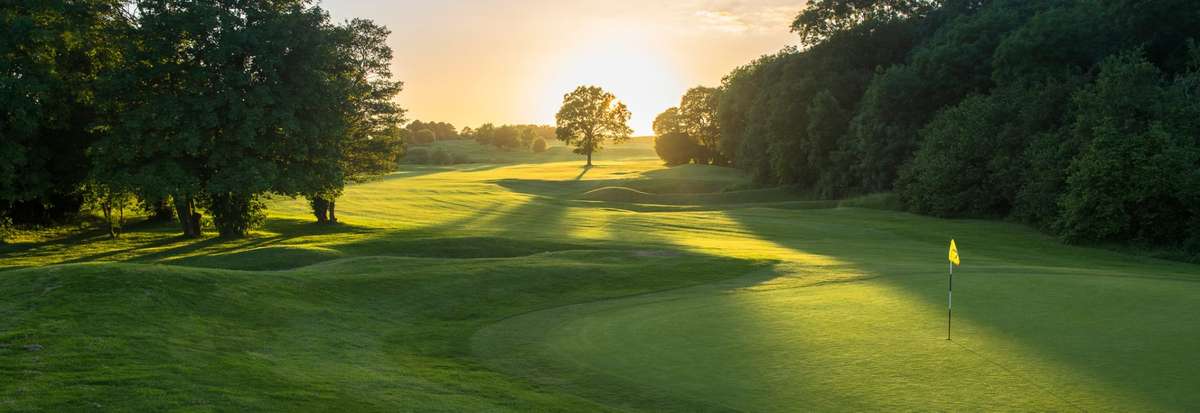
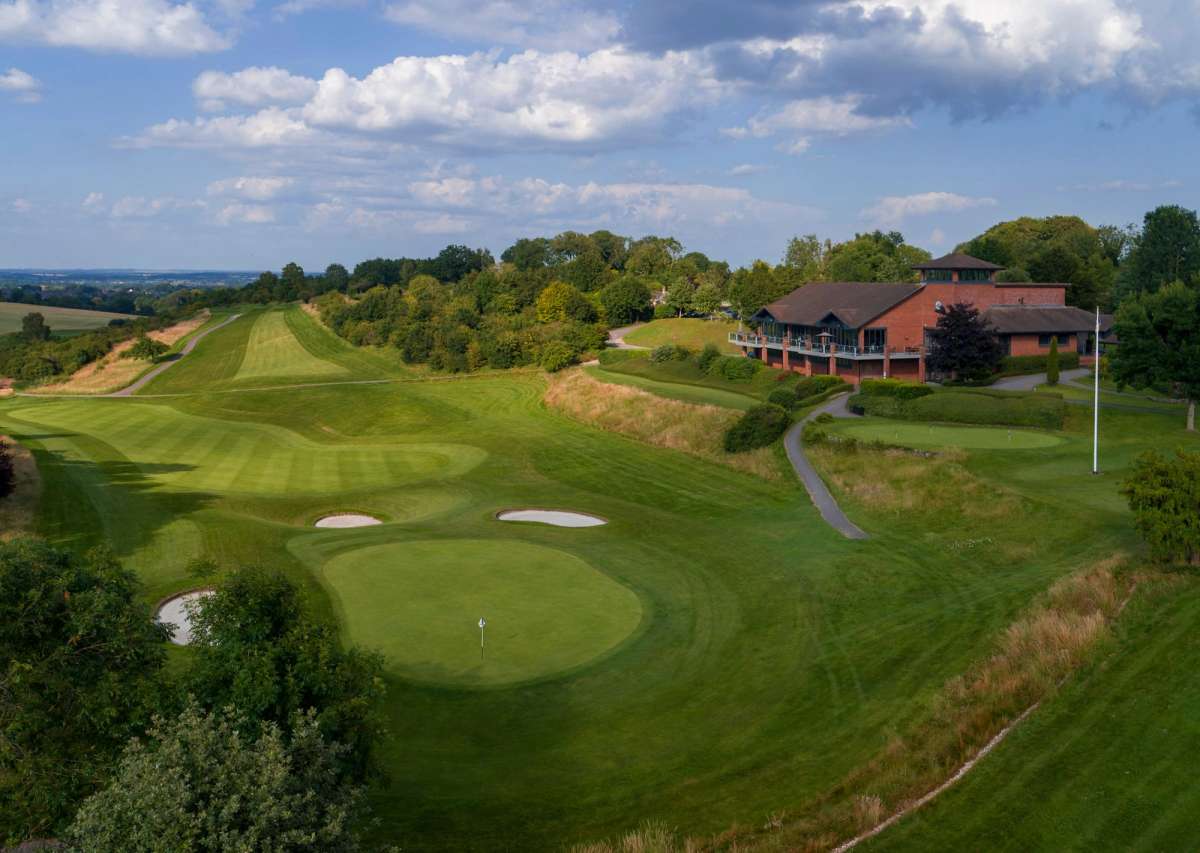
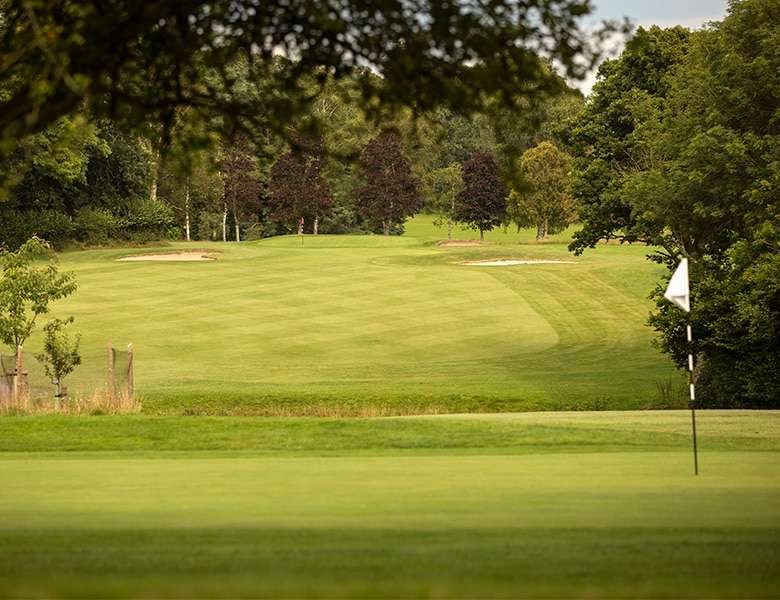
Designed by Willie Park Junior in 1908, Stoneham Golf Club is set in a delightful, historical deer park which was originally planted by Lancelot 'Capability' Brown.


Stoneham Golf Club
Designed by Willie Park Junior in 1908, Stoneham Golf Club is set in a delightful, historical deer park which was originally planted by Lancelot 'Capability' Brown.
Stoneham Golf Club is a Willie Park Junior course built in 1908 on lovely piece of land that was formerly the old deer park. The hills take the player on a continuous rollercoaster, which leaves the player guessing which way he will be aiming next. The routing is most unusual in that the front nine rings the property counter clockwise and the back nine essentially works clockwise inside the front nine loop with a few back and forths to add variety. The effect of the routing leaves the player gauging the shifting wind on nearly every hole and is very reminiscent of Muirfield though I believe the unique Stoneham routing predates Muirfield’s loop within a loop design.
The strength of Stoneham is the two shotters. All ten provide interest and fun. The best of which are 4, 11, 13 & 15. The 13th is most unusual because the player faces a blind drive (due to the hills there are many obscured view tee shots) and a sea of trees in the distance. There is no obvious place to aim, but the player is aided with the knowledge that a good strike, which manages to find the right line, can reach the putting surface of this 273-yard hole. However, there is the difficulty of a very narrow green and wonderfully placed bunker to the right of the green. This crafty little hole is a marvellous example of how to defend a course at the green.
The par fives are also strong. With the longest being 516 yards from the medal markers all are reachable, but play longer than the card suggests. Additionally, there is an element of risk/reward on all five three shotters. The 14th is perhaps the finest example. The tee shot is downhill and moves left to right. A good drive allows the player the opportunity to go for this green in two, but the fairway is uphill, moves severely left to right over humpty bumpty land and finishes in a hollow which leaves a blind approach. One needs to keep well left and use the contours, but there is a hidden bunker on the corner about 25 yards short of the green. Finding this hazard leaves an awkward length bunker shot to a green which moves away from the player. It’s difficult to find a more satisfying par five in which the land is used so expertly.
Stoneham is every bit as good as many of the well known Surrey courses and one gets the impression that being located in Southampton has kept this club a hidden gem. Golfers who admire a clever routing and great use of the terrain should be beating the door down for a game at Stoneham.
Above article was contributed by Sean Arble.

Top 20 Golf Courses in Hampshire 2015 Hampshire Best in County rankings updated Situated on the south coast of England, Hampshire has every right to glory in its proud maritime traditions, with the major ports of Southampton and Portsmouth playing a large part in the prosperity of this affluent county. Inland, the New Forest and South Downs national parks account for almost half the land area of a region that’s also famed for its contribution to the world of literature as Jane Austin and Charles Dickens were both born in Hampshire. On the sporting front, the footballing fortunes of Southampton and Portsmouth are poles apart these days whilst the county cricket ground at the Rose Bowl continues to flourish, hosting a couple of England Test matches in recent years. As far as golf is concerned, there are more than sixty golf clubs scattered around the county – including eight on the Isle of Wight, which are affiliated to Hampshire’s male and female amateur golfing authorities – and we naturally include the region’s finest tracks in our Hampshire Top 20. Looking at the latest edition of our newly updated table, the top six positions all remain the same – indeed, they’ve been in that order since we inaugurated our regional rankings four years ago so we like to think this lack of movement at the top of the chart is a sign that we’re ordering the very best courses correctly. Liphook, which originated in 1922, is our number 1 layout and it certainly impressed a recent reviewer who posted this just the other day: “If you haven’t played Liphook before then you’re missing out. Take the time to play this wonderful venue.” A current average review score of 5 ½ out of 6 tells its own story. In the runner up position in our new chart, the old links at Hayling dates back to 1883. Subsequently upgraded by J.H.Taylor then Tom Simpson, the course is as natural an 18-hole layout as you could ever hope to play, with fairways deftly routed around a Site of Special Scientific Interest. At number 3, Blackmoor sits on the edge of the South Downs and it’s an old heathland course which celebrated its centenary in 2013. Set in two loops of nine, the layout retains sixteen of the original holes that were designed by architect Harry Colt. North Hants is at number 4 and it’s where Justin Rose learned to play the game. Dating back to 1904, the course is one of James Braid’s earliest designs though Harry Colt, Tom Simpson and Donald Steel have subsequently modified it. At number 5, Stoneham is another centurion layout, where Willie Park Jnr set out the fairways in 1908. Recently upgraded, the course is generally admired for its clever routing and its great use of the landscape with the par four holes (at 4, 11, 13 and 15, in particular) of special interest. Brokenhurst Manor at number 6 is another course from the prolific Harry Colt portfolio and it first opened for play in 1919, four years after the club was founded. Rather unusually configured with three returning 6-hole circuits, it’s an underrated heathland layout which flies under the radar of many golfers. A couple of courses make a prodigious leap up our Hampshire chart. The first one is Alresford (up seven to 9), established in 1890 as a 9-hole track with its current 18-hole layout only unveiled in 1993. The second big climber is the Army course in Aldershot (up ten to 10), where the fairways were laid out on an undulating, heavily wooded site in the 1960s. Two 18-hole layouts also make their debut in our new listings: The parkland course at Rowlands Castle, yet another old Harry Colt design, enters at number 13 and Tylney Park, which was extensively renovated in 2004, comes in at number 16. We’re grateful to all the clubs and professional golfers who helped with our re-ranking process for this county. To view details of all the courses in our Hampshire Top 20 rankings click the link. If you have extensive experience of playing across the south region of England and would like to contribute to our next re-ranking exercise then please email Editor-in-Chief Keith Baxter at keith@top100golfcourses.com. Jim McCann Editor Top 100 Golf Courses
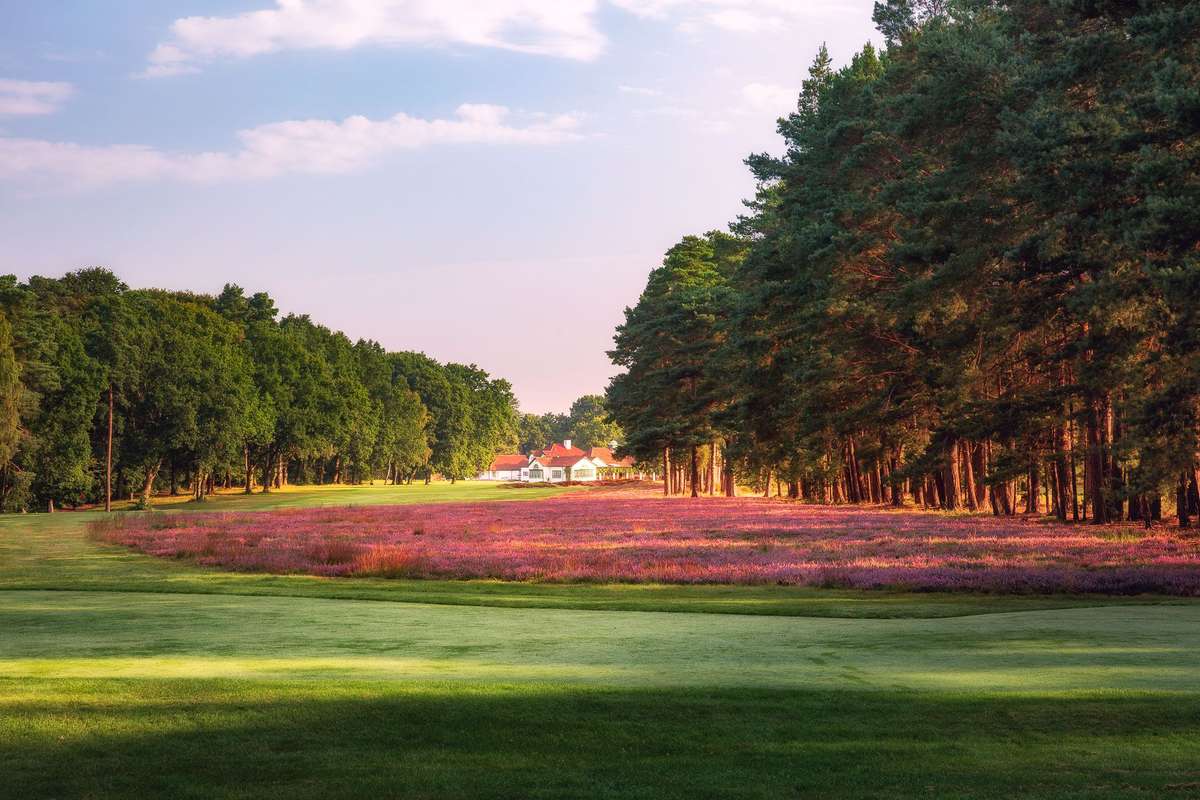
The purpose of the Review of The Month feature is twofold. Top100GolfCourses has always aimed to salute and encourage those who are putting admirable effort into reviewing the world’s great golf courses. Moving forward, we are also looking to learn from these experts! We’ll be chatting with the month’s star authors and discussing topics such as golf in their area, what they like to see in a strong course review, and of course dig a little deeper into their own winning review. February 2023’s Review of The Month comes from Harvey Thomas, who ate his first course at Woking Golf Club while exploring Surrey’s famous “Three W’s” feast. He’s eager to get back for seconds! It seems from context that you've recently gotten the Heathland bug. Whereabouts do you hail from, and how does the golf in Surrey compare from a playing perspective? I spent most of my childhood living in Southeast London, where golf was a sport for “posh people” (which we definitely were not). I have lived in South Hampshire for 30 years now and I got into golf about 20 years ago when my back stopped me from being so competitive with my tennis. I currently have home membership at Stoneham and an away membership at a nice club in Surrey, but have also previously had a country membership at Saunton in Devon, which I loved. Every time I used to drive through the entrance at Saunton I would get goosebumps down my neck as I saw the stunning linksland below. Stoneham is by far the best course in South Hampshire and is a lovely roller coaster with lots of up and down elevation changes, through tree and heather lined fairways and every hole is memorable and different in its own way. As is the fashion these days, they have cleared a lot of the trees, although there are still a lot left and they have been trying to regenerate the heather. If they can restore the heather fully, it will make a very good track absolutely stunning. The membership in Surrey has been a special treat for me and really got me into the Surrey golf scene, where there are a large number of fantastic heathland style courses. Between Stoneham and playing tracks in Surrey, I have grown a real love for heathland classics. They are frequently very beautiful but I also have a big weakness for good links tracks, which make you feel like you are playing a game within a game, especially when they get firm and the wind gets up. Photo credit: Jason Livy You make it clear from the onset that Woking's greens are its primary defense. Do you think these putting surfaces allow it to offer a similar challenge to low handicappers as other longer courses do? The fantastic greens at Woking are probably its strongest point, and they look like they demand well-placed shots into greens if you are to score well on them. My son played a match there recently too, and he is a plus handicap. He found the greens scorable, but definitely on the challenging and good side. High handicappers could definitely get humiliated by them, and single figure golfers will need to have a good touch with good green reading to avoid too many three-putts on them. The course is not as challenging as some long championship courses in terms of playing to par, but the course and slope rating is nowhere near as generous either, so playing to your handicap index on this track is just as hard in my view. The heather, a few ponds and streams, the bunker positioning and the remaining trees also add to the challenge on a visually appealing course, and I love the elevation changes on the front nine. This is definitely not a course for the beginner or high handicapper, who will find it too difficult, but mid to low handicappers will generally find it very enjoyable. Have you had the opportunity to play many Tom Dunn courses and, if so, anything you've noticed in his style? Other Tom Dunn courses I have played are Sheringham, and Goring & Streatley, but I never would have guessed they were by the same architect, as they are such different styles of course. Although I liked Sheringham, I do not personally put it in the Top 100 in England, and Goring & Streatley was pleasant but not very memorable. Woking, by contrast, was highly memorable and enjoyable too. You mentioned how recent clearance work from Tim Lobb has improved the course. Do you have any gems in mind that would benefit from similar treatment? I think tree clearance has become very fashionable in recent years as clubs with heathland traditions try to restore their style from days of old. I understand by contrast that in the 1970’s and ‘80s, many clubs were planting trees to have those tricky tree-lined fairways, although maybe that is just hearsay. It is perfectly possible to have tree-lined fairways and still be a fantastic course in my view. Stoneham has done an excellent job with it, where a huge number of trees have been removed from the property while retaining a large number of large specimen trees, which add to the challenge. The views are more open across the course and it now has a great balance. The only thing I objected to was the clearance of the Rhododendrons. Although perhaps not in keeping with a heathland course, they were very pretty, especially when in flower in the Spring, and they also added some useful shielding to some of the tee boxes and greens in my view. Nevertheless, the course is now stunning and on balance all the work done has improved the course significantly. By contrast, when I visited The Addington again last Summer soon after their clearance work, I found the course much less enjoyable than on my previous visit. So my jury is out as to whether it will be an improvement in the long term there, and only time will tell. They certainly will need to plant heather in the cleared areas if they want to make the tree clearance a positive in this instance. I felt that the trees added definition and challenge, as well as better seclusion between the holes on my previous visit. I didn’t play Woking before its tree clearance, but certainly enjoyed it in its current form. From the pictures I have seen, it looks like it has been a good improvement and the member I played with that day prefers it that way. I can’t think of any other tracks I have visited that need major tree clearance works, although I am always very happy when courses restore heather/heathland, which I find visually stunning except for when I am trying to play out of it! Photo credit: Jason Livy Now that you're a celebrated "Review of The Month" winner, let us know what factors you appreciate in a strong golf course review! When I read a review the things I really appreciate are: 1. A fair score by someone who knows what a really good course looks like. Too often I see relatively inexperienced reviewers giving out five-ball and six-balls to courses that are certainly not good Top 100 material. It makes it very hard to work out whether the course is worth a visit if there are lots of over generous reviews. My own benchmark is that a six-ball would certainly need to be around the Top 50 in the world (not that I have played enough to know for sure) and a five-ball would normally be something that would be in the top few hundred globally. I give 4.5’s to courses that are around the 50-100 in England, although at the lower end I am sometimes considering a four. Scores of three and 3.5 would be good private members clubs that I am happy to play if in the area and I have the invite and would rate quite highly in their county, being in the top quartile or so. 2. Something that gives me a flavour for the feel of the course, and what makes it stand out compared with other good courses. 3. What the conditioning is like, as this can make a course not worth the time travelling to it and the cost if this is poor. 4. If there are no previous reviews with that level of detail, I am happy to see a hole-by-hole review and description, but not if someone has already done a good job on this previously. 5. Some good pictures if possible – something I need to learn how to do myself. 6. Something that does not simply repeat the reviews that have gone before, so that it feels worthwhile reading and it adds to the body of knowledge. If it is not able to do that because of the large volume of previous reviews, then I am OK with something short and sweet. 7. If it is really well written with elements of humour it certainly helps to hold the interest. 8. I am always interested to know how the etiquette of the other groups was on the day (do they play faster groups through, repair pitch marks, rake bunkers etc) and the pace of play. I hate slow rounds and anything over four hours drives me nuts, so information on how this was on the day is very good to know. 9. It is sometimes nice to see any debate compared with previous reviews. For example there are often holes that polarise opinion, and it is good to see any contrasting view on these occasions. 10. It would also be interesting to see some reviews that assess a course from what it is like to be a member at the club, and which really gets under the skin of what the club is like, warts and all. For example, I can think of a Top 100 in England course near London, which is a good 4 ball track but with all the slow corporate pay-and-play golf, I would hate to be a member there, getting stuck behind five or six-hour rounds. What's one course that you're excited to write a review for in the upcoming year? In the next year I am due to play Sunningdale Old, Royal Dornoch, Castle Stuart, Woodhall Spa, Royal Worlington, Brora, St. George’s Hill, Bearwood Lakes, West Hill, Parkstone, Broadstone and Boat of Garten for the first time. We may also get to Rye, Hankley Common, Hayling and Silloth if we are lucky. I am very excited about playing all of them, and it is a flip of the coin between Sunningdale and Royal Dornoch as to which will be the biggest treat.

A good halfway house can turn a great round of golf into a memorable one. It might be a cold beer on a Scottish links, a burger with a spectacular view or a hot drink to warm you up before the back nine. Whatever is on offer, the best halfway houses give golfers a chance to forget about the scorecard for a few minutes and enjoy the experience. We recently asked the Top100 Golf Courses community to share their favourite halfway houses, uncovering plenty of memorable stops around the world. We've picked five of their recommendations, alongside five more renowned halfway houses that are well worth knowing about. What is a Halfway House? A halfway house is a food and drink stop positioned around the turn of a golf course, usually between the ninth and 10th holes. Some are little more than a hut serving snacks and drinks, while others have become destinations in their own right, offering everything from full meals and cocktails to fires, views and plenty of local character. Five Halfway Houses Chosen by the Top100 Community Sunningdale Golf Club (England) There is a reason the halfway hut at Sunningdale has become one of the most famous refreshment stops in golf. The small Swiss-chalet-style building has been in place since 1903, sitting where the ninth holes of both the Old and New Courses meet their respective 10th holes. But the building itself isn't the main attraction. That would be the sausage sandwich. Sunningdale's legendary hut serves a simple sausage on buttered bread, with other food and refreshments available alongside it. The hut has become such an established part of the experience that the club's own tradition says everybody stops, but does so speedily. It's not fancy, and that's rather the point. After nine holes of heather-lined fairways, a hot sausage sandwich and a cup of tea can feel like exactly what golf ordered. Nairn Golf Club - The Bothy at Nairn (Scotland) The Bothy at Nairn has a history that goes well beyond golf. Built in 1877, the stone building and neighbouring icehouse formed part of the Easter Delnies Fishing Station, one of five salmon fisheries operating along the coast between Nairn and the mouth of the Findhorn. In a good season, the fishery could catch up to 5,000 salmon, with ice collected from local rivers and a specially made pond and stored in the icehouse to keep the catch fresh. The buildings have since been given a new lease of life, with the Bothy converted into a halfway house where golfers can stop for snacks and refreshments at the turn. On a cold day beside the Moray Firth, there's also a fireplace to warm up beside. The historic stone building, Highland setting and views across the course provide plenty of atmosphere. One of our community members put it rather simply: a dram of whisky and a fire are hard to beat. Hard to argue with that. Turnberry Ailsa (Scotland) Turnberry's halfway house is about as far removed from the traditional golf hut as you can get. The Ailsa's ninth hole now finishes beside the famous Turnberry Lighthouse, which doubles as a halfway house for golfers. The lighthouse itself dates back to 1873, while the golf course's dramatic ninth was redesigned as part of the Ailsa's major renovation. Inside, golfers can stop for food and drink before heading to the 10th, but the real attraction is outside. From the lighthouse, there are views across the Firth of Clyde towards the Isle of Arran and Ailsa Craig. It's a halfway stop that feels more like a destination than a quick pit stop. When your halfway house is a historic lighthouse overlooking one of Scotland's most spectacular stretches of coastline, you've got a pretty good excuse to take your time. Ardglass Golf Club (Northern Ireland) At Ardglass, the halfway-house experience is wonderfully straightforward: have a Guinness and enjoy the view. The course's old cottage halfway house at the back of the 7th green has become one of its most memorable features, with golfers able to stop for a pint before continuing their round. A recent visitor described it as a gorgeous cottage with Guinness, while another praised the combination of a Guinness, sausage roll and views over the Irish Sea. It fits Ardglass perfectly. The County Down links is already one of the most dramatic places to play golf in Northern Ireland, with the Irish Sea never far away. Add a pint of Guinness just before the turn and you've got a halfway house that feels distinctly of its surroundings. Sometimes you don't need to reinvent the wheel. Blair Atholl Golf Estate (South Africa) Blair Atholl might have been one of the less obvious names to appear among the community recommendations, but the descriptions made it impossible to leave out. The halfway stop sounds less like a quick break and more like an event. One golfer highlighted the chicken burger, a chef cooking a barbecue beneath the trees and a deck sitting beneath a stream. Another mentioned silver-service high tea. That's quite the halfway-house menu. It's also a good example of why the best stops aren't necessarily the most famous. A halfway house can become memorable because of the food, the setting or simply the feeling that you're being looked after rather than rushed back onto the course. Five More Renowned Halfway Houses St Andrews Links - The Old Course (Scotland) If we're talking about halfway houses, it makes sense to visit the place that has a claim to starting the tradition. In the 19th century, David "Old Da" Anderson sold ginger beer and other refreshments from a cart on the Old Course at St Andrews. It has been described as golf's first refreshment stand. The modern version sits behind the ninth green and keeps the tradition going, albeit with a rather more substantial menu. The pork and haggis sausage roll is a popular choice, while the club's own Tom Morris 1821 Lager provides a suitably Scottish accompaniment. It's difficult to think of a more fitting place for a halfway stop. The Old Course is steeped in golfing history, and even the break between nines has a story of its own. Pine Valley Golf Club (New Jersey, United States) Pine Valley's halfway house is memorable before you've even ordered anything. Rather than a conventional hut, it is built into the base of an old water tower, which golfers encounter around the eighth hole and again near the 12th tee. It's an appropriately unusual feature for one of the world's most unconventional golf courses. The tower doubles as a stop for drinks and snacks, giving golfers a chance to take a breather before continuing around Pine Valley. It even boasts an impressive collection of golf balls from around the world. There aren't many halfway houses that can claim to be built inside a water tower. Quivira Golf Club (Baja California Sur, Mexico) Quivira has taken the halfway-house concept and spread it across the entire round. The Jack Nicklaus-designed course has multiple all-inclusive comfort stations, each offering golfers food and drinks as they make their way around the Cabo San Lucas layout. The most spectacular is The Cliffs, perched almost 300 feet above the Pacific, where golfers can stop for a breakfast burrito and take in the views over the ocean. Then there's The Oasis, the main halfway house near the ninth green. Here, the emphasis is on the food, with freshly prepared Baja cuisine including tacos and tostadas, alongside a full tequila bar. A final stop, Cañada, sits near the 16th tee, while another comfort station beside the oceanfront practice facility offers snacks and cold drinks before golfers even reach the first tee. The food and refreshments are included in the green fee, making Quivira's comfort stations much more than somewhere to grab a quick drink. Tacos, tequila and spectacular Pacific Ocean views make the breaks almost as memorable as the golf. Whistling Rock Country Club (South Korea) At Whistling Rock, there isn't just one halfway house to look forward to. The South Korean club is made up of three nine-hole loops, each with its own themed tea house: Cocoon, Temple and Cloud. The three buildings are each distinctly different. One is a rounded structure between a lake and forest, another is a formal wood-and-glass building, while the Cloud tea house sits high among the trees. The result is a halfway-house experience that feels distinctly different depending on which nine you're playing, with each tea house adding another layer to the Whistling Rock experience. Royal Dornoch Golf Club (Scotland) Royal Dornoch's halfway house is proof that sometimes the best idea is a simple one. The stop sits behind the ninth green of the Championship Course, with views back across the links towards the Dornoch Firth. And then there's the traditional order: hot chocolate with Bailey's Irish Cream, a combination that makes considerably more sense when you're standing on a Scottish links in a North Sea wind. It's a small detail, but one that has become part of the Royal Dornoch experience and exactly the sort of halfway-house tradition golfers remember.
The latest ranking of the Top 100 Golf Courses in the World serves as the ultimate global golf bucket list. Most members of our World Top 100 Panel are seasoned golfers, each playing 20-30 of these courses annually while travelling extensively over decades to form their opinions on others. We recognise that opinions vary—even among our panel members. Rankings are subjective, and there are undoubtedly 50 or more courses in the UK and USA alone that could easily fit onto this list. Links Golf Pilgrimages The rankings
California, United States
New Jersey, United States
Northern Ireland, United Kingdom
New York, United States
New York, United States