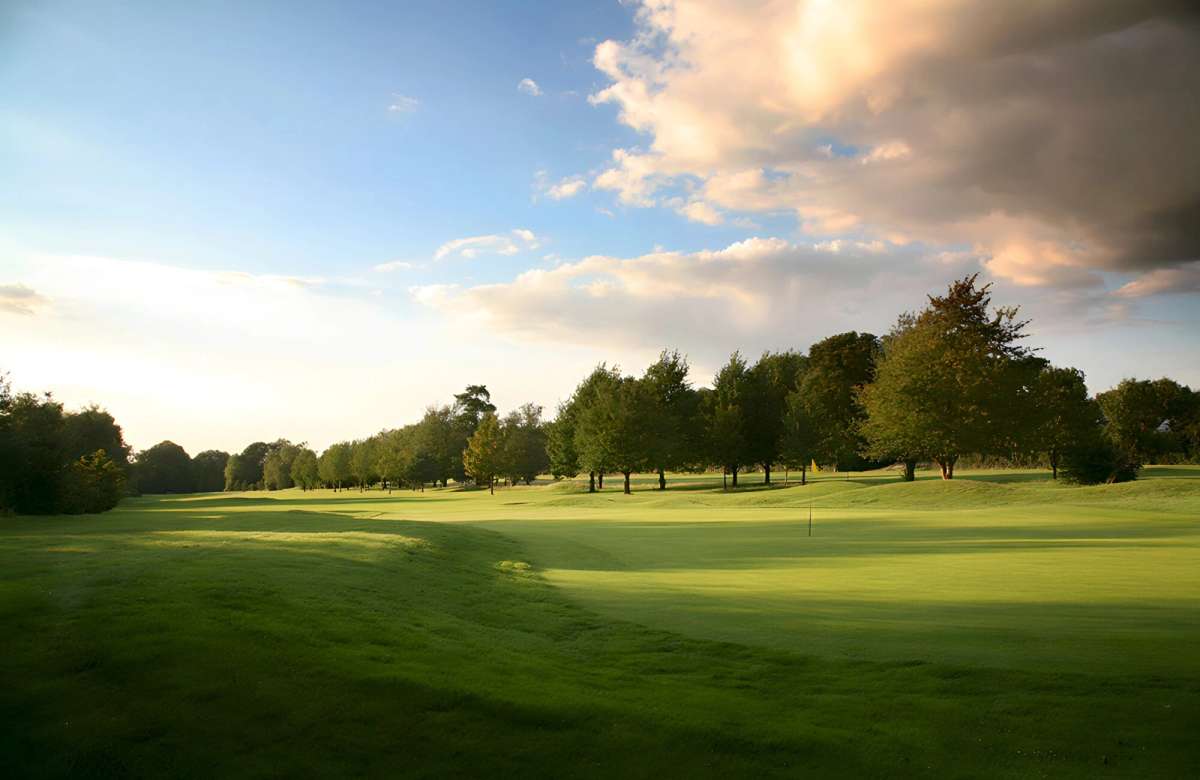
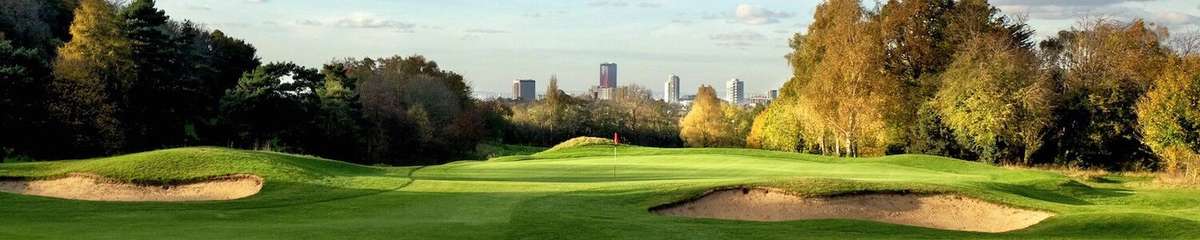
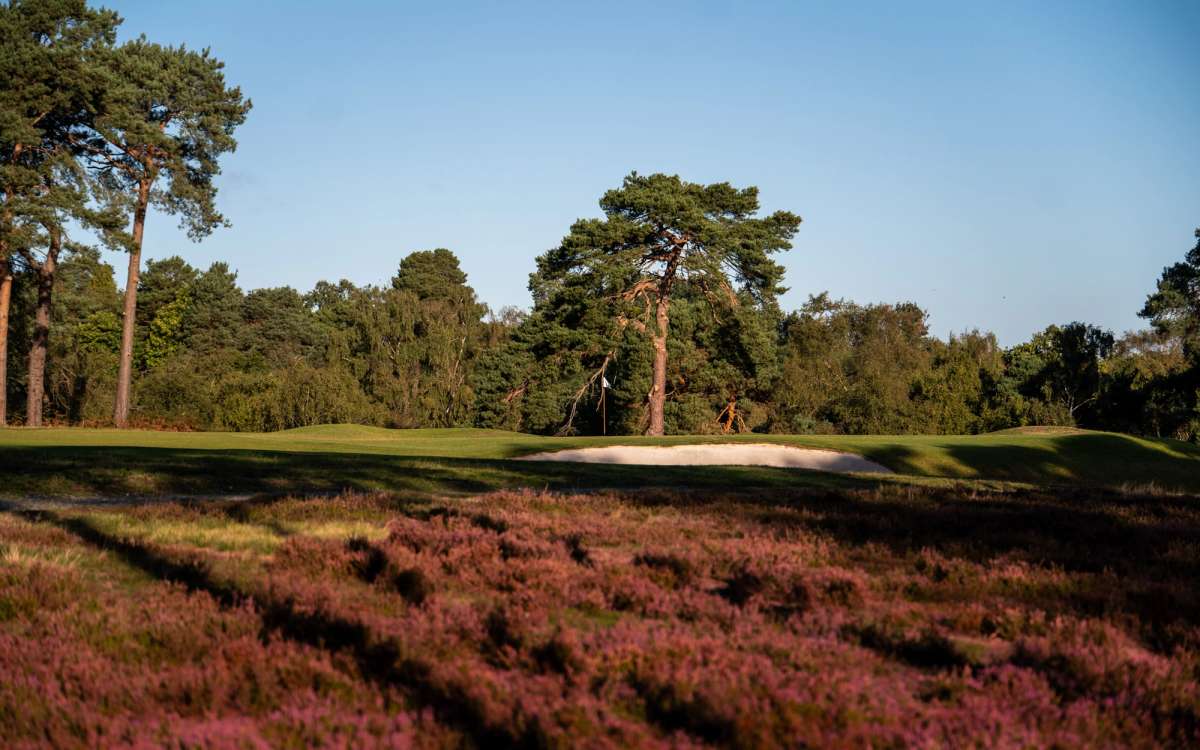
Tandridge Golf Club, founded in 1924 on the Tandridge Park Estate in Surrey, presents Harry Colt's original two-loop inland design across the Greensand Ridge. Spectacular views of the North Downs and High Weald frame 6,509 yards of par-71 golf restored across three decades, making it one of southern England's most compelling golfing holiday destinations.
Overall rating

4.5


Tandridge Golf Club
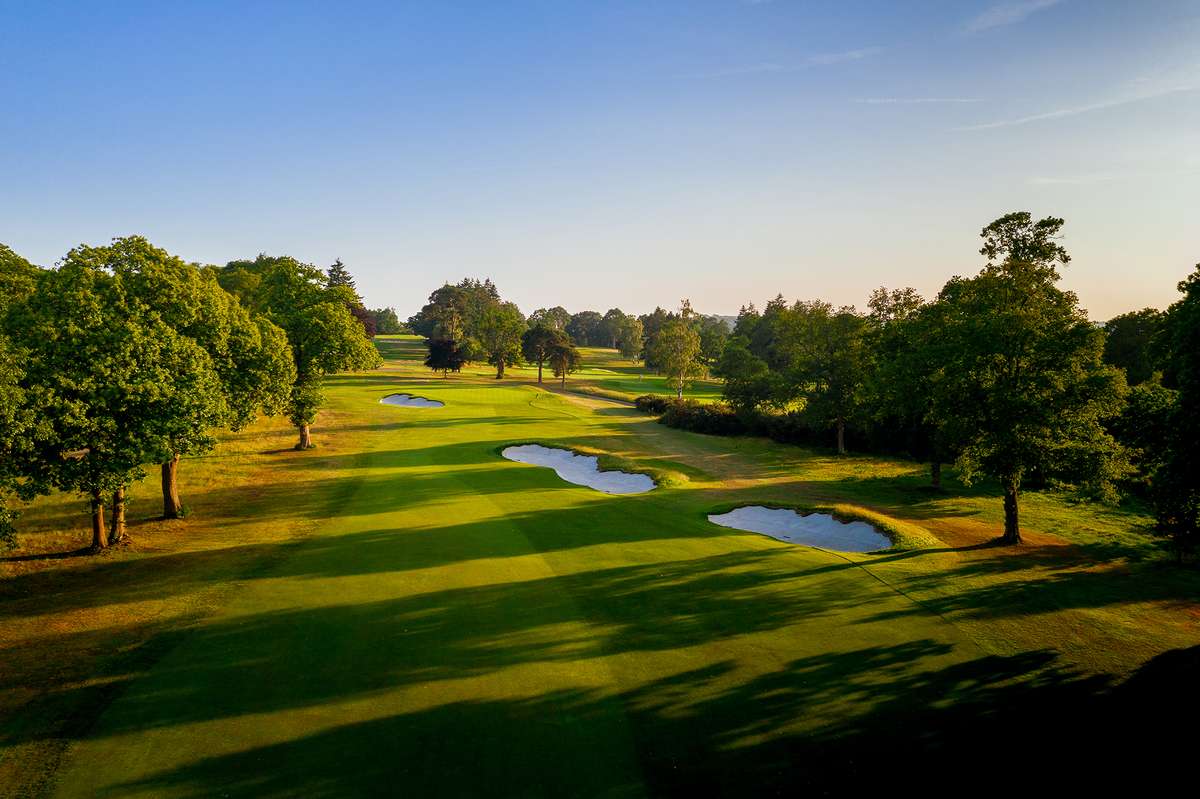
Tandridge Golf Club, founded in 1924 on the Tandridge Park Estate in Surrey, presents Harry Colt's original two-loop inland design across the Greensand Ridge. Spectacular views of the North Downs and High Weald frame 6,509 yards of par-71 golf restored across three decades, making it one of southern England's most compelling golfing holiday destinations.
The latest ranking of the Top 100 Golf Courses in the World serves as the ultimate global golf bucket list. Most members of our World Top 100 Panel are seasoned golfers, each playing 20-30 of these courses annually while travelling extensively over decades to form their opinions on others. We recognise that opinions vary—even among our panel members. Rankings are subjective, and there are undoubtedly 50 or more courses in the UK and USA alone that could easily fit onto this list. Links Golf Pilgrimages The rankings
California, United States
New Jersey, United States
Northern Ireland, United Kingdom
New York, United States
New York, United States
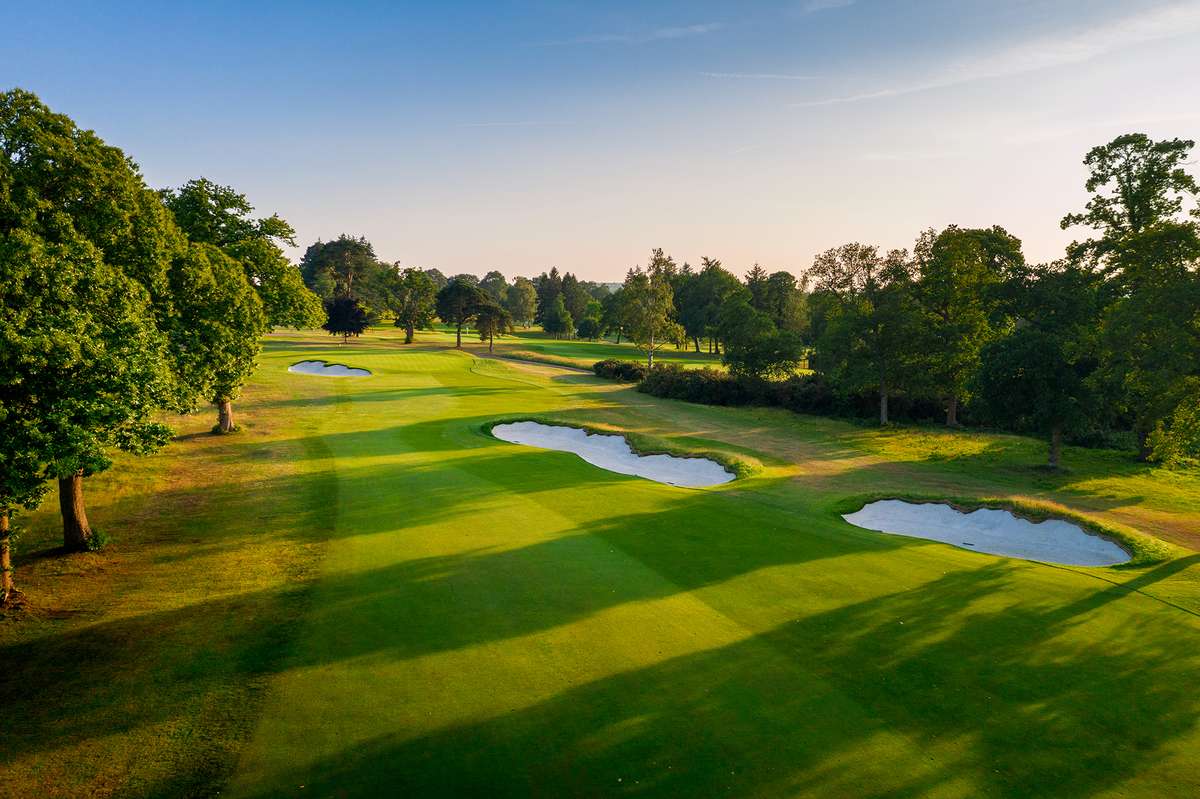
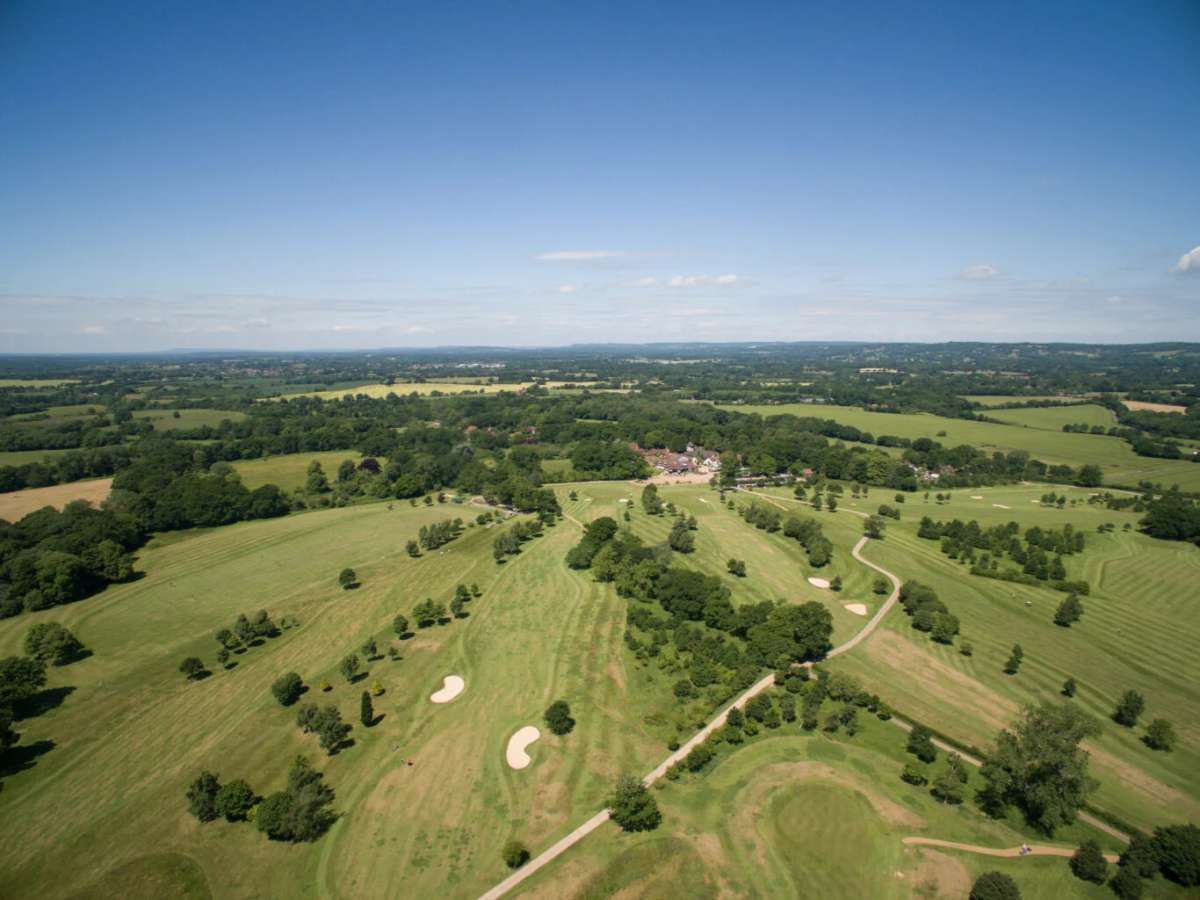
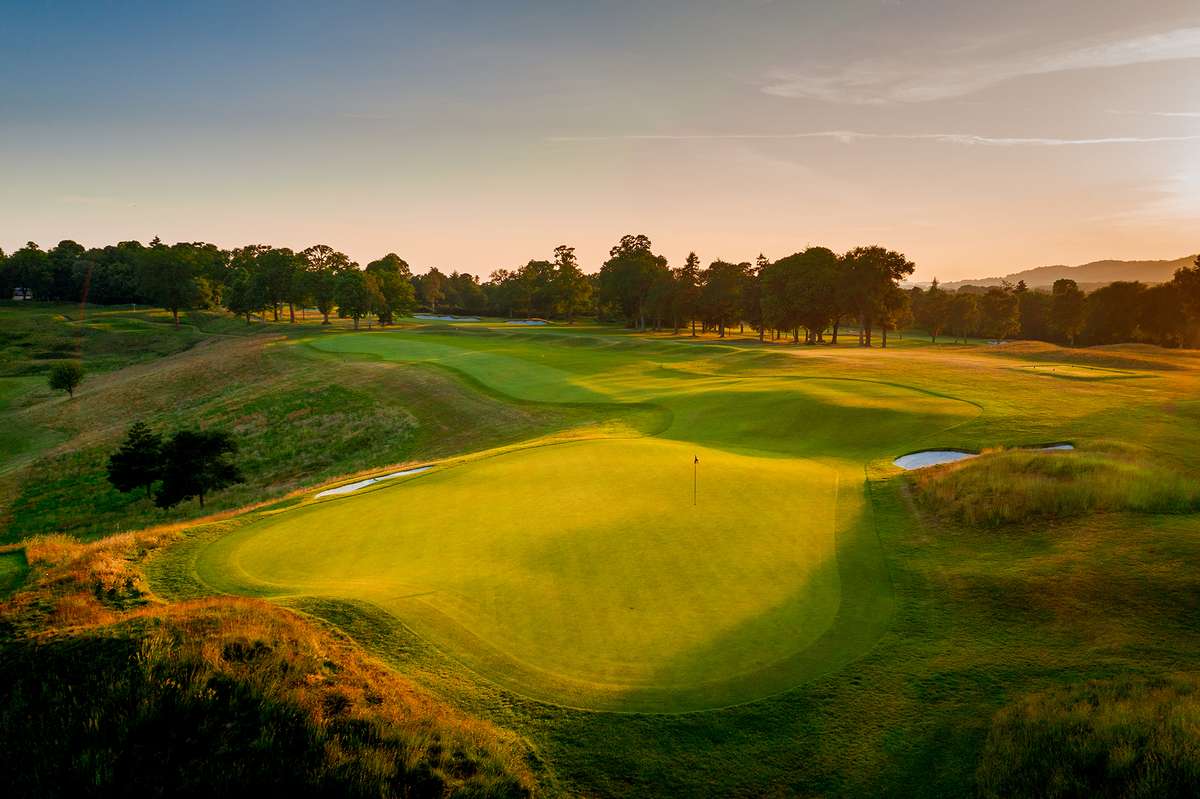
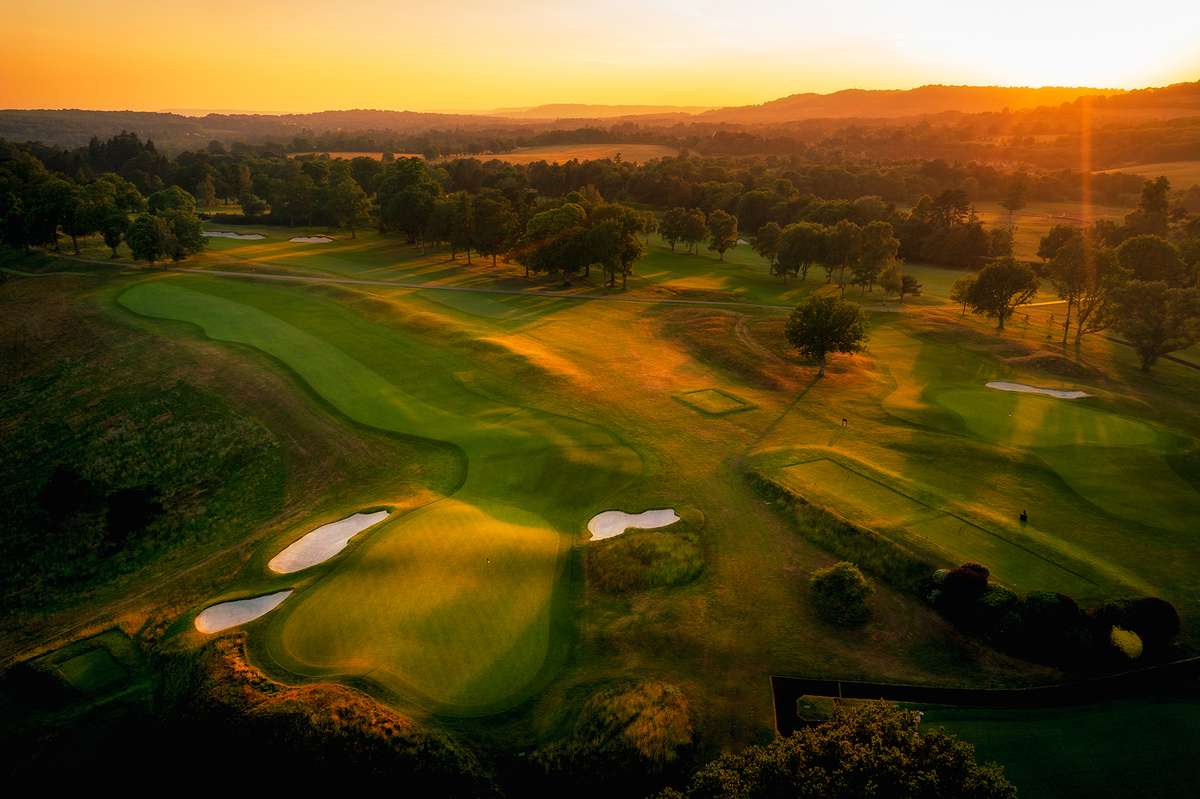
Tandridge Golf Club opened on 1 October 1924, built on land that Harry Colt himself selected from the Tandridge Park Estate after scouting the district at the height of Golden Age design. Sitting on the Greensand Ridge west of Oxted, the layout delivers two structurally distinct loops — a relatively level front nine and a dramatically elevated back nine — with views across the Surrey North Downs and the High Weald Area of Outstanding Natural Beauty framing the second half of any round. Three decades of layered restoration have progressively stripped back decades of encroachment, returning the layout ever closer to Colt's original bold, bunkered vision.
Tandridge offers one of the most architecturally faithful Golden Age restoration stories in English golf, where three successive architects — Frank Pont, then Tim Lobb — have worked from original aerial photography and English Heritage records to recover Colt's strategic intent hole by hole. The contrast between a deceptively testing front nine and a dramatically elevated, view-laden back nine makes for a round with genuine variety, while a location just 3km (2 miles) from M25 Junction 6 gives easy access from London, Gatwick, and the wider South East.
The club's origins trace to November 1922, when Sir Henry Gibson KCB circulated a letter to residents in and around Oxted proposing a new 18-hole golf course. The sole alternative at that time was a nine-hole layout on nearby Limpsfield Chart, which also prohibited Sunday play. With sufficient backing secured within a year, the Tandridge Park Estate site was purchased and Harry Colt — then at the height of his powers, having recently designed Sunningdale's New Course and about to undertake the Muirfield redesign — was retained to produce the layout.
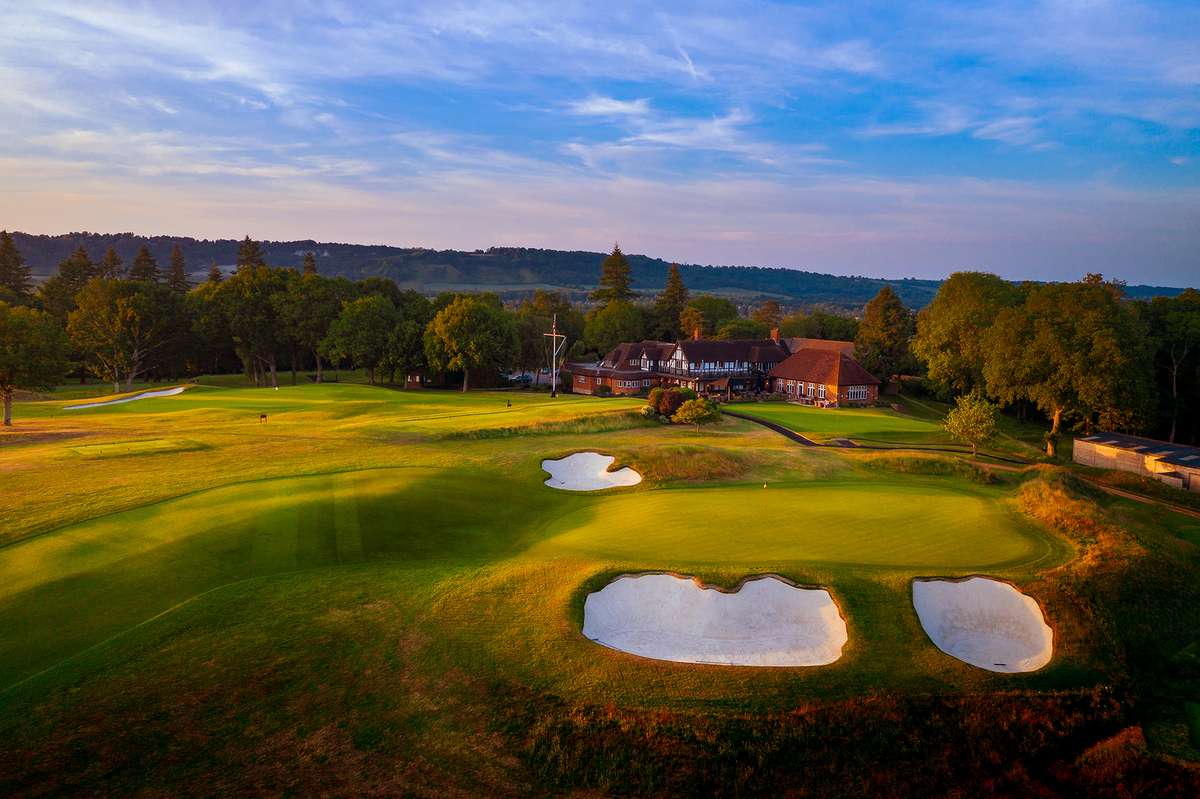
Colt's design, built for an estimated £10,000 including the clubhouse, used two loops of nine holes and featured over 300 bunkers sited in ridge faces and across strategic diagonals throughout the property. The course opened on 1 October 1924, and the original clubhouse burnt down within its first year; the Tudor-style replacement with beamed ceilings and wood panelling has served the club ever since. Bernard Darwin, writing in The Golf Courses of Great Britain, singled out "good turf, sharp sand, a bold country that is not too tiring and some very good holes."
The decades that followed saw the bunker count reduced substantially as maintenance economics shifted, fairways narrow through unmanaged tree growth, and several greens shrink from their original specifications. The 1987 Great Storm removed approximately 2,000 trees from the property. The retirement of a long-serving head greenkeeper in 2006 prompted a strategic review that ultimately transformed the club's approach to course management.
Dutch architect Frank Pont was engaged in 2009 to produce a long-term restoration plan. Working from drone aerial mapping and historical photography held by English Heritage, Pont's programme, described by the editor of Golf Course Architecture as "perhaps the most dramatic restoration of a Golden Age golf course yet attempted in the UK," restored lost bunkers, enlarged others, reintroduced lost lines of play, and added approximately 250 yards to the total length. The work also included new tees and converted the first and ninth holes to par fives for all tees.
Tim Lobb was appointed in 2019 to continue refining the layout, concentrating on bunker placement, fairway widening, tee extensions, and woodland management overseen by John Nicholson. A new irrigation system installed in winter 2022 by Lakes & Greens covers the course, practice holes, and turf nursery.
Following a severe storm in August 2024 that washed out pathways and left unlined bunkers in disrepair, construction firm 18 Golf began an accelerated greenside bunker remediation programme in October 2024, with rubber crumb liners fitted throughout. A second phase targeting fairway bunkers was scheduled to begin in October 2025, with reopening planned for May 2026.
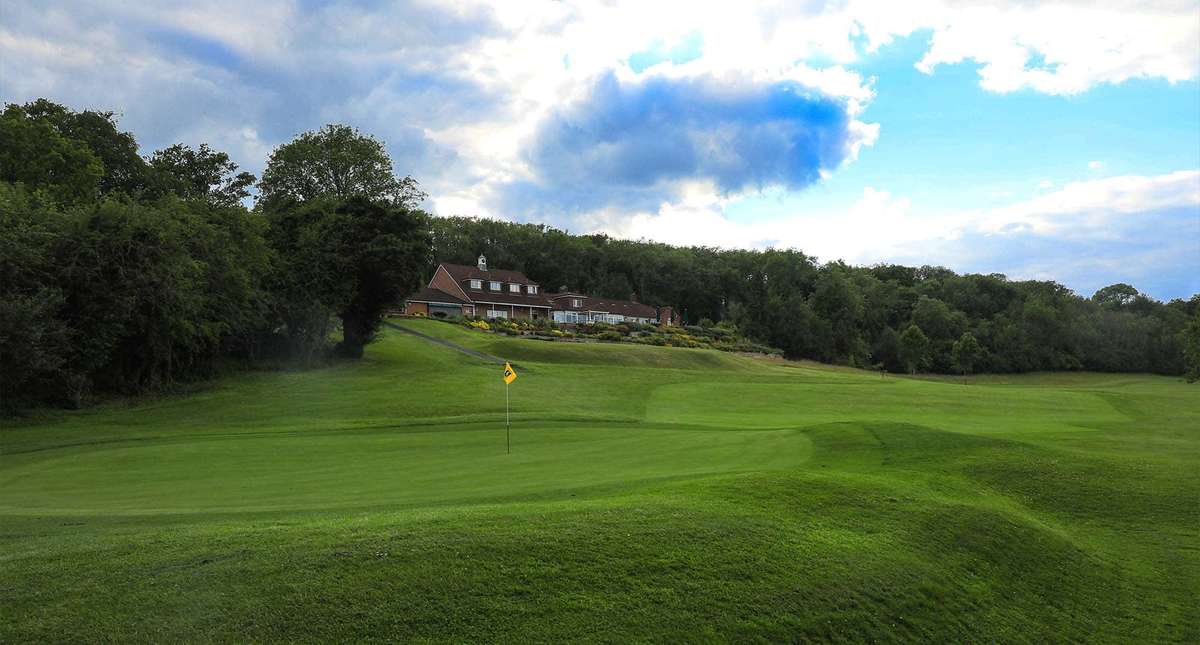
Tandridge measures 6,509 yards from the white tees at par 71, with a course rating of 72.1 and a slope of 134. The routing follows Colt's characteristic pattern: an opening par five travels away from the clubhouse to the far extent of the property, the front nine circuits back, and both loops return through the same start and finish point at the Tudor clubhouse.
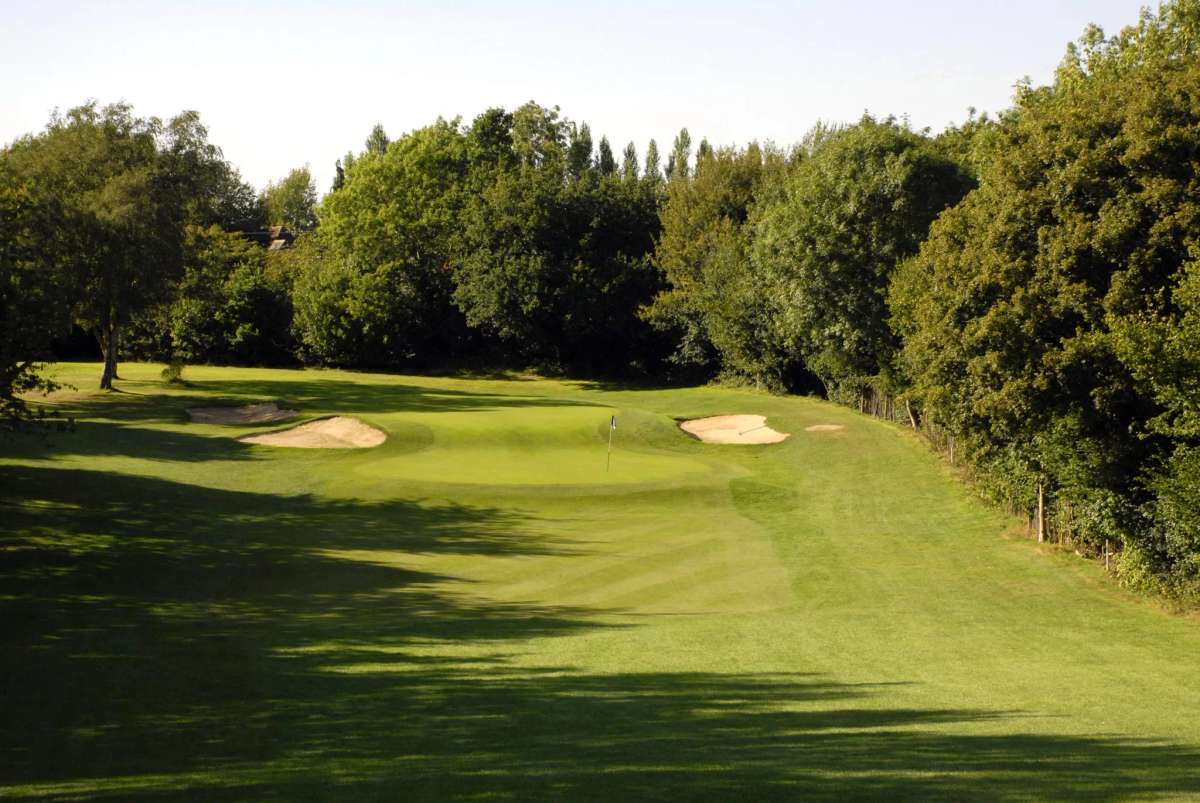
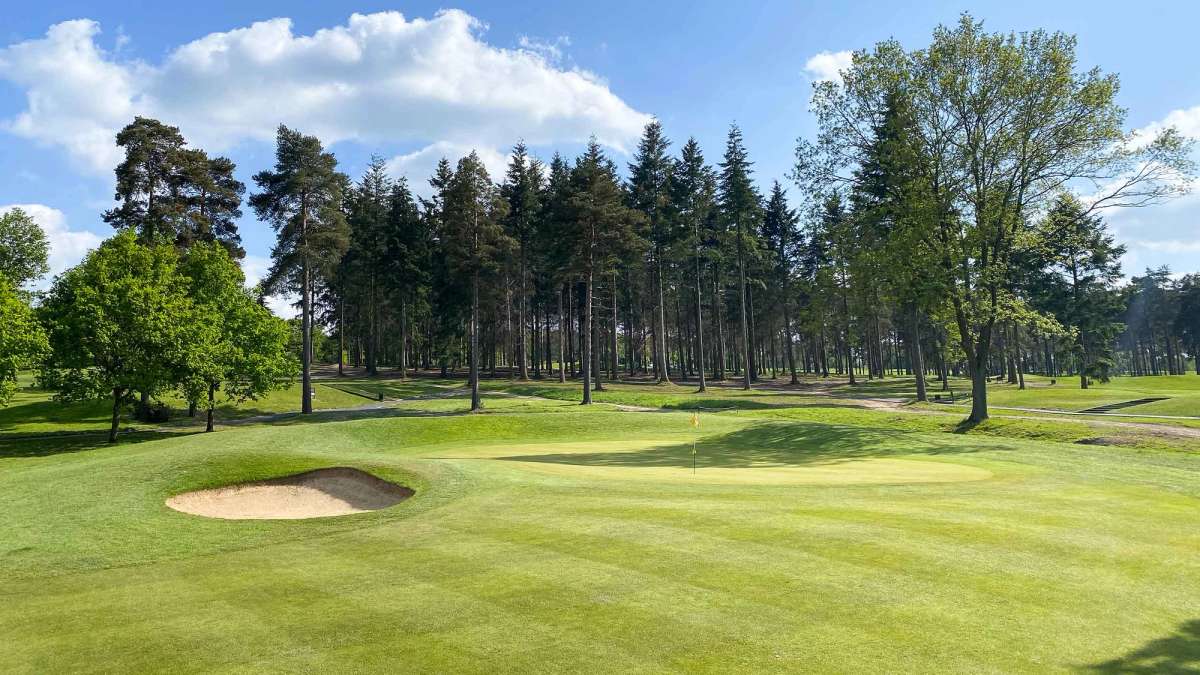
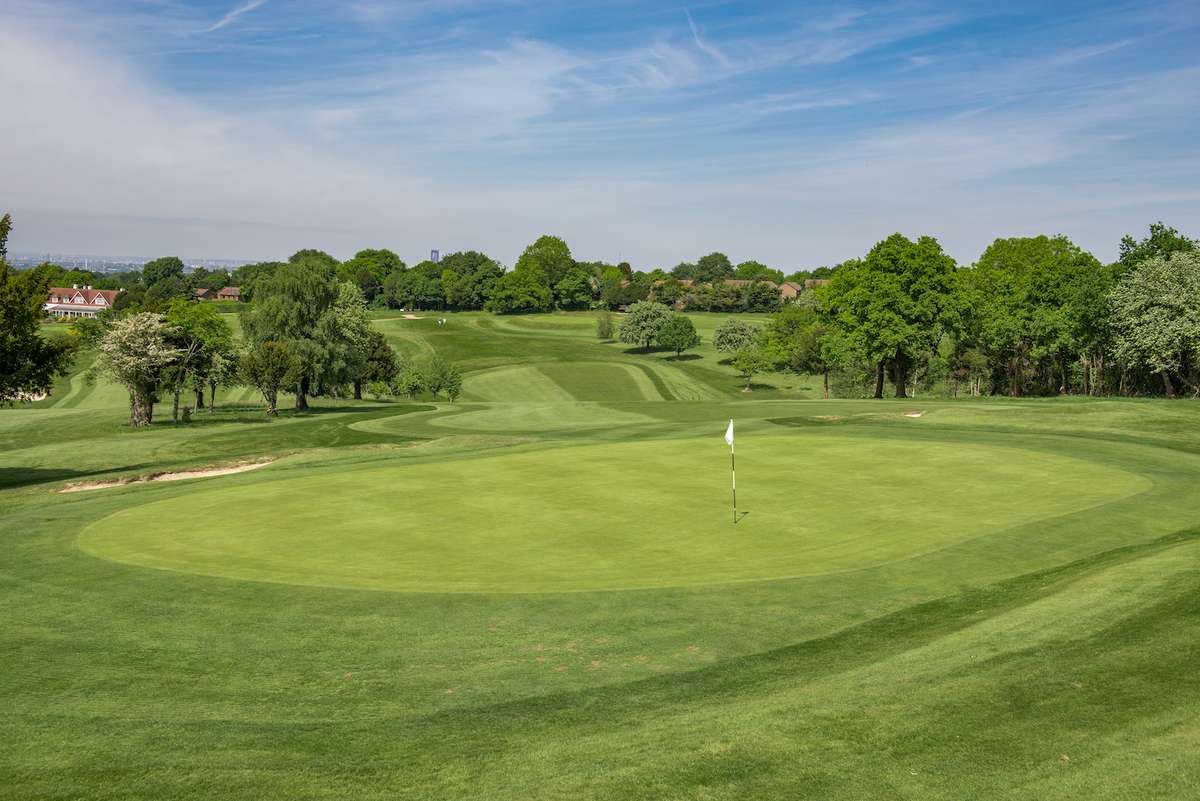
The front nine occupies comparatively level ground, where Colt's bunkering strategy — centreline hazards, diagonal cross-bunkers sited on ridge faces, and Valley of Sin aprons at selected approach zones — delivers strategic variety across relatively gentle terrain. The par-three 13th, measuring approximately 200m (223 yards), is broadly regarded as one of the strongest one-shotters in Surrey, with the green ringed by bunkers and an alarming fall-off into woodland to the right.
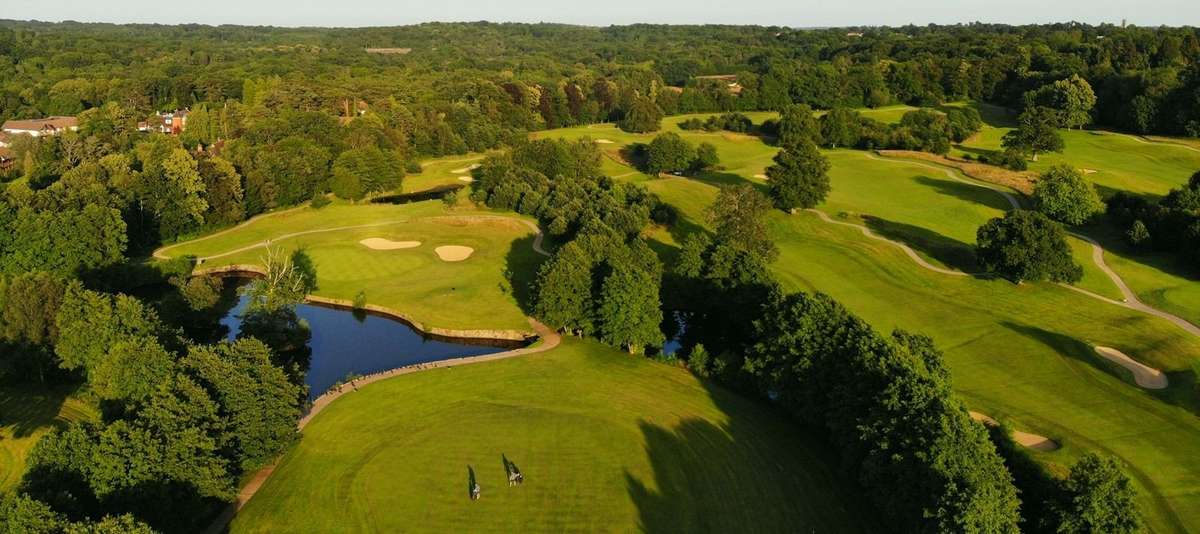
The back nine delivers the course's most memorable sequences. Elevation accumulates almost imperceptibly from the 10th tee through to the 12th green — where ongoing woodland clearance has revealed what Evalu18 describes as "an amazing infinity green" — before the layout descends sharply from the 13th and all remaining height drops away at the 14th tee. The three-hole stretch from 14 through 16, including the short par-four 16th with its distinctive two-tiered green and prominent centreline bunkering, breaks what might otherwise become a uniform slog across the high ground. Through the woodland gaps and from the elevated positions on the inward half, views across the Surrey and Sussex countryside reach considerable distance.
The course sits on chalky Greensand subsoil that promotes reliable drainage through wet periods. Since 2022, approach cuts have been extended from green surrounds to add variety and improve turf consistency, and tightly mown run-offs have been introduced at multiple green sites as part of the ongoing restoration.
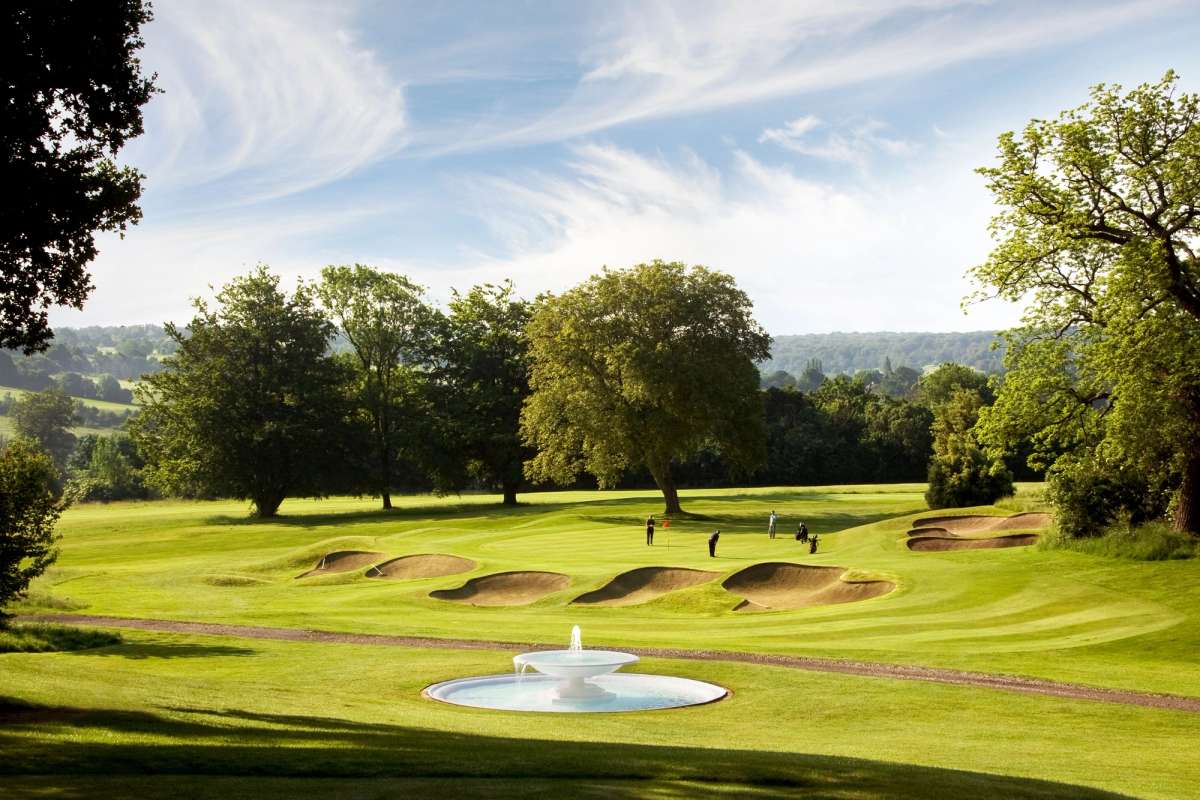
Tandridge is reportedly Harry Colt's most heavily bunkered design, with the original layout containing more than 300 hazards.
Several green complexes carry architectural features that are remarkable in the context of Colt's wider output. The eighth green presents a punchbowl set within a punchbowl — a double-concave. Greens built in a Redan style appear on at least six holes, including the fourth, sixth, thirteenth, fourteenth, fifteenth, and seventeenth, with each incorporating a compound-curve ridge rather than a simple step between tiers. The fourth and sixth greens both sit on the same physical ridge yet are played from opposing sides of it, a routing subtlety that requires significant spatial planning at the design stage.
Lobb's 2024–2025 greenside bunker renovation blended several smaller cross-bunkers on the sixth into a single larger diagonal hazard, moved distant greenside bunkers closer to green edges on the fourteenth, and removed awkward steps leading away from one green. The stated methodology was to retain the high visual presence of the bunkering while applying modern rubber crumb liner construction to improve year-round playability and reduce maintenance burden, with greenkeeping time previously spent on bunker repairs.
Want to know what other travelling golfers really think? Click the Reviews tab to discover the latest ratings and reviews.
Tandridge sits at the eastern end of Surrey's remarkable concentration of inland golf, with the majority of the county's top-ranked courses accessible as day trips via the M25 orbital.
Within 30km (19 miles) — same-day combination options:
Westerham Golf Club lies approximately 8km (5 miles) north-east via the A25, making it the most natural companion round. Royal Ashdown Forest Golf Club — one of England's few courses with no sand bunkers — sits approximately 25km (16 miles) to the south-east across the Sussex border, reachable in around 35 minutes.
30–60km (19–37 miles) — day-trip range:
Walton Heath Golf Club (Old and New courses), where the 1981 Ryder Cup was played, is approximately 35km (22 miles) to the west, roughly 40 minutes in normal traffic. Hever Castle Golf Club lies approximately 18km (11 miles) to the south-east in Kent, around 25 minutes via the B269. West Kent Golf Club is within a similar westward radius for visitors building a Kent-Surrey itinerary.
60km+ (37+ miles) — extended stay range:
St George's Hill Golf Club, Sunningdale Golf Club (Old and New courses), and the 36 holes at Wentworth Club are all accessible within a 90-minute drive for golfers building a multi-day Surrey golf holiday. Oxted or Redhill make the most practical overnight bases for visitors focusing on the eastern Surrey and Kent border corridor.
Tandridge welcomes visitors Monday through Thursday throughout the year, with limited Friday availability. Advance booking is strongly recommended, particularly from April through October.
The Tudor clubhouse restaurant — offering a traditional four-course "Tandridge Lunch" — is consistently cited by visitors as among the finest clubhouse dining in southern England, and should be factored into planning a full day's visit.
London Gatwick Airport: approximately 21km (13 miles) to the south via the M23 and M25, around 25–30 minutes in normal traffic. Major car rental facilities operate from Gatwick's North and South terminals with direct motorway access.
London Heathrow Airport: approximately 60km (37 miles) to the west via the M25, typically 50–60 minutes in standard traffic. Heathrow provides extensive international connections and full car rental facilities.
The club is situated 3km (2 miles) from M25 Junction 6 (Godstone/Westerham). From the junction, take the A22 south and turn left at the first roundabout onto the A25 signposted Oxted; the entrance is 550 yards on the right.
By rail: Oxted station is served by Southern Railway from London Bridge and London Victoria, with the club approximately 1.6km (1 mile) from the station. A five-minute taxi connects the station to the clubhouse; Tandridge Cars and Station Cars Oxted both serve the route. Journey time from London Bridge is approximately 35–40 minutes.
Private aviation: Biggin Hill Airport, approximately 16km (10 miles) to the north-east, handles private and charter operations and provides the closest private aviation access.
Spring (April–May): Optimal conditions for visiting as the course emerges from winter programmes. Drainage from the Greensand subsoil typically delivers firm, fast surfaces earlier in the season than many inland Surrey courses. Advance booking is advisable from mid-April.
Summer (June–August): Peak season with maximum daylight and settled conditions. The elevated back nine can be exposed in strong winds. Booking several weeks in advance is recommended for weekday slots.
Autumn (September–October): An excellent shoulder-season window combining good surface conditions with reduced visitor pressure. The 45 tree species across the property create notable autumn colour through October.
Winter (November–March): The course remains open year-round; the irrigation system installed in 2022 and the rubber-lined bunkers completed in 2025 have improved winter playability and surface consistency. Temporary greens may be in use during intensive maintenance periods.
Few English inland clubs can point to a restoration project as methodically documented as Tandridge's — beginning with Pont's decade-long programme from 2009 and continuing through Lobb's ongoing refinements guided by 70-year-old aerial photography and English Heritage records. The result is a course where the original Colt intent is increasingly legible: diagonal bunkering calibrated to different handicap levels, green complexes of genuine architectural complexity including a punchbowl-within-a-punchbowl, and a back nine whose elevation changes deliver views of the North Downs and High Weald that open progressively as the woodland is managed back.
Within 25 minutes of Gatwick and 40 minutes of central London, the food and welcome are consistently noted as equal to the quality of the golf. For travelling golfers building a Surrey itinerary, Tandridge represents the most accessible and arguably the most architecturally significant Colt design in the eastern half of the county.
Tandridge Golf Club, Oxted, Surrey, England Click any of the large images to return to the main Tandridge page All photos courtesy of Tandridge Golf Club

England is home to some of the best golf courses in the world, and its five highest-ranked layouts can be played without being a member. From a 15-time Open venue on the Kent coast to some of the finest heathland golf in Surrey and Berkshire, plus a spectacular links course in Cornwall, these are the five highest-ranked courses in England that welcome visiting golfers. Royal St. George’s Golf Club (Kent) World Ranking: 19th | England ranking: 1st | Green fee: £430 Royal St George’s offers the chance to play one of England’s most historic and challenging links courses. Founded in 1887, it was the first English course to host the Open and has staged the championship 15 times, including the most recent edition in 2021. Routed through towering dunes in a loose figure of eight, Royal St George’s has undulating fairways, uneven lies and plenty of elevation changes that can make even seemingly straightforward shots difficult. The fourth hole is particularly memorable, with a huge bunker carved into a towering dune guarding the fairway. Despite its reputation as a demanding championship test, the course is as enjoyable to explore as it is difficult to score on. Wildflowers and dune grasses line the fairways, while views stretch across Pegwell Bay towards the white cliffs beyond. Add in distinctive features such as the thatched shelters and St George’s flags, and there is plenty to keep you entertained between the inevitable moments of frustration. Sunningdale Golf Club - Old Course (Surrey) World Ranking: 22nd | England ranking: 2nd | Green fee: £485 The Old course at Sunningdale is widely regarded as one of the most beautiful inland courses in the British Isles. Opened in 1901 by Willie Park Jr, it was one of the first great courses to emerge from the Surrey and Berkshire sand-belt, with Harry Colt later reshaping the layout and giving it the intimate, tree-lined character it has today. Pine, birch, oak and heather frame the fairways, while the firm heathland turf makes Sunningdale a joy to walk and play. The course has hosted plenty of memorable golf, too, including Bobby Jones’ remarkable 66 in Open qualifying in 1926 and Nick Faldo’s 62 at the 1986 European Open. The 10th is a particular highlight, with its elevated tee offering a spectacular view before the halfway hut provides one of golf’s more welcome rewards. The 15th, a 226-yard par three, is another standout. For golfers visiting England, Sunningdale Old offers a classic heathland experience in one of the country's finest golfing regions. Sunningdale Golf Club - New Course (Surrey) World Ranking: 41st | England ranking: 3rd | Green fee: £485 The New course at Sunningdale provides a rather different experience to its famous older sibling. Opened in 1923 and designed by Harry Colt, it is more open and rugged than the Old, with elevated tees, heathery terrain and long carries placing a greater emphasis on driving. At 6,700 yards and par 70, the New is no pushover, with narrow fairways and plenty of undulation making it a particularly demanding test from the back tees. Even the professionals have struggled to make it look easy: Jack Nicklaus once held the course record with a 67 before Graeme Storm carded a remarkable 62 during Open qualifying in 2009. The course has also benefited from an ongoing tree-management programme, allowing more heather to return and restoring views across Chobham Common. The fifth, a picturesque par three played across the heath, is one of the highlights. The result is a course that rewards good driving without becoming a purely distance-based test, with the heathland setting providing plenty of visual interest along the way. St Enodoc Golf Club - Church Course (Cornwall) World Ranking: 49th | England ranking: 4th | Green fee: £190 St Enodoc is unlike almost any other links course in England. Overlooking the Camel Estuary in Rock, with views across to Padstow, the Church Course takes its name from the 13th-century church that sits beside the 10th green. Remarkably, the building was completely buried by sand in the 19th century before being excavated in 1863. Founded in 1891 and redesigned by James Braid in 1907, St Enodoc is defined by its towering dunes and constantly changing terrain, where no two holes feel quite the same. The sixth is the course's signature hole, demanding two blind shots over the towering 'Himalayas' dune to reach the hidden green. The 10th, played across a natural valley to a narrow fairway below, is another memorable challenge. If your ball strays towards the churchyard, you'll also find the grave of Poet Laureate John Betjeman, whose poem Seaside Golf was inspired by the course. The combination of huge dunes, unusual holes and views across the Camel Estuary makes St Enodoc a particularly distinctive addition to any English golf trip. Swinley Forest Golf Club (Berkshire) World Ranking: 52nd | England ranking: 5th Swinley Forest offers a quieter, more understated version of heathland golf on the Surrey and Berkshire sand-belt. Set among mature pines and heather, it has a wonderfully quiet atmosphere and an old-fashioned character that is increasingly difficult to find. The firm, fast-running fairways and purple heather in summer give it all the hallmarks of classic heathland golf. Designed by Harry Colt and opened in 1909, Swinley measures around 6,400 yards and plays to a par of 69. The short holes are particularly strong, with a varied collection of one-shotters that require careful club selection. Around the greens, false fronts, run-offs and subtle slopes provide plenty of opportunities for a good round to unravel. For much of its history, Swinley was an intensely private club where visitors were few and far between. It now welcomes green-fee golfers, although the club retains much of its distinctive character. The result is a course that feels removed from the modern world, with little of the glamour associated with some of its better-known neighbours. For golfers who enjoy traditional heathland golf, that simplicity is a large part of Swinley's appeal. Green fees quoted are summer 2027 rates where available.
Hindhead Golf Club, Hindhead, Surrey, England Click any of the large images to return to the main Hindhead page All photographs courtesy of Hindhead Golf Club 1st hole 2nd hole 6th hole 7th hole 9th hole 10th hole 18th green