The Championship course at Tanglewood Park is a Robert Trent Jones Snr layout that hosted the 1974 PGA Championship, the 1986 US Amateur Public Links Championship and fifteen editions of the Vantage Championship on the Champions Tour, ending in 2002.
Overall rating

3.5


Tanglewood Park (Championship)
The Championship course at Tanglewood Park is a Robert Trent Jones Snr layout that hosted the 1974 PGA Championship, the 1986 US Amateur Public Links Championship and fifteen editions of the Vantage Championship on the Champions Tour, ending in 2002.
The latest ranking of the Top 100 Golf Courses in the World serves as the ultimate global golf bucket list. Most members of our World Top 100 Panel are seasoned golfers, each playing 20-30 of these courses annually while travelling extensively over decades to form their opinions on others. We recognise that opinions vary—even among our panel members. Rankings are subjective, and there are undoubtedly 50 or more courses in the UK and USA alone that could easily fit onto this list. Links Golf Pilgrimages The rankings
California, United States
New Jersey, United States
Northern Ireland, United Kingdom
New York, United States
New York, United States
4
In its earliest years, the PGA of America chose many less-well known courses and some “average” courses to host their biggest tournament. The selection of courses began to improve in the 1970’s. Since that time there have only been a handful of courses used to host the men’s PGA that were not really worthy of doing so. In my opinion, Kemper Lakes, TPC Harding Park and the Tanglewood Park Championship courses are the three courses that were odd choices as locales for one of men’s four majors.
The Championship course at Tanglewood Park is a decent public course but certainly not one worth changing one’s golf calendar to play. If you live in the Burlington-Greensboro-Winston-Salem area and are not a member of a private course, it is very much worth playing. But it is not a course that one need to play if they live more than an hour’s drive away unless they are doing so for historical purposes. If one lives more than an hour away from Tanglewood Park, higher quality public courses are more easily found by going to Pinehurst.
Somehow this course was deemed worthy to host the 1974 PGA won by Lee Trevino. It also hosted the senior tour’s Vantage/RJR Championship for 15 years including having the first $1 million purse for that tour. Perhaps this was due to money both from tobacco and furniture companies in the area.
Designed by Robert Trent Jones, Sr., the course is routed around the high point of the clubhouse which I heard might soon be replaced. It is easily one of the ugliest clubhouses I have ever seen. This is out from character to the Park itself which is beautiful. The first hole drops significantly downhill while the tenth goes more gradually downhill in a different direction. Nine and eighteen climb back up this hill with the ninth finishing in front of the clubhouse and the eighteenth a wedge away.
The condition of the fairways was not always ideal which I expected due to the mid-April tee time. Yet there were numerous areas nearer the greens where it was if I was playing on bare ground making chips much more difficult. The bunkers had adequate sand even if the edges were worn away. Indeed, there were several green-side bunkers one could use their putter to get onto the green. The greens were excellent.
The fairways are generous and the greens fairly sizeable with the exception of the short first hole. I found the course to be essentially stress free golf from tee to green even on the holes featuring water or a significant change in elevation. At this time of year (April) the course plays firm and fast and I don’t think that changes much in the summer or fall.
The greens are well contoured particularly on the back nine. We very much enjoyed putting on them even though we missed many chances. Certainly one’s chances to make a putt are increased by being below the hole.
The course is 7101 yards from the Gold tees, par 72 rated 74.5/137. I played the Blue tees at 6637 yards rated 72.8/134.
1. Par 4 - 364/344. This downhill par 4 features many bunkers as well as a pond off to the left that should not be in play. The most interesting feature of the hole is the narrow neck at the back of the green.
2. Par 4 - 490/467. This hole offers a very wide fairway and a green that is elevated with a lot of contours. The green is fairly long. The hole is more defined by its length than anything else.
3. Par 3 - 235/210. This hole plays over a pond that continues down the left side with the green well defended with bunkers on all sides. The green has a lot of internal movement except on the back half which is flattish. A par is a good score as this is likely the hardest par 3 on the course. This is a good golf hole.
4. Par 4 - 418/395. Longer hitters will carry the slight rise and pick up an extra 50-90 yards possibly ending just in front of the green due to the steepness of the decline. One cannot go long here as the land falls away quickly off the right back and behind the green. It is another well bunkered green but given its width the green side bunkers should be avoided.
5. Par 4 - 424/383. Water must both be carried and avoided down the left side of the fairway from the elevated tee. This hole is easily the most visually appealing on the front nine as the green is off to the left and very elevated atop a rise. The fairway is cantered to the left so the right side of the fairway is ideal for landing a ball. The green has a tier in it about halfway in. I liked this hole quite a lot.
6. Par 4 - 374/359. This hole does not offer much of interest if one can thread the fairway bunkers on both sides.
7. Par 3 - 198/183. The par 3’s I thought were the strength of the course due to their variety. This hole is also well defended by bunkers and the green looks small from the tee but is actually pretty deep and wide. The green has subtle movement but a lot of speed as well.
8. Par 5 - 580/540. In the most recent redesign the center line bunkers and fairway bunkers down the right side were removed. I would put them back. The green has a small middle opening and tiers on either side making the front half middle almost a bowl. I did not think the hole offered much given the width of the fairway.
9. Par 4 - 435/418. This dogleg right climbs up a significant hill. The key is to avoid the fairway bunkers on the right. The green’s pin position is likely semi-blind and this hole has a false front and a tier. All of us misread our putts. It s a fun hole. I admired the cemetery and small church off to the left of the green.
10. Par 4 - 377/364. This downhill dogleg left has a decent green but is otherwise forgettable.
11. Par 3 - 190/178. This might have the best green on the golf course due to various tiers, slopes and swales. It is also well defended by bunkers ringing the green.
12. Par 4 - 481/421. This hole goes gently to the right. The green sits on a slight plateau with another central ridge and deep bunkers on its left side. It’s a nice golf hole.
13. Par 4 - 400/382. There is not much interesting about this hole. The green is perhaps a bit too large for its length.
14. Par 5 - 614/575. Despite its length, this dogleg right is a chance for a birdie if one can avoid the bunkers on the inner corner off the tee. The green is elevated and very large. We had the most difficult pin placement on the front left side behind the deep bunkers. There is a central spine on this hole running through the middle of the green. This hole is fun to play.
15. Par 4 - 387/372. Tres go down the left side and there are a lot of fairway bunkers. But if one plays short of them they have a good chance to hit their second close to the pin. I did not think much of the hole.
16. Par 3 - 243/208. Water goes down the left side of this hole starting near the green. This hole plays downhill with fronting bunkers and a rear bunker. Much like the third a par is a well earned score here given all of the danger. It is a good golf hole.
17. Par 4 - 456/420. This hole is pretty straightforward and offers little of visual appeal.
18. Par 4 - 435/418. This hole plays considerably longer as the green sits on a hill about 50 feet up from the fairway. One must avoid the fairway bunkers on the left side. The green is sloped back to front and is perhaps the most sloped green on the course.
I enjoyed many holes at Tanglewood Park Champions course, particularly the par 3’s. There is a good variety to many of the other holes. But the highlight to me are the greens in their slopes and ridge lines. The course suffers a bit from inconsistency of several holes from a visual appeal as well as lacking in strategy/challenge. I played it only because I am considering possibly playing all of the courses that have hosted a men’s major but if a person is not trying to do that, I would not drive more than an hour to play it.
I could see this course rated as 3.5 but given the quality of the par 3’s and the greens, I will rate it higher.
Mark White
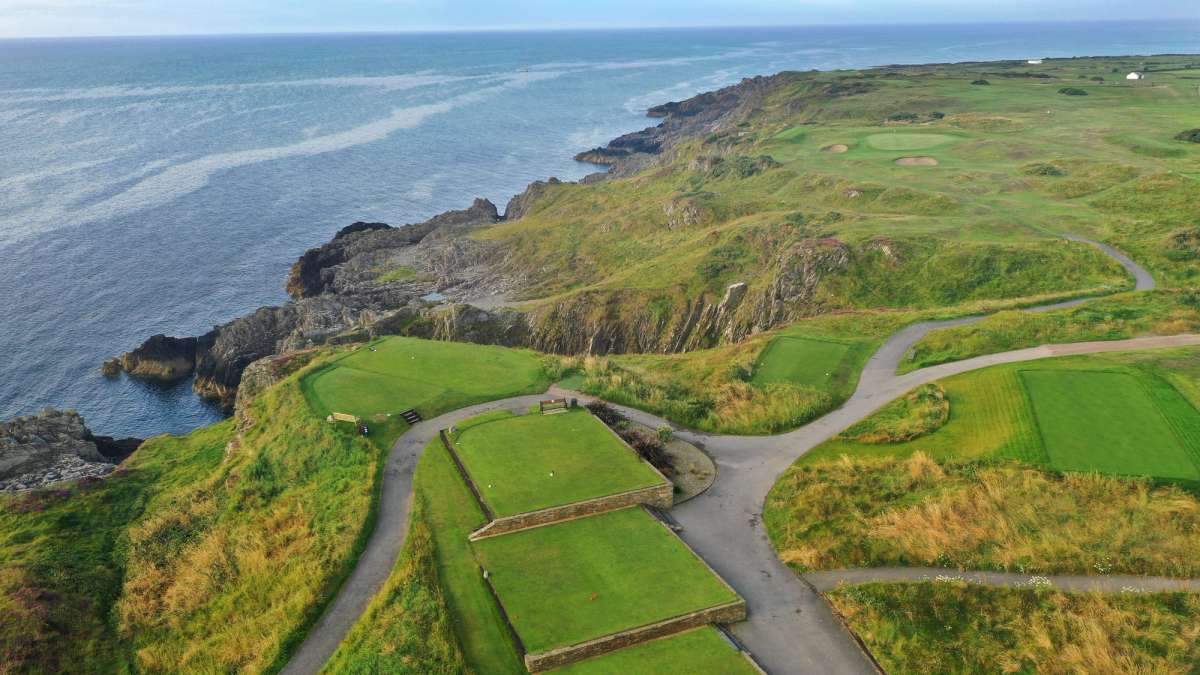
While some of the world's most famous courses command eye-watering green fees, there are often excellent alternatives just a short drive away. From celebrated links venues to championship layouts, we've picked out 10 famous golf courses and their more affordable neighbours, where you can still enjoy a quality round without paying quite so much. Pebble Beach Golf Links vs Pacific Grove Golf Links (California, USA) Pebble Beach Golf Links | World Ranking: 27th | California Ranking: 3rd | Green Fees: US$755 (including mandatory cart fee) Pacific Grove Golf Links | California Ranking: 71st | Green Fees: US$66–89 Few golf courses command the same level of recognition as Pebble Beach Golf Links. Ranked 27th in the world, it has hosted multiple US Opens and is a regular fixture on the PGA Tour, with its spectacular Pacific coastline making it one of the game's most recognisable settings. At US$755 for a visitor round, however, it comes at a considerable price. Just five miles away, Pacific Grove Golf Links offers a much more affordable way to enjoy the same stretch of California coastline. Often nicknamed the 'Poor Man's Pebble Beach', this municipal course has plenty of character of its own, with its history closely connected to its famous neighbour. Chandler Egan, who helped redesign Pebble Beach alongside Alister MacKenzie, laid out Pacific Grove's original nine holes in 1932, before Jack Neville, one of Pebble Beach's original designers, extended it to 18. The front nine winds through gardens and trees, while the back nine opens up towards the Pacific Ocean and Point Pinos Lighthouse. With green fees from US$66, it's a considerably cheaper way to enjoy golf on the Monterey Peninsula. Distance apart: 5 miles Price difference: US$666–689 (88–91% cheaper at Pacific Grove) St Andrews Links – Old Course vs St Andrews Links – Eden Course (Scotland) St Andrews Links (Old) | World Ranking: 7th | Scotland Ranking: 1st | Green Fees: £380 St Andrews Links (Eden) | Scotland Ranking: 62nd | Green Fees: £85 Few golf courses carry the reputation of the Old Course at St Andrews. Ranked seventh in the world, it is the Home of Golf and one of the most recognisable venues in the game, but securing a tee time can be just as challenging as finding the money for its £380 high-season green fee in 2027. A much more affordable option is the Eden Course, just west of the Old Course and ranked 62nd in Scotland. Designed by Harry Colt and opened in 1914, it offers a genuine links experience for a fraction of the price. Its wide fairways provide some room off the tee, but deep bunkers, undulating greens and several challenging par fours ensure there is plenty to think about. At £85 for a high-season round in 2027, the Eden is an appealing way to enjoy the Home of Golf without paying Old Course prices. Distance apart: Approximately 1 mile Price difference: £295 (around 78% cheaper at the Eden) Royal County Down – Championship Course vs Ardglass Golf Club (Northern Ireland) Royal County Down (Championship) | World Ranking: 3rd | Northern Ireland Ranking: 1st | Green Fees: £495 Ardglass Golf Club | Northern Ireland Ranking: 8th | Green Fees: £275 Royal County Down is a bucket-list destination for golfers, ranked third in the world and set against the spectacular backdrop of the Mountains of Mourne. Its Championship course is a formidable links test, with rugged dunes, blind drives and some of the most memorable holes in the game. A visitor round costs £495 in 2027, and tee-time availability is exceptionally limited. Around 11 miles away, Ardglass offers a different but equally memorable experience along the County Down coastline. The opening five holes hug the cliffs above the Irish Sea, with the second a particularly striking par three played across a rocky inlet. The course also has a clubhouse with a rather unusual history: it occupies a 14th-century castle. Ardglass may not have the same global reputation as its famous neighbour, but its dramatic coastal setting and enjoyable links test make it well worth adding to a trip to the area. At £275, it also represents a sizeable saving. Distance apart: Approximately 11 miles (straight-line) Price difference: £220 (44% cheaper at Ardglass) Royal Portrush Golf Club – Dunluce Course vs Castlerock Golf Club – Mussenden Course (Northern Ireland) Royal Portrush Golf Club (Dunluce) | World Ranking: 9th | Northern Ireland Ranking: 2nd | Green Fees: £475 Castlerock Golf Club (Mussenden) | Northern Ireland Ranking: 5th | Green Fees: £250 Royal Portrush is one of the biggest names in Irish golf, ranked ninth in the world and twice the host of The Open Championship, most recently in 2025. The Dunluce Links is a spectacular test, with its dramatic coastal setting and memorable holes, including the famous par-three 16th, Calamity. At £475 for a visitor round, it is also one of the more expensive places to play in Northern Ireland. Around 13 miles along the coast, Castlerock's Mussenden Course offers an excellent alternative for £250. It may live in the shadow of its more famous neighbours, but it is a highly regarded links in its own right, with a strong reputation among golfers who have made the trip to the Causeway Coast. The standout is the fourth, known as Leg O’Mutton, a 200-yard par three with a railway line running alongside one side and a burn guarding the other. Castlerock also has views across the Atlantic towards Donegal and, on a clear day, Scotland. Distance apart: Approximately 13 miles by road Price difference: £225 (47% cheaper at Castlerock) Carnoustie Golf Links – Championship Course vs Panmure Golf Club (Scotland) Carnoustie Golf Links (Championship) | World Ranking: 34th | Scotland Ranking: 5th | Green Fees: £450 Panmure Golf Club | Scotland Ranking: 35th | Green Fees: £195 Carnoustie is one of the most famous and demanding tests in Scottish golf. Ranked fifth in Scotland and 34th in the world, its Championship course has hosted The Open eight times, most recently in 2018, when Francesco Molinari lifted the Claret Jug. A peak-season visitor round in 2027 costs £450. Just a short drive away, Panmure provides a similarly challenging links experience for considerably less. Ranked 35th in Scotland, it has plenty of history of its own, having hosted Open Qualifying and played a part in Ben Hogan's preparation for his 1953 Open Championship victory at Carnoustie. Hogan spent two weeks practising at Panmure before winning at his neighbouring course, and the club still celebrates that connection. The layout features plenty of traditional links character, with heather, hillocks and demanding approach shots. At £195 during the 2026 peak season, it is an appealing option for anyone planning a golf trip to Angus & Dundee. Distance apart: Approximately 5 miles by road Price difference: £255 (57% cheaper at Panmure) Pinehurst No. 2 vs Southern Pines Golf Club (North Carolina, USA) Pinehurst No. 2 | World Ranking: 57th | North Carolina Ranking: 2nd | Green Fees: Not published Southern Pines Golf Club | North Carolina Ranking: 11th | Green Fees: US$225–245 Pinehurst No. 2 is one of American golf's most celebrated courses. Ranked 57th in the world and second in North Carolina, the Donald Ross design has hosted multiple US Opens, most recently in 2024, and will welcome the championship back in 2029. Playing it, however, requires more than simply booking a tee time. Access is reserved for resort guests and members, with a minimum two-night stay required for those booking through the resort. Around five miles away, Southern Pines Golf Club offers a more accessible way to experience the area's golfing heritage. Another Donald Ross design, it opened in 1906 and has retained much of its traditional character, with rolling fairways, sandy waste areas and greens that demand careful approach play. It is ranked 11th in North Carolina and welcomes public play, with visitor fees ranging from US$225 to US$245. It may not carry the same prestige as Pinehurst No. 2, but it is a worthwhile addition to any trip to the Sandhills. Distance apart: Approximately 5 miles Price difference: Not directly comparable – Pinehurst No. 2 requires a resort stay or membership, while Southern Pines has a published visitor green fee. TPC Sawgrass – Stadium Course vs St Johns Golf Club (Florida, USA) TPC Sawgrass (Stadium) | USA Ranking: 66th | Florida Ranking: 2nd | Green Fees: From US$775 St Johns Golf Club | Green Fees: US$41–53.50 TPC Sawgrass is one of the most recognisable venues in American golf. Ranked 66th in the United States and second in Florida, its Stadium Course has hosted THE PLAYERS Championship since 1982 and is best known for the island green 17th. Designed by Pete and Alice Dye, it is a bucket-list round for many golfers, but visitor fees start at US$775 during the September-to-May season. Around 27 miles away, St Johns Golf Club provides a far more affordable alternative. This public, county-owned course in Elkton offers 18 holes of golf for out-of-state visitors at $53.50 in the morning, with afternoon rates dropping to $41. It is a different proposition to the Stadium Course, but the layout has recently benefited from a redesign by Erik Larsen and offers a varied test for golfers of all abilities. For anyone visiting the Jacksonville area, it is a practical option for fitting in a round without paying the premium associated with TPC Sawgrass. Distance apart: Approximately 27 miles by road Price difference: US$721.50–734 (93–95% cheaper at St Johns, comparing TPC's September–May starting rate with St Johns' 2026 out-of-state rates) Royal St George's Golf Club vs Prince's Golf Club – Dunes & Himalayas (England) Royal St George's Golf Club | World Ranking: 19th | England Ranking: 1st | Green Fees: £430 Prince's Golf Club (Dunes & Himalayas) | England Ranking: 32nd | Green Fees: £180–230 Royal St George's is one of the most recognisable names in English golf. Ranked 19th in the world and first in England, the Sandwich links has hosted The Open 15 times, most recently in 2021. Its undulating fairways, towering dunes and famously deep bunkers make it a formidable test, with peak-season visitor fees reaching £430 in 2027. Almost next door, Prince's offers a more affordable way to enjoy links golf on the same stretch of Kent coastline. It hosted The Open in 1932, when Gene Sarazen claimed victory, and remains a highly regarded venue in its own right. The Himalayas nine is particularly varied, with wetland carries, a driveable par four and a double green among its features. Prince's has 27 holes across three nine-hole loops, allowing visitors to combine the Himalayas with either the Dunes or Shore to make an 18-hole round. At £180–230 in 2027, it costs considerably less than its famous neighbour. Distance apart: Approximately 1 mile Price difference: £200–250 (47–58% cheaper at Prince's) Bandon Dunes Golf Resort – Pacific Dunes vs Bandon Crossings (Oregon, USA) Bandon Dunes (Pacific Dunes) | World Ranking: 26th | Oregon Ranking: 1st | Green Fees: US$425 Bandon Crossings | Oregon Ranking: 21st | Green Fees: US$70–96 Pacific Dunes is one of the standout courses at Bandon Dunes Golf Resort, ranked 26th in the world and among the most celebrated public-access layouts in the United States. Tom Doak's design opened in 2001 and makes full use of its rugged Pacific coastline, with several holes playing directly alongside the ocean. It is an unforgettable experience, but a peak-season round for a day guest costs US$425 in 2027. Around 10 miles south, Bandon Crossings offers a much more affordable alternative. Built on an old cattle and sheep ranch, the course was designed by Oregon architect Dan Hixson and takes a different approach to the area's golf, with a heathland-style layout rather than a traditional coastal links. It is not trying to compete directly with the resort's famous courses, but provides an enjoyable and considerably cheaper round, with the added option of taking a cart. Its 2026 standard-time walking rate is US$70, rising to US$96 during daylight-saving time. Distance apart: Approximately 10 miles Price difference: US$329–355 (77–84% cheaper at Bandon Crossings, comparing Pacific Dunes' 2027 peak-season day-guest rate with Bandon Crossings' 2026 walking rates) Royal Melbourne Golf Club – West Course vs Sandy Golf Links (Melbourne, Australia) Royal Melbourne Golf Club (West) | World Ranking: 6th | Australia Ranking: 1st | Green Fees: Not published (Last indicative international visitor rate AU$850) Sandy Golf Links | Australia Ranking: 82nd | Green Fees: AU$70–76 Royal Melbourne's West Course is ranked sixth in the world and first in Australia, and is widely regarded as one of Alister MacKenzie's finest designs. It is a private members' club, although international golfers who belong to a recognised golf club can apply for visitor tee times. The indicative overseas visitor fee is around A$850, although the club does not publish its rates publicly. Less than a mile away, Sandy Golf Links provides an opportunity to experience Melbourne's famous Sandbelt without the same price tag or access restrictions. Formerly known as Sandringham Golf Course, the public facility was extensively redesigned by OCM Golf, the team of Geoff Ogilvy, Mike Cocking and Ashley Mead, and reopened in its current form in 2020. The par-65 layout features firm greens, strategic bunkering and the sandy terrain associated with the region. It is ranked 82nd in Australia and welcomes public bookings, with 18 holes costing A$70 on weekdays and A$76 at weekends. Distance apart: Approximately 1km Price difference: A$774–780 (91–92% cheaper at Sandy, based on Royal Melbourne's indicative A$850 visitor fee) Green fees reflect published high-season visitor rates for 2027 where available. Where 2027 rates have not yet been released, the latest available published rates are provided. Prices and visitor access are subject to change.
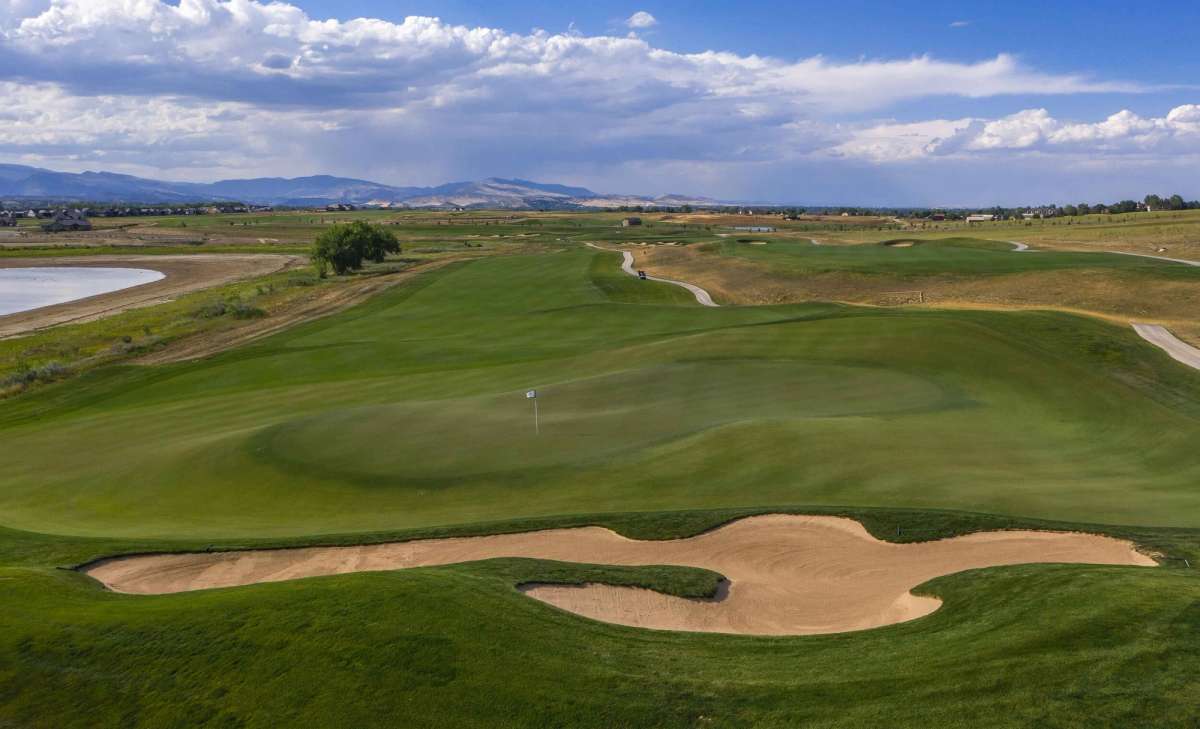
For much of golf’s history, the idea of a hole measuring 700 yards or more would have seemed excessive. Today, such distances are no longer quite so extraordinary. The world’s longest holes are an eclectic group, spread across very different landscapes and created for very different reasons. Some belong to expansive resort courses, others to championship layouts, while a handful have become famous largely because of the sheer scale of the challenge they present. From a former world-record holder in North Carolina to an extraordinary par 7 measuring over 1km in South Korea, these are the 10 longest golf holes in the world. 10. Black Mountain Golf Club (North Carolina, USA) Hole 17 | 747 yards (683m) | Par 6 The 17th at Black Mountain is one of the survivors from an era when exceptionally long golf holes were still something of a novelty. At 747 yards, the par six was once recognised as the longest golf hole in the world - a distinction that helped put this small North Carolina club on the golfing map. The hole is part of Black Mountain's older nine-hole layout, which dates back to the 1960s, and its extraordinary length was a deliberate feature rather than an accident of modern championship-course design. From the back tees, the fairway climbs and falls through the foothills, with the green sitting far enough away that it disappears from view for much of the hole. For a course that otherwise has a relatively modest footprint, the 17th is an impressive piece of real estate. Its 747 yards are now exceeded by several holes built in the decades since, but the hole retains its place in golf's long-hole folklore. It is also a reminder of how quickly perceptions of distance have changed. What was once a world record is now the shortest hole in this particular top ten. 9. TPC Colorado (Colorado, USA) Hole 13 | 773 yards (707m) | Par 5 TPC Colorado opened in 2018 at Heron Lakes near Berthoud, with Arthur Schaupeter’s design set against open Colorado terrain and views towards the Front Range. The 7,991-yard course was built with tournament golf in mind and has since become a regular Korn Ferry Tour venue. The 13th, named “Longer Still”, is its defining hole. At 773 yards from the TOUR tees, it is the longest hole on a PGA TOUR course and the longest par five in PGA TOUR golf. Its principal feature is the enormous 108-yard Hell Bunker, which runs along the left side of the fairway and creates the key decision after the drive: challenge it to gain ground or lay back and accept a longer approach. At altitude, the hole does not play quite as severely as the yardage suggests, but its scale remains remarkable. More importantly, the length is integrated into the design rather than simply added as a spectacle, giving No. 13 a strategic identity that has made it one of the most recognisable holes in modern American golf. 8. The Reserve at Moonlight Basin (Montana, USA) Hole 17 | 777 yards (710m) | Par 5 Set at 7,500 feet above Big Sky in the Rocky Mountains, The Reserve at Moonlight Basin is one of Jack Nicklaus’ most dramatic mountain courses. Built across the former Moonlight Basin ski area, the 8,000-yard layout moves through forest and open mountain terrain, with more than 1,000 feet of elevation change across the property. The 17th is the signature expression of that setting. At 777 yards, it is already extraordinary on the card, but the hole plunges downhill towards the green, with the change in elevation and thin mountain air making the distance considerably less daunting than it first appears. A large fairway bunker sits around 370 yards from the back tee, beyond which the fairway reveals the full scale of the descent towards the green. It is a fittingly theatrical hole for a course where elevation is central to the experience. The 17th was also one of the holes that came to wider attention when Moonlight Basin hosted The Match in 2021 – when Bryson DeChambeau and Aaron Rodgers defeated Phil Mickelson and Tom Brady – putting its spectacular setting and remarkable yardage on national television. 7. Penati Golf Resort - Legend course (Trnava Region, Slovakia) Hole 15 | 783 yards (716m) | Par 6 Opened in 2012, the Legend Course at Penati occupies a sandy, pine-covered site near Senica, with Nicklaus Design using the natural character of the property to create wide, undulating fairways and extensive waste areas. The course forms part of Slovakia’s largest golf resort and was the first Nicklaus Design course in the country. The 15th is the course’s defining feature. It has 11 teeing positions, allowing it to be played at very different lengths, but from the back tees, it stretches to 783 yards and becomes a par 6. The fairway is split by a large waste bunker, with further bunkering framing the second landing area before the hole finally turns towards the green. The hole gained international attention when the European Challenge Tour used the full 783-yard version during the Slovakia Challenge in 2015, 2016 and 2019. In regular play, however, it is generally shortened and played as a par 5 - a useful reminder that the extraordinary version seen on the professional circuit is only one interpretation of Central Europe’s longest hole. 6. Theodora Golf Club (Transylvania, Romania) Hole 18 | 804 yards (735m) | Par 6 Theodora Golf Club sits outside Alba Iulia on the banks of the Mureș, occupying a remarkably flat 56-hectare site. Opened in 2018, the resort was created around an 18-hole championship course, with a large lake excavated in front of the clubhouse providing material to shape the otherwise level ground. That lake is central to the character of the closing hole. The 18th stretches over 800 yards from the back tees, with the approach eventually leading to an island green shared with the 9th. The arrangement gives what might otherwise be a straightforwardly expansive hole a much more distinctive finish. Theodora itself describes the 18th as the longest par 6 in Europe, and it has become the defining feature of a relatively young Romanian resort that has steadily established itself on the European golf map. 5. The Links at Kahite Golf Club (Tennessee, USA) Hole 9 | 808 yards (739m) | Par 6 The Links at Kahite opened in 2002 as the third course in Tellico Village, occupying a natural setting between Tellico Lake and the foothills of the Great Smoky Mountains. The links-style layout has six sets of tees, stretches to 7,170 yards and is notable for its 93 bunkers and tall fescue framing some of the fairways. The 9th is the course's defining hole: an 739-metre par 6 that runs in a notably direct line across the landscape. From the back tees it measures 808 yards, while the blue tees bring it down to 721, making the hole a very different proposition depending on where it is played from. The course's own guide describes it simply as a unique hole, with the fairway rewarding players who can keep successive shots in play. Its position at the turn also gives Kahite an unusual rhythm. After eight holes that establish the character of the course, the 9th opens out into one of the most distinctive holes in Tennessee golf before the back nine heads back towards the mountains. 4. Meadows Farms Golf Course (Virginia, USA) Hole 12 | 841 yards (769m) | Par 6 Meadows Farms is very much the product of its founder, Bill “Farmer” Meadows, who built the course on former farmland after taking up golf later in life. It opened in 1993 with an intentionally unconventional character: the 27-hole layout includes a baseball-themed hole, a waterfall green and an island green, alongside the hole that became its calling card. The 12th stretches to 841 yards from the championship tees, running downhill before turning right, crossing two lakes and climbing towards a large elevated green. A three-leaf-clover-shaped bunker guards the approach. The sequence gives the hole considerably more shape and interest than its raw length might suggest. For decades it was promoted as the longest golf hole in the United States, a distinction that helped make this eccentric Virginia course a destination in its own right. The current course still describes No. 12 as its signature hole and the longest in the country, as recognised by the Guinness Book of World Records. 3. The Links Golf Club (Idaho, USA) Hole 9 | 842 yards (770m) | Par 6 The Links Golf Club in Post Falls opened in 1999 on the broad, open Rathdrum Prairie, with owner and designer Emmett Burley shaping the course in the tradition of Scottish links golf. There are few trees or water hazards to interrupt the prairie landscape, leaving wind, wide fairways, deep bunkers and rough to define its character. The 9th has been the course's signature hole from the beginning. It was originally measured at 738 yards from the black tees, but subsequent changes have transformed it into an 842-yard par 6, now the longest hole on the course and one of the longest in America. That extra distance has only amplified the hole's original links character. With no trees or water to dictate the route, the scale of the prairie is laid bare, while the wind can have a considerable influence on successive shots. The green itself has two distinct levels, adding another layer to a hole that has evolved from an unusual feature into the defining landmark of The Links. 2. Satsuki Golf Club - Sano course (Kanto Region, Japan) Hole 7 | 964 yards (881m) | Par 7 Satsuki Golf Club’s Sano Course opened in 1979 in the hills of Tochigi Prefecture, with broad fairways laid through a landscape of trees and gentle elevation changes. The 18-hole course measures more than 7,200 yards from the back tees, but it is the seventh hole on the outward nine that has made the club internationally known. At 964 yards, the seventh was recognised by Guinness World Records as the world’s longest golf hole and remains the defining feature of the course. It is not simply a long, open stretch: the hole has trees crowding the tee shot, OB on both sides and a relatively narrow fairway, creating pressure from the outset. There are two greens, with the left measuring the full 964 yards and the right 924. The club’s own playing strategy reflects the scale of the hole: rather than simply attacking distance on every shot, the objective is to keep successive balls in play and leave the final approach within comfortable range. For many years, Satsuki’s seventh was the benchmark by which the world’s longest holes were measured. Gunsan Country Club has since surpassed it in sheer yardage, but the Japanese par-7 remains the more established name in the record books. 1. Gunsan Country Club - Jeongeup course (Jeonbuk State, South Korea) Hole 3 | 1,098 yards (1,004m) | Par 7 Gunsan Country Club is an extraordinary property in its own right. Built on a former salt field on Korea’s west coast, the sprawling complex now has 81 holes across more than 1,000 acres, with lakes accounting for roughly 380 acres of the site and 26 bridges linking the courses. The third on the Jeongeup Course is the hole that gives Gunsan its international reputation. At 1,004 metres from the black tees, it is a par 7 and the longest hole in this ranking. The hole is also the No. 1 handicap on its nine, with water running along the left and bunkers placed to complicate the long sequence of shots required to reach the green. Its scale is matched by an unusual sense of place. The hole emerged from the transformation of the old salt works into one of Asia’s largest golf complexes, and its local nickname, the “1004 Hole”, is a play on the 1,004-metre length. Gunsan has built much of its identity around these extreme holes, with a 661-metre par 6 elsewhere on the property, but the Jeongeup third remains the defining feature. At 1,098 yards, it is comfortably longer than Satsuki’s 964-yard seventh and takes the top spot here by distance. Guinness World Records, however, has historically recognised Satsuki’s hole, so the distinction between the longest hole by yardage and the Guinness record is worth keeping in mind.
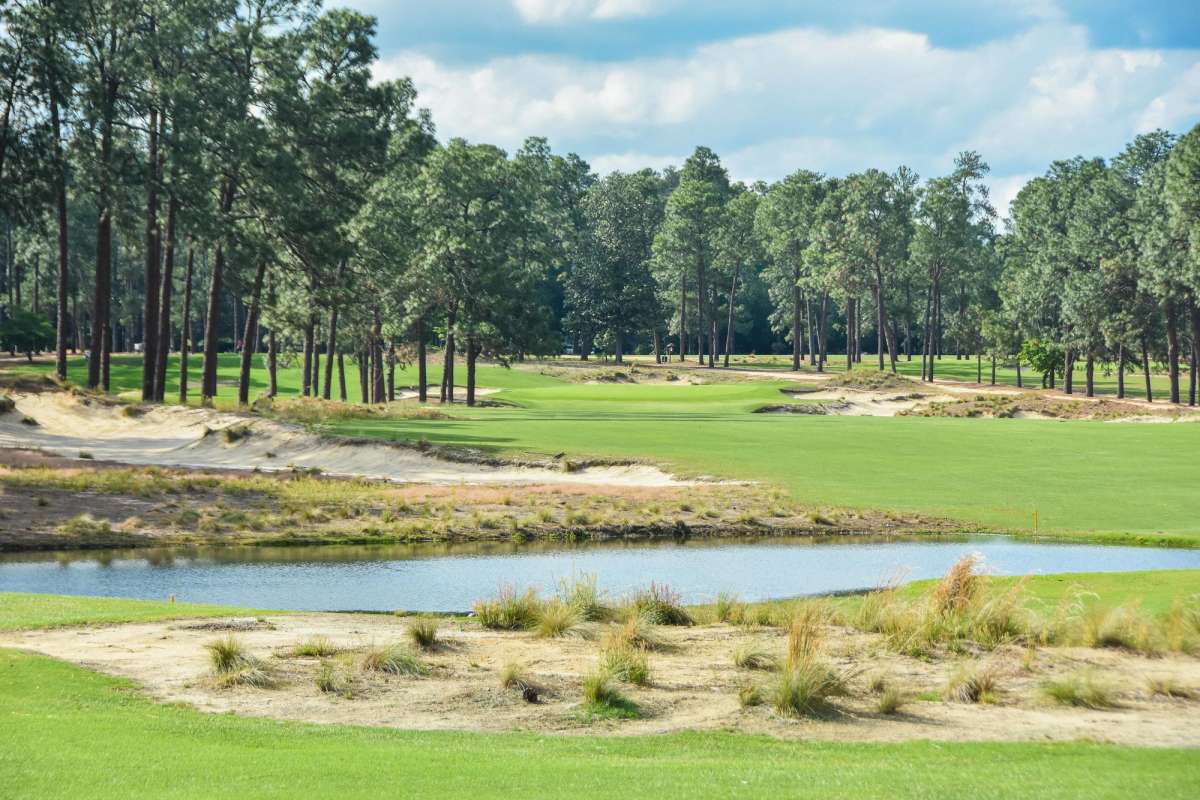
North Carolina has an unusually strong claim to being one of America's great golf destinations. From the historic courses around Pinehurst and Southern Pines to the more distinctive layouts scattered across the Sandhills, there is enough variety to suit almost any kind of golf trip. The only question is how much you want to spend. For this guide, Top100 has built three different two-night itineraries for a four-ball, with each one offering a different way to experience North Carolina golf. The budgets range from $750 to $2,000+ per person, with three rounds included in every trip. From three Donald Ross classics for less than $750 to the ultimate Pinehurst Resort experience, here's how to plan your North Carolina golf trip. $750 - The Sandhills Classics If you want to experience the Pinehurst area without spending a fortune, the $750 itinerary is the sweet spot. For four golfers sharing two rooms, two nights and three rounds, you can build a genuinely memorable Sandhills trip around three Ross courses that all feature prominently on the Top100 North Carolina ranking: Mid Pines (#7), Southern Pines (#11) and Pine Needles (#13). The beauty of this itinerary is its simplicity. All three courses sit within a few minutes of one another, so there is no need to spend half your trip behind the wheel. Instead, you can settle into Southern Pines and concentrate on the golf. Mid Pines is the highest-ranked of the three and makes an excellent starting point. It is a relatively compact course by modern standards, but there is plenty of variety in the holes and the undulating terrain means that the lie you leave yourself can be as important as the shot itself. The greens are a particular feature, with plenty of subtle breaks that aren't always obvious from the fairway. A few minutes away, Southern Pines Golf Club offers a different feel. It is less formal than its better-known neighbours and remains one of the more affordable ways to experience the area's historic golf. For golfers who want to see what Pinehurst was like before it became synonymous with luxury golf travel, this is an essential stop. The final round is at Pine Needles, a course with considerably more championship pedigree. It has hosted the U.S. Women's Open four times, most recently in 2022, and provides a slightly more polished resort experience while retaining the strategic qualities associated with Ross's work. The numbers work surprisingly well too. The three-course Bell Golf Package at Pine Needles bundles two nights' accommodation with all three rounds, breakfast, dinner and carts. At approximately $585 per person, there is still room within the $750 budget for a rental car, fuel and a few extras where necessary. For a first taste of the Sandhills, this is difficult to beat. You get three Top100-ranked courses, three distinct takes on classic North Carolina golf and barely any wasted time travelling between them. $1000 - Tobacco Road and the Strantz Experience The middle itinerary moves away from the traditional Sandhills experience and towards three more varied public-access courses: Tobacco Road (#5), Talamore and Tot Hill Farm. Tobacco Road is the obvious starting point. Mike Strantz's course is one of the most distinctive in the country, and its unconventional layout makes it unlike the other courses in this series. Blind shots are part of the design rather than an occasional feature, while the dramatic changes in elevation and extensive sandy areas give the course a character all of its own. It is a course that can feel intimidating on the first tee, but once you accept that not every shot needs to be conventional, the strategy begins to reveal itself. Talamore provides a useful contrast. The course is more conventional, with a mix of woodland and open holes and enough water and bunkering to keep the round interesting. It also has the practical advantage of being part of a resort operation, making it straightforward to combine with accommodation. The third round at Tot Hill Farm brings the trip back towards Strantz territory. Like Tobacco Road, it makes extensive use of the natural terrain, although the course feels less polished and more remote. The course winds through dramatic terrain and uses the natural landscape to create a succession of memorable holes. It is a good complement to Tobacco Road rather than simply another version of it. The three rounds should cost approximately $650 per person, based on fall rates of around $300 for Tobacco Road, $200 for Talamore and $150 for Tot Hill Farm, including the latter's cart fee. Accommodation for two nights and a shared rental car should bring the overall trip to roughly $800-$900 per person, leaving some headroom within the $1,000 budget. This is the itinerary for golfers who want to see a less conventional side of North Carolina golf, with Tobacco Road providing the clear centrepiece. $2000+ - The Ultimate Pinehurst Experience For golfers prepared to spend more than $2,000 per person, there is no need to look beyond the resort that put North Carolina on the golfing map. A two-night stay at Pinehurst Resort, combined with rounds on Pinehurst No. 2 (#1), No. 4 (#9) and No. 10 (#16), delivers the ultimate version of the Sandhills experience. No. 2 is the historic centrepiece and the course most golfers will have seen on television. Its crowned greens and sandy waste areas are immediately recognisable, while its U.S. Open history gives the round an additional dimension. The challenge is less about finding a way to overpower the course than avoiding the difficult positions that can quickly lead to dropped shots. Around the greens in particular, the difference between a good approach and a slightly misplaced one can be significant. No. 4 offers a different experience. It is a larger, more expansive course, with wider corridors and a greater sense of scale. The course has undergone a major transformation in recent years and now sits comfortably among the best courses at the resort. No. 10, meanwhile, is the newest of the three and provides a different perspective again. The Tom Doak design occupies a quieter part of the property and makes extensive use of the natural sandy terrain. Its inclusion also means the trip isn't simply a greatest-hits tour of Pinehurst's past; you are seeing where the resort's golf story is heading. Pinehurst's Donald Ross Golf Package includes two nights' accommodation, three rounds, breakfast and dinner, with supplements for No. 2 and No. 10. For four golfers sharing two rooms, the trip is likely to come in at around $2,800-$3,000 per person once the package, course premiums, rental car and fuel are accounted for, before any additional discretionary spending. While it’s a substantial investment, this is not simply three rounds of golf. It is a stay at one of America's great golf resorts, playing three of the best courses in North Carolina, including the state's No. 1 course. For golfers looking to make Pinehurst the centrepiece of a Carolina trip, this is the premium option. Each itinerary is based on two nights and three rounds for four golfers sharing two rooms. Prices include accommodation, green fees and food where appropriate, but exclude flights.


