Owned and operated by the Washington State Golf Association and the Pacific Northwest Golf Association, the Home Course is a Mike Asmundson design located on the site of DuPont’s former dynamite manufacturing plant...


Owned and operated by the Washington State Golf Association and the Pacific Northwest Golf Association, the Home Course is a Mike Asmundson design located on the site of DuPont’s former dynamite manufacturing plant...
Sort by:
Jul. 28, 2026

5.5
Andy MacLean
Loved the course.
Jul. 11, 2026
4
mjgleason5
Firm greens, with some very cool green complexes that make you want to play again to take advantage of various slopes and backstops.
Sep. 11, 2024
4.5
Cody Cunningham
The Home Course came as a wonderful surprise and perfect warmup to Chambers Bay while still being light on the pocket.


Jul. 31, 2024
5.5
Tyler Halstead
It's my new number 1 that I've played in the US and it's in my top 3 overall.
Jan. 22, 2022
3
Zachary Tan
Home of the PNGA and WSGA, the Home Course is one of the better draining courses during the PNW’s infamous winter.
Feb. 25, 2021
4
Javier Pintos
Played this one a while ago during a trip that included 27 holes at Chambers Bay the previous day (I loved it) and then we played a Public Course before heading to this one which I knew had hosted US Amateur back in 2010.

Big, bold, vertical - Chambers Bay Golf course architect Ronald Fream shares his thoughts on the controversial US Open venue Much is being said now in reaction to the thrilling results at the recent US Open golf championship at Chambers Bay Golf Course, near Tacoma, Washington. Not all comments have been favorable, kind, complementary, praising. Some very unkind words were heard from some players during the event. No doubt even more unkind remarks were said in the locker room, at some sports bars, and now in the press. The event will be discussed for a good long time. Regardless one's opinion, Chambers Bay made an impression that has legs, that will last well into the future. At every future US Open for years to come remarks will reference one way or another what was put on offer at the 2015 US Open. It is worth noting that the best players came close to winning; the best player did. Some prima donna pro players were displeased, even embarrassed, by their results. Too spoiled by the ever more accommodating weak set ups of regular PGA Tour tournaments: mediocre courses, immaculate turf grass conditions, soft nearly flat putting surfaces, shallow bunkers, mild pin settings, some pros lost their way to never before scores. They were not happy campers. Good! The US pro circuit, and the Asian circuit have become a feeding trough for many over marketed players. I feel that when 15 under is a tie for third, the essence of golf has been lost. Chambers Bay surely does need some remedial help; so too does the USGA senior executive staff. The US Open has historically been offered as the toughest test of golf possible. Let the cream rise, define the best player; for that week. Chambers Bay did that in full measure. However, the USGA decision makers were foolish to try and emulate the putting surface speeds of Augusta National. The Chambers Bay greens are more contoured, larger, more difficult than any at Augusta. The Chambers Bay bunkering and contouring around the greens was unlike any other tournament course. Extreme, rolling, grabbing, demanding, unforgiving, surpassing other championship venues. The goal to have fine Fescue as the turf grass variety for the entire course, to compliment the naturally sandy links inspired site, had good intents. The design, by Bobby Jones and his colleagues, presented a majestic change to the cookie cutter sameness design at many tournament venues. The design layout did wonders with an otherwise nearly useless plot of glacial moraine sand and gravel deposits. The magnitude of play options, vertical terrain changes, massive bunkering, wildly contortionist greens and surrounds set a new standard for monumental design. The great courses are primarily a product of their site. The RTJ2 architects responded very well to the conditions presented by the site. The use of Fescue grass through out was in keeping with the site conditions, climate, links style, sea side site design image. However, the USGA obsession with fast putting speeds and tight fairway lies was incorrect for the conditions. Anyone with turf grass agronomic knowledge would – should – have known that it is physiologically and morphologically impossible to mow Fescue grass so close as to emulate Augusta putting speeds where dwarf creeping Bent Grass is used. Mowing green surfaces close, very close, is done to create speed, provide faster putting conditions. But, Fescue has a limit to low mowing height, too low and then the basal canopy, the growth point dies. The desire for speed was clearly evident even on Thursday, the first day of competition. The putting surfaces were showing a brownish hue, not a crisp green color was a clear indicator of grass plant vigor decline. An absence of watering put added stress on the grass. The fairway and teeing surfaces showed signs of decline as well. The Fescue was dying from too close mowing. POA annua Another factor not originally considered, became an all influencing element that had direct and drastic impact on putting. The Tacoma-Seattle area is ground zero to an indigenous, invasive form of grass, or weed, called Poa annua... Annual Blue grass. Cool, coastal, overcast, moist weather is Nirvana for Poa annua. Sahalee Country Club, Pebble Beach, Spyglass Hill, Cypress Point, Torrey Pines are but a few examples of coastal environment courses where Poa annua prevails. In the seven years since opening, the indigenous Poa annua has been invading slowly but surely. The severity of the invasion was clearly visible from the early television coverage. Two greens rebuilt two years ago stood out as being mostly Poa free. The remaining green surfaces resembled a case of measles- random, irregular, circular splotches of darker green among the declining Fescue turf suffering from too close mowing and showing shock symptoms. This intermixing of two dissimilar grass species contributed to the uneven, wobbly path of too many putts. This diversity was highlighted by the unique growth habit of Poa annua. Poa annua has the ability to sprout seed heads within a few hours of the morning green mowing action, where the Fescue would not. These seed heads extend above the mowing height. The seed heads become more prominent as the day progresses. The seed heads, reminiscent of tiny whitish pineapples, act as micro speed bumps, bollards or micro thumbs that can minutely deflect the roll of a ball not correctly or firmly enough stroked. How many putts missed the cup by the width of a hair? Sunday afternoon, the vigor of the Poa annua speed bumps did decidedly influence the outcome of play. Chambers Bay should go to full Poa annua greens, keep the Fescue fairways, tees, but mow at a higher cutting height. The wonderful wispy, nasty Fescue roughs, the big bold vertical bunkering are hallmarks to preserve. Green speeds will be rather less with pure Poa annua turf, but most players will be relieved. Green speed was not the deciding factor this time. Irregular putting surfaces were the factor. The very contorted putting surfaces, tucked flag stick locations, off running contours, mounds and hollows, savage sand masses and teeing diversity can bring back full championship challenge conditions with the absence of stressed out Fescue. There is a need for golf course design diversity. There is a need for more public and accessible golf. Mr Robert Trent Jones Sr. turned heads nearly 50 years ago with the then unconventional Spyglass Hill monster at Pebble Beach. Today, Spyglass Hill is a calm course but it continues to be a heavily played formidable track. I suggest that in a few years, Chambers Bay will be talked about in the same sentence as Pine Valley. Nice company! No one has ever said Pine Valley is an easy course to play – a top ten in the world private club. Missing putts is part of golf. The recent USGA Senior Open in Sacramento, California saw relived players recovering from Chambers Bay. The course was dull, boring, uniform green surfaces, hardly defensive, but putts still did not drop. We here in tropical Asia do not have to contend with Poa annua except in a few cool highland golfing locations. Poa annua cannot withstand the lowland tropical climate. Tropical turf managers (and Green Committees) should not even consider trying to achieve ultra fast putting speeds. The predominant hybrid Bermuda grass commonly used on putting surfaces will never accept the very low cut of Bent grass. It is well documented that the faster the putting speed the higher the scores. Higher scores result in slower- longer rounds of golf. Slow play is a contributor to declining volumes of play and declining revenue as well. Ronald Fream, Taman Molek, Johor, Malaysia. Related story from the BBC: US Open: Taking on controversial Chambers Bay course - the BBC's Iain Carter tries out the public golf course that caused so much controversy at the US Open, and discovers it takes some "imagination".
With the beginning of construction of the Palouse Ridge Golf Club in spring 2006, the University launched an approximately two-year-long project to create a championship golf course that will become a destination course for golfers throughout the Pacific Northwest. The estimated $8.4 million course and practice facility will cover a 315-acre site that includes the existing 92-acre, nine-hole course and additional land east and south of the existing course. Incorporating a links design created by well-known architect John Harbottle III, the course will be integrated with the natural beauty of the Palouse, preserving the open space on the east end of campus while making strategic use of limited water resources. Tees will range from 5,200 to 7,300 yards. “We wish to create a facility that ranks with the best college courses in the nation, one capable of hosting the Pac-10 and NCAA Championships,” says Harbottle. “The site is highly contoured, which makes designing the course a more difficult task. However, the topography will also help create very dramatic and varied character for the holes.” The practice facility will accommodate WSU athletics, visiting golf teams, and physical education classes at one end of the course, while student recreation users and the general public will access the other end. The practice facility is currently available for public use, daily 8 a.m. to 7 p.m. Construction of a $4 million clubhouse, located near the center of the course, is expected to open to the public in early August. Lounge and dining under the name of Banyan's on the Ridge will be within the clubhouse, with seating for approximately 100 people. John Harbottle III, the designer of Palouse Ridge, is one of the top golf course architects on the West Coast. He has designed such acclaimed layouts as the Olympic Course at Gold Mountain in Bremerton, WA, the Golf Club at Genoa Lakes outside Reno, NV, and the Savannah Course at Stevinson Ranch in Stevinson, CA. Harbottle also remodeled the famed North Course at Los Angeles Country Club in 1996. By washingtonstateuniversity
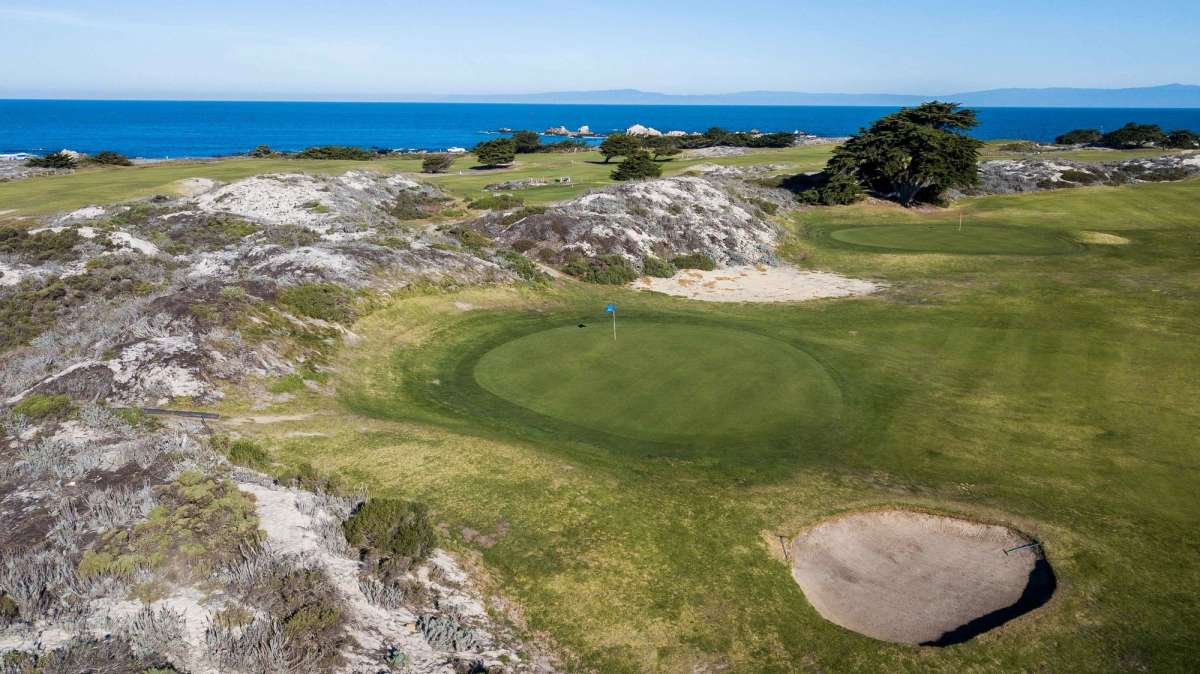
The stigma that good golf has to be expensive is one worth challenging. From windswept prairie in Nebraska and oceanfront holes in California to championship layouts in the shadow of Hazeltine and Bethpage, these are courses that offer much more than a cheap round. All 10 can be played for $100 or less, but the price is only part of the appeal. They have tournament history, famous designers, memorable settings and the kind of layouts that can stand alongside much more expensive golf. Green fees listed are standard rates and do not take twilight or off-season discounts into account, meaning some courses can be played for even less. Wild Horse Golf Club (Nebraska) Nebraska Ranking: 6th | Green Fees: From $68 Why Play it: Outstanding value on a natural prairie layout Best For: Golfers who love natural, windswept courses If you’re looking for proof that great golf doesn’t have to come with a great big price tag, head for the Nebraska prairie. Wild Horse Golf Club is one of the best-value public courses in America, combining excellent golf with a setting that feels a world away from the usual resort experience. Designed by Dave Axland and Dan Proctor, Wild Horse opened in 1999 after the pair spent more than a decade working for Ben Crenshaw’s design company. The result is a natural-looking layout shaped by native grasses, rolling prairie and dramatic blow-out bunkers rather than rows of manicured hazards. Wild Horse has earned plenty of recognition over the years, including a place in the Top100 US rankings, although it has sometimes been overshadowed by nearby Sand Hills. Tom Doak once described it as a “very good golf course” that is often overlooked because of its affordability. Warren Golf Course at Notre Dame (Indiana) Indiana Ranking: 7th | Green Fees: From $75 Why Play it: A Coore & Crenshaw design on the Notre Dame campus Best For: Fans of Coore & Crenshaw Set among 250 acres of woodland on the northern edge of the University of Notre Dame campus, the Warren Golf Course offers the unusual combination of championship pedigree and accessible green fees. Designed by Bill Coore and Ben Crenshaw, the course opened in 2000 and has since become one of Indiana’s most highly regarded public layouts. The Warren Course is home to Notre Dame’s men’s and women’s golf teams and has hosted a string of major amateur events, including NCAA Division I regional championships and the 2010 U.S. Women’s Amateur Public Links. It also hosted the U.S. Senior Open in 2019, bringing some of the biggest names in senior golf to South Bend. The setting is a big part of the appeal, with the course winding through mature woodland within a Certified Audubon Cooperative Sanctuary. For golfers visiting Notre Dame or passing through Indiana, the Warren Course offers a chance to experience one of America’s leading modern design partnerships without a leading-edge green fee. Pacific Grove Golf Links (California) California Ranking: 71st | Green Fees: From $66 Why Play it: Oceanfront golf just minutes from Pebble Beach Best For: Golfers looking for a Pebble Beach alternative Just five miles from Pebble Beach, Pacific Grove Golf Links offers a very different way to experience the Monterey Peninsula. This old-school municipal course runs along the Pacific Ocean, with a front nine that feels more like a traditional parkland course before the back nine heads into the dunes overlooking the water. The course has an impressive design lineage, too. US Amateur Champion Chandler Egan, who helped Alister MacKenzie redesign Pebble Beach, laid out the original nine holes in 1932, while Jack Neville, one of the original designers of Pebble Beach, later extended Pacific Grove to 18 holes. The result is a quirky and enjoyable layout, beginning with back-to-back par threes before throwing in consecutive par fives at the fifth and sixth. On the oceanfront back nine, short par fours and tumbling fairways provide plenty of character. Bethpage - Red Course (New York) New York Ranking: 6th | Green Fees: From $90 Why Play it: A championship-calibre course in the shadow of the Black Best For: Golfers who want a taste of Bethpage without playing the Black Bethpage Black might get all the attention, but the Red Course at Bethpage State Park is a formidable test in its own right. Known by some as “Baby Black”, the Red is widely regarded as the standout alternative to its more famous neighbour and offers a chance to experience Bethpage without the Black's famously difficult tee-time scramble. The course features a series of strong doglegs and demanding holes, with Tom Doak once suggesting that the Red might have received similar acclaim had its more famous neighbour never been built. He particularly praised the opening and closing holes, the long fifth and the short sixth, where an aggressive drive can quickly turn into trouble. The Red doesn't have the Black's enormous bunkers or intimidating reputation, but that doesn't make it easy. For golfers visiting Long Island, it offers another opportunity to play championship-level golf at one of America's most famous public facilities. Bandon Crossings (Oregon) Oregon Ranking: 21st | Green Fees: From $70 Why Play it: Affordable golf in one of America's biggest golf destinations Best For: Golfers visiting Bandon Bandon has become one of America's great golf destinations, but you don't have to play the resort courses to enjoy a round in the area. Bandon Crossings was created specifically to offer affordable public golf for locals and visitors, providing a lower-cost alternative to its famous neighbours. Built on the site of an old cattle and sheep ranch, the course was developed by local couple Rex and Carla Smith with Oregon architect Dan Hixson. Rather than compete directly with Bandon's collection of links courses, Crossings takes its inspiration from the heathland golf found around London. The course may sit away from the Pacific coastline, but that doesn't make it an afterthought. Its fairways move quickly across the property and around Twomile Creek, creating a challenging and enjoyable test that offers a different experience from the resort layouts. Montauk Downs State Park Golf Course (New York) New York Ranking: 80th | Green Fees: From $95 Why Play it: Robert Trent Jones design at the tip of Long Island Best For: Golfers exploring Long Island At the eastern tip of Long Island, around 120 miles from downtown New York City, Montauk Downs feels a long way from the hustle of Manhattan. Golf has been played here for decades, with the current layout shaped by Robert Trent Jones Sr. and his son Rees Jones in 1968. The Jones family connection is one of the course's biggest attractions, with Rees returning alongside Bryce Swanson in 2008 to restore the bunkers and tees on the par-three holes. The result is a classic parkland layout that combines the character of an older course with the challenge expected from a Jones design. Its location also makes Montauk Downs a natural addition to a Long Island golf trip, particularly for golfers looking to explore beyond the courses closer to New York City. Gold Mountain Golf Club - Olympic Course (Washington) Washington Ranking: 13th | Green Fees: From $35 Why Play it: Championship golf at a 36-hole public facility Best For: Golfers looking for a full day of golf The Olympic Course at Gold Mountain Golf Club is proof that you don't need a famous resort or hefty green fee to find championship-calibre golf. Part of a 36-hole public facility owned and operated by the City of Bremerton, the course was designed by John Harbottle III and opened in 1996, 25 years after the original Cascade Course. The tree-lined layout is slightly hillier than its older sibling but remains eminently walkable, with annual bluegrass covering the tees, fairways and greens. Its quality has been recognised on the national stage, hosting the U.S. Amateur Public Links Championship in 2006 and U.S. Junior Amateur Championship in 2011. There are plenty of memorable holes, including the short fourth, the water-guarded ninth and the 188-yard 16th, which plays across a lake to the green. The closing par four also offers a tempting birdie opportunity. With the Cascade Course next door, golfers can play 36 holes at Gold Mountain for less than $100, with green fees for the second 18 starting at just $30. Chaska Town Course (Minnesota) Minnesota Ranking: 26th | Green Fees: From $63 Why Play it: Championship golf just minutes from Hazeltine National Best For: Golfers visiting the Twin Cities Just a few miles from Hazeltine National, the Chaska Town Course offers a chance to play a highly regarded championship layout without the private-club price tag. Owned and operated by the local municipality, the course occupies 285 acres of oak groves, open prairie and marshland. Designed by Arthur Hills and opened in 1997, Chaska Town has even shared the stage with Hazeltine. The two courses co-hosted the 2006 U.S. Amateur Championship, while Chaska Town was also scheduled to co-host the 2020 U.S. Junior Amateur before the tournament was cancelled due to the COVID-19 pandemic. The layout plays to 6,817 yards from the back tees and features two returning nines, each finishing with a par five. The short fourth and 16th offer opportunities to score, while the right-doglegging ninth provides a tougher test. Brackenridge Park Golf Course (Texas) Green Fees: From $56 Why Play it: A Tillinghast classic with Texas Open history Best For: Golfers who love historic golf courses The oldest public 18-hole course in Texas, Brackenridge Park Golf Course has been a fixture in San Antonio golf for more than a century. Designed by A.W. Tillinghast in 1916, “Old Brack” went on to host 21 editions of the Texas Open between 1922 and 1959. The course has retained much of its historic character thanks to a restoration by John Colligan, who brought the layout back to life while preserving Tillinghast’s original design. The front nine is relatively tight, while the back nine opens out and provides some of the course’s strongest holes. Brackenridge is also part of the Alamo City Golf Trail, making it easy to combine with several other public courses in the San Antonio area. Brown Deer Park Golf Course (Milwaukee) Green Fees: $81 Why Play it: A former PGA Tour venue with Tiger Woods history Best For: Golfers who like tournament pedigree Brown Deer Park Golf Course combines affordable public golf with a notable place in PGA Tour history. Located just north of Milwaukee, the course hosted the Greater Milwaukee Open from 1994 to 2009, with Tiger Woods making his professional debut here in 1996. Founded in 1929, the course was originally designed by George Hansen before being partially redesigned by Andy North and Roger Packard. Today, its tree-lined fairways and stream that winds through the property provide a classic parkland setting. The Tiger Woods connection is an obvious draw, but Brown Deer offers more than a famous name in its history. Its accessible layout and location make it a practical option for golfers visiting Milwaukee. For golfers who enjoy playing courses with a tournament past, Brown Deer offers a chance to follow in the footsteps of some of the game's biggest names without paying resort-course prices.
The latest ranking of the Top 100 Golf Courses in the World serves as the ultimate global golf bucket list. Most members of our World Top 100 Panel are seasoned golfers, each playing 20-30 of these courses annually while travelling extensively over decades to form their opinions on others. We recognise that opinions vary—even among our panel members. Rankings are subjective, and there are undoubtedly 50 or more courses in the UK and USA alone that could easily fit onto this list. Links Golf Pilgrimages The rankings
California, United States
New Jersey, United States
Northern Ireland, United Kingdom
New York, United States
New York, United States


