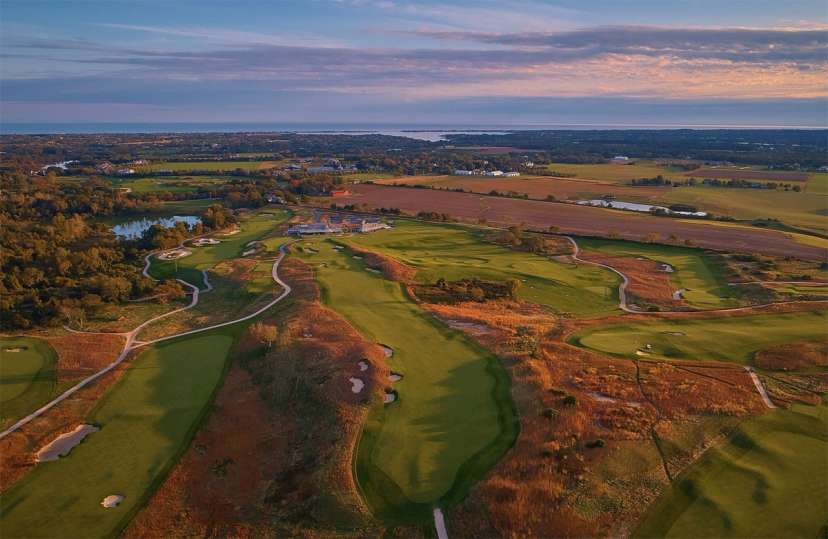
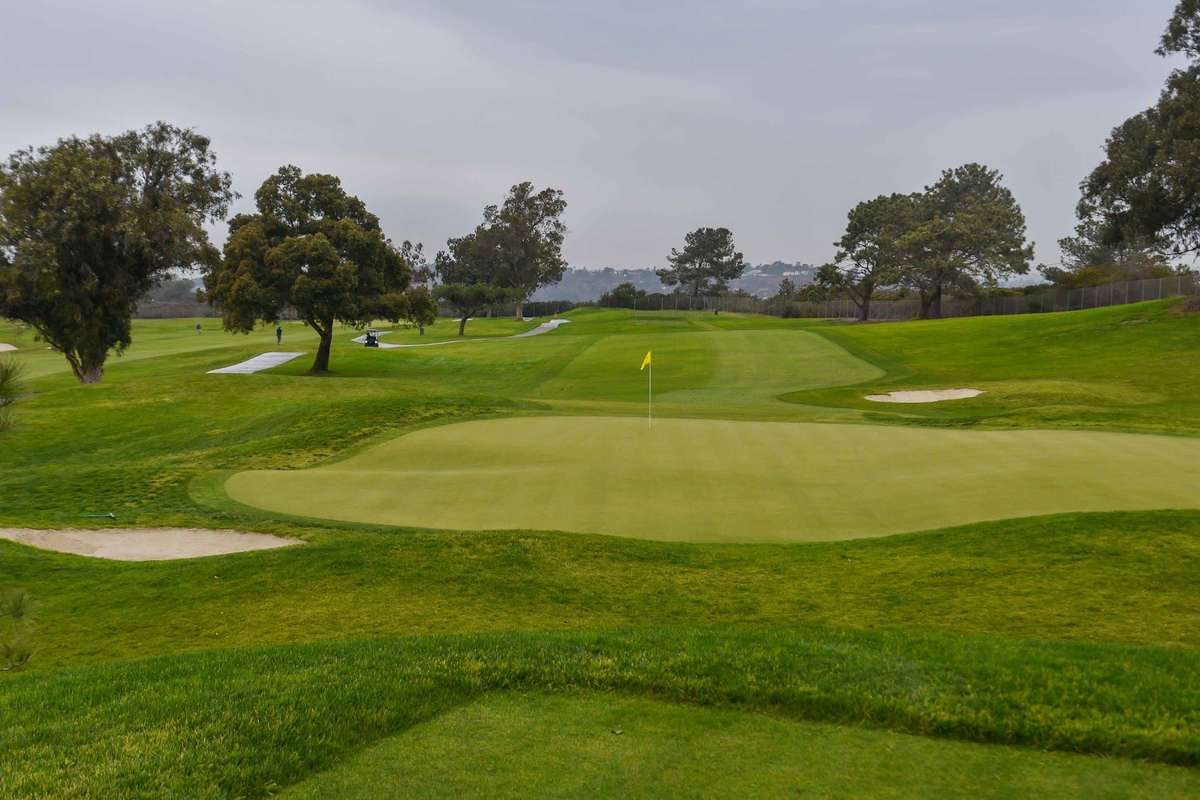
Torrey Pines is situated on cliff tops some 20 minutes to the north of San Diego and is one of the best municipal golf facilities in the USA.


Torrey Pines Golf Course (South)
Torrey Pines is situated on cliff tops some 20 minutes to the north of San Diego and is one of the best municipal golf facilities in the USA.
Course Architect
View ProfileCourse Architect

Rees Jones considers himself a multi-themed architect, which means he is constantly seeking variety, trying to give the player a new experience on every hole, not just on every course.
Rees was educated at Montclair High School in New Jersey, two years behind his brother Robert Trent Jones Junior. He graduated from Yale University with a Batchelor of Arts degree in 1963 then enrolled for a landscape architecture course at the Harvard Graduate School of Design.
Other Notable Courses
View courses (87)Course Architect
Other Notable Courses
View courses (7)The latest ranking of the Top 100 Golf Courses in the World serves as the ultimate global golf bucket list. Most members of our World Top 100 Panel are seasoned golfers, each playing 20-30 of these courses annually while travelling extensively over decades to form their opinions on others. We recognise that opinions vary—even among our panel members. Rankings are subjective, and there are undoubtedly 50 or more courses in the UK and USA alone that could easily fit onto this list. Links Golf Pilgrimages The rankings
California, United States
New Jersey, United States
Northern Ireland, United Kingdom
New York, United States
New York, United States

USGA opts for coastal locations - heartland hostings on hold By M. James Ward The selection of future US Open sites provides a fascinating behind the scenes understanding of how the United States Golf Association (USGA) seeks to position its most important event. Recommendations are made to the full Executive Committee by senior staff who then ultimately make the final call on which sites are eventually selected. Interestingly, it was a staff recommendation -- from former USGA Executive Director Frank Hannigan -- that got the ball rolling when Shinnecock Hills was considered for re-entry in 1986 as a US Open venue. The issue was whether a seasonal club could host the event with the USGA playing the role in getting all the details in motion -- especially on the volunteer side -- something other active membership bases had been keen to do for all the years prior. In recent years the USGA has opted to include a combination of different sites. In 2013, the Open returned to Merion Golf Club, just outside of Philadelphia, for the first time since 1981. The charming club on the Main Line had to undergo significant modifications given the limited acreage on-site. For example, total ticket sales were capped at 18,000 daily because of the limited space. In addition, the practice area was held on the adjoining West Course -- which required all players to be shuttled back to the East Course. The net result? The desire to include Merion provided clear logistical hurdles that may keep the club on the sidelines for quite some time if ever hosting the event again. Adding to the mixture of host sites has been the introduction of new sites. This includes the likes of Bethpage's Black Course in 2002 and 2009, as well as Torrey Pines South in 2008. Courses that have opened in recent years were also included -- Chambers Bay in 2015 and Erin Hills in 2017. As of now, only Torrey is scheduled for a return in 2021. Two of the major championships have a completely different set of circumstances. The Masters is always played at Augusta National Golf Club and therefore is always played at the same course. The Open Championship does rotate to different venues but those locations must be a links course and the circumstances for hosting leave a very limited number of options with anywhere from 8-10 courses being in the mix. The PGA Championship is the direct competition with the USGA. For much of the PGA's history the selection of sites was a hodgepodge of second tier layouts with only a few of note being selected. That changed dramatically under the leadership of Jim Awtrey when he became a part of the leadership team in 1986. It was Awtrey who went full bore in raising the profile of the 4th major and the primary emphasis was on getting quality clubs being pursued rigorously. Television exposure expanded from 6.5 hours in 1986 to 64.5 hours in 2005 while TV rights fees grew 600-percent during that same period. Total revenue also saw great gains moving from $12.5 million to $200 million with 381 percent increase in total sponsorship dollars and 286 percent increase in total licensing dollars. In sum -- the USGA was no longer in the catbird seat regarding course selections and now faced a revved up competitor looking for equal consideration. That tug-of-war continues to this day. In years past, it was possible for a club to hold both events near enough on the calendar. Oakmont held the US Open in 1973 and 1983 --- sandwiched in-between in 1978 was the PGA Championship. No PGA Championship has returned to the famed Pittsburgh layout since then. The same holds true for Oakland Hills (South). The Detroit-area club hosted the US Open in 1985. In 2004 and 2008 the club hosted the Ryder Cup and PGA Championship respectively -- as well as two US Amateurs in 2002 and 2016. To date, no 7th US Open is scheduled. The PGA of America has been quite active in securing host sites that formerly were tied very closely to the USGA. The most prominent being Oak Hill, Baltusrol and Hazeltine National respectively. Oak Hill, the Rochester, NY club, last hosted a US Open in 1989. In the years to follow -- the famed East Course staged the 1995 Ryder Cup and the 2003 and 2013 PGA Championships. In 2023, the club will again host the PGA. A US Amateur was played there in 1998 but no US Open is planned or likely to happen for the foreseeable future. The same has happened with Baltusrol. The New Jersey-based club eschewed any professional event by being firmly in the USGA camp. After the 1993 US Open the club was unable to secure support for a 8th US Open following a 13-year cycle in hosting the USGA's main event in 1954, 1967, 1980 and 1993. The PGA Championship was played there in 2005 and during the PGA Championship's centennial in 2016. Whether the club is able to secure another US Open is entirely problematic. Hazeltine in the Minneapolis area has hosted numerous USGA events -- the most noted being the 1970 and 1991 US Opens. But, despite the desire of the club to get a 3rd US Open the USGA has opted for other locations. Given that reality, Hazeltine hosted the PGA Championship in 2002 and 2009 as well as the Ryder Cup in 2016. Another Ryder Cup is scheduled for 2028. The recent focus for the USGA has been in restoring the position of a number of classic designed layouts to the forefront. In 2016 Oakmont hosted the US Open and will do so again in 2025. After the debacle in not watering greens during the 2004 championship it appeared Shinnecock Hills might not return to the grand stage. Time has a tendency to heal wounds and the Long Island club is front and center this week with its 5th Open and will do so again for a 6th time in 2026. From this year through the 2027 event at Pebble Beach the US Open will be staged primarily in either east or west coast time zones. The west coast locations provide the USGA with prime time viewing of the event as the final tee times can be scheduled for 3-4 pm local pacific time allowing for prime time viewing in the eastern USA. The 2019 event at Pebble Beach marks the 100th anniversary of the club and the Open returns to California in two-year intervals with Torrey the site in 2021 and a new opportunity with Los Angeles CC in 2023. Covering the remaining slots are several eastern locations with Winged Foot in 2020, The Country Club in 2022 and Pinehurst in 2024. The central and mountain time zones in America will not be able to host a US Open until at least 2028 at the earliest. But, that has not meant that clubs in those two areas have stood still. Inverness, located in Toledo, OH, and a four-time venue for the US Open, went through an extensive restoration project that jettisoned the ill-suited contributions made by George and Tom Fazio when the club was about to host the 1979 US Open. Those changes were never really accepted and the club showed total resolve in admitting the obvious and in bringing on board a relatively unknown architect named Andrew Green based out of Baltimore, MD. The Donald Ross layout has returned with much needed vigor and the overall "look" of Inverness is clearly aligned to its original premise. The layout can stretch to over 7,500 yards and it will be interesting to see if the USGA takes note. After hosting the 1979 Open, Inverness also was courted by the PGA and eventually hosted two events -- in 1986 and 1993 -- where Aussie Greg Norman lost both times in epic finishes by Bob Tway and Paul Azinger respectively. Courses such as Cherry Hills in the Denver area and Southern Hills in the Tulsa area have hosted previous US Opens but are unlikely to get nods for future events. In the case of Southern Hills the club opted to work with the PGA and will host two of its events -- including the PGA Championship -- both prior to 2030. Interestingly, when Herb Kohler opened his mega golf facility just north of Sheboygan, Wisconsin -- initially with Blackwolf Run and then Whistling Straits -- he was intent in having a future US Open come to Whistling Straits. That opportunity never came but it did not prevent Kohler from working with the PGA of America and eventually hosting three PGA Championships as well as being the site for the 2020 Ryder Cup Matches. In Kohler's mind -- that's a trade he will take gladly. With the exception of Bethpage in 2024 the Ryder Cup has been the domain of America's heartland since 2004 and will be in that part of America through 2028. One major factor that will certainly change the landscape is the PGA Championship being contested in May starting in 2019. The switch happened in concert with the PGA TOUR seeking to abbreviate its congested FedEx Cup Playoffs so no overlap with the start of the National Football League's season would occur. This meant The Players Championship, formerly played in May returning to its original placement in March. The new time frame means the PGA of America will be looking for possible host sites that may have been at a disadvantage when the traditional August time frame was used. Locations such as Southern Hills would be a much better fit in May than in the cauldron of oppressive heat with an August placement. It is very possible that large States which have had no real role in major championship golf such as Texas will become viable candidates. With the PGA making a clear beachfront in America's heartland -- the USGA has made a clear movement in relying on locations in the eastern and pacific time zones. Classic design architecture has clearly returned to the forefront and the core four facilities -- Oakmont, Shinnecock Hills, Pebble Beach and Pinehurst #2 -- are firmly entrenched as the lead layouts for the folks from Far Hills, NJ. The PGA of America has quickly escalated the stakes for what courses will be in play. The ensuing battleground skirmishes will make for an interesting roadmap on which courses opt to go in one direction or the other. The street of major championship golf is clearly a "one way" oriented street - either with the USGA or PGA of America. Two-way traffic is hardly likely.

Top 250 Golf Courses of the USA 2011 Biennial rankings of the USA’s Top 250 golf courses Most top-ranked private golf clubs in Britain & Ireland welcome visitors. In fact golfers can play every Open Championship venue by following basic etiquette, which is often, simply, to book with the club in advance. It’s a different story in the Land of Hope and Glory. There are only a handful of US Open venues that are publicly accessible and there are fifty venues that have played host to the US Open since its early beginnings at the exclusive Newport Country Club. Course accessibility, or rather the lack of it, was one of the reasons we extended our US rankings to 250 golf courses back in 2009. Most golfers cannot play a significant proportion of America’s Top 100 Golf Courses as listed by other golf publications. We believe that by extending the list, golfers will have a more realistic chance of playing a top ranked US course. Our 2011 US golf course rankings show very little change at the top, but there are many changes lower down the rankings. San Francisco’s public access Harding Park makes its debut in our first hundred, straight in at 99th, but the Seaside course at the acclaimed Sea Island Resort is our highest climber, which rockets up the rankings by an incredible 111 places to 76th position… clearly we had the Seaside course positioned too far down in our previous rankings. According to Mac, “Seaside is a terrific golf course. On top of that the accommodations on Sea Island are second to none. Add in the history of the club and you've got a magnificent golfing experience.” Torrey Pines South course, host of the 2008 US Open, is another public access high climber that muscles its way into our first hundred. “Played Torrey South ten days prior to the San Diego Open”, commented Donovan. “The course is in magnificent condition, greens rolling well, walked 18 in 4 hours. Since the US Open in 2008, the conditions have been consistent and 'ready for tournament' caliber. It's a must play, as the North Course is also. If South didn’t exist, North would be the best track in San Diego.” Torrey Pines is the second municipal course to host the US Open and in 2009 the event returned to the Black course at Bethpage State Park. Then, in 2010, the competition showcased at perhaps the greatest public access venue in the USA, Pebble Beach. We hope the American trend to hold top events at accessible venues continues, because one of the game’s most precious gifts is for regular golfers to be allowed to follow in the footsteps of the great professionals. Sadly we’ll have to wait until 2014 for the US Open to return to the Pinehurst Resort. Meanwhile we can dream of that elusive invite to the ultra-private Congressional, Olympic Club and Merion, which are the next three host venues for the US Open. Top 100 Golf Courses is truly independent, having no association with any magazine publications. Our thanks go to everyone who has taken the time to post online course reviews. Please keep them coming, it’s your reviews that make the Top 100 website come to life. To see our new 2011 Top 250 Golf Courses of the USA in detail click here. Click here to see the second hundred.
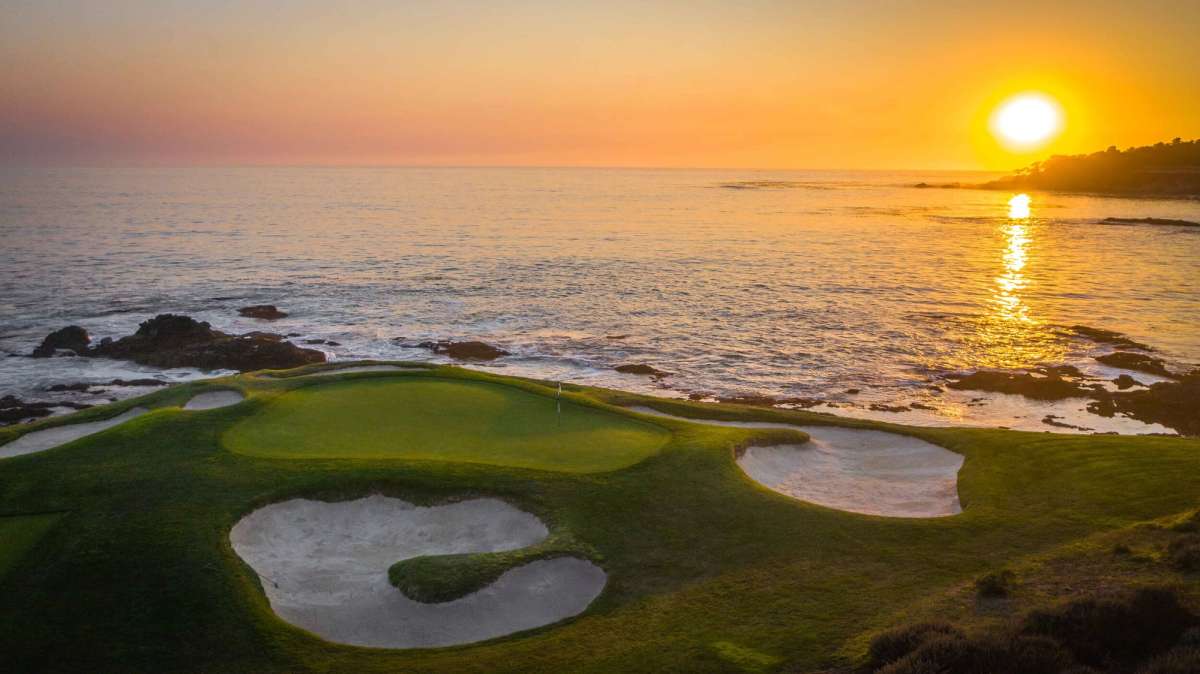
There are few tee times in golf more desirable than one at Pebble Beach Golf Links. The setting is extraordinary, the history is unparalleled and the opportunity to play a course that has hosted multiple U.S. Opens and countless other significant events is firmly on many golfers' bucket lists. Eighteen-time Major champion Jack Nicklaus once said if he only had one more round to play, he’d choose to play it at Pebble Beach, calling it “possibly the best [course] in the world”. Pebble Beach has retained its status as one of the world’s great public-access courses, meaning there are ways for ordinary golfers to play it, unlike many of the world's most exclusive layouts. The catch? Getting a tee time requires a little more planning than simply clicking through an online booking system. The good news is that there are a couple of different routes to the first tee at Pebble Beach. Here's everything you need to know. Where is Pebble Beach Golf Links? Pebble Beach Golf Links is one of golf’s great amphitheaters, where the Pacific Ocean provides the backdrop and almost every hole carries a piece of history. The course sits on the spectacular Monterey Peninsula on California's central coast, roughly 120 miles south of San Francisco. It forms part of Pebble Beach Resorts and is reached via the famous 17-Mile Drive, a scenic road that winds around the coastline between Monterey and Carmel-by-the-Sea. Pebble Beach occupies a dramatic stretch of Pacific coastline, with several holes running directly alongside Carmel Bay. It is also surrounded by some of the most recognisable scenery on the Monterey Peninsula, including the Lone Cypress and the rocky coastline for which the area is famous. For golfers arriving by air, Monterey Regional Airport is by far the closest airport. From the airport, the route to Pebble Beach Golf Links follows Highway 68 and then 17-Mile Drive, with the resort estimating a journey of about 15 minutes. The Easiest Way To Play: Stay at Pebble Beach Resorts The most dependable strategy to secure a tee time is to make your trip a resort stay. Guests staying at The Lodge at Pebble Beach, The Inn at Spanish Bay or Casa Palmero have access to Pebble Beach's courses, and resort guests are the only golfers who can reserve a Pebble Beach tee time more than 24 hours in advance. The booking window is particularly useful for golfers planning a bucket-list trip well ahead of time. Guests at The Lodge and The Inn at Spanish Bay can book accommodation up to 18 months in advance, while Casa Palmero reservations can be made up to 12 months ahead, subject to availability. To avoid disappointment, Pebble Beach explicitly recommends that resort guests request their tee times at the time of booking their room. A minimum two-night stay is required to secure a round at Pebble Beach Golf Links, although the resort can require three nights on certain dates. The resort's availability calendar identifies dates where different requirements apply, so it’s worth checking before finalising your itinerary. How Far Ahead Should You Book? As soon as possible is the short answer. Because resort guests can plan their accommodation up to 18 months in advance, Pebble Beach is best approached as a destination trip rather than an isolated round of golf. For a once-in-a-lifetime trip, we'd recommend starting with dates rather than a particular tee time. If you are travelling a long way to play Pebble Beach, it’s better to have several possible dates than to become fixated on one particular morning. Another important consideration for larger groups is that up to two players may be booked per room, based on room occupancy. A group of four should therefore plan around two rooms if everyone wants to play Pebble Beach. What if You Don't Want to Stay at the Resort? There is another considerably cheaper option to walk in the footsteps of Jack Nicklaus, Tom Watson and Tiger Woods, although it is much less certain. Non-resort guests are able to book Pebble Beach Golf Links one day in advance, meaning you don’t necessarily need to fork out for several nights of accommodation to play the course. Being one of the premier public courses in the world, tee times are in high demand, making the one-day window a genuine gamble. If you're already in the Monterey or Carmel area and have some flexibility, it's worth trying. If you're flying across the Atlantic specifically to play Pebble Beach, however, the resort route is significantly safer. How Much Does it Cost? Playing at such a prestigious course does not come without a hefty price tag, particularly if you’re planning on staying at Pebble Beach Resorts. For the current rate period of April 1, 2026 to March 31, 2027, the published green fee for Pebble Beach Golf Links is $695. The green fee applies to both resort and non-resort golfers, although non-resort golfers also pay the applicable cart fee. Additional published charges include: Cart: $60 per person Pull cart: $20 Single-bag caddie: $175 Double-bag caddie: $250 Forecaddie: $62.50 per person, with a three-player minimum Club rental: $120 per bag, plus tax Those figures make Pebble Beach one of the most expensive public-access rounds in the United States, particularly once accommodation, travel and caddie gratuity are added - but for many golfers this isn't an everyday round, it is the centrepiece of a trip.