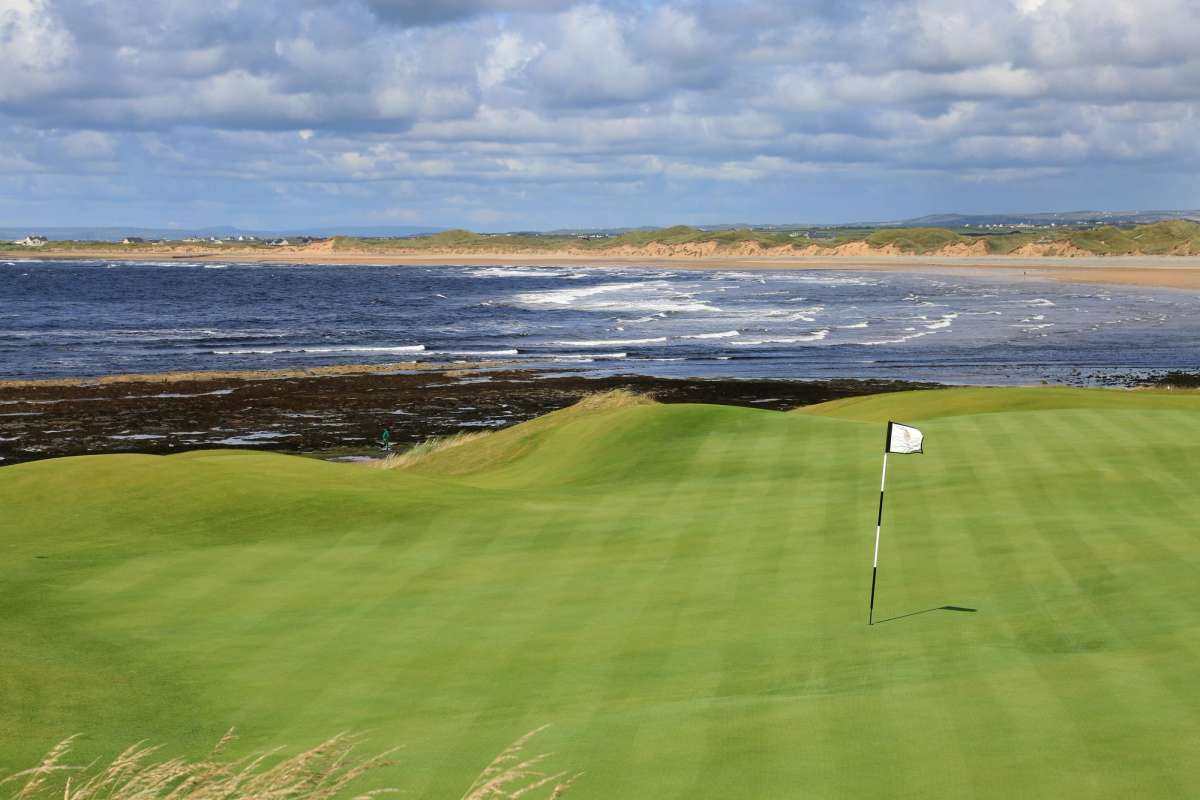
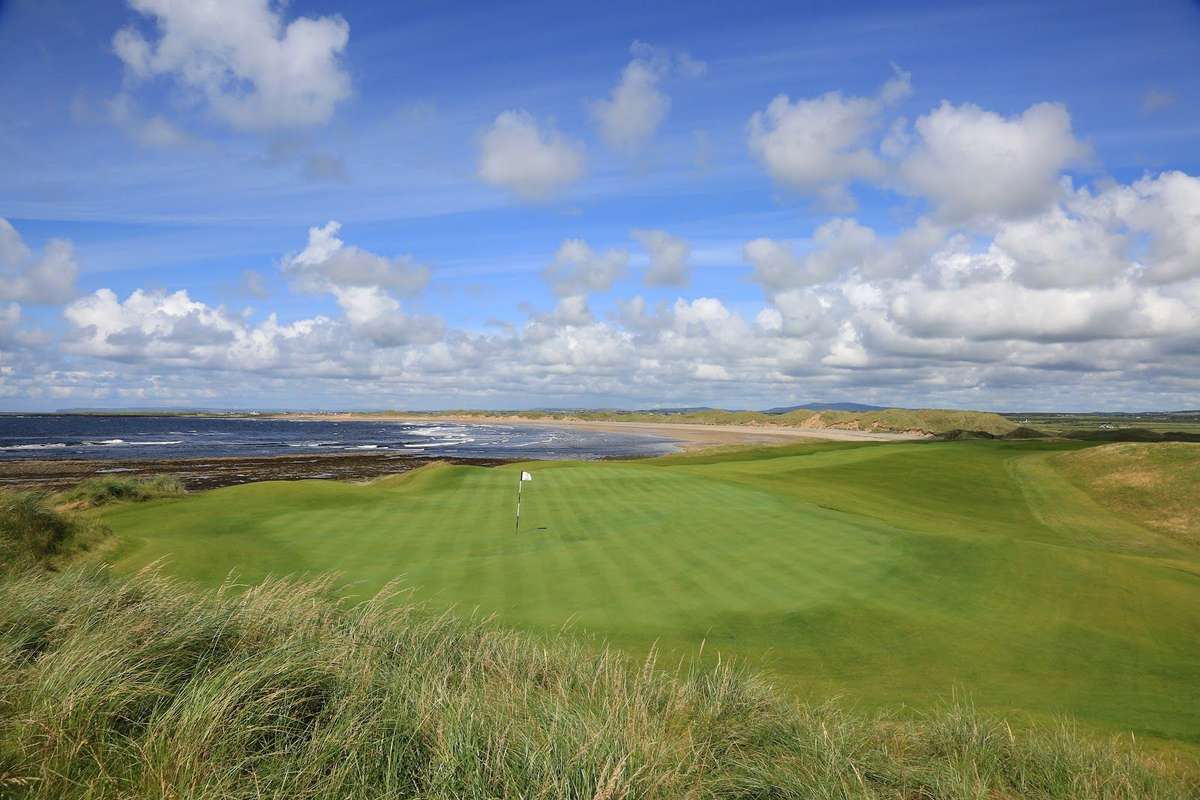
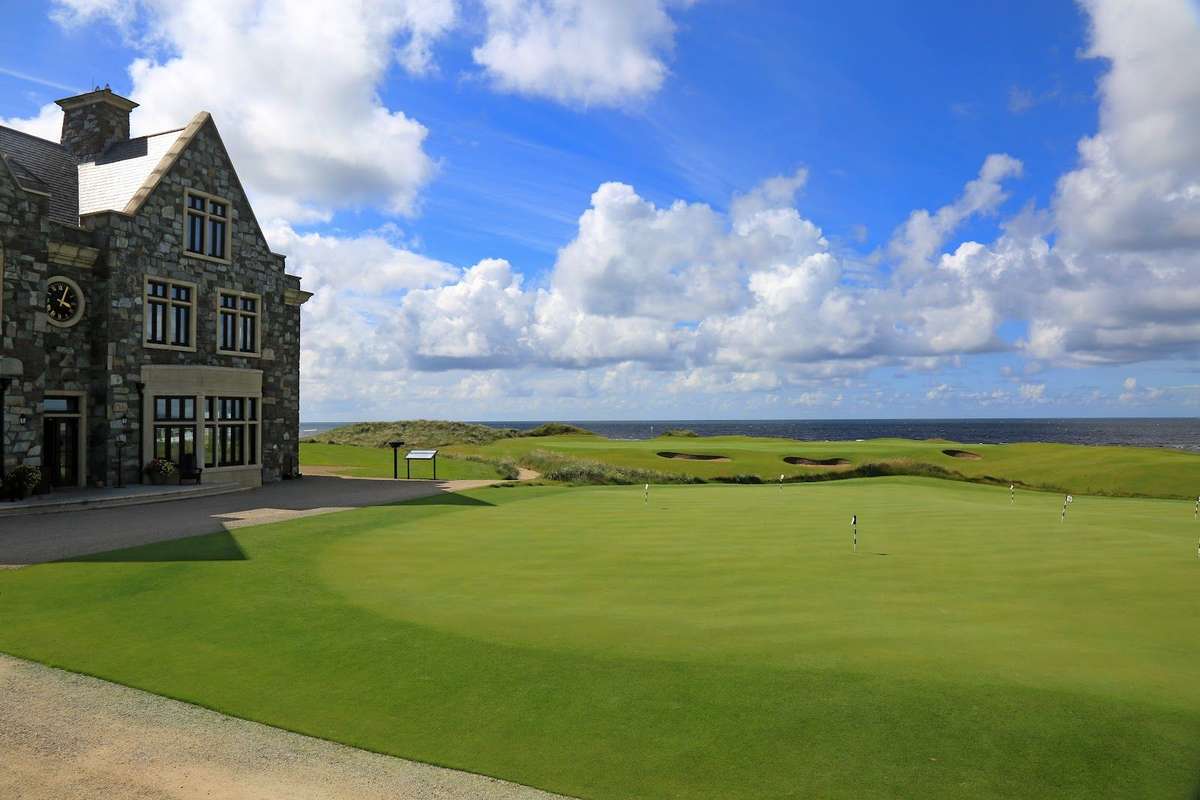
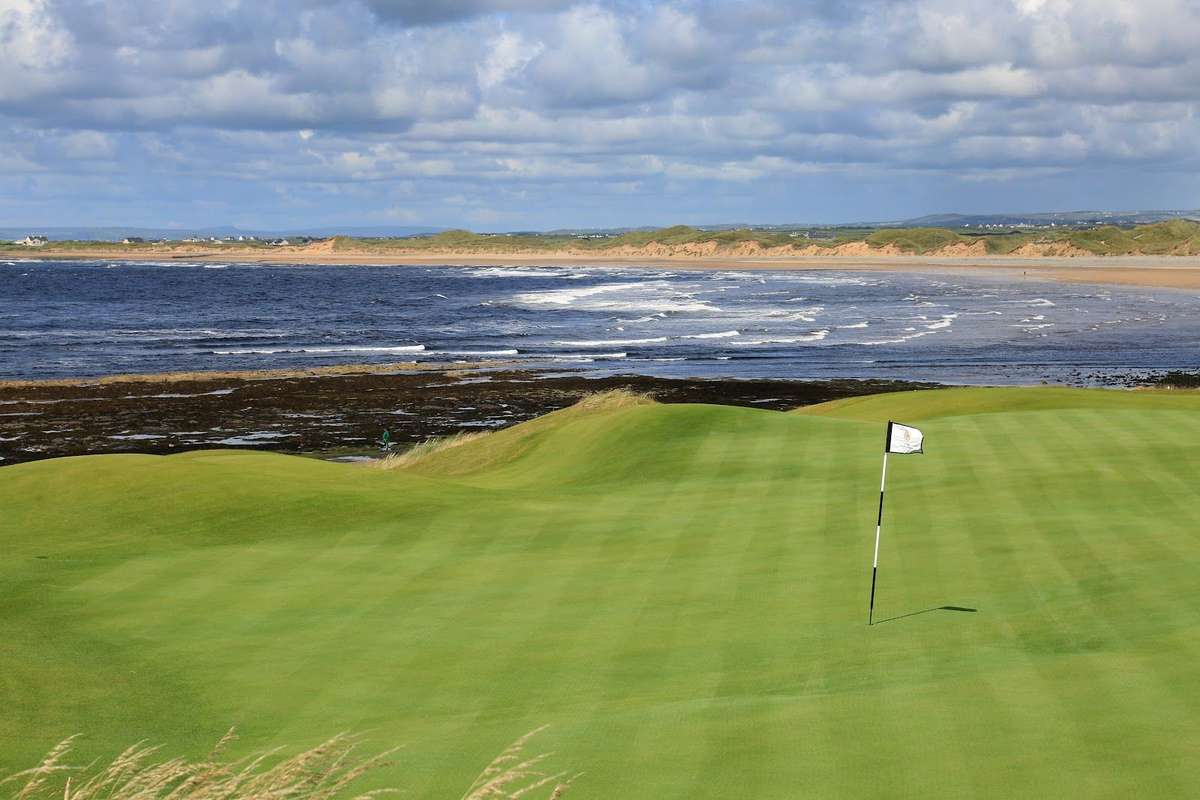
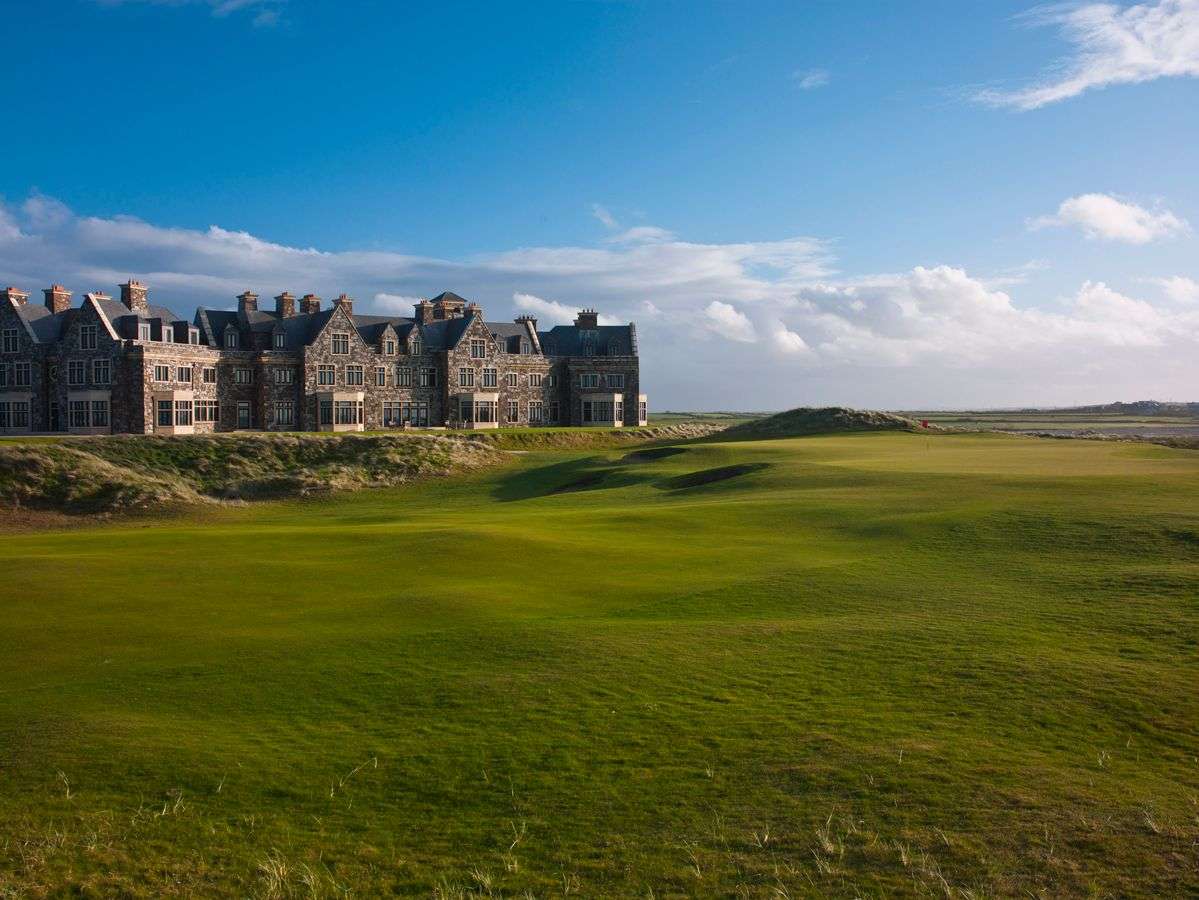
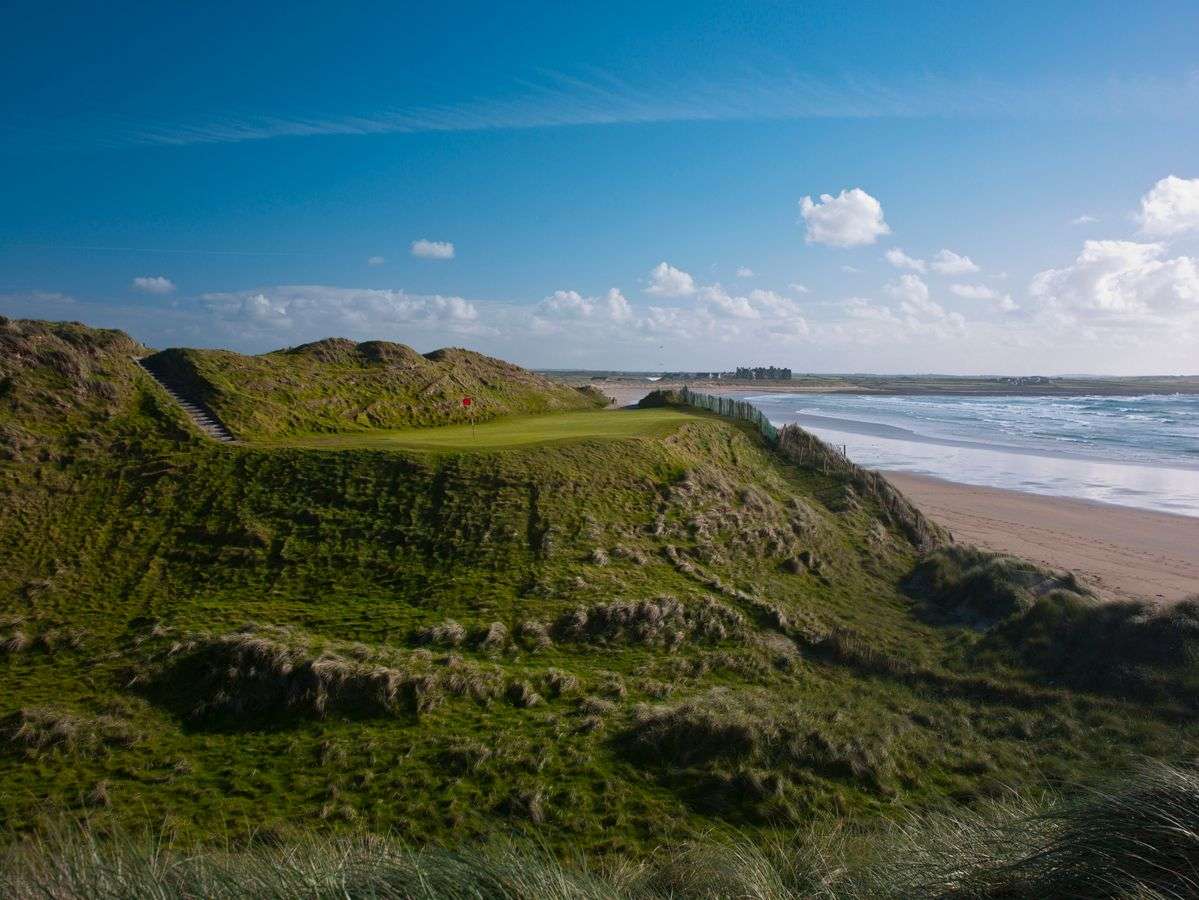
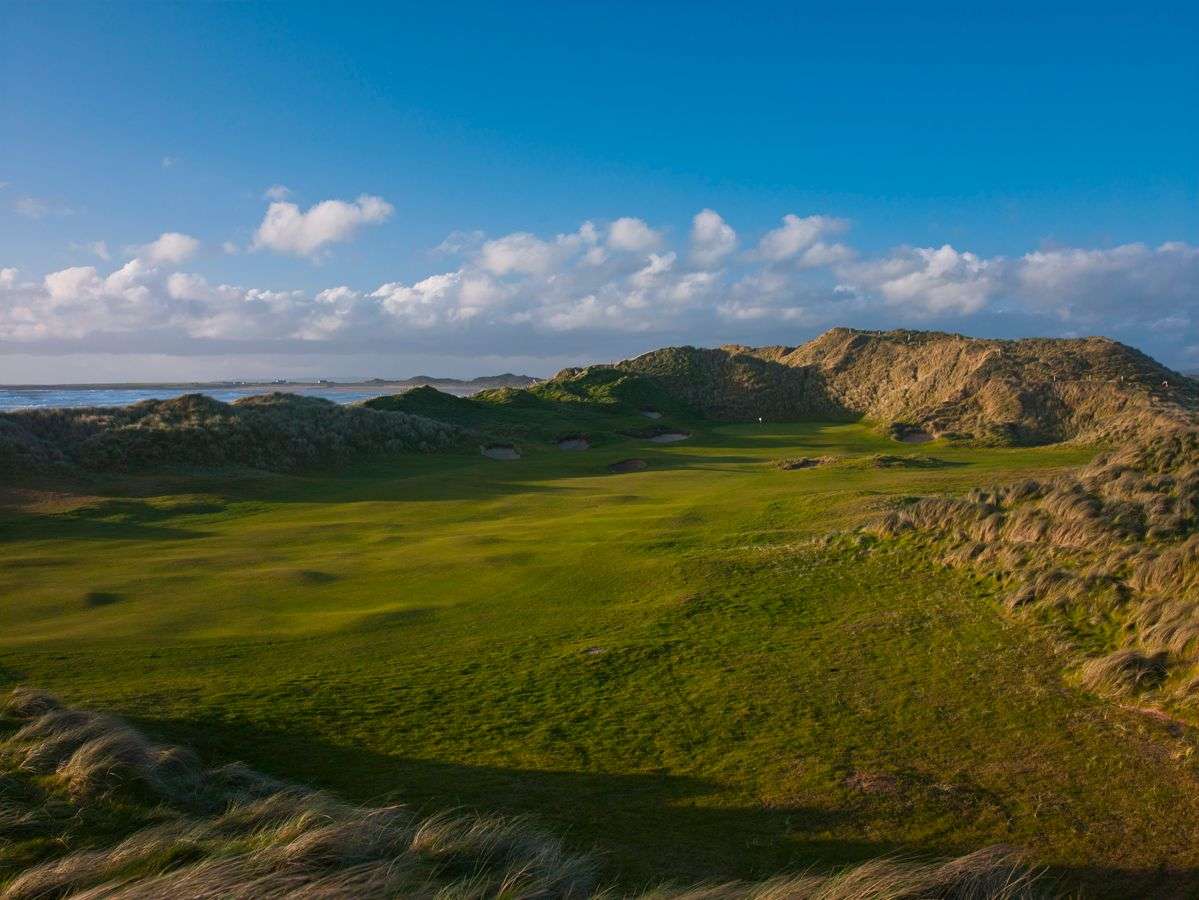
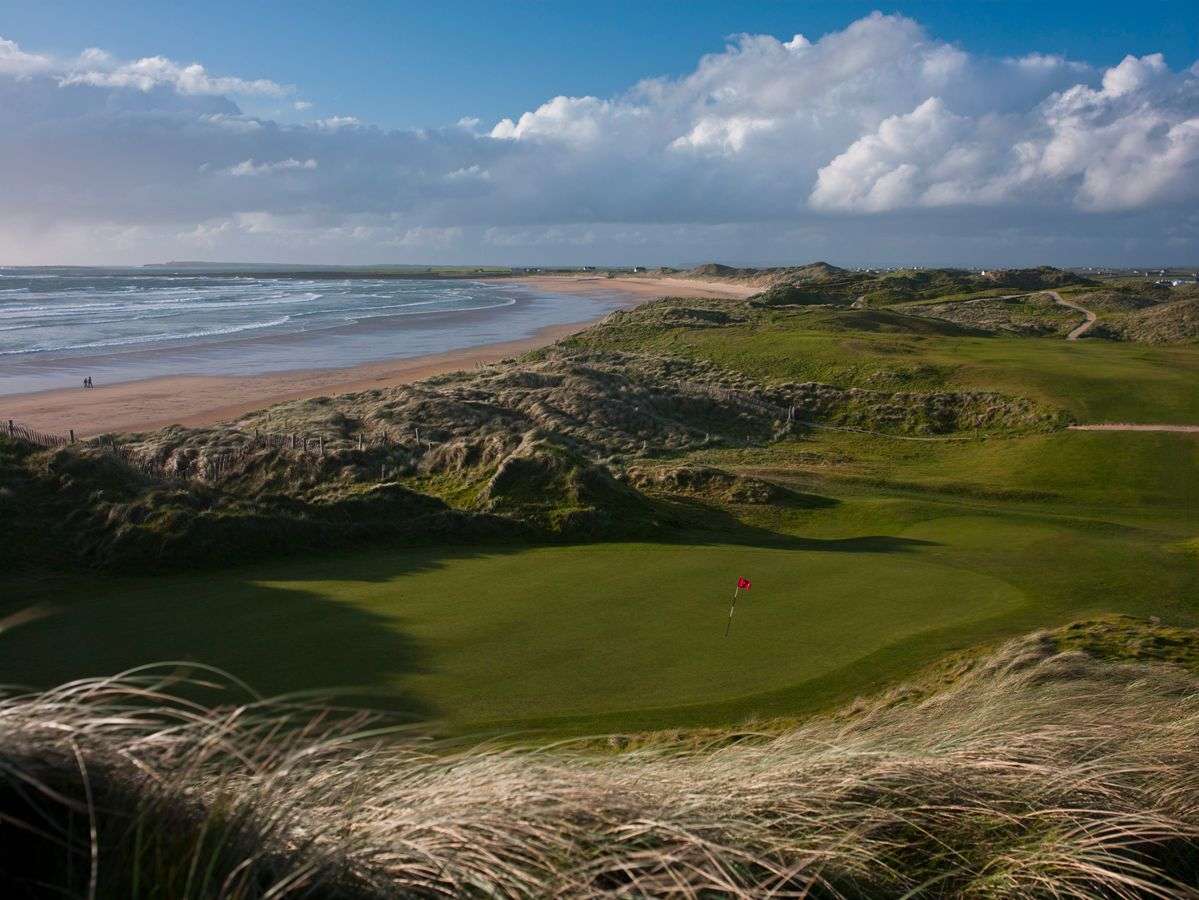
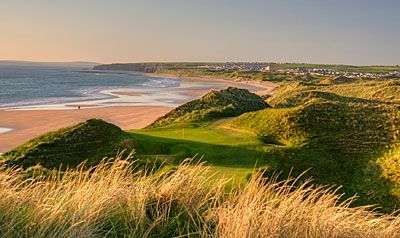
Doonbeg is the course that Greg Norman built, but it was redesigned by Martin Hawtree over a two-year period after the property was acquired in 2014 by Donald Trump and renamed Trump International Golf Links.
Overall rating

4.5
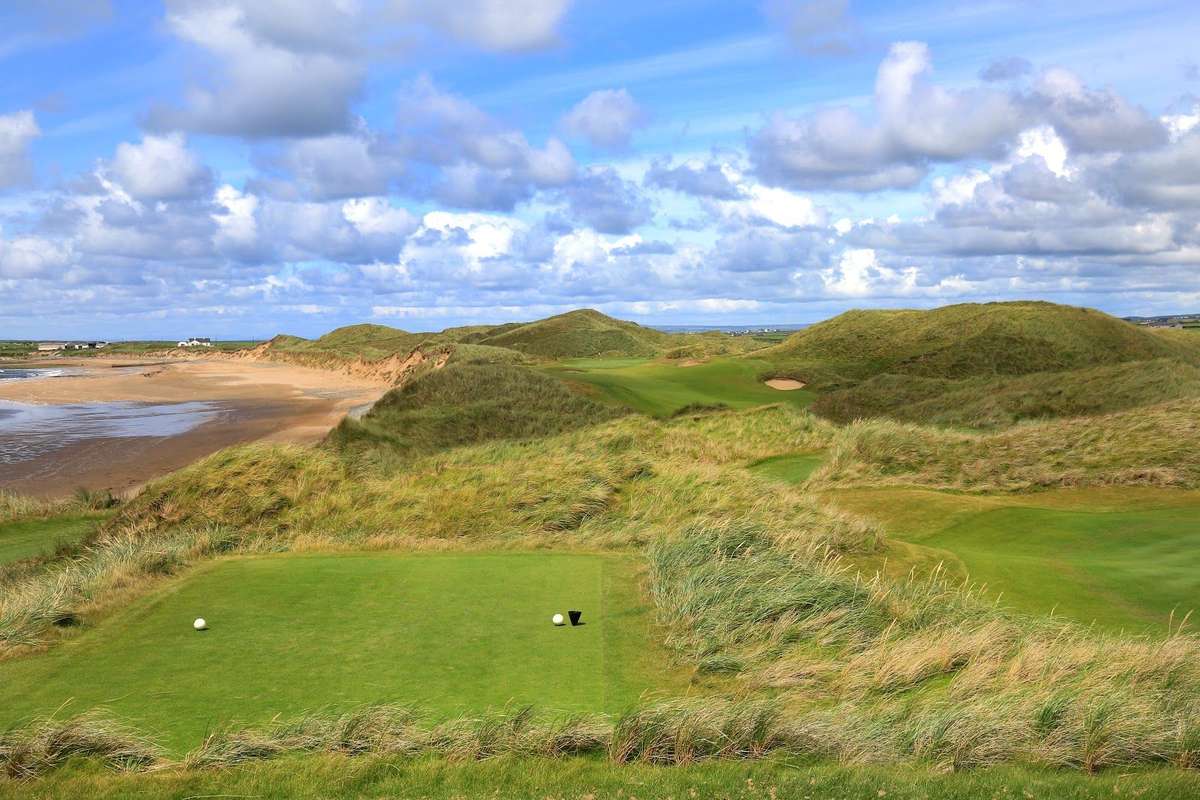
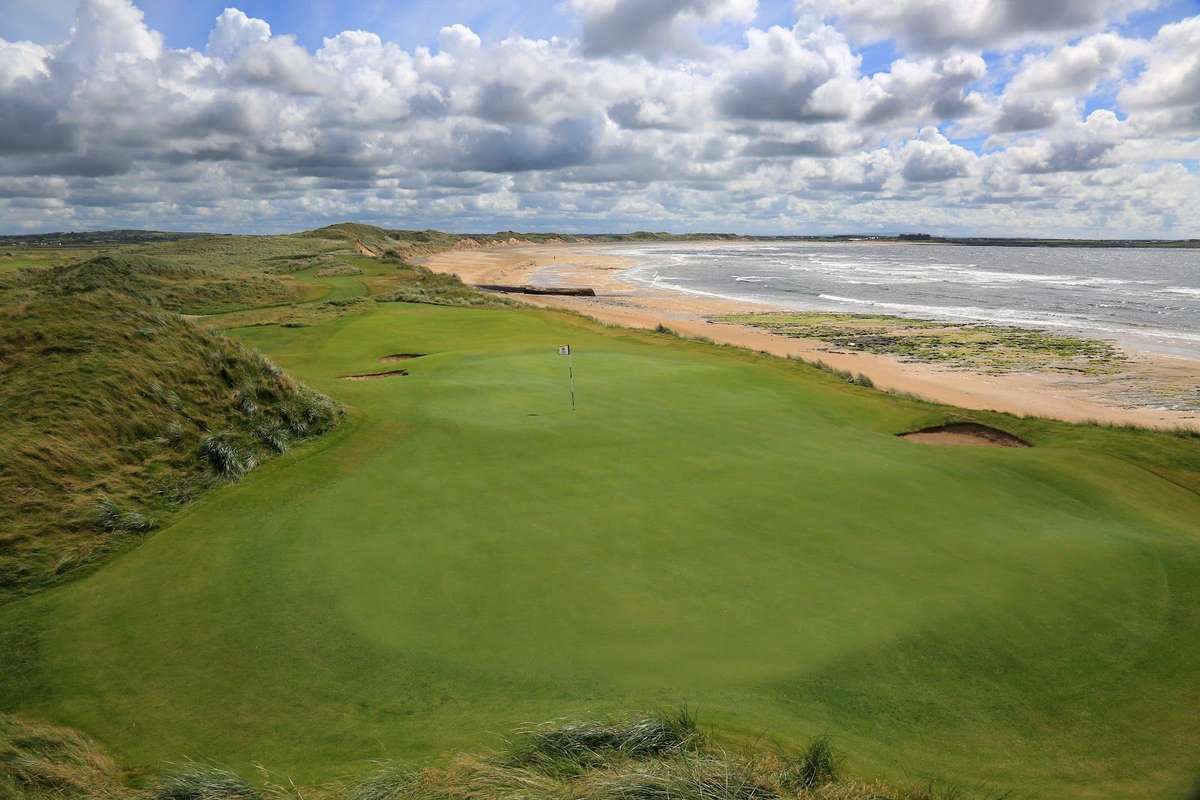
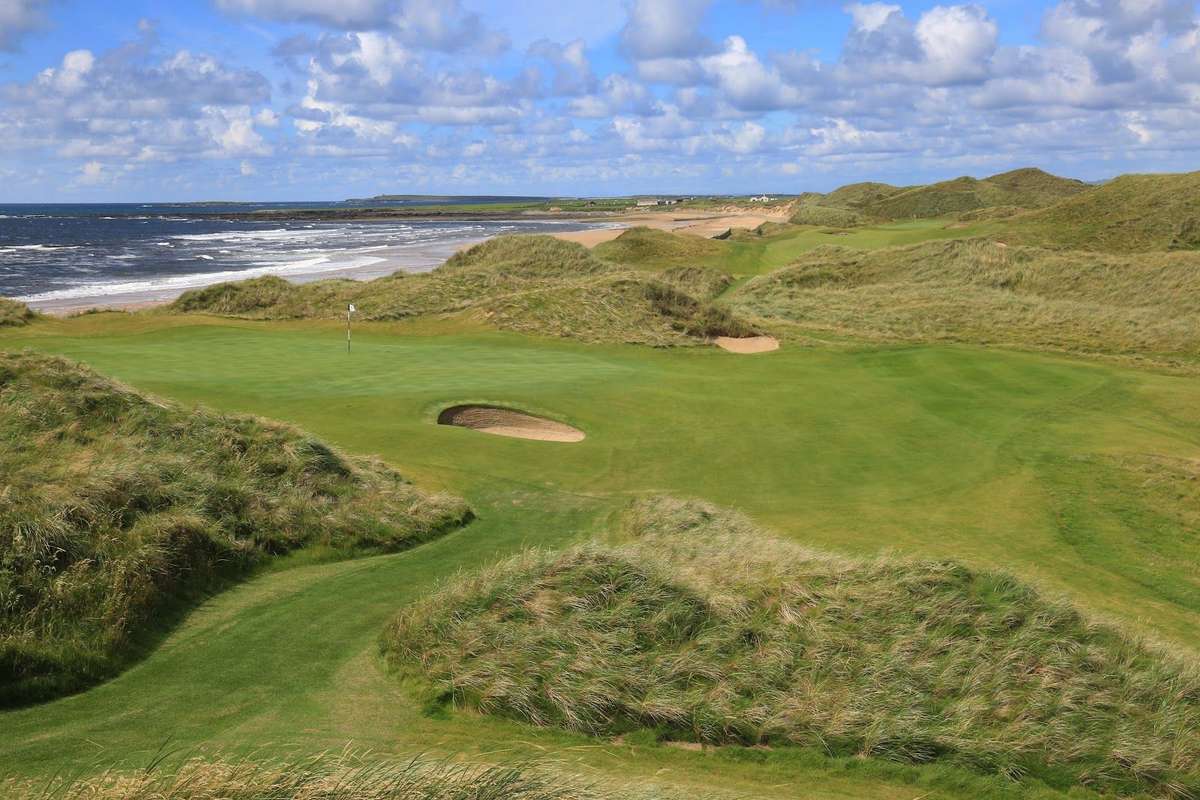
Trump International Golf Links - Ireland
Doonbeg is the course that Greg Norman built, but it was redesigned by Martin Hawtree over a two-year period after the property was acquired in 2014 by Donald Trump and renamed Trump International Golf Links.
The name Doonbeg is derived from 'Dun Beag', which roughly translated means small fort. So it's no surprise that this pretty seaside village grew up beside a castle, which was built in the 16th century for the Earl of Thomond. You'll find Doonbeg 40 minutes or so due west of Shannon airport. Just keep going until you reach the Atlantic. You can't miss the golf course – just look out for the mountainous dunes and keep your eyes peeled. Somewhere around these spectacular 100ft high sandhills, you might get a glimpse of the Great White Shark. Because this is the course that Greg Norman built – his one and only architectural ensemble in the whole of the British Isles.
Apparently Norman made 23 visits to this amazing piece of links-land, which curves and tumbles for a mile and a half around the crescent-shaped Doughmore Bay. "When I first looked at this site, I thought I was the luckiest designer in the world," Norman said. "If I spent the rest of my life building courses, I don't think I'd find a comparable site anywhere." Norman's design is totally in tune with nature - 14 greens and 12 fairways were simply mown - not much earth moved for Greg here at Doonbeg. The look and feel of the layout is old-fashioned and the routing follows an out-and-back style, synonymous with traditional links architecture. Not bad for a course which opened on July 9, 2002, marked by an exhibition match between Padraig Harrington and the Great White Shark. Norman won 2 & 1.
According to legend, officers of the Scottish Black Watch Regiment planned to turn these dunes into a golf course in the early 1890s, but they settled on Lahinch because it's located closer to the railway station. When Norman got his hands on this land a century or so later, he said: "I'm not going to Americanise this golf course - not one single foreign blade of grass". Norman remained true to his word, but the club is American-owned and their membership philosophy is that Doonbeg is the ultimate home club for the discriminating international golfer. Ah well, at least Doonbeg is open for green fees and it's also open for local residents.
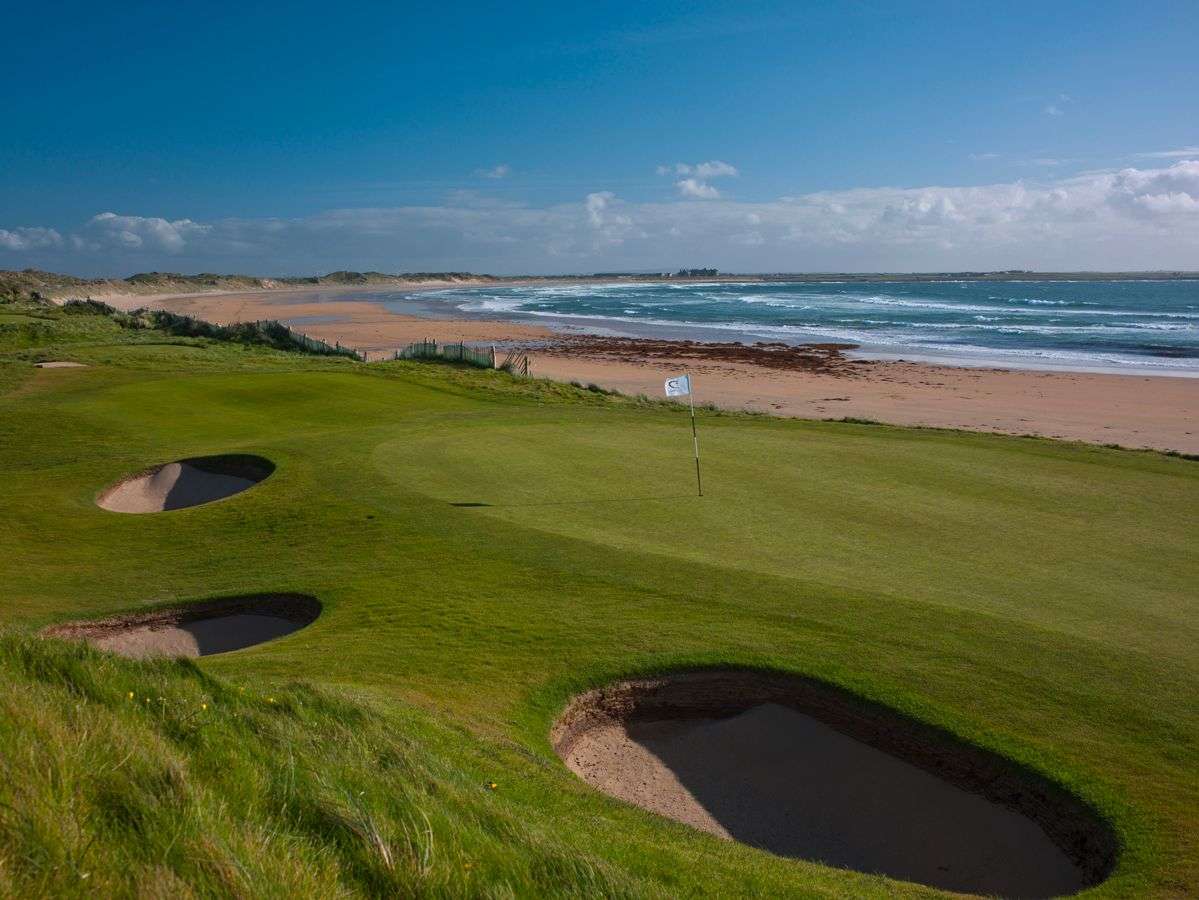
The layout is unusual in that it has a combination of five par 3s and five par 5s - the par 72 course measures 6,885 yards from the back tees. The signature hole is probably the 14th, a par three and one of the most sensational short holes in Ireland, although there are many memorable holes on this remarkable course. The 14th measures a mere 111 yards, but hitting the green is easier said than done because there are numerous distractions... the Atlantic stretches out beyond the green and the wind will dictate your club selection. Expect to take anything from a sand wedge to a 3 iron and hope for the best.
The Doonbeg project is believed to be the largest single investment in this part of Ireland and this amazing golf course has a magnetic appeal for thousands of golfers. Doonbeg is a priceless jewel between Lahinch and Ballybunion and one that simply must be played.
In February 2014, The Trump Organization bought the Doonbeg property in a deal said to be worth €15 million. The facility was renamed Trump International Golf Links & Hotel, Ireland and the course was redesigned over a two-year period under the architectural stewardship of Martin Hawtree at a reputed cost of €5 million.
The latest ranking of the Top 100 Golf Courses in the World serves as the ultimate global golf bucket list. Most members of our World Top 100 Panel are seasoned golfers, each playing 20-30 of these courses annually while travelling extensively over decades to form their opinions on others. We recognise that opinions vary—even among our panel members. Rankings are subjective, and there are undoubtedly 50 or more courses in the UK and USA alone that could easily fit onto this list. Links Golf Pilgrimages The rankings
California, United States
New Jersey, United States
Northern Ireland, United Kingdom
New York, United States
New York, United States

Top 100 Golf Courses of the Republic of Ireland 2018 It’s been twelve years since we compiled our first Top 100 chart for the Republic of Ireland and, in seven editions of the listings, the top five places have been occupied by the same five courses, albeit that they’ve sometimes appeared in a slightly different order after the biennial updates. With that in mind, it should come as no surprise to learn that the top five positions remain exactly as they were last time. Which means the Old course at Ballybunion is still the national number 1 course and retaining the top spot is due reward for the risk taken by the club with its recent extensive upgrade of the course infrastructure, when all eighteen poa annua greens were replaced with pure fescue putting surfaces, green surrounds were re-turfed with fescue and around forty bunkers revetted, all within a very short time frame. As if that wasn’t enough, additional work was carried out on four of the holes (including the repositioning of the 7th green) to further enhance the Old course’s ground game credentials so hats off to Ballybunion for such a brave decision to revamp the layout in one decisive initiative. The next big story is the prodigious leap of nine places to number six by Trump International Golf Links Ireland, formerly known as Doonbeg. Our US Consultant Fergal visited the course last month and was profuse in his praise for the refurbished layout: “I offer huge congratulations to SOL Golf, Martin Hawtree and Brian Shaw (head pro for 17 years) for renovating this original Greg Norman course into a truly sensational 18-hole layout. Greens were moved, holes were completely changed and the routing was significantly improved… While walking around, I rejoiced that such an investment was being made on Irish soil to celebrate our beautiful country and elevate the profile of a fabulous Irish links.” Another renovated links rises an impressive seven spots to number 16 and it’s Portmarnock Hotel & Golf Links, which also benefited from a change of ownership and overseas investment from the United States in 2014. A redesigned high tee has been installed at the 1st hole, newly revetted bunkers are now in place, turf pathways have been introduced and a rough management programme initiated, all under the watchful eye of long-term Links Superintendent Fintan Brennan. And with fescue grass now dominating 80% of the putting surfaces, the greens at Portmarnock Hotel gain in reputation every year so cracking the national Top 20 is well deserved for this undervalued links. Three hundred kilometres due west, on the other side of the country, the rugged Championship course at Connemara soars nine places to number 23. An Eddie Hackett design which was first brought into play in the early 1970s, the 27-hole facility at Connemara unfortunately suffers from its remoteness – because the clusters of more highly ranked courses to the north and the south are a good driving distance away, visiting golfers tend to omit this fabulous links from their itinerary, which is a big mistake. Maybe a big name American golfer will one day discover the undisputed charms of Connemara and that might just be enough to propel it even further up the ranking lists… Royal Dublin makes a substantial upward move near the top of the standings (up six to number 27) and another of our correspondents, Brian Ward, played there last year, terming it “the unexpected highlight of a recent trip to Ireland,” going on to say it was “somewhat underrated in my opinion”. Narin & Portnoo in County Donegal also moves in the right direction (up seven to number 28) and a reviewer described it earlier this year as a “fabulous golf course with the majority of holes in the dunes as good as any at more illustrious courses.” Further down the table, Strandhill in County Sligo surges forward thirteen places to number 39. Architect Ally McIntosh has just completed a bunker scheme, widened fairways and redone mowing lines as part of a 5-year masterplan for the course and he told us he’s also “done some other small tweaks here and there to make the course feel bigger.” Christy O’Connor Jnr’s design at the Galway Bay Golf Resort also advances admirably, up fifteen to number 50, and this “parkland by the sea” 18-hole layout celebrates its 25th year of operation next year. In the bottom half of the chart, four courses exhibit spectacular double digit positional progression: the reconfigured Rathsallagh layout in County Wicklow (up twenty-one to 51), Peter McEvoy’s 2006 design at New Forest in County Westmeath (up eighteen to 60), the old links – established in 1891 – at North West in County Donegal (up fourteen to 81), and the tree-lined track at Portarlington in County Offaly, which Eddie Hackett extended to eighteen holes in the 1990s (up ten to 87). Five courses drop out from our Top 100 – Adare (more below), Rathcore, Skellig Bay, Roganstown and Dunfanaghy – to be replaced by a handful of courses headed by Cruit Island in County Donegal. In actual fact, this lovely little 9-hole layout is a chart re-entry, having fallen from our listings the last time we re-ranked, two years ago. A review from last month sums up the course rather well: “Just came back from this year’s trip to Donegal. Despite also playing the scenic and wonderful courses at Ballyliffin, Rosapenna, Narin & Portnoo and Portsalon, it is the crazy golf and breathtaking scenery at Cruit Island that our little group will remember the longest.” The course at Adare Manor Resort is currently closed and will open in April 2018 following a substantial redesign by Tom Fazio. J.P. McManus, the new owner, has transformed the entire property and the newly remodelled course is growing in nicely. It's certain to jump back into the Irish Top 100 rankings next time. The only question is how high? The same question could be asked of the new clifftop course at Hogs Head, a Robert Trent Jones Jnr design that supercedes the ill-fated Skellig Bay development near Waterville in County Kerry. Gone are the old stone walls that once dominated the property, replaced with open, sand-capped fairways planted with fescue grasses native to the Irish coastline. Hogs Head is also still growing in and it too will open for business in April next year. It’ll certainly be interesting to see where these two courses feature when we publish the next edition of our Republic of Ireland Top 100. Rank/ To view the complete detailed list of the Top 100 Golf Courses in Ireland click the link. Jim McCann Editor Top 100 Golf Courses
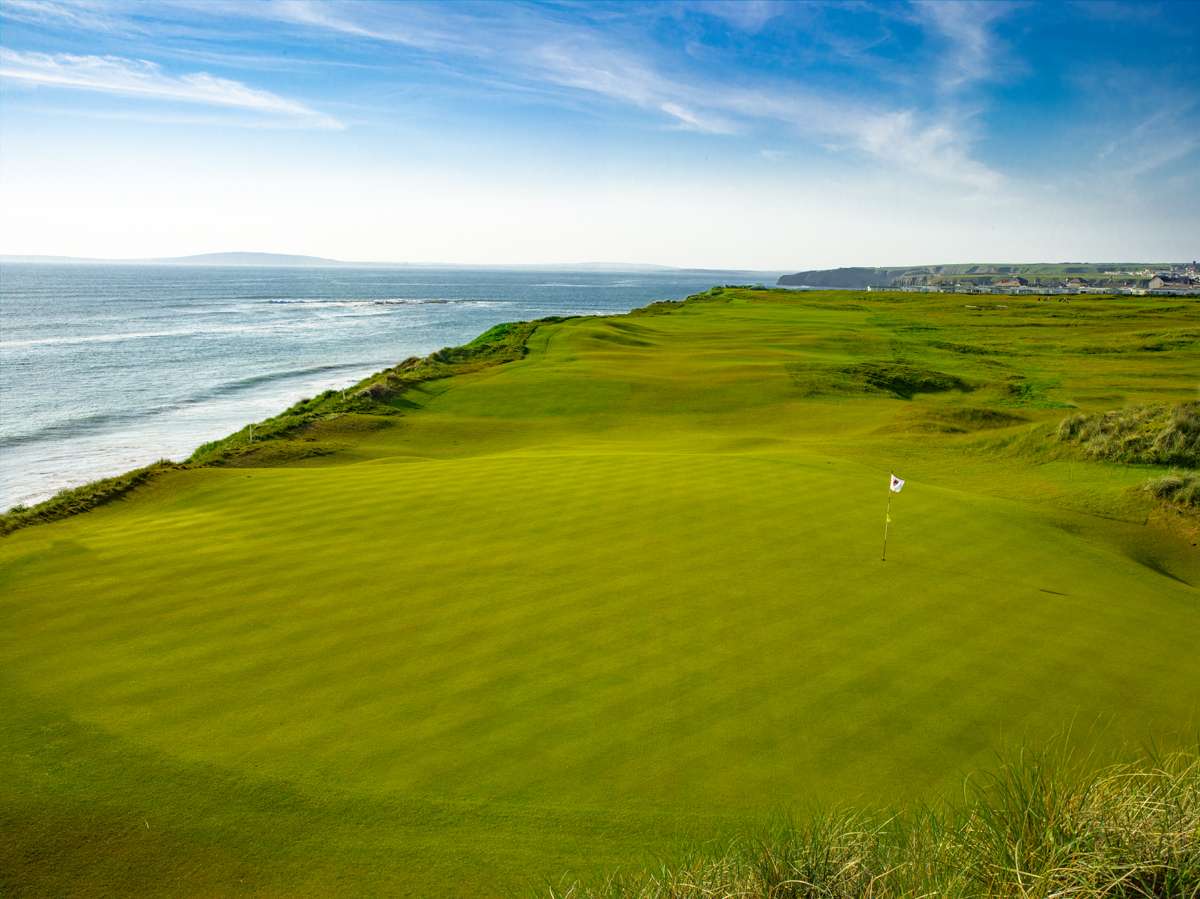
Ireland is one of the world's great golf destinations, but planning a first trip can be daunting. With outstanding links courses scattered along its coastline, deciding where to play is only half the challenge. The other is working out how to fit them into a week. For first-time visitors, you don't need to travel the length of the country to experience some of its finest golf. Ireland's west coast offers more than enough to build a memorable golfing holiday, with Shannon Airport providing a convenient starting point. To see what a week of Irish links golf could look like, we put the Top100 Golf Courses AI Trip Planner to work. The result is a seven-day itinerary taking in five of Ireland's standout links courses, from famous names to a few lesser-known gems. There will be plenty of driving along the way, but the reward is a week of golf on one of the most spectacular stretches of coastline in the game. Day 1: Arrive in Ireland Airport: Shannon Shannon Airport is a convenient starting point for a golf trip along Ireland's west coast, with Lahinch around an hour's drive away. Pick up a hire car and make your way to the seaside village, where it's worth booking accommodation for the first couple of nights ahead of your opening round at Lahinch Old. With five courses to play over the following days, there's no need to rush into the golf straight away. Spend the evening exploring the village's pubs and restaurants, whether that's a pint at Kenny's Bar or dinner overlooking Liscannor Bay at The Edge, before preparing for the week ahead. Day 2: Lahinch Golf Club - Old Course (County Clare) World Ranking: 32nd | Ireland Ranking: 2nd | Green fees: €450* The first round sets a high standard. Lahinch Old is one of Ireland's most celebrated links courses, with the Atlantic coastline, towering dunes and naturally uneven terrain creating a memorable introduction to the trip. The course is full of character, particularly around the fourth and fifth holes. The short par five, Klondyke, features a towering dune that complicates the approach, while the famous Dell is a blind par three played towards a green hidden between sand hills. A marker on the dune indicates the pin position, but golfers still need to judge the wind and choose their club carefully. Originally laid out in 1892, Lahinch was improved by Old Tom Morris before Alister MacKenzie redesigned several holes in 1927. That mix of history and unusual golf gives the course a personality that goes well beyond its spectacular setting. After the round, enjoy another evening in Lahinch before heading towards County Kerry for the next leg of the trip. Day 3: Ballybunion Golf Club - Old Course (County Kerry) World Ranking: 29th | Ireland Ranking: 1st | Green fees: €450* If there is one course that belongs on a first-time Irish golf itinerary, it is Ballybunion Old. Long regarded as one of the world's great links courses, it is a headline round on Ireland's west coast and a highlight of any trip to the country. The course's enormous dunes shape almost every aspect of the round, creating narrow corridors and demanding approaches to greens tucked into the natural landscape. The second hole, a long par four known as Kennells, sets the tone with a tight line between two towering dunes before a challenging approach to an elevated green. The drama continues at the seventh, where the tee sits above the shoreline, and the 11th, a formidable par four that is among the course's standout holes. Ballybunion is as much a test of judgement as distance, with the wind capable of turning an already demanding round into a real challenge. From Lahinch, allow around two hours to reach Ballybunion by car, depending on the route and whether you take the Killimer–Tarbert ferry across the Shannon Estuary. After the round, stay in Ballybunion or Tralee ahead of the next day's golf at Tralee Golf Club. If time allows, take a walk along Ballybunion's clifftop paths or settle in for a pint at one of the town's traditional pubs. Day 4: Tralee Golf Club (County Kerry) Ireland Ranking: 12th | Green fees: €450* Designed by Arnold Palmer and opened in 1984, Tralee is one of Ireland's most dramatic coastal courses. The front nine crosses relatively open links land, but the course becomes more rugged on the way home, climbing into towering dunes with elevated tees, challenging carries and sweeping views across the Atlantic. The par-three third, known as The Castle, is a standout. Played towards a green overlooked by the ruins of a castle, it combines a demanding shot with a spectacular setting. The 17th, Ryan's Daughter, is another memorable hole, requiring a drive across a ravine before an approach to a small, raised green. Tralee offers a different experience from Ballybunion. Both courses are shaped by Kerry's dramatic coastline, but Tralee's changing terrain gives the round its own character and plenty of variety. The drive from Ballybunion takes around an hour, making this one of the easier transfers of the trip. Stay in Tralee for the night and head to Baily's Corner, a long-established pub known for its rugby memorabilia and traditional atmosphere, before continuing to Dooks Golf Club the following day. Day 5: Dooks Golf Club (County Kerry) Ireland Ranking: 23rd | Green fees: From €260* After three high-profile rounds, Dooks offers a different kind of Irish links experience without sacrificing the scenery. Established in 1889, it is Kerry's oldest golf course, set beside Dingle Bay with views towards the MacGillycuddy's Reeks and the surrounding mountains. At just over 6,500 yards, Dooks is shorter than some of the other courses on this trip, but there is plenty to keep golfers interested. The natural contours call for an adaptable approach, while the par-three 13th stands out for its unusually undulating green. The course's relaxed atmosphere and warm welcome make it a refreshing change of pace midway through the week. Although shorter than the other courses on the itinerary, Dooks is well worth the stop, offering a more relaxed round with views that stretch from the bay to the surrounding mountains. After the round, head to nearby Rossbeigh Strand for a walk along the beach, with views across Dingle Bay, before settling in for dinner and a pint at the Glenbeigh Hotel. Staying in the area also puts you in a convenient position for the journey to Waterville Golf Links the following day. Day 6: Waterville Golf Links (County Kerry) Ireland Ranking: 5th | Green fees: From €400* Waterville brings the golfing week to a close with one of Ireland's most celebrated links courses. Set on a remote stretch of the Iveragh Peninsula along the Ring of Kerry, it is surrounded by water, with views across Ballinskelligs Bay towards the Atlantic and northeast towards the MacGillycuddy's Reeks. The front nine crosses relatively flat ground, but the course takes on a different character on the way home, weaving through avenues of tall dunes. The short par-five 11th is a highlight, with a rippling fairway framed by towering dunes, while the elevated tee at the par-three 17th, Mulcahy's Peak, offers one of the most memorable views of the week. Waterville is a fitting finale to five rounds of Irish links golf, combining a challenging test with a spectacular setting far removed from the busier tourist centres. After the round, enjoy a final evening in Kerry, whether that means a relaxed dinner in Waterville or exploring more of the surrounding Ring of Kerry. Day 7: Return to Shannon The journey back to Shannon Airport takes around three hours from Waterville, so allow plenty of time if you're catching a flight home. If your departure is early, consider spending the final night closer to the airport rather than making the drive on the morning of your flight. Alternatively, an extra day gives you more time to explore County Kerry, enjoy another stop along the west coast or squeeze in one last pint of Guinness before heading home. Planning your first Irish links trip Five rounds in six days is an ambitious schedule, but focusing on Ireland's west coast makes it manageable with a little planning. The route does involve a few accommodation changes, so it's worth thinking through your overnight stops before booking. Getting around: Hiring a car is the easiest way to travel between courses, particularly when travelling with golf clubs. Allow plenty of time for the drives and remember that the most direct route isn't always the quickest if you're using the ferry across the Shannon Estuary. Where to stay: Book two nights in Lahinch for the opening rounds, then plan your overnight stops around Ballybunion, Tralee and Dooks before finishing near Waterville. This means changing accommodation a few times, but it avoids unnecessary backtracking. If you're flying home early, consider staying closer to Shannon after your final round. Book ahead: These are popular courses, especially during the main golf season. Secure tee times well in advance and check visitor availability before committing to flights and accommodation. Pack for the weather: Conditions on the west coast can change quickly. Waterproofs, warm layers and spare golf gloves are sensible additions, even during summer. Budget for the trip: This is not a cheap golf holiday. Based on published 2026 visitor rates, the five green fees alone come to around €2,000 per person, before caddies, accommodation, car hire and food. Including six nights' accommodation and a hire car shared between four people, budget approximately €3,200–€4,200 per person, excluding flights. Caddie fees and peak-season accommodation can push the total higher, so check each club's caddie requirements and current rates before booking. Consider an extra day: Five rounds in six days leaves limited time to explore beyond the courses. An extra night gives you more flexibility to enjoy Kerry's coastline and towns, or simply relax over a final pint of Guinness before heading home. *Green fees referenced are based on published high-season visitor rates for 2026 and are subject to change. Check with each club for current pricing before booking.
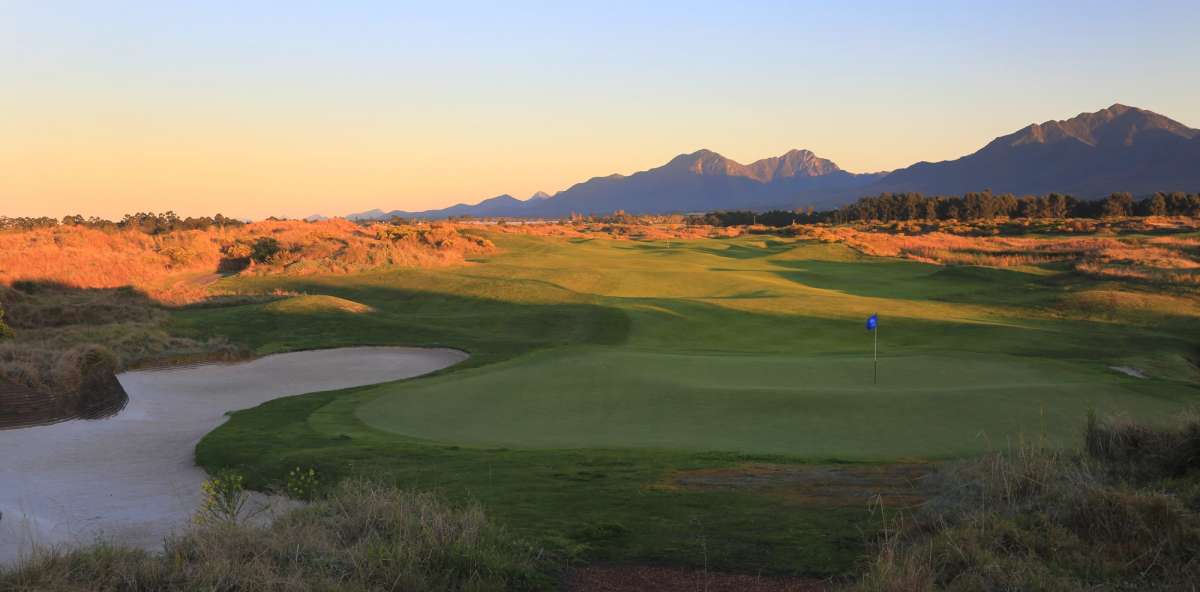
Timing can make all the difference when planning a golf holiday. While peak season often brings the best playing conditions, it can also mean higher green fees, expensive accommodation and limited tee-time availability. Travelling during the shoulder season – the periods immediately before or after a destination's busiest golfing months – can offer a better balance between cost, weather and availability. From Scotland's famous links to the desert courses of Arizona, we've picked out 10 destinations where travelling outside peak season could make your next golf trip more enjoyable – and potentially more affordable. The Algarve, Portugal Best time to visit: February, June or November The Algarve is one of Europe's most popular golf holiday destinations, but its busiest golfing periods don't necessarily coincide with the peak summer tourism season. March through May and September through October are generally the most expensive months for golf, when comfortable temperatures attract visitors from across Europe. Travelling in February, June or November can offer better value, with several leading courses reducing their green fees outside these periods. June is particularly appealing for golfers who enjoy warm weather, although early tee times are advisable as temperatures rise. February and November are cooler, with a greater chance of rain, but accommodation and tee-time availability can be more attractive. With championship courses stretching across Portugal's southern coastline, the Algarve remains an excellent destination for golfers looking to balance quality and affordability. Courses to consider Monte Rei Golf and Country Club (North) Quinta do Lago (South) Palmares Golf (Praia & Lagos) Costa del Sol, Spain Best time to visit: Late May–June or November Spain's Costa del Sol has more than 70 golf courses, including some of continental Europe's most highly regarded layouts. Spring and autumn are traditionally the busiest golfing periods, particularly March, April and October, when temperatures are comfortable and conditions are well suited to playing 18 holes. Travelling in late May, June or November can offer an alternative, with some courses introducing reduced green fees outside their highest-demand periods. June brings warmer weather and long daylight hours, making morning rounds particularly appealing. November is cooler and generally quieter, although rainfall becomes more likely. With Marbella, Estepona and Sotogrande all within easy reach, golfers can combine several championship courses with restaurants, beaches and other attractions. However, premium venues may maintain high green fees throughout much of the year, so checking individual seasonal rates is particularly important. Courses to consider Real Club Valderrama Finca Cortesin Golf Club La Reserva Club Scotland Best time to visit: April–May or September–October Scotland's famous links courses attract golfers from around the world during the summer, when long daylight hours and relatively mild weather make it possible to play well into the evening. However, travelling outside the busiest months can offer considerable advantages, particularly at courses with different seasonal green-fee structures. April and early May can provide an opportunity to experience Scotland's traditional links before peak summer demand, while October can bring lower rates at some leading venues. September remains popular with international visitors, meaning substantial savings aren't always guaranteed. Links courses can also play particularly well during the cooler months, with firm turf and coastal winds providing a traditional test of golf. The biggest compromise is the weather, while shorter daylight hours towards October can limit the number of rounds golfers can fit into a single day. Courses to consider Kingsbarns Golf Links Royal Dornoch Golf Club (Championship) North Berwick Golf Club (West Links) Ireland Best time to visit: April–May or September–October Ireland is home to some of the world's finest links courses, but securing tee times at its most famous venues during the summer can require considerable forward planning. Courses such as Royal County Down, Lahinch and Ballybunion attract international visitors throughout the main golfing season, with popular tee times often booked well in advance. Travelling in April or October may provide greater flexibility when planning an itinerary, particularly for golfers hoping to visit several highly ranked courses on the same trip. May and September can also offer excellent playing conditions, although both remain popular months and green fees may be comparable with peak summer rates. Spring brings increasing daylight, while early autumn can offer relatively mild temperatures before winter approaches. Atlantic winds and rain remain a possibility throughout the year, but for golfers prepared to embrace the conditions, Ireland's links courses are rewarding in almost any season. Courses to consider Royal County Down (Championship) Lahinch Golf Club (Old) Ballybunion Golf Club (Old) Belek, Turkey Best time to visit: February–March or late November Belek has established itself as one of Europe's leading resort golf destinations, with championship courses, luxury hotels and all-inclusive packages attracting visitors throughout much of the year. Unlike northern European destinations, its busiest golfing periods are generally spring and autumn, particularly April, May and October, when temperatures are most comfortable. Travelling in February, March or towards the end of November can provide better value, with some resorts offering more attractive golf packages outside the busiest months. The courses are concentrated along Turkey's Mediterranean coastline, making it relatively straightforward to arrange several rounds without lengthy transfers. Rainfall is more likely during the cooler months, while temperatures can vary considerably between February and late March. For golfers looking for a resort-based holiday with accommodation, golf and transfers organised together, Belek is an appealing shoulder-season option. Courses to consider Carya Golf Club Montgomerie Maxx Royal The National Golf Club (Irmak & Tuna) - Antalya Dubai, UAE Best time to visit: October or April Dubai offers a distinctive golfing experience, with championship courses, luxury resorts and dramatic city skylines providing a very different setting from traditional links golf. The city's peak golfing season runs through the cooler winter months, when visitors arrive to escape colder climates elsewhere. October and April sit around the edges of this busy period, offering opportunities to find more attractive accommodation rates and potentially lower green fees. The trade-off is the temperature. Both months can be considerably warmer than the middle of winter, making early morning or late afternoon tee times preferable. Dubai also offers floodlit golf, allowing visitors to play after sunset when conditions are more comfortable. With several leading courses located within a relatively short drive, the city is well-suited to a golf holiday combining multiple rounds with sightseeing and other activities. Courses to consider Emirates Golf Club (Majlis) Jumeirah Golf Estates (Earth) Dubai Creek Golf & Yacht Club Arizona, USA Best time to visit: November or late April–May Arizona's desert golf courses provide some of the most spectacular scenery in American golf, with Scottsdale and the greater Phoenix area attracting visitors throughout the cooler winter months. Peak demand generally falls between January and March, when comfortable temperatures bring golfers from across the United States and beyond. November and late April into May can offer alternatives, with potentially lower green fees and fewer visitors than the busiest winter weeks. However, autumn visitors need to pay particular attention to overseeding schedules. Many Arizona courses temporarily close or restrict play during September and October while preparing their playing surfaces for winter. By November, most have reopened, although conditions and cart restrictions can vary. Late spring offers another opportunity before the intense summer heat arrives, but temperatures can rise quickly as May progresses. Courses to consider Troon North Golf Club (Monument) We-Ko-Pa Golf Club (Saguaro) Grayhawk Golf Club (Raptor) Western Cape, South Africa Best time to visit: March–April or October–November South Africa's Western Cape and Garden Route offer some of the country's finest golf, with championship courses surrounded by mountains, vineyards and dramatic coastal scenery. The region's busiest tourism period generally coincides with the southern hemisphere summer, particularly December and January, when domestic and international holidaymakers flock to Cape Town and the surrounding coastline. Travelling in March, April, October or November can provide a quieter alternative, with comfortable temperatures and opportunities to combine golf with sightseeing. The Garden Route is particularly well suited to a longer golf holiday, with several leading courses located within driving distance of one another. Conditions can vary throughout the region, with the Western Cape experiencing wetter winters and more settled weather during the warmer months. Accommodation may also be more affordable outside the busiest holiday periods, although green-fee discounts depend on the individual club. Courses to consider Fancourt (The Links) Pearl Valley Arabella Country Estate Hua Hin, Thailand Best time to visit: November or March Hua Hin has established itself as one of Thailand's leading golf destinations, with championship courses, luxury resorts and a well-developed golf tourism industry. The region's busiest golfing period generally falls between December and February, when cooler, drier weather attracts international visitors. November and March can provide alternatives, although the playing conditions differ considerably between the two months. November marks the transition towards the drier season, with improving weather following the wetter months. March is generally hotter, making early morning tee times preferable before afternoon temperatures rise. Hua Hin is particularly appealing for golfers looking to combine several rounds with a relaxing beach holiday, with many of the area's leading courses located within a relatively short drive. Caddie fees, tips and buggy charges should also be considered when calculating the overall cost of a golf trip. Courses to consider Black Mountain Golf Club (East & North) Pineapple Valley Golf Club Springfield Royal Country Club (A&B) Marrakech, Morocco Best time to visit: February or November Marrakech offers an appealing alternative to Europe's more established golf holiday destinations, with championship courses, luxury resorts and the opportunity to combine golf with the city's cultural attractions. Spring and autumn are particularly popular golfing periods, when temperatures are comfortable for playing 18 holes and exploring the surrounding city. Travelling in February or November can provide an alternative to the busiest months, although November can still attract considerable golf tourism. February is generally cooler, with occasional rainfall and chilly mornings, while November often provides comfortable daytime temperatures before winter arrives. Unlike the coastal resorts, Marrakech can become extremely hot during summer, making June through August less appealing for golfers hoping to play during the middle of the day. With several highly regarded courses located around the city, Marrakech is well suited to a short golf break. Courses to consider Assoufid Golf Club Royal Marrakech (Old) Al Maaden Golf Resort Is Shoulder-Season Golf Worth It? Travelling outside peak season won't always guarantee cheaper green fees or perfect weather, but it can provide opportunities that are harder to find during the busiest months. Whether that means securing a tee time on a famous Scottish links, avoiding peak winter prices in Arizona or finding better-value golf in the Algarve, choosing the right time to travel can make a significant difference to a golf holiday. Note: Recommended travel windows are indicative. Green fees, seasonal pricing, course maintenance and visitor availability vary by club and should be checked before booking.