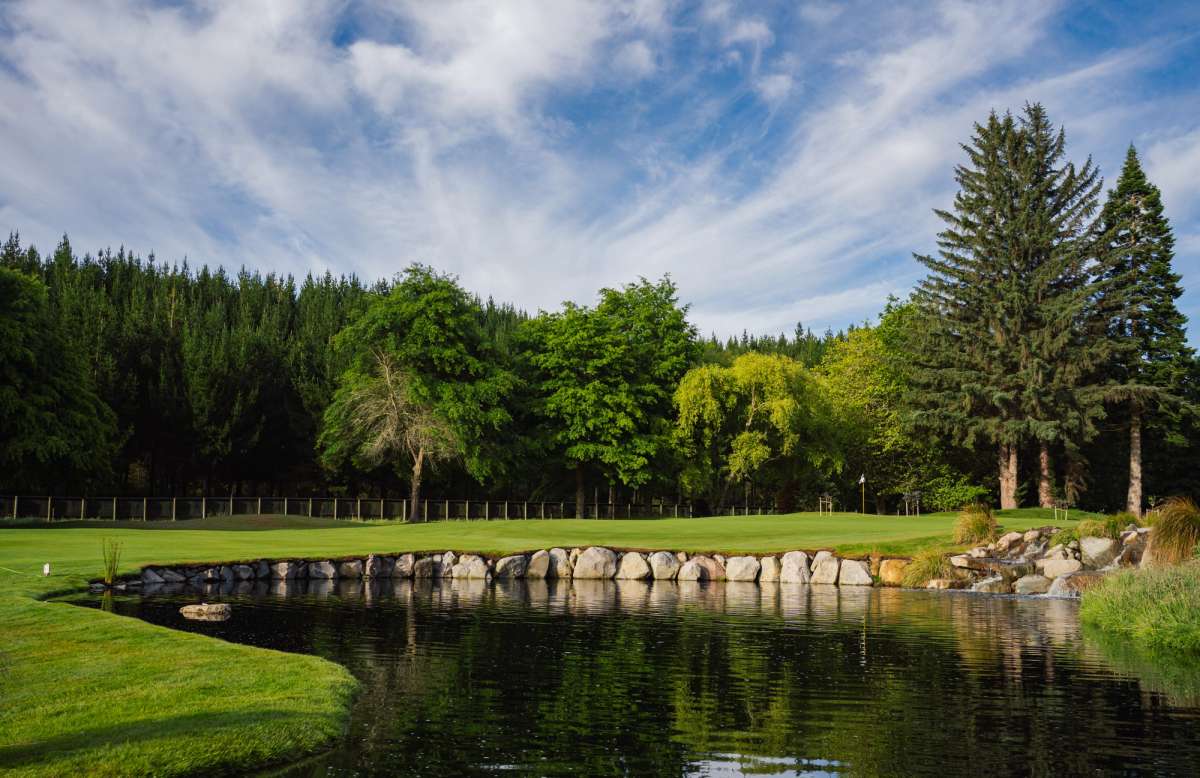
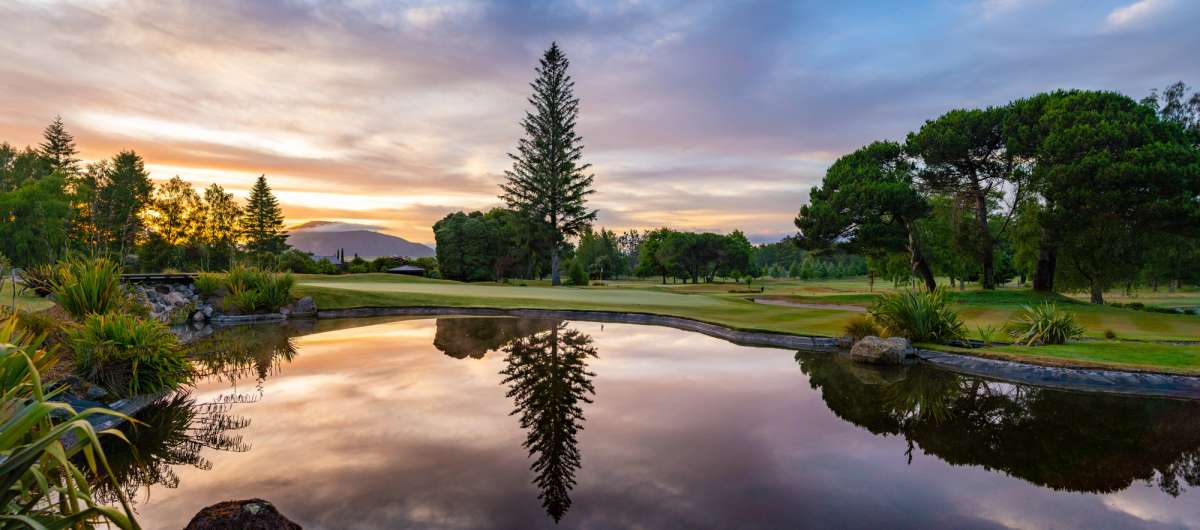
Avoid the creeks, gullies and the odd rogue borehole and you may card a decent score at Wairakei, which is an unforgettable and exciting golf course among the geysers.
Wairakei
527 Wairakei Drive, Thermal Explorer Highway, Waikato 3377, New Zealand
wairakeigolfcourse.co.nz+64 7374 8152Avoid the creeks, gullies and the odd rogue borehole and you may card a decent score at Wairakei, which is an unforgettable and exciting golf course among the geysers.
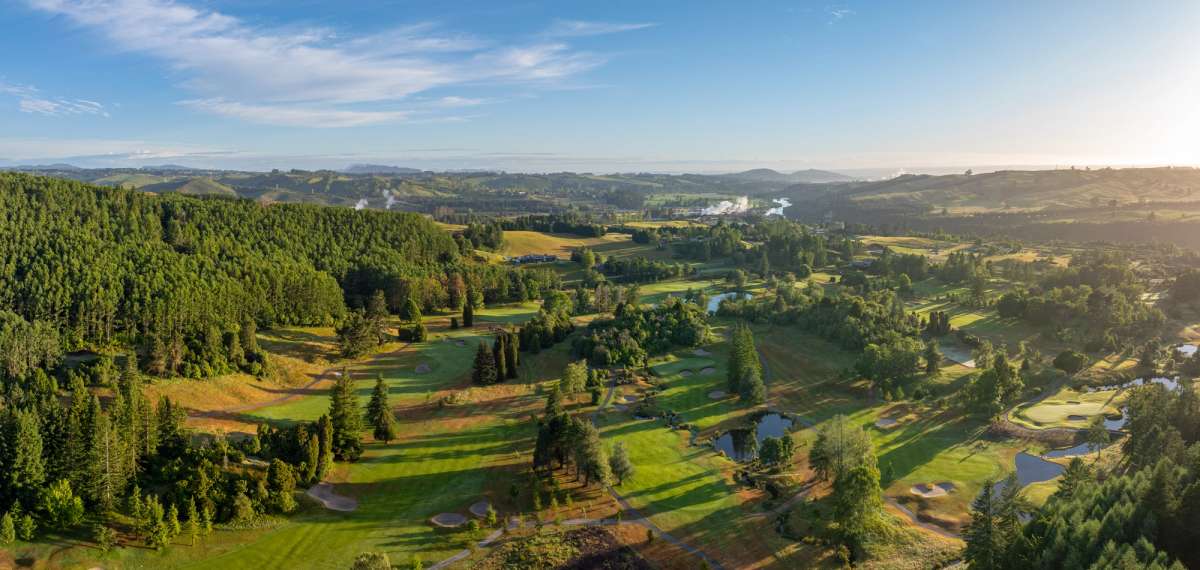
Wairakei Golf + Sanctuary is set in 450 acres of rolling terrain, bubbling with geothermal activity, near Lake Taupo on New Zealand’s beautiful North Island, midway between Auckland and Wellington. The course was built with government money as an additional tourist attraction for the holidaymakers who visit the neighbourhood of Lake Taupo and Rotorua.
Civil engineer, Commander John Harris, who was England’s leading and most travelled golf course architect of the time, laid out Wairakei International and it opened for play in 1970. “The construction was supervised by Michael Wolveridge, an Englishman whose keen appreciation of the subtleties of golf architecture had been enriched by a spell on the US professional tour,” wrote Peter Thomson in the New World Atlas of Golf.
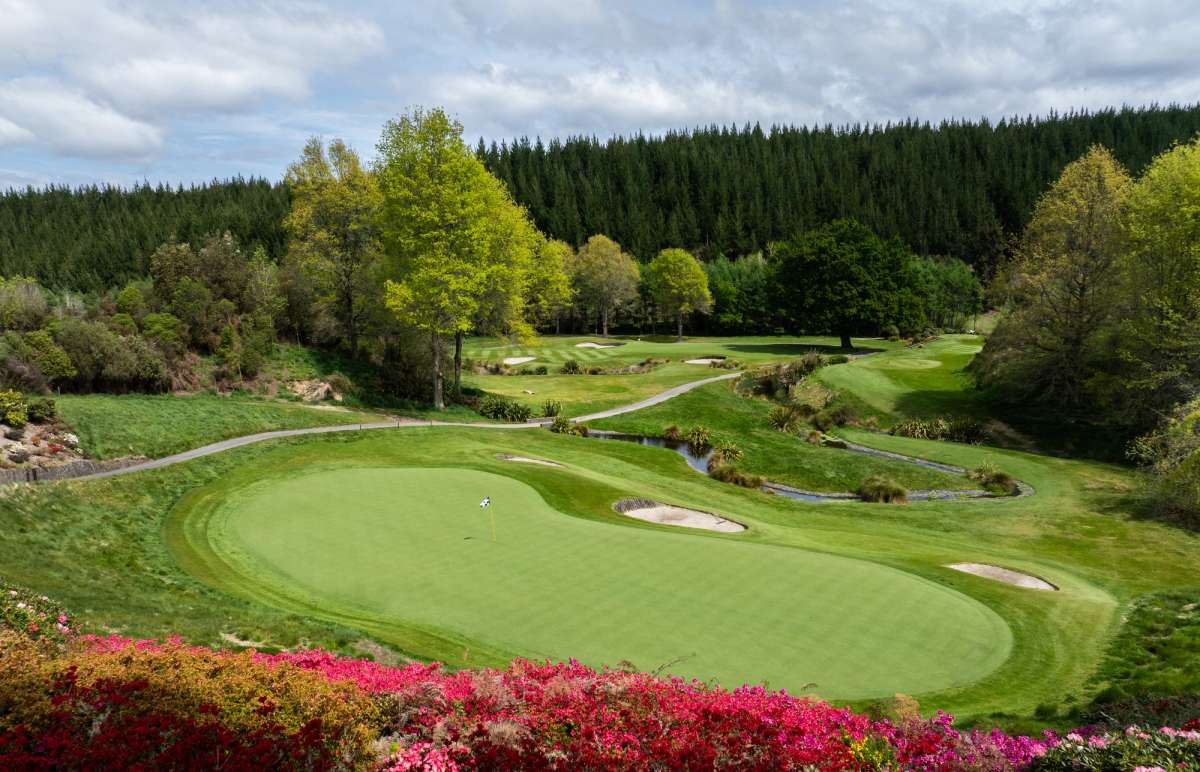
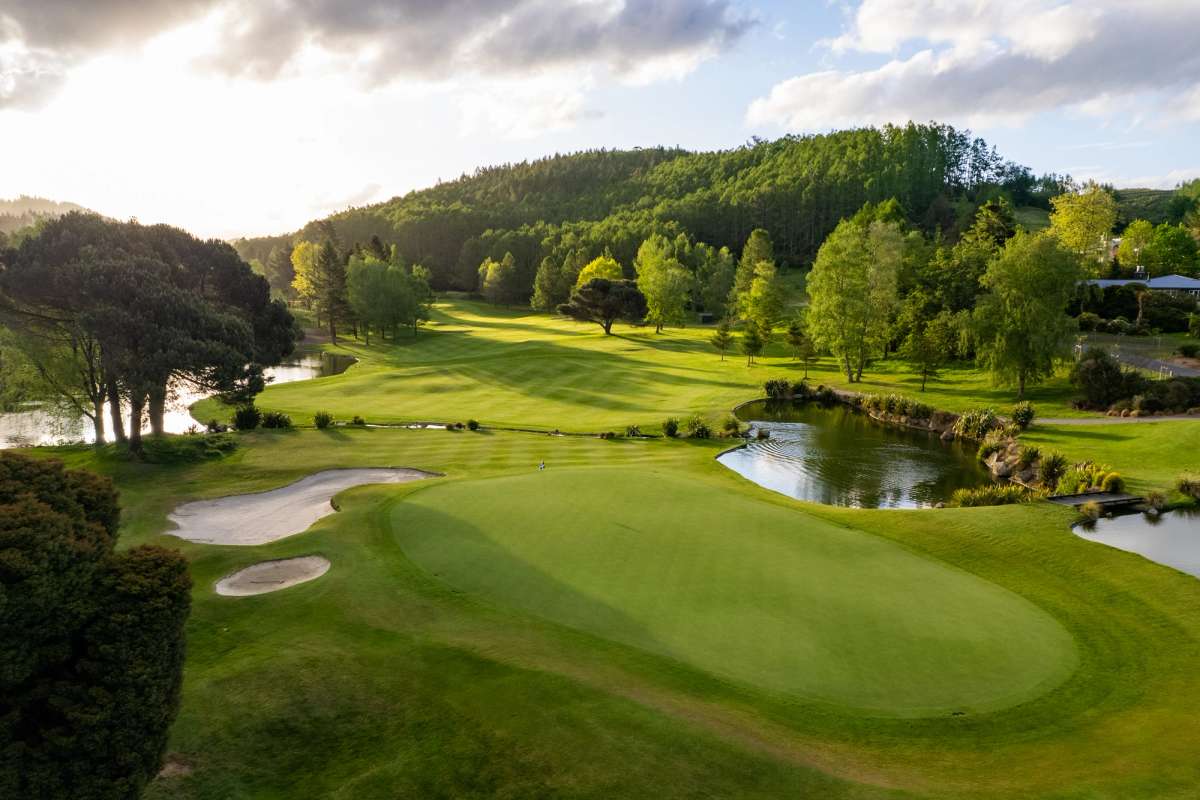
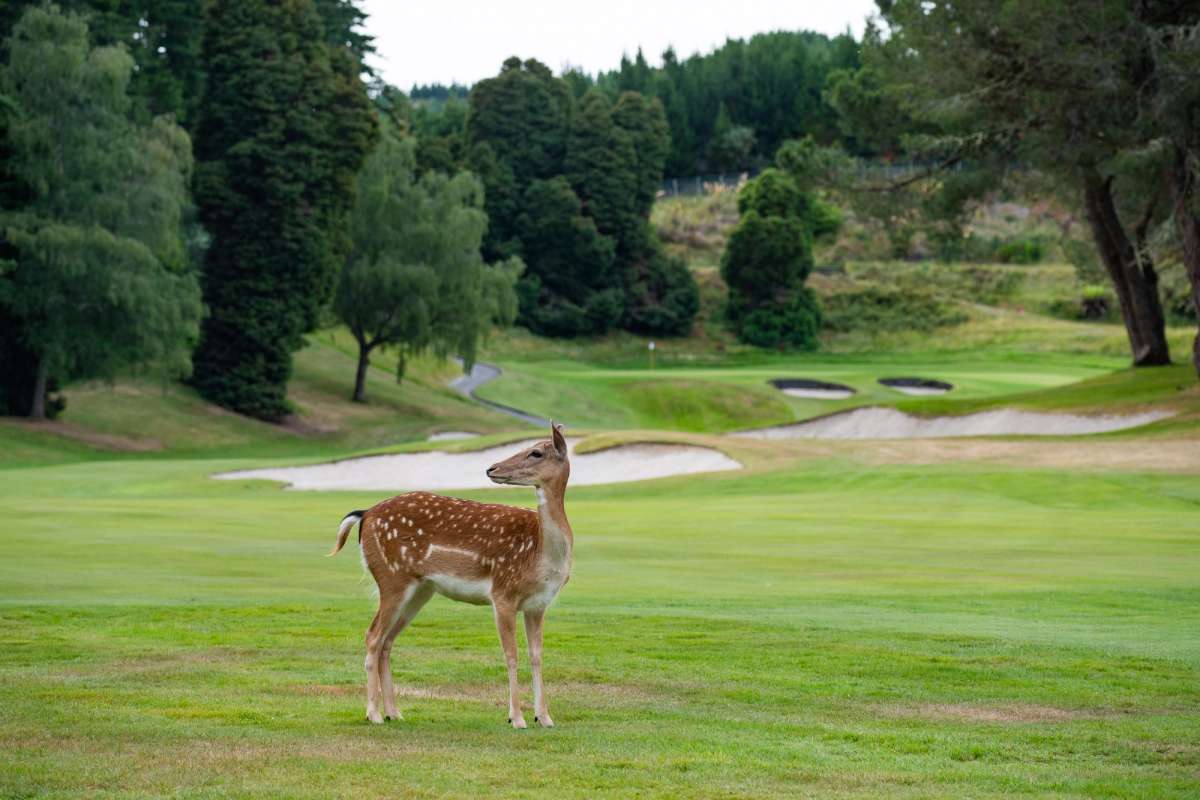
Wairakei is a brilliant test with strategic bunkering and a vast array of hidden subtleties, most notably in the terrain around the greens. Intricate slopes and cunning water hazards are a staple of this brilliant design. The only thing more impressive and unique than the course itself is its purpose-built ecology. A 5.5 km fence keeps out possums, stoats and other unwanted predators. Allowing kiwi, pheasants, and takahē to roam freely and deer to frolic in the bushes and occasionally on the fairways, the setting is first class.
Seamlessly woven into the natural contours of rolling countryside, the course has been crafted to meet the demands of world-class championship play while preserving its unique environment. Each of the 18 holes presents a rewarding challenge, framed by striking landscapes and rich native habitat.
The heart of Wairakei is a middle stretch of holes that demands precise golf. The 14th hole, a 599yd par-5 that climbs gradually uphill is aptly known as "The Rogue". Trouble left and right. Formerly, you had a towering pine to contend with for your second shot. This is now gone, but it doesn’t make the hole any less demanding. A good drive is a prerequisite here, and well-struck fairway metal for the longest of hitters will reach the two-tiered kidney-shaped green in two. Even once you’re safely aboard, a two-putt is certainly no guarantee. Par is a fine result.
Other standouts include the 11th and 12th, two short par-4s playing back-to-back. Tee up safely on the left of 11 to leave a wedge into a narrow green. On 12, even a solid drive leaves a tricky approach. If the pin is on the right, don’t bite off more than you can chew, as a back bunker is waiting. Position is everything. The design rewards a ball-striking player who can leave themselves in the best positions.
As you make your way around the course, you’re accompanied by the sounds of thriving birdlife, gentle streams, and cascading waterfalls — an immersive experience that goes far beyond the game itself. A truly unique golfing experience that cannot be missed.
The latest ranking of the Top 100 Golf Courses in the World serves as the ultimate global golf bucket list. Most members of our World Top 100 Panel are seasoned golfers, each playing 20-30 of these courses annually while travelling extensively over decades to form their opinions on others. We recognise that opinions vary—even among our panel members. Rankings are subjective, and there are undoubtedly 50 or more courses in the UK and USA alone that could easily fit onto this list. Links Golf Pilgrimages The rankings
California, United States
New Jersey, United States
Northern Ireland, United Kingdom
New York, United States
New York, United States
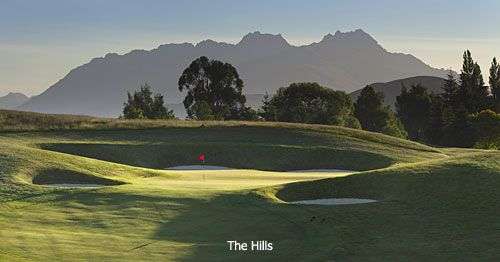
Scottish photographer tees it up Down Under Mark Alexander was commissioned by Golf Tourism New Zealand to shoot some of New Zealand’s top golf courses The recently formed Golf Tourism New Zealand (GTNZ) group has announced the completion of an exciting photography project that has incorporated some of the country’s best golf offerings including the host of this year’s New Zealand Open. Award-winning golf photographer Mark Alexander was commissioned by members of the group to shoot some of New Zealand’s top golf courses including The Hills. The assignment saw the Scottish photographer take in some of the finest tracks on both the North and South islands including New Zealand’s most established layouts. Shooting in December, Alexander visited four clubs including The Hills Golf Club outside of Queenstown; host to this year’s New Zealand Open, and Paraparaumu Beach Golf Club which is widely regarded as one of the best links courses in the southern hemisphere. The stunning inland courses of Wairakei and Manawatu were also captured by the photographer who is based at the Home of Golf. Ryan Brandeburg, executive director of GTNZ, was delighted Alexander could make the trip: “Part of our new golf initiative is to improve print and digital media,” he said. “The chance to offer the services of an internationally renowned photographer like Mark was a great opportunity. When we spoke to the golf courses, everyone saw the benefit of engaging Mark. With our location in the South Pacific, the frequency of a visiting golf photographer of Mark’s caliber is rare.” He continued: “Golf courses are living, breathing assets that constantly change. We jumped at the chance to utilise Mark’s skills to capture some of New Zealand’s best golf courses in the peak of our summer.” The commissioned shoots produced an extensive portfolio of landscape, portrait and panoramic images. Leo Barber, general manager of Paraparaumu Beach Golf Club, said he was thrilled with the results. “Mark has built up a reputation as one of the world’s leading golf course photographers and his work with links courses in particular impressed us, so we were delighted to have the opportunity to host Mark and have his lens bring our course alive with some superb photography.” The resulting images will be used by participating clubs to boost their marketing and promotional efforts both within New Zealand and internationally. Between 2008 and 2012, no fewer than 280,000 golf tourists visited New Zealand, but as Alexander noted, New Zealand isn’t a regular stop-off for travelling golfers – yet. “Photographing these beautiful golf courses was a great privilege,” he said. “I had never been to New Zealand before but the landscape, scenery and fantastic courses made for a memorable trip. It was extremely busy, but I fell in love with the place. Like Scotland, there is something for everyone and I am thrilled the courses that took part in the project are pleased with the final results. I hope my images attract golfers to play these internationally recognised courses as well as experience the best golf New Zealand has to offer.” Manawatu Golf Club, New Zealand’s oldest golf course, also commissioned Alexander. “When we looked through Mark’s previous work, we were really excited about having him photograph our course,” said Michael Williams, Manawatu’s general manager. “The photographs we have received didn’t disappoint and will be really helpful when we refresh our website and promote our club as a place to play for visitors.” Wairakei Golf & Sanctuary, located close to Lake Taupo, is also benefiting from Alexander’s photography. David Park, operations manager at the unique golf venue, says Alexander has produced a set of images that capture the essence of Wairakei. “We are extremely happy with the images Mark has supplied. He has taken shots from different angles and with different lighting from other photographers that we have used before. We found Mark easy to work with and very professional in everything he did for us.” Alexander, who is based in Fife but travels the world photographing golf courses, continues to be in high demand. Last year he became the first commissioned photographer to photograph Prestwick in its 162-year history and produced a set of three consecutive sell-out calendars for the St Andrews Links Trust, culminating in the 2015 special Open Championship edition. He is planning a return visit to New Zealand to carry out more work. To view Alexander’s work, visit www.markalexanderphotography.co.uk

Review of the Month April 2018 – The Kinloch Club What a difference a day makes, twenty-four little hours (miles)… I allow myself to borrow a (slightly rewritten) line from Dinah Washington’s immortal classic to illustrate that yesterday I played the lovely parkland layout of Wairakei, and the day after the neighbouring moon landscaped Kinloch Golf Club. Both courses are situated less than half an hour outside of the town of Taupo and equidistant from one another. Surrounding areas being fairly similar, the most striking difference really is the layout of the courses. And what a difference it is. Having played some 750 different courses around the world I have been searching my mind to find two neighbouring courses that present themselves so differently. I am talking differences in layout/design, playability and total experience. Whilst Wairakei is Nature's delight that goes beyond the golf experience itself, Kinloch is pure and raw golf at its best (or worst, some would probably say). I for one was on a high for most of the round as I love links golf and also unconventional designs. To be precise; Kinloch is linksy in that it is an inland course where shapes are totally man made, but very well done in my book. All along I had flashbacks to the Castle Course in St Andrews and to some degree to the Links Course at Fancourt, South Africa, both severely punitive courses. And this is a serious golf course. Unique, challenging, tricky, well bunkered, undulating fairways and greens, runoff areas, you name it and you will likely be spot on. Being a Jack Nicklaus Signature Course I can almost believe that Master Jack on one of his many (?) visits shall have uttered that ”this is one of my absolutely best designs anywhere”. It certainly is totally different to any of his courses that this writer has ever played. By Louis Review of the Month April 2018 selected by Editor-in-Chief, Keith Baxter – click to read more about The Kinloch Club.

New Zealand has quietly assembled one of the world's most compelling collections of golf courses. With five layouts ranked among the global top 100 and a golfing culture that prizes natural terrain over manufactured spectacle, the country punches well above its weight on the international stage. The updated rankings showcase remarkable stability at the top, whilst deeper exploration of both islands has unearthed hidden gems and confirmed the enduring quality of classic designs. These rankings represent the most comprehensive evaluation yet conducted, drawing on a dedicated panel of raters with extensive playing coverage across both the North and South Islands. The assessment prioritises architectural merit, strategic interest, and playing experience over resort amenities, reflecting an evolving appreciation for courses that work with their natural landscapes. The Top 50 Era Continues The updated rankings maintain the Top 50 national format established in recent years, representing the finest courses from a nation that boasts nearly 400 layouts serving approximately 500,000 golfers. Regional rankings have been expanded to include a North Island Top 40 and South Island Top 25, bringing attention to 65 unique courses across the country. Beyond the ranked courses, dozens more provide excellent golf experiences worth exploring. New Zealand's strength lies not in a handful of marquee names but in the breadth of quality across the two islands. Jump to the New Zealand Top 50 Ranking Jump to the New Zealand North Island Top 40 Ranking Jump to the New Zealand South Island Top 25 Ranking 2025 Top 50 At A Glance The Unchanged Elite The top five positions demonstrate unprecedented stability, with all five world-ranked courses maintaining their exact positions from 2024: Tara Iti (No change) - World #21 Paraparaumu Beach Golf Club (No change) - World #91 Te Arai Links (North) (No change) - World #92 Te Arai Links (South) (No change) - World #97 Cape Kidnappers (No change) - World #98 The Rising Stars Ten courses climbed five or more positions, led by dramatic ascents in both islands: Queenstown (Kelvin Heights) - Up 18 places (from #50 to #32) Ohope Beach - Up 12 places (from #33 to #21) Harewood - Up 12 places (from #47 to #35) Otago - Up 9 places (from #35 to #26) Mangawhai - Up 8 places (from #42 to #34) Hastings - Up 7 places (from #37 to #30) Waverley Golf Club - Up 5 places (from #17 to #12) Chisholm Links - Up 5 places (from #29 to #24) Waipu - Up 5 places (from #32 to #27) Poverty Bay - Up 5 places (from #41 to #36) The New Entries Six courses enter the New Zealand Top 50, with South Island venues dominating the newcomers: #37 Cromwell (South Island) #39 Roxburgh (South Island) #40 Nelson (South Island) #42 St Clair (South Island) #44 Invercargill (South Island) #48 Whakatane (North Island) Notable Movements Declines reflect the depth of competition, more playing depth from the panel, and applying updated criteria: Carrington - Down 24 places (from #23 to #47) Pegasus - Down 17 places (from #28 to #45) Millbrook Resort (Remarkables) - Down 16 places (from #22 to #38) Mount Maunganui - Down 14 places (from #36 to #50) Waitara - Down 7 places (from #34 to #41) Wairakei - Down 5 places (from #13 to #18) Best Golf Courses by Island The North Island maintains its numerical advantage with 33 courses (66%) in the Top 50, whilst the South Island contributes 17 layouts (34%). However, this breakdown masks the South Island's quality concentration, with Arrowtown, Jack's Point, and The Hills all positioned within the Top 11. North Island commands the elite tier with eight of the Top 10 courses, including all five world-ranked layouts. The island's strength spans from Tom Doak's masterpieces at Tara Iti and Te Arai to historic gems like Paraparaumu Beach. South Island excels in delivering authentic, terrain-driven golf experiences. The Queenstown region alone accounts for six ranked courses, whilst traditional club layouts in Dunedin, Christchurch, and throughout Central Otago provide compelling alternatives to resort golf. What the Rankings Tell Us The Elite Quintet Remains Untouchable The top five positions remain completely unchanged, although the panel is warming to newcomers at Te Arai. Tara Iti's dominance at number one appears unassailable, whilst the Te Arai courses have firmly established themselves in the conversation about New Zealand's finest layouts. Cape Kidnappers and Paraparaumu Beach occupy their rightful places as world-class destinations. This stability validates the quality assessment and suggests that New Zealand's elite tier has reached a natural equilibrium. Short of a major new development or significant renovation, these five courses will likely define the country's golfing reputation internationally for years to come. Tom Doak's Architectural Dominance American architect Tom Doak's influence on New Zealand golf cannot be overstated. His three courses occupy positions one, three, and five in the national rankings, all appearing in the World Top 100. Tara Iti represents his purest expression of links golf outside the British Isles, whilst Te Arai North has wowed all those who play it. Waverley's Journey from Hidden to Essential Waverley Golf Club's ascent tells one of the ranking's most compelling stories. "Discovered" by Doak's team during the Tara Iti construction and entering the rankings at #31 in 2017 as the "ultimate hidden gem," the course has steadily climbed to #12 in 2025. This progression reflects both growing appreciation for quirky, authentic layouts and the benefits of deeper playing coverage by knowledgeable raters. The secret is well and truly out now. Waverley represents a category of New Zealand golf often overlooked in favour of resort destinations—honest country courses that work with difficult terrain to create memorable golf. Its recognition validates the ranking methodology's emphasis on architectural merit over polish. Queenstown's Kelvin Heights Transformation The most dramatic movement in the 2025 rankings belongs to Queenstown Golf Club's Kelvin Heights course, which surged 18 places from #50 to #32. This isn't the product of recent renovation but rather reflects reassessment by raters who've played the course with fresh eyes and updated evaluation criteria. Kelvin Heights offers a different proposition than Queenstown's high-profile resort courses. The climb suggests growing appreciation for substance over spectacle. South Island Traditional Courses Gain Recognition The influx of five South Island new entries—Cromwell, Roxburgh, Nelson, St Clair, and Invercargill—marks a significant shift in ranking coverage. These aren't flashy resort developments but traditional club courses that have served their communities for generations. Their inclusion reflects the panel's deeper exploration of both islands and willingness to recognise quality regardless of profile. Otago's nine-place leap to #26 similarly confirms that classic parkland designs remain relevant when they offer genuine strategic interest. The course in Dunedin represents a style of golf largely abandoned in favour of links-inspired layouts, yet its challenging terrain and excellent conditioning demonstrate that multiple architectural philosophies can coexist at the top of New Zealand golf. Links Revival in Remote Locations Ohope Beach's 12-place surge to #21 highlights renewed appreciation for raw links experiences in isolated locations. Similarly, Kaitaia, Waipu, and Poverty Bay all rank higher. These venues offer the kind of honest, wind-swept golf increasingly valued by architecture enthusiasts. The Eastern Bay of Plenty, Northland's far north, and the East Cape now feature prominently in trip-planning conversations. Golfers willing to venture beyond Auckland and Queenstown are rewarded with courses that feel untouched by modern trends, where fescue fairways, natural contours, and minimal irrigation create playing experiences closer to Scottish links than manicured resort tracks. A Decade and a Half of Evolution 2010: The Inaugural Rankings The first New Zealand Top 30 in August 2010 established Cape Kidnappers and Kauri Cliffs as the "Big Two," with both courses having transformed the country's international reputation. The rankings also recognised three layouts challenging their dominance: The Kinloch Club (reportedly Jack Nicklaus's favourite of his own designs), The Hills (with its dramatic Canyon 17th hole), and Jack's Point (John Darby's naturalistic masterpiece). Paraparaumu Beach maintained its position as the country's premier links, a distinction it had held since opening in 1949. The course designed by Alex Russell, one-time partner of Alister MacKenzie, represented authentic links golf in the Antipodes long before Tom Doak arrived. 2012: First Expansion The rankings grew to a Top 40, representing approximately 10% of New Zealand's courses. Cape Kidnappers claimed the top spot by the slimmest margin over Kauri Cliffs, whilst Paraparaumu Beach returned to the Top 3 as architects and international publications weighted links courses more heavily in their assessments. Oreti Sands at Southland Golf Club climbed six places to #15 following Greg Turner and Scott Macpherson's redesign, the first of many successful renovations the duo would complete across both islands. Queenstown emerged as a destination powerhouse with five courses in the Top 27. 2013: Continued Growth Expansion to a Top 50 brought ten new entries, including Napier, Cromwell, and Harewood. Pegasus made the rankings' biggest single-year leap, surging from #38 to #21. More significantly, Tom Doak received approval to build Tara Iti on coastal land near Mangawhai, setting in motion the project that would eventually claim the top position. Cape Kidnappers retained its number one ranking for a third consecutive year, confirming its status as New Zealand's benchmark layout. 2015: Renovation Wave Begins The first rankings without new entries saw stability at the top but significant movement further down as Turner and Macpherson's renovation work gained recognition. Royal Wellington burst into the Top 10 at #9 following the duo's complete redesign, featuring trademark undulating greens and stunning new holes built around an existing stream. Waipu and Kaitaia climbed as raw links courses gained favour, whilst anticipation built for Tara Iti's imminent opening. Cape Kidnappers held the summit for a fifth year. 2017: The Tom Doak Revolution Tara Iti entered at #1, immediately dethroning Cape Kidnappers and signalling a new era for New Zealand golf. The course joined the World Top 100 in its debut year, validating the immense expectations that had accompanied construction. Five new entries included two more jumping straight into the Top 10: Wainui at #9 (replacing the former Peninsula Golf Club) and Windross Farm at #23 (Brett Thomson and Phil Tataurangi's design for the relocated Manukau Golf Club). Waverley debuted at #31 as the "ultimate hidden gem," discovered by Doak's construction team. Regional rankings expanded to a North Island Top 40 and South Island Top 20, broadening coverage significantly. 2019: Consolidation and Recognition Tara Iti confirmed its dominance whilst Paraparaumu Beach climbed to #3, displacing Kauri Cliffs to #5. The top five took shape with Te Arai courses yet to debut. Arrowtown made a significant four-place climb to #7, earning praise in The Confidential Guide to Golf Courses for its charm and quirky appeal. Waverley surged 15 places to #16 as word spread about its honest, natural golf. Marton Golf Club entered at #36, whilst the closure of Oreti Sands at Southland eliminated one of the country's most admired links layouts. 2021: The COVID Effect and Te Arai's Arrival Despite international travel restrictions, golf thrived domestically with rounds played up more than 25% in late 2020. The rankings showed nine Top 10 non-movers, suggesting stability in the elite tier. Royal Auckland and Grange's new 27-hole Nicklaus Design layout entered at #10, with the Grange and Tamaki nines forming the premier 18-hole combination. Construction of Te Arai's South course (Coore & Crenshaw) and North course (Tom Doak) promised to add two more world-class layouts within walking distance of Tara Iti. 2024: The Te Arai Trinity Te Arai's courses debuted at #2 (North) and #3 (South), creating an unprecedented concentration of world-ranked golf within 15 kilometres. The three layouts offered complementary experiences: Tara Iti's cerebral links golf, Te Arai North's dramatic journey from coast to forest and back, and Te Arai South's flowing Coore & Crenshaw design. Thirteen new entries joined the expanded Top 60 national rankings. Millbrook's Coronet course entered at #12, Tieke (the redesigned Lochiel) at #16, and The Farm at The Hills (Darius Oliver's par-3 course) at #40. Gulf Harbour closed permanently, whilst Ohope Beach began its ascent with a 12-place climb. Looking Ahead New Zealand golf enters a period of consolidation after the development boom of 2000-2024. Additional major projects are currently underway, suggesting the next ranking cycle will focus on refinement and more debut entries. International travel has fully recovered post-COVID, bringing renewed attention to New Zealand golf from overseas visitors. This exposure could accelerate improvements at courses seeking to attract destination golfers, though hopefully without sacrificing the authentic character that makes New Zealand golf distinctive. The complete New Zealand rankings, including regional listings for the North and South Islands, can be found on the Top 100 Golf Courses website