England, United Kingdom
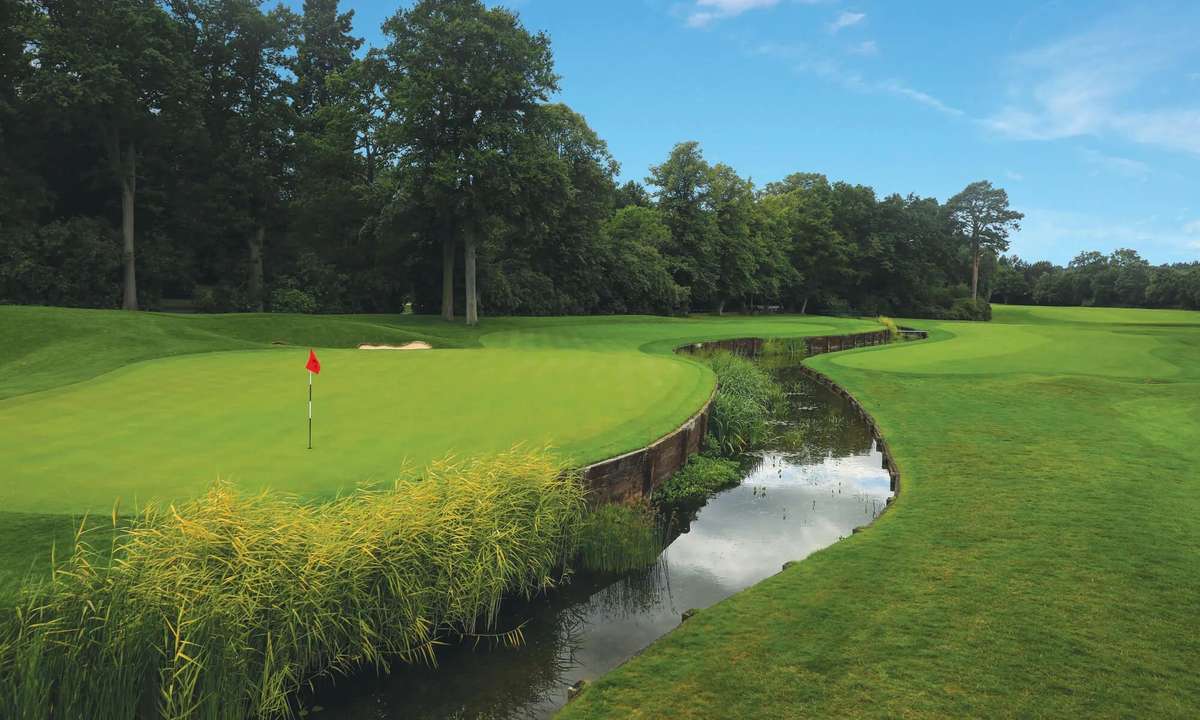
The West course at the Wentworth Club is Surrey's most famous golf course. It closed for its latest makeover in 2017 and reopened prior to the 2018 BMW PGA Championship.
Overall rating

4.5
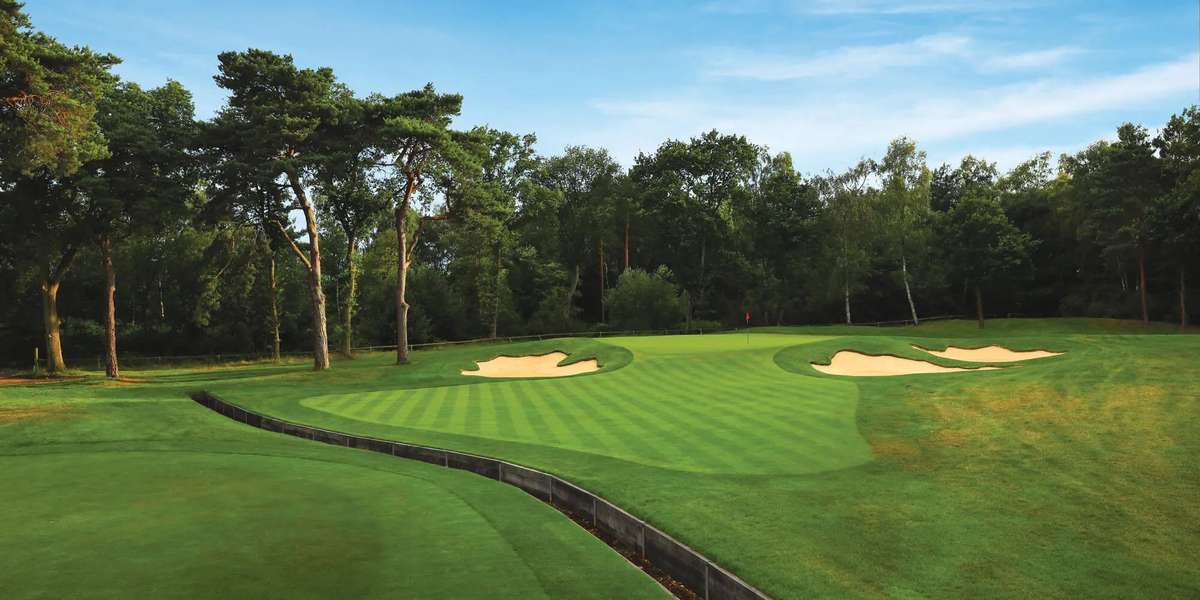
The West course at the Wentworth Club is Surrey's most famous golf course. It closed for its latest makeover in 2017 and reopened prior to the 2018 BMW PGA Championship.
Wentworth Club (West)
The latest ranking of the Top 100 Golf Courses in the World serves as the ultimate global golf bucket list. Most members of our World Top 100 Panel are seasoned golfers, each playing 20-30 of these courses annually while travelling extensively over decades to form their opinions on others. We recognise that opinions vary—even among our panel members. Rankings are subjective, and there are undoubtedly 50 or more courses in the UK and USA alone that could easily fit onto this list. Links Golf Pilgrimages The rankings
California, United States
New Jersey, United States
Northern Ireland, United Kingdom
New York, United States
New York, United States
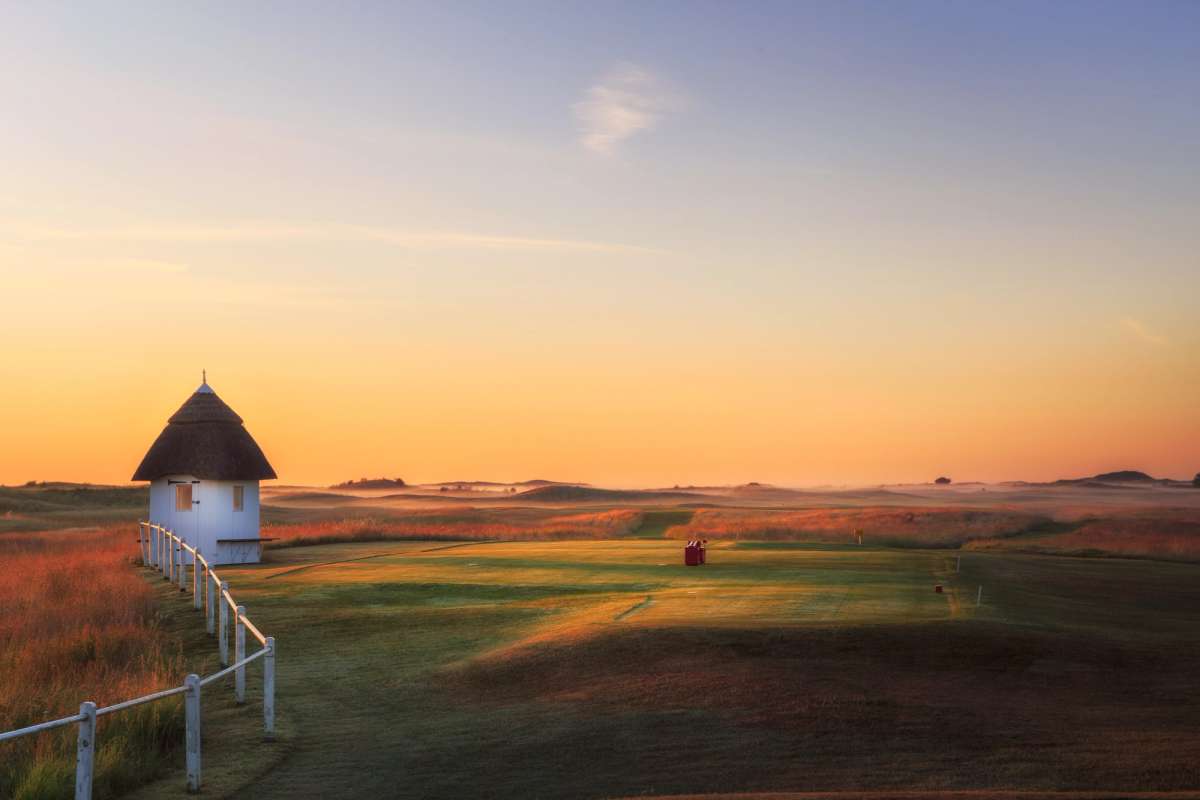
England is home to some of the best golf courses in the world, and its five highest-ranked layouts can be played without being a member. From a 15-time Open venue on the Kent coast to some of the finest heathland golf in Surrey and Berkshire, plus a spectacular links course in Cornwall, these are the five highest-ranked courses in England that welcome visiting golfers. Royal St. George’s Golf Club (Kent) World Ranking: 19th | England ranking: 1st | Green fee: £430 Royal St George’s offers the chance to play one of England’s most historic and challenging links courses. Founded in 1887, it was the first English course to host the Open and has staged the championship 15 times, including the most recent edition in 2021. Routed through towering dunes in a loose figure of eight, Royal St George’s has undulating fairways, uneven lies and plenty of elevation changes that can make even seemingly straightforward shots difficult. The fourth hole is particularly memorable, with a huge bunker carved into a towering dune guarding the fairway. Despite its reputation as a demanding championship test, the course is as enjoyable to explore as it is difficult to score on. Wildflowers and dune grasses line the fairways, while views stretch across Pegwell Bay towards the white cliffs beyond. Add in distinctive features such as the thatched shelters and St George’s flags, and there is plenty to keep you entertained between the inevitable moments of frustration. Sunningdale Golf Club - Old Course (Surrey) World Ranking: 22nd | England ranking: 2nd | Green fee: £485 The Old course at Sunningdale is widely regarded as one of the most beautiful inland courses in the British Isles. Opened in 1901 by Willie Park Jr, it was one of the first great courses to emerge from the Surrey and Berkshire sand-belt, with Harry Colt later reshaping the layout and giving it the intimate, tree-lined character it has today. Pine, birch, oak and heather frame the fairways, while the firm heathland turf makes Sunningdale a joy to walk and play. The course has hosted plenty of memorable golf, too, including Bobby Jones’ remarkable 66 in Open qualifying in 1926 and Nick Faldo’s 62 at the 1986 European Open. The 10th is a particular highlight, with its elevated tee offering a spectacular view before the halfway hut provides one of golf’s more welcome rewards. The 15th, a 226-yard par three, is another standout. For golfers visiting England, Sunningdale Old offers a classic heathland experience in one of the country's finest golfing regions. Sunningdale Golf Club - New Course (Surrey) World Ranking: 41st | England ranking: 3rd | Green fee: £485 The New course at Sunningdale provides a rather different experience to its famous older sibling. Opened in 1923 and designed by Harry Colt, it is more open and rugged than the Old, with elevated tees, heathery terrain and long carries placing a greater emphasis on driving. At 6,700 yards and par 70, the New is no pushover, with narrow fairways and plenty of undulation making it a particularly demanding test from the back tees. Even the professionals have struggled to make it look easy: Jack Nicklaus once held the course record with a 67 before Graeme Storm carded a remarkable 62 during Open qualifying in 2009. The course has also benefited from an ongoing tree-management programme, allowing more heather to return and restoring views across Chobham Common. The fifth, a picturesque par three played across the heath, is one of the highlights. The result is a course that rewards good driving without becoming a purely distance-based test, with the heathland setting providing plenty of visual interest along the way. St Enodoc Golf Club - Church Course (Cornwall) World Ranking: 49th | England ranking: 4th | Green fee: £190 St Enodoc is unlike almost any other links course in England. Overlooking the Camel Estuary in Rock, with views across to Padstow, the Church Course takes its name from the 13th-century church that sits beside the 10th green. Remarkably, the building was completely buried by sand in the 19th century before being excavated in 1863. Founded in 1891 and redesigned by James Braid in 1907, St Enodoc is defined by its towering dunes and constantly changing terrain, where no two holes feel quite the same. The sixth is the course's signature hole, demanding two blind shots over the towering 'Himalayas' dune to reach the hidden green. The 10th, played across a natural valley to a narrow fairway below, is another memorable challenge. If your ball strays towards the churchyard, you'll also find the grave of Poet Laureate John Betjeman, whose poem Seaside Golf was inspired by the course. The combination of huge dunes, unusual holes and views across the Camel Estuary makes St Enodoc a particularly distinctive addition to any English golf trip. Swinley Forest Golf Club (Berkshire) World Ranking: 52nd | England ranking: 5th Swinley Forest offers a quieter, more understated version of heathland golf on the Surrey and Berkshire sand-belt. Set among mature pines and heather, it has a wonderfully quiet atmosphere and an old-fashioned character that is increasingly difficult to find. The firm, fast-running fairways and purple heather in summer give it all the hallmarks of classic heathland golf. Designed by Harry Colt and opened in 1909, Swinley measures around 6,400 yards and plays to a par of 69. The short holes are particularly strong, with a varied collection of one-shotters that require careful club selection. Around the greens, false fronts, run-offs and subtle slopes provide plenty of opportunities for a good round to unravel. For much of its history, Swinley was an intensely private club where visitors were few and far between. It now welcomes green-fee golfers, although the club retains much of its distinctive character. The result is a course that feels removed from the modern world, with little of the glamour associated with some of its better-known neighbours. For golfers who enjoy traditional heathland golf, that simplicity is a large part of Swinley's appeal. Green fees quoted are summer 2027 rates where available.
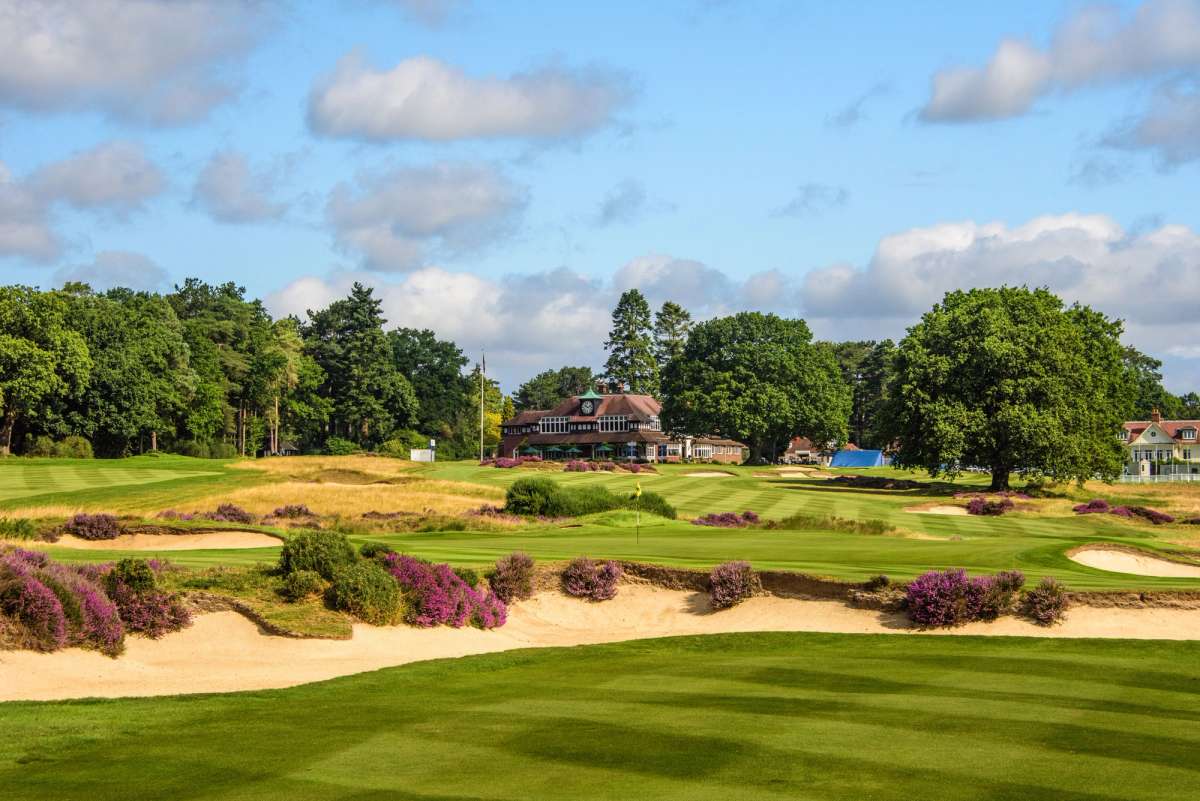
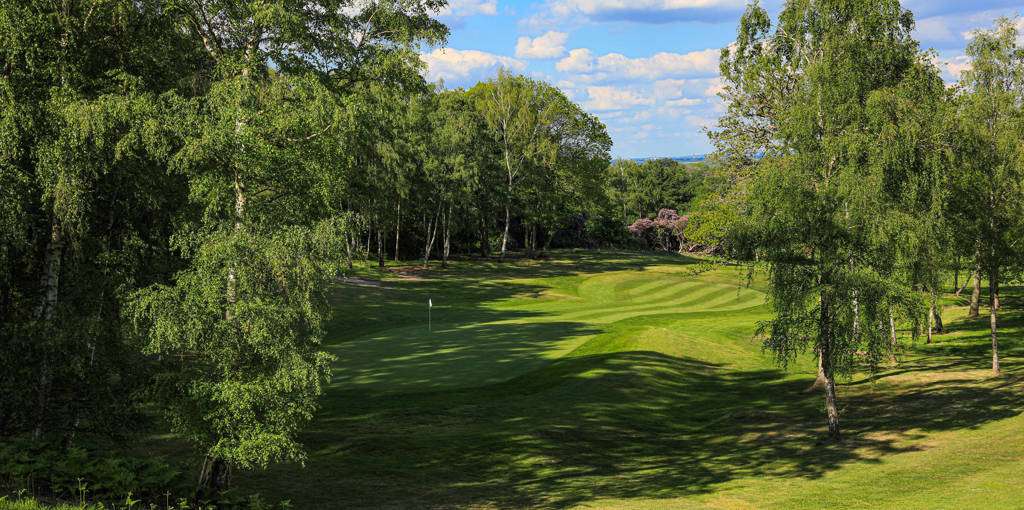
Hindhead Golf Club, Hindhead, Surrey, England Click any of the large images to return to the main Hindhead page All photographs courtesy of Hindhead Golf Club 1st hole 2nd hole 6th hole 7th hole 9th hole 10th hole 18th green
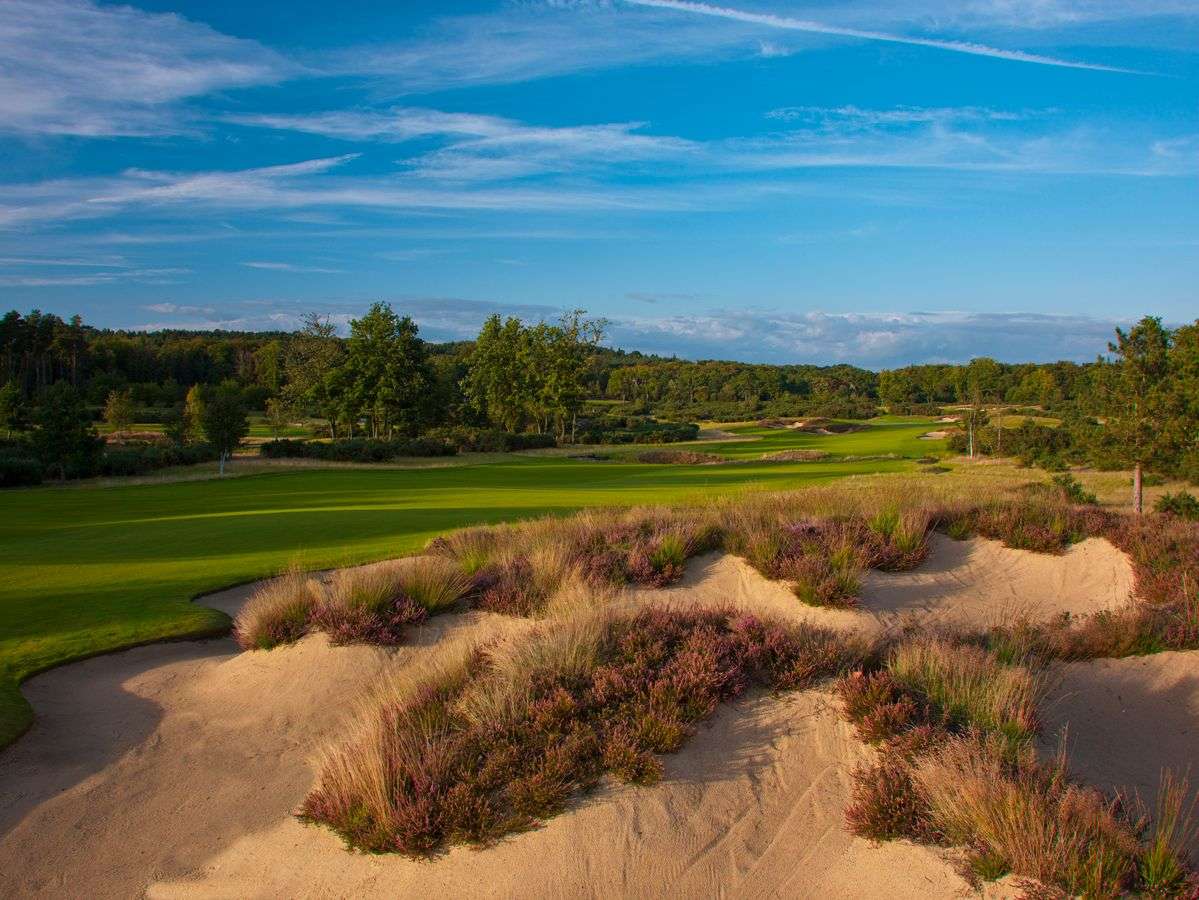
Camberley Heath Golf Club, Camberley, Surrey, England Click any of the large images to return to the main Camberley Heath page All photographs courtesy of Camberley Heath Golf Club 1st fairway 2nd tee 2nd green 3rd tee 4th tee 7th tee 11th tee 16th 18th tee
The West course at the Wentworth Club is the most famous of the Surrey heath and heather courses. The club is also the most televised in Britain, once hosting three professional tournaments every year (World Matchplay, PGA and the Seniors Masters), but now only the PGA Championship is staged annually at Wentworth. The West course was also the venue for the fiercely contested 1953 Ryder Cup, resulting in a single point American victory 6½ 5½.
It must have been an absolute delight for Harry Colt when he was asked to design the West course, which opened for play in 1926. After all, he was already familiar with this landscape, having designed the East Course (founded two years earlier).
The West is a relative youngster in the scheme of things. Many of Surrey’s famous sand-belt courses were established around the turn of the 19th century. Wentworth was also one of the first golf course developments to feature fairway-side houses, quite a number of which are owned by well-known celebrities. It’s a sort of up-market 1920s golf and country club complex.
Bernard Darwin refers to the West Course as the Tiger Course in his book, Golf Between Two Wars. He writes: “The course is intended to test that rapacious animal to the full. It is a little hard to assign the Wentworth country as a whole to any precise class. There is heather, and there are trees, and yet it is not quite of the same nature as its near neighbour, Sunningdale. It is set in park-like surroundings, and yet it is certainly not what is usually called a park course. It is a cross between the two, although the Tiger Course has about the least of the park and most of the heathery character”.
At the start of the Second World War, the Army requisitioned the clubhouse and labyrinths of underground bunkers were built. Deep below the famous clubhouse lies a secret wartime HQ. It was the Second World War that gave rise to the other name for the West Course – “Burma Road”. The course was allowed to grow wild because it was feared that enemy aircraft might land on the fairways. Towards the end of the war, German prisoners were brought in from a nearby internment camp to clear the course. One of the officers overseeing the clearance operation reputedly said: “Let this be their Burma Road”.
There are many memorable holes on the West course. The 2nd is a charming, exacting short 155-yard par three; a huge sentry oak stands between two bunkers guarding the right-hand side of the plateau green, the tee is level with the green, but the tee shot must carry across a valley to find the putting surface, don’t be short. Next, we come to the 3rd, a brutal, uprising 448-yard par four; avoid the bunkers on the right-hand side of the fairway, positioned 250 yards from the tee. Otherwise any chance of reaching the green in two has gone. A crisp accurate long iron or a fairway wood will reach the huge, 37-yard deep, three-tiered green that is protected by a bunker to the left and a bunker to the right; three-putting is commonplace. The 13th is yet another of the West’s long par fours (par five for the ladies). The hole sweeps around to the left, the green is invisible from the tee; the obvious line for the tee shot is down the right-hand side of the fairway, but here lies a cleverly located bunker. A good drive down the right of the fairway will leave a tough approach to a subtly contoured green that is protected by two bunkers to the left and two to the right. A par here will definitely feel as good as a birdie.
The last hole we'll mention is the famous bunkerless 17th. It’s a huge 566-yard par five that seemingly sweeps infinitely to the left – from the narrow tee there are tall trees on both sides, creating a tunnelling effect. A footpath dissects the hole some 200 yards away. The ball must be struck down the right-hand side of the fairway – anything left will be blocked out by trees or, worse still, out-of-bounds. Only the longest hitters should take the strategic line down the left side of the fairway, a solid 300-yard swish will make it to the corner of the dogleg. The approach shot is played blindly over a rise, aim for the large oak in the distance, but be aware that everything slopes onto the green and then everything seemingly slithers off again.
When you step onto the first tee of the West course, you will feel an overwhelming sense of familiarity. It is definitely a place most people would be more than happy to call home and play the monthly medal here for the rest of their lives. The holes weave their way through sprinklings of heather and across gently undulating terrain with mature trees lining each and every fairway. This is a truly classy golf course and it's a tough one too, especially after Ernie Els gave the West a new set of teeth. It now measures more than 7,300 yards from the tips and with many new bunkers and some new tiger tees, the Burma Road is now a serious 21st century challenge.
The West course closed to visitors for twelve months from 1st June 2009 for an extensive £6.5m renovation programme. Ernie Els was in charge of the changes which included 18 new USGA specification greens, new bunkers and a new canal-like stream, which protects the green on the famous closing hole. The new-look Burma Road received mainly positive comments from the pros at the 2010 BMW PGA Championship, but Paul Casey argued that the changes had stripped the West course of its character.
The West came in for further criticism during the 2011 BMW PGA Championship. Ian Poulter joined forces with Paul Casey stating, “I don't like this golf course. Period. End of story.” Poulter went on to say, “Some of the fun of the last few holes has been taken away.” Wentworth’s former owner, Richard Caring, stated after the 2010 event that he had not quite got it right first time. Caring admitted, “the 18th was a dream I had, I wanted to give the spectators a bit of excitement, a bit of theatre. We might have gone slightly too far because it’s proven to be quite difficult.”
Ernie Els was against the changes to the 18th, and the green was lowered for the 2011 event with the depth of the putting surface extended to invite second shots. However, the 18th still proved to be too difficult for most pros and the vast majority opted to play the home hole as a three-shotter.
The 2011 PGA Championship took its toll on most of the field but the play-off was all set to be a thrilling affair featuring World No.1 Lee Westwood and World No.2 Luke Donald pitching their wits in a sudden death head-to-head on the 18th. Neither player opted to go for the green in two and both players had similar pitches into the green. Donald judged his pitch and spin to perfection but Westwood’s pitch spun off the green into the new canal. The play-off turned into a flop rather than a thriller. Donald not only claimed the PGA Championship title but also knocked Westwood off the World Number One spot in the process.
The West course closed immediately after the 2016 PGA Championship for yet another major redevelopment. Ernie Els Design, in conjunction with European Golf Design, were commissioned to handle the renovations, which included the redesign of five greens, the installation of sub-air systems on every green (the first of its kind in England) and a reduction in the number of bunkers. The project was completed prior to the 2017 PGA Championship.
Despite numerous multi-million pound renovations over the last decade, the West course has continually fallen from favour in the golf course rankings. Will the latest iteration arrest the decline?