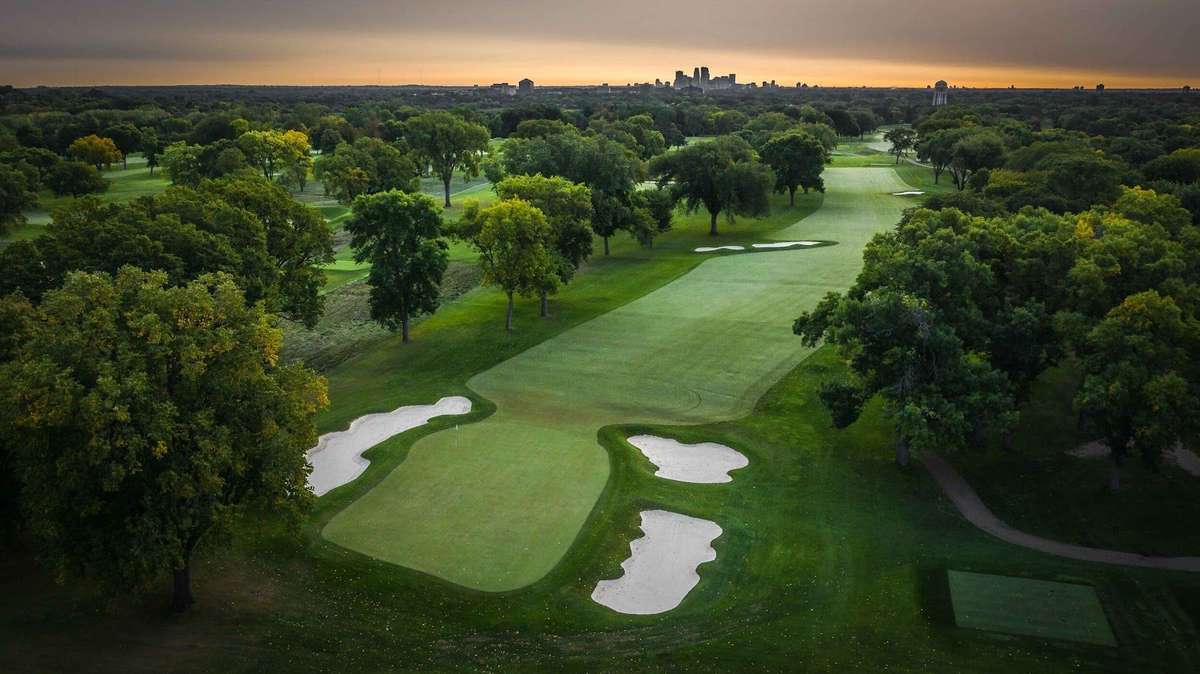
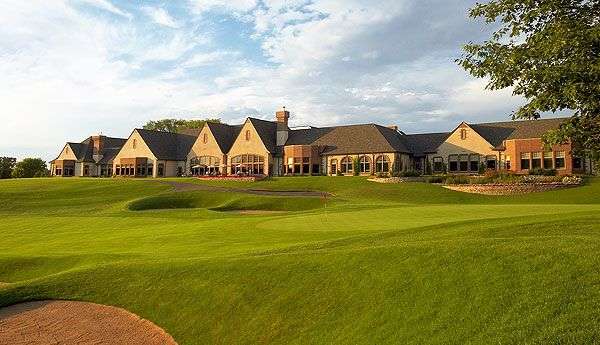
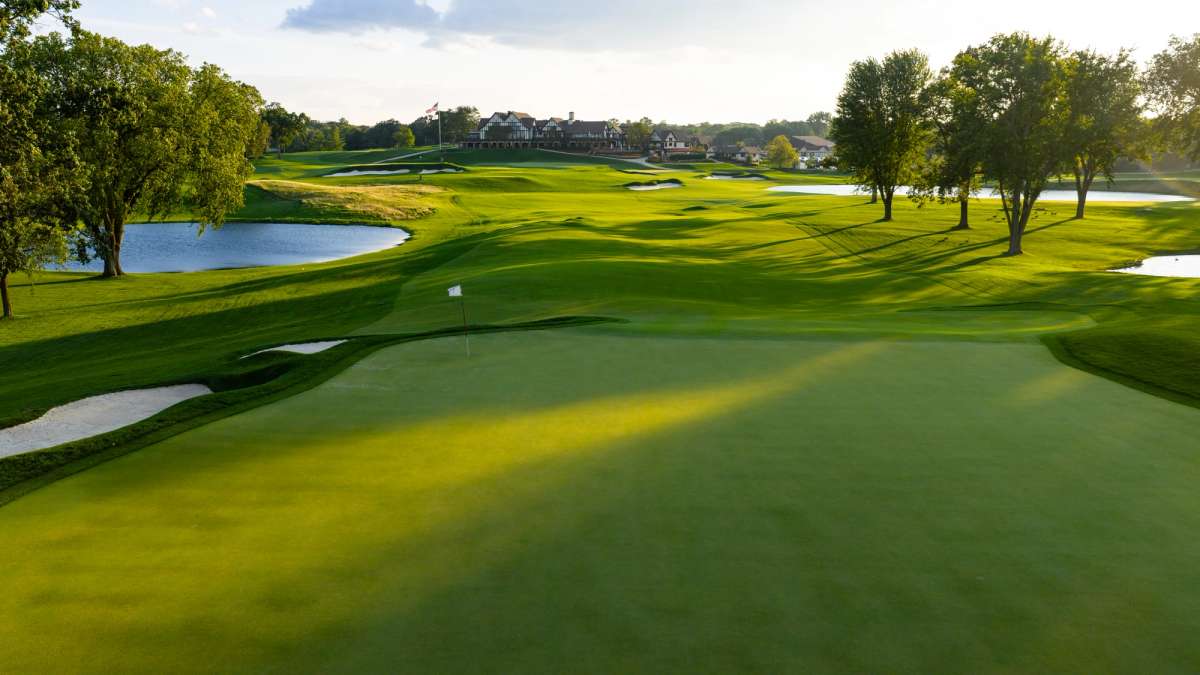
Wedged between two main highways on the western outskirts of Minneapolis, the course at Woodhill Country Club is a strong Donald Ross layout that dates back to 1917.
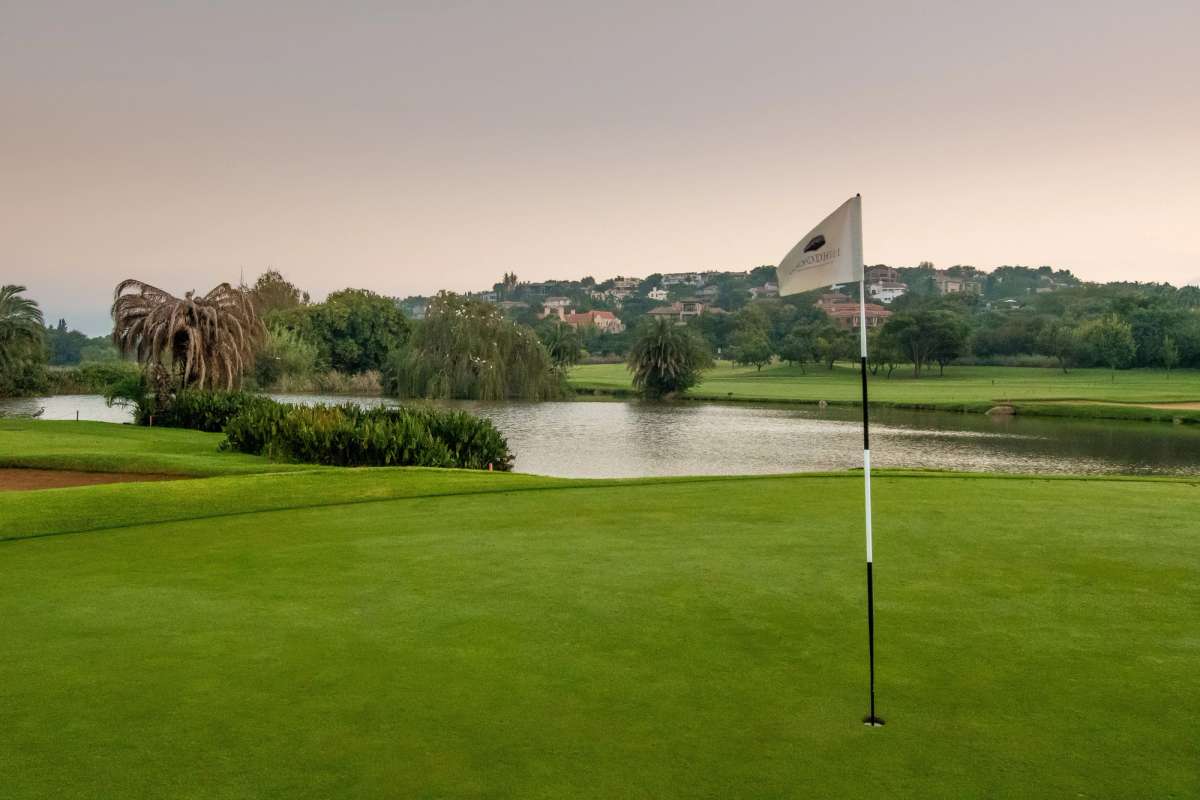
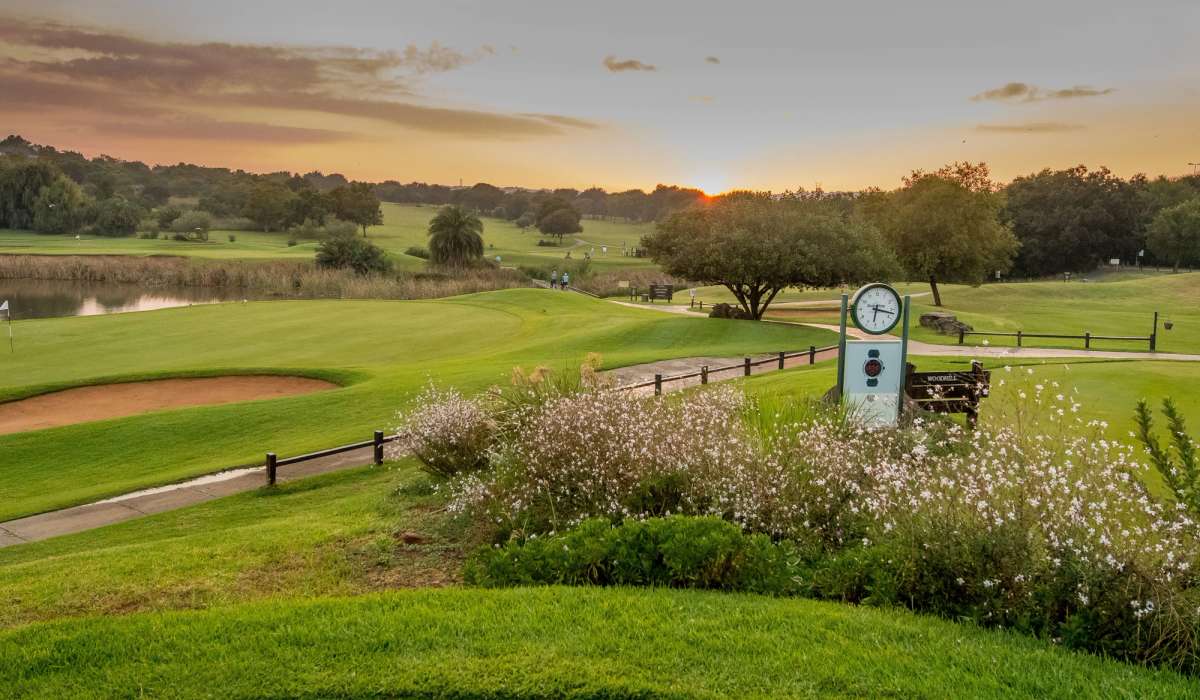
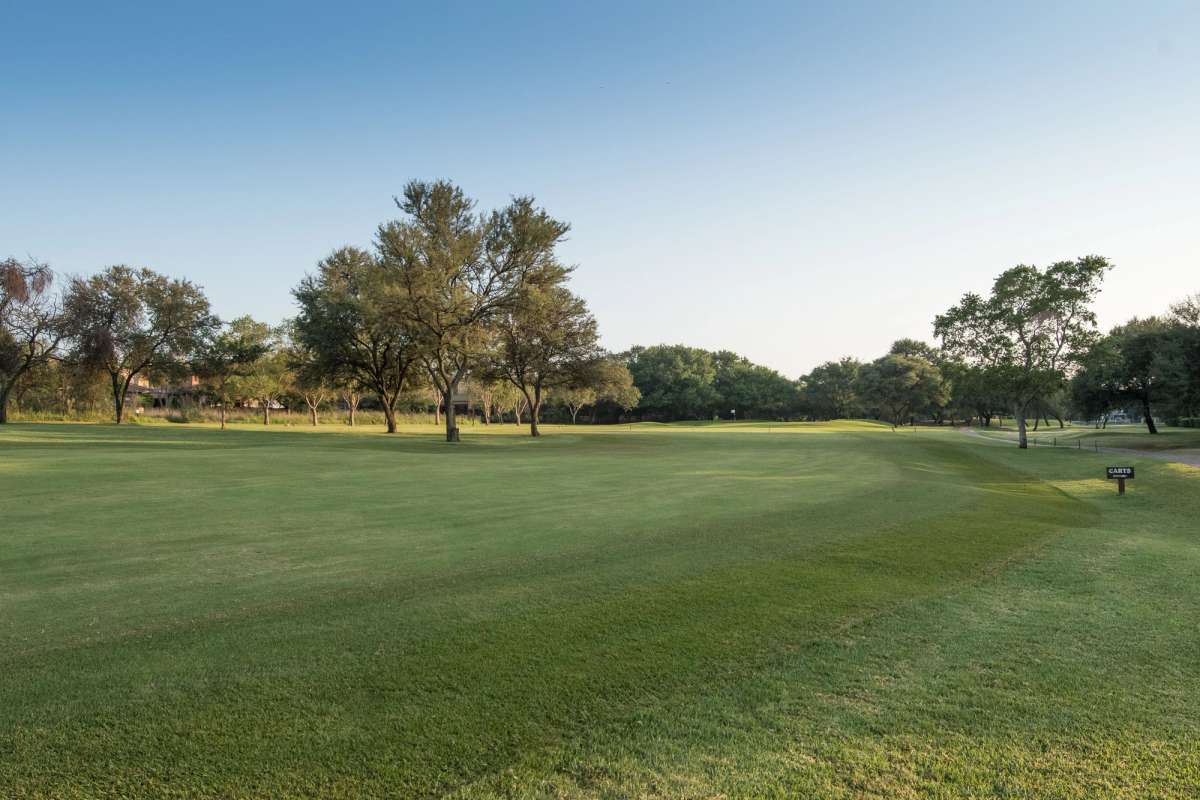
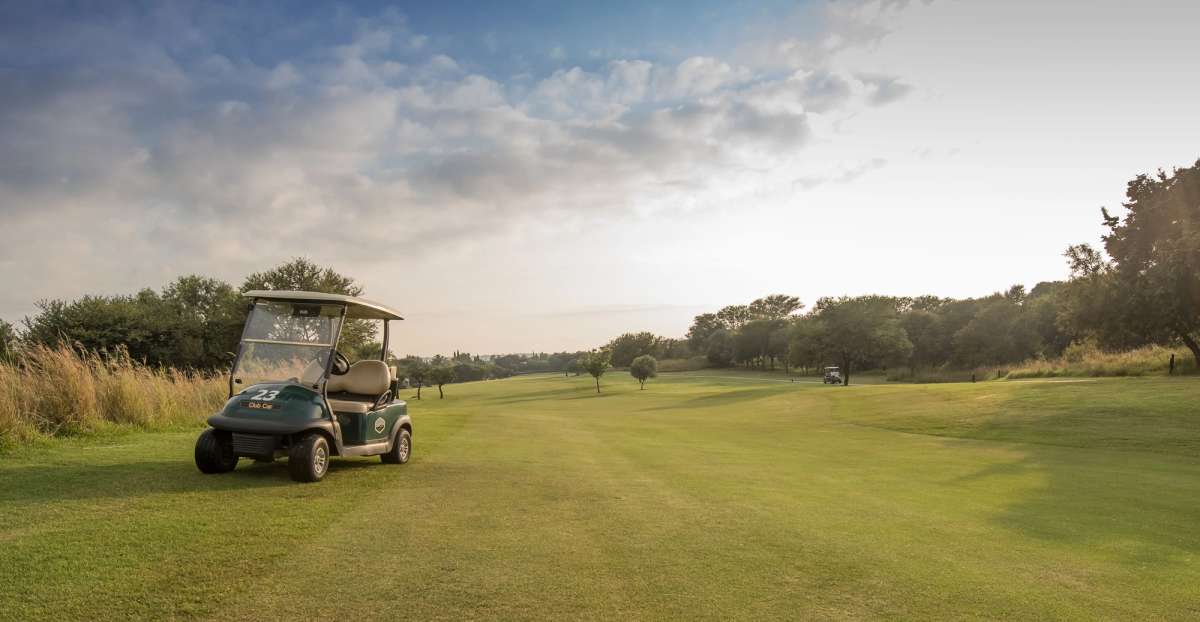
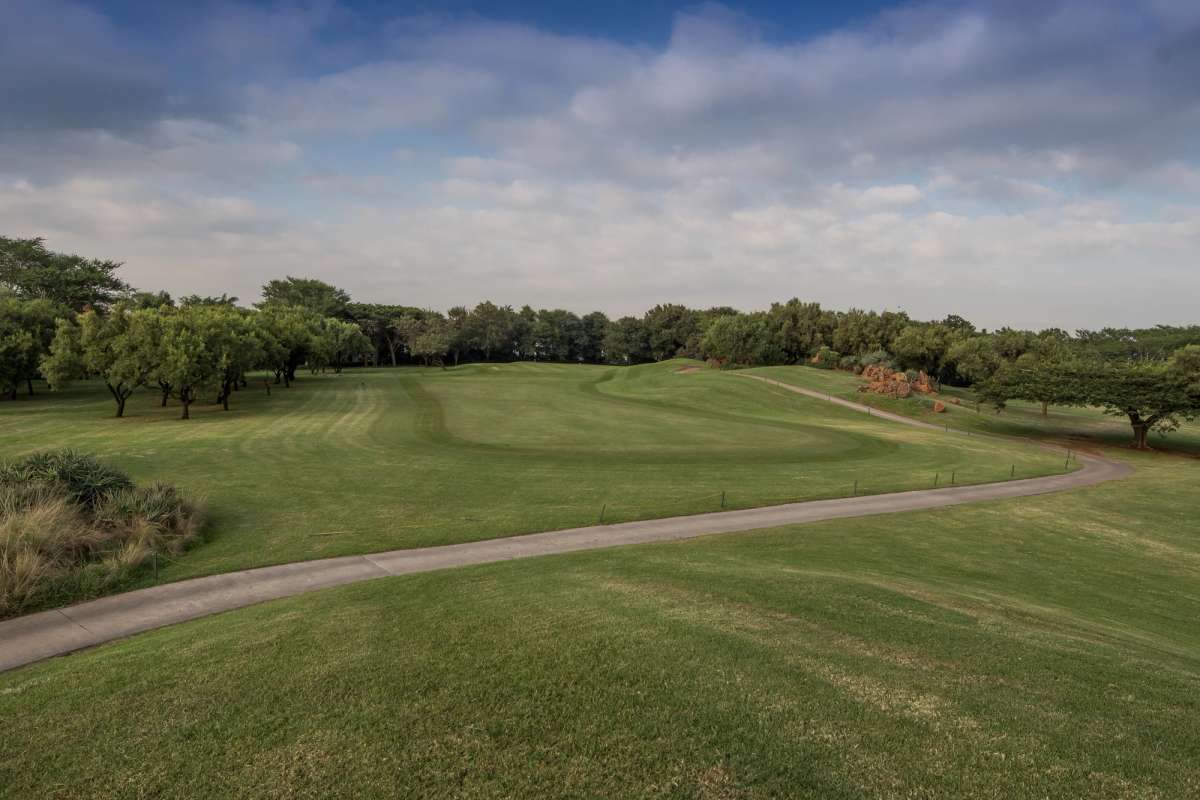
Wedged between two main highways on the western outskirts of Minneapolis, the course at Woodhill Country Club is a strong Donald Ross layout that dates back to 1917.

4.5
Woodhill Country Club is a country club indeed. In addition to its Donald Ross golf course, it boasts a swimming pool, clay and grass tennis courts. Things don’t slow down in the winter either. Ice skating and curling on the pond to the left of the 16th hole, a luge run down the 17th fairway, along with paddle tennis keep the members entertained through the long Minnesota winter.
The golf course opened in 1917 and is typical of Ross’s early work. The routing is well done, with holes running various directions and the par 3s in all four directions. And there are a number of holes (4, 6, 7, 9, 11, 14, and 18) with strategy requirements from the tee. But the greens have little of the fine contours that mark his later work.
Steve MacQuarrie
The latest ranking of the Top 100 Golf Courses in the World serves as the ultimate global golf bucket list. Most members of our World Top 100 Panel are seasoned golfers, each playing 20-30 of these courses annually while travelling extensively over decades to form their opinions on others. We recognise that opinions vary—even among our panel members. Rankings are subjective, and there are undoubtedly 50 or more courses in the UK and USA alone that could easily fit onto this list. Links Golf Pilgrimages The rankings
California, United States
New Jersey, United States
Northern Ireland, United Kingdom
New York, United States
New York, United States
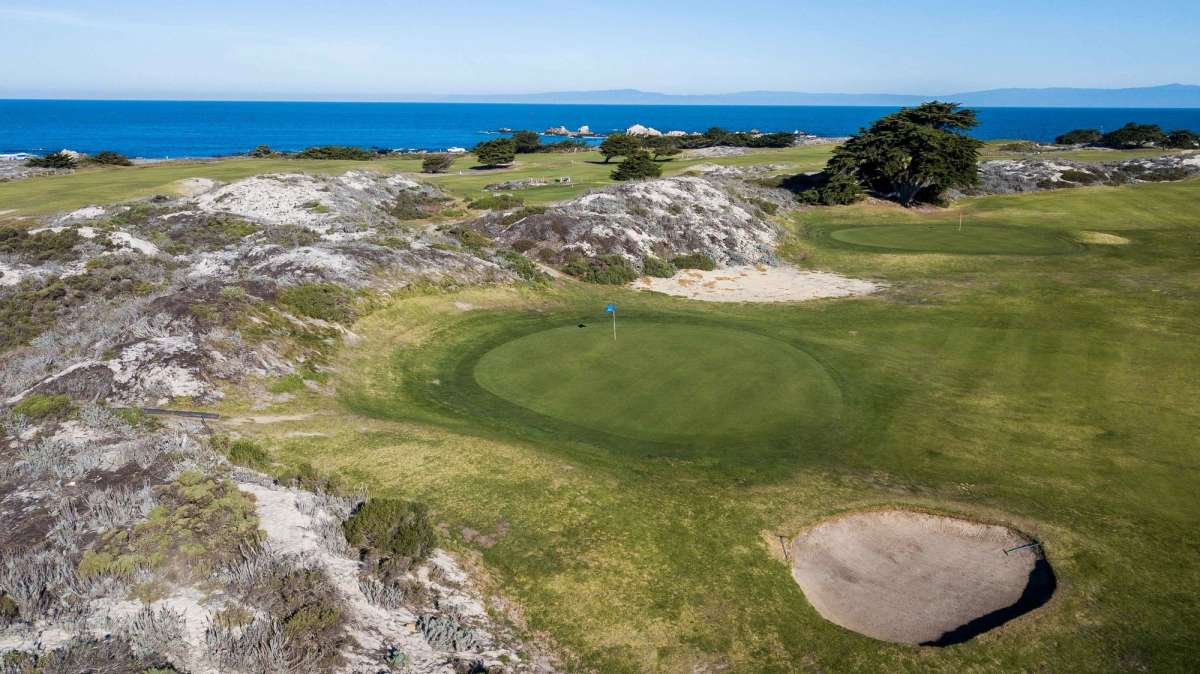
The stigma that good golf has to be expensive is one worth challenging. From windswept prairie in Nebraska and oceanfront holes in California to championship layouts in the shadow of Hazeltine and Bethpage, these are courses that offer much more than a cheap round. All 10 can be played for $100 or less, but the price is only part of the appeal. They have tournament history, famous designers, memorable settings and the kind of layouts that can stand alongside much more expensive golf. Green fees listed are standard rates and do not take twilight or off-season discounts into account, meaning some courses can be played for even less. Wild Horse Golf Club (Nebraska) Nebraska Ranking: 6th | Green Fees: From $68 Why Play it: Outstanding value on a natural prairie layout Best For: Golfers who love natural, windswept courses If you’re looking for proof that great golf doesn’t have to come with a great big price tag, head for the Nebraska prairie. Wild Horse Golf Club is one of the best-value public courses in America, combining excellent golf with a setting that feels a world away from the usual resort experience. Designed by Dave Axland and Dan Proctor, Wild Horse opened in 1999 after the pair spent more than a decade working for Ben Crenshaw’s design company. The result is a natural-looking layout shaped by native grasses, rolling prairie and dramatic blow-out bunkers rather than rows of manicured hazards. Wild Horse has earned plenty of recognition over the years, including a place in the Top100 US rankings, although it has sometimes been overshadowed by nearby Sand Hills. Tom Doak once described it as a “very good golf course” that is often overlooked because of its affordability. Warren Golf Course at Notre Dame (Indiana) Indiana Ranking: 7th | Green Fees: From $75 Why Play it: A Coore & Crenshaw design on the Notre Dame campus Best For: Fans of Coore & Crenshaw Set among 250 acres of woodland on the northern edge of the University of Notre Dame campus, the Warren Golf Course offers the unusual combination of championship pedigree and accessible green fees. Designed by Bill Coore and Ben Crenshaw, the course opened in 2000 and has since become one of Indiana’s most highly regarded public layouts. The Warren Course is home to Notre Dame’s men’s and women’s golf teams and has hosted a string of major amateur events, including NCAA Division I regional championships and the 2010 U.S. Women’s Amateur Public Links. It also hosted the U.S. Senior Open in 2019, bringing some of the biggest names in senior golf to South Bend. The setting is a big part of the appeal, with the course winding through mature woodland within a Certified Audubon Cooperative Sanctuary. For golfers visiting Notre Dame or passing through Indiana, the Warren Course offers a chance to experience one of America’s leading modern design partnerships without a leading-edge green fee. Pacific Grove Golf Links (California) California Ranking: 71st | Green Fees: From $66 Why Play it: Oceanfront golf just minutes from Pebble Beach Best For: Golfers looking for a Pebble Beach alternative Just five miles from Pebble Beach, Pacific Grove Golf Links offers a very different way to experience the Monterey Peninsula. This old-school municipal course runs along the Pacific Ocean, with a front nine that feels more like a traditional parkland course before the back nine heads into the dunes overlooking the water. The course has an impressive design lineage, too. US Amateur Champion Chandler Egan, who helped Alister MacKenzie redesign Pebble Beach, laid out the original nine holes in 1932, while Jack Neville, one of the original designers of Pebble Beach, later extended Pacific Grove to 18 holes. The result is a quirky and enjoyable layout, beginning with back-to-back par threes before throwing in consecutive par fives at the fifth and sixth. On the oceanfront back nine, short par fours and tumbling fairways provide plenty of character. Bethpage - Red Course (New York) New York Ranking: 6th | Green Fees: From $90 Why Play it: A championship-calibre course in the shadow of the Black Best For: Golfers who want a taste of Bethpage without playing the Black Bethpage Black might get all the attention, but the Red Course at Bethpage State Park is a formidable test in its own right. Known by some as “Baby Black”, the Red is widely regarded as the standout alternative to its more famous neighbour and offers a chance to experience Bethpage without the Black's famously difficult tee-time scramble. The course features a series of strong doglegs and demanding holes, with Tom Doak once suggesting that the Red might have received similar acclaim had its more famous neighbour never been built. He particularly praised the opening and closing holes, the long fifth and the short sixth, where an aggressive drive can quickly turn into trouble. The Red doesn't have the Black's enormous bunkers or intimidating reputation, but that doesn't make it easy. For golfers visiting Long Island, it offers another opportunity to play championship-level golf at one of America's most famous public facilities. Bandon Crossings (Oregon) Oregon Ranking: 21st | Green Fees: From $70 Why Play it: Affordable golf in one of America's biggest golf destinations Best For: Golfers visiting Bandon Bandon has become one of America's great golf destinations, but you don't have to play the resort courses to enjoy a round in the area. Bandon Crossings was created specifically to offer affordable public golf for locals and visitors, providing a lower-cost alternative to its famous neighbours. Built on the site of an old cattle and sheep ranch, the course was developed by local couple Rex and Carla Smith with Oregon architect Dan Hixson. Rather than compete directly with Bandon's collection of links courses, Crossings takes its inspiration from the heathland golf found around London. The course may sit away from the Pacific coastline, but that doesn't make it an afterthought. Its fairways move quickly across the property and around Twomile Creek, creating a challenging and enjoyable test that offers a different experience from the resort layouts. Montauk Downs State Park Golf Course (New York) New York Ranking: 80th | Green Fees: From $95 Why Play it: Robert Trent Jones design at the tip of Long Island Best For: Golfers exploring Long Island At the eastern tip of Long Island, around 120 miles from downtown New York City, Montauk Downs feels a long way from the hustle of Manhattan. Golf has been played here for decades, with the current layout shaped by Robert Trent Jones Sr. and his son Rees Jones in 1968. The Jones family connection is one of the course's biggest attractions, with Rees returning alongside Bryce Swanson in 2008 to restore the bunkers and tees on the par-three holes. The result is a classic parkland layout that combines the character of an older course with the challenge expected from a Jones design. Its location also makes Montauk Downs a natural addition to a Long Island golf trip, particularly for golfers looking to explore beyond the courses closer to New York City. Gold Mountain Golf Club - Olympic Course (Washington) Washington Ranking: 13th | Green Fees: From $35 Why Play it: Championship golf at a 36-hole public facility Best For: Golfers looking for a full day of golf The Olympic Course at Gold Mountain Golf Club is proof that you don't need a famous resort or hefty green fee to find championship-calibre golf. Part of a 36-hole public facility owned and operated by the City of Bremerton, the course was designed by John Harbottle III and opened in 1996, 25 years after the original Cascade Course. The tree-lined layout is slightly hillier than its older sibling but remains eminently walkable, with annual bluegrass covering the tees, fairways and greens. Its quality has been recognised on the national stage, hosting the U.S. Amateur Public Links Championship in 2006 and U.S. Junior Amateur Championship in 2011. There are plenty of memorable holes, including the short fourth, the water-guarded ninth and the 188-yard 16th, which plays across a lake to the green. The closing par four also offers a tempting birdie opportunity. With the Cascade Course next door, golfers can play 36 holes at Gold Mountain for less than $100, with green fees for the second 18 starting at just $30. Chaska Town Course (Minnesota) Minnesota Ranking: 26th | Green Fees: From $63 Why Play it: Championship golf just minutes from Hazeltine National Best For: Golfers visiting the Twin Cities Just a few miles from Hazeltine National, the Chaska Town Course offers a chance to play a highly regarded championship layout without the private-club price tag. Owned and operated by the local municipality, the course occupies 285 acres of oak groves, open prairie and marshland. Designed by Arthur Hills and opened in 1997, Chaska Town has even shared the stage with Hazeltine. The two courses co-hosted the 2006 U.S. Amateur Championship, while Chaska Town was also scheduled to co-host the 2020 U.S. Junior Amateur before the tournament was cancelled due to the COVID-19 pandemic. The layout plays to 6,817 yards from the back tees and features two returning nines, each finishing with a par five. The short fourth and 16th offer opportunities to score, while the right-doglegging ninth provides a tougher test. Brackenridge Park Golf Course (Texas) Green Fees: From $56 Why Play it: A Tillinghast classic with Texas Open history Best For: Golfers who love historic golf courses The oldest public 18-hole course in Texas, Brackenridge Park Golf Course has been a fixture in San Antonio golf for more than a century. Designed by A.W. Tillinghast in 1916, “Old Brack” went on to host 21 editions of the Texas Open between 1922 and 1959. The course has retained much of its historic character thanks to a restoration by John Colligan, who brought the layout back to life while preserving Tillinghast’s original design. The front nine is relatively tight, while the back nine opens out and provides some of the course’s strongest holes. Brackenridge is also part of the Alamo City Golf Trail, making it easy to combine with several other public courses in the San Antonio area. Brown Deer Park Golf Course (Milwaukee) Green Fees: $81 Why Play it: A former PGA Tour venue with Tiger Woods history Best For: Golfers who like tournament pedigree Brown Deer Park Golf Course combines affordable public golf with a notable place in PGA Tour history. Located just north of Milwaukee, the course hosted the Greater Milwaukee Open from 1994 to 2009, with Tiger Woods making his professional debut here in 1996. Founded in 1929, the course was originally designed by George Hansen before being partially redesigned by Andy North and Roger Packard. Today, its tree-lined fairways and stream that winds through the property provide a classic parkland setting. The Tiger Woods connection is an obvious draw, but Brown Deer offers more than a famous name in its history. Its accessible layout and location make it a practical option for golfers visiting Milwaukee. For golfers who enjoy playing courses with a tournament past, Brown Deer offers a chance to follow in the footsteps of some of the game's biggest names without paying resort-course prices.

The Twin Cities of Minneapolis and St. Paul offer one of America's most comprehensive golf experiences, featuring an extraordinary range from century-old Golden Age masterpieces to modern championship layouts. Minnesota golfers pack decades of passion into their limited season, creating an authentic golf culture that visiting golfers find genuinely welcoming and deeply knowledgeable. Twin Cities Golf: Why It Should Be on Your List Minnesota's golf capital delivers something truly special - the complete spectrum of American golf course architecture within 40 minutes of downtown. Visitors discover pristine conditions during the peak season, a remarkably passionate local golf culture, and access to courses that have shaped American golf history. The Twin Cities uniquely combine: Four championship-calibre private clubs representing different eras of design excellence Multiple top-tier public courses offering genuine championship golf experiences Historic venues that hosted major championships and legendary players Spectacular autumn golf with world-class fall colours Minnesota's Best Golf Courses The Twin Cities' elite quartet represents American golf architecture's evolution across more than a century. These courses define Minnesota golf at its absolute finest. Hazeltine National Golf Club stands as Minnesota's crown jewel, America's only course to host the Ryder Cup twice (1991 and scheduled for 2029). This Robert Trent Jones Sr. masterpiece from the 1960s delivers championship golf on an impressive scale. The course's reputation for hosting major championships speaks to its world-class conditioning and strategic design. Interlachen Country Club showcases Andrew Green's masterful restoration of this Golden Age gem, originally designed by Donald Ross around 1915. The course famously hosted Bobby Jones during his Grand Slam year. White Bear Yacht Club represents pure Golden Age architecture, at over 100 years old, consistently ranked among America's finest club courses. This Donald Ross design on White Bear Lake combines strategic golf with stunning lakeside settings. Spring Hill Golf Club brings Tom Fazio's modern design philosophy to Minnesota, creating a championship test that opened roughly 20 years ago. The course demonstrates how contemporary architecture can complement Minnesota's natural landscape. Windsong Farm Golf Club emerges as the region's newest elite destination, featuring 36 holes and becoming the Twin Cities' first multi-course private facility. The North Course represents the latest addition to Minnesota's championship golf landscape. Minnesota's Best Kept Golf Secrets Beyond the championship privates, the Twin Cities offers outstanding public golf that rivals many exclusive clubs elsewhere. Keller Golf Course provides genuine championship golf history as a St. Paul municipal course that hosted two PGA Championships in the 1920s and 1930s. The famous fourth hole features a massive tree guarding the green, creating one of golf's most love-it-or-hate-it shots. Dacotah Ridge Golf Course delivers spectacular prairie-style golf about one hour west, designed by Rees Jones. The open landscape and strategic design create an outstanding public golf experience. Troy Burne Golf Club sits just across the Wisconsin border, 40 minutes from downtown, though it's transitioning to private status. Stone Ridge Golf Club showcases Bobby Weed's design skills on this 15-year-old course featuring substantial length and creative green complexes. Chaska Town Course recently co-hosted the US Amateur with Hazeltine, demonstrating municipal golf at its finest. This excellent public facility proves that outstanding golf doesn't require private club membership. Sample Itinerary: 4-Day Twin Cities Golf Adventure Day 1: Arrive at Minneapolis-St. Paul International Airport, collect rental car, and head to Keller Golf Course for an afternoon round steeped in PGA Championship history. Evening dinner featuring the famous Juicy Lucy burger at Matt's Bar. Day 2: Morning round at Stone Ridge Golf Club, experiencing modern Minnesota golf design. Afternoon visit to the Mall of America or explore Lake Minnetonka's scenic beauty. Evening at local establishments sampling Minnesota's craft beer culture. Day 3: Championship golf at one of the Big Four private clubs (with proper introductions), experiencing elite Minnesota golf. Post-round dining at the club to absorb local golf culture and autumn scenery if visiting during peak season. Day 4: Morning round at Dacotah Ridge Golf Course for prairie-style golf, then departure or extend north to explore cabin country golf destinations like Giants Ridge Resort. Peak season timing (late September) offers spectacular fall colours alongside perfect turf conditions, creating Minnesota golf at its absolute finest. Twin Cities Travel Logistics Transportation centres around rental cars, as public transport doesn't serve golf destinations effectively. The Minneapolis-St. Paul International Airport provides easy access, with most courses within 30-40 minutes of arrival. Edina offers strategic accommodation positioning for accessing multiple elite courses. Weather & Packing requires understanding Minnesota's continental climate. The golf season runs from April through November, with peak conditions from June through September. Late September combines optimal turf with spectacular autumn colours. Summer temperatures reach approximately 32°C (90°F), whilst spring and autumn require layered clothing for temperature variations. Pack rain gear and windproof layers for the changeable Great Lakes weather patterns. Where to Stay for Twin Cities Golf Airport Area Hotels provide convenient access to all major courses within 40 minutes, offering business-class amenities and proximity to rental car facilities. Major chains deliver consistent quality for golf-focused stays. Edina District positions golfers near Interlachen and multiple second-tier clubs, combining upscale accommodation with easy course access. The area features quality restaurants and local character beyond standard hotel offerings. Downtown Minneapolis offers urban amenities and cultural attractions for extended stays, though it adds 15-20 minutes to course access times. Historic hotels provide character whilst modern properties deliver contemporary comfort. Lake Area Accommodations around Lake Minnetonka combine scenic beauty with proximity to White Bear Yacht Club and other premier courses. Lakeside resorts offer a genuine Minnesota cabin culture experience. Budget options include reliable chain properties near the airport, whilst luxury seekers find boutique hotels in Edina and downtown Minneapolis areas. Minnesota's Culinary Scene Signature Local Cuisine centres on the famous Juicy Lucy burger, Minnesota's contribution to American food culture. This cheese-stuffed burger originated at Matt's Bar (and possibly another establishment - locals debate passionately), representing essential Twin Cities dining. Golf Course Dining at private clubs offers elevated cuisine and local beer selections, whilst public course restaurants provide solid post-round meals. Gina Maria's Pizza earns local acclaim for sauce-heavy pies that reflect regional preferences. Local specialities include Grain Belt beer and regional brewery offerings, though visitors might encounter playful offers to try lutefisk (politely decline unless adventurous). Post-round drinks at golf clubs provide insight into Minnesota's passionate golf culture. Cultural Dining reflects Scandinavian and German heritage throughout the Twin Cities, with traditional establishments serving authentic regional cuisine alongside modern American fare. Booking Golf in the Twin Cities Private Club Access requires proper introductions through mutual connections or professional referrals. Member-guest opportunities provide the most authentic experience of Minnesota's elite golf culture. Seasonal Considerations make late September bookings premium timing, requiring planning for optimal conditions and autumn colours. Peak season (June-September) demands earlier reservations, whilst shoulder seasons offer more flexibility. Explore Beyond Golf Cultural Attractions include the Walker Art Center, numerous theatres, and historic landmarks throughout both cities. The Mississippi riverfront offers scenic walks and entertainment districts for evening activities. Outdoor Activities centre on Minnesota's famous lake culture, with Lake Minnetonka providing boating, swimming, and scenic drives. Hiking trails and state parks offer natural beauty within easy driving distance. Professional Sports feature the Minnesota Vikings (American football), Timberwolves (basketball), Wild (hockey), and Twins (baseball). Local fans embrace self-deprecating humour about their teams' championship drought since 1991, creating an entertaining sporting culture. Shopping & Entertainment includes the massive Mall of America for dedicated shoppers, whilst downtown areas offer local boutiques and entertainment venues reflecting authentic Twin Cities character. Family Activities abound with museums, parks, and lake beaches providing options for non-golfing partners or extended family trips. Insider Local Knowledge Cultural Etiquette embraces "Minnesota Nice" - genuine politeness with occasional passive-aggressive undertones. Golf culture values pace of play and proper course care, with walking welcomed, though cart usage predominates. Common Visitor Mistakes include underestimating weather variability and over-scheduling during the peak autumn season. Book accommodations early for late September visits when fall colours peak. Local Golf Wisdom suggests carrying extra layers regardless of the forecast, as Great Lakes weather changes quickly. Seasonal Strategy maximises value by targeting late September for optimal conditions and scenery, though June through August offers reliable weather. Avoid early spring when courses may face weather delays. Transportation Reality requires rental cars for efficient course access, despite the Twin Cities' decent public transport for urban activities. Twin Cities Golf Value The Twin Cities offer exceptional golf value across all price points, from historic municipal courses to world-class private clubs. Public championship courses provide outstanding experiences for visitors seeking quality golf without private club access. Municipal gems like Keller Golf Course deliver championship history and excellent conditions at accessible rates. Mid-tier public courses such as Stone Ridge and Dakota Ridge offer championship-quality experiences with modern amenities. Private club experiences represent the pinnacle of Minnesota golf, providing access to courses that have shaped American golf history alongside genuine local hospitality. Combining public and private rounds creates comprehensive Twin Cities golf experiences. The Twin Cities delivers authentic American golf culture with genuine Midwestern hospitality, creating memorable experiences that extend far beyond individual rounds. Minnesota's passionate golf community and diverse course options provide visiting golfers with insights into American golf's heartland whilst enjoying championship-quality golf across multiple architectural eras.
US West North Central Division Best in State Rankings 2020 Last month, we updated the rankings for Alabama, Kentucky, Mississippi and Tennessee in our East South Central Division of the United States. We now move further north, into the western portion of The Midwest, to shine the spotlight on courses in the Farm Belt States of Iowa, Kansas, Minnesota, Missouri, Nebraska, North Dakota and South Dakota. During the revision process for this West North Central Division, we’ve added another thirty-five courses to the mix, which means there are now a total of a hundred and sixty-five layouts featured across a prosperous heartland region that extends to more than half a million square miles, supporting a population of around twenty million people. Iowa One or two eyebrows may have twitched a little when the Hugh Alison-designed course at Davenport Golf Club in Pleasant Valley made an appearance at #96 in our latest US Top 100 listings published at the end of last year. Well, we make absolutely no apology for its inclusion as it now retains the No. 1 spot in our Best in State rankings for Iowa. Comments during 2019 included: “the layout is sublime, healthy and bursting with charm… I was truly blown away by the awe-inspiring layout from start to finish… this is a course that I wish was my home club… it was a joy to play, and the membership should feel very lucky to play it with frequency.” Davenport Country Club And those remarks were endorsed by a reviewer this year who wrote: “the renovation work done at Davenport was a huge success. Each hole has its own unique character, yet all fit together collectively. This is a golf course that contains all the elements most players love: memorable, beautiful, fun to play, and numerous risk-reward options.” Hurtling back into the Iowa chart in the runner-up position, the former state No. 1 at The Harvester Club in Rhodes has just reopened after another renovation by the original architect, Keith Foster. Unfortunately, you’ll now have to befriend a member if you want to see how the upgrade turned out as the club is a private facility after changing its visitor policy. Harvester Club Mark White, one of our regular contributors, had this to say a few months back: “elevation changes are key to the challenge at The Harvester because the routing takes full advantage of the terrain… the green complexes are very good with a good mixture of undulations and greenside bunkers (and it) has just the right mixture of defenses split between the water, the variety of the greens and the placement of bunkers.” We’ve introduced another four new courses into our Iowa standings (to create a Top 20 chart) and these additional layouts are led at #14 by the Veenker Memorial Golf Course at Ames, a Perry Maxwell design from the late 1930s which is owned and operated by Iowa State University. There’s only around half the original holes in play theses days but Tom Doak reckons “what’s left is still classic Maxwell, with lots of doglegs and some abrupt elevation changes… a little t.l.c. would go a long way here.” Rank/ Click the link to see full details of our latest Iowa Best in State rankings Kansas Another Perry Maxwell masterpiece continues to hold sway in the Sunflower State, where we’ve also added another five tracks to produce a Top 20 chart. The course at Prairie Dunes Country Club in Hutchinson has been our No. 1 since we started Best in State listings in 2012 and this world ranked course (currently rated #34) isn’t going to be dislodged from the top spot any time soon – unless, of course, a localized meteorite shower falls from the sky to obliterate everything on the ground at this location. Prairie Dunes Country Club Marc Bender, our Florida Correspondent, said a couple of months ago: “Prairie Dunes is an exceptional course with some of the most challenging greens I have ever seen. Great routing, lots of memorable holes and a demanding test of golf. If you have the right frame of mind, the course is great fun.” Only three courses make upward moves in the Kansas chart and the most prominent of these is Milburn Country Club in Overland Park, rising three places to No. 7. Founded in 1917, the club possesses a William Langford-designed layout that has been remodeled in recent years by Todd Clark of CE Golf Design, with all the bunkers and tees reconstructed to modern specifications. Milburn Country Club The highest new entry arrives at No. 15 and it’s yet another Perry Maxwell course at Topeka Country Club, where the architect redesigned the original Tom Bendelow layout in late 1937, having just completed his work at Prairie Dunes. He added a new nine holes to the existing nine, converting the old sand greens to grass putting surfaces at the same time. Tree growth is now something of an issue here but it’s still a great example of the famed designer’s work. Click the link to see full details of our latest Kansas Best in State rankings Minnesota The course at Interlachen Country Club in Edina was replaced at the top of the Minnesota rankings by White Bear Yacht Club on White Bear Lake in 2016 and the latter now holds onto its #1 status for the third revision in a row. The clubs share a similar architectural history, having started out more than a century ago with William Watson layouts that were subsequently redesigned by Donald Ross, and they’re both highly regarded in the US national charts, listed at #58 and #80. White Bear Yacht Club Our US Correspondent Fergal O’Leary played at White Bear Yacht Club this summer and he remarked: “the Golf Committee at White Bear understands how special their piece of land is. In recent years, they also understood the need to remove hundreds of trees that were suffocating certain fairways and green-sites. My eyes were wide open during a June 2020 return visit as to the magnitude of tree removal… it was really important to return to see the updates over the past 12 months.” The biggest climber in the Minnesota standings is the Preserve course at Grand View Lodge Spa & Golf Resort in Niswa (up nine to #30), where this Mike Morley and Dan Helbling co-design is just part of the 45-hole public golf facility that has evolved since the early 1990s at an historic hostelry on the northern shores of Gull Lake. Preserve course at Grand View Lodge Ten Minnesota newcomers in the new Top 50 are led at #39 by Dutch Legacy, a Robert Trent Jones Jr. course that debuted back in the late 1990s at Cragun’s Resort on Gull Lake in Brainerd. It’s one of two 18-hole layouts operating at a 45-hole complex which also boasts a reversible par three 9-hole course – and with all the recent publicity about such innovative layouts, who’d have thought one had been lurking here, unheralded among the trees in Crow Wing County, for the last twenty years? Click the link to see full details of our latest Minnesota Best in State rankings Missouri C. B. Macdonald’s design at St. Louis Country Club remains the #1 course in a Missouri chart which has also been augmented with ten new tracks to form a Top 40. St Louis has attracted a couple of posts since we last updated this state listing, with reviewers making the following observations: “the course is a reminder of how golf was played in the past. Think yourself around, don’t just pull out driver and swing, think if you want to score well… a classic layout that showcases C. B. Macdonald’s full arsenal of template holes… the course isn’t a pushover but is too short for championship golf.” St Louis Country Club The big news for Missouri is the emergence of the Ozarks National course at Big Cedar Lodge in Hollister, which comes straight in at No.2. Designed by Bill Coore and Ben Crenshaw, the eighteen holes on this course that were unveiled last year are just part of a seventy-six hole golf offering that owner Johnny Morris has been developing in recent years at one of the top public-access golf facilities in the entire country. Ozarks National Regular contributor Matt Ward visited not long after the course opened: “Ozarks National is located on an eye-catching ridge line, providing a panoramic view of the immediate Ozarks region. There’s no competing clutter – just an unfiltered connection – golf and countryside. The property is also relatively devoid of trees so varying wind patterns are a daily matter for golfers to negotiate.” Payne’s Valley was the third 18-hole layout to open for play at Big Cedar Lodge just a few short weeks ago and we’re sure this brand new Tiger Woods track will make a significant impact when we next reappraise our US state listings two years from now. Before then, reviewers are more than welcome to let us know what they think of it by posting a few comments. Payne's Valley 19th hole Just eight courses make a chart advance and the best of these positive moves is made by the 18-hole layout at Branson Hills Golf Club (up five to #8) which was built with the stated intention of honouring legendary Missouri golfers like Tom Watson and Payne Stewart. Natural rocky outcrops, waterfalls, winding creeks and wooded areas are all incorporated into this out-and-back design from Chuck Smith and Bobby Clampett. Click the link to see full details of our latest Missouri Best in State rankings Nebraska The top six courses in the Cornhusker State remain in the exact same position so the celebrated Coore & Crenshaw layout at Sand Hills Golf Club in Mullen is still our Nebraskan No.1 – not that the status quo should come as any surprise when you consider it occupies the #10 spot in our World Top 100 rankings. Everybody who ever gets the chance to play here comes away talking about how special the entire set up is. Sand Hills Golf Club Our man in Florida, Marc Bender, played the course recently and he was no different to all the others who have teed it up here: “We all define fun differently, but Sand Hills is the ultimate for me. This golf course flows so well as if it was always meant to be this way and no doubt that is exactly what Coore and Crenshaw set out to achieve when they spent two years working on the routing and studying the land… Sand Hills is a place you feel euphoric, no matter what you shoot on the course, you will have a blast.” Three 18-hole layouts make a moderate one-place improvement in their position and the highest ranked of this trio is the Pines course at the Prairie Club in Valentine. There are currently 46 holes in play here: eighteen on the Tom Lehman/Chris Brands co-designed Dunes course, eighteen on the Graham Marsh-designed Pines course, and ten on a little par three circuit called Horse. The Dunes course is presently the better regarded of the two main tracks at Prairie Club but the Pines is fast catching up. Prairie Club Pines course Another course currently under development not too far from Sand Hills is CapRock Ranch, which is laid out along the rim of the Snake River Canyon and in the sandy chops hills. With Hanse Golf Course Design, Caveman Construction and Landscapes Unlimited all working on this project, you can be absolutely certain it will play a large part in the next reappraisal of our Nebraska Top 15 chart. CapRock Ranch - image courtesy of Ben Hillard Click the link to see full details of our latest Nebraska Best in State rankings North Dakota It probably came as a shock to some observers when the course at Hawktree Golf Club in Bismarck was knocked off the top position in 2018. Well, it’s bounced back immediately to regain the spot it had previously held for four years. Another of our regular reviewers, Colin Braithwaite, was there last year and he thought: “Hawktree is a pretty cool course… One of the first things you notice is the black sand bunkers... Fun course. I would play it again.” Hawktree Golf Club Medicine Hole Golf Course in Killdeer (#6) and King’s Walk Golf Course in Grand Forks (#8) each rise a notch in the new table. Both courses opened for daily fee access early in the new millennium but any further similarity between the two layouts ends there – the former is a modest 3290-yard 9-holer designed by Jim Engh while the latter is a bit more substantial, requiring Arnold Palmer’s design company to shift more than half a million cubic yards of earth during construction of the 18-hole layout. Click the link to see full details of our latest North Dakota Best in State rankings South Dakota The course at Sutton Bay in Agar heads our South Dakota chart for the 5th consecutive edition of our Best in State ranking reassessments. It’s a Graham Marsh design that’s laid out on a fantastic cliff top property overlooking Lake Oahe, with players afforded wonderful views across this reservoir section of the mighty Missouri River. Styled as an inland links, with wide fairways and large greens, Sutton Bay is a must play for anybody who delights in underfoot conditions that are firm and fast. Sutton Bay Steve MacQuarrie, yet another of our stalwart correspondents, played here last year and he was very impressed by what he found: “Sutton Bay is a Top 100 course. The only shortcoming I could find is the routing. The course is over a mile from the clubhouse and there are a number of long, unintuitive walks from green to tee. Everything else, however, is splendid… The line of charm is present on the majority of tee shots and once you’re on the green a whole new set of challenges arise dealing with the contouring.” Three courses make small, one-position gains in the new chart and the best placed of these is the 18-hole layout at Dakota Dunes Country Club, which recaptures the #2 slot it last held from 2012 to 2016. Just last week, a reviewer felt it was a “very nice Palmer design just north of Sioux Falls in residential development”. Furthermore he felt it had “a nice mix of strategic play and bomb it opportunities” and it was ”worth the time if you like Palmer designs and good playing conditions.” Click the link to see full details of our latest South Dakota Best in State rankings Next up, the East North Central Division states of Illinois, Indiana, Michigan, Ohio and Wisconsin. Jim McCann Editor Top 100 Golf Courses