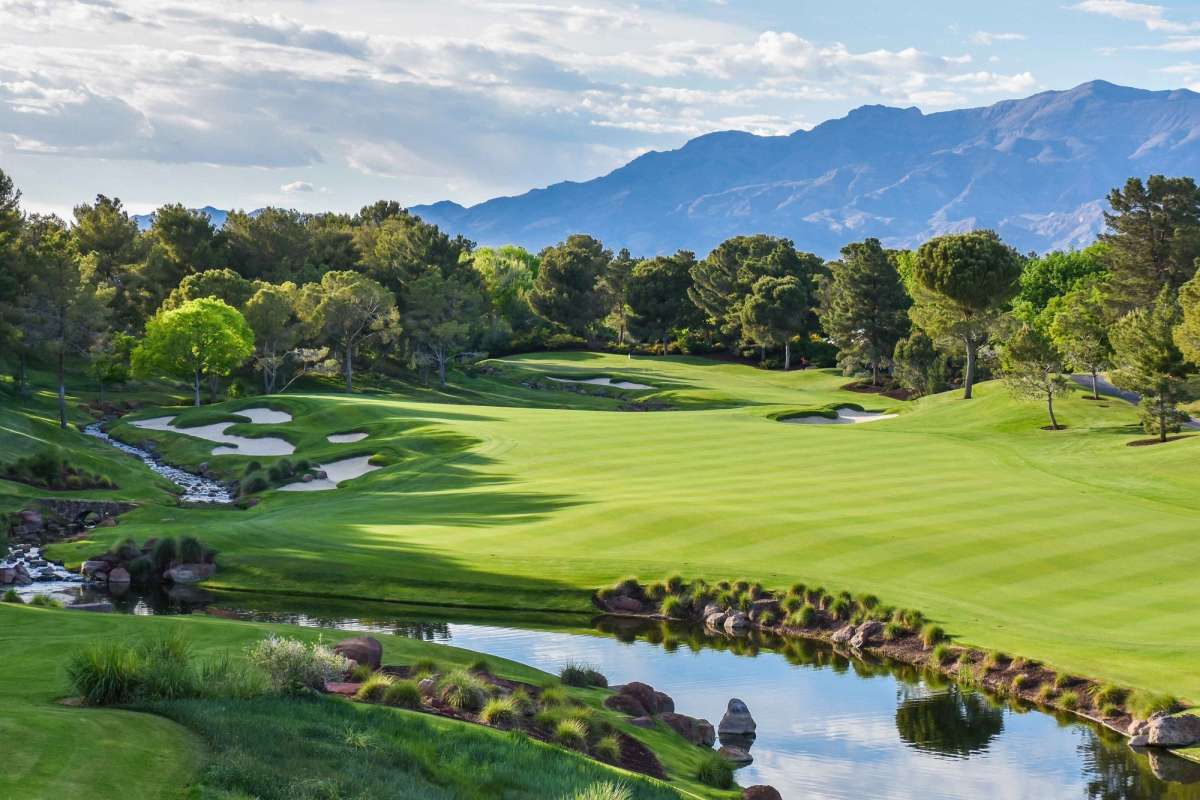
Wynn Golf Club is located in the backyard of the Wynn Las Vegas casino hotel. The course closed for two years and reopened in October 2019 after a substantial makeover by the original architect and his son, Logan Fazio.
Overall rating

4.5
Wynn Golf Club
Wynn Golf Club is located in the backyard of the Wynn Las Vegas casino hotel. The course closed for two years and reopened in October 2019 after a substantial makeover by the original architect and his son, Logan Fazio.
Sort by:
Aug. 13, 2026
5
figonthefairway
The Wynn takes the cake for the most well manicured course I've ever played.
Nov. 13, 2019
4
M. James Ward
The most important dimension determining your feelings on the "new" Wynn Golf Club in Las Vegas boils down to this: what is your emphasis point?
The latest ranking of the Top 100 Golf Courses in the World serves as the ultimate global golf bucket list. Most members of our World Top 100 Panel are seasoned golfers, each playing 20-30 of these courses annually while travelling extensively over decades to form their opinions on others. We recognise that opinions vary—even among our panel members. Rankings are subjective, and there are undoubtedly 50 or more courses in the UK and USA alone that could easily fit onto this list. Links Golf Pilgrimages The rankings
California, United States
New Jersey, United States
Northern Ireland, United Kingdom
New York, United States
New York, United States
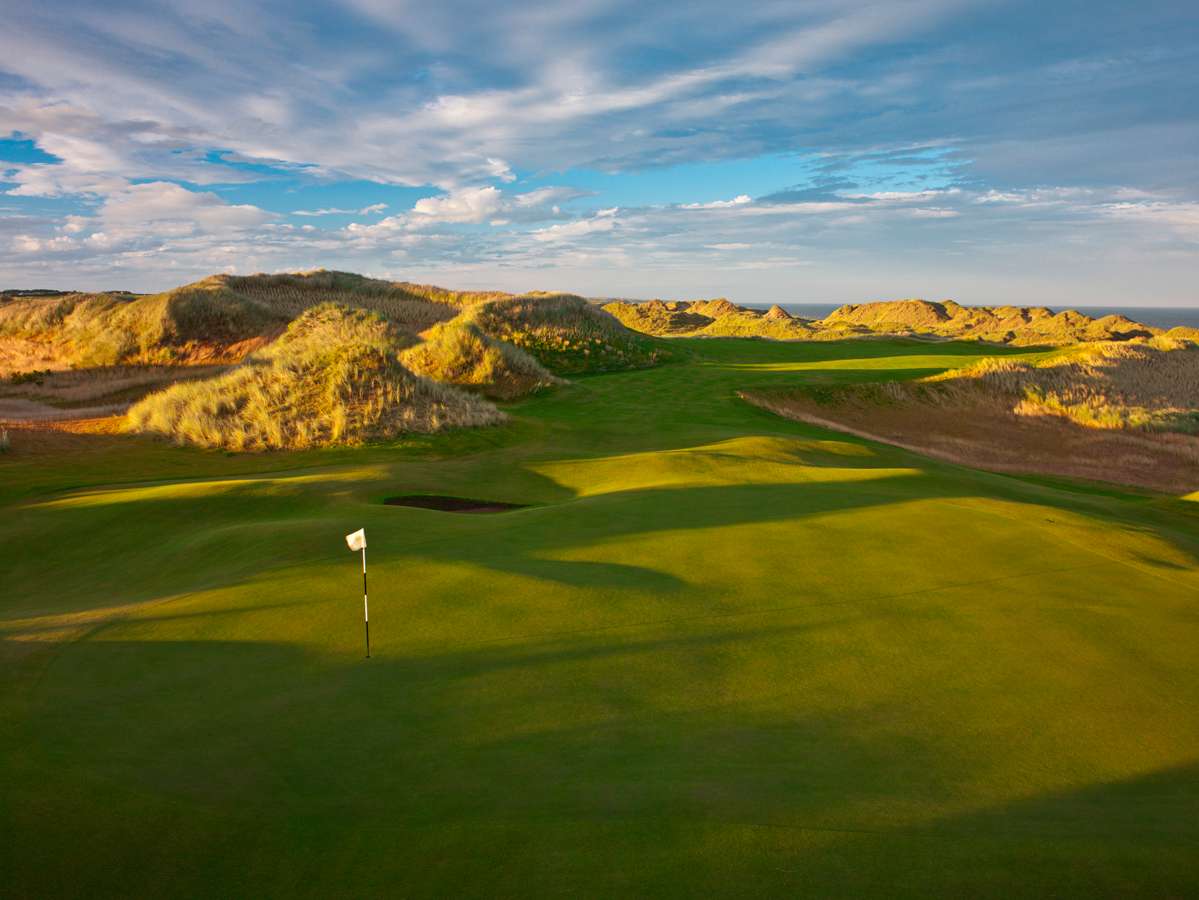
Golf has never been an inexpensive sport, but some courses command green fees that take things to another level. From famous championship venues and bucket-list links courses to luxurious resort layouts, playing a round at the top end of the market can cost over £1,000. But which courses are the most expensive, and what do golfers actually get for their money? We've looked at visitor green fees around the world to find some of the most expensive rounds available to golfers who can book independently, without needing a membership, invitation or compulsory resort stay. From Scotland and Spain to the United States, these are ten courses where a round comes with a particularly hefty price tag. Trump Turnberry – Ailsa Course (Scotland) World ranking: 12th | Scotland ranking: 3rd | Green fees: £1000 The Ailsa Course is one of the world's most recognisable links layouts, occupying a spectacular stretch of Ayrshire coastline with views across the Firth of Clyde towards Ailsa Craig. Its iconic lighthouse, which sits between the ninth and tenth holes, provides one of the most photographed backdrops in golf. A four-time Open Championship venue, it is perhaps best remembered for the 1977 'Duel in the Sun' between Tom Watson and Jack Nicklaus. A major renovation by Martin Ebert in 2016 introduced five new holes along the coastline. At £1,000 for a peak morning tee time, the Ailsa is among the most expensive rounds available to visiting golfers. The rate is for non-residents, with afternoon prices considerably lower. The green fee covers 18 holes and access to the practice facilities, while caddies, club hire, trolleys and buggies are charged separately. Caddies start at £85, with a recommended gratuity of £30. Wynn Golf Club (Nevada, USA) Nevada ranking: 7th | Green fees: US$1000 (£745) Set behind the Wynn Las Vegas resort on the famous Strip, Wynn Golf Club offers a very different setting from the desert courses typically associated with the city. Originally designed by Tom Fazio in collaboration with Steve Wynn, the course reopened in 2019 following a major redesign by Fazio and his son Logan. Its lush landscaping, streams and waterfalls create a striking contrast with the surrounding hotels and casinos, while more than half the holes now offer views of the nearby Sphere. The peak green fee reaches US$1,000 during the holiday season and Las Vegas Grand Prix, although rates fluctuate and are lower at other times of year. The fee includes 18 holes, a shared golf cart, a mandatory caddie, soft drinks and food served during the round. Complimentary Callaway rental clubs are also available. Alcohol and caddie gratuities are extra. Real Club Valderrama (Andalucía, Spain) World ranking: 100th | Spain ranking: 1st | Green fees: €700 (£584) Located in Sotogrande on Spain’s Costa del Sol, Valderrama is one of European golf’s most recognisable venues. Designed by Robert Trent Jones Sr. and refined after Jaime Ortiz-Patiño acquired the property in 1985, it became the first course in continental Europe to host the Ryder Cup, staging the 1997 contest under the captaincy of Seve Ballesteros. The course has also hosted numerous Volvo Masters and DP World Tour events. The 2027 visitor green fee is €700 for 18 holes. A forecaddie is mandatory for every group, costing an additional €70 plus gratuity. Buggy hire is €70, electric trolleys €25 and club rental €50. Hand trolleys and practice balls are complimentary. Although Valderrama is a private members’ club, visitors can book independently, with tee times currently restricted to Monday–Thursday between noon and 1pm. TPC Sawgrass – Stadium Course (Florida, USA) USA ranking: 66th | Green fees: Starting at US$775 (£577) The Stadium Course at TPC Sawgrass is one of the most recognisable layouts in American golf, best known as the annual host of THE PLAYERS Championship. Designed by Pete and Alice Dye, it opened in 1980 and is famous for its demanding island-green 17th hole. The course was built to challenge the world’s best, but is also available to visiting golfers. The peak-season green fee starts at US$775 per player from September to May, with summer rates starting at $550. TPC Sawgrass uses dynamic pricing, so actual tee times can cost more than the advertised starting rate. The fee includes 18 holes, a shared golf cart, a forecaddie for the group and a warm-up bag of practice balls. The suggested forecaddie gratuity of $40 per player is extra. Golfers wishing to walk must upgrade to a walking caddie, starting at $85 per player for a shared caddie. Trump International Golf Links – Old Course (Aberdeen, Scotland) World ranking: 77th | Scotland ranking: 11th | Green fees: £560 Set among the towering dunes of the Menie Estate, just north of Aberdeen, Trump International’s Old Course is a modern links designed by Martin Hawtree and opened in 2012. The layout stretches along three miles of North Sea coastline, with dunes reaching up to 100 feet and several holes offering dramatic views across the surrounding landscape. It hosted the DP World Tour’s Scottish Championship in 2025, putting it on the professional golf calendar for the first time. The 2027 peak-season green fee is £560 for 18 holes. The course is open to non-resident visitors, who can book directly without a hotel stay or member introduction. Caddies are optional, costing £80 per player plus gratuity for a traditional caddie, or £30 per player plus gratuity for a forecaddie. Club hire starts at £70, push trolleys at £10 and electric trolleys at £35. Buggy hire is £75, subject to course regulations. Kingsbarns Golf Links (Fife, Scotland) World ranking: 43rd | Scotland ranking: 7th | Green fees: £524+ Kingsbarns sits on the Fife coastline, around seven miles south of St Andrews, with almost every hole offering views across the North Sea. Opened in 2000, the course was designed by Kyle Phillips and has quickly established itself as one of Scotland’s leading modern links. It has also become a regular co-host of the Alfred Dunhill Links Championship, alongside the Old Course at St Andrews and Carnoustie. The 2027 visitor green fee is £524, rising to £590 for the exceptional period of 12–20 July, when The Open returns to St Andrews. The fee includes 18 holes and use of the full practice and clubhouse facilities. Caddies are available for an additional £80, plus any gratuity, while buggies are restricted to golfers with a medical need. Pebble Beach Golf Links (California, USA) World ranking: 27th | USA ranking: 14th | Green fees: US$695+ (£518) Pebble Beach is one of the most famous courses in world golf, occupying a dramatic stretch of Pacific coastline on California’s Monterey Peninsula. Opened in 1919, the course was designed by Jack Neville and Douglas Grant, with later changes by H. Chandler Egan helping shape the layout played today. Its most spectacular stretch runs from the seventh to the 10th, where holes hug the coastline, while the 18th provides one of golf’s most recognisable finishing holes. Pebble Beach has hosted six U.S. Opens and is a regular venue for the PGA Tour’s AT&T Pebble Beach Pro-Am. The 2026/27 green fee is US$695. Non-resort guests must also pay a $60 cart fee, bringing the total to $755. Caddies are optional, costing $175 for a single bag or $250 for a double bag, while club hire is $120 per bag plus tax. Pebble Beach is open to the public, but securing a tee time independently is not straightforward: non-resort guests can only book 24 hours before play, subject to availability. Resort guests can book further ahead, but a minimum two-night stay is generally required. Trump National Doral Golf Club – Blue Monster (Florida, USA) Florida ranking: 35th | Green fees: US$695 (£518) The Blue Monster is the signature course at Trump National Doral, a resort just west of Miami. Designed by Dick Wilson and opened in 1962, it became a regular stop on the PGA Tour, hosting the Doral Open and later the WGC-Cadillac Championship. Gil Hanse led a major redesign in 2014, lengthening the course and reshaping its greens, bunkers and water hazards. Its closing stretch is particularly demanding, with water coming into play on several holes. The 2026 peak-season green fee is $695, with a golf cart included. A forecaddie is mandatory, costing an additional $37 per group, with a recommended gratuity of $40 per player. Taxes are also extra. Summer rates drop to $395, while twilight rates are lower still. Gleneagles – King's, Queen’s and PGA Centenary (Perth & Kinross, Scotland) Green fees: £500 Gleneagles is home to three championship courses, each offering a different test of golf in the Perthshire countryside. The King's and Queen's were designed by James Braid and C.K. Hutchison, opening in 1919 and 1917 respectively, while the PGA Centenary was designed by Jack Nicklaus and opened in 1993. The latter hosted the 2014 Ryder Cup and 2019 Solheim Cup, while the King's has staged the Scottish Open and Senior Open. The 2027 peak-season visitor green fee is £500 per round on all three courses, with July the most expensive month. The fee covers 18 holes, while caddies cost £80 per player or £122 for a group forecaddie for four. Club hire starts at £55, pull trolleys cost £10 and electric trolleys £28. Buggies are available on the PGA Centenary for £60, but are otherwise restricted to medical exemptions. The Greenbrier – The Old White (West Virginia, USA) West Virginia ranking: 3rd | Green fees: US$665 (£495) The Old White was the first of three courses built at The Greenbrier resort, opening in 1913. Designed by Charles Blair Macdonald, with later modifications by his associate Seth Raynor, it is a classic parkland layout with tight, tree-lined fairways and small, well-protected greens. Several holes take inspiration from famous designs in Britain and Ireland, including the Redan at North Berwick, the Alps at Prestwick and the Eden at St Andrews. It has hosted both the PGA Tour and LIV Golf. The highest published non-resident green fee is US$665 for a morning tee time on Friday or Saturday between May 1 and October 25. The fee covers 18 holes, but taxes and the Historic Preservation Fund (a 9.75% fee included to safeguard and enhance the landscapes, buildings, and amenities that have shaped The Greenbrier) are additional. A forecaddie costs $45 per person, with an $85 minimum per group, while a walking caddie is $100 per bag. Club hire is $75. Green fee note: Green fees are correct at the time of writing and are subject to change. Prices may vary depending on the season, day of the week and tee time, while some courses use dynamic pricing. Currency conversions are approximate and based on exchange rates at the time of publication. Additional charges, including taxes, caddie fees, gratuities, equipment hire and mandatory extras, may apply unless otherwise stated.

10 Interesting facts about Shadow Creek Golf Course Shadow Creek North Golf Course is a marvel in the desert of North Las Vegas, Nevada, offering an unparalleled golfing experience that combines luxury, exclusivity, and remarkable design. Here are ten interesting facts about this prestigious course: Designed by Tom Fazio: The course was designed by renowned architect Tom Fazio in 1989 and is known for its meticulous design and stunning aesthetics. Exclusive and Expensive: Initially, until 2000, the only way to play at Shadow Creek was to receive an invitation from Steve Wynn, the hotelier behind its creation. Now managed by MGM Resorts International, it maintains its exclusivity with a hefty green fee of $500 A Transformative Design: Located in North Las Vegas, Fazio transformed a flat and lifeless desert into a lush, rolling landscape filled with thousands of trees, creeks, lakes, and bursts of flowers, creating a setting that feels more like a Georgian oasis than a Nevada desert. Limousine Access Only: The only way to access Shadow Creek is through an MGM Resorts International courtesy limo, adding to its aura of exclusivity and luxury Renovation and Records: A renovation in 2008, also by Tom Fazio, stretched the par-72 layout to 7,560 yards without materially altering any of the holes. Tiger Woods and Fred Couples share the old course record of 60, while Dustin Johnson holds the record on the newer layout with a score of 66 A Selective Guest List: Shadow Creek's guest list includes U.S. Presidents, celebrities, and sports stars, with names like George H.W. Bush, Wayne Gretzky, Matt Damon, Sylvester Stallone, and Michael Jordan among those who have enjoyed rounds here A Venue for Major Events: The course has hosted significant golfing events, including "The Match: Tiger vs. Phil" in 2018 and the PGA Tour's CJ Cup in 2020, moved from South Korea due to the COVID-19 pandemic A Desert Oasis: Despite its desert location, the course features a bevy of lakes, creeks, waterfalls, and is so well-manicured and lush that it feels like a different world altogether Highly Ranked and Praised: Shadow Creek is consistently ranked among the top golf courses globally, praised for its beauty, design, and exclusivity. It is considered a bucket-list experience for many golf enthusiasts Features and Facilities: The course is equipped with a 7-acre short game facility added during the 2008 redesign, showcasing Fazio's commitment to providing a comprehensive and elite golfing experience. Shadow Creek continues to be a symbol of luxury and exclusivity in the golf world, offering a unique and unforgettable experience to those who have the privilege to play its grounds. Find out more about travel to Shadow Creek Golf Course Why not register today to be the 1st to Receive US Rankings releases for 2024. Lockhart Travel Club Concierge Services FAQ What is the Lockhart Travel Club? Lockhart Travel Club is dedicated to offering its members unique opportunities for world-class golf exploration and adventure. It connects members with like-minded individuals worldwide, aiming to fulfil their desire to play at the best golf courses globally. The club originated from Robert Lockhart's passion, a Scotsman who introduced golf to America in the late 19th century, and it continues to embody his spirit of golf travel (Lockhart Travel Club). Who are the members of the Lockhart Travel Club? Members are individuals from some of the world's greatest clubs, sharing a common passion for golf and adventure. The club welcomes golfers eager to travel, play, and check off their bucket list of courses. They are driven by the opportunity to see and play the best courses worldwide, taking advantage of the club's network. What kind of experiences does Lockhart Travel Club offer? In 2023, the club provided opportunities to play in various top-ranked courses and locations, including the Sand Hills of Nebraska and Colorado, the best of Japan and Korea, the English Heathlands, the classic courses of France, and the best of New Zealand’s North Island. The 2024 schedule promises unique experiences in 19 different countries, including Thailand & China, Brazil, South Africa, the Northeast USA, and Australia. How do I join Lockhart Travel Club? Interested individuals can inquire about membership by contacting the club directly via their official email. The club values connections among golf enthusiasts and strives to plan unique, unforgettable opportunities for its members throughout the year. For more detailed inquiries or to apply for membership, please refer directly to the Lockhart Travel Club's official website or contact their membership services. Lockhart Travel Club About Us: Learn more about the club Top 100 Golf Courses - Lockhart Travel Club: Explore member experiences and trips
Troubled waters - golf's future in a thirsty world Some golf course operators will soon find themselves battling for enough water to keep their businesses afloat The United Nations has urged world leaders to put the looming crisis over water shortages at the top of the global agenda. In the U.S., there’s scarcely a region not taking stock of its water supplies and how they are governed. There’s also growing concern within the golf industry that its most important natural resource could be drying up. How worried should we be, and what can we do about it? One thing seems certain: to do nothing is to risk everything. More and more golf course operators today find themselves battling for enough water to keep their businesses afloat. The good sense of conserving even in times of plenty is hardly a new idea. The concept is central to the story of Joseph in the book of Genesis. Yet as history’s litany of failed economies and even empires affirms, it is a lesson man struggles to heed. The command of power and resources transitions constantly and fortunes move with that flow. As the United States ventures deeper into a 21st century of soaring oil prices and sinking financial confidence, concern over the fate of one resource, perhaps the ultimate resource, may come to override all else. Water. Record droughts across the country have drained lakes and rivers, forcing communities and lawmakers to take stock of water resources and the regulations that govern them. Even in areas spared the worst, irregular weather patterns, including floods and record snowfalls, have dealt their own problems. The net result is growing uncertainty about the constancy of supply. As one of the most visible and significant consumers of such a staple, golf often finds itself in the firing line. Unlike a manufacturing plant whose use of water plays out behind brick walls, golf courses are easy targets every time they run a sprinkler. That golf is a game where the product is a leisure activity, not food or medicine, further emboldens opponents. As a result, more and more golf course operators find themselves battling for enough water to keep their businesses afloat. Scarcity may not be new to the Western U.S. but its degree and what’s at risk is certainly on the rise. In California and Nevada, for example, local water districts are writing checks for as much as $3 per square foot to landowners, including golf courses, who get rid of turf in favor of low-water use landscaping. East of the Mississippi, the prospect that there might not be enough water to go around has arrived with an alarming jolt. South Carolina is suing North Carolina over withdrawals from the Catawba River that spans their border. Georgia wants to move its state line north to get more of the Tennessee River, contending it mistakenly lost a portion of the river in a flawed survey in 1818. Across the board, the stakes are high and the rules of engagement invariably hard to follow. Myriad governments, agencies, authorities and other groups have a say in who gets how much water and when. In some instances laws are changing. But even where laws remain unchanged, their interpretation is being redefined. Regardless of the method, the goal is the same: ensuring enough water for the not-so-rainy days. The upshot for golf course owners is an unavoidable battle on multiple fronts. It will not be enough to carry on blithely once rains return to drought areas or even in areas where water may be plentiful today. Golf will need to present a sound scientific case that its water use is clean and efficient. It will need to underpin that case with the economic rationale that more than just a sport, golf is an industry that delivers a $76 billion annual bounty, according to the latest economic impact study. That case will need to be presented to politicians and the public, all the while balanced with the ethical consideration that at the end of the day there are things in the life of a community more important than a game. Moreover, the case cannot be made and won overnight. On the contrary, many predict it will become as much a part of taking care of business as negotiating insurance rates or complying with labor laws. As Bruce Charlton told members of the American Society of Golf Course Architects when they elected him president early in 2008, water is the “bloodstream” of any golf course. “And the water issue will be ongoing and will only rise in importance.” Populations and therefore consumption continue to grow. One recent Virginia Tech projection suggested that the U.S. could be home to as many as one billion people by the end of this century. Pitted against a finite resource, any increase in demand diminishes the share available. As long as golf needs water it will need to say so. The immediate question is whether golf can get its act together soon enough and astutely enough to shape its fate or whether regulators will do so first. Dr. Bob Carrow, a University of Georgia professor who is the lead scientist developing a comprehensive educational program on water conservation on golf courses for the Golf Course Superintendents Association of America, says the window of opportunity for golf to get in ahead of stringent, potentially damaging regulation is closing. There are two fundamental obstacles for golf course owners. One is physical. No two golf courses are created equal; so while water supply might be in clear and present danger for one owner, another just a few miles down the road may not share that sense of urgency. Some owners have their own legal representation. Many independent owners do not. Getting a critical mass and necessary resources behind any campaign could be tough. The second consideration is cultural. As one attorney representing the industry’s claim to water observed: “Golf course owners are not used to kicking and clawing and scraping to get what they want.” Property taxes and depreciation prompted toes into those waters, but for the most part issues affecting golf operations have been local and dealt with from facility to facility. In contrast, many other industries devote significant resources to protecting their collective interests. In addition to lawyers, they retain lobbyists and channel money to political candidates. Golf is so disparate, with multiple business models and stakeholders, that such long-term, unified campaigning is virtually unknown. If golf course owners have been slow to rally, industry suppliers including irrigation companies, turfgrass growers, and chemical manufacturers have been highly active. Along with researchers, their efforts and innovations have markedly improved golf’s record on prudent water use. Water is now applied more precisely and efficiently than ever. New turf varieties require less water or get by on lesser quality water; products exist to help plants get more out of what rain does fall, and soil moisture sensors dictate irrigation on the basis of need not intuition. That is all good news that needs telling to the right people. That was the rationale for the first National Golf Day in Washington, D.C., in April 2008. Golf course owners, superintendents, builders, PGA professionals and club managers, came together to present golf’s story to lawmakers and media. David Fay, World Golf Foundation chairman and United States Golf Association executive director, told an audience at the National Press Club that attendees represented a “very strong industry coalition.” Fay stressed golf’s “extremely positive” impact on the nation’s economic health, its “environmental stewardship” as well as the industry’s “very positive charitable and human impact” on society. Those three elements – economy, environment, community – offer sturdy legs for a stool on which any future industry campaign could stand. Still, it takes time to win hearts and minds. It is worth noting that a week after the first National Golf Day, Earth Day, conceived to generate awareness of environmental degradation, celebrated its 38th anniversary. That is not to say that golf has not won political gains or at least concessions on the water front in some parts of the country. But ask anyone who has fought those battles in Florida, California, Georgia, Colorado, or the Carolinas, and they will tell you it is hard going. Especially when supply is low and emotions are high. Their experience suggests, like that of the Pharaoh in Joseph’s story, that it makes more sense to take action when you can afford to, rather than waiting until you must. From: AsianGolfBusiness