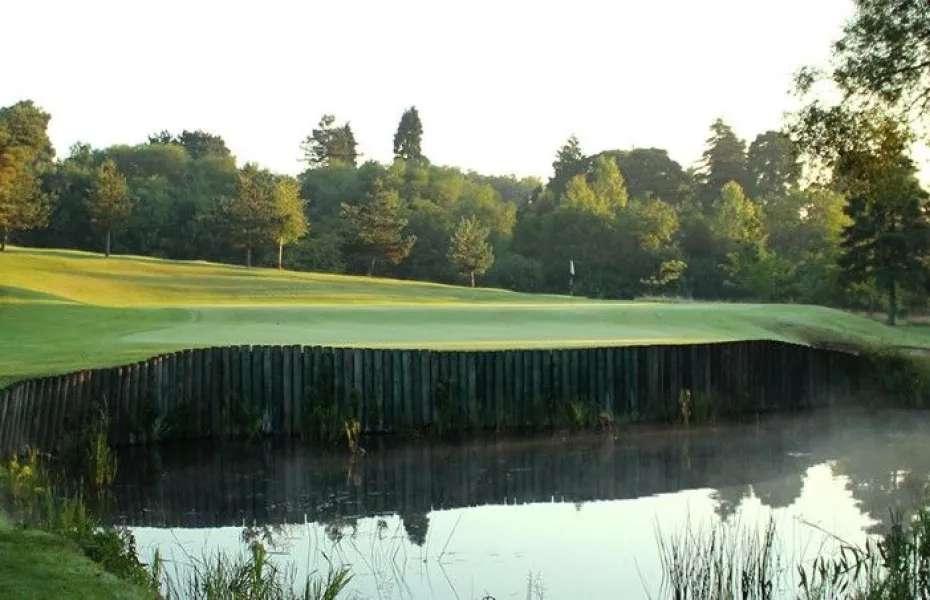
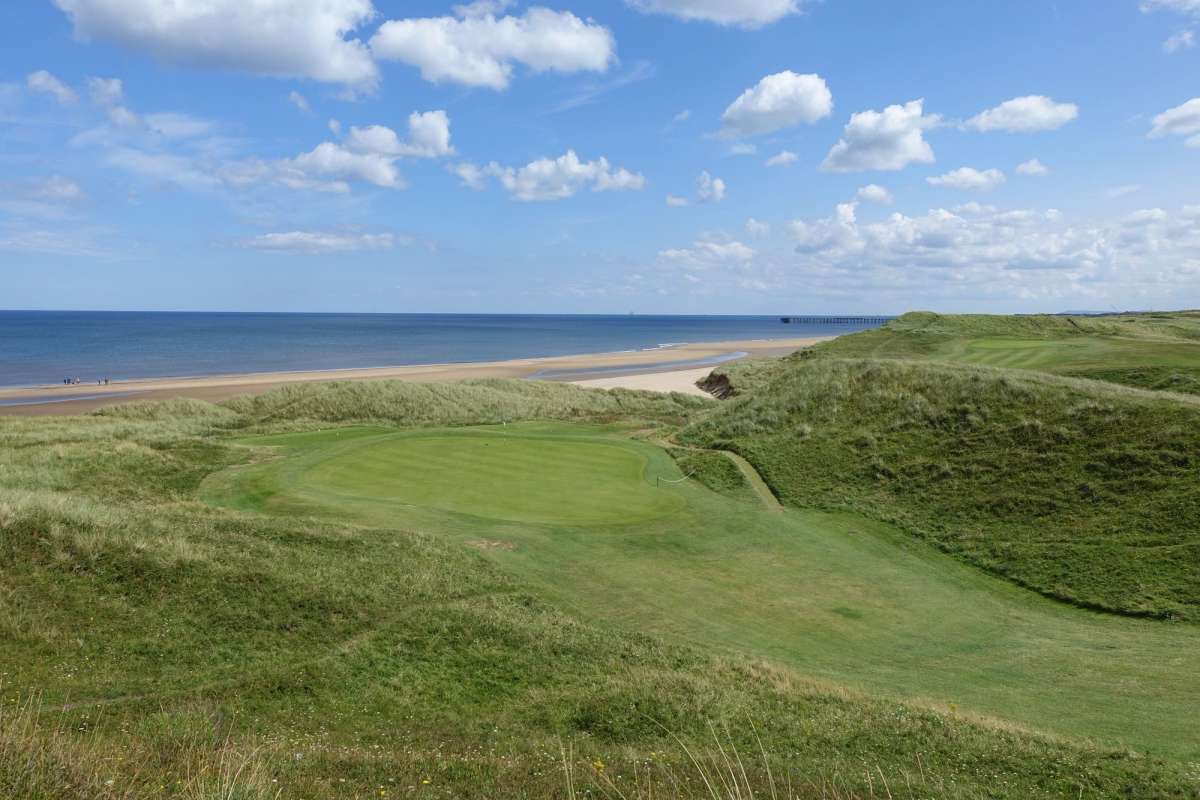
Host to the Seve Trophy in 2005, the fairways of the challenging Wellington course at the Wynyard Golf Club are laid out within a 200-acre wooded property where tees and greens have been built to USGA specification.
Host to the Seve Trophy in 2005, the fairways of the challenging Wellington course at the Wynyard Golf Club are laid out within a 200-acre wooded property where tees and greens have been built to USGA specification.
Wynyard Golf Club

3.5
American style course with houses surrounding most holes, very open and a bit on the slow side, best holes 15-17 otherwise not a lot to get me exited here , felt like a resort course i,m afraid


Rex Tattersall
The latest ranking of the Top 100 Golf Courses in the World serves as the ultimate global golf bucket list. Most members of our World Top 100 Panel are seasoned golfers, each playing 20-30 of these courses annually while travelling extensively over decades to form their opinions on others. We recognise that opinions vary—even among our panel members. Rankings are subjective, and there are undoubtedly 50 or more courses in the UK and USA alone that could easily fit onto this list. Links Golf Pilgrimages The rankings
California, United States
New Jersey, United States
Northern Ireland, United Kingdom
New York, United States
New York, United States

North East England may not be the first destination that comes to mind when planning a golf trip, but this former industrial heartland offers a remarkably rich and varied golfing landscape. Spanning the counties of Northumberland, Durham and Tyne & Wear, the region stretches from the wild Northumbrian coastline in the north to the links at Seaton Carew in the south, taking in parkland, moorland and coastal layouts along the way. Across these three counties, more than 50 courses are now ranked — a figure that reflects just how much quality golf exists here, and how many experiences reward the travelling golfer willing to venture off the beaten track. View the complete North East of England Rankings The current rankings represent a significant expansion of the region's listings, with Tyne & Wear appearing as a standalone county chart for the first time. A panel of dedicated reviewers with deep, first-hand experience of the region has shaped these standings, and the results paint a compelling picture of a golfing area with genuine world-class credentials alongside a strong supporting cast of quality local clubs. North East England Golf Courses: Rankings At A Glance Tyne & Wear Tyne & Wear makes its debut as a ranked county in this cycle, with three courses receiving official standings for the first time. The metropolitan county embracing Newcastle, Gateshead, Sunderland and the coastal suburbs has always housed some of the region's finest clubs — they simply hadn't previously been disaggregated from the broader North East listings. Northumberland Golf Club is the county's clear number one, an assessment that commands broad consensus across the panel. Located in Gosforth in the north of the city, this private members' club offers a demanding and beautifully presented parkland test that belies its suburban setting. Whitley Bay holds second position with Tyneside in third — a traditional parkland course set near the River Tyne with strong architectural bones and a devoted membership that has kept the layout in fine condition. For the full Tyne & Wear county rankings, visit the Tyne & Wear golf courses page. Durham Durham is anchored by Seaton Carew, one of the most significant links courses in English golf, and supported by a group of inland clubs that offer variety and quality in equal measure. The top five positions reflect the settled hierarchy at the upper end of the county. Seaton Carew Golf Club has been Durham's county number one since the panel first established Best in County rankings, and its status remains unchallenged. The club's founding in 1874 makes it the tenth oldest in England, and the layout carries the definitive architectural influence of Alister MacKenzie, who redesigned it in 1925, adding holes closer to the coast. With 22 holes spread across five possible configurations — the Old, Brabazon, Micklem, New and Bishop — Seaton Carew offers a flexibility that few clubs in England can match, and it holds a well-earned place in the England Top 100. Rockliffe Hall holds second, a luxury resort course near Darlington that has established itself as one of the region's most polished golfing experiences. Brancepeth Castle Golf Club is third, set within the grounds of a medieval castle and offering a parkland layout of considerable charm and character. Hartlepool climbs one place to fourth, edging ahead of Wynyard Golf Club, which drops one position to fifth. Both are strong inland courses that justify their places in the county's upper tier. Further down the table, Ramside Hall's Cathedral course rises to sixth, South Moor holds seventh, and the Prince Bishops' course at Ramside Hall makes a notable climb to eighth. Bishop Auckland holds ninth and Castle Eden rounds out the top ten. For the full Durham county rankings, visit the Durham golf courses page. Northumberland Northumberland is the jewel of the region. England's most northerly county delivers a concentration of coastal links and inland parkland courses that would compare favourably with any English county. Goswick Links leads the way as it has done since 2017, while Dunstanburgh Castle Golf Course makes the most significant upward move in this cycle, climbing to second and displacing Close House's Colt course in the process. Goswick holds its number one position and its place in the England Top 100. Established in 1890, the course sits a few miles south of Berwick-upon-Tweed and has been shaped over more than a century by Willie Park Junior, James Braid and F.W. Hawtree. The result is a links layout of genuine character: varied, challenging and rich with architectural history. Tom Mackenzie has also been overseeing a front nine upgrade project in recent years, ensuring Goswick continues to evolve. Dunstanburgh Castle, now second, is one of the most visually dramatic layouts in the country. Set on the Northumberland coast with fairways looking out towards Embleton Bay, James Braid extended the course to eighteen holes in 1920, and the combination of coastal scenery and architectural heritage makes Dunstanburgh one of the North East's most compelling experiences. Close House's Lee Westwood Colt course drops one position to third but remains one of the most impressive modern designs in northern England. Hexham climbs one place to fourth, a parkland course with deep roots: Harry Vardon laid out a course on the Spital estate in 1907, James Braid re-bunkered it in 1920, and Ken Cotton set out the layout broadly in play today in the early 1950s. Newbiggin makes the most dramatic move in the entire Northumberland rankings, rising to fifth. Alnmouth Golf Club holds sixth, Slaley Hall's Hunting course drops to seventh, and Bamburgh Castle slips one to eighth, with both remaining essential visits for anyone touring the county. Alnmouth Village climbs to ninth, and Matfen Hall (comprising the Douglas and Standing Stone nines) rounds out the top ten. For the full Northumberland county rankings, visit the Northumberland golf courses page. What the Rankings Tell Us Coastal Northumberland Leads the Region The concentration of quality along the Northumberland coastline is extraordinary. Goswick at the northern end, Dunstanburgh and Alnmouth in the middle, and Bamburgh and Newbiggin completing the coastal cluster give this stretch of North Sea shoreline a claim to be one of England's most underrated golfing corridors. All were shaped or influenced by architects of the calibre of James Braid, Willie Park Junior and F.W. Hawtree. Seaton Carew's Enduring Authority Durham's top spot has been occupied by Seaton Carew for as long as these rankings have existed — a tribute to the quality MacKenzie's 1925 redesign instilled in a course that pre-dates even the great architect's involvement by half a century. Its place in the England Top 100 reflects a national standing the course thoroughly deserves, despite the industrial backdrop that some visitors find unexpected. Tyne & Wear Earns Its Place The introduction of Tyne & Wear as a standalone ranking helps travelling golfers who are visiting the urban area golf clubs of Newcastle, Gateshead and the coastal suburbs. This will no doubt deepen on successive rankings. Golden Age Architecture Runs Through the Region It would be difficult to name another English region where the architectural fingerprints of James Braid are more evident. Goswick, Dunstanburgh, Hexham and Brancepeth Castle all carry Braid's influence, while MacKenzie's mark on Seaton Carew is definitive. Alongside Harry Vardon, F.W. Hawtree, Ken Cotton and Scott Macpherson, the region's architectural heritage is both deep and varied. Ranking History: North East England Northumberland Top 10, 2015 The Northumberland county rankings were revised in 2015, with the ranking being reduced from fifteen to ten courses. Close House's Colt course, opened by Lee Westwood in 2011, entered the rankings at number one — the first time Goswick had been displaced as county leader. Slaley Hall's Hunting course moved up to third, while Bamburgh Castle held fifth. Newbiggin and Dunstanburgh Castle were not included after the table was reduced. North East Best in County Rankings, 2019 In 2019, Goswick reclaimed the Northumberland number one position it had held before 2015. The Durham chart remained stable at the top, with Seaton Carew retaining its county lead. Whitley Bay entered the Northumberland rankings at tenth following Jonathan Gaunt's remodelling work. North East Best in County Rankings, 2023 The most recent update before the current cycle expanded all three county charts and introduced fifteen new entries across the region. Seaton Carew retained its Durham lead, Goswick held Northumberland's top position, and Dunstanburgh Castle rose to third in Northumberland. Matfen Hall, Linden Hall, Close House Filly, Newbiggin and Alnmouth Village all entered the Northumberland listings as new entries, while Bishop Auckland was the highest new Durham entry at tenth. Planning Your North East England Golf Trip The North East lends itself to a structured itinerary based around its three distinct golfing zones. The Northumberland coast is the centrepiece for most visiting golfers — a journey between Goswick in the north and Alnmouth in the south, taking in Bamburgh Castle and Dunstanburgh along the way, provides one of English golf's most scenic sequences of courses. Berwick-upon-Tweed serves as a natural northern base, with Alnwick a useful midpoint. Durham golf is anchored by Seaton Carew, which warrants a standalone visit for any serious golfer exploring the region. The links sit between Hartlepool and Teesside, and combining it with Brancepeth Castle inland makes for a compelling two-course day that covers both of the county's dominant styles. Rockliffe Hall, near Darlington, is the most resort-friendly option in the county for those travelling with non-golfers. The Tyne & Wear courses — Northumberland Golf Club, Whitley Bay and Tyneside — are all accessible from Newcastle city centre, making them a natural addition to any North East itinerary that begins or ends in the city. Newcastle Airport also provides the most practical entry point for golfers arriving from further afield. For the complete county rankings, visit the Northumberland, Durham and Tyne & Wear listing pages on Top 100 Golf Courses.
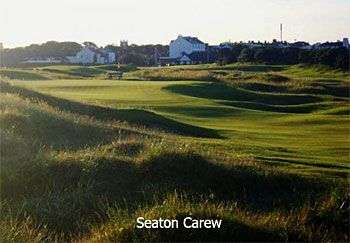
Top 10 Golf Courses in Durham 2015 Durham Best In County rankings updated Situated on England’s northeast coast, County Durham is steeped in history spanning more than a thousand years. Durham City, the county town, is the custodian of Durham Cathedral, which is perhaps the finest Norman building in Europe. The cathedral is not only a UNESCO World Heritage Site, but also the centrepiece of the magnificent Durham City skyline. The Durham County Golf Union governs men’s golf in the county, while the Durham County Ladies' Golf Association handles the ladies’ golfing requirements. Around forty golf clubs are affiliated to the respective governing bodies. Of these forty or so clubs, one in particular has a long and illustrious history. The Durham and Yorkshire Golf Club was founded in 1874 and this was the first golf club to be formed in the North East of England. Originally laid out as a 14-hole course, the club changed its name to Seaton Carew in 1887 and a few years later the course was extended to 18 holes. Today’s 22-hole Seaton Carew is not only the elder statesman of northeastern golf, but also the county’s best course and a perennial English Top 100 layout. There are some that find Seaton Carew’s industrial backdrop rather chilling, but those who have overcome their industrial phobia agree that this is a well designed, genuine links course and also an exacting test of golf. It will come as no surprise therefore to learn that Seaton Carew stays at the head of our Durham Best In County rankings. Ironically, Seaton Carew is the only course that remains in the same position within our 2015 Durham Top 10. Marc Westenborg of Hawtree Limted designed the bold and modern Rockliffe Hall in 2006 and it moves up to 2nd place, dislodging the old-fashioned parkland layout at Brancepeth Castle, which once contested for an English Top 100 position. It remains to be seen whether or not the course that Harry Colt routed across the old Brancepeth Castle deer park will be a future Top 100 contender. The 7,000-yard Wellington course at Wynyard Golf Club is Durham’s highest climber, up six places. Host to the Seve Trophy in 2005 (won by the Britain & Ireland team), this 1996 Hawtree design was incredibly well supported in our latest county survey. We welcome two new entries into our Durham Top 10… South Moor and Castle Eden make their first appearance at the expense of Barnard Castle and Bishop Auckland which narrowly missed the cut. To see our new 2015 Durham Top 10, click the link. If you have played golf extensively across any English county and would like to have your say, please contact me (keith@top100golfcourses.com). In the meanwhile a big thank you to everyone who contributed to our Durham Best In County ranking process. Keith Baxter Editor-in-Chief Top 100 Golf Courses

You don't need a four-figure budget, a private-club connection or an invitation from a member to play a course in the World Top 100. Top100 has collated the 10 cheapest visitor-accessible courses on our current World Top 100 Ranking, based on standard green fees. From a world-class links in Tasmania to a U.S. Open and Ryder Cup venue in New York, these courses offer the chance to play some of the best golf on the planet without the eye-watering green fees attached to many of their World Top 100 counterparts. 1. St Andrews Beach Golf Course (Victoria, Australia) World Ranking: 89th | Australia ranking: 6th | Green fee: A$139 (£74) Tom Doak’s first Australian mainland design, St Andrews Beach opened in 2004 on the Mornington Peninsula and has since become one of the country’s best-value, ranked courses. The public-access layout occupies 175 hectares of former grazing land, with wide fairways, rolling terrain and sandy natural contours that give several holes a links-like feel. Measuring just over 6,000 metres from the back tees, it is playable for a broad range of golfers, though the subtle greens ensure there is still plenty to think about. In a region known for outstanding golf, St Andrews Beach stands out not only for its quality but also for its accessibility, offering everyday golfers the chance to experience a Tom Doak design without the premium price tag often attached to courses of this calibre. 2. Bethpage Black (New York, USA) World Ranking: 58th | USA ranking: 28th | Green fee: From US$140 (£106) Bethpage Black has the rare distinction of being a World Top 100 course, a major championship venue and a public golf course. Located within Bethpage State Park on Long Island, the A.W. Tillinghast design opened in 1936 and has since hosted two U.S. Opens and the 2025 Ryder Cup. The Black is renowned for its difficulty, with narrow fairways, deep rough, large sculpted bunkers and elevated greens making accuracy essential. It is a demanding test, but one that remains remarkably accessible to everyday golfers. That combination of championship pedigree and public access is what makes Bethpage Black so unusual. Few golfers get the chance to play a course of this stature without needing a private-club connection or resort stay. 3. Paraparaumu Beach Golf Club (Wellington, New Zealand) World Ranking: 91st | New Zealand ranking: 2nd | Green fee: NZ$275 (£118) Set on the Kapiti Coast, north of New Zealand's capital city Wellington, Paraparaumu Beach has been one of the country’s most celebrated golf courses since Alex Russell designed it in 1949. The links has hosted 12 New Zealand Opens and has long been regarded as one of the country’s finest layouts. It is a relatively short course by modern championship standards, but the coastal wind, firm fairways, deep bunkers and undulating greens provide plenty of challenge. The split-fairway 17th is a particular highlight, forcing golfers to choose between two very different routes to the green. For international golfers, Paraparaumu offers the chance to experience a genuine piece of New Zealand golfing history without needing access to a private resort. 4. Fairmont Jasper Park Lodge Golf Course (Alberta, Canada) World Ranking: 73rd | Canada ranking: 2nd | Green fee: C$280 (£149) Set among the Canadian Rockies in Jasper National Park, Fairmont Jasper Park Lodge is one of Stanley Thompson’s most celebrated designs. Opened in 1925, the course winds through the valley beside Lake Beauvert, with snow-capped peaks providing a backdrop to almost every hole. The course combines wide fairways, elevated tees and strategically placed bunkers with the natural contours of the landscape. Thompson’s design rewards thoughtful play rather than simply demanding power, making it a course that can be enjoyed by golfers of different abilities. The result is a rare combination of classic golf and Canadian wilderness, with the surrounding mountains and forest making the journey between shots almost as memorable as the golf itself. 5. Barnbougle - The Dunes Course (Tasmania, Australia) World Ranking: 25th | Australia ranking: 3rd | Green fee: A$285 (£151) Barnbougle Dunes is about as close as Australia gets to a traditional seaside links. Set on Tasmania’s northeast coast, the course was designed by Tom Doak and Australian Mike Clayton and opened in 2004, establishing Barnbougle as one of the country’s premier golf destinations. The layout runs through towering coastal dunes, with wide fairways, natural contours and greens that follow the movement of the land. The wind is an ever-present factor, while the strategic design rewards golfers who think their way around the course rather than simply relying on power. For golfers seeking a genuine links experience outside the British Isles, Barnbougle Dunes is about as compelling as it gets, combining world-class golf with the rugged coastline of Tasmania. 6. Cape Wickham Golf Links (Tasmania, Australia) World Ranking: 47th | Australia ranking: 4th | Green fee: A$315 (£167) Cape Wickham occupies a spectacular stretch of coastline on King Island, sitting in Bass Strait between Tasmania and mainland Australia. Designed by American architect Mike DeVries, the links opened in 2015 and quickly established itself as one of the country's standout modern courses. The course makes the most of its remote coastal setting, with the opening five holes winding around Cape Farewell before the layout moves through sand hills and limestone outcrops. Several holes hug the shoreline, while the closing stretch heads towards the imposing Cape Wickham Lighthouse. The 18th provides a fitting finale, with the fairway doglegging around a sandy bay before reaching the home green, making Cape Wickham a memorable links experience from start to finish. 7. St Enodoc Golf Club - Church Course (Cornwall, England) World Ranking: 49th | England ranking: 4th | Green fee: £175 Set among towering dunes overlooking the Camel Estuary in Cornwall, St Enodoc’s Church Course is one of James Braid’s most distinctive designs. Founded in 1891, the course was transformed by Braid in the early 20th century and remains a spectacularly natural links. It is a relatively short par 69 at 6,010 metres, but its undulating fairways, dramatic elevation changes and formidable dunes create a test that demands imagination. The famous 6th is the standout, with the enormous Himalaya dune obscuring the green and making club selection particularly difficult. The course also has an unusual piece of history, with the 13th hole running alongside the churchyard where poet laureate John Betjeman is buried. 8. South Cape Owners Club (Gyeongsangnam-do, South Korea) World Ranking: 63rd | South Korea ranking: 2nd | Green fee: From KRW 350,000 (£195) Set on Namhae Island off the southeast coast of South Korea, South Cape Owners Club is a dramatic Kyle Phillips design where the ocean is visible from all 18 holes. The course opened in 2013 as part of a luxury resort development and has quickly established itself among Asia's most striking modern layouts. The course is framed by granite outcrops, coastal cliffs and rolling terrain, with bluegrass fairways contrasting against fine fescue rough. The standout stretch comes from the 11th onwards, culminating in two spectacular waterside par threes at the 14th and 16th. For golfers willing to make the journey to Namhae Island, South Cape offers a rare combination of world-class golf, dramatic coastal scenery and a luxury resort experience. 9. Utrecht De Pan Golf Club (Utrecht, Netherlands) World Ranking: 56th | Netherlands ranking: 1st | Green fee: From €235 (£198) Dating back to 1894, Utrecht De Pan is the second-oldest golf club in the Netherlands, with Harry Colt designing the current course in 1929. Set in secluded woodland near Utrecht, the layout is a classic heathland course, winding through pine, birch, oak and chestnut trees. De Pan has hosted the Dutch Open three times and is built around strategic rather than power golf. Several of its most memorable holes play over valleys of heather and sand, while the sixth and seventh demand particularly thoughtful tee shots and approaches. Recent restoration work by Frank Pont has helped return the course towards Colt’s original design, making De Pan a fascinating example of Golden Age heathland golf in the Netherlands. 10. Cruden Bay Golf Club - Championship Course (Aberdeenshire, Scotland) World Ranking: 70th | Scotland ranking: 10th | Green fee: From £205 Cruden Bay is one of Scotland’s most distinctive links, winding through towering dunes on the Aberdeenshire coast with the North Sea providing a constant backdrop. The course opened in 1899 after being laid out by Old Tom Morris and Archie Simpson, before Tom Simpson and Herbert Fowler remodelled it in 1926. Cruden Bay makes spectacular use of its natural terrain, with elevated tees, blind drives, punchbowl greens and fairways that rise and fall between the dunes. The 193-yard 4th, played from an elevated tee across a deep hollow, is one of several standout holes. There is plenty of character, too, from driveable par fours and back-to-back par threes to the feeling that every hole reveals something different. It is exactly the sort of course that rewards golfers willing to embrace its quirks. Green fees are based on standard 18-hole visitor rates, using international visitor rates where applicable. All prices are peak-season rates and do not take twilight, off-season or promotional rates into account. Prices are correct at the time of writing and are subject to change.