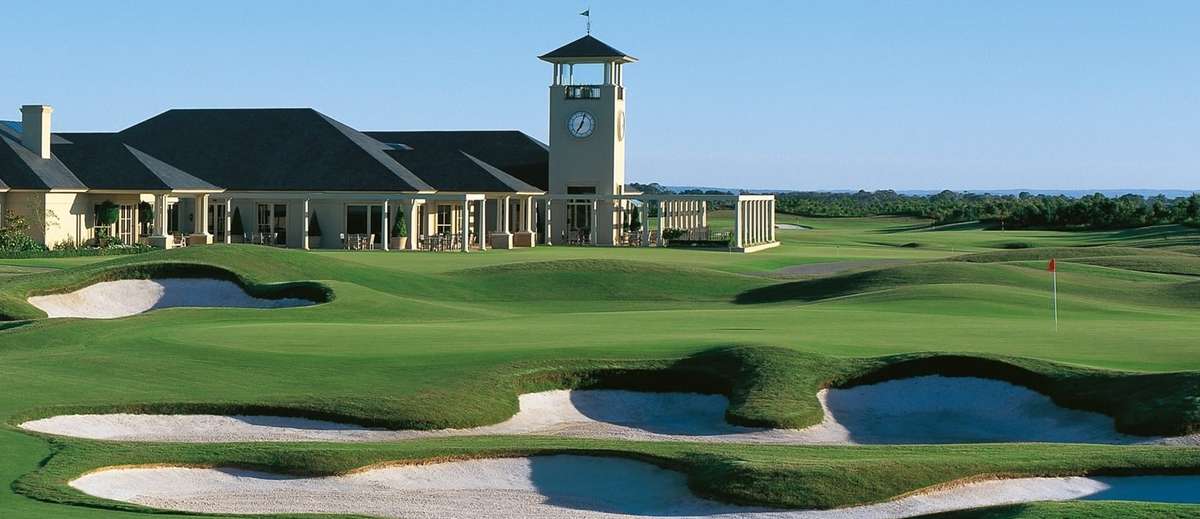
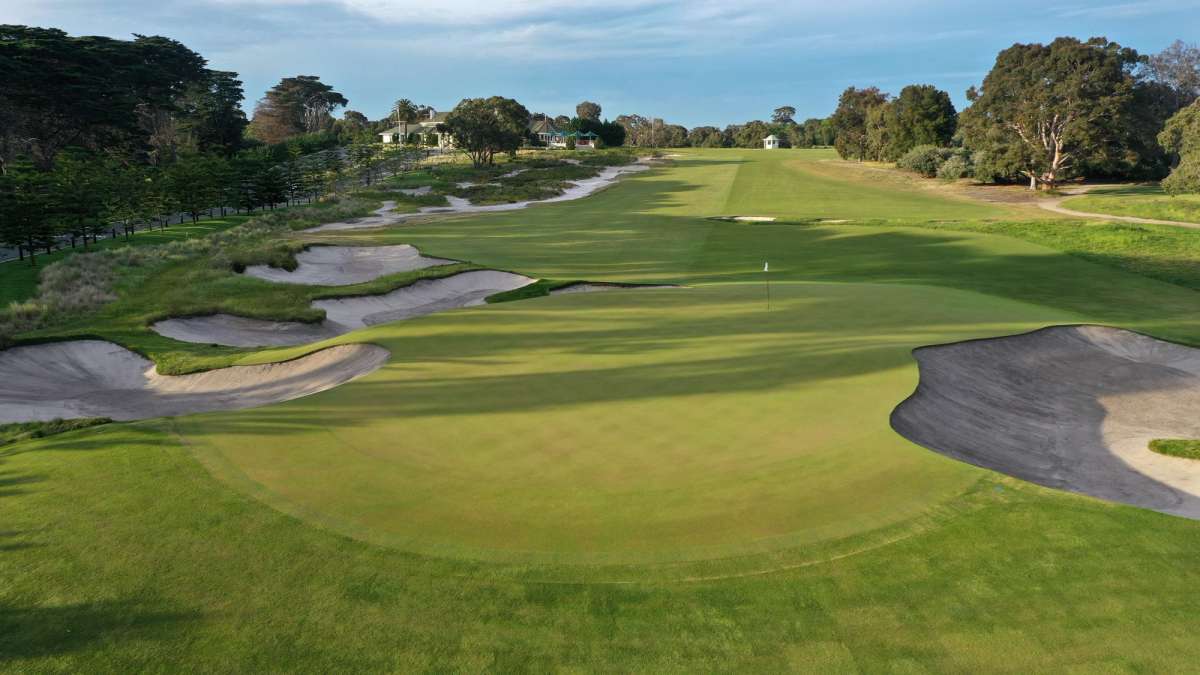
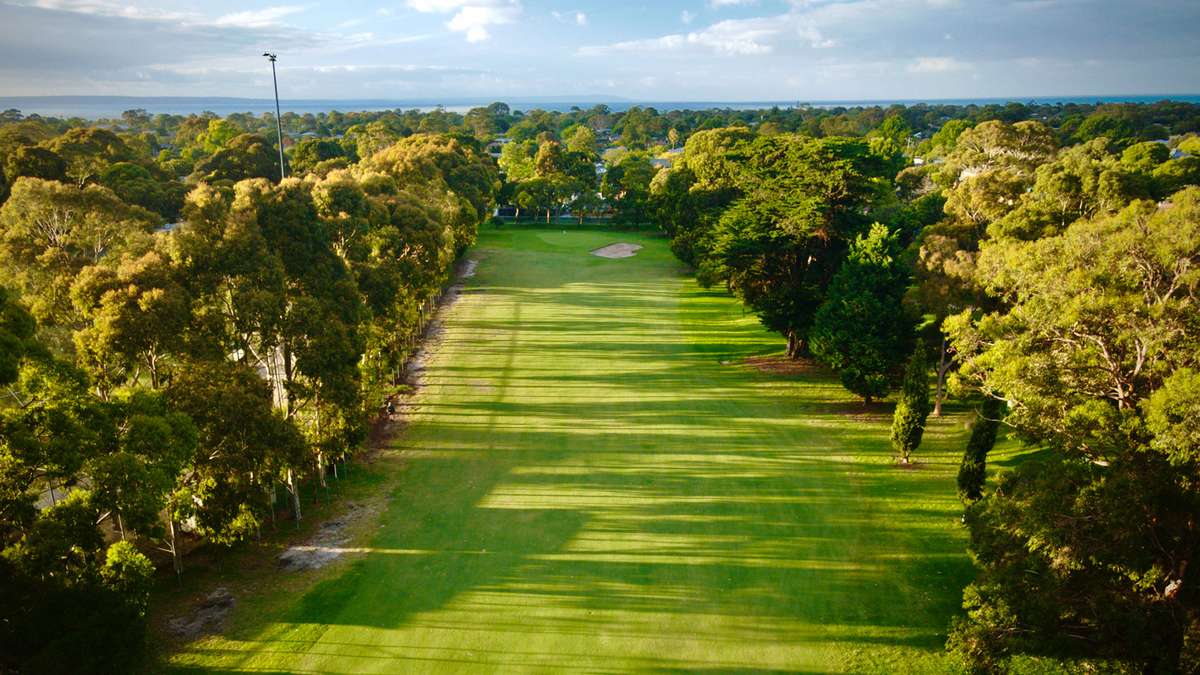
Unlike most of its peers in the Sandbelt, at Yarra Yarra Golf Club there is a distinct shift in scene and strategy between the two nines.


Unlike most of its peers in the Sandbelt, at Yarra Yarra Golf Club there is a distinct shift in scene and strategy between the two nines.

5
Yarra Yarra is an impressive property!
As you turn off Warrigal Rd, through the gates and along the entrance road it becomes clear that you have entered a world class facility. The presentation resembles the old classics around the world. The Spanish style clubhouse adds to the drama.
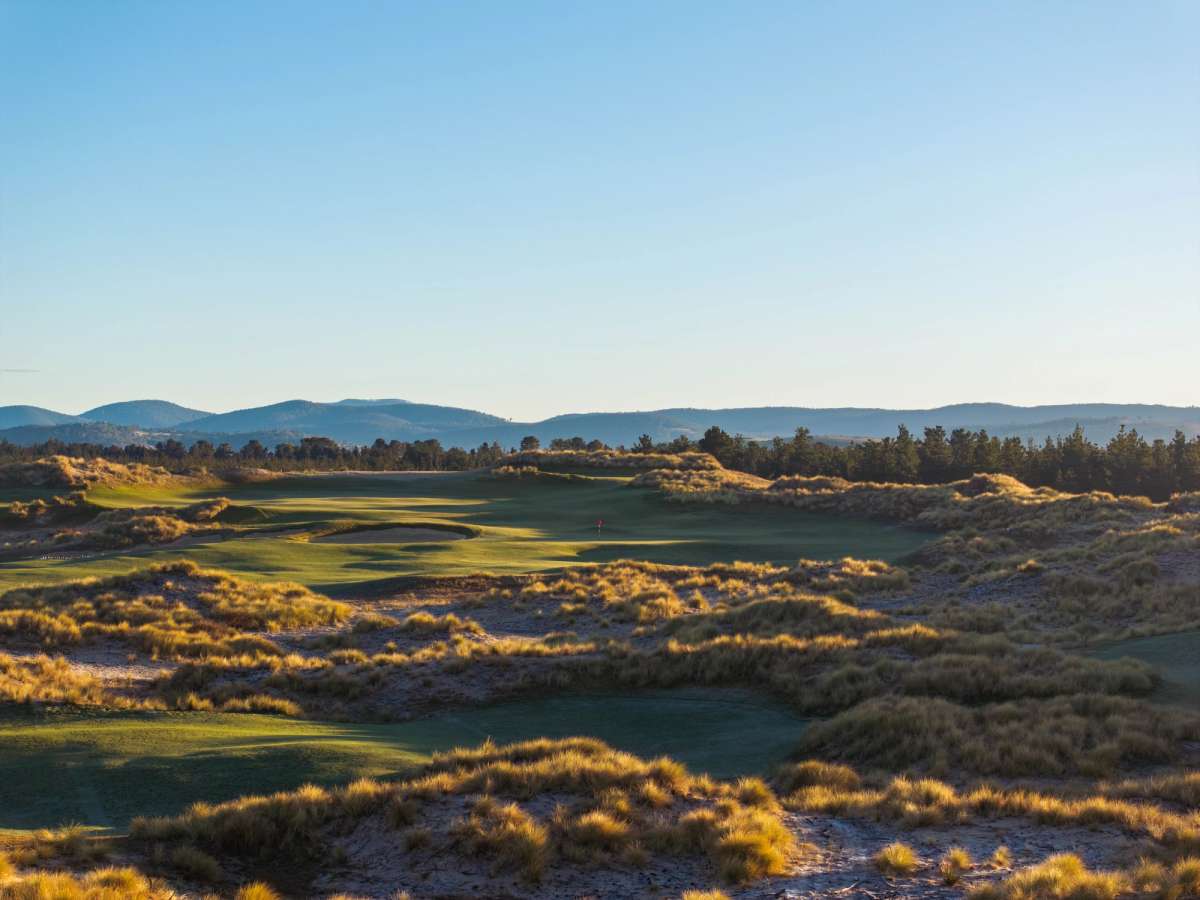
Yarra Yarra is a 'sandbelt course' and is built on rolling sandy terrain ideal for golf. It does not have the elevation changes of Royal Melbourne or Victoria but the quieter movement enabled Alex Russell to build a different style of sandbelt course.
Over the years inevitably changes were made by well meaning officials, and more recently the club appointed Martin Hawtree to oversee changes to the course but it didn't work out, and Tom Doak's Renaissance men were asked to assist instead. One of Doak's most experienced men- Brian Slawnik- became the man on the ground- and the changes were welcomed. The recent work by Brian Slawnik has returned the course to the look and feel Russell espoused.
The course had become a little overgrown, so trees and undergrowth have been cut back, allowing the spectacular bunkering to dominate. The green complexes are the key to the course, and they have once again become the focus. The greens themselves are pure poa annua, but have always played firm and true. The bunkering is clean and crisp, and now Slawnik has added more turf around the greens as run offs and to provide a turf connection to the next tee. The combination is impressive.
Yarra Yarra was a torchbearer when it introduced equality for women members from the outset. The course has always appealed as a venue for womens golf because it is a relatively easy walk, is not overly long, and is challenging but quite playable for players of different abilities.
Brian Slawnik's restoration work has met with the club's focus on improving the quality of the course for member play rather than tournament set ups. Integrating tees with greens has helped with the flow of play, and with reduced carry off the tees, and a new set of forward tees Yarra Yarra will cater for children, elders, those with slow swing speeds- as well as the stronger golfers.
Yarra Yarra is one of 8 clubs in The Melbourne Sandbelt- one of the great golfing destinations in the world. It is not a long course, but it is a championship course, and is a nice complement to Royal Melbourne & Kingston Heath… As such it should be on every golfers wish list!
Peter Wood is the founder of The Travelling Golfer – click the link to read his full review.
Peter Wood
The latest ranking of the Top 100 Golf Courses in the World serves as the ultimate global golf bucket list. Most members of our World Top 100 Panel are seasoned golfers, each playing 20-30 of these courses annually while travelling extensively over decades to form their opinions on others. We recognise that opinions vary—even among our panel members. Rankings are subjective, and there are undoubtedly 50 or more courses in the UK and USA alone that could easily fit onto this list. Links Golf Pilgrimages The rankings
California, United States
New Jersey, United States
Northern Ireland, United Kingdom
New York, United States
New York, United States
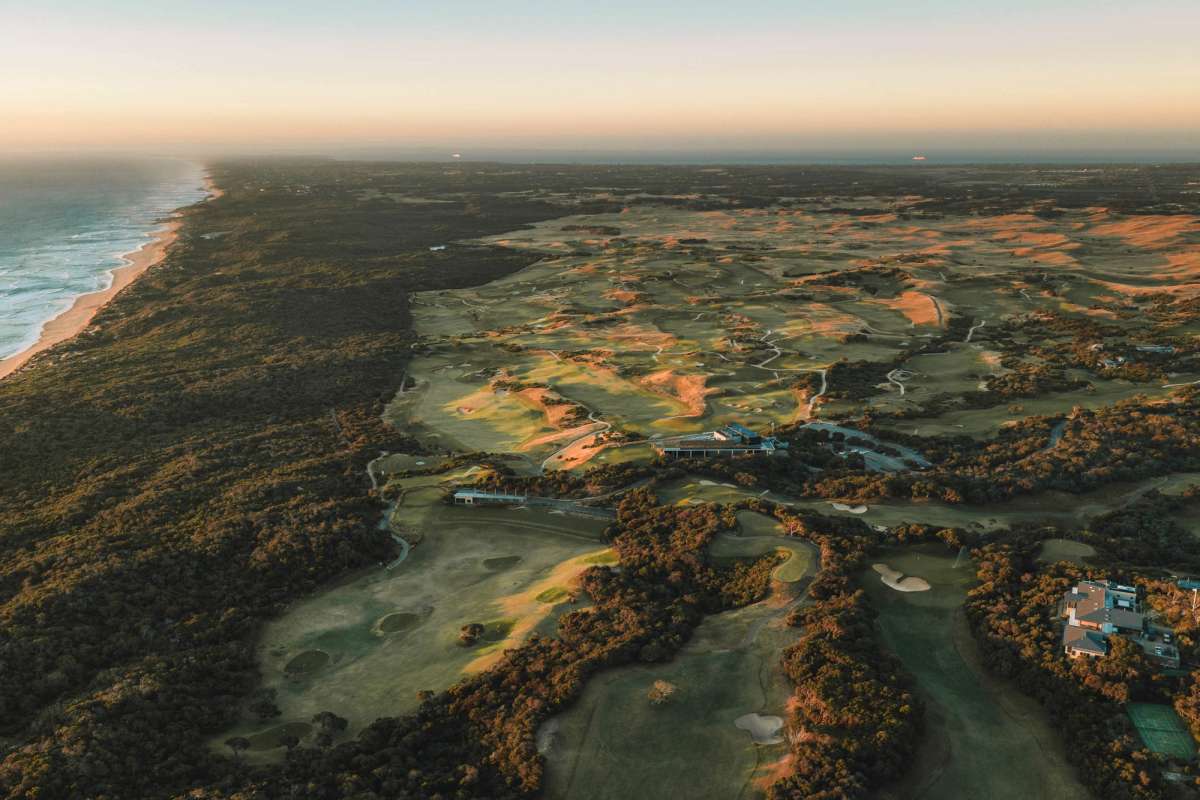
Just 90 minutes from Melbourne, the Mornington Peninsula combines exceptional golf with beaches, wineries, restaurants and wellness experiences, making it an ideal addition to an Australian golf holiday. Melbourne provides one of the world’s great golf cities, with the famous Sandbelt courses on its doorstep. But there is another destination worth adding to the itinerary. Around 90 minutes south-east of Melbourne, the Mornington Peninsula is one of Australia’s best-known coastal escapes. Vineyards and cellar doors sit alongside beaches, seaside towns and rugged stretches of coastline, while some of Victoria’s most interesting golf courses are scattered across the region. At the centre of the golf experience is The National Golf Club, a private members’ club offering 72 holes of golf across two sites. Three of its four courses sit together at Cape Schanck, where The Old, Moonah and Gunnamatta provide three distinctly different experiences. The fourth, Long Island, is located at Frankston, closer to Melbourne, and provides a contrasting Sandbelt experience. Three courses at Cape Schanck One of the strengths of a visit to The National is the contrast between its three Cape Schanck courses. They occupy the same dramatic coastal property, but different architects, routings and characteristics give each its own identity. The Old Designed by Robert Trent Jones Jr, The Old was The National’s original course at Cape Schanck. The course moves through heaving terrain, large dunes and native coastal vegetation, with elevation changes and views across Bass Strait contributing to its distinctive character. The dramatic coastal setting is particularly evident around the middle of the round, but the landscape influences the experience throughout. It is a course where the terrain is always present, whether shaping a shot, changing the view or influencing the way the wind affects play. Moonah Greg Norman and Bob Harrison’s Moonah course provides a different scale and feel. Serpentine fairways move through towering dunes and established Moonah trees, creating a sense of space while still placing a premium on positioning from the tee. Strong par-fives, significant fairway movement and exposed coastal conditions are recurring features. The design feels expansive, with the dunes and native vegetation framing the golf rather than competing with it. Gunnamatta Gunnamatta was redesigned by Tom Doak and opened in its current form in 2019. Doak made use of the site’s natural cup-and-bowl terrain, with generous fairways giving golfers room from the tee before imaginative green shapes, contours and strategic bunkering ask more questions closer to the hole. The contrast with its neighbours is immediate. Gunnamatta encourages golfers to think about angles, slopes and where to position the ball, creating a course that can reveal something different with each round. Long Island The National’s fourth property sits on the sandbelt, between central Melbourne and the Mornington Peninsula. Originally designed by Gordon Oliver, Long Island has recently undergone a significant renovation by OCM Golf. The project has introduced three distinct 18-hole routings, The Original, The Farm and The Track, using shared fairways, double greens and alternate tees to create different ways of playing across the same piece of land. It provides a very different experience from Cape Schanck, replacing the large coastal dunes with the firmer ground, vegetation and strategic qualities associated with Melbourne’s Sandbelt. Playing The National as a visitor While The National is a private members’ club, interstate and overseas golfers can request tee times directly with the Club, subject to availability. Victorian residents who are not members must be invited and play with a member. Travelling golfers should plan ahead, particularly if hoping to experience more than one of the Cape Schanck courses during their stay. For those able to arrange access, the opportunity to play three courses from three different architects at the same property makes Cape Schanck an easy place to dedicate several days rather than simply squeezing in a single round. More golf on the Peninsula The National forms part of a much broader golf region. The Dunes, St Andrews Beach and Moonah Links are among the public-access courses that can be incorporated into a Mornington Peninsula itinerary, allowing visiting golfers to build several days of golf without spending large amounts of time travelling between rounds. The Dunes sits among the rolling sand dunes of the Peninsula’s Cups region and is one of the area’s best-known public-access layouts. That concentration of golf is one of the Peninsula’s advantages. A trip can combine private and public courses while still leaving time to experience the region away from the course. Stay at Jackalope Golf might provide the reason for the trip, but where you stay can become an important part of the experience. Set among the vines at Merricks North, Jackalope offers a very different setting from a traditional golf resort. The design-led hotel sits within an 11-hectare vineyard and combines accommodation with wine, dining, a spa and a 30-metre infinity pool overlooking the vines. For a golf trip, it works particularly well as a base from which the days can begin and end with something other than golf. Rare Hare provides relaxed vineyard dining with views across the property, while Doot Doot Doot offers the hotel’s more considered dining experience beneath its distinctive 10,000-globe chandelier. Wine tastings are available on the estate, and the cellar door provides an opportunity to explore wines produced from the vineyard surrounding the hotel. For couples or groups travelling together, it makes it possible to combine golf with the food, wine and accommodation experience that has made the Mornington Peninsula a destination in its own right. A different kind of recovery at Alba Not everyone travelling on a golf trip necessarily wants to play every round. Alba Thermal Springs and Spa at Fingal provides an easy off-course option, whether it is a golfer looking for some recovery between rounds, a partner looking for a day away from the course, or a family travelling together. Set among native vegetation, Alba combines indoor, open-air and outdoor geothermal pools with spa treatments and dining at Thyme. Its general springs welcome guests of all ages, with those under 16 accompanied by an adult, while the spa and private springs experiences are designed for older guests. It also works naturally within a golf itinerary. A morning round can be followed by an afternoon in the springs, while those sitting out a day of golf can spend considerably longer exploring the pools, spa and dining experiences. For couples, private bathing and spa options provide another way to spend time together on the Peninsula. For families, the general springs offer an activity that does not rely on everyone sharing the same enthusiasm for golf. Beyond golf The same principle applies across the wider Mornington Peninsula. More than 50 cellar doors are spread across the region, with Pinot Noir and Chardonnay particularly closely associated with the Peninsula’s cool-climate vineyards. Restaurants, breweries, farm gates and local producers add further options for an afternoon or evening away from the course. Then there is the coastline. The Peninsula sits between the calmer waters of Port Phillip and the more exposed ocean coastline of Bass Strait, creating everything from family-friendly bay beaches to surf beaches, cliffs, coastal walks and lookouts. That variety matters when travelling as a couple, family or mixed group. Golfers can build the trip around the courses without requiring everyone else to build their holiday around golf. Building the itinerary For international and interstate golfers already travelling to Melbourne, the Mornington Peninsula fits naturally alongside a Sandbelt itinerary. Rather than treating Cape Schanck as a day trip, spending several nights on the Peninsula creates the opportunity to experience The Old, Moonah and Gunnamatta individually, add one or two of the region’s public courses and still leave room for the experiences that sit beyond golf. Long Island can provide another National experience closer to Melbourne, while Jackalope, Alba, the region’s wineries and the coastline give travelling partners and non-golfers their own reasons to make the trip. That is what separates the Mornington Peninsula from simply being somewhere with good golf. The courses may bring golfers south from Melbourne, but the combination of golf, accommodation, food, wine, coastline and wellness makes it somewhere worth staying.
Australia has earned its reputation as one of the world's great golf destinations, with courses that rival anything found in Scotland, Ireland, or the United States. From the legendary sandbelt layouts of Melbourne to the windswept links of Tasmania, the country offers an extraordinary diversity of world-class golf experiences. The latest Top 100 rankings showcase not just the elite courses that golfers travel halfway around the globe to play, but the remarkable depth of quality that extends well beyond the marquee names. This year's rankings reflect a comprehensive reassessment by a new panel featuring significantly expanded global voices with deep play experience across Australia's finest layouts. With 41 courses climbing and only six maintaining their positions, these rankings capture the dynamic state of Australian golf as it continues to evolve. Six Australian courses now occupy positions in the World Top 100, cementing the nation's status alongside the game's most celebrated golfing regions. 2025/26 Rankings: Consistency Meets Change 🏆 The top of Australian golf tells a story of enduring excellence. Royal Melbourne (West), Kingston Heath, Barnbougle (Dunes), and Cape Wickham have occupied the first four positions since 2012—a remarkable 13-year run that speaks to their timeless quality. These aren't courses that rely on gimmicks or resort amenities; they're pure golf experiences that have stood the test of time and the scrutiny of thousands of discerning players. ⭐ The biggest news arrives at number 10, where Seven Mile Beach makes an immediate impact as the highest new entry. The Clayton DeVries & Pont design, which opened at the end of 2025 near Hobart, joins three Barnbougle layouts in Tasmania's Top 10. This marks the first time since 2017 that a new course has broken into the Top 10, underlining the significance of this links masterpiece. 🌏 Beyond the Top 100 featured here, Australia boasts nearly 200 additional courses ranked across state and territory listings, demonstrating a depth of quality that few nations can match. 2025/26 Top 100 At A Glance The Unchanged Elite (All World-Ranked) 🌍 The top six positions remain exactly as they were in 2024, with all six courses also holding positions in the World Top 100: Royal Melbourne (West) - Victoria (World #6) Kingston Heath - Victoria (World #17) Barnbougle (Dunes) - Tasmania (World #25) Cape Wickham - Tasmania (World #47) New South Wales GC - New South Wales (World #68) St. Andrews Beach - Victoria (World #89) The Game-Changer 🎯 #10 Seven Mile Beach - Tasmania (NEW ENTRY) The Rising Stars ⬆️ Exceptional Climbers (15+ places): 🥇 RACV Healesville #43 (▲32 from #75) - Victoria 🥈 Narooma #70 (▲24 from #94) - New South Wales 🥉 Rosebud (North) #75 (▲22 from #97) - Victoria Royal Sydney #28 (▲18 from #46) - New South Wales Tasmania #68 (▲16 from #84) - Tasmania Major Climbers (10-14 places): Cypress Lakes #74 (▲12) - New South Wales Federal #87 (▲11) - Australian Capital Territory Curlewis #60 (▲10) - Victoria Amstel (Ranfurlie) #77 (▲10) - Victoria Strong Climbers (6-9 places): Commonwealth #19 (▲9) - Victoria Port Fairy #35 (▲8) - Victoria Portsea #36 (▲8) - Victoria Elanora #47 (▲8) - New South Wales St. Michael's #69 (▲8) - New South Wales 13th Beach (Beach) #23 (▲6) - Victoria New Entries 🆕 Murray Downs #84 - New South Wales The Heritage (St. John) #89 - Victoria Yarrawonga (Murray) #90 - New South Wales Noosa Springs #97 - Queensland View Complete Rankings 🔗 For the full Top 100 Australian golf courses with detailed information, visit the Australian rankings page. State and Territory Rankings: 🏛️ Australian Capital Territory 🌊 New South Wales 🌏 Northern Territory ☀️ Queensland 🍷 South Australia 🌲 Tasmania 🏙️ Victoria 🦘 Western Australia Best Golf Courses by State and Territory 🏙️ Victoria Dominates (40 courses, 40%) Victoria claims 40 of the 100 ranked courses, with the Melbourne sandbelt accounting for much of this concentration. The world's densest collection of championship courses sits within a 20-kilometre radius of central Melbourne. Five of Australia's top ten courses call Victoria home, including Royal Melbourne's twin masterpieces, Kingston Heath, Victoria, and St. Andrews Beach. 🌊 New South Wales (22 courses, 22%) Led by New South Wales Golf Club at Botany Bay at number five, the state's strength extends from Sydney's premium courses through exceptional coastal layouts along the south coast. Royal Sydney's remarkable 18-place climb to #28 demonstrates renewed appreciation for Gil Hanse’ new design. 🌲 Tasmania (7 courses, 7%) Tasmania punches well above its weight with seven courses, including four in the Top 10. This island state has evolved from regional player to world-class destination, with Barnbougle Resort's three layouts and Seven Mile Beach leading the charge. ☀️ Queensland (12 courses, 12%) Royal Queensland leads at #33, with the state offering strong resort golf experiences across tropical locations from the Gold Coast to the Whitsundays. 🦘 Western Australia (10 courses, 10%) Lake Karrinyup leads at #26, with Perth's courses offering quality golf in a region that sees fewer international visitors but rewards those who make the journey. 🍷 South Australia (7 courses, 7%) Royal Adelaide at #12 anchors the state's golf scene, with strong depth across Adelaide's parkland courses and coastal layouts on the Fleurieu Peninsula. 🏛️ Australian Capital Territory (2 courses, 2%) Royal Canberra at #27 and Federal at #87 (up 11 places) represent the nation's capital with distinction. What the Rankings Tell Us 🏆 Consistency at the Summit: Thirteen Years of Excellence The top four positions have remained unchanged: Royal Melbourne (West), Kingston Heath, Barnbougle (Dunes), and Cape Wickham. Royal Melbourne has held the number one position since the first Australian rankings were compiled in 2007, an 18-year reign that reflects its status as one of the world's truly great courses. 🌟 Melbourne Sandbelt: The World's Premier Golfing Precinct Five of the top 12 Australian courses reside in Melbourne's sandbelt, and 12 of the top 20 call Victoria home. This concentration of excellence within such a compact geographic area remains unique in world golf. Royal Melbourne's twin courses occupy positions one and nine, while Kingston Heath, Victoria, Peninsula Kingswood (x2), Metropolitan and Woodlands all rank in the top 20. Commonwealth's nine-place jump to #19 following the Doak /Slawnik renovation adds another strong voice to this remarkable chorus. 🌲 Tasmania's Emergence as World-Class Destination Tasmania now hosts four courses in the Top 10—a remarkable achievement for an island state with a population of just over 500,000. Barnbougle Resort's three layouts (Dunes #3, Lost Farm #7, Bougle Run #61) created the initial momentum. Seven Mile Beach's arrival at #10 confirms this isn't a one-off phenomenon but a sustained elevation to world-class status. The Clayton DeVries & Pont design at Seven Mile Beach fulfils the promise made in the 2021 rankings article, which predicted a major impact upon opening. Set among coastal dunes near Hobart, the course offers genuine links golf with views across Storm Bay. The routing makes brilliant use of dramatic duneland, with fairways that tumble through valleys and greens perched on plateaus. King Island, situated in Bass Strait between Tasmania and Victoria, hosts both Cape Wickham at #4 and Ocean Dunes at #32. Both courses remain firmly in the Top 50, confirming the island's status as a must-visit destination for serious golfers. Ocean Dunes fell steeply due to conditioning issues that detrimentally affected play. A Journey Through Australian Golf: 2012-2024 📅 2012: The First Top 100 Expansion The 2012 rankings marked the expansion from a Top 50 to Top 100, with Barnbougle Lost Farm hurtling in at an astonishing #5. This 20-hole links on Tasmania's northeast coast signalled the beginning of Tasmania's transformation. Twelve new courses entered, including Healesville at #35 and Hamilton Island at #41. St Andrews Beach climbed 13 places to #13. 📅 2014: Consolidation and Refinement Just six new entries made 2014 the most selective update. Stonecutters Ridge debuted at #64 as Sydney's first Greg Norman course, while Kalgoorlie Golf Course entered at #73. Bonnie Doon returned at #80 during its Clayton/Ogilvy redesign. 📅 2017: The King Island Revolution Cape Wickham's debut at #8 represented the second course to break into the Top 10 since rankings began. The Mike DeVries and Darius Oliver collaboration immediately established itself as one of Australia's premier designs. Ocean Dunes ranked at #35, giving King Island two nationally recognised courses. Royal Canberra rose 21 to #29, and Bonnie Doon climbed 31 to #49 following OCCM renovations. 📅 2019: Tom Doak's Impact Emerges Cape Wickham continued its ascent to #5, while Royal Adelaide returned to the Top 10 at #9 following Tom Doak's restoration. Cathedral Lodge debuted at #14, Peninsula Kingswood (South) entered at #36, and Ocean Dunes surged 13 spots to #22. The top three positions remained unchanged, establishing what would become a 13-year pattern of consistency. 📅 2021: Peninsula Kingswood's Breakthrough Peninsula Kingswood's North course soared 14 places to #10, and South climbed 12 to #24. The National's Gunnamatta course made the biggest jump, up 29 positions to #12 following Tom Doak's overhaul. Pipeline projects at Seven Mile Beach and Arm End in Tasmania were announced, with predictions that both would "have a big impact on future rankings." 📅 2024: Fresh Panel Assessment The top three maintained their familiar order. Barnbougle Lost Farm rose two to #5, Peninsula Kingswood (North) climbed two to #8, and Lonsdale Links debuted at #34. Yarra Yarra rose five to #26 as Doak's restoration gained recognition. The 2024 article noted Seven Mile Beach was "due to open at the end of this year"—a prediction now confirmed with the course arriving at #10. Looking Ahead 🔮 Seven Mile Beach's immediate Top 10 arrival demonstrates that Australian golf continues to produce courses capable of competing at the highest level. The Clayton DeVries & Pont design sets a new benchmark for modern Australian course development. As the course matures and more panellists experience it, further upward movement seems likely. The long-awaited Arm End project in Tasmania remains in development, with OCM promising to add another distinctive layout to Tasmania's growing reputation. The project's multi-use public recreation reserve concept offers a potentially new model for sustainable course development. Darius Oliver's clifftop project on Kangaroo Island in South Australia continues to progress. Oliver's track record with Cape Wickham and Ocean Dunes suggests this project could eventually rival those courses. The target completion date of late 2025 or early 2026 means the next ranking revision could see Kangaroo Island join King Island as a remote island hosting world-class golf. Beyond new construction, ongoing restoration and renovation work at established courses will continue to influence rankings. Tom Doak's multi-phase restoration at Yarra Yarra shows positive momentum, while numerous sandbelt courses pursue sympathetic enhancement projects. The collective impact of these efforts should elevate the overall standard of Australian golf. For the complete Top 100 Australian golf courses rankings with detailed course information and world rankings, visit the Australian rankings page.
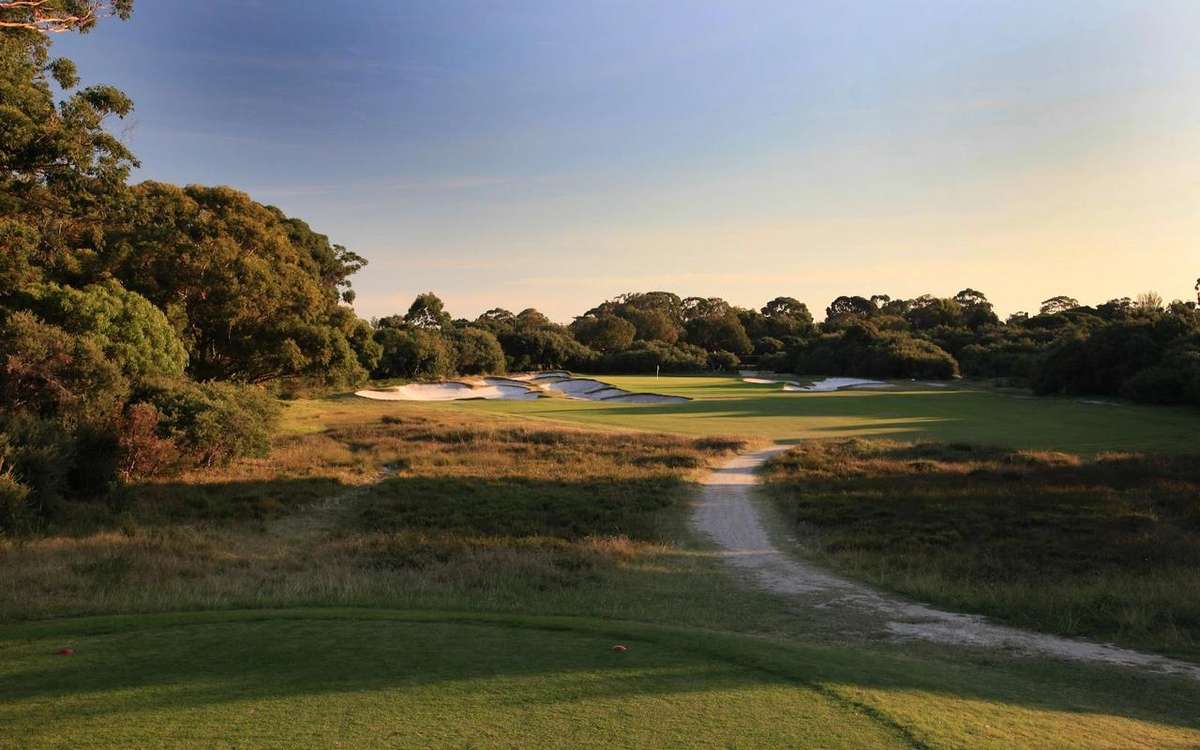
This is the last of three articles related to the re-ranking of our regional listings for Australia. We’ve already published updates for Australian Capital Territory and New South Wales in edition 1, followed by South Australia, Tasmania and Western Australia in edition 2 so this last one deals with the states of Queensland and Victoria. We feature a QLD Top 40 and a VIC Top 100 so we now rank more than 300 courses in seven regions across the country. The only geographical area that we’ve not updated is Northern Territory because we only promote one course (Alice Springs) from the eleven that are located within that vast Outback desert landscape. Queensland Leapfrogging one place above Brookwater, the Royal Queensland Golf Club course at Eagle Farm (pictured above) is once again top of the Queensland chart (even though it slipped two places in the recent national chart update to #36). Originally set out by Carnegie Clark in the early 1920s, the layout was significantly remodelled by Mike Clayton early in the new millennium due to work being carried out on the construction of a new bridge across the Brisbane River. Capricorn The 18-hole layout at Capricorn Resort Golf in Yeppoon advances an impressive ten places to #9 in the state listings, a move that is also good enough to see it enter the national chart at #76. After quite a few years in the doldrums, the Karl Little-designed Championship course at this former 36-hole venue is obviously now benefitting from an increased level of investment by its new Chinese owners. Kooralbyn Valley Another big leap up the QLD chart (from #24 to #11) by the Kooralbyn Valley Golf Course sees this 18-layout also debut in the Australian Top 100 at #90. Like Capricorn, the golf facility has had severe financial difficulties to overcome in recent years but this Desmond Muirhead-designed track is now flourishing following substantial renovation work. Mirage Also climbing thirteen places in the regional chart [to #27], the course at Mirage Country Club in Port Douglas is a late 1980s Peter Thomson and Mike Wolveridge production that has been upgraded in recent years by Wolveridge, who retired to the area. It’s a game of two halves at Mirage, with the front nine set on the beach side of the main highway and the back nine on the clubhouse side of the road routed around the mangroves. Virginia The highest of three new entries arrives at #28 and it’s the Championship course at Virginia Golf Club in Banyo Brisbane which was founded in 1928 with a 9-hole course before another nine holes were added five years later. Another nine has since been added so the modern day set up at the club comprises the 18-hole Championship course and the 9-hole Heritage course. The other two new entries in the Queensland table are Coral Cove [at #29] and Hervey Bay [at #30] whilst the three courses that drop out and revert to GEM status are Arundel Hills (now closed) which was #14, Noosa [formerly #32] and Redcliffe [previously #36]. Victoria The West course at Royal Melbourne Golf Club (pictured above) holds off a strong challenge by Kingston Heath to retain its #1 status in the Victoria listings. The eighteen holes in play nowadays originate from a 27-hole design produced by Alister MacKenzie in 1926 which eventually became the 18-hole West and East layouts after subsequent work from both Mick Morcom and Alex Russell. St Andrews Beach The course at St Andrews Beach rises two places to #9 in the Victoria chart and this modest upward movement is reflected in the national listings, where it progresses four places to #16. This Tom Doak design has been as high as #12 in a previous edition of the Australian chart so it’s heading back in the right direction. A reviewer wrote about it a couple of months ago: “great fun holiday golf… it is also great value as well and well worth the drive down… it makes a great alternative to the Melbourne sandbelt courses… a new clubhouse is in the process of being built so the facilities are a bit rustic… if in the area I would highly recommend making the journey down to play here.” Lonsdale Links Further down the chart, Lonsdale Links at Point Lonsdale soars eighteen places up to #18, having also made a big impact in the recent Australian Top 100 when it was the highest new entry at #34. The club has had an 18-hole layout in play since 1954 but it’s the extensive re-design by OCM in 2020 that’s really put the course on the golfing map, with the design company introducing a host of classic template holes such as Redan, Biarritz and Double Plateau. Sandy Golf Links Another course rocketing up the Victoria chart is Sandy Golf Links in Cheltenham, up thirty-four to #30 – and new in the national chart at #74. It’s another recent OCM project that has seen the total revamp of the old Vern Morcom-designed Sandringham Golf Course, as it was originally called. The new facility also includes the Australian Golf Centre which is home to Golf Australia and the PGA of Australia. RACV Cape Schanck Another big mover is the course at RACV Cape Schanck on the southernmost tip of the Mornington Peninsula, rising fourteen rungs on the Victoria ladder to #34 (and new at #83 in the national chart). Designed by Robert Trent Jones Jnr. and opened for play almost forty years ago, this tree-lined track is characterised by huge putting surfaces and enormous, open bunker complexes on holes which are routed around discreet residential clusters. Rosebud Another big move in the upper half on the Victoria table comes from the North course at the 36-hole Rosebud Country Club (up seventeen to #39 and new at #97 nationally). The North was the first 18-hole layout to appear at the club in 1965, with the South unveiled a decade later. The Australian PGA Championship was staged here in 1976, when Bill Dunk won his fifth and final PGA title in a playoff. Box Hill In the bottom half of the Victoria Top 100, the mightiest move of all is made by the course at Box Hill Golf Club, located half an hour’s drive east of Melbourne city centre, hurtling an astonishing forty places up to #54. The club dates back to 1913 but the course is of more recent vintage, with the land for the layout first leased from the Melbourne Metropolitan Board of Works in 1967. Four more courses make significant gains in their position by either 17 or 18 places. Anglesea The original 9-hole course at Anglesea Golf Club (up eighteen to #61) was laid out by Vern Morcom in 1951 then extended to eighteen holes a decade later. Gus Jackson and Jock Whilland then redesigned the layout when more land became available in 1968. Unusually, the club organizes “Kangaroo Tours” during peak season for people who would rather watch mobs of Eastern Grey marsupials in their natural habitat than play golf! Mildura The origins of the course at the Mildura Golf Resort (up seventeen to #70) can be traced as far back as 1912, when the Midura Golf Club moved from its former location. Vern Morcom made recommendations in the 1950s, Sloan Morpeth was involved in the 1960s and Kevin Hartley carried out some work in the 1970s. The David Shearer Design Group then carried out a major redesign which involved a residential element in 2011. Lang Lang Also improving its position by seventeen places to #81, the course at Lang Lang Golf Club has been in operation since the club relocated to its current position in 1960, though the club is thirty-five years older. Apparently, professionals George Naismith and Bill Walker designed the layout, charging the club nothing for their efforts! Mount Derrimut One place below Lang Lang at #82, Mount Derrimut Golf & Community Club (formerly known as the Sunshine Golf Club) climbs eighteen places from its previous position at #100. The club relocated to its current site in 2007, bringing in Craig Parry and Pacific Coast Design to set out the new course, and they retained many historic old walls and buildings on the property during construction. Centenary Park There’s only one new entry to the Victoria Top 100 and it’s the 18-hole layout at Centenary Park Golf Course at #86. Situated outside Frankton, the municipal golf facility was once positioned within this Melbourne suburb but the local authority decided to relocate it 1975, renaming it to its current appellation eleven years later. The course that drops out from the rankings (to become a GEM) is Kyneton [which was at #96]. View the Queensland ranking here View the Victoria ranking here If you have any comment to make on the above article then please use the “WRITE A RESPONSE” link at the bottom of this page. Jim McCann Editor Top 100 Golf Courses