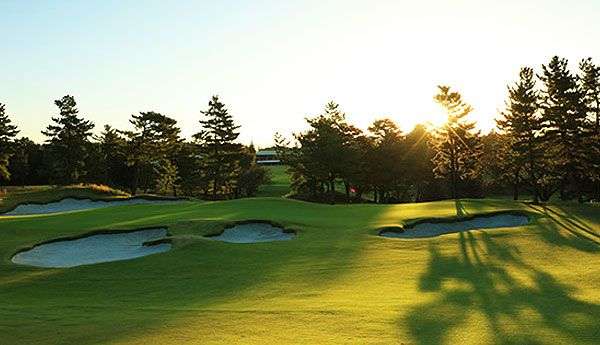
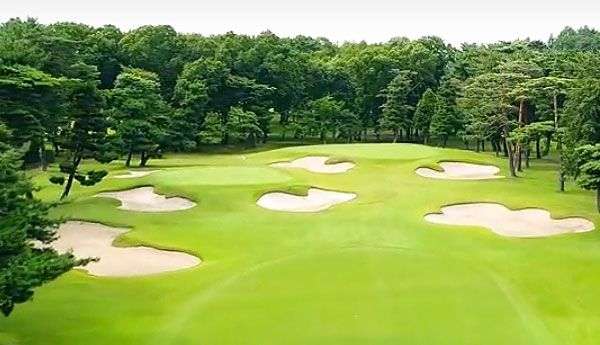
Yokohama Country Club was founded in 1960 and over the following six years architect Takeo Aiyama designed and built both the East and West 18-hole layouts.


Yokohama Country Club was founded in 1960 and over the following six years architect Takeo Aiyama designed and built both the East and West 18-hole layouts.
Course Architect
View ProfileCourse Architect

Coore and Crenshaw Inc. was established in 1986, but five years passed before the partnership made a real architectural impact when the Plantation course at Kapalua burst onto the scene in 1991.
Bill Coore grew up in Davidson County, North Carolina, just thirty miles south of Winston-Salem, where he spent his college years playing golf at Old Town Club, the home course for Wake Forest. After graduating in 1968 he started his career in golf architecture working on course construction for Pete Dye in the South Atlantic region.
Other Notable Courses
View courses (54)Course Architect
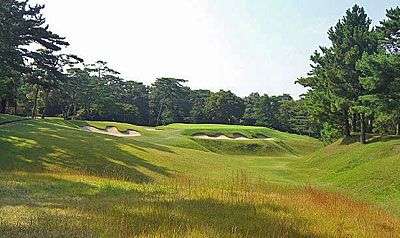
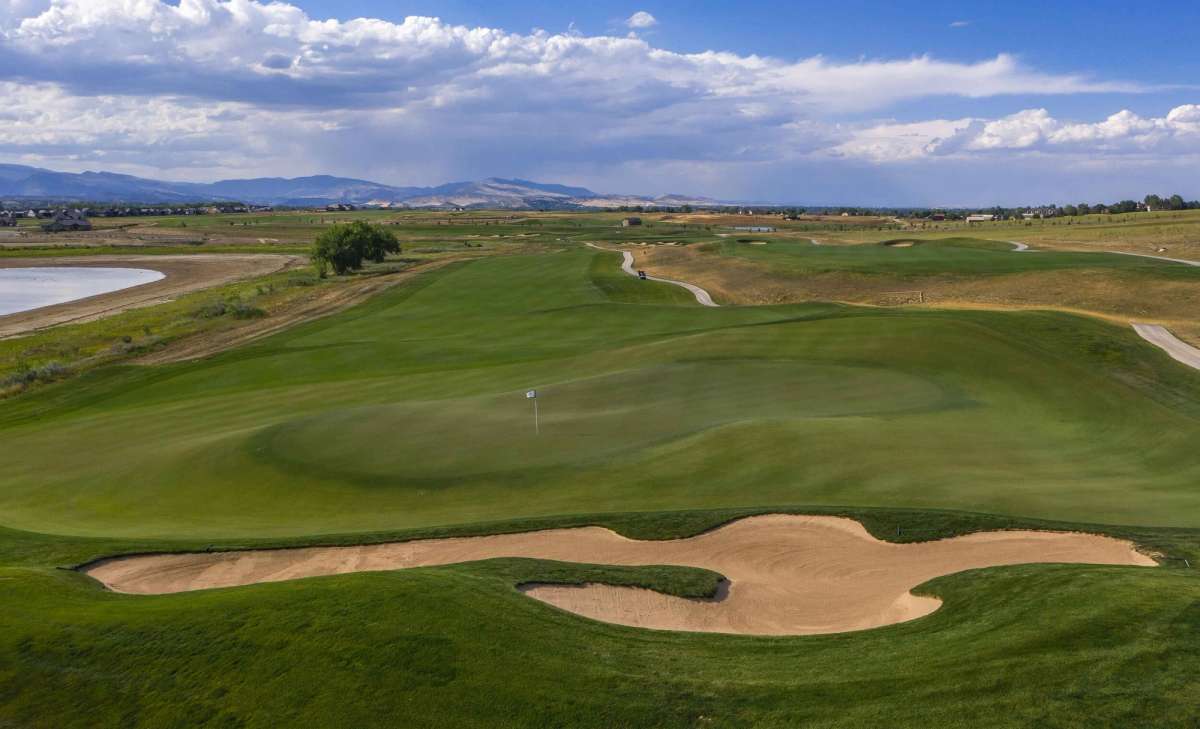
Top 50 Golf Courses of Japan 2018 It’s almost eighteen months since we published our last Japanese article, the Top 30 Golf Courses of Japan 2017, so that particular biennial chart was not due to be updated for another six months. However, having just produced our first ranking list for the Top 100 Golf Courses of Asia, which contained twenty-eight courses from the Land of the Rising Sun, we decided it’s now time to refresh the national standings for Japan. The big news is that the chart has been expanded from a Top 30 to a Top 50 and for that we must thank our International Consultant Masa Nishijima, who looks after a large network of contributors assisting him with the maintenance of the national listings. Masa has been advising us for many years now and we’re grateful for his extensive knowledge across a golf rich country with around 2,500 courses in play. Hirono Golf Club is still our number 1 and it holds off the challenge of the Fuji course at Kawana, which remains in the runner-up position. That’s how things have been at the top of the table for nearly a decade now, with these two courses hogging all the limelight, and who’s to say it won’t be the shape of things to come for the foreseeable future? Each of these 1930s designs from Harry Colt’s associate, C.H. Alison, occupy positions in the top half of our World Top 100 so they’re obviously a class apart from the others. Both layouts have changed quite a bit since they were first built, largely due to tree growth narrowing the playing corridors, but the deep sand traps (known to this day as “Alison bunkers”) remain as fearsome as ever in the modern era. Climbing three places to number 3, the West course at Yokohama Country Club continues its meteoric rise in our charts – it’s also just entered our World Top 100 – thanks to an extensive renovation carried out recently by the design partnership of Coore and Crenshaw when they virtually rebuilt the course, eliminating the old two-green system for single greens with sub-air cooling. Fergal O’Leary, our US Consultant, played here last year and had this to say: “It absolutely knocked the socks off me... the greens are truly remarkable, with Coore personally crafting the contours, the bunkering is arguably their best ever, and the undulating land is perfectly suited for swooping wide fairways and large aprons surrounding the greens… it is a seriously impressive and thrilling golf course worthy of global acclaim.” Another course advancing three places is the 18-hole layout at Nikko Country Club (now ranked number 11), situated an hour’s drive north of Tochigi. Originally designed by Seiichi Inoue, former assistant of Kinya Fujita who worked with Hugh Alison during his short time in Japan at the start of the 1930s, the course was modified by Taizo Kawata at the start of the new millennium. It’s an understated track with no water hazards, less than forty bunkers, and tree-lined fairways set as two returning loops, with those on the back nine playing clockwise to the counter-clockwise holes on the outward half. The other fifteen courses to make an upward move in the chart all rise just one place, except for two courses, both of which soar eight spots to their new position in the listings. The first of these is Hokkaido Classic (now #18), an early 1990s Jack Nicklaus Signature course near Sapporo – which is just one of around thirty tracks designed by the Golden Bear in Japan – and the second course lies 2,000 kilometers further south at Phoenix Country Club (now #20) in Miyazaki, where the club has hosted the prestigious Dunlop Phoenix Tournament since 1973. Rank/ To view further details of our newly extended Japan Top 50 chart click the link. We’re always happy to receive feedback after re-ranking our national standings so please make use of the “Respond to this article” link at the top or the bottom of this page if you have any strong views on our Top 50 for Japan. By all means tell us what we’ve got right or what might be improved. Top 100 Golf Courses has never claimed to produce “definitive” listings but we do think we publish the “most informed” rankings so every contribution that you submit counts. Jim McCann Editor Top 100 Golf Courses
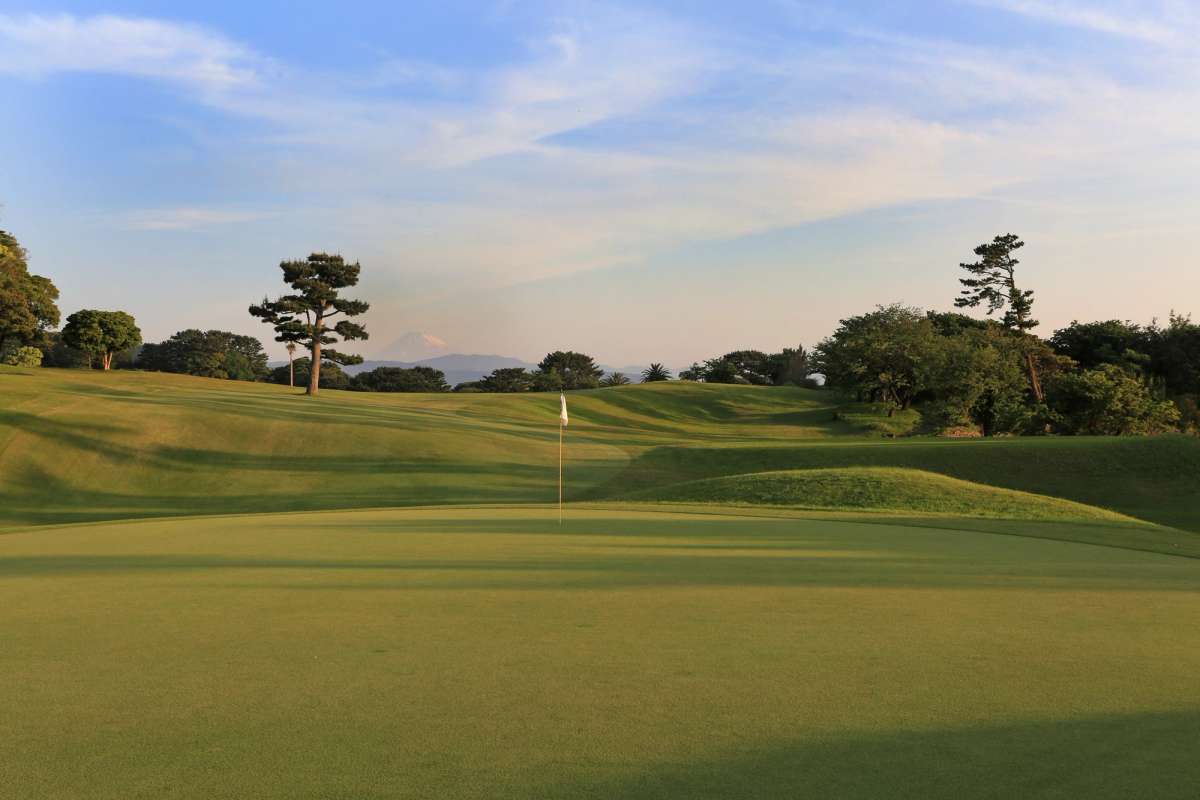
Japan remains one of Asia's premier golf destinations, where Golden Age architecture meets meticulous course conditioning across nearly 2,500 layouts. The top three positions hold steady for another cycle, with Charles Hugh Alison's masterpieces at Hirono and Kawana continuing their decade-long dominance. This focused Top 50 represents Japan's upper echelon, where architectural pedigree from designers like Alison, Seiichi Inoue, and Kinya Fujita meets modern championship standards. Explore the entire updated Rankings for Japan Explore the entire updated Rankings for Chubu Explore the entire updated Rankings for Kinki Kansai Explore the entire updated Rankings for Kanto Explore the entire updated Rankings for Chugoku Explore the entire updated Rankings for Hokkaido Explore the entire updated Rankings for Kyushu Explore the entire updated Rankings for Tohoku 2026 Rankings: Return to Top 50 After expanding to a Top 80 in 2020, the 2026 rankings refocus on Japan's elite tier with a carefully curated Top 50. This streamlined approach highlights courses that truly warrant international travel, from Alison's revered Golden Age designs to acclaimed modern layouts by Jack Nicklaus, Robert Trent Jones Jnr, and Coore & Crenshaw. Beyond the ranked fifty, dozens of additional layouts offer exceptional golf experiences. The concentration of quality throughout Japan's eight main regions means travellers can build comprehensive itineraries without venturing far from major transport hubs. 2026 Top 50 At A Glance The Unchanged Elite Three courses maintain their positions at the summit. Hirono Golf Club (#1), Kawana Hotel Fuji Course (#2), and Naruo Golf Club (#3) form Japan's untouchable triumvirate, all featuring distinctive Alison architectural DNA. The Dramatic Climbers Osaka Golf Club rises 22 positions to #11 Golden Valley Golf Club surges 15 spots to #12 Katayamazu Hakusan climbs 15 places to #21 Sapporo Wattsu advances 15 positions to #34 Ibusuki Kaimon gains 15 spots to #35 Fukuoka Wajiro jumps 11 places to #28 Caledonian rises 9 positions to #29 Notable Movements Within Top 20 Tokyo Golf Club advances 2 to #4 Ryugasaki climbs 5 to #7 Shimonoseki rises 6 to #9 Abiko slips from #2 to #6 Kasumigaseki East drops 2 to #10 Regional Distribution Kanto: 21 courses (42%) Kinki Kansai: 10 courses (20%) Chubu: 5 courses (10%) Kyushu: 5 courses (10%) Hokkaido: 5 courses (10%) Tohoku: 2 courses (4%) Chugoku: 1 course (2%) Best Golf Courses by Region Kanto Dominance From Golden Age designs at Tokyo Golf Club and Abiko to modern classics like Caledonian and The Royal Golf Club, the region offers an exceptional variety within easy reach of the capital. Kinki Kansai Heritage Osaka-Kobe corridor delivers architectural gravitas through Alison masterworks and their spiritual successors. All three podium finishers call this region home, alongside the rising star Osaka Golf Club. Hokkaido's Resort Appeal The northern island punches above its weight with five courses, led by Hokkaido Classic (#17) and Katsura (#18). Cooler summers and dramatic topography create distinctive playing conditions compared to the main island. Chubu and Kyushu Balance Chubu benefits from Kawana's prestige and Katayamazu's surge, while Kyushu anchors Japan's southern golf culture through Phoenix and multiple climbing entries. Explore the entire updated Rankings for Japan Explore the entire updated Rankings for Chubu Explore the entire updated Rankings for Kinki Kansai Explore the entire updated Rankings for Kanto Explore the entire updated Rankings for Chugoku Explore the entire updated Rankings for Hokkaido Explore the entire updated Rankings for Kyushu Explore the entire updated Rankings for Tohoku What the Rankings Tell Us Consistency at the Summit Hirono, Kawana, and Naruo have occupied the top three positions across multiple ranking cycles. This unprecedented stability reflects architectural timelessness rather than ranking inertia. Each course underwent sensitive restoration work that honoured original design intent while meeting modern playing standards. Gil Hanse's work at Tokyo Golf Club demonstrates how thoughtful updates can elevate standing without compromising architectural integrity. Alison's Enduring Legacy Charles Hugh Alison spent just three months in Japan in 1930, yet his influence permeates the rankings. Four of the top five courses bear his architectural fingerprints, either through direct design work or profound influence on protégés like Kinya Fujita and Seiichi Inoue. The distinctive "Alison bunker" - deep, boldly contoured, and strategically menacing - remains the defining feature of Japanese golf architecture. These hazards function as effectively today as when first shaped, proof of Alison's tactical genius and understanding of eternal golf principles. Kanto's Architectural Depth Tokyo's surrounding region claims 21 of 50 ranked courses, showcasing remarkable architectural diversity. Golden Age classics sit alongside acclaimed modern works from international architects. The concentration allows passionate golfers to experience multiple elite courses without extensive travel. A Decade of Evolution: 2015-2020 Top 30 Golf Courses of Japan 2015 Japan's first expanded Top 30 arrived in February 2015, doubling previous Top 15 coverage. The top five remained unchanged, cementing Hirono, Kawana, Naruo, Tokyo, and Abiko as undisputed leaders. The rankings emphasised Alison's lasting impact, noting that any deep, bold bunker throughout Japan remained known simply as "an Alison" nearly 85 years after his brief visit. Top 30 Golf Courses of Japan 2017 The 2017 update maintained the Top 30 structure with minimal disruption at the summit. Hirono through Naruo, held their positions for the fourth consecutive cycle, demonstrating extraordinary consistency across nearly a decade of evaluation. Notable developments included Ono climbing five spots to #5 and Osaka advancing eight positions to #8, both Osamu Ueda designs gaining recognition for strategic merit. Yokohama Country Club West burst onto the scene at #6 following an extensive Coore & Crenshaw renovation that eliminated the traditional two-green system for modern single greens with sub-air cooling. Top 50 Golf Courses of Japan 2018 March 2018 brought Japan's first Top 50 rankings, expanding coverage to showcase deeper architectural quality. Yokohama Country Club West continued its meteoric rise, climbing three positions to #3 following widespread acclaim for the Coore & Crenshaw transformation. Nikko Country Club advanced three spots to #11, showcasing Seiichi Inoue's understated approach through tree-lined fairways and strategic bunkering. The layout features no water hazards yet maintains compelling challenge through terrain movement and hazard placement. Hokkaido Classic and Phoenix Country Club each jumped eight positions, highlighting expanding panel appreciation for courses beyond traditional Kanto-Kansai strongholds. Planning Your Japan Golf Trip Tokyo Hub Strategy Base yourself in Tokyo to access 15 ranked courses within 90 minutes. The capital's excellent train network makes day trips effortless, with courses like Tokyo Golf Club, Abiko, and Kasumigaseki East all reachable by morning tee times. Premium options include Yokohama Country Club West and Ryugasaki for modern course conditioning married to strategic design. Kansai Cultural Circuit Osaka and Kobe offer ten-ranked courses alongside exceptional cultural attractions. Hirono Golf Club represents the ultimate pilgrimage for architecture enthusiasts, while Naruo and Ono deliver similarly compelling Golden Age experiences. The region's historical significance and culinary excellence create perfect golf-cultural balance. Northern Exposure Hokkaido's five-ranked courses justify dedicated northern travel, particularly during summer when the main island's heat proves challenging. Hokkaido Classic leads the region at #17, with Katsura, Sapporo Wattsu, Otaru, and Eniwa offering varied architectural approaches across dramatic terrain. Summer temperatures 5-10 degrees cooler than Tokyo make Hokkaido golf refreshingly pleasant during July and August. The island's natural beauty and fresh seafood cuisine enhance the golfing experience. Southern Warmth Kyushu's five courses anchor Japan's southern golf culture, led by Phoenix at #26 and rising star Ibusuki Kaimon at #35. Winter golf proves viable when northern regions face seasonal closure, making Kyushu ideal for December through March travel. The region's volcanic hot springs and subtropical climate create a distinctive atmosphere compared to metropolitan Kanto-Kansai. Fukuoka serves as the natural hub, with courses like Fukuoka Wajiro (#28) and Koga (#15) within comfortable driving distance. Looking Ahead The Japanese golf scene continues evolving through sensitive restoration work and selective new development. Several courses outside the current Top 50 have undertaken renovations aimed at revealing original architectural intent, potentially reshaping future rankings. The complete Top 50 golf courses in Japan offers detailed information about each ranked layout, including course details, review options, and travel logistics for planning your Japanese golf adventure. Explore the entire updated Rankings for Japan Explore the entire updated Rankings for Chubu Explore the entire updated Rankings for Kinki Kansai Explore the entire updated Rankings for Kanto Explore the entire updated Rankings for Chugoku Explore the entire updated Rankings for Hokkaido Explore the entire updated Rankings for Kyushu Explore the entire updated Rankings for Tohoku
For much of golf’s history, the idea of a hole measuring 700 yards or more would have seemed excessive. Today, such distances are no longer quite so extraordinary. The world’s longest holes are an eclectic group, spread across very different landscapes and created for very different reasons. Some belong to expansive resort courses, others to championship layouts, while a handful have become famous largely because of the sheer scale of the challenge they present. From a former world-record holder in North Carolina to an extraordinary par 7 measuring over 1km in South Korea, these are the 10 longest golf holes in the world. 10. Black Mountain Golf Club (North Carolina, USA) Hole 17 | 747 yards (683m) | Par 6 The 17th at Black Mountain is one of the survivors from an era when exceptionally long golf holes were still something of a novelty. At 747 yards, the par six was once recognised as the longest golf hole in the world - a distinction that helped put this small North Carolina club on the golfing map. The hole is part of Black Mountain's older nine-hole layout, which dates back to the 1960s, and its extraordinary length was a deliberate feature rather than an accident of modern championship-course design. From the back tees, the fairway climbs and falls through the foothills, with the green sitting far enough away that it disappears from view for much of the hole. For a course that otherwise has a relatively modest footprint, the 17th is an impressive piece of real estate. Its 747 yards are now exceeded by several holes built in the decades since, but the hole retains its place in golf's long-hole folklore. It is also a reminder of how quickly perceptions of distance have changed. What was once a world record is now the shortest hole in this particular top ten. 9. TPC Colorado (Colorado, USA) Hole 13 | 773 yards (707m) | Par 5 TPC Colorado opened in 2018 at Heron Lakes near Berthoud, with Arthur Schaupeter’s design set against open Colorado terrain and views towards the Front Range. The 7,991-yard course was built with tournament golf in mind and has since become a regular Korn Ferry Tour venue. The 13th, named “Longer Still”, is its defining hole. At 773 yards from the TOUR tees, it is the longest hole on a PGA TOUR course and the longest par five in PGA TOUR golf. Its principal feature is the enormous 108-yard Hell Bunker, which runs along the left side of the fairway and creates the key decision after the drive: challenge it to gain ground or lay back and accept a longer approach. At altitude, the hole does not play quite as severely as the yardage suggests, but its scale remains remarkable. More importantly, the length is integrated into the design rather than simply added as a spectacle, giving No. 13 a strategic identity that has made it one of the most recognisable holes in modern American golf. 8. The Reserve at Moonlight Basin (Montana, USA) Hole 17 | 777 yards (710m) | Par 5 Set at 7,500 feet above Big Sky in the Rocky Mountains, The Reserve at Moonlight Basin is one of Jack Nicklaus’ most dramatic mountain courses. Built across the former Moonlight Basin ski area, the 8,000-yard layout moves through forest and open mountain terrain, with more than 1,000 feet of elevation change across the property. The 17th is the signature expression of that setting. At 777 yards, it is already extraordinary on the card, but the hole plunges downhill towards the green, with the change in elevation and thin mountain air making the distance considerably less daunting than it first appears. A large fairway bunker sits around 370 yards from the back tee, beyond which the fairway reveals the full scale of the descent towards the green. It is a fittingly theatrical hole for a course where elevation is central to the experience. The 17th was also one of the holes that came to wider attention when Moonlight Basin hosted The Match in 2021 – when Bryson DeChambeau and Aaron Rodgers defeated Phil Mickelson and Tom Brady – putting its spectacular setting and remarkable yardage on national television. 7. Penati Golf Resort - Legend course (Trnava Region, Slovakia) Hole 15 | 783 yards (716m) | Par 6 Opened in 2012, the Legend Course at Penati occupies a sandy, pine-covered site near Senica, with Nicklaus Design using the natural character of the property to create wide, undulating fairways and extensive waste areas. The course forms part of Slovakia’s largest golf resort and was the first Nicklaus Design course in the country. The 15th is the course’s defining feature. It has 11 teeing positions, allowing it to be played at very different lengths, but from the back tees, it stretches to 783 yards and becomes a par 6. The fairway is split by a large waste bunker, with further bunkering framing the second landing area before the hole finally turns towards the green. The hole gained international attention when the European Challenge Tour used the full 783-yard version during the Slovakia Challenge in 2015, 2016 and 2019. In regular play, however, it is generally shortened and played as a par 5 - a useful reminder that the extraordinary version seen on the professional circuit is only one interpretation of Central Europe’s longest hole. 6. Theodora Golf Club (Transylvania, Romania) Hole 18 | 804 yards (735m) | Par 6 Theodora Golf Club sits outside Alba Iulia on the banks of the Mureș, occupying a remarkably flat 56-hectare site. Opened in 2018, the resort was created around an 18-hole championship course, with a large lake excavated in front of the clubhouse providing material to shape the otherwise level ground. That lake is central to the character of the closing hole. The 18th stretches over 800 yards from the back tees, with the approach eventually leading to an island green shared with the 9th. The arrangement gives what might otherwise be a straightforwardly expansive hole a much more distinctive finish. Theodora itself describes the 18th as the longest par 6 in Europe, and it has become the defining feature of a relatively young Romanian resort that has steadily established itself on the European golf map. 5. The Links at Kahite Golf Club (Tennessee, USA) Hole 9 | 808 yards (739m) | Par 6 The Links at Kahite opened in 2002 as the third course in Tellico Village, occupying a natural setting between Tellico Lake and the foothills of the Great Smoky Mountains. The links-style layout has six sets of tees, stretches to 7,170 yards and is notable for its 93 bunkers and tall fescue framing some of the fairways. The 9th is the course's defining hole: an 739-metre par 6 that runs in a notably direct line across the landscape. From the back tees it measures 808 yards, while the blue tees bring it down to 721, making the hole a very different proposition depending on where it is played from. The course's own guide describes it simply as a unique hole, with the fairway rewarding players who can keep successive shots in play. Its position at the turn also gives Kahite an unusual rhythm. After eight holes that establish the character of the course, the 9th opens out into one of the most distinctive holes in Tennessee golf before the back nine heads back towards the mountains. 4. Meadows Farms Golf Course (Virginia, USA) Hole 12 | 841 yards (769m) | Par 6 Meadows Farms is very much the product of its founder, Bill “Farmer” Meadows, who built the course on former farmland after taking up golf later in life. It opened in 1993 with an intentionally unconventional character: the 27-hole layout includes a baseball-themed hole, a waterfall green and an island green, alongside the hole that became its calling card. The 12th stretches to 841 yards from the championship tees, running downhill before turning right, crossing two lakes and climbing towards a large elevated green. A three-leaf-clover-shaped bunker guards the approach. The sequence gives the hole considerably more shape and interest than its raw length might suggest. For decades it was promoted as the longest golf hole in the United States, a distinction that helped make this eccentric Virginia course a destination in its own right. The current course still describes No. 12 as its signature hole and the longest in the country, as recognised by the Guinness Book of World Records. 3. The Links Golf Club (Idaho, USA) Hole 9 | 842 yards (770m) | Par 6 The Links Golf Club in Post Falls opened in 1999 on the broad, open Rathdrum Prairie, with owner and designer Emmett Burley shaping the course in the tradition of Scottish links golf. There are few trees or water hazards to interrupt the prairie landscape, leaving wind, wide fairways, deep bunkers and rough to define its character. The 9th has been the course's signature hole from the beginning. It was originally measured at 738 yards from the black tees, but subsequent changes have transformed it into an 842-yard par 6, now the longest hole on the course and one of the longest in America. That extra distance has only amplified the hole's original links character. With no trees or water to dictate the route, the scale of the prairie is laid bare, while the wind can have a considerable influence on successive shots. The green itself has two distinct levels, adding another layer to a hole that has evolved from an unusual feature into the defining landmark of The Links. 2. Satsuki Golf Club - Sano course (Kanto Region, Japan) Hole 7 | 964 yards (881m) | Par 7 Satsuki Golf Club’s Sano Course opened in 1979 in the hills of Tochigi Prefecture, with broad fairways laid through a landscape of trees and gentle elevation changes. The 18-hole course measures more than 7,200 yards from the back tees, but it is the seventh hole on the outward nine that has made the club internationally known. At 964 yards, the seventh was recognised by Guinness World Records as the world’s longest golf hole and remains the defining feature of the course. It is not simply a long, open stretch: the hole has trees crowding the tee shot, OB on both sides and a relatively narrow fairway, creating pressure from the outset. There are two greens, with the left measuring the full 964 yards and the right 924. The club’s own playing strategy reflects the scale of the hole: rather than simply attacking distance on every shot, the objective is to keep successive balls in play and leave the final approach within comfortable range. For many years, Satsuki’s seventh was the benchmark by which the world’s longest holes were measured. Gunsan Country Club has since surpassed it in sheer yardage, but the Japanese par-7 remains the more established name in the record books. 1. Gunsan Country Club - Jeongeup course (Jeonbuk State, South Korea) Hole 3 | 1,098 yards (1,004m) | Par 7 Gunsan Country Club is an extraordinary property in its own right. Built on a former salt field on Korea’s west coast, the sprawling complex now has 81 holes across more than 1,000 acres, with lakes accounting for roughly 380 acres of the site and 26 bridges linking the courses. The third on the Jeongeup Course is the hole that gives Gunsan its international reputation. At 1,004 metres from the black tees, it is a par 7 and the longest hole in this ranking. The hole is also the No. 1 handicap on its nine, with water running along the left and bunkers placed to complicate the long sequence of shots required to reach the green. Its scale is matched by an unusual sense of place. The hole emerged from the transformation of the old salt works into one of Asia’s largest golf complexes, and its local nickname, the “1004 Hole”, is a play on the 1,004-metre length. Gunsan has built much of its identity around these extreme holes, with a 661-metre par 6 elsewhere on the property, but the Jeongeup third remains the defining feature. At 1,098 yards, it is comfortably longer than Satsuki’s 964-yard seventh and takes the top spot here by distance. Guinness World Records, however, has historically recognised Satsuki’s hole, so the distinction between the longest hole by yardage and the Guinness record is worth keeping in mind.
The latest ranking of the Top 100 Golf Courses in the World serves as the ultimate global golf bucket list. Most members of our World Top 100 Panel are seasoned golfers, each playing 20-30 of these courses annually while travelling extensively over decades to form their opinions on others. We recognise that opinions vary—even among our panel members. Rankings are subjective, and there are undoubtedly 50 or more courses in the UK and USA alone that could easily fit onto this list. Links Golf Pilgrimages The rankings
California, United States
New Jersey, United States
Northern Ireland, United Kingdom
New York, United States
New York, United States