Golf doesn't always have to finish when the sun goes down. From floodlit championship courses in the Middle East to late-night rounds beneath the midnight sun in Norway, there are plenty of ways to play after dark – whether you're squeezing in an extra round on holiday or looking for a different kind of golf experience.
We've picked out 10 venues around the world offering something beyond a conventional daytime round, from full-length courses under floodlights to short-course challenges and one-off events that put a new spin on night golf.
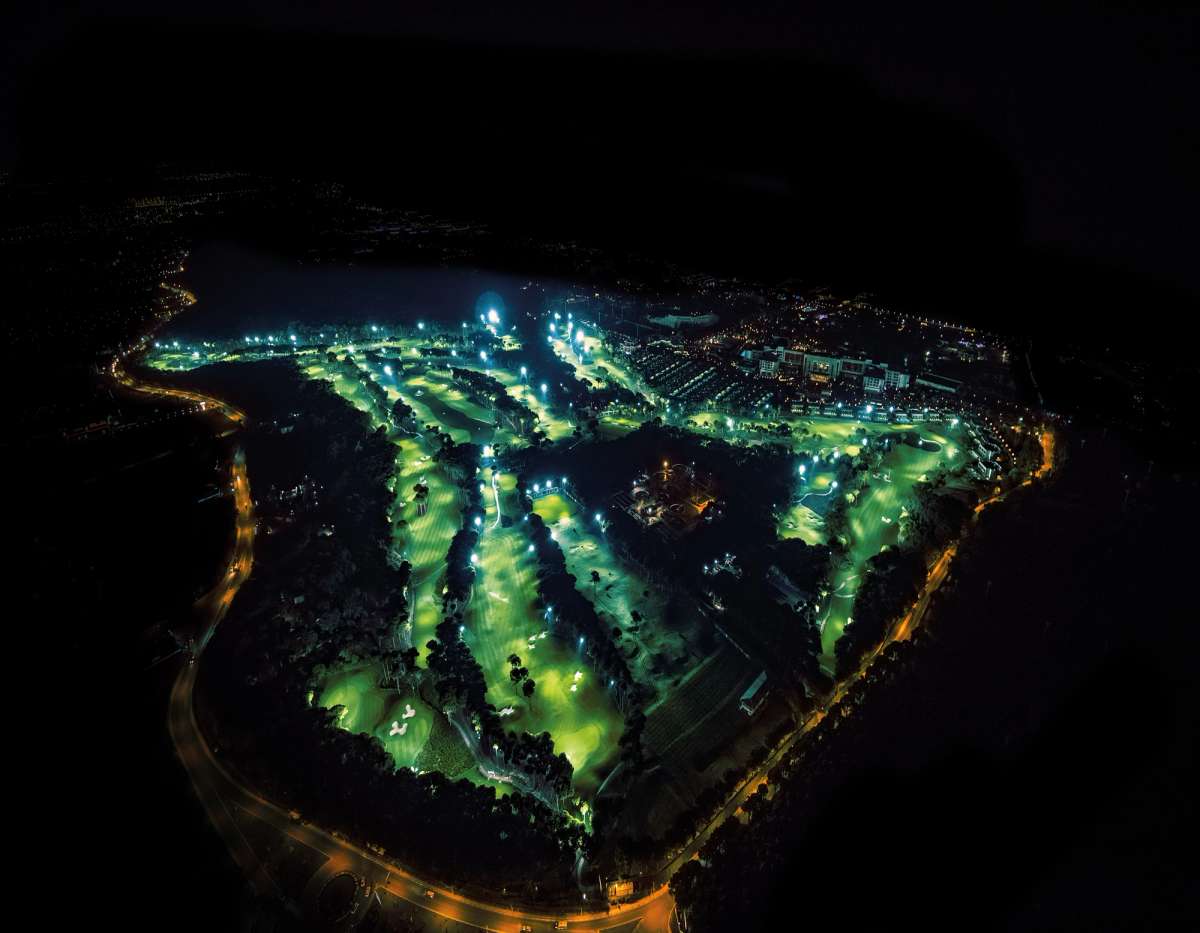
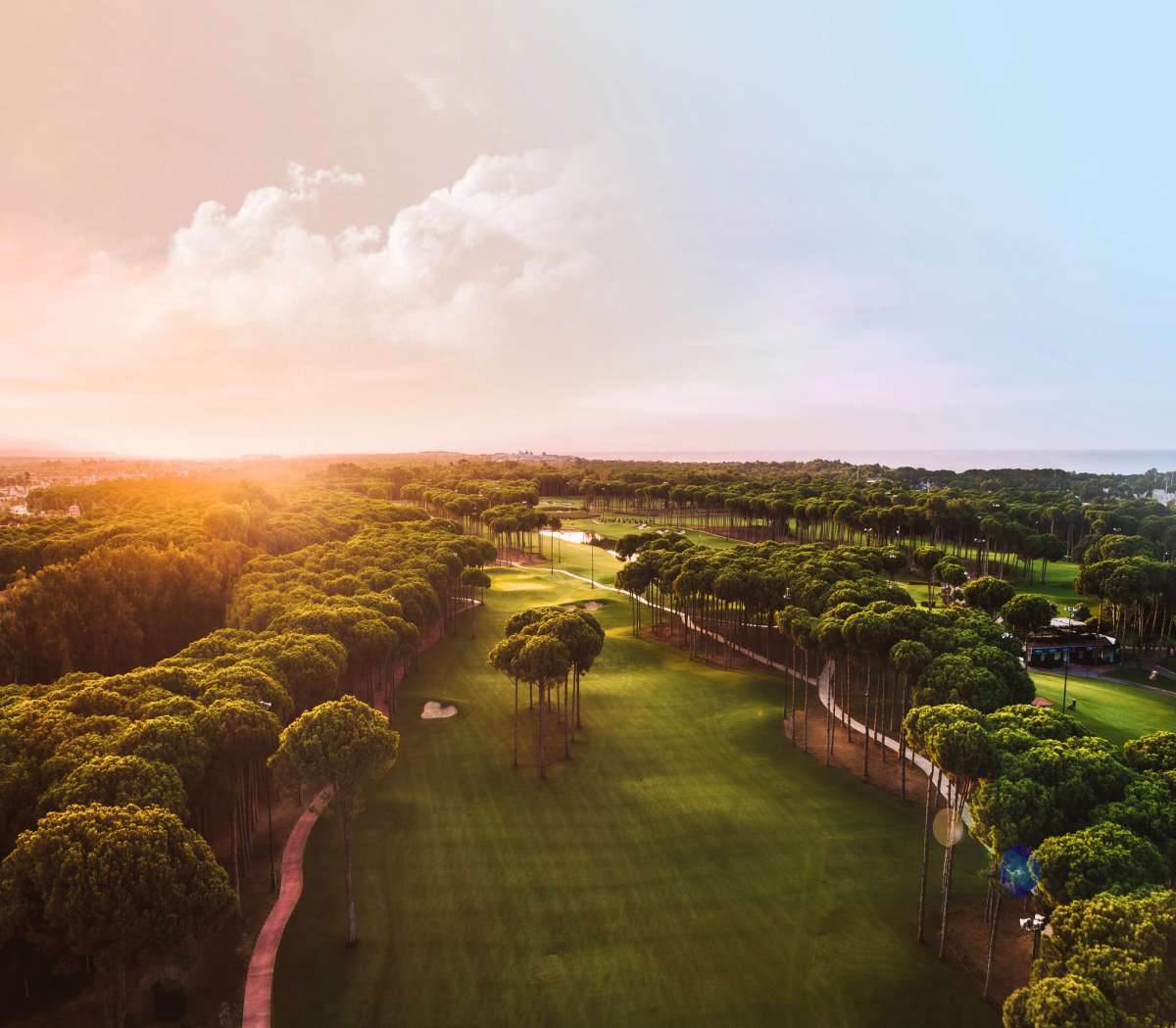
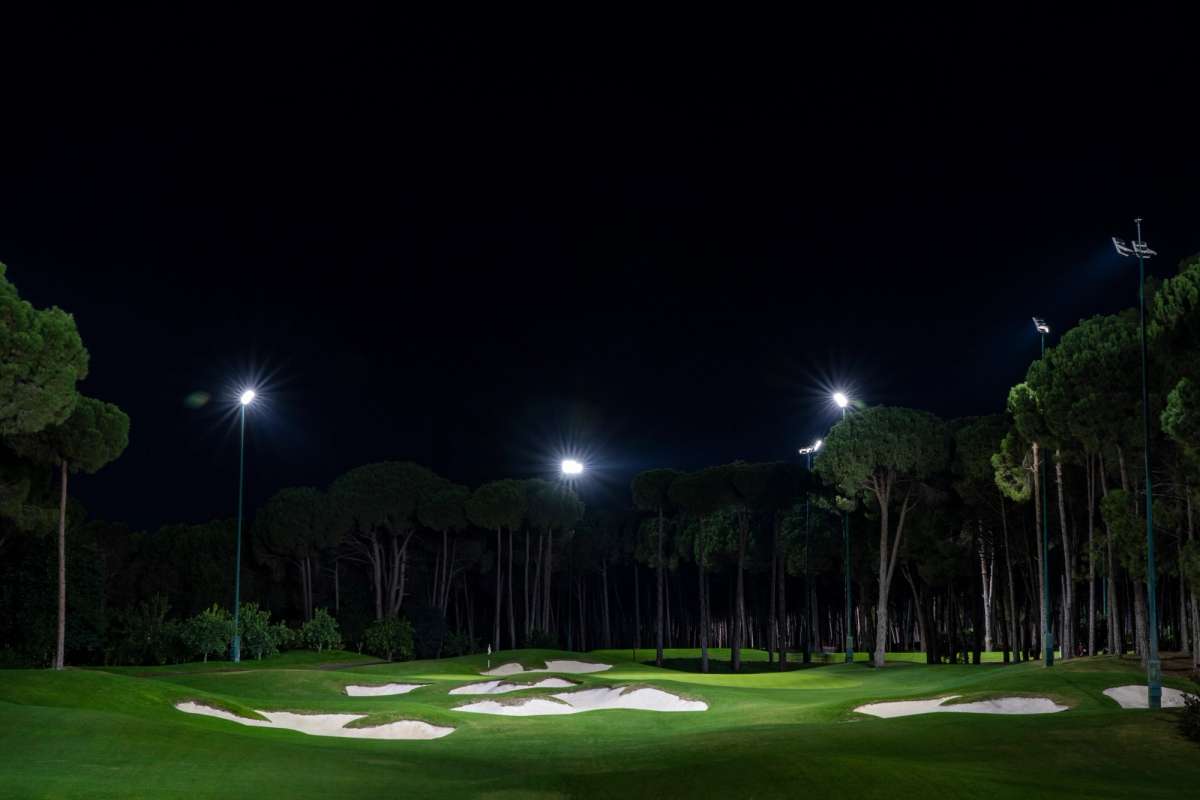
Carya became the first golf course in Europe to install floodlights across all 18 holes, giving golfers the chance to play a full championship round after dark. Designed by Peter Thomson and his team, the par-72 layout brings a taste of traditional English heathland golf to Belek, with sandy terrain, heather and fairways winding through pine and eucalyptus trees.
The floodlights are positioned high enough for golfers to “follow the flight of the ball just as you would if playing in daylight”, according to the club. Evening tee times also offer an alternative to daytime play during the summer heat, making Carya a useful addition to a golf holiday on Turkey's Mediterranean coast.
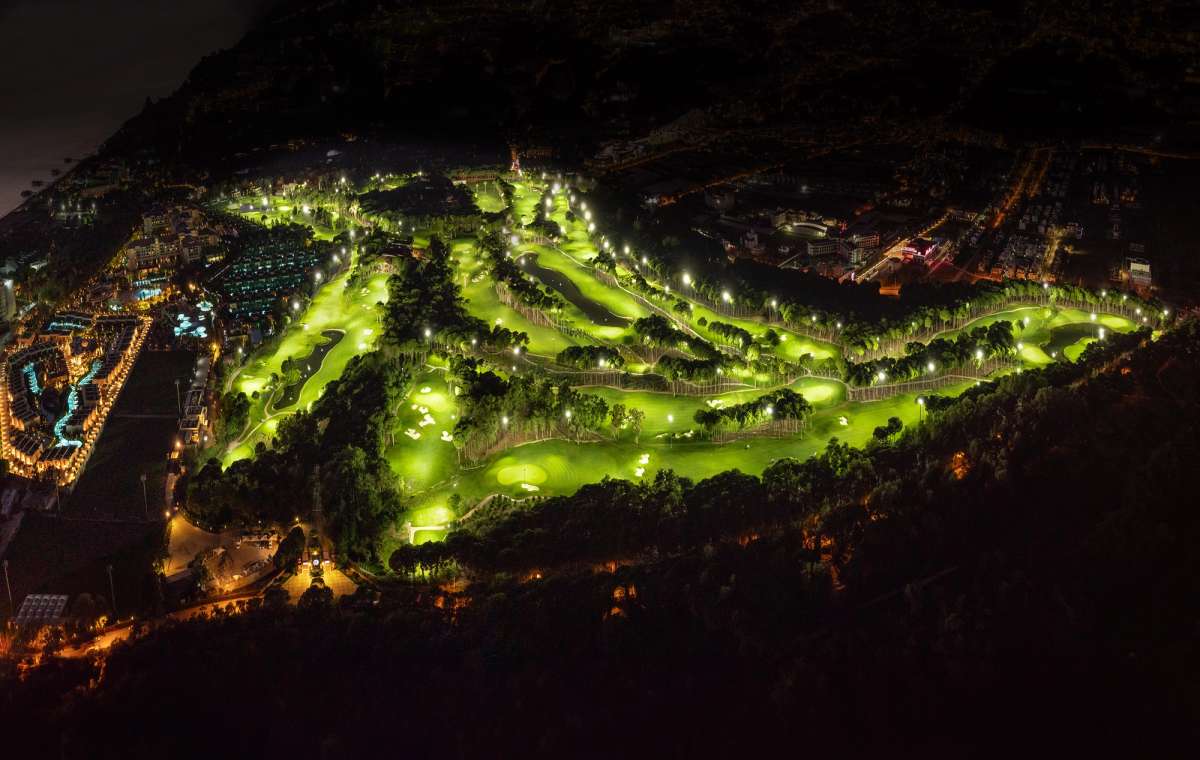
The Faldo Course at Emirates Golf Club is one of Dubai's established night-golf venues, with LED floodlights covering all 18 holes. Originally opened as The Wadi in 1996, the par-72 course was redesigned by Nick Faldo in 2005 and renamed in his honour a year later. Measuring more than 7,000 yards from the back tees, it offers a full-length championship round after dark, with water hazards and strategically placed bunkers providing plenty of challenges along the way.
The floodlighting allows golfers to tackle the entire layout after sunset, rather than being limited to a shorter course or a handful of illuminated holes. For visitors to Dubai, it's an opportunity to play a championship course at a different time of day. Contact the club to confirm current night-golf tee times and availability.
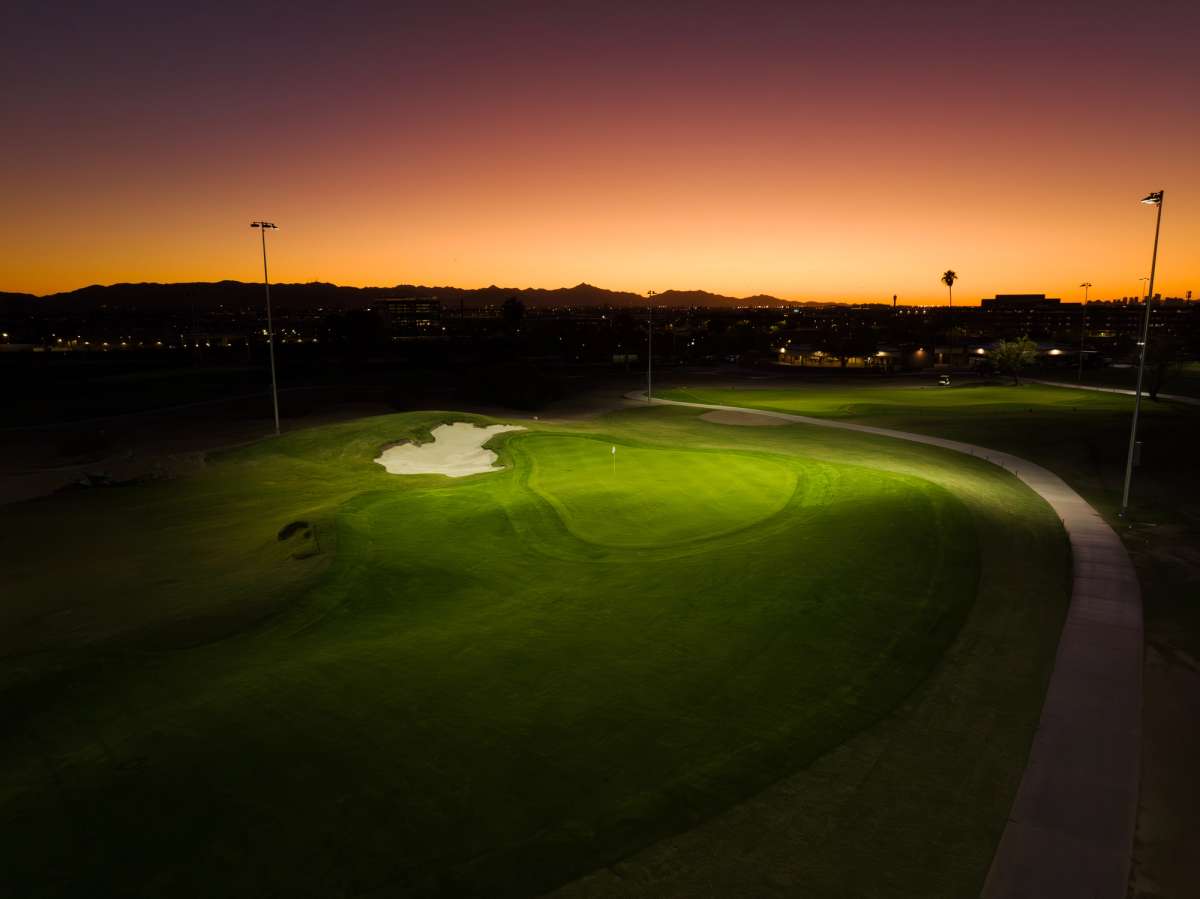
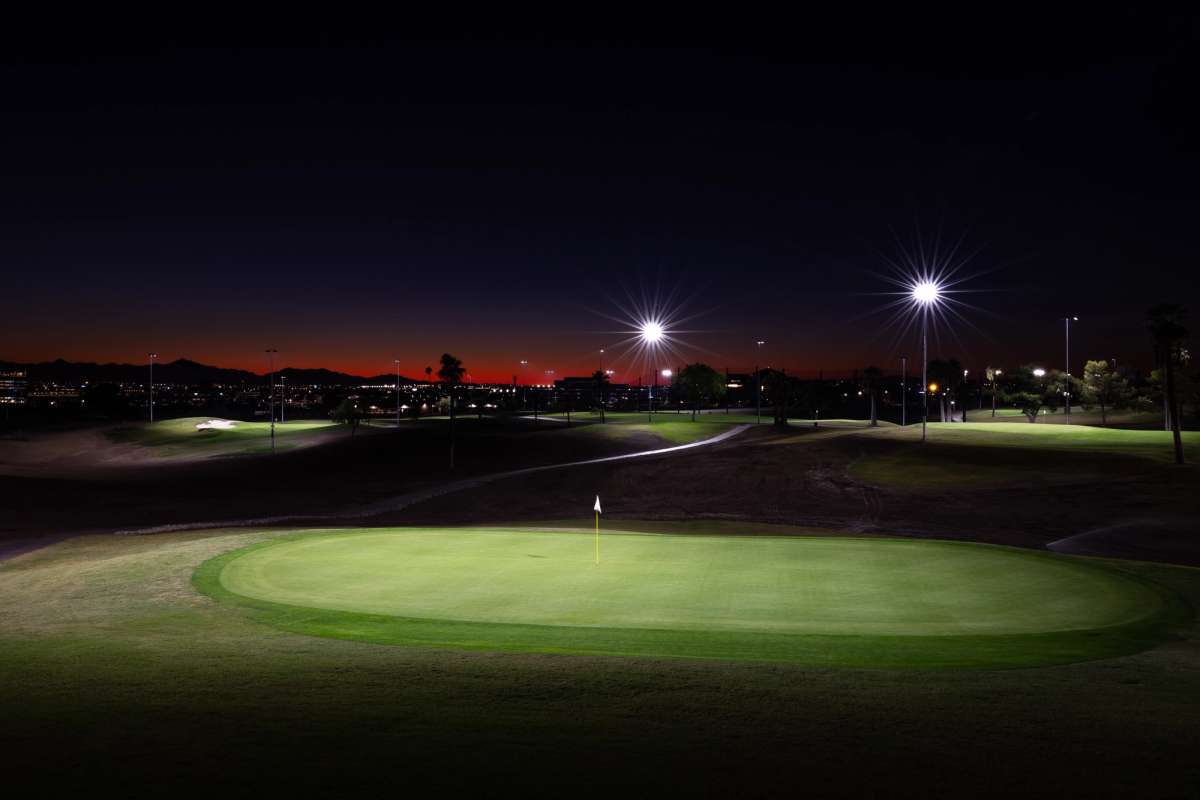
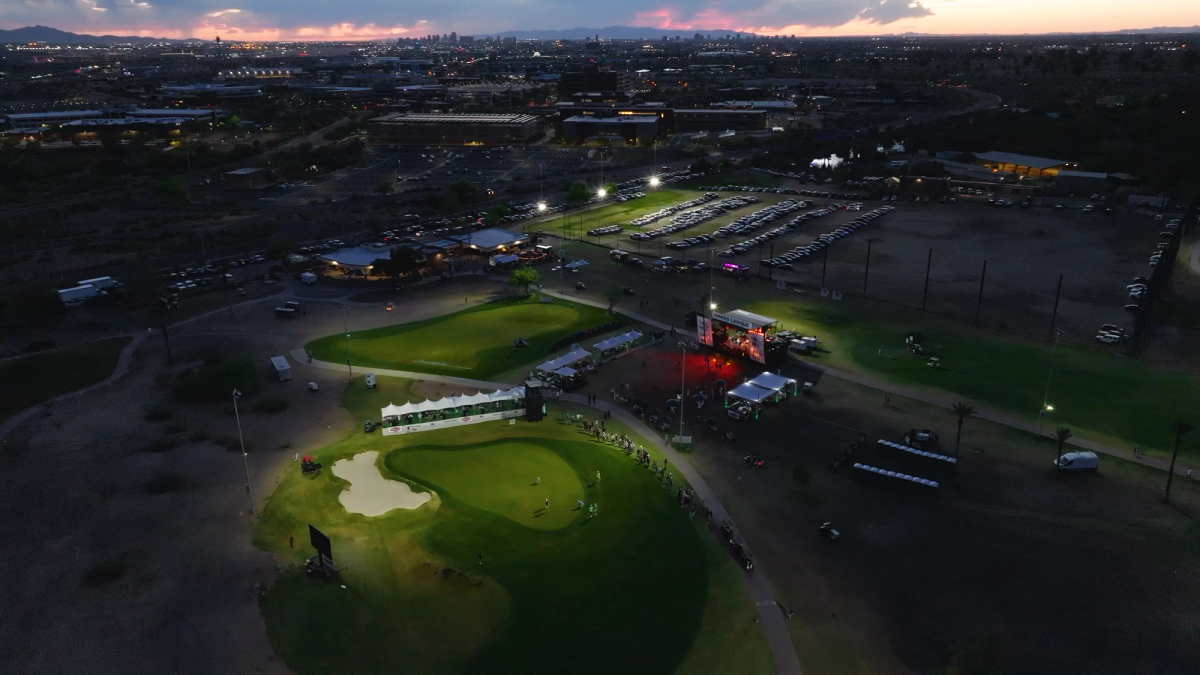
Grass Clippings at Rolling Hills has turned night golf into a central part of its identity. The 18-hole course plays as an executive layout during the day, but after dark it switches to a par-54 format made up entirely of par threes. The course is illuminated seven days a week, from dusk until 1am, with nine-hole tee times available after 10pm.
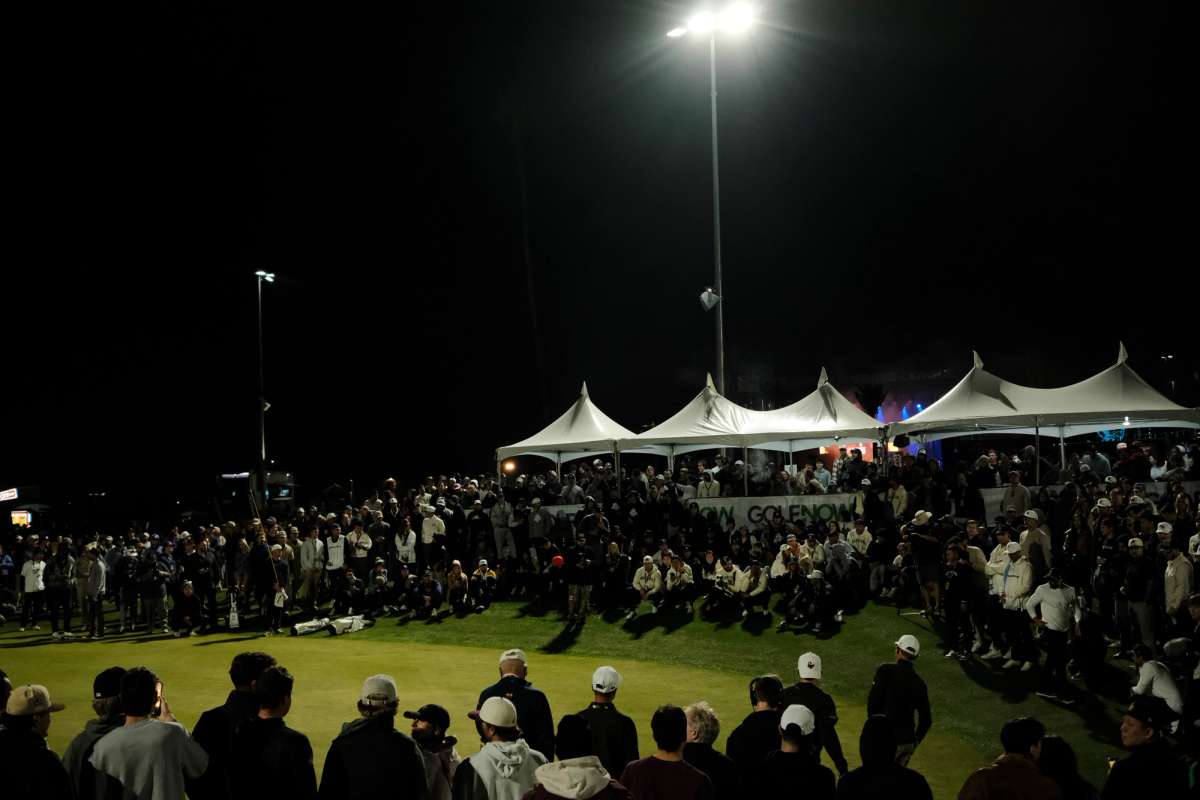
The venue is also home to The Grass League, a short-course golf league whose events are broadcast live on Golf Channel twice a year. With views across the Phoenix skyline and a lively atmosphere built around golf under the lights, Grass Clippings offers more than a conventional evening round.
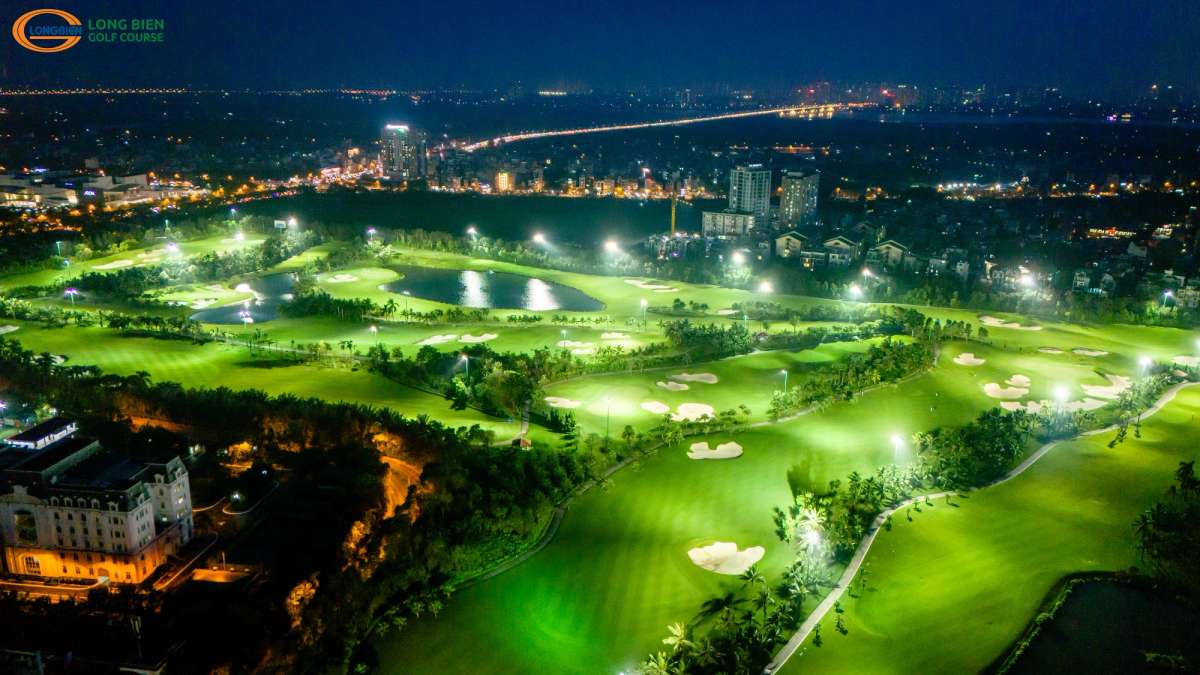
Designed by Nelson & Haworth, Long Bien Golf Course has 27 holes across three nine-hole loops on gently undulating terrain, with bunkers and water hazards adding to the challenge. Located within Hanoi, it is around 20–30 minutes by car from the Old Quarter, making it a convenient option for visitors staying in the city.
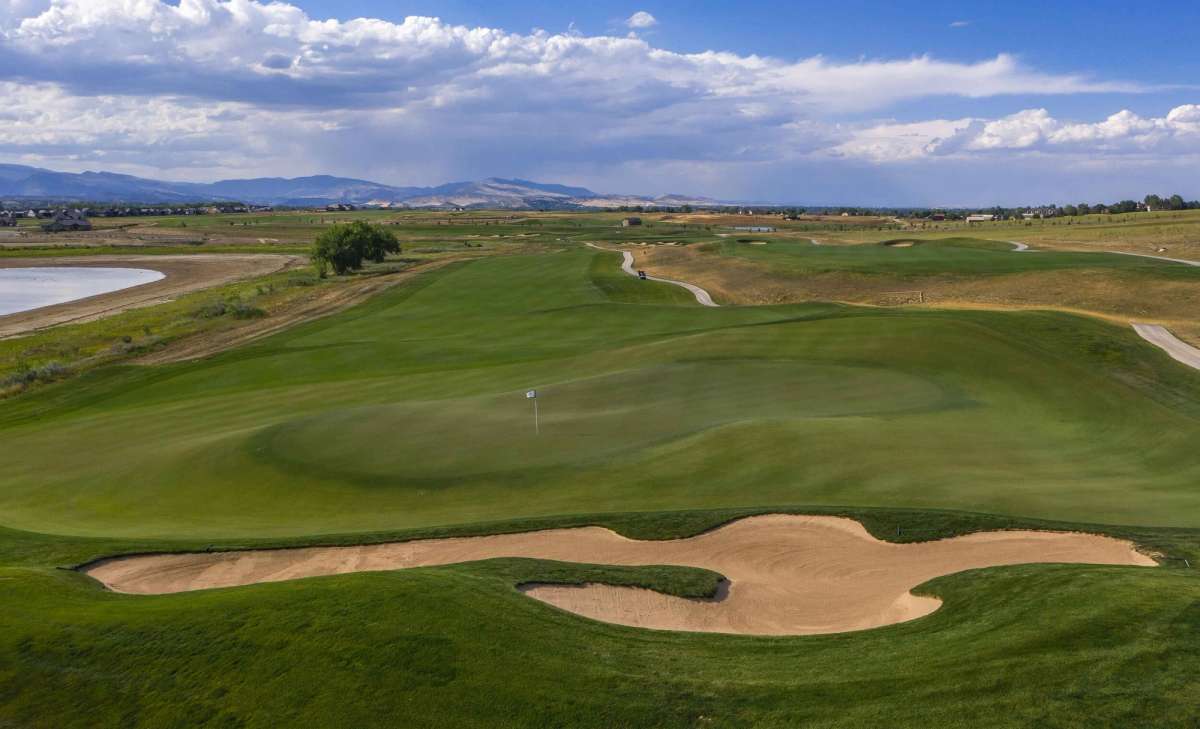
The course has a dedicated lighting system for night golf, allowing players to tee off later and finish their rounds under the lights. With three nine-hole loops, there are different combinations to play, although golfers should check with the club to confirm which nines are illuminated on their chosen evening.
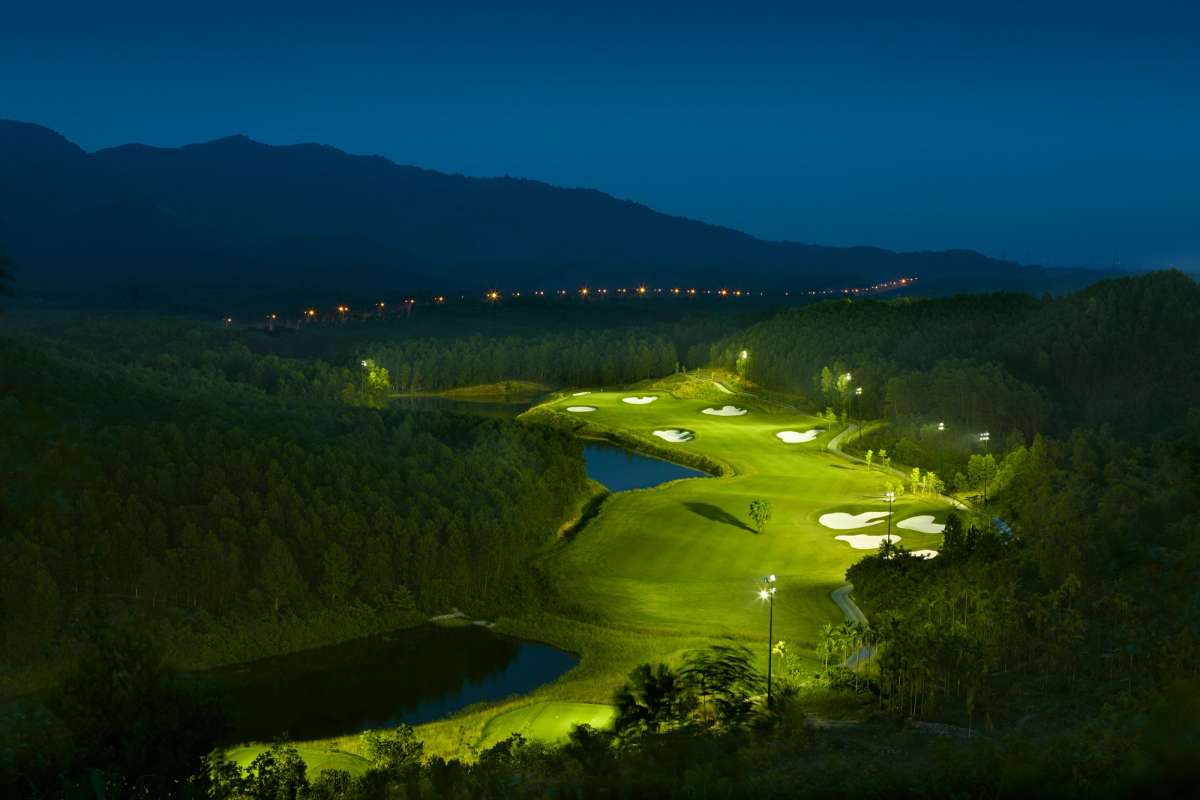
Set among forested hills beneath the Ba Na mountain range, Ba Na Hills Golf Club offers a striking setting for a round after dark. Designed by Luke Donald in collaboration with IMG, the 18-hole, par-72 course features undulating greens and a backdrop of native forest, around 30 minutes from central Da Nang.
Floodlights cover all 18 holes, with the course lit until 9pm on selected days. The club describes the ideal experience as starting the front nine as dusk settles over the mountains before finishing the back nine under the lights. Night golf can also be arranged for groups of 40 or more.
Around 45 minutes from Bangkok, Rachakram Golf Club & Resort offers an 18-hole, par-72 course where golfers can play well into the night. Designed by Dr Sukitti Klangvisai, the layout has a links-style feel, with relatively open fairways, undulating terrain and fast greens. Water is a recurring challenge, including blind carries and several demanding par threes, while all of the par fives measure more than 500 yards.
Night golf is available daily, with the last tee-off listed at around 7pm and play continuing until midnight. At 1,200 baht (approximately £27), Rachakram offers an affordable way to play a full 18-hole round under the lights. The on-site resort also means golfers can stay overnight rather than make the journey back to Bangkok after a late finish.
Kelab Golf Sultan Abdul Aziz Shah (KGSAAS) is a 27-hole facility in Shah Alam, just outside Kuala Lumpur, with three nine-hole loops designed by Peter Thomson and Michael Wolveridge in the mid-1990s. The Sultan, Alam Shah and President nines offer different combinations for an 18-hole round, with the par-five second on the Sultan loop regarded as the course’s signature hole.
Known as the “Home of Night Golfing”, KGSAAS was the first course in Malaysia to introduce floodlit play. Its 27-hole layout gives golfers the flexibility to play after dark, making it an option for visitors looking to fit a round into an evening in Kuala Lumpur.
Cloud 9 at Angel Park is a 12-hole par-3 course inspired by famous holes from around the world. Designed by Bob Cupp and John Fought, the layout takes inspiration from celebrated holes including "Island Green" at TPC Sawgrass, the "Postage Stamp" at Royal Troon and the "Valley of Sin" at St Andrews.
Nine of the 12 holes are illuminated for evening play, allowing golfers to tackle the short course under the lights. It's a different proposition from playing a full-length championship course at night, with the shorter holes offering a chance to work on the short game in a more relaxed format. Cloud 9 is open for daytime play too, and tee times for evening rounds can be booked through Angel Park.
Trump International's Old Course is a championship links designed by Martin Hawtree, stretching through towering sand dunes along the North Sea coast, around 10 miles north of Aberdeen. Opened in 2012, the par-72 layout measures more than 7,400 yards from the back tees.
Night golf here is a special event rather than a full 18-hole round under floodlights. On March 19 and 20, 2027, the club is scheduled to host two evenings of night golf across five holes of the Old Course, using illuminated golf balls, glowing flags and markers to guide players around the layout after dark. The £75 package includes a burger and beer at The Dunes Restaurant & Bar before tee-off, with tee times advertised between 7pm and 9pm.
It offers a different way to experience the world-ranked Aberdeenshire links, with the dunes and coastal setting providing the backdrop to a short round after dark. As the event runs on selected dates, golfers should check the club's website for availability and booking details.
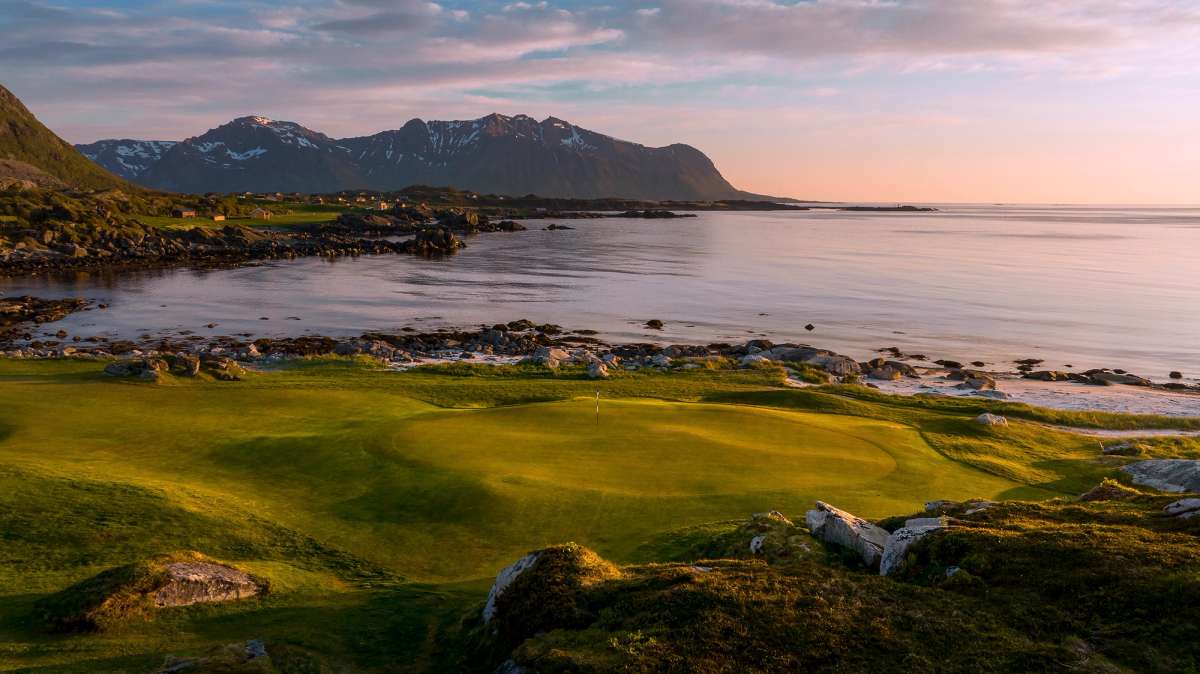
Located on the island of Gimsøya in Norway's Lofoten archipelago, Lofoten Links is an 18-hole links course set along a rugged stretch of coastline. The sea comes into play on several holes, while sandy beaches and the surrounding mountains add to the setting.
At 68 degrees north, Lofoten Links offers a very different kind of night golf. During the summer's midnight-sun period, the sun stays above the horizon, allowing golfers to play at any hour without the need for floodlights. The club's Midnight Sun Unlimited Golf experience allows guests to play for 24 hours at a time, with tee times at 10pm or 2am among the options. In 2023, one guest completed an astonishing 7.5 rounds in 24 hours.
It's an unusual opportunity to play a world-ranked links course at a time when most golfers would be heading to bed.
For much of golf’s history, the idea of a hole measuring 700 yards or more would have seemed excessive. Today, such distances are no longer quite so extraordinary. The world’s longest holes are an eclectic group, spread across very different landscapes and created for very different reasons. Some belong to expansive resort courses, others to championship layouts, while a handful have become famous largely because of the sheer scale of the challenge they present. From a former world-record holder in North Carolina to an extraordinary par 7 measuring over 1km in South Korea, these are the 10 longest golf holes in the world. 10. Black Mountain Golf Club (North Carolina, USA) Hole 17 | 747 yards (683m) | Par 6 The 17th at Black Mountain is one of the survivors from an era when exceptionally long golf holes were still something of a novelty. At 747 yards, the par six was once recognised as the longest golf hole in the world - a distinction that helped put this small North Carolina club on the golfing map. The hole is part of Black Mountain's older nine-hole layout, which dates back to the 1960s, and its extraordinary length was a deliberate feature rather than an accident of modern championship-course design. From the back tees, the fairway climbs and falls through the foothills, with the green sitting far enough away that it disappears from view for much of the hole. For a course that otherwise has a relatively modest footprint, the 17th is an impressive piece of real estate. Its 747 yards are now exceeded by several holes built in the decades since, but the hole retains its place in golf's long-hole folklore. It is also a reminder of how quickly perceptions of distance have changed. What was once a world record is now the shortest hole in this particular top ten. 9. TPC Colorado (Colorado, USA) Hole 13 | 773 yards (707m) | Par 5 TPC Colorado opened in 2018 at Heron Lakes near Berthoud, with Arthur Schaupeter’s design set against open Colorado terrain and views towards the Front Range. The 7,991-yard course was built with tournament golf in mind and has since become a regular Korn Ferry Tour venue. The 13th, named “Longer Still”, is its defining hole. At 773 yards from the TOUR tees, it is the longest hole on a PGA TOUR course and the longest par five in PGA TOUR golf. Its principal feature is the enormous 108-yard Hell Bunker, which runs along the left side of the fairway and creates the key decision after the drive: challenge it to gain ground or lay back and accept a longer approach. At altitude, the hole does not play quite as severely as the yardage suggests, but its scale remains remarkable. More importantly, the length is integrated into the design rather than simply added as a spectacle, giving No. 13 a strategic identity that has made it one of the most recognisable holes in modern American golf. 8. The Reserve at Moonlight Basin (Montana, USA) Hole 17 | 777 yards (710m) | Par 5 Set at 7,500 feet above Big Sky in the Rocky Mountains, The Reserve at Moonlight Basin is one of Jack Nicklaus’ most dramatic mountain courses. Built across the former Moonlight Basin ski area, the 8,000-yard layout moves through forest and open mountain terrain, with more than 1,000 feet of elevation change across the property. The 17th is the signature expression of that setting. At 777 yards, it is already extraordinary on the card, but the hole plunges downhill towards the green, with the change in elevation and thin mountain air making the distance considerably less daunting than it first appears. A large fairway bunker sits around 370 yards from the back tee, beyond which the fairway reveals the full scale of the descent towards the green. It is a fittingly theatrical hole for a course where elevation is central to the experience. The 17th was also one of the holes that came to wider attention when Moonlight Basin hosted The Match in 2021 – when Bryson DeChambeau and Aaron Rodgers defeated Phil Mickelson and Tom Brady – putting its spectacular setting and remarkable yardage on national television. 7. Penati Golf Resort - Legend course (Trnava Region, Slovakia) Hole 15 | 783 yards (716m) | Par 6 Opened in 2012, the Legend Course at Penati occupies a sandy, pine-covered site near Senica, with Nicklaus Design using the natural character of the property to create wide, undulating fairways and extensive waste areas. The course forms part of Slovakia’s largest golf resort and was the first Nicklaus Design course in the country. The 15th is the course’s defining feature. It has 11 teeing positions, allowing it to be played at very different lengths, but from the back tees, it stretches to 783 yards and becomes a par 6. The fairway is split by a large waste bunker, with further bunkering framing the second landing area before the hole finally turns towards the green. The hole gained international attention when the European Challenge Tour used the full 783-yard version during the Slovakia Challenge in 2015, 2016 and 2019. In regular play, however, it is generally shortened and played as a par 5 - a useful reminder that the extraordinary version seen on the professional circuit is only one interpretation of Central Europe’s longest hole. 6. Theodora Golf Club (Transylvania, Romania) Hole 18 | 804 yards (735m) | Par 6 Theodora Golf Club sits outside Alba Iulia on the banks of the Mureș, occupying a remarkably flat 56-hectare site. Opened in 2018, the resort was created around an 18-hole championship course, with a large lake excavated in front of the clubhouse providing material to shape the otherwise level ground. That lake is central to the character of the closing hole. The 18th stretches over 800 yards from the back tees, with the approach eventually leading to an island green shared with the 9th. The arrangement gives what might otherwise be a straightforwardly expansive hole a much more distinctive finish. Theodora itself describes the 18th as the longest par 6 in Europe, and it has become the defining feature of a relatively young Romanian resort that has steadily established itself on the European golf map. 5. The Links at Kahite Golf Club (Tennessee, USA) Hole 9 | 808 yards (739m) | Par 6 The Links at Kahite opened in 2002 as the third course in Tellico Village, occupying a natural setting between Tellico Lake and the foothills of the Great Smoky Mountains. The links-style layout has six sets of tees, stretches to 7,170 yards and is notable for its 93 bunkers and tall fescue framing some of the fairways. The 9th is the course's defining hole: an 739-metre par 6 that runs in a notably direct line across the landscape. From the back tees it measures 808 yards, while the blue tees bring it down to 721, making the hole a very different proposition depending on where it is played from. The course's own guide describes it simply as a unique hole, with the fairway rewarding players who can keep successive shots in play. Its position at the turn also gives Kahite an unusual rhythm. After eight holes that establish the character of the course, the 9th opens out into one of the most distinctive holes in Tennessee golf before the back nine heads back towards the mountains. 4. Meadows Farms Golf Course (Virginia, USA) Hole 12 | 841 yards (769m) | Par 6 Meadows Farms is very much the product of its founder, Bill “Farmer” Meadows, who built the course on former farmland after taking up golf later in life. It opened in 1993 with an intentionally unconventional character: the 27-hole layout includes a baseball-themed hole, a waterfall green and an island green, alongside the hole that became its calling card. The 12th stretches to 841 yards from the championship tees, running downhill before turning right, crossing two lakes and climbing towards a large elevated green. A three-leaf-clover-shaped bunker guards the approach. The sequence gives the hole considerably more shape and interest than its raw length might suggest. For decades it was promoted as the longest golf hole in the United States, a distinction that helped make this eccentric Virginia course a destination in its own right. The current course still describes No. 12 as its signature hole and the longest in the country, as recognised by the Guinness Book of World Records. 3. The Links Golf Club (Idaho, USA) Hole 9 | 842 yards (770m) | Par 6 The Links Golf Club in Post Falls opened in 1999 on the broad, open Rathdrum Prairie, with owner and designer Emmett Burley shaping the course in the tradition of Scottish links golf. There are few trees or water hazards to interrupt the prairie landscape, leaving wind, wide fairways, deep bunkers and rough to define its character. The 9th has been the course's signature hole from the beginning. It was originally measured at 738 yards from the black tees, but subsequent changes have transformed it into an 842-yard par 6, now the longest hole on the course and one of the longest in America. That extra distance has only amplified the hole's original links character. With no trees or water to dictate the route, the scale of the prairie is laid bare, while the wind can have a considerable influence on successive shots. The green itself has two distinct levels, adding another layer to a hole that has evolved from an unusual feature into the defining landmark of The Links. 2. Satsuki Golf Club - Sano course (Kanto Region, Japan) Hole 7 | 964 yards (881m) | Par 7 Satsuki Golf Club’s Sano Course opened in 1979 in the hills of Tochigi Prefecture, with broad fairways laid through a landscape of trees and gentle elevation changes. The 18-hole course measures more than 7,200 yards from the back tees, but it is the seventh hole on the outward nine that has made the club internationally known. At 964 yards, the seventh was recognised by Guinness World Records as the world’s longest golf hole and remains the defining feature of the course. It is not simply a long, open stretch: the hole has trees crowding the tee shot, OB on both sides and a relatively narrow fairway, creating pressure from the outset. There are two greens, with the left measuring the full 964 yards and the right 924. The club’s own playing strategy reflects the scale of the hole: rather than simply attacking distance on every shot, the objective is to keep successive balls in play and leave the final approach within comfortable range. For many years, Satsuki’s seventh was the benchmark by which the world’s longest holes were measured. Gunsan Country Club has since surpassed it in sheer yardage, but the Japanese par-7 remains the more established name in the record books. 1. Gunsan Country Club - Jeongeup course (Jeonbuk State, South Korea) Hole 3 | 1,098 yards (1,004m) | Par 7 Gunsan Country Club is an extraordinary property in its own right. Built on a former salt field on Korea’s west coast, the sprawling complex now has 81 holes across more than 1,000 acres, with lakes accounting for roughly 380 acres of the site and 26 bridges linking the courses. The third on the Jeongeup Course is the hole that gives Gunsan its international reputation. At 1,004 metres from the black tees, it is a par 7 and the longest hole in this ranking. The hole is also the No. 1 handicap on its nine, with water running along the left and bunkers placed to complicate the long sequence of shots required to reach the green. Its scale is matched by an unusual sense of place. The hole emerged from the transformation of the old salt works into one of Asia’s largest golf complexes, and its local nickname, the “1004 Hole”, is a play on the 1,004-metre length. Gunsan has built much of its identity around these extreme holes, with a 661-metre par 6 elsewhere on the property, but the Jeongeup third remains the defining feature. At 1,098 yards, it is comfortably longer than Satsuki’s 964-yard seventh and takes the top spot here by distance. Guinness World Records, however, has historically recognised Satsuki’s hole, so the distinction between the longest hole by yardage and the Guinness record is worth keeping in mind.
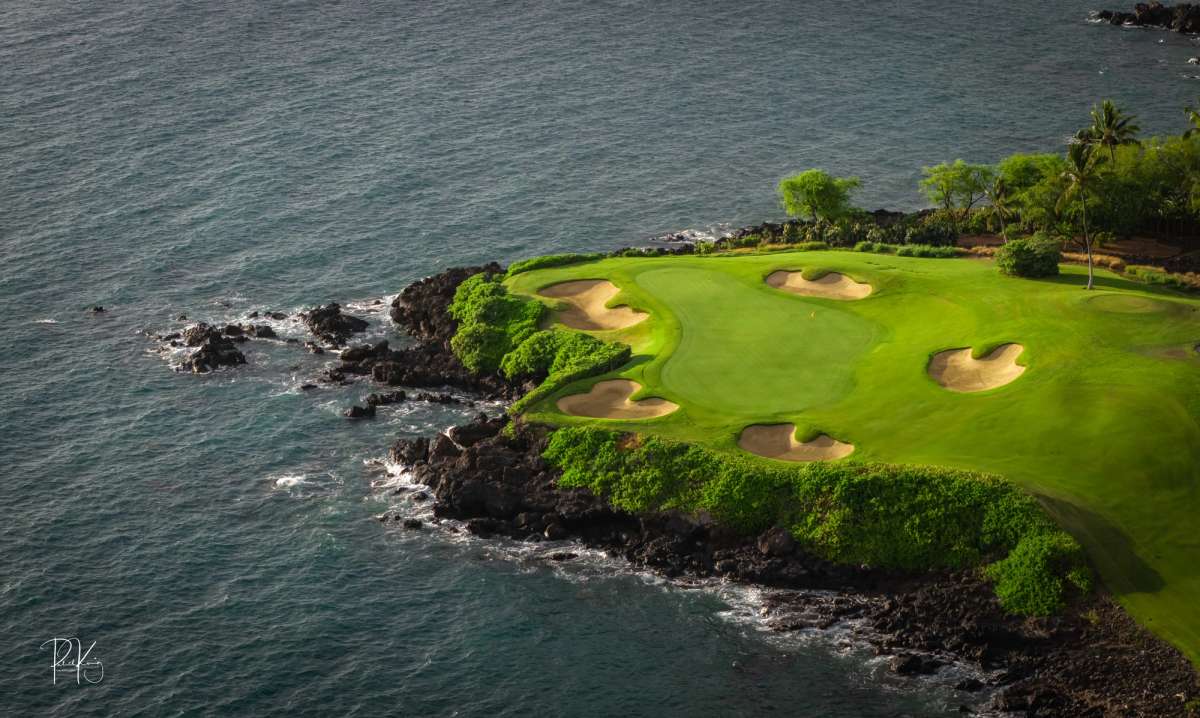
Some golf holes are famous for their design, others for the moments that have unfolded on them. A handful have become so recognisable that even people who rarely watch golf would know them at a glance. From a tiny par three perched above the Pacific Ocean to a treacherous stretch of linksland that has decided Open Championships, these holes have earned their place in golf folklore. Better still, unlike some of the game's most celebrated private-club layouts, they're open to visiting golfers willing to book a tee time. Here are 10 of the world's most famous golf holes you can actually play. The Road Hole, 17th – St Andrews Links The Old Course (Scotland) Few holes carry the same weight of history as the 17th at St Andrews. The tee shot must clear the corner of the Old Course Hotel, leaving golfers to negotiate one of the game's most famous driving challenges before facing the narrow green, the Road Hole bunker and the road that gives the hole its name. It's a hole that has broken hearts at Open Championships and made heroes of those who find a way through. The green is particularly unforgiving, and even a well-struck approach can leave a difficult recovery. Playing the Road Hole is an experience that goes beyond the golf itself. The history, the hotel, the old stone walls and the knowledge of what has unfolded here make it one of the game's essential experiences. The Island Green, 17th – TPC Sawgrass Stadium Course (Florida, USA) A wedge in hand, a green just 137 yards away and water in almost every direction. On paper, the 17th at TPC Sawgrass should be one of the easier holes on the Stadium Course. In reality, it has become one of golf's most recognisable tests of nerve. The island green was never part of the original plan. During construction, architect Pete Dye's wife, Alice, suggested turning an excavated pit into a lake and leaving the green surrounded by water. The result became one of the defining holes in professional golf, producing some of the most dramatic moments in THE PLAYERS Championship. For visiting golfers, the challenge is wonderfully simple: find the green or face the consequences. The wind can make club selection tricky, while the knowledge of how many professionals have come unstuck here adds another layer of pressure. Standing on the tee and taking on the same shot as the world's best is a bucket-list experience in its own right. The 7th – Pebble Beach Golf Links (California, USA) At just over 100 yards from the championship tees, the seventh at Pebble Beach is among the shortest holes in major championship golf. It is also one of the most spectacular. The tee sits high above the Pacific Ocean, with the wind often dictating which club to take. On a calm day, it can look almost inviting. When the breeze picks up, the exposed green becomes a much more demanding target. The hole has provided its share of memorable moments, too. During the 1992 US Open, Tom Kite chipped in for birdie on his way to winning the championship, while the hole played just 92 yards during the final round of the 2010 US Open. Its setting has helped make the seventh one of the most recognisable holes in golf, but it is more than a pretty picture. The Postage Stamp, 8th – Royal Troon Golf Club Old Course (Scotland) The eighth at Royal Troon is a reminder that a golf hole doesn't need length to become legendary. Known as the Postage Stamp, this short par three can play from less than 100 yards, yet its tiny green and surrounding bunkers have made it one of the most feared shots in championship golf. The putting surface measures just 2,635 square feet, with five bunkers waiting to catch anything that strays offline. The most notorious is the Coffin bunker, a deep trap that can turn a routine pitch into a fight for survival. The name originally referred to the green itself, which was described as being skimmed down to the size of a postage stamp. Since then, the hole has built a formidable reputation, with Hermann Tissies recording a 15 in the 1950 Open Championship and Tiger Woods taking a triple bogey in 1997. Calamity Corner, 16th – Royal Portrush Golf Club Dunluce Course (Northern Ireland) The name offers a fairly clear indication of what awaits at the 16th at Royal Portrush. Calamity Corner is a long par three that demands a confident strike to reach its elevated green, with a deep chasm running down the right side and little room for error. At championship length, the hole can stretch beyond 230 yards, making it a formidable test even before the Atlantic wind gets involved. Unlike many famous holes, there are no bunkers to worry about. The natural terrain provides all the punishment required, and a shot that misses right can leave golfers facing a steep drop well below the putting surface. Calamity Corner has become one of the defining holes of the Dunluce Links, with its exposed setting and demanding tee shot capable of changing the course of a round in an instant. The 18th – Carnoustie Golf Links Championship Course (Scotland) Carnoustie's closing hole is famous for one of the most extraordinary finishes in Open Championship history. In 1999, Frenchman Jean van de Velde arrived at the 18th tee with a three-shot lead, only to see his hopes of winning the Claret Jug unravel in the space of a few shots. His drive found trouble, his second shot left him in the rough near the grandstand, and his next attempt ended up in the Barry Burn. After eventually recording a triple-bogey seven, he was forced into a playoff, creating one of the most enduring stories in modern golf. The hole remains a stern test for ordinary visitors. The Barry Burn, a small stream that winds through the course, cuts across the fairway and crosses again in front of the green, leaving golfers to decide how much risk they are willing to take on. Across Carnoustie's closing stretch, the burn repeatedly comes into play, making careful course management essential. Carnoustie's 18th is a reminder that even a seemingly comfortable lead can disappear in a matter of minutes. The Coliseum, 16th – TPC Scottsdale Stadium Course (Arizona, USA) Few golf holes are designed to entertain spectators quite like the 16th at TPC Scottsdale. During the WM Phoenix Open, the short par three is surrounded by temporary grandstands, creating an arena in which every tee shot is greeted by cheers, jeers or a mixture of both. Known as the Coliseum, the hole can accommodate around 20,000 spectators during tournament week, making it one of the most extraordinary settings in professional golf. Tiger Woods famously made a hole-in-one here in 1997, sending the crowd into a frenzy and cementing the hole's place in golf folklore. Away from tournament week, the experience is rather different, but the hole remains a memorable part of the Stadium Course. Its tabletop green is ringed by deep bunkers, leaving little room for error despite the relatively short distance. For visiting golfers, the chance to stand on the tee and imagine the noise of tournament week is part of the appeal. Just don't expect the same reception for a shot that misses the green. The 3rd – Mauna Kea Golf Course (Hawaii, USA) Few golf shots offer a more dramatic view than the tee shot at the third hole at Mauna Kea. Designed by Robert Trent Jones Sr., this par three asks golfers to carry the Pacific Ocean to a green perched on the far side of a rocky cove, with black volcanic rock, blue water and lush green turf creating one of golf's most recognisable images. From the back tees, the hole can stretch beyond 250 yards, making it a formidable challenge even before the trade winds get involved. The prospect of hitting a long iron or fairway wood over open water is enough to test any golfer's nerve, while the elevated setting makes the green appear a long way away. The third has become one of Hawaii's most photographed golf holes, and it's easy to see why. But Mauna Kea is more than a picture-perfect backdrop. The 18th – Pinehurst Resort No. 2 (North Carolina, USA) The closing hole at Pinehurst No. 2 is one of the most recognisable finishes in American golf. Its crowned green, tightly mown surrounds and demanding approach shots have tested some of the game's best players in major championships. It is also associated with one of golf's most enduring images. At the 1999 US Open, Payne Stewart rolled in a 15-foot par putt on the 18th to secure a one-shot victory over Phil Mickelson. His celebratory pose, one leg raised and fist clenched, has since been immortalised in a statue beside the green. The hole rewards precision rather than brute force. Pinehurst's distinctive crowned greens can send approaches and short-game shots running away from the putting surface, leaving golfers with awkward recoveries and little margin for error. For visitors, the chance to finish on the same green where Stewart made history is part of the appeal. Just getting safely onto the putting surface is an achievement in itself. The 18th – St Andrews Links The Old Course (Scotland) The Road Hole may be the Old Course's most feared test, but its 18th is arguably its most recognisable scene. The broad fairway leads towards the town, with the Swilcan Bridge crossing the burn and the R&A clubhouse providing the backdrop. Golfers have crossed the bridge for generations, from players completing an ordinary round to champions approaching the final green at The Open. It is one of the rare places in golf where a simple walk between shots can feel like a moment in the sport's history. The hole itself is relatively generous off the tee, although the Valley of Sin – a deep hollow just short of the green – can make the approach and final putt more complicated than they first appear. Costantino Rocca famously holed a long putt from the hollow to force a playoff with John Daly at the 1995 Open. Finishing a round on the Old Course is an experience few golfers forget. The 18th provides a fitting conclusion to a course whose place in the game is difficult to overstate.

A good halfway house can turn a great round of golf into a memorable one. It might be a cold beer on a Scottish links, a burger with a spectacular view or a hot drink to warm you up before the back nine. Whatever is on offer, the best halfway houses give golfers a chance to forget about the scorecard for a few minutes and enjoy the experience. We recently asked the Top100 Golf Courses community to share their favourite halfway houses, uncovering plenty of memorable stops around the world. We've picked five of their recommendations, alongside five more renowned halfway houses that are well worth knowing about. What is a Halfway House? A halfway house is a food and drink stop positioned around the turn of a golf course, usually between the ninth and 10th holes. Some are little more than a hut serving snacks and drinks, while others have become destinations in their own right, offering everything from full meals and cocktails to fires, views and plenty of local character. Five Halfway Houses Chosen by the Top100 Community Sunningdale Golf Club (England) There is a reason the halfway hut at Sunningdale has become one of the most famous refreshment stops in golf. The small Swiss-chalet-style building has been in place since 1903, sitting where the ninth holes of both the Old and New Courses meet their respective 10th holes. But the building itself isn't the main attraction. That would be the sausage sandwich. Sunningdale's legendary hut serves a simple sausage on buttered bread, with other food and refreshments available alongside it. The hut has become such an established part of the experience that the club's own tradition says everybody stops, but does so speedily. It's not fancy, and that's rather the point. After nine holes of heather-lined fairways, a hot sausage sandwich and a cup of tea can feel like exactly what golf ordered. Nairn Golf Club - The Bothy at Nairn (Scotland) The Bothy at Nairn has a history that goes well beyond golf. Built in 1877, the stone building and neighbouring icehouse formed part of the Easter Delnies Fishing Station, one of five salmon fisheries operating along the coast between Nairn and the mouth of the Findhorn. In a good season, the fishery could catch up to 5,000 salmon, with ice collected from local rivers and a specially made pond and stored in the icehouse to keep the catch fresh. The buildings have since been given a new lease of life, with the Bothy converted into a halfway house where golfers can stop for snacks and refreshments at the turn. On a cold day beside the Moray Firth, there's also a fireplace to warm up beside. The historic stone building, Highland setting and views across the course provide plenty of atmosphere. One of our community members put it rather simply: a dram of whisky and a fire are hard to beat. Hard to argue with that. Turnberry Ailsa (Scotland) Turnberry's halfway house is about as far removed from the traditional golf hut as you can get. The Ailsa's ninth hole now finishes beside the famous Turnberry Lighthouse, which doubles as a halfway house for golfers. The lighthouse itself dates back to 1873, while the golf course's dramatic ninth was redesigned as part of the Ailsa's major renovation. Inside, golfers can stop for food and drink before heading to the 10th, but the real attraction is outside. From the lighthouse, there are views across the Firth of Clyde towards the Isle of Arran and Ailsa Craig. It's a halfway stop that feels more like a destination than a quick pit stop. When your halfway house is a historic lighthouse overlooking one of Scotland's most spectacular stretches of coastline, you've got a pretty good excuse to take your time. Ardglass Golf Club (Northern Ireland) At Ardglass, the halfway-house experience is wonderfully straightforward: have a Guinness and enjoy the view. The course's old cottage halfway house at the back of the 7th green has become one of its most memorable features, with golfers able to stop for a pint before continuing their round. A recent visitor described it as a gorgeous cottage with Guinness, while another praised the combination of a Guinness, sausage roll and views over the Irish Sea. It fits Ardglass perfectly. The County Down links is already one of the most dramatic places to play golf in Northern Ireland, with the Irish Sea never far away. Add a pint of Guinness just before the turn and you've got a halfway house that feels distinctly of its surroundings. Sometimes you don't need to reinvent the wheel. Blair Atholl Golf Estate (South Africa) Blair Atholl might have been one of the less obvious names to appear among the community recommendations, but the descriptions made it impossible to leave out. The halfway stop sounds less like a quick break and more like an event. One golfer highlighted the chicken burger, a chef cooking a barbecue beneath the trees and a deck sitting beneath a stream. Another mentioned silver-service high tea. That's quite the halfway-house menu. It's also a good example of why the best stops aren't necessarily the most famous. A halfway house can become memorable because of the food, the setting or simply the feeling that you're being looked after rather than rushed back onto the course. Five More Renowned Halfway Houses St Andrews Links - The Old Course (Scotland) If we're talking about halfway houses, it makes sense to visit the place that has a claim to starting the tradition. In the 19th century, David "Old Da" Anderson sold ginger beer and other refreshments from a cart on the Old Course at St Andrews. It has been described as golf's first refreshment stand. The modern version sits behind the ninth green and keeps the tradition going, albeit with a rather more substantial menu. The pork and haggis sausage roll is a popular choice, while the club's own Tom Morris 1821 Lager provides a suitably Scottish accompaniment. It's difficult to think of a more fitting place for a halfway stop. The Old Course is steeped in golfing history, and even the break between nines has a story of its own. Pine Valley Golf Club (New Jersey, United States) Pine Valley's halfway house is memorable before you've even ordered anything. Rather than a conventional hut, it is built into the base of an old water tower, which golfers encounter around the eighth hole and again near the 12th tee. It's an appropriately unusual feature for one of the world's most unconventional golf courses. The tower doubles as a stop for drinks and snacks, giving golfers a chance to take a breather before continuing around Pine Valley. It even boasts an impressive collection of golf balls from around the world. There aren't many halfway houses that can claim to be built inside a water tower. Quivira Golf Club (Baja California Sur, Mexico) Quivira has taken the halfway-house concept and spread it across the entire round. The Jack Nicklaus-designed course has multiple all-inclusive comfort stations, each offering golfers food and drinks as they make their way around the Cabo San Lucas layout. The most spectacular is The Cliffs, perched almost 300 feet above the Pacific, where golfers can stop for a breakfast burrito and take in the views over the ocean. Then there's The Oasis, the main halfway house near the ninth green. Here, the emphasis is on the food, with freshly prepared Baja cuisine including tacos and tostadas, alongside a full tequila bar. A final stop, Cañada, sits near the 16th tee, while another comfort station beside the oceanfront practice facility offers snacks and cold drinks before golfers even reach the first tee. The food and refreshments are included in the green fee, making Quivira's comfort stations much more than somewhere to grab a quick drink. Tacos, tequila and spectacular Pacific Ocean views make the breaks almost as memorable as the golf. Whistling Rock Country Club (South Korea) At Whistling Rock, there isn't just one halfway house to look forward to. The South Korean club is made up of three nine-hole loops, each with its own themed tea house: Cocoon, Temple and Cloud. The three buildings are each distinctly different. One is a rounded structure between a lake and forest, another is a formal wood-and-glass building, while the Cloud tea house sits high among the trees. The result is a halfway-house experience that feels distinctly different depending on which nine you're playing, with each tea house adding another layer to the Whistling Rock experience. Royal Dornoch Golf Club (Scotland) Royal Dornoch's halfway house is proof that sometimes the best idea is a simple one. The stop sits behind the ninth green of the Championship Course, with views back across the links towards the Dornoch Firth. And then there's the traditional order: hot chocolate with Bailey's Irish Cream, a combination that makes considerably more sense when you're standing on a Scottish links in a North Sea wind. It's a small detail, but one that has become part of the Royal Dornoch experience and exactly the sort of halfway-house tradition golfers remember.
