Some golf holes are famous for their design, others for the moments that have unfolded on them. A handful have become so recognisable that even people who rarely watch golf would know them at a glance.
From a tiny par three perched above the Pacific Ocean to a treacherous stretch of linksland that has decided Open Championships, these holes have earned their place in golf folklore. Better still, unlike some of the game's most celebrated private-club layouts, they're open to visiting golfers willing to book a tee time.
Here are 10 of the world's most famous golf holes you can actually play.
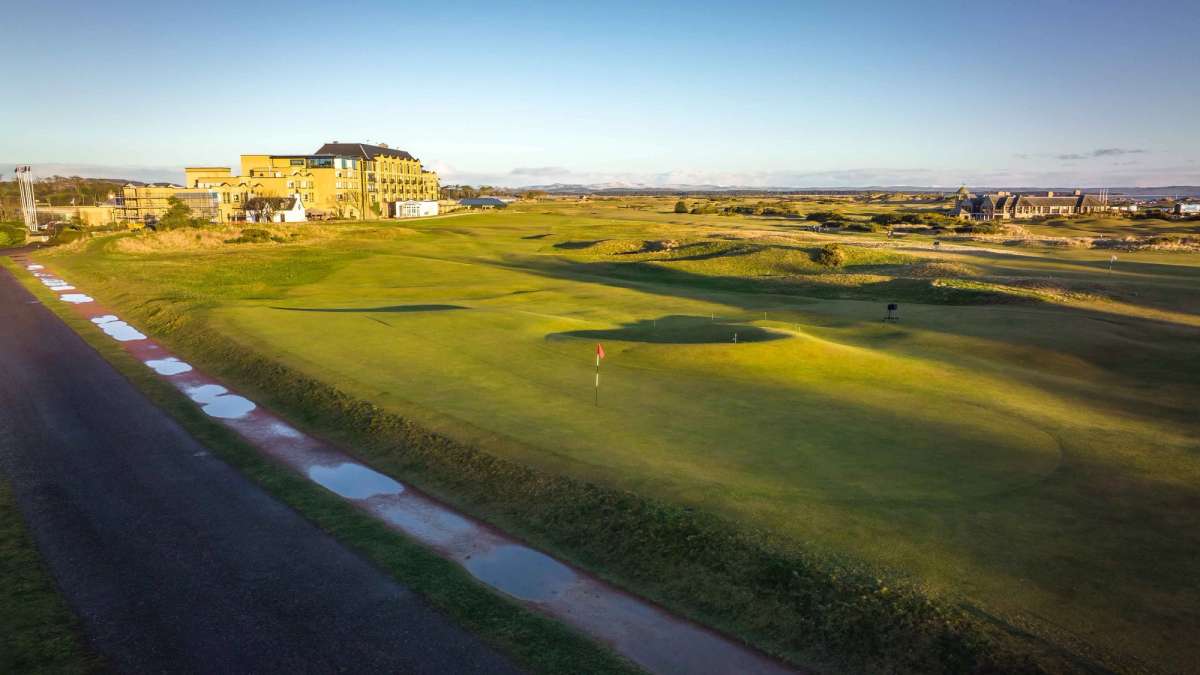
Few holes carry the same weight of history as the 17th at St Andrews. The tee shot must clear the corner of the Old Course Hotel, leaving golfers to negotiate one of the game's most famous driving challenges before facing the narrow green, the Road Hole bunker and the road that gives the hole its name.
It's a hole that has broken hearts at Open Championships and made heroes of those who find a way through. The green is particularly unforgiving, and even a well-struck approach can leave a difficult recovery.
Playing the Road Hole is an experience that goes beyond the golf itself. The history, the hotel, the old stone walls and the knowledge of what has unfolded here make it one of the game's essential experiences.
A wedge in hand, a green just 137 yards away and water in almost every direction. On paper, the 17th at TPC Sawgrass should be one of the easier holes on the Stadium Course. In reality, it has become one of golf's most recognisable tests of nerve.
The island green was never part of the original plan. During construction, architect Pete Dye's wife, Alice, suggested turning an excavated pit into a lake and leaving the green surrounded by water. The result became one of the defining holes in professional golf, producing some of the most dramatic moments in THE PLAYERS Championship.
For visiting golfers, the challenge is wonderfully simple: find the green or face the consequences. The wind can make club selection tricky, while the knowledge of how many professionals have come unstuck here adds another layer of pressure.
Standing on the tee and taking on the same shot as the world's best is a bucket-list experience in its own right.

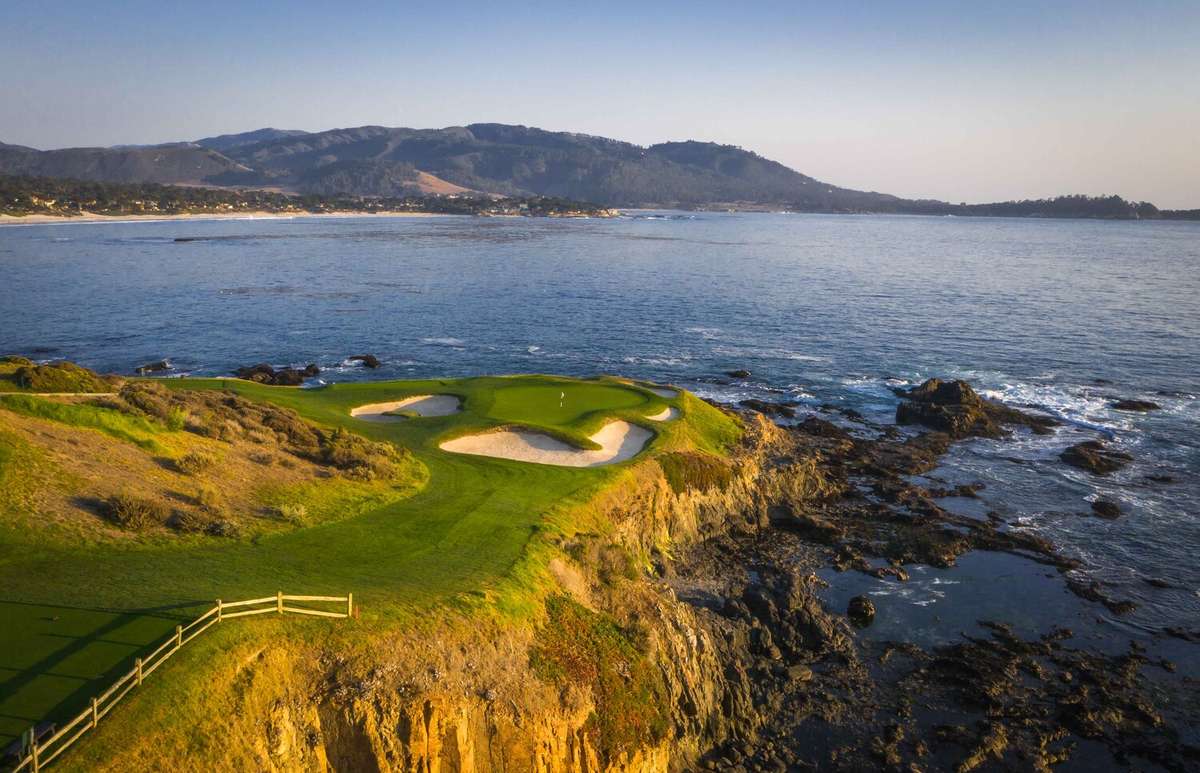
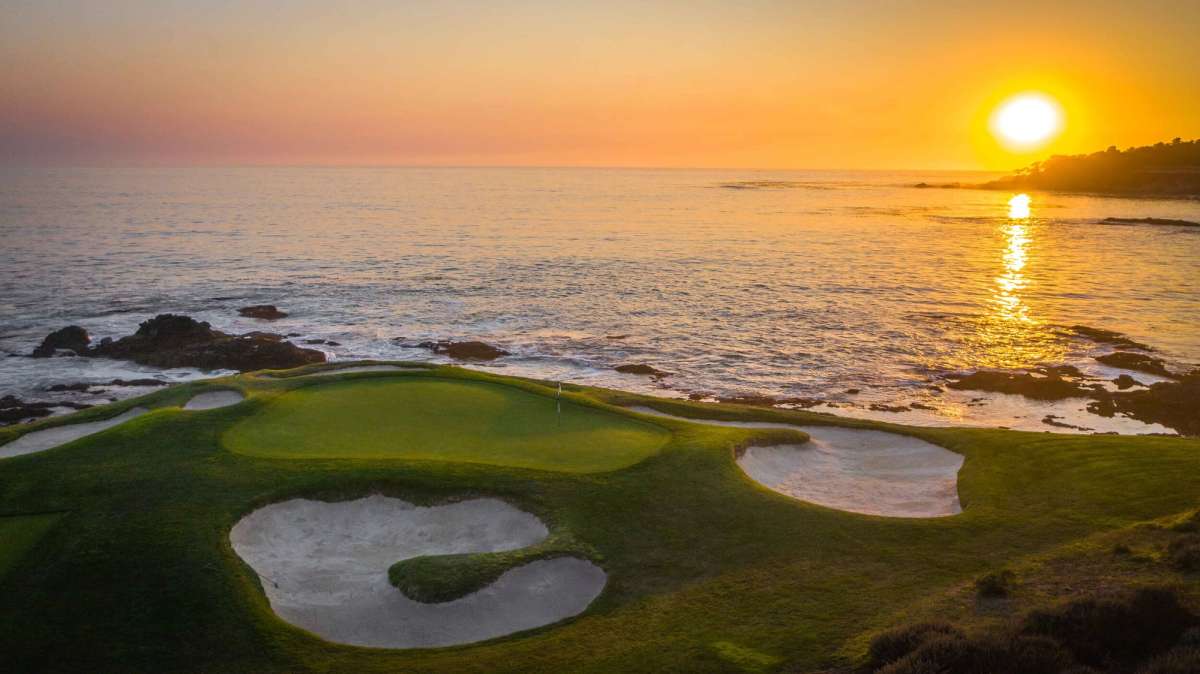
At just over 100 yards from the championship tees, the seventh at Pebble Beach is among the shortest holes in major championship golf. It is also one of the most spectacular.
The tee sits high above the Pacific Ocean, with the wind often dictating which club to take. On a calm day, it can look almost inviting. When the breeze picks up, the exposed green becomes a much more demanding target.
The hole has provided its share of memorable moments, too. During the 1992 US Open, Tom Kite chipped in for birdie on his way to winning the championship, while the hole played just 92 yards during the final round of the 2010 US Open.
Its setting has helped make the seventh one of the most recognisable holes in golf, but it is more than a pretty picture.
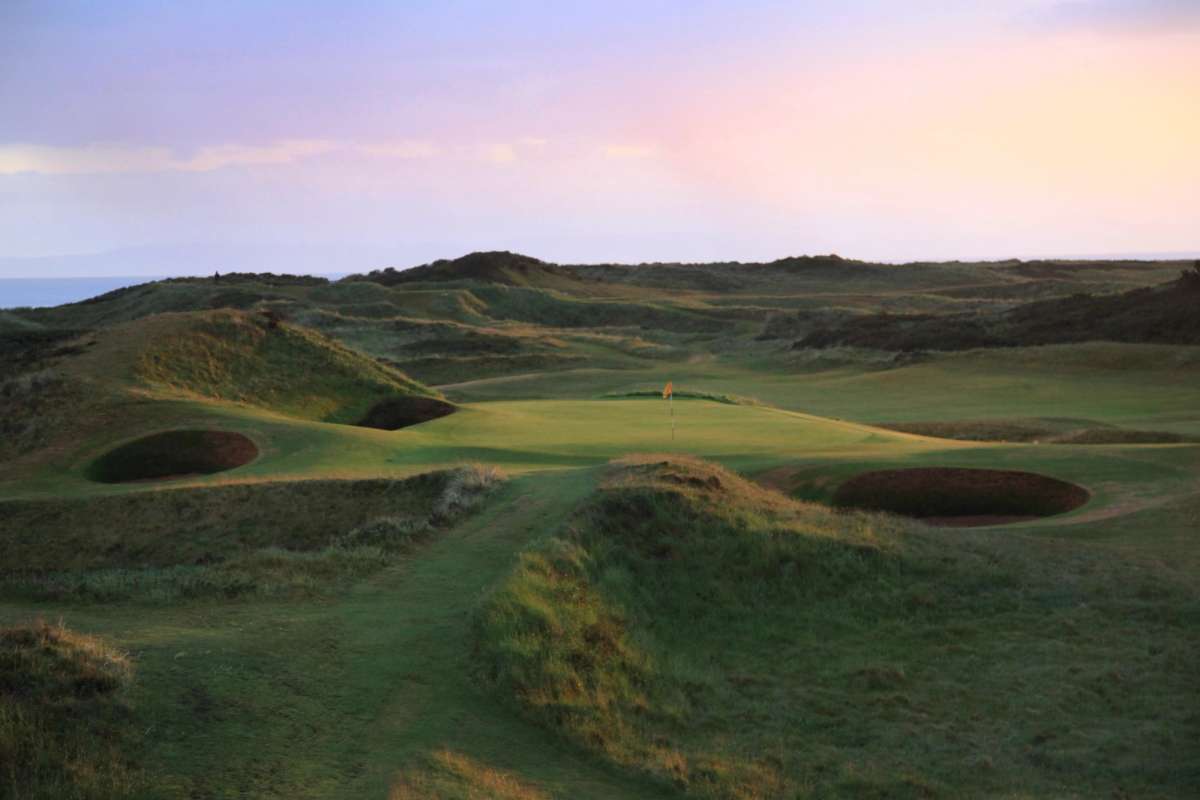
The eighth at Royal Troon is a reminder that a golf hole doesn't need length to become legendary. Known as the Postage Stamp, this short par three can play from less than 100 yards, yet its tiny green and surrounding bunkers have made it one of the most feared shots in championship golf.
The putting surface measures just 2,635 square feet, with five bunkers waiting to catch anything that strays offline. The most notorious is the Coffin bunker, a deep trap that can turn a routine pitch into a fight for survival.
The name originally referred to the green itself, which was described as being skimmed down to the size of a postage stamp. Since then, the hole has built a formidable reputation, with Hermann Tissies recording a 15 in the 1950 Open Championship and Tiger Woods taking a triple bogey in 1997.
The name offers a fairly clear indication of what awaits at the 16th at Royal Portrush. Calamity Corner is a long par three that demands a confident strike to reach its elevated green, with a deep chasm running down the right side and little room for error.
At championship length, the hole can stretch beyond 230 yards, making it a formidable test even before the Atlantic wind gets involved. Unlike many famous holes, there are no bunkers to worry about. The natural terrain provides all the punishment required, and a shot that misses right can leave golfers facing a steep drop well below the putting surface.
Calamity Corner has become one of the defining holes of the Dunluce Links, with its exposed setting and demanding tee shot capable of changing the course of a round in an instant.
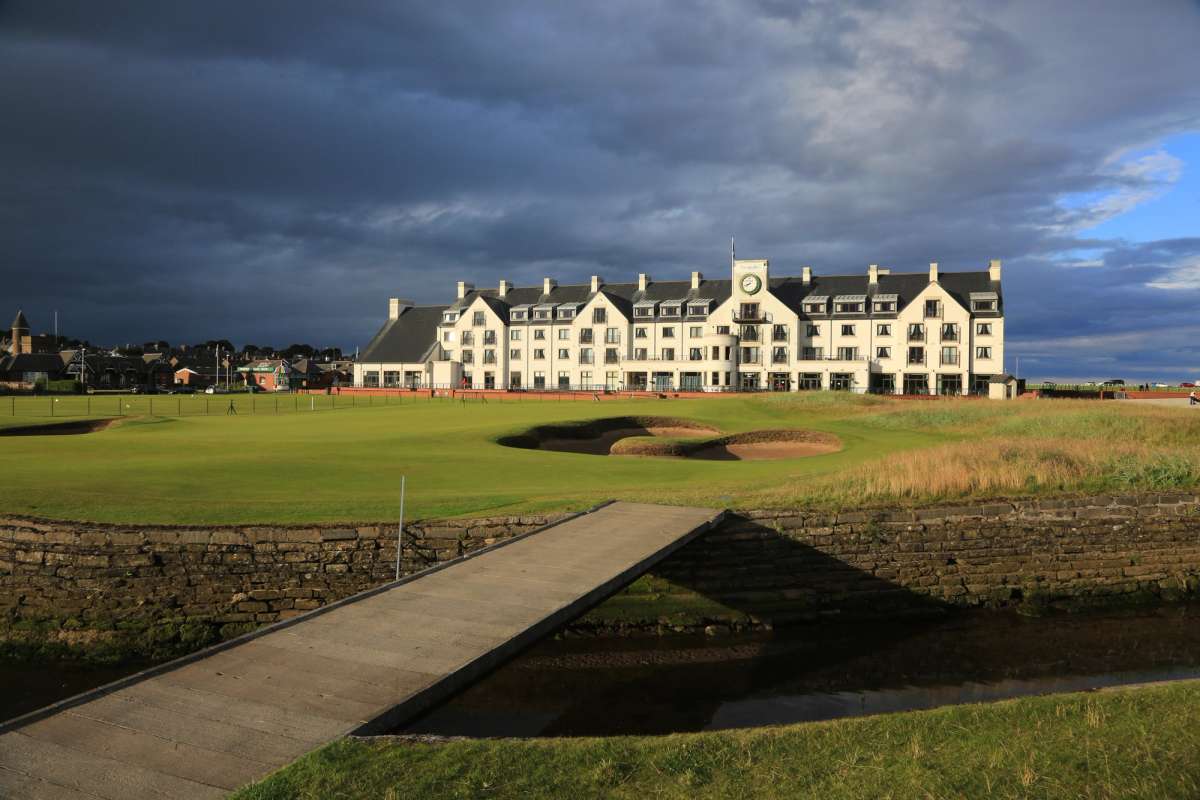
Carnoustie's closing hole is famous for one of the most extraordinary finishes in Open Championship history. In 1999, Frenchman Jean van de Velde arrived at the 18th tee with a three-shot lead, only to see his hopes of winning the Claret Jug unravel in the space of a few shots.
His drive found trouble, his second shot left him in the rough near the grandstand, and his next attempt ended up in the Barry Burn. After eventually recording a triple-bogey seven, he was forced into a playoff, creating one of the most enduring stories in modern golf.
The hole remains a stern test for ordinary visitors. The Barry Burn, a small stream that winds through the course, cuts across the fairway and crosses again in front of the green, leaving golfers to decide how much risk they are willing to take on. Across Carnoustie's closing stretch, the burn repeatedly comes into play, making careful course management essential.
Carnoustie's 18th is a reminder that even a seemingly comfortable lead can disappear in a matter of minutes.
Few golf holes are designed to entertain spectators quite like the 16th at TPC Scottsdale. During the WM Phoenix Open, the short par three is surrounded by temporary grandstands, creating an arena in which every tee shot is greeted by cheers, jeers or a mixture of both.
Known as the Coliseum, the hole can accommodate around 20,000 spectators during tournament week, making it one of the most extraordinary settings in professional golf. Tiger Woods famously made a hole-in-one here in 1997, sending the crowd into a frenzy and cementing the hole's place in golf folklore.
Away from tournament week, the experience is rather different, but the hole remains a memorable part of the Stadium Course. Its tabletop green is ringed by deep bunkers, leaving little room for error despite the relatively short distance.
For visiting golfers, the chance to stand on the tee and imagine the noise of tournament week is part of the appeal. Just don't expect the same reception for a shot that misses the green.
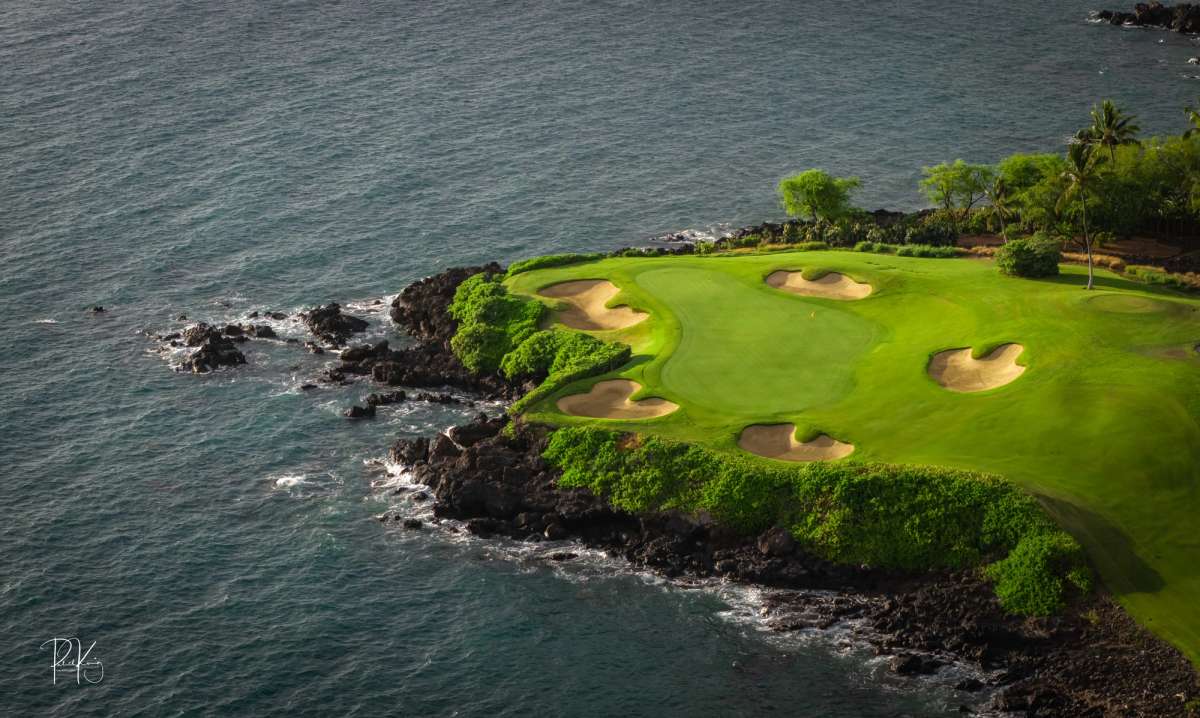
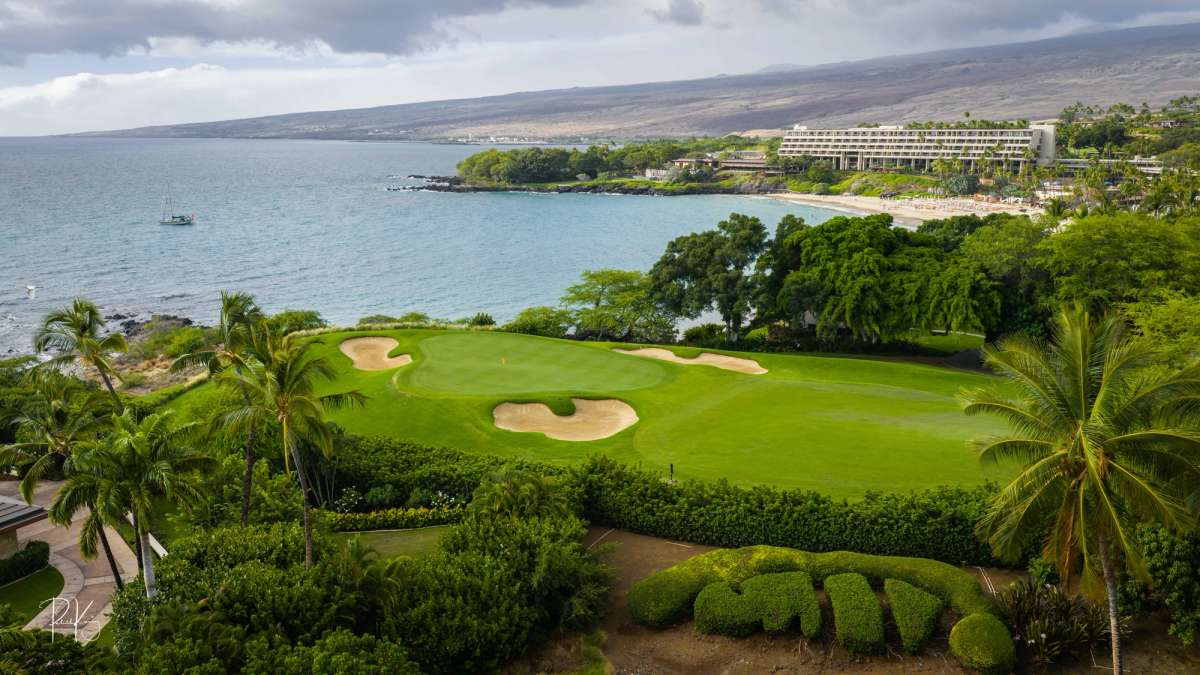
Few golf shots offer a more dramatic view than the tee shot at the third hole at Mauna Kea. Designed by Robert Trent Jones Sr., this par three asks golfers to carry the Pacific Ocean to a green perched on the far side of a rocky cove, with black volcanic rock, blue water and lush green turf creating one of golf's most recognisable images.
From the back tees, the hole can stretch beyond 250 yards, making it a formidable challenge even before the trade winds get involved. The prospect of hitting a long iron or fairway wood over open water is enough to test any golfer's nerve, while the elevated setting makes the green appear a long way away.
The third has become one of Hawaii's most photographed golf holes, and it's easy to see why. But Mauna Kea is more than a picture-perfect backdrop.
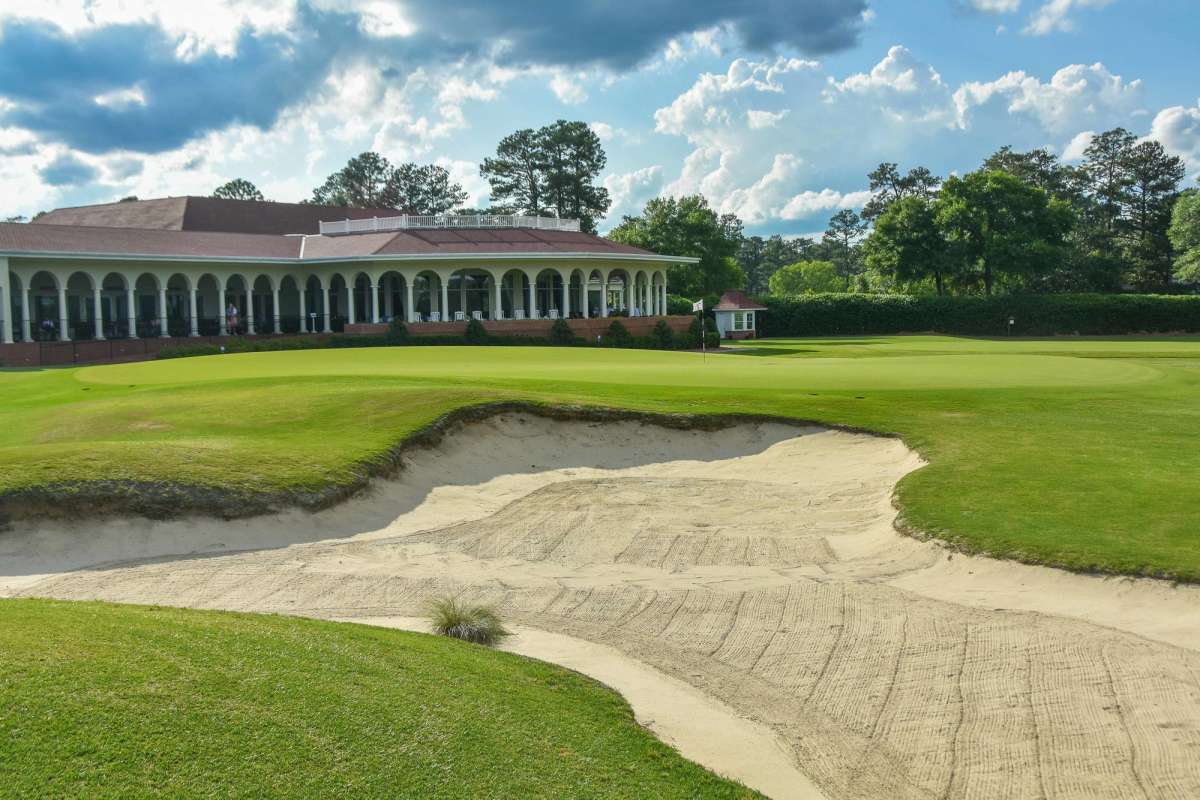
The closing hole at Pinehurst No. 2 is one of the most recognisable finishes in American golf. Its crowned green, tightly mown surrounds and demanding approach shots have tested some of the game's best players in major championships.
It is also associated with one of golf's most enduring images. At the 1999 US Open, Payne Stewart rolled in a 15-foot par putt on the 18th to secure a one-shot victory over Phil Mickelson. His celebratory pose, one leg raised and fist clenched, has since been immortalised in a statue beside the green.
The hole rewards precision rather than brute force. Pinehurst's distinctive crowned greens can send approaches and short-game shots running away from the putting surface, leaving golfers with awkward recoveries and little margin for error.
For visitors, the chance to finish on the same green where Stewart made history is part of the appeal. Just getting safely onto the putting surface is an achievement in itself.
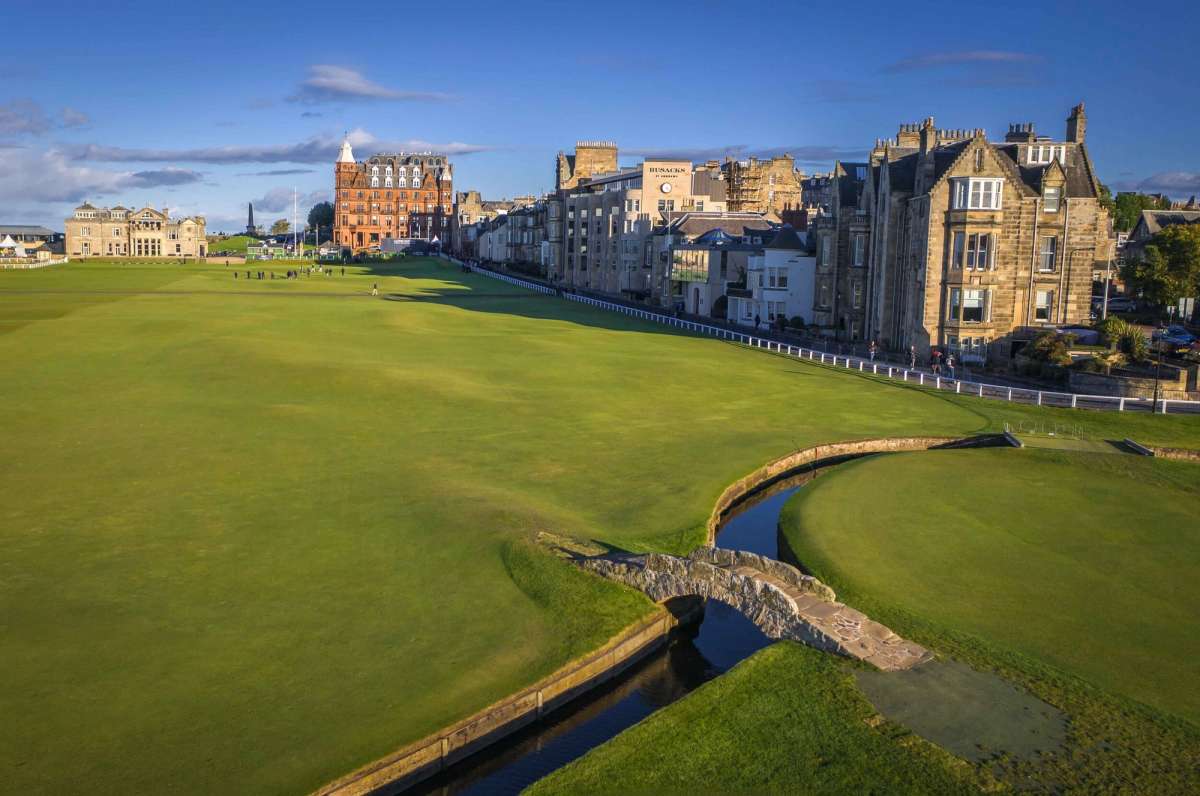
The Road Hole may be the Old Course's most feared test, but its 18th is arguably its most recognisable scene. The broad fairway leads towards the town, with the Swilcan Bridge crossing the burn and the R&A clubhouse providing the backdrop.
Golfers have crossed the bridge for generations, from players completing an ordinary round to champions approaching the final green at The Open. It is one of the rare places in golf where a simple walk between shots can feel like a moment in the sport's history.
The hole itself is relatively generous off the tee, although the Valley of Sin – a deep hollow just short of the green – can make the approach and final putt more complicated than they first appear. Costantino Rocca famously holed a long putt from the hollow to force a playoff with John Daly at the 1995 Open.
Finishing a round on the Old Course is an experience few golfers forget. The 18th provides a fitting conclusion to a course whose place in the game is difficult to overstate.

There are few better places to tee it up than the Home of Golf. There are also few tee times harder to come by. Playing the Old Course at St Andrews is rarely as simple as finding an empty slot and clicking 'book'. For golfers who haven't secured a tee time in advance, the daily ballot offers another route onto one of the world's most famous golf courses. It is, quite literally, a draw: you enter with your group, wait for the result and hope your names appear. The process is straightforward once you know the rules, but there are a few details that can catch first-time visitors out. Here's how the Old Course ballot actually works. What Is the Old Course Ballot? The Old Course ballot is a daily draw for golfers looking to play the course without an advance tee time. Rather than opening every visitor tee time for advance bookings, St Andrews Links makes a proportion available through the ballot. Golfers can enter shortly before their preferred day of play, with successful applicants then allocated a tee time. The important thing to understand is that entering the ballot does not guarantee you a round. You are entering a draw for the available tee times on that particular day. The ballot is sometimes referred to as the Old Course lottery, but there is nothing particularly complicated about it. Once you know when to enter and what information you need, the process is relatively simple. How Does the Old Course Ballot Work? There are five basic steps to entering the Old Course ballot. 1. Choose Your Day to Play The ballot is drawn two days before play. That means golfers need to plan a little differently from a conventional golf booking. If you want to play on a Thursday, for example, your ballot entry is made on the Tuesday. The Old Course is closed on Sundays, so there is no ballot for Sunday play. Visitors are still welcome to walk the course freely and stop for the obligatory photo on the Swilcan Bridge. 2. Enter the Ballot by 2pm Entries close at 2pm, two days before the day you want to play. For example: Want to play Thursday? Enter by 2pm Tuesday. Miss the deadline and you'll have to wait for another opportunity. Entries can be made through the St Andrews Links system, with golfers required to provide the relevant details for everyone in their group. 3. Add Your Group The main Old Course ballot is for groups of two, three or four golfers. Each golfer's name, home golf club and handicap must be provided, with a maximum handicap of 36. A single golfer cannot enter the standard group ballot. This is worth knowing before you arrive in St Andrews. If you're travelling alone, there is another option: St Andrews operates a separate Singles Daily Draw, which we'll explain below. 4. Wait for the Ballot Draw Once the 2pm deadline has passed, St Andrews conducts the draw for the available tee times. This is where the element of chance comes in. There is no trick that guarantees success, your application is simply considered alongside the other groups looking to play that day. The number of available tee times can vary, so there is no fixed success rate that applies to every ballot. 5. Check Your Ballot Result The results are published later that afternoon. If your group is successful, you'll be given an Old Course tee time and can then complete the necessary arrangements to play. If you're unsuccessful, you haven't lost a booking fee or a deposit simply by entering. You can try again for another eligible day if your itinerary allows. How Can Singles Get an Old Course Tee Time? Not every golfer arrives in St Andrews with three playing partners in tow. Fortunately, travelling alone doesn't necessarily mean missing out on the Old Course. The standard Old Course ballot is designed for groups of two to four golfers, so a solo visitor cannot simply enter the main draw on their own. However, individual golfers have other avenues to explore. The Singles Route Since March 2024, individual golfers have entered the Singles Daily Draw, which replaced the old system of golfers queuing overnight in the hope of picking up a tee time. The process is separate from the main Old Course ballot and takes place the day before play. Singles can enter the draw in person between 9am and 5pm at either the Old Pavilion, beside the first tee, or the St Andrews Links Clubhouse. At 5pm, a randomised draw is made, with successful golfers notified by email and SMS. If selected, the golfer is given a place on the Old Course by joining an existing group with an available space. In other words, you don't need to arrive with three friends to play the Old Course as a single, but you do need to be prepared to join other golfers. It is a much more civilised system than the old singles queue, which meant you could spend hours waiting outside in the hope of getting onto the course the following day. The digital draw gives solo golfers a defined application window and a randomised chance of securing a tee time instead. What Happens If You Win the Old Course Ballot? The good news is that you have an Old Course tee time. Your group will be allocated a time from the available ballot sheet, rather than choosing a particular slot in the way you might when booking an ordinary public course. Tee times can vary considerably depending on the day and season, so don't build your entire day's itinerary around a particular time until the result has been confirmed. You should also have your handicap information available. The maximum handicap for the Old Course is 36, and St Andrews can require evidence of handicap before play. The 2026 high-season green fee is £355, although rates vary by season. What Happens If You Lose the Old Course Ballot? Nothing, other than a slight dent to your plans. You don't pay simply for entering the ballot, and an unsuccessful application doesn't prevent you from trying again on another eligible day. This is why flexibility can be valuable when planning a St Andrews golf trip. If you're staying for several days, you can enter the ballot on more than one occasion rather than putting everything on a single draw. It's also worth having a plan B. St Andrews Links is home to six other courses - New, Jubilee, Castle, Eden, Strathtyrum and Balgove - which don’t require you to enter a lottery, so an unsuccessful ballot doesn't have to mean a wasted day of golf. Can You Improve Your Chances of Winning the Old Course Ballot? There is no magic formula. The ballot is a draw, and the number of applications and available tee times varies from day to day. That means there is no reliable percentage chance of success that can be applied to every golfer or every date. What you can do is give yourself more opportunities. If your schedule allows, consider entering on multiple eligible days. Being flexible about when you play also means you're not relying on one particular draw. Peak periods can be particularly competitive, while availability varies throughout the season, so it's sensible to approach the ballot as an opportunity rather than a guarantee. Old Course Ballot FAQs How Far in Advance Can You Enter the Old Course Ballot? The ballot is drawn two days before play, with entries closing at 2pm. So, for example, golfers hoping to play on Thursday must enter by 2pm on Tuesday. Can You Enter the Old Course Ballot as a Single? Not through the standard group ballot. The main ballot accepts groups of two, three or four golfers. St Andrews has a separate system for individual golfers. How Many Golfers Can Enter the Old Course Ballot? A standard ballot application can contain two, three or four golfers. What Handicap Do You Need for the Old Course Ballot? The maximum handicap is 36 for men and women. Golfers should be prepared to provide evidence of their handicap. Can You Enter the Old Course Ballot More Than Once? Yes. If you're staying in St Andrews for several days, you can enter for multiple eligible playing days. Each day's ballot is a separate draw. Does Winning the Ballot Guarantee a Specific Tee Time? Winning the ballot means your group has secured an Old Course tee time, but you don't simply choose whatever time you want. Your group is allocated a time from the available ballot sheet. Is the Old Course Ballot Worth Trying? The Old Course ballot won't give you certainty, but it does give visitors another way onto the most famous fairways in golf. For anyone with some flexibility in their itinerary, there's little to lose by entering. Know the deadline, make sure your group meets the requirements and be prepared to try again if your name doesn't come out. And if you're travelling alone, remember that the Singles Daily Draw offers a separate route to the first tee.

You don't need a four-figure budget, a private-club connection or an invitation from a member to play a course in the World Top 100. Top100 has collated the 10 cheapest visitor-accessible courses on our current World Top 100 Ranking, based on standard green fees. From a world-class links in Tasmania to a U.S. Open and Ryder Cup venue in New York, these courses offer the chance to play some of the best golf on the planet without the eye-watering green fees attached to many of their World Top 100 counterparts. 1. St Andrews Beach Golf Course (Victoria, Australia) World Ranking: 89th | Australia ranking: 6th | Green fee: A$139 (£74) Tom Doak’s first Australian mainland design, St Andrews Beach opened in 2004 on the Mornington Peninsula and has since become one of the country’s best-value, ranked courses. The public-access layout occupies 175 hectares of former grazing land, with wide fairways, rolling terrain and sandy natural contours that give several holes a links-like feel. Measuring just over 6,000 metres from the back tees, it is playable for a broad range of golfers, though the subtle greens ensure there is still plenty to think about. In a region known for outstanding golf, St Andrews Beach stands out not only for its quality but also for its accessibility, offering everyday golfers the chance to experience a Tom Doak design without the premium price tag often attached to courses of this calibre. 2. Bethpage Black (New York, USA) World Ranking: 58th | USA ranking: 28th | Green fee: From US$140 (£106) Bethpage Black has the rare distinction of being a World Top 100 course, a major championship venue and a public golf course. Located within Bethpage State Park on Long Island, the A.W. Tillinghast design opened in 1936 and has since hosted two U.S. Opens and the 2025 Ryder Cup. The Black is renowned for its difficulty, with narrow fairways, deep rough, large sculpted bunkers and elevated greens making accuracy essential. It is a demanding test, but one that remains remarkably accessible to everyday golfers. That combination of championship pedigree and public access is what makes Bethpage Black so unusual. Few golfers get the chance to play a course of this stature without needing a private-club connection or resort stay. 3. Paraparaumu Beach Golf Club (Wellington, New Zealand) World Ranking: 91st | New Zealand ranking: 2nd | Green fee: NZ$275 (£118) Set on the Kapiti Coast, north of New Zealand's capital city Wellington, Paraparaumu Beach has been one of the country’s most celebrated golf courses since Alex Russell designed it in 1949. The links has hosted 12 New Zealand Opens and has long been regarded as one of the country’s finest layouts. It is a relatively short course by modern championship standards, but the coastal wind, firm fairways, deep bunkers and undulating greens provide plenty of challenge. The split-fairway 17th is a particular highlight, forcing golfers to choose between two very different routes to the green. For international golfers, Paraparaumu offers the chance to experience a genuine piece of New Zealand golfing history without needing access to a private resort. 4. Fairmont Jasper Park Lodge Golf Course (Alberta, Canada) World Ranking: 73rd | Canada ranking: 2nd | Green fee: C$280 (£149) Set among the Canadian Rockies in Jasper National Park, Fairmont Jasper Park Lodge is one of Stanley Thompson’s most celebrated designs. Opened in 1925, the course winds through the valley beside Lake Beauvert, with snow-capped peaks providing a backdrop to almost every hole. The course combines wide fairways, elevated tees and strategically placed bunkers with the natural contours of the landscape. Thompson’s design rewards thoughtful play rather than simply demanding power, making it a course that can be enjoyed by golfers of different abilities. The result is a rare combination of classic golf and Canadian wilderness, with the surrounding mountains and forest making the journey between shots almost as memorable as the golf itself. 5. Barnbougle - The Dunes Course (Tasmania, Australia) World Ranking: 25th | Australia ranking: 3rd | Green fee: A$285 (£151) Barnbougle Dunes is about as close as Australia gets to a traditional seaside links. Set on Tasmania’s northeast coast, the course was designed by Tom Doak and Australian Mike Clayton and opened in 2004, establishing Barnbougle as one of the country’s premier golf destinations. The layout runs through towering coastal dunes, with wide fairways, natural contours and greens that follow the movement of the land. The wind is an ever-present factor, while the strategic design rewards golfers who think their way around the course rather than simply relying on power. For golfers seeking a genuine links experience outside the British Isles, Barnbougle Dunes is about as compelling as it gets, combining world-class golf with the rugged coastline of Tasmania. 6. Cape Wickham Golf Links (Tasmania, Australia) World Ranking: 47th | Australia ranking: 4th | Green fee: A$315 (£167) Cape Wickham occupies a spectacular stretch of coastline on King Island, sitting in Bass Strait between Tasmania and mainland Australia. Designed by American architect Mike DeVries, the links opened in 2015 and quickly established itself as one of the country's standout modern courses. The course makes the most of its remote coastal setting, with the opening five holes winding around Cape Farewell before the layout moves through sand hills and limestone outcrops. Several holes hug the shoreline, while the closing stretch heads towards the imposing Cape Wickham Lighthouse. The 18th provides a fitting finale, with the fairway doglegging around a sandy bay before reaching the home green, making Cape Wickham a memorable links experience from start to finish. 7. St Enodoc Golf Club - Church Course (Cornwall, England) World Ranking: 49th | England ranking: 4th | Green fee: £175 Set among towering dunes overlooking the Camel Estuary in Cornwall, St Enodoc’s Church Course is one of James Braid’s most distinctive designs. Founded in 1891, the course was transformed by Braid in the early 20th century and remains a spectacularly natural links. It is a relatively short par 69 at 6,010 metres, but its undulating fairways, dramatic elevation changes and formidable dunes create a test that demands imagination. The famous 6th is the standout, with the enormous Himalaya dune obscuring the green and making club selection particularly difficult. The course also has an unusual piece of history, with the 13th hole running alongside the churchyard where poet laureate John Betjeman is buried. 8. South Cape Owners Club (Gyeongsangnam-do, South Korea) World Ranking: 63rd | South Korea ranking: 2nd | Green fee: From KRW 350,000 (£195) Set on Namhae Island off the southeast coast of South Korea, South Cape Owners Club is a dramatic Kyle Phillips design where the ocean is visible from all 18 holes. The course opened in 2013 as part of a luxury resort development and has quickly established itself among Asia's most striking modern layouts. The course is framed by granite outcrops, coastal cliffs and rolling terrain, with bluegrass fairways contrasting against fine fescue rough. The standout stretch comes from the 11th onwards, culminating in two spectacular waterside par threes at the 14th and 16th. For golfers willing to make the journey to Namhae Island, South Cape offers a rare combination of world-class golf, dramatic coastal scenery and a luxury resort experience. 9. Utrecht De Pan Golf Club (Utrecht, Netherlands) World Ranking: 56th | Netherlands ranking: 1st | Green fee: From €235 (£198) Dating back to 1894, Utrecht De Pan is the second-oldest golf club in the Netherlands, with Harry Colt designing the current course in 1929. Set in secluded woodland near Utrecht, the layout is a classic heathland course, winding through pine, birch, oak and chestnut trees. De Pan has hosted the Dutch Open three times and is built around strategic rather than power golf. Several of its most memorable holes play over valleys of heather and sand, while the sixth and seventh demand particularly thoughtful tee shots and approaches. Recent restoration work by Frank Pont has helped return the course towards Colt’s original design, making De Pan a fascinating example of Golden Age heathland golf in the Netherlands. 10. Cruden Bay Golf Club - Championship Course (Aberdeenshire, Scotland) World Ranking: 70th | Scotland ranking: 10th | Green fee: From £205 Cruden Bay is one of Scotland’s most distinctive links, winding through towering dunes on the Aberdeenshire coast with the North Sea providing a constant backdrop. The course opened in 1899 after being laid out by Old Tom Morris and Archie Simpson, before Tom Simpson and Herbert Fowler remodelled it in 1926. Cruden Bay makes spectacular use of its natural terrain, with elevated tees, blind drives, punchbowl greens and fairways that rise and fall between the dunes. The 193-yard 4th, played from an elevated tee across a deep hollow, is one of several standout holes. There is plenty of character, too, from driveable par fours and back-to-back par threes to the feeling that every hole reveals something different. It is exactly the sort of course that rewards golfers willing to embrace its quirks. Green fees are based on standard 18-hole visitor rates, using international visitor rates where applicable. All prices are peak-season rates and do not take twilight, off-season or promotional rates into account. Prices are correct at the time of writing and are subject to change.
There are few tee times in golf more desirable than one at Pebble Beach Golf Links. The setting is extraordinary, the history is unparalleled and the opportunity to play a course that has hosted multiple U.S. Opens and countless other significant events is firmly on many golfers' bucket lists. Eighteen-time Major champion Jack Nicklaus once said if he only had one more round to play, he’d choose to play it at Pebble Beach, calling it “possibly the best [course] in the world”. Pebble Beach has retained its status as one of the world’s great public-access courses, meaning there are ways for ordinary golfers to play it, unlike many of the world's most exclusive layouts. The catch? Getting a tee time requires a little more planning than simply clicking through an online booking system. The good news is that there are a couple of different routes to the first tee at Pebble Beach. Here's everything you need to know. Where is Pebble Beach Golf Links? Pebble Beach Golf Links is one of golf’s great amphitheaters, where the Pacific Ocean provides the backdrop and almost every hole carries a piece of history. The course sits on the spectacular Monterey Peninsula on California's central coast, roughly 120 miles south of San Francisco. It forms part of Pebble Beach Resorts and is reached via the famous 17-Mile Drive, a scenic road that winds around the coastline between Monterey and Carmel-by-the-Sea. Pebble Beach occupies a dramatic stretch of Pacific coastline, with several holes running directly alongside Carmel Bay. It is also surrounded by some of the most recognisable scenery on the Monterey Peninsula, including the Lone Cypress and the rocky coastline for which the area is famous. For golfers arriving by air, Monterey Regional Airport is by far the closest airport. From the airport, the route to Pebble Beach Golf Links follows Highway 68 and then 17-Mile Drive, with the resort estimating a journey of about 15 minutes. The Easiest Way To Play: Stay at Pebble Beach Resorts The most dependable strategy to secure a tee time is to make your trip a resort stay. Guests staying at The Lodge at Pebble Beach, The Inn at Spanish Bay or Casa Palmero have access to Pebble Beach's courses, and resort guests are the only golfers who can reserve a Pebble Beach tee time more than 24 hours in advance. The booking window is particularly useful for golfers planning a bucket-list trip well ahead of time. Guests at The Lodge and The Inn at Spanish Bay can book accommodation up to 18 months in advance, while Casa Palmero reservations can be made up to 12 months ahead, subject to availability. To avoid disappointment, Pebble Beach explicitly recommends that resort guests request their tee times at the time of booking their room. A minimum two-night stay is required to secure a round at Pebble Beach Golf Links, although the resort can require three nights on certain dates. The resort's availability calendar identifies dates where different requirements apply, so it’s worth checking before finalising your itinerary. How Far Ahead Should You Book? As soon as possible is the short answer. Because resort guests can plan their accommodation up to 18 months in advance, Pebble Beach is best approached as a destination trip rather than an isolated round of golf. For a once-in-a-lifetime trip, we'd recommend starting with dates rather than a particular tee time. If you are travelling a long way to play Pebble Beach, it’s better to have several possible dates than to become fixated on one particular morning. Another important consideration for larger groups is that up to two players may be booked per room, based on room occupancy. A group of four should therefore plan around two rooms if everyone wants to play Pebble Beach. What if You Don't Want to Stay at the Resort? There is another considerably cheaper option to walk in the footsteps of Jack Nicklaus, Tom Watson and Tiger Woods, although it is much less certain. Non-resort guests are able to book Pebble Beach Golf Links one day in advance, meaning you don’t necessarily need to fork out for several nights of accommodation to play the course. Being one of the premier public courses in the world, tee times are in high demand, making the one-day window a genuine gamble. If you're already in the Monterey or Carmel area and have some flexibility, it's worth trying. If you're flying across the Atlantic specifically to play Pebble Beach, however, the resort route is significantly safer. How Much Does it Cost? Playing at such a prestigious course does not come without a hefty price tag, particularly if you’re planning on staying at Pebble Beach Resorts. For the current rate period of April 1, 2026 to March 31, 2027, the published green fee for Pebble Beach Golf Links is $695. The green fee applies to both resort and non-resort golfers, although non-resort golfers also pay the applicable cart fee. Additional published charges include: Cart: $60 per person Pull cart: $20 Single-bag caddie: $175 Double-bag caddie: $250 Forecaddie: $62.50 per person, with a three-player minimum Club rental: $120 per bag, plus tax Those figures make Pebble Beach one of the most expensive public-access rounds in the United States, particularly once accommodation, travel and caddie gratuity are added - but for many golfers this isn't an everyday round, it is the centrepiece of a trip.
